Friday, July 3, 2026
Home Blog Page 6

Waterford group rebranding found Irish words worked best

What was Waterford Area Partnership until late September is now Buíon Phort Láirge, the name change reflecting an organisation that has rebuilt and expanded from a crisis situation earlier in the decade.

We had the launch on September 26. We have been using the name since then, we also have to update our website to reflect it. But as of the 26th we have been going by the new name,” says CEO Liam Quinn. 

The rebranding is part of moving on from the issues that gripped the organisation just a few years ago.

At the time it went to the brink of closure after serious governance and financial issues were identified.

Mr Quinn, who was not himself involved at that time, said that things have moved on significantly since them. 

“Back in 2020 or 2021 there were a few issues. The Council encouraged the Board at the time to step down, there were issues around governance and financial oversight. There was no indication that anyone was doing anything wrong, but maybe things weren’t being done as diligently as a lot of the Government funding departments would like,” he said.

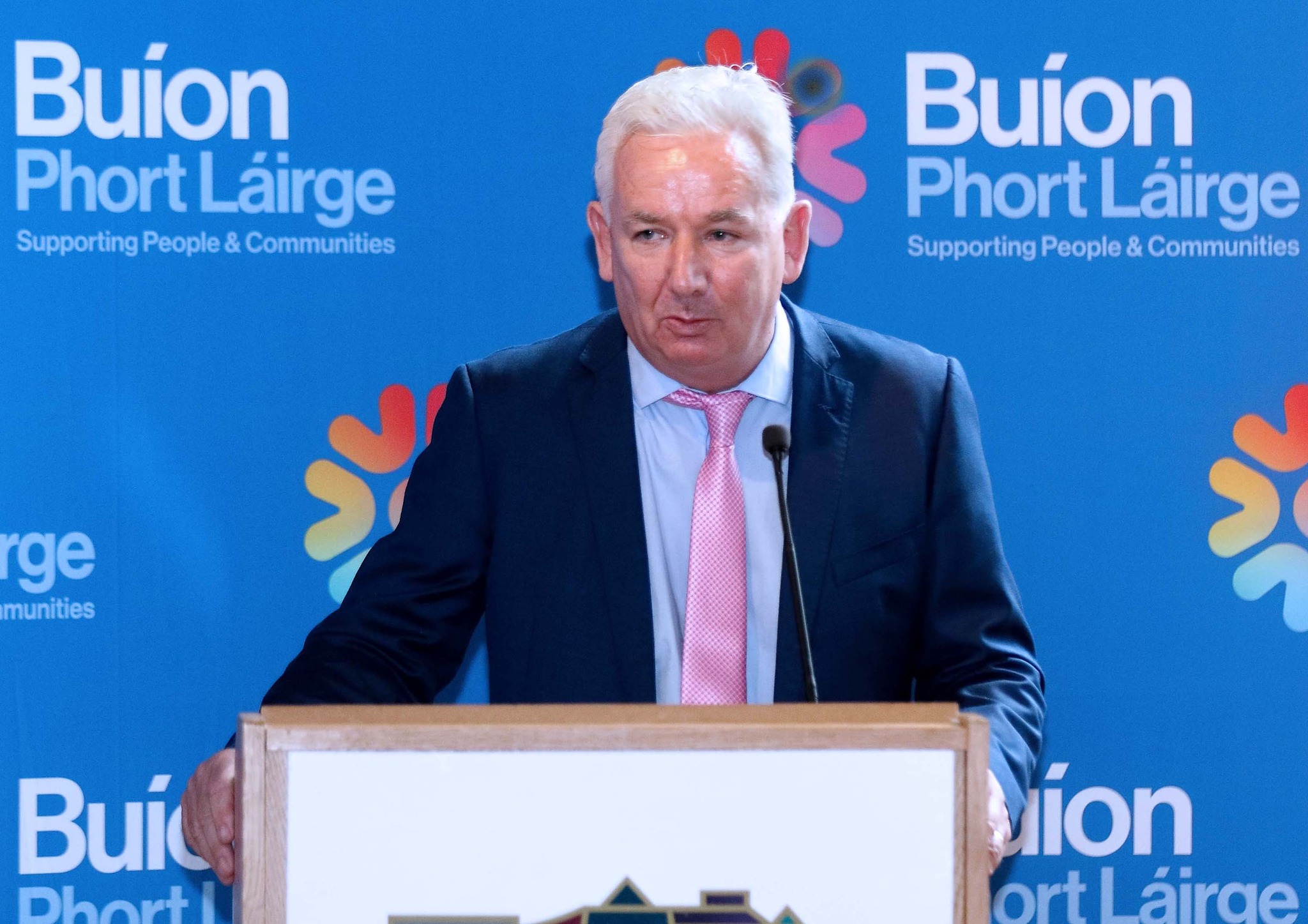
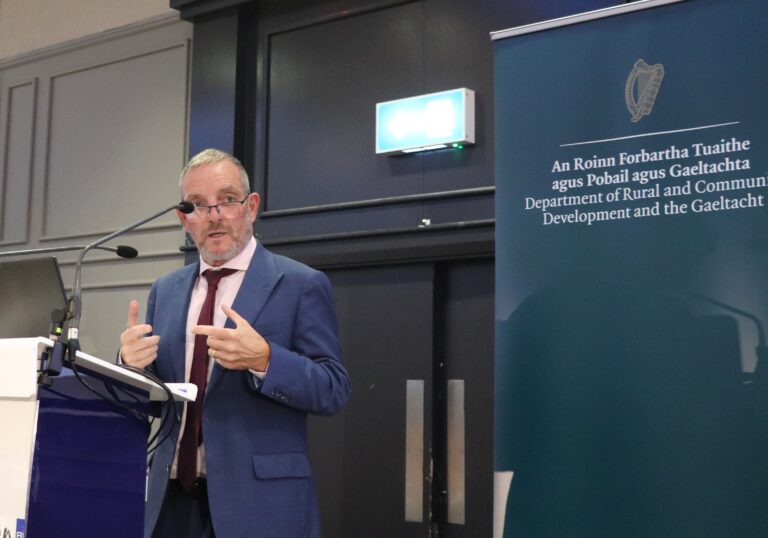
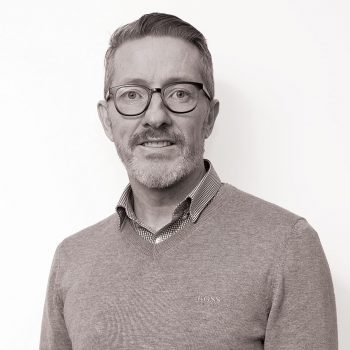
• Liam Quinn, CEO, Buíon Phort Láirge, previously known as Waterford Area Partnership, speaking at the launch of the organisation’s new brand.

“A new interim board was appointed in March of 2021. A new interim CEO came in at the time from another local development company, just to help with the transition and they set about recruiting a new CEO, which saw me join in January of 2022. A couple of months later a new Chief Financial Officer was appointed. A lot of the board stayed on even though they were only coming in for a few months, four of the ten remain.”

He feels that the organisation is in a healthy state today, that it has expanded its role and is fulfilling its remit. 

“We have enjoyed a good period. We have grown quite a bit, taken on new programmes, we have probably doubled in size in terms of our staffing complement in that period. I think we have probably earned the trust of a lot of the funding departments and agencies that would have been involved with the Partnership down through the years.”

Moving to a new name helps reflect the new energy within the organisation he feels.

“We launched a strategic plan last year, a five year strategic plan, and we felt that in the next phase of our evolution we would look at branding. Initially we were just looking at the logo which hadn’t changed since the organisation was established in 1996. But the more people we spoke to; our staff and stakeholders and others; we found the idea of changing our name was strongly favoured by most. So that’s what we did.”

Those who had been there for the dark days were particularly happy to see the name change. 

“Most of the staff who went through that difficult period have stayed and continue to work and deliver supports on that ground. That cohort wanted a fresh energy and impetus because they could see the Company was going in a new direction and they felt a rebrand and a name change would help that.”

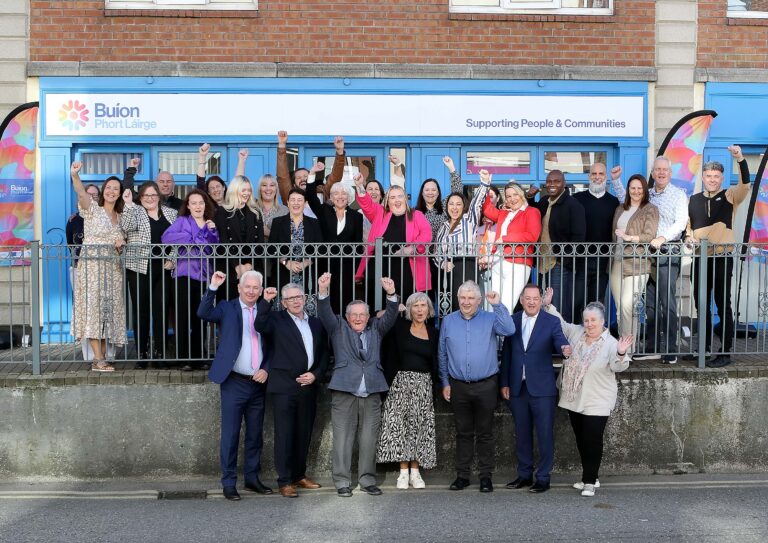
• Buíon Phort Láirge is the new name for Waterford Area Partnership.

While most of us who have gone through the Irish education system do retain at least a cúpla focal, but ‘buíon’ would be a new term to most.

“Buíon is an old Irish word, which means a band or a group of people coming together to work in partnership. That’s buíon.”

How come the organisation decided to go for an Irish name? 

“Initially we hadn’t planned to, but we were trying to reflect in some way what a local development company does. For most people not in the sector, if you asked them what does Waterford Area Partnership do, most of them wouldn’t know what a local development company does. When I applied for the job I didn’t know. We were looking at combining English words and things, but it just wasn’t right. Then we got thinking about the use of an Irish name. We have a Gaeltacht in Waterford. The more we looked at Irish words, we found many that would reflect what we do. 

“There was an Irish Language Amendment Act a couple of years ago, and there’s a directive about changing company names and logos. What it allowed us to do if choosing a new Irish name, was that we could put the strapline (Supporting People & Communities)  in English. While ‘Buíon’ is a word not familiar to many Irish people let alone non-Irish people we work with, our strapline tries to encapsulate what we do, which is support people and communities.”


Community development increases not enough, says Irish Rural Link

0

Explaining why the increase was still insufficient, it noted that:

“Many community and voluntary organisations are already grappling with rising costs, with auto-enrolment pension schemes and increases in the minimum wage coming into effect in January 2026, they will continue to struggle. As a result, much of the additional funding will likely be absorbed by these costs, leaving limited scope for meaningful development in rural areas.”

Irish Rural Link plays a role in supporting Meals on Wheels nationally. It commented: “We are also disappointed that there was no mention of increased funding for the Meals on Wheels service—an essential support for many rural residents.”

In its pre-budget submission, IRL had called for a minimum €16 per week increase in core social welfare payments, saying it is needed to begin lifting people out of poverty. Following the budget announcements, the organisation acknowledged the €5 weekly increase in the fuel allowance and the extension of the scheme to households receiving the Working Family Payment. “However, this increase will be offset by the rise in carbon tax, with further hikes scheduled to take effect on home heating fuels in May 2026. The immediate increase in petrol and diesel prices f will disproportionately affect rural families who rely on cars for commuting, school runs, and healthcare access,” it said.

While the CEO of Irish Rural Link, Seamus Boland, welcomed “the increase in some social welfare payments” he said this will not be enough to offset the continued rise in essential food prices.

“With the increase in carbon tax on petrol and diesel taking effect tonight, low-income households in rural areas will continue to struggle,” he said.

Regarding Meals on Wheels services, he said they are “already under pressure from rising delivery costs and now face additional financial burdens due to auto-enrolment and the upcoming minimum wage increase in January”.

Minister Buttimer appalled by Gaza deaths and concerned for Irish volunteers in Israeli custody

He told Changing Ireland:

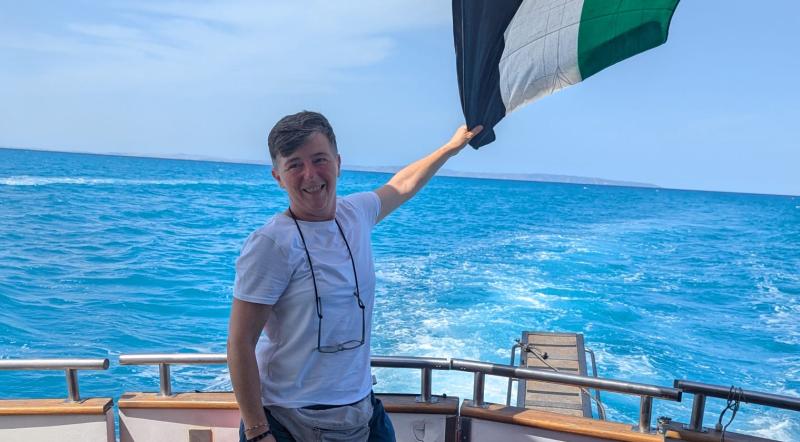
“All of us abhor what has happened. The interception of the flotilla is wrong on a huge number of levels, in particular when you speak about someone like Sarah Clancy, Tadgh Hickey and others who are volunteering in their spare time in inverted commas to continue the work they are doing in terms of community work, intervening on behalf of people who are under on the margins now and who are being killed in what is an extraordinarily awful situation.

“So, as you know, government, through the Office of An Tánaiste and An Taoiseach are monitoring the situation, have engaged with the Irish Ambassador and the consular service available to people. We must uphold international law and that applies to Israel, it applies to all of us, they are not doing that,” he said.

“And as a minister in the government, as an Irish citizen, I am concerned about fellow citizens, but equally as important, the people of Gaza. And we have as a government got to stand up for people. We have done that with the people of Palestine, in this case, An Taoiseach and An Tánaiste are monitoring on behalf of the government and we will do everything we can to ensure that our people are looked after and minded and they are not treated badly and shouldn’t be treated badly,” said Minister Buttimer.

The minister spoke to us in the midst of attending a showcase event in Athlone today to celebrate the achievements of community workers nationwide through the Social Inclusion and Community Activation Programme (SICAP).

Clare PPN co-ordinator Sarah Clancy abducted sailing to Gaza

Minister Jerry Buttimer opens “In Our Words” social inclusion event in Athlone

See our spread of photos here:

https://www.facebook.com/changingirelandmedia/posts/pfbid022k1Cyq9PwoQgYg2PrqUxQKKbGjCTxvD3HFsmqZM4Uc2WSFQR35Cqj1os4DKMiMjXl?__cft__%5B0%5D=AZVZGwH-woCZ68OWNECu1zL22dSmyP7PiqINHZHNizTk9THriYFWrp-MA2LdiRbdcHD75WhlP2ZJWFKcAgCc7hFvDNvNYntrpUrIZoHoECDWo_lbBUEh5DEtp3tUGFOPRPMC7vK0RMQ-elWy4iA4OlGXcbpCRpI8aPLt9zqSqal8PE8-CGq9t9MrN4vbvBM0w_g&__tn__=%2CO%2CP-R

:

Speaking about the government’s primary social inclusion programme Minister Buttimer TD said, “Today’s event – SICAP “In Our Words” is an inspiring showcase of community led social inclusion projects and initiatives, shared through the voices of those with lived experience.”

The day long gathering celebrated the power of lived experience, bringing together individuals from all parts of Ireland to share their personal journeys and others to highlight the impact of community-led projects supported by the SICAP programme.

The Minister continued:

“Today is about more than just the programme, it is about real people, real stories and the real impact of receiving SICAP supports. I am truly looking forward to hearing about the journeys that brought you here today. By sharing your experiences, you are empowering others to learn, adapt and take meaningful action.”

Keynote Speaker – Dr. Niamh Sheridan

Dr Niamh Sheridan, the keynote speaker; Director of Togher Family Centre in Cork, delivered a truly inspiring speech. Dr Sheridan has worked in community organisations for 25 years and spoke of the power of people in the community to create impactful and far-reaching change.

Niamh said:

“Ireland has a long history of impactful community development. Today’s event has confirmed how deeply we care for each other, and how committed we are as people, to creating a just society for all of those who live in our wonderful country. In the light of the threats to justice and fairness in our world today these characteristics are valuable beyond measure”

Minister Buttimer finished the day by thanking all involved in fostering an equal and inclusive society within marginalised communities.

“Your dedication is making a significant difference, and I eagerly anticipate the positive impact of your future endeavours in continuing to deliver the SICAP programme. Thank you and best wishes for the journey ahead,” he said.

The event concluded with the Chorus Connection Community Choir from Offaly, who performed a medley of songs.

SICAP is co-funded by the Irish Government, through the Department of Rural and Community Development and the Gaeltacht, and the European Social Fund Plus under the Employment, Inclusion, Skills, and Training (EIST) Programme 2021-2027.

Clare PPN co-ordinator Sarah Clancy abducted sailing to Gaza

Commenting on the attacks and abductions, Francesca Albanese, UN Special Rapporteur on Palestine, said “As I watch Israel’s illegal abduction of the only humans who have risked their lives to break Israel’s unlawful blockade, my thoughts are with the people of Gaza, trapped in Israel’s killing fields. Shame on Western governments first and foremost, and their complicit inaction.”

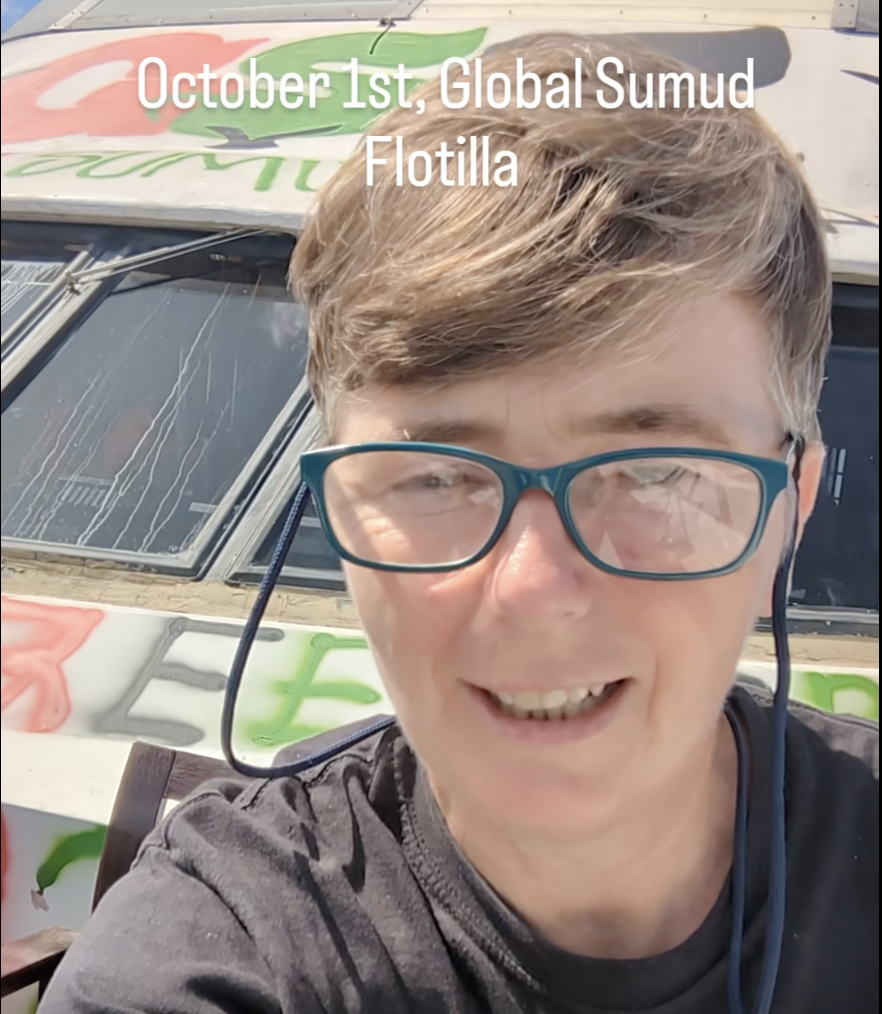
Sarah has been co-ordinator of the Clare Public Participation Network for almost a decade, with the organisation this week preparing for its tenth anniversary celebrations, as she is striving to oppose genocide in Palestine. She previously held roles with SpunOut, Amnesty International Ireland and the Galway One World Centre. 

She has been documenting the flotilla’s journey on Facebook (https://www.facebook.com/sarah.clancy.520). Just before 7pm last night she provided an update on the situation when the flotilla of 41 boats was within 100 nautical miles of Gaza.

“Still okay here in our boat, but we definitely have military boats arrived at the front of the flotilla.”

Still hoping some of the boats might make it through, she said, “We want to break the illegal siege that has been on Gaza since 2007 and we want to deliver aid and solidarity to the people in Gaza. And we send them our love from all our boats, no matter what happens this evening,” she said in her last broadcast before Israeli forces cut communications.

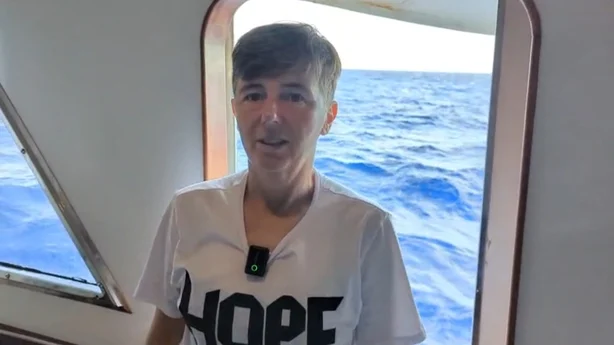
Sarah making her last video broadcast before the Spectre was attacked – click image to hear Sarah.

Before travelling, Sarah wrote about the value of the flotilla in her local newspaper The Clare Champion.

“Our intention is to… open up a humanitarian corridor through which the Palestinian people in Gaza will be able to access and arrange for goods to be delivered through their own territorial waters, as would be their right except for the illegal blockade which Israel and its allies have subjected them to since 2007,” she wrote.

“Even before the current UN declared entirely deliberate famine and the relentless two year long genocidal assault on the people of Gaza, this blockade was illegal and immoral. However it has been tolerated nonetheless by all western governments, and actually most governments from around the world, and despite all we have seen in this last two years it is still in place.”

She said she had been shocked at the condition that some children coming to Ireland from Palestine were in, years before the genocide even started.

“I remember a few short years ago in Kinvara, seeing the effects of this blockade on the bodies of the twelve year old soccer players who were invited from Gaza to come on a tour of Ireland by super activists from around Ireland who were trying to create an opportunity for these children to experience a carefree few weeks even once in their childhoods.

“These charming and spirited boys from Gaza in their dazzling pink kit outplayed the Kinvara kids hands down, but honestly, to everyone who saw them, they looked about the average size and weight of much younger children, maybe 9 or 10 years old.

“Even then global power politics was playing out on the small and utterly blameless bodies of children.”

She said she was delighted to be travelling on the flotilla. “During one of the most horrifically evil periods of contemporary history, life has thrown me a chance to see a glimpse of another possible world. I couldn’t be more grateful for this chance.”

Sarah is originally from Galway and last month she told the Connacht Tribune about attacks on the flotilla by drones when berthed in Tunisia.“The entire flotilla could have blown up causing severe injury and death. The heat was so intense it burned through life jackets, which are fire retardant. These are clear attempts to sabotage us.”

She said that the experience was more worrying for her partner Anne Mulhall than for herself: “She is anxious. It is harder to be at home watching this unfold. She would love to be here also, but couldn’t get the time off work, and it was decided that I would go. She wants just as much to be here, but is back home minding our dog.”


Clondalkin is responding to drug-related gang intimidation

0

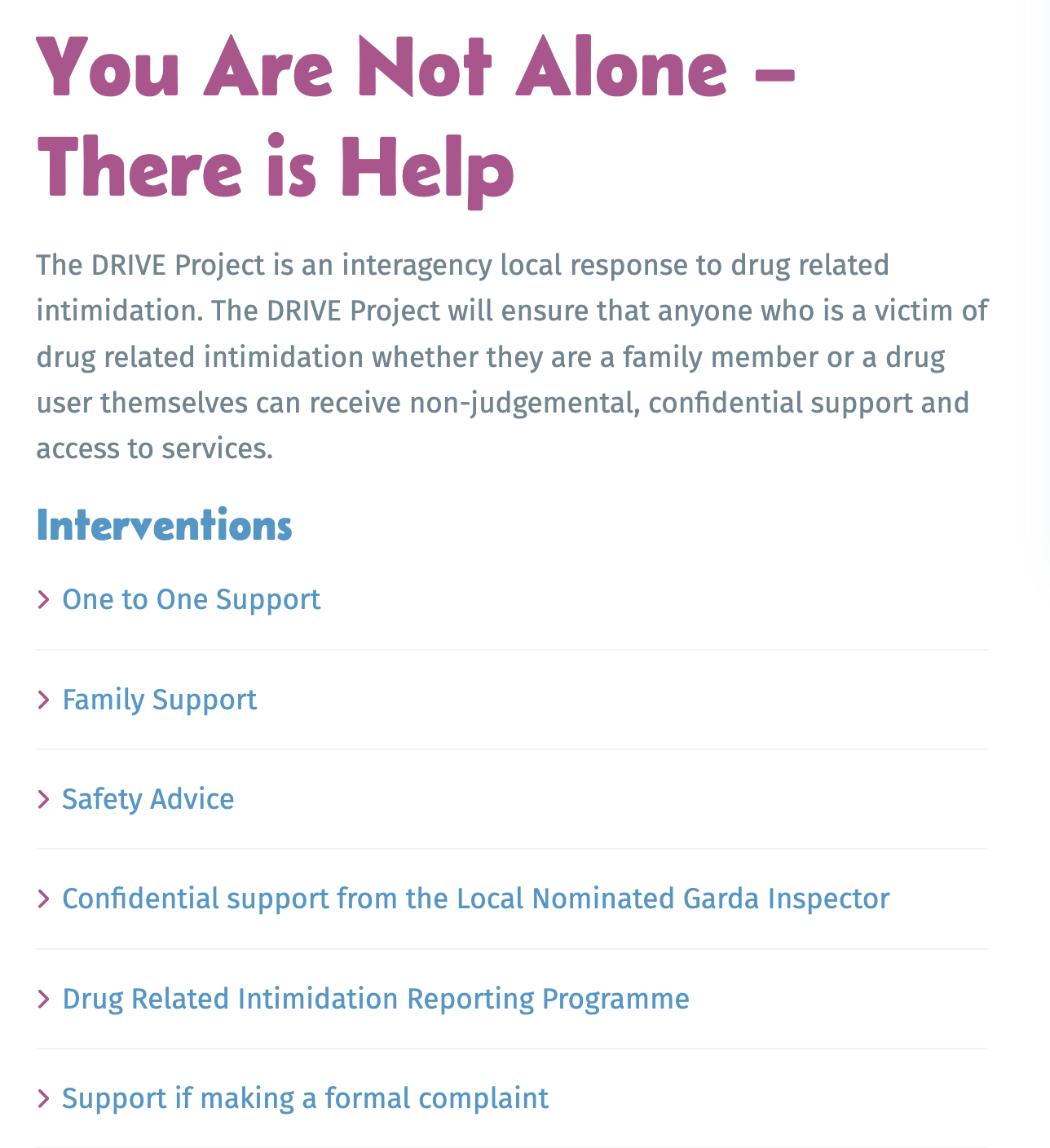
The word “Drive” in the project’s name stands for Drug Related Intimidation and Violence Engagement.

“They will refer you to a guard and there are certain protocols. If you are worried about being spotted with a guard they are supposed to meet you in plain clothes, there are a lot of things like that, that they have agreed on. I think you get a mobile number, so you don’t have to ring the police station, that means someone else in the police station doesn’t pick up the phone to you and it doesn’t become public knowledge or whatever. There are less ways that the information could get out, and that can help put people’s mind at rest.”

“The whole point of it is that you get the guards on board. That has been approved right up to the Department of Justice, whereas previously it was very hard to see where the connection was between the drug elimination protocols and any kind of legislation. It’s much firmer now, there’s a lot more buy in from the guards,” he says.

He says the project also has the potential to shine some more light on issues that are very much in the shadows. 

“There’s a data capture piece as well. A big thing about drug debt intimidation is that while we know it’s an issue, we just don’t know the scale of it. There is a reporting piece that Family Support are doing anonymously on it, just to get an idea of the scale. That could drive change around legislation and it might attract more funding. I think they are rolling out Drive Liaison people to make sure it gets implemented properly.”

In Clondalkin some people have been helped with the provision of security for their homes. 

“We have got some funding from South Dublin County Council, and I know Tallaght are doing this as well; providing a little safety package. There might be a security light if someone comes knocking at the door. Camera doorbells have been given out as well, so people don’t have to answer the door, they can look at their phone to see who it is, just in case.”

While drug debts are one very serious issue associated with the deadly business, there are others, and Drive also works to provide support to those affected. 

“You might be interfering with someone’s trade or something, and that may lead to intimidation. It might not be drug debt intimidation, it might be another form of intimidation. If there are lads dealing at the end of your road or outside your garden, that can create a really stressful situation for people. Then the idea of reporting it to guards doesn’t appeal to a lot of people, because they may know who did it. This system will probably approach that in a better way.”

When people talk about business moving online they’re generally referring to things like the sale of clothes or groceries, but drugs have also gone online.

“There are huge changes in drug dealing, because of the internet for a start. There’s huge drug dealing happening on Instagram, on Telegram, lots of other messaging apps. Then you have this new scenario with young people on scooters.

“In our areas there are certain spots where you’ll be able to get a deal. But if you can’t get there the lads will jump on a scooter and deliver out to you. We’ve heard lots of things from the guards. They’re expensive, these scooters, the kids aren’t buying them by themselves.

“It’s quite young males generally using them, going off getting these scooters and getting attracted to this drug dealing lifestyle. I think the technology has really facilitated a new form of drug dealing. Between scrambler bikes and scooters it has become much more mobile.”

He says that the fact of children being exploited by drug dealers is “plain as the nose on your face”, but just because it is being seen doesn’t mean that it is not very challenging to tackle. “I think from a justice point of view, it’s difficult to do anything about it. That thing of young people being exploited and being dragged into it has always been there, but it has changed in that they are being brought in at a much younger age. There is a lot of concern about grooming now. You hear about kids getting trained on bikes from 10 or 11 years of age and being brought into it that way.”

He feels that greater resources need to be provided to reach these young people, who fall onto the very margins of society before they become teenagers. 

“The issue isn’t to be punitive or to get the guards after them. It’s more about how do you identify these kids, how do you then get people to work with them. We haven’t got the resources, the youth services haven’t got the resources. These kids are very hard to engage. There have been some specialist programmes in some areas, really assertive outreach but we don’t really have the resources. That’s a gap that we have seen in the area. We applied for some justice funding last year, but we weren’t successful, but we’ll keep looking at those kind of things.”

The Clondalkin Drug and Alcohol task force was established in 1997, and the challenges it has seen have changed dramatically since then. 

“Thirty years ago I don’t think we had mobile phones. That kind of stuff has definitely brought massive changes. Opiates, I think that’s something that by and large taskforces and communities really responded well to, and that the Government really responded well to, overall, although there were some failings there. There are other things that have evolved, the new psychoactives substances in the 2010s, all the head shops and stuff. There are all these global developments as well, the globalisation of the drug trade. That started in the 70s and has continued to evolve. It just keeps evolving.”

There are 14 drug and alcohol task forces, 12 in Dublin, one in Bray and one in Cork.

While drug use has grown exponentially over the years, Trevor says the worst impacts are still disproportionately felt in the disadvantaged areas served by the task forces. 

“There are a range of factors, early school leaving, high youth dependency ratios, underemployment, loan parenting. There are a lot of factors that leave some areas at more of a disadvantage if you end up with a substance use issue. 

“The social capital thing, some people are much more able to access stuff. There’s private treatment. You would often hear of people being able to access treatment at Pat’s because they have private health insurance. Most people who come into our services wouldn’t even know where to start with private health insurance or anything like that.”

Click below here to find out more about The Drive Project:


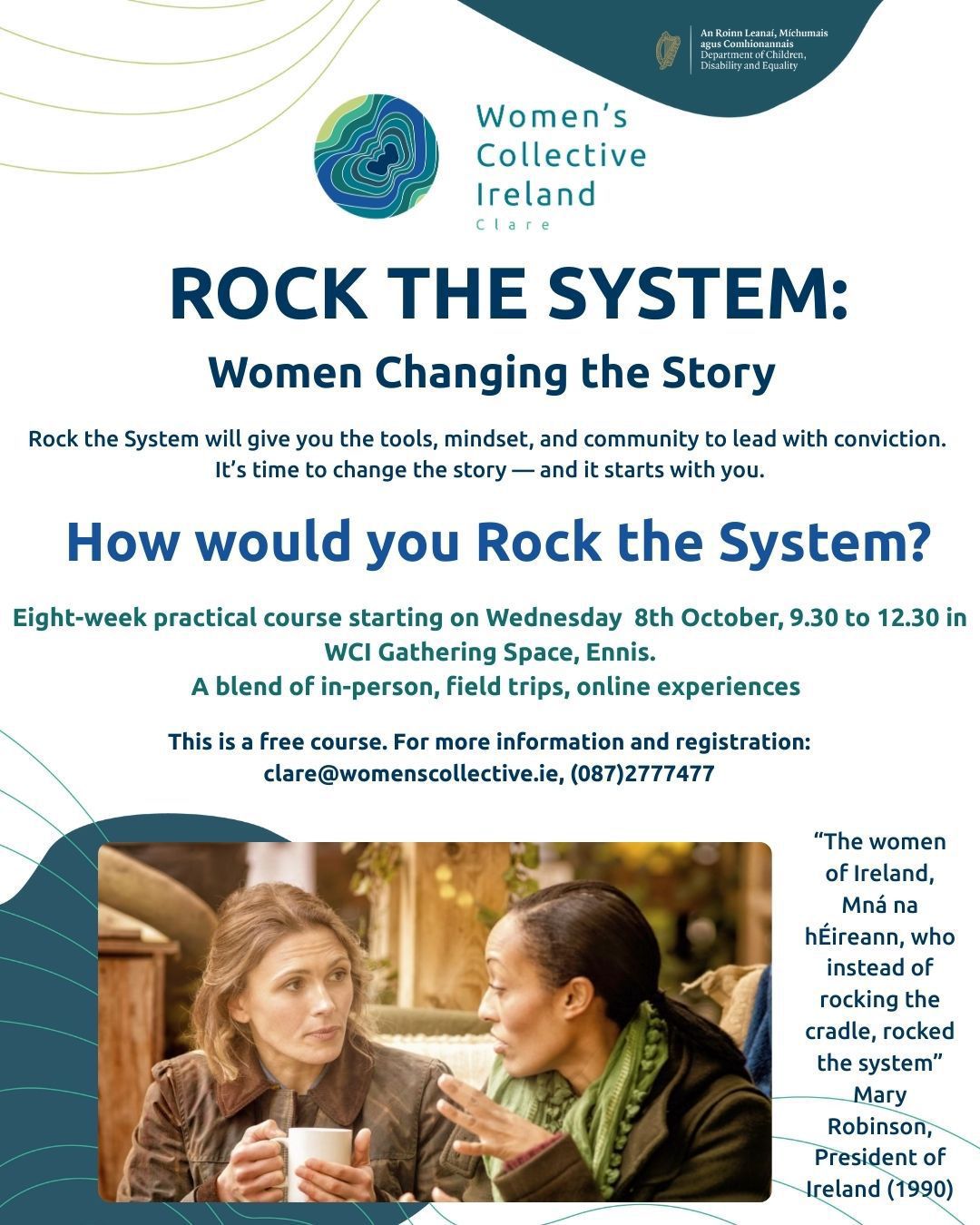
Clare women plan to “rock the system” and “change the story”

As joint co-ordinator Cecilia Brizuela says:

“This is a call to action for women who are ready to challenge the status quo, rewrite outdated narratives, and take their place at decision-making tables across our community. It will be an opportunity for women living in Co. Clare to gain the tools, mindset, and community to lead with conviction. ‘Rock the System: Women Changing the Story’ will empower, elevate, and equip women to lead with purpose, confidence, and impact.”

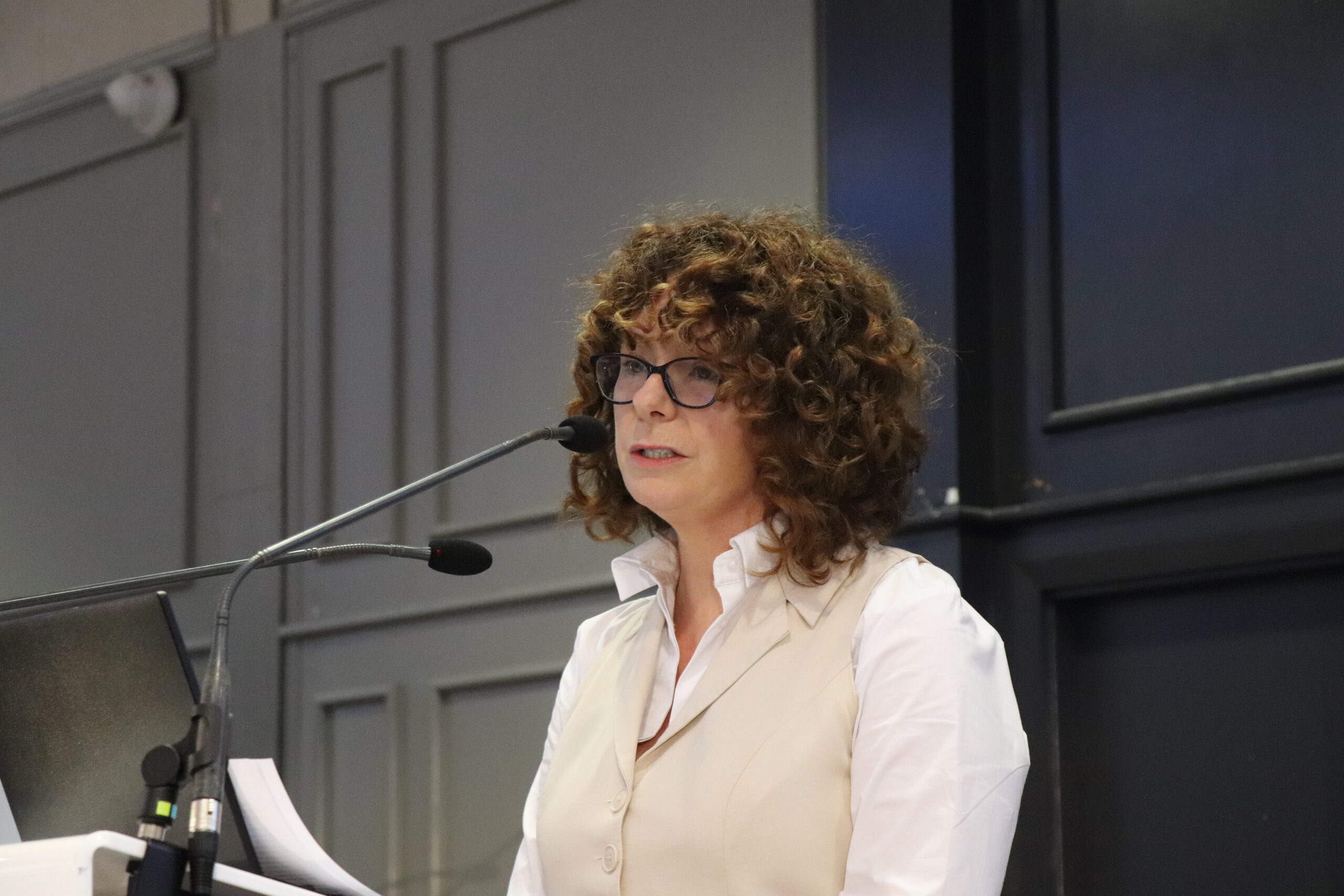
WCI – Clare, formerly known as Clare Women’s Network, is part of a national network that represents and works directly with women experiencing disadvantage. It takes a feminist, community development, anti-poverty, and social inclusion approach to its work.

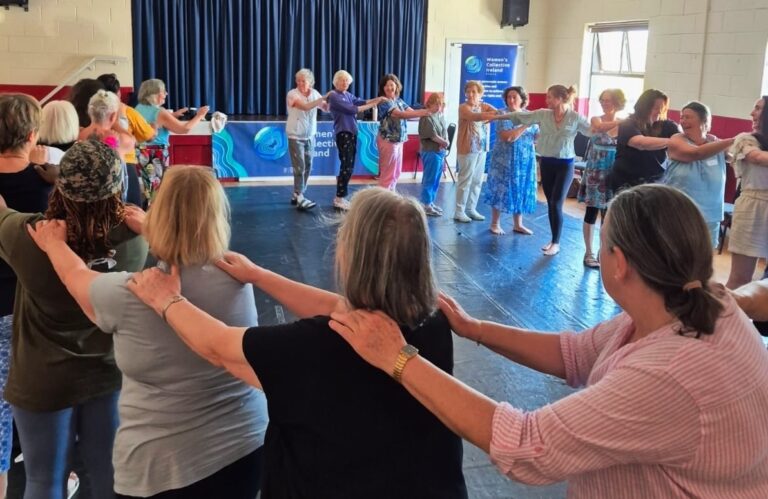
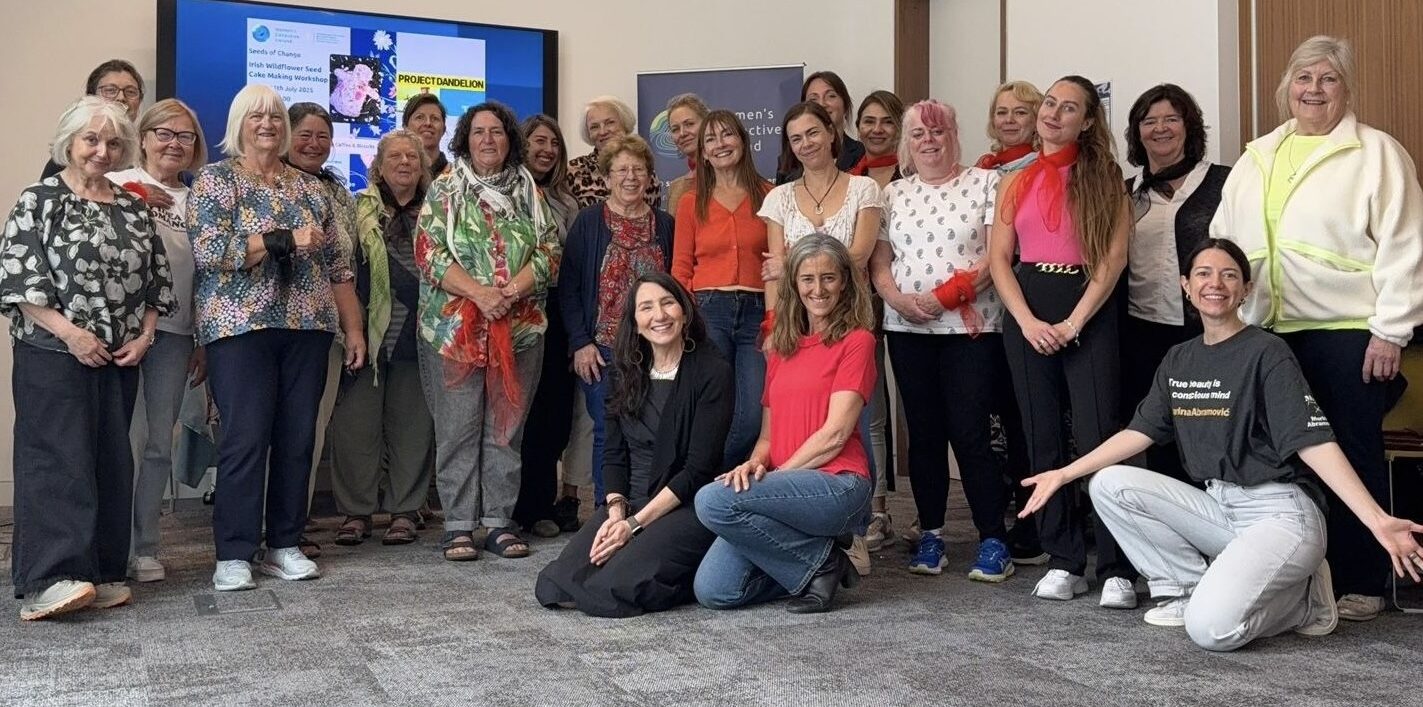
If you’re wondering what such work involves, between February and August, they hosted popular workshops covering women’s wellness, Yerba Mate Tea and Tango, wildflower seed cake making, mindfulness in nature and self-care yoga, and flower wreath making. They collaborated with Clare Traveller Community Development Project to host a wonderful International Women’s Day Event. More recently, they organised a seaweed foraging trip as part of National Heritage Week.

• Women’s Collective Ireland – Clare recently organised a cultural exchange event titled ‘Yerba Mate Tea & Tango’.

WCI – Clare is now planning more workshops and training, such as a supportive, informative workshop which will be held soon in three locations across the county, with the support of Clare Local Development Company.

Cecilia and team members development worker Martina Hynan and project worker Tanya Palamar say their doors are open at their base in Clon Road Business Park, Ennis (V95 R8YT) – contact them in advance if possible (contact details below).

“Let’s connect, collaborate, and create a better future for women in Clare,” says Martina.

If you cannot travel, but are curious about upcoming events, WCI-Clare would like to hear from you. Email: clare@womenscollective.ie or ring 087-277-7477. You will also find them on Facebook.

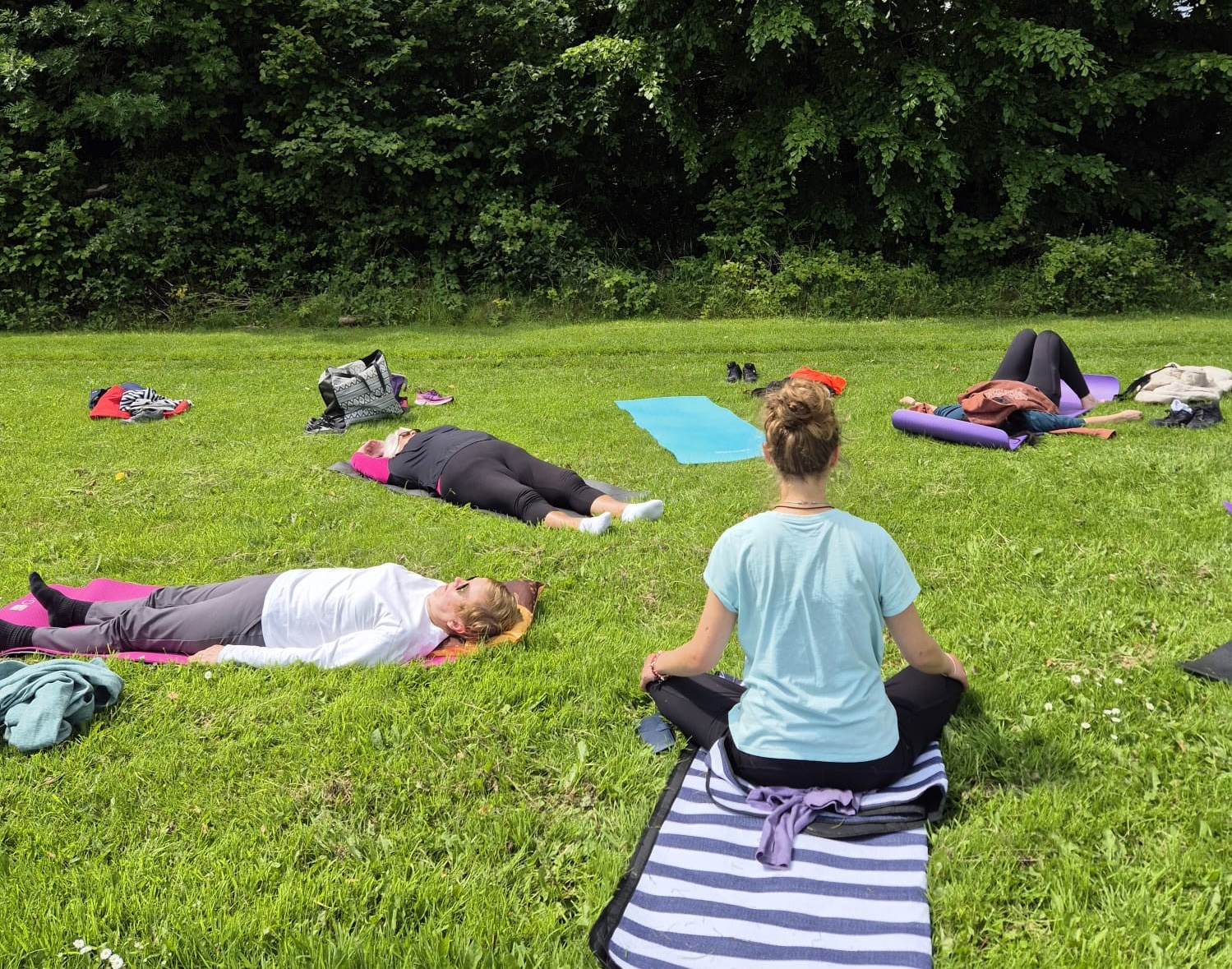
• Women taking part in a Mindfulness in Nature & Selfcare Yoga session during the summer organised by WCI – Clare.

About Women’s Collective Ireland

WCI – Clare is a member of Women’s Collective Ireland, a national women’s community development organisation working to advance disadvantaged women’s equality through women’s community development.

The organisation supports 17 Grassroots Women’s Community Development Projects in Clare, Donegal, Dublin, Kerry, Leitrim, Limerick, Mayo, Monaghan, Roscommon, Waterford, Westmeath, Wexford and Ronanstown in Dublin. The projects are core-funded by the Department of Children, Disability and Equality.

W: https://www.womenscollective.ie/

Scariff shows country the way in quest for full radio licence

0

The core aim of every community radio station is community development using radio as a way to bring people together and Jim has been involved in Scariff Bay Community Radio since 2015 when it began broadcasting, initially solely online.

“In 2017 we got our first FM licence. The normal first FM licence is a 30-day licence, so we broadcast every Saturday for about six months. We did the same in 2018. In 2019 we got our first hundred-day licence and with that we broadcast for 50 weekends, both Saturday and Sunday. We have basically been doing that since 2019.”

Even for the couple of weekends each year they can’t go on the radio, they still keep things ticking over online.

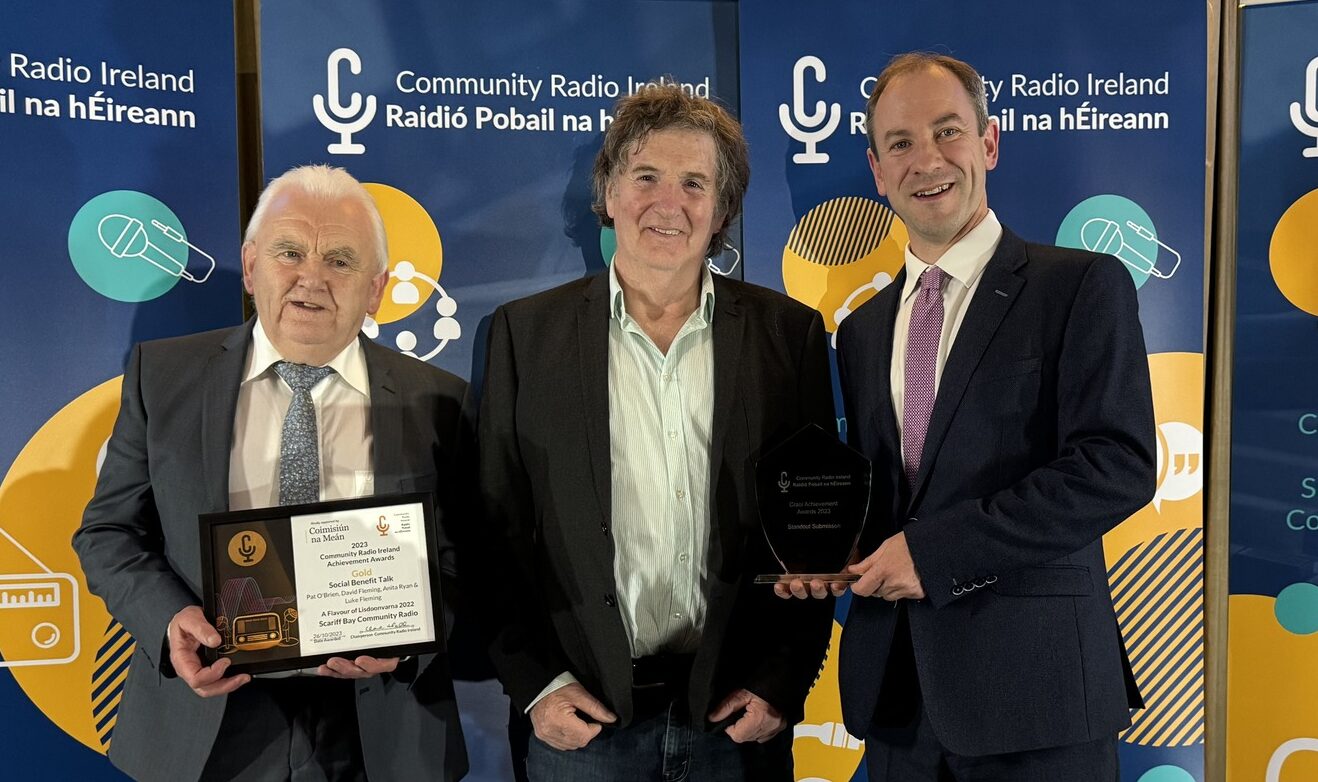
• Pat O’Brien, Jim Collins and David Fleming from Scariff Bay Community Radio accepting a Craol award in 2023.

While the station hopes to be awarded a full community radio licence that would allow them to broadcast daily, it will be for the group to choose how often to broadcast.

“We are a voluntary group and we reckon at this point in time we haven’t the personnel or the resources, or the population I would say, to go seven days a week. For us, it’s a hobby, it’s an interest and we don’t want to be stressed from it,” said Jim who is also the station’s chairperson, although he plans to pass on this role shortly.

He feels three days a week is very realistic with the level of interest that they have:

“We are getting more and more people in doing programmes and we feel that (broadcasting on) Friday, Saturday and Sunday would be fine. We have a board of nine people and at last count we had about 90 volunteers. Some volunteers (are) on every week, some (are) on every two or three weeks, some every three months. It varies and it depends on what they do.

“We have sports commentators and analysts on every week for the hurling and camogie season, then they wouldn’t be on as much in the wintertime. We have some people who aren’t on the mic at all, but who help out behind the scenes.”

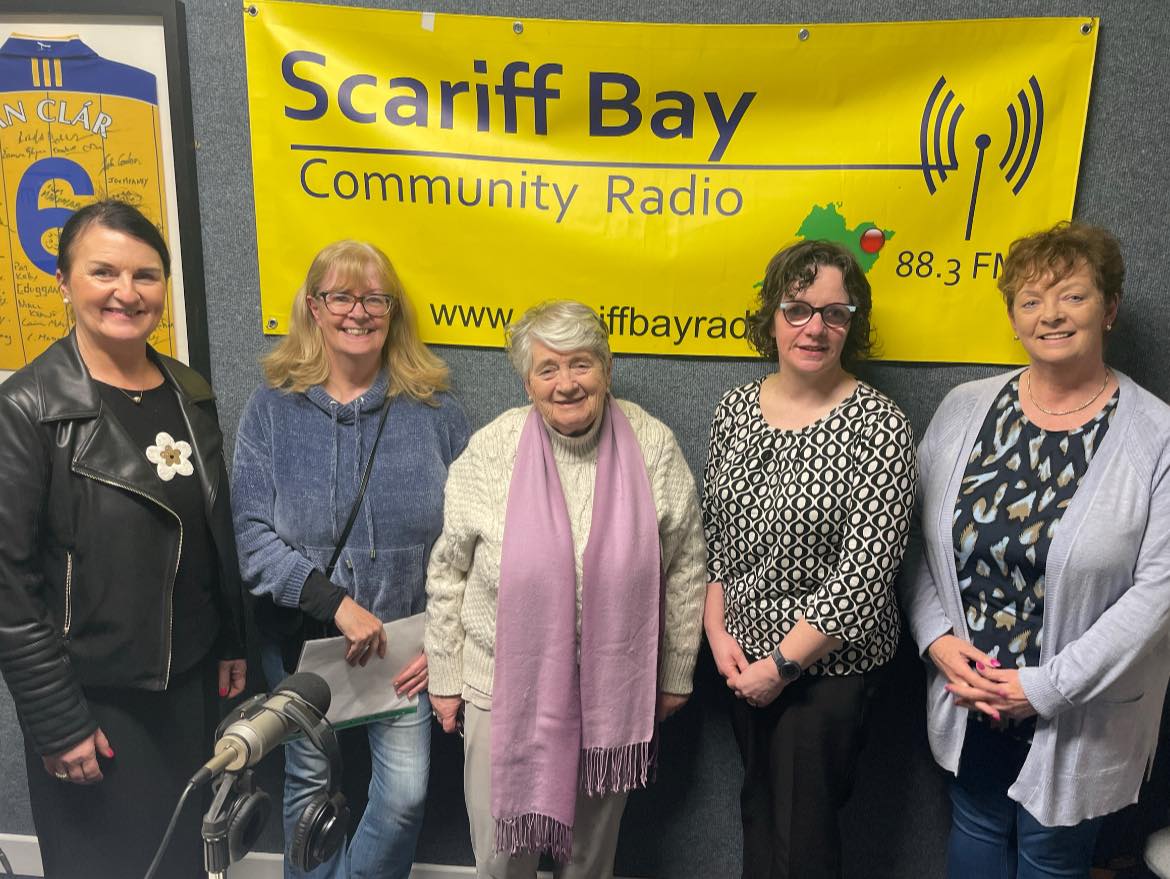
• In March, the premier of a new programme called Ladies Choice was launched and featured this group of local storytellers.

Many of those involved in the station are heavily involved in other local organisations and bring a valuable perspective to Scariff Bay.

“Lots of our volunteers would be in other organisations like Comhaltas, or like Conradh na Gaeilge or the GAA or rugby or athletics or the ICA.

“If all our volunteers weren’t in any organisations, they wouldn’t be well placed to tell us what is going on. We’re an outlet for those organisations to spread their message or say what they do, that kind of thing.”

Community radio is good for those who volunteer.

“It keeps the brain ticking over,” said Jim. “It brings you out, there’s a social benefit in meeting people and in working with other people with the same interest. One of our volunteers jokes that it keeps him off the tablets!

No station has gone for the license Scariff is seeking since 2017, when Community Radio Kilkenny City were granted one. Today, that station is broadcasting seven days a week.

For more information on community radio in Ireland, visit CRAOL, the Community Radio Forum of Ireland Society Ltd: www.craol.ie


What does Scariff Bay Community Radio currently broadcast?

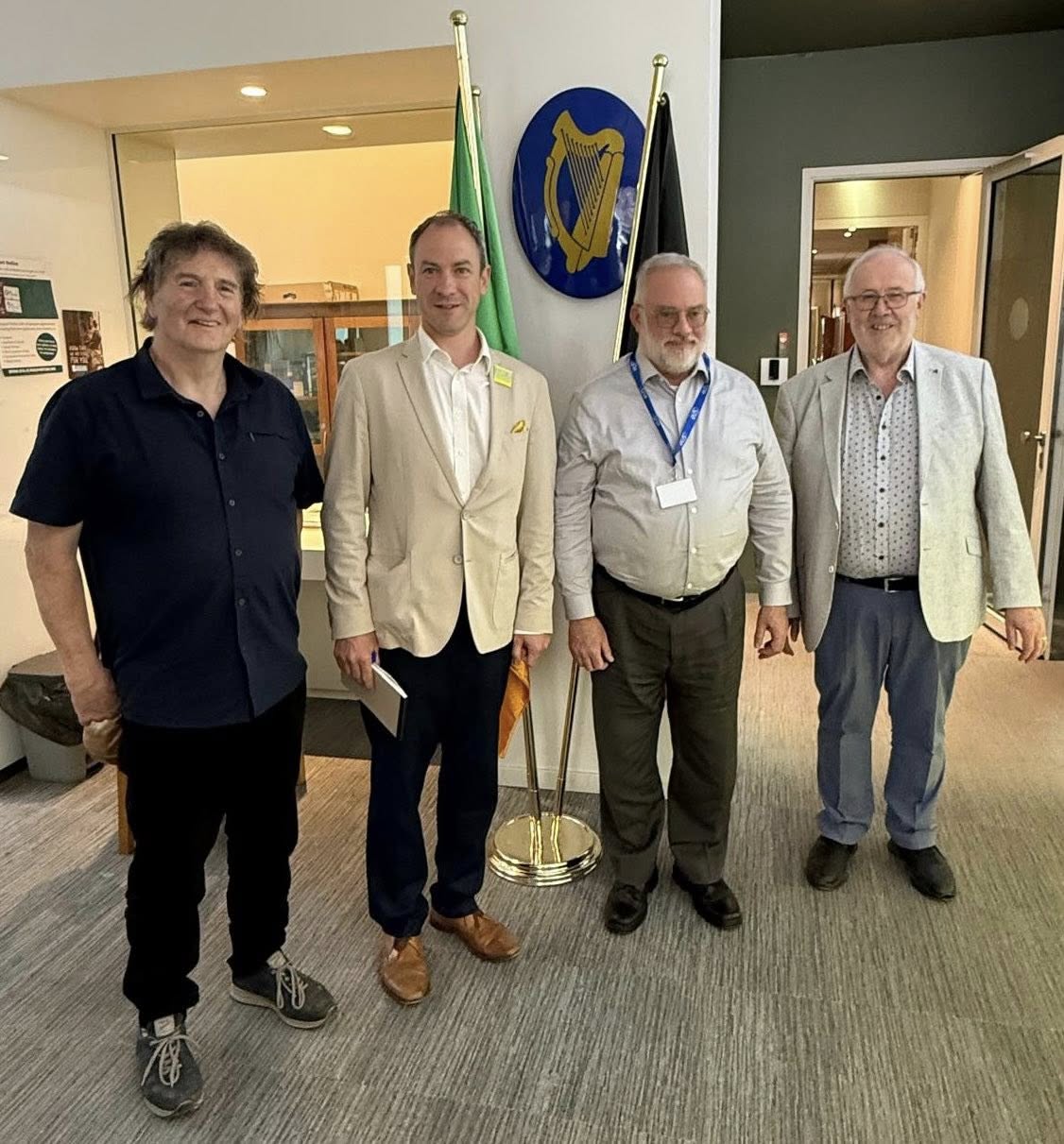
• A delegation from SBCR recently visited Brussels – pictured here are station manager (and chairperson) Jim Collins, David Fleming, the Irish Ambassador to Belgium, Kevin Conmy, and Tom Hanley.

As well as covering local news and sport, part of what’s important for community radio is to give the community it serves a voice.

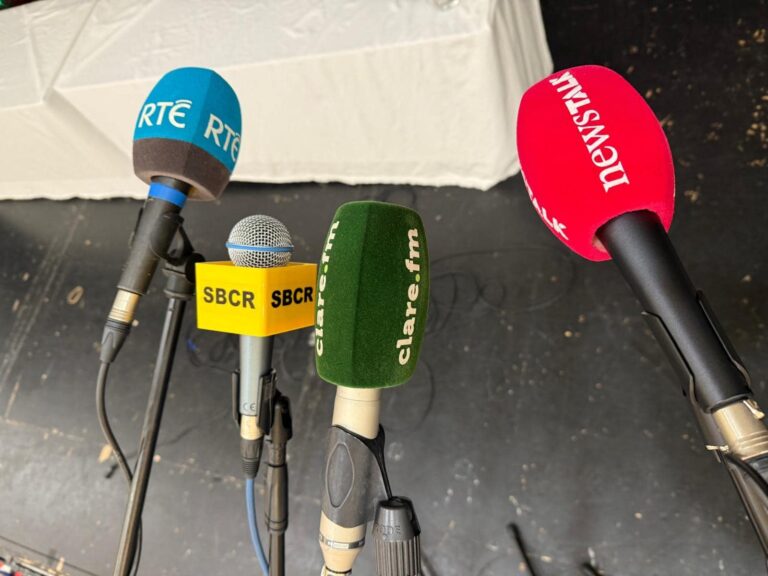
“We have to provide social benefit,” said station manager Jim Collins. It is part of their remit to support community groups, to give people an opportunity to tell their story, or to get involved in programme-making. Every weekend, the station broadcasts a variety of sports, current affairs and music shows.

It has a sporting-themed discussion show, and during the hurling and camogie seasons, the station ensures that every club in the catchment area features in one of its live match commentaries.

The station’s flagship current affairs programme is called Saturday Chronicle, broadcasting every Saturday morning for two hours.

“We have a programme called Local Media where we talk about the Clare Champion and the Clare Echo. It’s kind of like an hour-long version of “It Says in the Papers”. We go through as many things as we have time for in the two papers,” said Jim.

The station has a variety of music programmes – covering traditional, pop/rock, country and more – and it also encourages local musicians to come in and play live in studio.

See their programme schedule here: http://www.scariffbayradio.com/

Popular ‘No Shame Board Game’ gets young Travellers talking

0

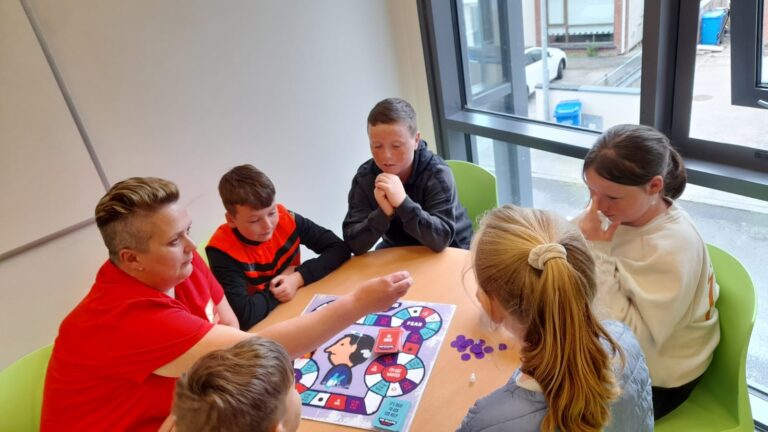
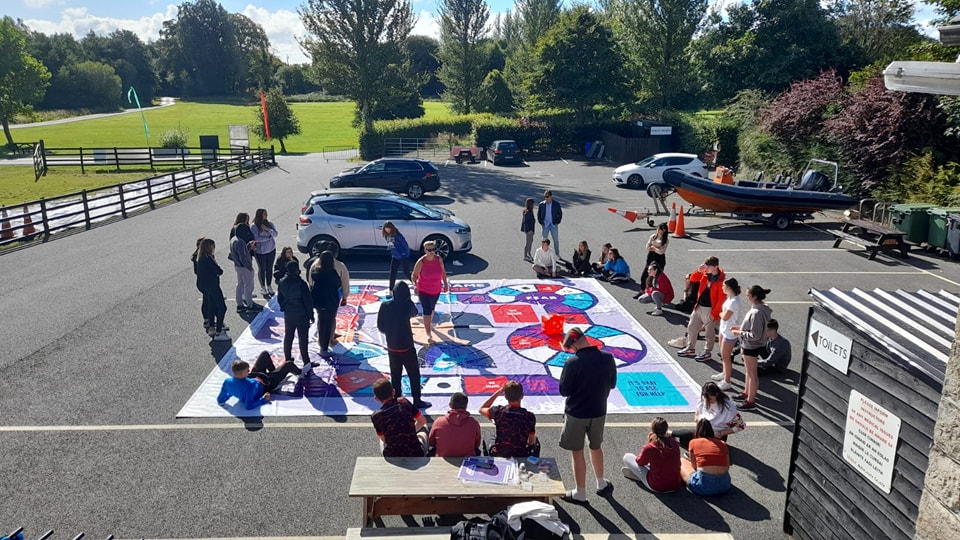
Youth worker Patrick McDonagh is involved in the No Shame Traveller Youth Mental Health project and he said the idea is to get people talking. The board game comes in standard size for playing on a table and in giant size for outdoors.

“The idea of the game is to facilitate free flowing conversation about mental health, without young people even realising it.”

It also gets participants thinking about their own lives and mental health.

“As you work your way around the board there are three types of cards you can get. One type are scenario cards, based on scenarios that young people would face in their teenage years. “Then you also have positive affirmations, and if you read them out loud they give you a good feeling about yourself.

“You also have emotion cards, to teach people about different emotions, and to help them express themselves. There are also ‘Five Ways to Good Wellbeing’ cards and if you get all five you win the game,” says Patrick.

• The outdoor version of the No Shame board game is worth seeing in action.

There are black dots on the board, which represent dark times in life, and if a player lands on one they miss their next turn.

On the scenarios put forward, Patrick says, “There are different scenarios, like if someone asks you to smoke, what do you do then? Or, if you get accused of stealing stuff even though you didn’t, what do you do? You need help with your homework, but no one seems to listen, so what do you do? All of the scenarios have three answers to them.”

The No Shame Board Game was created by a group of teenagers from Trim, Co. Meath, with support from Involve – a youth, community and communications organisation working mainly with members of the Traveller community. The board game has since been recognised at the Traveller Pride Awards 2022 and the Education and Training Boards National Awards 2023.

From playing the game Patrick feels it is very helpful to young people:

“It is all about having fun while talking about your mental health in a free flowing non-judging way, while discussing real life scenarios that teenagers face, learning about the ways to good wellbeing and even naming emotions.”

• The game helps young people to express their emotions.

The No Shame project has also developed ‘The No Shame Podcast’, which seeks to feature the voices of young Travellers, but Patrick says it has been difficult to progress it.

“The podcast has been slow to take off – a challenge is to get young people on it. While our campaign is called No Shame we do find that young people are reluctant to be on a podcast related to mental health.”

Some of the topics the podcast series will cover include stigma, conflict resolution, mental health and body image. There are currently three podcasts available in ‘The No Shame Podcast’ series – available on Spotify. ‘If you would like to be involved, you can fill out this short survey to help the podcast producers: https://forms.gle/WiZbAPR7UsciEojDA

In general, Patrick feels that shame around personal difficulties is a huge problem for the community.

“It’s very hard to break down the shame about speaking about your mental health. Suicide rates for Traveller men is seven times higher than for the general population, and for Traveller women it is six times higher.

In my opinion if people didn’t have the stigma around being depressed or being gay or whatever the case is; maybe the suicide rate wouldn’t be as high,” he says.

The No Shame Campaign’s second National Youth Mental Health Conference, held recently in Athlone, brought nearly 100 attendees together to address stigma and promote online empathy among young Travellers.

For more information about the No Shame Traveller Youth Mental Health project: https://www.facebook.com/NoShameYouthProject

You can also follow the project on TikTok.

Inventors never expected waiting list for Leitrim’s Letter Lingo

Tipperary early school leaver breaks into niche work with horses and children with special needs

0

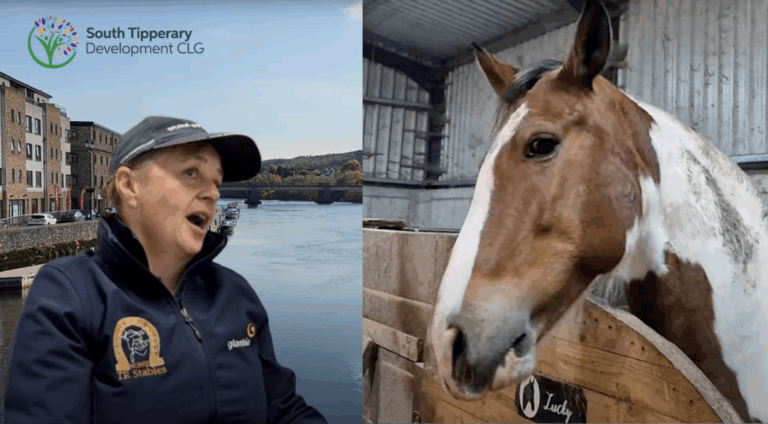
Speaking about her journey to Changing Ireland, to community workers, and recently to a government minister, Catherine said that after leaving school early, she began learning about horses.

“When I was 16 I got the chance to go to work for Pat Flynn, the racehorse trainer. Pat taught me everything, from mucking out the stable, making sure everything was perfect, and that the welfare of the animal was the priority.”

In her late twenties and early thirties, she did voluntary work helping adults with special needs at Camphill Communities, while she would also work as a Special Needs Assistant helping children on a school bus:

“I tried my hand at everything, from taxi driving to working in a factory. But indoor work was never going to be for me (and) I was never going to be a doctor or a solicitor.”

She knew she enjoyed working with horses, and with people with special needs, and eventually she saw a path to combining the two.

“I loved special needs kids and I loved rescuing animals. Then I went on a Tús programme (a community work placement scheme) and I put it together,” she said. She did research on horse therapy for children with special needs and approached Anita Holloway, SICAP development worker with South Tipperary Development Company about doing horse therapy.

Speaking about her early meetings with Catherine, Anita says, “I first met Catherine in March of 2022 when she was here for her Tús placement. She was offered the opportunity to engage with SICAP, which is purely on a voluntary basis, which she took up. She told me about her dream to become a therapeutic riding coach. She felt that it wasn’t attainable because of funding, returning to education, all the different barriers.

“We discussed it and we started looking at possible ways to fund the course, to help Catherine to complete it. Catherine fell under two core areas of work for SICAP – she wanted to return to formal education and she wanted that education to lead to employment or self-employment.”

“There were many challenges and barriers for Catherine to undertake this course. The work of SICAP is to remove those barriers and try to help a person to become more confident and to be able to progress to formal education after having left school early.

“The main challenge for myself as the SICAP worker was to secure the funding,” she said. Ultimately, Catherine accessed three funding streams to pay the €1,950 course, with South Tipperary Development Company paying her deposit, while she received a Department of Social Protection training support grant and support from her local SVP branch’s education fund.

Catherine had turned 50 shortly before starting the course, and after a long time out of education was nervous about undertaking assignments.

“We would sit down together and look at what she was being asked. We would break them down, simplify them and she would go away and do the research,” said Anita.

Catherine was delighted she had done it when she completed her Level 6 course in therapeutic coaching.

“It was worth every early morning and late nights getting home from Wicklow, it was worth the whole lot of it,” she says.


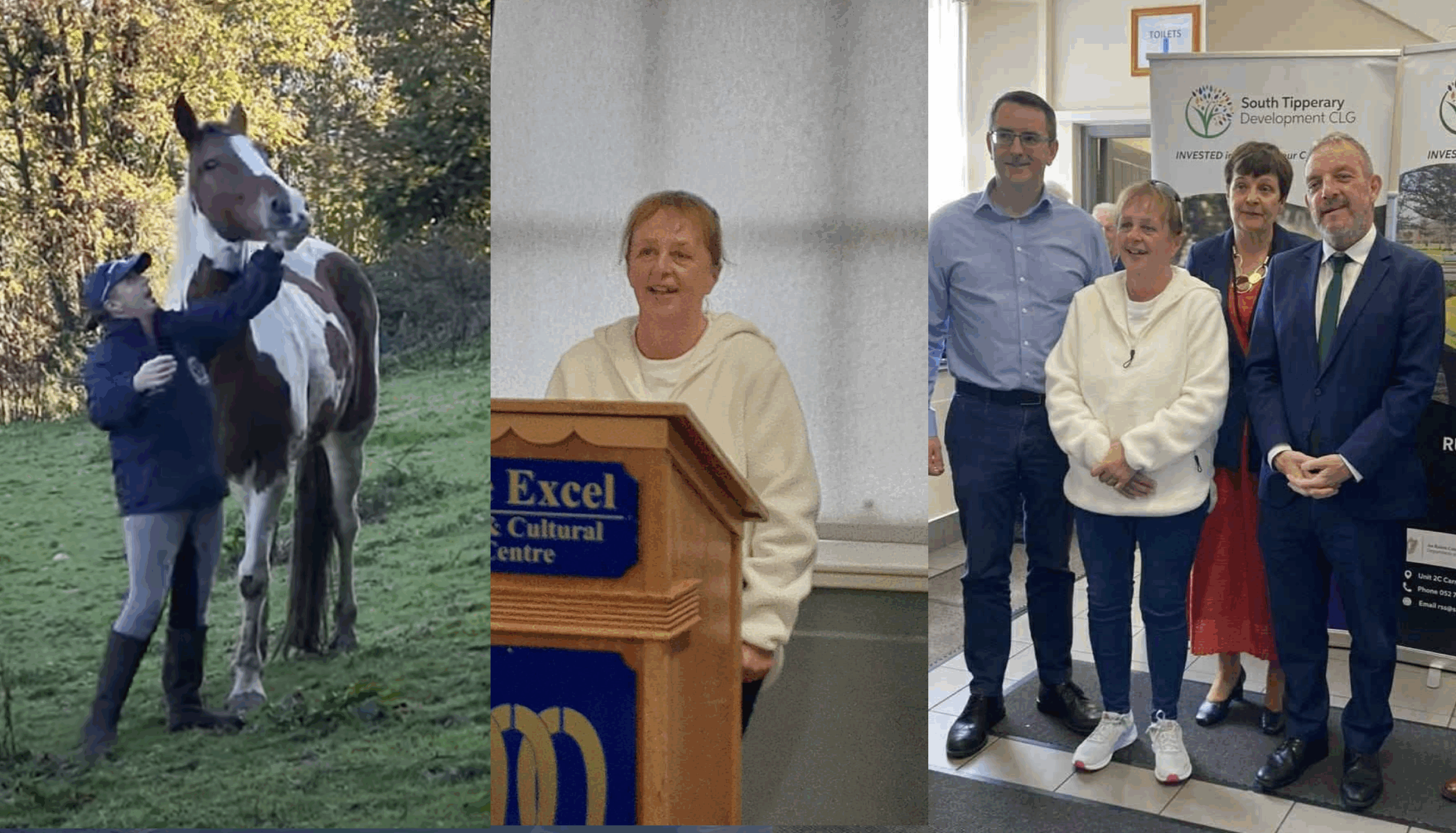
• Catherine Foley met Minister Jerry Buttimer in Tipperary town in June and told him her experience.

She believes that it is never too late to return to learning: “No matter what age you are, you can always go back and do what you love.”

As well as children with special needs, she is also seeking to help adults with mental health issues.

She says she wouldn’t have gone so far except for the support made available through South Tipperary Development Company and feels people should take support from such organisations.

“They will help you with every aspect of your business,” she says.

In June, Catherine met Minister of State Jerry Buttimer on a visit to Tipperary town and told him her story. Minister Buttimer has special responsibility for Community Development and Charities, and Rural Transport. Her experience has also been highlighted in a case-study by South Tipperary Development Company.

More information on SICAP is available at https://www.pobal.ie/programmes/social-inclusion-and-community-activation-programme-sicap-2024-2028/

More information on the Back to Work Enterprise Allowance is at https://www.gov.ie/en/department-of-social-protection/services/back-to-work-enterprise-allowance/

To find out more about Local Development Companies in your area go to https://ildn.ie/directory/

Voices from the saddle back Moyross Youth Academy all the way

Máirin is new CEO of the Local Development Companies Network

0

From 2008 to 2019, Máirin was the CEO of the Robert Emmet Community Development Project (recently renamed the Liberties Community Project) in Dublin. Prior to that she worked for six years in Ballymun – firstly as a volunteer support worker and later with in the then Ballymun Partnership managing community development supports.

As such, Máirin has considerable knowledge of the local and community development sector and has seen it evolve over recent decades. She knows the impact the sector has on social inclusion and economic development within communities.

Máirin has a Higher Diploma in Community and Youth Work from NUI Maynooth, a Bachelors degree in Agricultural Science from UCD and an MBA in Sustainable Leadership from TCD.

From 2019 to recently, Máirin served as the Dublin Development Officer with Waterways Ireland.

Máirin takes over the role from Dr. Carol Baumann who led the network for three years and saw it expand, including a rebranding earlier this year – it was previously known as the Irish Local Development Network.

The companies it supports engage in community development and social inclusion work, employment training and placement, supporting social enterprise, environmental and climate justice initiatives and much more. They reach out to communities and individuals.

You can read our July interview with Carol here:

INTERVIEW – Dubliner Carol Baumann on her career in development


READ OUR FULL SUMMER EDITION HERE – CLICK IMAGE TO OPEN (SAFELY):

Monaghan’s Gabriel O’Connell wants more young people involved in community development

What are you reading at the moment or what social media do you use most?

Like many I am transfixed by the changing geopolitical landscape and the ever-changing machinations of the current American administration.

I am currently reading a broad range of social media posts by Jeffrey D. Sachs who is a world-renowned economics professor, bestselling author, innovative educator, and global leader in sustainable development. He has received 42 honorary doctorates.

I am looking forward to reading some more of his work including the three New York Times bestsellers: The End of Poverty, Common Wealth: Economics for a Crowded Planet, and The Price of Civilization.


What is the last film or series you saw that relates to your work/passions?

Gran Torino after a teenager tries to steal his prized 1972 Gran Torino, a disgruntled, prejudiced Korean War veteran (played by Clint Eastwood) seeks to redeem both the boy and himself.

I also have to admit to being a big science fiction fan. I love Star Wars.


Who do you most admire?

Martin Luther King Jr – as a visionary leader and advocate for equality who spearheaded the civil rights movement in America through political leadership and personal commitment to the cause of equality from 1955 until his assassination in 1968.

His commitment to peaceful protest on the long journey towards racial equality, often in the face of significant provocation, harassment and personal cost to himself and his family.


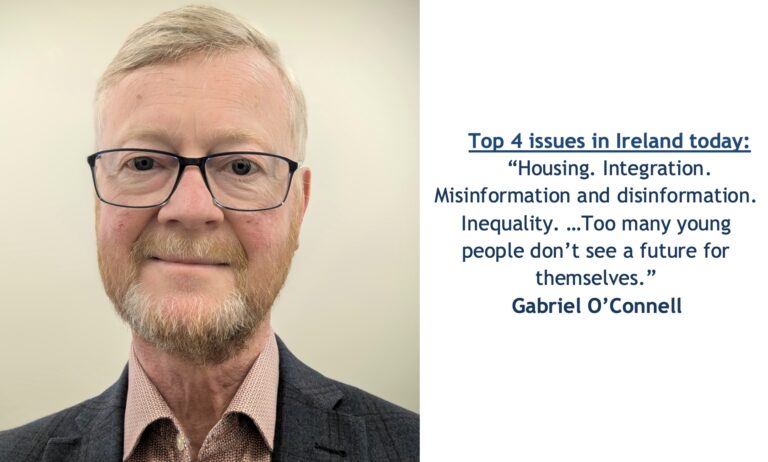
What are the top four issues in Ireland today?

Housing.

Inequality – too many young people don’t see a future for themselves.

Integration – global turmoil, wars and now economic isolationism and climate change are leading to significant numbers of people being displaced and needing to find new futures in far off lands.

Misinformation and disinformation. Misinformation is fake news that is created and spread as a result of a mistake – by someone who doesn’t realise that it’s false.

Disinformation is fake news that is created and spread deliberately – by someone who knows full well that it’s false.


Nationally we need more… (list four things):

Housing – off all kinds. This is now one of the biggest constraints to equality and growth.

Greater education around social media and the need for people to fact check sources.

Greater involvement of our young people in community development and in political life.

More proactive and urgent work towards Net Zero.


Nationally we need less… (list four things):

Political rhetoric around housing.

Misinformation and disinformation – very damaging for social cohesion and community.

Less young people being disenchanted with society and their future prospects.

Less backtracking on climate targets – everyone must do their bit.


What are the top two challenges for the coming year facing Monaghan Integrated Development?

Firstly, the current funding model does not best facilitate local innovation. Currently core management costs must be apportioned across every programme we deliver. This leads to significant workloads and inefficient use of staff time. Management of Local Development Companies nationally need to have core costs covered separately from programme funding. Government needs to directly fund core management costs, to encourage LDCs (Local Development Companies) to more freely pursue social innovation solutions within their communities and to unleash real bottom-up solution and opportunities.

Secondly, there can be a lack of integrated development planning at national level. There needs to be better synergy between policy at Department level for the Community and Voluntary sector, to minimise duplication.

Local Development Companies are well connected into the Department of Rural and Community Development and the Gaeltacht for community-led local development planning, but what about other departments?

I would add a third challenge. The move to tendering of the key programmes delivered by LDCs has been challenging. Personally, I don’t believe there is a need for commercial tendering in the services delivered by LDCs on behalf of the State.

LDCs have been acting an ‘extended arm of the State’ in delivering programmes in local communities on a non-profit basis for decades Tendering processes have stifled local partnership approaches – where key agencies feel reluctant collaborating in a competitive bid situation.

These tendering cycles make it very difficult to maintain key programme staff who experience significant job insecurity despite being employed with an LDC for many years or even decades.

Government must find another way to commission these community programmes that reflects the not-for-profit ethos of this work, and that promotes local partnership and collaborative approaches for the good of our communities.


What is the best thing that Monaghan Integrated Development has achieved in the past year?

I would be reluctant to point to one best I think, rather I’d point to the value of the Integrated Approach to service delivery in our work – this is often overlooked. Many people avail of a variety of our services on a pathway towards employment, self-employment, skills development and lifelong learning.

An example, an early school leaver often needs the confidence of a life coaching course to set them in the right direction, then further training towards a meaningful job through our Local Area Employment Service.

Likewise, our communities have been well supported over the years through programmes like LEADER, SICAP, Volunteer Centre, Tús and the Rural Social Scheme.

One hundred community and voluntary groups have workers placed with then from our Tús and RSS Over 150 dedicated people work on these schemes in our communities


What is the trait you most admire in other successful community groups?

Resilience and passion of boards and staff


What do you consider to be Monaghan Integrated Development’s most under rated virtue?

Despite periods of significant change and funding uncertainties – we still deliver. Our drive to achieve the very best outcomes for our communities is unwavering.


What’s next for Monaghan Integrated Development?

I hope more of the same – the work of MID was never more important for the county

Under a new CEO, with a very dedicated complement of staff and supportive Board, I believe the future is bright for the company.

We now have a broad range of programme activity, with a high level of synergy and complementarity.


How long are you with the organisation?

23 years and over 26 years in the sector


How and why did you become involved?

Like many community volunteers I found myself getting more and more involved in community and rural development, so much so that one day I realised that it would be very rewarding to apply my skillsets and interests to working in this sector.

The rest is history, as they say.


What difference has your involvement with MID made to you as a person?

I have genuinely enjoyed my time working in MID, it has been fulfilling.

It has given me a great opportunity to apply my skills and to lead a great team of passionate people in working to support growth and opportunity in county Monaghan.

In addition to a great group of staff, I must thank our Board and present Chairperson Mary Mullen, for their trust, support and willingness to roll up their sleeves and support me as CEO and my management team and staff.


How have things changed for Monaghan in your time at MID?

Quite a lot – in my early years we had much more hands on links with government departments – collaborating in programme delivery.

Under the reform of local government, there has been an increased focus on working with local partners in county councils. While this has yielded some benefits, a disconnect has emerged with policy making at departmental level and community work on the ground.


If you could change one thing about how the Government supports and funds the sector, what would it be?

There’s more than one I think, but I’d like to see the provision of core funding for management of LDCs, encouraging more social innovation in our activities – allowing us to respond more proactively to local needs.

I also think there may be an opportunity for greater linkages for LDCs with Regional Assemblies. Many LDCs are accessing European funding to complement their core programme activities and funds. But much of this great work goes under the radar with little policy learning.

More strategic links with the assemblies and LDCs would provide greater opportunities for EU funding in a more structured and effective manner.


What motivates you?

Seeing people progress in work and life is my main motivation.

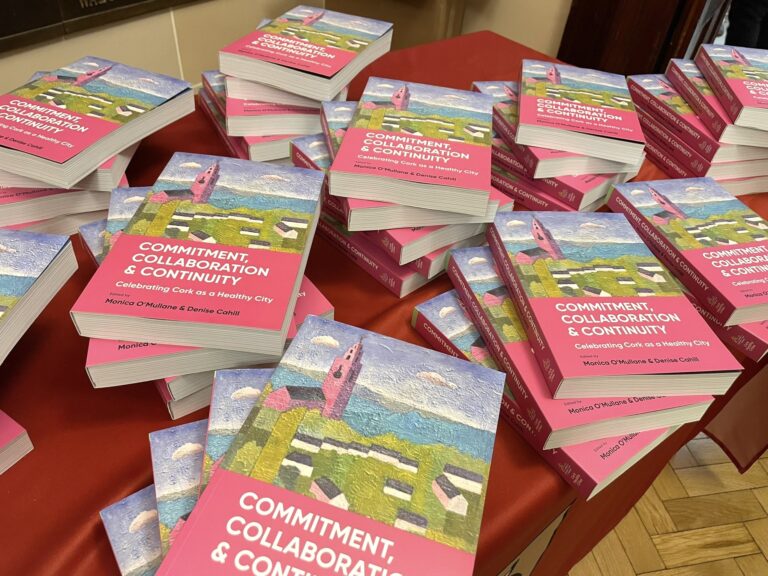
€20 book on Cork’s years as a healthy city now free online

0

The book showcases the projects partnered with or led by Cork Healthy Cities so that other cities and urban spaces across Ireland can learn from Cork’s experience and forge their own path. It records the highs and the lows and the learning along the way.

The book, heralded as the first of its kind published in Ireland or across Europe “highlights this intersectoral approach and showcases the key projects in Cork that have changed the dial to develop Cork as one of Ireland’s most liveable cities”.

An example of one such project is Green Spaces for Health, which started in 2018 coordinated by Maria Young, and has initiated and supports 25 (and counting) projects, especially community gardens. The project has resulted in a some life-changing health impacts for communities.
In terms of encouraging intersectoral policy action, the book welcomed the launch of Sláintecare’s Healthy Communities programme, as a “concerted focus on addressing health inequalities“ in communities in Ireland.

It is a book with a healthy (pardon the pun) mix of text, photos and graphs which makes it easy to move from reading one section to another.
The book was edited by Denise Cahill and Monica O’Mullane and went on sale last year for €20.

You can find out more about the book here: https://corkhealthycities.com and you are now welcome to download it for free from: https://bit.ly/CorkHealthyCity

Global context to rise in number of Ireland’s community gardens

0

The impact has been so great in Cork that its Healthy Cities people produced a book – print copies were priced €20, but has now also been made available for free online.

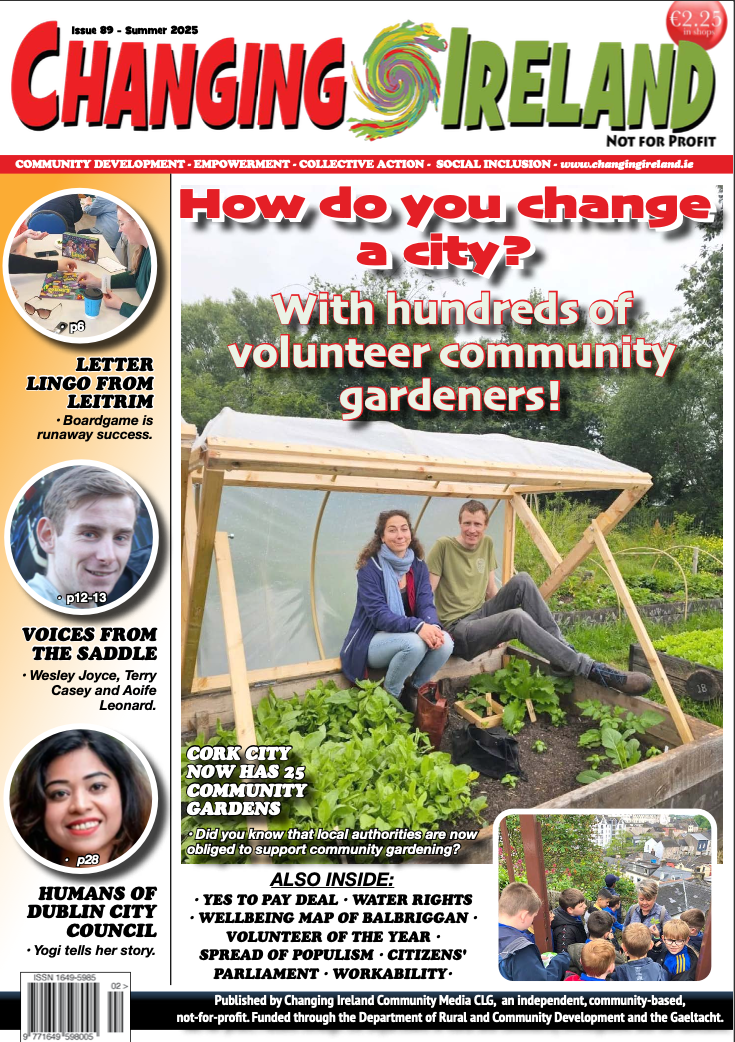
Community gardens are just one aspect of being a ‘Healthy City’ and Cork city now has 25 such gardens dotted around Leeside.

In fact, community gardens are transforming the way Cork city people look at their city, their kitchens and what they eat. The gardens serve as social spaces, while communities across the city are now familiar with growing produce such as Passion Brune Winter Lettuce, Basil, Verdil Winter Spinach, Kale, Caffrey’s Oats, Canasta Butterhead Lettuce and much more.

To find out more about Cork Healthy Cities visit their excellent website: https://corkhealthycities.com

Of interest, local authorities across the State are now obliged to support community gardening. Worth keeping in mind the next time you see a derelict piece of land.

But where did it start?

The Healthy Cities concept was initiated in 1986 by the World Health Organisation (WHO) to improve and promote health through policy work, collaboration and community participation.
In Ireland, the cities of Belfast, Derry, Galway, Cork, Waterford, Galway and Limerick have WHO designation as Healthy Cities. Cork was one of the first when it joined in 2012. Its designation as a WHO Healthy City came from a partnership between the HSE’s Health Promotion Department, Cork City Council, the Northside Initiative for Community Health Education (NICHE) and UCC.

A key goal of the WHO Healthy Cities initiative world-wide has been the importance of local action in all aspects of developing health and wellbeing.

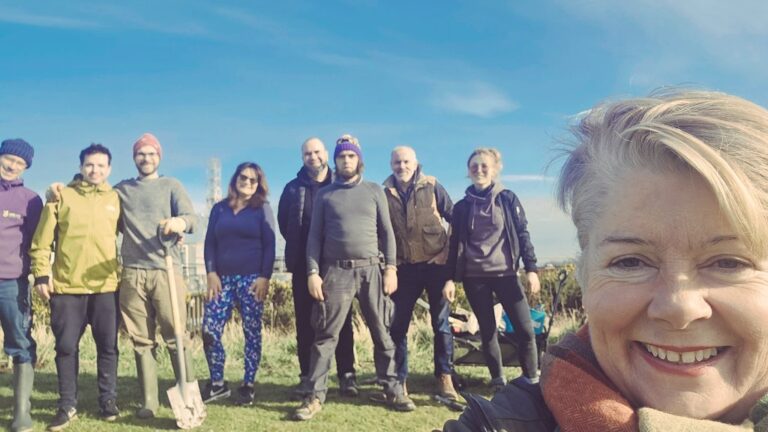
Community gardens are transforming the way Cork city people look at their city, their kitchens and what they eat. The gardens serve as social spaces, while communities across the city are now familiar with growing produce such as Passion Brune Winter Lettuce, Basil, Verdil Winter Spinach, Kale, Caffrey’s Oats, Canasta Butterhead Lettuce and much more.

To find out more: https://corkhealthycities.com

“People are very committed,” says Green Spaces co-ordinator Maria Young

0

“I came from the arts, I was an oboe player and I worked in theatre for most of my life. I love nature and I was getting more and more concerned about what was happening to biodiversity as a consequence of climate change. There was nobody talking about it.

“I went from being somebody who was a bit downhearted and worried and not knowing how I could do anything about it, to being somebody quite empowered. I began to volunteer with SHEP, the Social, Health and Education Project in Cork. Then I was tasked with organising a lecture series and I got training in the Schumacher College in Devon and I did a course in the Netherlands on reconnecting with nature,” she said.

Her own climate anxiety is greatly lessened by the knowledge she is doing what she can.

“It’s not that I don’t worry about it any longer, but I am doing something about it. There’s an awful lot of work to do and there’s no shortage of volunteers. People are very committed, there is a lot of engagement, and there is nothing more beautiful or satisfying than planting a tree.”

She talks excitedly about a frog being spotted at a new pond in a local community garden, about ground nesting birds and cleaning rivers in the city, and it is evident she is passionate about what is being achieved.

“Last night I was out until 9pm watering. I don’t really have boundaries, I was never in a 9 to 5 job. In theatre you work morning, noon and night and your focus is to get the show on stage. The fact is I love this,” she said.

The Green Spaces for Health project is funded by Healthy Ireland, Cork Healthy Cities, the Social and Health Education Project, and Cork City Council.