
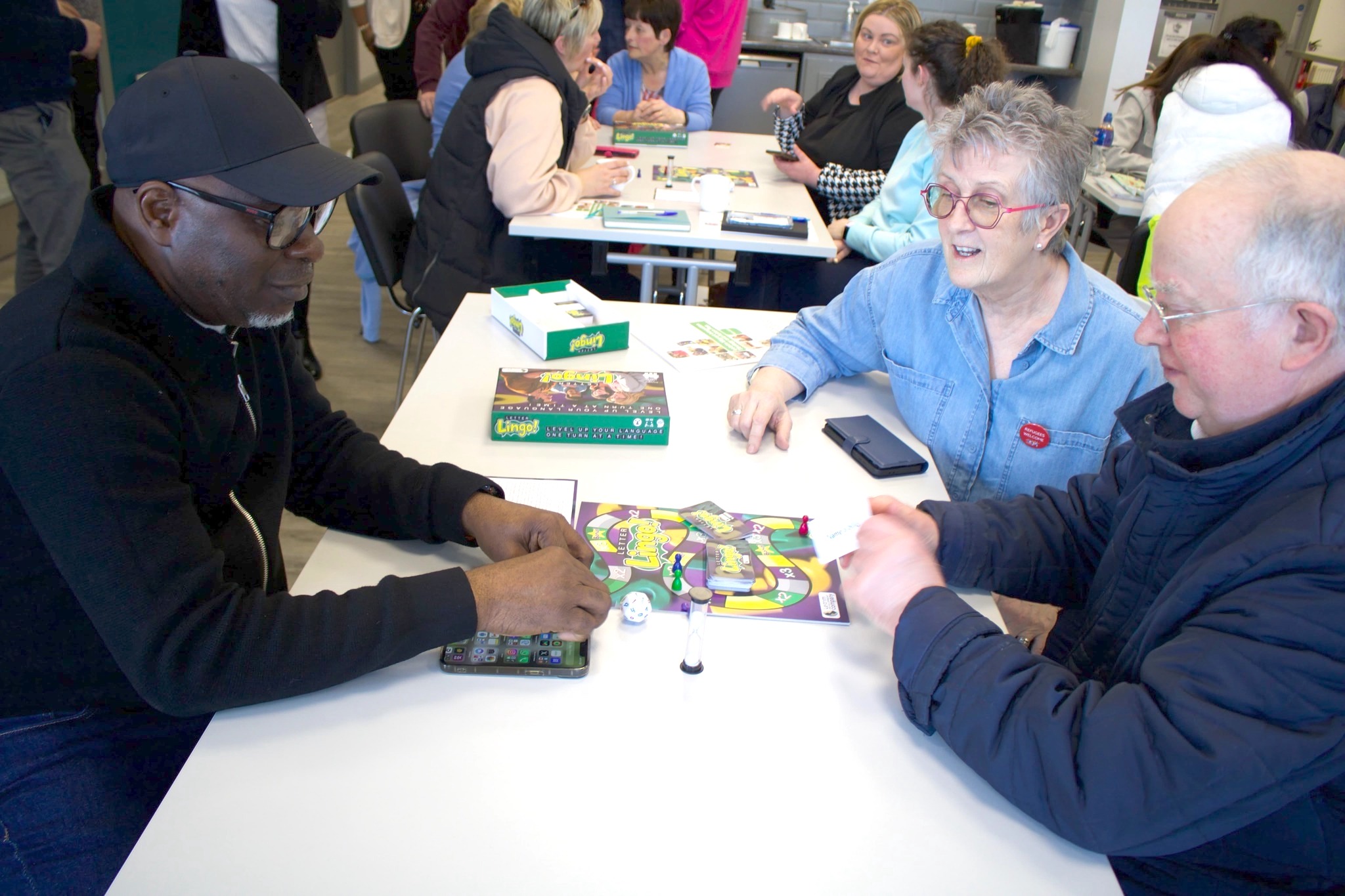
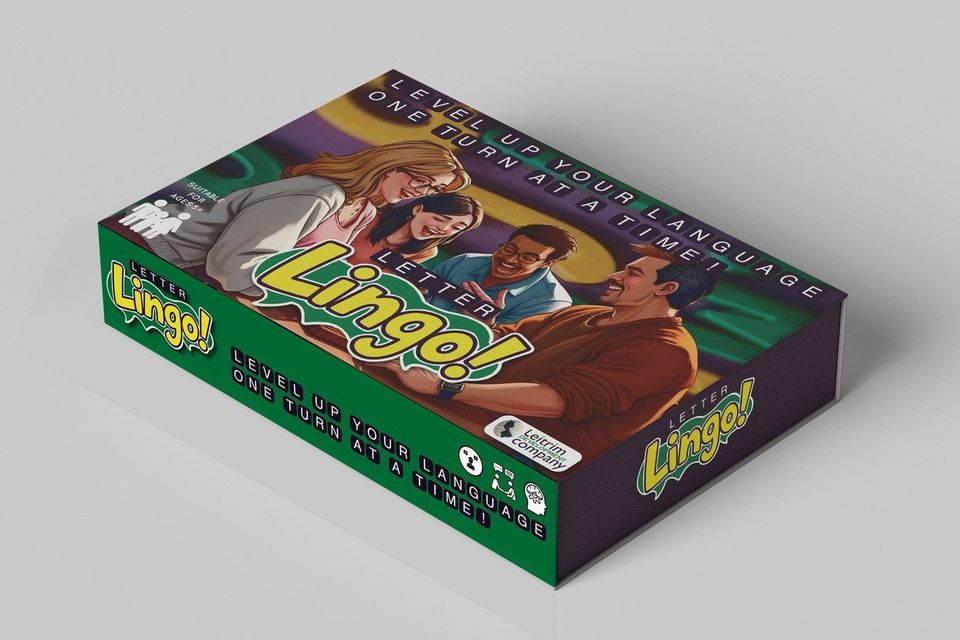
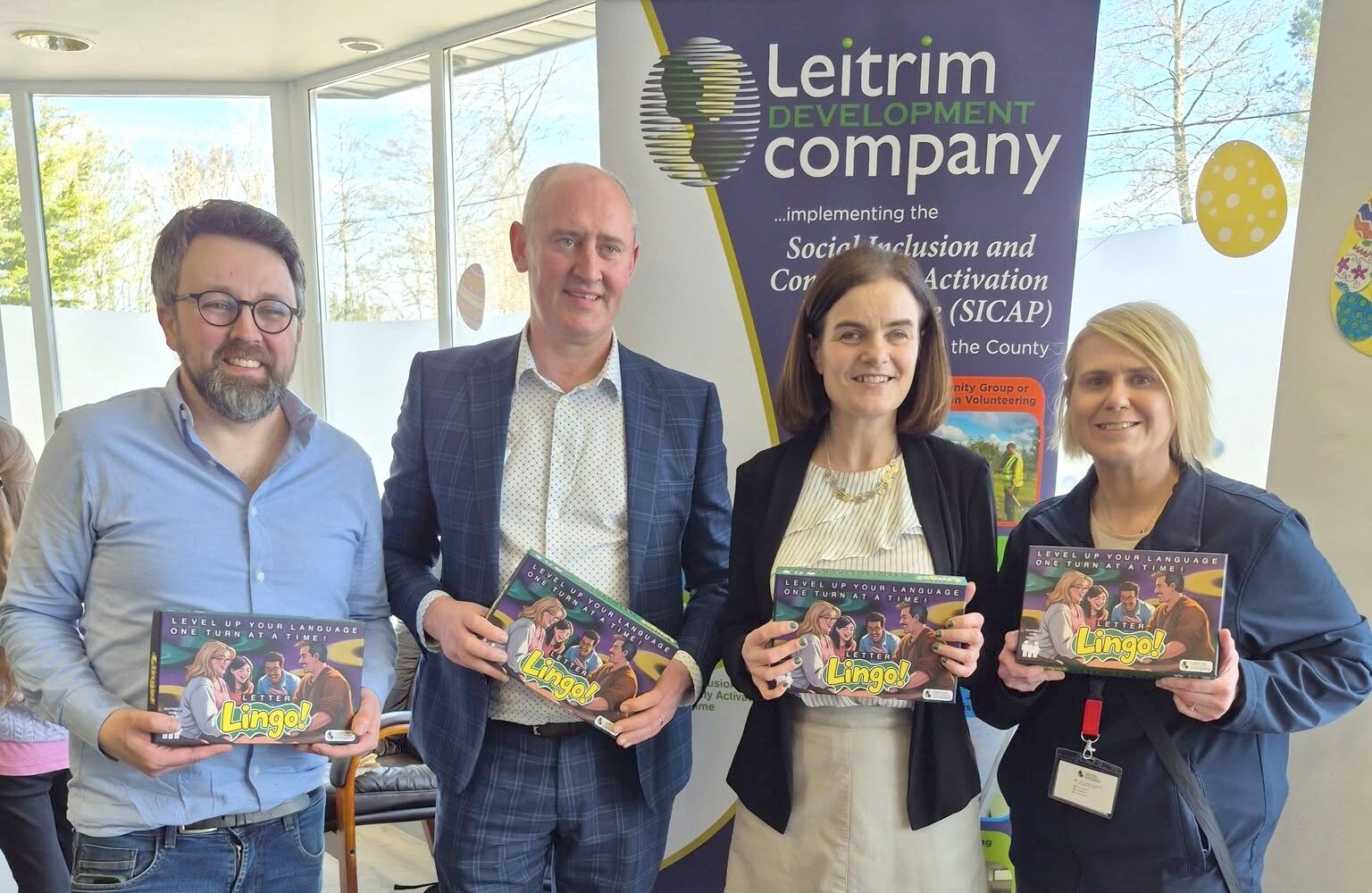
It was created after staff funded through the Social Inclusion and Community Activation Programme (SICAP) recognised that language is the biggest barrier to integration. Deborah Shirlaw is an integration officer with LDC and she was amazed with the reaction to the game she created. Even RTÉ came down to film the launch.
“We have no more copies left. We have all these people on waiting lists. People have contacted us internationally. When I created this I didn’t expect there would be so much interest,” she said.
Thankfully, there has been official recognition of the value of a creation intended to help people of all ages and abilities to improve their English and foster social connections across communities.
“We just got more funding under SICAP to get more games created,” said Deborah.
Game works for all
Starting out, she wanted to create a game that could be enjoyed by people with varying levels of ability in English, from beginners to fluent.
“I do a lot of Fáílte Isteach groups and I noticed that it was very hard to keep conversations going, especially with people having different levels of English. I was trying to come up with a concept that would work for all, no matter if you were a beginner or quite good at English, something that could be played by everybody.
“There are different ways of adapting the game. I wanted to make sure that it could be played by Irish families, by people who might have dyslexia and things like that. It’s a fun, interactive way of learning English, that’s the whole point of the game. I find that the time in the groups goes really fast because everyone has a laugh.”
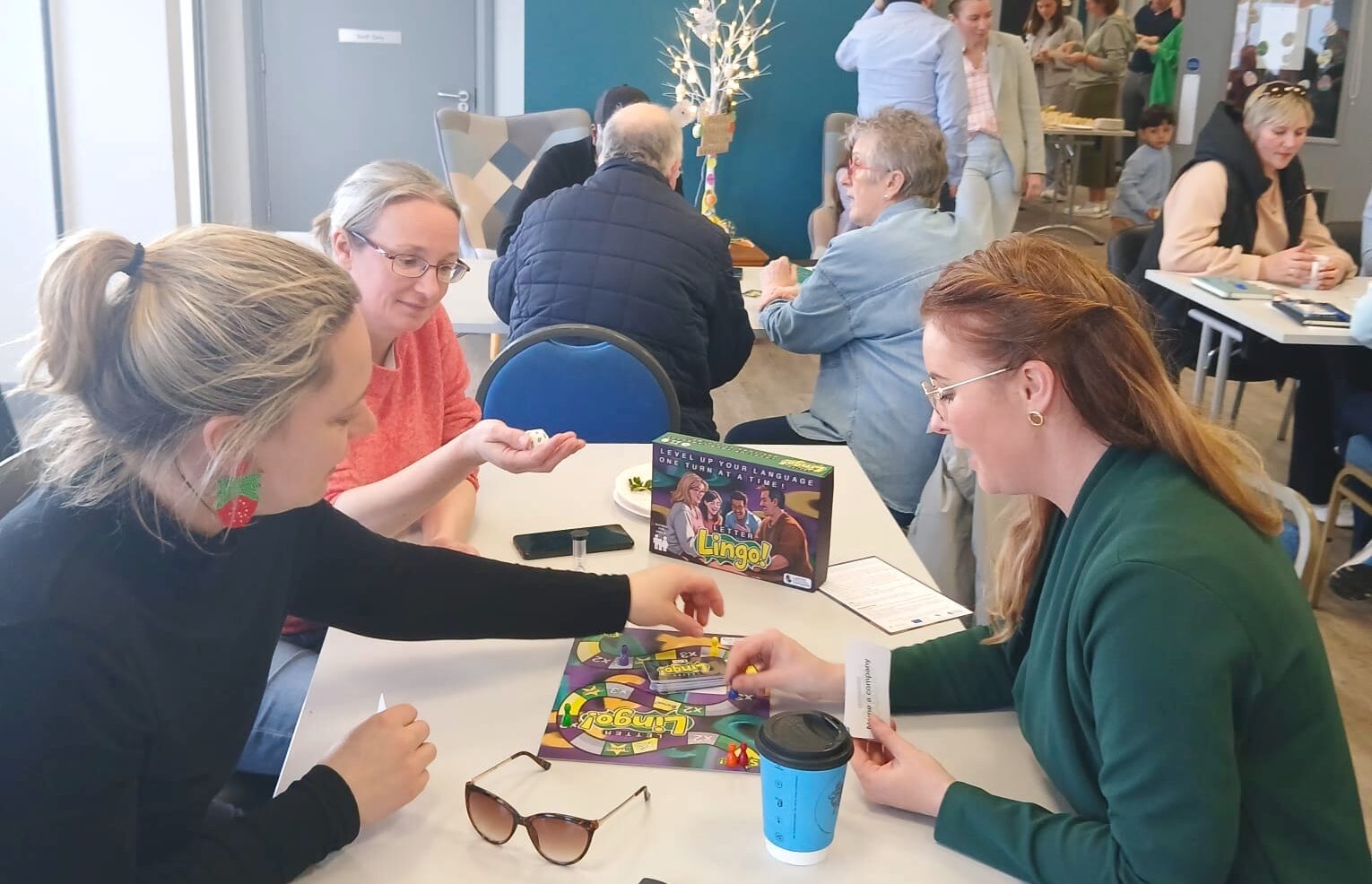
Explaining how it works, she said, “You roll an alphabet dice and pick up a card. You could land on something that tells you to name a country that starts with ‘A’. It could be to name something in the household that starts with ‘B’, it could be a piece of clothing, there are all different things.”
Wild cards and luck
Deborah was helped in designing the game by her colleague Caillin Reynolds and they left a certain amount of blank cards, so people can create their own questions as well. Also, for anyone with poor English, there are wild cards that can stand for any letter “to get people used to the game”.
“Obviously it’d be very hard if you had to come up with a particular letter when you don’t even know the letters fully yet.
“Some people who are good at English think it’s going to be easy, but it depends on the letter you land on, with the question you have to answer. It’s a luck of the draw thing. I’ve found that simple words, which we might take for granted – a lot of people who have recently arrived don’t know the meaning of the word, so it’s a good chance to explain what the word means. They’re not just learning how to read and speak English, they’re also learning exactly what words mean.”
Deborah says it is not the kind of thing you play once or twice and then put up on the shelf.
“It’s the type of game you can play every week. It’s not the case that once you finish, that’s it. Every time you play is different, you get different letters, different cards. I’m thinking about maybe bringing out a second series of cards, new cards.
“I piloted it with a few groups before we released it, just to make any changes needed or things like that. Everyone was saying how much they loved it, they all wanted copies to take home. We have just been blown away by how popular it has been and how strong the demand has been,” she said. She regularly visits a coffee club in Manorhamilton where they play Letter Lingo weekly.
More games coming soon
While the game is popular, it is not about turning a profit.
“Right now the games are free, under SICAP* rules we can’t make money. We are talking to Pobal to find a way that to make back what the game cost us, so we could make more and more of them. It’s not that we’d make money, it would just go back into making more games.”
If you would like to request a game, email Deborah at deborah@ldco.ie and she will send a link adding you to the waiting list.
“There will be more games made available soon,” she promised.
* SICAP stands for the Social Inclusion and Community Activation Programme.


