“We really want to reach out and and engage with those people and hopefully they will be joining us on the board,” she said.
“For new members, what we’d love to see is people coming forward with an absolute passion for community development, who want to see more diversity, equality and inclusion, are supportive of the rural economy, interested and engaged in local development,” said Ms. Mannion.
“There are so many people out there working in the community and voluntary sector that have such valuable life experience to bring with them. They know the issues on the ground – we’ve seen that post-Covid and during Covid,” she said.
Watch Ms. Mannion’s interview with editor Allen Meagher here:
NOT SMALL CHANGE: €717M IN 2020
Pobal’s 16-person board already includes people with experience in various areas – from Ciaran Reid, CEO of Louth LEADER Partnership to Molly Buckley, a public health nurse, and Ann Hanley who worked as manager of Bailieborough Resource House Childcare Facility for almost 20 years. (To read more about the board’s current members, click https://www.pobal.ie)
Outlining Pobal’s work, Ms. Mannion said, “In 2020, we allocated €717m to local and national community organisations – so it’s a really busy, progressive, involved and dedicated organisation.”
“Pobal works on behalf of government in conjunction with communities and local agencies to support social inclusion and local and community development. We do this by managing funding and providing support – at this stage to around 31 programmes.”
Looking ahead at Pobal’s role, she said, “There is an unique opportunity now in building back better and being more socially inclusive post-pandemic. Why not put your hand up and join a board that’s involved in such meaningful work?” she added.
Ms. Mannion, from Drumshanbo, Co. Leitrim, herself joined the board in December 2020 and on September 30th she was formally appointed chairperson (replacing outgoing chair Professor Deiric Ó Broin).
8-9 MEETINGS PER ANNUM
“There are eight to 9 board meetings per year and possibly some sub-committee work,” said Ms. Mannion.
Travel will not be the issue it once was:
“We want to promote the rural economy and remote working, so we will have a hybrid option for attending meetings – in person, or dialling in, using Zoom, using all the technology that we want to see enhancing rural communities and rural Ireland.
“We want be as inclusive as we can in terms of the membership of the board. We want to make things as easy as possible for volunteers to contribute and (hybrid meetings) will allow us get the right people around the table to enhance the mission and vision of Pobal,” she said.
Pobal is a means to an end, Mannion tells Oireachtas
Ms. Mannion addressed the Joint Oireachtas Committee on Social Protection, Community and Rural Development and the Islands on Sept 22nd as chair-designate.
“As Chairperson of Pobal a key role for my board colleagues and I will be to support, to challenge and to lead our excellent and committed staff to deliver on government policy, to deliver on our programmes and to remember one fundamental thing. Pobal is not an end in itself. It is not the object of the exercise. It is a means to an end and that end is a stronger society. It is communities across the country where people – especially the most vulnerable – are better supported,” she told the committee.
“I believe passionately in rural communities, in community development and in social inclusion. I have seen first-hand the impact of the work of Pobal. My lived experience is that diversity, equality, justice and inclusion make for a stronger society. I know that these values give chance and opportunity to those who would not otherwise enjoy it,” she added.
“If the programmes we support are effective, people’s lives are enhanced. That is the context in which my board colleagues and I are working on our Strategic Plan 2022– 2026,” she said.
She has worked professionally as National HR Director in the HSE while volunteering interests include serving with the National Adult Literacy Agency.
She has served on local, national and international boards and key interest areas of her own include the role of women in society, the role of carers and gender equality.
• Rosarii Mannion, chairperson of Pobal, Anna Shakespeare, Pobal CEO, Heather Humphreys, Minister for Rural and Community Development and Deiric Ó Broin outgoing chairperson of Pobal – pictured on Sept 29th at the launch of Pobal’s annual report for 2020.
POBAL BOARD DEADLINE – OCT 28TH
If interested, start planning your application sooner rather than later. The deadline is October 28th and there is a degree of homework and form-filling involved.
Dozens of Irish community development workers are in Glasgow to attend and take part in the World Community Development Conference, which runs from June 30 to July 2. The event takes place biennially and has attracted representatives from more than 70 countries – all keen to exchange ideas.
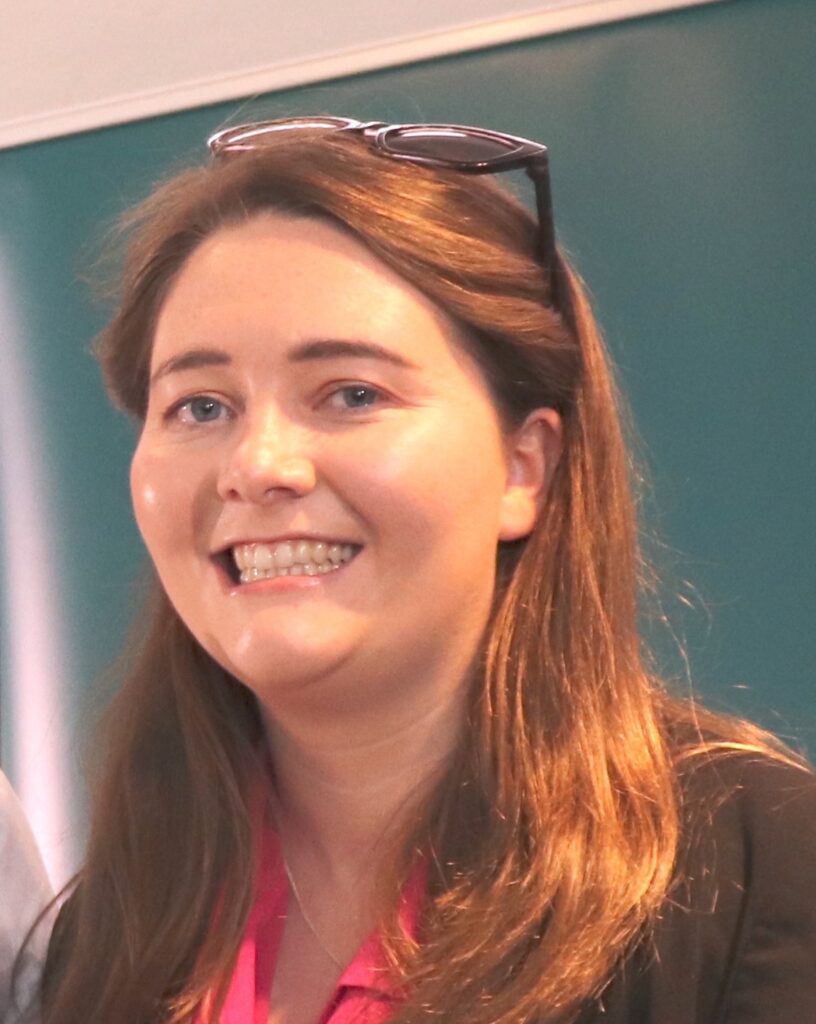
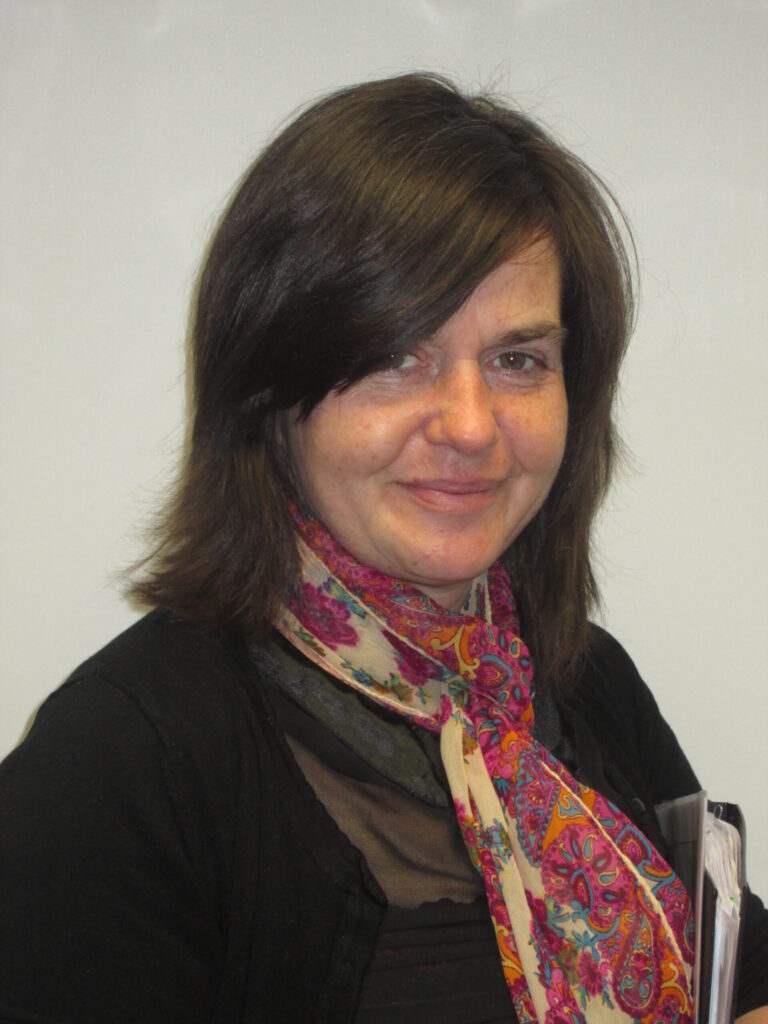
We spoke to two Irish people prior to departure – one from the east, another from the west of Ireland – Marie Louise Byrne and Chloe Ní Mháille.
As exciting as a music festival
Chloe is the development co-ordinator with Community Work Ireland and she was as excited as somebody heading to Glastonbury or the Electric Picnic.
“Some people might laugh, but it’s kind of like going to a festival with all your favourite musicians. After studying community development in Maynooth University and looking at theorists, and now they are all coming together in one place to give keynote addresses and workshops… To be able to listen to them and learn from them; there’s great value in that,” she said.
While Irish delegates can learn plenty from practitioners from other countries, she believed the Irish delegates would also make valuable contributions.
“Ireland ranks quite highly in terms of best practice, and we can share what we have tried and tested with other countries as well,” she said.
She feels it is important for them to come together and meet in-person, since their global networking meetings usually take place online.
“It’s great there’s such a strong Irish delegation going over this year,” Chloe said. Around 40 people from Ireland are believed to be attending.
Some of those attending from far flung countries will visit here during the conference and a trip to Belfast features on the official programme – alongside visits to the Highlands and to projects in Glasgow.
“People from places like Japan and New Zealand don’t get to this part of the world too often and they’re going to make the most of it while they can,” said Chloe.
Meeting people from other countries
Marie Louise Byrne is community development co-ordinator with Wexford Local Development. When she spoke to Changing Ireland she was getting ready to speak at the event.
“I’m doing what’s called a lightning talk. Six of us who have never met before will have five minutes each to talk. I’m in a group with people from Florida, from Sydney, from Scotland and elsewhere to talk about the challenges to community development,” she said.
Marie Louise has just completed research that will inform what she speaks on.
“I submitted my research for a Masters last week on how professional community workers in Ireland communicate their identity. Community development is used to describe everything.
“Youth workers suffer similar frustrations. Anything that happens with young people is kind of classified as youth work, but it’s not. Sport can be brilliant, and young people can be involved in it; but that’s not youth work. Likewise, there can be a lot of stuff that takes place in a community that is not necessarily community work, as per the international definition or the definition used in government policy.”
“I work with a team here and you frequently hear them say things like ‘They wanted us to do such and such a thing, but that’s not community work’. Or they might say such a person says they are a community development worker but they’re not, they’re an administrator. That’s what my research was about,” she said.
Like Chloe, she was looking forward to meeting people whose work she has long admired. One of those is Professor Sarah Banks, a sociologist who co-founded Durham University’s Centre for Social Justice and Community Action.
“I’ve read a lot by Sarah Banks and she is speaking at it. It is great to have the chance to meet these people,” she said.
She said that community development tends to be strong in post-colonial societies in African countries and she was interested in meeting delegates from such countries, while she was also looking forward to hearing about the current American experience.
“It’ll be interesting to meet people from America as well. It will be interesting to see where they are at now,” she said.
Conference attendance fees ranged from £282 for IACD student members to £466 for non-IACD members. The Department of Rural and Community Development and the Gaeltacht provided limited funding to support a small number of people from Ireland involved in community work to participate in the conference. The bursaries were managed by the All Ireland Endorsement Body for Community Work Education and Training and successful applicants received €500 each towards costs.
The World Community Development Conference was last held in Ireland in 2018 – in Maynooth, Co. Kildare.
For those who cannot attend
For those who cannot attend, yet would like an insight into the international community development issues, we recommend you check out past issues of Practice Insights magazine – freely available here. Also, the conference website is here.
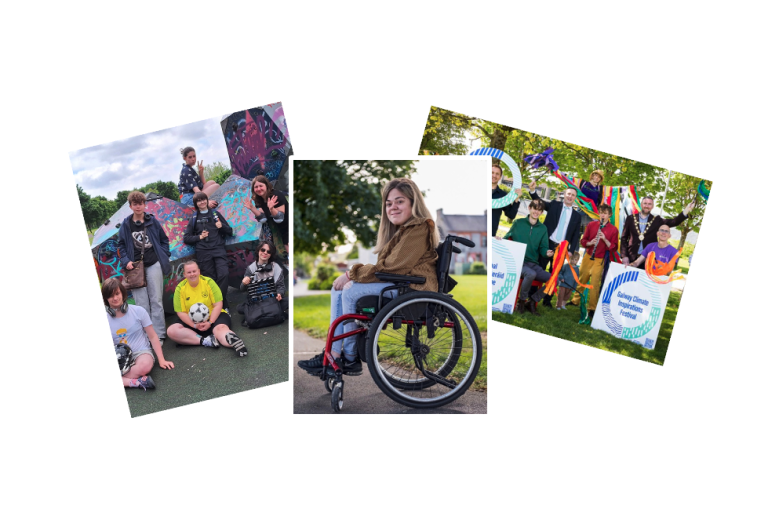
PHOTO CREDIT: The Climate Inspirations Festival photo in the above collage is from Galway City Council and is by photographer Anita Murphy.
Climate Inspirations Festival
As part of the Galway Climate Inspirations Festival there will be a Communication and Climate Action Talk on the afternoon of Saturday, June 27, featuring broadcaster Róisín Murphy and climate change expert, Professor John Sweeney.
It will explore how communication — clear, human, creative and courageous — can become one of our most powerful climate action tools.
Drawing on the science and psychology of climate communication, the panel intend to show how stories, conversations and community narratives can shift mindsets, inspire behaviour change, and strengthen collective action.
From countering climate fatigue to empowering local voices, they will explore how communication bridges the gap between knowledge and action.
Other speakers will include Lucie Martin (Research Officer, Behavioural Insights Unit, ESRI), and Laura Costelloe (Head of Sustainability and Planet Services, Hometree).
It will take place at the Galway’s Festival Tent in Father Burke Park.
The Belong To Summer Project, which consists of events and activities for young LGBTQ+ people is taking place in Dublin City Centre during late June and the full months of July and August.
First up is Summer Project Kick-Off Week from June 29 to July 3. There will be ‘get to know each other’ sessions, and people can help shape the summer programme by adding their ideas to the mix.
Some of the highlights of the summer will be;
Trans Joy Week: July 6-10
● Theatre Week x Abbey Theatre: July 20-31
● Your Week: August 3-7
● Creativity & Culture Week: August 10-14
● Health & Wellbeing Week: August 17-21
● End of Summer Celebration: August 24-28
All activities are free, and sessions for under-18s and over-18s are run separately so everything is tailored to your age group.
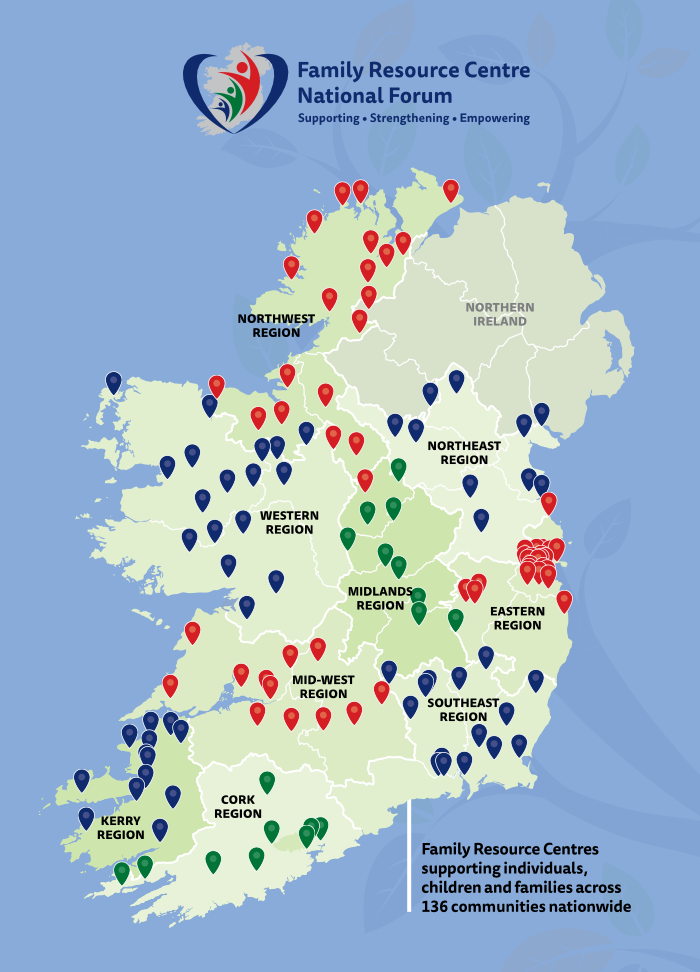
She emailed us fresh from attending the Family Resource Centre’s (FRC) national conference, which was held on Wednesday, June 24, in Mullingar. She and colleagues and voluntary board members from Erris were very pleased to attend for the first time – after being formally accepted some months ago into the national Family Resource Centre Programme following years of campaigning for recognition. Erris is now one of 136 projects in the programme which funded by Tusla, The Child and Family Agency.
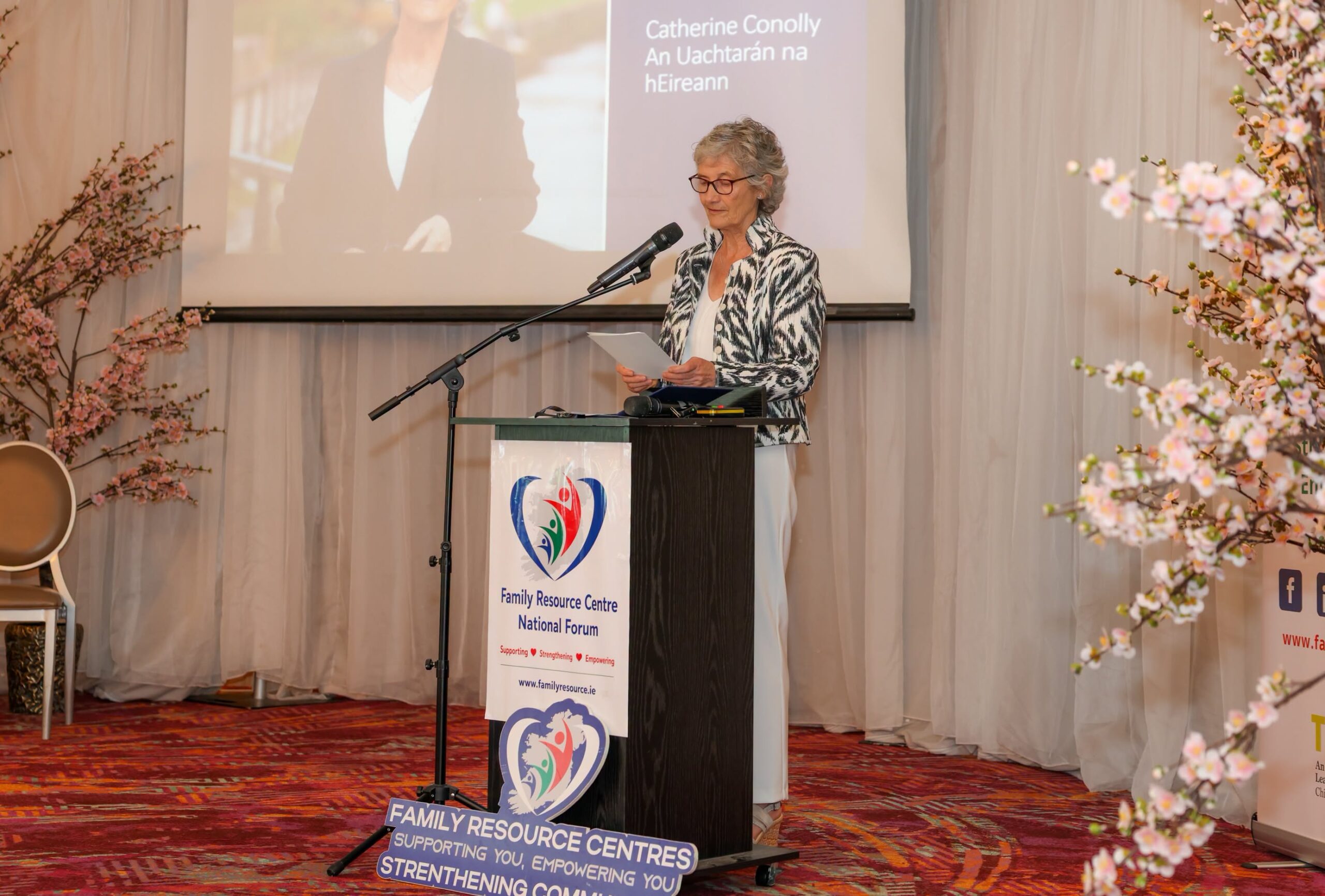
In any case, Leanne emailed to say that President Catherine Connolly attended the conference and spoke about their long-running campaign and the merits of the work they do. They had not expected that.
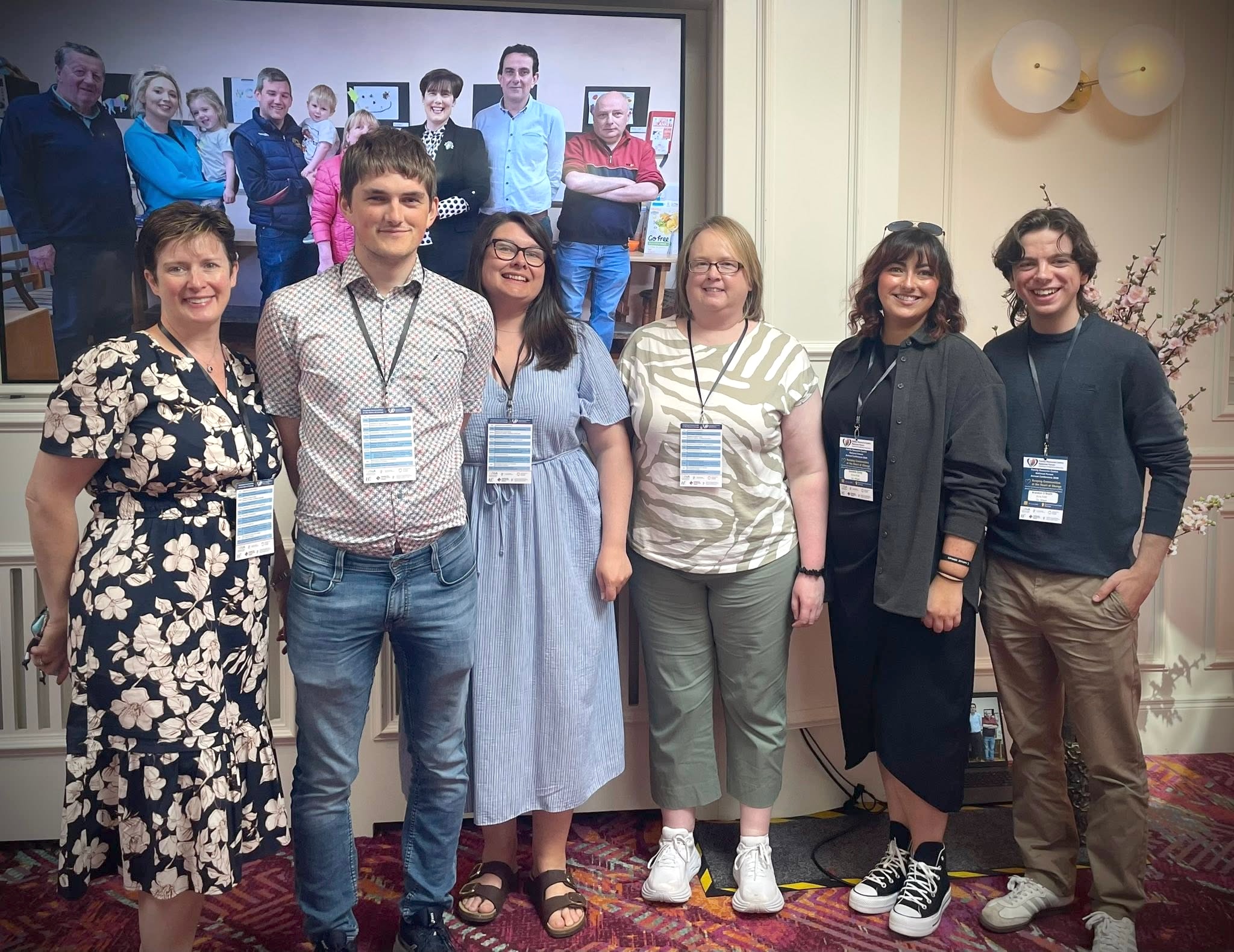
• Volunteers and staff from Erris Family and Community Support Centre pictured at their first FRC national conference: Cora Galligan, project administrator, Kevin Murray, board member, Leanne Barrett, co-ordinator, Sandra Carey, board member, Danielle Ginty, family support worker, Brandon O’Boyle, community development worker.
Then President Connolly quoted Leanne from an article published in Changing Ireland.
Leanne’s positivity when they were still struggling for recognition and more funding “caught my eye,” said the President. She read out the following from Leanne:
“It’s important to not just focus on the need and disadvantage in Erris. It’s actually about taking the good things we have, the strengths and using that. We have always said: Give us the funding and the resources and we will work to make sure that we can meet our needs and respond to our needs.”
President Connolly said, “These words resonated with me, as I am sure they do with all of you.”
• President Catherine Connolly speaking at the FRC national conference.
Reporting afterwards, Leanne said, “Being in attendance at this annual conference was a special occasion for us as one of the recent 10 projects admitted to the FRC Programme.”
The Erris group returned to north-west Mayo on a high, as Leanne recounted to us:
“I just wanted to thank you for your interest and support. If you had not written about our project, then this likely would not have happened. It was a really proud and special moment for us and we are still smiling,” she wrote.
Norma Foley, the Minister for Children, Disabilty and Equality, also attended and spoke at the conference.
As Leanne said, “The attendance and address of Minister Norma Foley and Uachtarán na hÉireann Catherine Connolly shows how much has been achieved by the Family Resource Centre National Forum to gain recognition and investment in the programme and the respect held for FRCs across the country.”
Cormac Russell, co-author of ‘The Connected Community’, was one of the guest speakers. He said, “From womb to tomb, the FRC network represents some of the finest global examples of place-based community development practice and community-first wellbeing initiatives. And they deserve to be cheered on and supported.”
Pre-Budget Submission
The Family Resource Centre National Forum recently published its Pre-Budget Submission for Budget 2027.
It says that investment in Family Resource Centres is “essential” to strengthen community supports, improve early intervention services, and deliver long-term social and economic benefits. Invest now to save later, it urges the Government.
Specific asks include:
A minimum of €255,000 in core-funding per FRC.
A dedicated capital funding stream for FRCs.
Funding to support 3 core staff per centre on public sector-aligned salaries, plus essential operating costs.
Investment to build, acquire, or upgrade FRC facilities.
The network wants the Government to commit to multi-annual funding for integration work to support refugees – first introduced in 2022 in response to Russia’s expanded war on Ukraine. The €10m in annual funding comes through the Social Inclusion and Community Activation Programme (SICAP) and the network wants the Government to “roll New Arrivals funding into the core SICAP budget”.
It said, “Fostering trust between new and host communities requires consistent, multi-year engagement, and funding arrangements need to reflect this.”
The call forms part of the LDCN’s overall Pre-Budget Submission for Budget 2027 and it was formally presented to senior Ministers and elected representatives in Buswells Hotel, Dublin, this morning. It was among a number of proposals described as “essential” to “translate policy commitments into tangible outcomes for individuals, families, and communities across Ireland”.
Other priorities highlighted today include calls for:
– Increased funding of €6.1m for the Social Inclusion and Community Activation Programme (SICAP),
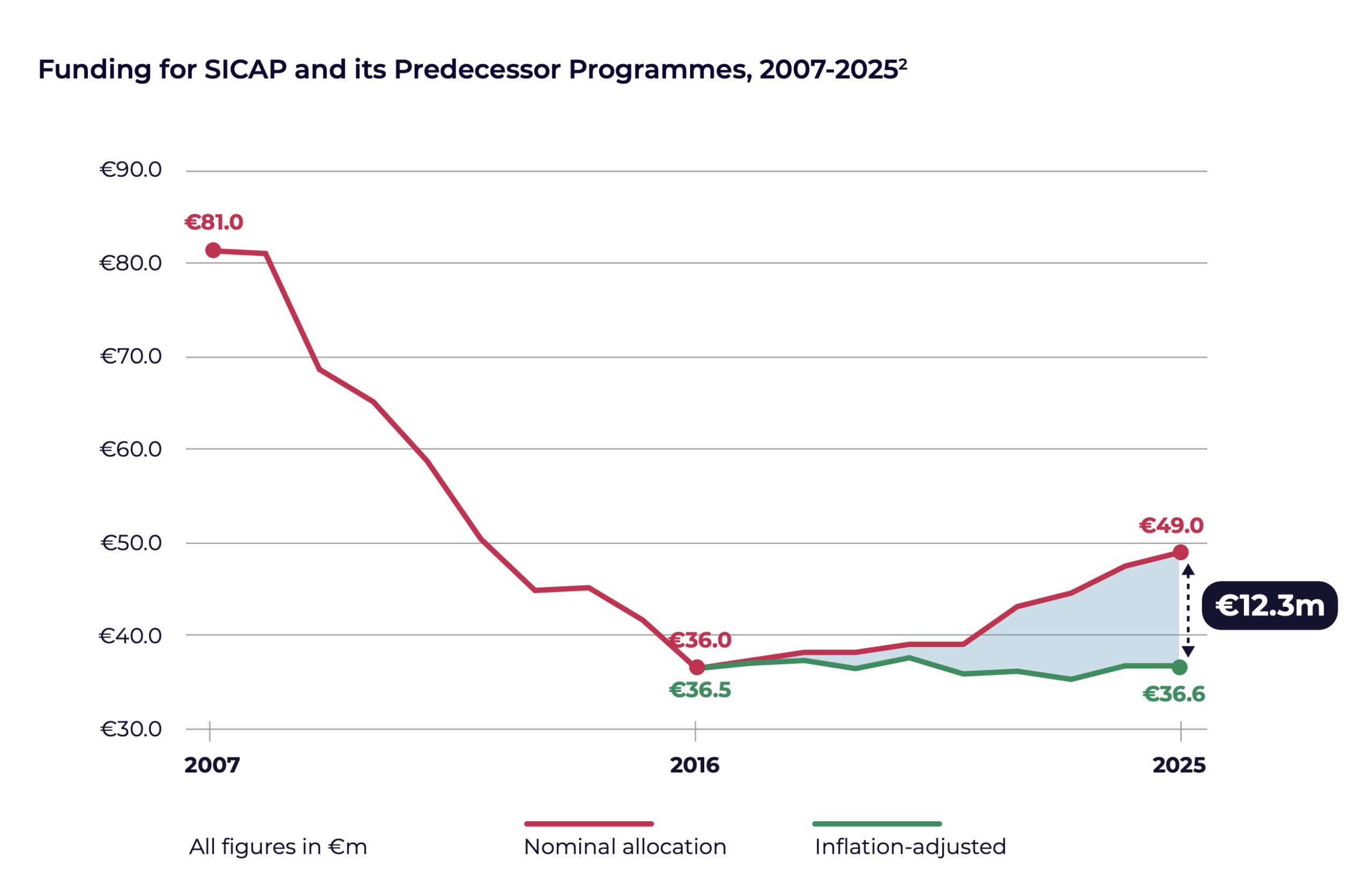
The submission says: “During the years of the recession, budgets for the flagship social inclusions programmes of the day – namely the Local Development Social Inclusion Programme and the Community Development Programme, followed by the Local Community Development Programme and then SICAP – fell by more than 55per cent, from €81.3m in 2007 to €36.5m in 2016.
“When inflation is factored in – SICAP’s budget remains at almost exactly the same level today as it was when it fell to its lowest point in 2016. In other words, the small, incremental increases to the SICAP budget that we have seen over the past ten years have been almost entirely wiped out by inflation.
“SICAP’s importance to rural development in Ireland was also made clear in the OECD’s Review of Rural Policy in Ireland.
“The 12.5 per cent increase (€6.1m) in SICAP funding that we recommend would serve
only to close the “inflation gap” by about half, but would provide an important and meaningful step towards restoring the programme’s capacity to deliver at the scale demanded by the ambitions of the Roadmap for Social Inclusion 2026-2030,” it says. For more, read the full document.
– €12 million to strengthen community employment schemes.
The submission says: “Increases in core social welfare rates, while welcome, do not incentivise participation in Community Employment (CE), Tús, or RSS. On the contrary, by reducing the relative value of the top-up compared to the base payment, they risk having the opposite effect.
We therefore recommend an increase in top-up payments for CE, Tús and RSS participants of €7.50 per week per year over the next three years (additional to any increases to underlying social welfare), at an annual cost to Government of €12m.”
– Measures to secure the long-term future of the LEADER programme,
The ILDN wants the Government to ensure LEADER funding is ringfenced
and expanded under the EU’s next Multiannual Financial Framework.
As its submission says: “LEADER remains Ireland’s most important instrument for bottom-up, community-led rural development. Over the past ten years, almost 7,000 different projects – spanning all 26 counties and a broad range of themes including enterprise, tourism, food, social inclusion, infrastructure and connectivity, and climate and environment – have been approved for LEADER funding.”
It also notes:
“Eighteen months out from the end of the current programme, several LDCs have now allocated their enterprise funding in its entirety, such is the level of grassroots activity and the appetite for funding support.”
The LDCN therefore calls on the Government to allocate additional funding, amounting to €10.2m (or 10 per cent of the exchequer contribution to the current programme to the LEADER programme), to ensure that it is resourced to deliver for communities through the end of the current programme period.
– Wider Sláintecare Healthy Communities rollout should be based on a strengthened implementation and funding model.
Sláintecare Healthy Communities was launched in 2021 and now provides support in 24 communities, where it is delivered by Local Development Companies, Family Resource Centres, and a number of other community-based organisations. However, employment, administrative and governance challenges should be addressed, and the submission describes these in detail.
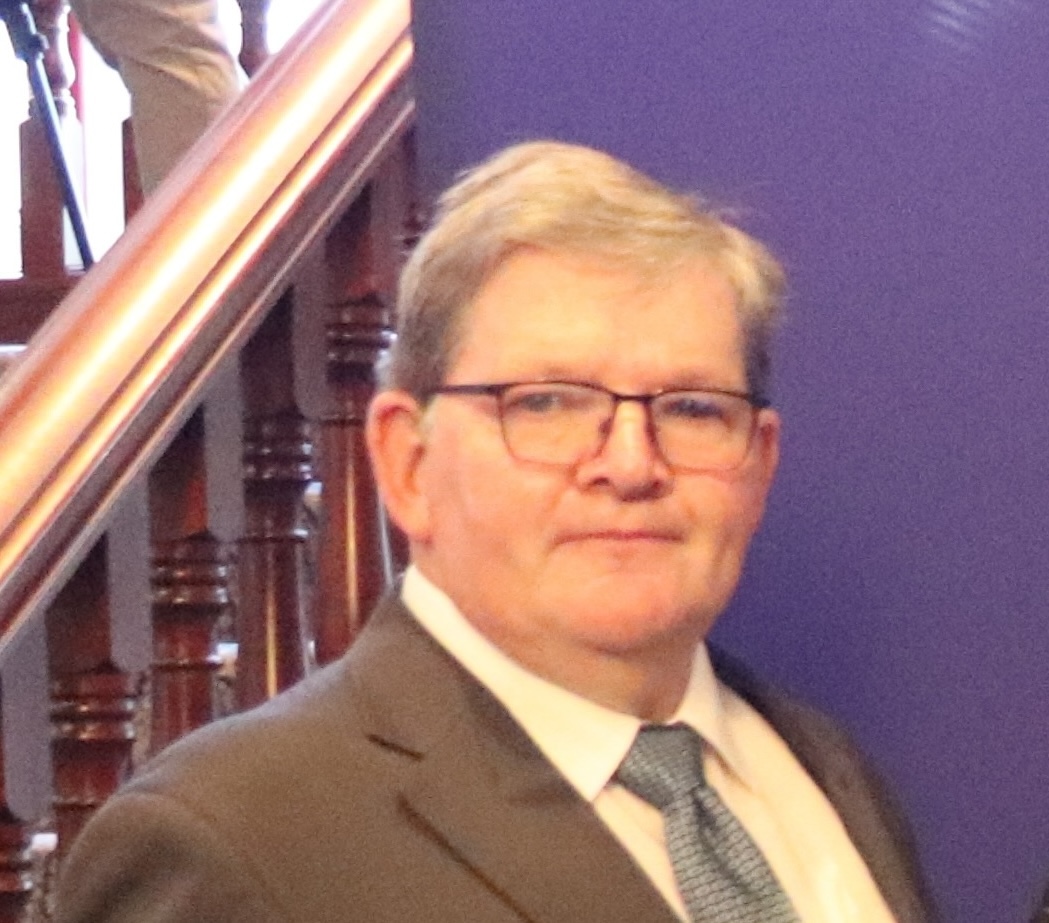
• Thomas Fitzpatrick, chair of the LDCN.
Thomas Fitzpatrick, chairperson of the LDCN, said, “Presenting this submission to policymakers today was about ensuring that the systems required to deliver these ambitions are recognised, resourced, and strengthened.”
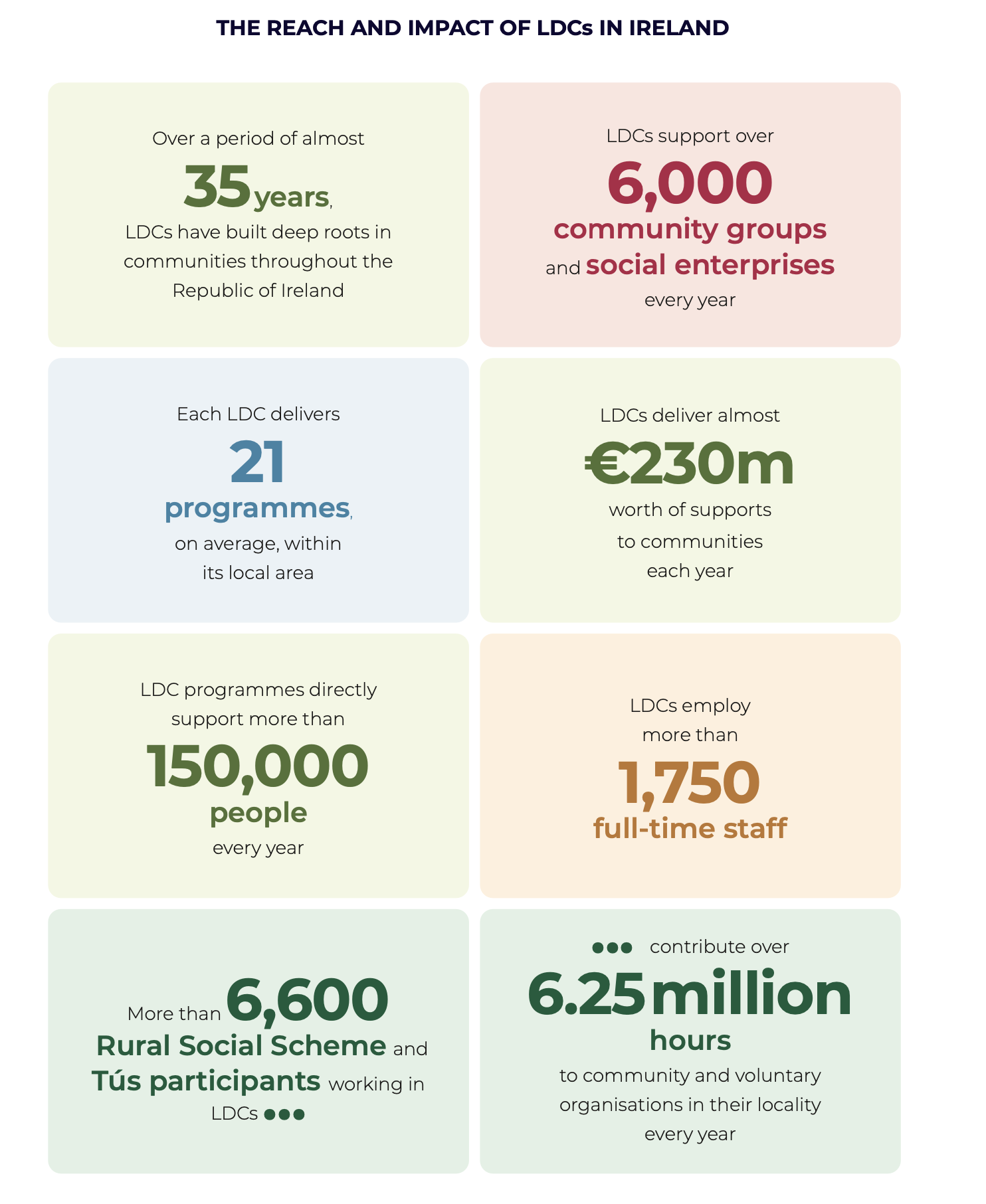
The submission highlights both the scale and reach of Local Development Companies, which support more than 150,000 people and 6,000 community groups annually, employ over 1,750 staff, and deliver approximately €230 million in supports each year in communities across the country.
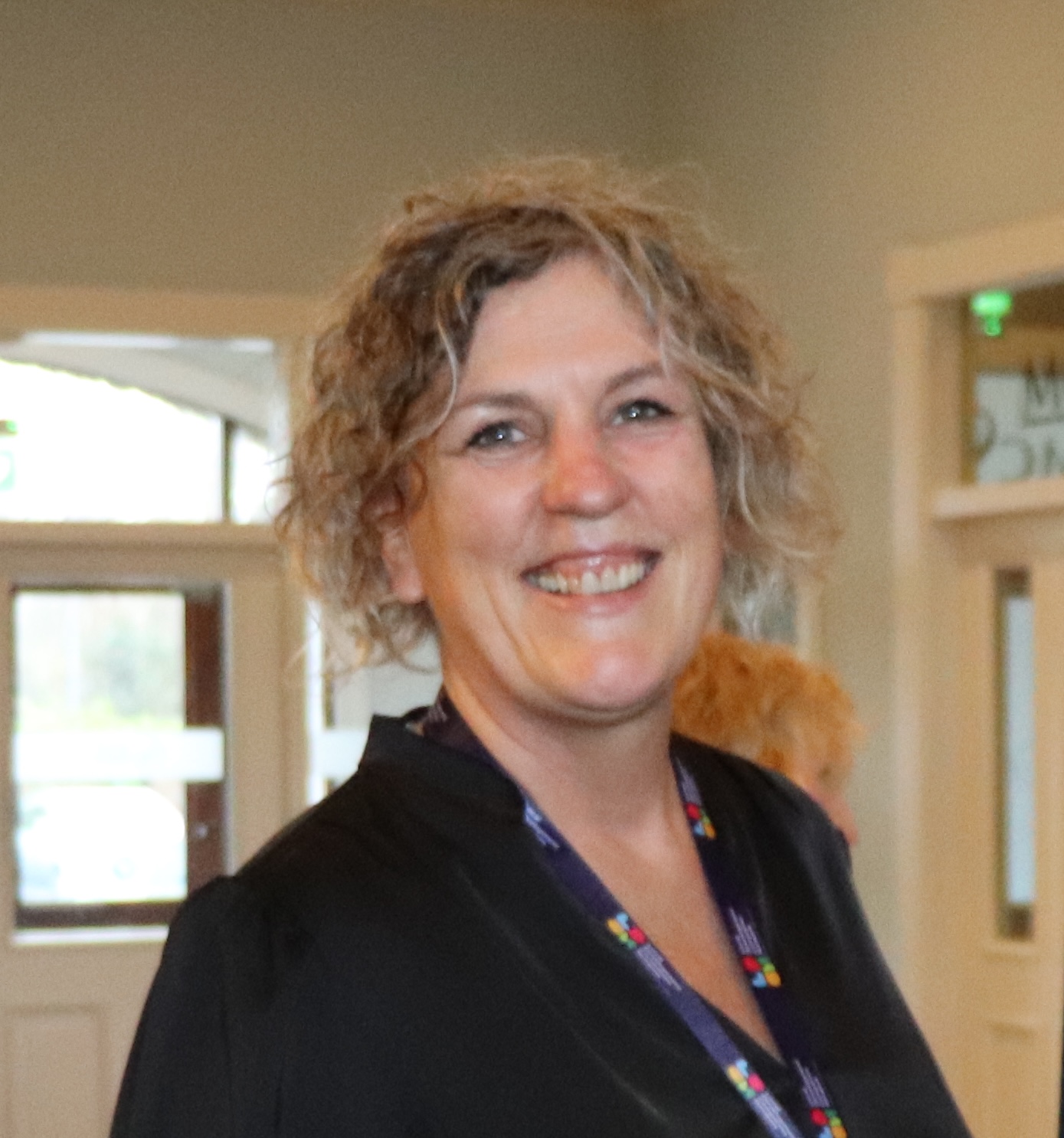
• Máirín Ó Cuireáin, LDCN CEO.
Máirín Ó Cuireáin, CEO of the Local Development Companies Network, said, “Local Development Companies are a trusted bridge between policy, people and place. Today’s presentation to elected representatives reinforces a central message — that ambition at national level must be matched by investment in the structures that deliver real change in communities.”
She said that without appropriate resourcing, key national strategies risk underperformance:
“We have seen from previous policy cycles that ambition on its own is not enough. If Government is to meet its targets on social inclusion, rural development, and integration, it must ensure that community-led delivery systems are properly resourced, sustained, and supported to respond to increasingly complex needs,” she added.
The submission also highlights challenges in meeting national social targets, noting that child poverty increased to 7.8% (95,167 children) by 2025, while consistent poverty rose to 4.7% (256,554 people) – indicating a widening gap between policy targets and outcomes.
The network said, “These trends underline the need for a more integrated, place-based approach to policymaking – one that connects social inclusion, economic development, and community resilience, and is grounded in the lived experience of communities.”
The submission comes as Government prepares to implement major strategic frameworks, including the Roadmap for Social Inclusion 2026–2030 and the OECD Rural Policy Review. The LDCN said Budget 2027 represents a critical opportunity to ensure these policies are adequately resourced and positioned for success.
Waterford Food Bank has produced a series of recipe videos, available for free on YouTube, after getting feedback from recipients.
The idea is to support people in receipt of food parcels in Waterford city to produce healthy and nutritious family meals with the contents of those parcels.
Recipes range from creamy morning porridge to chicken fried rice, while an ingredients list and step-by-step guide is underneath each recipe. Maria Chester, a community nutritionist, provides an easy-to-follow commentary as she moves through a demonstration of each recipe.
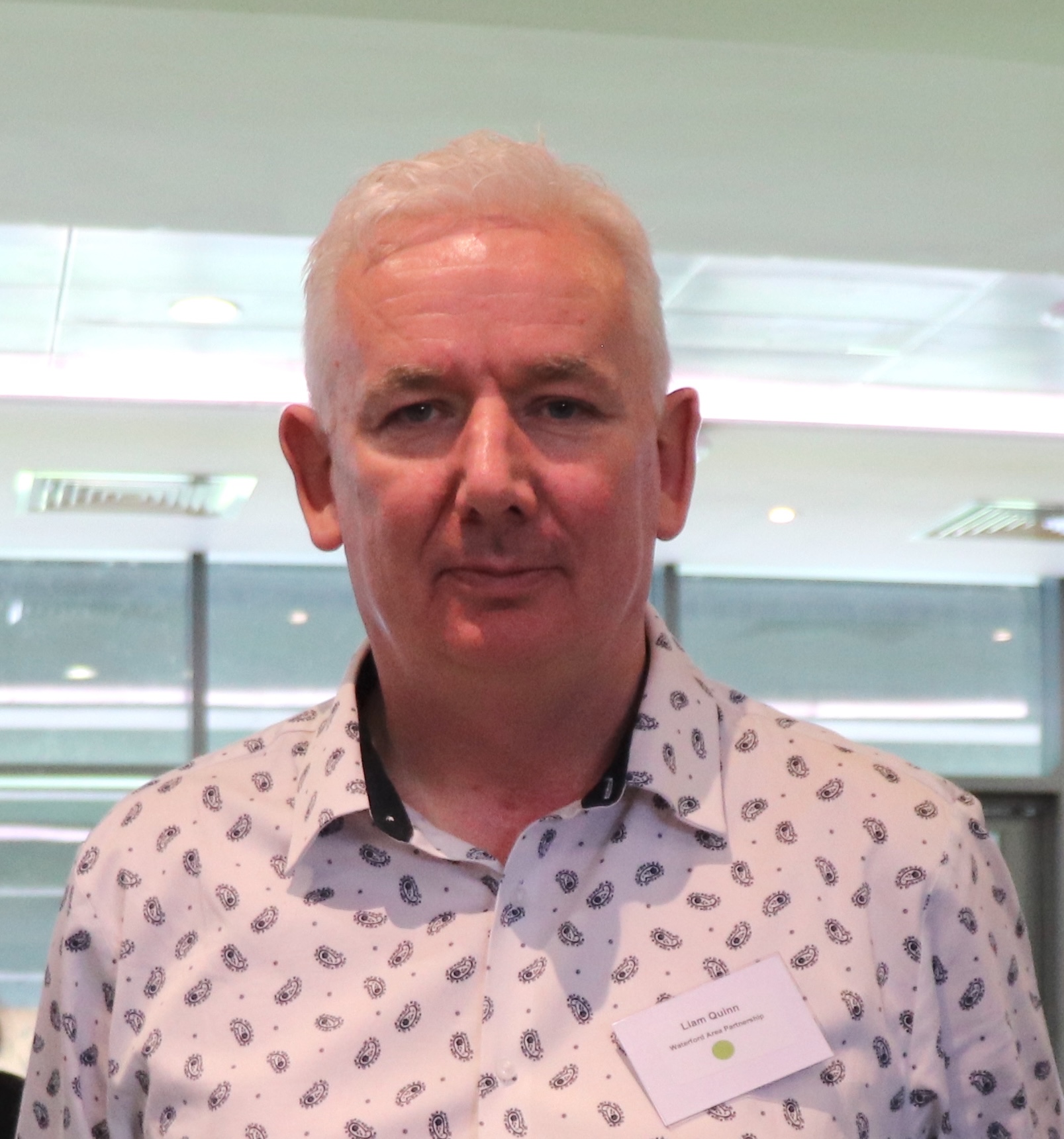
“We believe that good, hearty food should be accessible to everyone. These videos will help food parcel recipients to make the most out of their Waterford Food Bank parcels,” said Liam Quinn, CEO of Buíon Phort Láirge (formerly known as Waterford Area Partnership) which manages the food bank. The videos were filmed in his home.
• Liam Quinn, CEO, Buíon Phort Láirge.
Some people know very little about food preparation and that’s what makes the videos valuable, he said.
“A few people we delivered to, particularly single men, older men, they’d say – ‘A packet of pasta, pasta sauce and a bit of chicken, what do you want me to do with that?’ There was a bit of feedback from people who didn’t know how to prepare the food,” he said.
“Nutritionist Maria Chester did up menus based on the contents of a standard parcel, and we filmed those being made up (in Liam’s kitchen). There’s a QR code on the parcel and if they scan that it’ll bring them to our website where the videos are.”
They were going to put leaflets about their wider services into food parcels, but then got the idea of QR codes “to reach out to those who might need our support but not necessarily seek it out.”
“Everyone has a phone and, once they scan it, not only will they see the videos, but they’ll see the other services and supports we provide. A lot of the clients of the food bank wouldn’t be known to us, they are living on the margins, and this might alert them to other supports they can access.”
Learning by doing
Liam said that, unfortunately, the food bank is very busy.
“Most weeks we deliver about 150-200 food parcels around the city. It spikes around Christmas week to over 1,000, but ordinarily it’s around 200 a week. We just operate in the city currently,” he said.
“When the food bank started people came and collected it from the depot, but there was no control over who turned up. Now it is all done on a referral basis. Most of the referrals come from St Vincent De Paul, MABS and so forth.
“We don’t have any personal details on who we deliver to. The parcels are based on the make-up of each household and we just know the number of adults and children in the house,” said Liam.
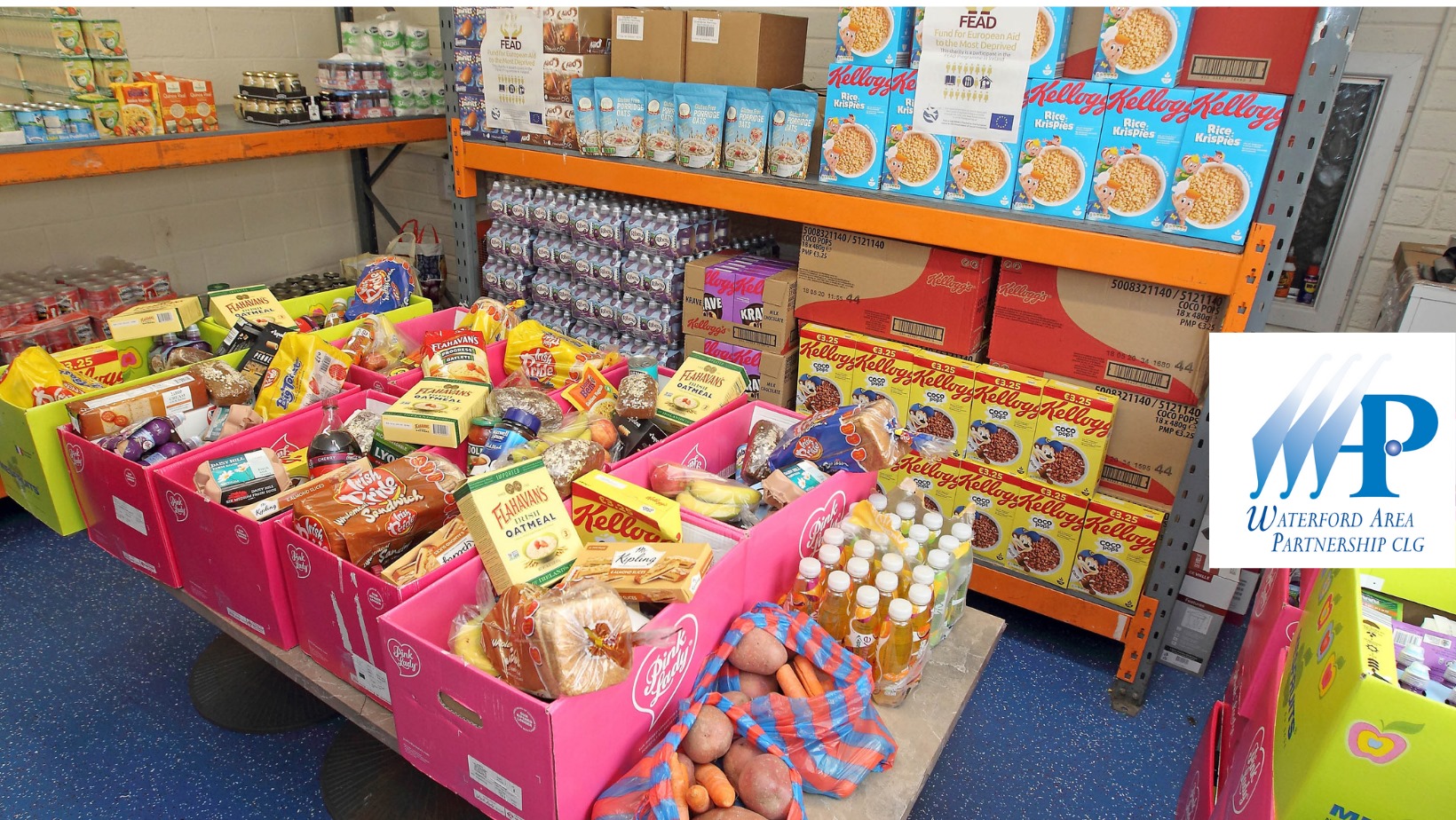
• Waterford Food Bank parcels ready for delivery.
The food is made available as part of an EU Programme, administered in Ireland by the not-for-profit Food Cloud.
“They have two depots in Ireland, one in Dublin and one in Cork. We go down to Cork once a week, we get a load of non-perishables – tinned food, packaged food, things with a long shelf life. We take that back and we supplement them with fresh products, meat, dairy, vegetables, that kind of thing, which we purchase with the money we raise from fundraising and donations.”
Then volunteers and people on a Tús scheme pack the parcels and Friday is delivery day which is carried out to people’s home in unmarked vans, thereby preserving their privacy.
At this stage, Waterford Food Bank is well established and lessons they have learned can benefit others
“We made a lot of mistakes, but we learned a lot too, and if anyone wants to get in touch feel free to do so,” said Liam.
Grateful
• John Barrett, manager of Waterford Food Bank.
John Barrett, manager of Waterford Food Bank said they are grateful to South East Technological University’s School of Culinary Arts, for supporting the production of the videos, and to local organisations and businesses for ongoing support. He also paid tribute to the volunteers and staff that help to pack, prepare and deliver the parcels.
As a journalistic endeavour, reporting from prison is complicated by the fact that – understandably – prisoners cannot be named. As such, the two main prisoners I spoke to will be referred to by pseudonyms Jim and Joe.
To find out why I ended up visiting Limerick Prison read this report.
And to see their artwork, see our album on Facebook – click here – and on other social media.
Head teacher Anita Dooley said that the school within prison has a 70 to 80 percent engagement rate among the prison population which is around 280 prisoners.
QQI levels are very important to them, she said.
Jim said about the courses: “They put me on a path for life. And when I get out of here, I have plans.”
The first prisoner I met, Jim, was most welcoming. He shook my hand, gave me a warm welcome, and spoke up for the place and was positive, yet real.
He said: “You learn here to look out for each other and to be kind. It’s the little things we have that matter.”
They talked about chocolate and how some people just don’t have any money.
Prisoners are allowed to get money sent into them, but not all prisoners have somebody to send money into them. So they do look out for each other.
Anita gave an example from the bingo held the previous day. The prisoner who won the bingo shared his prize, which was chocolates, with another prisoner who he knew had no money.
Joe said of the prison experience, “If you give respect, you get respect.”
That was very important, all agreed.
Prison students win Gaisce awards
Every year the school has 15 participants seeking bronze, silver or gold Gaisce medals. The week before I visited one of the students won a Gaisce award. I met the prisoner who won the gold – and he was chuffed.
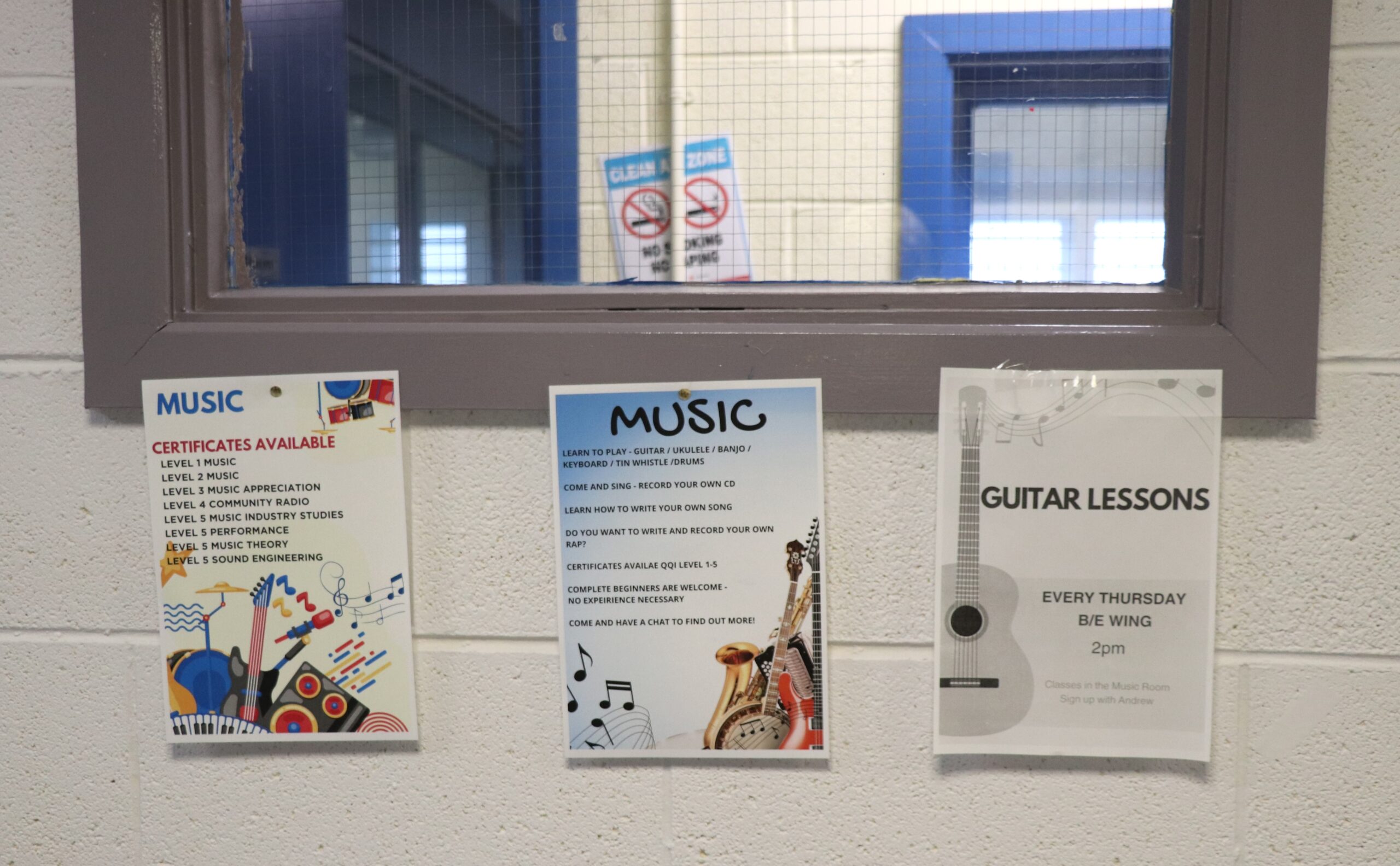
Anita said the Education Department is linked in with the Youth Services Programme. It ties in with the Red Cross and other projects. They link in with Limerick Prisons Education Unit for providing courses. They offer courses from QQI levels 1 to 5 and prisoners can earn certificates. At present, four prisoners are doing Open University.
Anita said, “Limerick Prison has been very supportive of the school. We’re rated very highly on the management plan.”
As Jim said, “School gets you off the landing.”
Both agreed there was “a good vibe in the library and in the school”.
It is good to have ambition.
Joe said he plans to become a professional boxer when he leaves here. He’s been boxing since the age of five and he hopes to win competitions when he gets out. He has also been making up for a lost education while behind bars.
Loneliness of prison
The wit and banter in Limerick prison keeps people going, but they are still locked up for an awful long time each day.
Jim said, “I don’t like being in prison. I find it very hard to tell the truth.”
He said, “It can be very lonesome.”
The school and all its services closed for two weeks over Christmas. Easter and summer are also tough when staff take leave.
“It’s hard time for the prisoners when they don’t have any school to go to,” said Anita. “They’re also supposed to get out in the yard three times a day, but it could be just once a day if staffing is an issue, and that means spending more time in the cells,” she said.
“Not all of us are bad”
Joe quietly but firmly pointed out that not all people behind bars have done dreadful things. “Not all of us are bad” was how he put it.
Also, for many of them, as Jim pointed out, it was the circumstances they grew up in that led to them being here. Jim explained that he wished he could turn back the clock, but one regrettable incident led to him getting a prison sentence.
Art & craft exhibits
While meeting staff and prisoners, I felt proud for one young man in particular who showed me his artwork and read from a speech to mark the opening of the craft fair in the school library. Visiting ETB personnel were due to meet the prisoners and hear the same speech that afternoon.
I was told the best work had been taken back to people’s cells, but what was on view was fantastic so pure works of art definitely live behind Limerick Prison’s high walls.
Support drops to near zero on release
There is a gap in the services and supports when prisoners are freed.
I learned that there are great services provided for prisoners while they’re in prison, but when they get out there is very little. Anita said because of that people can fall back into their old ways.
So, while there is great investment in education and support services for prisoners while they’re in prison, sometimes the good work is lost because it’s not followed up after people leave prison.
“We’re linked in with the Further Education and Training Boards,” she said, but that is not enough. She lamented that there are not better links with groups such as Limerick Build that are keen to support prisoners when they are released.
“We don’t join up the dots when it comes to community liaison and development,” she said.
Rehabilitation works, said Anita, when it’s funded properly.
Many have no family support on release
Jim and Joe both appreciated having family to support them after they are released. They agreed with Anita when she said, “A lot of people have no family to support them, no home to go to and nothing to do or look forward to when they get out.” She said they can easily “fall back on old ways”.
That is where Damien Quinn, founder of Spéire Nua, is doing great work. He often arranges meetings with newly released prisoners – to link in with them and see about getting them work if that’s what they want.
“They shouldn’t even get an education”
Prejudiced views often heard in public, including from some people Anita knows, would argue that prisoners should not be entitled to an education in prison. They should be doing forced labour, some would say. She abhors such views.
“Are we for retribution or for rehabilitation?” she asks. Those views also do not add up, she says, pointing to research and U.S. experience where the recidivist rate is very high among prisoners who were jailed solely as retribution. Ireland is different. We seek to rehabilitate people.
And Limerick Prison – all in all – was clean, friendly, fun and bright. Yes, there were a lot of locks and doors, but it did not feel as oppressive as I expected. I was only in for three hours in fairness.
She wanted to show some of the fabulous arts and craftwork produced by prisoners and to discuss their educational pursuits with them. The people I met included dedicated and talented individuals who have won gold in the President’s Gaisce Awards. In all cases, they were most welcoming and engaging.
Prior to visiting, I phoned my Aunt Margaret, because she, until retirement recently, worked as a prison chaplain in London, often meeting young Irish prisoners there.
She said without hesitation:
“When you go in you must show the same respect to every prisoner you meet that you would afford to your mother, father or brother (I have no sisters). No less.”
With that solid advice in mind, I went through the same sad entry route followed by the relatives of prisoners. Being part of a community project based in Moyross means that now I have seen what many others in our area have seen – visiting relatives.
I really felt for one mother from a rural area visiting her young daughter who had become involved at a low level in illegal drugs distribution and was now behind bars. Our reasons for being there were different.
Some prisoners I had known who spent time in Limerick Prison were anti-war activists who had climbed the fence at Shannon Airport to make their views known. Some years ago, I protested outside with others in solidarity with them. I had tried to imagine what it was like for them inside.
The majority of prisoners, however, come from poverty-stricken socio-economic areas.
Nowadays, although the prison facilities have been upgraded, overcrowding is a bigger issue than ever. I did not see the accommodation areas on this visit, but prisoners talked about it. They did their best to make little of it, despite the obviously cramped living conditions. In almost every way, they talked up their experience of prison life and spoke about the rapport among prisoners.
“It is not like you see on television,” they said.
With their big welcome and good spirits they made me feel very comfortable on my short visit.
I would like to thank everyone I met and congratulate all involved among the teaching staff and the students whose work I was privileged to see – which you can see here.
To those competing for Gaisce Awards, best of luck! To those sitting Leaving Cert subjects, best of luck! To those already released since we met, best of luck!
Des North is a senior manager with St. John of God (SJOG) in south-east Dublin who oversees the delivery of services for people with an intellectual disability. He believes it is time to re-examine national policies and strategies devised since Ireland signed up to the UN Convention on the Rights of Persons with Disabilities.
Amidst chronic underfunding, he believes it would help families if there were more respite homes. It would also help providers if there was less red tape regarding residential housing standards. And finally, he says the policy of decongregation needs to be discussed.
Des has worked in the sector for 27 years and since 2005 with SJOG, one of the largest of the many not-for-profit organisations that provide such services. He suggests that revisiting policies is a practical response the State could take now to the crisis for families needing residential care for adult children with intellectual disabilities. It would lead to more families being looked after than the system can currently support and care for and better value for money.
SJOG in Dublin South East covers an area stretching from Ringsend in Dublin city to Bray in Co. Wicklow and it provides day, respite, residential and other services. While it has 120 residential beds, there are 138 people with an intellectual disability on its waiting list, 35 of whom Des describes as “extremely in need, virtually emergency cases”.
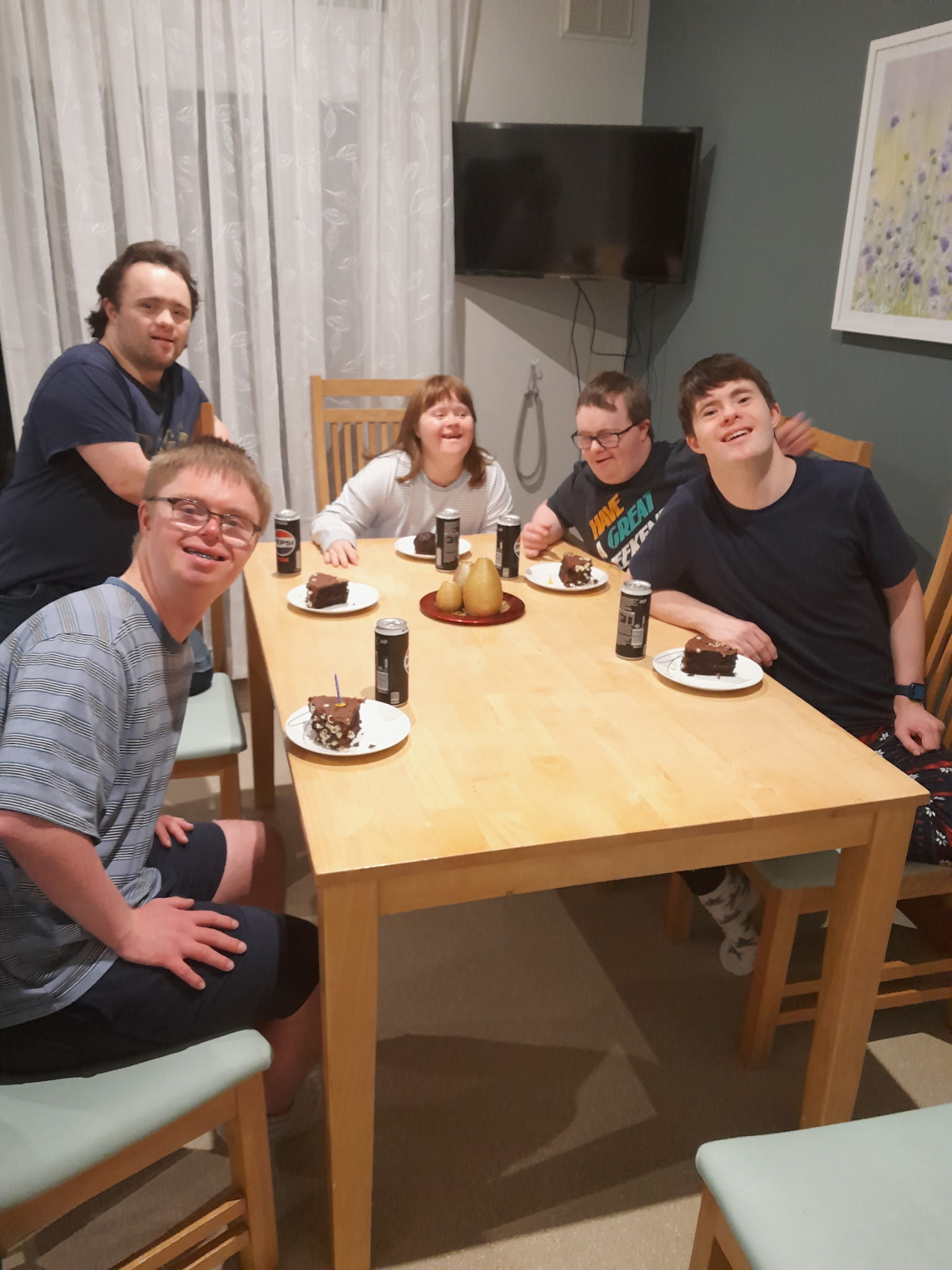
• Service-users enjoying a celebration in a St John of God respite house.
His heart goes out to parents on the waiting list.
“It’s absolutely shocking when you see parents aged 88 and 91 and have a 65-year-old adult child who they are struggling to care for and who has significant behavioural needs on a daily basis.”
Part of his role is to communicate with families, often to say there is no place for their adult child at present.
“We are having tough conversations with families on a continuous basis. We try to stay in regular contact with them so they don’t feel forgotten,” he says.
The burden on families to provide care while the system is in crisis is largely unseen.
“When someone is living on the streets and is clearly homeless, the State works with them to try and provide accommodation. However, a family caring for somebody with an intellectual disability and needing support is unseen, and responding effectively can in some ways be avoided.
Burden leads to desperate actions
“That’s why families sometimes go nuclear, like the mother who recently brought their loved one to an A&E and drove away. Parents become desperate to make the State face up to its responsibilities,” he says.
Some people get driven to the edge.
“I know families who have said to me that if this does not improve… [Editor – specific threats of suicide omitted]. That has happened on more than one occasion,” he says.
“On occasions, we are glad the HSE is able to ring private sector companies and ask about openings.
“When we don’t have a bed, or a suitable bed, that person still needs to be accommodated somewhere and the private companies usually can provide. They are a godsend in certain situations,” he says.
Respite is key
“Respite is key,” he emphasised. “I have heard families say ‘We don’t need our child to have a full-time residential place, we need a break’. And if there was more respite places available, people would be able to stay at home with their parents for longer.”
He gave as an example a five-bed respite house for adults.
“That house is full every night, seven days a week, pretty much all year, and it provides a great service to the community. We’ve probably a hundred families who benefit from that particular house.
“We could have another respite house open in three months if we got the funding. We would happily double the amount of respite we provide. Apart from being a partial solution to the numerical challenge and the financial challenge, people just need a rest – and they want to spend time with their other children who they’ve possibly neglected.”
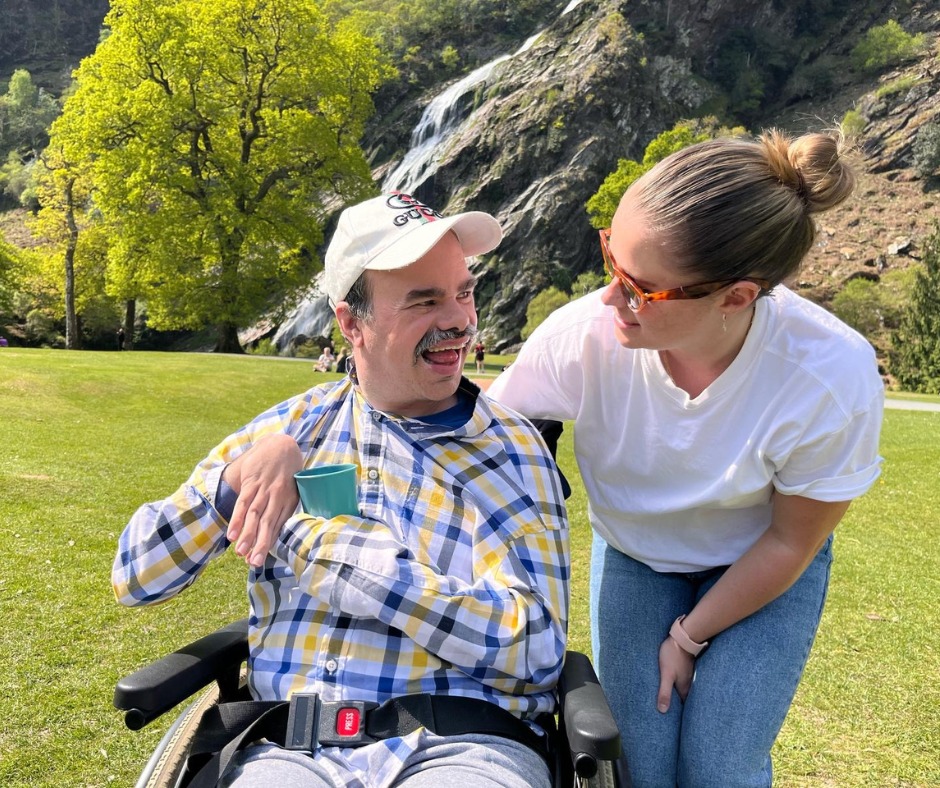
• A service-user of St. John of God with a friend on a visit to Powerscourt Waterfall in Co. Wicklow, last May.
Want to do more
“In my area of responsibility, in Dublin South East, we support around 450 people with an intellectual disability. We have 520 full-time staff and about 50 volunteers. We have 22 day services locations and 24 residential locations.
“We lobby and advocate for people with intellectual disabilities with the HSE locally and nationally, to try and unlock funds. We want to do more.”
Decongregation needs to be revisited
“Decongregation makes a lot of sense, but it needs to be looked at again,” he says, pointing to push and pull factors – the sky-rocketing cost of house-building and the emerging trend of co-living among other groupings in society.
“There’s no doubt that the State is going to find it very difficult to continue to provide residential places for people, like they have been doing. The expense is phenomenal. For example, after you buy it, a four-bed for people with disabilities can cost approximately €400,000 per year to run,” he says.
Considering the mounting annual costs, it could be timely for the government to revisit their policy ‘Time to Move on from Congregated Settings’, published 15 years ago.
Some people would prefer congregated settings
Moving groups of people out of dormitory accommodation in institutions to three- and four-bed houses in community settings was well-intentioned, but expensive. Des says the policy has been to reject any housing that placed 10 or more people together.
However, Des believes that clustered co-living where people have the independence of own-room or apartment accommodation should be considered. For example: clusters of six-bed and eight-bed houses, and apartments where people are grouped together, where staff can go between each apartment, yet the residents are able to live independently.
“We have great risk assessment processes now that we didn’t have before,” he points out.
“The choice of the service-user is very important here,” he says.
Des is concerned that resource allocation for decongregation leaves next to no resources for people living in their family home who need residential places.
Communal living
“Some people would be horrified that this would be considered for people with disabilities, but I would say one needs to go back and have a discussion about every option again,” he says.
“The issue around policy, in my view, is that it doesn’t take into account the subtleties and the nuances of human beings. There are plenty of people who would love the idea of living in a shared accommodation with like 20 beds and communal areas. It would be perfect for them. You’ve got your own privacy, your own bedroom, your own bathroom, but you still have access to staff, to people that you can meet, hang out with, watch TV with, if you want.
“There is niche co-living accommodation now for students and others, particularly in Dublin, where they have shared cooking facilities and social facilities. It can work very well for certain people.”
UN Convention
The UN Convention on the Rights of Persons with Disabilities (UNCRPD) is aspirational. As an Oireachtas Committee on Disability Matters heard recently from another worker in the sector: “While Irish policy and legislation affirm the equal rights of disabled people, a significant gap exists between these affirmations and practical reality.”
Des says: “We all understand and appreciate why the Declaration was written and it is important that people’s rights are enshrined in law. However, policies need to be looked at again, because we’re spending money foolishly at times.”
Recently, SJOG wanted to open a new house, but were delayed until certain – arguably unnecessary – fixes were made.
In other cases of over-zealous regulation, tables have to be replaced because of scratches, or lino has to be replaced because of a tear – both are seen as infection control issues. A washing machine has to be moved from a kitchen to an outdoor shed.
“All of these things make sense in themselves, but they become serious issues for service providers, because we end up spending a huge amount of money and time fixing these when we could be providing more respite.
“It’s very simple. If we want to create new places for people in need, we need to be more efficient with the level of resources that we have. We have to work smarter,” he says.
Up to the Government
Whether or not we review policies is not for the sector to decide.
“The power when it comes to revisiting policy documents rests with the State, so it’s the State that needs to lead out on a review of the legislation, the regulations, the policies, the guidelines, the standards.
“Support groups and service providers can clamour for change, but they can’t action it. The State can action it. The minister can come out in the morning and call for a review of policy X or Y, and we’re up and running.
“A Citizens Assembly would bring sensibility to these discussions because the man or woman in the street tends to have a very good grasp of what’s needed and they tend to also have a very good grasp of how far a euro can go.
“In my view, a government-led citizens assembly looking at these issues could go a long way. I think we would seriously benefit from an in-depth review of all the policies and strategies we are following.
“Additional respite beds are vital in the sector and ring-fenced resources for every county are needed immediately to facilitate this development.”
“New funding announced by Minister Norma Foley is very welcome, but should be protected for non-emergency cases,” he added.
Our values: Hospitality, compassion and respect
Across the country SJOG provide day, respite, clinical and residential services to around 3,000 people with intellectual disabilities.
“That's a phenomenal amount of people and we do a really good job," said Des.
In regards to St. John of God more generally, he said:
“The reason I work for St. John of God is our values. They are hospitality, compassion and respect and in our line of work they are absolutely key. For me, what makes St. John of God stand out is we do espouse our values. They are important. And when we start to drift, we bring ourselves back to those values. They govern our service and that's why we're good at what we do," he added.
“People say it to me that it must be like having a black cloud over you, but it’s not like that, because a black cloud will lift eventually. It’s more like a black hole. At present luckily both Susan and I are healthy, but it can change in a flash and then Aoife’s situation becomes an emergency.
“In our old naive way of thinking we thought that St. Michael’s house, which is the service that Aoife is in, would step in and they would provide after we die. But they’re saying that is out of the question.
“I had no idea of this. What will happen is absolutely shocking. Basically, after we become incapacitated or die Aoife’s care package will go out to tender. Those words alone – “It goes to tender” – are so upsetting, because we all know what the government normally does with a tender. They usually take the lowest bid.”
“What happens is that within a six-week period of, let’s say, Susan and I being incapacitated or dead, Aoife loses her home, her social activities – and her service, which is her life.
“The ideal thing for Aoife and us would be that Aoife would gradually move into her own place, her own new home. She would segue into it. She might just go one night a week to start with. She would feel safe. We could monitor it and eventually her new home becomes her new home. She could slowly adjust. But that’s a fantasy. That doesn’t happen,” he said.
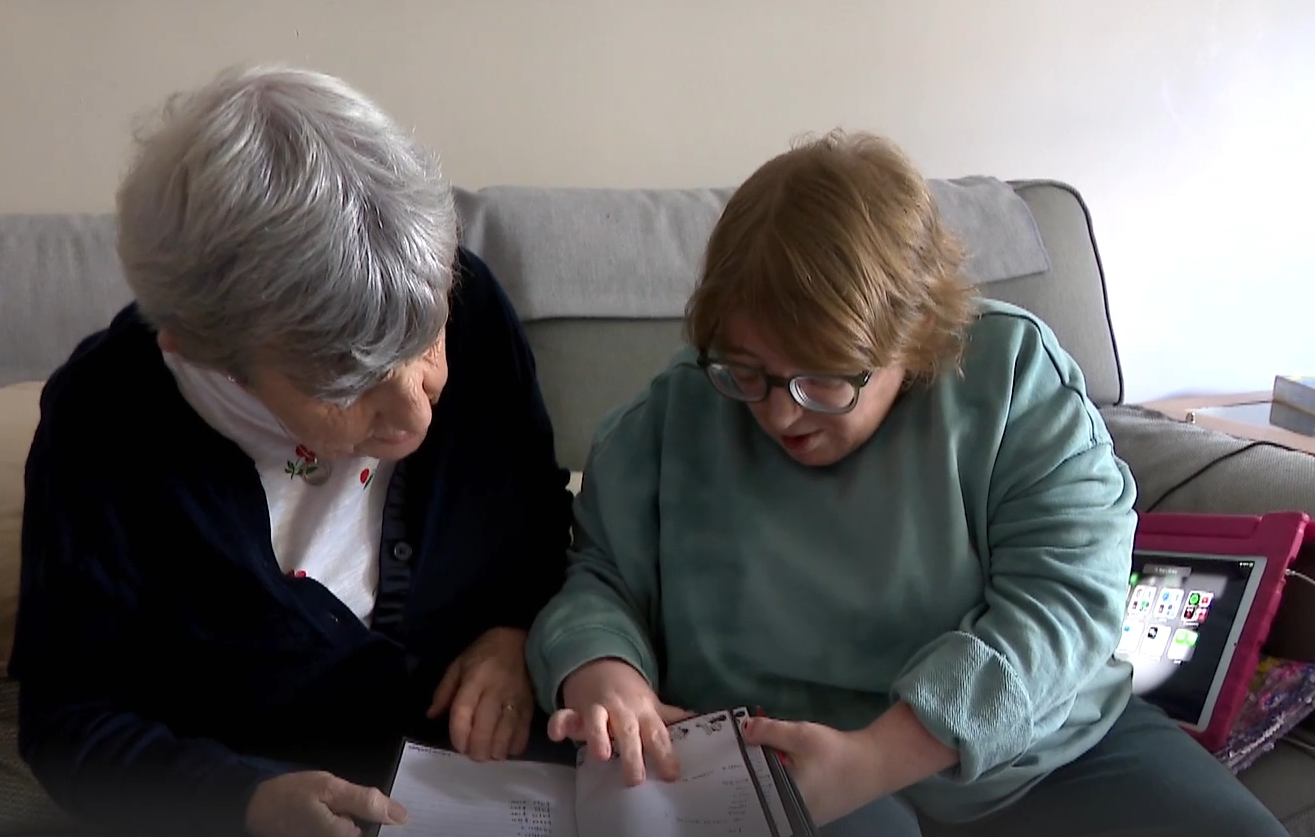
• Susan and Aoife pictured at home by RTE last October when Tony launched the ‘Before We Die’ campaign.
Speaking at an Oireachtas Committee on Disability Matters (on Feb 4) Angela Colgan from Stewarts Care made the same point: “The availability of respite is important to enable [people with an intellectual disability] to know what it is like to live outside the home and beyond the family and to give families this security.”
However, in some cases, as TD Liam Quaide pointed out in an earlier Disability Matters debate (on Nov. 26 last) “people are placed more than 200 km from home” and sometimes “in quite an isolated setting without access to community supports, and they can remain stuck in that situation indefinitely”.
Tony is fearful that safety issues could arise if Aoife is living far from relatives who could drop by, isolated from her friends and local connections.
“You know that phrase ‘Out of sight, out of mind’, all that kind of thing,” he said, describing distant residency as “a recipe for neglect”.
He also fears Aoife would not be easily understood, particularly as often staff speak English as a second language and even he struggles sometimes to know what Aoife is saying.
He and Susan are glad the ‘Before We Die’ campaign has won attention, but clearly their concerns have yet to be allayed.
In another scenario Aoife could be provided with independent living in an apartment of her own, but Tony believes she would be vulnerable to being preyed on by others in such a setting as she has the mental age of a young child.
“Accommodation you get from the local authority tends to be one-bedroom apartments. But for somebody like Aoife who has got significant needs, that’s no good,” said Tony.
Again, at the recent meeting of the Oireachtas Committee on Disability Matters (Feb. 4) Lorraine Egan, CEO of Horizons, noted that: “Individualised living can turn into one person in one house, and there is a risk of isolation there.” She said the sector and the National Federation of Voluntary Service Providers was well aware of this issue.
In fact, probably every point raised by Tony in his interview with Changing Ireland has also been mentioned in discussions in Leinster House, but his group has highlighted the urgency of the matter.
“How come the system has not been able to match the service to a predictive need?” he asks, still perplexed that nursing home places can be found for older people who do not have a disability.
“There’s no surprise with Aoife. From the age of one, when she was diagnosed, they knew there was going to be a problem. Like, it’s not rocket science. I’ve raised with politicians, and they kind of said, well, that’s true.”
In the meantime, there is no rest for Tony and Susan. While funding for respite and residential places is increasing, Keira Keogh, TD, noted in another debate recently (Oireachtas Committee, Feb 26) that it had not yet translated into changes on the ground that she could see.
“How quickly do we think the uplift of the budget will start making a difference on the ground?” she asked.
Nobody had a clear answer. In the meantime, Tony, Susan and Aoife and other families are struggling with scarcity.
Much sooner than later the Murrays and many other families need to see change. Tony highlighted some of the challenges and areas worth focusing on.
Church to State
Where the Catholic Church once provided care, the State is now responsible.
As Tony sees it, “The State took it over, but never put in place a sustainable system. So now it’s just emergency, emergency, emergency, which is the most expensive form of care. The for profit companies have the HSE over a barrel. They can charge what they like, because the HSE have to solve the problem.”
Decongregation gone too far
On decongregation, Tony felt it had gone further than parents would like. He believes that up to 10 people in a house is fine, and advocates for clusters of housing, as can be found around the country for students and for older people. However, he pointed to just such a cluster setting that was recently decongregated, because it was deemed too large.
“Most parents would have given their eye teeth to have their adult child in a safe setting like that,” he said.
He also believes that decongregated houses are not really “in the community”.
“It’s nearly a fashion: ‘Oh, we’ll put them out in the community’, but the community really doesn’t care that much, you know in big cities people are too busy with their own lives,” he said.
Burden on women
There is also sexism. He told of a young social worker who said to the father of an adult female with an intellectual disability, “It’s a pity you haven’t got another daughter.”
He understands the question because Susan looks after their daughter’s most intimate care needs.
“However, it illustrates how bad the system is, because they’re saying this not out of malice,” said Tony.
Another ‘Before We Die’ member told ‘Changing Ireland’ of a similar experience.
Catch 22
Tony said parents are presented with a bureaucratic nightmare when trying to support their grown-up child to access housing.
“Effectively you can’t get a house unless there’s a care package with the HSE. The HSE won’t give a care package unless there’s a house. It’s a classic catch-22.”
Meanwhile, he has noticed an unwelcome change in language from the HSE where there is less talk about “care and compassion” and more focus on “support”.
“Support is a very different thing to care. It’s a more mechanical thing,” he said, acknowledging that both are required for different situations.
Sympathy for providers
He has sympathy for the service providers.
“There's no multi-annual funding, so they can't plan because they don't know what they're going to get next year,” he said.
Also due to it being a mainly female workforce, maternity leave can sometimes lead to reduced staff numbers.
“It's largely young women. So when they go on maternity leave, unlike teachers, they're not always replaced, particularly if the staff are from a day service. If they are working in a residential home, they will have to be replaced, because HIQA (the Health Information and Quality Authority) will say you're understaffed.
“It's also stressful challenging work and sometimes staff get injured and go out sick and there's no replacement. So the service providers are constantly running on a treadmill,” said Tony.
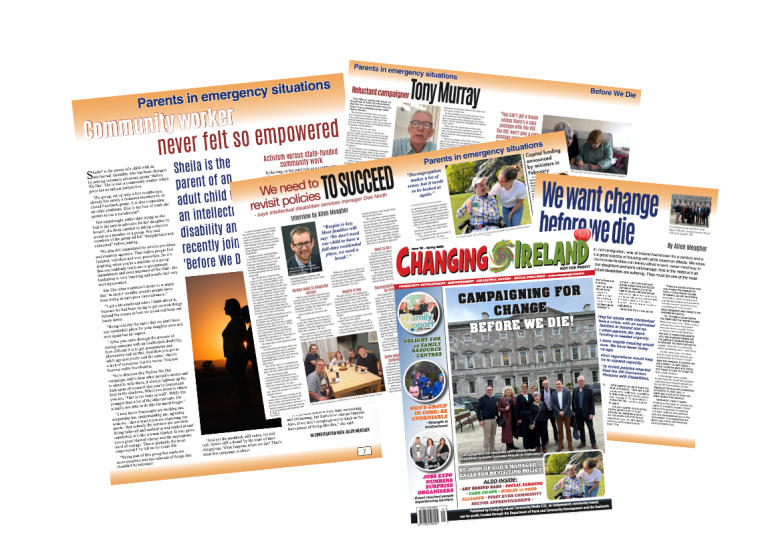
Sheila* is the parent of a child with an intellectual disability who has been changed by joining voluntary advocacy group ‘Before We Die’. She is also a community worker which gives her an unique perspective.
The group, set up only a few months ago, already has nearly a thousand members in its closed Facebook group. It is also connecting on other platforms. Due to her line of work she prefers to use a pseudonym*.
Not surprisingly, rather than trying as she had in the past to advocate for her daughter by herself, she finds comfort in taking collective action as a member of a group. She said members of the group all felt “marginalised and exhausted” before joining.
“We also felt intimidated by service providers and statutory agencies. That makes people feel isolated, voiceless and very powerless. So it’s inspiring when you’re a member of a group that can suddenly reach out to government departments and meet members of the Dáil – the leadership is very inspiring and people feel very well represented.
She like other members I spoke to is angry that “in such a wealthy country people have been living in such poor circumstances.”
“I get a bit emotional when I think about it, because we had been trying to get on with things behind the scenes as best we could and keep our heads down.
“Being told (by the state) that we don’t have any residential place for your daughter over and over again has an impact.
“After you come through the process of raising someone with an intellectual disability, how difficult it is to get assessments and placements and all that. And then you get to adult age and you’re told the same – there’s a lack of resources, but it’s worse. You just become really browbeaten.
“So to discover this ‘Before We Die’ campaign, and to hear other people’s stories and to identify with them, it always lightens up the dark spots of yourself that you’ve denied and kept in the shadows. When you listen to others you say, ‘That is my story as well’. While I’m younger than a lot of the other parents, I’m actually not able to do this for much longer.”
“I now know that people are backing me, supporting me, understanding me, agreeing with me – that it wasn’t just me expecting too much – that actually the services are not okay. Being believed and nodded at and smiled at and comforted; it’s like a warm blanket. It also gives you a great blast of energy and the appropriate level of outrage. This is probably the most empowered I’ve felt in my entire life.
“Being part of this group has made me more assertive and less tolerant of things that shouldn’t be tolerated.
“And yet the pushback still exists, it’s still real, there’s still a denial by the state of their obligations. What happens when we die? That’s what this campaign is about.
Activism versus state-funded community work
Reflecting on her paid role as a community worker she says advocacy on behalf of others is difficult nowadays.
“There are restrictions in your employment, especially if you are funded by a government agency. It’s very hard to have a voice in reality because you’re afraid to bite the hand that feeds you. Even Section 38 and Section 39 groups who aren’t being properly funded aren’t able to go out and scream as loudly as they want to, on behalf of service users, because they’re afraid they will be penalised in some way.
“At work I can’t just speak out on behalf of groups. I have to go to a board of management and ask ‘Can I say this or that?’. You have to work through statutory agencies and you need to maintain relationships, you can’t go stepping on toes, or you might not get funded the next time round.
“By comparison, there isn’t any of that risk in the ‘Before We Die’ campaign. This is totally different. We have nothing to lose because things are already so bad,” said Sheila.
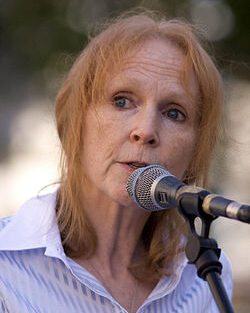
Kathy Sinnott role model
She often thinks of disability advocacy campaigner and former MEP Kathy Sinnott these days.
“I remember Kathy and how she took on the state and she really changed things. Kathy just didn’t give up. Her campaigning changed her life and many people’s lives. I get choked up when I think of Kathy and people like her, you know, the exhausting campaigning work they did.
“For me there’s a day-to-day loss in that you don’t have the same availability for your family when you’re challenging something, but you have to look to the future and think of the greater good.
“We keep going for ourselves and for the many people who are even more powerless than us.
“It is painful and it is very time consuming and exhausting, but that’s how change happens. Also, if we don’t campaign we’re stuck in the foreverness of living like this,” she said.
I grew up at a time when emigration, not immigration, was all Ireland had known for a century and a half and more. Nowadays, there is a great scarcity of housing with all its knock-on effects. We know Travellers suffer greatly. We know low-income families can barely afford to rent, never mind buy, in Dublin. We know not how or where our daughters and sons will manage. And in the midst of it all, families with people who have intellectual disabilities are suffering. They must be one of the most vulnerable groups in society.
Successive governments at best lost focus on their needs. Sadly, some families felt bullied by the State, but now they are fighting their case, united under the banner ‘Before We Die’.
They are campaigning because when someone with an intellectual disability needs accommodation today, because their parents have died or become incapacitated, there is no plan. In most instances, the State relies on private sector support and accommodation providers to tender their services. For families and for the individuals it can be heartbreaking because relatives can be moved hundreds of kilometres away.
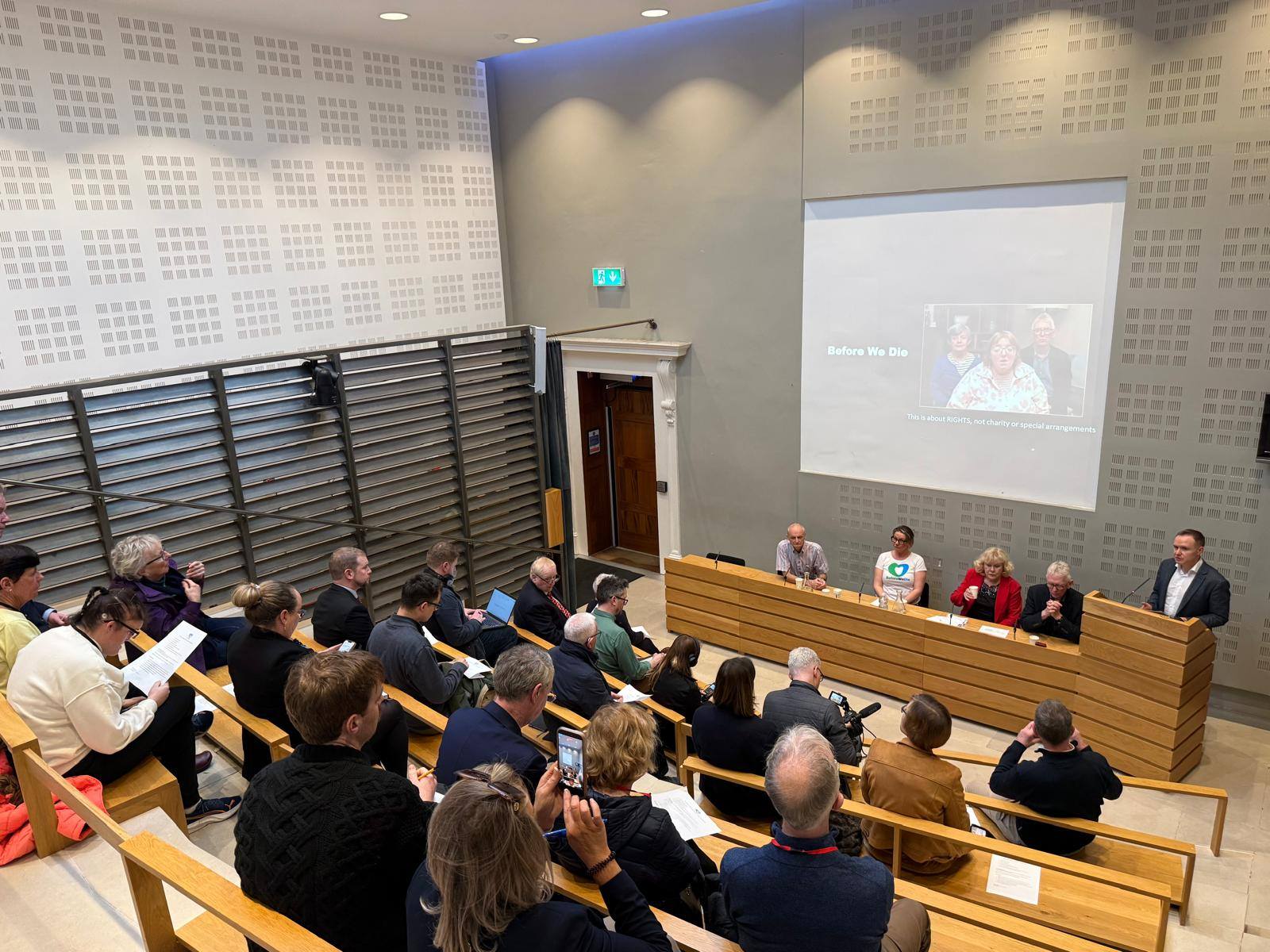
Until Tony Murray from Dublin (originally from Kilkenny) set up ‘Before We Die’ these families were alone in their struggles, but in recent months this new advocacy group has forced the issue onto the political agenda.
Thankfully, as Tony notes, this government when it came into office had the wisdom to set up a dedicated Cabinet Sub-Committee on Disability. He does not know how often it meets, but he sees it as a positive that it exists.
Taoiseach, Micheál Martin, and other politicians have met Tony and others from ‘Before We Die’ and recognise their predicament. The Taoiseach responded by putting the issue on the agenda for the cabinet sub-committee.
Like many others, Tony aged 71 and his wife Susan know their daughter Aoife, aged 42, will sooner or later be in need of State-provided care and accommodation – but under the present chaotic system it will uproot her from everywhere and all the people she knows.
“The (day care) service is her life,” said Tony, and yet Aoife is likely to end up moved to County Kildare or further afield. It could be worse. Tony told me about an elderly woman in Cork whose adult child has been given emergency accommodation in County Louth, over 300km away from home. What chance does that poor mother have of seeing her daughter again? It reminds me of 19th century emigration where communities held wakes for the living as they knew they wouldn’t see them again.
By contrast, when a place does become available locally, which is no longer the norm, it means everything to a family.
The campaign group that Tony founded has swiftly attracted around 1,000 members and he estimates there are 20,000 families in Ireland providing care to adults with intellectual disabilities. Since the state does not keep fully up-to-date records, he had to work on the data himself – and he stands over his calculations.
Given that he will die, as will other parents, for all of them this is an emergency. There are 1,500 adults with intellectual disabilities in Ireland living with family carers over the age of 70, according to ‘Before We Die’, so the situation is urgent.
“We are urgently campaigning for the Government to fund and deliver residential places… so that adults with intellectual disabilities can live with dignity, security, and independence,” says Tony.
There is a partial solution that would ease the pressure for many – more respite houses. At present, as well as funding shortfalls, a well-meaning but punishing regulatory framework curtails service providers from expanding to meet needs. Decongregation also needs to be revisited as a policy.
“St. Michael’s house before the crash had five respite houses. Now they have one. And in some emergency cases they place someone into a respite house so they’re basically blocking the bed. It means that parents who had expected respite are not getting it because the bed is blocked. So there’s almost no respite. Your life is constantly about providing care,” said Tony.
On the plus side, it is clear that if more respite houses are provided by the state it could ease the pressure. If parents can get a break – to rest mainly – many would be able and willing and happy to care for longer for their adult children.
In the longer-term, reality insists that we revisit the policies devised since Ireland signed up to the UN Convention on the Rights of Persons with Disabilities (UNCRPD) in 2007 and, in particular, since 2018 when the state ratified that decision.
Ratification made it legally binding on the state to uphold the rights of disabled people. It kick-started the process of aligning our laws, policies and services with the standards set out in the Convention. It is happening too slowly say critics, but there are other problems too.
In recent times, I learned a lot about the services provided to people with intellectual disabilities and their families, due to campaigning by the new 'Before We Die' lobby group. Their plight centres around care, compassion and support.
More funding is needed, but it would also be wise for policies and related guides to be re-examined.
Many were adopted 15 years ago after Ireland signed up to the UN Convention on the Rights of Persons with Disabilities (UNCRPD) and while widely welcomed and well-intentioned, some of these policies and connected regulations appear to be slowing down service delivery.
For instance, some in the sector believe decongregation has gone too far. Niche co-living arrangements could be considered. They would ease costs, be easier to build and would be popular with some families.
Realistically, full implementation of policies adopted under the Convention would probably cost more than the Government is willing to spend – and that is before factoring in a looming global depression.
However, there are pragmatic responses that could improve life for families of people with an intellectual disability. Multi-annual funding would also help by allowing providers to plan.
It may also be helpful to review the wider impact of HIQA (the Health Information and Quality Authority) inspections. The expectations placed on services can sometimes be counter-productive, reducing capacity at a time when families are desperate for places.
You can read a full analysis giving an overview of where we are today and how the State could best respond – here:
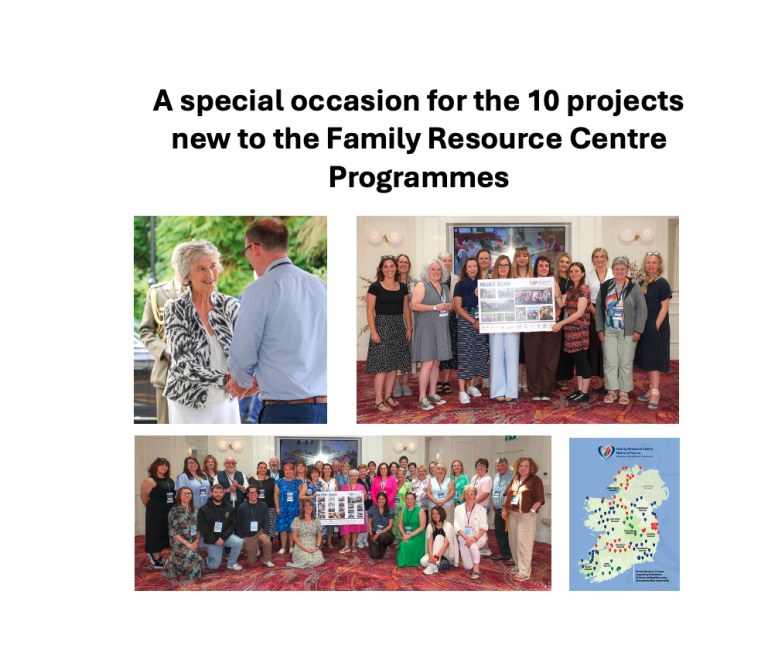
As Ireland’s population expands, so too does the need for community development and family support and it was great to see 10 new projects recently approved to join the national Family Resource Centre Programme.
Floods in the East
Solidarity from west to east where flooding created mayhem in households and communities. I drove through one such flood and we will come back to the subject.
Solidary with people of Gaza, Ukraine, Lebanon, Iran, Sudan…
This spring edition is the first ‘Changing Ireland’ in a long time where we do not have an article connected to the awfulness being unleashed by military powers on vulnerable peoples. I cannot remember a time in my life when there were so many affected by war. Support global solidarity actions whenever, wherever and however you can!
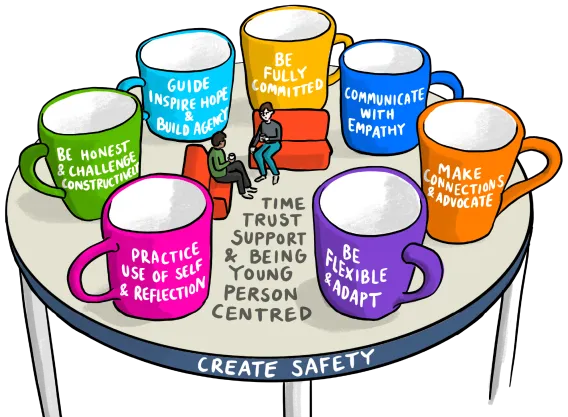
A three-year deep dive by academics from UL found that when youth workers establish “effective, trusted relationships” with young people it helps to generate positive change and to reduce offending behaviour. Establishing such relationships can lead to greater trust by young people in adults and services, improved ability to cope with challenges, increased confidence and self-worth, and less engagement in crime.
As Dr Seán Redmond, who teaches Youth Justice at UL, said when the research was launched in March:
“Relationships cannot change the world or the structural inequalities that many of our young people face, but they are agile, endlessly flexible and resilient to knocks and shocks.”
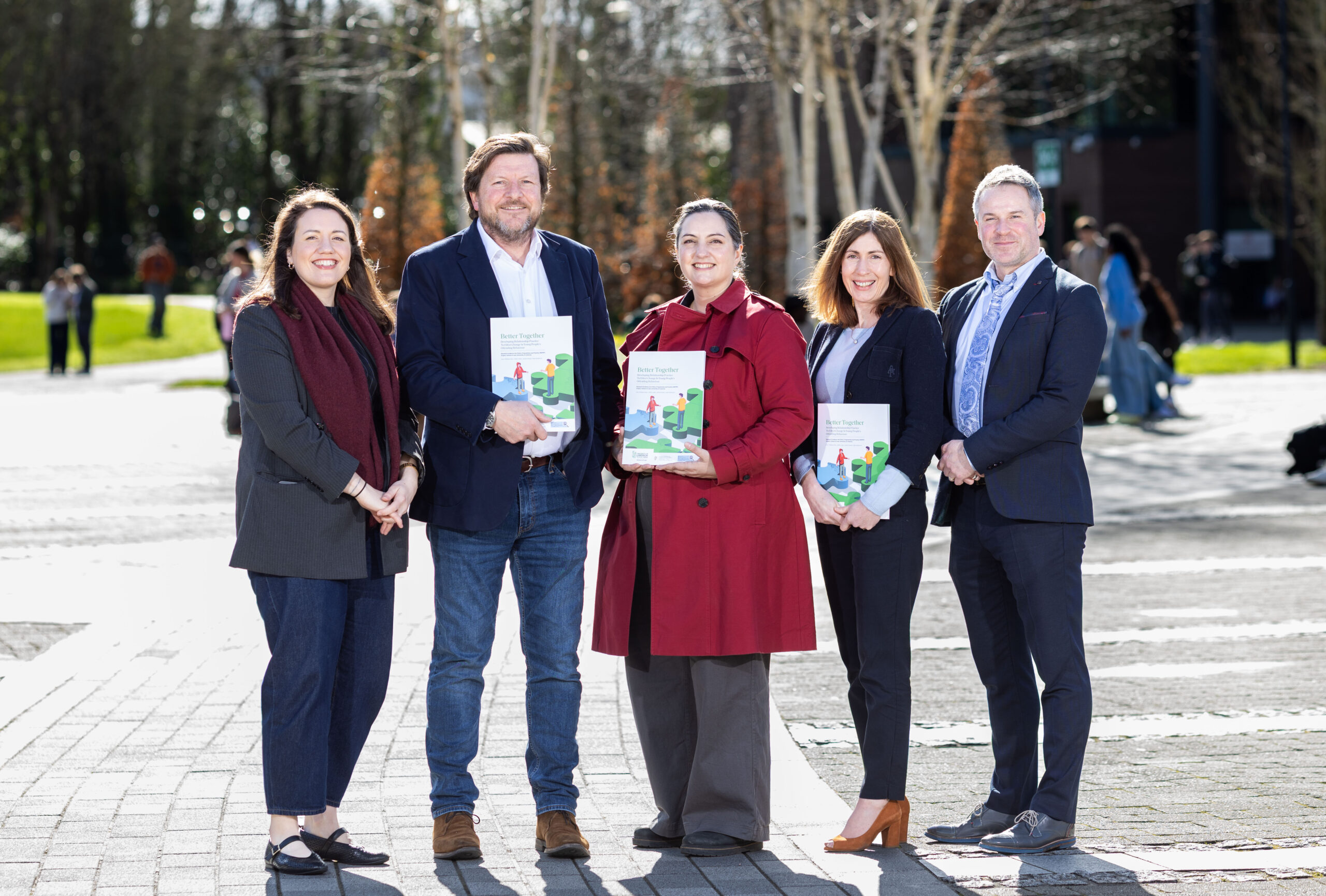
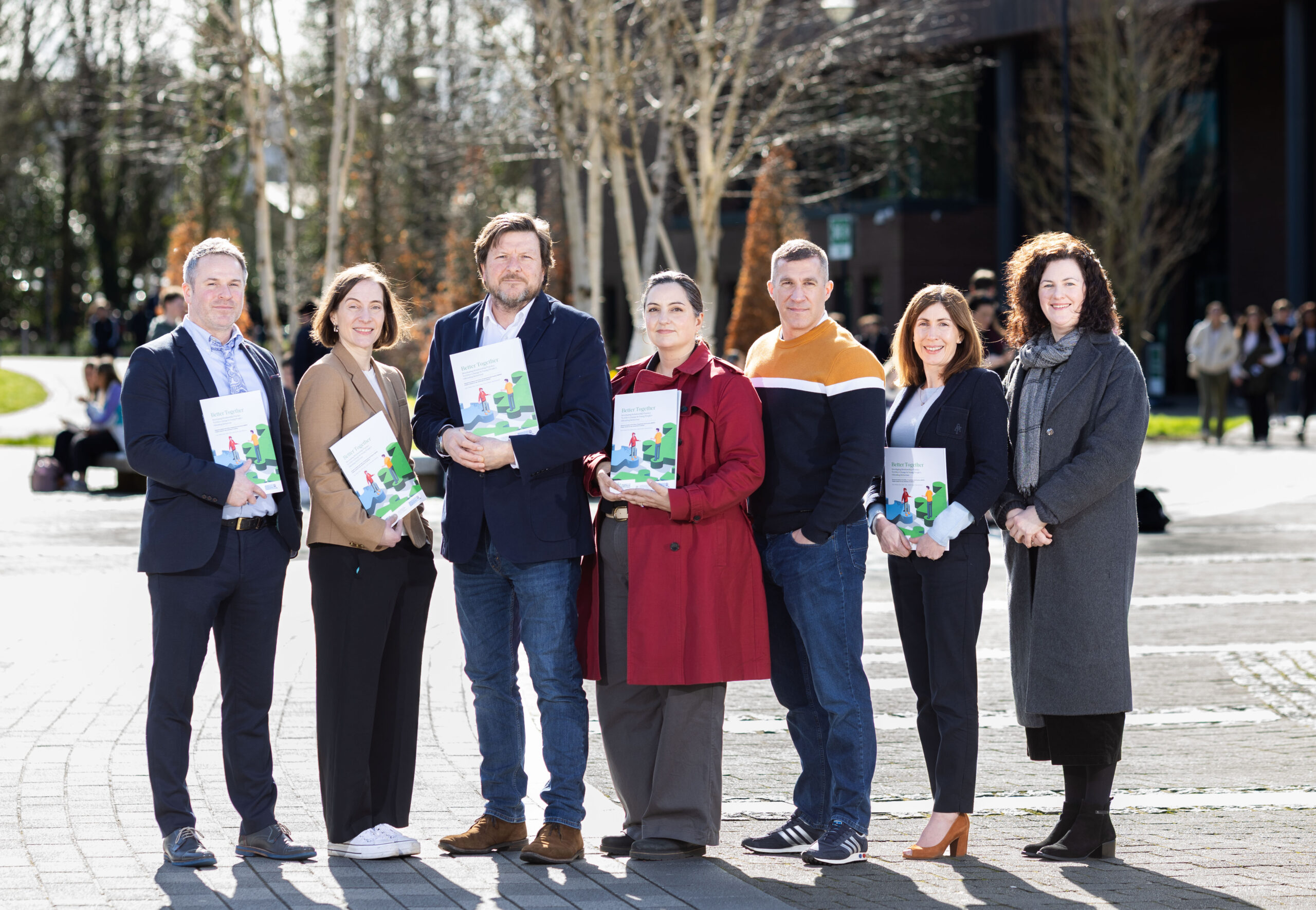
• Helen McGuire, Sean Redmond, Caitlin Lewis, Jackie Dwane and Eoin O’Meara Daly at the report launch. PHOTO BY Alan Place.
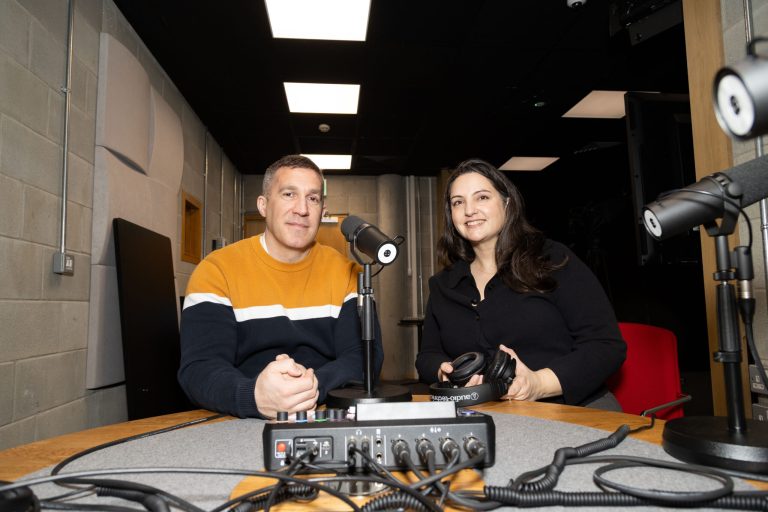
The team behind the research are not going to let this paper gather dust on a library shelf. To provoke discussion about youth justice work, a new six-part podcast series will be hosted by Cork community worker James Leonard from the acclaimed The Two Norries podcast. As James remarked at the launch,
“If you haven’t got a good relationship with your young person, your evidence-based treatments will fall by the wayside.”
The team is also organising webinars and events.
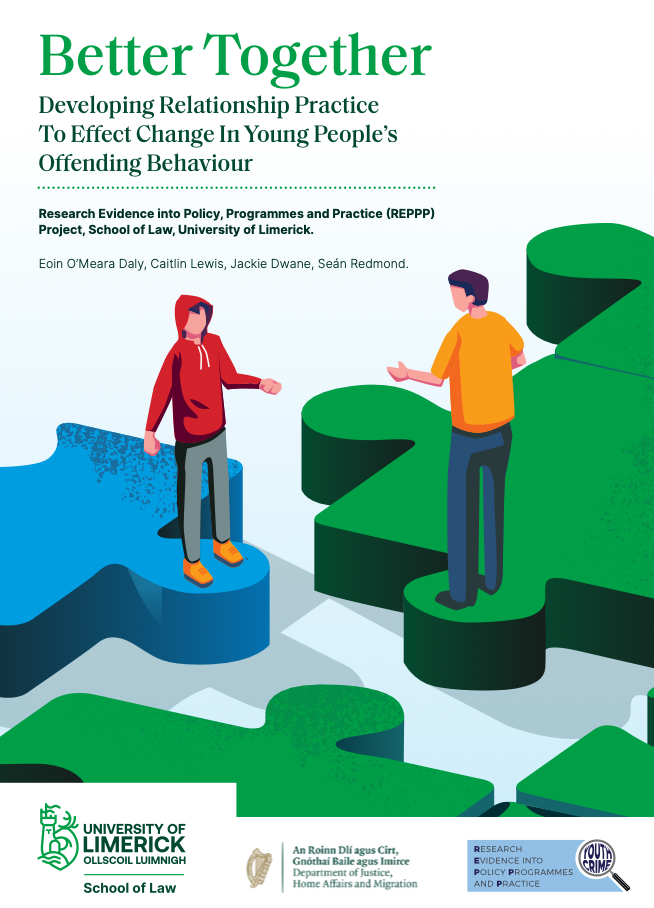
As part of their work, the researchers aimed to develop guidance for youth justice workers and to support the policy of intervening to divert young people from crime. The research for the ‘Better Together Report’* was conducted by the Research Evidence into Policy, Programmes and Practice (REPPP) team in the School of Law at UL. It was funded by the Department of Justice, Home Affairs and Migration.
Commenting on the launch of the report, Minister of State with Responsibility for Youth Justice, Niall Collins, said:
“Investing in youth diversion and youth justice services is a key priority for Government, as it provides invaluable support to An Garda Síochána in its work to address youth crime and protect communities.
“I recognise the dedication and expertise of youth justice workers who facilitate these youth diversion pathways, and I commend them for their efforts to change the lives of young people for the better.
“This invaluable work has an undeniable positive impact on the lives of children, their families, their communities and on society as a whole. It moves young people away from pathways that, in the absence of diversion, would very likely lead to re-offending and imprisonment.
Speaking again about the findings, Dr Redmond said that building trusted connections helps young people to “negotiate adversities, seize and sustain new opportunities and get exposed to new affirming networks – and in this way are potentially transformational.
“Our evidence supports continued investment in, and further development of, relationship building to help change young people’s offending behaviour in Ireland,” he said.
About Youth Diversion Projects:
YDPs are primarily for 12-17 year old “at risk” youths. Each project is community based and involves multiple agencies in devising youth crime prevention initiatives and organising activities to facilitate personal development, promote civic responsibility, and improve long-term employability prospects. The Youth Diversion Programme that supports the projects was established under the Childrens Act 2001 and there are now 101 YDPs across the State. Foróige is one of the main providers at community level.
About the UL research unit:
Established in 2016, Research Evidence into Policy, Programmes and Practice (REPPP) is a research collaboration between the School of Law in University of Limerick and the Department of Justice.
REPPP’s mission is to support the youth justice system in Ireland to make rational judgments regarding youth justice policy and practice that are informed by scientific evidence. It does this through significant and ongoing policy-oriented youth crime research.
• At the report launch: Eoin O’Meara Daly, Tina Morin, Sean Redmond, Caitlin Lewis, James Leonard, Jackie Dwane and Susan Leahy. PHOTO BY Alan Place.
Download the report:
* The full title of the report is: ‘Better Together: Developing Relational Practice to Effect Change in Young People’s Offending Behaviour’. You can download the report, watch a video of the launch and find out more about the podcast series and other events here: www.ul.ie/artsoc/ccjvs/research/youth-justice/reppp.
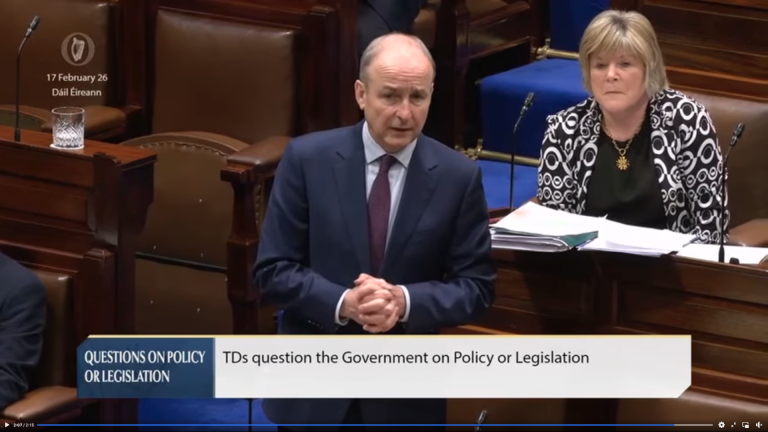
Responding to Dáil questions on February 17 the Taoiseach said:
“I met with the Before We Die campaign group and we had a very good discussion. These are very serious issues. There needs to be stronger co-ordination between local authorities, section 39 bodies and Government Departments, particularly the Department of housing and the Department of disability.
He added, “I am placing it on the agenda of the next Cabinet subcommittee meeting with a view to creating a structure that will work to support families in this situation. There are a lot of issues we have to work through. I do not have the length of time to go through it all here, but suffice to say it is not enough. The HSE will say it looks after moderate to severe disabilities. There has to be a continuum of care, of sheltered housing and of supported housing, depending on the needs of a given individual.”
“Between the local authorities, Government and the approved housing bodies, we should be able to create a structure that is proactively supporting families in this situation,” he said.
Capital funding announced by ministers in February
On February 24, Norma Foley, Minister for Children, Disability, and Equality, and Emer Higgins, Minister of State with responsibility for Disability, announced €43 million in ring-fenced capital funding to support Community Based Specialist Disability Services in 2026.
• Minister Norma Foley.
Minister Foley said, “This represents a substantial increase of €16 million compared with 2025 and demonstrates the Government’s firm commitment to support and expand disability services.”
The funding will go towards residential, respite, day and children’s services and to neuro-rehabilitation.
Two days later, on February 26, at an Oireachtas Committee on Disability Matters, Minister of State Higgins pointed out that the Department’s broader five-year strategy to 2030 will, among other things, help to address “the increased cost of service provision, pay cost pressures, capacity limitations and service provider sustainability.”
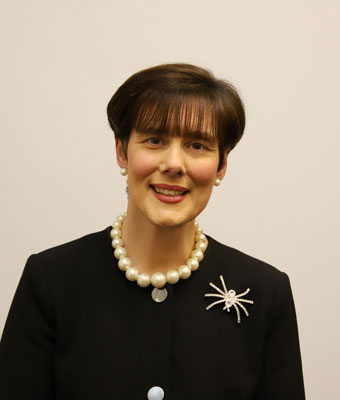
• Emer Higgins, Minister of State at the Department of Children, Disability and Equality.
“It is vital that we provide stability for a sector that has been operating under sustained cost pressures and increasing demand for services. We also need to make sure that this year’s significant budget allocation of nearly €4 billion is managed as effectively and efficiently as possible,” she said.
“With regard to residential services, there will be a focus on delivering more planned places this year and beyond to move away from a crisis-driven, unplanned response in residential services.
“As well as expanding services, the Department will deliver a new vision and strategy for the progressive improvement of specialist disability services in Ireland, which will be fully aligned to the UN Convention on the Rights of Persons with Disabilities and the principles of long-term financial and operational sustainability,” she said.
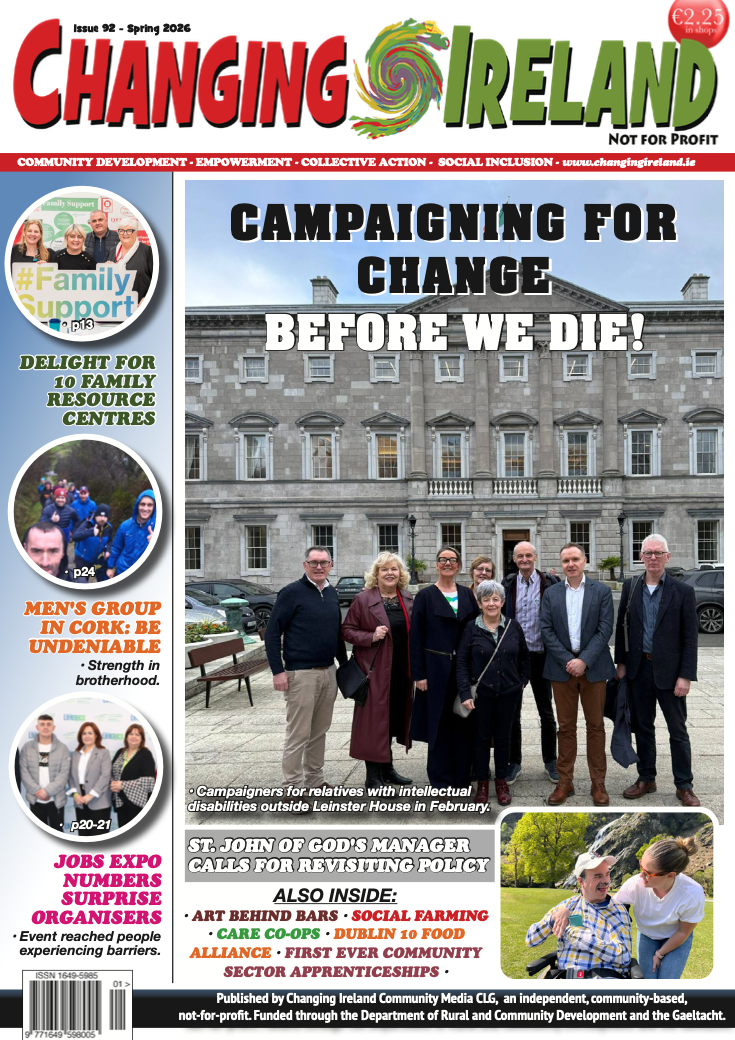
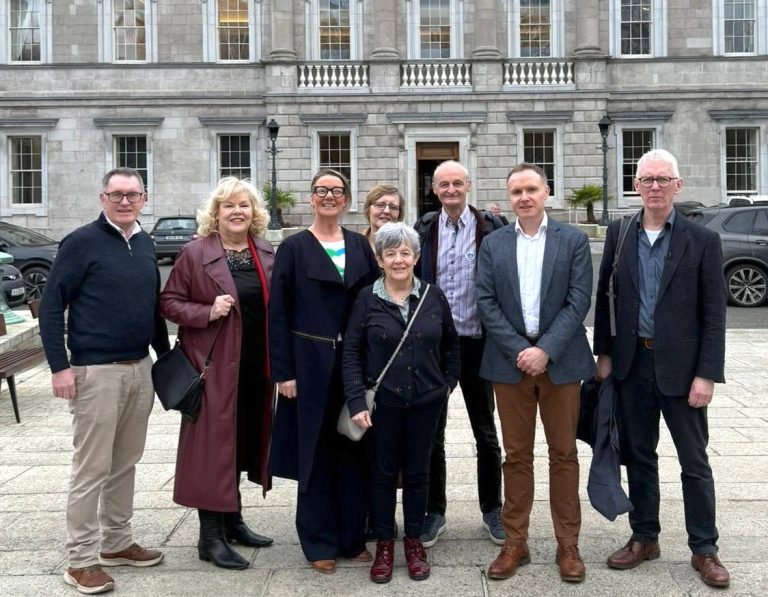
• Cork East TD Liam Quaide hosted campaign group members from Before We Die in Leinster House in February 2.
Replying to a question by Liam Quaide, TD, on behalf of service providers who say that multi-annual funding is pivotal for them to be able to plan rather than simply react to a crisis, Minister Higgins said: “The Department of Health is currently under review when it comes to multi-annual funding.”
"Today is not just about a road being opened. It is about barriers being removed. Roads don’t just shape how we move; they shape access to opportunity, to education, to employment, and to each other," he said.
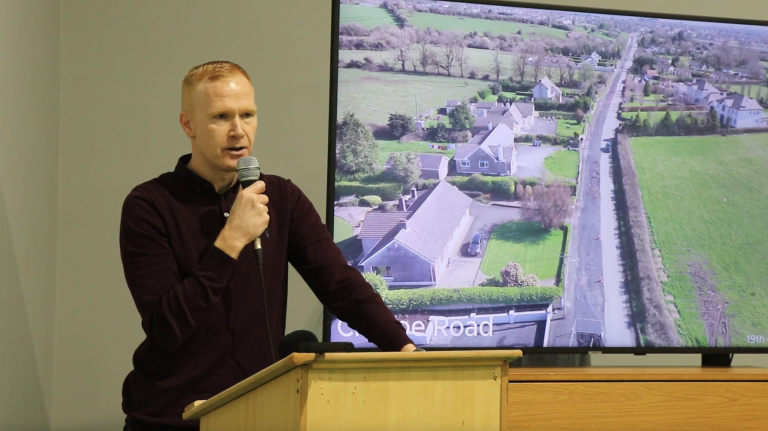
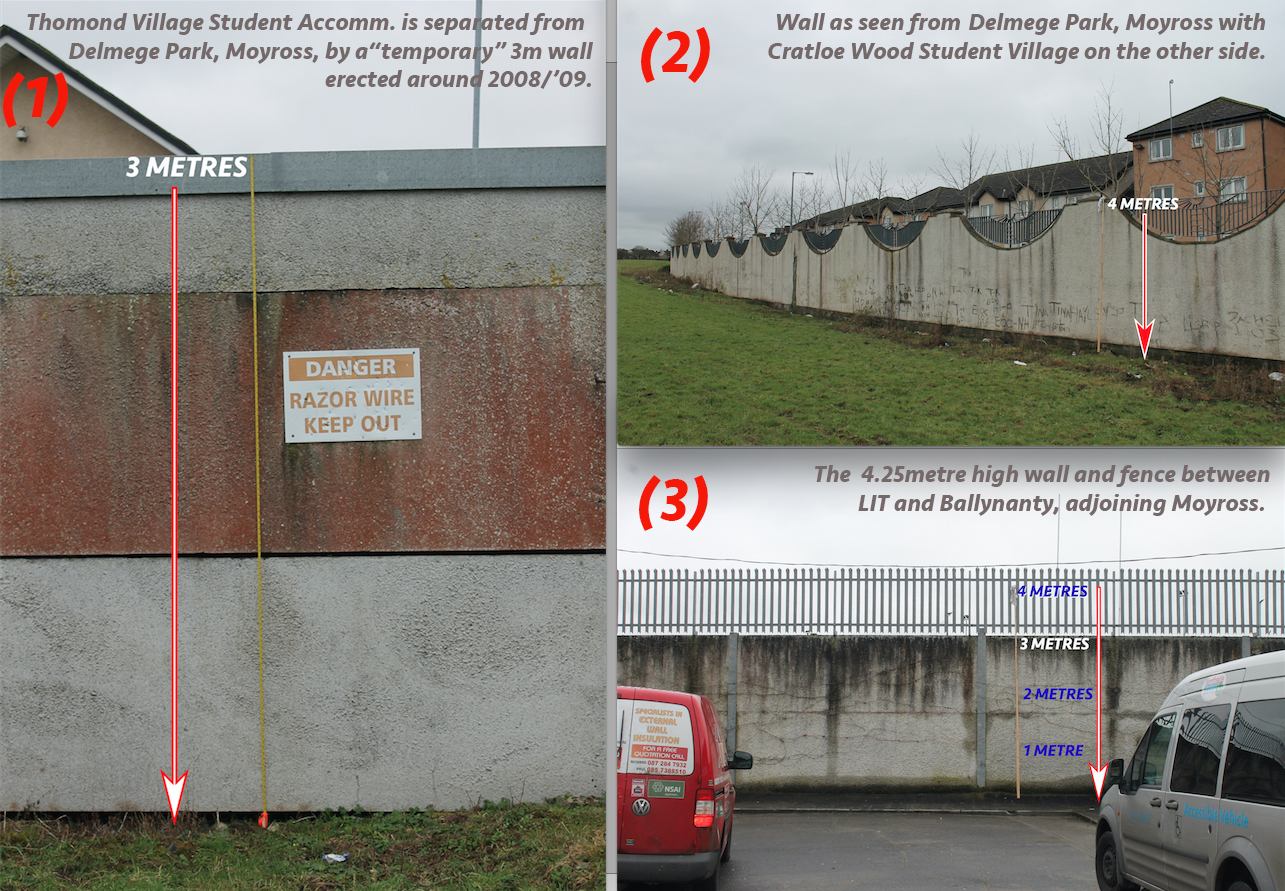
While celebrating the road opening, Mr Power, speaking for the community, criticised local councillors who are opposing the opening of an avenue from Moyross to TUS university that would complement the work celebrated today. For decades, Moyross people were confined to living in what was termed Ireland's biggest cul-de-sac, surrounded by a wall.
• ABOVE: Video from Limerick City and County Council marking the official opening today by Minister for Transport, Darragh O Brien, of the Moyross Link Road connecting from Coonagh to the Knockalisheen Road.
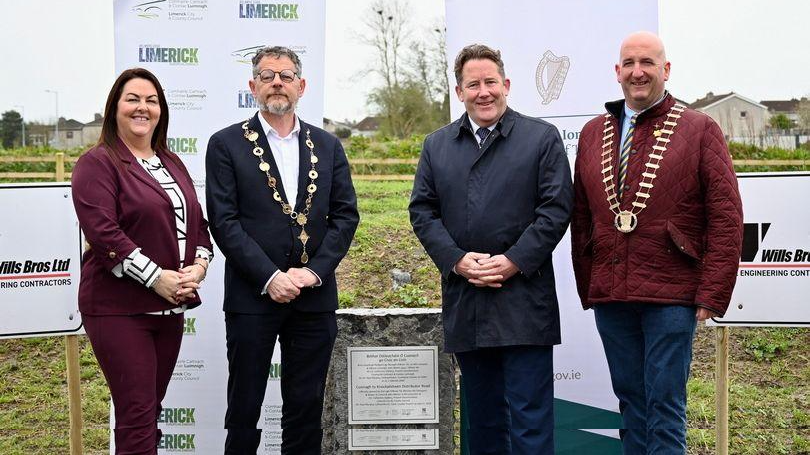
• Chief Councillor, Cllr Catherine Slattery, Mayor of Limerick, John Moran, Minister for Transport, Darragh O’Brien and Cathaoirleach of Clare County Council, Cllr Paul Murphy, at the official opening today.
The Coonagh to Knockalisheen Road, linking in with Moyross, was officially opened by Minister for Transport, Darragh O’Brien, today. It is a key milestone in a scheme that will deliver a 2.1km of urban dual carriageway along with upgraded infrastructure for pedestrians, cyclists and public transport users. The €84 million project, funded by the Department of Transport, is being led by Limerick City and County Council in partnership with Clare County Council. It is key part of the Limerick Regeneration Framework Implementation Plan.
However, to truly open up Moyross, a short link road – recommended years ago in regeneration plans – must be constructed to directly connect Moyross with TUS. This link road, called University Avenue, would also directly connect passengers to the new train station planned for Moyross – handy for students, workers and rugby and GAA fans attending matches in nearby Thomond Park and The Gaelic Grounds.
Mr Power recalled his youth:
“I grew up here in Moyross without the basic everyday infrastructure and access that most people my age would take for granted. I grew up feeling I was walled in, like I was some sort of animal, and at times, I was treated as such.
“I grew up within the walls that surround my community watching my friends lose their lives to drugs and violence, because they didn’t have another way out, literally. I grew up with a sense of inferiority that I still feel today because of those walls.
“So this train station and University Avenue is not just another battle for much needed infrastructure. It’s a battle for our dignity, a battle to secure our children’s future,” he said.
Despite opposition by a number of councillors – all from government parties, Mr Power pointed out – the construction of Moyross Avenue would be for the betterment of all of Limerick. While the new road that opened today is hugely welcome, the community remains separated from much of the city’s northside by a 2.1km long wall and fence that turns a 5-minute walk to TUS into 25 minutes. Only 48% of families living in Moyross own a car and even then, the wall adds 10 minutes to journeytime. However, the wall creates more than a physical barrier as Mr Power and many others have emphasised over the years.
• ABOVE: Watch all 8 minutes of Adrian Power’s impassioned speech.
An OECD group visiting TUS in 2015 (called LIT back then) were horrified by the separation wall. The group leader Gabi Kaffka wrote to LIT saying: “Higher education institutions seek to be accessible to students from socio-economically disadvantaged backgrounds. The Limerick Institute of Technology is faced with a singular, remarkable challenge in terms of physical accessibility. Its campus is literally fenced off to one side by a concrete wall.”
She added: “LIT has recognised the symbolic dimension of the wall’s existence and seeks to have the wall eradicated. To do so, it is working together with public administration of the city which is in charge of tearing down that wall.”
She also wrote for Changing Ireland saying:
“Children from the Moyross neighborhood are aware of the physical barrier that the wall represents, adding to the ‘social distance’ between the academic world and their own. This physical obstacle will be perceived as (yet another) obstacle to higher education entry, influencing their perception of accessibility of the LIT, and ultimately their aspiration to attend higher education. The wall is, in that sense, a spatial reminder of the socio-economic differences between one side of the wall and the other – a symbol for the distance between the working class and the academic world.”
That was over a decade ago now.
As Mr Power said, “For decades, communities like Moyross continue to experience physical separation from the rest of the city — through poor planning decisions that, whether intentional or not, leaving lasting impacts on the community. As Mayor John Moran previously outlined in his mayoral plan – for Limerick to achieve, all areas of Limerick need to achieve.”
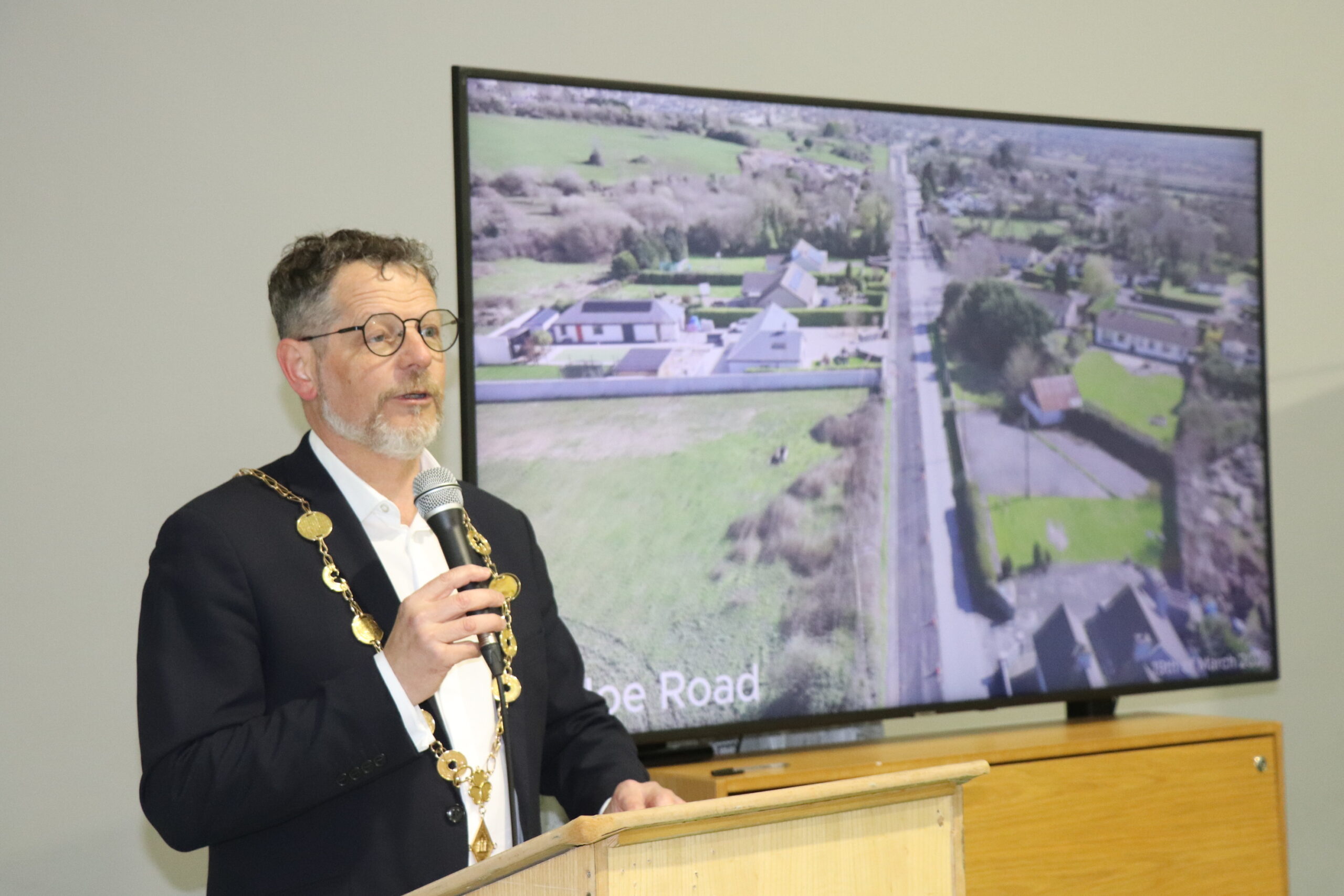
• Mayor of Limerick John Moran speaking in Moyross.
Earlier, the Mayor – recalling the fall of the Berlin Wall and other walls in Belfast – said: “When it comes to looking at the University Way, I want people to think of it as a piece of the pie that regenerates the rest of the city with Moyross. I want people to think of it as not a street that closes at night, but a street that opens up opportunities.”
The wall surrounding Moyross is 4.25 metres high in places.
Opening up Moyross would connect Limerick people to a suburb which now has top-class community and sports facilities, the county’s largest library, a Tesco store, shops and a petrol station – and soon a new hospital, a new train station and possibly an Aldi store.
While celebrating the opening of the new road to Coonagh, Mr Power said, “Now we have to battle for University Way. Even though it was one of the key recommendations of the Limerick Regeneration Framework Implementation Plan, and it would of course align with the national strategic active travel plans, it is in jeopardy, because those same councillors will not have it.”
Mr Power was one of a number of speakers who addressed a celebratory event held in Moyross Community Centre after the road opening. The other speakers were Mayor of Limerick John Moran, Cathaoirleach of Clare County Council, Cllr Paul Murphy, Chief Councillor, Cllr Catherine Slattery, and Donal O’Donoghue, Department of Transport.
READ ADRIAN POWER’S FULL SPEECH HERE:
Good afternoon, Minister Darragh O’Brien, Mayor John Moran, elected representatives, officials, colleagues, and members of the Moyross community.
It is a great honour for me, as Chairperson of Moyross Partners, to stand here today at the official opening of the Coonagh to Knockalisheen Road, including the Moyross spur road – an occasion that marks far more than the completion of a piece of infrastructure.
Today represents progress. And for the people of Moyross, it represents something that has been a long time coming.
For decades, communities like Moyross continue experience physical separation from the rest of the city—through poor planning decisions that, whether intentional or not, left lasting impacts on the community. Roads don’t just shape how we move; they shape access to opportunity, to education, to employment, and to each other.
So today is not just about a road being opened. It is about barriers being removed.
This new road, and crucially the inclusion of the Moyross spur, is the road that opens Moyross out. It is the road that stops Moyross from being the largest Cul De Sac in the state.
It signals a shift in how we think about our city and its communities. It says that Moyross is not on the edge anymore— and it wants to be part of, and central to Limerick’s future.
I want to especially thank the community of Moyross, for the fight it put up, just to get the road over the line. It was monumental effort, and showed the power of a community when it sticks together.
There’s an old saying here in Moyross, and especially amongst the partners group: That everything is a battle. This road was a battle. Any bit of progress for this community always seems to be a battle.
This road lays the foundation for the next phase of development and connection, including stronger links to education, transport, and economic activity. Moyross is finally open, but now we need to be connected.
As we all know, something that will hopefully be delivered in the lifetime of this government, the addition of a new Train Station, right behind us here, will continue this progress to a more integrated Moyross…. But only if it is done right.
It is our belief here in Moyross, that in order for this train station to reach its absolute full potential, the University Way road scheme needs to be delivered alongside it. University Way is a proposed 400m piece of road that would directly connect Moyross to our neighbours and to Limerick City for the first time in its history.
And crucially, it would connect the train station in Moyross directly to local amenities and institutions such as the Technological University of the Shannon, Thomond Park, and the Gaelic Grounds.
As we stand, without this road, passengers availing of the train stop in Moyross, would need to walk 3km either way around the walls of Moyross just to get to those places. This makes absolutely no sense, and would be a complete contradiction of the national Active Travel policies that I know the Minister, and his colleagues in the NTA are striving to achieve.
This is not to mention the fact that students from Clare, Galway, and surrounding counties could commute to TUS to study and ease the pressure on student accommodation in Limerick.
You can literally see TUS from where we stand. But without University Way, those same students, who will look to walk in the direction of TUS, will be met with the same barriers and walls blocking them access that we have lived with here in Moyross for 40 years.
The mission of the Moyross Partners group for over 30 years was to connect Moyross to Limerick. Now, with the new train station, we have the opportunity to connect Ireland to Moyross. We cannot let this opportunity slip away. But it will slip away if University Avenue is not realised.
Unfortunately, and it gives me no satisfaction to say this, it is mainly northside councillors from government parties, Fianna Fail and Fine Gael, who are actively blocking University Way from going through.
The two thousand constituents who live in Moyross have never had the luxury of those local councillors, who are meant to serve them – they never offered them any dialogue, support or leadership around this issue.
And now we have to battle for University Way too. Even though it was one of the key recommendations of the Limerick Regeneration Framework Implementation Plan, and it would of course align with the national strategic active travel plans, it is in jeopardy, because those same councillors will not have it. Some have built their local political strategy around blocking it.
This is all a means to block progress, to block connection, to block a physical and psychological pathway to provide belonging and opportunity to a community that has been chewed up and spat out by the very institutions and leaders tasked to protect it.
I grew up here in Moyross without the basic everyday infrastructure and access that most people my age would take for granted. I grew up feeling I was walled in, like I was some sort of animal, and at times, I was treated as such.
I grew up within the walls that surround my community watching my friends lose their lives to drugs and violence, because they didn’t have another way out, literally. I grew up with a sense of inferiority that I still feel today because of those walls.
So this train station and University Avenue is not just another battle for much needed infrastructure. It’s a battle for our dignity, a battle to secure our children’s future.
As Mayor John Moran previously outlined in his mayoral plan – for Limerick to achieve, all areas of Limerick need to achieve.
If we don’t continue on the progress made today, and if the Moyross Train Station and University Way is not realised, then we will be left with the reality that we’ve always known – that for all the progress that’s been made in Moyross over the past 20 years, still now in 2026, the children of Moyross do not have the same equality and opportunities in life as children from their neighbouring communities. That’s a fact.
We can pretend it’s different, but as long and those gates stay closed, and those walls stay up, and no connection is built, then there’s no other place to live but in reality. And those physical and structural barriers, those walls that are imposed on the children of Moyross, will be a tangible reminder of that reality.
And that reality is, our society, our local political leadership have failed to provide generations of kids in Moyross with the inalienable rights that every child should have. Opportunity. Equality. Dignity. Access and Connection.
If this road is not passed, then another generation of young people in Moyross will be denied those rights.
Everyday I go to work in Corpus Christi primary school, and I see just over 400 happy, smiling, and beautiful kids enter those gates and I just don’t know how can we live with not providing them with the best possible future. I don’t know what type of politics that is. And to be fair, there are many in this room and I don’t see that type of politics in them either. The Minister has played his part in providing children in Moyross with homes and connection, I only hope your party colleagues locally can follow your lead, and deliver University Way.
We have to be better than this.
Today is a milestone, and it is one that deserves to be recognised and celebrated. But today is only the first step in creating a better future for Moyross and Limerick. I can only hope that Minister, that we might see him again soon with good news for Moyross around the train station, and to continue his own fine record in delivering for this small but proud community.