
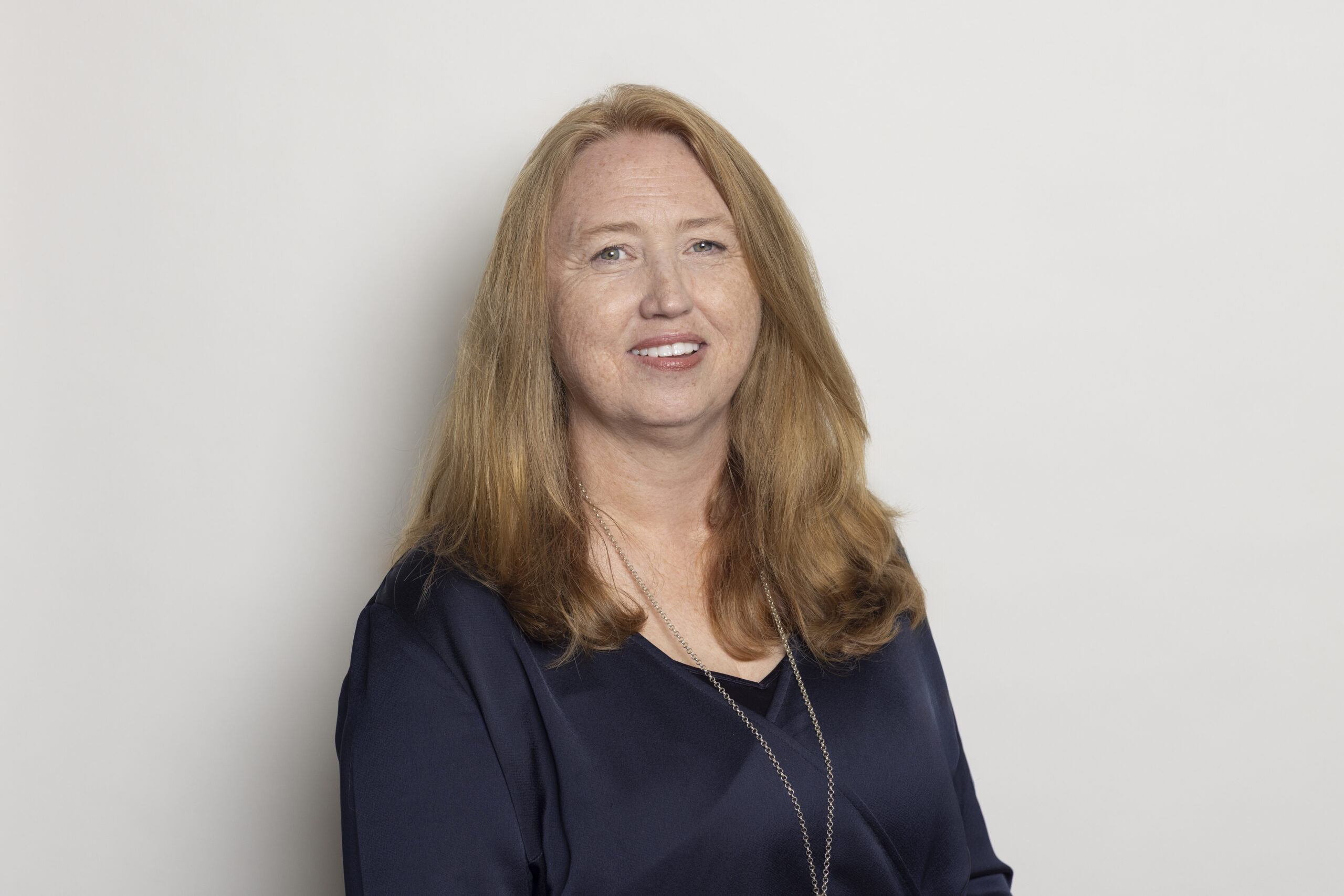
“It was kind of a circuitous route. I didn’t get up one morning and decide I want to do a degree in community development,” she said.
Today, she is driven by the experience of having seen people unfairly treated because of their social status or ethnic background. Respect, dignity, solidarity and support are important to her – and all whom she works with.
She believes staff in Local Development Companies (LDCs) have much more to offer than is realised.
“Where we have added value is by being able to tap into frontline staff of two and a half to three thousand. That’s the number of people we have on the ground nationwide,” she said.
Having served for over three years as CEO of the Local Development Companies Network (formerly the Irish Local Development Network) we thought it timely to interview her.
There are currently 46 LDCs that are members of the network and three other LDCs whom she hopes will soon rejoin the group.
Just prior to joining the network, its member companies made an impression nationally during the pandemic by responding swiftly and astutely to local needs across the country.
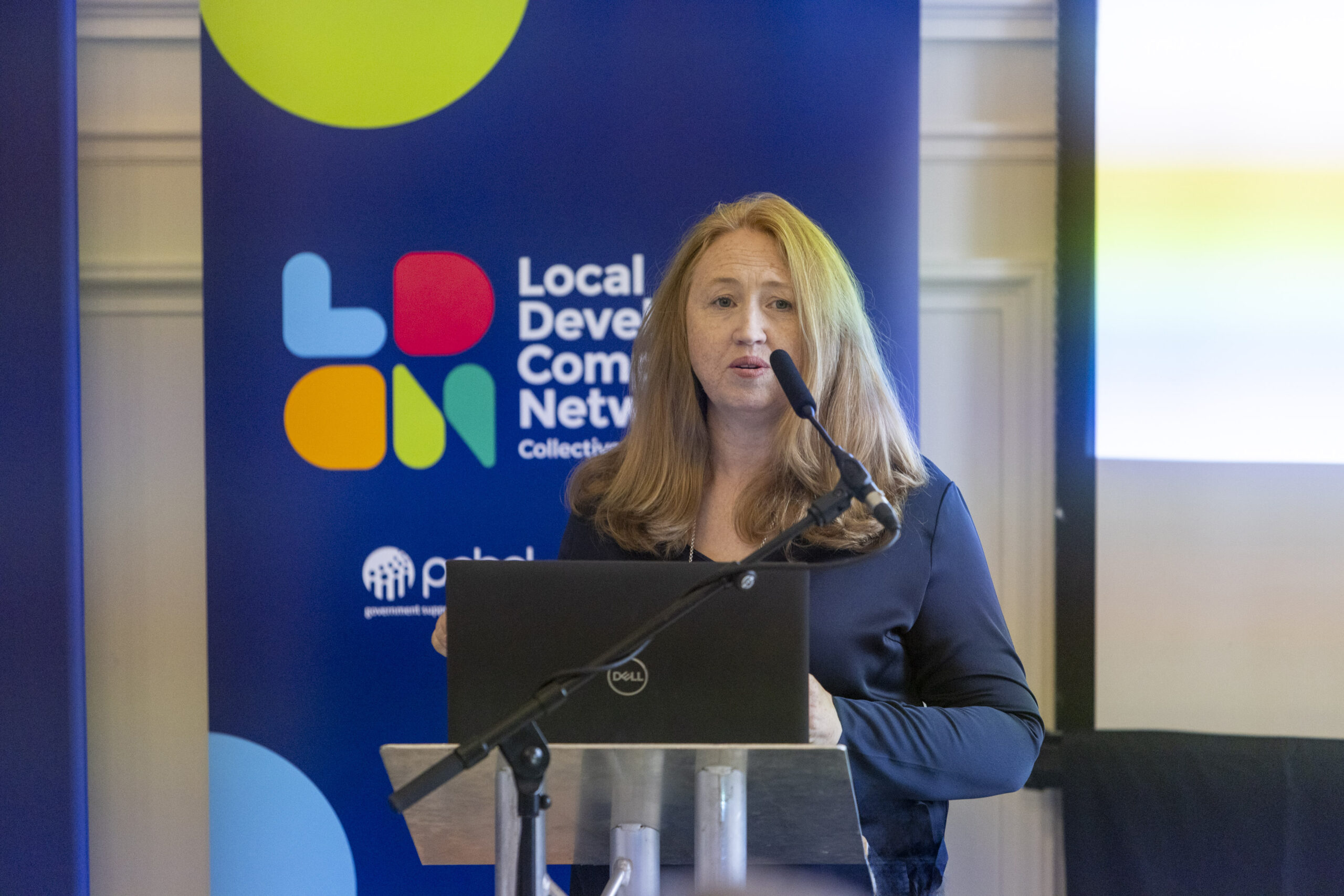
During Carol’s tenure, network staff numbers expanded from two to six personnel and LDCs were to the forefront at community level responding to the arrival of refugees from Ukraine and more recently responding to the impact of the hurricane-like Storm Eyown.
In the normal day-to-day, they help to bring dozens of national programmes to life at local level, while nationally the network is represented on over 40 national groups and forums, including across a range of government departments.
“We take that representation seriously. We see it as an honour and a privilege and we use it responsibly,” said Carol.
“We’re very member-led. The network is highly equitable, very transparent, and everybody gets access to all of the information. And we operate by community development principles. I believe that makes us an effective network. We live our values,” she said.
However, I began by asking Carol how her own upbringing might have prepared her for working in social inclusion, human rights and community development.
Now living in Galway, she was born and grew up in Cabra, Dublin, the last of eight children.
“Like a lot of families there at that time money was always an issue. However, I had no idea that we all lived in poverty until my circle expanded when I made new friends in secondary school. They didn’t live the way we did. Their streets were different, their houses were different, the things they did were different. That didn’t turn me into an activist, but I did note that it was different.
Another influence was her mother Doreen who was “pretty active in the community”.
“More importantly, she had strong principles around fairness, around helping those worse off, around giving whatever you could give. And around speaking out – my mam had no fear, no fear at all and that was a lesson for us. She used to always say to us, ‘You’re better than no one, and no one is better than you’. If you had a view, you said your view.”
“I was lucky”
Looking back she realises how lucky she was:
“My brothers and sisters all finished school aged 14 or 15, and not because they necessarily wanted to leave school, but that’s just how it was. I was lucky being the last one, because I was allowed stay in school and I ended up doing a business degree.
“I often think a business degree is a working class degree. It looks like a trade, it has a skill set to it, it has a vocation set to it. I remember somebody telling me their brother was doing arts and I asked was he good at drawing, because I didn’t know what an arts degree was. That’s how out of the loop I was.
She completed her degree and “was absolutely certain I did not want to go into banking or accountancy” and instead she began teaching in a school where some of the pupils were experiencing high levels of deprivation.
“I remember I was supposed to be teaching budgeting to a group of kids who lived in a block of flats and all of the examples – saving to buy a car, a holiday or a house – meant absolutely nothing to them.
“And I became more interested in them than in the subjects that I was teaching. I could see that their life chances and their life expectations and their aspirations were already so limited,” she said.
She then moved abroad and found work on European programmes for young people who dropped out of school early and for women returning to education, and on coming home to Ireland, she found a job in local development.
Appalled at disrespect towards people struggling
She gave examples of unfair treatment of people struggling to get over structural barriers that still irk her to this day. Parents called one day to a local development company she worked for, looking for help to get their sons into secondary school because they wanted them to be able to read and write. The family were Travellers.
“They were given the run-around. Absolutely blatant racism dressed up as, ‘Ah, your kids would be better here’ and ‘Your kids might be better there’. I remember feeling how disingenuous it was. All the man wanted was for his kids to be able to read and write, it really wasn’t a huge amount to ask for,” Carol recalled.
She had similar stories to tell about teenage girls becoming pregnant and being unsupported.
“Their opportunities to stay at school, to do anything else to build a decent life for themselves and their kids, really disappeared,” she said.
Carol worked for a long time in the Money Advice and Budgeting Service (MABS) which provided “incredible support” and she was appalled that clients were discriminated against in wider society.
“They were sometimes portrayed as having been the architects of their own demise, that in some way they were inept, they were feckless or they were undisciplined. I found that hugely offensive.
“The clients we supported were people who managed exceptionally well on very little. They had very little money and walked a tightrope every day with no safety net.
“A crisis would tip them over: Somebody getting sick, a washing machine breaking down, a young fella needing new shoes, things that they just weren’t able to put money by for, and they would end up then in a spiral that they’d find very difficult to get out of.
“And yet there seemed to be little respect for them. That experience taught me huge respect for people who were forced to live with so very little. And that lesson stayed with me. And it’s always driven me in respect of the policy work and the advocacy work that we’ve been involved in.”
Proud times
She recalled proud times.
“I worked for a few years with a domestic abuse service and we opened a new refuge. It was much more than a building, we built a new client-centred service where we accepted no compromise in regards to the quality of the service. I remember when we started, thinking we’ll never get what we want, but we did, and it was a moment of great pride for me and colleagues that what we built was second to none.
“The service is still there to this day,” she added.
Solidarity in us as a people
She enjoys working in a country with “a very long tradition of community”.
“It is a really important part of our fabric. It’s part of our DNA. We know the need to help each other. We know what it is to recognise when something systemically is wrong and we’re good at saying it.
“Look at how we rally around in times of crisis, or a tragedy, or even if you look at the GAA. Those things help form the fabric of communities, they give people a sense of place, a sense of identity, a sense of mutual responsibility.
“And maybe there’s a bit of religion in that as well, the way people say, ‘Oh, there but for the grace of God’. But there is a real sense of solidarity in us as a people, we don’t tend to turn a blind eye. In other countries I’ve lived in, that’s different,” she said.
Asked who or what is really impressive in creating social change through bottom-up community action, she replied, “Small local groups with people who feel passionately about an issue. They’re the people who create social change, not big anonymous entities.”
Values V. Pay
Regarding work in the community and voluntary sector, she decries short term contracts and low pay.
“How long can you rely on people staying in the work because they’re values-driven? It’s not fair, it’s exploitative. The work has got to pay. Nobody’s going to get rich working in community, but they should be able to at least achieve a reasonable standard of living.
“It’s not in keeping with the statements that are often made about how important the community and voluntary sector is. If it’s that important, please invest.”
Best government programmes for communities?
Carol said the Social Inclusion and Community Activation Programme (SICAP) was the most important government programme for communities at present.
“It has evolved over the years, and is a very effective programme. But I’m a bit concerned that SICAP risks becoming quite bureaucratic. It’s something the stakeholders are aware of.”
She said the newish Empowering Communities Programme is “fabulous”.
“It’s just community development. It is very like programmes I’d have known in the ‘90s, where you had very small area-based work, where you were meeting with people, listening to them and, more importantly – when they told you what they needed and wanted in their area, working with them to deliver it. That’s what Empowering Communities does. I’d like to see it expanded.”
LEADER
She believes the LEADER programme “definitely needs more resourcing”.
“LEADER is critical in our communities. Its community-led approach is about allowing people deciding what they want to achieve in their own community. It is a very respectful and democratic way of working, and much more valuable than any kind of imposition from a remote department or agency,” she said.
LEADER funding relates to what is available at European level (as well as what’s available nationally) and I put it to her that EU funds may be redirected towards defence spending.
“Defence isn’t only about weaponry and armaments. Defence is also about food safety, it’s about resilience in communities, so that’s also a valid form of defence.
“Nationally, we all need resilient communities whether rural or urban,” she said.
National issues
“A local development company exists to work on developing local solutions to local problems, but some local problems are not caused locally and cannot be solved locally, they’re systemic, they are policy-based, and they need to be amplified and they need to be elevated to a national forum, and that’s why the network is required.
“We’re member-led and I’m very proud that the network is in a very good place. I was fortunate enough to follow in the footsteps of my predecessors Brian Carty and Joe Saunders. They both took the network very far along a particular road. The network is vibrant and relevant and doing great work and it’s recognised.
Carol’s Top Two tips
“Never give up, ever. Never stop banging the drum. The first part of advocay is telling the story. And that’s why a magazine like Changing Ireland is so important – you’ve got to tell the story. And you have to tell the story truthfully and loudly. You have to keep drawing attention to it and never allow yourself to be rubbed off.
“Keep your eye on the prize and do not let up until you get there.
“The second thing is to look for allies and remember that you may well find them in places that you don’t expect. That has served me well, entering every engagement expecting to find an ally even though rationale might tell me I’m not going to,” said Carol.
The views expressed here by Carol are in a personal capacity and not as CEO of the LDCN.
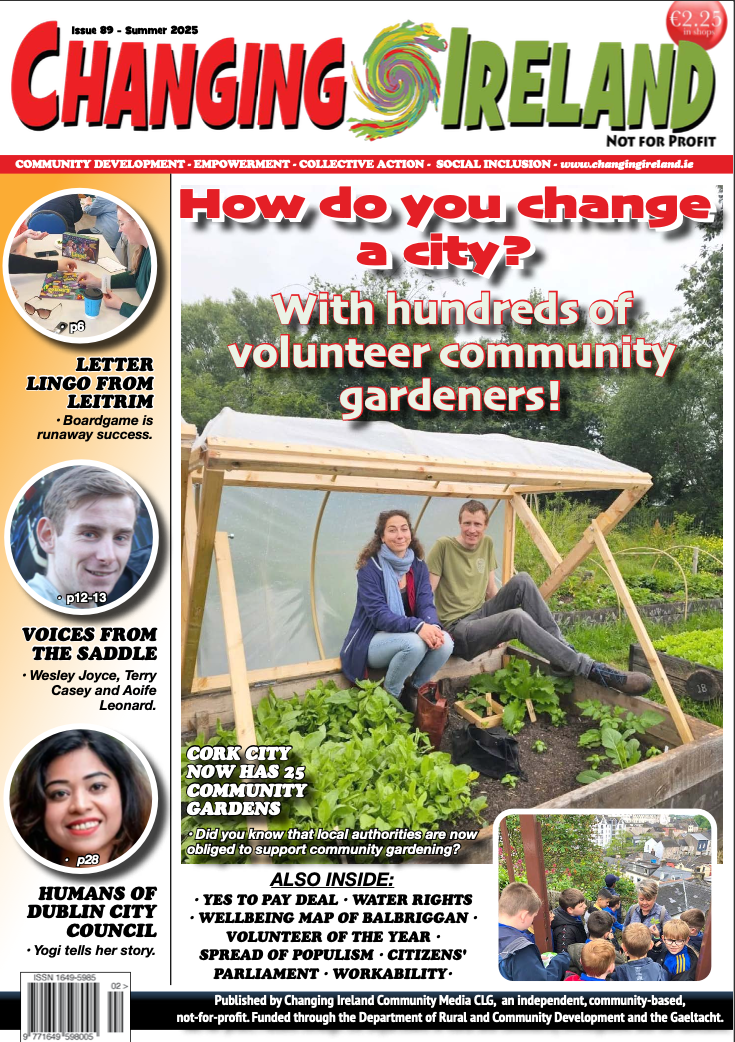
READ OUR FULL SUMMER EDITION HERE – CLICK IMAGE TO OPEN (SAFELY):