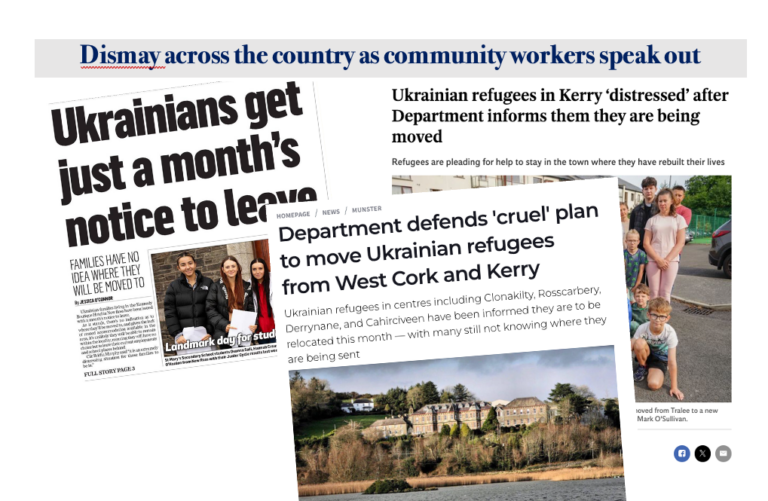
In Wexford, community worker Marie-Louise Byrne, speaking at a national conference held in June, listed the moving of refugees as one of nine challenges to successful integration. (The other challenges included information vacuums, hostile online spaces and far-right exploitation, stretched frontline services, geographic proportionality, and the need for courageous political leadership).
In Tralee, community workers wrote to try and stop a mother and a child with a medical condition known to all the local teachers being moved to Mahon in Cork city. Despite the outcry they were still moved.
In West Cork, community worker Kathryn Kingston spoke in September on local radio, saying how hard it was to see settled refugees being moved by the government from areas they had settled in.
Ms Kingston made the comments on C103FM after over 140 Ukrainian refugees were moved from accommodation centres in Bantry, Roscarbery and Clonakilty to other areas in the county, and even as far as Killarney.
She noted that the areas the refugees were moved to are “just far enough away to make it awkward” as there are no public transport links between the locations.
“They can’t commute to their jobs from the new locations, or school, they can’t stay in touch with the community,” she said.
Many of the Ukrainians were employed locally. Children had also settled well in local schools and had established friendships.
“Children going to secondary school had chosen their subject options, then they were moved to a new school, where you’re not guaranteed those options. They had bought uniforms, books. They weren’t aware that they were going to be relocated,” said Kathryn.
• Kathryn Kingston, a development worker with West Cork Development Partnership since 2001, is dismayed that settled refugees are being moved.
And it’s not just in West Cork, as Ukrainian refugees in other counties including Kerry, Clare, Wexford, Tipperary, Leitrim and Waterford have also been moved.
People had formed deep friendships and the moves are undermining integration and local volunteering, said Ms Kingston.
“We’re going to lose the volunteers. They’re not just going to start all over again. We’ll lose the whole volunteering spirit.”
“The letter that comes out just says ‘we’re consolidating accommodations, we’re reducing the numbers of contracts to private providers’.
“They are mentioning non-compliance, but talking to the accommodation providers, they are saying ‘we weren’t being non-compliant, nobody told us that we weren’t being compliant’. So we haven’t got to the bottom of that,” revealed Ms Kingston.
“To be honest there probably was a need for consolidation. One of the suggestions we’ve made is, could they be left in the town and just moved to other alternatives? They’re just moving them around willy nilly and not using local accommodation first,” she said.
In a statement, the Department of Children, Equality, Disability, Integration and Youth accepted that “moving location can be very disruptive, but at all times the Department was clear that State-funded accommodation is temporary and subject to change.” It added that “every effort is made” to provide new accommodation locally, but said that this is not always possible.
It said it was reducing the number of contracts for accommodation providers for Ukrainians due to “a decrease in numbers needing accommodation, compliance concerns, value for money and greater oversight of the portfolio”.
A small number of the refugees in West Cork managed to source their own accommodation in the area, said Ms Kingston, acknowledging help from local employers who wanted to keep valued workers.
Ms Kingston said they had integrated well into their communities, joining local sports clubs and choirs, and volunteering with local groups.
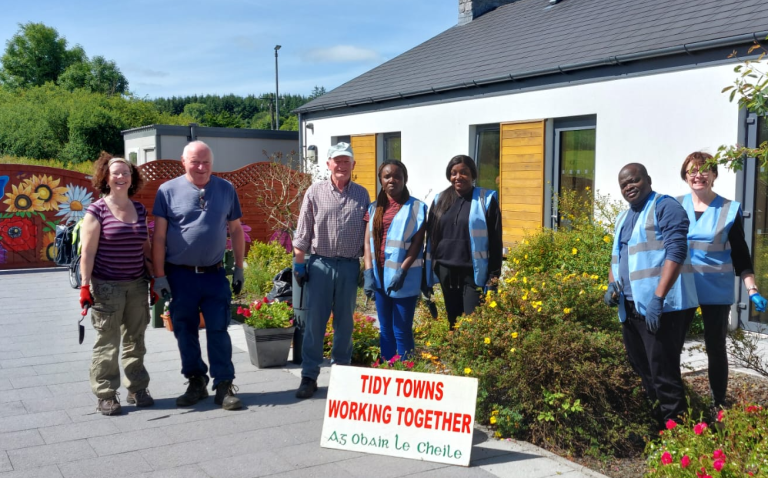
“They really were a boost to the area. They provided jobs, they were filling school places. They were turning up week after week to help with Tidy Towns,” she said.
Sadly, the letters sent to refugees by the Department also state that it can no longer provide accommodation for pets, and urges those affected to “make appropriate arrangements” for their animals.
Ms Kingston said it was very difficult “watching people get on that bus (to their new accommodation centres)”.
“They’re not all going to the same location, the buses went to three different accommodation centres. They would have established friendships, minded each other’s children, supported each other,” she said.
More than 40 exhibitors representing Sligo LEADER programmes, local agencies, and community groups, showcased their initiatives, reinforcing the theme of the day: Collaboration.
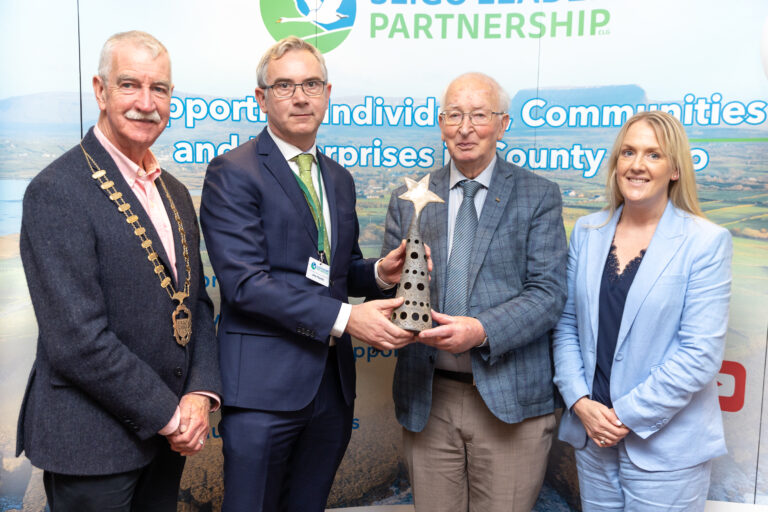
The event highlighted the achievements of Sligo LEADER over the past 30 years. One of the most memorable moments was a special presentation made to Michael Quigley who is one of the founders and a former CEO of Sligo LEADER Partnership. Michael said:
“Sligo LEADER was established based on the needs of the community in Sligo. LEADER was a great programme and other programmes followed on the back of the success of LEADER, through social inclusion and employment support.”
20 Years of the Rural Social Scheme was also acknowledged, with the programme being celebrated for its crucial role in supporting local farmers and rural communities, as well as its continued impact on community life in Sligo.
John Feerick, CEO of Sligo LEADER Partnership, said the event “truly captured the spirit of what Sligo LEADER stands for—community, collaboration, and progress. It’s an honour to celebrate these milestones with the people who make our work possible”.
• Megan Gayda’s business received support through Sligo LEADER Partnership.
About Sligo LEADER Partnership
County Sligo LEADER Partnership Company CLG (SLPC) was founded in 1994 to support the needs of rural communities and disadvantaged areas of Sligo. It currently operates the following programmes: LEADER (Rural Development Programme), Social Inclusion Community Activation Programme (SICAP), Tús programme, Community Employment Scheme (Next Move), Rural Social Scheme, Sligo/Leitrim Local Area Employment Service, Rural Recreation, WorkAbility programme (New Wave), Day Centres for the Elderly and integration supports.
With more than 50 staff, and up to 300 people on employment schemes, Sligo LEADER Partnership is to the fore for community supports in Sligo town and county.
“One of the unique things about Sligo LEADER Partnership is how we can leverage different programmes off one another, and we refer to this as the wraparound supports,” says the new chair of SLPC, Dr Amanda McCloat.
“We have a great team of people who work closely with our communities, and this is something we value very highly,” she added.
“Sligo LEADER Partnership is always about providing the necessary supports in our communities,” says John Feerick, CEO of Sligo LEADER. “We will always put the individual needs of our clients first and we aim to enhance the lives of the people of Sligo with all of the programmes that we administer.”
More than €4.5million in funding will be allocated to Sligo’s LEADER projects in the current programme (2023-2027).
The video features a wide range of stakeholders who highlight the importance of engagement at local level, ensuring that the most marginalised are involved with developing policy, or future decisions that affect their communities.
The video complements the previously published ‘Guide for Inclusive Community Engagement in Local Planning and Decision Making’ which was co-produced by the Department of Rural and Community Development with Pobal, Community Work Ireland (CWI) and the Irish Local Development Network (ILDN), and supported by the Dormant Accounts Fund.
The guide provides a range of materials to organisations to assist them with implementing key principles and processes associated with inclusive engagement.
Minister O’Brien said: “Encouraging and fostering public participation is vital for decision-making and future policy development. This new tool can be used as a reference when organisations are preparing and planning to consult with marginalised communities and the groups which represent them. The guide and supporting resources builds on Ireland’s commitment to the sustainable development principle of ‘Leave no one behind’.”
CEO of Pobal, Anna Shakespeare also welcomed the launch of the video and commented: “This new, engaging resource includes practical advice, local examples and inputs from community representatives and other stakeholders, demonstrating the importance of inclusive community engagement. It highlights the outcomes which can be achieved when the right processes are put into practice.
“I would like to thank all the individuals and organisations involved in the production of the video and for sharing their experiences and learnings which will help and support others as they commence their own projects.”
Anastasia Crickley of Community Work Ireland (CWI) also emphasised the importance of the new tool.
She said: “CWI welcomes the clear message that conditions must be created and resourced for communities with the lived experiences to give meaningful inputs into the local and national policies and decisions that affect their lives. This input, which will bring better outcomes for all stakeholders, has to go beyond consultation to involvement in the design and implementation of policies and plans which affect in particular marginalised and minority communities”
This initiative is part of a wider Dormant Accounts-funded project on the engagement of marginalised communities and is just one of a wide variety of actions being delivered under Sustainable, Inclusive and Empowered Communities, the whole of Government Strategy to support the Community and Voluntary Sector in Ireland 2019-2024.
“With increased division in our society, Leitrim Community Volunteers are a shining example of the difference people make when they come together to support their community. Whether they are from Leitrim or Liberia, the Community Volunteers all have one thing in common – they want to give back to help others.”
Over 10 nationalities and volunteers of all abilities and backgrounds are involved in volunteering in Co Leitrim.
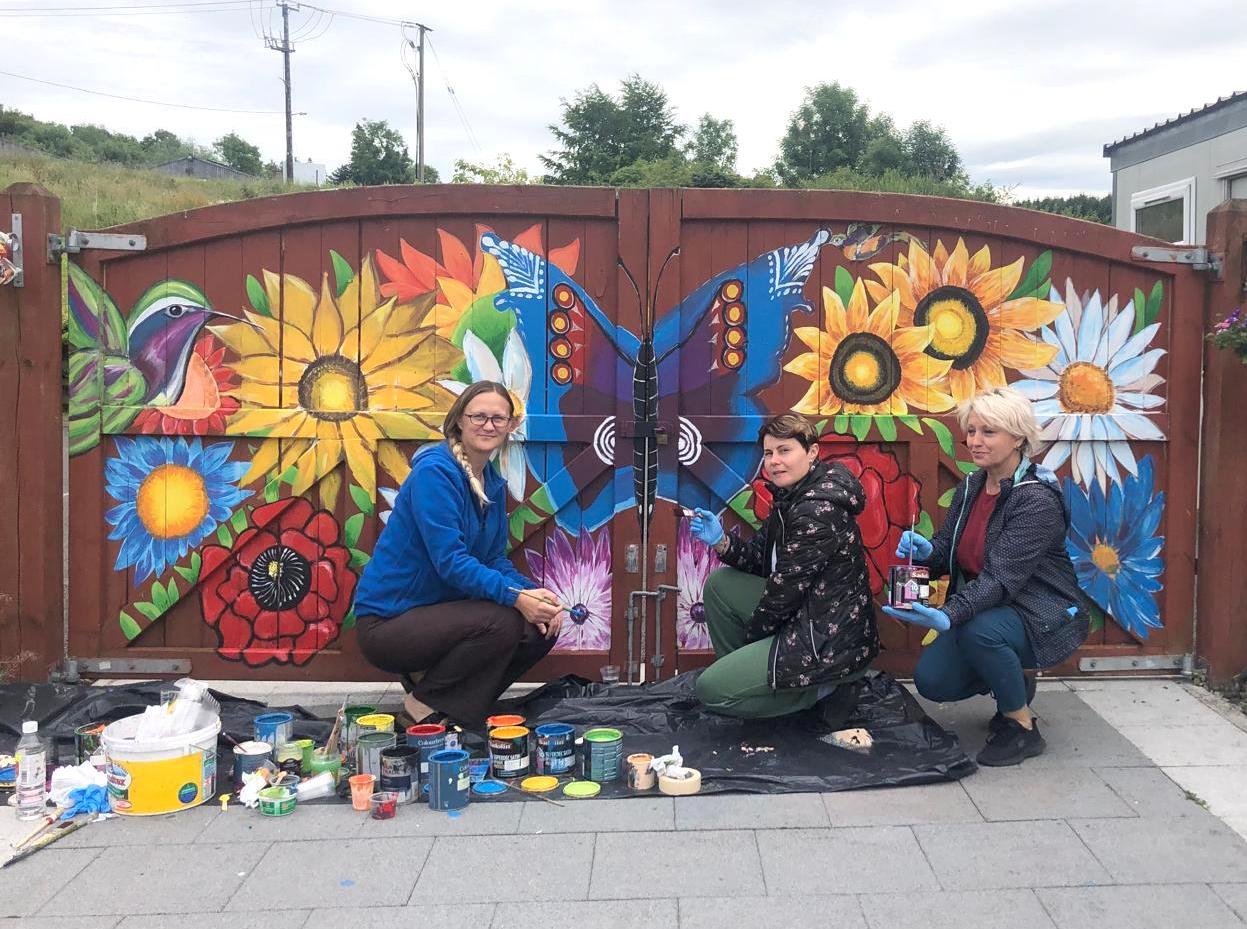
• Volunteers in Co. Leitrim brighten up a community facility.
Kieron Anthony Smith, the centre’s community volunteer coordinator, said the nationally funded Community Volunteers Programme has been “a game changer”.
“It provides an excellent way for people to get involved in their community and make a difference at a local level, especially those who may be new to County Leitrim. It also provides an invaluable resource to local organisations and the local authority,” he said.
Josephine agrees: “The programme allowed us to increase access to volunteering by offering roles with little time commitment and in many cases with little English required.”
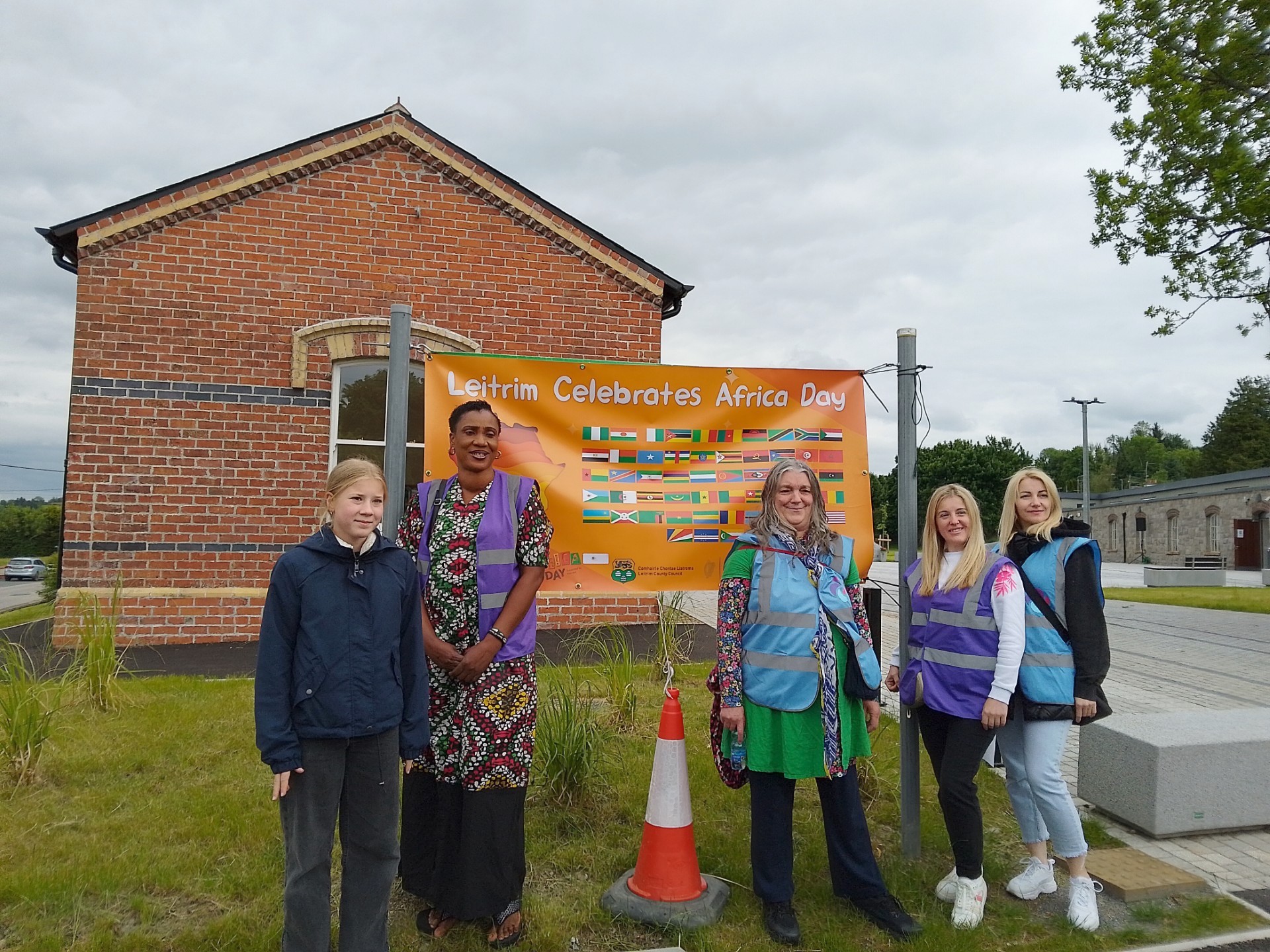
• Leitrim Volunteer Centre celebrates Africa Day.
Kasia Religa, who is originally from Poland ,registered with Leitrim Volunteer Centre in 2022 and offered to provide art classes to members of the Ukrainian community to help them to settle and as a way of healing. She has been a major influence in connecting people.
She said: “I made many friends with whom we did some beautiful projects together. The Community Volunteers gives you the possibility of making friends through volunteering and enables you to do something that is beneficial for all.”
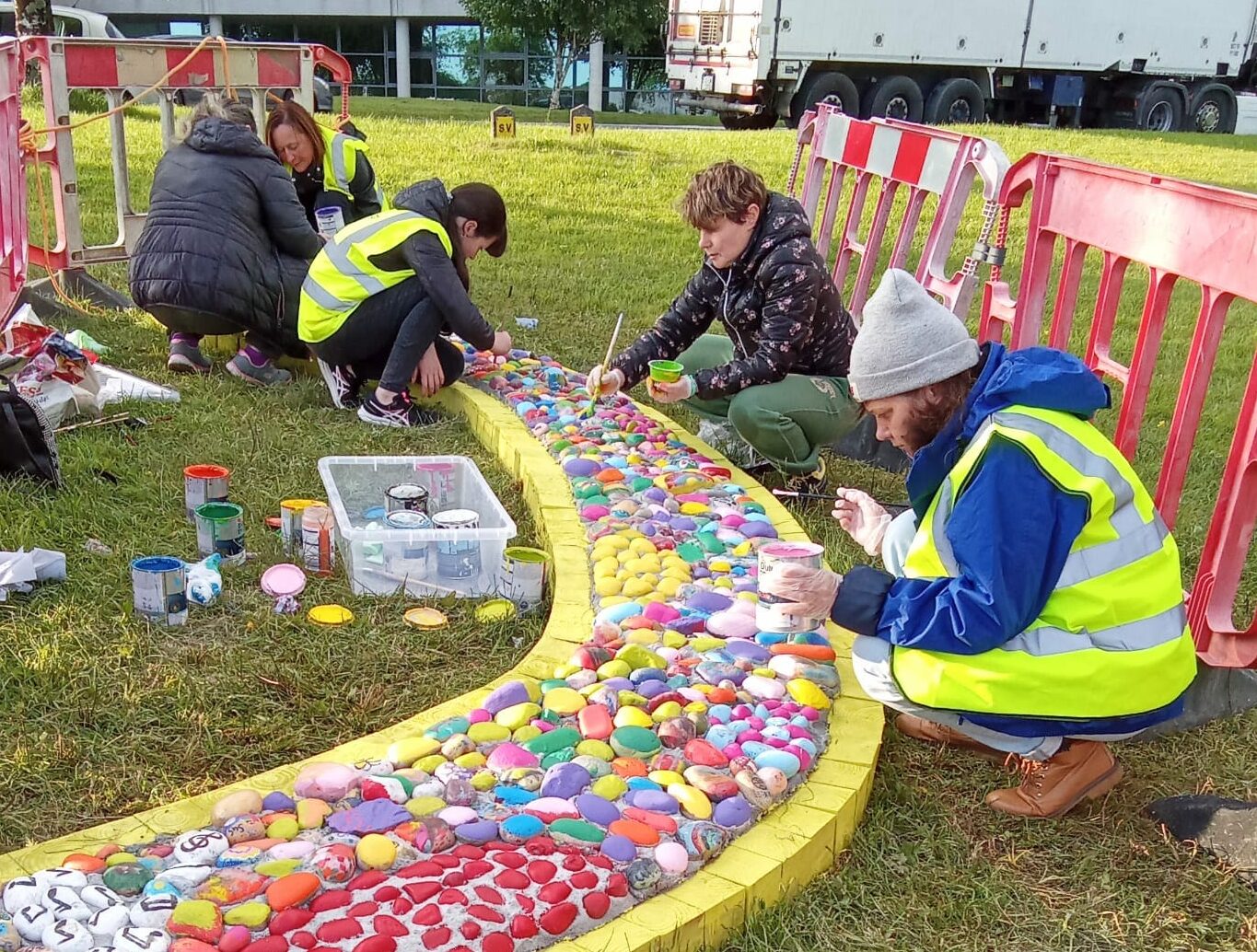
• Volunteers in Co Leitrim.
There are volunteer centres in every county
Leitrim Volunteer Centre is one of 29 such centres nationally. They provide a placement service, matching individuals who would like to volunteer, with non-profit organisations. Both the volunteers and non-profit organisations are offered advice and support including helpful information, volunteer management training and Garda vetting administration. Volunteer Centres are funded by the Department of Rural and Community Development and are affiliated with Volunteer Ireland.
Volunteer Ireland is the national volunteer development organisation and a support body for the volunteer centres in each county.
The Community Volunteers Programme was launched in 2021 as a pilot programme. It matches volunteers with local events and festivals and more urgent responses as the need arises. It allows people to volunteer as often or as little as they like. It also allows local organisations to engage volunteers for one-off events or to help respond to an urgent need. The programme is funded by the Department of Rural and Community Development and coordinated by Volunteer Ireland and the network of volunteer centres, with support from local authorities.
Over 400 community organisations nationwide are set to benefit from the announcement, made by Minister for Community Development, Integration and Charities, Joe O’Brien today.
The CSP aims to provide employment opportunities and local services to disadvantaged communities.
The revised funding rates to be applied from January 1 2025 will see an increase of €1,850 in the annual contribution per full-time equivalent post to organisations categorised as having a high funding need.
It will also see a €1,755 increase in the annual contribution per full-time equivalent post for CSP organisations categorised as having a medium funding need.
No change is proposed for the small number of organisations in the low funding category, these are organisations identified as having the strongest earning potential and operating in less disadvantaged areas.
These increases will assist organisations to meet higher labour costs from 2025 onwards.
Minister O’Brien said: “I am very conscious of the increased costs being faced by organisations supported under the Community Services Programme and the increases being announced today will ensure the continued sustainability of the supported organisations.
“The increases provide higher levels of support to organisations with limited earning potential, operating in areas of disadvantage and employing individuals from the prescribed programme target groups.”
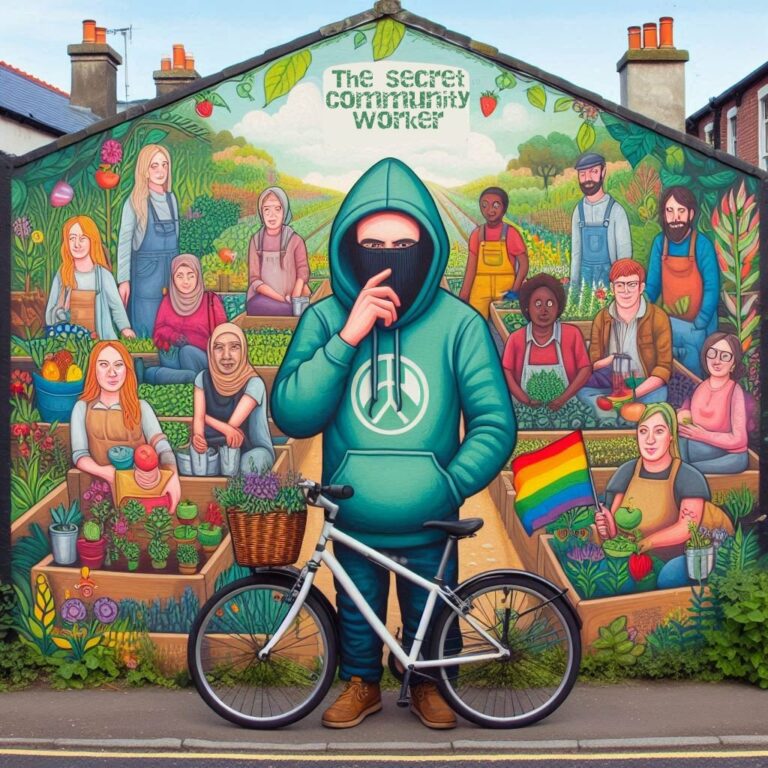
[Ed’s note:- The author of this column is a real-life, full-on community worker. ‘The Secret Community Development Worker’ is open to other community workers contributing, indeed writing – connect with the editor – details below – and we will pass them on].
Ireland belongs to the Irish – really now!
Hello! I was intrigued by the number of newer parties and candidates in the recent local elections and their interesting posters and messaging as regards equality and diversity. No doubt there will be more of the same in the General Election. Here are my top tips for aspiring candidates:
Ireland belongs to the Irish – To be strictly accurate Ireland belongs to the rich people. i.e. One third of Ireland belongs to 10% of people and of course there are also the Vulture Funds who own half of Dublin. But their slogan was catchy and this campaigning will clearly help to preserve Ireland for the real Irish – the real Irish being descended from Milesians.
It presumably also involves expelling those of English, Norman, Viking and Celtic descent and abolishing St Patrick’s Day as he was an immigrant. It sounds logistically complex, but the best of luck!
Ireland for the Irish
Ireland for the Irish (definite theme emerging here) – There was a poster in my town with a candidate for “Ireland for the Irish” who didn’t look old enough to drive a tractor (which in rural Ireland is about eight) and I thought, what would he know about being forced to leave home, lose everything and having to flee to a foreign country or even about the birds and the bees? (environmental issues like) then I realised I was being ageist, and prejudice is bad right?
However, on mature reflection the more I saw the poster, the more I warmed to the theme and I am currently developing a position paper on ‘Empowering communities through Strengthening localism’ (it’s important to make prejudice sound positive). This will involve promoting independent monocultural entities at county level, Cavan for Cavan people, Cork for Cork people, etc.
There will be a County Citizen test, ideas for the Kerry one are – knowledge of football, ability to not give a straight answer, regular use of “Yerra” in replies.
• Asylum-seekers’ tents on the streets of Dublin earlier this year. Photo: Changing Ireland.
Stop NGOs running the Government!
Stop NGOs running the Government – This is long overdue as anyone who has been working in NGOs campaigning on issues such as poverty, racism, gender inequality, rights and services for people with disability, etc, knows that governments are as malleable as putty in NGOs’ Machiavellian hands, which is why these issues are all solved.
I once was part of a funding application for an anti-poverty event and asked for funding for a pink pony and guess what …the pink came off on my trousers, so the joke was on me.
Migrants taking our jobs
Migrants taking our jobs – Without migrants, the services we have which are already crumbling would collapse so this seems reasonable, that is what they mean right?
No Woke Education
No Woke Education – Now this is one to get behind. I left school knowing little about sex, sexual relations or different sexual preferences. I was naive as to how to go about losing my virginity and a trip to the Virgin Megastore turned out to be an embarrassing disappointment.
Protect our Women and Children from Migrant Men
Protect our Women and Children from Migrant Men – 99% of detected sexual offenses are perpetrated by males and in 83% of cases perpetrators are known to the victim, which suggests that Irish men already have ownership of this issue. However, I am sure these people have been regular campaigners for ending violence against women down through the years and will be at the forefront to develop more progressive male gender roles.
If you want to suggest content for The Secret Community Development Worker email the editor in confidence at: editorchangingireland@gmail.com
Tim Dixon shared five key thoughts about how to transcend tribalism and “build on the kind of work that many of you are doing at the local level”.
He began by saying that immigration is a difficult issue all around the world, so the challenges that Ireland has are not unusual and then he dived into facts, figures and solid findings.
He highlighted what the science says is most effective when it comes to integration work on the ground and policy-making. The following comes from his speech and has been edited for brevity.
THE CHALLENGES
In Germany, Spain, France and Poland we asked the question: How would you say your government currently manages immigration? For about three quarters of people in Germany, Spain and France the answer was “poorly”.
The challenge right now is that immigration around the world is in the news (and) generally only when something’s gone wrong. However, what drives people’s anxiety about immigration is when they see disorder, when they see people sleeping rough for example – which I know is a very current issue in Dublin.
It’s a big issue in New York and in Denver and Chicago and other cities in the United States. It’s the key thing driving the dissatisfaction with the Biden administration’s handling of immigration at the moment. It’s the southern Border in the United States, it’s small boats in the UK.
It takes different forms in different countries, but it’s the same sort of story; where people see disorder it makes them anxious. It does not mean however that people are hostile towards the migrants themselves.
In the US, the UK and Germany, we asked the question: What is more important – reducing immigration, increasing immigration, or getting it under control?
About 60% of people said having control over who enters the country is the most important thing. The lesson is that the public wants to feel like the government is in control when it sees chaos and disorder. I think it’s useful to understand that. It helps us think about how we respond to reduce community anxiety – it’s a lot to do with people having a sense that there’s a system, that there’s proper processes, the processes are fair.
And of course doing that when you have significant increases in arrivals is really difficult, but that’s the challenge. When you have lots of people arriving then this scarcity mindset can quickly kick in.
In Germany – we asked (to what extent) would you agree with the statement: “Immigrants are prioritised over natives when it comes to benefits and public services?” 60% of Germans agreed with the statement. Nowadays, there is a sense of scarcity of resources. And I know that there’s a very current issue in Ireland too, particularly around housing.
• Bronwyn April (on right) was one of the guest speakers at the Welcoming New Communities conference. She is pictured here with colleagues from Dublin City Community Co-operative. Photo by Allen Meagher.
SOLUTION 1
MAKE IT EASY TO VOLUNTEER TO HELP REFUGEES
What are the solutions to that and what works in terms of good practices for community engagement and for welcoming? You know very well from being in the volunteer sector that there is tremendous goodwill to be tapped into in the community.
We did a study recently in the United States showing that more than 50 million American adults would be keen to take part in sponsorship of
refugees or some form of welcoming. We asked a similar question in the UK and got similar response levels. So how do you tap into that 26% (UK 23%) of the population? Not everybody wants to welcome refugees into their own home – about 10 to 12% of people say they’d be interested in hosting directly.
For most people it’s about giving money or driving kids to medical appointments or helping with language classes or something like that. People want to take part and this is the upside of the fact that immigration and refugees are a much more high-profile issue.
The challenge is to create systems that are user friendly and that give the easy way in for people who are interested in taking part. That is about good design. Having worked on refugee sponsorship for the last several years, many of the ways in which the programmes get set up are not very friendly to somebody who you know has a good intention but maybe doesn’t know exactly what the way in might be.
So making it easy for somebody to do a little, not demanding too much. We ask the question: What would stop you in the US? The number one concern was ‘Well I’m worried that I’d be committing way too much money, like more money than I have’. The second concern was ‘I don’t think I have the expertise’.
However, people learn they can be more helpful that they initially realised. For example, people in their 20s who get involved in welcoming quickly realise that because they are more digitally savvy than people in older age groups they can be really useful to newcomers.
SOLUTION 2
UNDERSTAND THAT COMMUNITY WORKERS HAVE BIASES
We have to appreciate that people have different starting points. If you want to turn down community anxiety, you need to start where people are at – and not start just from your own values and perspectives. This is particularly important in the area of immigration.
The social psychology of this is a complex area of work that we do, but we’ve mapped this in all the countries in which More In Common works. We use John Haidt’s observations on moral foundations, which is how we experience the world and what we see as right and wrong. Haidt talks about five moral taste buds: authority, care, fairness loyalty and purity. Conservatives are pretty strong on all of those values. What’s interesting is that activists and traditional Liberals are very weak on some values.
People who often dominate in the kind of welcoming-the-refugee sector, the immigrant rights sector are really weak on a valuing authority. So they sort of devalue, or don’t see authority as importantly as many other people do. It makes them less attuned to the way that other people in society perceive the importance of rules being followed.
So with people crossing borders – many of us might say ‘Well you know people are people and that’s more important than the borders’. However, for the majority of people having an orderly system, having a queue, and people not jumping ahead of others – that’s really important as a moral value.
We’ve done training with UNHCR staff and their social networks tend to be people quite like them. It’s important they understand that other people have different starting points and may feel threatened by difference.
• Simon Monds, CEO, South Dublin County Partnership, and Tricia Nolan from South Dublin Volunteer Centre also spoke at the conference about myth-busting. Photo by Allen Meagher.
SOLUTION 3
PROMOTING A SHARED IDENTITY HELPS
A third principle in terms of good practices is promoting shared identity. [Tim told about a town in Germany called Freital where there was neo-nazi activity. There had been a lot of new arrivals, particularly from Syria, and community organisations in Freital tried to mobilise people to welcome the newcomers].
Welcome organisers had been talking about the importance of the migrants, the refugees, the arrivals and diversity, but they were really struggling to get others to take part. They shifted the focus to celebrating shared identity. They created a community calendar that was distributed to all 40,000 people in the city and included the faces of newly-arrived people, interspersed with the head of the fire brigade, with
a teacher at a school, with different leaders. What they were promoting was a sense of community. They switched from focusing on otherness to focusing on the ‘usness’.
SOLUTION 4
PEOPLE WHO SOUND HOSTILE CAN ALSO RESPOND AT HEART LEVEL
Attitudes become more welcoming when people see newcomers integrating successfully. A few months ago in Germany we asked about
deportation. 87% of Germans say there should be more deportations of people who have got no legal right to remain in Germany. So 9 out of 10, which sounds very hostile towards outsiders. But when we asked should people who are well integrated be allowed to stay 82% of people
replied ‘Yes’.
It would seem to be a contradiction. This is because most people are not immigration lawyers, they’re not technical experts, they’re responding at a kind of heart level. When they see integration, when they see people working, they’re contributing, they’re part of the community, then they’re okay with them – even people who are often quite anxious and quite fearful. And that says a lot about what work we should be doing as we design policies.
Where people can see that people who’ve come from outside are becoming part of the community, contributing, it shifts public perception. That’s probably the one of the most important finding from all of the work that we’ve done across different countries.
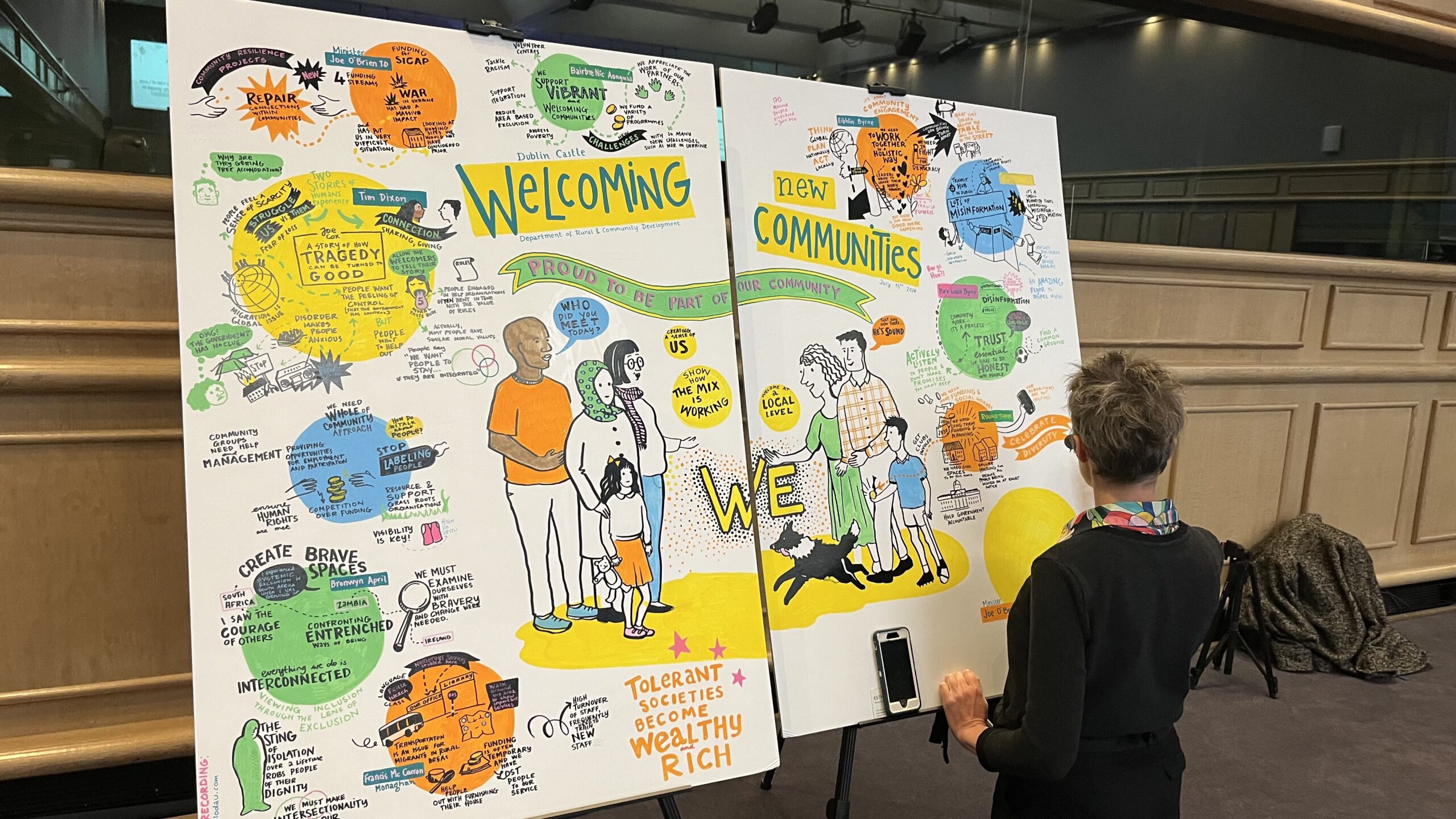
• Conference illustration by Esther Blodau. Photo by Allen Meagher.
SOLUTION 5
REFUGEE SPONSORSHIP CAN BE EMPOWERING
Community-based sponsorship can powerfully increase support for refugees. The last thing I want to mention relates to sponsorship and specifically refugee sponsorship. There can be a significant shift in favour of welcoming people when it’s being done through the local level. Why? Because it’s more orderly. In general, community-led efforts are seen as more orderly. It results in better integration, better acquisition of language, breaking down those usversus-them dynamics. It brings people together.
We helped the US State Department name their core refugee sponsorship programme that was launched last year and the slogan that they adopted came out of our research. The slogan is ‘Sponsoring Refugees, Strengthening Communities’. That second part ‘Strengthening Communities’ came from a really important finding in our research; people sense their ability to make a difference when they come together as part of the welcoming effort.
For people who feel their community is not functioning very well, when there’s a project people are taking part in – welcoming families in, helping them into school, helping them into services – it has a very positive spin-off effect in how people perceive their own community.
SOLUTION 6
TELL THE VOLUNTEER STORIES
Telling the story of welcoming, not just the story of the welcomed, not just the story of the outsider coming in, but the stories of the people who are the volunteers is really important. In the work that More In Common does we’re often trying to understand how to elevate stories of inclusion, that story of welcome, that story of connection – against the stories of polarisation, division and tribalism.
The name More In Common is from Jo Cox’s first speech in Parliament where she talked about us having more in common than what divides us. So how do we make that story of welcome and inclusion a stronger story than the story of division and polarisation?
You can create champions with powerful stories. We’re in an era where professionals, politicians, NGO leaders, even celebrities, are trusted much less than before. The most trusted person is someone who just looks like an ordinary everyday citizen, an authentic local person, a nurse, a teacher, a doctor just universally more trusted. Sponsorship and welcome activities allows you to highlight such stories.
Finally, one thing that surprised us is about middle-aged men. That age group are often not very interested in welcome activities. We found that they need to do something first and then a change in attitude follows. They get affirmed by others in their community – ‘This is great thank you for doing this’. They feel then that they can be part of something useful, and start to see themselves as welcomers.
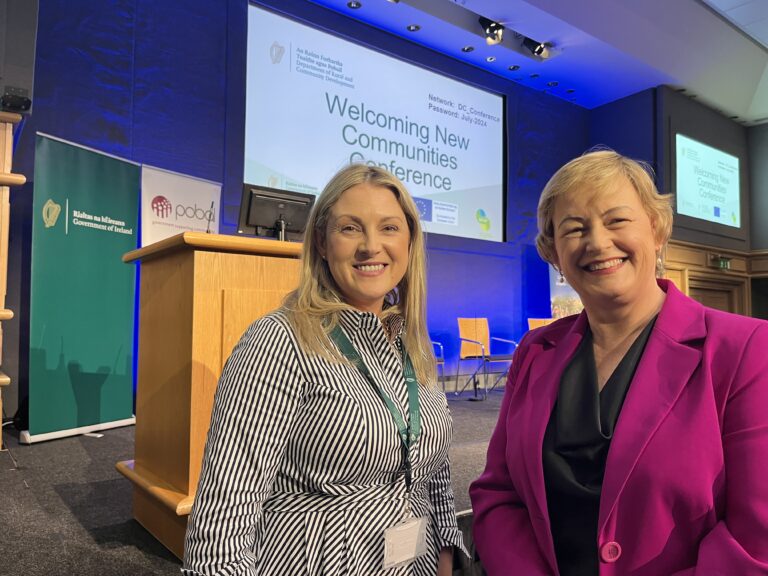
At the Welcoming New Communities conference held recently in Dublin Castle, Bairbre Nic Aongusa, assistant secretary at the Department of Rural and Community Development, said it was important “to pause and to reflect on the work we do”.
She said that while it is far from plain sailing she is confident community organisations, with Department support, will continue to rise to the
challenges: “All of our funding and all of our programmes would amount to nothing without the commitment and the support of those of you who are at the frontline. The work of the community and voluntary sector – local development companies, volunteer centres, community groups and local networks – is so vital. And you have done staggering work over recent years in developing and delivering programmes to your communities,” she added.
“To say that the context that you operate in has been changeable would be a total understatement. In the past four years as we know we have all had to respond to monumental challenges starting with the pandemic, followed by the outbreak of the terrible conflict in Ukraine, and then the unprecedented numbers of new arrivals into our communities seeking sanctuary and support here in Ireland.
“To your credit, you as a sector have risen to all of these challenges and continue to deal with the challenges on a daily basis. Your adaptability, understanding and empathy – and very importantly your reliability as partners with us – has enabled our department to be as flexible as possible in overseeing the implementation of a variety of our funding supports and schemes.
“When we needed to pivot to address a new challenge you pivoted with us and for that we’re really grateful. And really do appreciate the terrific work you do,” she said.
The Department of Rural and Community Development’s mission is to support vibrant inclusive and sustainable communities all over Ireland in both urban areas and rural areas.
Bairbre said, “I think everybody will agree that one of the very biggest challenges that our communities face in Ireland today is how to welcome our new arrivals.
“I’m sure there are many people who have arrived in Ireland in the last couple of years who would acknowledge that the work you do helped them to start integrating into their new home.
“There’s no doubt that the work that you do has a profound impact on the lives of many.
“Your expertise and passion and commitment has helped to steer this country’s integration efforts through some very turbulent waters and we’re not saying it’s plain sailing yet by any means. But I think the commitment and the track record is assurance enough that together we can overcome the challenges,” she concluded.
Minister of State with responsibility for Community Development, Charities and Integration, Joe O’Brien, sent a message of support and encouragement to the sixth National Public Participation Network Conference held at the Strand Hotel in Limerick this week.
Addressing the delegates via a pre-recorded video message, Minister O’Brien spoke about increased funding for PPNs he secured in Budget 2025:
“As we look to the next 10 years of PPNs, I am pleased to announce that I have secured additional funding for PPNs in Budget 2025. I have directed that all of this additional funding will be provided directly to PPNs.”
The two-day conference event (Thursday 17th and Friday 18th) was hosted by Limerick Public Participation Network, in conjunction with Limerick County Council, the Department of Rural and Community Development and the National PPN Advisory Group.
It was attended by a wide range of PPN stakeholders, including volunteer representatives from PPNs across the country, local authority officials, and elected representatives.
Opening the conference, Bairbre Nic Aongusa, Assistant Secretary General at the Department of Rural and Community Development, spoke about the contribution PPNs have made:
“Collaboration is a core characteristic of PPNs, a value that is particularly needed in a time when bad actors would divide communities and stifle discussion. PPNs remind us that a healthy democracy thrives on robust debate and strong opinions aired in good faith with the honest intention of making things better for all.”
The conference, which was attended by approximately 200 delegates and had a varied and interesting agenda of workshops and presentations.
These included a workshop celebrating ‘Ten years of PPNs’, as well as discussions on collaboration between PPNs and local authorities, and innovative projects undertaken by Offaly, Tipperary and Limerick PPNs.
The conference also included site trips to a number of locations around Limerick, where delegates met with local community organisations that are involved in and empowered by Limerick PPN.
The Minister also thanked PPNs for their sterling work, and for the extremely valuable contributions they make in their respective counties.
He said: “I want to commend and congratulate everyone involved in the network of 31 PPNs across the country – the member groups, the volunteers, the Secretariats and the staff. Your dedication and hard work is truly admirable.”
About PPNs
Public Participation Networks are designed to identify and respond to the needs and priorities of their communities. Each of Ireland’s 31 local authority areas has a PPN.
A PPN is a network for community and voluntary, social inclusion and environmental groups in each local authority area. PPNs allow local authorities to connect with volunteer-run groups around the country. As a result, PPNs provide a mechanism by which citizens can have a greater say in local government decisions that affect their own communities.
Membership of a PPN is open to all volunteer-led/not-for-profit groups in a local authority area. Almost 21,000 community groups nationwide are currently members of a PPN.
In 2022, GRD led a successful national campaign to seek to widen eligibility on both the RSS and the Tús Scheme so that participants continue to be available to the community groups.
The Rural Social Scheme (RSS) is now 20 years on the go while we in GRD are celebrating our 30th year supporting communities. A long-awaited review with recommendations has just been published, and there’s no better time to describe the impact of work done through the RSS and Tús schemes in East Galway.
It can transform a village, it can lift a county and, if the right changes are made to the scheme, we will have no trouble recruiting more participants.
Kilconnell Village Success
Kilconnell is a small village in East Galway and, over the past five years, with the assistance of participants on the RSS and Tús, the villagers have developed a stunning biodiversity garden. The community had a vision to develop a garden providing food and shelter, so that pollinators could survive and thrive. Now their vision is a reality.
As RSS supervisor Ita Kenny said: “In the early stages of the project, the focus was just on providing a safe pathway for community use. A path of 750m was constructed by our RSS team and then maintained by our participants. As the park became more popular however, the community group decided to manage the area in an environmentally friendly way.”
The area covers five acres and has mature native trees, and now also new saplings, fruit trees and willow domes. There is also a community field for recreation. The RSS participants manage all aspects – from pathway maintenance to hedge trimming, pruning, ‘dead hedge’ maintenance, meadow cutting, and seed harvesting.
As Ita says: “The park now provides a safe area for schoolchildren for nature walks. For the past two years the community group and the local schools, in collaboration with the Tree Council of Ireland, have participated in National Tree Week. This gave children the opportunity to learn about the importance of trees to our environment and biodiversity.”
County-wide Biodiversity
Additionally, GRD have worked with the local authority’s biodiversity officer to ensure that the participants and supervisors across East Galway are aligning their environmental maintenance work with local and national policies and plans. Training is provided in plant identification and in particular identifying invasive plant species. GRD also participate in the annual ‘No Mow May’ campaign.
Benefit to the Participant
As our senior manager Sean Broderick points out: “We are fortunate to have participants who have studied horticulture, with some gaining QQI Level 5 qualifications with GRD’s support. This knowledge is invaluable to the community and to other participants. In addition, projects like Kilconnell allow for peer-to-peer learning and encourage cooperation and social skills development.”
“Since the start of this project participants are always willing to learn new techniques, share their skills with new participants, and are genuinely interested in maintaining the park in an environmentally friendly fashion,” said Sean.
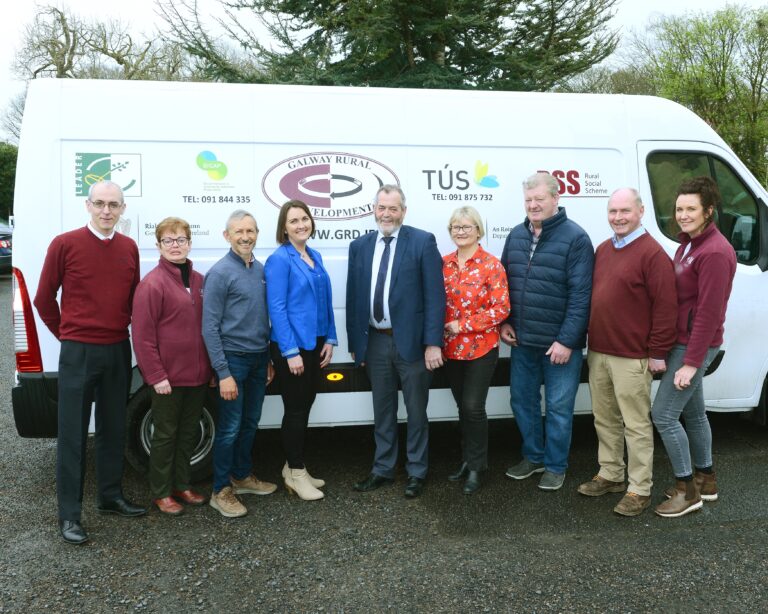
In a separate recent development, Galway Rural Development acquired a new van for use by our Tús and Rural Social Schemes workers. The van now delivers equipment under the SICAP ‘Loan Equipment Fund’ which has provided communities with long-term loans of equipment such as air purifiers, laptops, printers, and other items.
(SICAP is short for the Social Inclusion and Community Activation Programme).
Recruitment
In terms of recruiting new participants, we are doing all we can at our end. Where there are shortages of participants, rural charities and community groups do struggle. The different employment programmes need to be better appreciated nationally as a vital contributor to
rural life and its communities.
In recent months our team of RSS Supervisors attended the eight marts across East Galway to provide farmers with information about the contribution that the RSS makes. While these information days proved popular, the fact remains that rule changes are needed to address
shortages and encourage female participation.
We have previously laid out the need for a change in the criteria for participation in order to widen the potential participant pool in both RSS and Tús. Furthermore, along with the need to increase the financial benefit to participating farmers and unemployed persons, there is a need to properly compensate the supervisors. The recommendations recently published in the RSS review give us hope.
• Seeking new scheme participants at Ballinasloe Mart were RSS supervisors Liz Macdonald and Brendan Glynn, and Tús supervisor Paul Sexton.
About the RSS
The Rural Social Scheme (RSS) provides supplementary income for farmers in receipt of certain social welfare payments who are willing to work 19.5 hours a week providing services that benefit their own local community.
The RSS has a variety of placements from administration, heritage, and social care roles to Tidy Towns, sport pitches, community centres, and more.
To qualify, participants must be part of an active farming or fishing family and be in receipt of a means tested payment such as a Jobseeker’s Allowance or Farm Assist.
A mental health campaign running every September for the past 13 years saw over a thousand events held nationwide again this year in partnership with local community organisations.
One of the standout events was held in Glenveagh National Park, Co Donegal, where hundreds of people walked up a ‘trail of thought’ to a hill summit where volunteers were doling out hot soup and good advice.
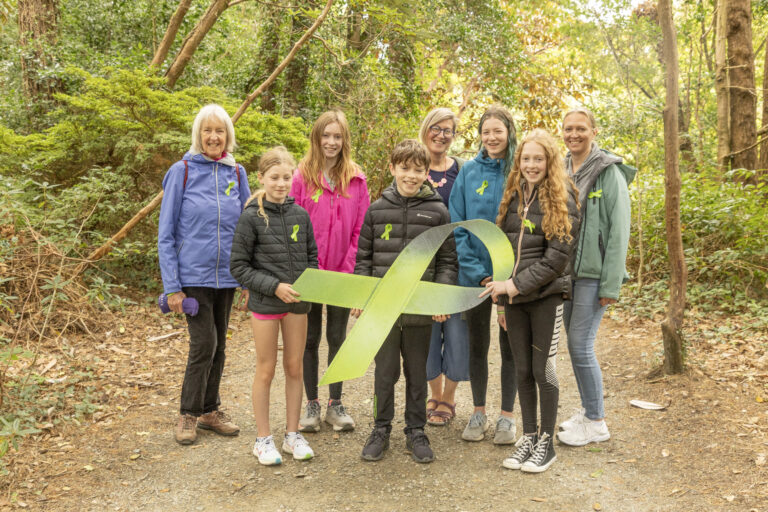
Known by its ribbons, Shine’s annual See Change Green Ribbon campaign raises awareness about mental health difficulties, services available and how to counter stigma and discrimination. This year, over half a million ribbons were distributed.
See Change
Shine, funded by the HSE, based out of Maynooth, Co Kildare, and involving over 60 partner organisations, has a national vision for a more compassionate Ireland where people affected by mental illness and stigma are supported and included in all aspects of society. It has a staff of 40 who work to help families of people with mental illness and to promote the message “There is no shame in having a mental health difficulty.”
See Change is one of its key programmes. During September around a thousand organisations, employers and community groups ran See Change events with the aim being to share information and end mental health stigma.
In Donegal, for instance, the public came out “in droves” in bright and blustery weather for a family fun day held in Glenveagh National Park on September 8.
– Representatives from some of the services at the Green Ribbon Family Fun Day. (North West Newspix)
Food For 200 Was Not Enough
Breege Ward, co-ordinator of Dunfanaghy Community and Family Resource Centre, said it was hard to judge how many came, because many people completed the walk – meeting volunteers along the way – without calling into the visitor centre where agencies had their stands. But numbers were higher than they had anticipated. “We had food for 200 people at the castle and we were eaten out of it,” she said.
Donegal’s network of 10 Family Resource Centres led in planning the event and it was timed to coincide with World Suicide Prevention Day on September 10. The event was different, fascinating even, compared to a traditional community fun day.
The programme included talks on reconnecting with nature, a Green Ribbon Mindful Walk to Glenveagh Castle, Web of Life activities, a children’s scavenger hunt (where the focus was on listening out for sounds), Music at the Castle in the Orangery and The Tree of Intention in memory of lost loved ones. Without planning to they met people over two days.
“Putting up the ribbons on Saturday, we had so many people asking what they were for. We told them it means you’re open to conversations about mental health and suicide. So even setting up the trail led to many conversations.
People Sought Help On The Day
“We weren’t expecting people to come looking specifically for help on the day, but they did. And people brought other people to see us. We were able to help them on the day and because the service providers were there (with stands) we were able to link people straight into the supports.
“Also, a lot of smaller community groups saw the event organised and came to pick up to pick up information leaflets to bring back to their centres. We didn’t expect that either. The day was fun too,” she said.
– See the strings_ Joanne Lindsey Butler demonstrating The Power of Connection using the Web of Biodiversity. (North West Newspix)
Connecting For Life
Joanne Butler, climate justice officer with Donegal Local Development Company, brought along a 3D spiderweb (made from string) representing the web of life and biodiversity. After ten minutes in a game where people played being birds, branches, nest, eggs, etc, they emerged with a strong sense of how we are all connected, how we are all part of nature.
“She showed that everyone is linked, that we all have a web of connection. But if the tree goes, the links between us go,” said Breege.
Scavenging for sounds
“We had a children’s scavenger hunt where they had to listen for sounds. We’re part of nature, it’s important to get out there and engage with nature,” continued Breege. “A lot of people who came on the day went straight onto the walk without coming into the visitor centre.” However, the organisers had planned to meet them on the trail too.
– Una Collier, Mevagh FRC family support worker; and Caitriona Boyle, Foroige at the Green Ribbon Family Fun Day. (North West Newspix)
4KM Trail Of Thought
“Mental Health Ireland had given us printed statements and questions – we put them on slates with green ribbons along the walk, so we had a trail of thought. Some of them were in different languages, to connect with people from different countries as well. It gave people ideas to mull over and talk about as they walked,” she explained.
Hilltop Cooking Tips
“Then when they got to the top of the hill they were met by Donna from Healthy Communities and a staff member from one of our FRCs who were dishing out bowls of lentil soup and a nice dessert. Lentils are high on protein and protein is really good for your mental health.
“They had the recipes too –taken from the MABS cookbook ‘101 Square Meals’ – to show people how healthy eating can be easy and how good it is for your mental health, she said.
Where Did The Ideas Come From?
The brainstorming that went into planning the day involved a committee of three making recommendations to a bigger umbrella group and going from there.
See Change’s Key Messages (edited for brevity) are:
Mental health problems can affect anyone at any time.
People with mental health problems can and do recover.
People affected by mental health problems are entitled to the same human rights as everybody else.
Every person has the power to help stop the stigma and discrimination.
More information: www.seechange.ie and www. familyresourcementalhealth.ie/
The FLOW youth engagement programme is for young people aged 18-25 who want to connect with nature, boost their wellbeing, and gain new skills. The next course begins on November 12; sessions run every Tuesday and Thursday from 12-3pm.
The programme is designed and delivered by Offaly Local Development Company (OLDC), in collaboration with Green Offaly. The pilot course took place from April to June 2023.
Over a 12-week period, one day per week, participants took part in tailored workshops in traditional craft-based skills. Most of the activities were held outdoors at the Irish Heritage School and Birr Castle.
Hazel Daly, a community development worker with OLDC, told Changing Ireland: “Myself and my colleague, Rebekah Keaveney, who at the time was working for Green Offaly, we wanted to do a youth focus programme, bringing young people outside.
“At its inception, we thought we’d end up with young people who are experiencing unemployment, or maybe early school leavers. But everyone who ended up on the programme had autism, or a mental health difficulty, or both.
“And that’s where we saw there is a huge gap in programming for this age group, who are experiencing social isolation as a result of there being no offerings that are suitable (for them).”
Three Strands: Skills, Self and Nature
The programme was framed around sustainable development goals and consisted of three strands: self, skills and nature.
Some of the participants were referred by their occupational therapists or other youth programmes, while others were referred through mental health services.
“Our main focus was to be outside as much as possible, and to allow time for introspection. We had nine young people, I think it worked really well for them. Everything was done together.
“A lot of young people are on a course because you have to get a job, or because you’re not feeling well. Whereas our programme was
quite broad, and it also was about reconnecting with yourself and with where you’re living,” said Hazel.
The ‘Self’ aspect of the course focused on the inner landscape, how we can find belonging in a community and a sense of place. The ‘Skills’ strand featured hands-on craft workshops, and the ‘Nature’ strand explored outer landscapes and the natural environment, as well as climate change.
Local Adventures
Said Hazel: “That outdoor element, (they learned that) you don’t have to be exercising to be outside, you don’t have to be living near a mountain, it was very accessible. We did it all in Birr town. We tapped into the whole idea of micro adventures – going to places that are adventurous, but are easily accessible outside of the programme.
“Some of what we did was giving the young people tools that they could use all the time, as opposed to doing things that they would need us in order to do again.
“I like going hiking and kayaking, but that’s not for everyone. We need to make nature accessible to everyone. It’s not an ‘out there’ thing, it’s all around us. A lot of the group were ‘bedroom people’, that’s where they feel safe and comfortable. So it’s nice to think that they might now feel safe and comfortable in their garden or in a park. It definitely had a positive impact on people’s moods.”
Local Herbs and Food Miles
The activities included journalling, herbalism, plant identification, filmmaking, photography, and ‘green woodwork’, which is woodwork without mechanical tools. The course also included a ‘food miles’ project.
“One week, we got all our food from Lidl for lunch; they went through the food miles and created posters of where all their food had come from. The following week, we tried to buy locally produced food from an organic shop,” Hazel added.
Not a ‘Buzzing’ Group (and that was fine)
“It might not have been a traditional ‘buzzing’ group. Sometimes there was a lot of silence, but people were very comfortable in that silence. There was a lot of producing of things without there being any pressure to produce. It happened quite organically throughout,” revealed Hazel.
An exhibition during Birr Vintage Week showed a film produced by the participants and photographs they took during the course.
– FLOW course participants were encouraged to take photographs during the course, these were then displayed at an exhibition
“Phenomenal”
She said that seeing the young people engage with guests at the exhibition “blew her mind”.
“Some of the young people that were showing guests around the exhibition, four months prior, they weren’t able to meet with me about joining the programme. They needed their occupational therapist, or their parents. It was a difficult process for them to even commit to doing a programme. And then they were in the public space with over 100 people. That was really phenomenal to watch.”
She continued: “Some of them started courses. It opened their eyes that they could do it, that they’r more than capable and that their social skills are better than they might give themselves credit for. And definitely a major result was that the young people felt that they could
self-regulate better.”
Run it Again!
According to Hazel, if funding was available, Offaly Local Development Company “would love to run it again, because the feedback was wholly positive”.
She concluded: “It was unique; we couldn’t find anything that wasn’ like a wellness retreat. It was a funded programme with a specific purpose of improving the wellbeing of young adults, with the blend of art and woodworking and the skills that were also acquired over the course. I couldn’t find anything (else like it), it’s quite a growing space.”
To book a place, or for information on running a similar course in your locality, contact Hazel on 087 7002521 or email hdaly@offalyldc.ie
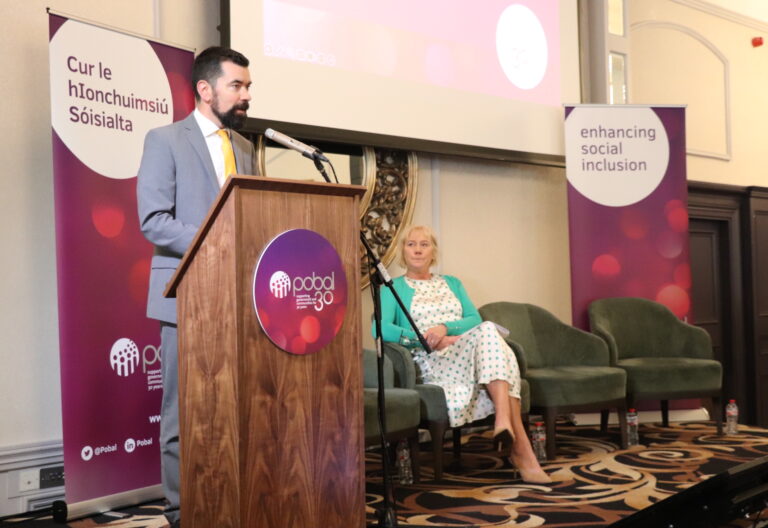
At the Welcoming New Communities conference in July Minister of State for Community Development, Integration and Charities, Joe O’Brien, announced a new project that will see 30 community workers hired to support integration and to counter misinformation.
The workers will be employed by local development companies under the Community Connection Project, which will receive funding of €3 million over 2024 and 2025.
Changing Ireland interviewed Carol Baumann, CEO of the Irish Local Development Network; Sabina Trench, CEO, South West Mayo Development Company; and Ryan Howard, CEO of South and East Cork Area Development.
While the project is only funded for 18 months, they all agreed that this is the start of something new in communicating with and listening to communities and that it may become a long-term funded programme. This was also alluded to in an interview with Minister of State Joe O’Brien.
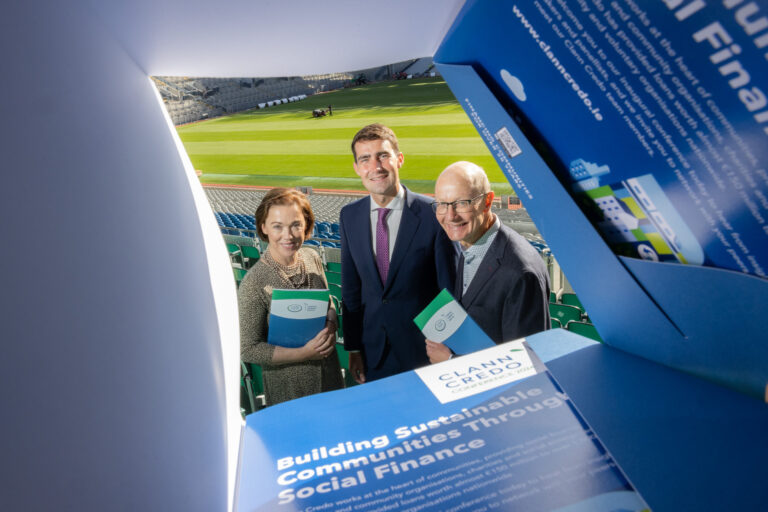
As the largest social finance provider in Ireland, Clann Credo has a current loan book of over €50.3 million, providing capital to community and voluntary groups around the country.
Working like a social bank, Clann Credo has supported more than 1,500 organisations in the community, providing lending that focuses on the social impact potential of a project.
Clann Credo CEO Mary Lawlor said, “Clann Credo is strategically positioned to respond effectively to evolving community needs and ambition. The feedback from the 250 delegates at our conference signals an increase in community ambition throughout Ireland which gives us confidence to scale our work and reach more communities who share our mission for positive social change.”
Over 250 community and voluntary organisations from around Ireland attended the conference, held at Croke Park on September 13.
According to the latest Clann Credo Impact Report, 65% of Clann Credo’s social finance lending in 2023 reached communities with a below-average score on the Pobal Deprivation Index.
Specifically, Clann Credo demonstrated an increase in their lending to communities classified as disadvantaged (11%) or extremely
disadvantaged (4%) during that year. This level of lending in underserved communities demonstrates the need for social finance in Ireland, now and into the future.
Clann Credo finance supports sporting clubs (38.9%), community playgrounds, community centres and facilities in the community (16.7%)
as well as disability projects (9.9%), enterprise centres (8.4%), and social sheltered housing (6.6%) among other projects.
It also aims to support environmental and climate action initiatives in communities. For instance, its support helped to transform a disused,
overgrown site at the heart of Carlow Town into an urban variant of the allotment idea called An Gairdín Beo.
Speaking at the conference, Minister for Finance Jack Chambers said, “It’s clear Clann Credo are making a real social impact on the ground around the country, through their support of community, sporting and voluntary groups. I have seen this first hand. The level of social finance required in Ireland over the last number of years demonstrates the need for this type of finance, and reflects the huge ambition of local community groups.”
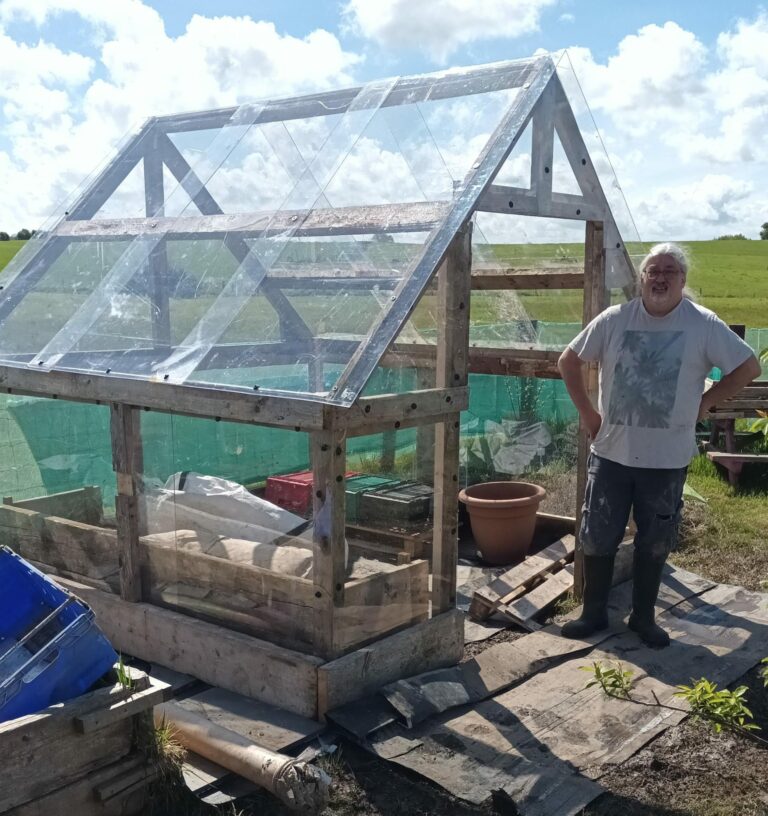
“We were getting rid of the screens on the desks in Meath Partnership,” recalled Tommy Melia, Tús supervisor. “They’re made of perspex and I thought they were too good to throw out.”
Then he and his crew got a brainwave – screenhouses in place of greenhouses.
The construction process is straightforward, as Tommy explained. “We built the greenhouse frame first, and then just used screws and washers and screwed the screens in. The door is wide enough for a wheelbarrow and I’m six-foot-four and I can walk in no problem. It’s a prototype to see could we do it and it works. A lot of credit has to go to the crew,” he revealed.
The team have since helped to build community gardens in accommodation centres in Co Meath.
Tús is a community work placement scheme providing short-term working opportunities for unemployed people. All the work carried out by
participants on the Tús is community-based.
If you want the blueprint to build your own screenhouse, contact Meath Partnership or, if you’re in the vicinity and want to have old Covid screens recycled by them, email: marjan.boers@meathpartnership.ie