Friday, July 3, 2026
Home Blog Page 10

12 things I now know about Ukrainians and their fabulous country

1. Plants and Nature

From chatting with Ukrainians I understand that vegetable plots are still common in villages in a way that was true here decades ago. Ukrainians have retained this rootedness and interest in nature, and I think we could learn from them here in Ireland. Basically, I don’t see many Ukrainians eating chicken nuggets and wedges!

• As reported in our 2022 article about Irish families hosting Ukrainian refugees, a Kildare household was introduced to nettle soup by their guest Natalia who was glad to find that nettles grow freely in Ireland. FULL STORY: https://changingireland.ie/not-the-red-cross-hosting-refugees-ukraine-irish-family/

2. Food

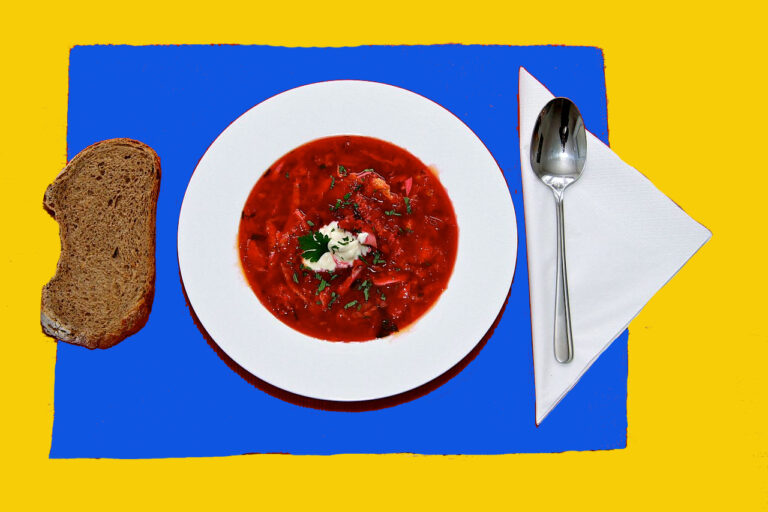
Ok Ukrainians, let’s talk about borscht, this mix of meat with beetroot, cabbage and other vegetables. Daria, who works with me, kindly brought us in borscht to taste and, while some loved it, my reaction was that it occupies that liminal space between a soup and a stew in which no food should reside! When I mentioned this to other Ukrainians they said – oh, she should have put this or that in it, so clearly there are many ways of making borscht. I don’t like beetroot, so sorry borscht, it’s probably me not you!

Salo is another Ukrainian favourite which is, eh, cured pig fat. I better stop commenting while I still have some Ukrainians friends left!

As regards baking, many Ukrainians I have met like to bake, they bake fabulously, and generously share their produce.

Ukraine is a big honey producer and I have received many gifts of honey and flavoured teas.

Ukraine also has Tatar cuisine which has similarities to Greek and Turkish food (also, see number 10).

3. Crafts and Motanka Dolls

NEWKD have set up a number of integrated craft groups and Ukrainians are very talented and interested in working with their hands.

Some of my colleagues arranged a wellbeing session that involved burning a doll, which was new to us. First, they put out candles and a floral centrepiece which I commented on as being lovely. Work colleague Aylonia said that it had been a windy weekend so her mother gathered some leaves and made it, just rustled it up as it were!

The dolls – Motanka Dolls are traditional dolls which can represent many things including protection for your home. This session involved making the doll, writing down your worries, putting the worry-notes in the doll and burning said doll – Health and Safety regulations were probably also destroyed in the process!

• Ukrainian doll-making in Kerry with author Robert Carey pictured centre.

4. Independence & Freedom

Fighting for freedom is not new to Ukrainians. Ukrainians risked their safety in the 2004 Orange Revolution and in the 2014 Euromaidan protests.

The Euromaidan was over government corruption and the refusal of Kremlin-influenced President Viktor Yanukovych (who later fled to Russia) to sign an agreement with the EU which had been in development for years. Over two months millions of people protested and a whole support structure developed around the protest with a huge voluntary effort providing food and security. Historically, Ukrainians have been fighting for freedom for hundreds of years.

A point of interest which people may not know: In 1993, Ukraine gave up its nuclear arsenal (the third largest in the world) in order to help secure peace. The consequences of doing this are now looking more and more grave.

UKRAINIANS IN IRELAND – Halyna (90) and Svitlana (66) on fleeing a second war

5. Horrible Dilemma

Two Ukrainian friends, both mothers, recently visited Ukraine as their sons, both aged 17, are now obliged to sign up for the army, although the current age for call-up is still 25. They did not have to do this as they are living in Ireland and I asked one mother about it. She said that of course they didn’t want to sign up, but she had said to her son that when the war is over she wants to be able to say that they followed the law and their duty. She said to him that it is important that those laying down their lives know that the younger generation is supporting them, even though they hope the war will be over before they are called up. Supporting the army while not wanting your loved ones to join up and get killed in action must be a horrible dilemma for many Ukrainians.

Ukrainian men, fathers, carers, aged – full facts on military conscription

6. Similarities with Ireland

Ukrainian and Irish history have much in common:

Oppression from an imperial power over hundreds of years. √

Attempts to destroy our language and culture. √

Resilience and eventual independence from foreign power. √

Famine supported by the imperialists to oppress or destroy the population. In the Ukrainian famine, ‘The Holodomor’, instigated by Stalin, an estimated 5 million died. √

Colonial power does want to let go (e.g. Ireland – six counties, although in 1993 the British government stated that it had no “selfish strategic or economic” interest in the North; Ukraine – Russian invasion). √

7. Relationship with Russia

As us Irish know, when you are colonised and population plantations take place over long periods you get cultural and linguistic interconnections between the oppressed and the oppressor. Many Ukrainians grew up (like many former Soviet bloc members) speaking Russian and consuming Russian culture (similar to Irish interest in the BBC, soccer, music, newspapers).

However, like Ireland, Ukraine has a distinct history, culture and mentality. As Ukrainian historian Yaroslav Hrytsak sees it, “In Ukraine, Stalin or Putin is impossible (because) in Ukraine power is not sacred. We never love power, we always criticise it.”

Ukrainian writer Andreay Kurkov says that Russians crave stability, while Ukrainians prize freedom above all. It is more important to them than wealth.

‘Unissued Diplomas’ exhibition in Kerry and Cork

8. Culture & Christmas

Ukrainians’ pride in their culture and language has increased since the invasion. My colleagues wear traditional Ukrainian dress at many events we run and the Cossacks, who established an independent Ukrainian state in 1649, are a big part of Ukrainian history and culture. In Kerry Ukrainians have put on large Christmas concerts and we have a large number of classically trained musicians which seems to be a feature of Ukrainian culture.

Christmas – The majority of Ukrainians are Orthodox Christians and on Christmas Eve they prepare 12 vegetarian dishes and the table is decorated with a sheaf of wheat which symbolises the ancestors’ spirits.

9. Smiling and Straight Talking

• Irish people tend to smile more than Ukrainians due to cultural differences.

Smiling: One of the first things Ukrainians remarked to me was that Irish people smile a lot. Now thinking about some of miserable so and sos you know you may be surprised at this! Apparently, smiling is not common in Ukraine and some have said they will continue to show off their teeth more when they return!

Graciousness and manners: Ukrainians are quick to show gratitude for even small gestures, they want to contribute, and if you make any attempt to speak a few words of Ukrainian they are embarrassingly nice about the fact that you have mangled something they have fought valiantly to keep alive!

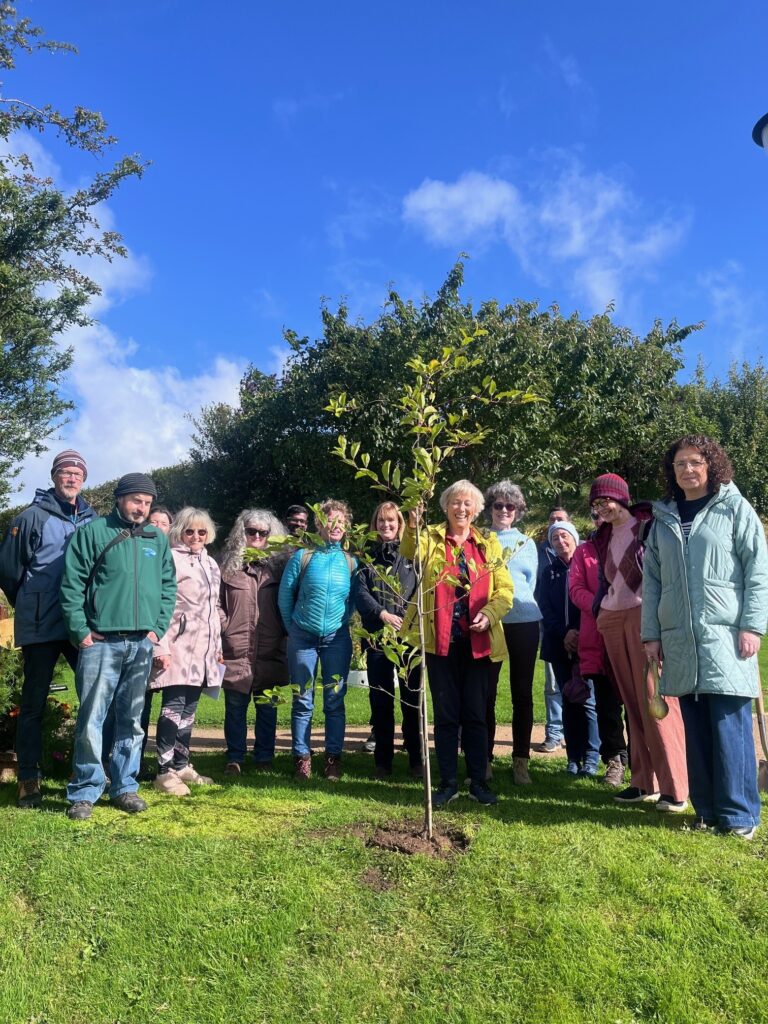
Refugees planted rare dove tree to thank Irish and for peace

All talk: Because of our indirect, circuitous, often poetic way of expressing ourselves, it took my Ukrainian colleagues a few months to realise that when an Irish person says, “I will get that sorted”, “Give me a call soon on that”, etc, we mean something may happen sometime somewhere. Ukrainians are more direct and literal.

10. Crimean Tatars

Last summer my work colleague Olya invited her friend Akhtem Seitablaiev, a famous Ukrainian actor and film director, to Ireland for the anniversary of Ukrainian independence. He has starred in many films and is now in the army, involved in projects to help injured combatants and boost morale.

As a surprise we took him to see Riverdance and he was riveted throughout and got very emotional when a Ukrainian dance piece took to the stage – we had not told him this was going to happen. This has been part of the production since the invasion so kudos to Riverdance!

We showed his films in Kerry and Dublin. He happens to be a Crimean Tatar. He was born and grew up in Uzbekistan as his parents were expelled from Crimea as part of Stalin’s purge of Tatars. (In 1944, over three days, around 200,000 Tatars were expelled – ethnically cleansed – from Crimea. Most were moved to Siberia, Uzbekistan and Kazakhstan).

11. Work and wellbeing

Work: “If there was work in bed, he’d sleep on the floor.” We know laziness like industriousness is a human trait and therefore there must be lazy Ukrainians. I however have not met any. The biggest problem in fact is to get them to work to normal hours and look after their wellbeing. Hard work seems to be part of the culture as there is a Ukrainian joke something along the lines of – if you see a Ukrainian leaving work at 5pm, it must be a bank holiday …I didn’t say they had good jokes!

Wellbeing: Therapy and help-seeking is not common part of the culture and therefore they are less likely than the Irish to avail of supports such as mental health supports and addiction and substance misuse supports.

The Ukrainian refugee building Ireland’s future one home at a time

12. Resources and Economy

Natural resources: Ukraine is the second largest country in Europe and is roughly 8.5 times the size of Ireland. Nearly a quarter of the world’s most fertile soil, known as chernozem, is located in Ukraine. It also has titanium ore, bauxite, alunite (for potash) and mercury (which Trump is seeking to exploit). Its natural riches and location are one of the reasons imperial powers sought to control it during WW2.

Economy: Ukraine is highly digitalised. For example all government docs are on an app called Diia and Ukraine had one of the highest levels (pre-war) of tech specialists in the world. The war has ravaged the economy and wages are low – for example, the sister of a Ukrainian work colleague of mine is a teacher in Ukraine and she earns just €400 per month.

Robert Carey is a community worker and SICAP manager with North East West Kerry Development. He is also a member of Changing Ireland’s editorial team. He writes here in a personal capacity.

“What every community wants is a sense of peace. That’s why the Ukrainians are here.”
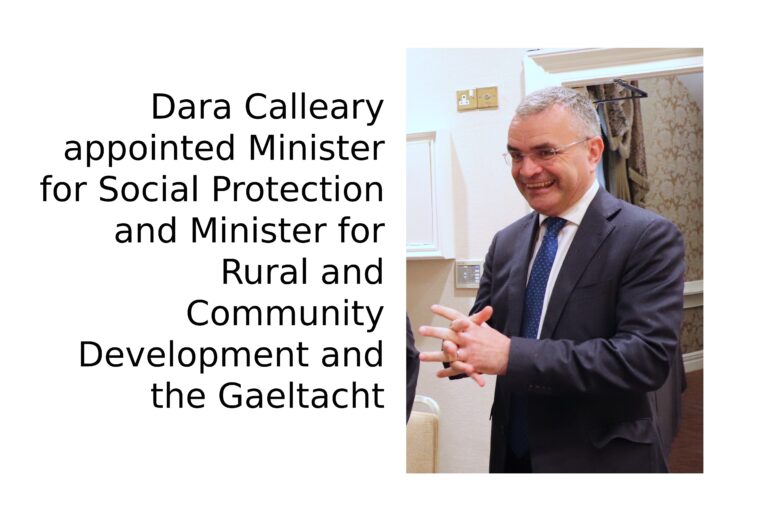
Welcome for Dara Calleary as rural, community, Gaeltacht and social protection minister

0

As on previous occasions when storms have struck, community groups, local development companies and local authorities will play an active role in checking in on and supporting the most vulnerable. The Minister got stuck in on day one announcing details about emergency funding for households (subject to income-tests) impacted by the storm.*

His appointment is being celebrated in Mayo which has now seen two TDs in eight years take the helm and is a relief to those who value the work of the Department of Rural and Community Development, the smallest government department apart from the Department of the Taoiseach.

• A history of community in cabinet – Issue 70, Changing Ireland, November 2020. Zoom in to read.

Return to ‘Craggy’

The Constitution limits the government to 15 senior ministers and under the previous government Heather Humphreys headed up two departments – the Department of Social Protection and the Department of Rural and Community Development. The former has a 2025 budget of €26.9 billion while the latter has a budget of €472 million.

Amid recent speculation that a new Department for Infrastructure could be established, there were concerns that the Department of Rural and Community Development could be broken up and its parts scattered among various ministries. Instead, the Department has grown in size and stature with the addition of Gaeltacht affairs, harking back to the 2002 to 2010 department configuration inaugurated by Galway’s Éamon Ó Cuív when he was Minister for Community, Rural and Gaeltacht Affairs.

Its acronym DRCGA and its western leadership led to Ó Cuív’s department being nicknamed ‘Craggy’. While ‘Dee-Are-See-Dee-Gee’ (DRCDG) doesn’t have the same ring to it, the department names and configurations are comparable.

Calleary, aged 51, is also a West of Irelander. He attended St. Murdach’s College secondary school overlooking the River Moy in Ballina and later studied at Trinity College Dublin before taking on a role for the Chambers of Commerce of Ireland.

• Recently Dara Calleary revisited his schooldays by dropping in to meet Leaving Cert students in St. Muredach’s College in Ballina.

Calleary’s political career

His political path follows that of his father Seán and his grandfather Phelim who between them served as Mayo TDs for 36 years between 1952 and 1992.

He was first elected in 2007 and has served as a minister of state in multiple roles and as the Minister for Agriculture, Food and the Marine for one month.

Shortly after being appointed to agriculture in July 2020, during the pandemic, he joined 80 other guests for an Oireachtas Golf Society dinner in Clifden which upset the public who were striving to adhere to strict Covid-19 guidelines. Calleary did the honourable thing when the controversy broke and resigned the following morning.

In August 2022, he was reappointed as a minister of state with responsibility for trade promotion, digital and company regulation.

Rural and Community Development

• Dara Calleary with staff and supporters of Leitrim Development Company last year as they celebrated 20 years of the Rural Social Scheme. The organisation has welcomed his appointment as minister.

Political commentators like to point to the Department of Rural and Community Development as a good news department for the office-holder as it allows them to make regular funding announcements for communities nationwide. This overlooks the Department’s serious responsibilities developing policy and national programmes that aim to reduce poverty, promote capacity at local level, empower communities and give people on the margins a voice locally and nationally.

In recent years the Department also took on an important role in promoting integration at community level as war refugees and asylum-seekers from various countries made their way to Ireland. It is also responsible for supporting offshore islands – most of which are in the West.

Calleary will be familiar with the Department of Rural and Community Development because Ballina has hosted department staff since partial decentralisation a decade and more ago.

Junior ministers yet to be announced

This government will have 23 junior ministers (the population has increased as has the number of TDs) and Calleary will presumably have at least one junior minister to support him. He takes on a busy portfolio with the addition of Gaeltacht affairs.

However, Conradh na Gaeilge has already stated it sees no need for a junior minister for the Gaeltacht as Calleary is from a Gaeltacht county, is fluent and is experienced.

CnaG’s Julian de Spáinn said:

“Más é Dara Calleary an t-aire sinsearach níl aon ghá le haire stáit don Ghaeltacht – tá an saineolas, an tuiscint agus an taithí aige. Is ó chontae Gaeltachta é, tá gach rud a theastaíonn ó aire Gaeltachta aige.”

• Conradh na Gaeilge says of Calleary – “Tá an saineolas, an tuiscint agus an taithí aige”

Four so-called ‘super-junior’ ministers, who are allowed attend cabinet meetings, have been named, while most junior ministerial appointments have yet to be announced by the Taoiseach.

Policy development since 2017

The junior minister with responsibility under the previous government for community development, charities and some areas of integration was Joe O’Brien from the Green Party. He had previously worked as a community worker and he made a point of spending one to two days a fortnight touring every county in the state to meet community groups. This equitable approach to connecting with and highlighting work at local level took him two years and was much appreciated.

Nationally, O’Brien and Humphreys progressed work begun under the stewardship of the previous Minister for Rural and Community Development, Michael Ring (from Westport) by developing policy in areas such as social enterprise, social inclusion, charities regulation and – most recently – philanthropy.

• Minister of State Joe O’Brien opening Limerick Travellers Network in 2023 – while Minister Heather Humphreys promotes LEADER in 2018 with staff from the Department of Rural and Community Development at the Ploughing. Photos by Changing Ireland.

Appointment welcomed

Calleary’s appointment has been welcomed by, among others, the Irish Local Development Network which issued a statement today:

“Although LDCs’ work with several government departments, those now coming under the leadership of Minister Calleary are of particular importance to the communities we work with and for. We were very happy to have Minister Calleary join us for Local Development Week in 2024, and we look forward to supporting him in this important work,” it said.

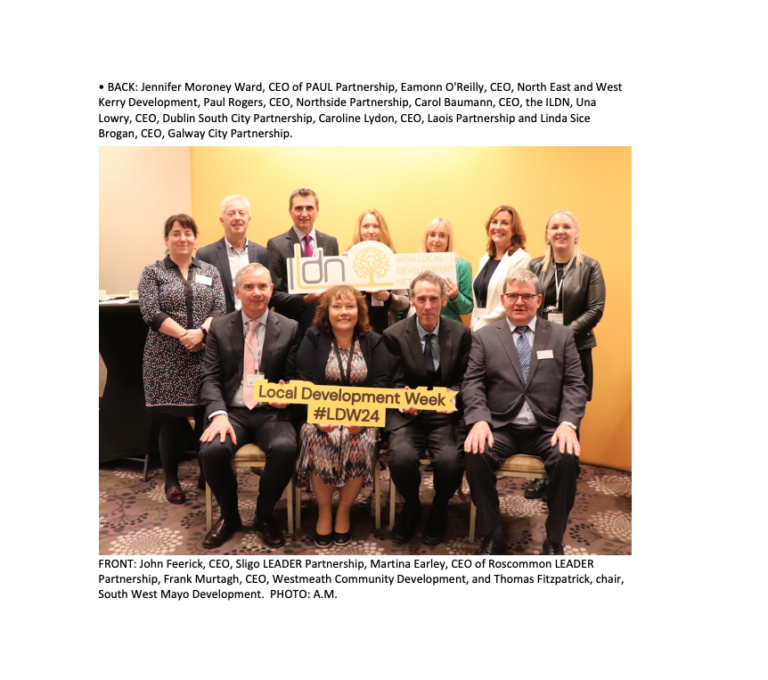
• L-to-R – Carol Baumann, CEO of the ILDN, and Thomas Fitzpatrick, chair, South West Mayo Development, chatting with then minister of state Dara Calleary during Local Development Week in September, 2024. Photo by Changing Ireland.

The Western Development Commission also recalled previous work with Minister Calleary, saying:

“As a proud Mayo man, he brings a deep understanding of the unique challenges and opportunities facing our region.”

Social Enterprise Republic of Ireland welcomed the appointment saying they met with Calleary in October and were “very encouraged by his understanding of, and engagement with, the social enterprise sector”.

If Storm Éowyn got the minister off to a challenging start, let’s hope it’s a breeze for him and the communities he supports from here on in.

Minister Michael Ring at Southill SICAP launch
• Pictured in April 2018 – then Minister for Rural and Community Development Michael Ring officially launched the Social Inclusion and Community Activation Programme. Photo by Changing Ireland.
• Pictured in 2004 – then Minister for Community, Rural and Gaeltacht Affairs, Éamon Ó Cuív, addressing community groups. Photo by Changing Ireland.


* Dara Calleary, as Minister for Social Protection, today confirmed that the Humanitarian Assistance Scheme will be available to provide support to those living in properties directly affected by Storm Éowyn. Support is subject to income thresholds. The minister also drew attention to the role played by Community Welfare Services staff to support people impacted by the storm. Full details here: https://www.gov.ie/ga/preasraitis/eabf4-minister-xxxx-announces-availability-of-the-humanitarian-assistance-scheme-to-support-those-householders-affected-by-storm-eowyn/


Moyross lovingly remembers those who died as children

0

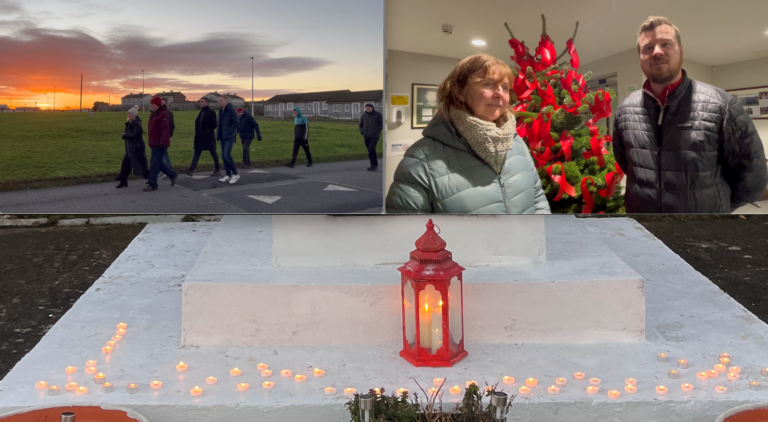
“It was very meaningful and very emotional for some people,” said Jason Craig, one of the organisers, speaking in the Ballygrennan estate where the shrine dedicated “to the loving memory of all the deceased children of Moyross” was built in 1997.

The deaths were as a result of medical issues, traffic accidents, drownings, accidents on holidays, miscarriages, cancer and criminal acts.

“It is a very large number of young people to die for one community,” said Jason, who was appointed manager of Moyross Community Centre in August. “However, there haven’t been as many of those funerals in recent times, which is a sad way to have to measure something, but it’s the only way you can.”

Community leaders had written to the bereaved families of those who died and the event was held to show people they were not forgotten.

After the ceremony in Ballygrennan people walked to Delmege Park where prayers were said and then everyone trooped back to a joyful party at the community centre where Corpus Christi school-children sang their hearts out, food was served and raffle prizes handed out.

SYMBOLIC WALK

“The walk symbolises how people have walked with each other over generations in times of difficulty,” said Fr Pat Hogan, parish priest. “It symbolises how, as we walk together as a community, we grow in strength, grow in goodness and create a place that is good for children.”

• Fr Pat Hogan, parish priest, speaking in Delmege Park.

While community leaders still have concerns – for example around crucial long-term government funding for community projects – the area is changing radically. Many good homes were knocked despite the housing crisis in Ireland, but demolition has now stopped and many new homes and apartment blocks have been built or are under construction. Facilities in the area have been expanded and upgraded, including the community centre, the primary school, the shopping centre and Moyross Youth Academy.

“Moyross is miles ahead of where it was,” said Jason. “It’s a much better place nowadays. There was a time when houses here sold for a few thousand euro: Now you have over 300 people on the waiting list. You have people actively wanting to move their families here. That really marks a change of outlook.”

KEEPING MEMORIES ALIVE

Anne-Marie O’Connor who works with the local Community Companions project said the ceremony at the shrine where 61 candles were lit was “poignant but nice”.

“Lighting the candles keeps their names alive, it keeps their memory alive,” she said. “Each family received their own letter inviting them to take part and to let them know that their family member’s name would be read out at the service. There was also space for anyone else’s name to be called out too”.

• Anne-Marie O’Connor and Jason Craig.

It was a heartfelt day for many.

“Today for me was probably five or six years in the making,” said Jason. Having grown up locally, and having worked for five years as the family support worker in Corpus Christi N.S. prior to becoming manager of the centre, he understands the hardships families face.

“I know very well how difficult this time of year is for many people in the community. We are here to journey with them and to support people,” he added.

He praised community centre staff for helping to organise the multi-faceted event which he hopes will become an annual event.

“The majority of people that work here are from the community and we all know how important this is to people,” he said.

• Moyross Community Centre manages services in the community and Moyross Community Hub pictured here.

REMEMBER ME TREE

Meanwhile, a ‘Remember Me’ Christmas tree set up in the foyer of the community centre has proven so popular that a second tree was ordered as local people came to write the names of deceased loved ones on red ribbons and place them on the tree. People are also visiting to read the names of the many who have passed away locally over the decades and to remember them.

“It is creating conversations,” said Jason.

He wished everyone a safe and enjoyable Christmas and a happy new year.

The centre closes on December 20 and re-opens on January 2. The ‘Remember Me’ tree will be moved to the parish church when the centre closes.

The new year is already looking bright as it was revealed in late November that funding for community groups through Limerick City and County Council’s Social Intervention Fund is secure for another year. Details are available on the council’s website (at this link) about the criteria for groups to apply. The deadline is Monday, January 13.

What does the Speedpak Group in Coolock actually do?

0

It operates as a social enterprise and was set up in three decades ago when long-term unemployment in Coolock and surrounding areas in north Dublin was exceptionally high. The initiative was driven by Northside Partnership and the business community, with state agency support, to give people work experience, industry training and paid employment.

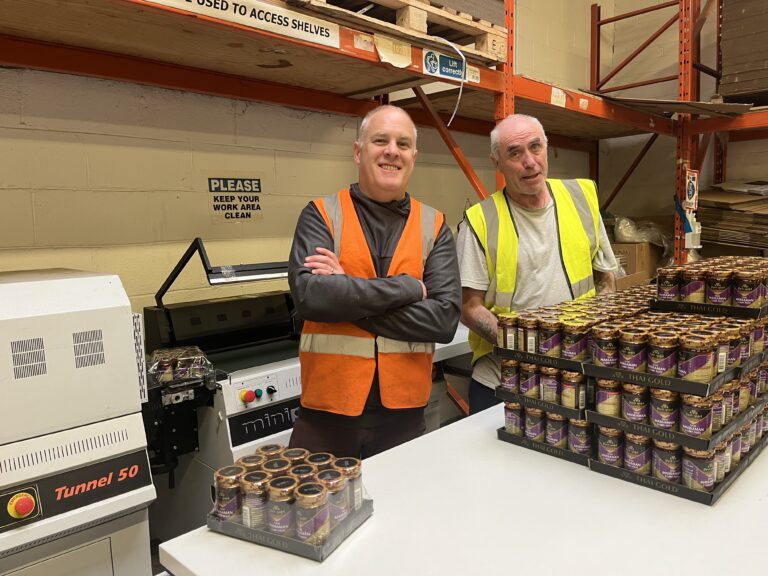
Speedpak began trading in 1995 and now trades internationally. Since it started it has taken on many hundreds of people on labour intervention schemes. Today it employs 15 core staff and up to 60 people annually on Community Employment and Tús programmes.

• Speedpak staff Paul Blake and Edward Stokes, Jim Lillis before he retired from Speedpak’s board after two decades, and John P. Murphy, CEO.

One of the company’s challenges is to get the balance right between its focus on the profitable commercial arm and its training, mentoring and educational services. Jim Lillis, chairperson until recently, explains:

“The commercial business pays a huge amount of the cost of running the operation. It has to be profitable. Side by side you have the vocational element. So you need a board that’s capable of making commercial decisions in relation to property, machinery, health and safety, marketing and so on. We’ve got to have a sales team, a production team, finance control.

“One of the commercial businesses is contract packing, but we have moved on to also become an e-fulfilment house for online shopping.“If somebody orders something online that company has to have the product in a warehouse. And it has to have a an IT system that connects the three entities – the buyer, the company that has the core business and the store which is us. So we see orders coming in and we know what the delivery requirements are. We put the orders together and call a logistics transport company to deliver them.

“The rosettes we produce are first class quality ribbons and we supply all of the major shows in the country,” Jim added. The rosettes, badges, sashes and accessories are popular across Ireland and in recent years the company began exporting to Malta, Cyprus, Italy, Switzerland and Finland.

• Michelle Stone, manager of Shamrock Rosettes, speaking to Changing Ireland.

Michelle Stone from nearby Artane manages Shamrock Rosettes, but she never imagined working for a non-profit enterprise.

“I came in to help a friend of mine for three weeks and I’m here now nearly 25 years. I didn’t intend working here, but once I was in I loved it,” said Michelle. “We do rosettes for horse shows, cattle shows, dog shows, sometimes even weddings. For the people working here it’s a Community Employment Scheme. It gets them back to work. We give them experience and train them how to make rosettes.”

• Shamrock Rosettes staff present Changing Ireland editor Allen Meagher with customised rosettes.

Michelle said some people went on to get “really good jobs” while others benefit from the training and their confidence improves.
“A lot would have been lone parents and many of them get back to work. They usually do four hours a day. It gives them a different outlook, they’re not stuck at home. A lot of them come in with low confidence and walk out full of confidence,” she said.

• Shane at work on a cutting machine.

Shane from Ashbourne is “very happy” working with Shamrock Rosettes and part-time hours suit him. He works in Coolock on Monday, Tuesday and Wednesday mornings and on Thursdays he goes to Trim and onto Blanchardstown.
“I walk around Trim first and then go bowling. On Fridays, I go to Prosper Day Service on Seatown Road in Swords,” he said.
Shane is also a member of Remember Us in Balbriggan, joining them four times a week. He explained:

“It is a special needs club. We do football sessions, dancing, art and boxing. We play basketball and pool in the club. It is really good,” he said.

The Speedpak Group has two commercial businesses: a contract packing and e-fulfilment services (speedpak.ie) and a manufacturing business (shamrockrosettes.com) that produces rosettes to order across Ireland and the EU.

For more info, click here: Speedpak for contract packing and e-fulfilment services, and Shamrock Rosettes for rosettes.


Jim Lillis – Hurler, hillwalker, volunteer and Coolock changemaker

“I hurled at minor level in Clare, playing for St Flannan’s. Later I became an international hurler, because I worked with Aer Lingus and when we went abroad we played anybody who could muster a team.
“I played squash competitively and later joined a hillwalking group. I’ve been with them for over 30 years and we’ve walked all over Ireland, the UK and in the Alps.”

CLARE TO JAPAN

Jim partly sought a job with Aer Lingus so he could travel, however he worked mainly in head office. After doing a degree by night he got a job with Ireland’s new Industrial Development Authority (IDA) and got to travel the world.
Japan is the most exotic country he has visited, he said: “Once you get out of Tokyo and into the countryside it’s very different to Ireland. Lots of very steep hills, lots of timber homes. The have temples and very different rituals. And the civility of the people in general I was very impressed with.
“As a life experience travelling is very important. Exposing yourself to other cultures is uplifting and enlightening.”

POVERTY IN TALLAGHT

Poverty was prevalent across Ireland when Jim got his first job in the early 1960s and throughout his star-studded career, he was always drawn to volunteering.
“When you come from the West of Ireland you’ve seen poverty. You couldn’t avoid it in the 1960s. After I moved to Dublin, one day a friend of mine had to bring some help out to Tallaght to a new place called Jobstown and he said ‘Will you come along?’. So I did and when we arrived there Jobstown was only in its embryonic stages. It was very raw. There was a burnt out truck up at the top of the road and we called into a lady’s house to give the household Vincent de Paul help.
“When she opened the door she thanked us, but said ‘We need mattresses’. What had happened was that some family became homeless, they needed someplace to go and they came to her and there was already two homeless families living in her house. You were confronted with real poverty. And the only people helping them other than the Vincent de Paul were three nuns who were living in a house in the same area. That opened my eyes and it’s always stuck with me.”

SHOCKING BAD HAND OF CARDS

For 21 years Jim served as the chairperson of Speedpak and he never saw it coming.
“I was a new board member and at the second meeting I was sitting there sort of day-dreaming. The next minute the chairman announced that he was retiring at that meeting and that he was nominating Jim Lillis to take over. That’s how people get bounced into it. I have been chairperson since then,” he said.
He was in place before new regulations were introduced and today there are limits on how long a board member can serve. Jim had good reason however for sticking around (listen to the podcast).
“The big thing for people like me coming from a middle class background and a secure job and I’ve worked all my life, I haven’t been unemployed for a single day – and you come into an environment like Darndale where there are great people who have been dealt a shocking bad hand of cards. And they have to make do with this and they have ambition, but they’re stuck.
“When you come to the board meetings and you see that you’re making a difference, that there are awards coming to the company, that people coming through here are getting jobs, it makes it all worthwhile.”

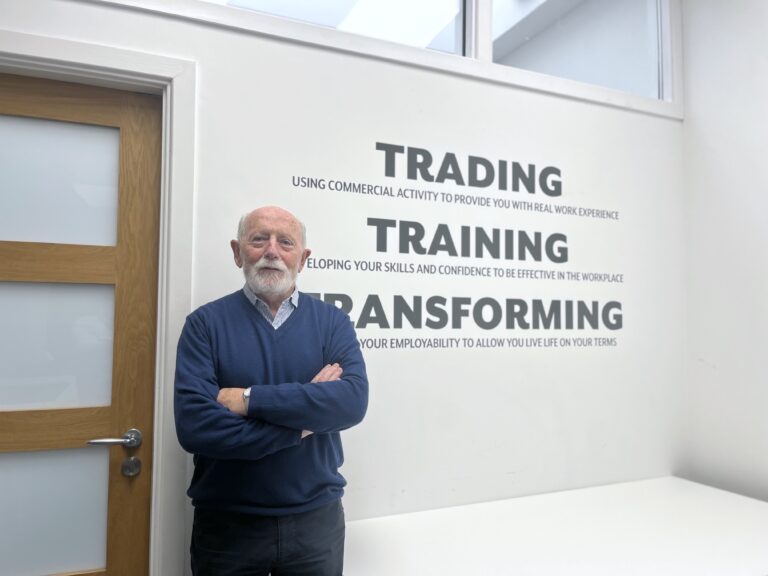
• Jim Lillis earlier this year – before he retired as chairperson of Speedpak after over two decades in the voluntary position, with John P. Murphy, CEO, Speedpak.

COLLECTIVE PRIDE

Asked what he and the company would be most proud of collectively, he pointed to a wall of awards.
This year Speedpak won the Environmental, Social and Governance Social Impact Award for Small and Medium Enterprises from Business & Finance magazine.
“We have also won national awards from Diagio, from Ulster Bank and from others,” added Jim.

JOINING A BOARD 20 YEARS AGO V. NOW

He said there is “an enormous difference” between joining a board in 2002 compared to today. He has seen increasing expectations placed on volunteers, a raft of new regulations, the setting up of the Charity Regulator, and new challenges in adhering to a governance code.
“This has all made it very difficult for spontaneous charities to be set up. Now you have to build a structure, you have to have responsibility for all your actions,” he said.

RISKS OF VOLUNTEERING

There is more pressure on voluntary board members nowadays and Jim was horrified by an example of volunteers being abused by the system recently – as shown on RTE:
“Revenue sent them a bill for over €100,000 that they were tax liable for personally. It took four years to resolve. From the start, someone senior in the Charity Regulator’s office should have spoken to some senior person in Revenue. This does great damage to our sector.
“We’re very lucky in Speedpak that we have great people on the board who have specialist skills. There is trust in each other. We abide by the regulations. We have adopted the governance code and we fulfill all the regulations, but it takes an enormous amount of time. Here it took nearly two years to get through all of the processes. It would put most people off (especially if you’re starting up).”

MAGIC WAND and VOLUNTEERING

Jim would like to see volunteering, community development and social enterprise promoted like never before, given as strong a push as the IDA gave to enterprise and employment. If he had a magic wand he would set up a national entity to promote the good in the community and voluntary sector.
“A huge amount of people give their time to rugby clubs and GAA clubs. That’s volunteering and some of those entities are almost replacing social institutions in their community, they are great outlets. I would like a big promotional campaign of role models. I’d like to see a programme to promote volunteering and social enterprise in Ireland where it is recognised as being of great value. That would be highly beneficial, because otherwise there’s a risk that there’s a great loss of a moral compass in Irish society,” he said.

• Jim Lillis being interviewed for the Changing Ireland Together (pilot) podcast series.

PHILANTHROPY

“A positive development in recent years is that nowadays there is more awareness of CSR – corporate social responsibility. American companies brought it here; It’s almost part of the American culture that you owe something back to society without making a big deal out of it,” said Jim.
“Some companies sail close to the wind because they just rename their marketing budget ‘corporate social responsibility’. Then you have other companies who are really great and they look for no publicity. We have some here who have helped us, with no publicity. They find people, they find expertise, they’ll finance projects for you. They see it as part of the responsibility of the company to reach out. It’s a very good attitude,” he concluded.

HEROES

Outside of family he named two people he hugely admires.
“I highly respect Michael Killeen who was the first chief executive of the IDA. In the 1950s over 400,000 people immigrated and the IDA was set up to create industry and jobs. Great credit is due to him.
“Pádraig Harrington would be my second hero. There’s always a smile on his face and he has three Masters behind him.”

FUNNY

Finally, you might ask – what is someone with such a positive attitude reading at the moment?
“I’m reading ‘This is Happiness’ by a guy called Niall Williams which is based in West Clare, part of my homeland. It’s set in the 1950s and it’s very funny book,” concluded Jim.

7 top tips for case-study films

When I start planning a case study film with a group I encourage them to focus on two key aims: (a) Make sure we are showing the change that is happening as a result of the work being done, and (b) We must hear about that change from the people who are doing the work on the ground.

This approach helps build trust and authenticity into the film.

1. Define Your Story’s Purpose

Start by clarifying the goal of your case study. What impact do you want? Is the film to inspire, inform, or advocate? Having a clear purpose will guide every part of production.

2. Showcase Real Voices.

Use interviews with real people involved in the project, including beneficiaries, to give an authentic perspective. Their stories and emotions are what make the case study relatable and impactful.

3. Plan the Narrative Flow.

Outline the storyline in three parts: the challenge, the solution, and the impact. This structure helps viewers follow the journey and understand the significance of the work being done.

4. Keep it Concise

Attention spans are short, so aim for a length of 3–5 minutes. Focus on key points and impactful moments to convey your message without overwhelming viewers with too much information. This can be edited down to 90 seconds for use on social media as well.

5. Prioritise Natural Conversations.

People who are not used to being on camera may feel nervous. Encourage natural conversation rather than memorising scripts. Authenticity will help them connect better with the audience. Ask people to look at the person asking the question instead of the camera. This helps put them at ease.

6. Use Visuals that Relate.

Shoot video of the local environment and activities that relate to your story. Match with the narrative. Make sure your film footage supports the message and enhances viewer understanding. Photos and smartphone footage taken by participants can really help tell the story especially when showing change happen. Every time you are out ask the question – ‘Does this visually show the change we are making?’

7. End with a Call to Action.

Conclude by inviting viewers to take a specific action, whether it’s to learn more, get involved, or share the film. A compelling call to action helps translate the film’s emotional impact into tangible results. You hopefully have emotionally engaged the viewer and it is a great opportunity now to ask them to engage with your project.
By following these steps, you’ll create a case study film that’s impactful, relatable, and memorable.

More info: If you have questions, you can email Thady on work@thadykavanagh.com

* Thady Kavanagh is a Galway-based video producer who specialises in producing case study films for organisations that want to share the how, why and impact of their work. He has produced several SICAP case studies as well as creating video content for Rehab Ireland, The Wheel and St. Vincent de Paul.

Agencies would be at a loss without Traveller culture training workshops

Laura Myles is a community worker with the North Wexford Traveller Community Health Programme, and she told Changing Ireland about their work. Recently they ran a workshop in St. Senan’s Primary School in Enniscorthy which has a big Traveller population.

“Some of the Traveller kids were in the classes we went into. Two little lads in particular put up their hands before we left and they said: ‘We’re Travellers’ and they got talking about their wagons and horses. They were so quiet up until we were just about to leave, but it was like they had a sense of pride. They were proud that we were there,” said Laura.

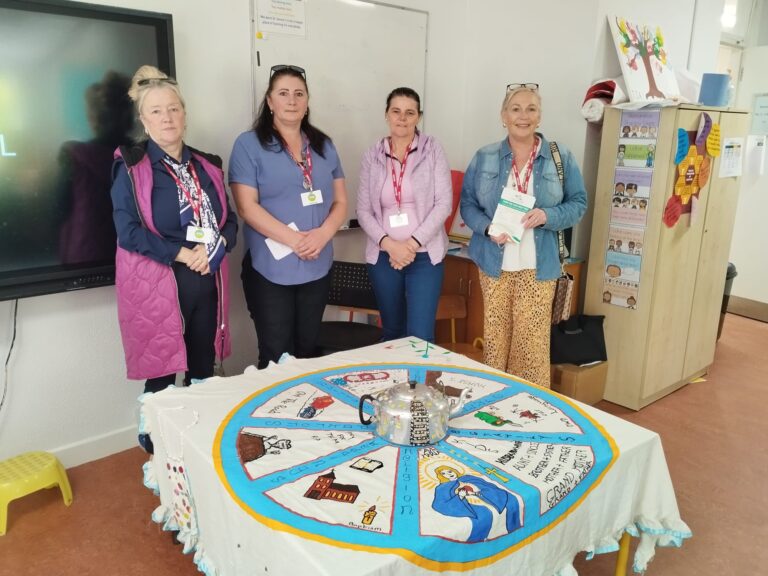
A teapot and a kitchen table-cloth called the Traveller Wheel of Culture are often at the centre of their workshops. The tablecloth was designed by the Traveller women.

“It’s very visual and it’s good for kids in school,” said Laura. It shows aspects of family, religion, the tradition of travelling, music, weddings, rosary beads, creativity, horses, the Traveller language Gammon, and ‘the Patron’ (an annual blessing of graves).

There are two projects in Wexford because the county has a high Traveller population.

Laura and her colleagues are employed by Wexford Local Development with funding from the HSE’s South East Traveller Health Unit (SETHU). There are nine Traveller women employed as community health workers in Wexford and in 2011 they developed their first cultural awareness toolkit for delivering training to service providers.

Last year, SETHU and associated Traveller projects developed an updated cultural awareness package for face-to face delivery to HSE staff, the guards, teachers and all the service providers that members of the Traveller community use. The training is delivered by the Traveller Community Health Projects across south-eastern counties.

Fearful to happy

Traveller community health worker Elizabeth Berry, who is a Traveller, said the workshops give the settled community a better understanding of Traveller culture and traditions.

“A couple of years back in Gorey we had a coffee morning. And a lot of the women that use the centre were used to us, but (that morning) there were one or two new faces. And one of the women said when she came in she was kind of frightened. She said growing up as a child that her parents told her ‘Don’t mix’ (with Travellers) so she always had that fear as a child.

“As the morning went and we explained the culture and what was important to us, she was the happiest woman ever going out. She said that she missed out on so much as a child and that kind of took away all her fear. So that was a person that never knew nothing about Travellers, that was told never to go there, have nothing to do with them. So it gives the settled people a better understanding of our culture and our beliefs. It helps with discrimination as well,” Elizabeth said.

What kind of things do they teach in the workshops? Elizabeth’s colleague and fellow Traveller Bridget Connors explained:
“Nomadism and travelling around like they did years ago, making cans. It’s about making the younger Travellers that haven’t done that aware of where they came from. A lot of them are living in houses now, so we teach about the culture of horses. And religion, going to mass, and that they believe in speaking to a priest if they got sick or anything.”

Elizabeth added: “If there was anyone sick in the Travelling community, where the settled people would go to counselling, we believe in going to a nun or priest and asking them to pray for us to make the situation better. The settled probably have that as well, their beliefs and holiness, but we prefer going to a priest or a nun or a healer, than to talk it out with a person.”

Nomadism

Regarding the traditional nomadism of the Travelling community, Elizabeth said: “A lot of the travelling has been taken away from us. Most Travellers now are in houses, they’re mostly settled. The younger people getting married are still in caravans in the gardens of the parents’ houses. But as soon as June comes, they do go travelling for maybe five or six weeks. They’re trying to keep that tradition going. At the end of August, they’re straight back into their houses. The five or six weeks of the summer is very important to keep the tradition going.”

Staying in school

Bridget added: “We’re trying to get the younger children to stay in school. They are way behind the settled kids, a lot of them are leaving school early. There’s a lot of literacy problems.”

According to Laura, the workshops “are really helpful for that”. She added: “Primary school is fine for most children, not just Traveller children. They’ve the one teacher, they’ve the same break times. They go from that into secondary school, and you’ve got nine teachers, different times, different rules. Some Travellers, as well as settled kids, struggle with that. So there is early school leaving.

“We trying to encourage the youngsters to stay in school for as long as they possibly can. We talk to the school liaison officer and parents, make sure that they’re aware of the supports in the school. Or if the school is having problems we might be able to help.”

She continued: “The cultural awareness training (for workplaces) has much more structure to it. But it’s amazing really, Travellers are an ethnic minority group, and that was recognised by the Irish government back in 2017. And we talk about that at our cultural awareness training, and you will be surprised the number of people that don’t know that. These are working adults in services like the HSE who didn’t even know that that was recognised.

“The delivery of these workshops and the cultural awareness training, it’s bringing pride in the culture. Individuals shouldn’t be ashamed or forced to be ashamed of their culture.

“Racism and discrimination (including institutional racism) are part of the cultural awareness training. That’s important. Some people who come to the training say they never had any idea that Travellers would face discrimination on a daily basis,” she said.

Traveller women deliver the training

Laura does not deliver the training. She said:

“It is the Traveller women, because it is their culture so they talk about the culture and they deliver that aspect of it. But sometimes it can be challenging for them as well, because sometimes people’s concept of Travellers can be what they see in the media.

“Delivering cultural awareness training is just one part of our work. We have all the other work to do. We do a lot of outreach work and we run Traveller women’s groups.”

Health care projects

Currently, the North Wexford Traveller Community Health Programme is a part-time programme, running for three days a week. Laura believes the project would greatly benefit from additional funding to expand the number of hours the community health workers can operate.

She concluded: “There should be a team of Traveller women in every county that solely deliver Traveller cultural awareness training. Most counties have a primary health care project, and most counties would have some form of delivery of Traveller cultural awareness, but that’s very much dependent on the hours. It’s dictated by funding.”

More info, including contact details: https://www.wld.ie/traveller-community-health-programme/

ILDN calls for restoring community funds cut after banking crash

The Irish Local Development Network calls for the new programme for government to embody equality, inclusiveness, and effective partnership between the State, the local development sector, and the broader community and voluntary (C&V) Sector.

With regards to the C&V and local development sectors it wants the next government to:

(A) Establish a sustainable funding model for local development companies that is built on adequate, multi-annual funding, that facilitates long-range planning and capacity-building, and that ensures that a space for autonomous community development is preserved.

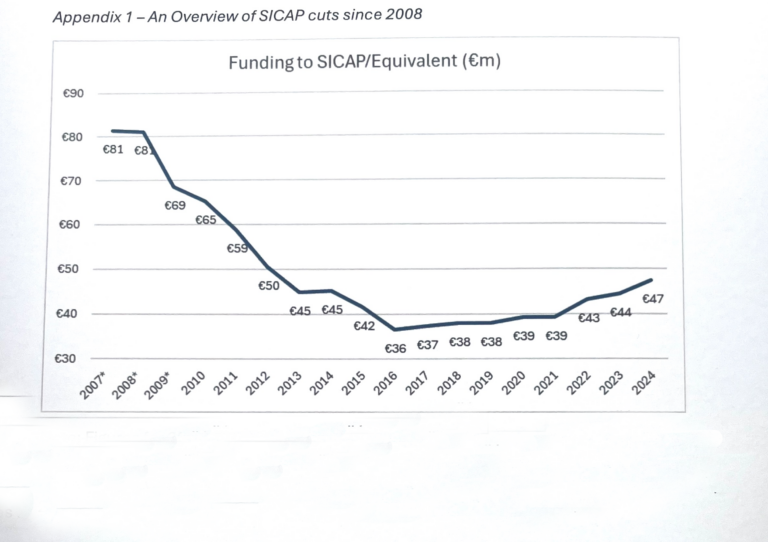
(B) Fully reverse the cuts in funding for the Social Inclusion and Community Activation Programme (SICAP), which is Ireland’s flagship programme for combatting poverty and social exclusion at a local level, which took effect during the years of economic austerity. See Appendix 1 for an overview of SICAP cuts.

(C) Review the methods through which Government commissions the services of the local development and C&V sectors (principally competitive tendering) and the impact of these commissioning models on the sustainability of the sector and the quality of outcomes.

(D) Commit to developing a successor to the Strategy for the Community and Voluntary Sector 2019-2024, and to resourcing that strategy to deliver on commitments.

(E) Commit to making Ireland’s social economy, and its support structure for social enterprises, the most innovative, vibrant, and robust in Europe.

Inishowen communities drawn to positivity from environmental campaigner Éanna Ní Lamhna

Speaking in Inishowen recently, environmentalist, author, and RTÉ presenter Éanna Ní Lamhna called on people in communities across Ireland to take a stand and make small changes in their daily lives to try and combat climate change.
Speaking to a packed Colgan Hall in Carndonagh Co. Donegal, Éanna said people’s attitudes are changing.
“I think it is the first year people are realising climate change is happening here in Ireland,” she said.

During the 90-minute talk, organised by the Inishowen Development Partnership (IDP) in collaboration with ChangeMakers Donegal, Éanna commended Inishowen people for turning out in great numbers to reflect on the importance of nature and the environment. She praised community led organisations including IDP for bringing her to Inishowen and fostering community engagement in environmental issues.

“It is great when you get a community that’s going to work together,” she added.

The author of ‘The Great Irish Biodiversity Book’ (just published) Éanna called on people to take small actions to make life more sustainable.

“Don’t buy fruit such as strawberries when they are out of season.. that means they have to travel hundreds of miles to get here. If we don’t buy these food supermarkets won’t stock them,” she said.

• Éanna Ní Lamhna, Rachel Grant, IDP, Myra McAuliffe, Changemakers, Denise McCool, IDP, and Donna Marie Doherty from Highland Radio.

“Don’t use bleach on your toilet – there are other cleaners available which are not harmful to the environment and your septic tank. Get a compost or brown bin from the council to avoid food going to landfill. Consider how we use the land we have; Ireland has lost 50% of its biodiversity since the 70s because of the way we have changed land use. Plant trees.
“If you can afford it use solar power where possible, grow wildflower meadows, avoid plastic bottles and do not use weed killer,” she added.

On day two of her trip to Inishowen, Éanna travelled with members of IDP to Barrack Hill Town Park in Buncrana and Wild Inishowen’s Sharagore Wetland Trail in Desertegney. At both sites, Éanna, who was the president of the National Tree Council, planted trees, met with community and environmental groups and explored the area, whilst also chatting with and meeting local volunteers and school children.

She was impressed by both natural sites, saying that they were a credit to the people of Inishowen and all their volunteers.
In Barrack Hill, committee member and volunteer Carmel Doherty said Éanna’s ‘Wild Talk’ in the Colgan Hall was ‘an utter absolute joy’.

“When there is so much negativity out there at the minute it was great to hear someone speak so positively about what we can do to make a difference,” said Carmel.

“Your down-to-earth attitude, passion and positivity about what we must do sent us all home uplifted.

“To us, this park is the jewel of Inishowen – it is a phenomenal achievement. We have planted around 500 or 600 trees in the last five years, and we are the only Green Flag Park in Donegal – something we are immensely proud of,” added Carmel.

• Tree planting at Sharagore Wetland Trail.

Colm Grant of the Wild Inishowen Club showed off the voluntary work they have started at Sharagore and Éanna spent time exploring the trail.

“It was great to have someone like Éanna with us at Sharagore,” said Colm. “She had such enthusiasm for the work that we do and encouraged us to keep going. She gave us great advice how we can progress the project and it was great to show her the work that is going on in Inishowen.”

IDP team leader Denise McCool said the event and follow on meetings with local environmental and community groups were a response to needs identified by ECO Inishowen.

“Communities and groups across Inishowen are actively addressing biodiversity loss and environmental challenges,” said Denise. “They are increasingly aware of the local and global links and work on initiatives such as Fairtrade, local biodiversity action plans, stopping pesticide use, recycling, and nature-based solutions.”

“While we recognise the scale of challenges and the need for government action regarding climate change and mitigation, communities continue to play their part to be the change and take action. The opportunity to come together for events like this and stay positive in the work is important,” added Denise.

Following Éanna’s visit, Myra McAuliffe, project co-ordinator with ChangeMakers Donegal, who co-organised her visit, called on businesses and social enterprises in Donegal to further support and buoy the great work that local voluntary groups are doing by becoming more environmentally friendly in everything they do.

She invited social enterprises and businesses in Donegal to sign up for the free ChangeMakers sustainability programme.
“This will help them save money, attract customers, set themselves apart from competitors, and most importantly, ensure a safe, healthy and successful future for our local community and the planet as a whole”.

More info: www.changemakers.ie/sp

Local Development Companies stress 10 points for social inclusion

1 – Value community development

Make an overarching commitment to value the practice of community development and the principles of collectivity, subsidiarity, inclusiveness, and empowerment.

2 – Recognise that the community sector delivers

Recognise the vital role that the community and voluntary sector, and in particular the local development sector, plays. It delivers key services and enables the government to uphold its commitments to a society that is just, inclusive, and fair.

3 – Community-based climate programmes

It calls for commitment to initiating a new community-based climate programme, founded on the principle of a Just Transition. It should have a dual focus on grassroots animation and engaging marginalised and vulnerable groups.
Putting “Boots on the ground” – personnel to build grassroots capacity through mentoring, technical assistance and other kinds of early-stage developmental support – rather than grant-giving, should be the main intent of this programme.

4 – Rural vision

Work to advance the objectives of the EU’s long-term vision for rural areas at both national and European level. (See opposite page).

5 – Invest in youth to stem urban inequality

Approach urban inequality in a targeted, strategic, and holistic way.
The ILDN points out that inequality is most pronounced in densely populated urban areas, and that disadvantaged urban communities are disproportionately impacted by problems linked to crime, drugs, homelessness, unemployment and dereliction. It calls for ramping up co-ordinated investment in housing, services, and youth diversion supports.

6 – Support people on low income

The ILDN wants more support for those in low-paid work, including: (a) Measures to continue narrowing the gap between the minimum wage and the living wage; (b) Linking medical card eligibility to a person’s earnings, rather than only to the number of years since a person was employed.

Provide employment supports for people who are distant from the labour market.

The supports should be person-centred and sensitised to the multiplicity of needs that people often have. As a first step, the one-year limit which applies to Tús placements should be removed.

8 – People with disabilities NEED ACCESS to work

Expand employment services for people with disabilities, ensuring that the design of those services is underpinned by the principles of agency, dignity, and holistic wellbeing.

9 – Early years care and education

Strengthen parenting and childcare supports for disadvantaged and low-income households. This should include a review of core funding rates for providers in the Early Childhood Care and Education Sector.

There needs to be a long-term plan for improving pay and conditions in the sector, and an exploration of the viability of a publicly funded system for early childhood education and care.

10 – Plan for inward migration

The government needs to recognise that:

(i) inward migration is likely to become more prevalent in the years and decades ahead, particularly as climate change accelerates;

(ii) the provision of asylum is one of our international responsibilities, and;

(iii) migration is a necessity for the effective functioning of our economy and society.

Salary increases in early years education and childcare welcomed by SIPTU

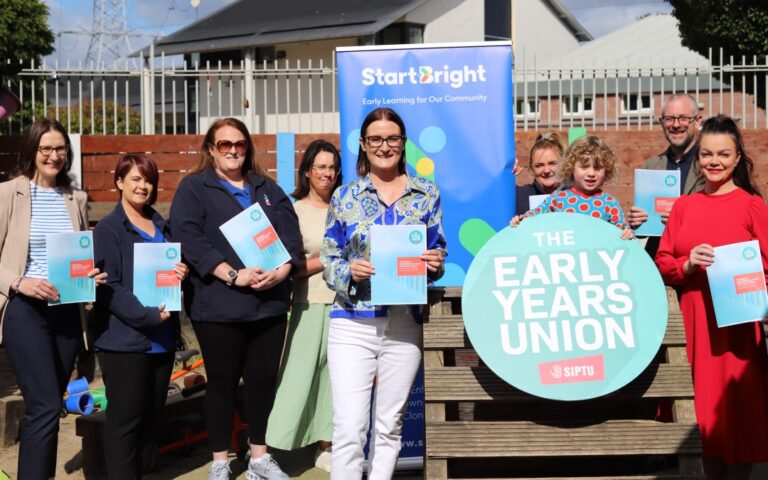
SIPTU has welcomed €45 million extra in Budget 2025 to raise pay for workers in the early years education and childcare sector.
Avril Green, an early years educator and union leader said: “This marks progress in our fight for better pay and recognition. Low wages push passionate educators away. We’re moving in the right direction.”

SIPTU’s head of strategic organising, Darragh O’Connor, said: “Thanks to our activists and members, the government now sees low pay as a big issue in Early Years. Minister O’Gorman has boosted pay investment. This is to be commended. Now, we urge Early Years employers to negotiate a new pay deal without delay.”

Minister Roderic O’Gorman confirmed the increase in his Budget 2025 speech on October 2, saying: “This would be the third successive pay increase for the sector, and hopefully sets out a clear pathway for further increases.”

SIPTU members have highlighted for years how low pay was creating a staffing crisis in the early years education and childcare sector. Managers and staff have struggled financially and services are under continual pressure with children, parents and communities losing out.

Early Childhood Ireland wants pay parity with primary school teachers for early years professionals. Its policy director Frances Byrne said, “Despite thousands of students participating in degree-level Early Years courses each year, we hear too many stories of graduates pursuing careers elsewhere because their prospects of working in Early Years and School Age Care settings are still quite poor.”

She noted that while some political parties proposed to reduce fees for parents this is unfeasible without a stable workforce. An independent review estimates that up to 20,000 additional staff will be needed by 2028.

Near FM provides podcasting support to Ireland’s community groups

0

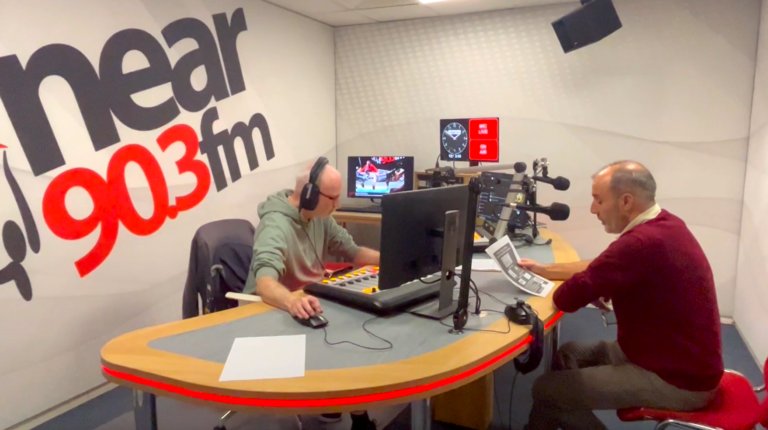
Near FM has officially launched a professional podcasting service for groups in the community sector. It has been providing the service since 2016 and has won awards, but is only now getting around to publicising it.

Many more community groups might take an interest in podcasting knowing that someone else is looking after the technical aspects, knowing that basic training is available and that the price is right.

That is what Near FM are offering and Changing Ireland is trying it out; we have engaged them on the technical side to help put out podcast interviews we conduct ourselves.

“We promise better then commercial rates,” said station manager Ciaran Murray.

“Ideally, people talk to us before they begin recording. If an organisation is clear on what it wants, we can have podcasts ready in a few weeks.

“Our studios are in Dublin however we might be able to arrange a more local recording, using our network of community radio stations around the country,” he said.

To date Near FM has worked with local and national organisations including The Wheel, The Irish Foster Care Association, the Prevention and Early Intervention Network, Tallaght Drugs and Alcohol Taskforce, Aoibhneas and AONTAS.

They produce an ongoing series of podcasts titled ‘Stories From Foster Care’ with The Irish Foster Care Association.

“People who have been through fostering tell their story,” said Ciaran. “They reflect on that time they were in foster care, and how important it was for them, and how the experience was for them.”

“All podcasts are hosted on Nearcast and populated on all major podcast platforms including Spotify and Apple,” said Ciaran.

For instance, Sadie Harpur, author of The Hidden World of a Foster-Girl, told about her experience undergoing multiple moves in care, her relationships with her twin sister Kizzy and her birth- and foster-families, and who brought stability to her life.

You can listen to it here: https://nearcast.ie/stories-from-foster-care-sadie-harpur/

This particular podcast won the station Gold for Best Podcast at last year’s Craol Community Radio Awards.

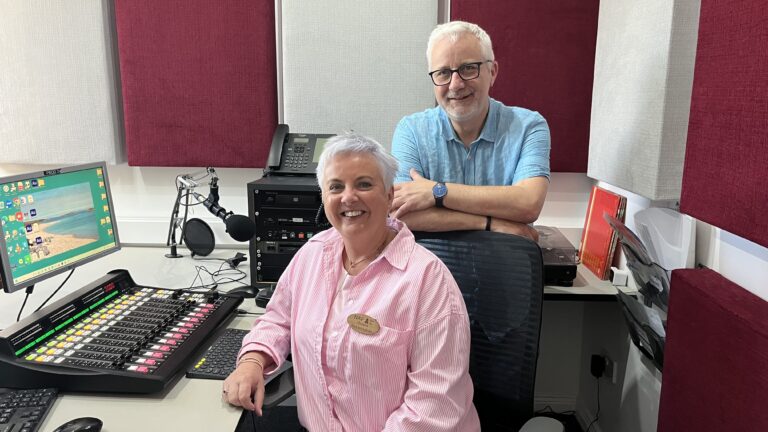
To find out more, contact Ciaran or Paul at Near FM.

E: ciaran@near.ie, paul@near.ie
T: 01-8671190.
W: https://nearcast.ie/

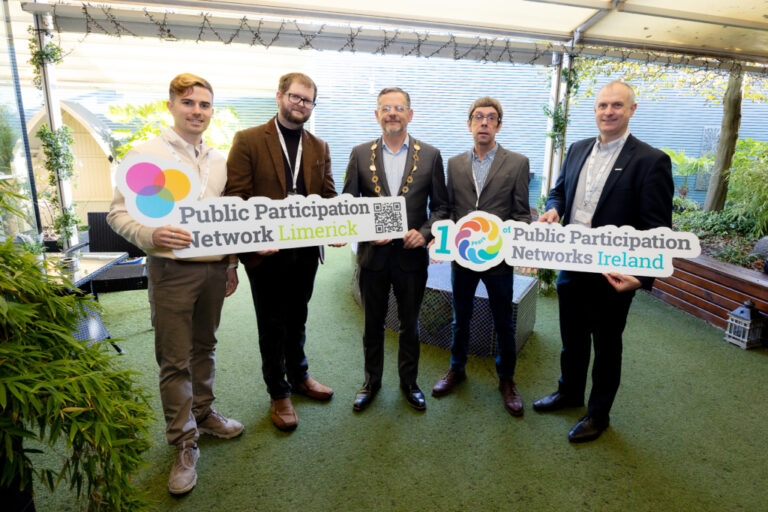
200 gather to celebrate 10th year of Public Participation Networks

In the future, he wanted to see PPN representatives have a more meaningful role on strategic policy committees of local authorities.

Almost 21,000 community groups are members of PPNs across the country and membership is open to all volunteer-led and not-for-profit groups.

• Attendees from Co. Leitrim at the Public Participation Network conference held in Limerick in October (l-to-r): Mary McGirl, Leitrim PPN; Bernie Donoghue, Leitrim Development Company (LDC); Mary Quinn, Leitrim County Council (LCC); Paddy Beirne, LDC; Cllr Paddy O’Rourke, chair, LCC; Mary McKeon and Patrick Mc Greevy, both from Leitrim PPN; Suzanne Duffy and Elaine McKeon, both from LCC; and Michael Bruen, LDC.

Addressing 200 attendees via a pre-recorded video message, Minister of State with responsibility for Community Development, Charities and Integration, Joe O’Brien, sent a message of support and encouragement to all. He also spoke about increased funding for PPNs he secured in Budget 2025:

“From January each PPN will receive just over €100,000 in core funding from my Department, more than double the original allocation of €50,000 each in 2015 and an increase of almost 20% on 2024.”

Opening the conference, Bairbre NicAongusa, Assistant Secretary General at the Department of Rural and Community Development, spoke about the enormous contribution PPNs have made.

She said, “Collaboration is a core characteristic of PPNs, a value that is particularly needed in a time when bad actors would divide communities and stifle discussion. PPNs remind us that a healthy democracy thrives on robust debate and strong opinions aired in good faith with the honest intention of making things better for all.”

• Seamus O’Connor from Limerick City and County Council speaking at the 10th anniversary gathering of Public Participation Networks. Photo – Keith Wiseman.

The two-day conference was hosted by Limerick PPN, in conjunction with Limerick County Council, the Department of Rural and Community Development and the National PPN Advisory Group.

It was attended by a wide range of PPN stakeholders, including volunteer representatives from PPNs across the country, local authority officials, and elected representatives.

Aileen Eglington, Dun Laoghaire/Rathdown PPN, feels privileged to have been involved as the PPN developed:

“I’m a volunteer at heart in the community as well as a business person. I think that the direction of the PPN can only expand.”

Fiona Broadbery, Carlow PPN administrator, said, “The core benefit of joining a PPN is representation of the community on boards and committees within the local authority. We are also an information hub for all the communities, passing on information from different departments on funding available to increase capacity of the community groups.”

Patrick Fitzgerald, Limerick PPN, said, “It’s amazing to see the progress over ten years from it being a conception to being implemented and people being elected and getting to have a voice.

PPNs operate in all 31 local authority areas.

Shauna McClenaghan put on the spot by Allen Meagher

The interview took place in Connemara Community Radio studio in Letterfrack as an international group of community workers gathered outside waiting for Shauna to take them hillwalking. No pressure! Click here To watch the full interview on Changing Ireland’s YouTube channel.

What’s the last book you read?
‘Create Your Best Life’, which was written by a friend of mine in Dublin, Val Quinn. It is about people making changes in their lives; a lot of it is about retiring and stuff like that. It’s available on Amazon and donations from the book are going towards Irish Guide Dogs.

So what are you hoping to change this year in your life?
To have a better work life balance.

Outside of family name two heroes of yours.
Recently I had the privilege of being at a conference and meeting with Bernadette McAliskey and she was really empowering. Michael D Higgins is the other. I think that he hasn’t lost his touch with reality in his position and he’s made some really good points. His position around Gaza is really admirable as well.

Name one issue that was dominant 10 years ago that isn’t an issue anymore.
Early school leaving.

Can you name two or three issues in Ireland today that you think are the most serious?
Firstly housing – especially in Inishowen where we have the defective concrete block crisis. It’s absolutely huge, it’s having a significant impact across families and our community. Housing in general across the country is a massive issue and needs to be addressed immediately.

Secondly emigration – as in people leaving our county and country. I’m not concerned about them coming in, I think we need them and that diversity is only making our society a better place. Emigration of our young people out of the area is a big issue. And it’s not only young people – it’s middle-aged people as well, to support their families. You have a lot of people living in single parent families because their partners are away. So there’s different dynamics of families with that going on.

It’s very common in Inishowen and many remote parts of Ireland – we’re not as commutable as other places. We probably had one of the most sophisticated rail systems way back in the 1940s and 50s, but we’ve lost all that. We don’t have a motorway. We don’t have rail.

A third issue has been there for a long time and is still there – patriarchy. In the local elections we had three women (elected) across the whole of the council – 37 councillors in all of Donegal and only three are women.

How about in the community sector? I would imagine in the future the majority of managers and coordinators will be women.
There is a shift; I was at the ILDN (Irish Local Development Network) meeting last week in Wicklow, and it was funny to see that shift. I’ve been a manager or CEO since 2002, so I’ve been going to those meetings for a long time, and it is much more balanced now.

We did some work recently around supporting women into the trades and it was really good to see young women going into the electrical trade. It’s that thing about ‘see it to be it’.

However, in (community and voluntary) sector it’s now predominantly women that I’m seeing coming forward. Even in our workforce it’s predominantly women and that’s not good. We need to have balance.

Have you any advice for anyone starting off in Community Development?
Be true to yourself and don’t let it be about you, it has to be about your community. If it’s about you, you’re on a losing game, you can’t be egotistical in this world (of community development).

What work would you be collectively proud of in Inishowen?
Our peace and conflict work is important because we’ve always been seen as that neutral trusted space because we’re across the border. In all of our work we must realise we have a lot more similarities than we have differences.

One of the things at the moment I’m really proud of is having community facilitation around the defective concrete block crisis. It’s about building community resilience. We have an inter-agency subgroup that looks at what supports are needed within school settings. Children were drawing houses falling down. It is affecting children at that young age. Your home is supposed to be a safe place and it’s not for so many families. So (it’s about) being able to support children to have something outside of that and to bring them to a safe space. We have supported summer camps, places in summer camps with the community groups. This is all done in collaboration with local community groups.

We’ve done a resilience building programme in conjunction with the local Cooperative Society, (they) have given us funding to support
the facilitators. It’s about resilience building in schools and giving children the tools to converse about what their issues are.

You came out with the phrase“serendipity management” at the North Atlantic Conference. What does that mean?
Serendipity is when things happen spontaneously or for a reason, when the universe comes together, so it’s about joining the dots. You see opportunities in different parts of your work and you join them together. There’s so many people working in silos and it could be done a lot better if there was more collaboration.

Give us the Bord Fáilte Inishowen bit now, why should we all go to Inishowen?
It’s special. The fact that it’s a peninsula is great actually for us in our work because we’ve got a confined space, one that’s beautiful. The people are really special. It’s got a really good sense of identity, the music culture is really strong. They’re making their name in the film industry now, it’s got a lot of potential.

There are a lot of really creative people – good people and resilient people, because they’ve been living in a border area as well so they’ve seen that. People who have had to do things for themselves, because we’re so peripheral.

€7 million fund to assist thousands of community groups nationwide

The funding will consist of €6 million in capital supports essential for many small community groups and organisations, particularly those who serve disadvantaged communities in rural and urban areas.

There will be a particular focus on small capital works/improvements, and the purchase of equipment for community use. The funding may be used, but is not limited to; improved access for persons with a disability; enhancing community participation for disadvantaged and marginalised groups, and improving energy efficiency of community facilities to reduce ongoing costs.

A further €1 million in current funding is available for community groups, including Men’s Sheds and Women’s Sheds, to assist with their energy and running costs, to help them continue their important work within the community.

Minister for Rural and Community Development, Heather Humphreys said: “Although small in nature, these grants provide a lifeline to many small but vital community groups. I have been privileged to visit many of these groups over the last number of years and have seen first-hand the fantastic work they do and how important these grants are for them and the communities they serve.”

“Supporting local communities to shape their future is a key focus of the Government’s rural development policy, Our Rural Future. The funding will benefit every single county and ensure that important small-scale, ground-up projects can be delivered by local communities for local communities.”

All interested groups are being encouraged to get in touch with their Local Community Development Committee (LCDC) that administers the fund in their area. 

Funding allocation for each local authority area:

LCDC Capital Allocation Current Allocation Total Allocation
Carlow €133,777 €22,296 €156,073
Cavan €140,713 €23,452 €164,165
Clare €155,195 €25,866 €181,061
Cork City €244,189 €40,698 €284,887
Cork County €237,971 €39,662 €277,633
Donegal €260,113 €43,352 €303,465
Dublin City €562,929 €93,821 €656,750
Dun Laoghaire €174,791 €29,132 €203,922
Fingal €230,423 €38,404 €268,827
Galway City €121,447 €20,241 €141,688
Galway County €183,086 €30,514 €213,601
Kerry €180,863 €30,144 €211,007
Kildare €209,431 €34,905 €244,336
Kilkenny €146,159 €24,360 €170,519
Laois €149,094 €24,849 €173,943
Leitrim €102,037 €17,006 €119,043
Limerick €238,838 €39,806 €278,644
Longford €130,995 €21,832 €152,827
Louth €205,035 €34,172 €239,207
Mayo €186,636 €31,106 €217,742
Meath €190,745 €31,791 €222,536
Monaghan €127,082 €21,180 €148,263
Offaly €159,903 €26,650 €186,553
Roscommon €131,854 €21,976 €153,830
Sligo €123,765 €20,628 €144,393
South Dublin €343,032 €57,172 €400,204
Tipperary €206,558 €34,426 €240,984
Waterford €187,960 €31,327 €219,286
Westmeath €147,718 €24,620 €172,338
Wexford €217,051 €36,175 €253,227
Wicklow €170,609 €28,435 €199,044