In the weeks leading up to Budget 2025, reports on child poverty and disadvantage made for sobering reading.
The Economic and Social Research Institute (ESRI) revealed in September that some 200,000 children in Ireland are experiencing material deprivation.
ESRI research found that 20% of individuals lived in households unable to afford two or more items or activities from a list of ten essentials deemed to be necessary for an acceptable standard of living.
This is an increase of three per cent from 202 figures.
The list includes: two pairs of strong shoes, a warm waterproof coat, new (not second-hand) clothes, the replacement of worn out furniture, and a meal with meat, chicken, fish (or vegetarian equivalent) every second day; or a roast dinner or its equivalent once a week.
The ESRI research, conducted in partnership with Community Foundation Ireland, also found that those experiencing low income or material deprivation are less engaged in civic participation.
Just days later, a report released by Pobal revealed that people living in areas of deprivation are four and a half times more likely to report poor health or disability.
The research also found that children growing up in extremely disadvantaged areas reported disability rates which are only observed among people nearing retirement age in affluent areas (approximately 7%).
According to Pobal, people living in the most disadvantaged areas in Ireland are also twice as likely to report having a disability compared to those in affluent areas.
RISE IN REFERRALS
A week previously, speaking at an event in UCC during End Child Poverty Week, Tanya Ward, CEO of the Children’s Rights Alliance, said the situation facing vulnerable children, including those in emergency accommodation, was dire.
Her organisation speaks for over 150 groups working to make Ireland one of the best places in the world to be a child.
– Children’s Rights Alliance CEO Tanya Ward
She said “the system cannot stretch any further” and that the number of people employed by the State to provide help is “worn thin”.
“We are starting to see a serious lack of foster carers, social workers and experienced and specialised care workers, along with a scarcity of appropriate residential and special care placements,” Ms Ward revealed.
Meanwhile, there were 55,102 referrals of children in need of support between January and July of this year, which is more than before.
“This increase in referrals is due to the persistence of poverty – homelessness, youth crime and violence, acute mental health and psychological needs. Without urgent action to respond to this, the State will fail in its statutory and moral responsibility to provide a safety net for these children,” she added.
Ms Ward called for various measures including €53 million in additional funding for frontline core child protection and welfare services.
Her concerns were summarised in a question she put to all concerned: “How, in 2024, are young children still starving in such a rich country?”
At the same event, Clare Murphy from Tusla, the Child and Family Agency, also addressed the need for more funding: “Research tells us that children living in poverty are at a higher risk of abuse and neglect. Financial stress can also exacerbate parental mental health issues, substance misuse, and domestic abuse. We know that these adverse childhood experiences often have a significant and lasting effect on a child’s life.”
GOVERNMENT RESPONSE
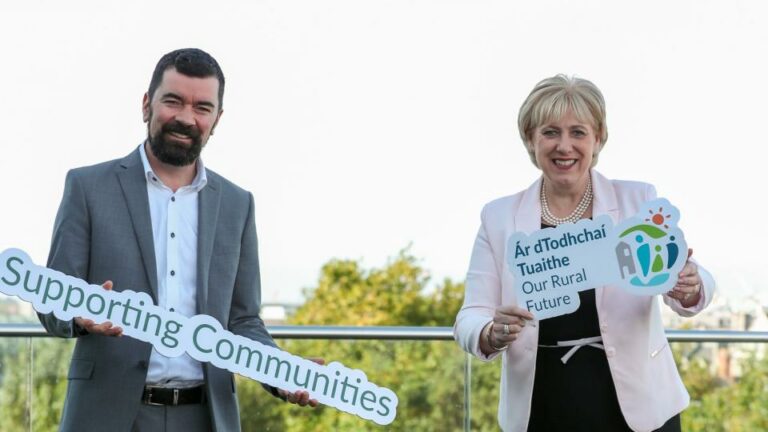
Minister of State for Rural and Community Development, Joe O’Brien, attended a pre-budget briefing by Children’s Rights Alliance and the Community Foundation of Ireland.
He said: ” It behoves us all as politicians to continue to push to eliminate child poverty”. In advance of budget day, Taoiseach Simon Harris said the Government must take “further action in relation to supporting children and supporting families”.
He pledged that a cost of-living package and “targeted measures” would be announced as part of the budget and would be introduced between then and the end of this year.
IMAGINE POVERTY GONE BY 2030
Changing Ireland attended the launch on September 18 of a report entitled ‘What Would it Take to Eliminate Consistent Poverty by 2030?’
Published by the Community Platform, it provides insights into the causes and reasons for consistent poverty, the groups most commonly affected, and what can be done to end consistent poverty.
Read our news report from the launch at: www.changingireland.ie
The ‘Achieve Together’ Social Innovation Coaching and Mentoring Programme offers bespoke mentoring and coaching services to existing Community Services Programme organisations.
The aim of the initiative is to facilitate, support, encourage and inspire organisations to attain their social innovation goals and to assist them to provide an enhanced service to local communities.
More than €4 million in funding is to be provided over the 12-month lifetime of the programme, with up to 225 organisations to benefit.
The €4 million will be allocated as co-funding between the Government of Ireland and the European Union under the Employment, Inclusion, Skills, and Training Programme (EIST), which is Ireland’s European Social Fund Plus (ESF+) programme for 2021-2027.
Minister of State for Community Development, Integration and Charities, Joe O’Brien said the programme “will help our CSP-supported organisations to grow and provide more services, enhance their employment opportunities – particularly for under-represented groups – and encourage further active participation, in our communities”.
He added: “Many CSP supported organisations may also wish to invest further in products or services, expand their operations to address local challenges, deliver new services to address identified needs and reduce and minimise their environmental impact. This programme will help provide the organisations with the tools to achieve these important objectives for the continued benefit of communities across the country.”
Following the tendering process for the ‘Achieve Together’ Coaching and Mentoring programme, which was launched in July, panels of both Mentors and Coaches have been established.
The programme’s goal is to include 25 small and medium-sized businesses in its initial year, followed by 50 organisations in the following years (2025–2028), reaching a total of 225 organisations over the course of five years.
As part of their role in supporting the Department of Rural and Community Development in the implementation of the ‘Achieve Together’ Social Innovation Coaching and Mentoring Programme, Pobal CEO, Anna Shakespeare said:
“Pobal is delighted to continue to work with the Department of Rural and Community Development on this ESF+ ‘Achieve Together Social Innovation Coaching and Mentoring Programme’. It builds upon the Department of Rural and Community Development supported Community Services Programme through the provision of tailored social innovation supports and developmental measures.
“It represents an innovative and exciting opportunity for Government and the ESF+, as well as ourselves in Pobal, to support the advancement of social innovation in our community settings.”
There are currently 430 CSP-funded organisations throughout the country, with approximately 50% of those expected to be selected to take part in the ESF+ ‘Achieve Together’ programme.
He expressed doubt that the funding would allow for “any meaningful development to be made in rural areas and to ensure the sustainability of the community and voluntary sector”.
However, a statement released by Minister for Rural and Community Development, Heather Humphreys TD, and Minister of State, Joe O’Brien said the allocation “will breathe new life into towns and villages and support the development of rural and urban communities throughout the country”.
According to the Department, €212 million will fund rural development schemes such as Town and Village Renewal, CLÁR, LEADER, and the Rural Regeneration & Development Fund.
The remaining €260 million will be dispersed among community development schemes in both rural and urban areas, “with €22 million now available for the Community Centre Investment Fund and €25 million for the Community Recognition Fund”.
Figures released by the Department of Rural and Community Development also highlight an increased allocation for the Community Services Programme “bringing funding to €55.4 million”.
“Additional funding will be provided for the Local Improvement Scheme, the Town and Village Renewal Scheme and CLÁR, bringing their funding levels to €15 million, €20 million, and €11 million respectively in 2025.
“Funding increases for the Department’s work in relation to islands are also included, with total funding increasing to €16 million, covering capital investment and the provision of transport services to our offshore islands,” said a statement from the Department.
It continued: “€260 million is available for the Department’s Community Development Programmes, including the work of the Charities Regulatory Authority. The two main schemes in this area, the Social Inclusion and Community Activation Programme (SICAP), and the Community Services Programme, will have combined core funding of over €100 million for 2025. This funding will support the ongoing promotion of social inclusion measures and the provision of vital community services throughout the country.”
The allocation for Community Development also provides funding of €22 million under the Community Centre Investment Fund– an increase of €1 million in 2025 – to support the upgrade, renovation and refurbishment of community centres across the country.
The Department’s allocation includes an additional €3.4 million for dog control work, including €1.4 million to promote responsible dog ownership, and once off capital of €2 million in 2025 to improve dog control infrastructure.
Budget 2025 also provides €13 million to assist with the community response to the Ukraine crisis, for work to be completed under SICAP, the recently-launched Community Connection Project and through volunteering supports.
“This will help to assist and integrate arrivals from Ukraine and other countries into local communities throughout the country. Separately, there is €25 million for projects approved under the Community Recognition Fund, which is a €100 million fund developed in recognition of the contribution being made by communities in welcoming and hosting significant numbers of arrivals from Ukraine and other countries,” added the statement.
Minister Humphreys commented:“The level of funding secured as part of the Budget really does demonstrate Government’s ongoing commitment to building strong, vibrant and sustainable communities throughout Rural Ireland.”
Minister O’Brien added that Budget 2025 “further builds on my commitment to supporting social inclusion, community development, and the community and voluntary sector”.
“Increased funding for the Community Services Programme in particular, bringing funding to €55.4 million, will help to assist social enterprises that provide valuable services in our communities.
“I am also pleased to announce I have secured an additional €1 million euro for a further expansion of the Empowering Communities Project, which will see more community workers being deployed in some of the most disadvantaged communities across the country,” he said.
Irish Rural Link (IRL) welcomed some of the announcements made in relation to social protection, but pointed out that they “will not be enough for low-income rural households to meet the continued cost of living challenges”.
IRL also expressed concern about the amount of funding available to the Department of Rural and Community Development.
CEO Seamus Boland said: “The allocation of €472m to this Department pales in comparison to the amount of money available in the Budget, but also for any meaningful development to be made in rural areas and to ensure the sustainability of the community and voluntary sector.
– Irish Rural Link CEO Seamus Boland
“The C&V sector has continued to struggle, not just from the current cost of living crisis, but from the recession nearly 15 years ago. This sector delivers many essential services to people in rural areas and continues to be less funded to do this.”
In its pre-Budget statement, the Irish Local Development Network (ILDN) had called on the Government to invest in communities.
The organisation warned that all political parties must take seriously the “growing perception of a political system that does not give meaningful voice to local communities”.
“We encourage Government to use Budget 2025 as an opportunity to advance its vision for Ireland through the lens of community and community development, and to use this Budget to prove to communities that they do not need to break from mainstream politics in order to feel valued, trusted, and heard.”
The ILDN also called on the Government to increase the SICAP budgetary allocation to €7.4 million, however, the Budget provided an increase of €2.5 million to SICAP “and similar type supports.
2024 marks the final year of Ireland’s five-year Strategy for the Community and Voluntary Sector.
The ILDN said that the “ongoing lack of Government follow-through on key actions – even on the commitment to undertake formal review of the Strategy” had left the sector “in a deeply precarious position”.
The National Youth Council of Ireland (NYCI) slammed the Budget as a “bonanza budget for many” that “fails to deliver for young people and youth work”.
The organisation was critical of the shortfall of funding for the youth work sector, and insufficient long-term solutions for transport and education.
Mary Cunningham, CEO of the NYCI said: “While Budget 2025 includes an overall allocation of €8.3 billion to the Department of Children, Equality, Disability, Integration, and Youth (DCEDIY), the funding for youth work services is disappointing and falls short of what is critically needed to support Ireland’s growing youth population. The confirmed €7 million for the expansion of youth work services is less than half what young people and the sector had advocated for.”
Tanya Ward, chief executive of the Children’s Rights Alliance said the Budget measures focusing on children and families are “the furthest this Government has gone in increasing income supports specifically for children and young people experiencing poverty”.
However, she warned that any increases “still remain below what we want to see to ensure a decent standard of living for these children”.
– Tanya Ward, CEO, Children’s Rights Alliance
She also pointed out that a commitment to end child poverty must include urgent action to lift children and young people in direct provision out of poverty.
Ms Ward welcomed the €1.4 billion investment in the early years sector, as well as the extension of the Free School Book Scheme and the Hot School Meals Programme.
The issue of ‘Holiday Hunger’ was also addressed with the announcement of €1.3 million funding for a pilot scheme to provide children experiencing food poverty with free hot meals outside the school term.
Minister of State with responsibility for Community Development, Integration, and Charities Joe O’Brien commented: “Food poverty is an issue I have prioritised during my term in Government. It has become increasingly clear that the Hot School Meals Programme is hugely successful but holiday hunger is a problem. That’s why I am delighted today to announce funding for pilot projects to work to address the issue of holiday hunger.”
– Minister of State Joe O’Brien
“The fear and anxiety of how to fill weeks with food consumes hundreds of families. Today, we not only see an acknowledgement that holiday hunger is a real and pressing issue, but we also see funding of €1.3 million behind a solution that supports the existing organisations and community groups who have been bridging that gap,” commented Ms Ward.
Dóchas, the Irish network for international development and humanitarian organisations, was disappointed at the lack of additional funding for development and humanitarian assistance, calling it “a missed opportunity to support those who are furthest behind”.
In their pre-budget submission, Dóchas had sought an increase of €292 million, which would bring Ireland up to 0.37% of our 0.7% target of spending for overseas aid.
Irish Aid, the Government’s Official Development Assistance (ODA) programme, was allocated an additional €35 million in Budget 2025, bringing its total budget to €810 million (4.5% increase)
John McGeady, CEO, Social Justice Ireland (SJI) stated that Budget 2025 “has condemned Ireland’s more vulnerable households to prolonged hardship”, saying that the measures introduced over the past two Budgets have widened income gaps.
Susanne Rogers, SJI research and policy analyst, suggested that “sustained income adequacy should have been a key focus of Budget 2025” rather than the temporary one-off payments introduced.
She added: “Beneath the cost-of-living pressures is an ongoing crisis of poverty. This longstanding problem requires sustained support for income adequacy, and appropriate increases in core social welfare rates, something the swathe of once-off lump sum payments fails to really tackle.”
SJI had called for a €25 increase in core social welfare rates, substantially higher than the €12 increase announced.
A statement from the organisation added: “There’s no attempt whatsoever to reduce poverty in line with the Government’s own targets in the Roadmap for Social Inclusion 2021-2025.”
According to SJI, Budget 2025 also contained “limited measures to tackle energy poverty and long-term energy costs”.
Labelling Budget 2025 as “fiscally irresponsible”, the Irish Congress of Trade Unions (ICTU) said: “We are using potentially transitory corporation tax receipts to fuel a pre-election giveaway.
“Government could have provided the €700 million needed for a second tier of child benefit to protect the most vulnerable children and lift tens of thousands of children out of poverty. Instead, it disgracefully chose to prioritise the wealthiest and most powerful with cuts to inheritance tax. These are real choices that have real consequences and show a disregard for social cohesion and intergenerational equity.”
ALONE, the charity which enables older people to age at home, says that while increases to the State pension are welcome, the Budget has not gone far enough in supporting older people, particularly those who are living alone.
ALONE CEO Seán Moynihan commented: “Given the rapidly changing age-profile of our citizens – with a million of our people over 60 today, a figure set to increase dramatically in the years ahead – one-off payments and modest rate increases are not an adequate response to the changing face of Irish society.
However, ALONE welcomed additional funding for housing adaptation grants, which the organisation said was “overdue”: “We were pleased to see the review of housing adaptation grants finally published last week, and hope demand for these grants can finally be met,” Mr Moynihan added.
The Disability Federation of Ireland (DFI) said that the budget missed an opportunity to address structural issues to progress disability, equality and inclusion.
Budget 2025 announced €336 million funding for disability services, however, DFI CEO Elaine Teague said that this is not enough to address the issues experienced by disabled people from the shortfall in services.
She noted: “We look forward to getting more clarity on how the €366m is allocated.”
Ms Teague added that disabled people have been calling for a recurring Cost of Disability payment for decades and they are still not being heard.
“While we are not disregarding the €400 one-off payment, the cost of disability is ongoing. Disability is not a one-off, and it can’t be tackled with unpredictable one-off payments.”
Friends of the Earth expressed frustration that the Budget failed to include “enough innovative measures to make the climate transition more inclusive and fairer”.
The environmental campaigning organisation did welcome incremental increases in climate investment but lamented the “massive missed opportunity of sinking €500 million into untargeted universal energy credits”.
Under the initiative, some 203 community groups will receive grants ranging from €1,500 to €35,000 for the development and upgrade of their local trails.
Funding is also being provided under the scheme to support groups to promote their trails as tourist attractions.
Among the community groups being approved funding today are:
Co. Cork : Sheep’s Head Way Limited
Co. Kerry: Dingle Way Committee
Co. Mayo: North Mayo Heritage Committee
Co. Offaly: Moneygall Development Association
Co. Tipperary: Tipperary Trails Group
Co. Wexford: Kiltealy Walking Trails
Co. Wicklow: Glenmalure PURE Mile Group and Glens of Lead Group
Minister for Rural and Community Development, Heather Humphreys said: “Our walkways and outdoor trails really do showcase all that is good about our rural towns and villages.
“I know we are coming into winter and the evenings are getting darker – but getting out for some fresh air, to clear the head, is so important.
“I want to finally thank all the community groups and Trail Management Organisations that keep our trails in good condition. You do wonderful work and I’m delighted to support you.”
Grant funding is being made available to Community Trail Management Organisations that are listed on the Sport Ireland Trails Register only.
There are different levels of grant funding available based on the total network length of the trails managed by each Community Trail Management Organisation as listed on the Sport Ireland Trails Register.
The list of Community Trail Management Organisations that are eligible to apply for grant funding and grant funding available to each can be found at the following link: Funding for each Trail Management Organisation
A variety of events will take place in libraries nationwide including virtual reality sessions, knitting groups, storytimes, LEGO classes and wellbeing workshops.
The events are underpinned by a national campaign entitled ‘Take a Closer Look’.
The usage of public libraries continues to grow with 14.5 million traditional print and audio visual items being loaned in 2023 – an increase of 18% from 2022. There were also almost 1.6 million eAudiobooks and over 930,000 eBooks loaned in 2023 – an increase of 20% from 2022.
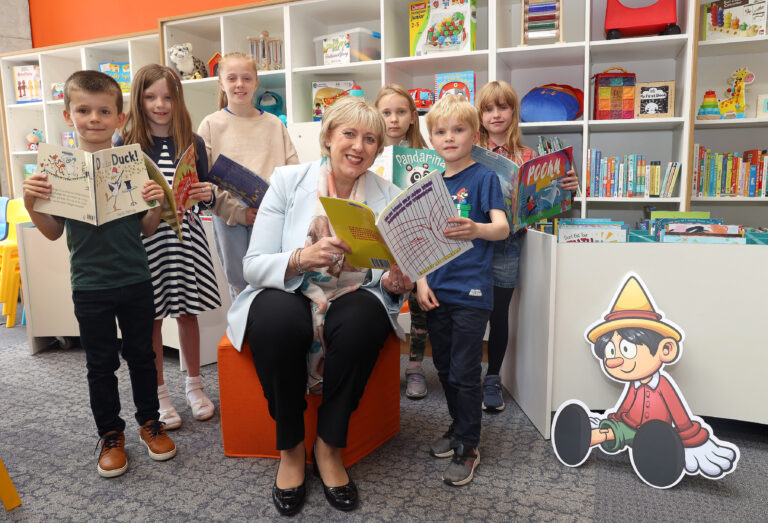
Minister for Rural and Community Development, Heather Humphreys TD is encouraging people to check with their local library branch to find out what Open Day events are taking place.
She said: “National Public Libraries Open Day is a unique opportunity for us to promote library services and celebrate their role in Irish life. Ireland’s public libraries have a proud history in the heart of our communities, supporting people of all ages, abilities and backgrounds.
“Our libraries bring people together. They help people to go on literary and recreational journeys, to use their imagination and unwind.
“Finally, I want to acknowledge the outstanding work of our library staff who have again exceeded expectations by scheduling a diverse range of events for people to enjoy on the day.”
There are 330 library branches and 31 mobile libraries in Ireland. All core library services are provided free of charge. There are no membership fees and no fines for late returns.
Nearly 800,000 people are registered as library members and more than 12 million items are available to borrow across the service.
Anna Marie Delaney, chair of the National Libraries Development Committee said: “Our libraries are for everyone and they offer a broad range of diverse services, both in-house and remote, that support people to connect, to access information, to browse and escape, to receive support and to engage with their community.
“They encourage reading at all levels, improve digital skills and literacy, enable formal and informal learning, support the provision of information and guidance on many topics, and ensure that people have a place in the community to meet and come together.”
This campaign has been supported by funding of €150,000 which has been allocated from the Dormant Accounts Fund through the Department of Rural and Community Development.
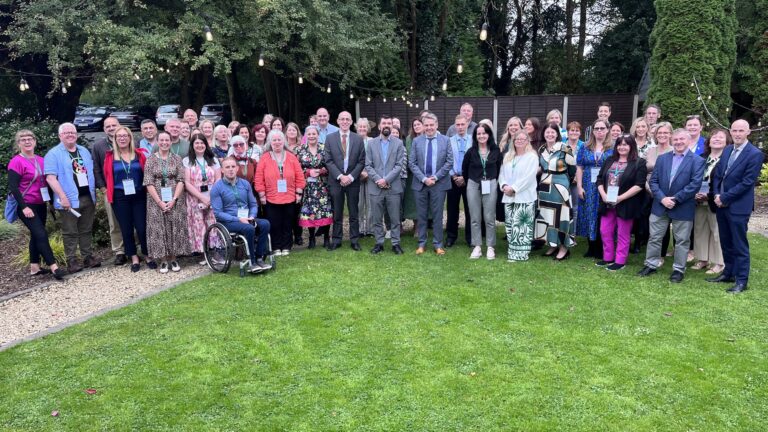
More than 100 project workers, and members of local community development committees (LCDCs) and local development companies gathered to learn about the work being undertaken through both the ECP and the CDP by marginalised communities.
The event provided an opportunity to highlight the importance of sharing ideas and working together to find solutions that address social exclusion and poverty. The programmes have given a voice to communities, such as through Traveller-led projects in Clare, Kilkenny and Limerick. It has returned pride to estates in Athy and Coolock where locals are taking over responsibility for the upkeep of their areas.
• Kilkenny Traveller CDP have held many events within the community. Our thanks to KTCDP for the many spectacular photos showcasing their work.
While some groups have embarked on strategic planning for the years ahead, funding has been on an annual basis and they are considered pilot projects. To pull them now however would greatly undermine local trust. There was encouragement however for all present when officials rounded off the day by saying the projects had more than proven they were delivering value for money.
• ABOVE AND BELOW – Minister of State Joe O’Brien launching the CDP programme in 2021 in Longford. Photos by A. Meagher.
Minister of State for Community Development, Integration and Charities, Joe O’Brien spoke at the event and in a follow-up press release from the Department of Rural and Community Development he said: “The collaborative effort will help continue to drive the positive changes these programmes are delivering for individuals and communities across Ireland.
• Yvonne Quilligan, Cork City Partnership, speaking at the Showcase about the Empowering Communities Programme’s impact in Knocknaheeny, Cork. Photo by A. Meagher.
“The value of having so many stakeholders in the room truly cannot be understated, as we engage and work together and support communities.
“True community development must always be about allowing communities to decide what is best for them, and both these programmes will ensure the voices of the people are central to decision-making.”
The Empowering Communities Programme (ECP) aims to enhance community access to key services, and empower local communities to craft their own response to area-based poverty, social exclusion and the resulting consequences, with the support of the relevant LCDC.
The CDP aims to trial community-led interventions that address poverty, social exclusion and inequality and promote human rights.
The programme was launched in March 2021 with seven projects, and it is expected that it will continue for three years. It has since been expanded to include a further three projects.
• Angel Marroquin, community worker, Cultúr Migrants Centre, Brian Hora, Meath County Council, Karen Hughes, ECP worker with Dublin City Community Co-op and Sarah McManus, ECP worker with DNWAP. Photo by A. Meagher.
We’ve had Men’s Sheds and Women’s Sheds and now the first Queer Shed is up and running – in rural West Clare.
Queer Sheds is a new initiative aiming to address the social isolation experienced by LGBT+ people in people in rural Ireland. Inspired by Men’s Sheds, which have had a huge impact in tackling isolation, a social enterprise called Common Knowledge has initiated a six- month pilot queer shed in Kilfenora, Co Clare.
With the support of Clare County Council, Clare’s Queer Shed aims to raise visibility, build a queer community and measure the need for this kind of space.
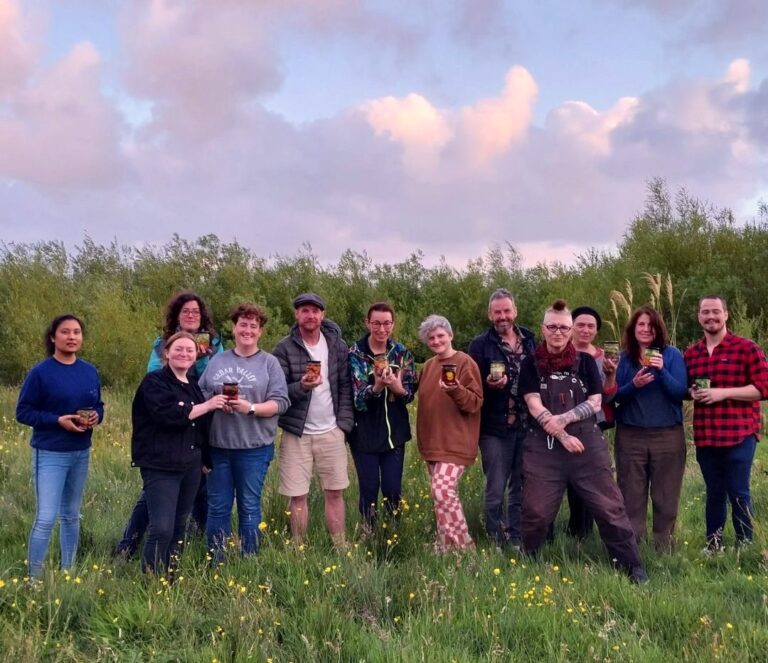
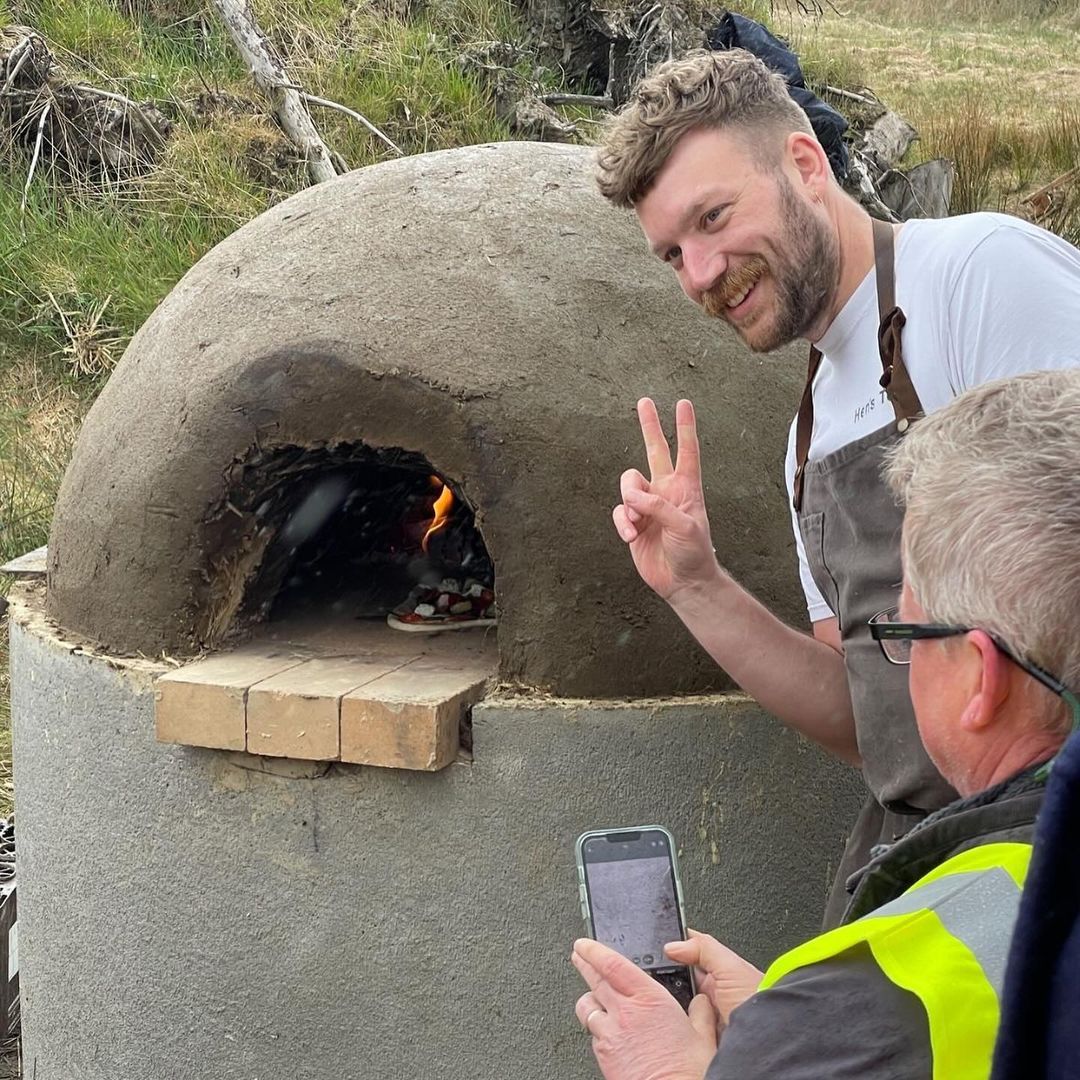
• Clare’s Queer Shed members now know how to build a clay pizza oven
In Kilfenora, members have access to land, facilities and tools. “We are a diverse group with representation from across the LGBTQ+ spectrum and are currently meeting at least once per month,” it says.
The shed held its first skill share session in June when shed members learned how to build a clay oven for cooking pizza.
In July it held a three-day festival called ‘Faoin Tuath’ featuring live music, DJs, talks, performances and skill-sharing workshops.
There are over 400 Men’s Sheds in the country. The idea originated in Australia and has been very successful in Ireland. It has inspired the opening of a number of women’s sheds around the country.
If you are interested in joining Clare’s Queer Shed, or having a Queer Shed in your area, visit: https://www.queersheds.org/
Vehicles will also be provided to support community first responders and search and rescue services.
The funding, announced today, is being allocated under the 2024 CLÁR programme.
It represents the highest number of vehicles ever funded through the programme, bringing the number delivered under this measure to over 200 since it was introduced in 2018.
Some of the projects being supported include:
Dunmanway Family Resource Centre in Cork – €52,000 for a modified mobility vehicle
Acquired Brain Injury Ireland, Co Kerry – €59,880 for a vehicle to transport brain injury survivors
Order of Malta, Kilkenny – €72,000 for the purchase of an ambulance
Offaly Healthy Homes – €33,750 for a vehicle to support their meals on wheels’ service.
Minister for Rural and Community Development, Heather Humphreys said: “I am very pleased to be supporting these vital services in our most remote rural communities right across the country. Each of the recipients of funding today plays a vital role in providing essential services to those who are most in need in our communities, be it from a mobility aspect or through the provision of meals on wheels services.
“The supports provided by our First Responders and our Search and Rescue teams are of immense importance and I am delighted to be in a position to support these very worthy community groups today. We owe a great deal to these organisations and to all the individuals who volunteer with them.”
Details of all the successful projects can be found here.
The organisation says the stark statistics demonstrate the need to address health inequality gaps and ensure strong provision of health and social care services in less affluent areas.
The report, entitled ‘Disability and Deprivation – Investigating the Relationship between Health Inequalities and Geographic Disadvantage using the Pobal HP Deprivation Index’, cross referenced data from Census 2022 against the Pobal HP Deprivation Index and found a striking relationship between the levels of deprivation in an area and the rates of reported poor health and disability.
Key findings include:
People living in the most disadvantaged areas are four and a half times more likely to report not having good health than those in the most affluent areas.
People living in the most disadvantaged areas in Ireland are twice as likely to report having a disability compared to those in affluent areas.
Children growing up in extremely disadvantaged areas have reported disability rates which are only observed among people nearing retirement age in affluent areas (approximately 7%).
Alana Ryan, Pobal’s research and policy manager, who co-authored the report, said: “This research examines the relationship between geographic disadvantage and health inequalities. Findings demonstrate a direct link between how deprived an area is and the health of its population. Approximately five per cent of people living in very affluent areas report not having good health, with this figure rising to over 20 per cent for those living in very or extremely disadvantaged areas.
“A similar relationship is seen in rates of disability. On average, almost one in every three people (30%) living in very or extremely deprived areas experience a condition or disability. In the most affluent areas, this rate drops to less than half of that number, to just 14 per cent”.
The report also found urban deprived areas have a slightly higher rate of disability than rural deprived areas. Ms Ryan continued: “The relationship between disability and deprivation remains for both rural and urban areas. However, rural areas have a slightly lower disability rate than in urban areas.
“The link between deprivation and higher levels of disability is seen across every age group. However, one of the most striking findings is that the rate of disability among young people in disadvantaged areas is roughly equivalent to that of older people in affluent locations.
“While these findings are stark, they offer important insights which can inform social inclusion, public health and disability policy in Ireland. This data provides tangible evidence for enhanced health and social care services in deprived areas ranging from early intervention initiatives to targeted disability supports, which are responsive to local needs.”
Pobal CEO Anna Shakespeare commented: “Based on objective and impartial data from Census 2022, the Pobal HP Deprivation Index has demonstrated that close to 200,000 people are currently living in areas of extreme deprivation. These areas are characterised by concentrated unemployment, low educational attainment, higher rates of low-skilled work and greater numbers of single parent families.
“This new research, Pobal is launching today, has shed important light on the magnitude of the relationship between health, disability and geographic deprivation. As a social inclusion agency, Pobal knows data and evidence can play a central role in enabling us to understand the lived realities for the most marginalised groups in our society, and to tailor and target policy interventions to support those groups, ensuring their rights are respected and upheld.”
A total of 53 projects will be supported with up to €50,000 of funding provided per project.
The funding will support pre-development works for projects and support costs including detailed design, planning, procurement, professional fees, assessments and other development costs.
The planned projects include the enhancement of a town centre park in Tullow, Co. Carlow, to provide a modern play area with accessible natural paths and family-friendly areas, as well as the development of a visitor hub for Mount Errigal in Dunlewey, Co Donegal.
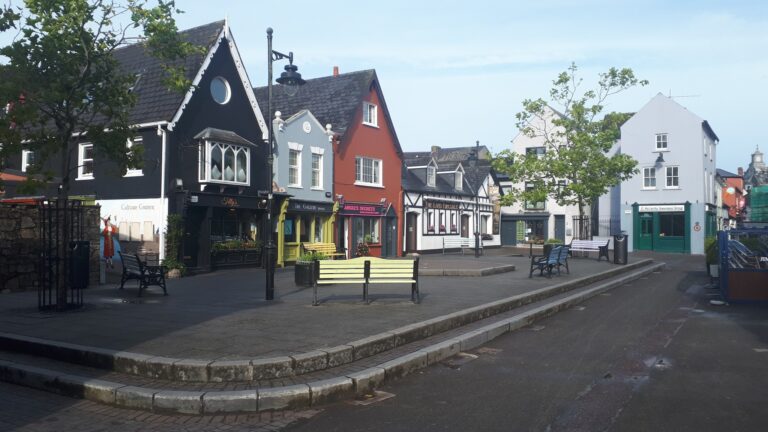
In Co Cork, pre-development planning for a new town centre plaza in Kinsale, and the development of a community hub in Ladysbridge are among the successful projects.
The funding scheme will also support the preparation of a programme of works to improve and upgrade the shopfronts on the Main Square in Abbeyfeale, Co Limerick, and works to redevelop the derelict Bridewell Building in Carrickmacross, Co Monaghan into a community hub.
Further information on Town Centre First can be found here on gov.ie.
Community groups are being encouraged to get their applications for the Community Centre Investment Fund finalised as soon as possible as the deadline approaches this week.
Minister for Rural and Community Development, Heather Humphreys, last week extended the closing date for the Community Centre Investment Fund to 3pm on Thursday September 5.
Under the Community Centres Investment Fund 2024, community organisations will be supported with grants of between €10,000 – €100,000 to develop and enhance their existing community facilities. The original closing date was August 29.
Minister Humphreys said: “While most groups now have everything in place, I know that there are still some who are finalising different aspects of their application. I’m very aware that these applications are being completed by local volunteers and committees who have lots of other demands on their time. I want to give local groups every chance to get their applications finalised and submitted.
“There is huge interest from local groups in towns, villages and parishes across the country in upgrading and refurbishing their local community centre. This one week extension will give everybody the chance to put their best foot forward and get their application submitted well ahead of the new deadline.”
There have been a number of online information events to assist potential applicants. Recordings of these events together with a range of information supports and access to the online portal can be found at the Department of Rural & Community Development website here. Groups can also submit any queries to ccif@pobal.ie.
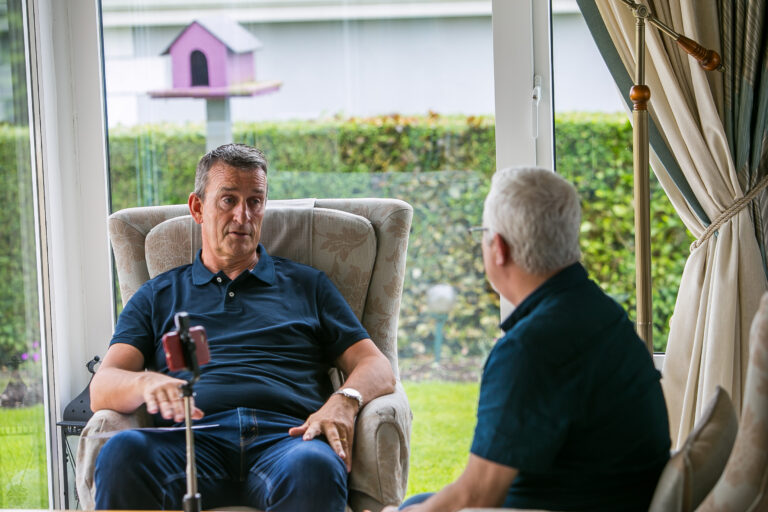
Brendan is a fan of Keith Earls, Michael D, Mary Robinson and fly-fishing. Here’s a taste of how his conversation with editor Allen Meagher went:
AM: What’s the last book you read?
BOL: I just finished Keith Earls’ autobiography. It won sports book of the year. Keith was an amazing Irish rugby player and he’s a really interesting character. He has struggled with his mental health and to achieve what he’s achieved with all of the disadvantage is impressive, but also his recognition of his disadvantage is phenomenal.
AM: How and why did you get involved? Why didn’t you become a plumber or a politician?
BOL: I sometimes thought I should have become a carpenter, because every day you’d be able to see progress. I grew up in Ballinrobe in Co Mayo and I was a student of the 70s and did my Leaving Cert in the early 80s. At that time six or seven of the 20 lads that I did my Leaving Cert with in the Christian Brothers school – their fathers worked in England. As you went further west in Mayo the number of emigrated fathers went above 50 per cent. It was a huge time of emigration and there were amazing things happening in communities at that time.
AM: Outside of family, name three people you most admire?
BOL: I did sociology in UCG and Michael D was one of my lecturers and he had a strong social conscience. As President he gets around to a lot of projects that relate to disadvantage and he can relate to them.
Mary Robinson is another hero of mine. She became the ultimate stateswoman. Her work on climate change and how it impacts the most disadvantaged is really fascinating for me and she sticks at it.
I worked in Tanzania and Julius Nyerere, known by the Swahili name Mwalimu, or ‘teacher’, because of his profession, was the president. He was a natural leader. It was a socialist country where everybody had responsibility and a role within that, very much based on equality, and he was somebody that that certainly inspired me. I had the privilege of meeting him once.
AM: How did you end up in Tanzania?
BOL: I met Bernie when I was doing my Leaving Cert. We married young and went to Tanzania 10 days later and stayed for 27 months, so we had the longest honeymoon in history. We went there to support small co-operative development.
People often ask me what was the difference between working in Africa and working in Ireland and I say only the weather and the colour of the skin; everything else was the same.
YESTERDAY’S ISSUES V TODAY
AM: Name three top social inclusion issues facing communities in Ireland today?
BOL: Drugs. Migration. And polarised societies.
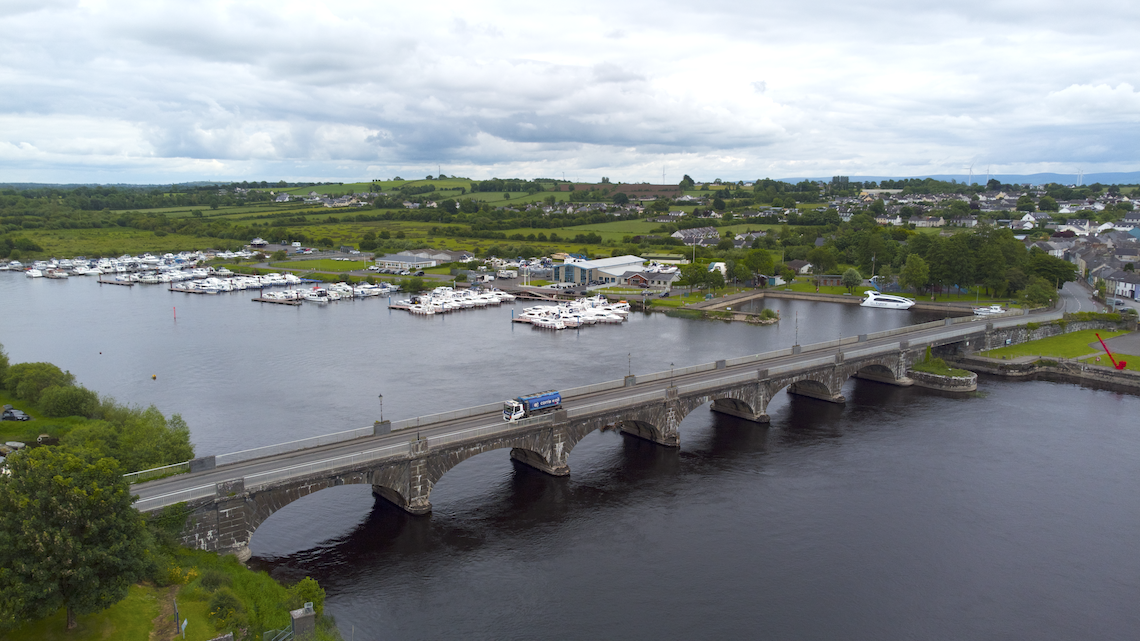
– Banagher Bridge, Co Offaly
AM: Are there any issues that have persisted since you began work to this day?
BOL: The underfunding and under-resourcing of supports to the most disadvantaged continues to be a challenge.
AM: Name any social inclusion issue that was big in the past and is far less of a concern today.
BOL: Unemployment.
AM: Briefly, what does Ireland need more and less of?
BOL: We need more resourcing for community work. Local authorities are under-resourced as well.
Nationally, we need less spin. We need less social media. We need more leadership in local communities and that needs to be supported. We’re in a very dangerous place where you’re either one thing or another. There is less space by a long shot for people with common sense.
That role that communities had in planning strategies, where they had authority in their area, where a group of people with common sense took a balanced approach – it is diminishing. Now social media has taken over. It’s a problem – something can kick off very quickly now.
AM: People in communities created something wonderful out of nearly nothing in the 1980s/90s. What was the vibe like back then?
BOL: People had a hardness and toughness. Amazing things were done in communities back then: You had the growth of the co-operative movement and producer groups and farm organisations. That’s where I first encountered the likes of Michael D and Chris Curtin and people like that who were very involved in community activity right across the western region and I was taken with that.
When I came to work in Banagher in 1990 a big factory had just closed down. Shannon Development and FAS had supported a role for exploring what the community could do about this. They bought a building in the town and turned it into a visitor centre and there are 30 or 40 people working in that building now. They raised money when there was no money. They persisted with projects. It was like that right across the country
The vibe was committed and determined and there was nothing going to stop them. I was seeing volunteers out fundraising at every hand’s turn. We hadn’t got into CSR or professional fundraising. This was local people going door-to-door and collecting phenomenal amounts of money.
AM: How long were you involved with OLDC and in development work more generally?
BOL: I worked with OLDC for 15 years and before that with West Offaly Partnership for 15 years. Before that, I worked for four years with a co-op in Banagher. I believe in social enterprise, it doesn’t necessarily have to be a co-operative. There are now other options.
AM: What is it about sharing the burden that gives a different type of satisfaction?
BOL: Communities create a vision, come up with a project and how they’re going to do it and then strive to achieve it. In OLDC we were always careful to ensure that communities that achieved what they set out to do celebrated that. Reflection and celebration is something all organisations should do. Community organisations and volunteers and people who work in the local development sector are often very hard on themselves.
AM: Would you have any motto or words of advice for somebody starting off today in development work?
BOL: Stick with it!
To watch Changing Ireland’s interview with Brendan O’Loughlin in full, click here.
The spirit is strong in a neglected area of Waterford city and the will of the people is behind new plans to transform the place. However, Waterford City and County Council are now being called on to fall in behind the community of Larchville/Lisduggan.
While it was encouraging that the local authority had representatives present for the launch on June 5 of a report titled ‘Peoples Transition – Larchville and Lisduggan’, resourcing is required.
The report was launched by the Think-tank for Action on Social Change (TASC) working in collaboration with Waterford Area Partnership and it calls for a multi-agency approach to provide services, tackle disadvantage and deliver necessary climate change initiatives.
Three key solutions are proposed: a co-ordinated approach to the improvement of facilities, an area-based retrofitting initiative, and more green space facilities to support mental health.
The areas of Lisduggan and Larchville, on the edge of Waterford city, are defined as ‘very disadvantaged’ under the Pobal Deprivation Index. Built over half a century ago, the estates have a higher-than-average concentration of people over 65, lone parents and people with disabilities.
Due to an ageing housing stock, the insulation is poor and heating costs are high in an area with above average unemployment and social need. A survey of 54 local residents carried out as part of the research where 96% identified better insulation as a prime issue for their families.
Report author Róisín Greaney, points out that the very high level of housing in local authority ownership, currently standing at 37%, means local authority input could have a major impact in addressing this issue.
PROPOSALS
The report proposes an area-based approach to tackling the problem.
Róisín said, “This would involve a multi-agency response, and could be led by the Council, to work with the communities of Larchville and Lisduggan.”
The area would benefit from a comprehensive retrofitting scheme for all houses in the area, whether in public or private ownership, including rental properties.
As Róisín pointed out, “There are templates in other jurisdictions, including an initiative by Leeds City Council, where the similarly disadvantaged suburb of Holbeck was prioritised for retrofitting.”
GREEN SPACE
As well as aging housing, the report draws attention to the lack of recreational and green spaces saying this absence contributes further to disadvantage and mental health concerns. In response, the report proposes:
– the creation of community orchards and tree planting,
– ‘repair cafes’ to encourage recycling and reuse,
– and the development of a Library of Things, where local people could borrow appliances and other occasional items of need at low cost.
The choir is no longer singing for its supper at St Mogue’s, a small and historic church in Fethard-on-Sea, Co Wexford. The local church committee fundraised to install solar panels on the roof last year and heating costs have plummeted.
St Mogue’s committee members believe it may be the first church in Ireland to install solar panels on the roof.
While bills had been crippling, the transition to solar means the church will be warmly heated throughout for community choir performances – twenty are planned for this year. The choir has financial backing from Waterford and Wexford Education and Training Board and over 50 people attended the first performance.
Concert in St Mary’s Community Hall to raise funds for heating for St Mogue’s in 2021
Martin Reading, a retired community worker, is a member of the church’s voluntary group overseeing the its renaissance. He said, “Running costs of the church had been spiraling and the community was looking for ways to alleviate the expenses, particularly the heating bills.”
Martin and the committee hope that, with time, the church will attain a standard where cultural events such as concerts and art exhibitions can be held there. They want the church space to be of use to the community.
“We want this delightful acoustic space to provide a venue for the strong artist community in the area, which would in turn provide some income to maintain the building, which is a listed heritage structure,” said Martin.
He said there was a lot of voluntary work involved in getting planning permission to install the solar panels, and then to apply for funding to help with the cost. But the cost is being repaid and electricity bills are now negligible.
“The next priority is to install toilets and facilities for making a cup of tea to turn the historic building into a real community resource,” added Martin.