Friday, July 3, 2026
Home Blog Page 8

Dublin – Government policymakers, community organisations and activists must confront reality

Steenson and Pepper won seats on Dublin City Council in last year’s local elections while Hutch came close to taking a seat in the Dáil, realities that show a greater willingness by many to vote for the far right or other figures from far outside the mainstream.

The paper warns that the emergence of such figures illustrates what could happen on a far larger scale, if long-standing, legitimate grievances continue to be neglected:
“In many ways, Dublin’s political shift is a canary in the coalmine, highlighting the dangerous consequences of neglecting poverty and exclusion, and signalling that similar trends could emerge across the country if these systemic issues remain unaddressed.
“If these trends continue unchecked, we risk further alienating already vulnerable communities, allowing discontent to fester and creating conditions where extremist narratives can take deeper root.”

It said that the rise of far-right and anti-establishment views shows that people in deprived areas feel they have been left behind, and are increasingly cynical about mainstream politics:

“These trends indicate a growing sense of frustration among marginalised communities, where economic inequality, inadequate housing, and crime have persisted for decades.

“Government departments, policymakers, community organisations and community activists must now confront the reality that distrust in state institutions is deepening, and in some cases, being exploited by divisive political movements. Are we ready for what this could mean?
“The increased polarisation of political discourse, alongside the normalisation of anti-immigration rhetoric and misinformation, threatens to undermine social cohesion, hamper community development and weaken democratic engagement,” the paper states.

“It’s OK to question immigration policies; it however is not ok for the government, public representatives or communities to scapegoat immigrants. Dublin City, where far right and anti-establishment candidates secured local elected representation for the first time and just missed out on a seat in Dáil Éireann, serves as a stark warning.”

Extremism will thrive unless issues addressed

It warned that if nothing is done to address grievances in places such as where Steenson, Pepper and Hutch drew their support, extremism is likely to thrive, but it can be headed off if the very real issues those communities face are addressed:

“If these trends continue unchecked, we risk further alienating already vulnerable communities, allowing discontent to fester and creating conditions where extremist narratives can take deeper root.

“To counteract this, the government must prioritise adequately resourcing communities, foster real community engagement, and ensure that those who feel excluded from the political process have a voice in shaping solutions that address their genuine concerns. This moment demands proactive and inclusive strategies to prevent the further erosion of Ireland’s democratic and social fabric,” it advises.

To read the full report, visit: https://bit.ly/Povertypopulism-Dublin
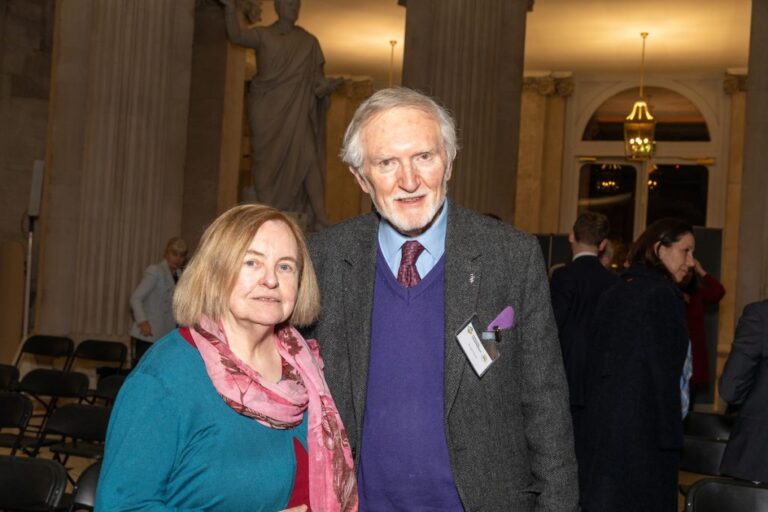
Community Law and Mediation is celebrating 50th anniversary

The Community Law and Mediation organisation, which was started in Coolock, Dublin, is celebrating its 50th anniversary this year.

The organisation was established by the Free Legal Advice Centres, better known as FLAC, in 1975, and was modelled on an American neighbourhood law centre. Initially set up as the Coolock Community Law Centre, it achieved its core aim of designing a blueprint for how a community model of civil legal aid could be rolled out nationally.

Over the five decades, it evolved from a local to a national service with physical locations in Coolock and Limerick and new areas of work in mediation, environmental justice (see opposite) and children’s law.

In Limerick alone, CLM now provides support, advice, advocacy and more to 750 people a year.

Community Law and Mediation, as it is today known, began its 50th anniversary celebrations with a human rights event in February at Dublin City Hall. It featured a public discussion of human rights issues today with Bernadette Devlin McAliskey, social justice and human rights campaigner; Michael O’Flaherty, Council of Europe Commissioner for Human Rights; climate justice lawyer Tessa Khan; and Rose Wall, outgoing CEO of Community Law & Mediation.
The discussion was a fine way to show CLM’s intent to continue to fight for fairness, justice and human rights in our communities.

To find out further CLM anniversary events later this year, visit: https://communitylawandmediation.ie/

Voices from the saddle back Moyross Youth Academy all the way

All love horses and have taken the opportunities offered to them through Moyross Youth Academy (MYA). Aoife who is still a teenager is still availing of MYA courses, support and events.

Here are some of the standout quotes from those interviews. The full interviews will appear on Changing Ireland’s website later this year.

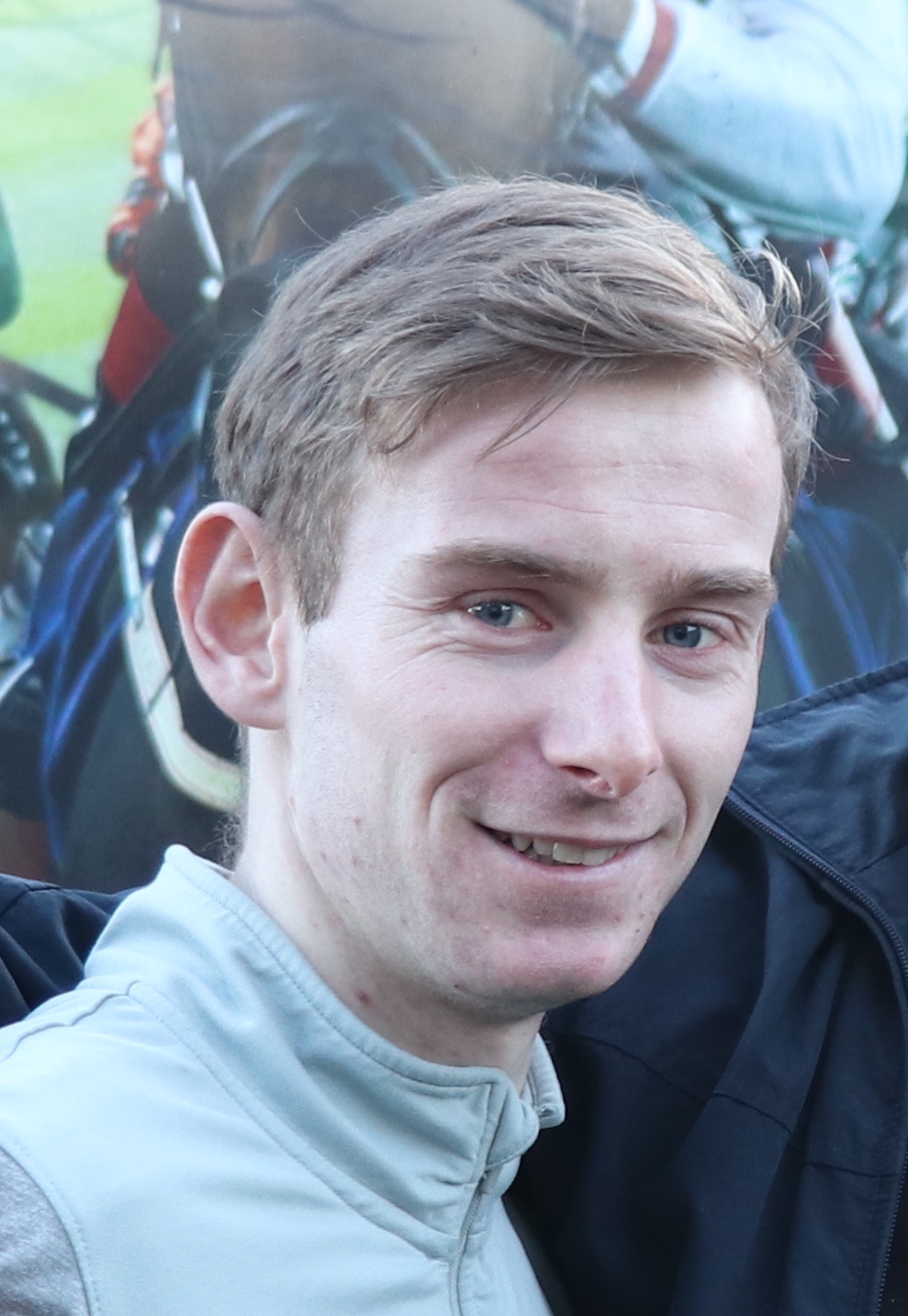
• Wesley Joyce said, ” When I was a kid, I saw people going up to RACE from Moyross Youth Academy and that gave me hope and inspired me. You can be a poor kid like me and you can make it. Anything is possible if you’re ready, if you really want it and you work hard for it. Dream, believe, achieve. Believe in yourself.” PHOTO: AM

“If you invest your money into Moyross Youth Academy, you might win it back on a jockey someday.”
– Wesley Joyce, Moyross, 55 national flat wins (and counting)

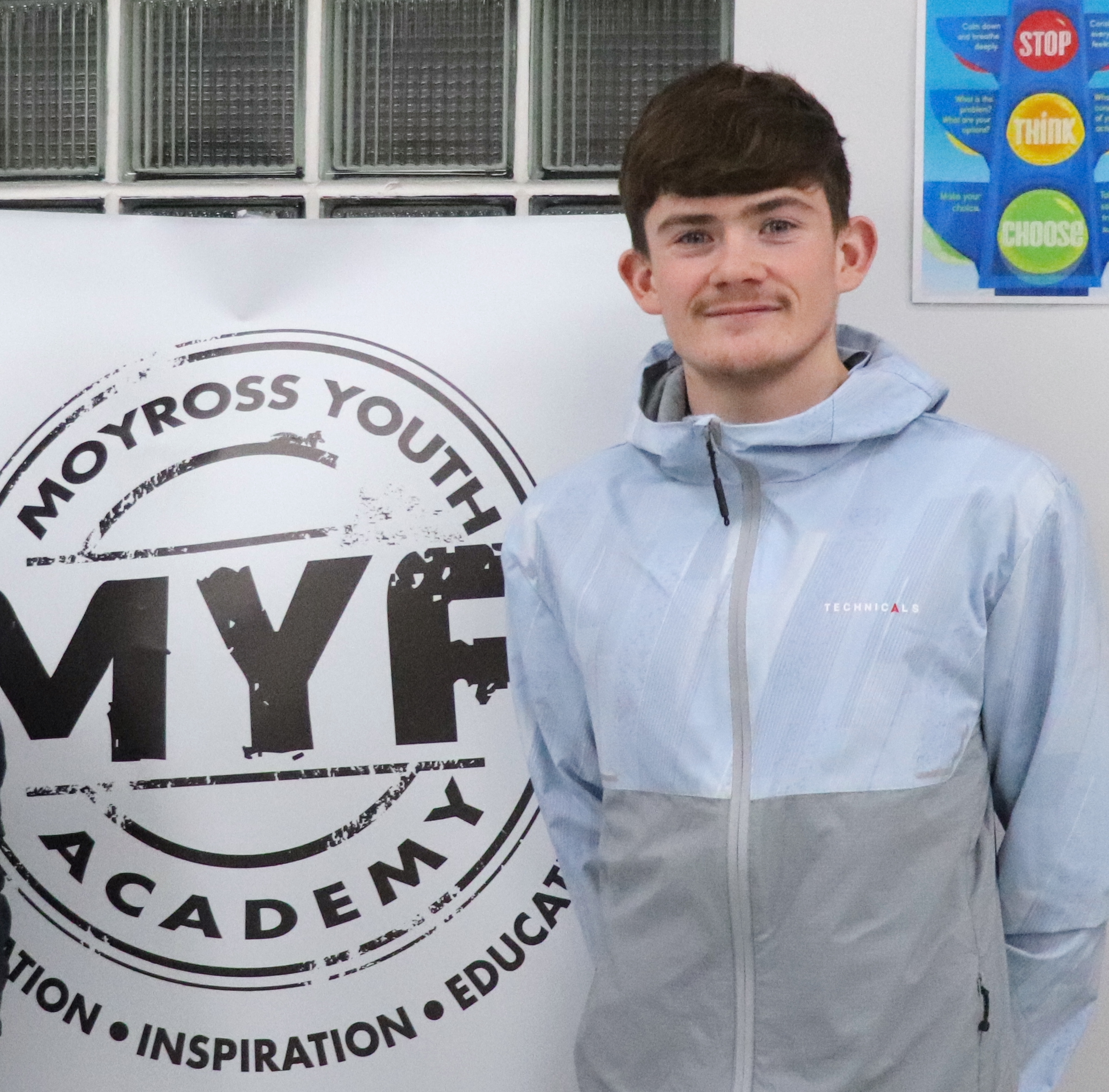
• Terry Casey on a return visit to Moyross Youth Academy. PHOTO: AM

“For me, when you’re on a horse, the speed, just getting the feel off the horse, there’s no other feeling like that. My dream was to work with horses, but without Moyross Youth Academy I definitely wouldn’t be a jockey today. They’re very supportive.”
– Terry Casey, Southill, jockey, recently recorded his first win.

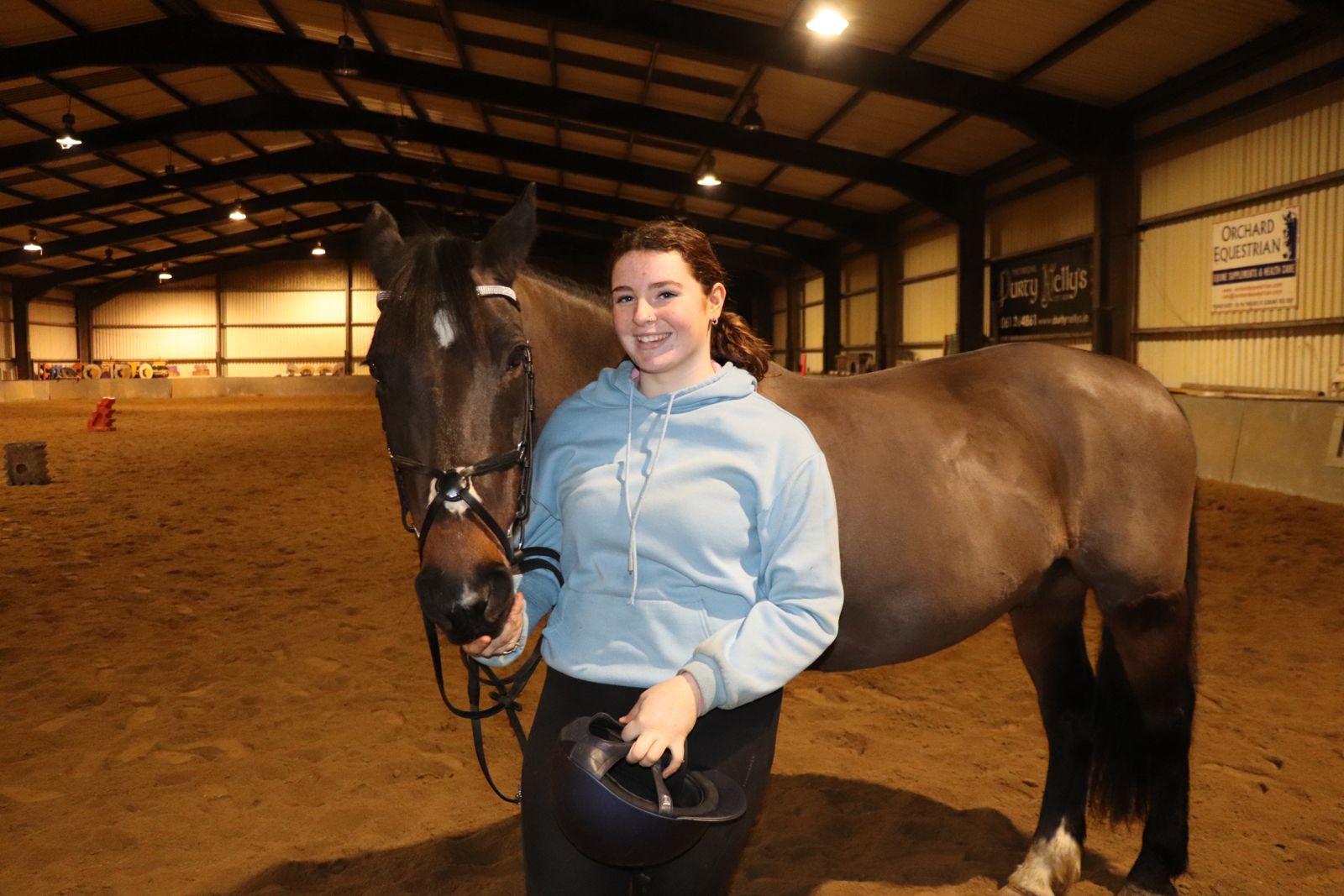
• Aoife Leonard with her horse Ace in Clonlara. PHOTO: AM

“With the Moyross Youth Academy, you know, they really help young people out. They help people not to get into trouble. As my mam says the Equine Programme was my saving grace. I know I will qualify in the future to be an instructor,”
– Aoife Leonard (14) Moyross, showjumper.

Ace jockey Cathy Gannon has advice for aspiring jockeys from Limerick

Inventors never expected waiting list for Leitrim’s Letter Lingo

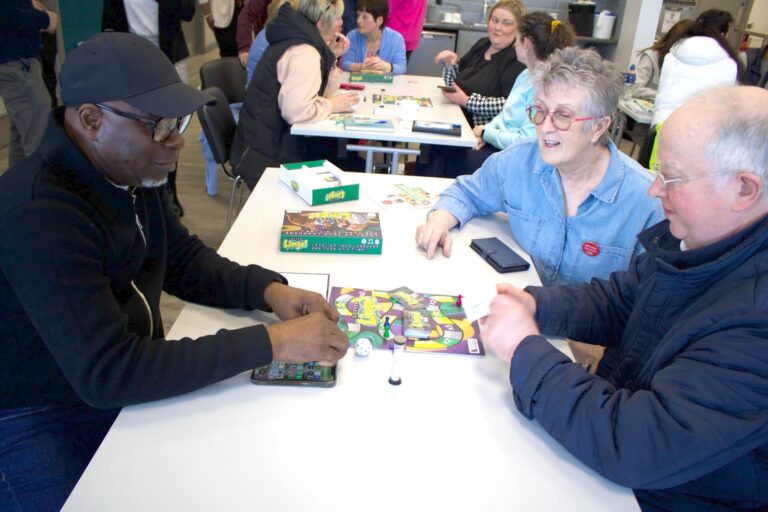
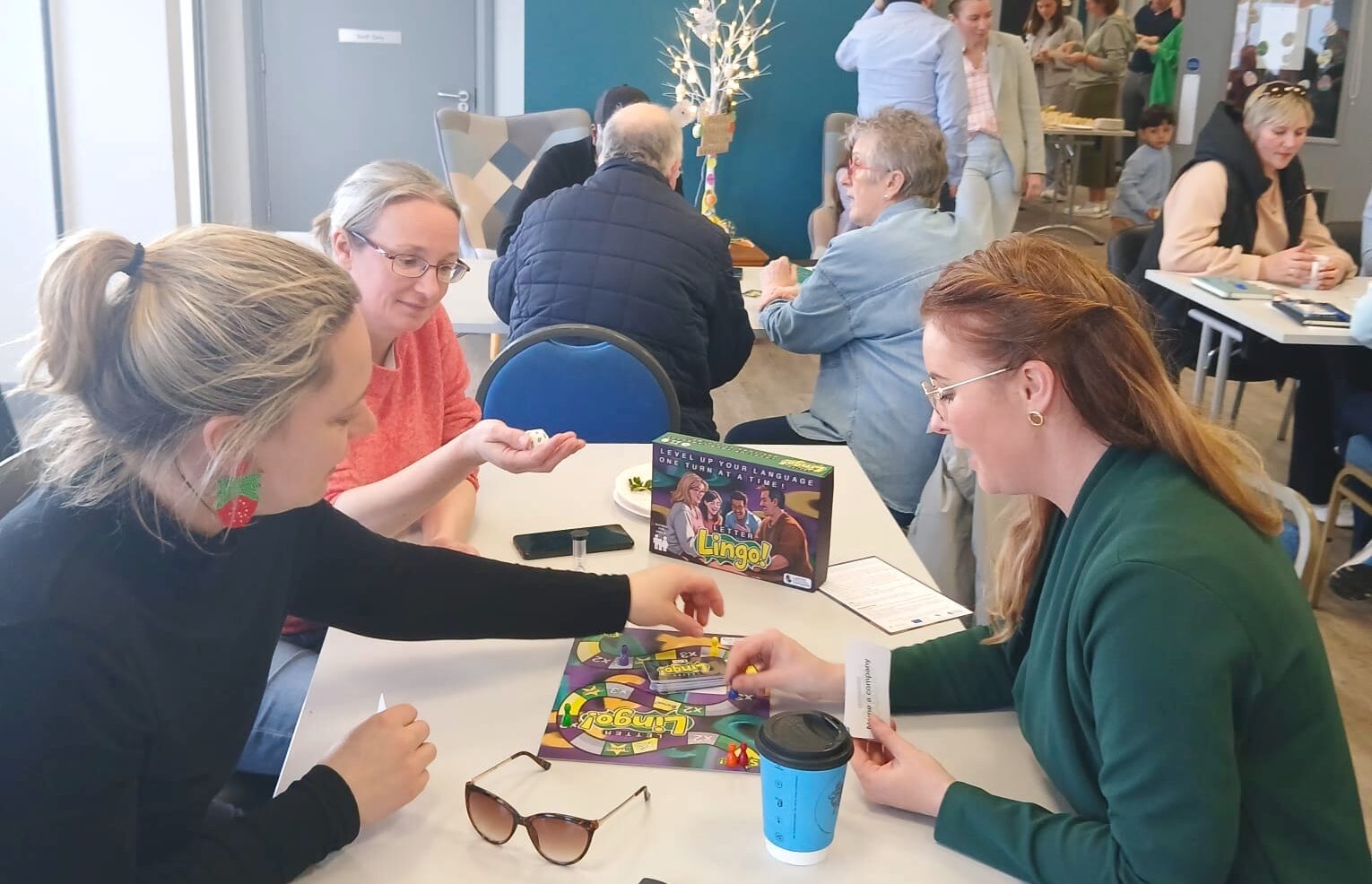
It was created after staff funded through the Social Inclusion and Community Activation Programme (SICAP) recognised that language is the biggest barrier to integration. Deborah Shirlaw is an integration officer with LDC and she was amazed with the reaction to the game she created. Even RTÉ came down to film the launch.

“We have no more copies left. We have all these people on waiting lists. People have contacted us internationally. When I created this I didn’t expect there would be so much interest,” she said.

Thankfully, there has been official recognition of the value of a creation intended to help people of all ages and abilities to improve their English and foster social connections across communities.

“We just got more funding under SICAP to get more games created,” said Deborah.

Game works for all

Starting out, she wanted to create a game that could be enjoyed by people with varying levels of ability in English, from beginners to fluent.

“I do a lot of Fáílte Isteach groups and I noticed that it was very hard to keep conversations going, especially with people having different levels of English. I was trying to come up with a concept that would work for all, no matter if you were a beginner or quite good at English, something that could be played by everybody.

“There are different ways of adapting the game. I wanted to make sure that it could be played by Irish families, by people who might have dyslexia and things like that. It’s a fun, interactive way of learning English, that’s the whole point of the game. I find that the time in the groups goes really fast because everyone has a laugh.”

Explaining how it works, she said, “You roll an alphabet dice and pick up a card. You could land on something that tells you to name a country that starts with ‘A’. It could be to name something in the household that starts with ‘B’, it could be a piece of clothing, there are all different things.”

• “The time in the groups goes really fast because everyone has a laugh,” says inventor/co-creator Deborah Shirlaw.

Wild cards and luck

Deborah was helped in designing the game by her colleague Caillin Reynolds and they left a certain amount of blank cards, so people can create their own questions as well. Also, for anyone with poor English, there are wild cards that can stand for any letter “to get people used to the game”.

“Obviously it’d be very hard if you had to come up with a particular letter when you don’t even know the letters fully yet.
“Some people who are good at English think it’s going to be easy, but it depends on the letter you land on, with the question you have to answer. It’s a luck of the draw thing. I’ve found that simple words, which we might take for granted – a lot of people who have recently arrived don’t know the meaning of the word, so it’s a good chance to explain what the word means. They’re not just learning how to read and speak English, they’re also learning exactly what words mean.”

Deborah says it is not the kind of thing you play once or twice and then put up on the shelf.

“It’s the type of game you can play every week. It’s not the case that once you finish, that’s it. Every time you play is different, you get different letters, different cards. I’m thinking about maybe bringing out a second series of cards, new cards.

“I piloted it with a few groups before we released it, just to make any changes needed or things like that. Everyone was saying how much they loved it, they all wanted copies to take home. We have just been blown away by how popular it has been and how strong the demand has been,” she said. She regularly visits a coffee club in Manorhamilton where they play Letter Lingo weekly.

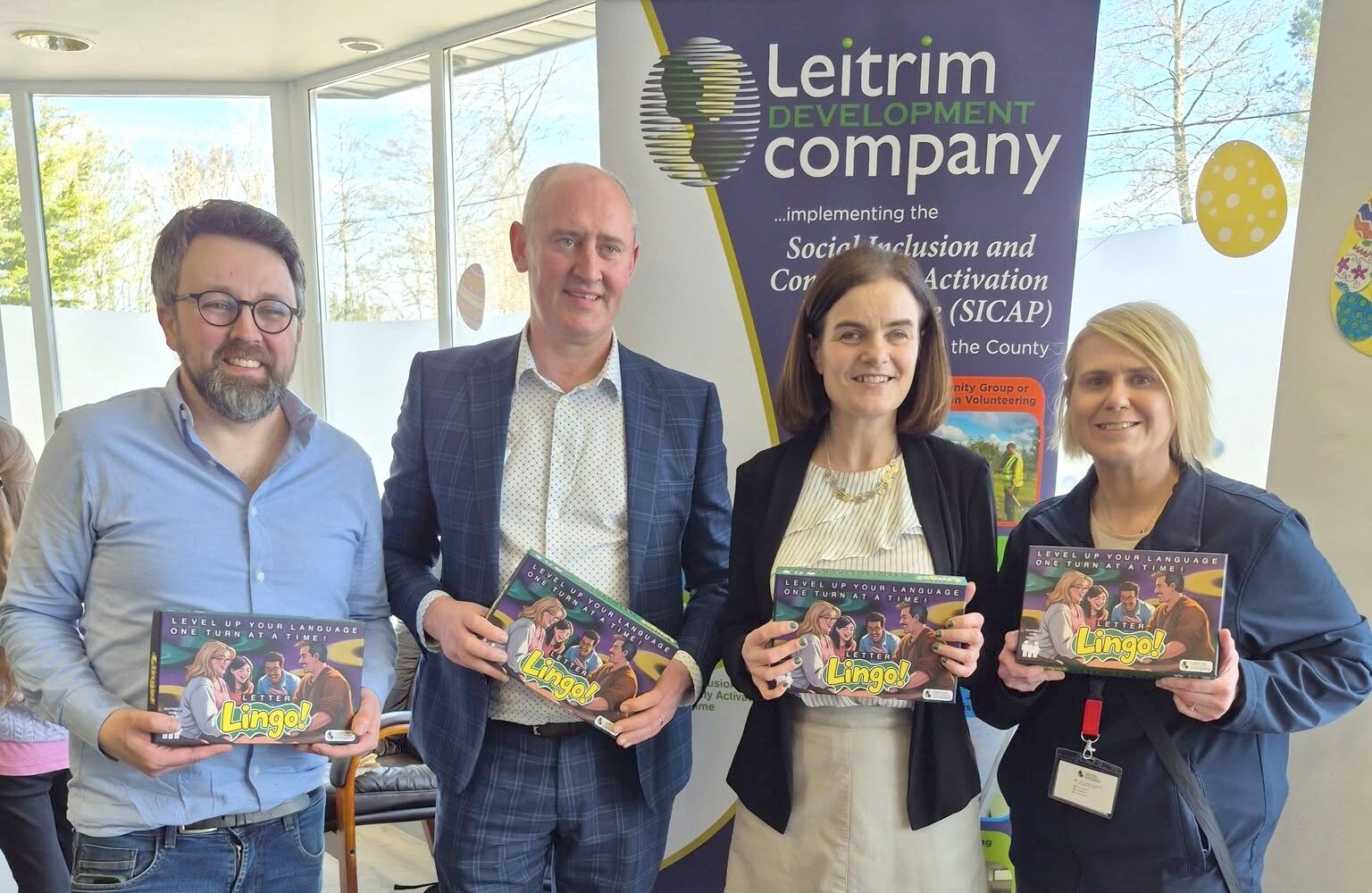
• Caillin Reynolds, Chris Gonley (CEO Leitrim Development company) Bernie Donoghue (SICAP manager) and game creator Deborah Shirlaw.

More games coming soon

While the game is popular, it is not about turning a profit.

“Right now the games are free, under SICAP* rules we can’t make money. We are talking to Pobal to find a way that to make back what the game cost us, so we could make more and more of them. It’s not that we’d make money, it would just go back into making more games.”

If you would like to request a game, email Deborah at deborah@ldco.ie and she will send a link adding you to the waiting list.
“There will be more games made available soon,” she promised.

* SICAP stands for the Social Inclusion and Community Activation Programme.

No Name Clubs are the envy of teenagers coming from abroad

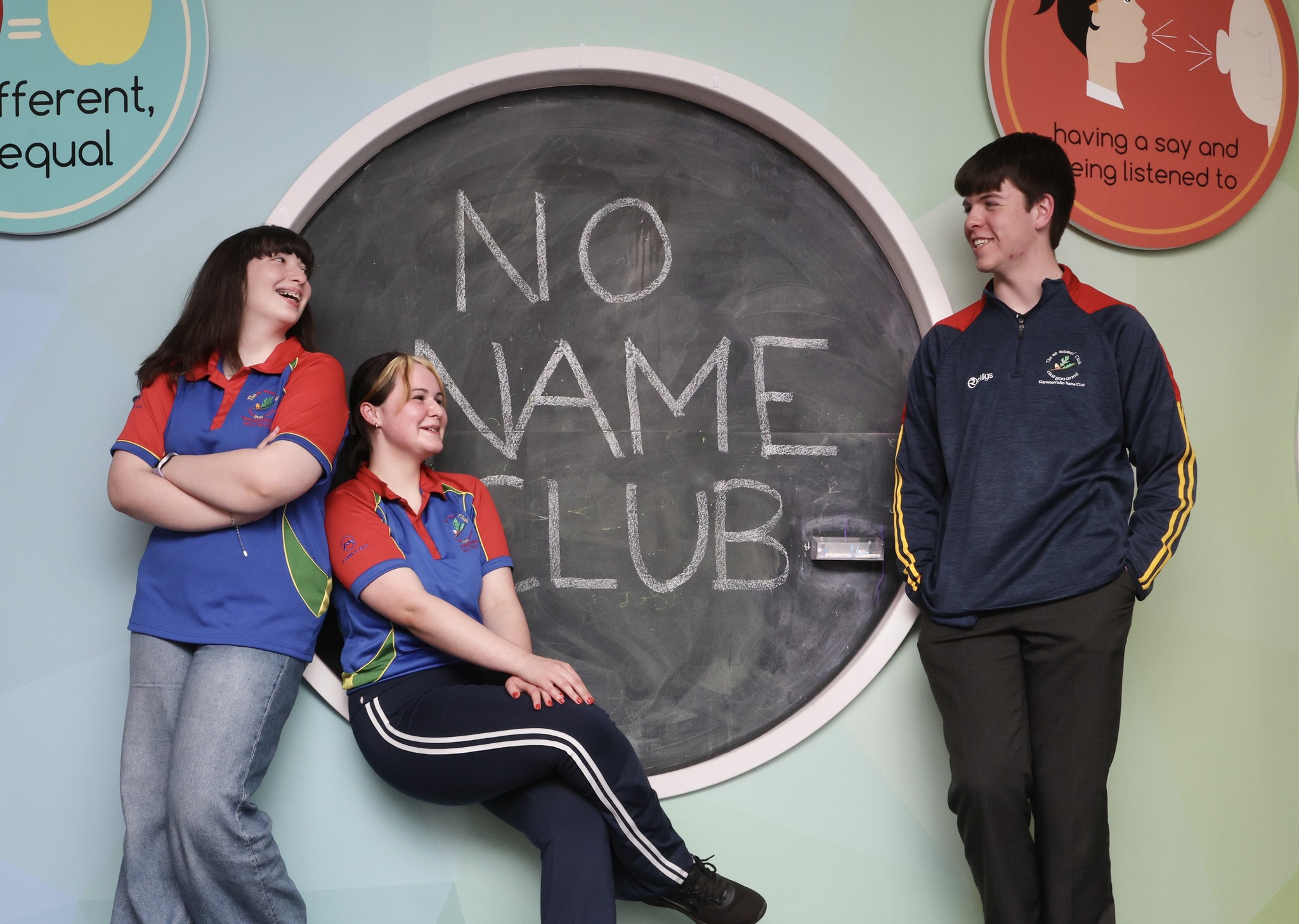
Ethan Jordan (pictured above) enjoyed in his youth being a member of a club in Claremorris, Co. Mayo, and he sees a bright future: “Last year we had up to 500 members registered across the whole country so we’ve good reach.”

To date, over 11,000 people have benefitted across the country from being club members.

The organisation, which Ethan volunteered with for years and now works for full-time nationally as a support officer, has a new strategic plan and they will open more clubs once they can recruit more volunteers.

“We’re looking to hear from volunteers, anyone aged 18 to 80 or 90, people who are willing to make a difference in their community,” he said.

The aim is to establish more clubs to support more young people on a weekly basis, and for every five volunteers who step forward they create space for 20 young people to join as No Name Club members.

One of the appeals of clubs is that they are aimed primarily at young people wishing to enjoy themselves without alcohol.

“We don’t condone the use of either alcohol drugs or any other substances. We’re trying to hear to support young people to enjoy themselves without needing other substances,” said Ethan.

• Winners celebrating at the No Name Club Youth Awards held in May

Many clubs run discos, themed balls, quiz nights, health talks, talent shows, organised trips, fundraising and outdoor activities such as kayaking. Members get an opportunity to gain self-confidence, learn new skills and make lifelong friends around the country as they take part in national events such as the national youth awards.

Students who come from abroad say they wish they had such clubs back home.

“There are an absence of youth clubs in some countries. We have a lot of members now who come from Erasmus backgrounds who are here from the likes of Spain and Germany. Quite often they say ‘We only wish we had something like this in our own country when we go back’,” said Ethan.

“We’re very fortunate ourselves this summer in July we’re bringing 10 young people on an Erasmus exchange to Croatia,” he added.

“We want to make sure that young people continue to be heard,” he said, introducing Changing Ireland to two club members.

Club members like no alcohol aspect

Changing Ireland spoke recently to two members from Claremorris No Name Club.

Pearse Diskin told why he keeps returning to the club: “All my friends are there and everyone that I talk to is there. And you can do so much.”
He said No Name Clubs are good places to get to know new people.

“And everyone that you talk to doesn’t drink alcohol. It’s just a very good environment, because it teaches you not to drink alcohol when you’re older,” he said. “Nowadays more teenagers are starting to get addicted to alcohol and drugs and all that stuff. No Name Club really helps you stop doing that, and the more people that you’re friends with that don’t do that, it helps you not do that when you’re older,” he said.

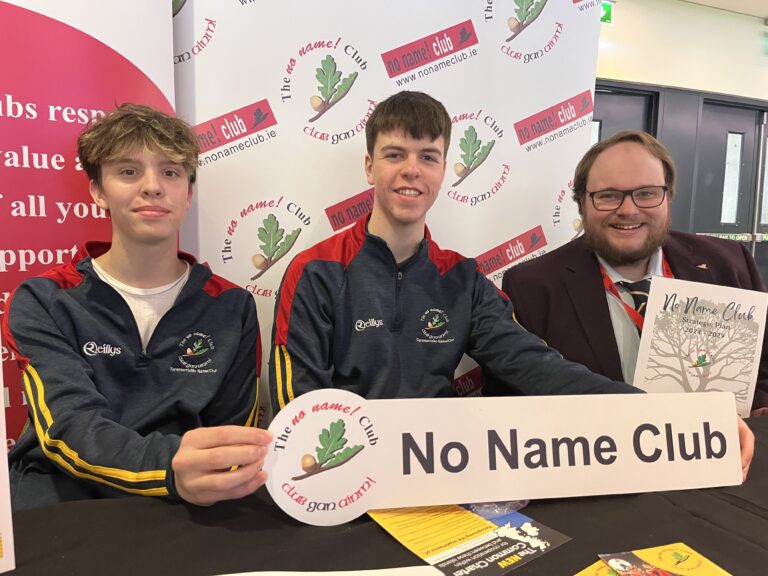
• Cormac Walsh who spoke to Changing Ireland is seen on the right with two fellow No Name Club members at the launch of their national strategic plan earlier this year

Another member Cormac Walsh described walking into a No Name Club: “When you walk in the door of the local centre, the first thing you do is you sign your name on the book, you meet with the adults (volunteers) and you say hello and then you walk down and everybody kind of spreads themselves out across the club. There’s different things for everybody to do. And you can go talk to people that you know or people that you don’t know. You can do whatever you want, really.”

Cormac said that their club has a pool table, a Playstation 4, a Nintendo Wii, and an air hockey table, as well as board games and couches to relax in and socialise.

“There’s anything and everything really. Go for it,” he said.

Funding and find out more

Each club is run by volunteers and they received funding last year through the HSE and the Department of Children, Equality, Disability, Integration and Youth. The three founders behind No Name Clubs were a priest, a famous hurler and a garda. To find out more about them, to volunteer, or to start a club in your area, visit: https://nonameclub.ie/

Finally, if you’re wondering about the name, apparently the founders when discussing what to call their new initiative remarked that if they didn’t come up with a name it would be a no name club. And so they settled, ironically, on that as the name.

An Icelandic solution to an Irish problem

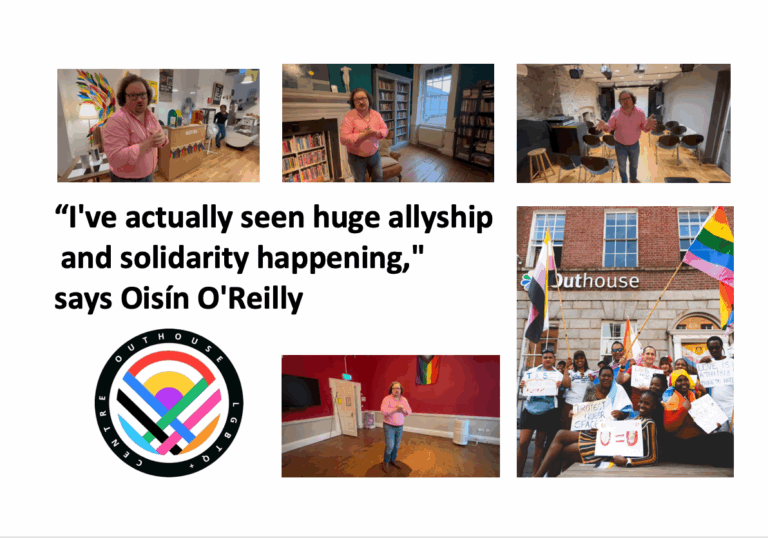
Huge allyship is the story of Pride 2025, says Outhouse CEO

As Pride came to a close for this year, we spoke with Oisín O’Reilly, CEO of Dublin’s Outhouse, a LGBT+ community resource centre and cafe, who sees cause for optimism as well as despair. Chastened by the Trump administration’s targeting of companies that pursue a DEI agenda, some of the corporate backing for Pride evaporated this year. While that could be interpreted as a worrying sign of the times, Oisín doesn’t see it like that.

“I think there’s a little bit too much on the 24% (of companies that cut their involvement) and not enough on the 76% who have stuck with us. There’s a good news story there,” he said.

“Friends of mine were challenging me last week and saying there were less rainbow flags or rainbows on social media, and they’re not wrong. But what I’ve seen is that the companies that we work with, in late January and early February, when they saw what was happening and what the impact would be for our community, they asked what they could do.

“I said, ‘Look, we’re actually going to need more help now’. What most of them said was that they wouldn’t spend money on telling people about the good things they’re doing this year, and the money we would normally spend on that we’ll give to you to run more programmes or add more services or what have you. I’ve actually seen huge allyship and solidarity happening and it’s a story I’m quite sad isn’t being told.”

Nonetheless, there is obviously fear and worry over what is happening abroad.

“The environment that we are working in, with all of the wider geopolitical shifts, has really changed the context for the work, particularly in supporting individuals and engaging in community development,” he said. “There is a huge amount of fear and anxiety and worry prevalent within the LGBT community here in Ireland, particularly for trans and gender non-conforming people. That part of our community has been really targeted by bad faith actors.”

“We look across to the US and things look scary. Then we look at what’s happening in Hungary, where they passed constitutional amendments to ban Pride and criminalise LGBT people. That sense of fear of it arising here has changed the environment that we’re in, the issues that we are working on and the types of support that people really need,” he said.

Homophobic attacks are on the rise, and sometimes getting Garda support can be a challenge.

“We’ve had some really difficult experiences when members of the community have gone to the gardai to report those. There are great guards, but they are also under pressure and sometimes when people go into stations those things aren’t taken entirely seriously. But when people come to organisations like ours and tell us, we know where the guards working hard for our community are,” he said.


Minister Calleary promises support to “forgotten” area in Limerick city

– Minister Dara Calleary said support for areas such as Ballinacurra Weston will be increased.

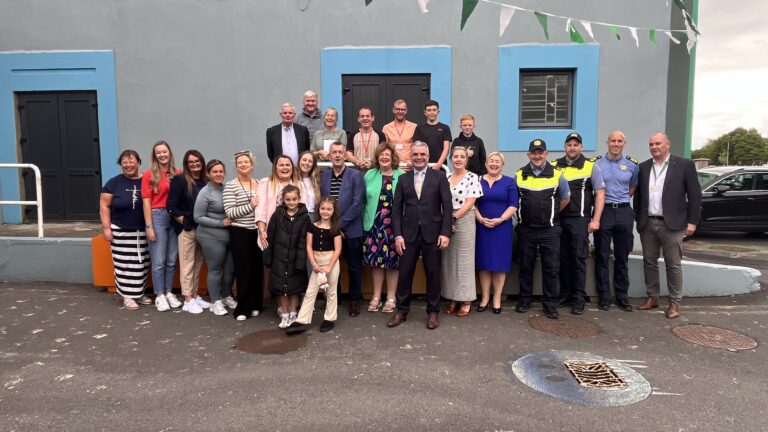
The minister was welcomed to Our Lady of Lourdes Community Centre in Ballinacurra Weston by co-managers of the centre Kate Clifford and Yvonne Galvin, by Senator Maria Byrne, Maurice Quinlivan TD, local councillors, volunteers from the community, community workers, community gardai and Limerick City and County Council officials. Members of Limerick Traveller Network (which rents office space in the centre) were among many to make their concerns known.

Addressing the gathering Minister Calleary said, “I know there’s a frustration. I can feel it, that this community has been forgotten. And I’m not going to tell you I can wave a magic wand and reverse that.”

Responding to concerns, he said, “I will give you a guarantee”, and he thereby committed to working with Senator Byrne who serves as the chairperson of the community centre’s board, and with Maurice Quinlivan, TD, and Willy O’Dea, TD, among others “to try and start putting building blocks in place that might be able to help.”

“We’re not going to change it overnight, but we are going to be working on it,” he said, indicating he intended to discuss the area’s challenges with cabinet colleagues, especially in the areas of housing, children and youth.

“We’ve had some good chats upstairs with about how we do it,” he said of talks with local community leaders.

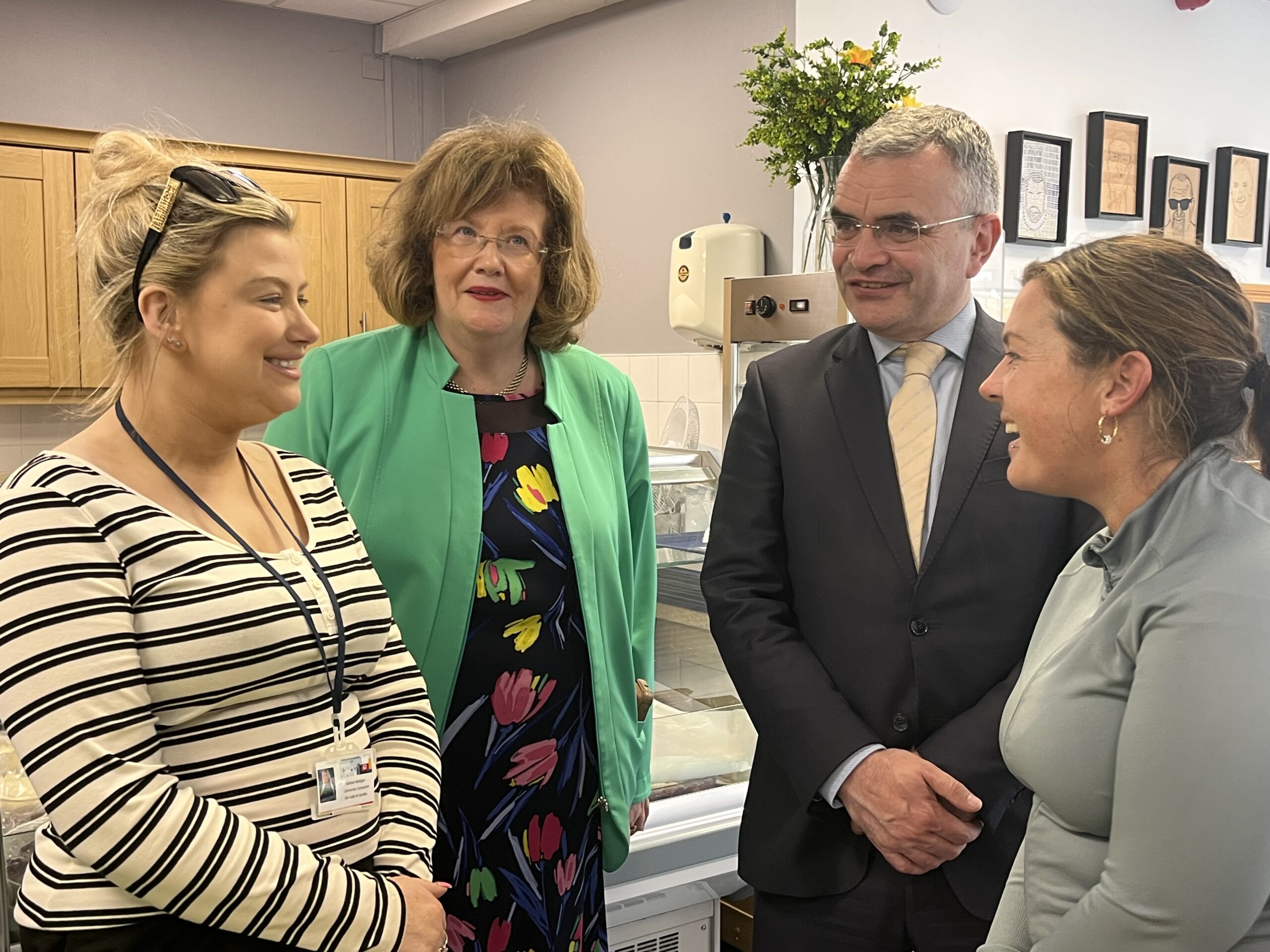
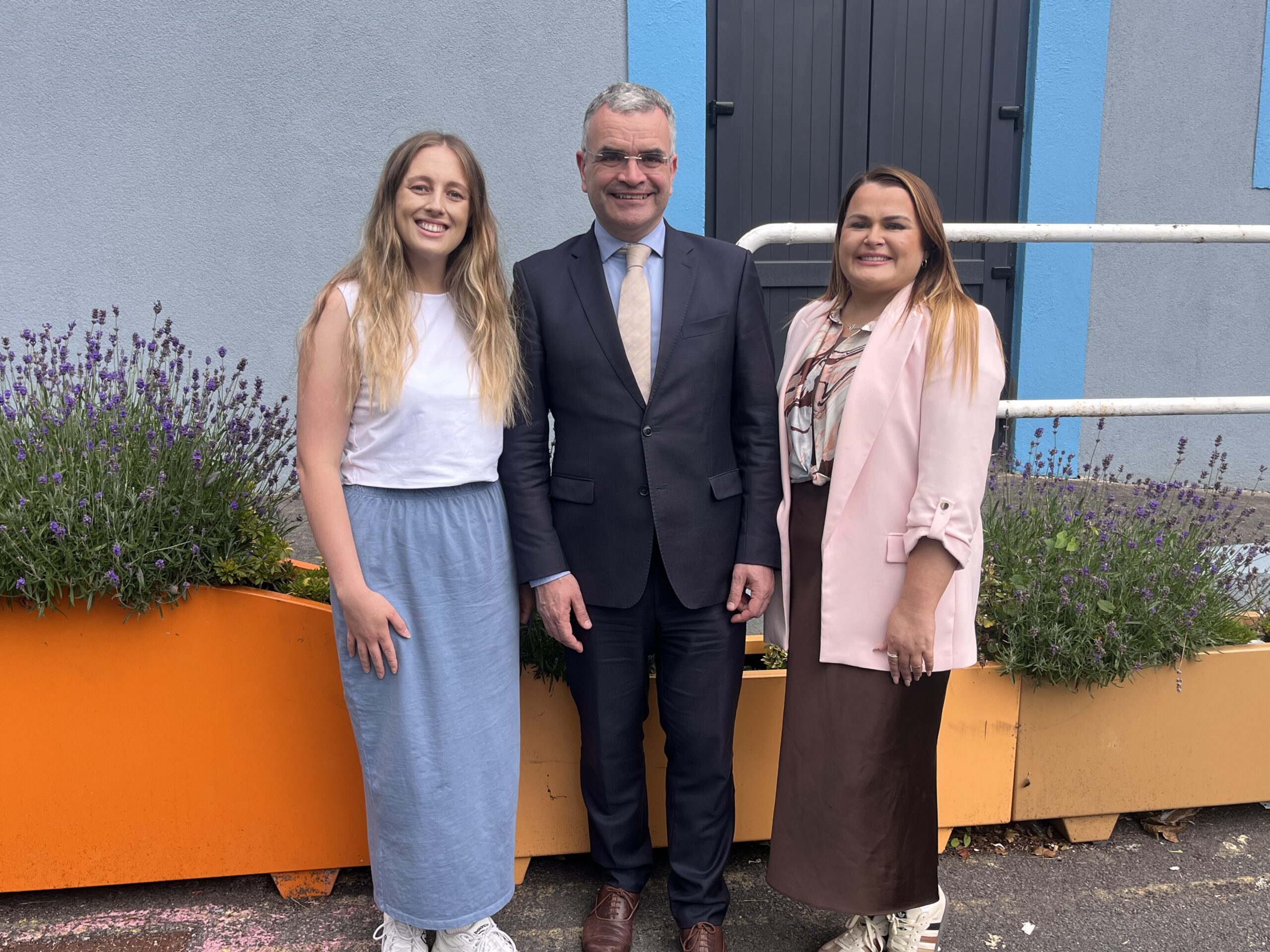
• Siobhan Madigan, Senator Marie Byrne, Minister Dara Calleary and Kelly McCarthy – Siobhan and Kelly are employed as Community Companion workers in a vital project funded by Limerick City Council.

Currently the minister and his officials are looking into creating a new national programme that would support communities such as Ballinacurra-Weston.

“I don’t want to over-promise, but absolutely, as we begin the work of looking to see what that new community programme looks like, I’ll be thinking of Our Lady of Lourdes a lot,” he said.

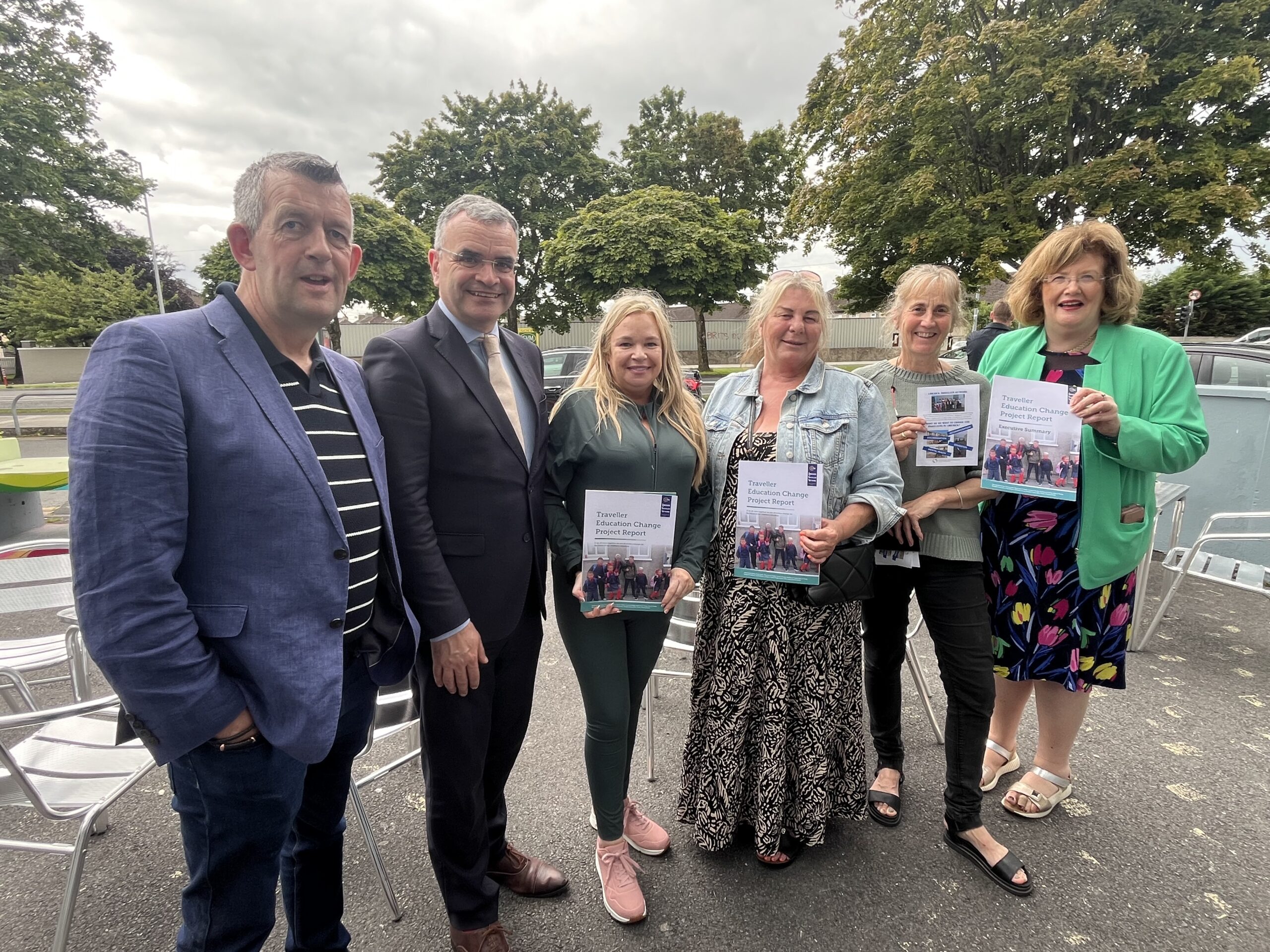
• Maurice Quinlivan TD, Dara Calleary, Minister for Rural and Community Development and the Gaeltacht, Margaret O’Brien, Olive O’Reilly and Anita Pannell of Limerick Traveller Network, and Senator Maria Byrne outside Our Lady of Lourdes Community Centre.

The area has some of the highest levels of deprivation in the country, alongside King’s Island also in Limerick city, and its challenges were never properly addressed through Limerick regeneration.

It also has a strong community spirit, evident on the day the minister called by to lend support. He complimented all involved in community development in the area. (You can follow Our Lady of Lourdes Community Centre’s activities here on Facebook).

• Kate Clifford, Minister Dara Calleary and Yvonne Galvin – Kate and Yvonne are co-managers of Our Lady of Lourdes Community Centre.

“Absolutely, there are challenges,” continued Minister Calleary, “but you’re not letting them be the story of Ballinacurra-Weston. They’re not. This is the story,” he said to applause.

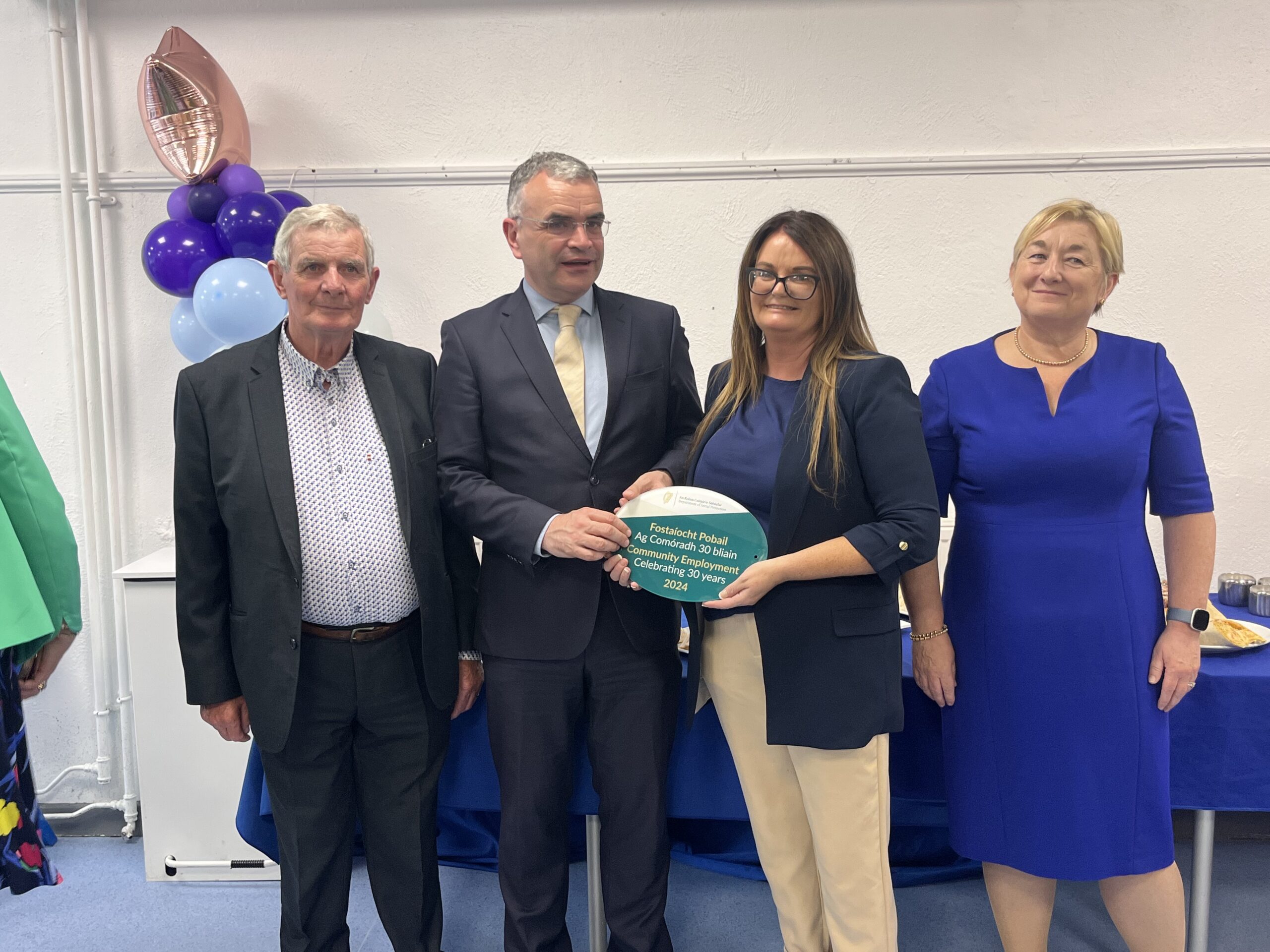
While the minister did not have a cheque book on this occasion, he did present a plaque to Community Employment Scheme supervisor Karen Hannon commemorating 30 years of CE locally and nationally.

• Local volunteer Gerry McCormack, Minister Dara Calleary, Community Employment (CE) supervisor Karen Hannon and Fiona Casey from the Department of Social Protection who works regionally supporting CE.

Earlier, the minister had welcomed over 200 delegates to Ireland’s second National Outdoor Recreation Conference which took place in the Radisson Blu Hotel, Co. Limerick. He travelled on to visit a project in the county that benefitted from regeneration funding through the Town and Village Renewal Scheme.

– Watch our 2 minute report on Minister Dara Calleary’s visit to Ballinacurra Weston:


Kerry Gaeltacht faces same youth retention challenges facing Wales and Scotland

– Uíbh Ráthaigh avails of Creative Places funding in quest for solutions

– By Allen Meagher in collaboration with Breandán Ó Caioimh

A play called ‘Taigh Tŷ Teach’ was staged in An Dromaid Community Centre on the Iveragh peninsula in February, 2024, and it illustrated the challenges facing communities in the three Celtic countries.

The tri-lingual play saw nine actors speaking Irish, Scots Gaelic and Welsh as they dramatised the challenges with regard to holiday homes, AirBnB lets, a lack of supply, unaffordability, youth out-migration and the associated decline in, and threats to, indigenous culture and identity – especially the Celtic languages.
Breandán reports that the play coincided with the launch of a community-led housing pilot project called Togra Tithíochta Uíbh Ráthaigh – which envisages a four-pronged approach to improving the housing situation locally, based on:

– new-build and affordable rental homes;

– renovation of vacant properties for affordable purchase;

– community-led approaches (including a community land trust);

– and embedding housing within a wider community development and family support framework.

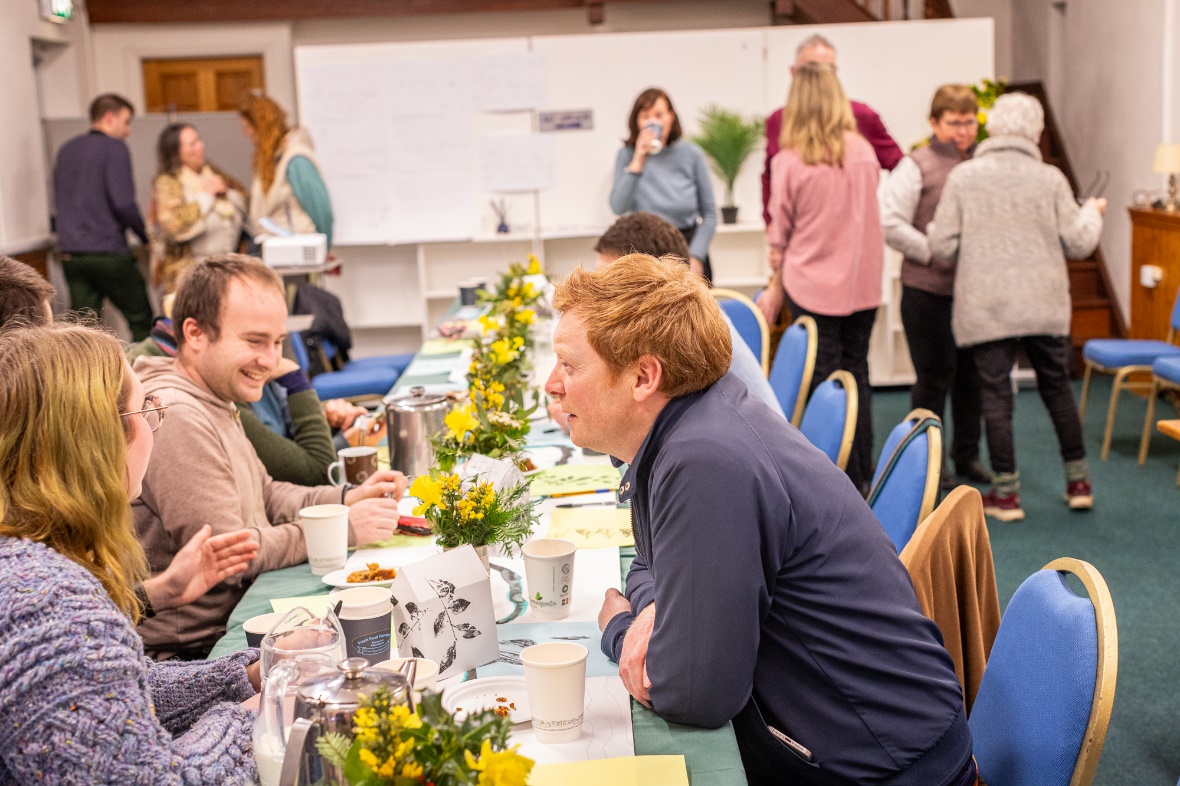
• Community discussions at the launch event.

This also comes at the same time as people are considering the results of an artist residency project called Tochail (meaning to excavate) which sought a fresh approach to the housing issue in South Kerry and beyond.
Tochail came about through the Arts Council’s Creative Places (Cumas Ceantar) programme, which has so far invested in 19 places that have had fewer opportunities than other areas to take part in the arts. (A recent round for new funding applications closed in March).

The Creative Places approach is underpinned by inclusion and diversity and is grounded in socially engaged arts practices and community development principles.

Local stakeholders partnered nationally with TASC, an independent think-tank whose mission is to address inequality and sustain democracy by translating analysis into action.

In Iveragh, the project was coordinated by Comhchoiste Ghaeltacht Uíbh Ráthaigh (the community development organisation for the South Kerry Gaeltacht) and it was delivered through a steering group involving local community representatives, agencies, including Tascfhórsa Uíbh Ráthaigh (under the aegis of Údarás na Gaeltachta), Ealaín na Gaeltachta and Kerry County Council (which provided funding of €10,000 to support the project).

As a result, local people have depicted their hopes and visions in workshops, storytelling and other art forms.
Participants emphasised community-building and the Irish concept of ‘Meitheal’ (mutual support) in their vision for future housing. They noted that housing, climate resilience, community development, and language revitalisation are interconnected.

Breandán says that, “Arts-based approaches can reframe housing debates, making them more inclusive, imaginative, and solution-focused.”

The Tochail project also offers a replicable model for other rural communities facing similar challenges, something which should be of interest to councillors and officials who are interested in housing and/or the arts.

“It is also relevant to those interested in policy-making and the interfaces between the policy domains of local government and the communities they serve,” says Breandán.

Arts project in South Kerry Gaeltacht reframes debate around housing

The artists – Síomha Brock, Susan Leen, Emily Fitzell, James Rogers, and Zoë Uí Fhaoláin – lived and worked for three weeks in the Uíbh Ráthaigh (Iveragh) Gaeltacht.  Some spoke English, while others were fluent in Irish, and after running short projects with people locally, they proposed the following:

  • A South Kerry Gaeltacht housing festival.
  • A stronger emphasis on sustainable community-building rather than just on house-building.
  • The use of local materials, products and labour in construction.

“Local organisations have been highlighting the shortage of housing in the locality for many years,” said Róisín Greaney, climate justice researcher with the Think-tank for Action on Social Change (TASC).

“This shortage is threatening the long-term viability of the Gaeltacht. The housing crisis is a nationwide phenomenon, but there are localised complexities,” she said.

It is difficult for the community in Iveragh to grow and be resilient, due to a lack of affordable housing to rent or buy, holiday homes and second homes – many of which are vacant for long periods – and challenges securing planning permission.

A community vision emerged from the artist residencies which operated during the winter under the project title of Tochail (meaning ‘excavate’).

Róisín said, “The residencies succeeded in reframing the rural housing debate through using arts-based methodologies and by creating spaces that were imaginative, inspiring, and future-focused.”

As a result, it is now clear that local people want to see a housing model that supports local and community development.

“Core to this vision of the future is the widespread use of the Irish language and ecological sustainability,” said Róisín.

The research findings will directly inform TASC’s People’s Transition project in the Gaeltacht, which explores the development of social and economic interventions to contribute to a more egalitarian climate transition journey for the people of Iveragh. According to Róisín:

“The residencies explored how socially engaged art can create an enabling environment for place-based and community-led approaches to rural housing within the context of a just transition. At this critical moment of social and ecological change, arts-based interventions help us set aside the constraints of the present and envision a diversity of new and previously unimagined possibilities for the future.”

The launch of the Uíbh Ráthaigh People’s Transition report was set to take place in April.

For more information:

– Cumas Ceantar: uibhrathach.ie

–  TASC: tasc.ie


Here’s why one artist focused on forestry

Susan Leen’s artistic endeavours focused on the inland community of An Dromaid. Her work highlighted the challenges of land use, particularly commercial afforestation.

Sitka Spruce plantations have come to dominate many of the hills and valleys in South Kerry away from the Ring of Kerry tourist route. These plantations have contributed to biodiversity and habitat loss, and they have taken up land that had been farmed for generations. Susan’s drawings depicted the impacts of these plantations, but she also drew birch trees, branches and leaves, as this pioneer species symbolises new beginnings and new growth.

Her engagements with local farmers, members of the Irish Countrywomen’s Association and schoolchildren, among others, converged on the triple objectives of employment, services and culture.


Participants founds solutions via meditation, feedback loops, postcards from the future, and clay modelling

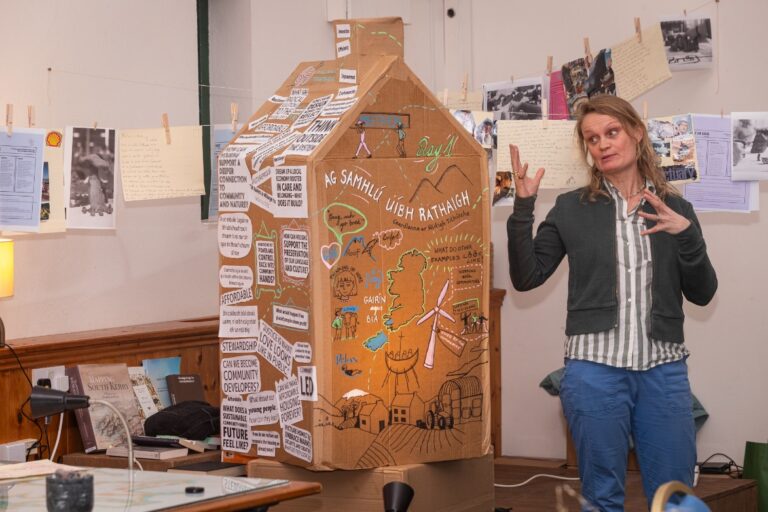
Artist Síomha Brock (pictured right) used a mixed-methods approach that included meditation, collages, postcards from the future, clay modelling and feedback loops. This enabled participants in workshops held in Cahersiveen to envisage a viable community housing project.

Participants emphasised community-building, rather than just house-building, and they placed a high value on the Irish concept of Meitheal (neighbourliness/mutual help).

Workshop participants also wanted a new approach to housing that would incorporate social, recreational and food-production spaces, local energy supplies and the circular economy.

They emphasised the revitalisation of the Irish language and Irish cultural expression, and were optimism that, with the development of community housing, the language would thrive.


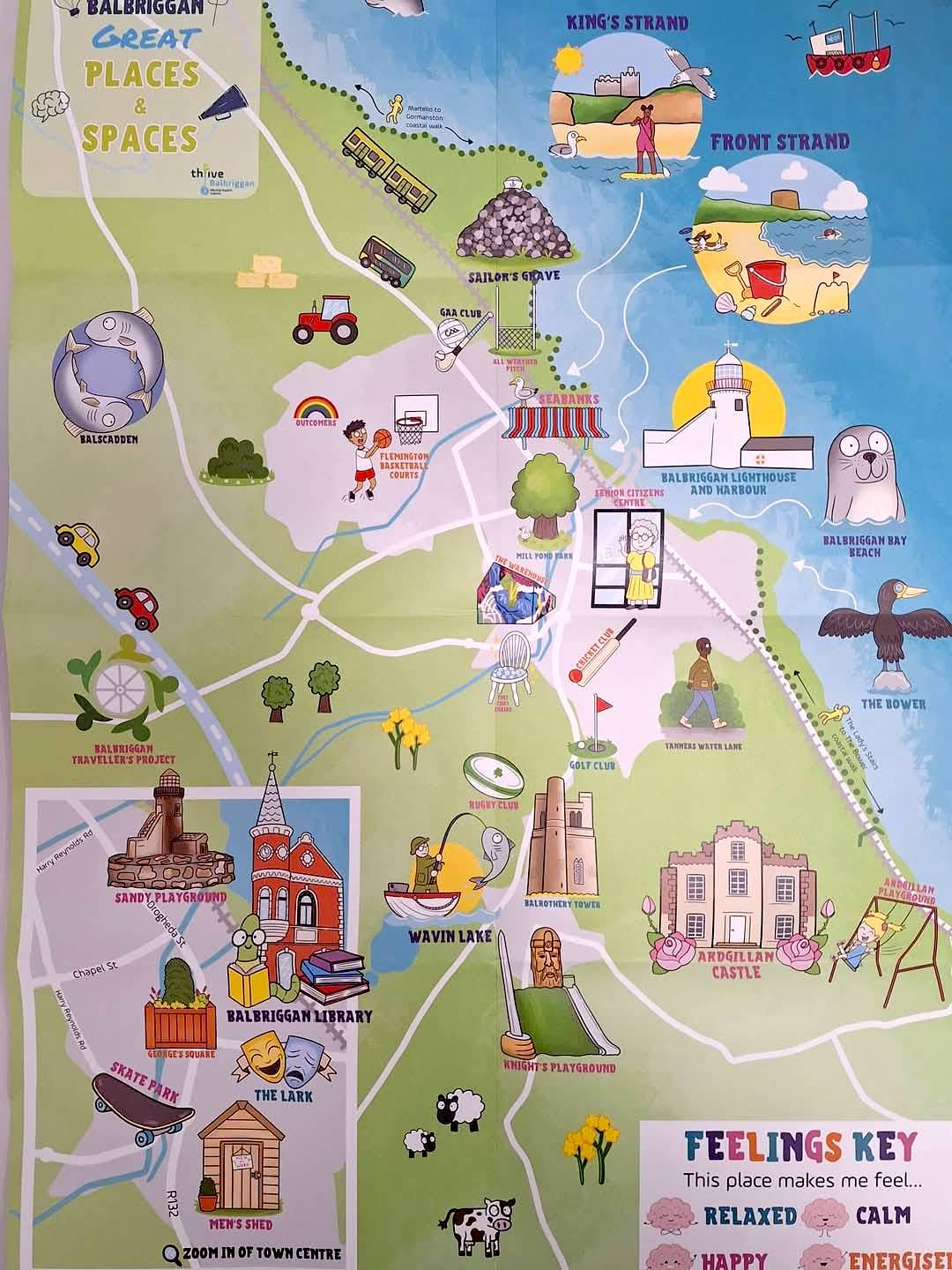
Best Practice: Balbriggan created a wellbeing map and people love it

0

We spoke to Thrive chairperson Joe McKenna about the map and the award win.

“We needed something more Balbriggan-centric to put a real identity on the project. We kind of rammed our heads together to see what we could do and came across a wellbeing map for Wexford, for the entire county, appealing to children. It was a really cool idea, a massive project covering the whole county. The places were colour coded (based) on how they made people feel,” he said.

His group decided to try out the same idea in Balbriggan.

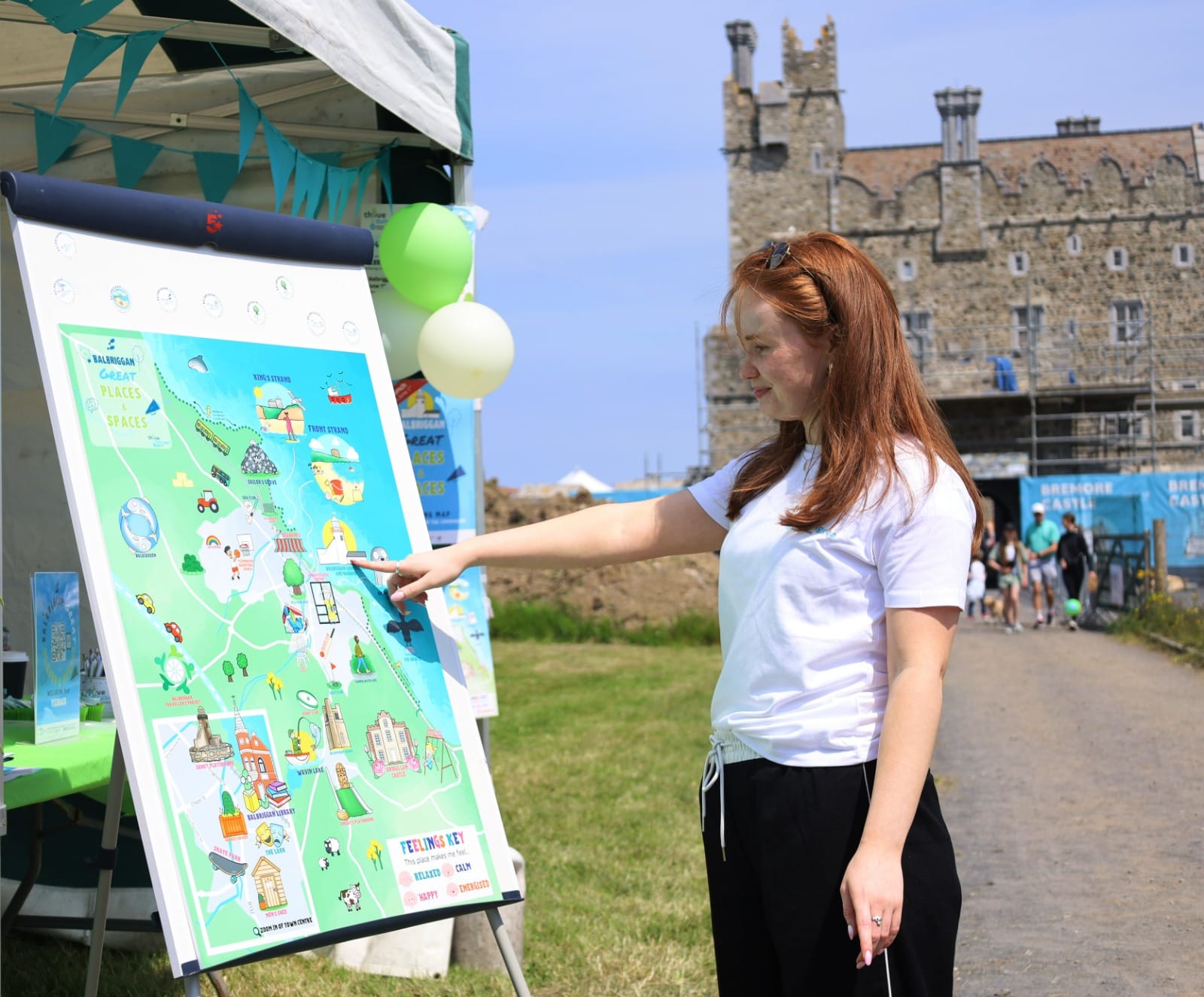
“We did a survey over a number of months for people to tell us where in Balbriggan made them feel energised, made them feel at peace, made them feel at one with nature, made them feel relaxed. We got hundreds of responses, fed them into a database and we came up with a selection of the top places in the town,” said Joe.

Once they knew what to include the next step was to package it in a way that would capture the imagination. The town’s art scene is growing in recent years so they put the word out that they were looking for an artist to design their map.

“We ended up with a girl called Lauren Fernandes who was really fantastic. We picked her because we wanted it to be really child-friendly. We wanted it to catch the eye of young people. If you have a map and it looks exciting and kid friendly, they are going to make their parents or grandparents take them there.”

It soon became apparent to Thrive Balbriggan that they had succeeded.

“We noticed that we weren’t the only people handing out this map. Other people were handing it out. We said to ourselves then ‘This thing is doing exactly what we wanted it to do’. We were never thinking about awards, but Fingal County Council had supported the map and they nominated us for the LAMA award which we won and that was great.”

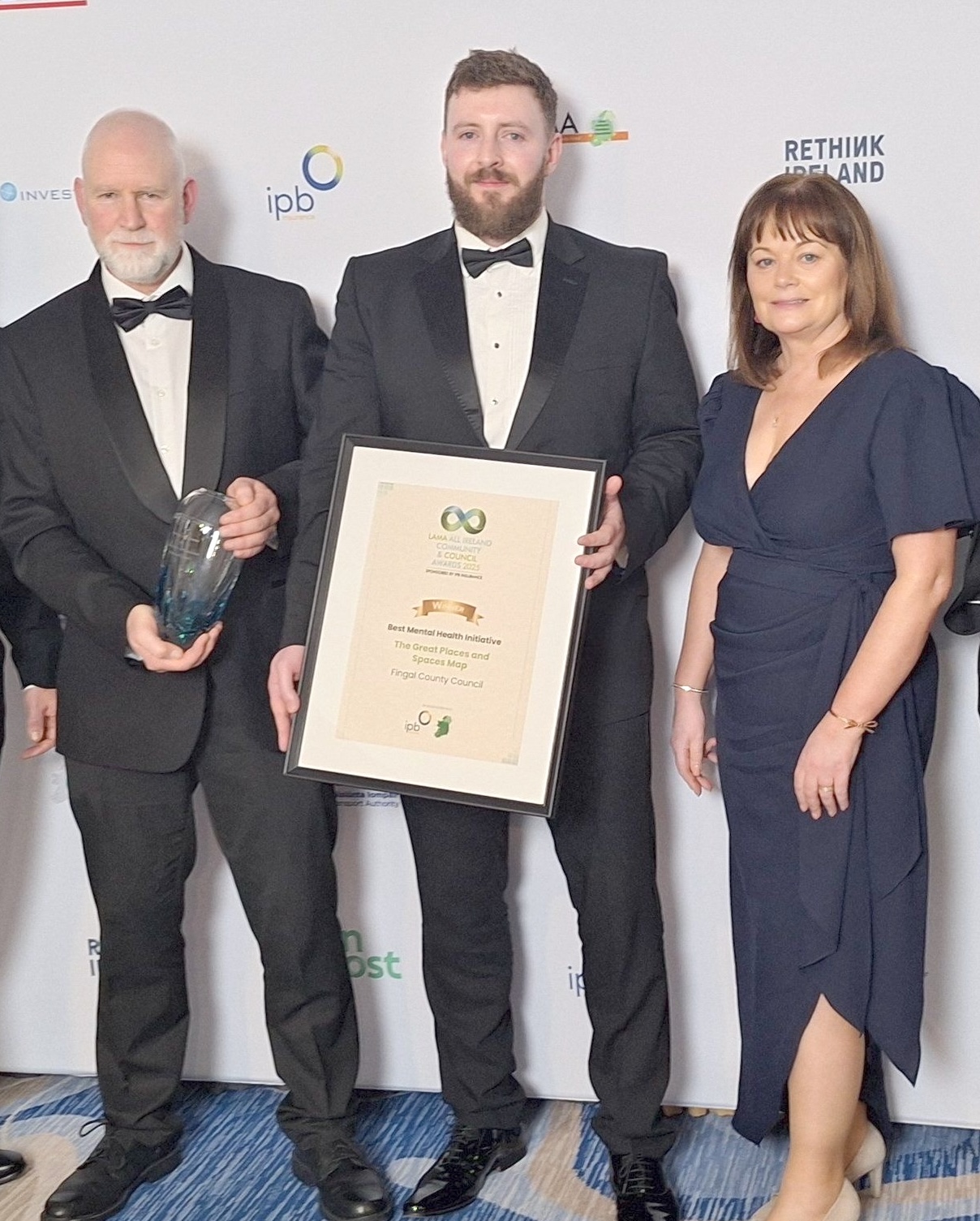
• Seamus Quigley (centre) project worker for Empower accepts the LAMA award on behalf of Thrive Balbriggan, with (on left) Rafe Costigan, senior community officer with Fingal Co. Co. and (right) Anne Marie Farrelly, CEO of Fingal Co. Co.

Joe feels there are a lot of things on the map which people might take for granted or almost forget due to their familiarity.

“Ardgillan Castle is on it, as a natural spot that is very relaxing. Things like the library are relaxing, the Lark Theatre in Balbriggan which won a new building of the year award last year. That’s there for people’s wellbeing. You have Bremore Castle as well, you have the sports clubs.

In his day job Joe works as a team leader delivering the Social Inclusion and Community Activation Programme for Empower, a local development company supporting communities in Fingal, Clonsilla, Mulhuddart and Balbriggan.

“We had this message at the start that you have to love where you live, but you have to make where you live lovable, in a certain way. Our aim was to get people to notice all of the things around them that they maybe don’t appreciate enough. That’s where it went and people were saying ‘Oh, I forgot that was there’. People new to the town didn’t know that some of the things even existed.”

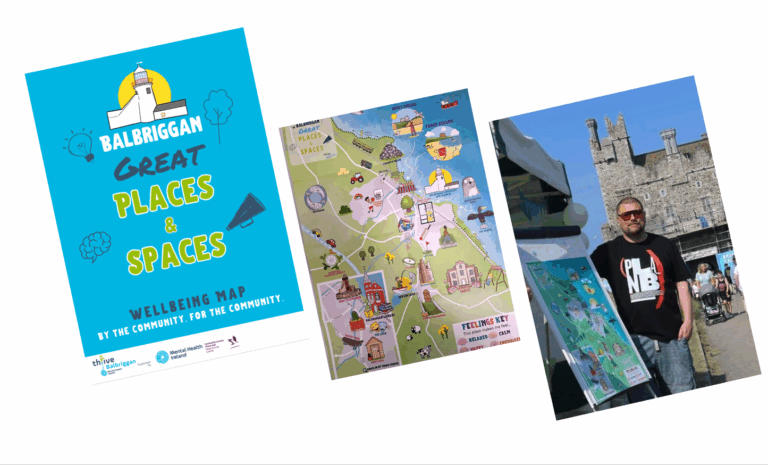
The map will be updated in the future. This is what it looks like:

“The town of Balbriggan is going through a huge regeneration and this map is something that we could update down the line. It’s sustainable as an idea, because it will become dated and we will need to do it again. The fact that we have had such success this time means that next time we will probably get more support,” he said.

Thrive Balbriggan is one of a threesome of projects supported by Mental Health Ireland. There is a neighbouring project in Swords and Thrive Connemara was launched in Clifden last year, with plans for more in other places.

You can follow Thrive Balbriggan on Facebook and Instagram: @ThriveBalbriggan

To learn more about Thrive nationally, visit: https://www.mentalhealthireland.ie/project/thrive-ireland/

Free public water should be available everywhere, argues Grace O’Malley

0

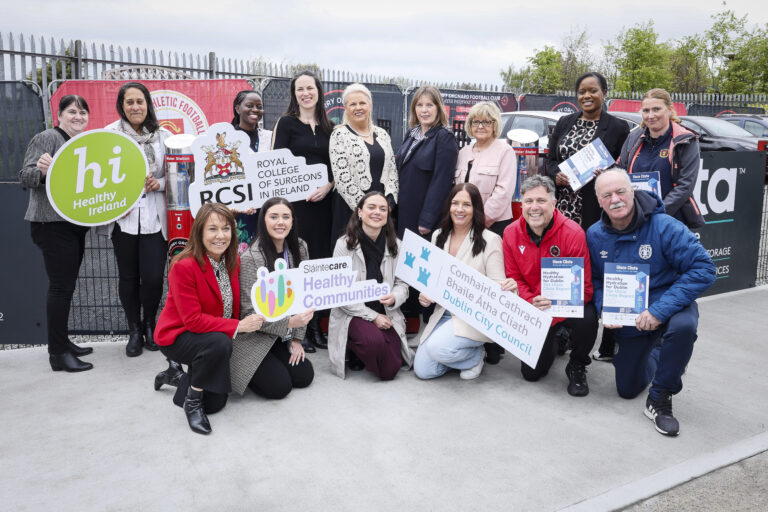
– New water fountains in Cherry Orchard FC saw usage by players of plastic bottles fall by 97%.

As part of the study, Cherry Orchard FC and Ballyfermot United FC received water fountains and reusable bottles.

Dr O’Malley feels that such things should be commonplace across the country: “These are public health features that should be available everywhere, and in many countries they are, but in Ireland the access to free drinking water isn’t great.”

She was heartened by Uisce Cliste’s impact on young players and adults with Cherry Orchard FC.

“I am particularly interested in child health, and (seeing) an increase in the children’s knowledge of the science around dehydration is really important. Generally when children say they are thirsty they are already dehydrated, their thirst mechanism doesn’t develop until the second decade of life. Lots of children will say they are hungry, but it’s actually thirst they are feeling. When they say they are thirsty they’re actually dehydrated at that point,” she said.

Colour of urine charts helped in real time

The Uisce Cliste approach is very practical.

“One of the things that we did was provide urine colour charts, basically a sheet to put up in the toilets and it has colour grading of wee. It teachs someone how to look at the colour of their wee and tell in real time if their body is sending them a signal that they need to drink more water. That very practical measure helped (a lot),” she said.

Dr O’Malley was “really shocked” by how heavily soccer players relied on bought beverages instead of water. Usage of single-use plastic bottles and aluminium cans has fallen to nearly zero.

“Cherry Orchard were really behind the project in terms of reminding the members to use their reusable bottles and they talked to visiting clubs about not bringing plastic onto the site,” she said.

Around the same time as Cherry Orchard FC was trying this new approach, on the national stage the return reuse recycle scheme for plastic bottles and aluminium cans was introduced.

“From talking to the club they felt that a combination of all the reusable bottles, the water fountain, the education, and a redesign of the tuck shop – plus the coaches and the managers being behind the project – impacted how everyone was doing things on the ground.”

“The really positive thing was the atmosphere that the project created. In Ballyfermot United Football Club they have a fountain now and they want the hydration education.”

She feels it is important that everyone can easily access free, high quality drinking water away from home.

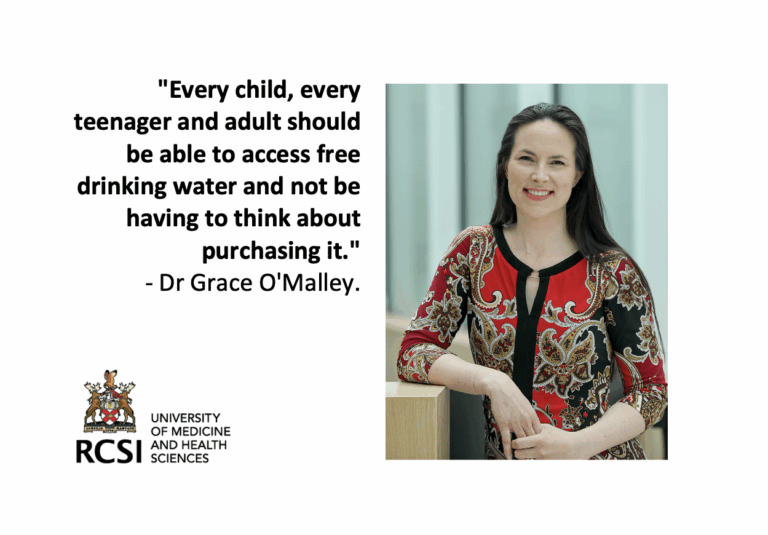
“Every child, every teenager and adult should be able to access free drinking water and not be having to think about purchasing it when they are out and about.”

FIVE health issues arise from not drinking enough water

1. Headaches often accompany a state of dehydration and are a common sign of mild to moderate dehydration. Drinking only water while experiencing a headache rather than sugary drinks can help.

2. Weight gain can be an issue. Studies show that drinking the right amount of water can give a significant boost to one’s metabolism and many wellness experts advise drinking more water to lose weight or to keep it off.

3. Constipation is often a result of not drinking enough water and not eating enough high fibre foods.

4. Moodiness may be caused by lack of water. Some research has shown that even mild dehydration can lead to neurological changes that affect our ability to focus and can cause irritability.

5. Not drinking enough water can lead to dehydration, which manifests in the skin as dryness, flakiness, and a dull complexion.

Cherry Orchard players switch to water, saving money, saving planet

Cherry Orchard players switch to water, saving money, saving planet

0

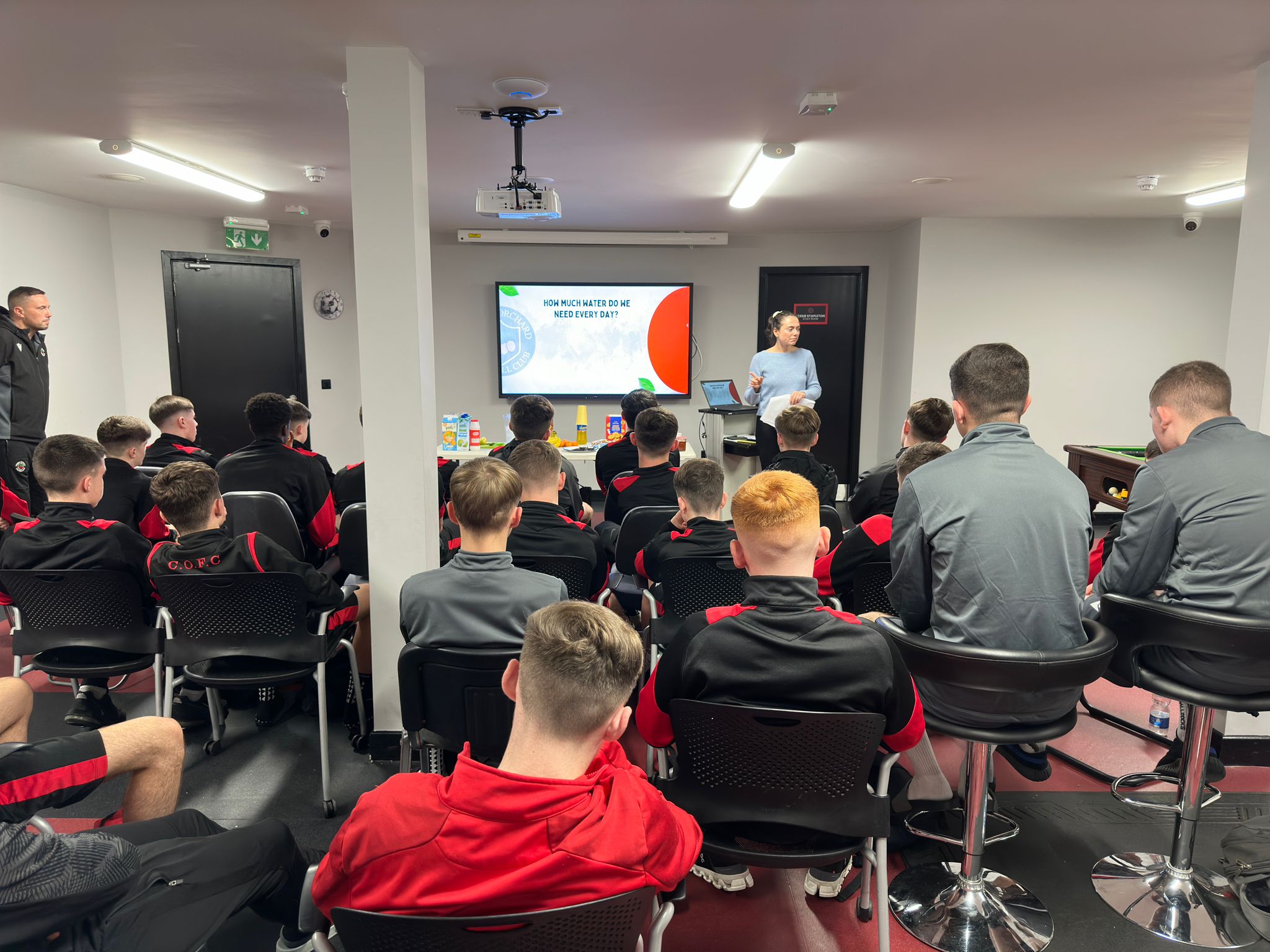
Cherry Orchard FC also received Uisce Cliste recommendations for their tuck-shop, educational materials and nine face-to-face education sessions for children, adolescents and adults.

Following this, hydration-related knowledge and habits improved among children and parents by 17% and over 900 litres of water were drunk during the short study period. Startlingly, there was a 97% reduction in usage by players of single use plastic bottles, aluminium cans and coffee cups.

Launching the report, Jennifer Murnane O’Connor, Minister of State at the Department of Health, said, “This report reinforces that access to clean drinking water is not only a basic right, but a powerful lever for improving public health. Through authentic community collaboration and targeted interventions, we can support education and find solutions to community challenges. With evidence-based policy we can enhance the built environment to make healthy choices much easier in order to improve health, reduce waste and advance health equity across disadvantaged areas.”

Stephen O’Brien, underage chairperson at Cherry Orchard FC said he was proud of the Uisce Cliste project because the practical measures “allowed us to make a real impact on the health of our members.”

Joanna Kelly works with Dublin City Council as its local development officer for Cherry Orchard Ballyfermot and she was Uisce Cliste’s project leader. She said the report shows “the real impact of working directly with communities and stakeholders to design meaningful, evidence-informed interventions. It highlights how public realm improvements, combined with education, can drive positive long-term health outcomes in our neighbourhoods.”
• Adolescents attending a water and nutrition education session.

The research for the report was conducted by Dr. Grace O’Malley, Dr. Desire Naigaga, Dr. Angela Hickey, Dr. Lisa Mellon and Prof. Suzanne McDonough of RCSI University of Medicine and Health Sciences. The project was a collaborative effort between RCSI University of Medicine and Health Sciences, Dublin City Council, and the Sláintecare Healthy Communities Programme, as part of the Dublin City Healthy Ireland Strategy 2022–2025, funded by the Department of Health.

To find out more, visit: https://healthyhydration.eu/

* You can read the 46-page Uisce Cliste report here: https://indd.adobe.com/view/794f33f2-ea57-49b2-9e93-14a5bfbb4c62

Free public water should be available everywhere, argues Grace O’Malley

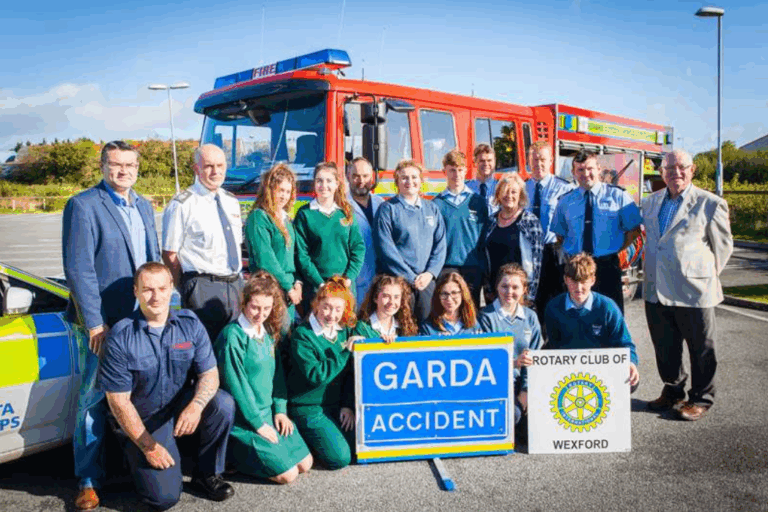
Here’s why Just 1 Life in Wexford won a national award

“In 2006, I was Rotary Club president and we had a visit from Sydney and they gave us the idea and the county manager and myself thought it was something worth doing.

“It’s a road safety programme for Transition Year students. What we do is – with the County Council – bring all the TY students in the county into the Opera House for five sessions, there are about 400 students a time.”

The young people are alerted to the dangers in a dramatic way at the time when they are most at risk.

“We know that nearly half of the fatalities on the road are aged between 16 and 30. We get representatives from the Gardaí, Mental Health Ireland, the ambulance service, the fire service and a consultant from the A&E in Wexford and we frighten the life out of the kids, because we tell it as it is,” said Michael.

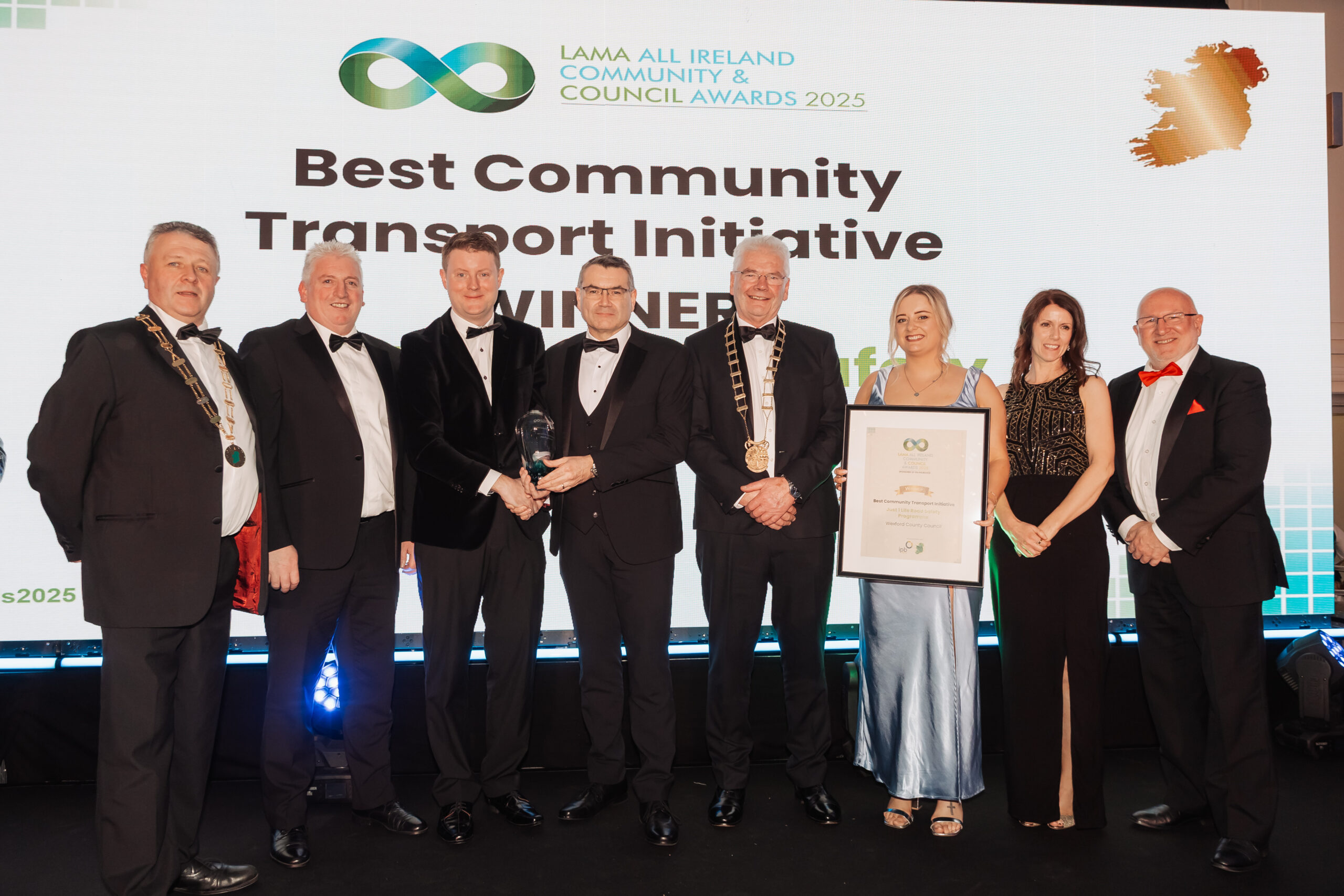
• Just 1 Life in Wexford recently won recognition under the community transport category at the Local Authority Members Association awards.

No-one records accidents that didn’t happen, but there have been encouraging findings.

“I think we have been successful, although it is hard to quantify. Wexford is now one of the safest counties, if not the safest county for this cohort,” said Michael quoting statistics.

There are also signs that the youngsters do take the information on board.

“We do a survey afterwards and 95% pretty well every year say it was very good or excellent and has influenced their decisions.”

He has heard some encouraging anecdotal evidence too.

“I’ve had all kinds of things said to me. I was in a house in Wexford town one day and a young lady there said ‘Oh, I know you’ and we talked a bit about the programme. Her father said she had been a pain since she did it, she was always telling her father to slow down and her mother to get off the phone! So we know it is having some impact.”

Every school in Wexford takes part in the initiative, while other counties are now following its example.

“There are now Rotary Clubs in 16 other counties north and south that are doing it. There will be more next year and we’d like to see it right across Ireland.”

Michael was delighted with the award for the joint initiative between his club and the local authority.

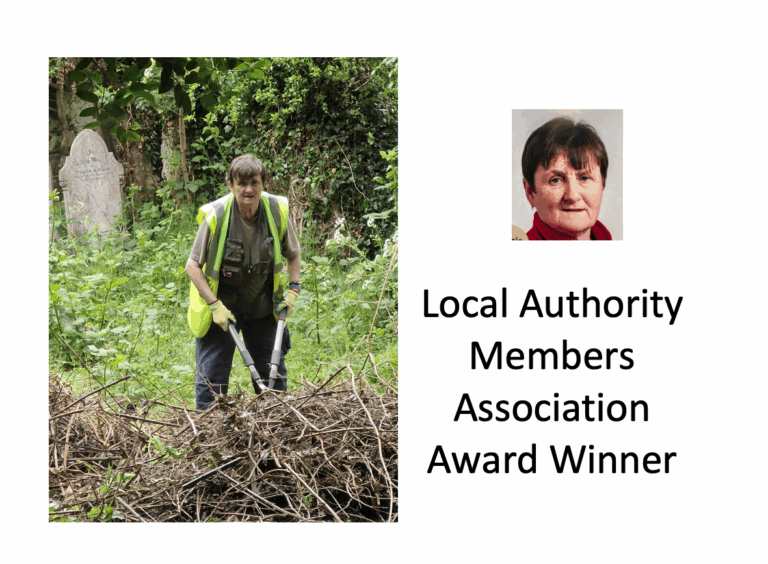
Dublin’s Bernie Roche mortified yet proud to be Community Volunteer of the Year

“I would always have been involved in committees, but I started to get involved in the environmental side of things before Covid. I’ve always had an interest in nature, thanks to my Dad. I met up with people in the Dodder Action and it took off from there.”

As well as the Dodder Action Group and Rathfarnham Village Tidy Towns, she helps out Stepping Stone Forests:

“A chap called John Kiberd heads that up, they put little mini woodlands in schools and public areas. It involves work with the council and the biggest thing we have done is plant 8,000 trees in Dodder Valley Park over the last two years. That was an adventure in itself.”

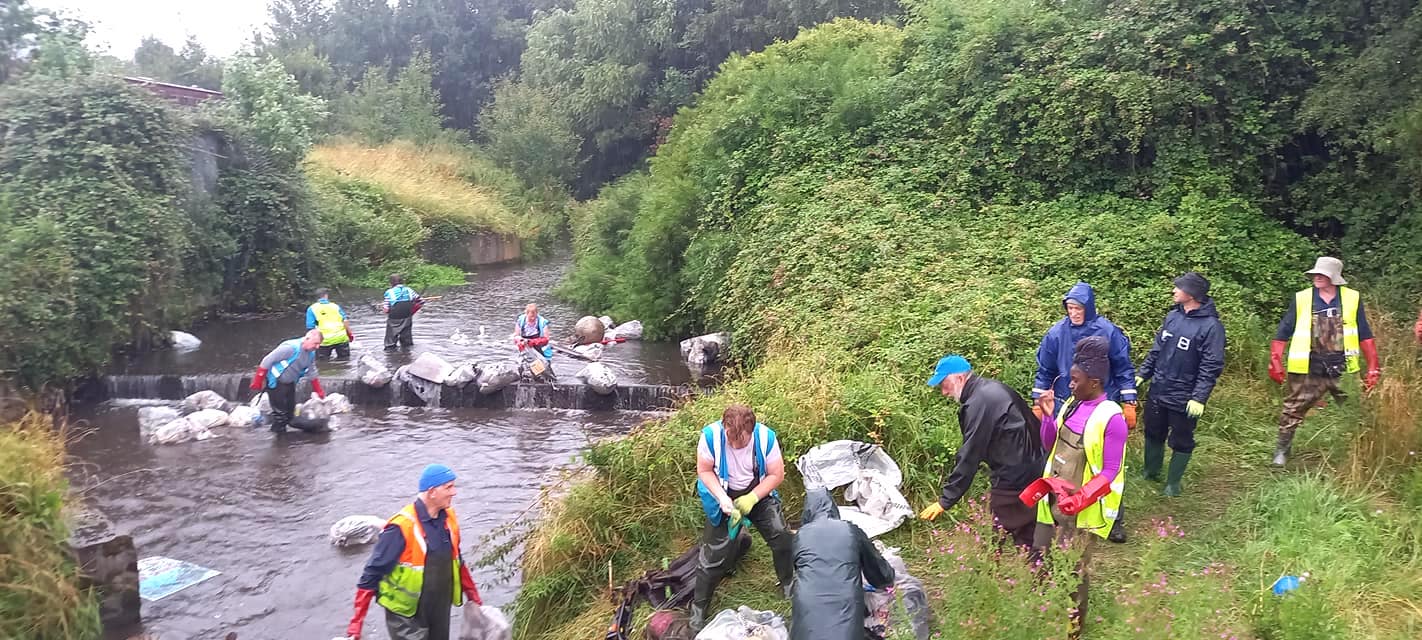
• Dodder Action group at work – follow them on Facebook.

Bernie is also involved in Willbrook Litter Mugs, Ballyroan Garden Group, and other “bits and pieces” around where she lives and the work keeps her very busy.

“I’d be out every weekend and a couple of days a week. Doing things with local schools or tidying up around the village, or planting. Trying to keep the place looking half decent, getting people to appreciate where we live – we are blessed to be here, there is so much greenery around. It’s (important) to appreciate and understand what will be lost if we don’t look after it,” she said.

Now retired from the workplace, her voluntary commitments having filled her days.

“It’s pretty much a full time job. It’d be up to 30 hours a week, but you wouldn’t do it if you didn’t enjoy it. I’ve made an amazing network of friends from it.”

She has huge enthusiasm for what she does and for doing what she can for her local environment.

“I love it, there’s nothing better and you meet such great people. I don’t know if you’ve ever come across Dodder Action, but when you see those people in the river hauling out mattresses, you couldn’t but want to get your boots on and get in and help out. The Dodder is just amazing, and it’s free. That’s what keeps you coming back to it, there’s magic in it.

“People pay to go on these meditation courses, but you can just sit still in nature for five and ten minutes and look at what’s around you… It’s free but it’s priceless,” she said.

A very modest individual, she was stunned to receive the award.

“I was completely taken aback, I have to say. I’d prefer to just do the grunt work and let someone else do the glitter. It made me very proud, but at the same time they could have picked out any of the people that I work with. Once I got over the mortification, I was kind of chuffed I have to say.”

Food brings people together, as volunteers in Carlow prove

She reports: “Healthy Carlow said the second event of Tullow Multi-cultural Supper Club, held at the Cairdeas Centre, was a big success. The mission is to celebrate the rich diversity within the community through the universal languages of food and music.”

The Tullow Multicultural Supper Club brings together people from different cultures to share their culinary traditions and music.
“The event brings people together in a warm, inclusive atmosphere, fostering understanding and connection,” said Gráinne.

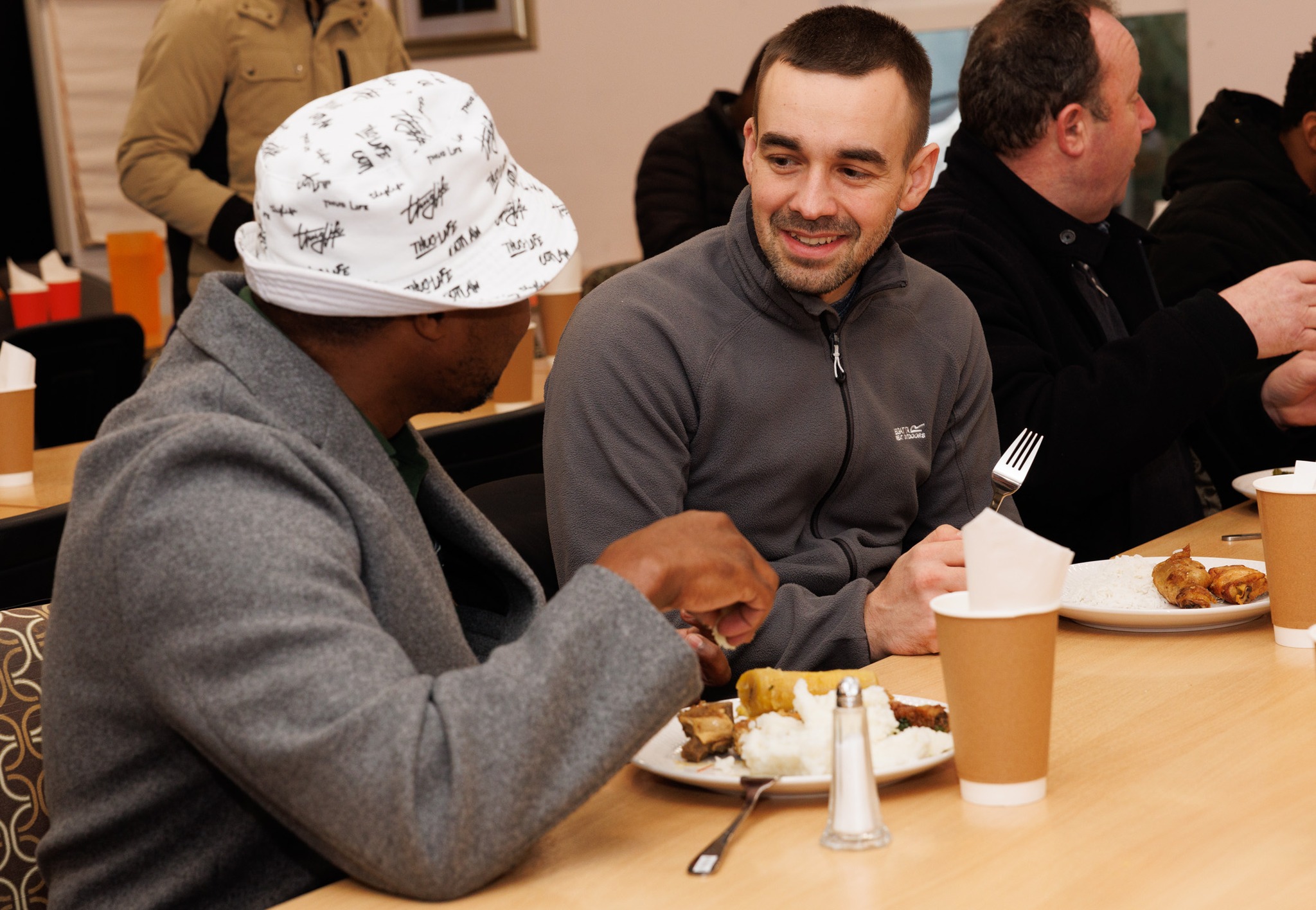
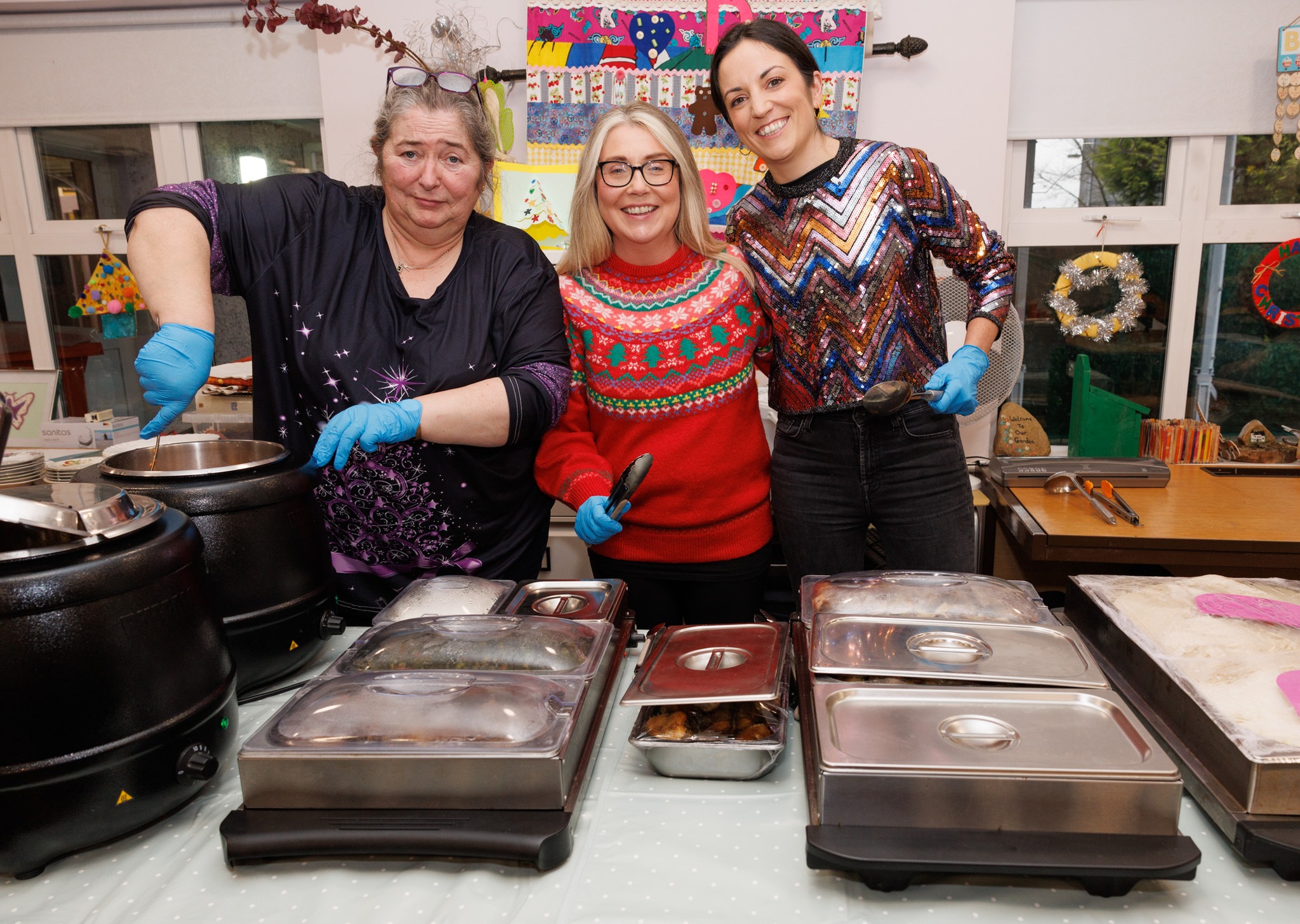
• Food brings people together, as Tullow demonstrates – source – Tullow Men’s Shed Facebook page. Photo by Michael O’Rourke Photography.

Martina Walsh from Healthy Carlow said, “This Supper Club is an important platform for celebrating the diverse cultures (in) Tullow. We are incredibly proud to host these events.”

Frank Morris of Tullow Men’s Shed said the Supper Club was fantastic for connecting people.

“It’s heartening to see the community come together in such a joyful and inclusive setting,” he said.

The Supper Club “is becoming a beloved tradition in Tullow”, said Gráinne. “It offers a platform for cultural exchange and celebrating what makes the community unique.”

• Tullow’s Multi-Cultural Supper Club provides a great welcome. Photo by Michael O’Rourke Photography.

The initiative is funded by Healthy Carlow with support from local organisations including Carlow County Council’s Integration Team, Carlow County Development Partnership, the Cairdeas Centre, Develop Tullow Association and Tullow Men’s Shed.

This article appeared in our Spring 2025 edition, alongside an article from Sean Hillen about Fáilte Isteach Falcarragh, Co. Donegal and other stories on integration and refugees (click below).

You can read the full Spring 2025 edtition HERE (free to read/download).

Falcarragh volunteers are helping war-weary refugees from Ukraine