Thursday, July 2, 2026
Home Blog Page 4

Social enterprises ideal for former prisoners say UCC researchers

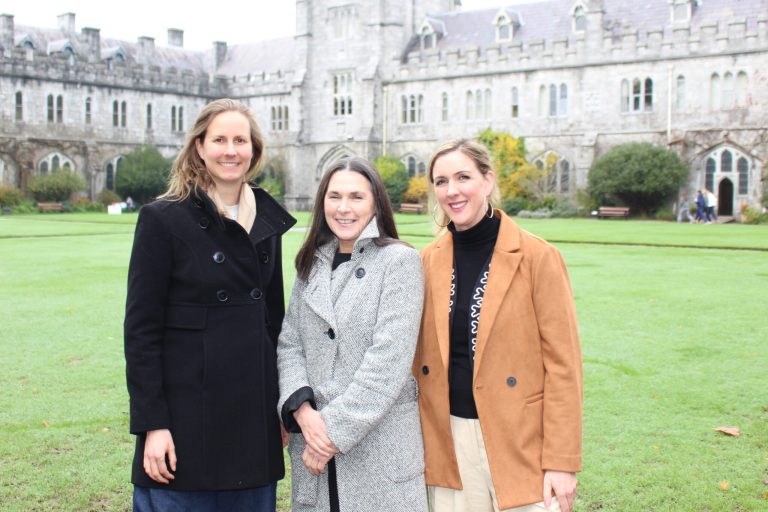
By Jody Moore-Ponce, Mary O’Shaughnessy and Mara Van Twuijver

For those already on the margins, especially people leaving prison, this social fragmentation becomes a chasm. Former prisoners step back into a society where the formal sentence may be finished – but the social stigma continues indefinitely.

The result, as recent CSO data shows, is predictable: – 42% of people released from custody reoffend within a year, rising to 62% within three years. These cannot be understood as individual failures; they arise from the absence of the societal structures that should support people at their most vulnerable.

And it is in everyone’s interest that people with criminal histories are supported to build stable, contributing lives – because reintegration strengthens the whole community.

With new European evidence emerging, this is a timely moment to examine the role of work-integration social enterprises (WISEs). Fortunately, Irish policy increasingly recognises their importance and, because much state support flows through labour-market activation schemes, Ireland has developed a strong WISE landscape.

What makes social enterprises unique?

Recent UK research by Rebecca Jayne Oswald also highlights how WISEs can provide the stability, flexibility and holistic support needed for people with complex needs to move toward sustained employment and desistance.

People emerging from prison often carry labels they cannot peel off: ‘ex-prisoner’, ‘risky’, ‘a bad bet for employment’. These lingering stigmas push them into a kind of social limbo. They are no longer incarcerated but not yet permitted to belong. This is what anthropologists call liminality – the in-between zone where one identity has ended and another has not yet been entered, the liminality experienced by people exiting prison is largely unsupported.

Recent RTÉ reporting on prison conditions has again highlighted the urgency. Overcrowding has pushed prisons far beyond capacity; spaces built for 80 or 90 people now routinely hold more than 220. Services that should support reintegration – education, training, medical care, psychological treatment, and access to probation – cannot function under such strain.

Some positive initiatives do exist – such as UCC’s Inside-Out prison education programme – but overcrowding limits their reach.

WISEs operate in the post-release space – the gap between custody and full participation in community and employment. In Ireland, they intentionally inhabit this in-between space, offering stability, structure and belonging at a point when these are most fragile. Many operate as profit-for-purpose enterprises, combining financial sustainability with job creation and social value.

In Dublin, initiatives such as PACE’s Mug Shot Café (highlighted here and below) and the enterprises developed by Spéire Nua show what this looks like in practice.

“Everybody deserves a second chance” – Ann’s life after prison

The scale of the sector is significant. According to the ENSIE Impact-WISEs Report, which came out in November, 2,604 work-integration social enterprises across Europe supported 214,349 disadvantaged workers in 2024, achieving 66% positive outcomes – including nearly half transitioning into employment.

Ireland’s National Social Enterprise Baseline Exercise likewise highlights the importance of Active Labour Market Programmes in sustaining the country’s estimated 4,335 social enterprises, with 60% of those with paid staff employing people through these programmes.

CONCLUSION

WISEs cannot do this work in isolation. As Ireland reflects on reintegration and social inclusion, there is a valuable opportunity to recognise WISEs as key partners in this landscape.

The State should be asking: How can we support and strengthen these bridge-building organisations? What can we learn from them?

Reintegration is not a personal test. It is a collective responsibility.


JARGON BUSTER

What is desistance?

– Desistance is when a person or group cease a specific behaviour, for example criminal re-offending.

What is a social enterprise?

– The National Social Enterprise Policy (2019–2022) and the Trading for Impact Strategy (2024–2027) define social enterprises as businesses with a core social mission, including training and labour-market integration.

What is a work-integration social enterprise (WISE)?

– A work-integration social enterprise (WISE) is a business that sells goods and services while also providing training and employment opportunities to people experiencing marginalisation.


Calls for legal reform to help people find jobs after prison
Ex-prisoners go from serving sentences to cappuccinos

Regulator responds to complaints from group supporting Ukrainians

VOLUNTEERS ACCUSE CHARITY REGULATOR: Say it is “harsh, unwieldy and unrealistic”

In a statement Helping Irish Hosts said that the Charities Regulator had been unrealistic about what a group formed at short notice to respond to a crisis, could do in a matter of months.

“In May 2022, while supporting thousands of Ukrainians fleeing war, we applied for charity registration. After months of back-and-forth, the Charities Regulator declined in December to recommend Helping Irish Hosts for registration, citing payments to trustees and connected persons, lack of open recruitment processes, uncertainty over salary-setting, and questions about whether paid roles served a charitable purpose. They also suggested we relied too heavily on paid staff rather than volunteers.

“These concerns fundamentally misunderstood the nature of emergency response. We were operating in full crisis mode. People were sleeping in airport terminals. Families were arriving with nowhere to go. We were matching displaced people with Irish households, conducting welfare checks, coordinating safeguarding, and managing complex case work across the country – all while building the infrastructure of an organisation from scratch.”

So much was required that it couldn’t all be done by volunteers alone, with a very real need for paid expertise and skills.

The statement continued:

“This work required specialist skills: trauma-informed support, safeguarding protocols, data protection, and logistical coordination at scale. It could not be done solely by volunteers, nor sustained safely over time without paid expertise. The short-term payments in question – salaries, consultancy fees, and expense reimbursements – were made before any public funding existed.

“People were stepping up however they could: covering laptops, suitcases, food packages, room hire for roadshows. Once the organisation stabilised, all related-party arrangements ended and formal policies were introduced.”

It said that there was no acknowledgement of the base they were coming from, where nothing had been in place previously.

“The Regulator applied the standards of a long-established charity to what was, in effect, a rapid-response community start-up. There was no clear guidance for organisations formalising during a crisis. Departments within the CRA gave conflicting advice.

“There was no pathway that acknowledged the public interest work already being delivered, work that was publicly recognised, government-supported, and carried out under a service-level agreement with the Irish Red Cross.”

It claimed that the Regulator seemed to oppose the group rather than assist it, while it showed no apparent respect for the work it was doing.

“Instead of support, we faced an adversarial process. We were threatened with jail time. Treated as bad actors. Our work – helping Irish households open their doors to people fleeing war – was never acknowledged as being in the public interest, nor was our purpose deemed charitable,” said the group.

Ultimately its board decided in early 2023 not to continue with the registration process.

It says that it has continued to play a positive role in society, despite its experience.

“Helping Irish Hosts continued to operate as a Company Limited by Guarantee – seeking and receiving grants, delivering publicly funded work through our agreement with the Irish Red Cross, and running philanthropic and EU-funded projects.

“By the time our official role in the government’s Ukraine response ended in April 2025, we had matched over 3,000 displaced people with 1,500 Irish households, built a wealth of resources for hosts and guests (including a support line that fielded 70 calls per day) and built a peer-to-peer support network that sustained placements – many still going strong three years later.

“We maintain independently audited accounts for three consecutive years, operate under a strong and active board, and voluntarily adhere to the Charities Regulator’s governance standards – because we believe in transparency, integrity, and public trust.”

Helping Irish Hosts claims that its experience shows that the current system works against anyone trying to respond to an emergency.

“It penalises agility, punishes those who act before bureaucracy catches up, and offers no pathway for groups doing urgent public-interest work to formalise without jeopardising their ability to operate.

“Communities were stepping up when systems weren’t. The regulation process should have supported that, not threatened to shut it down,” the statement ends.

Response from Charities Regulator

The Charities Regulator issued a response in which it said its role was not to stop anyone doing something positive, but there are legally defined requirements that a group must meet if it is to be designated a charity.

“The Charities Regulator does not prevent an individual or an organisation from carrying out good work. Charities are one type of not-for-profit organisation, and our statutory role is to regulate Ireland’s 11,500 charities on behalf of the public so they can have trust and confidence in the sector. The Charities Act 2009 is very clear on the requirements to be a charity, what we call the Charity Test, and by law, an organisation must meet each of these requirements to be registered.”

It said that these requirements are still in place even if a group is formed quickly to respond to a crisis.

“The Irish people are known for their generosity including at times of national and international crisis when they understandably want to help in whatever way they can. However, registration is a legal process set out in law and this takes time, which is why we encourage people to donate time or money to an established registered charity at a time of crisis, as it is a much more effective way of assisting people than seeking to set up a charity from scratch.

“Any changes to the requirements to be a charity would require a change in legislation, which is a matter for government.”

Perhaps the most striking complaint from Helping Irish Hosts was its claim that its representatives had been warned they could be sent to prison.

While it didn’t address that claim specifically, the Regulator’s statement said, “On a general note, the Charities Regulator takes a proportionate approach to regulating the sector. However, we are obliged to point out the potential legal penalties of non-compliance with charity law. This is to protect the public who may donate to organisations they believe to be charities which are regulated entities.”

Groups up support for host families amidst urgency to accommodate refugees by September

Red Cross too slow: Irish farmer hosting Ukrainian refugees on why others should do the same

“Our job is to smash limiting beliefs” – Eileen McHugh

Education

She said that returning to education was a huge step for herself.

“The first step was college. I was a full blown heroin addict doing my Leaving Cert and I didn’t do too well. I went back to Ballsbridge Business College and then did Organisational Management in DCU. And all these bits were building confidence, slowly.”

She said that she became aware of the Back to Work Enterprise Allowance while involved with Innovate Communities in Ballymun, and she became aware of the supports that were available for things like Hair Together.

“The big support then for the last couple of years has been Inner City Enterprises. They give us hub space at a reasonable price and supports. I just have to call them up with whatever I need and I always need stuff because we’re growing and developing.”

Impact

It has helped a lot of young people who are having difficulties.

“We’ve had just under 300 young people go through our programme. We’ve had people get work experience, get jobs, the impact we’ve had is incredible. We work with young people, TYs, that are probably not turning up for school. We’ve ran programmes with Tusla, Extern, the Garda Youth Diversion, for young people that are struggling like I was when I was younger. We have a winning formula I suppose.”

The work it has been doing has been widely recognised.

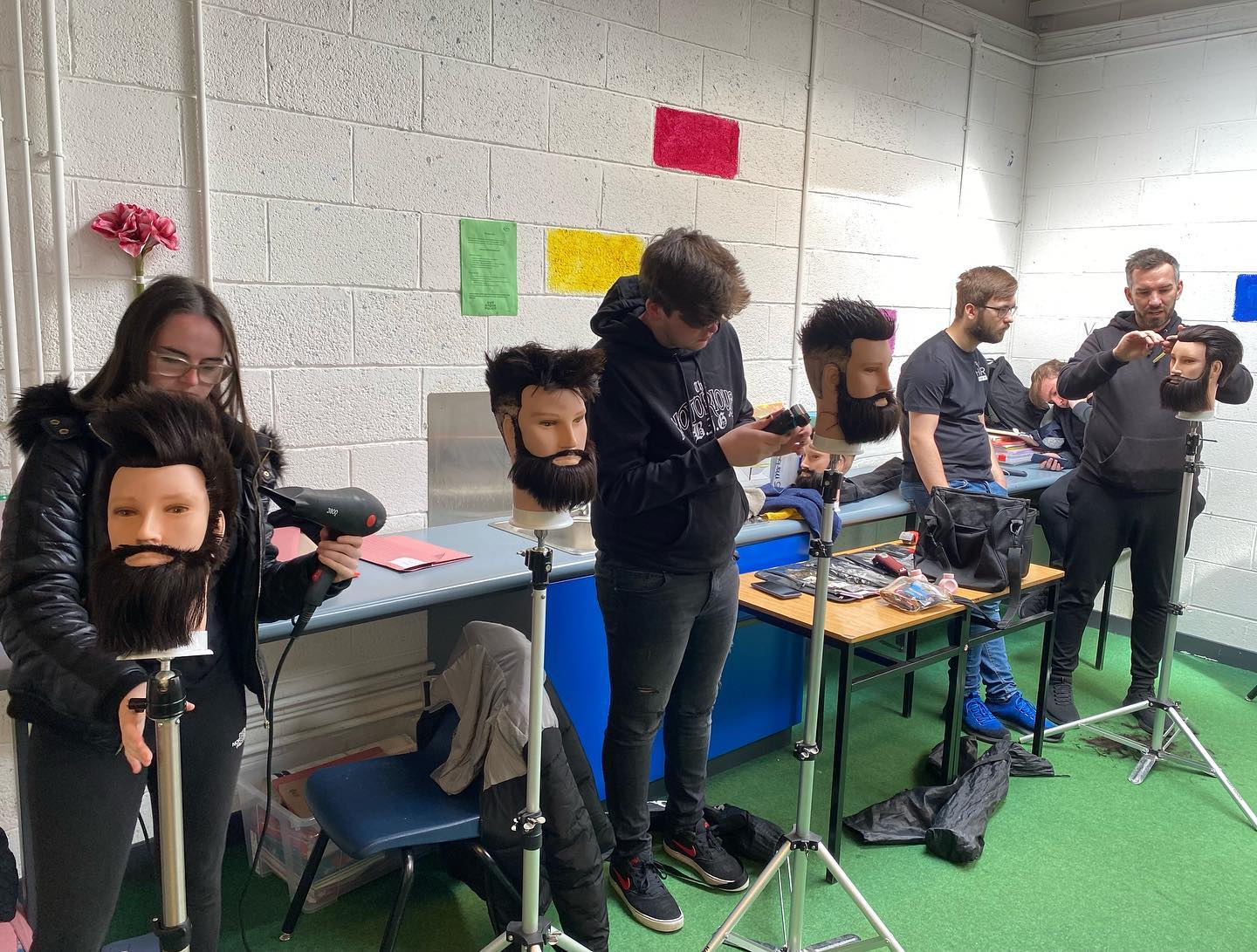
• Young people training with Hair Together.

“Today we are multi award winning. This year we won the Image PWC Social Entrepreneur of the Year Award. We won global awards, we won the Kevin Murphy Icon Award, that’s hugely recognised in the hair world, I don’t know if any of you know it, it’s a big deal in hair on a global level. One that was very special was the Dublin City Council Social Enterprise Awards this year. That was really special to me, I get real emotional thinking about it. When your own city backs what you’re doing…” she said, struggling to hold back tears.

As she addressed 250 people at the ‘In Our Words’ SICAP showcase event in Athlone, in October, Hair Together was on the verge of taking a significant step forward, and in time she wants their intervention model to expand to different parts of Ireland, giving young people support across the country.

“We’ve just got the keys to our first premises in Ballymun. We’re ready to open the world’s first Training for Impact Salon and Academy. It’s the world’s first model like this. I found it really hard to get supports for social enterprise, but on our own we raised €125,000 through philanthropic donations and built a pipeline like that. We have just closed off the money and we have got the keys and we’re hoping to open soon,” she said.

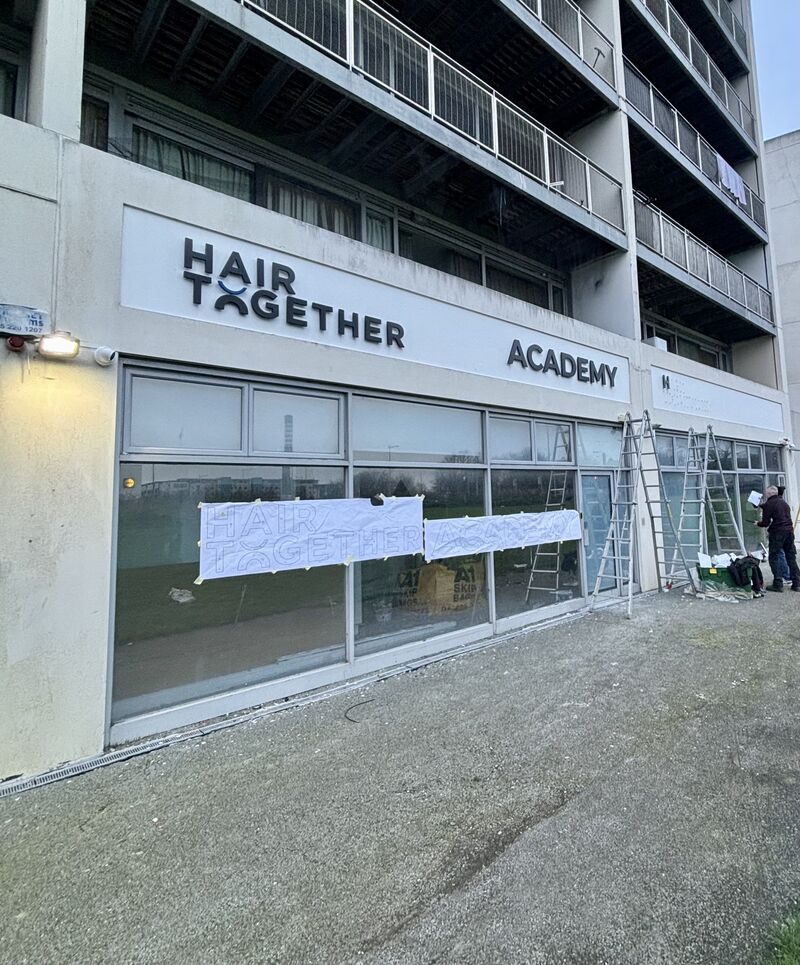
In December, seeing the sign go up over their new premises she and the team were “all feeling emotional”.

“We knew this day was coming, but nothing prepares you for the moment,” she said.

• Hair Together’s new premises all but ready to open.

“This isn’t an idea anymore, its not a plan on a page, it’s our place. This is us, finally standing in the space we’ve been building towards for years. This creates four new jobs instantly and we have a little system going where we have three chairs for rental to support people who are like me when I started out as a sole trader and didn’t know where to go or what to do. We’ll be there to support them and the plan is in the next five years to have 20 more Hair Togethers around the country.”

Possibilities

She said her own example shows the potential that is within people, even when things don’t look very positive.

“I’m here today to prove that no matter how dark life gets , with the right supports and a bit of bravery and faith, you can build something powerful. Hair Together is about a second chance, belonging and showing the next generation that they matter. Our job is to smash limiting beliefs and to get our community dreaming big and to stand beside them when they make those dreams real. If I can come through addiction, homelessness and single motherhood to build this, imagine what’s possible for the young people that we serve.”

Get training! Book an appointment!

W: https://hairtogether.ie/

Difficulties opening bank accounts is holding people back from Tús opportunities

Qualified for Tús employment scheme, but unable to take up offers

James is a supervisor whose job involves working with participants on Tús work placement schemes, and he sees up close how hard it is for some people to open accounts.
It is so bad that people end up walking away from the work opportunities, so frustrated and disenfranchised are they by the bureaucracy they must negotiate.

For every 100 people he seeks to set up with Tús placements each year there are usually around 30 that struggle to set up a bank account.

“The main challenge is that none of them would have a driving licence and never will. The other challenge is that they wouldn’t have a passport, they’d probably have never left their area to be honest with you. Another challenge with online applications is that there are literacy issues, and another part is that they wouldn’t be savvy with a computer. They might have access, but they wouldn’t have the skills to go through the process,” he said.

He is not allowed to give them the help that they need.

“It can be quite challenging, we try to help them as much as we can, but with GDPR and everything else we are very limited. If they are communicating with the passport office and you are lucky enough to get through, they won’t talk to me, they have to talk to the participants and they wouldn’t even know where to start,” he said.

In his experience the financial institutions expect a level of IT knowledge that the participants don’t have.

“I talked to Bank of Ireland and Permanent TSB and they said to send them in to an appointment, we’ll help them get set up. The participants go in and next thing they are being directed to doing it online, and that puts them off completely again,” he said.

Without a bank account nothing will happen for those people who might have otherwise found a path back to the workforce by working part-time, 19.5 hours a week.

“If we find a placement that is a match to their skills and interests, and the organisation that we work with are willing to offer the place, we can’t offer a 12-month contract for them to work. We can only pay them a salary into a bank account, we can’t do cash, we can’t do it through the post office, it has to be some sort of financial institution.”

He has been dismayed to find that banks will not accept the Public Services Card, as he like many others thought that it was introduced for this kind of scenario. If it was accepted, it would be more straightforward for people without other forms of identification to open a bank account.

Meanwhile, people who are on the brink of significant personal progress through Tús get knocked back by something that should be accessible.

“It takes a lot of effort to get them to this point, to have the confidence to come in and try this programme, to get back into the labour force. Then they give up after a few tries. We try our best to support them as much as we can, but unfortunately without a document of some sort it can’t go any further.

“Unfortunately, I have to refer back approximately 30% of my participants, because I can’t get an account opened for them because of this protocol. I understand it is in place because of money laundering and all of that, but there has to be some way.”

He also sees the impact on those who are left behind by the continuing drive to get people to do everything on the internet.

“Everything has moved online, you do your banking online, pay your bills. But there is a generation that won’t move over to the digital format. They are finding it challenging. Recently they’ve found they can’t pay their bills at the Post Office anymore, which is another headache,” he said.

Response to questions put to Dept. of Social Protection

The Department of Social Protection issued a statement (below) to Changing Ireland as follows:

The Department has received a small number of queries regarding the payment of wages to a Tús customer that doesn’t have a bank account. In these instances, the Department advises the customer of the process involved in setting up a bank account and directs customers to supports available in the Implementing Bodies and online, such as that provided by the Citizens Information Board on their website. In addition to mainstream banks, customers are also advised to consider opening an account with other providers such as Credit Unions, An Post or digital only banks that operate primarily through online platforms. The Implementing Bodies actively work with customers who are interested in taking up a Tús place and who may be encountering issues setting up a bank account.

Under current legislation the Public Services Card cannot be requested by a financial Institution as proof of identity. The Banking and Payments Federation of Ireland provides guidelines for people who may not have the standard documentation required to open a bank account where generally it is recommended that an in-person appointment is made in a financial institution for these cases, further details can be found here: https://bpfi.ie/a-guide-to-moving-your-personal-account/opening-a-new-personal-bank-account/

Who is the Tús scheme for?

  • Tús is a community work placement scheme which provides short-term working opportunities for unemployed people who are in receipt of a qualifying social welfare payment.
  • Tús is managed by Implementing Bodies, formerly known as Local Development Companies and Údarás na Gaeltachta, on behalf of the Department of Social Protection, which has overall responsibility for the scheme.
  • Tús participants work 19 ½ hours a week and the placement lasts 12 months.
  • Tús participants are paid directly into their bank accounts by Electronic Funds Transfer (EFT) on a weekly basis.

Traveller-led housing in Galway shows other counties the way forward

0

Co-launched by CENA and Galway City Council

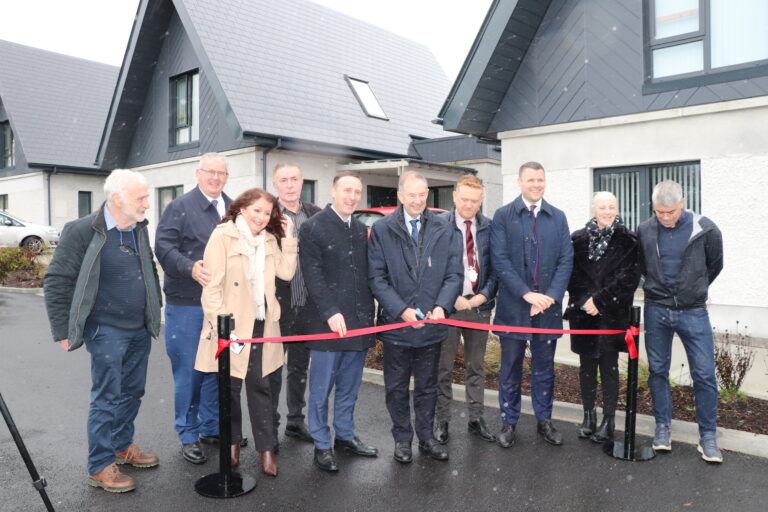
The official launch of five new Traveller homes – in an area now called Bóithrín na Saoirse – is the result of a new collaborative approach to delivering Traveller-specific accommodation, one that places Traveller voices at the heart of the process.

The development was led by CENA Approved Housing Body with support throughout from Galway City Council. The name Cena is the Cant word for home.

Speaking at the official launch, Traveller and local resident John Ward said, “Our life has changed completely and this is the way forward for Travellers, places like this.”

The launch was performed by Éamon Ó Cuív, former communities minister and former deputy chair of the Joint Oireachtas Committee on Key Issues affecting the Traveller Community, and by Cllr. Alan Cheevers, Galway City’s Deputy Mayor.

Cllr. Cheevers said he was “delighted to see the opening of this new development, which is the first of its kind in Galway City.” He said, “These new homes represent not just bricks and mortar, but stability, respect, and opportunity for families to thrive.”

Mr. Ó Cuív said he was also “delighted” the project had come to fruition. He said, “When CENA set up, I really thought it was a good idea. Obviously they need the funding and the support of the statutory agencies and the advice and the sites and all the rest, but it does give a buy-in that is key to how we should go forward.”

“I look forward to other local authorities following what Galway has done here in working with CENA to get everything into place to provide more housing,” he added.

Brian Dillon, CEO of CENA Approved Housing Body, said, “The homes here, and especially the process involved in their development, provide a pointer to future provision of sustainable Traveller accommodation that recognises identity and distinct culture.”

The homes were already occupied by families although not all attended the launch.

Lavish praise for Galway City Council is still not something you easily find among Travellers in Galway and the word “Rahoonery” – where the new homes were built – comes from “the suburb of Rahoon in Galway where residents expelled Travellers from their camp by force in 1969”.

Nonetheless, as Mr. Ó Cuív, seen as a strong supporter of the Traveller community and of the Traveller housing body CENA, said, “The opening today is a seminal moment”.

It was indeed remarkable to see the buildings completed and occupied and was a proud moment for all involved, particularly the residents, CENA and Galway City Council, but also Desiun Architects and Pat Loftus Construction.

Hundreds attended inaugural Local Development Conference

0

It opened with a welcome from Thomas Fitzpatrick, chair of the LDCN, and Sean Carey, Cathaoirleach of Mayo County Council, who highlighted the ethos of Local Development Companies and their impact through programmes such as SICAP, LEADER, and the Rural Social Scheme.

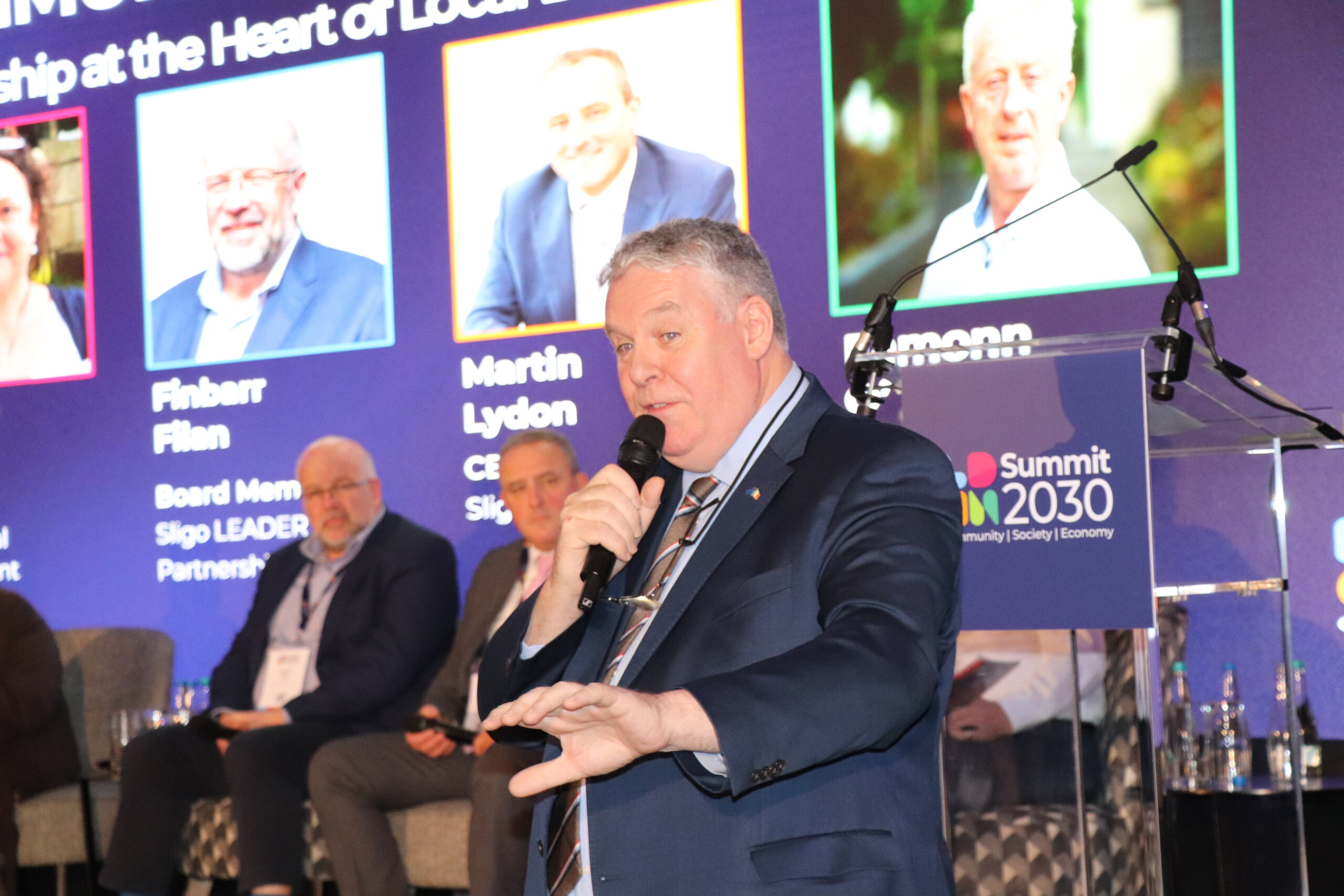
A later panel discussion focused on integrated services: the idea that by housing complementary programmes within one community-based organisation, the total becomes greater than the sum of its parts.

Minister of State Jerry Buttimer spoke on the first day, highlighting the vital role that the local development sector plays in fostering partnerships, empowering communities, and delivering real, measurable change.

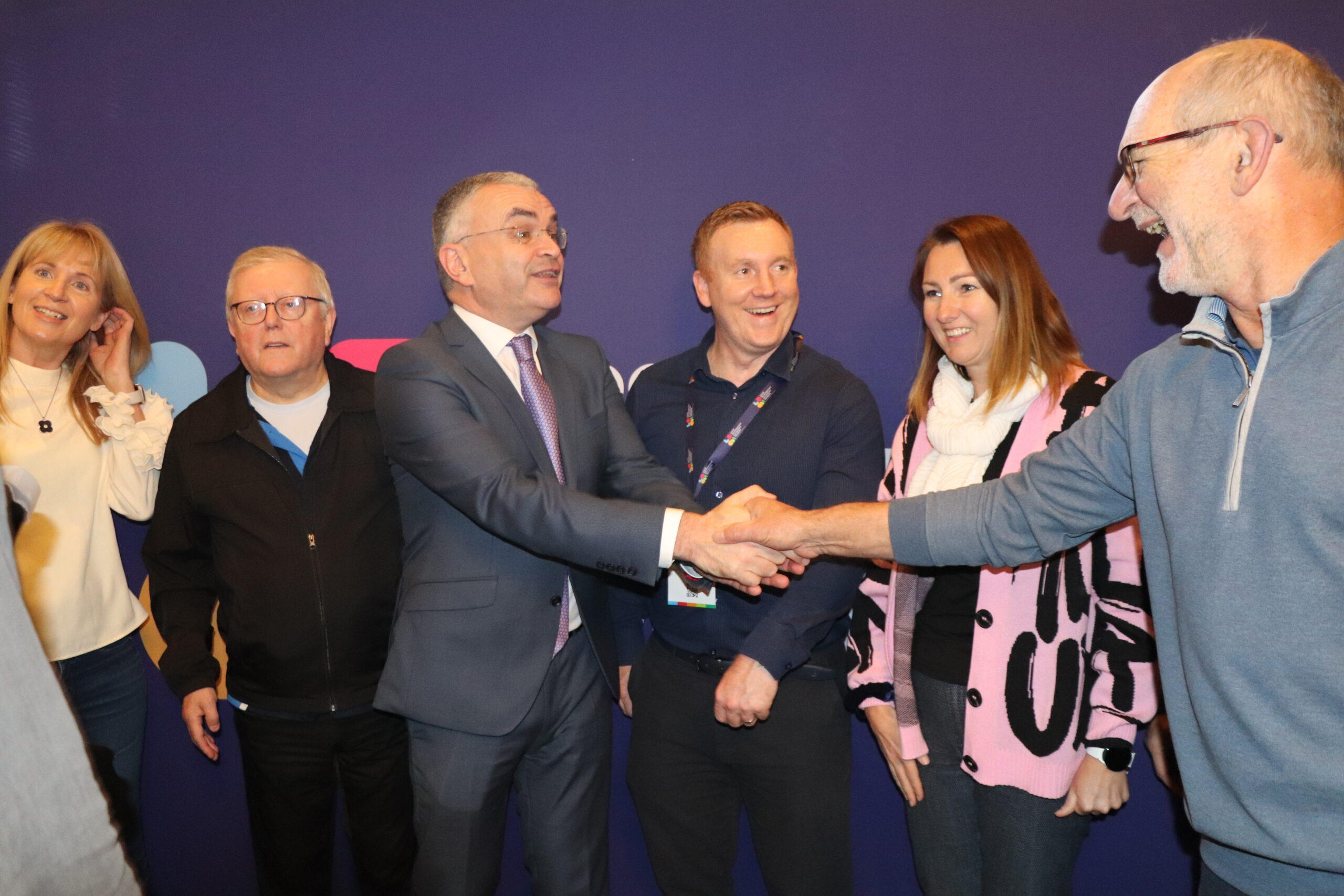
• Minister Dara Calleary greets attendees as they arrive in his hometown of Ballina, Co. Mayo.

Minister Dara Calleary welcomed all to his Moyside hometown on the second day. In his keynote address he reaffirmed his Department’s commitment to supporting Local Development Companies. He emphasised the importance of sustainable funding for programmes such as SICAP, LAES, and LEADER, which underpin community-led development nationwide.

The conference also featured panel discussions with national and international speakers including Minister of State Jennifer Murnane O’Connor, Michael Reilly, Dr Ebun Joseph, Dr Anna Visser, Piotr Sadłocha, Bairbre Nic Aongusa, Rosarii Mannion, Michelle Carney and Dr Anne Devlin. Broadcaster, comedian and author Colm O’Regan was MC.

Voices from the floor included a contribution regarding LEADER funding by former community worker and now MEP (Independent) Ciaran Mullooly.

• Ciaran Mullooly, MEP (Independent) for the Midlands–North-West, speaking in Ballina.

Hundreds attended over the two days in Ballina and over 40 Local Development Companies were represented. Reflecting on the event afterwards, Ryan Howard, the CEO of South and East Cork Area Development, said the conference posed important questions:

“Over a thirty-year period, investment in community and local development has proven to be very effective in supporting sustainable development, enabling communities to prepare for and address major challenges in terms of equality, accessibility, connectivity, and integration. The levels of funding made available has not kept pace with the scale of the work that communities, volunteers, and community-based services are expected to manage. Too much pressure is being added to volunteer-dependent supports leading to burn-out. And the funds have some of the most ridiculous levels of administration,” he added.

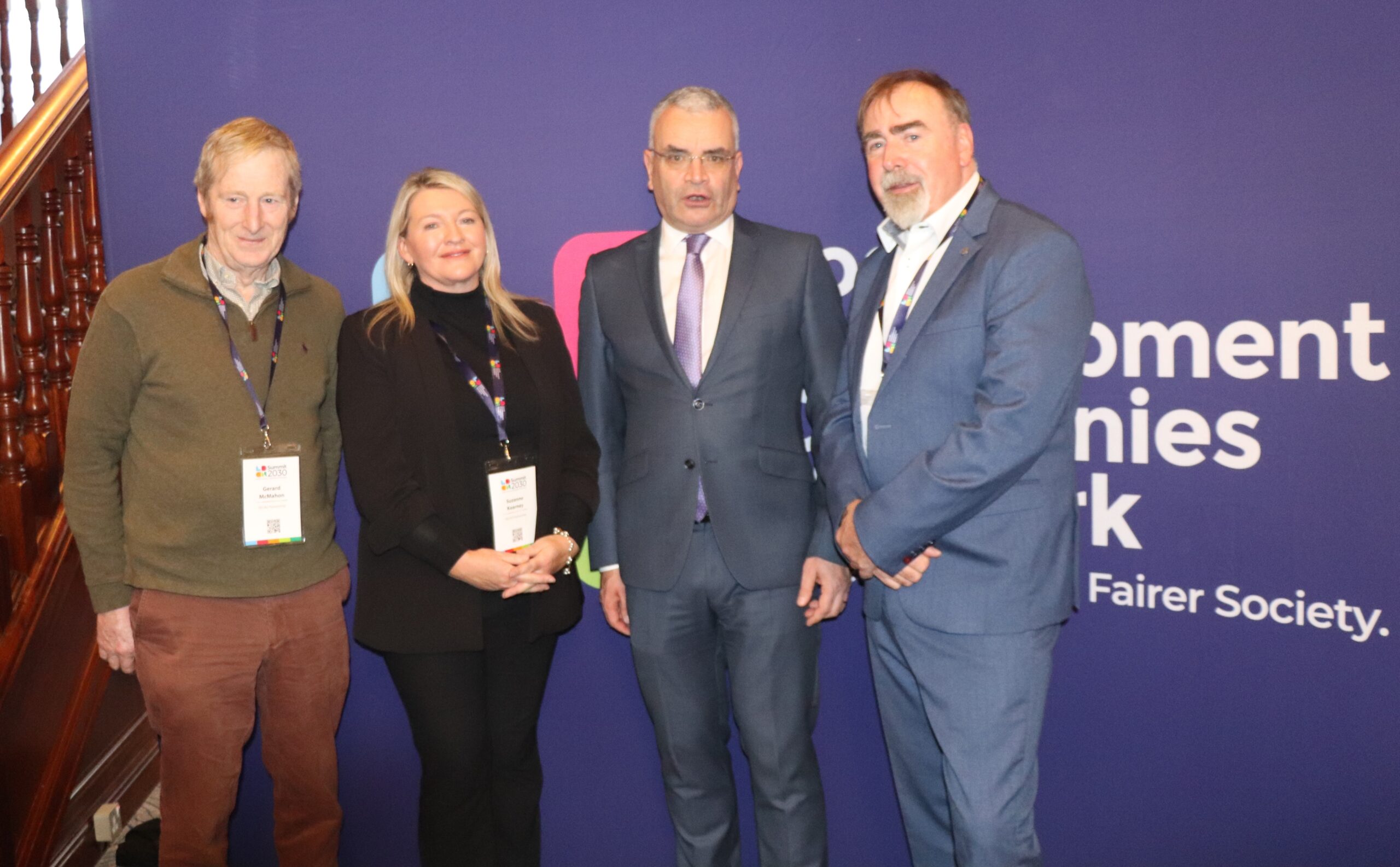
• SECAD chair Gerard McMahon, assistant CEO and programme manager Suzanne Kearney, Minister Dara Calleary and CEO Ryan Howard in Ballina.

Other issues were addressed over the two days included threats to future EU LEADER funding, lessons from cross-government coordination on child poverty and child well-being, and how building connections can help to tackle poverty.

Check our social media for photos from the event.

Ukrainian community workers put many questions to President Zelenskyy during recent visit

By Natalia Krasnenkova

The first official visit of the President of Ukraine to Ireland was a significant event. Despite the intense schedule of official meetings, the President found an opportunity to communicate with the Ukrainian community.

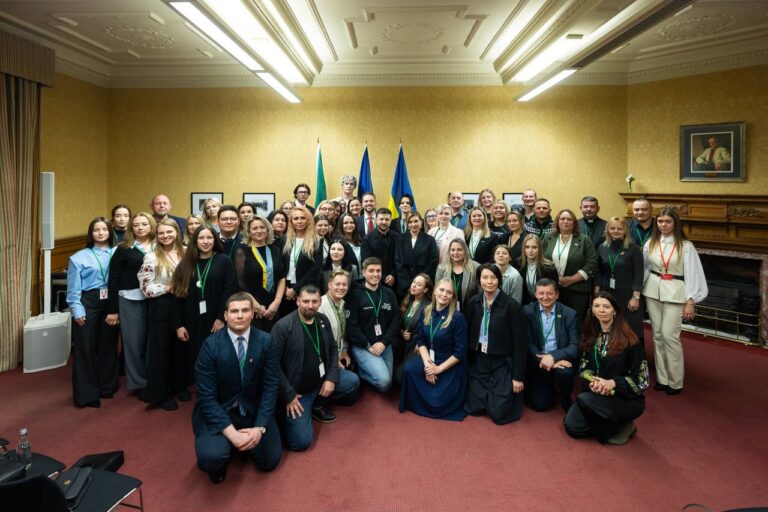
Over 40 community representatives from all counties in Ireland attended the event in Dublin.

This gesture highlights the importance of the work and efforts of local development organisations such as NEWKD* and Ukrainian activists in supporting the community.
It was a very inspiring and warm meeting for Ukrainians. From the very beginning, the President proposed a dialogue format: we asked our questions, and he listened carefully, answered, and joked. Volodymyr Zelenskyy was attentive to the questions, humane, and sincere. The meeting lasted about an hour. Ukrainians had many questions for the President.

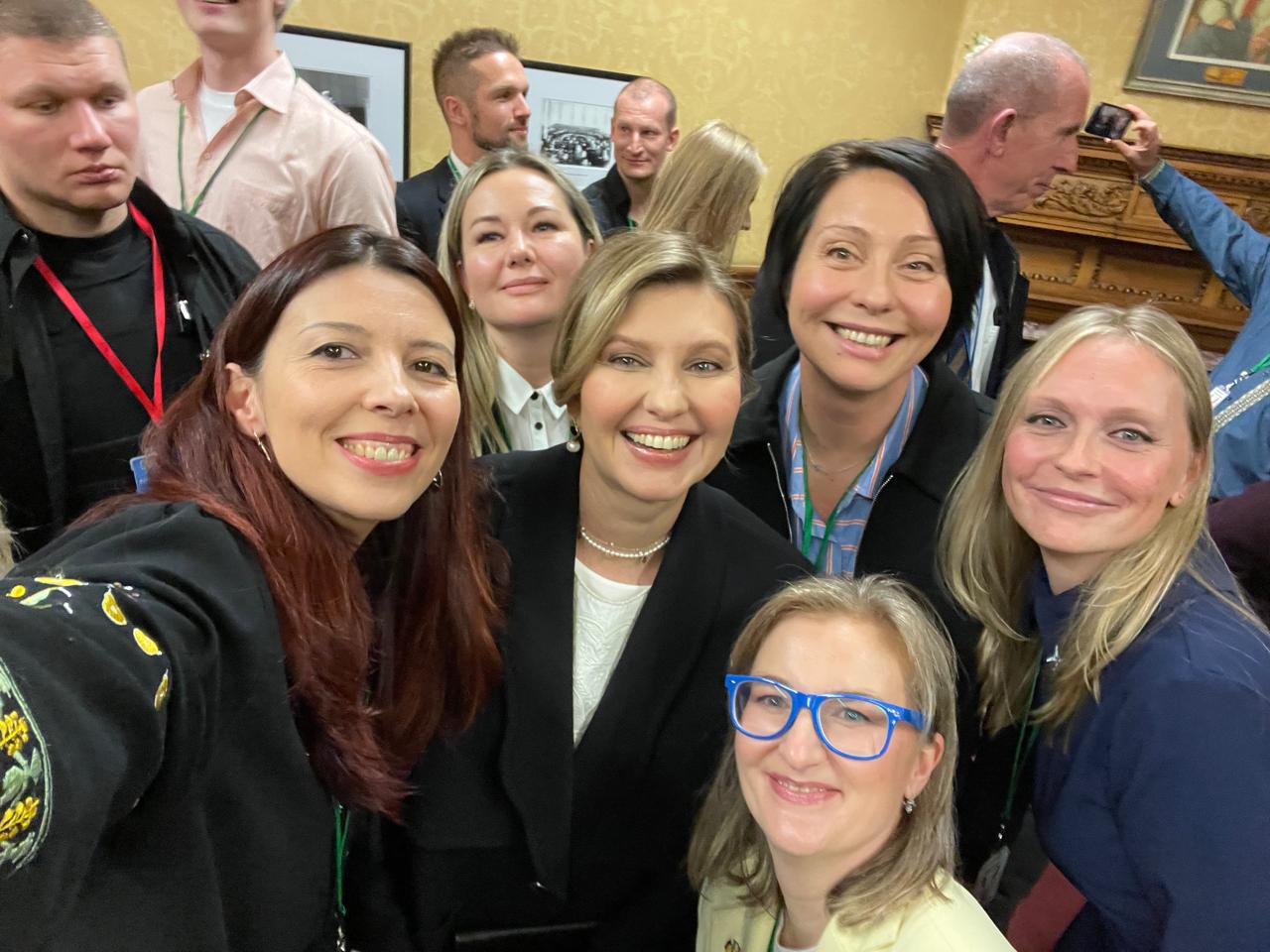
• Ukrainian community workers in Ireland, including Olya Marintseva and Natalia Krasnenkova from North East West Kerry Development, pictured in Leinster House on December 2.

Unfortunately, I did not have time to ask a question about cultural diplomacy and countering disinformation. Now we are observing a wave of fakes about Ukrainians in Ireland, various provocations and hate speech on social media. It looks like a deliberate campaign to incite hostility between Ukrainians and the local population. The same information attacks are taking place throughout Europe, their goal is to discredit Ukraine and Ukrainians and incite hostility between communities.

Questions we discussed included: A unified curriculum for Ukrainian schools abroad; Issues of European integration; The community’s role in defending Ukraine’s interests abroad; and the opportunity for Ukrainian athletes who found themselves abroad to represent Ukraine in international competitions. I am very glad that these important topics were raised.

I was lucky to have a brief conversation with the First lady Olena Zelenska, who is implementing the Ukrainian library project around the world. Specifically, yesterday she opened a Ukrainian shelf in the Trinity College library. We discussed the possible expansion of Ukrainian shelves in libraries across the country. Ukrainian shelves have already been created in two Kerry libraries — Tralee and Dingle — by NEWKD’s Ukrainian team.

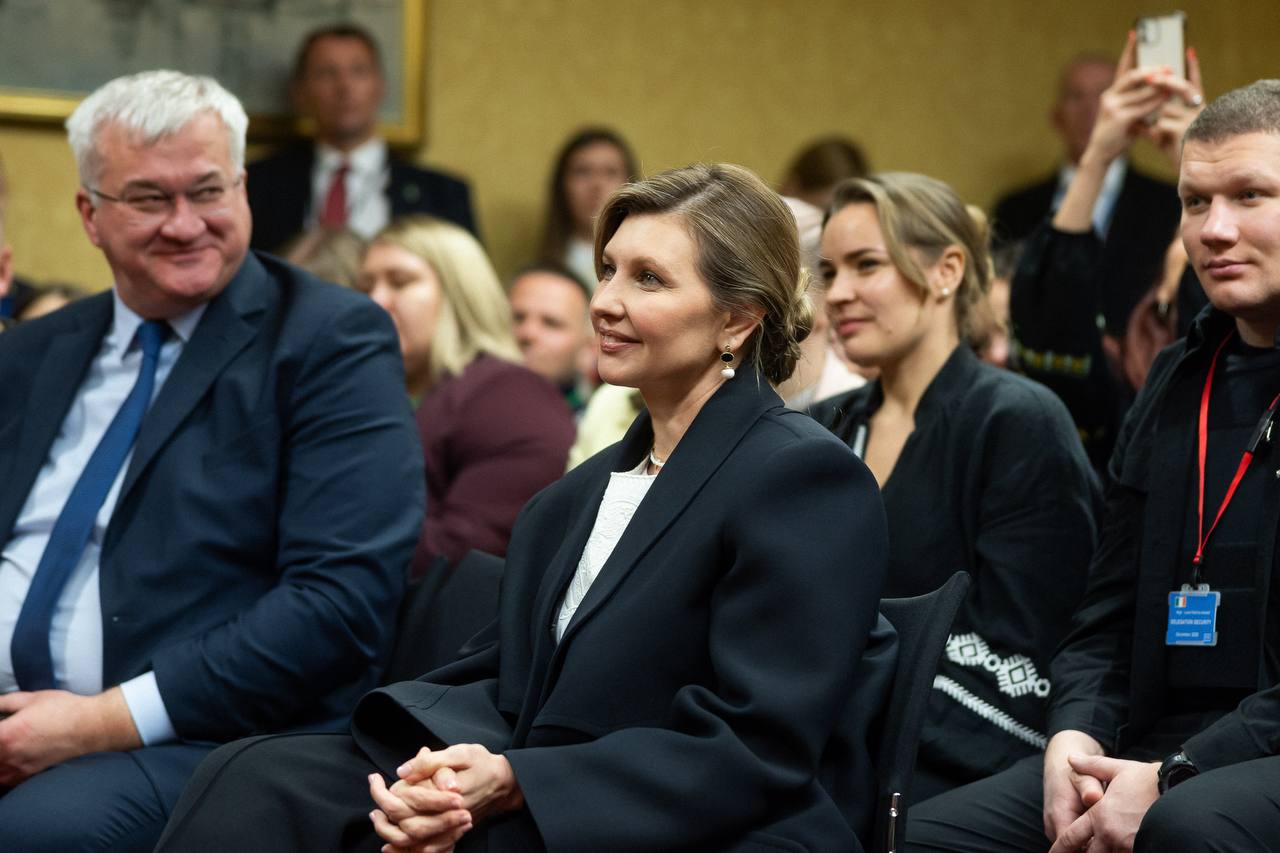
• First Lady of Ukraine Olena Zelenska pictured at the meeting with community workers in Leinster House.

On his official page, Volodymyr Zelenskyy noted:

“A good and sincere conversation and a truly special visit — the first visit of the President of Ukraine to Ireland since the establishment of diplomatic relations after the restoration of Ukrainian independence. A strong signal that we are indeed building reliable relations with Ireland. And above all, the Ukrainian community here is important in this process. Thank you for this meeting and conversation. It is important that the voice of Ukrainians in the world continues to be tangible and strong for the sake of our State’s strength.”
For me as a community worker with the Ukrainian community and an activist, this meeting with the president was a recognition of our teamwork and an opportunity to be the voice of my community. For Ukrainians who are in Ireland due to a full-scale war, it is very important to have this connection with Ukraine and feel included in the life of Ukraine even 3,000 kilometres from our home.

This meeting inspires me to continue working for the community. I would like to note that we also always have the support of our SICAP manager Robert Carey and the entire NEWKD team.

(Natalia went on to pay tribute to the Embassy of Ukraine in Ireland for their organisational prowess.)

* Community workers are employed by North East West Kerry Development (NEWKD) and other local development companies around the State through the Social Inclusion and Community Activation Programme.

An Irish community worker’s view on Zelenskyy’s visit to Ireland


SICAP manager Robert Carey from Kerry was in Leinster House when President Zelenskyy addressed a sitting of the Dáil and Seanad. He writes:

It was a privilege to be invited. In an era when there is a deficiency of brave politicians, President Zelenskyy is definitely a brave politician. He’s a generational leader
He thanked Ireland for providing refuge and for all the support. He also noted that Ireland is one of the few European countries that have battled imperialism for hundreds of years, before it got its independence, so there’s a certain commonality with Ukraine.

It’s important we don’t forget that because we’ve had our independence for quite a while. It’s important to keep Ukraine in the news. And it’s important that community workers continue to highlight the injustices happening in Ukraine and ensure that people don’t fall into the trap of thinking things aren’t as bad as they actually are there.

For those of us who know members of the Ukrainian community, Ukrainians have given Ireland as much as Ireland has given Ukrainians, in my opinion.

Dublin – Crosscare Community Cafe also provides a grocery service

0

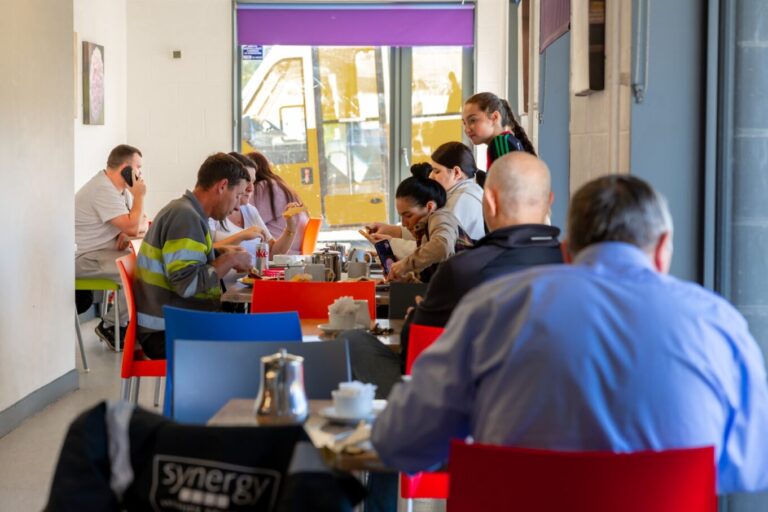
“Our cafe is open to everybody and you can get a three course meal for €5. We have our income from what people pay for the food, but that doesn’t cover the cost. We’re competing with other NGOs for funds and donations. It is difficult, but we are reluctant to put up our costs because we know people are struggling with the cost of living.”
“You’re dealing with rising costs of staff, food and energy. The costs are going up, but the demand is also going up at the same time.”

The background of people coming there for meals has changed radically, due to the extreme costs facing Dubliners.

“A couple of decades ago when we were doing this, it was people with really obvious issues like homelessness or addiction; not so now. We have families and we have working people coming in. People might have decent jobs but if they are in private rented accommodation in Dublin and have a kid in childcare, they’re really pressed. If they can come in and have a dinner every day they bring down the dinner and cooking costs at home,” she said.

Crosscare also offers a citywide service in food poverty casework

Crosscare was founded in 1941 by the Catholic Church and its mission is simple – “to support people at those times when life gets tough”. As well as Portland Row cafe, Yvonne Fleming says the organisation helps those struggling with food poverty in other ways too.

“We also have what we call a food poverty casework service, for if you are in food poverty, are looking for groceries and can’t afford them.

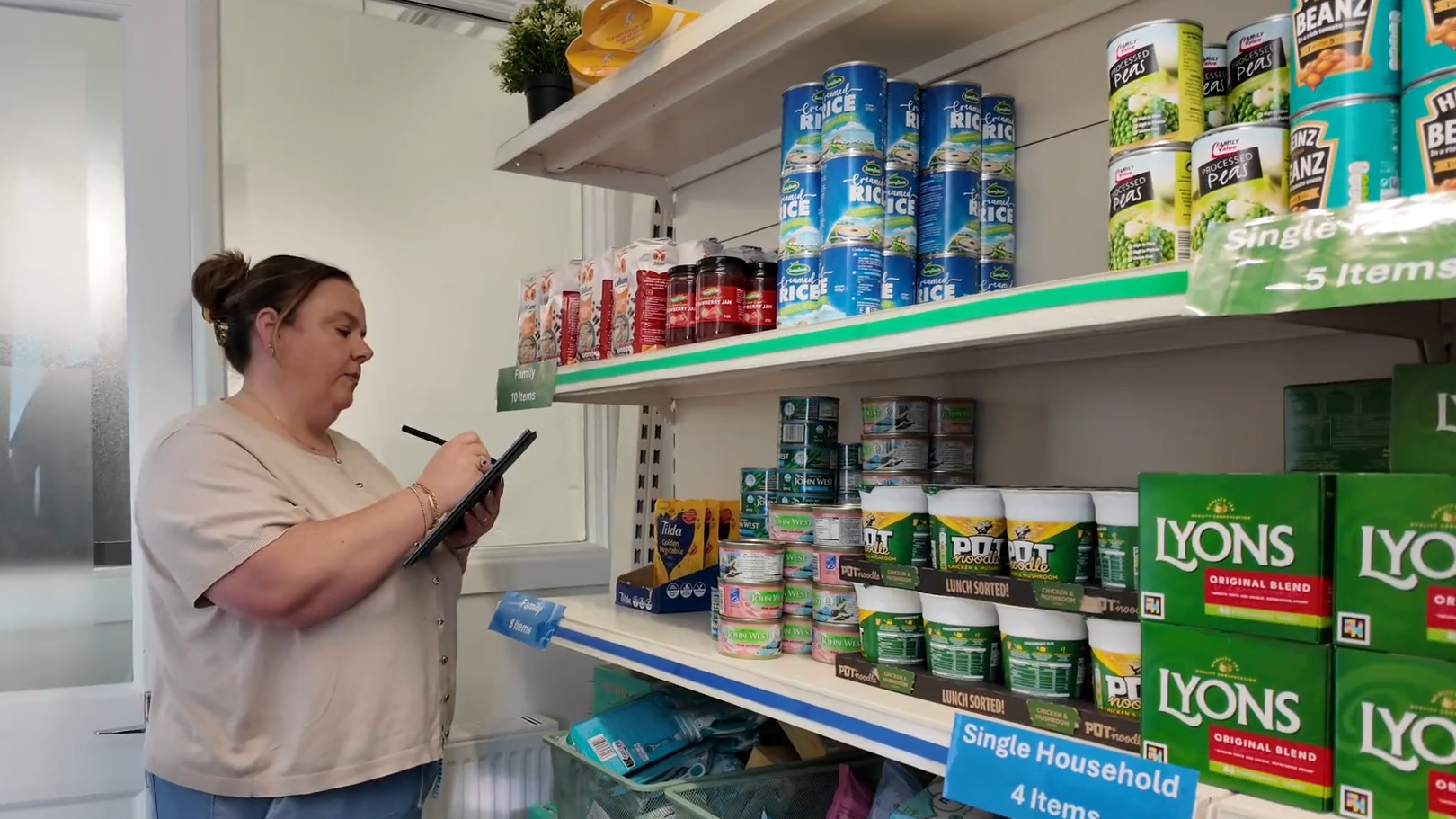
“We are different to a foodbank in that we offer this casework service where we say – come and collect your groceries, you can select them off shelves like a shop, with some rules around quantity, but we also want you to meet with a caseworker. They’ll help you look at why you are in this position, look at the money coming into and out of the household, how can you be helped, are you getting your full suite of social protection entitlements, could you restructure debt, could we help you with that. Are you paying the correct rent for your social housing property, things like that. People sometimes don’t realise they can change an energy provider or phone provider, and we coach them on making those calls.”
That service is also available in other parts of the city.

“The case work service is also in Finglas Village, Finglas West and Jobstown, but we are servicing all of Dublin. People can ring us from anywhere and we’ll agree someplace for them to go to. If they can get a bus into town we’ll say come to Portland Row.

“We’re trying to build that model of the two things together in multiple locations, but it’s hard to get the money. We have some support from the Department of Social Protection and some from the HSE, but nowhere near the full cost of running it.

“The monies that we are getting from statutory agencies; it’s all annual. So you’re employing people, trying to keep them because they are really good staff, but your money is annual,” she said.

The cafe gives people a chance to get a nutritious dinner for a very reasonable price, and some people utilise it as much as they can.

“We are trying to shuffle around our menus and also to give really good food that people like. We do quite a traditional menu. People like to have a good dinner.

“Some people come in twice a week, have their dinner and get a takeaway meal for the next day. They might get a payment, their social welfare or their pension or whatever, and they might buy five meal vouchers for the next five days or the next week, so they know that at least they’ll have their dinner every day,” she added.

Southill Cafe’s costs rise, demand up too and extra €10k welcome

Southill Cafe’s costs rise, demand up too and extra €10k welcome

0

This year, it had to increase its prices, not to reflect inflation, but to keep the taxman happy.

“We are victims of our own success. Two years ago we had to register for VAT, the cafe was doing so well that the sales were over the threshold. That meant we had to either absorb that cost or increase prices, so we did a price increase, but basically it just goes to the taxman. It’s quite frustrating.”

“Our cafe operates as a loss leader, you know the way Dunnes and Tesco sell things at a lower price – it brings people into the organisation. If we increase the costs any more we’d price out people from the community that we’re here to serve, it wouldn’t work.”

The cafe was fortunate to receive a badly needed financial boost in 2025 when it applied for and was approved for €10,000 to help cover the costs of its chef/manager role.
She feels the cafe plays a huge role in making the community aware of what is available at Southill Hub and she was looking forward to families moving into new houses in the area.

“New families are going to be moving in and they will come over, because it’s right on their doorstep. The cafe is a great place for outreach, people from the community come in, and they stop and chat. They might be giving out about something and they’ll be advised to talk to the family support worker or the youth employability worker. The cafe is a great way to draw people in and then refer them to services. People go in for food and they might come out with help for getting a job or something. We need the cafe as a way of linking into the community,” she said.

Dublin – Crosscare Community Cafe also provides a grocery service

New National Community Cafés Action Group hopes for €1m support

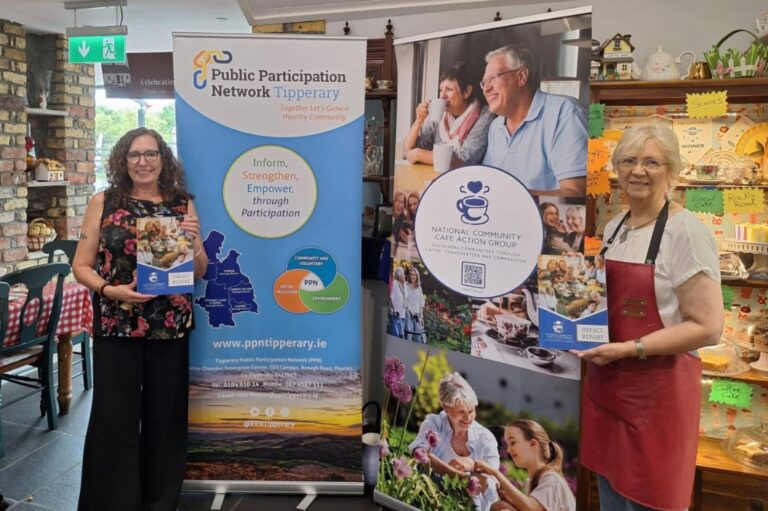
The group represents 27 community cafés in ten counties and in July it visited Leinster House to officially launch an impact report.

Community cafes operate as independent social enterprises offering services to communities that would otherwise not be available.

They help to train and upskill local people, help with integration (for a great example from Tralee, see page 26) and they introduce people to community centres where they may then avail of other services and supports. They help people experiencing food poverty and today community cafes are busier than ever.

The action group has called for the establishment of a dedicated support scheme to help cover operational costs for their members.

The budget for the Department of Rural and Community Development includes “enhanced supports for a wide range of community development initiatives such as volunteering, and supports for the community and voluntary sector – with €23.1 million in funding available for this area. In addition, €5 million in funding is available for social innovation, social enterprise, and philanthropy.”

The action group, led by The Cottage in Loughmore, Co. Tipperary, hope some of this funding will be allocated to their request for approximately €1 million to support the 27 cafes.

There are of course many more community cafes that may also require support.

St Munchin’s: ‘There’s a different world out there no one talks about’

Scariff Bay Community Radio secures full-time licence

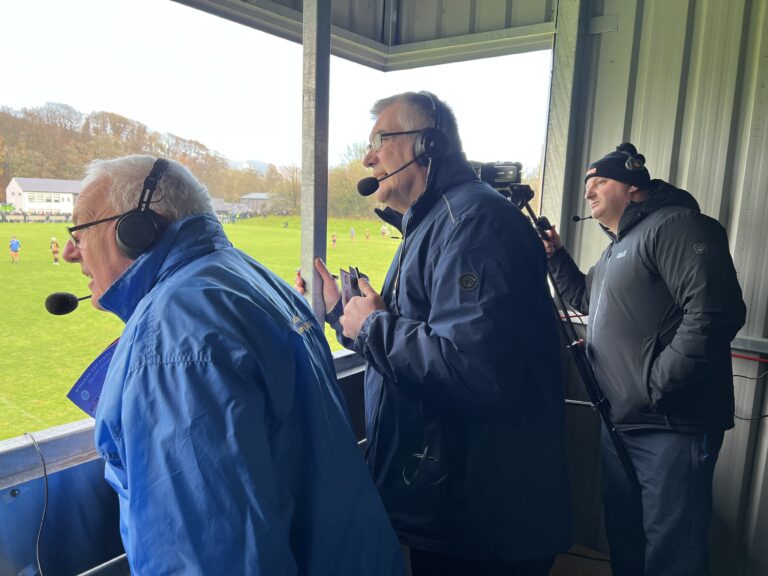
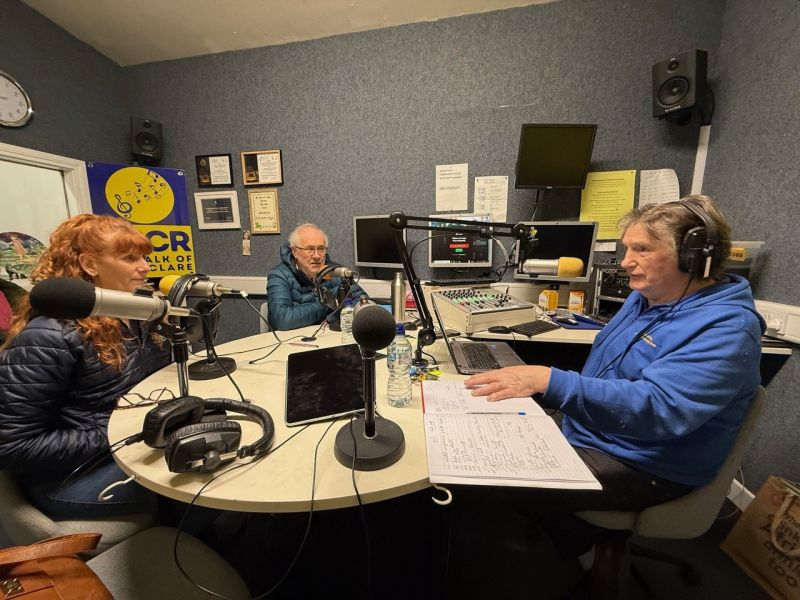
The station signed off on the licencing agreement in December with Ireland’s media regulator Coimisiún na Meán (CnM).

“It will allow us to broadcast seven days a week if we want to,” said jubilant station manager Jim Collins, who has been involved from the start in 2015.

Even the application itself was nationally significant because no station has sought a full-time license since 2017 when Community Radio Kilkenny City received one and began broadcasting seven days a week.

“The licensing of Scariff Bay Community Radio is a very positive move for community media in Ireland,” said Brian Greene, chair of Craol, the national umbrella organisation for community radio stations.

He said that many aspirant stations have been waiting more that a decade to transition from pilot licence to full licence stations.

“We welcome the new impetus of Coimisiún na Meán with regard to licensing new services in community radio,” he said.

Community radio stations rely on volunteers and the core aim of every one of them is community development – using radio to bring people together.

Volunteering is good for you, says Jim: “It keeps the brain ticking over. It brings you out, there’s a social benefit in meeting people and in working with other people with the same interest. One of our volunteers jokes that it keeps him off the tablets!”

Clearly people in East Clare like getting together and have a lot to say.

“In 2017 we got our first FM licence,” recalled Jim. “The normal first FM licence is a 30-day licence, so we broadcast every Saturday for about six months. In 2019 we got our first hundred-day licence and with that we broadcast for 50 weekends, both Saturday and Sunday. We have basically been doing that since 2019.”

Now that the station has been awarded a full licence, it is for the group to choose how often to broadcast.

“For us, it’s a hobby, it’s an interest and we don’t want to be stressed from it. We are a voluntary group and we haven’t the personnel or the resources, or the population, to go seven days a week,” said Jim. But they will go halfway; starting anew broadcasting three days a week (Fridays, Saturdays and Sundays) is realistic.

“We are getting more and more people in doing programmes and broadcasting. We have a board of nine people and at last count we had about 90 volunteers,” he said.

Some of Scariff’s volunteers are already involved on a weekly basis, for example covering sports. They also have people who like to help out behind the scenes.
Many of the station’s volunteers are heavily involved in other local organisations and bring a valuable perspective to Scariff Bay.

“Lots of our them would be in other organisations like Comhaltas, or like Conradh na Gaeilge or the GAA or rugby or athletics, or the Irish Countrywomen’s Association.
“They are well placed to tell us what is going on and we’re an outlet for those organisations to spread their message,” said Jim.

Now they have much more airtime to offer their volunteers.

Tune in here: http://www.scariffbayradio.com/

St Munchin’s: ‘There’s a different world out there no one talks about’

0

As well as the galloping inflation St Munchin’s is also facing a situation where it will not be able to access funding that had been made available to regeneration areas in Limerick for some time.

“Our running costs are €237,000. Last year we got €90,000 (from the Economic and Social intervention fund) towards it, this year we got €70,000 and next year we’ll get €50,000 if we’re lucky. Then it’ll be €25,000 and then it’s gone,” she said.

That loss comes at a time when outgoings are higher than ever. “Food, lighting and heat has gone through the roof. We would have had salmon once a month, we can’t do that now. Next year you have auto enrolment and the minimum wage is going up. I welcome all of that, but when you are trying to make up that money and you can’t pass it on to your customers, it’s a very hard situation to be in.”

She says that the people St Munchin’s Community Cafe serves have cut back on real essentials. “A lot of people now are having dinners on Monday, Wednesday and Friday instead of having a dinner every day. You can see they are cutting back.”

Linda also feels that the State really needs to support people on the ground, who are caught in a seemingly invisible crisis. “There’s a different world out there that no one seems to talk about or care about.”

New National Community Cafés Action Group hopes for €1m support

Banks bound by regulations, while Department and Pobal not alerted to issues

0

A spokesperson for AIB said that it must comply with all regulations, while it said it does try to provide assistance.
“AIB welcomes applications for accounts from Unincorporated Entities such as associations, societies, clubs and charities. As is the case for all financial institutions, AIB is required to comply with all legal and regulatory requirements when it comes to the onboarding of new customers. Applications are considered on a case by case basis and anyone with any queries or who requires additional help with their application can call into any of AIB’s 170 branches.”

It was a fairly similar story from Bank of Ireland.

“All banks are subject to Anti-Money Laundering (AML) and Counter-Terrorist Financing (CFT) regulations in Ireland, mandated by the Criminal Justice (Money Laundering & Terrorist Financing) Act 2010 and regulated by the Central Bank of Ireland.

“This includes ‘Know your customer’ (KYC) obligations for the financial services industry which require banks to collect and maintain identification documentation on all account holders. These requirements are in place to make it harder for the financial system to be used to hide the money made from crime, and for individuals or organisations to fund terrorism.

“These requirements also apply when setting up accounts where there are multiple account holders,” it said.

A spokesperson for the Department of Rural and Community Development and the Gaeltacht said it had not had any complaints about difficulties regarding the opening of accounts.

“This is not an issue that has been raised with the Department by anyone in the Charitable and Voluntary sector to date.
“Where groups are experiencing difficulties with opening bank accounts, they should contact the Department and we will provide advice. Alternatively, they may wish to direct their query to the Department of Finance, who have responsibility for banking.”

Pobal also said it didn’t know of any issues around opening accounts.

“To date we have not been made aware of any organisations applying for programmes that we administer having trouble opening a bank account.
“However, opening bank account(s) is an operational matter for the individual organisations, and it is not in Pobal’s remit to engage with banks on behalf of volunteer organisations.
“Regarding compliance requirements, Pobal implements the regulations/circulars as issued by government and we continue to work with government departments and organisations to make programme requirements as manageable as possible,” it stated.

“It’s very frustrating”- issues for groups opening bank accounts

“It’s very frustrating”- issues for groups opening bank accounts

0

Sister Sheds are places where women can come together, and where they hopefully empower each other and provide support for one another. The aims are basically about making a positive difference in the community, but the Walkinstown version has been hampered by bureaucracy; something that community groups around Ireland are becoming familiar with.

“We’ve been working on it for a year, going on two years, and still no joy,” says spokesperson Yvonne Traynor, of the long running efforts to open a bank account.

The group is very active, but what they can offer is limited because the lack of a bank account makes it impossible to get grants that would be otherwise available.

“We have gone away, we have done voluntary things, we could do bingo, we could do bowling, we could have someone in to talk about self-defence. We pay an amount of money every week, it covers teas etc, and we save it up. But because we haven’t a bank account, we haven’t been able to get grants or anything at all,” says Yvonne.

“The first year we were up and running there were three signatories required, and it went as far as Compliance. I’m a former bank official so I would know a fair bit about opening up a basic bank account and things like that. I also worked in merchant banking so I know quite a bit about Compliance as well. Our chairperson who was to be a signatory on the account died very suddenly, which was very traumatic for us all. We had been in the middle of applying for an account, but when she died instead of them changing the paperwork, we were sent back to the bottom of the pile again.

“We’re now in the middle of it, this one, that one, the other one needs to sign. It’s absolutely ridiculous considering we are a group of women who literally want to store our funds. We’re two years up and running and we still have no bank account,” says Yvonne, clearly exasperated with the situation.

The offering would be significantly better if they could get grants, she says, while they know from other Sister Sheds what would be possible if they could open an account and thereby access grants.

“We hear what they have done, and what we cannot do, and it’s very frustrating. Everything we have done is through our own effort and some of us are out of pocket because of it.”

More bureaucratic

Andrew O’Byrne of Moyross Youth Academy said that while they enjoy a very good relationship with their own bank, they are aware of how onerous things have become.

“We’re now a CLG, a company limited by guarantee. That change happened with the Companies Registration, a name change from ‘company limited’ to CLG, but we didn’t change it with the bank, because we didn’t need to. But then when we tried to open a new bank account we had to change all of the accounts because of the name change. All the paperwork had to be redone, and by the time we had done that, the paperwork had changed for opening a bank account, so the original forms we had filled out had to be changed.”

In general, Andrew feels that society has become “a lot more bureaucratic” than was once the case.

“It’s not just banks, it’s everything. We’re lucky we have a voluntary board and we got professional support when we needed it.
“We registered to become a charity and there was quite a lot of work in that. It all takes time and effort, and it’s not the type of thing someone signs up to when they want to help out a charity; next thing you find yourself sitting in on webinars and going through all these money laundering, assets and identification pieces so that you can be a signatory on a bank account.”

Volunteers are kept overly busy just trying to deal with protocol, let alone the voluntary work they want to do, he feels.

“There’s a charities regulator, a charities governance code, and there’s a huge amount of work involved with that, on top of doing what it was you set out to do. The days of somebody saying ‘I’ve an hour a week to give you’, or ‘I’ll do a Tuesday evening or a Thursday afternoon’; it’s become a bit more complex now.”

Unreasonable to volunteers

Cillian O’Donoghue of the Community Development Team at Dublin South City Partnership said he has seen groups have more and more issues with banking.


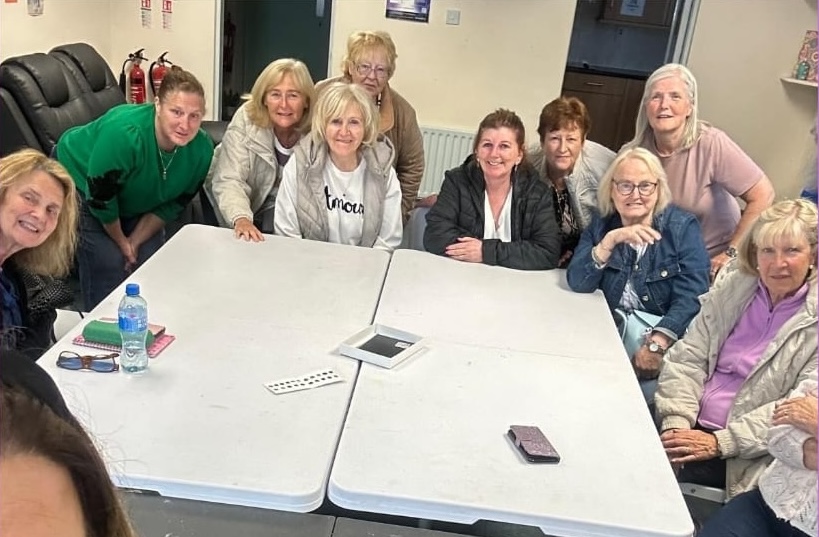
“Over the past year and a half, it has definitely become more apparent with a specific cohort of groups that we work with. We work with loads of different community groups: sports clubs, youth services, all kinds of community groups – but the stuff around governance requirements and having a bank account is affecting more informal and smaller community groups like an active retirement group, older ladies who meet up for bingo once or twice a week, men’s sheds, things like that.”

There are far more hoops they must jump through to access funding, he feels, and that is especially true for older people, who may not be as digitally literate.

The level of inconvenience being put on volunteers is unreasonable, he feels.

“We’re trying to help these groups, to get them a few quid and you’re held back sometimes by the governance requirements of the funders. I do get that the likes of the Councils and Pobal are big organisations dealing with a lot of money and they want to know where it’s going and how it’s being spent. But the flip side of that is the groups on the ground might struggle to get the money, which 10 or 15 years they would have got fairly handily. It meant they could run an event, or get refreshments for an event, or pay rent for a hall. It’s harder than it should be for them to access funding.”

Terence Wheelock’s family still seek answers 20 years on

Terence Wheelock’s family and residents in his north inner city community continue to call for a public inquiry into his suspicious death while in garda custody 20 years ago.

Since his death in 2005, Terence’s case was highlighted by many, including human rights group Amnesty International, the Irish Council for Civil Liberties, and local and national politicians.

An inquest in 2007 into Terence’s death resulted in a split jury decision, however a subsequent investigation by the then Garda Síochána Ombudsman Commission declared that Terence was not mistreated in Garda custody. Nonetheless, family and supporters including councillors, TDs and senators continue to campaign for an independent public inquiry.

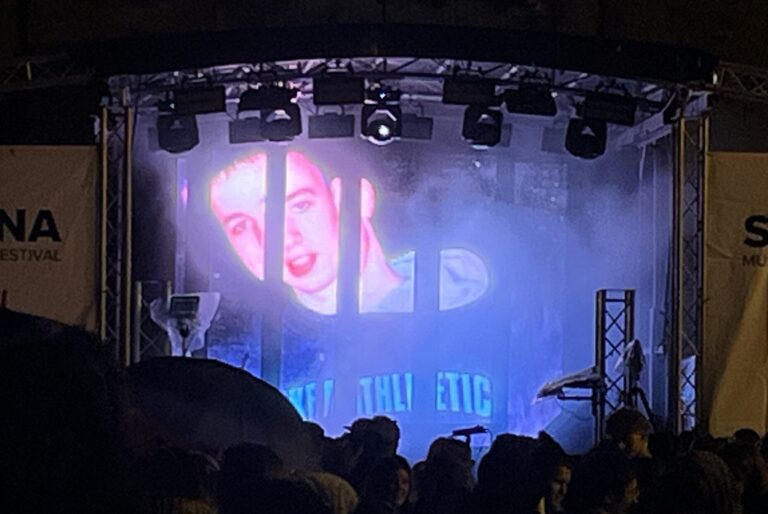
Among the campaigners is local singer Gemma Dunleavy who routinely uses her platform to highlight Terence’s case in spoken voice performances.

“It’s now been 20 years and the family are still looking for answers,” she recited recently, listing the numbers associated with Terence’s death:

“20 – the age Terence was when he left his ma’s house to buy a paintbrush. 3 – the number of months he lay in a coma before he eventually passed away. 15 – the number of years his blood-stained clothes were hidden by the police force. 37 – the number of photographs taken of the injuries sustained by his body. 14 – the number of minutes they left him on the ground before picking up a phone to ring an ambulance. Zero – the number of public investigations and independent inquiries… It’s been 20 years, imagine that, and still no justice. …And they still have the audacity to say they did nothing.
“It’s easy to blame certain people in society, easy to blame us for existing in the ghettos they made by design. And we all know a young fella who ended up in the back of the Mariah for wearing a tracksuit or having the wrong second name. …But we’re getting louder and we won’t stop,” she spoke-sang.

Gemma Dunleavy: “Community to me means soil”