
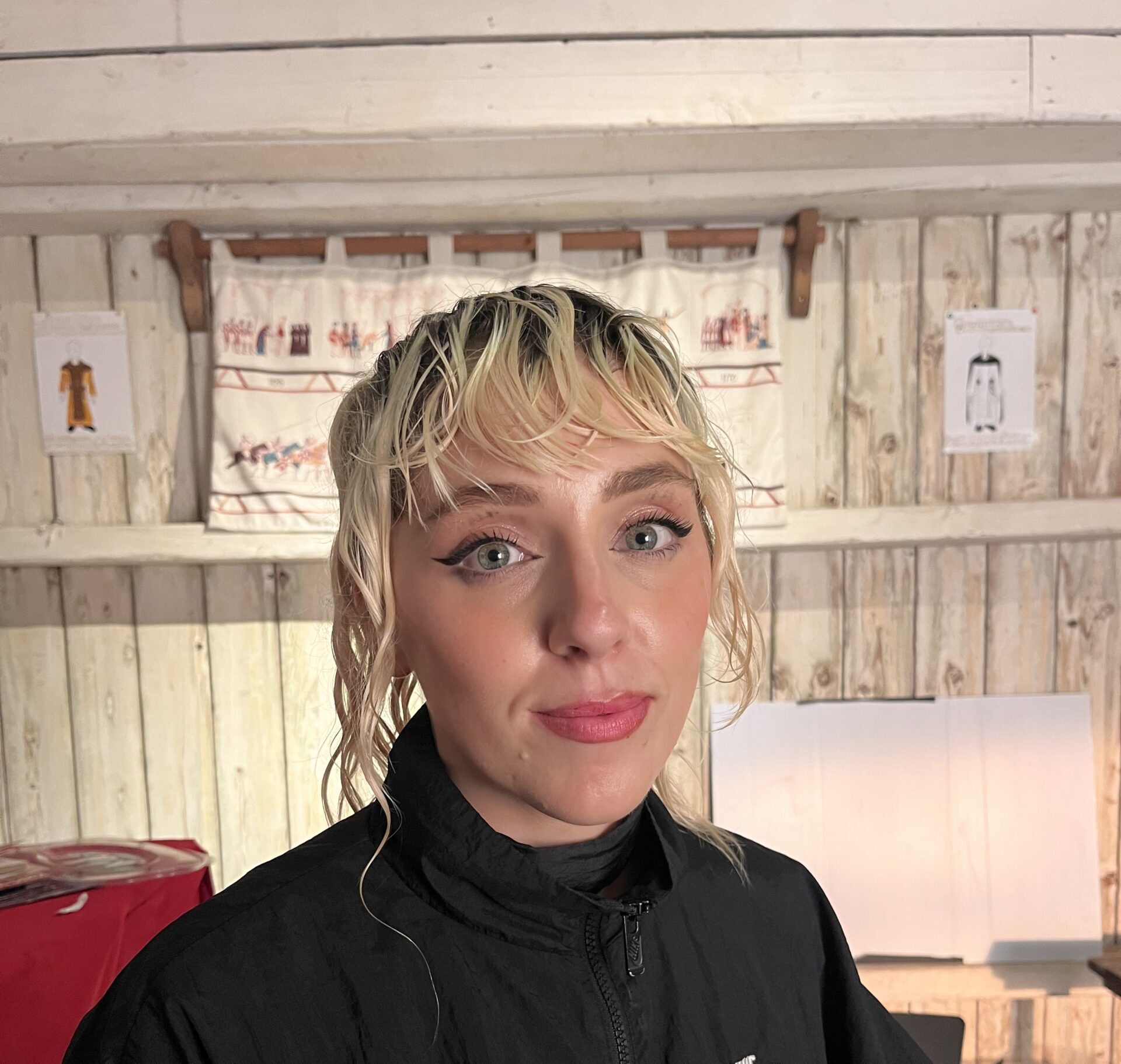
You know when you hear Gemma Dunleavy sing about local and international injustices and her upbringing in Dublin’s north inner city that she means it deeply. The singer from Sheriff Street who rose to prominence with 2021 hit song ‘Up De Flats’ loves her community, is firmly rooted in it, and she spoke recently to Changing Ireland.
Her community has been constantly under pressure, most recently from gentrification, and her description of what community means to her should be included in community development textbooks:
“Community to me means soil. The soil that my roots are planted in – to me is my community. It’s something that holds me tight, that gives me my sense of identity and places me somewhere in this mad world.
“It’s so important for me to nourish and keep that community and to let it feed back to other people, because I wouldn’t be who or where I am without my community. My community has faced much neglect and discrimination over the years.
“Community to me is the people within that place that literally, you know, kept the place warm with their hands, when it was basically a ***hole, when the government gave us no support. The community, the women in the area mostly, built up strong pillars around us to keep us all safe from the neglect and the discrimination we were getting from outside. So community for me is so important,” said Gemma.
She explained why community means so much to her: “I got it from my family, from my community; we grew up in each other’s pockets. I grew up with my neighbours as (much as with) my nannies and my aunties.”
Many artists focus on their origins and Gemma is among the best of them.
“My music was always kind of about my area. The very first video I put out was to do with my area, and the struggle we faced. And I never wanted to do that, it was just like, me thought was, ‘I’ll put this out, and then I’ll move on to the music’, because that didn’t feel like music to me, because it was, it felt like a breath I had to release, you know what I mean? I’m still in that process of trying to get it off my chest. I don’t feel like I have a choice in that.”
She distinguishes between people with a stage to speak from and those who feel they have no voice – and she had advice for people who feel alone.
“Right now, I’m speaking from a point of privilege because I have a stage to stand on and I can tell a hundred, or a thousand, or ten thousand people sometimes, what the issues are. But it can be really hard, especially when you’re going against the grain and when you feel like your voice isn’t important, or you don’t have a platform.
“It can be very disheartening when you’re on your own and don’t feel like you’re heard. When you’re in that position the best thing to do is find like-minded people and get together. A group only takes two people. And if you have two people you can go and do something, whether that’s writing a letter to your local councillors, or creating a support group in the community,” she said.
Her experience shows that communities such as hers are often taken for granted.
“You see what happens in areas like ours is – developers and stuff come in, councillors, people in the government come in, and we have put plants in meetings where we have actively heard the government and councillors who aren’t for our area say, ‘Oh you’ll get away with planning permission here, because they don’t know anything’.
She knows what people should do.
“The first thing you do is educate yourself. Form a group and educate one another. If you’re sitting at home thinking – ‘The state of this place, but I can’t really just go and do stuff on my own and become an activist – like who do I think I am’ – you don’t need to be out fighting on the picket line. Start up something, whether it’s a knitting group, a walking group –something with people from the area. Maybe it’s tidying the streets once a week, something to get the people together, because you feel stronger then and you feel you have something worth fighting for.
“Anything that enriches or nourishes your community is going to give you strength and power, and they are things that people can’t take away. Money can’t take away that and that’s what we really need to be doing – getting together and doing things together that make us all stronger and make our communities worth fighting for,” she said.
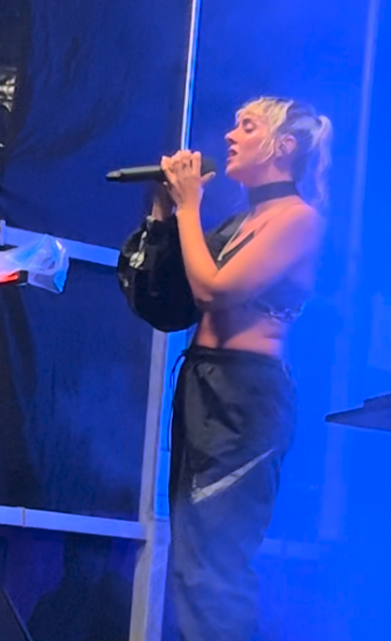
While she feels that artists have a duty to speak up, at the same time she believes artists should not feel obliged to take on issues.
As she sang onstage in Limerick, “The fight for truth and justice is everywhere. The moment we relax and get comfortable and let the people in power walk all over us sets the precedent that these ****s can do what they want. And we can’t let that happen.”
In our interview after the show, she said, “I feel that as artists we have a duty to use our platform, but I also don’t want every musician or artist to feel they have to make their art about that. They don’t. Make art what you feel inside your belly, but if you’re really taking in what’s around you, it’s hard for that not to come out.
“If you can find a way to make your art encapsulate a cause that you’re serious about, then that’s amazing. But it is hard to do that. You don’t want people just getting up on stage and feeling like they have to talk about something that they’re not aware of, or they might not be educated enough on it.
“But getting together with causes, such as playing at a local event – you’re being there (matters),” she said.
She stressed that she would never want to make someone feel bad for choosing not to become involved in social justice campaigns. At the same time, there’s no fooling her.
“I can smell, a mile away, when someone’s being authentic or not. When you’re from an area like Sheriff Street, you can smell a rat a mile away,” she said.
Her family includes heroes who inspire her every day.
“Me heroes would be me two nannies. One was Mary. My other nanny’s name was Darky. I grew up sitting around the kitchen table with them yapping and talking and they really had a strong sense of justice in them,” she said.
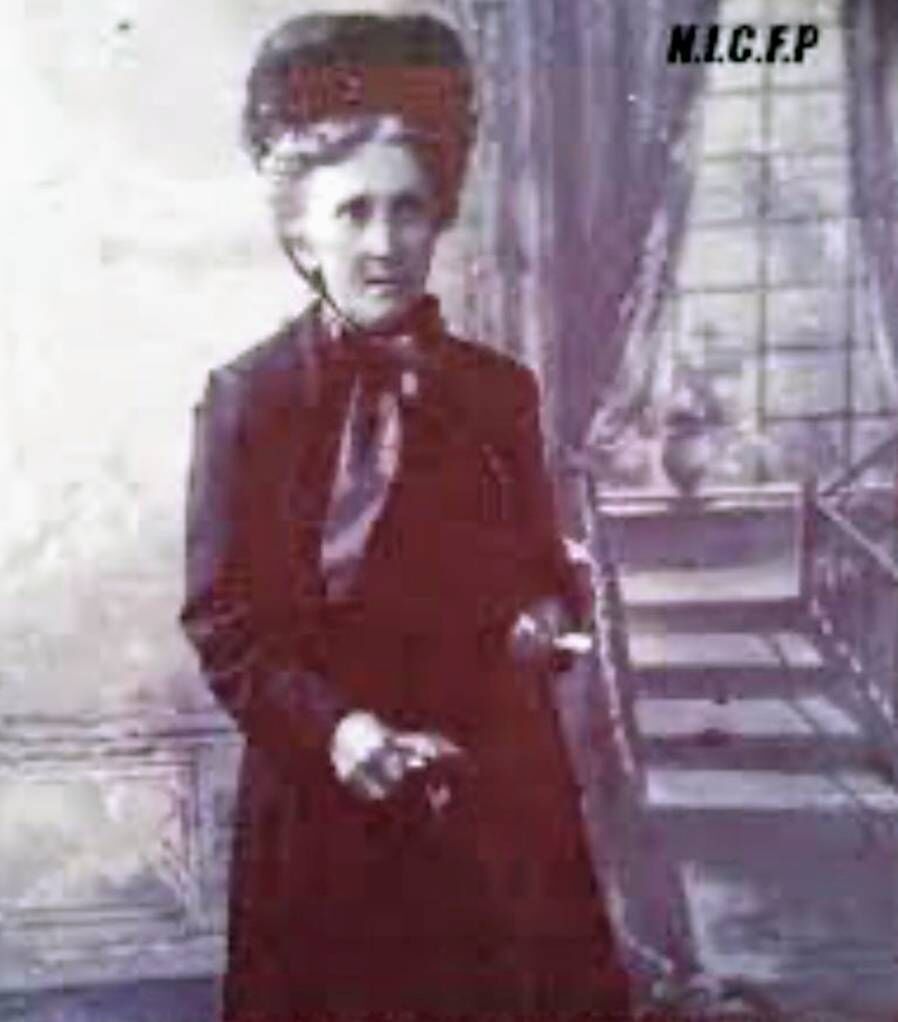
Going back one generation further, Gemma spoke about a famous relative who saved countless lives.
“Me great-grandmother Theresa Dunleavy was an incredible woman. She was called ‘The Midwife of the Monto’, she was basically famous there,” said Gemma. Mrs. Dunleavy’s unpaid work serving the most marginalised women of her era was locally renowned at the time, but has only in recent years begun to be recognised by historians.
As Gemma explained, “She became an honorary midwife in The Monto. The Rotunda has a plaque to her, because she delivered so many babies and saved so many women. She (also) saved many women from sex work and she rehomed babies. She was Ireland’s first sex educator without ever going to college or learning anything. So she’s my hero too. I can’t let what she fought for die.”
Her grandmother was one of the very few women to stand up to brothel keepers and the authorities and to stand by women when at their most vulnerable. As Gemma remarked, “I’m very lucky to have those roots and that purpose in me.”


