Saturday, July 4, 2026
Home Blog Page 33

You can now get a LEADER grant for HEDGE FUNDS


• Follow Ballyboughal Hedgerow Society online.

You can get a LEADER grant for hedge funds now. We’ve all heard of hedge funds, though most of us don’t know what they are. However, they’re ahead of us in Ballyboughal, Fingal, Co. Dublin, certainly in terms of treasuring nature and wildlife.

With a small LEADER grant – and some of their own hard-raised funds – a voluntary group brought hedgerow and biodiversity experts from near and far to meet and address locals about nature’s true value.

This is true hedge fund investment. The series of nine workshops in Ballyboughal were held prior to the pandemic which many, including the W.H.O.’s Mike Ryan, blame on mankind’s dismissal of and encroachment on nature. It shows this group of volunteers were genuinely ahead of most of us. Recognising the need for more education, they applied for a small grant and were successful.

LEADER APPLICATION

Ballyboughal Hedgerow Society began the application process for LEADER funding in March 2016 and

were successful in August 2017 – just short of 18 months. The funds sought were to help run environmental workshops. While LEADER takes time, it can be transformative. Until then, such events were organised on a voluntary basis. The new approach brought biodiversity consultants and lecturers into the area for the first time. “There is a biodiversity wave happening. We were there at the beginning and now it is gathering momentum,” says Ann Lynch, founder member and secretary of Ballyboughal Hedgerow Society.

WORKSHOP RESULTS

The workshops enhanced the active learning experience for participants. These were workshops on the move, involving learning by doing. How many of us for example have ever been on a mycology walk, or know how to forage for herbs? Ann believes the workshops, held over a 14-month period, also enhanced the area’s reputation. More people have now heard of Ballyboughal and hold it in high regard when it comes to biodiversity.

ALARM BELLS RANG IN 1999

It’s over 20 years since residents including Ann first grew alarmed. When hedgerows in the area began to disappear as farming intensified, it was seen as a call to action and led, in 1999, to the setting up of Ballyboughal Hedgerow Society. Its aim: “to promote hedgerows and their biodiversity and cultural value”.

Since then, they have been busy bees – and yes they have also helped bees. Each year, through nature walks, training and workshops, the group has educated many hundreds of people on the history and botanical make-up of hedgerows. “If we don’t value the local environment ourselves, how can we expect planners to value it?” says Ann. They conduct intergenerational nature walks for children aged 8 to 14, families and older active retired people. The group also teaches ‘hedgelaying’ to farmers and anyone interested in learning this skill.

• We have this! Painting bee boxes in Ballyboughal, Fingal, Co. Dublin. Workshops don’t need to be held indoors. This photo come from one in a series of nine workshops held in Ballyboughal supported by LEADER.

PREPARATION

To prepare for applying for LEADER funding, the Ballyboughal Hedgerow Society checked in with local networks and contacts, including a biodiversity expert, the GAA club, Foróige, mothers’ groups, men’s sheds, community councils, lecturers, and contacts within organisations such as the Heritage Council and Wildlife Trust. This helped the Society to generate ideas for workshops. It helped them to identify people best suited to facilitating workshops and to get an idea of costs.

SUPPORT

This was the Society’s first time applying for LEADER funding and they gladly availed of support from Fingal LEADER Partnership, whose staff helped in particular with the necessary paperwork to support the application. The workshops led to locals painting bee boxes, sampling local fruit and vegetables, and learning about various types of animals, falconry, birds and trees. The workshops attracted higher levels of interest and excitement than before and stronger attendances at events.

BEE-BUSY IN 2021

They have continued into 2021 with a second round of LEADER funding provided, again with support from Fingal LEADER Partnership.

As well as locally held workshops, this summer beginner beekeepers of all ages from around Ballyboughal travelled to Galtee Honey Farm in Tipperary.

“We dressed up in our suits and held frames with hundreds of worker bees and some developing Queens in our hands, a bit nerve wracking but amazing. We used a smoker to calm the bees which was fun. We saw bees coming back from collecting nectar and secreting honey. Later we cut honey off the frames and tasted ivy honey, clover honey, lime tree honey and sycamore honey,” the group reported.

Overall, the many events have raised the village’s profile and, being a local group, Ballyboughal Hedgerow Society makes a conscious effort to support local pubs or cafés after each workshop, giving participants an opportunity to discuss the events of the day. It has all helped to create a greater sense of camaraderie in the community, says Ann.

TOTAL BUDGET of €3,898

The LEADER funding granted to Ballyboughal totalled €2,923, broken down as follows:
€1,836 EAFRD (EU) contribution;
Plus €1,087 (the national contribution).
Ballyboughal Hedgerow Society contributed a further €975 to the project, bringing the total project budget to €3,898.
The LEADER grant was approved under: Theme 3 – Rural Environment; Sub-Theme – Local Biodiversity.

LESSONS & TIPS FOR OTHERS

From their experience, Ballyboughal Hedgerow Society recommends involving as many stakeholders in the community as possible in the decision-making process, discussing what the project should entail, what the funding is most needed for, and what should be included in the LEADER application.

THEY SAY TO STAY POSITIVE!

The LEADER application process can be arduous. It required a lot of time and effort by volunteers in Ballyboughal Hedgerow Society.
The important thing, they say, is to work through it and try to stay positive. This is a motto that the society applies to the protection and improvement of biodiversity in general. The focus is always on what has been achieved and what more can be done in the future.

COLLABORATION

This is part of a series on LEADER. Thanks to staff in the LEADER Policy and Operations Unit at the Dept. of Rural and Community Development, to Daniel Bennett and staff in the National Rural Network and to Dr. Maura Farrell, NUIG, for their co-operation.

To find out how the funding process works in practice and to get an overview of the main stages and requirements when making an application, contact the National Rural Network:

https://www.nationalruralnetwork.ie

Rural-based local development companies (LDCs)  provide support and advice countrywide and every LDC in the country is listed here:

https://ildn.ie/directory/

For more examples of LEADER’s diversity in what it will fund and news generally on the programme, keep scrolling:

North Kerry village forges ahead with unique attraction

Music to everyone’s ears – LEADER funds 60 violins in Louth

Meath River Rescue is speedier and safer with new LEADER-funded equipment

€70m in LEADER funds for 2021-’22 – announced today

LEADER milestone: 1,000th project proposal approved for funding
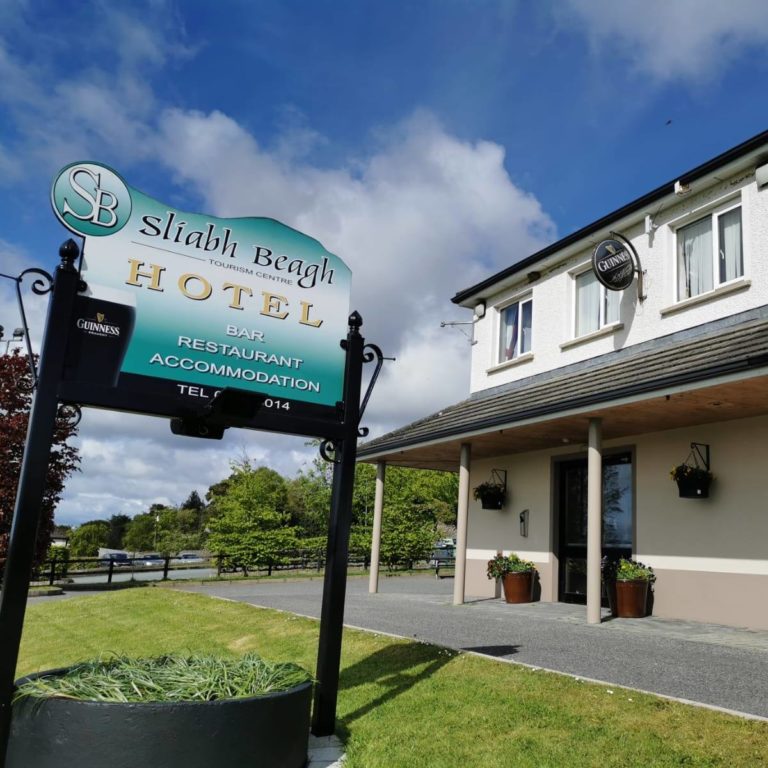
Hotelier Mary Mullen: “We never set out to build a hotel!”

Remarkably, Mary Mullen, chairperson of the board of directors, says, “We never set out to build a hotel.”

“We had a parish hall here that would have been built in the 1950s that had fallen into disrepair and there would have been very little use being made of it. We had a parish priest at the time, Canon Gilsenan, who called a meeting and he stood up and he said sure we could always rent it out as an industrial unit. That got the reaction he was looking for in that people didn’t want that to happen and we set up a committee.”

“Our original intention had been maybe a bar and restaurant and self-catering accommodation, but when we talked to the like of Fáilte Ireland, they advised us that a hotel would be a better option,” she says.

Special Place

The hotel is named after a 380metre mountain straddling counties Monaghan, Fermanagh and Tyrone. It’s a remote and isolated part of the country, but what it lacks in development it makes up for with natural beauty. The area has been designated a special area of conservation and is listed under the European habitats directive. There are also numerous trails and walks in the vicinity and Monaghan County Council recently launched a plan that includes Sliabh Beagh.

The hotel opened in 2000 with funding from the International Fund for Ireland, the INTERREG programme, and the Peace and Reconciliation Fund, amongst others. It has been operating successfully since although Covid-19 restrictions have proven challenging.

Economic & Social Regeneration

The area was in dire need of economic and social regeneration and had been severely impacted by the Troubles. There were significant road closures which made access difficult. There were image problems to address as well as a dearth of public transport, employment, amenities, broadband coverage, housing and tourism. Young people were leaving the area.

John Moyna is the hotel manager and he says that, when they opened the hotel in 2000, they didn’t have “village status”. However, “The council came on board with us and put in street lighting, footpaths and a sewerage system and then a whole lot of new houses were built. It was the catalyst that brought it all together. Then back about seven years ago, we looked at adding some amenities. We built three astro-turf pitches on a piece of land beside the hotel – funded through monies raised in the hotel and through the LEADER programme.”

There were over 100 derelict houses in the area. However, thanks to community efforts, they have now been replaced and 27 new houses have been constructed.

Other amenities and services followed with the set up of a preschool and playground. The area twinned with Geel in Belgium and Prince Edward Island in Canada and that link brought visitors and tourists. Seamus Sherry, also a member of the hotel’s board of directors, states that the hotel has boosted the profile of the area and that as well as groups from Northern Ireland, England and the US, they also get a lot of visitors from Canada who “come to see their roots and where their people come from”.

Profits invested in Community

What makes the hotel unique, aside from the fact that it is entirely run by members of the community and has a voluntary board of directors, is the range of initiatives that it is involved in. Fiona Connolly is another voluntary member of the board of directors and she also runs an adventure centre. She emphasises that though the hotel is a social enterprise and a company limited by guarantee, they are still a “trading company”.

However, any profits made are reinvested into the delivery of the Community Services Programme and there’s “more flexibility to provide the facilities for meetings at a minimal rate”, because they are a social enterprise.

For instance, as well as providing local employment, the hotel also facilitates and runs a bowling club, dancing for senior citizens, a womens’ group and a Foróige group. The most impactful project however is the subsidised meals programme for vulnerable members of the community.

According to Mary, the hotel does approximately 200 to 250 Sunday lunches for locals of which about 100 would be subsidised meals for the elderly. Funding for this initiative comes through POBAL, who provide €136,000 per annum for wages.

Incidentally, Mary is dedicated to widescale community development – she is currently chairperson of Monaghan Integrated Development.

An overly ambitious plan?

John tells me that when starting out, the group were told that some of their ideas were “overly ambitious”. However, their plan was “the only one to ever fully come to fruition”. Briege McGinnity and Patricia McCrudden work in the hotel in accounts and administration respectively and tell me that a lot of people would have said they were “crazy” to consider building a hotel in the area given its remote location and lack of services.

He said that, nevertheless, the beauty of working in a community run hotel is that you do feel part of a community and that most of the business comes from “returning visitors, family events, weddings, funerals, that type of thing.”

“You know the people and even if you don’t know them well you know who they are. It’s nice for them too because, when they come through the door, they immediately feel welcome.”

Is this a model that could be replicated?

Mary says that there’s no ‘template’ that could exist for the idea and she’s “not sure that it’s something you can really advise people on”. She adds that, “You can tell us your story, but depending on where you are or what kind of area you’re in, it’s probably going to be a different story.”

Seamus points out that you need to have a lot of “buy-in” from people in the area. However, Mary adds that they would certainly be happy to assist anyone interested in replicating the idea!

BOOK NOW

A room with a view and a positive social impact! That’s what you get for your money – and much more – when you book a getaway holiday to Sliabh Beagh: https://sliabhbeaghhotel.ie

Don’t let myths about fostering fool you!

To foster, you don’t need to be living a perfect life. You don’t need to be married, or have a partner, or own your own house, or be an Irish citizen. However, powerful beliefs, many outdated or mythical, put people off fostering

Attracting new fosterers is a challenge, especially in the capital. Yet, there are many fostering opportunities.

“In Dublin, the pool of people who feel they have the capacity to foster is decreasing,” said Jacqui Smyth from Tusla Fostering.

Throughout the year, Tusla is looking for people who are in a position to open their homes and hearts and look after a child who cannot live with their family.

It is worth knowing that people who have struggled in their own lives should not think of themselves as unable to foster.

As Tusla says: “You can apply to foster If you have faced challenges or adversity in your own childhood or adulthood, once you have effectively dealt with them and have the ability to provide care for a child/children.”

‘Changing Ireland’ readers may make some of the best foster parents. Studies in the UK found that people who become foster parents are often altruistic, community minded people who like to live a little outside the box. Does that sound like anyone you know?

5 Facts About Fostering

1. FOSTER CARERS CAN WORK FULL TIME.

You can be single and work full-time and still foster – for example, by fostering semi-independent older teenagers. Full-time workers can also consider providing respite fostering care – for example, where you foster a child for one weekend a month.

2. OLDER CHILDREN ARE OFTEN EASIER TO CARE FOR.

People gravitate towards younger children because of a false belief that older children are harder to care for. However, older children are often able to communicate better and look after themselves. All children however need the same loving care.

3. PEOPLE WITH (MINOR) CONVICTIONS CAN APPLY.

Having a conviction, for example for a minor traffic offence, does not automatically rule out an applicant.*

* Applicants, however, with a record of violence and/or domestic abuse are always rejected.

4. YOU DON’T NEED TO BE AN IRISH CITIZEN.

Being resident here may be sufficient. Applications are accepted from people who have residency permits, who have refugee status or leave to remain, from EU citizens and those who can establish that they have permanent residence in this country.

5. AGE IS NOT A BARRIER.

You can foster at any age once you are relatively fit and healthy to care for a child.


New communities urged to consider fostering

Tusla, the child and family agency, wants to be able to match more children with families from a similar cultural, national and/or religious background and it is calling on families from new communities to strongly consider fostering.

“The potential for people from new communities to offer a child a foster home that is reflective of their family culture and heritage is immense,” says Jacquie Smyth, principal social worker. “The transition to foster care is a difficult enough one for any child. It is scary and challenging. The challenge is greater when the child also has to adapt to a different cultural or ethnic home life. On the contrary, there is comfort in living with a person who understands your needs from a cultural perspective – where the food is familiar to the child and there is an understanding of their religious and cultural norms.”

Asked why people from new communities should come forward, she said the benefits from fostering can be huge.

“Children in foster care have experienced so much change and trauma that being able to give them a safe and stable home is an immensely fulfilling and rewarding endeavour. Every family is unique and will have something different to offer a child in foster care. Being a positive part of a child’s journey and helping them to achieve their full potential will bring huge rewards to you and your family,” she said.

Also, more people qualify to foster children – and teenagers – than most people realise.

A small number of families from new communities already foster children and, in their quest for higher participation levels, Tusla is appealing to community groups to help spread the word that migrant and new communities families should apply to foster children.

“We would welcome the opportunity to engage with community groups around this endeavour,” said Jacqui. “We are open to meeting and talking to any and all organisations. Some consultations have already taken place on a local level and more would be extremely welcome. This is a learning journey and Tusla is eager to undertake this in partnership with the communities to whom we are reaching out.”

For interested applicants, the main criteria are having residency or citizenship, a steady means of income and the time to invest in fostering a child. Fostering is open to both individuals and couples and, while a stable home environment is required, fosterers don’t need to own their own house.

In regards to status, applications are invited from people who are non-Irish nationals once they can provide proof of residency.

“Families can apply anytime and if they meet the basic criteria that applies to all applicants, more children will find a home that matches their needs,” said Jacqui.

“As an organisation we are acutely aware of the importance of the ethnic and cultural identity of foster children who have experienced so much change and upheaval.

“We in TUSLA want to be in a position to be able to offer children foster homes that are reflective of their own ethnicity and culture. It is a hugely important component of the matching process,” she said.

As of March of this year, Tusla had 5,884 children being raised by foster families and most hosts are traditional Irish families.

More info: https://www.tusla.ie/services/alternative-care/foster-care/

How to apply to foster if you’re new to Ireland

Tusla welcomes applications for non-relative fostering from those who:

  • have residency permits,
  • or have refugee status or leave to remain,
  • or can provide proof of EU citizenship,
  • or can establish that they have permanent residency in this country.

The logic behind this is that children in foster care need to be assured of the stability of their care in a very particular way.

Families and individuals thinking about becoming foster carers need to be able to devote their time, energy and attention to the process and being sure of their residency is an important part of that.

What are the main criteria that apply for fosterers?

Individuals or families must be in a stable place themselves to focus on their foster care journey.

Some basic criteria are as follows:

  • Minimum age of applicant – 25.
  • You must be of good physical and mental health.
  • You need to have a stable place to live (rented or owned) with space for a child.
  • You need to have residency in Ireland.
  • You must be financially stable in your own right (able to pay your bills).
  • You will have to undertake a Garda clearance as certain convictions (e.g. violence/child-related) are unacceptable to fostering.

Tusla Fostering’s role is to recruit, train and assess potential fosterers.

Full information on the process can be found at: www.fostering.ie

• Happy heads. Photo from UK fostering services.

Irish-Nigerian foster parent Blessings says – “Just do it!”

Introduction

Blessings, originally from Nigeria, fostered a baby who is now a thriving adult aged 19 years of age and studying nursing. She raised the child the same as if she was her own and the family overcame all challenges.

Blessings wants more people to consider fostering and she welcomes Tusla’s recognition, albeit late, of the need to promote fostering among people from new communities:

“It’s important for people to know that the demand for foster carers is huge. Hopefully, it doesn’t become a crisis situation… The face of the nation is going to look like this from now on and we have to get everyone on board,” she says.

She says there is nothing greater than fostering a child.

“I would say to anyone to do it, if they have the heart to give a child the chance to be the best that they could be. You’re giving them a home, a peaceful place where they will have calmness, food, clothes on their back and all the things humans need to thrive. If you want to do that for another human being, you will never regret it in your life.”

Blessings tells her story in this interview with Grace Barrett. Certain details are withheld out of respect for others and we are grateful to Tusla staff members who helped to connect us with Blessings for this interview.

Interview by Grace Barrett

“My name is Blessings, and originally I come from Nigeria. About 19 years ago, I moved here to Newbridge. I have four kids, all Irish children. I foster a child who is nearly 19 years old now.

“I’ve fostered my daughter for 18 years. I had her since she was nine months old, so she grew up with my own kids. My first daughter was almost the same age. So, I felt like I had twins and they’ve grown up to be like twins.”

“There have been ups and downs, but I’ve had more of the good times, because from the start I made up my mind that I was going to do this to the best of my ability. I decided in my mind and in my heart. That’s a decision that a lot of people really have to take. It’s very difficult, when you have your own children, to bring someone totally new into your own family home. You want to be a parent to them.

“Sometimes, I have to sit down and say to myself, ‘Look, Blessings. Give the child a reason to be alive. The child deserves it. The child is a human being like every other person. Except for some unfortunate thing that happened to her.’

“I said I’d give her the opportunity to live life to the fullest, just like anyone else.

“There were sometimes challenges, like with access. We weathered that as a family and stood strong during all those years, hoping for the best, believing that things were all going to be okay.

“She is a sweet, sweet child, she has her own personality and that made it easier for us. She’s so lovely. She’s kind and caring.

“It’s just the same as with your own children. I would say to anyone to do it, if they have the heart to give a child the chance to be the best that they could be. You’re giving them a home, a peaceful place where they will have calmness, food, clothes on their back and all the things humans need to thrive. If you want to do that for another human being, you will never regret it in your life.

“It is one of the best gifts you can give another person. It helps them to stabilise. Research has found that supervision and attachment are among the greatest things for a child to thrive. If a child has no one to bond with, to attach to, to be supervised by, that child cannot thrive.

“So if anyone thinks they could be that person, there’ll be ups and downs – just like there will be with any other thing in life. Let them make up their mind from the start, like I did, that no matter what, I will go through this.

“The overall satisfaction and the joy that you can give of stability and life to another human being is the reward.

To other Irish parents

“I’m Irish, I’m Irish now. I’m going to be here for a long time. So I speak for the rest of Irish parents. So that they can see fostering as parenting.

“There’s nothing greater than seeing another human being – who otherwise may have perished or something would have happened to them – to see them thrive. Look at my baby, my daughter, she’s so blessed, so happy. She’s well brought up, she’s well mannered. She’s no different than my other, my birth kids. They are the same and I treat them the same. I see them the same.

“She’s going to college now, doing nursing. She was a prefect in her school. She got A1s and A2s and every year she won the award for the child with the best attendance. She’s into sport and very active in church and with her youth group. She just passed her piano exam with honours and now she can teach piano. She is thriving.

“Sometimes, she drives me to tears. She looked at me (one day) and said, ‘What you did for me I will never forget. I will tell my children. I will tell my children’s children.’

“She compares herself with (another foster child) who was moved from one home to another. She asks why is she special. Why did God love her so much and give her to me? Why did her own life turn out good? Why? What happened?”

“I’m not saying this to praise myself or to look good or something. I’m just saying how it is.

“At a point, I almost wanted to give up, but then I had a chat with my husband and he said, ‘You cannot give up now. You can’t. You said you made up your mind.’ I came back to my senses and I kept my baby, all these years. I will never regret it. It’s one of the greatest things that I’ve done in life.

“I am very happy, blessed and proud of myself. I’m working towards a PhD, but no achievement will equal this. So, I would say to my fellow Irish people: ‘Go and do it. If you have made up your mind, come onboard, it is very rewarding. There will be ups and downs – brace yourself – and do it!’

Inclusion

“It’s important for people to know that the demand for foster carers is huge. Hopefully, it doesn’t become a crisis situation.

“Inclusion is so important because the Ireland of today is so different to what it was in the past and going forward, it’s going to be like this, even more so.

“So with Tusla starting inclusion now, a little late – it’s fine because we have started, but we must continue, because the face of the nation is going to look like this from now on and we have to get everyone on board.

“Everyone should know, not just feel, that they belong, and that this is their home. That they can thrive here and can give it their best shot here.

“And that they can work hard and do good for the nation’s sake, and move the nation forward. I see that for Ireland.”

Local residents campaigning for over 50 years

In 2010, Garryowen Young Men’s Group produced a video titled ‘Does Garryowen need a Community Centre?’

Now, the odds are narrowing for the young film-makers to see pension age before Garryowen gets a community centre. One of the local residents they interviewed at the time was actually of pension age and had campaigned in her younger years for a centre.

Mrs. Reale, a resident of Garryowen for over 50 years said that when she moved in “the corporation” earmarked a site for a community centre.

“We went about it. Next thing was there were 17 objectors. We got fed up then. That was the end of it. …And all the young fellas standing around on corners with nowhere to go.”

Instead, Mrs. Reale and her fellow volunteers put their energy into organising Garryowen teams to enter the community games.

“And none of the children involved ever went wrong. There was one year we won everything,” she said. Praising the Christian Brothers, she said Garryowen had a proud history of producing “great hurlers and soccer players”.

“Garryowen is not a bad place, but the youth have nowhere to go. That’s what Garryowen is lacking,” she said.

• Garrowen has plenty of green space for a community facility if the local authority was willing to invest more in the area.

The film-makers ruled out the few obvious-looking potential locations. The Markets Fields stadium was for sports only. St John’s Scout Hall couldn’t be used because it’s a heritage-protected building where 14 rooms are closed off because there’s no fire escape.

Among those they interviewed was Kieran O’Donnell (FG) who was a councillor at the time. He has since been elected a TD, appointed as a Minister of State and, in fairness, he remains supportive a decade on.

But children grow up in a decade. How many more decades does the community have to wait? This particular Garryowen Young Men’s Group, if they were to reform, would have to become the Garryowen Soon-To-Become-Middle-Aged Men’s Group.
Some communities have it harder than others – which is a good reason why they should be prioritised.

National figures show Limerick city scoring highest in terms of long-term unemployment and poverty, while educational attainment is low. Many communities suffered extreme neglect by the local authority, leading to the setting up of the independent regeneration agency (now back under council control).

When Garryowen was not deemed needy enough to meet the criteria to be included in the initial regeneration programm, it lost out on community funding. Had it been a little more “disadvantaged” it may by now have a multi-million euro community centre.

It has cost the community and the State more not having one.

In 2018, Jennifer O’Brien, then the manager of Southill Area Centre a few kilometres from Garryowen, pointed out that the annual cost of running a community centre in the city was almost the same as keeping one young person in a juvenile facility for a year – around €340,000 (incidentally by far the highest cost in Europe).

In any case it is odd that a long-standing community like Garryowen has been left without a community centre. It is almost certainly the only community of its size and age in all of Ireland without such a facility.

Good social infrastructure is included as a matter of course in planning for new build communities in the Greater Dublin area and elsewhere.

Limerick city officials cannot point the finger at developers. While Garryowen is located near Limerick city centre, gentrification (see our previous issue) is not an problem and there are acres of grassland in the heart of the community owned by the council.

The good people of Garryowen have spent too long watching this space.

LIMERICK: “These young people are crying out for a community centre”

Why has Garryowen (pop. 4000) no community centre?


LIMERICK: “These young people are crying out for a community centre”

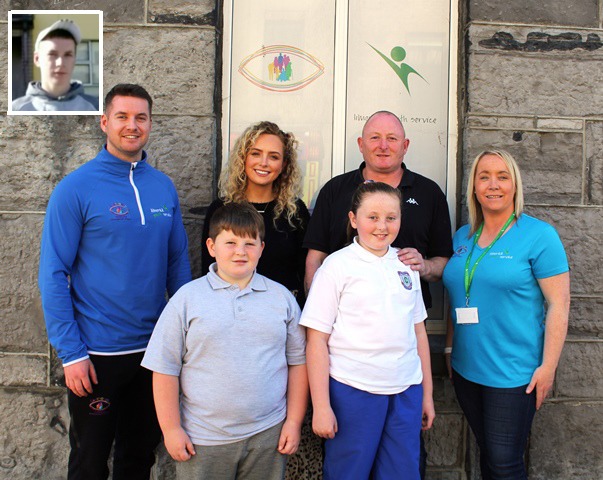
Jonathan Collins, who is now 30 years of age, featured in a 2010 video calling for a community centre in Garryowen. Limerick Youth Service supported the making of the video and today Jonathan is employed as a youth worker with the organisation.
If there was a community centre in Garryowen when Jonathan was growing up, he believes a lot of young people would have used the service.

“They would have gone there for advice, support, follow on educational programmes or simply just a hand around the shoulder to help with everyday struggles young people face these days,” he said.

• Growing up, Jonathan did not sense stigmatisation towards people from Garryowen:
“It was not rough, but not quiet. The only cause for stigmatisation I remember growing up was that there was a lot of stolen cars in the area at the time. Which there was. However, this is not the case nowadays,” he said.

• Would having a community centre save Garryowen?
“I do think that having a community centre in the area would go a long way in helping to once again have that sense of community in the area, along with guiding young people in the right direction.”

• How did you become a youth worker?
“I was in and out of trouble as a teenager and essentially came through the ranks in Limerick Youth Service as my key worker was an employee and helped guide me in the right direction through very helpful advice and support. Although there was no immediate impact (from that support) it was down the line, as I matured, that I could see myself reaping the rewards of the support I was given. I went back to college as a mature student and completed a four-year social care course, applied for my job and here I am today. I’ve come full circle”.”

• What motivates you in your work?
“I am strongly motivated by my own story to be honest. The work that was done with me had huge benefits down the line, and if I can duplicate that work with even one person from the area, then I know I have done my job.”
“I am from the area and I work with over 60 young people from the area. These young people are crying out for a community centre,” he said.
In the video from 2010, there were four other boys who featured.
“All the lads in the video went on to bigger and better things. We have two youth workers, a carpenter, a quantity surveyor and one in hospitality. However, one thing I will say about this particular group is that we had strong support systems at home and in the community.”

Limerick council recognises need for centre

Limerick City and County Council (LCCC) says it recognises the need for a community centre in Garryowen.

“The need for a community centre in Garryowen is indisputable and we would be very supportive of the idea, generally speaking,” said Seamus O’Connor, chief officer, Local Community Development Committee.

“We certainly see Garryowen as an area that needs investment. We see the value to be gained from it,” he said.

The council is presently finalising an audit of community facilities in Limerick city and county to identify key areas where there are needs. Garryowen is very likely to feature prominently and the Council will continue to work with the Garryowen Community Development Project on this issue.

• A mural of St. Mary’s Prize Band in Garryowen.

Social Inclusion Support

The Social Inclusion and Community Activation Programme (SICAP) has two goals – to support both communities and individuals.

In Limerick city, the PAUL Partnership implements SICAP in co-operation with community-based organisations such as Garryowen Community Development Project (CDP). For instance, SICAP supports the provision by community worker John Buttery of one-to-one advice and support to individuals and community groups. Last year, SICAP also supported summer and Easter camps locally.

“During the lockdown, our SICAP partners worked creatively to engage children and young people. A combination of open-access online content, online classes, tutorials and educational/art and crafts/fun packs were delivered to children by our SICAP partners,” said PAUL.

Limerick Youth Service is also involved in youth activities in the area in co-ordination with Garryowen CDP.

Why has Garryowen (pop. 4000) no community centre?

Local residents campaigning for over 50 years

Why has Garryowen (pop. 4000) no community centre?

Five years ago, ‘Changing Ireland’ highlighted good community work in Garryowen, Limerick city, and reported on why a community centre was vital for the area which has a population of just over 4,000 residents.

“We’re the perfect candidate for a community centre and we have to be on top of the list by this point,” said the then project coordinator of Garryowen Community Development Project (CDP) Maghnus Collins.

At the time, Garryowen had next to no youth facilities and parents who called to Garryowen CDP often got nowhere due to limited youth club capacity. CDP staff were all working unpaid overtime.

Staff were passionate about their work and the potential was clear if the community got the support it needed to set up a sufficiently staffed community centre.

Collins said at the time that Garryowen people “don’t want handouts, they don’t want to be spoonfed, but they need some of the supports and services provided already in other parts of the country.”

The estate was built back in the 1950s and he described the absence of a community centre as “an affront to the residents”.

Beth Ardill, LIT student and a former volunteer working with young people in Garryowen, returned to see what has transpired since. She interviewed the CDP’s current manager, John Buttery, to ask:

• Has Garryowen got its community centre?
• Is the CDP still highly reliant on volunteers?
• Is the CDP’s premises now accessible to all, in particular wheelchair users?

Working hard on a centre

Garryowen still does not have a community centre, but they are working hard on it, said John. They are at “the concept design stage” and hope to attract funding once the design is finalised. In the meantime, the CDP would welcome “a clear commitment of support” from Limerick City and County Council.
“It would be nice,” said John.

• John Buttery.

The CDP has moved locations twice since 2016. Their current premises has some advantages: It is wheelchair accessible, but they are still based outside the actual community of Garryowen.

“It is far too small for our needs and, while we pay more than €20,000 annually in rent, we do not get a cent allocated in public funding to cover this cost.”

Is the CDP better staffed?

In 2016, Garryowen struggled to provide for the youth living there – there were only 45 youth places available in an area home to over 800 young people.

The number of one-parent families (50%) is exactly double the national average.
Today, the project has more staff, while volunteers remain central to its work – they help out especially with older people.

The CDP and Limerick Youth Service deliver a model of detached youth work with two additional staff.

Also, the CDP has recruited a sports hub co-ordinator to deliver physical activity programmes in Garryowen in collaboration with Limerick Sports Partnership. This work receives funding from Sport Ireland.

Additionally, the CDP now has a group who can do home visits – delivering the ParentChild+ Programme to families throughout Limerick City.

However, as Mr Buttery says, “In community work, no position is permanent and there is, for example, an uncertain future for the positions of manager and youth worker when Regeneration funding is withdrawn in 2021.”
Working through the pandemic

Mr Buttery said the pandemic “severely limited our capacity to support groups. Not only were numbers allowed in the hall cut by more than half, but staff lost valuable space and time having to work from home.”

I asked him are more than 45 youths catered for with weekly activities by the CDP now?

He said the situation was improving but deteriorated when Covid-19 struck. Prior to the lockdowns around 50 young people were being supported. Restrictions meant only seven young people could be in the space at any one time.

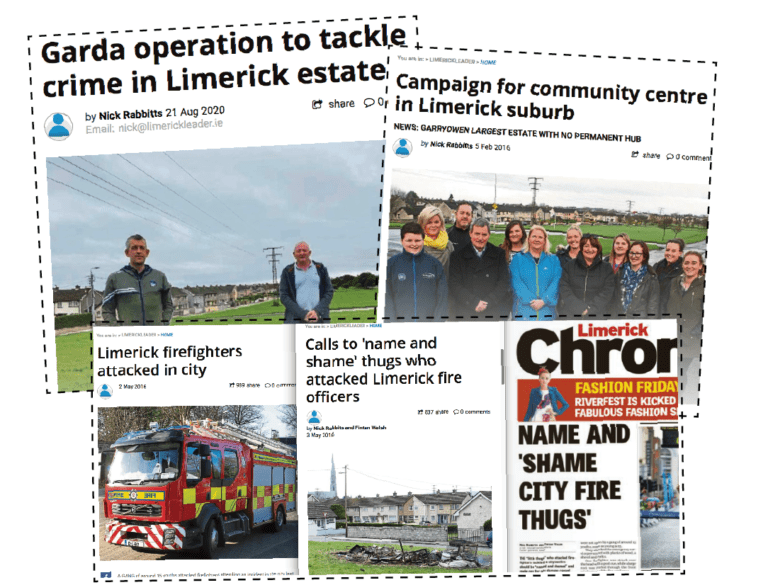
• Garryowen Residents Association chairperson John Nugent standing with local TD, Maurice Quinlivan, in front of damage caused by youths in August 2020 – as featured in the Limerick Post that week.

Violence is “a bleak testament”

Buttery said, “The violence and anti-social behaviour that was endemic in Garryowen last summer stands as a bleak testament to the need for substantial investment in community space and community services”.

From hearing this it is clear that Garryowen is in need of a community centre, a space where people can gather and where youths can get involved in activities instead of participating in anti-social behaviour.

My Garryowen experience

Although I only volunteered in Garryowen’s youth club for a short few months, I got a good understanding of the youth. I volunteered every Monday night for an hour and a half with young people from sixth class. They were a vibrant group and I met some very strong characters as well as some very quiet youths.

Some were very talented – when they were preparing for a talent show I heard some great voices. When all the young people in the youth club arrived in the hall, the noise volume was deafening. There was never a dull evening during my time there.

LIMERICK: “These young people are crying out for a community centre”

Local residents campaigning for over 50 years

Remote Working: Humphreys attends cabinet meeting by logging on from Bere Island

0

Minister Humphreys said that even a year ago such a notion would have been considered “far-fetched”, but the minister – who currently has responsibility for three departments – was able to avail of a secure and speedy connection from Bere Island to take part in cabinet discussions.

The Minister for Rural and Community Development (also responsible for Social Protection and temporarily for Justice) is visiting new rural development projects as part of a nationwide tour to promote the government’s action plan for rural development – ‘Our Rural Future’.

The broadband hub on Bere Island is one of hundreds of facilities opening across the country that provide highspeed quality broadband, allowing people to work and study from remote locations.

A key part of Our Rural Future, which sets out the Government’s vision for rural Ireland over the next five years, is developing Ireland’s first ever nationwide Hub network.

In a press statement issued after the cabinet meeting, the Minister said:

“Over a year ago, the idea of attending a meeting of Cabinet from such a remote location like Bere Island would have been seen as far-fetched. But remote working is now a reality the length and breadth of the country, including on our offshore islands.”

While not every island has a hub (some are a room in a community centre, others are larger scale) the potential for working in previously very rural and isolated areas is growing.

The Department provided a list yesterday of islands that have hubs.

In Connemara, Lettermore and Lettermullen islands (both are accessible by bridge) now have hubs.

The scale of the challenge is evident in nearby Carna where with ordinary household internet it can take 2 hours to upload 17 megabytes. Logging in for ‘Changing Ireland’ on Tuesday evening, July 27th, on the Vodafone network – that was the best speed available at the time. However, as Laoise Neylon has found the potential is real and is changing island life (read her report here) and as outlined in a further interview here.

Remarking on being able to log into a cabinet meeting from an island, Minister Humphreys said, “I was really pleased to avail of the excellent and secure facilities here on Bere Island.

“These facilities allow local people to avail of online services without the need to travel to the mainland.

“They also allow young people to study within their own community and are an important facility for visitors like me today.

“There are now twelve broadband facilities like the one in Bere Island in islands off the coast of Kerry, Galway, Donegal, Cork and Mayo.

“The digital connectivity they provide give us all choices about where we live and how we work,” she said. The Minister recently announced over €8.8 million in funding for 117 remote working projects across the country.

“This support provided through Our Rural Future, along with other initiatives such as the National Broadband Plan and the Remote Working Strategy, will help to breathe new life into rural areas and islands.”

Minister Humphreys added: “Our Rural Future commits to the development of a national network of 400 quality remote working hubs nationwide over the next 5 years. Connected Hubs which I launched in May, already has 121 hubs live and on board. People can visit www.connectedhubs.ie and book a hot desk or remote working space for a day, a week, a month – whatever best suits their needs.”

Broadband Connection Points

Broadband Connection Points (BCPs) are generally community led initiatives and are key to delivering the digital future of rural Ireland and the islands. There are currently 203 BCPs live and operational.

Pilot projects at BCPs have begun to roll out, including remote working supports, e-health projects, arts & culture initiatives, and education & training opportunities.

ConnectedHubs.ie

The ConnectedHubs.ie platform offers a suite of booking, hub management and e-commerce applications to members of the Network. The Network also facilitates the sharing of innovation, experience and best practices across the community. These supports serve to maximise benefit to member hubs, hub clients, employers, local communities and the wider economy.

Visit: www.connectedhubs.ie

YOUTHWORK: DON’T LAUGH NOW, THIS IS SERIOUS!

• The ‘Humour Festival’ was aimed at youth workers and non-formal educators. Photo courtesy: Youth.ie

Humour should be recognised by academia as a tool in non-formal education settings and for engaging youth. It should be part of the curriculum on courses purporting to teach youthwork and related subjects, say the organisers of a comedy festival with a difference, held in June.

The ‘Humour Festival’ was aimed at youth workers and non-formal educators and it set out to “celebrate the value, importance, relevance, benefits, and power of humour” in working with individuals and groups.

It was the first event of its kind and involved facilitators and attendees from across Ireland and the EU. It was all conducted online.

BOTTOMS UP!

The 20 or so workshops included titles such as ‘Bottoms Up! Comedy Steps towards Change’, ‘Humour as Healing’, ‘Humour & Theatre of the Oppressed’ and ‘Humour as Resilience’.

According to Derry-based youth worker Fergal Barr, one of the organisers, humour creates openings and outcomes, especially when you’re trying to support young people.

“If you giggle together, you’re making time with them, you’re being sincere and you’re being yourself. You can then transform the relationship,” he says.

TRUST BUILDING

“A lot of young people are coming with a lot of baggage and anger about stuff. Having fun with them and giggling together might create an opening. They might see that you’re sincere and trust you more than other adults,” he says.

The festival pointed attendees to resources to incorporate humour and fun into their work. For instance the Myers Briggs test can be channelled through The Simpsons characters.

Watch this space for more from the Humour Alliance on the value of humour in community settings.

IN PROFILE: MÁIRE UÍ MHAOLÁIN INIS OÍRR

0

How long are you involved with this project?

I’m working in development for 30-plus years. I began like many others, in my teens, doing voluntary work as a youth club leader, chairperson, secretary and so on.

What made you want to become a community worker?

Community activism was huge in Connemara in my childhood and lots of us from that era went into this kind of work. There was a huge Gaeltacht civil rights movement going on that led to the formation of the co-ops and much more.

What difference has being involved made to you?

I really believe in participatory democracy and you are involved in helping to make communities viable and sustainable – nurturing the language, culture and community and you’re working towards that. You’re directing resources to places based on community values.

Name 3 people you most admire!

Fr Peter McVerry – I really admire him, he’s so humble. Also New Zealand’s prime minister Jacinda Ardern – she shows great leadership, is decisive and shows concern for all.

Closer to home, I really admire Marty Walsh whose ancestors came from a very deprived area of Connemara and who emigrated to the USA. He rose to become mayor of Boston and is now working in the US Senate on enterprise and employment.

Your top 2 issues in Ireland today?

Housing has to be number one. Covid-19’s impact is number two.

Finish the sentence – “Nationally, we need more…”

Consultation. Communities should be consulted more by government departments. It must be real consultation. Sending an email isn’t consultation. Also, we could do with more support for the Irish language.

“We need less…”

Bureaucracy. We’re strangled by it. We have these circulars every other day from government departments, sometimes asking for silly things. Currently, I’m trying to move a staff member from one office to another. The old office cost €50 per week and the office they are moving to is €40 per week. We have to justify the change in expenditure even though it’s a reduction.

Bureaucracy is strangling community development and development generally. Often, when we meet people about a project we can’t tell them everything at the beginning. If we did, they’d run away.

I believe in good governance but you don’t have to take it to the limit.

Is Irish recognised as an important part of your work?

We work bilingually. We work through Irish in the office. We get very little credit for that. For instance, we accept applications in Irish but translate them for Pobal, the Department and LCDCs. That can take hours, but we don’t make an issue of it. It’s not said, but we know it will be put on the back-burner if an application is submitted in Irish.

What are you reading at the moment?

I’ve just finished reading an Icelandic crime series. Like ourselves, Iceland is a small community and I love the descriptions of mountain and landscape.

Do you have a pet?

I’ve dogs and cats. I love my dog Rex – he’s a Jack Russell, nearly 14, coming up to his end of life and a bit crotchety but he’s part of the family.

Can you name one thing we learned from the pandemic?

We all now know the value of the community we live in – from the way communities have been working together and protecting each other how we mind and protect each other.

Read more in our islands series here!

                                                • Inis Oírr. Source: Inis Oírr Facebook page.

Islands face obstacles, but also never-before seen opportunities

0

INTRODUCTION

The surge in remote working could boost the population on Ireland’s offshore islands and restore their viability. As indeed it could for much if not all of rural Ireland.

Plans for digital hubs on many islands and better broadband are already improving the range of available employment options.

You can now sit for a job interview with a company in Paris from your home on Cape Clear and start work without leaving the house.

                                        • The island of Inishturk. Source: Inishturk Facebook page.

Minister Heather Humphreys, who has responsibility for the islands, said in the Dáil recently, “If people are willing to move back to the island that they were originally from, we should be looking at it.”

If housing is available and you can work remotely, you can even move out to an island. Outward migration was rare up to now. That may be changing and going by Laoise Neylon’s report on previous pages the process has already begun.

Here Allen Meagher speaks to Máire Uí Mhaoláin, CEO of Comhar na nOileán, the islands development company. Máire is optimistic. She says “I think remote working will have a huge impact.”

A few islands have already got digital hubs up and running. There is one on Arranmore, another being developed on Inis Mór and smaller hubs already operating on Clare Island and on Inis Oírr.

The country’s Irish-speaking islands are getting new digital hubs as part of a Údarás na Gaeltachta initiative* to roll out 30 innovation and digital hubs. Other islands are applying for LEADER funding to open digital hubs. Some are purpose built. Others use existing office space with the facilities (eg printer) kitted out for shared usage.

Broadband is improving. At present, for instance, the connection on Inis Oírr is being upgraded as part of the National Broadband Plan.

                                                            • Source: Inis Oírr Facebook page.

Between hubs and better broadband, it means young islanders in the future will have options and possibilities that didn’t exist before.

Newcomers may also recognise the opportunity that the Meilicks from Germany grasped when they recently moved to Inishturk (see previous pages).

“There are a lot more options for people working for banks, or Google and those companies. They can work from here as easily as they can work from anywhere,” says Máire.

The same can be said for every rural location being boosted by better broadband and digital hubs.

Nonetheless, for the islands, for the time being, depopulation remains a challenge. The cost of living is higher and employment prospects lower on an island. Remote working obviously has appeal and potential, but it’s also not for everyone and people from the islands are still as we speak migrating to the mainland seeking work.

However, the pandemic had a silver lining.

Pandemic Benefits

“Covid-19 brought unexpected benefits to the islands and we are seeing a reversal of the outward migration trend,” says Máire.

“Now many people and especially those in the age group of 25 years – 35 years are back working from home and interested in staying on the islands.”

                                    • The MODAM digital work space on Árainn Mhór Island

Quest For Housing Solutions

“The islands are a microcosm of the whole of Ireland and like the rest of Ireland, housing is a major issue. It is homes that make communities and depopulation is an ever-present menace lurking like the grim reaper in the background,” she says.

“A recent housing seminar for the islands (held online) was attended by 82 people. A report is due to be issued following the seminar.

“The housing issue has to do with planning for sure in some places, but it’s also to do with houses being sold off on some islands as holiday homes – with local people being priced out of the market. It’s about dark houses in winter, as we call them, with no lights on in holiday-home owners’ houses. It’s also to do with derelict houses. There are a number of issues.

“Tourism is wonderful, but you can’t get houses to rent for people who want to live and work here,” she says.

Higher Profile Than Other Areas

On the positive side, Ireland’s offshore islands tend to get more official attention than places on the mainland with possibly greater needs.

“The islands have a much higher profile than many other disadvantaged areas in the country – amazingly so really,” acknowledged Máire. The islands body has little difficulty arranging meetings with government departments.

“Comhar na nOileán has a very good relationship with the Department of Rural and Community Development,” says Máire.

                                          • Sunset over Inishturk. Source: Inishturk Facebook page

Humphreys: Draft islands policy by year’s end

“The central objective of the islands policy will be to ensure sustainable, vibrant communities continue to live on the offshore islands,” said Minister Humphreys.

“I hope to have a draft policy document by the end of this year,” she said. “Once agreed, the policy will be supported by a series of action plans across the Government to support, promote and empower our island communities.”

She said a consultation process conducted by her Department of Rural and Community Development last year identified the main challenges.

“Issues which were highlighted by the island communities included education, health, housing, energy, employment, broadband and access to services,” she said.

An interdepartmental committee that convened in January was due to again meet in June to review progress on devising the new policy.

– Islands policy is one of the key elements of the Government’s Our Rural Future strategy.

DEPT. RESPONSIBLE FOR ISLANDS

The Department of Rural and Community Development has responsibility for islands.

It states: “Our coastal islands are an integral part of the state’s heritage. Around 30 of these islands are inhabited and hold a wealth of cultural heritage. A central objective of this Department is to ensure that sustainable vibrant communities continue to live on the islands.”

“Satisfactory services and a developed infrastructure are important prerequisites for maintaining island populations. The department’s aim is to seek to meet these requirements through current and capital investment via the Department itself and through other relevant Departments and organisations.”

“In recent years, priority has been given to the development of island infrastructure as well as subsidising comprehensive access services. The quality of life of the island populations has improved significantly as a result of this.”

“The islands on the west coast of Ireland represent a bastion of Irish heritage, culture and language and today their protection and development is guaranteed by government policy.”

These islands are scattered along the west coast of counties Donegal, Mayo, Galway and Cork. They include islands within and outside the Gaeltacht.

Today, there are over 30 inhabited islands surrounding the whole island.

In the past, State support proved inadequate and some islands died, including the Great Blasket Island off Kerry and Inishark off Galway.

Islands embrace remote working – but need more hubs & houses

Back in 2019 Irena Meilick and her husband Bruno decided to move from Germany to the Irish countryside because they are nature lovers.

   The couple had three young children at the time and were looking for somewhere to settle by the sea, “with fresh air and nature around us,” she says.

   Her husband is a web programmer so he can work from anywhere. Ms. Meilick started looking on Daft.ie and one day she spotted a small house to rent on Inishturk, she says.

   Within weeks they viewed it and “instantly fell in love with the little house,” she says. “It has very nice views.”

   They moved in with just the belongings they had brought in their backpacks and didn’t go back to Germany to get the rest of their stuff for a year, she says.

   Island life is everything they dreamed it would be and more. “We love it, it’s even better than we thought it would be,” she says.

• Bruno and Irena Meilick and family found life on Inishturk “even better than we thought it would be”.

   They never imagined that the small community would be so welcoming to them. “It is such a community,” she says. “They were so welcoming from the beginning.”

Remote Working

   Since the pandemic struck, the increase in remote working has presented a glimmer of hope to young islanders from Inishturk and people who dreamed of moving home to enjoy island life have found a way.

   Unemployment and emigration have always been high on the list of challenges faced by Ireland’s offshore islands, says Mary O’Toole, co-ordinator of Inishturk Development Company.

   But, increasingly companies are open to employing people to work remotely. Advances in technology could open up a wide variety of jobs and slow the flow of young people to the mainland and beyond, to look for work.

   “We are looking at developing a digital hub on the island,” says Ms O’Toole. “Which will not only ensure connectivity with the excellent broadband we have – but will see the return of islanders hopefully.”

   While islanders face challenges of employment and construction costs, they are benefiting from improved amenities too, she says.

   Máire Ui Mhaoláin, CEO of Comhar na nOileán, says that there are plans for digital hubs in many islands and remote working is improving the range of employment available to islanders across the offshore islands.

   Ms. Meilick says her husband is remote working as a self-employed web programmer and has no issues with the internet.

   She has started working in the community garden and helps out in the shop and the restaurant too, she says.

Changes on Inishturk

   Around 18 years ago Changing Ireland reported that people living on Inishturk had to travel to the mainland for a haircut.

   That is still the case, says Ms O’Toole, but there are more regular sailings nowadays.

   An extension to the pier in 2006 means that the boat now runs in all weather, she says. There is a daily service from Roonagh and a service from Cleggan twice a week.

• Inishturk Island. Source: Inishturk Facebook page.

   “We have advanced a lot in the last 18 years,” she says.
In 2003, Inishturk got a new health centre and they have a nurse available there full time and a GP visits once every three weeks, says Ms O’Toole.
If the doctor’s visit is urgent people travel to the mainland, she says.
The coast guard and the RNLI provide back up to the nurse and have been assisting with the vaccination programme, “The service of the coast guard and the RNLI has been just absolutely amazing,” she says.

Restaurant

An extension to the community club, which now includes a restaurant and function room, has opened up the possibility of going out for a meal.

“The restaurant is a massive addition,” she says. It is open seasonally and is well used by locals.

The sports pitch was upgraded in 2010, and dressing rooms built in 2012. That has allowed Inishturk to host matches and clubs have travelled from the mainland to play.

Building a Sustainable Future

•  Inishturk by boat. Source: Inishturk Facebook page.

The population of the Inishturk is 62 and there are just five children in the primary school.

“We have a wonderful, vibrant school with two teachers, says Ms. O’ Toole. “The children get plenty of special attention.”

The primary school got a boost when Ms Meilick’s family and another family also from Germany, moved to the island.

Ms. Meilick’s eldest child, aged 9, is in the local school. “The school is such a nice place, the teacher is great,”she say. “He has the smallest class ever.”

She is homeschooling her 7-year-old for now. One of the things that attracted the couple to Ireland was being able to let their children choose between going to school.

Homeschooling is very complicated in Germany, she says.

Secondary students travel to the mainland and board during the week, says Ms O’Toole. “That is all part and parcel of island life. We are still dealing with population decline which is ongoing for any rural community.”

• A friendly visitor to Inishturk. Source: Inishturk Facebook page.

There is some employment on the island including farming and fishing, she says. And publicly funded jobs too – like herself and her colleagues, the teachers and the nurse.

There is work too in tourism, which is seasonal, yet many young people still have to go to the mainland for work.

With plans for a digital hub on the island though that could be set to change, offering hope to islanders that wasn’t there before.

Since Covid-19 restrictions kicked in four islanders have come home. They are working remotely for companies based in Denmark, the UK and two on the mainland, she says.

“This is a massive shift in the right direction. It is our goal to increase this number and capitalise on this opportunity,” says Ms O’Toole.

Companies are finding that “remote working is working,” she says.

Those islanders who have come home are benefitting from the change in approach. “They are content doing it and they are happy to be home while still working away.”

Getting the digital hub up and running as soon as possible is a key priority for the sustainability of Inishturk, she says.

Another major issue is construction costs, it can be around 30 percent more expensive to build a house on the island. Materials have to be shipped out and tradesmen have to be accommodated in B&Bs too.

She says that if both of those issues could be tackled, it would make it easier for people to move to Inishturk and for young people to stay living on the island too.

“Sustaining the population and ensuring that Inishturk has a bright and vibrant future for many years to come,” says Ms. O’Toole.

“Of course we would love to see more families here,” says Ms Meilick, “it is so important for the community.”

• A rainbow sighting on the island. Source: Inishturk Facebook Page.


• Sunset on the island. Source: Inishturk Facebook page.

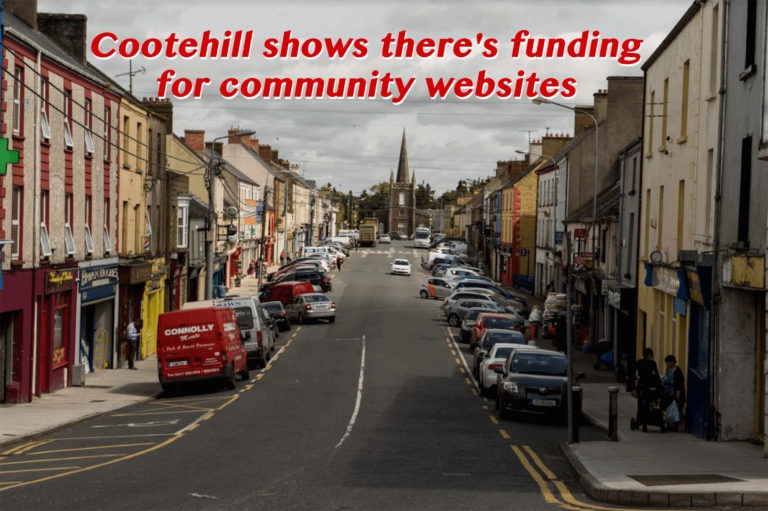
Humphreys urges other towns to follow Cootehill’s example

A new community and business orientated website for a small town, believed to be the first of its kind, was launched recently by Minister Heather Humphreys.

Cootehill.ie includes a community hub showcasing clubs, groups and initiatives in the area and telling the history of Cootehill. It also provides an online marketplace for local business owners to sell their products directly from the site. The site currently features 50 businesses on its online high street and 32 community groups.

The website’s high-quality, interactive content was developed as part of a Smart Communities Initiative championed by Cootehill Chamber of Commerce and funded by Cavan County Council and the Department of Rural and Community Development under the Town and Village Renewal Scheme 2020.
The website “seeks to be an exemplar project” and an example of a digitally enabled community.

“The goal was to create a website to represent and promote all things good about Cootehill and act as a focal point for local initiatives which we think we have accomplished with the help of eTownz,” said those behind the project.

Website Does Cavan Proud

Chairperson of Cavan County Council, Cllr. Sarah O’Reilly (pictured above) welcomed the launch of “a digital gateway to this vibrant, bright, dynamic, connected community.”

She congratulated Cootehill Chamber of Commerice on “their vision”, saying: “Cavan and Cootehill are among the first communities in Ireland to embrace the new EU directives on ‘Connecting Rural Businesses through Technology’ and all of us are very proud.”

Cavan County Council provided over €4,000 towards funding the initiative, alongside the Department’s larger grant.

Online portals for towns & villages

Minister for Rural and Community Development, Heather Humphreys said it was “a wonderful concept and shows great vision and leadership by Cootehill Chamber of Commerce”.

• Town and Village Renewal might help fund your website among many other things. Heather Humphreys, Minister of Community and Rural Development and the Islands.

“I am very pleased to be associated with this initiative under the Town and Village Renewal Scheme. My Department provided just over €37,000 for the project (and) it strikes me that many more towns and villages should and will follow your lead in developing an online portal for your community.”

“It is important to equip local businesses with the tools they need to develop a web presence quickly to increase revenue. For the past year, we’ve been rolling out the importance of getting that online web presence. This website will increase footfall for Cootehill businesses. These kind of initiatives are now more important than ever as we begin to move beyond the pandemic and repair our economy.”

Noting that any business or organisation on Cootehill’s site can sell through the site, she said: “I understand this is the first for any town in Ireland. You should be very proud.”

Town & Village Renewal Scheme

“The Town and Village Renewal Scheme is one of the most popular schemes under my Department. It is designed to rejuvenate small rural towns and villages, to make them more attractive places to live, work, raise a family and do business and socialise,” she said.

“It very much takes a bottom up approach. You come up with the ideas, you make the submissions and my Department, in conjunction with the local authority, ensures you get the funding to make it happen. That’s what’s happened in Cootehill.”

She detailed the spending and the number of projects supported:
“Since 2018, under the Town and Village Renewal Scheme, over €62million has been invested in 890 projects in every single county.

“When I became Minister I decided to enhance the scheme and last year saw total funding of €25m (spent on the scheme) including an additional €10 million provided under the Government’s stimulus measures tailored to address the challenges from Covid-19 and to reflect that communities across the country need to be supported to get back on their feet.”

Rural Regeneration & Dev’t Fund

The

Minister also highlighted other schemes under which groups can work with their local authority to apply for – in particular the Rural Regeneration and Development Fund which is for targeted large-scale investment. It aims to drive economic and social progress and sustainalble development in rural areas.

Collaboration

Web designer Pat Kennedy of eTownz (pictured speaking above on Zoom) said, “Uniquely, each club or business runs their own profile page, with prices and services displayed. Now people in Cootehill can sell 24/7, worldwide.”

“We have lots of ideas on what next for the site and we’re asking people what they think. The site is built around being collaborative. It will be curated to ensure quality while also inviting people to submit news and content,” he added.

Plan ahead for town & villages scheme grants

While the closing date for receipt of applications to the Town and Village Renewal Scheme has passed for this year (today, July 16th) plan now for the next round of funding.

For more info, see the dedicated page on the Department’s website, via: https://bit.ly/TVRSinfo