Saturday, July 4, 2026
Home Blog Page 32

Community arts work is radical – is that why it’s not better funded?

“I was told I was in the mild end of the serious category. I did have to go into hospital and I did have to get oxygen, so it was quite serious. All of my family got Covid and it was in March 2020 so it was right at the beginning. Everybody recovered except for myself. I ended up sick for six weeks straight.

“I had huge difficulties with my breath – I did have asthma prior. Then I was lucky that when I got oxygen I started to recover so I didn’t stay in hospital long.

Fright of long Covid experience

“When I was recovering, that’s when I wrote the poem. I felt I was coming out of a very traumatic experience and it really brought home the important things like the people we love, living in the moment, things like nature, art – which I do love… That’s where the poem just came from.”

Her poem called ‘In Time’ was recorded as a music video by fellow-artists and can be watched online. While she shares the excitement with others in the arts and theatre world about opening up – in a careful manner –  she is first and foremost simply grateful to be alive.

“I have long Covid, so I am one of the many thousands with an ongoing illness. So I fully get the seriousness of Covid. It’s still killing, maiming and leaving people with long-term serious illness. We need to be vigilant about that,” she said.

“Very Excited”

Mary is the founding director of Smashing Times, now 30 years in operation, and she retains the positivity and spark she has demonstrated throughout those years.

She said she was “very excited” about connecting once more and “not just having the arts online”.

“The arts have been very hard hit, particularly performing artists who depend on gigs and live theatre and performance.”

“It’s important we get back to work, earning a living and reconnect with one another, but in a way that’s safe.

“We’ve spent months working on guidelines around Covid compliance and health and safety. And a lot of us have adapted. For example, in ST we’re doing a lot of outdoor events for our upcoming festival.”

Vaccine Equity

As someone who habitually reflects on equality issues, I pointed out to her how the WHO has condemned vaccine grabbing by Ireland, the EU and other rich countries.

Mary said, “We live in a very unequal society where access to health is not equal in the first place. Vaccine equity is a human rights issue and governments need to act to ensure that the vaccines are available to every country in the world and that there is no profit involved.”

She agreed with Dr Mike Ryan when he said “Social justice is only a dream if we don’t put health justice at the centre of it”.

Influences

Given her work, there are many human rights defenders that Mary greatly admires. Asked to name who who had a big influence on her, she said, “I always say my parents first.”

Mary has previously written about the great love in her family growing up and about how her mother’s fierce independence influenced her. Now she is a mother of four children. Have any of them followed her path into the arts, activism or drama?

“I’ve three boys and a girl and they all have a strong social conscience. One is a writer and the others are business orientated,” she said.

Her mother died when she was 16, a few days after giving birth and her father without hesitation took over the role of care-giver to the family including the new born baby.

Mary’s family believe that failings in maternity care played a role.

“Women at the centre of maternity care are not being listened to,” she said. She strongly supported the campaign to make it mandatory to hold inquests when a woman dies in a maternity hospital. The story she tells of her mother’s death is one of many that fuelled the campaign and, thanks in particular to campaigning by nursing sociologist Dr Jo Murphy-Lawless, in 2019 it finally became mandatory to hold inquests.

“That was very important. It showed we needed to tell our stories. My mum always said stand up for what you believe in.”


People smuggler Mary Elmes

In terms of heroes, she also named Mary Elmes from Cork. Mary was a WWII era human rights defender who Smashing Times recently celebrated. She volunteered with a group of Quakers and  successfully smuggled hundreds refugees out of Nazi-occupied countries.

The discovery of and celebration by Smashing Times of Mary Elmes’s story – previously unknown – is a good example of their work and impact.

It was the organisation’s connections in other European countries that revealed an Irish woman had played a Schindler’s List-style role in smuggling refugees across Nazi lines.

The presentation of her story on stage so captivated journalist Clodagh Finn that she spent a year researching and writing a book about this remarkable lady. (‘A Time to Risk All’ is published by Gill Books).

“She was non-violent, peaceful and very much believed in a shared humanity and reaching out to strangers,” said Mary.

“It’s a human right to seek sanctuary… and we need to do more on that count. We also need to close down Direct Provision which is going to happen I believe.”

The Mary Elmes story is typical of those Mary is drawn to: “We’re interested in forgotten or hidden stories. And my particular interest as an artist is in  making theatre and film from historical memory of forgotten stories of women in history.”

She said that diversity is always about whose voice is not being heard and is more than just getting diverse people faround the table.

“How do you make sure that all voices are heard?” she asks.

Sexual harassment

Asked to name two issues we don’t hear enough about, she said, “You may think this is not hidden, but sexual harassment is a huge issue. There’s a whole generation of people who think we’ve moved on, but things are getting worse.”

She made her point only a day before a judge let a convicted murder off without jail time after he tried to strangle his partner and two days before sexual abuse and harassment in the Defence Forces was revealed.

She said it was important that sexual consent is discussed more with young men and women.

• Mary Moynihan of Smashing Times.

While the #MeToo movement undoubtedly brought good, gender-based violence continues. She believes there’s “a continuum between sexual harassment” and the worst forms of violence in society.

“Recently, I heard about a runner – a young woman – who won’t go running in the evenings anymore because of the harassment she gets. I think that’s shocking.”

“It’s talked about, but not enough. Everyone thinks it’s a woman’s issue, but it’s a men’s and boys’ issue too.”

She recalled doing a symposium on the subject with secondary school pupils in the Samuel Becket Theatre: “A young man from the inner city said this is everything to do with me. I don’t fit the gender norm for men. Men are seen as strong, as leaders, as go-getters. He said, ‘What if you’re like me and you’re none of those things?’ He just didn’t fit.”

She welcomed the fact that young people are moving away from gender binaries. She knows men can be great care-givers.

“The gender stereotype would say men are a certain way, but after my mother died, I saw my father – who used to have everything done for him – be a wonderful care-giver to a young child (her baby sibling).”

Traveller suicides

“The suicide rates in the Traveller community are also shocking. It’s wiping out a whole generation of young people and I definitely think more needs to be done about that. It’s horrific what’s going on and more support,” she said.

The suicide rate within the Travelling community is six-times higher than the wider population. Suicide is most common in young Traveller men.

Looking to where more support could be provided, she said, “I had the pleasure of working with Kildare Traveller Action where Traveller women work as Primary Healthcare Workers in their own communities. It is a really positive HSE programme. Those kind of really positive programmes need more support,” she said.

Smashing Times

Smashing Times is a great name, so where did it come from?

“The Suffragettes…. We don’t like smashing windows of public buildings, but we do want to smash taboos. We also shine a light into dark areas. We are about primarily about making art, but we care deeply about the world we live in and we want our art to impact in terms of human rights, equality and diversity.

“And because we’re about art, we’re about bringing people together. We want respect and dignity for everybody, which is what human rights is about.”

“One of the festival events in this year’s festival is called ‘State of the Art’ – it’s about the nation-state as both protector and violator of human rights. Both happen.”

Returning to Covid, she said, “I have to say the State did an amazing job dealing with Covid when it first struck compared to other countries and saved many lives by the actions it took.”

Human rights partners

“We partner with human rights organisations such as Fighting Words, the Irish Council for Civil Liberties and Frontline Defenders and they run brilliant workshops – such as knowing your rights when arrested,” she said.

The festival events are viewable online after being broadcast live.

“Frontline have really good workshops,” said Mary. One is a panel discussion called ‘The Social Life of Misinformation’ about the global misinformation crisis. It asks: ‘How can you know if something is true or false? If the far right is on the increase, why is that happening and what can we do?’”

Other festival events range from a film documenting young people’s experience of direct provision to a presentation by a radical feminist organisation from the US called ‘Guerrilla Girls’.

Five staff & €261k

Smashing Times had a core budget of €261,000 in 2019, it employs five people full-time and has a freelance panel of artists and people interested in human rights who also contribute.

Theatre can be a powerful tool for human rights, development education and community development.

“We’re very open. Join our arts and human rights network. It’s free – you can be a citizen, an artist, a community worker – it’s for anyone interested in arts and human rights. Email us,” said Mary.

“In Ireland, we ran a programme to train people to do what we do and a lot of organisations sprung out of that. For example, look up the wonderful cross-community space called The Hub in Cookstown, Co. Tyrone, run by Carol Doey who trained with us. They’ve won huge awards.”

Since 1991, Smashing Times has grown from working with communities in Coolock, Tallaght and Ballymun to being active countrywide, north-south, and across Europe.

While only going since 2019, how significant is the Dublin Arts & Human Rights Festival and are there others like it?

“It’s growing. For example, we partnered with a group in Serbia who, like us, use theatre and film in post conflict environments. Last year, because they had been involved in our festival, they held the first arts and human rights festival in Serbia.

“There’s also the ‘Imagine Festival’ in Belfast and there’s a Derry Arts and Human Rights Festival.”

Magic / positivity

We would all like to live in a world without violence or poverty – and it’s something Mary believes can happen. How can she be so positive in her outlook?

“I’ve had the pleasure of working with many different groups and communities and it has never ceased to amaze me the connections that can be made between different people, from different communities. I often see that through the arts. There’s a kind of magic in it and it always makes me feel really positive.

“The arts have been hugely successful as part of the (peace process) promoting positive community relations, enabling people to come together.

• Artists for civic action.

“The arts are full of paradox. The artd environment provides a safe space to take risks – particularly in theatre and creative processes in a workshop space. When you get into film, art, music performances, there’s a common language that comes that goes beyond the language that divides us.”

Speaking about challenges facing the community in which ‘Changing Ireland’ is based, Mary suggested Moyross become part of next year’s festival.

“The arts can envision new futures. You can use the arts to help create the vision for how we want our world to look like, if we start to tell alternative stories.

“Sometimes the dominant narrative doesn’t allow the positive stories to come forward.

“For me the dominant narrative sometimes doesn’t even allow people to say we want to connect and we want to find a way to challenge what’s wrong in society.

“We need to hear more voices and the arts can do that and envision a positive future,” she said.

Radical & personal empowerment

“On a personal level the arts enable you to grow as a person, to communicate, to stand in someone else’s shoes. We’ve worked with hard-to-reach communities and there’s always room to do more. There’s huge potential and community organisations need more support to bring the arts in, because it is an empowering tool. The arts are magical, but you need sustained, long-term engagement.

“When they talk about arts, participation is a buzzword. Real arts engagement is about embedding yourself in the community, building your connection with the group and empowering them to make the work themselves.

“Long-term sustained arts engagement is radical. Is that why it’s not funded?” she asked.
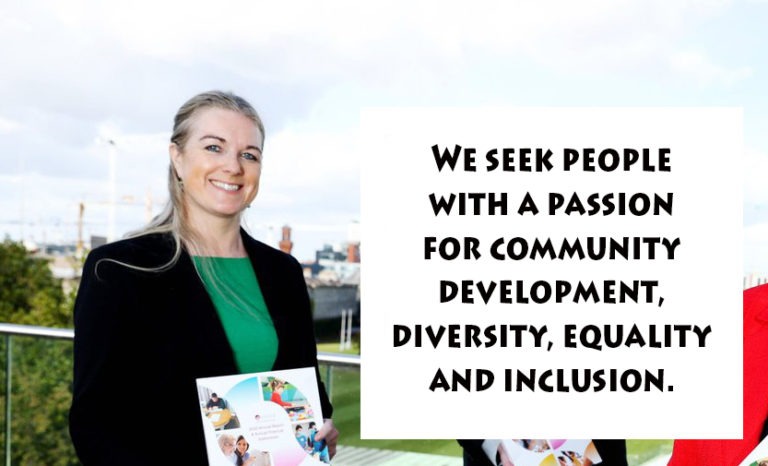
Pobal chair Rosarii Mannion calls on development workers to join board

“We really want to reach out and and engage with those people and hopefully they will be joining us on the board,” she said.

“For new members, what we’d love to see is people coming forward with an absolute passion for community development, who want to see more diversity, equality and inclusion, are supportive of the rural economy, interested and engaged in local development,” said Ms. Mannion.

“There are so many people out there working in the community and voluntary sector that have such valuable life experience to bring with them. They know the issues on the ground – we’ve seen that post-Covid and during Covid,” she said.

Watch Ms. Mannion’s interview with editor Allen Meagher here:

NOT SMALL CHANGE: €717M IN 2020

Pobal’s 16-person board already includes people with experience in various areas – from Ciaran Reid, CEO of Louth LEADER Partnership to Molly Buckley, a public health nurse, and Ann Hanley who worked as manager of Bailieborough Resource House Childcare Facility for almost 20 years. (To read more about the board’s current members, click https://www.pobal.ie)

Outlining Pobal’s work, Ms. Mannion said, “In 2020, we allocated €717m to local and national community organisations – so it’s a really busy, progressive, involved and dedicated organisation.”

“Pobal works on behalf of government in conjunction with communities and local agencies to support social inclusion and local and community development. We do this by managing funding and providing support – at this stage to around 31 programmes.”

Looking ahead at Pobal’s role, she said, “There is an unique opportunity now in building back better and being more socially inclusive post-pandemic. Why not put your hand up and join a board that’s involved in such meaningful work?” she added.

Ms. Mannion, from Drumshanbo, Co. Leitrim, herself joined the board in December 2020 and on September 30th she was formally appointed chairperson (replacing outgoing chair Professor Deiric Ó Broin).

8-9 MEETINGS PER ANNUM

“There are eight to 9 board meetings per year and possibly some sub-committee work,” said Ms. Mannion.

Travel will not be the issue it once was:

“We want to promote the rural economy and remote working, so we will have a hybrid option for attending meetings – in person, or dialling in, using Zoom, using all the technology that we want to see enhancing rural communities and rural Ireland.

“We want be as inclusive as we can in terms of the membership of the board. We want to make things as easy as possible for volunteers to contribute and (hybrid meetings) will allow us get the right people around the table to enhance the mission and vision of Pobal,” she said.

Pobal is a means to an end, Mannion tells Oireachtas

Ms. Mannion addressed the Joint Oireachtas Committee on Social Protection, Community and Rural Development and the Islands on Sept 22nd as chair-designate.

“As Chairperson of Pobal a key role for my board colleagues and I will be to support, to challenge and to lead our excellent and committed staff to deliver on government policy, to deliver on our programmes and to remember one fundamental thing. Pobal is not an end in itself. It is not the object of the exercise. It is a means to an end and that end is a stronger society. It is communities across the country where people – especially the most vulnerable – are better supported,” she told the committee.

“I believe passionately in rural communities, in community development and in social inclusion. I have seen first-hand the impact of the work of Pobal. My lived experience is that diversity, equality, justice and inclusion make for a stronger society. I know that these values give chance and opportunity to those who would not otherwise enjoy it,” she added.

“If the programmes we support are effective, people’s lives are enhanced. That is the context in which my board colleagues and I are working on our Strategic Plan 2022– 2026,” she said.

She has worked professionally as National HR Director in the HSE while volunteering interests include serving with the National Adult Literacy Agency.
She has served on local, national and international boards  and key interest areas of her own include the role of women in society, the role of carers and gender equality.

• Rosarii Mannion, chairperson of Pobal, Anna Shakespeare, Pobal CEO, Heather Humphreys, Minister for Rural and Community Development and Deiric Ó Broin outgoing chairperson of Pobal – pictured on Sept 29th at the launch of Pobal’s annual report for 2020.

POBAL BOARD DEADLINE – OCT 28TH

If interested, start planning your application sooner rather than later. The deadline is October 28th and there is a degree of homework and form-filling involved.

For more information, visit:

https://www.pobal.ie/appointments-to-the-board-of-pobal/

Also: https://www.gov.ie/en/publication/9eaad-appointments-to-the-board-of-pobal/

Social inclusion & community programme budget up 10% for 2022

Groups including the Irish Local Development Network (ILDN) had lobbied for more support, pointing out that spending in this area remains below what it was a decade ago. In 2010, there were 180 Community Development Projects funded by the state – the programme was ended after 18 years and projects either had their funding cut or were merged with larger groups to form local development companies.

The ILDN described the increase as “a step in the right direction”.

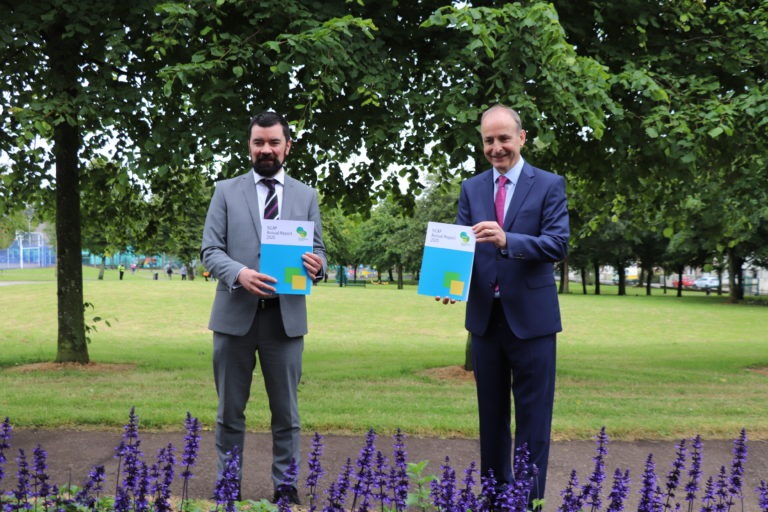
Minister of State Joe O’Brien, responsible for Community Development and Charities, pointing out that SICAP is the country’s principal social inclusion programme, said the increase “will further enhance the vital work of SICAP”.

He said it will see “additional community workers on the ground in communities.

“The community spirit underpinning SICAP and that was so evident throughout the pandemic must be harnessed and built upon. Today’s budget increase is a significant strengthening of community supports and I look forward to welcoming the new community workers into communities across Ireland over the coming months.”

ILDN CEO Joe Saunders said, “SICAP is the Government’s flagship anti-poverty programme and the increase in its budget certainly sends a signal to our colleagues working in communities tackling social exclusion that their efforts are valued and supported.”
Adeline O’Brien, also speaking on behalf of the ILDN, said the increase was “an acknowledgement” of SICAP’s role in tackling social exclusion, especially during this pandemic.

“Our efforts Pre-Budget focused on poverty, homelessness, social exclusion, isolation, and marginalisation and the negative impact on the wellbeing of individuals and the communities they live in and belong to. Today’s increase in the SICAP Budget will further equip ILDN members to meet all of these challenges in their communities,” she said.

Despite inflation, funding for the Community Services Programme, Public Participation Networks and other community supports largely remained the same.

Nonetheless, it is clear the range of programmes and funding distributed through the Department of Rural and Community Development is growing. The Department’s budget has increased to €376m for 2022.

Meanwhile, on climate action in Budget 2022 overall, the Environmental Pillar acknowledged there were “some wins here” for the environment “but big strides are still needed to address the climate and biodiversity crises”.

The budget for Irish overseas aid was also increased – by €140m, – which GOAL said showed solidarity with vulnerable communities.

Hope is focus of Dublin Arts & Human Rights Festival (Oct. 15-24)

The 2021 Dublin Arts and Human Rights Festival runs for ten days from Friday, Oct. 15 to Sunday, Oct. 24.

The theme is ‘Hope, Courage and Resilience: The Story Continues’ and the festival aims to highlight the work of human rights defenders in Ireland and globally, and the role of the arts and artists in promoting human rights today.

Artists for Civic Action

It is organised by Smashing Times and Front Line Defenders in partnership with Amnesty International, Fighting Words, Irish Council for Civil Liberties, National Women’s Council of Ireland, Trócaire, and Poetry Ireland.

Mary Moynihan, founder of Smashing Times, encouraged people to attend.

“One of the festival events we’re doing is called ‘State of the Art’ – it’s about the nation-state as both protector and violator of human rights.

“We partner with human rights organisations such as Fighting Words, the Irish Council for Civil Liberties and Frontline Defenders.

“Frontline have really good workshops this year. For example, one is an online panel discussion called ‘The Social Life of Misinformation’ about the global misinformation crisis. It will ask: How can you know if something is true or false? If the far right is on the increase, why is that happening and what can we do?

“We have an event led by a radical feminist organisation from the US called ‘Guerrilla Girls’.

“We will also show a film documenting young people’s experience of direct provision,” she said.

Full programme details will be published shortly.

Local groups taking part this year include Dublin North East Inner City and Dublin Northwest Partnership.

For more, visit: https://smashingtimes.ie/dublinahrf/

Moves begin to reform family law courts

Change is coming to family law courts and the sooner the better for children at risk, a conference held over the summer heard.

A risk assessment should be carried out on the dangers of allowing children to have contact with an abusive parent, said Dr Stephanie Holt, Assoc. Professor at TCD, speaking at the ‘Building a Family Law System for Children’ conference held on June 2.

“Children have a right to end an abusive relationship,” she told attendees at the event, which was organised by One Family.*

At present, she said professionals often ignore a past pattern of domestic violence when deciding whether to grant contact. However, Holt wants the legal system to take account of past abusive history as being relevant in assessing if there is a risk to children.

“Child safety and interests cannot be realised in a system that doesn’t identify the risks,” she said, speaking on June 2nd.

She said the family justice system in Ireland is currently characterised by a “dangerous combination of invisible risks and invisible rights,” for children.

• Dr. Stephanie Holt speaking at One Family’s conference ‘Building a Family Law System for Children’.

One Family’s conference heard from national and international experts with panellists from the Department of Justice, the Courts Service, academia from the Britian and Ireland and a High Court Judge from Northern Ireland.

Change is coming

Guest speaker Liam Coen, assistant principal officer at the Department of Justice, said change is coming.

• Liam Coen, Department of Justice.

The Department ran a public consultation survey on the future of family justice and it plans to consult with children and young people separately.

They are collaborating with the Department of Children to develop a process for doing that, said Coen.

“We will, as you can imagine, have a huge amount of information through our consultation process to analyse and reflect on,” he said, speaking at the online conference.

He said the Department will establish advisory groups to analyse that information and feed into the Family Justice Oversight Group and the reform process.

Towards the end of this year they will begin to draft a new national family justice strategy.

They will look at the reform of family justice systems that have taken place in other jurisdictions while also examining scope for reform in the Irish context.

“It’s a really exciting piece of work,” said Coen.

The Family Court Bill, the general scheme of which was published in 2020, will establish special family courts at the district court and circuit court and high court level, with specialist training for dedicated judges.

The aim is to “try and improve the experience, overall, for families seeking to access justice,” said Coen.

It is not yet known when the bill will be published, he said.

• Liam Coen, Principal Officer, Civil Justice Policy, Department of Justice, speaking at One Family’s conference ‘Building a Family Law System for Children’.

What’s it like Being a child?

Holt said the new family courts need to look at what it is like to be a child and live with domestic violence, saying it has a serious impact on children.

“They see it, they hear it, they experience the aftermath,” she said.

She said she found through her research that often the violent parent who rigorously pursues contact with the children, then doesn’t actually participate in that contact once it is granted.

That calls into question whether the desire for contact was real in the first place, said Holt.

“The initiation of contact proceedings is often merely a tactic used by the abuser to continue the harassment and control over women and children,” she said.

The family law courts should move away from focussing on the adult’s right to contact. The objective should be “children’s rights to safety, voice and agency,” she said.

ADDITIONAL REPORTING BY ALLEN MEAGHER:

Speaking at the conference, Karen Kiernan, CEO of One Family, said, “We know from our work with families that they are often traumatised from going through the adversarial family courts and this can cause long-lasting damage to children.”

“We strongly advocate for a Family Law Service Model to be developed alongside the new legislation to provide assessments, safety and family supports to families before and during court. When families separate or have issues that need to be agreed, the first responder shouldn’t be a solicitor. Instead, child-focussed, affordable supports should be available locally”, she said.

• Karen Kiernan, CEO of One Family, speaking at One Family’s conference ‘Building a Family Law System for Children’.

Emer Darcy, Head of Family Law Reform at The Irish Courts Service said, “The Courts Service is looking forward to continuing to collaborate with One Family as we progress with our Modernisation Programme to deliver better outcomes for all our users including children and families.”

The full panel of speakers at the 2021 event were:

  • Dr Stephanie Holt, Associate Professor, TCD.
  • Emer Darcy, Head of Family Law Reform, the Irish Court Service.
  • Dr Jan Ewing, Impact Fellow, Creating Paths to Family Justice, Law School, University of Exeter.
  • Liam Coen, Principal Officer, Civil Justice Policy, Dept. of Justice.
  • Karen Kiernan, CEO, One Family.
  • Mrs Justice Keegan, a high court judge in Northern Ireland.

One Family has now held two webinars focused on family law reform in Ireland. The first can be viewed here: https://onefamily.ie/family-law-conference/

“We want to focus attention on the most vulnerable court users – children,” said One Family.

For more from Laoise Neylon on this subject read:

Children are sometimes at risk through contact visits with violent parents

Children are sometimes at risk through contact visits with violent parents

Lynch says she is regularly contacted by mothers who have been instructed by the courts to send their children on contact visits but the children are afraid to go. “The voice of the child absolutely needs to be represented,” she says.

The family courts here, as in many other jurisdictions, see it as their job to facilitate contact with both parents. “They want joint access, they want joint custody,” she says.

Which is fine – unless of course, it is dangerous.

Most of the work done by social workers and professionals working in the family court looks at the child’s primary residence and considers whether that is safe, says Lynch. Potential danger on access visits isn’t given much consideration, she says.

• Mary-Louise Lynch, Founder of Survivors Informing Services and Institutions (SISI).

COURT FLAWS

And the family court system doesn’t recognise the dynamics of domestic violence, which is an ongoing pattern of behaviour, she says.

The courts appear to take the view that “just because he beat and raped the mother, doesn’t mean he is not a perfectly good father,” she says.

Lynch said that material evidence of serious violence, including Garda reports and medical reports of injuries, are often not taken into account, within the family court system, when deciding on a safe level of contact for children.

“Someone who has a safety order or a barring order will still have to facilitate access,” she says.

She said that, in Ireland, the child’s contact with the perpetrator of violence is usually unsupervised.

Links between domestic violence & child abuse

Research indicates that there are links between domestic violence and child abuse, said Lynch. “Often in homes where there is domestic violence there is child sex abuse as well,” she said.

Even in cases where children tell their play therapist about abuse, they are not always listened to, she said.

There are some excellent judges, she says, but there are too many family court judges in Ireland who believe that ‘parental alienation syndrome’ is common.

Parental alienation syndrome (PAS) is a child’s experience of being manipulated or coached by one parent to turn against the other parent and resist contact with him or her.

However, the syndrome has been dismissed by leading psychiatric associations in the US and is not included in the Diagnostic and Statistical Manual of Mental Disorders or the International Classification of Diseases.

According to parental alienation theory, one parent may persuade a child to turn against the other parent and even to claim that abuse took place when it did not.

Lynch says that if this happens at all it must be very rare, but it is resulting in numerous decisions by the family court that children are lying when they disclose abuse.

But what if they are not lying, she says. What if they are telling the truth and the court is ordering them to keep going on visits with their abuser?

“It is a fundamental human right to live free from fear,” she says.

Department of Justice Views

A spokesperson for the Department of Justice says that existing legislation sets out a wide range of factors that the court is required to take into account when determining the best interests of the child.

“These factors include, where applicable, any harm which the child has suffered or is at risk of suffering, including harm as a result of household violence, and the protection of the child’s safety and psychological well-being,” he says.

The Department has arranged for research on parental alienation to be carried out this year, looking at international approaches to the issue, he says.

They will then look at whether any changes to legislation or policy are required. “The best interests of the child will of course be paramount in any considerations,” says the spokesperson.

* This article was amended on Oct 11. The quotes presented here were gathered through interview, not presented at One Family’s conference as initially stated.

For Laoise Neylon’s article on One Family’s ‘Building a Family Law System for Children’ conference, read:

Moves begin to reform family law courts

Moyross – where every youngster backs Wesley!

WINNING LIMERICK JOCKEY PUTS YOUTHWORK IN SPOTLIGHT

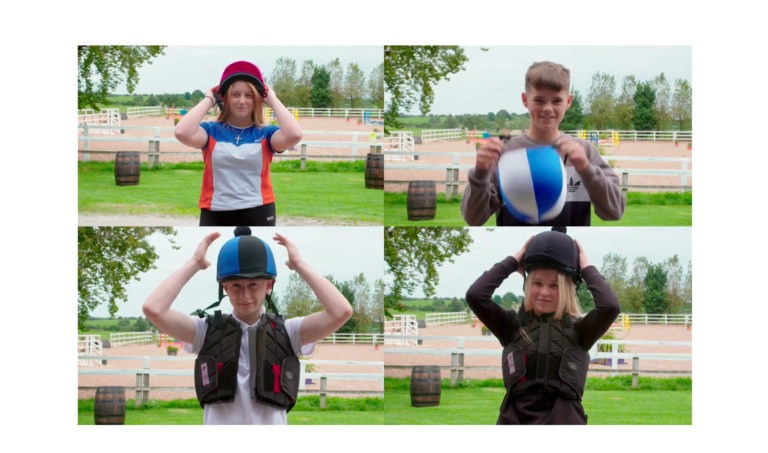
The organisation helps to train, mentor and nurture youngsters with ambitions to work in the horse industry. It does much more besides to engage youths – from carpentry training to motorbike maintenance to name but two.

However, it was its horse welfare and education programme that shot into view this year when one of the project’s protégés Wesley Joyce won at Sligo Racecourse. And he keeps on winning.

• Wesley takes the winner’s trophy.

Wesley joined the project when he was five years old and never forgot his roots.

“They’re great people down there, trying to help all the young lads. They don’t get paid enough for what they do,” he told television viewers.

MYA has a strong partnership with RACE Academy in Kildare and that’s where Wesley rose to stardom. He now rides with Johnny Murtagh’s yard.

Naturally, local youngsters hope to follow his path. While others have gone from Moyross to Kildare before him and found success, Wesley’s winning streak – seven wins and counting – has made him stand out.

• John and Monty have bonded. This is the kind of work Moyross Youth Academy (MYA) have been doing with young people for years.
Source: MYA on Facebook.

“I want to be a jockey like Wesley,” young Calum told TG4. A young female jockey testified that, “Wesley is a great inspiration for all of us. You can get anywhere if you put your mind to it.”

In August, Wesley had his biggest win so far when he romped home in the €100,000 handicap on day six of the Galway Festival.

He encourages every youngster with an interest in horses to pursue their ambitions.

• Wesley Joyce speaking to Sport TG4.

“There’s loads of young lads in Limerick, in Moyross, with plenty of ability to go on and make good lives for themselves.”

Recently, he took the bus home to Limerick with a group of adoring fans from the city who went to The Curragh to see him ride (he won again).

“He came back with us on the bus, he was sitting beside them. It makes their dream attainable. It’s no longer a dream, it’s an achievable goal,” said riding instructor Catherine Normoyle of MYA.

• Equine instructor Catherine Normoyle encourages a young rider.

TG4 visited Limerick this month to find out more about the group Wesley paid such high tribute to and the crew accompanied MYA staff to Clare Equestrian Centre.

(Watch TG4’s  feature on MYA’s work and Wesley’s achievements here).

Helping youngsters to saddle a horse, Catherine said, “They’re fairly on the ball. They know what they’re doing. Some are real naturals.”

She noticed youths on the course bring what they learn home to their community.

“We had a young girl here the other day and I asked her how did she know how to do something and she said ‘Calum showed me’, which is great to hear.”

With the cameras rolling, she gently encouraged youngsters making their first appearance on television:

“You’ll have to get used to this if you’re going to be a jockey. You’ll be on camera all the time,” she said.

As well as children who grow up around horses, the project also welcomes those who never sat on a horse before in their lives.

• MYA says Trisha Kerrigan and Ora (above) have an incredible relationship: “This girl is a very special talent, one of the best riders we have for sure. A future in the equine industry is inevitable.”

Catherine sees the benefits daily.

I’ve seen kids come in here in the morning and you’d know there was something slightly off. By the end of the day, you see the change. It’s the horses – they’re calming and they bring you back to yourself. They give you a break. They’re really important,” she said.

People have seen their lives turn around by engaging with MYA and the academy has evolved from when it originally focused on young people in Moyross and Ballynanty.

• Karen Keehan, MYA.

“It’s gone citywide and we’re looking at communities across Limerick city where there is a culture of horse-ownership, where it’s generational,” said Karen Keehan of MYA. “For some of these youngsters it’s inate with them. They grew up all their lives around horses and they’re very passionate about horses.”

Young people sign up for courses with MYA across a range of skills areas. The academy also teaches the Leaving Cert Applied.

Remembering when Wesley was a child, Karen said, “I remember him telling a teacher once – ‘There’s no plan B, I’m going to become a jockey.’”

She said MYA hopes to instill that level of self-belief in the young people it works with.

• Keith Earls plays for Ireland in Thomond Park, next door to Moyross, in 2008.

Keith Earls – who publicly congratulated Wesley on his success – is the most famous sports stars to date to emerge from Moyross. With Wesley now making waves, you can bet on more stars emerging from sporting Limerick. It’s not just hurling in the Treaty City!

Meanwhile, staff in MYA are enjoying the extra attention Wesley’s success is bringing to their crucial, community-based youthwork. In operation since the early 1990s, the project rebranded as MYA in 2018.

Elaine Slattery is one of the academy’s founders (and as it happens  one of the founders of ‘Changing Ireland’). As she has previously said:

Compared to other EU member states, Ireland actually has a very good story to tell in the area of youth justice. We have comparatively low numbers of children in care or in detention. But the challenge is always to identify what more we can do and what new approach we can take to diverting children and young people from crime and anti-social behaviour,” she said.

For more information, contact:

Andrew O’Byrne on 085 853 0463 or at andrew@mya.irish

Elaine Slattery on 087 283 5390 or at elaine@mya.irish

The project’s funders include: the Department of Justice, the Department of Agriculture, the Department of Social Protection, An Garda Síochána, the Probation Service, Solas, Limerick and Clare Education and Training Board, and Limerick City and County Council’s Regeneration Programme.

Watch TG4’s feature on MYA’s work and Wesley’s achievements here.

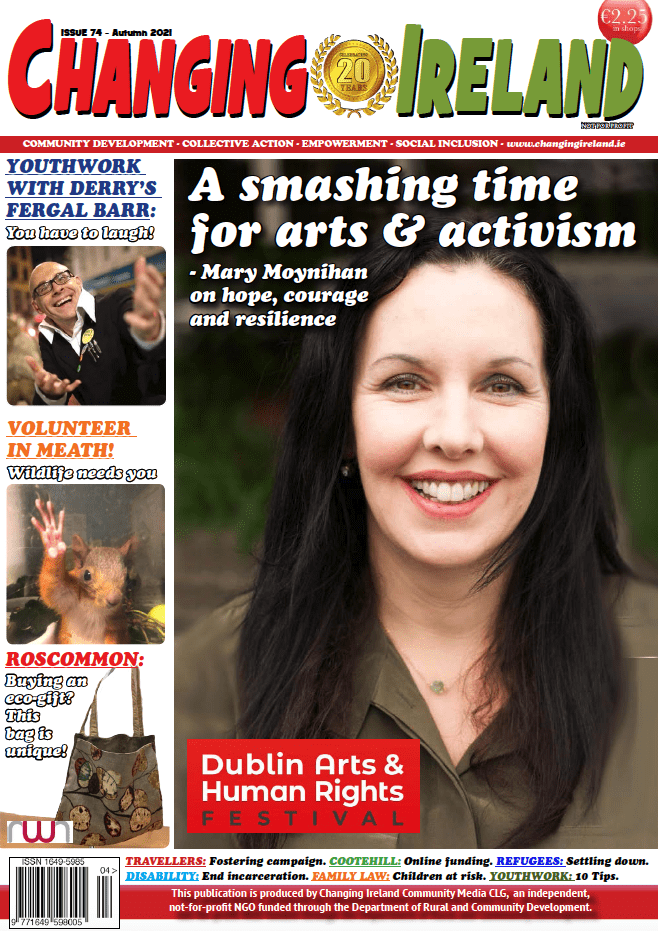
Our news feature on Wesley’s amazing career to date and achievements by Moyross Youth Academy featured on our front cover in December 2021. READ THE FULL MAGAZINE HERE.

See below for some of ‘Changing Ireland’s earlier coverage of the work of Moyross Youth Academy:

3 people who had life-changing experiences with Moyross Youth Academy

Is new Youth Academy proof Moyross has turned a corner?

Laura Hughes: ‘I’m from Moyross – this is who I am’


45 mins support per day is not enough for a decent quality of life

By Sarah Fitzgerald

Since 2008, disability services have been ravaged by cutbacks, and many services, including the Personal Assistant Service, have become over-medicalised.

In the words of one of my former mentors Martin Naughton, a founder of the independent living movement, disabled people are traditionally viewed as people “to be cared for rather than to be cared about.” However, disabled people should have the right to make real choices that affect their lives, including where they live and who they live with.

At the moment, one of the most serious issues affecting disabled people is that many disabled people are living in institutions and in the family home. This is despite the fact that under Article 19 of the UN’s Convention on the Rights of People with Disabilities, disabled people should have the right to access housing and the services they require to live independently.

* * * * *

Another issue is that Personal Assistance (PA) is grossly misunderstood in Ireland. The service is supposedly controlled by disabled people themselves, but according to research in 2017 a mere 2,200 people were accessing PA services in Ireland. Also, it was estimated that 44% of these received the equivalent of a mere 45 minutes a day. This is not nearly enough time to enable a disabled person to access a decent quality of life – employment, education and social activities.

* * * * *

In 2016, I became involved with what is today known as the ILMI. It was shortly after Martin Naughton died and I was invited to join a group of disabled activists from across Ireland to organise a memorial event for Martin and other disability activists who had passed away. This event became a catalyst in reigniting the disability movement in Ireland. I learned the benefits of comraderie in a human rights movement and I felt at home. I had the privilege of working with seasoned disability activists, including the late John Doyle.

After the event, I was invited to join the ILMI’s board and I officially joined in April 2018.

The ILMI is a disabled people’s organisation which means that the core decisions are made by disabled people themselves. We are the experts in our own needs and we believe that solidarity among disabled people is central to the building of a movement.

I love the way that being involved with the ILMI feels like home, I am among people who realise that we are not broken, but it is society that needs to be fixed. We welcome membership from like-minded disabled people who want to work towards a fairer society for everybody.

* * * * *

The Irish advisory committee of the UN Convention on the Rights of Persons with Disabilities will be soon reporting its findings to the UN and I hope that its contents are taken seriously and that improvements are made in order to allow disabled people to enjoy their rights as equal citizens.

I would also love to see more younger people becoming involved and to bring a fresh perspective to the movement.

Although there have been some improvements, issues such as Personal Assistance continue to deter disabled people from living their best lives. Going forward, we need to legislate for Personal Assistance to ensure that the service is protected from further cutbacks in the future.

WRITER & ACTIVIST

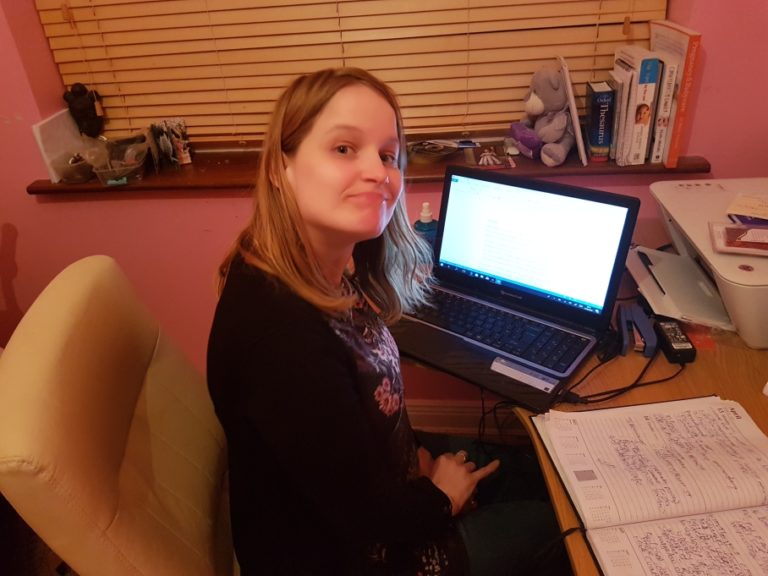
Sarah Fitzgerald is a mother, writer and blogger. Locally, she is a member of the Offaly Disability Equality Network, and at national level, she is secretary of the board of Independent Living Movement Ireland. She blogs at: wobblyyummymummy.com

Independent Living Movement Ireland

CALLS TO END “INCARCERATION” OF YOUNG PEOPLE IN NURSING HOMES

Growing up in the Dublin suburb of Coolock, Peter Kearns recalls being sent to a special school every day in an ambulance.

He left the other children in his working class community each day to go to a “special clinical school in posh Sandymount,” he says.

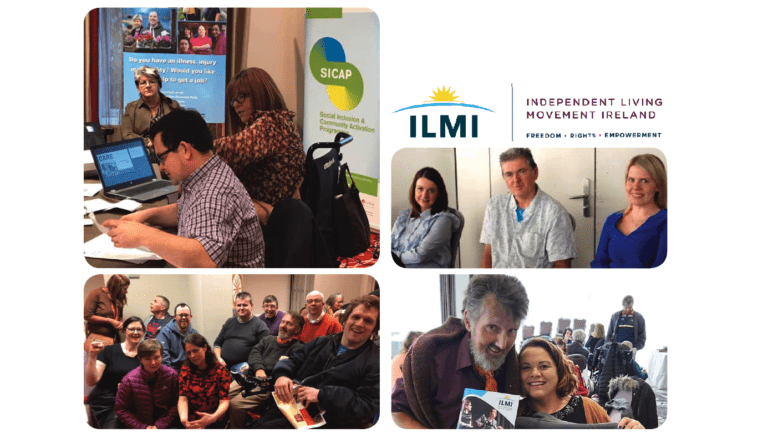
Now a project manager with the Independent Living Movement of Ireland (ILMI), Mr Kearns said the experience left him with a clear understanding of the flaws in the medical model of disability.

He said it gave him “a mirror to look at how that experience was shaped by oppressive suggestions and directions and signposts.”

On May 5th, Mr Kearns chaired the ILMI conference ‘Everything You Wanted To Know About Disability But Were Afraid To Ask’.

The conference took place on the same day that the Office of the Ombudsman launched its report* ‘Wasted Lives’ (see previous page) on the experience of around 1,300 people with disabilities, aged under 65, who are stuck in nursing homes.

The conference also looked at the social model of disability, which sees disability as caused by society’s barriers (from attitudes to physical blocks) rather than by any difference or impairment.

Incarcerated to get “parole”

Selina Bonnie, access and equality officer for South Dublin County Council, said the ILMI was well aware of the issues before they were raised in the Ombudsman’s report.

Those younger people with disabilities, “have not been placed in nursing homes, they have been involuntarily incarcerated,” she said.

Fianna Fáil TD, Anne Rabbitte, Minister of State with responsibility for disability, launched the conference.

She said she will introduce legislation to ensure that disabled people and their organisations are central to the development of policy in the future.

She hopes to remove barriers to disabled people fully participating in education and employment too, she said.

Government and senior civil servants must move towards the social model of disability, said the Minister.

“Ultimately I am here to listen and learn,” she said.

Minister Rabbitte said nursing homes were “not an appropriate placement” for under 65s and that those people should be provided with independent living solutions.

The government has allocated €3m towards that. “There is a clear government commitment to reduce this and provide a pathway to eliminate this practice,” she said.

Responding, Ms. Bonnie said, “It is wonderful that from today people will start to be paroled.”

A Social Construct

The first question to the panel was ‘What does the word disability mean to you?’

“To me, disability is a social construct,” said Maggie Cameron, a freelance disability equality and diversity trainer with experience in developing Disabled Persons Organisations (DPOs).

She quoted the feminist philosopher, Simone de Beauvoir, who famously said that “women were made not born.”

What de Beauvoir meant was that at that time society treated women very differently from men and that resulted in them having a different set of expectations and outcomes compared to men, said Ms Cameron.

“In terms of disability it is also true,” she said. “We are told as disabled people that there is something wrong with us, that we are not quite right. This is all medical model thinking.”

Society makes assumptions and stereotypes about people with disabilities and the medical model sees disability as a negative, which can result in people being put in institutions.

The social model has completely different expectations and views disability as external.

“We have impairments, conditions, whatever term you chose to use about yourself,” she said. “But disability is imposed.

How can the social model be applied?

Ms Cameron welcomed the minister’s attendance at the conference.

Systems can be hard to change, she said, but disabled people’s organisations can educate policymakers about the social model.

“If you work through and come from a social model ethos and understanding, it enables you to ask the right questions so you can then provide the right services,” said Ms Bonnie, who works for South Dublin County Council.

In an example from her own job, she said South Dublin County Council shouldn’t ask people if their disability stops them from using the parks. Instead it should ask – “How can we change our parks so that you can use them?”

The social model means moving away from the charity model of service provision, said Amy Hassett of Disabled Women Ireland.

“We change disabled people from being recipients of charity… to people who have expertise,” she said.

Disabled persons’ organisations have expertise and that should be valued in terms of their input into policy and decision making, she said. Disabled people are twice as likely to live in poverty and half as likely to be employed, yet they are constantly being called on to work for free.

“How can I send a disabled person to go and give their expertise pro bono, when we are already more likely to be impoverished and less likely to be employed? It is not fair,” said Ms Hassett.

The right to organise

“Freedom of expression and the right to organise,” are essential, said Des Kenny, chairperson of ILMI. There should be a variety of groups of people with disabilities too. “Disabled people could bring a certain new tapestry to a new collective,” he said.

“Where would you be without a strong DPO?” asked Ms Cameron.

There aren’t any in the northeast of England where she is working, because the funding has dried up. That means a decline in advocacy, information and peer support.

Local authorities and social services don’t always have the expertise and knowledge required. “People are just left not knowing where to turn.”

  • This was the first in a series of online ILMI events. For more, follow the ILMI on social media.

Childcare low-pay warning as ministers meet operators in Fingal

A recent survey of more than 3,000 childcare managers and staff “indicated that many facilities face reducing services or potential closure over the coming months due to an inability to recruit the necessary qualified professionals required to run them,” said SIPTU.

SIPTU Head of Organising, Darragh O’Connor said: “Many qualified and skilled educators simply cannot afford to stay in their profession. The survey found that 42% of Early Years educators are actively looking for a job outside the sector with 75% identifying low pay as the reason for leaving their profession.

SIPTU’s Darragh O’Connor


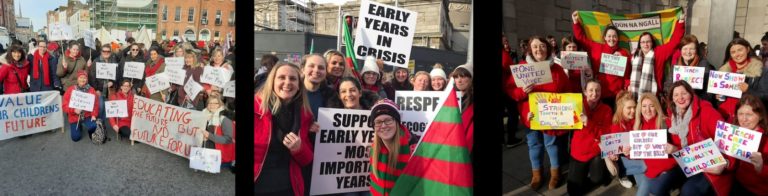
The Early Years Staffing Survey Report 2021 was launched at a special online briefing for Oireachtas members and reveals a sector “drifting further into crisis due to the impact of low pay and staff leaving the sector”.

Campaigners are calling on the Government to invest an additional €150m in childcare, split between pay and affordability measures.

Read more about the survey findings here: https://www.siptu.ie/media/pressreleases2019/mainnews/fullstory_22248_en.html

In February 2020, SIPTU’s childcare facilities campaign saw 30,000 people march in Dublin over low pay and lack of state investment.*

FINGAL: Reps meet ministers

Meanwhile, Children’s minister Roderic O’Gorman and Minister of State for Community Development, Joe O’Brien, met online with community representatives from Fingal on Sept. 10 “to discuss early years and childcare” issues in the local area.

The Fingal area childcare meeting was attended by Ministers O’Gorman and O’Brien

The Fingal Children and Young People’s Services Committee welcomed the meeting, saying: “Community based not for profit childcare services provide such essential services to communities.”

Grainne McKenna, who lectures in early childhood education at DCU, said it was “great to see engagement and discussion about the important and much valued work of community based early childhood settings in Fingal.”

Minister O’Brien remarked afterwards, “Good first meeting. Having affordable childcare for disadvantaged and marginalised communities is particularly important in facilitating community engagement and ultimately community development.”

Minister O’Gorman remarked, “These engagements are incredibly valuable in exploring solutions for communities in Fingal & nationally.”

Empower Fingal organised the meeting.

* Read why 30,000 people marched in Dublin last year (just before Covid) here: https://changingireland.ie/digital-magazine-archive/


New online mag – ‘Develop’

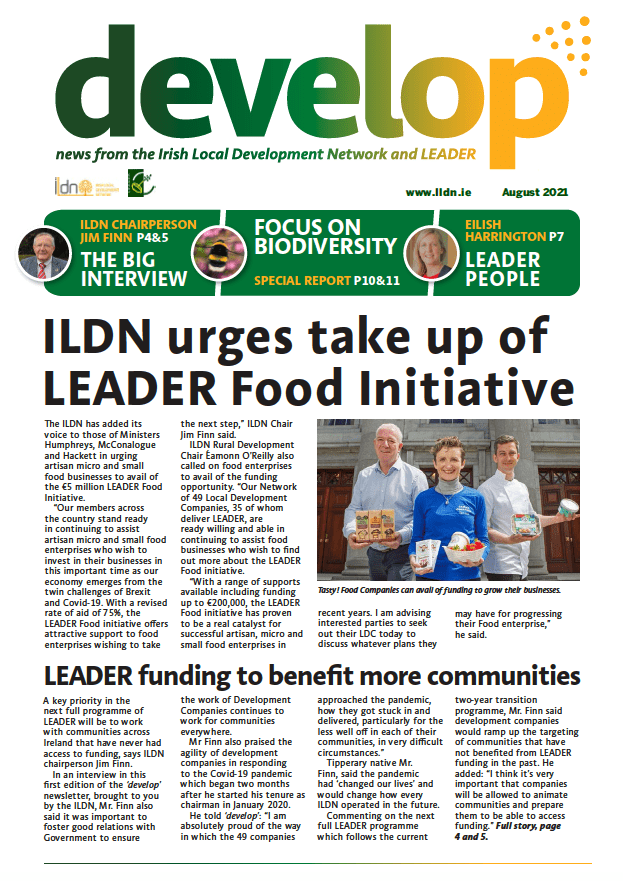
The first edition of a new online publication called ‘Develop’ has just been published.

Launched by Éamonn O’Reilly on behalf of the Irish Local Development Network (ILDN) it focuses on LEADER projects and work by the 49 not-for-profit Local Development Companies in the State.

Éamonn is CEO of North East West Kerry Development and also chairperson of the ILDN Rural Development/LEADER Committee and writes in the magazine:

“The pandemic has shown the importance of keeping in touch. It has also underlined how passionate colleagues are about the impact that LDCs have on communities and why it’s vital to continue supporting and funding the work.”

The first edition covers LEADER support for biodiversity, tourism and child welfare in Mayo, Clare, Sligo and Dublin.

It also features interviews with Jim Finn, the network’s voluntary chair, and Eilish Harrington, CEO of Fingal LEADER Partnership.

ILDN Chair Jim Finn is interviewed in the new Develop magazine

Download here: https://bit.ly/ILDNdevelopmag

€1m social enterprise capital grants scheme

0

The Social Enterprise Capital Grants Scheme 2021 provides funding for the purchase of equipment or the carrying out of repairs or refurbishments to enable social enterprises to improve their service delivery.

The Minister said, “This initiative builds on other successful schemes for social enterprises funded by my Department in recent years, such as the Training and Mentoring Scheme, the Small Capital Grants Scheme for Social Enterprises, and the Social Enterprise COVID-19 Regeneration Programme.

“This announcement underscores my commitment under the National Social Enterprise Policy to growing and strengthening Social Enterprise,” she said.

The scheme will be delivered by Local Community Development Committees (LCDCs). Final decisions on funding will be made by the Department of Rural and Community Development.”

To allow flexibility, the Department is not setting a national closing date, but will allow each LCDC to set its own, to best suit its area (but no later than 15 October 2021).

This new capital grants scheme supports one of the key commitments in the National Social Enterprise Policy for Ireland 2019-2022 – “Growing and Strengthening Social Enterprise”.

Ireland’s first national social enterprise policy welcomed by sector

Dubs invited to ‘Festival of Fundraising’ starting Sept 20

0

A ‘Festival of Fundraising’ opens in Dublin, on September 20th. It is aimed at members of groups that are involved in Dublin City Public Participation Network (PPN).

The “festival” will run for four days from September 20-23 with all events held on Zoom and all free for PPN members, including workshops, training sessions, networking opportunities and one-to-one mentoring.

The workshops have eye-catching titles – from ‘Ask Me Anything about fundraising’ to ‘100 Days to Christmas – How to maximize your fundraising this Christmas’.

Thinking ahead, Dublin PPN offered Zoom familiarisation classes to anybody wishing to attend but unsure of how to use the Zoom app. They recommended people check in with the neighbouring PPN in Dun Laoghaire-Rathdown which runs ‘Zoom Training for Beginners’ classes.

“The Festival of Fundraising is an opportunity to connect with colleagues, from other organisations in the PPN throughout Dublin City, and to grow your fundraising knowledge, capacity and network,” say the organisers.

It is being delivered in collaboration with Academy Street Workshop.

Find out more, see the programme and register here: https://dublincityppn.ie/ppn-bulletin-festival-of-fundraising/

* On Sept 16th the original text here was updated.

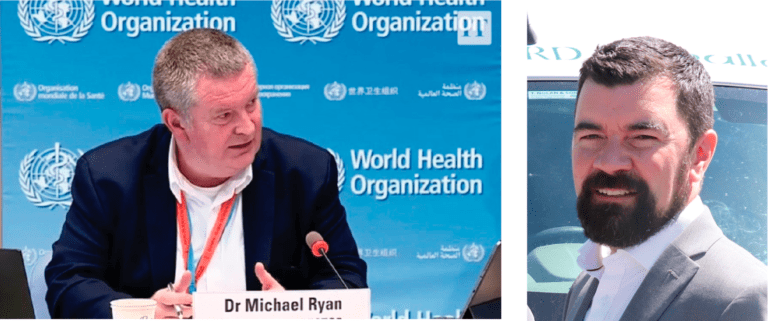
Dr Mike Ryan of WHO and Minister Joe O’Brien for community conference

Dr. Ryan, the executive director of the WHO’s Health Emergencies Programme and Minister O’Brien will take part in a discussion chaired by CWI chairperson Ronnie Fay.

The conference is titled ‘Not Just Recovery?’ and it will, said organisers, “provide an opportunity for reflection on the experience of the most disadvantaged communities in Ireland and globally during the past 18 months, the lessons learned, and the key priorities for action in building a just and sustainable recovery as we emerge from the Covid-19 crisis”.

Registration for attendance closed on September 15, though it is expected the proceedings will be recorded.

The CWI (https://www.cwi.ie) is supported by the Department of Rural and Community Development’s Support Scheme for National Organisations.

WORKSHOP THEMES

The workshop themes for the event are:

1. Racism and Addressing the Rise of the Far-Right.

2. Climate and a Just Transition.

3. Health.

4. Civil Rights and Civil Liberties.

5. Women’s Rights.

6. Social Dialogue and Participation in Decision Making.

7. Building an All-Island approach.

“Our communities are not for sale”

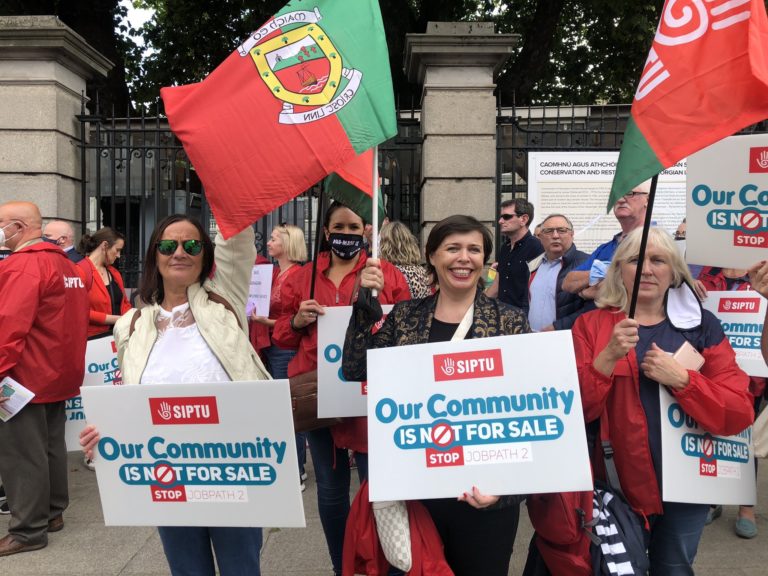
The first national protest march since the pandemic struck by people in the Community Sector took place on September 6 in Dublin – over the looming privatisation of an essential service used by thousands of people annually.

A week later, on Sept 13, SIPTU members working in Local Employment Services (LES) and Job Clubs,  staged a protest outside the opening of the ‘think-in’ of the Fine Gael parliamentary party in Trim Castle, Co. Meath, “to highlight their opposition to the privatisation of the sector”.

                                                              • Ballyfermot Chapelizod’s LES/Jobs Club says: The unemployed are not for sale

Staff first grew concerned in May when the Department of Social Protection issued a tender in relation to the provision of employment support services in counties Donegal, Leitrim, Sligo, Offaly, Laois, Longford and Westmeath.

The march on September 6th by over 100 community-based employment advice workers, led by SIPTU and Fórsa trade unions and with the backing of most political parties, heard calls for An Taoiseach Micheál Martin to intervene.

“A Government-imposed tendering process favours for-profit providers over the current community-focussed, not-for-profit service. This means that privatisation, job losses and a diminished employment service is likely unless the Government changes course,” said Fórsa.

Its members were considering taking strike action. The staff concerned, who work in Local employment services (LES) and jobs clubs, say the Government proposals would “commodify” jobseekers and make it harder for them to get help.

                                                              • Community workers are on the road again

“We are demanding that the Taoiseach listens to our concerns over jobs and service quality, and works with us to establish a stakeholder forum involving service providers, job-seekers, workers’ representatives, government and academic experts,” said Fórsa official Lynn Coffey. She warned of services being “damaged” at a time when over 300,000 people are unemployed or on PUP payments.

SIPTU official Adrian Kane, said calls from trade unions for a meeting with Minister Heather Humphreys had been “met with silence”.

The Minister has previously stated that the services must be put out to public tender as this is “required to comply with EU procurement rules”.

                                            • BCP staff had a clear message when they joined the LES march

On the day of the protest, the Irish Local Development Network (ILDN) called for “meaningful Government engagement with stakeholders”. The ILDN’s Martina Earley, speaking for Local Development Companies that oversee the services at local level, condemned the move to privatise the community service: “Jobseekers will be faced with a centralised profit-driven, resultsbased process which will not be accessible to all jobseekers.”

“Privatising Services would be a Travesty”

Orlagh Denneny, co-ordinator Mayo Local Employment Service, said: “Privatising these essential services would be a travesty. Privatisation does not work in community services.

“It will result in chronic long-term unemployment and subsequent social problems for individuals who have many barriers to employment.

• Kerry and Limerick workers took part in the LES protest organised by SIPTU and Forsa

“Pulling the service now from safe hands, at a time when Covid-19 presents an employment crisis like never before, just beggars belief,” she said.

Elected public representatives from Fianna Fail, Sinn Fein, Labour and other parties joined the protest or showed their support.