‘Our Rural Future’ was launched with as much fanfare as Covid-19 would allow for in April.
It is the Government’s five-year strategy to transform rural Ireland and Taoiseach Micheál Martin, Tánaiste Leo Varadkar, Minister for Rural and Community Development, Heather Humphreys, and Minister for Transport and the Environment, Climate and Communications, Eamon Ryan attended in Croke Park for a real-life launch.
The government believes we have an “unprecedented opportunity for Rural Development post Covid-19”.
The plan is focused on attracting remote workers to rural communities (one element of which we look at in the following pages).
It covers revitalising town centres, rural jobs, adventure tourism, a green economy and island development.
Broadband roll-out is obviously critical to rural development and critics pointed out the strategy did not include costings nor target dates. Nonetheless, it was widely welcomed.
Rural networks funded by government gave it a warm welcome, while mainstream media commentators varied from slightly skeptical on a plan without deadlines to wildly enthusiastic (It “hits all the right notes,” wrote Clodagh Finn in the ‘Irish Examiner’).
An idea for pub hubs in communities was picked up by the BBC and others abroad, to the delight of Minister Humphreys.
She and her colleagues in government described ‘Our Rural Future’ as “the most ambitious and transformational policy for rural development in decades”.
The policy reflects the unprecedented change in living and working patterns during Covid-19 and the significant opportunities this presents for rural communities – from remote working and revitalising our town centres to job creation, developing a green economy and enhancing our outdoor amenities.
It is supported by 150 commitments across Government, which will address the challenges facing communities and deliver new opportunities for people living in rural areas.
The policy will help rural Ireland to recover from the impacts of Covid-19, enable long-term development of rural areas, and create more resilient rural economies and communities for the future.
Speaking at the launch, An Taoiseach Micheál Martin said:
“Ireland is heading into an era of unprecedented change, and with that comes unprecedented opportunity.
“Over the course of the pandemic, we have discovered new ways of working and we have rediscovered our communities.
“The policy we launch today, Our Rural Future, provides a framework for the development of rural areas over the next five years.
“The policy is forward-looking and ambitious and addresses both the challenges facing rural areas and the opportunities which rural economies and communities can capitalise on.
“The Government’s vision is for a rural Ireland which is integral to our national economic, social, cultural and environmental wellbeing and development.
“That vision is built on the talent, skills and creativity of people in rural communities; on the importance of vibrant and lived-in rural places; and on the potential to create quality jobs and sustain our shared environment.
“Rural Ireland will play a central role in our recovery from the impact of Covid-19.
“The commitments outlined today will benefit individuals, families, communities and businesses. It will enhance the wellbeing and quality of life of people living in rural areas.
“It will build resilient and sustainable rural communities and economies through investment, supports and services. And it will ensure that rural communities are at the heart of designing and delivering responses that meet local needs.”
Government launch of ‘Our Rural Future’, a 5-year policy to transform rural Ireland
Minister Humphreys said:
“Our Rural Future represents a new milestone in the approach to rural development for Ireland.
“As we recover from the impact of the Covid-19 pandemic, we have a unique opportunity to reimagine rural Ireland and harness the talent, skills and creativity running through our rural communities.
“For decades we have seen global trends where young people leave their local communities to live and work in larger cities. As we emerge from Covid-19 we will never have a better opportunity to reverse that long-standing trend.
“The move to remote working, underpinned by the rollout of the National Broadband Plan, has the potential to transform Rural Ireland like never before.
“It will allow people to work from their own local communities, revitalise our town centres, reduce commuting times, lower transport emissions and most importantly – improve the quality of life of our people.”
An Tánaiste, Leo Varadkar said:
“We want to have more people working in all parts of Ireland, with good quality jobs on offer and good career prospects. The Covid-19 pandemic has already shown us what’s possible in terms of remote working and flexible working. Our Rural Future is one of the ways that the Government is making that a permanent option.
“Our Rural Future will help the tourism and hospitality sectors to recover after the pandemic, create jobs in the Green Economy and the Agri-food sector, and make it easier to set up and grow a business in Rural Ireland.
“It means more people will be able to live in their communities, or move to new ones, with the option of good quality employment. It will mean less commuting, and more vibrant communities as people have more time to spend with their families, their neighbours, and local clubs and organisations.
“Broadband and new technologies are key to making this happen. That work has already started. I am proud to have been part of the Government that kicked off the National Broadband Plan – the biggest investment in rural Ireland since electrification. And I’m equally proud to be part of the Government that is now making it happen.”
Minister Ryan stated:
“Now is the time to be ambitious for rural Ireland. The governments investment in climate action will bring new job opportunities to rural communities, in areas such as renewable energy, retrofitting and sustainable farming and tourism. The National Broadband Plan will act as a key enabler for the development of new businesses in regional and rural Ireland, together with an increased opportunity for people to work from home. Through the Just Transition Fund, Government is supporting the retraining and reskilling of rural workers and assisting local communities and businesses to adjust to the low carbon transition.
“We want to put the development and regeneration of our rural towns and villages at the heart of decision making, so that they are vibrant centres where people can live, work and socialise, with walking, cycling and public transport options connecting people and places. The Government will continue to support this active mobility through the National Transport Authority, with €72m in funding being allocated in 2021 for high quality cycling and walking infrastructure for our more rural towns and villages across the country. Through the implementation of Our Rural Future, Government will seize this unprecedented opportunity for rural Ireland.”
Download ‘Our Rural Future – Ireland’s Rural Development Policy 2021-2025’ via this link:
Our Rural Future sets out a Vision and Objectives which sees rural Ireland as central to our post-COVID recovery and integral to our longer-term national economic, social, cultural and environmental wellbeing and development.
The Vision emphasises the interdependence of rural and urban areas and recognises:
– the centrality of the people who live in rural Ireland;
– the importance of vibrant and lived-in rural places; and
– the possibilities for rural areas to support quality jobs and contribute to sustaining our shared environment.
The policy will encourage and support rural communities to develop cohesive and integrated plans to meet the long-term needs of their own particular area, recognising that each rural place is different and there is no one-size-fits-all solution to meet the developmental needs of every area.
Many towns and villages in Ireland need to be brought back to life.
HIGH LEVEL OUTCOMES
The high-level outcomes of delivering this policy will see:
– More people living in rural Ireland, including in our towns and villages and on the islands;
– More people working in rural Ireland, with good career prospects, regardless of where their employer is headquartered;
– Rural Ireland contributing to, and benefiting from, the transition to a low-carbon economy and a climate-neutral society;
– Rural towns being vibrant hubs for commercial and social activity; and
– Rural communities, and especially young people, having an active role in shaping the future for rural Ireland.
Supporting Communities
Examples of key actions in terms of community supports to be delivered through ‘Our Rural Future’:
Establish a Rural Youth Assembly.
Establish a permanent Volunteer Reserve in local areas.
Develop a single online portal to provide a funding roadmap on the range of programmes and schemes available across Government for rural and community development.
Develop and implement Local Digital Strategies in each Local Authority area.
Develop an integrated, place-based approach to rural development to support rural communities to develop long-term Master Plans for their areas.
KEY ACTIONS ON REMOTE WORKING
Examples of some of the key actions in terms of remote working which will be delivered through ‘Our Rural Future’ include:
Establish a network of over 400 remote working hubs nationwide to enable more people to live and work in rural communities.
Pilot co-working and hot-desking hubs for civil servants in regional towns.
Move to 20% remote working in the public sector in 2021, with further annual increase over the next 5 years.
IDA, Enterprise Ireland and Údarás na Gaeltachta to promote and enable the uptake of remote working across their client base.
Fund the repurposing of vacant buildings in town centres into remote working hubs.
Review the tax arrangements for remote working for both employers and employees as part of Budget 2022.
Introduce legislation in 2021 to provide employees with the right to request remote work.
Provide funding to Local Authorities to run targeted campaigns to attract remote workers to their area.
Examine the introduction of specific incentives to attract remote workers and mobile talent to live in rural towns.
Rural Living
Examples of some of the key actions in terms of rural living which will be delivered through ‘Our Rural Future’:
Update the Rural Housing Guidelines for planning authorities.
Identify the scope to channel additional Government services through the post office network.
Implement a €70 million Transitional LEADER Programme (see page 23).
Improve rural public transport, including enhancements to Local Link, a subsidised Local Area Hackney Scheme for remote locations and a pilot to examine the potential for ride hailing services.
Increase the number of places on the Rural Social Scheme, TÚS and Community Employment Schemes to support rural areas.
Establish 96 new Community Healthcare Networks across the country to support people to live more independently locally.
Support research and development in areas such as agri-food, biobased systems, smart agriculture and precision agriculture.
Expand the number of farmers’ markets, farm shops and community-owned markets in all towns.
Enact legislation implementing revised provisions for the Fair Deal Scheme in respect of farm and business assets which are family-owned and operated.
Support generation renewal, including young farmers and women in agriculture, through the CAP, taxation measures and access to finance initiatives.
Publish and implement a new 10-year policy for the development of our offshore islands.
Establish enterprise hubs on our islands to support employment.
Utilise the islands as test-beds for innovative technologies in areas such as eHealth and micro-generation of renewable energy.
In late May, the Department of Social Protection issued a public tender notice for “the provision of employment assistance and advice supports to clients referred by the Department, primarily those who are long term unemployed and in receipt of a social welfare payment but also including some other client groups.”
Initially the new service will cover only Donegal, Leitrim, Sligo, Offaly, Laois, Longford and Westmeath.
The Department of Social Protection says it plans to expand services, and that existing operations could apply under the proposed tender.
“It is hoped and expected that local community and voluntary organisations will respond to the RFT and offer to provide services in their areas of operation,” the Department stated.
Nonetheless, SIPTU warns that about 300 people who provide support and advice to unemployed people could see their own jobs lost. On July 9th, SIPTU members, working in local employment services, held a socially distanced protest outside the Department of Social Protection in Dublin “to highlight their opposition to plans to privatise these essential community services”.
At the protest, the trade union launched a campaign called ‘Our Community is Not for Sale’.
It seeks “an immediate halt to tenders for private companies to bid for state contracts to run programmes to assist people getting back into the workforce”.
“It is time to call the Government out. If these tendering processes proceed as planned it will lead to the wholesale privatisation of local employment services. This will see the forcing out of the effective community-based non-profit providers of local employment services,” said SIPTU community division organiser, Adrian Kane.
Beggars belief
Martina Earley, speaking on behalf of the ILDN’s 49 local development companies, said the move “will instantly close Jobs Club” in the trial counties and “later in 2021 will inevitably lead to the closure of vital Local Employment Services (LES) and Jobs Clubs across the remainder of the country.”
• Martina Earley.
The ILDN continues to favour retaining and expanding the community-rooted, not-for-profit LES that has supported jobseekers especially in disadvantaged areas for 25 years.
When the service was vetted by Indecon in 2018 it became clear that LES costs and achievement rates were ahead of those achieved by private companies under the Department’s Jobpath initiative.
Independent TD Thomas Pringle said the LES cost of finding someone employment cost about €1,200 less money. The service is also tailored and inclusive and the projects are community-based.
Arguing earlier this year for the LES’s retention, the ILDN’s Joe Saunders said, “Cost-per-unit models do not serve jobseekers well. There is no upside in cost, governance or service levels with such a model.” The network had proposed expanding the LES so that it would “be open to all jobseekers.”
Ms Earley said, “It beggars belief that the Department would move to dismantle such important services for those without work at such a critical time.”
“The timing could not be worse as communities face into a post pandemic unemployment crisis.”
“This move will deprive [people] of walk-in, person centred, community-based employment services and all the supports that such services provides. Instead, jobseekers will be faced with a centralised profit-driven, results-based process which will not be accessible to all jobseekers.”
“The ILDN [proposal] would give an efficient, accessible service to jobseekers as well as transparency and value for money for the taxpayer,” she said.
“The Minister and the Department must revisit this decision,” she added.
Others were also vocal. For instance, Dublin South City Partnership tweeted, “We prioritise the needs of our clients, meeting them where they are at in life. New proposals for employment services monetize individuals and disregard those who are most distanced from the labour force.”
Unmatchable
• Marie Price-Bolger, then chairperson of the Irish Local Development Network, speaking in Dublin in 2019.
In 2019, then ILDN chairperson Marie Price-Bolger put it directly to the government of the day that privatisation of these services was anti-community.
“Our sector consistently provides services on behalf of government departments in an efficient, effective and value for money model that cannot be matched by any private sector programme,” she said. “LDCs are all not-for-profit, registered charities that operate to a very high standard. For example (her own) South Dublin County Partnership adheres to EU audit standards.”
“We operate for the benefit of clients. We reinvest every penny in our communities, and not in directors’ fees, as we (volunteer directors) well know,” she said.
What do jobs clubs do?
• Linda Bolger, Job Club Leader, Monaghan Integrated Development.
Taking one Jobs Club as an example, here’s how the local development company explains the work:
“The Jobs Club is a job-seeking skills programme funded by the Department of Social Protection and delivered by Monaghan Integrated Development to support local communities. The Jobs Club is a mobile service and delivers the training outreach in communities, therefore job seekers around Co. Monaghan and Co. Cavan can access the training.
“The aim of the Jobs Club is to support job ready people into employment by delivering a part time formal training programme which consists of CV Preparation, Cover Letter Writing, Job Searching, Interview Preparation/Techniques and Mock Interview.
“The Jobs Club also provides a one-to-one service to assist people on an individual basis, whatever their particular needs are,” it says.
Back when horse drawn vehicles ruled the road, every town and village had a forge because once your horse had good shoes, you could travel anywhere. They also repaired ploughs and the metal rims on cartwheels, made gates and so on.
The work of the blacksmith has almost died out now, yet it is a fascinating trade and youngsters in the Spa-Fenit area of north Kerry are among the most educated in the country on the subject.
• Churchill Forge from the air.
They have rare first-hand experience and insight to the craft thanks to a LEADER grant, a local benefactor, and local fundraising that saw the reopening of the old forge in Churchill.
“It would be terrible if it was left go into disrepair, because it would have been knocked and a lot of the history attached to the area would have been lost,” says Dermot Crowley, of Spa Fenit Community Council (SFCC).
• The forge had fallen into disrepair
Fred Kreidbiel acquired the Forge and gave it, in trust, to the Community Council in 2002 so that it could be restored to its former glory. The Council went further, added more visitor space and over 20 display panels to tell the history of forging in area. They now have a new community asset, a better sense of the area’s heritage and a unique visitor attraction.
• The Churchill Forge
Objectives
• To restore the Forge and protect and preserve the history of forging in the community of Spa/Fenit.
• To develop the Forge as a community asset and local tourist attraction to benefit the community.
BACKGROUND
The SFCC was set up in 1985 and first became involved in projects such developing local viewing points and initiating a local 12km greenway connecting Tralee to Fenit.
Once acquired in 2002, the Community Council set about rebuilding and repairing the forge. This initial stage was supported by funding under the previous LEADER Programme.
However, a forge without tools is an empty shell. The SFCC collected tools such as anvil, hammer, bellows, tongs, punches and a furnace to publicly display. Over 2,000 visitors had seen the forge before we were struck by the pandemic.
• Spa-Fenit Community Council Members
In Ireland, forging is a tradition that goes back thousands of years, and in recent times there has been a re-focus on forging and on preserving it along with other traditional skills.
I had the good fortune of knowing and interviewing the last blacksmith in Westport, Co. Mayo, and he could knock a horseshoe into shape in less than a minute. There is nothing like it when a blacksmith throws coal in the fire, pumps the bellows, and beats hot metal into shape with sparks flying all round you.
• Dermot Crowley at work in Churchill Forge
Activities
In 2016, the SFCC set on developing it into a bigger attraction and LEADER funding was sought to support:
– building an extension to provide enough space to host events.
– kitting out the space with display panels telling the history of forging in the area and supplementing the display of equipment and tools.
“Sean Linnane was the co-ordinator and he was outstanding. He gave us great advice in applying for the funding and was very supportive,” recalled Dermot, paying tribute to staff from North East West Kerry Development.
“There is no way we could have progressed the project without LEADER support,” he said.
Lessons
To be successful in gaining a LEADER grant the promoters suggest that applicants need to have a good project idea with everything well laid out and to have match funding.
The match funding requirement is something that applicants need to bear in mind before approaching LEADER.
Bridging Loan
The SFCC availed of a bridging loan from Clann Credo to start works while waiting for the approved LEADER grant to come through, as often this can take a few months.
This brigding service can be particularly useful for capital projects where the granting of planning permission can take time.
Sustainable
In advice to others considering applying for LEADER support, SFCC advise being clear about how the project will benefit your community now and into the future. Also, for projects to be sustainable, you need an active community group and continuity with development organisations.
“You need to get a project that will last the test of time,” says Dermot.
Results
This project has resulted in the preservation of local history and the development of a community amenity.
The multi-use visitor space and the installation of 20 wall panels enabled the Forge to open as a tourist attraction.
With room for 60 more visitors than before, the space has been used to host group visits, trad nights, cultural events, local community events and talks from guest speak-ers on forging and other traditional crafts.
During National Heritage Week the Forge held open days to demonstrate tradi-tional skills and crafts including weaving, bottle making and beekeeping and over 2,000 people have visited the forge (currently closed due to Covid-19 restrictions).
“We are thrilled to have a fabulous public amenity and it will be great for the people who visit the area post COVID,” says Dermot.
• Visitors to Churchill Forge
€164,422 BUDGET
Total LEADER funding awarded to date amounts to €52,422 broken down as follows: €32,921 EAFRD (EU) with €19,501 being the national contribution. Match funding included €85,000 from private/corporate donors and €27,000 from the organisation’s own funds.
The grant was approved under Theme 1: Economic Development, Enterprise Development and Job Creation. The contribution to rural tourism was also a factor in it getting the green light.
Award Winner
The Forge project was one of 33 LEADER-funded projects which took part in the National Rural Network’s LEADER Impact Campaign 2020 (aimed at celebrating the success of the programme in Ireland). It won first prize under Theme 1.
Visit the Forge in Churchill
Maybe in the years to come, LEADER funding will be available to restore old petrol stations, to remind people of the long-gone petrochemical era and noisy, human-controlled, ground-bound mechanical vehicles.
You can see the tourists now zooming in from above on electric- or hydro-powered vehicles to have a gander, maybe stopping and spending some money (or whatever will replace it) in the area.
Old Topaz and Shell signs will be on display and people will be invited to step down into the huge underground tank that stored fuel shipped all the way from Saudi Arabia.
They will marvel at displays of pumps and read about how the world moved on from oil and gas. Then zap off to another country.
Whatever the future holds, however, a forge will always beat a petrol station a hundred times over as a place of interest. Why not drop into Churchill Forge while on staycation and see for yourself!
About Clann Credo
Clann Credo is a Social Investment Fund that has provided almost €130 million in Community Loan Finance to more than 1,500 projects since 1996, creating and sustaining thousands of jobs and strengthening communities.
It was founded by Sr Magdalen Fogarty and the Presentation Sisters in 1996. W:https://www.clanncredo.ie
Learn about LEADER
The LEADER Programme provides funding to support community-led rural development. To find out how the funding process works in practice, and get an overview of the main stages and requirements when making an application, visit the National Rural Network: https://www.nationalruralnetwork.ie
Rural-based local development companies (LDCs) also provide support and advice. Find your LDC here: https://ildn.ie/directory/
COLLABORATION
This is part of a series on LEADER. Thanks to staff in the LEADER Policy and Operations Unit at the Department of Rural and Community Development, to the National Rural Network, and to Dr. Maura Farrell, NUIG, for their co-operation.
The world of community development has become fertile ground for documentary film-making. The work in communities – previously hidden from view – is being showcased online nowadays through amateur video.
LEADER programme beneficiaries, members of The Wheel, and lately workers funded under the Social Inclusion and Community Activation Programme (SICAP) now all produce videos from time to time to reveal how their work changes society.
In Wexford – as featured in our long read here – community workers under SICAP made people welcome during a pandemic.
Migrants, refugees and asylum-seekers are but one of many groups targeted for support. The programme spend of approx €44m in 2021 goes to supporting the following people in particular:
Disadvantaged Children and Families
People living in Disadvantaged Communities
Disadvantaged Young People (aged 15 – 24)
People with Disabilities
Disadvantaged Women
Roma
Travellers
Lone Parents
Those Disengaged from the Labour Market (Economically Inactive)
The Minister responsible for Community Development – Minister of State Joe O’Brien – is especially familiar with integration work from his own past involvement in NGOs.
As he has himself highlighted, the Government of Ireland now reaches out through community workers to support asylum-seekers from the moment they arrive.
In Meath for example – as also reported in Issue 72 of ‘Changing Ireland’ – an independent organisation Cultúr is working to integrate asylum-seekers, refugees and migrants. During the lockdowns earlier this year, Cultúr organised Irish language and dance classes that went down a treat.
However, it is primarily work funded through the Social Inclusion and Community Activation Programme that is enabling community groups to make the difference. Earlier this year, Minister O’Brien launched a report detailing SICAP’s effectiveness with new communities (see below).
Our long read here is one of the many #SicapStories to be told. ‘Changing Ireland’ has published over a million-and-a-half words of community development news over the past 20 years and it would be rewarding to see projects we highlight now get professional television treatment. Some of these stories are particularly suitable for documentary filming.
Wexford film on integration tells of the joys of community development work
TV-friendly showcases deserve airing
By Allen Meagher
A video shot in Wexford with asylum seekers shows broadly how community development organisations typically engage with people. It captures the nitty-gritty of what community workers do in a way we haven’t seen before.
“It focuses on relationships, being flexible, believing in potential and building on the strengths we know that each person and each community possesses, whether or not they are labelled as ‘disadvantaged’ or ‘deprived’, to work towards a better future,” says Siobhán O’Brien, policy co-ordinator with Wexford Local Development (WLD).
The video is also topical because a report published in March showed how community organisations funded through SICAP were successful in promoting integration across the country. WLD’s work in Rosslare and Courtown shows in detail how they go about this critical work.
The video digs deep. Rarely, for instance, to you hear community workers speak of the joy they experience in the course of their work.
They generally tend not to be a self-congratulatory lot and to leave the talking to managers and to people they support.
However, more insights than ever are now being provided into community work in Ireland through videos such as this one.
The Wheel has for some years run a popular video competition. LEADER began doing the same last year. And for the past four years, the 49 organisations across the country engaged in anti-poverty work under the SICAP programme produce videos to showcase their work.
WLD’s video* captures the essence of community development work.
• Mariam Dudashvili – “We have many problems when we arrive here. We worked for a long time on a manifest and we presented it to many TDs and to the Minister for Justice.”
It works because while many stories tend to focus on outcomes for the beneficiaries/clients/people experiencing disadvantage, this story is told from a variety of viewpoints – the people who arrived here seeking sanctuary, the accommodation centre manager and all-importantly – the community development workers.
In 16 minutes, you get a strong sense of how community work works – the subjects talk about developments over two years involving over a hundred people and multiple communities.
It helps that the video is not laden down with the lingo community worker are often obliged to speak off-camera (target groups, disadvantaged individuals, IRIS, programme implements – few like these terms!)
Video-making is one of the newer challenges for community organisations. It’s not an easy task to capture what they do, and why, and how on film.
For example, the lighting in WLD’s video was at times a little dark. Other videos featured television-standard filming. Getting subjects to speak comfortably on camera is obviously an accomplishment. All new territory for community groups, but worthwhile given the need to showcase what groups do.
One is reminded of the challenge in producing rose oil; it takes 5,000 kilograms of rose petals to produce a single litre.
However, here’s one formula for distilling the work of community development to the point where it is easily explained: include the voices of community workers as well as those they strive to empower.
Another tip is to google #SICAPstorymap and take ideas from the 18 videos featured there (most if not all link to longer, more indepth films).
One day yet, a television production company may see the potential here for a series and focus their professional lens on community development work in Ireland today.
Wexford Local Development’s SICAP team first engaged with people seeking international protection in May 2019 when asylum-seekers were accommodated in emergency Direct Provision Centres in Courtown (2) and in Rosslare Harbour.
On March 16th, 2020, right at the beginning of the pandemic, a non-emergency accommodation centre opened in Rosslare Harbour replacing the emergency centre in the port. It caters for 114 with men, women and children from 29 countries. Courtown continues to have one emergency centre accommodating almost 50 people.
The video case-study from Wexford Local Development (WLD) tells the story of how its SICAP team engaged with these people.
• Earlier this year, Minister Joe O’Brien launched a report detailing the programme’s effectiveness with new communities.
“It gives a sense of the quality and depth of the relationships which were developed and which now underpin a web of connections,” said policy worker Siobhán O’Brien. “In turn, this created the conditions for personal development, mutual support and learning, awareness, integration and even, despite what might be expected, some joy.”
The numbers indicate just how intense the work was. In 2020 alone, an average of 12 interventions were delivered under SICAP to each of the 84 people who engaged with the programme.
As Siobhán says, “If every intervention, contact, call, WhatsApp message was to be counted however, then this figure would be much higher.”
“While we fully understand the need to account for our work in numbers, at some point we have to prioritise building relationships and trust over counting transactions.
“The beauty of this web of connections is that we will never know for sure which of the interventions was the one which made the real difference to a person, but in creating this web we know that change is possible,” she said.
Real community work is about building trust, relations and community
– On the rationale behind focusing not on outcomes but on process
By Siobhán O’Brien
• Siobhan O’Brien
Siobhán O’Brien explains how their team went about producing a video to showcase some of Wexford Local Development’s work (under SICAP) with people seeking international protection.
* * * * *
In preparing this video, one of the SICAP team involved in working with people seeking international protection in Wexford pointed to a young man who has made ‘no progression whatsoever’ in terms of what we are used to recording on IRIS or even in a typical case study.
This man has had a difficult time since arriving in Ireland, struggling to learn English, to avail of training or to find employment, all the while under pressure from his family in his country of origin who are constantly in touch, waiting for news that he has found a job. He carries the weight of all that expectation and hope and it is a heavy burden.
Our community worker has slowly gained this man’s trust and has built a relationship with him, in the process discovering that he is struggling with his mental health and confidence. She has encouraged him to take part in some group work and he is beginning to smile and engage with his peers. So we asked the question – is this work any less valuable than that which ‘results in something’? A job, a certificate, a ‘happy ending’? This got us thinking about what story we really wanted to tell in our video.
So, this case study takes a different approach than usual by focusing on the process rather than the outcomes of work undertaken by SICAP. This came after many discussions within our team which concluded that in highlighting how many people take part in an initiative or what progressions have been achieved, a key and important aspect of the work often goes completely unseen.
That unseen aspect of our work is the extent to which the way we work under SICAP is driven and inspired – not by the number of transactions or interventions that occur in a ‘service’, but rather by creating and sustaining a web of human relationships and connections. They in turn create the conditions for individuals and communities to reach their potential and to avail of opportunities, to feel like they belong. This is what we mean by engagement.
This web starts by developing a non-judgemental relationship based on trust with the individual, whether that person is looking for help in their own life or for their community, and builds out into a network of supportive relationships. We have been emboldened in this approach by ground-breaking work in the UK around what are termed “deep value relationships”.
The words that best sum up the outcome that we were aiming for are those spoken (in the video) by Robert and echoed by Mariam, Kais and Joy who said: “I feel home”.
How Wexford gained the trust to work with people here seeking sanctuary
By Siobhán O’Brien
Wexford Local Development’s case-study and video highlights the different elements of “the relational approach we take in SICAP and how it has evolved in our work with people seeking international protection”. This edited description of Siobhán O’Brien’s report tells how the team planned their video production:
Introductions
Viewers see what happens during the initial engagement, those first encounters, and how we start to build the relationship.
One-to- One
The SICAP team begins with the person, gaining and developing trust, sharing a human experience, having conversations, entering a partnership with a view to journeying the road together.
Here, our team spoke about the challenges they encountered in this work.
We explained how SICAP acts as a catalyst for connection and collaboration by developing relationships with key stakeholders and partners. One of those who speaks is the manager of the centre in Rosslare.
• Gorey-based community worker John Kelly.
Connecting with the Community
Achieving a sense of belonging and mutual discovery plays a big part in the links we forge between people living in accommodation centres and people in the local community.
People are people and languages are not all spoken. However, the languages of kindness, compassion, creativity, fun and community spirit are universal and spoken fluently in Courtown and Rosslare. This was not inevitable as we know from how events unfolded around Ireland. It took a lot of investment and careful planning and communication, facilitated and directly supported by SICAP staff to achieve that sense of belonging and acceptance.
Shaping the Future
The bigger picture, the wider web of connection and influence is always in our mind. This is what community development is all about – the web of connections that unite the individual person with those sharing the experience of seeking international protection and others volunteering in the local community and moves outwards to politicians and decision makers.
The success of Wexford’s Sanctuary Ambassadors is testament to the community development focus in SICAP. It supported the mobilisation and networking of local volunteers with elected representatives, enabling them to tell their stories and advocate for a more humane approach to policy development in the area of direct provision and the needs of individuals seeking international protection.
Relationships – the Essence of SICAP work
David Robinson says that “relationships are a contact sport”. You need to get close and build trust, do what you say you will do and be consistent. Relationships are what transform lives.
Relational poverty – disconnection from the networks of family, friends and contacts that more advantaged people take for granted – can be even more destructive than material poverty.
The antidote: To show up, be authentic, be flexible, believe in potential, hold a space for people, and create hope. This is a statement not only about how we want things to be for the people living in direct provision, but about the kind of society and world that we hope to contribute to, one based on equality, partnership, shared humanity and caring. A world where we are not ‘service providers’ and ‘service users’, but people, united in the shared goal of building stronger communities to which we belong together.
* * * * *
“I feel part of the community now” – Robert from Malawi
– Team felt “honour” of being community workers
By Allen Meagher
• Robert Lapken from Malawi, now living in Co. Wexford.
Reflecting on his time here to date, Robert Lapken from Malawi (now Rosslare) told film-makers:
“I feel part of the community right now. I see a lot of positive impact on my life. At first, I felt like I was lost. Now, I feel home.”
Joy Osas Igbinoba from Nigeria said, “The way people here embrace me, I never thought of it happening. I can say categorically that Irish people are really good and friendly. Seeing people who are ready to sacrifice for you has made me more confident about my future.”
This is the culmination of many months of work by the SICAP team from Wexford Local Development (WLD) with people new to Wexford seeking sanctuary and safety.
“What I’m always looking for is that they feel part of the community. You’re trying to create the kind of world where they feel welcome,” said Jenny Kirwan of WLD.
“They’ll always remember the way you made them feel,” she added, looking back. “And to feel as though we’re part of their lives at this really vulnerable stage, when life is tough, and that we can be part of a welcome, that we can make them feel better about themselves – that to me is where the value of this work really is.”
WORKING 1-to-1
Rosslare-based SICAP worker Jenny Kirwan said, “It was quite challenging. They had lost hope. It was very much ‘Let’s see where you are at’. They needed to trust me, to believe I could help them in some way.”
“I introduced myself as Jenny. I didn’t mention SICAP or Wexford Local Development at that point. It would confuse things. I explained what my role was, but didn’t go into detail. It was about engaging with the person and most importantly listening, rather than me doing all the talking.”
She organised a HACCP food safety training course just before the pandemic hit.
“It was like the day trip of the century for these lads. They were grinning from ear to ear. It had me thinking – something small to me was huge for them.”
“I kept the momentum going. The beauty of the relationship we develop is that the client takes the lead – we’re there in support. We ensure the person’s needs are being met in whatever way we can.”
Feeling at home
The WLD team found collaboration with other groups to be “hugely successful” – for example they organised a trip to a GAA club.
Residents recalled such trips.
“We met the local people, we all played football and it was a good feeling,” said Kais Khachi. “It changed our feeling because when saw people smiling, we – all of us – felt welcome to be in the community.”
Jim Higgins, chairperson of Tara Rocks GAA Club, said, “We were the better for it.”
Empathy at work
Through various collaborations, the community development work progressed – the residents developed a manifesto about asylum-seekers problems and presented it to national politicians.
“We want to show people our skills, what we can do,” said Robert.
The team noted the progress.
As Gorey community development worker John Kelly, said:
“To be honest, it’s a privilege to do this work. It’s an honour to do this work and not every body gets the opportunity to do it.
“When I go to work everyday and look at the people living in the centres, you can’t help but think – that could be me or that could be my family. How would I like us to be treated if we were in the same situation? That’s one of the basic things it comes back to.
“The work is complex. 99% of the time you can’t fix their problems. What we try to do is look at what we can control – we can control how we are with somebody, the things we say and the things we do. If we do that, we’ve done something good.”
He said, “If somebody feels they can contact me afterwards and they know I’ll give them the time and respect they deserve and be honest and try and get some kind of positive outcome for them, I think that’s a measure of success.”
“I see people smiling every day and I smile, because I know this is their home, that they feel comfortable here,” he said.
* * * * *
WHAT IS S.I.C.A.P.?
• SICAP is of critical importance to individuals, communities and the country as a whole. Initially, the programme was not so well known, having replaced the Local Community Development Programme and before that the Community Development Programme and LDSIP. As new acronyms come and go, it takes time for people to distinguish those of importance from those of lesser importance. And humour is an absolute necessity for anyone working successfully in community development. Graphic by Changing Ireland.
SICAP stands for Social Inclusion and Community Activation Programme.
It is the Government’s primary social inclusion intervention. It seeks to reduce poverty and to promote social inclusion and equality through supporting communities and individuals using a community development approach. It provides support to the most disadvantaged and the hardest to reach in communities.
Under SICAP Goal 1, support is provided to “communities and target groups to engage with relevant stakeholders in identifying and addressing social exclusion and equality issues, developing the capacity of local community groups and creating more sustainable communities”.
The following are among the initiatives taken by community workers in Wexford through SICAP support for new communities, including refugees and asylum seekers.
Support for five local community groups whose specific target group is people seeking international protection in Co Wexford.
Collaboration with Food Cloud, Tesco and WLD’s wider programme teams to bring weekly fresh food drops to Rosslare Accommodation Centre.
Provision of multiple opportunities for people to volunteer with local community groups such as Tidy Towns, Men’s Sheds, arts groups and women’s groups.
Development of collaborative projects to increase community integration. Linked, for example, with Wexford Bicycle Users Group to provide bike maintenance, cycle safety programmes and sourced bicycles from private sources.
Supporting young people to participate in local educational services and opportunities including pre-school, mainstream education and youth services.
Promoting participation in sporting activities. This includes the formation of the Wexford Sanctuary Runners. (Follow them on Twitter: @RunnersWexford)
Creation of links with organisations such as Barnardos, the Education and Training Board, Places of Sanctuary Ireland, Wexford County Council, Irish Refugee Council, Tusla and Wexford Lions Club to meet needs that are beyond the remit of SICAP.
Leverage of supports from Wexford County Council Arts Officer for delivery of arts and cultural activities that involve the wider community.
Supported the setting up of Wexford Sanctuary Ambassadors, including a training programme to enable asylum-seekers, refugees and migrants in Wexford to influence policy and decision making. The group learned from Pat Montague how to tell the stories of the real experiences of living in Direct Provision.
Linked with community groups to provide equipment for mask-making and other community health projects.
Provision of back to school packs to all children living in the centres.
* * * * *
Integration supports for individuals in Wexford
Under SICAP Goal 2, support is provided to individuals experiencing disadvantage “to improve the quality of their lives through the provision of lifelong learning and labour market supports”.
The following are a sample of the actions to support individuals taken by community workers in Wexford.
On-going trauma-informed emotional support for those struggling with anxiety related to the Covid-19 crisis.
Advocacy support and information regarding the cancellation of all International Protection Appeals Tribunal hearings.
Advocacy work for children who moved into the centres resulting in the donation of clothes, toys and educational resources.
Provision of harm reduction information to minimise risks of transmitting Covid-19, in so far as is possible while living in Direct Provision.
Provided information from the Irish Refugee Council in relation to securing access to a GP during the pandemic.
Referral to free online training resources and support in accessing them.
Provision of laptops to facilitate online study. Rosslare clients are regularly making use of them for Driver Theory Practice and online communication.
Referral to SICAP funded online accredited training to support work readiness.
Technical support with online remote learning.
‘Integration Through English’ programme for those whose language skills are not as advanced taking in cultural awareness and confidence building.
Support around the development of career and life goals.
Skills analysis and career guidance.
Provision of CV advice, information and support with job applications for those ready to apply for frontline work.
Provided details for care sector workplaces for those seeking employment as healthcare assistants).
Tailored job skills programmes with interview skills.
Tailored introduction to Irish healthcare.
Support with comparing foreign qualifications to their Irish equivalent. An Irish qualifications database has details of almost 1200 qualifications from over 140 countries.
CAPTION: Freetown, Sierra Leone. Deadly rainfall – often as much as a year’s rain in a day – is now common across West Africa – from Senegal to The Gambia to Freetown, Sierra Leone – pictured – where floods led to deadly landslides in 2018. Concern, funded by the Irish people and the Government, is working to alleviate poverty in the country. However, the challenge for Sierra Leoneans is exacerbated by climate change.
– Better to have no definition of “climate justice” than to use the Bill’s current, misleading one, say development organisations –
Prominent international development organisations, Oxfam, Christian Aid, Concern and Trócaire urgently want changes to the definition of “climate justice” in the Government’s Climate Bill.
In a letter sent to all TDs and senators this week, the Non-governmental organisations (NGOs), who are part of of the Stop Climate Chaos campaign, say the Bill’s current definition of “climate justice” is too weak and should either be amended or scrapped.
They say it will undermine efforts to ensure that Ireland does its fair share of the global effort to limit warming to below 1.5 °C.
While the organisations noted the strong commitment from all governing parties to enacting the Climate Bill with urgency and acknowledged the progress to date in strengthening the Bill, ot could still be much stronger.
• Sinead Morgan.
Sinead Morgan of Concern’s 1Planet4All campaign said that, as it currently stands, the Bill will actually deepen inequalities, instead of addressing them.
“The definition currently included in the Bill actually weakens and undermines the principle of climate justice by omitting any reference to the issue of global justice and equity,” she said.
Rosamond Bennett, CEO of Christian Aid Ireland said: “While there’s much to welcome in the Bill, it was disappointing that the Minister rejected all proposed amendments for a stronger definition of Climate Justice during the Dáil debates.”
However, she added, there was still “a last chance to get this right in the Seanad.”
The groups propose amending the Climate Bill’s aims to ensure it provides a binding commitment, on Ireland’s part, to remaining below 1.5°C.
They want action on climate change and biodiversity loss to be “fully complementary”. They also want the principles of climate justice and a just transition to be enshrined in the Climate Bill.
• Jim Clarken, Oxfam.
Jim Clarken, CEO of Oxfam Ireland pointed to Oxfam research showing how the world’s poorest (3.1 billion people) were responsible for just 7% of global emissions.
He said, “Developed and wealthy countries with high emissions per capita such as Ireland must step up and do more.”
Trócaire’s CEO Caoimhe de Barra said, “The communities that we work with daily are already experiencing the impacts of the climate crisis, which is why we have argued over the last decade that it is essential that climate breakdown is understood and tackled as an international, social justice and equality issue.”
Ultimately, the groups say that if the Government does not change the Bill’s current definition of “climate justice”, then the proposed definition should be deleted altogether.
Deleting the current definition of “climate justice” would restore the existing position in the 2015 Climate Act that climate justice is an undefined principle which the Government must have regard to when adopting climate policies.
Where I live in Whiteabbey, on the outskirts of Belfast, many of my neighbours are older women who live alone. Every other day at 4pm during the first lockdown, one lady across the street opened her front door and set up a chair just inside. A few minutes later, doors opened and other women in the street carried out their kitchen chairs and sat metres from her front door, chatting and laughing, before disbanding after an hour or so and going in for dinner.
Like others, I’ve drawn comfort during the pandemic from the natural environment, watching the wild garlic emerging and new buds on the trees at nearby Hazelbank Park. But the rhythm of my neighbours’ outdoor meetings has been a daily reminder of the importance of connection and care, not as a one off purchased treat, but as a practice built into the everyday.
Discussion around self-care has boomed during the pandemic. As activists we have felt both the urgency of opportunities for change that crises bring, alongside feelings of exhaustion, powerlessness and inadequacy at the scale of the task ahead.
But as the months have passed, the evidence of burn-out and fatigue is becoming clear.
Many of us are drawn to activism as an expression of our values around equality, justice and dignity. At its best, working for change can be a source of joy and community and yet it can also feel dispiriting and disillusioning when we are bereft of successes. And yet, as author Bonnie Honig* points out, “Exhaustion is a feeling that autocrats like us to have.” Neglecting care of ourselves and our community plays to the interests of those who wish to uphold the status quo.
We all need to grapple with the fact that many human rights and social justice organisations do not respond well to the challenges of maintaining the wellbeing of their staff, and can be steeped in the standards based in the very white dominant and capitalist values that we oppose in our campaigning work.
• Elephant found wandering anonymously around Instagram. Graphic additions by Changing Ireland.
Human rights organisations in particular are increasingly recognising these systems as the source of many of the injustices we fight. And yet it can be difficult to avoid absorbing these values into our own core. We may judge ourselves based on our productivity, put urgency around our external deliverables and not our internal reflection practices.
We may see our own work as much more important than that of others around us. In her article ‘Is your social change organisation a pressure cooker?’ US racial justice activist Deepa Iyer** identifies productivity, purity and personality (among others) as characteristics of social justice spaces which can result in:
– prizing over-work,
– having no space to learn or change, and,
– reliance on charismatic leaders.
As sociologist Emma Craddock points out, direct action is often thought of as ‘true activism’ and privileged over the many other roles which make up a campaign – admin work, logistics and care.
Inspiration can always be drawn from the networks of care we see around us if we recognise their value. We should not see them as inconsequential because they are feminine, local and unpaid. Putting the ‘human’ in human rights requires us to consider how our activist practices must change.
To act with integrity in our work means it is not acceptable for our workplaces to preach one standard of dignity and care to government and public bodies, and deliver another to our colleagues. Instead we must bring the human rights values of dignity and equality to life in our work and activist spaces and look at how we care for each other through the same human rights lens we use for the rest of our work.
1. Name the issues
This requires naming and clearly acknowledging the common habits that arise among activists that get in our way. Margaret Satterthwaite and others carried out extensive research into human rights culture which “too often valorize(s) martyr and saviour mentalities, and stigmatise wellbeing concerns”. As a close friend and activist pointed out to me recently, “To say that care is unnecessary for social justice work is to speak from a position of privilege.”
2. Look at our organisations
Adequate rates of pay, good terms and conditions, anti-racist, ableist, sexist hiring practices and collective bargaining are the fundamentals.
But we must go beyond one-off trainings and move towards structural changes in the way our work is done.
– We can examine our cultures and the values our leadership is demonstrating.
– We can change the messages we send about what we value in appraisal systems and in decision-making processes.
– We can be explicit about embracing the rhythms in our work – building in time for practices like action learning and reflection.
3. Imagine something better
One inspiring example is the ‘Happiness Manifestx’ (52 colourful pages of commitments) released in 2019 by a Canadian not-for-profit called the Frida Fund, a foundation for young feminists. The word ‘Manifestx’ points to the political nature of their commitment to self-care. Identified through a series of reflective conversations, it includes commitments on the part of workers to communicate when they are overtired, renounce guilt, and delete their work email from their phone.
As an organisation, the Frida Fund committed to clear decision-making and communication processes, to provide training and coaching, and to a four-day week, with Fridays spent reading and writing about feminist organising.
The pandemic has shaped us all, and has impacted both the issues we work on and the way in which we do that work. If we are to truly put the human back into human rights, we must place our values at the heart of our everyday work, and protect our new and established activists, in order to preserve their vital knowledge of struggle for the future.
FURTHER READING
• Nicola Browne has written in detail on the topics touched on in this article. Download her guide – launched in April – from: https://www.changefromthegroundup.org/disruptive-rights
CAPTION: Archive photo of protest over housing policies. Source: Indymedia.
Community activist Rita Fagan recalls attending a meeting back in 2008 together with her mother, the well-known tenants’ rights activist, Madge Fagan, who was 88 at the time.
The meeting was organised by Dublin City Council. “They had all the plans up for the regeneration of the Liberties,” says Rita.
• Rita Fagan behind her desk – from our archives.
One of the council officials asked Madge Fagan where she lived.
She responded that she lived in the flats on South Summer Street, in the Liberties. “That’s going to be a park,” the council official said.
“We said ‘what? – that’s going to be a park’?” says Rita. “Well, that’s what you think it might be.”
The council planned to demolish their homes but no one had spoken to the residents about it, she says.
In Dublin regeneration often means displacement, she says and gentrification is starting to threaten the character of some areas.
Gentrification causes lots of problems in the inner city and the high housing costs can cause problems for the delivery of public services, says Noel Wardick, CEO of the Dublin City Community Cooperative.
Displacement
Locals in the Liberties feared that the regeneration plans would result in fewer social homes and some of them being forced out of the Liberties, as has happened elsewhere in Dublin, says Rita.
So they organised protests and disrupted the meetings, she recalled: “The local people stood up and fought.”
Displacement “is a common experience for people who are low paid,” says Rita.
When a regeneration project is introduced it often means many people are provided with homes outside their area. They end up living somewhere where they have no family or community links, she says.
Without that support network, many people struggle. “You get lost,” she says.
The council dropped the plans for the regeneration of the Liberties because of cutbacks in the last recession but locals fear it could still be on the cards, she says.
“We have a great fear as this land is such rich land,” she says.
Rita has campaigned against the privatisation of public land for many years. “They land-grabbed loads of the inner city,” she says.
Gentrification
Noting that gentrification is a problem across Europe, Noel says that if an area becomes very trendy and a lot of wealthy people move in, then everything becomes expensive so less wealthy people have to move out.
Gentrification causes major problems in the inner city: “We see a hollowing out of traditional communities,” he says.
• Noel Wardick, manager of Dublin City Community Co-op.
Local people who can afford to buy their own home often have to move out to the commuter belts, he says, to places like Meath, Louth, Kildare.
That is bad for the inner city communities as they lose out on the contribution those people would have made to their local community, says Noel.
There are few homes for locals to buy in the city centre because most new developments are bought up by investment funds, for buy to let accommodation.
Together with student accommodation and co-living that all leads to a “transitory community,” he says.
There is a high turnover of teachers in inner-city schools because they cannot afford to buy a home in or near the city centre.
That is not good for schools, many of which are Deis schools, where the children would benefit from more consistency. “It is harder and harder for schools to recruit,” he says.
The problem is similar for the Gardaí and other public services, he says.
We need to move away from looking at housing as a commodity and look at it as a “foundation for communities and housing as a right,” says Noel.
In some areas of the inner city, Dublin City Council will not purchase the legally required 10 per cent of social housing in private developments because it says it is too expensive.
“It is disappointing and it’s frustrating, but it’s not at all surprising in an Irish context,” he says. “Deference is always shown to big developers and deference is always shown to money and to profit.”
There needs to be an equivalent amount of social and affordable housing built as high-end private housing, says Rita. “The character of these areas are the rooted families and communities of Dublin. We make this city,” she says.
This article is part of a 3-part series, as published in Issue 72, Spring 2021, of ‘Changing Ireland.
At the same time, the housing crisis continues to deepen because most of the buildings under construction are office blocks, luxury apartments, hotels and high-end student accommodation.
The cost of housing is transforming working-class inner-city communities, as locals are priced out.
“If housing supply and housing demand are closely aligned, there is some equilibrium in the market,” says Noel Wardick of Dublin City Community Co-op. “But we have the exact opposite.”
There are thousands of families living in homeless accommodation in the inner city and many of them are people who are working, he says.
Lots of other families are living in situations of severe overcrowding, doubling up with elderly grandparents.
“Successive government’s housing policy has been an abject failure,” says Noel.
Locals desperately need homes but yet luxury housing lies empty and student housing built is allowed to be converted to holiday lets.
There is a vacant land tax now but there is still no tax on vacant homes.
Empty Luxury Homes
Some vacant homes are old run-down buildings that need a lot of investment. Others are houses where the owner has died and there is a dispute in the family.
But in the last year, a different type of vacancy has become particularly evident, in Dublin city centre.
Thousands of high end, newly built homes, including student homes and luxury apartments, lie empty.
Killian Woods, writing in the Sunday Business Post, recently examined vacancy in the high-end apartments, by one developer in the inner city, Kennedy Wilson.
More than two years since its launch, around half of the 190 apartments in Capital Dock, Ireland’s tallest building, are still empty. Those 2 bedroom apartments in the Docklands are priced at around €3,300 per month.
Meanwhile, nearly four-fifths of the 246 apartments in phase three of Clancy Quay in Dublin 8 are empty. Rents there start from €2,200 for a two-bed, and €2,700 for a three-bed.
There is an oversupply of luxury apartments in the city, says architect and housing commentator Mel Reynolds.
The Real Estate Investment Trusts that own the buildings may be reluctant to drop the rents because the share value of their company is based on a certain ‘yield’, he says.
If they do lower the rent they will not be able to hike it later because of the rent caps.
This article is part of a 3-part series, as published in Issue 72, Spring 2021, of ‘Changing Ireland.
• The Bonnington Hotel (formerly The Regency) has an agreement with the authorities to accommodate people who are homeless.
“Naturally change is a good thing,” says Rita Fagan of St. Michael’s, Inchicore, “but if it is all about hotels it might not be.”
Companies that develop co-living complexes say they will charge around €1300 a month to rent an en suite bedroom, with access to communal facilities, like kitchens and lounge areas.
That means renting one room in Dublin city centre is set to cost the same as renting out an entire home in many other parts of Ireland.
• Minister Darragh O’Brien.
In November, the Minister for Housing, Fianna Fáil TD, Darragh O’Brien, moved to ban co-living. But despite the ban, there are planning applications already submitted for thousands of those rooms, most in the inner city.
Developers have already applied to build at least 2,770 co-living rooms, says Orla Hegarty, Professor of Architecture at UCD.
On top of that thousands of rooms in high end, student accommodation across the city centre are planned or already built.
Those charge from €900 to €1200 per month for students to rent a room and then the owners rent the apartments as holiday lets in summer. High-profit, transient accommodation developments drive up rents and the price of land, says architect and housing commentator, Mel Reynolds.
The problem is that building co-living and student accommodation is so profitable that it discourages developers from building normal homes.
“Co-living is exciting all right – for developers,” he says.
UNANIMOUS OPPOSITION
Locals in the Liberties area of Dublin almost unanimously oppose the development of any more high-end transient accommodation in the area.
That sentiment is reflected by their local political representatives, who came together on a cross-party basis to oppose plans for a 144-bed hotel and 69 room co-living development in Fumbally Lane.
That proposal followed many similar developments in the area.
PLANNING PERMISSION
In December 2019, councillors from Sinn Féin, the Green Party, the Labour Party, Fianna Fáil and People Before Profit took to the doorsteps to campaign in favour of “real housing” for the area.
People Before Profit councillor Tina MacVeigh said that almost everyone she met was opposed to co-living.
“Everyone thinks that co-living is rubbish – a kitchen on every second floor, a hob in the room and a tiny toilet,” said Green Party Councillor, Michael Pidgeon. “It is taking the low standards from student accommodation and applying it to housing.”
It is wrong, he said, for proponents to portray it as contributing to what they call “an innovative, boutique lifestyle”.
The development at Fumbally Lane was granted planning permission.
This article is part of a 3-part series, as published in Issue 72, Spring 2021, of ‘Changing Ireland.
Aontas CEO Niamh O’Reilly has called on the Government “to develop a national strategy to address the long-term impact of Covid-19 on engagement, retention and progression across tertiary education, with a specific focus on marginalised learners and the community education and FET sector.”
“Part of this strategy should include an additional Mitigating Against Educational Disadvantage Fund for community education and actions to address digital poverty, access to devices, internet and resource courses aimed at building skills to learn online,” she said.
“Covid-19 has exposed systemic inequalities which must be tackled. Digital poverty must be addressed especially as the majority of courses are now online. We can use this opportunity to reaffirm our commitment to inclusion and properly valuing adult learning,” she added.
Ms. O’Reilly was speaking at this year’s national AONTAS STAR Awards which were announced online, the winners of which are:
Power in Participation is a collaborative project involving Galway Traveller Movement, the Community Action Network, and NUIG’s community education section. The project examines the impact of an outreach Diploma in Community Development Practice on the personal and professional lives of programme graduates, all of whom are from the Traveller community. A key focus of the project is promoting access to educational opportunities and widening participation in higher education for under-represented groups. Power in Participation won in the Third Level Access and Engagement category.
Roscommon Women’s Network’s Cycle Up project is a community environmental protection initiative where participants design and up-cycle textiles, while raising awareness about protecting the environment. The group also explores environmentally-friendly income generation models and opportunities. Cycle Up was a winner in the Sustainable Development through Education category.
Age Friendly Roscrea, based in Tipperary, won for their ‘Care and Connection through Covid’ initiative which provided an essential service to people – including care packages, support and friendship services, and health and safety information about Covid-19. It won in the Health and Wellbeing – Small/Medium Organisation category.
East Limerick Traveller Project is a collaborative project between Ballyhoura Development and the HSE’s Traveller Health Unit (Mid West). The project works with the Traveller Community to improve health outcomes and the quality of life for Travellers in East Limerick. It won in the Health and Wellbeing – Large Organisation category.
The Aiseiri Progression Programme, based in Waterford, won the Social Inclusion award for small and medium-sized organisations. Their specialised education and training programme supports men and women in addiction treatment and in the early years of addiction recovery to access meaningful education and training. The programme also looks at setting goals for work and equipping participants with the skills and confidence to achieve these goals.
The Irish Wheelchair Association won the Social Inclusion award for large organisations. Its Ability Programme provides job seeking and employability skills coaching to young people aged 18 – 29 with any physical disabilities. Ability focuses on developing decision-making skills, critical thinking, self-directed learning and self-advocacy.
Belfast Recovery College was a winner in the Learner Voice category. Its unique learning and leadership initiative is called ‘Making Silent Voices Heard’ and it places the learner’s voice at the core of the college. The programme enables learners to pursue their dreams to participate as equal citizens in economic, educational, community, social inclusion and family life.
Blossom Ireland is based in Dublin and won an award for their ‘My Blossom Channel Assertiveness Course’ which provides skills-based training and support for young people with an intellectual disability between the ages of 15 and 20.
The assertiveness course was delivered through an accessible blended learning model and they were the winners in the Mitigating Educational Disadvantage through Innovation (during COVID-19).
WALK, based in Dublin, won the European Social Fund Special Recognition Award for their ‘REAL Ability Project’. It kept service users connected and motivated during the pandemic by providing an accessible online space for them and staff to share information and resources.
For example, in Cork, the city’s LGBT Inter-Agency Group said, “Cork will mark international IDAHOBIT this year as it has every year this past decade by bringing the City Council, public services, community groups and lgbti+ NGOs together.”
The inter-agency group is a member of the Rainbow Cities Network and has submitted an entry for the network’s photography exhibition focusing on “intersectionality in the LGBTQ Community”.
“Annually we raise the Rainbow Flag over the city and across public buildings, parks and community spaces. This year, we will raise the Intersectional Rainbow Flag, because as Audre Lorde once memorably said, “There is no such thing as a single issue struggle, because we do not live single issue lives.”
Already, the nursing staff at Mercy University Hospital, Cork, led by director of nursing Margaret McKiernan, who is a a member of the Cork LGBTI+ InterAgency Group, are leading the way.
This year’s theme from the Irish Nurses Organisation is ‘A Voice to Lead’ and the Mercy Hospital staff are campaigning for a healthcare system that recognises the uniqueness and diversity of every one they encounter and the interconnectedness of us all.
Keep up to date with the latest events during the week.
When they said to socially distance, I stopped talking to everyone except my local takeaway and the Amazon delivery guy.
But I’m back keeping a diary after a strange thing happened to me yesterday.
I went to the shop to buy a mask and then realised I couldn’t enter the shop without a mask. While I was wondering how I would enter a shop without a mask to buy a mask, a fellow gave me his mask as he left the shop.
Grand! I wiped it on my sleeve for safety’s sake and put it over my face, delighted that I could now enter the shop – then I realised that now I had a mask I no longer needed to go into the shop to buy a mask.
In the end, I did go into the shop. You can never have too many masks. I got a breakfast roll, and a newspaper because as Albert Einstein famously said – “It is very easy to make stuff up online.”
My local Tidy Towns meetings are great. Without them, the house would be a total mess. They insist on me having the camera on – they say it’s for GDPR. Who’s he? Everyone says they don’t know much about GDPR. Nor I. Hope he never calls.
NEVER TIDIER
Anyway, it means I clean the place once a week. I’m sticking with Tidy Towns this year. TBH, the town’s never looked better. Clean as a whistle since nothing’s happening – ever. The chairperson Hilda picks up all the abandoned masks and washes them for reuse and recyle. We should win easy this year.
PUB HUBS
On all other Zooms, I stick a plaster over the camera and say it’s broke. Saves getting dressed or tidying.
We should meet in the pub. In the new rural plan, there’s talk of pubs becoming community hubs – what’s new about that? That’s where I do all my best work.
On the subject of pubs, what they mean by wet pubs are what I call dry pubs. The reason indoor drinking took off in Ireland in the first place was so we could drink without getting wet.
GUIDED BY SCIENCE
Still waiting for my jab, when I get lonely, I turn on the radio. “We are guided by the science,” they say and they keep talking about anti-buddies.
I’ve no buddies left at this stage, but when I see the dishwasher’s half full, I find myself saying things like: “I’m looking forward to ramping up capacity.”
I never had so many dishes to wash because I’m forever eating. The past year has been all about fattening the curve and I’ve done my best – with pastries, apple tarts, steaks, pies, the odd chocolate cake.
I’ve had Covid by the way – I know because I tested negative. Luckily, I didn’t experience any symptoms.
I still wear a mask, but that’s because I’m growing a handlebar moustache for Movember and I want it to be a surprise.
The network urged the Government to consider the rollout of a Local Development Company-led employment services model as part of its response to the unemployment crisis arising from the Covid-19 pandemic.
It rejected the idea of for-profit companies replacing the Local Employment Services.
“Cost-per-unit models do not serve jobseekers well,” said ILDN manager Joe Saunders. “There is no upside in cost, governance or service levels with such a model.”
Mr Saunders said, “Our members are concerned regarding proposed changes to the inclusive, community-based, not-for-profit model of public employment services in Ireland currently operated by Local Employment Services. Thus, we have provided government with an offer to provide additional community-based services nationally that will be open to all jobseekers including those who don’t currently qualify for welfare payments.”
Local Development Companies have 25 years operational experience in preparing jobseekers for work and are familiar with the multiple barriers facing long-term unemployed people. “Employment Services must be part of the integrated provision of social and personal service as part of a non-profit based public employment service,” he said. Mr Saunders added: “Employment services are best located in community settings, operated by providers who can tailor to local circumstances, building relations with local employers. LDCs have a key strength in providing holistic wraparound services for individuals, families and communities.”
BACKGROUND:
The Department of Social Protection provides a nationwide Public Employment Service. It is delivered either by the Department’s own Intreo service, or by community-based, not-for-profit companies operating the Local Employment Service (LES) and Jobs Clubs, or by private contractors.
Comhlámh campaigns for an equitable and sustainable world and has opposed CETA for years.
The letter called on the government not to rush into signing the agreement.
“There is no pressure on Ireland to vote for CETA. Nearly half the countries in the EU have yet to vote on CETA where its legality and overall benefit is still under consideration, including countries such as Germany, France and Italy,” they wrote.
The letter was signed by 28 representatives from the National Women’s Council, ICTU, Oxfam Ireland, Trócaire, the Irish Wildlife Trust, Afri, Extinction Rebellion, Feasta, Friends of the Earth, and Gluaiseacht, among others.
CETA’s critics say it is anti-democratic in allowing private corporations to sue European states if laws impact on profitability. It could also potentially hamper attempts to tackle the climate crisis.
“It erodes our democracies and the power held by ordinary people in favour of multinational corporations,” they wrote.
Defending the agreement, in April, the Canadian government insisted the agreement would not have “a chilling effect” as one Irish critic put it, on governments and that it would bolster trade.
An all-party Oireachtas committee is looking into the issue.
CETA stands for the Comprehensive Economic and Trade Agreement between the EU and Canada which aims to remove barriers to trade.
Launched this week, ‘Our Rural Future’ published by the Department of Rural and Community Development is an ambitious 5-year strategy featuring 150 commitments to develop rural areas, including plans to turn vacant properties into remote working hubs and the use of pubs as community spaces.
For Pat Kennedy, the plans held a sense of familiarity. In 2019, he had written an Op-Ed for Changing Ireland, outlining precisely how communities across Ireland could be in a position to develop a network of 800-plus innovation hubs by using pubs as the bricks and mortar. These ‘pub hubs’ could operate as pubs by night and community hubs by day.
• Pat Kennedy speaking at the launch recently of a new community website for Cootehill, Co. Cavan. He was the first we know of to push the idea of pub hubs, now part of the Government’s plan for rural Ireland.
He believes that the sooner there is movement on this the better. The proposal – number 94 in the new plan – was picked up this week by international media on both sides of the Atlantic, including the New York Times and the BBC. Pat has possibly thought through the idea more than anyone else.
Q – So as this idea developed, and you published your thoughts about it, do you think the Government then stole your idea?
(Laughs) “No one has really said it’s my idea, they might say it’s from somewhere else, it’s hard to say with these things. But it makes complete sense, so I’m more than delighted to see it happen.”
“I got the idea at an ERDN (European Network for Rural Development) event in Brussels, where they were talking about community spaces. I was sitting with an Austrian guy, and I said “What they should do is convert the pubs in Ireland into community spaces”, and he burst out laughing. And I was like “What, you shouldn’t be laughing, that’s a perfectly good idea!”
“The pub has been the centre of the community for so long. And it’s really important that there’s that inter-generational mix within a community. Pubs are the mixing pot where ideas get shared.”
Q – What do you hope to see in how this plan is put into action?
“What I hope happens is that they (the Government) realise their current asset and add to it. The Government has an awful tendency sometimes to think the solution is throwing money at something. Absolutely, money is required to do lots of things. But sometimes, it is not,” he says.
“Of course, investment will be needed to improve broadband and Wi-Fi in these areas, but there’s no need to wait to get much of this happening ASAP. When Covid lifts, this can be something the country is ready for. Let’s not wait until they have a big consultation, write another report, then assign a 10 million budget, and then have a grants programme… All of a sudden there’s two or three years until this gets legs. This can get legs in weeks. It doesn’t need years to get legs.”
Mr Kennedy is the owner and CEO of digital community platform eTownz.
“We build tools for community planning and community management. We’re always looking at community assets, community challenges, community projects and community goals and so forth,” he says.
Pub hubs are a perfect fit, as he sees it, because most pubs only really function from 6 or 7 in the evening until midnight, and the community hub spaces can operate during traditional office hours from 9 to 5.
“Obviously, the insurance is covered, because the building is insured for the entire day. And you have seats, tables, etc. We’ve got a place where you can receive mail and sign for parcels. Many pubs already have Wi-Fi.
“The more I played with the idea, the more I thought this is pretty obvious. And that was pre-Covid – now the pubs are all in trouble.”
Q – How do you think we could see this plan for pub hubs take root quickly in communities?
“I’d like to see a simple audit undertaken of pubs. It could be a self-audit, done online, and there we go, we’ve got a profile of every (interested) pub in the country, and then we profile what they’ve got.”
Q – As pubs are licensed to sell alcohol, do you see any conflict between them acting as community spaces and pubs in the more traditional sense?
“I think they could absolutely exist side by side. Many years ago I went to Belgium for a weekend, and while I was there, in a pub, two on-duty police officers came in, and got a small drink for themselves, and went on their way. We just think in Ireland that having a drink means you’re going to get drunk and you’re going to fall home,” he says.
“We need to measure capacity on a case-by-case basis and that’s why we need this profiling. Consider the pub as a mini community in itself. Let’s do an audit of this community, this pub.
So the pub might have a bar, a lounge, a dining area. Give each of them a timetable, and look at their adaptability. What simple movements of furniture and so forth could change this space into a training room?
“You can have a pub where a couple of lads can go in and drink at the bar, but back in the lounge there could be someone having a training course with ten different people, and then in the next space over, you have someone having a technical meeting with people in the States, and so on. They can absolutely all exist side by side.
“With a simple audit, that can be organised for people. Pubs can be trained to re-imagine their space as community assets, and how they’re going to be leveraged.
“And piece by piece you can audit the community to see what they want. Ask the GAA, ask the local drama club, ask the local parent’s association: ‘If you had this space, if it was entirely yours, how might you use it?’ They mightn’t necessarily get exactly what they want, but it gets them thinking – ‘Oh, maybe we could do this and this on the weekend, or maybe once a month’.
“Once you get that profile of opportunities, then you can play with your calendar and see how that might all mix in together.”
Q – How do you think remote working hubs and pub hubs can answer to the problem of depopulation in rural communities?
“I’ll give you an example. We were down in Carrigaholt many years ago running a community planning workshop. And the people there were saying the big problem there was depopulation. And they were asking, ‘How are we going to get our kids to stay here?’,” he says.
“Someone from the back of the room stood up and said, ‘Sorry, you mightn’t know me, I’m here from overseas with five others here and we’ve actually been living in Carrigaholt for five years. We find it to be one of the best communities in the world to be living in.’
“To address the depopulation issue is not just about stopping your kids from leaving, because sometimes they want to leave. Sometimes they want the big smoke. Sometimes they don’t want to come back ever, or maybe not for next 20 or 30 years.
“Ireland is a phenomenally beautiful place. People come here for its people, not to kiss the Blarney Stone, really. Invariably you look at results of people surveyed that visit here, the thing is they love meeting the people. So you could very easily get a situation where there’s no end of people who are travelling around here while working.
• Our Rural Future – the 97 page plan was launched on March 29.
“You could go stay in B&Bs and live in Carrigaholt or Kinsale or wherever for three weeks, and then go up the road and live in Galway for another three weeks. Those digital nomads are real, they exist. With the advent of Covid, that’s going to become way more real. So we might as well set ourselves up.
“Pub hubs could become a lovely selling point. Here’s a map of a network of 500 places. It’s a fantastic offering. I think it will provide a really good dimension to our tourism offering. I think it will potentially bring a lot of opportunities.”
You can read the full Government report “Our Rural Future” here.


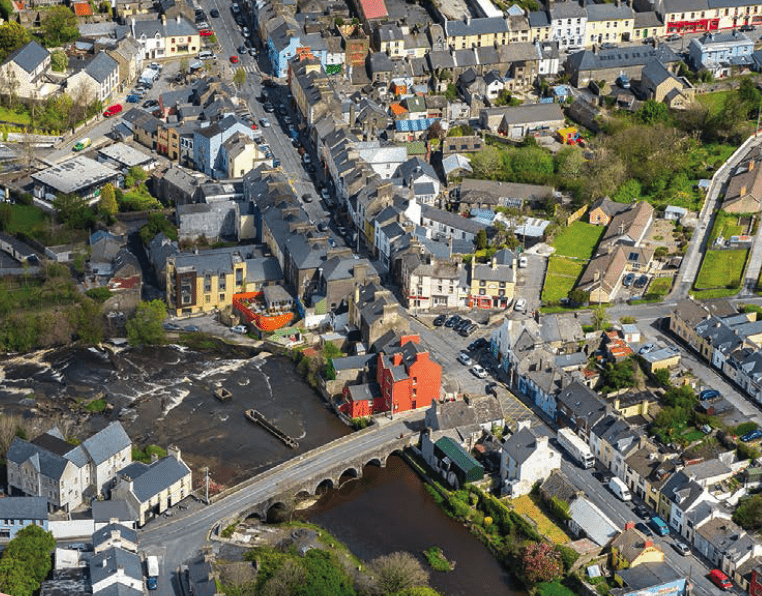





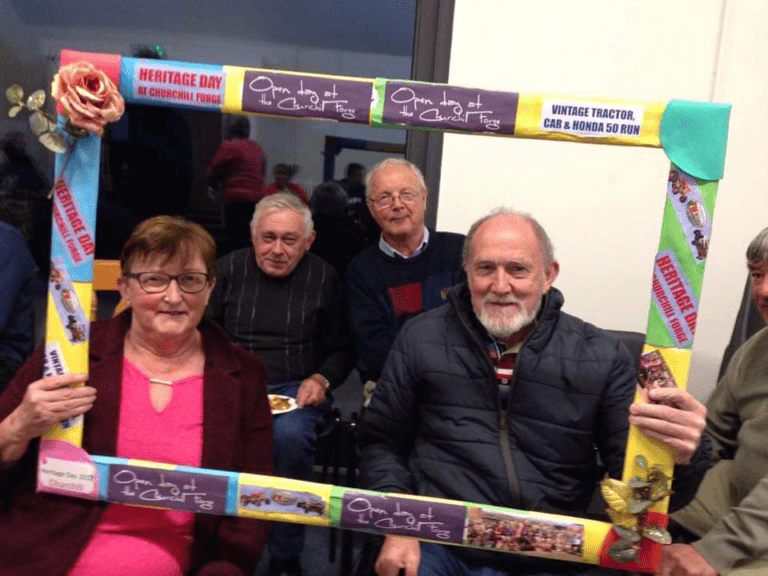




 Wexford Local Development’s case-study and video highlights the different elements of “the relational approach we take in SICAP and how it has evolved in our work with people seeking international protection”. This edited description of Siobhán O’Brien’s report tells how the team planned their video production:







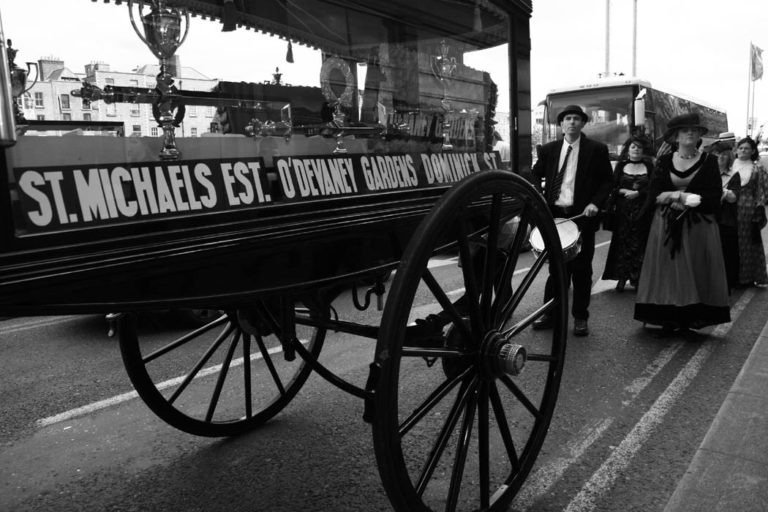


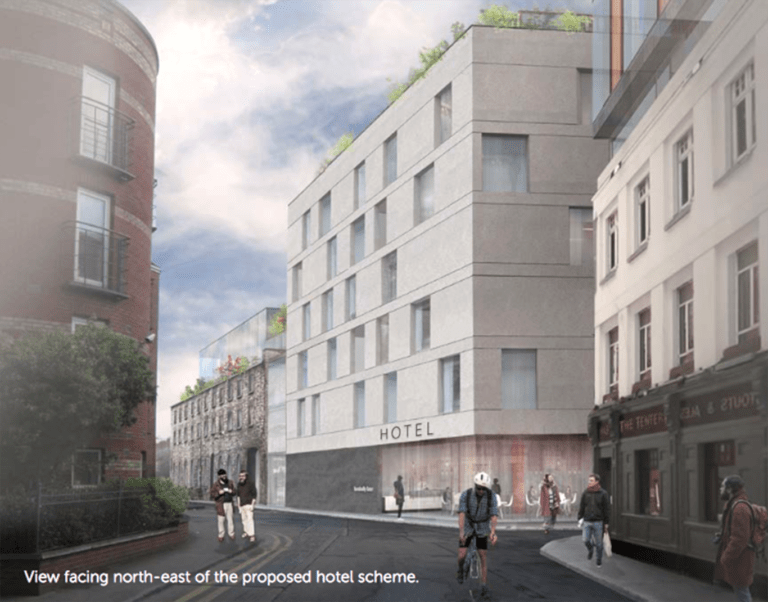

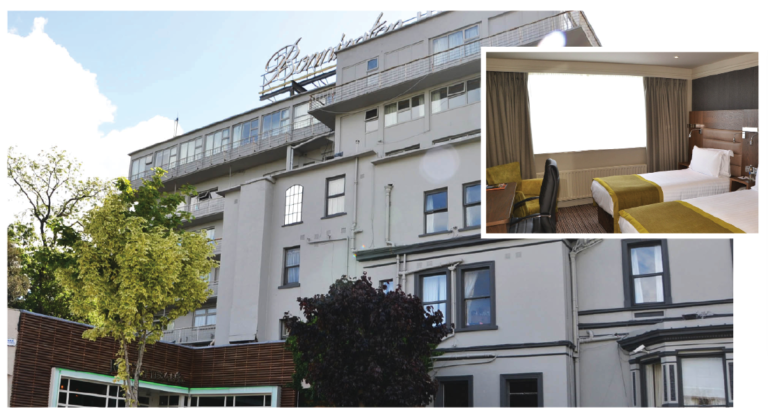


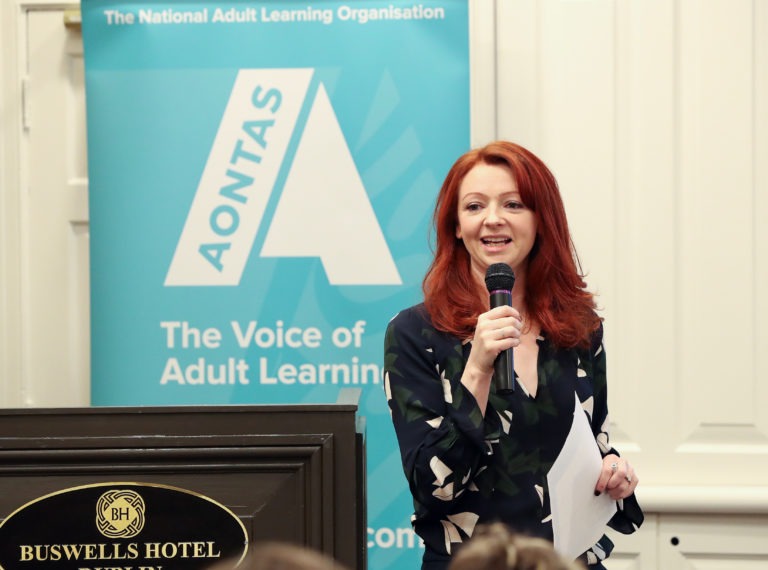
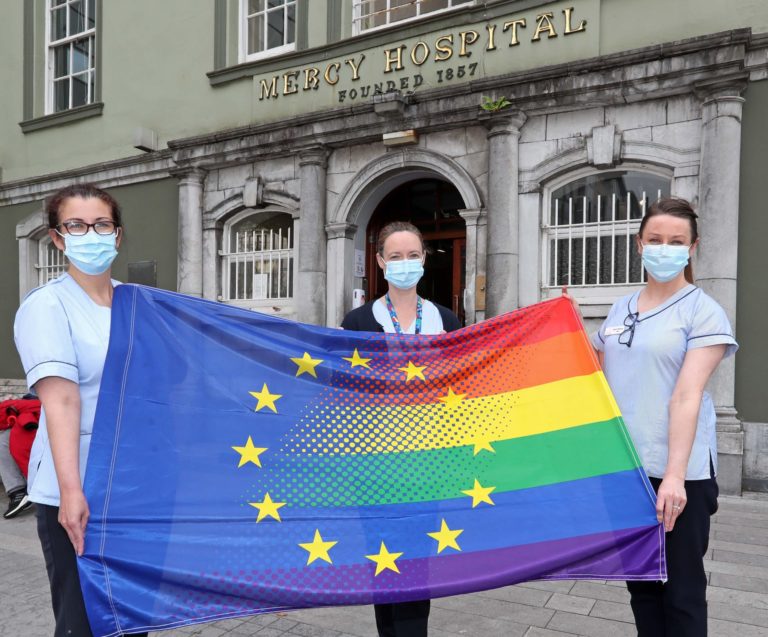


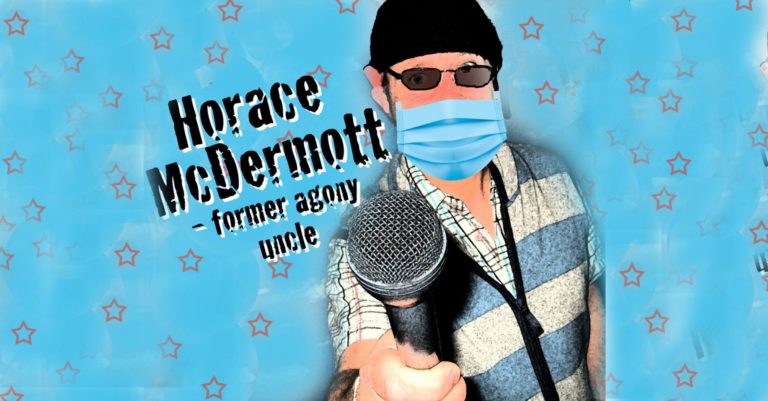
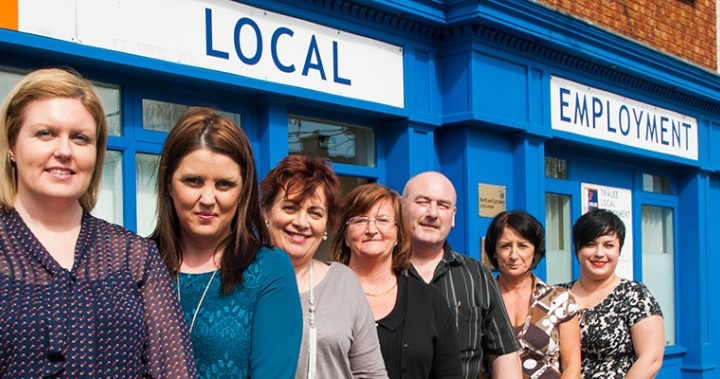

 Mr Saunders added: “Employment services are best located in community settings, operated by providers who can tailor to local circumstances, building relations with local employers. LDCs have a key strength in providing holistic wraparound services for individuals, families and communities.”