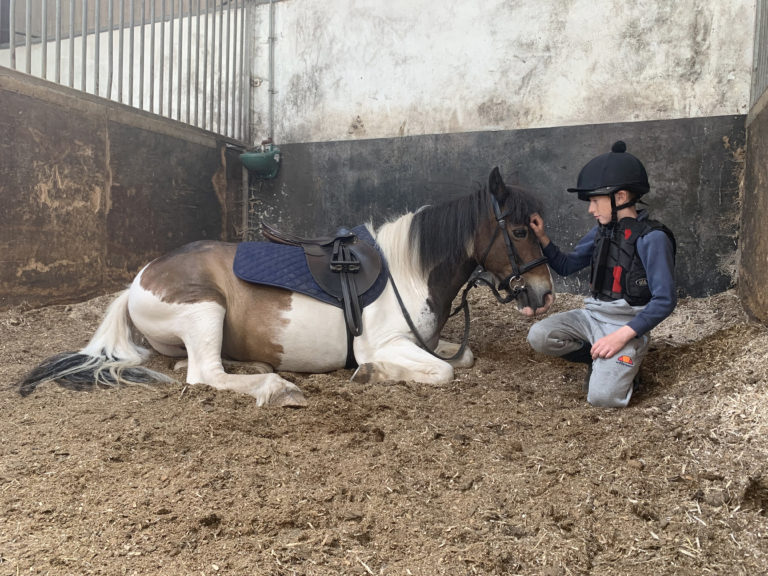
“My name is John Wyse and I’m 11 years old and I’m from Ballynanty in Limerick.”
Why do you like Monty so much? What is Monty like?
“Monty is a hard pony to hold. He’s a good pony and I like him cause he’s quiet but very fast.
I like all the ponies – we have six now. I really like Comet too… I’ll be riding Comet in future. Tianna – she’s my age too – and she rides Comet.”
How often do you meet Monty?
“We go to the stables every week, more often when we’re on our holidays from school.”
What do you do when you go to the stables?
“I groom all the horses, then go for a cup of tea, then we go riding”
How long are you going to the stables?
“About two years I think. My brothers used to go and I went with them one day to meet the bus. I was on my bike and was going to cycle back home, but I asked Karen could I go too. Next thing I was on the bus with my bike too.”
Who else goes to the stables with you?
“I go with my two bothers Jordan and Michael and other people in my group.” What do you want to do when you grow up?
“I want to be a jockey like Wesley!”
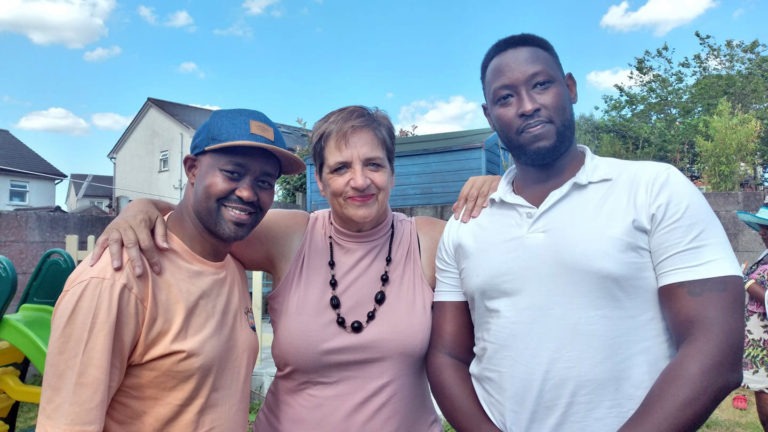
• Our thanks to youth worker Karen Keehan (pictured above) for interviewing John. She always makes a good impression on young people in the area. Her willingness to connect is apparent in these ‘Changing Ireland’ photos taken in Sarsfield Gardens, Moyross, in 2015.
Read our article about Moyross’s healthy obsession with horse-riding, the benefits of youthwork and the success of locally-born jockey Wesley Joyce (below).
For more information about Moyross Youth Academy, contact:
Andrew O’Byrne on 085 853 0463 or at andrew@mya.irish
Elaine Slattery on 087 283 5390 or at elaine@mya.irish
They represent a quarter of the female councillors on Tipperary County Council (8 of 40). As Cllr Hourigan pointed out, eight is the highest number of females ever elected there.
“Not one of them has young children. I don’t think you can do it,” she says. As a mother of three, she had to wait until her children were older before seeking election. “I would fully support Holly. It’s a huge barrier. We’re a modern society,” she said.
She talked about a councillor she knows from West Cork who had a baby recently and was taking calls from constituents the day after giving birth.
There is also the question of what happens when a councillor is sick.
Councillor Máirín McGrath, also supports the bill, but felt there were “grey areas” that had to be discussed. Máirín, elected in 2019, is the daughter of Mattie McGrath, TD, and as one of her colleagues put it – “she works as a 24/7 councillor”.
“It has to be done. It is surreal when I compare my role to my friends who are working in the public or private sector jobs,” she said.
“It definitely should be done. They must be some options in place for young women who need it. But how would it work practically? Who replaces me for that period of time?”
“There just needs to be a greater conversation about it. The public voted for me. Who can take up your job for you?”
For now, the message seems to be – don’t get sick or don’t get pregnant. When put to Máirín like that, she said, “You go into it and you know what’s involved.”
At present, leave can be granted to councillors for six months, but it has to be approved by a resolution of the local council and the person is deemed to have resigned from the council for that period.
Both councillors believe change is absolutely necessary – the nitty-gritty just needs to discussed. “How does the public get a good public service if I was out of work?… That needs to be addressed whether it is for maternity, or sick leave”, said Máirín.
The bill was debated in the Seanad in early December and a motion of support passed.
• Tipperary Councillor Máirín McGrath, her father Mattie McGrath TD and Councillor Mary Hanna Hourigan.
JUST 25% of councillors are female
As of May 2021, 25% of elected local authority councillors in the State were women, according to ‘See Her Elected’ a relatively new Irish gender equality initiative.
However, there is an urban/rural divide. The 2019 Local Elections saw women win 48% of the seats in Dun Laoghaire/Rathdown. In contrast, the proportion of women on Longford County Council fell to 5%, on Mayo County Council to 6%, and on Donegal County Council to 11%.
SHE’s main work is to increase the representation of women in local politics in the rural northwest and midlands. The project is supported by Longford Women’s Link and six women have so far decided to stand in the 2024 local authority elections, after attending online SHEschool classes.
SHE recently won the ‘Innovation in Politics Award 2021’ in the democracy category presented by the Vienna-based, Innovation in Politics Institute.
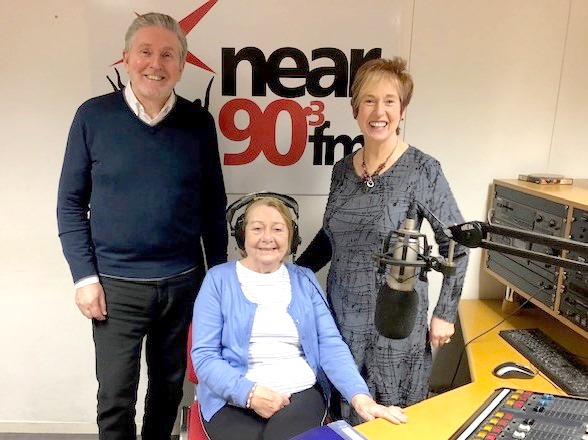
My interest in dementia-inclusive radio stems from both my parents. My dad Gerry Tierney worked in RTE at the weekend as a radio presenter in the 1970s while keeping down the day job as a civil servant during the week. He died very suddenly from a massive heart attack when I was thirteen years old.
Many years later, my mother Kathleen Tierney was diagnosed with Alzheimer’s disease – she died in 2016 almost reaching her 90th birthday.
Upon clearing out the attic of our family home we found the long forgotten Grundig tape recorder and BASF reel-to-reel tapes which were a part of our bittersweet childhood, I felt the urge to learn how to be a radio presenter.
NearFM in Coolock on Dublin’s northside offered a course for people interested in radio, and so having spent a lifetime admiring presenters like Marian Finucane and Olivia O’Leary, I figured the time was right to learn how to share the wonderful world of dementia on the airwaves.
My first series ‘Reminiscence on the Radio’ is specifically designed to spark memories for our older listeners – a reeling in the years on the radio if you like! This is a combination of news clippings, songs from that year, Eurovision and Oscar winners, sports highlights and of course stories from our special guests who remember what life was really like back in the ‘50s and ‘60s. Many of my guests have dementia, but you wouldn’t know which ones – everyone remembers the stories of their youth!
The next series ‘Voyage Around my Brain’ is a conversation with people from the Global Brain Health Institute (GBHI) who have studied the brain and its complexity. They are joined in the studio by people living with dementia and/or their caregivers. The format is similar – each guest chooses a song and recites a poem for listeners, while the chat is about dementia. The format aims to remove some of the stigma about living with this disease.
‘Talkin’ About Neurodegeneration’ is a closer look at the different types of dementia, again using the same format of special guests choosing the playlist and reciting their favourite poems for our listeners.
We have brilliant programmes about Alzheimer’s Disease, Lewy Body Disease, Young Onset Dementia, Vascular Dementia, Multiple System Atrophy, Primary Progressive Aphasia, depression, anxiety, mental health, sensory impairment (hearing and sight loss) and one on communication – how we talk about dementia.
Many people have been diagnosed with dementia or ‘a touch of dementia’ without being told what type or what stage. Imagine being told you had cancer or ‘a touch of cancer’ without being told what type or what stage?
I’m now producing a fourth series called ‘Atlantic, Pacific and Beyond’ looking at global equity, health equity, economic equity, race equity and brain health equity. If you have an interesting story to share about living with dementia, or would like to learn more about brain health, please contact me.
To contact Karen – and she says she’d love to hear from readers – email: karen.meenan@gbhi.org
Unions are also seeking to establish a collective bargaining forum for the sector where pay, terms and funding can be properly established.
The unions say the pay claim, set at 3%, would bring tens of thousands of workers in the community and voluntary sector in line with pay patterns across all sectors (including the pay provisions contained in the public service agreement, Building Momentum).
The unions launched a joint campaign on November 9th called ‘Valuing Care/Recognising Work’. It aims to find “a fair way forward” for workers in the community and voluntary sector.
• Union representatives and workers outside Leinster House on Nov. 9th.
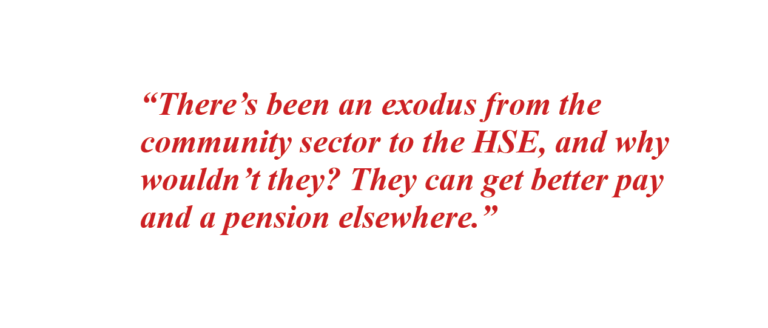
Community development worker Roisin Ryder said: “This is complex and skilled work. We need to attract skilled and talented people, but there’s no pension or competitive pay scale. There’s been an exodus from the community sector to the HSE, and why wouldn’t they? They can get better pay and a pension elsewhere.”
SIPTU public administration and community sector official Adrian Kane, said: “Most workers in these sectors are precariously employed with little or no pension cover or sick pay. We need to find a fair way forward for the voluntary and community sector.”
“These workers are the glue that holds our communities together. We want to ensure their work is recognised and valued. We’re putting in a pay claim of 3%, for a group of workers who have endured pay cuts, reduced working time, and zero pay improvements since 2008.”
While figures were not provided, unions say that “the vast majority of workers providing these services have not had any pay improvements since the collapse of social partnership in 2009”.
Following that breakdown, there was a “decoupling of the sector from pay provisions included in public sector pay agreements”.
The unions say the retention of staff in the sector is an issue, with up to a third of leaving their jobs each year to avail of better terms elsewhere.
Mr Kane continues: “Central to all of this is the establishment of an appropriate collective bargaining forum for the sector where we can negotiate pay, terms and funding for the sector with its primary funder, which is the State.”
Union leaders argue that while the Government is the principal funder of the sector, successive administrations have denied any responsibility for the terms and conditions of employment which exist within it.
“This has led directly to a highly dysfunctional industrial relations environment where recommendations by the Labour Court and other Employment Law Bodies remain unimplemented because the relevant government department will not fund the employer to comply with same,” they say.
Fórsa assistant general secretary Catherine Keogh said:
“Employers in the sector are witnessing a flight of workers – which has the knock-on effect of creating additional recruitment costs. The loss of experienced staff has an immeasurable negative impact on the continuity of care they provide,” she said.
Comharchumann Forbartha Cill tSeadhna Teo, in Geesala, Co Mayo provides meals on wheels for older people, along with a community laundry service (€10,000).
Waterford-based Grow It Yourself is a national organisation that works to give people confidence and skills to grow fruit and vegetables successfully (€10,000).
Eight applicants were awarded up to €50,000 as follows:
Dublin South City Partnership €50,000.
Enactus Ireland €40,000.
Irish Local Development Network €39,750.
Irish Social Enterprise Network €37,370.
National Association of Community Enterprise Centres €42,735.
Rethink Ireland €50,000.
The Rediscovery Centre €18,500.
Údarás na Gaelthachta €45,000.
The announcement was made by Minister Heather Humphreys, on Dec. 3rd. A list of the 50 social enterprises receiving funding is available on the Dept. of Rural and Community Development’s website, at:
The grants range from a few hundred euro to €14,500 and are being provided through the new Social Enterprises Capital Grants Scheme.
To take three: Happy Day Child-care Services in Co. Cavan is to receive €3,000 towards a new kitchen, Revive New Ross is getting €7,500 in foodbank equipment and Pallasgreen Templebraden Community Council is getting €940 to repair a floor.
Organisations were not short of ideas, with applications received and approved for alarm installation (Fenagh Development Company in Co. Tipperary), new gates (Listry Community Council in Co. Kerry), therapy room facilities (the Urban Co-op in Limerick) and the refurbishment of playground refurbishment (Killucan Community Centre in Co. Westmeath).
“The grants may be small in nature but I know they will greatly assist Social Enterprises the length and breadth of the country who have continued to serve their communities through the pandemic,” said Heather Humprheys, Minister for Rural and Community Development.
• Minister Heather Humphreys in Templemore Town Park recently.
The scheme she announced today was committed to in the State’s first National Social Enterprise Strategy launched in mid-2019. It also supports the objectives of the Government’s five-year ‘Our Rural Future’ strategy.
The Social Enterprises Capital Grants Scheme is funded through the Dormant Accounts Fund and the grants will be administered on behalf of the Department by the Local Community Development Committees (LCDCs).
Ireland’s first National Social Enterprise Policy for Ireland 2019-2022 was launched by the Department of Rural and Community Development in July 2019, with the objective of creating an enabling environment for social enterprise to grow and contribute more fully to Ireland’s social and economic progress.
This morning, the Minister announced details of a scheme open to anyone living here for over four years who needs to regularise their immigration status. For people with children, three years will suffice. The scheme also includes a separate track for International Protection applicants who are in the process for a minimum of two years.
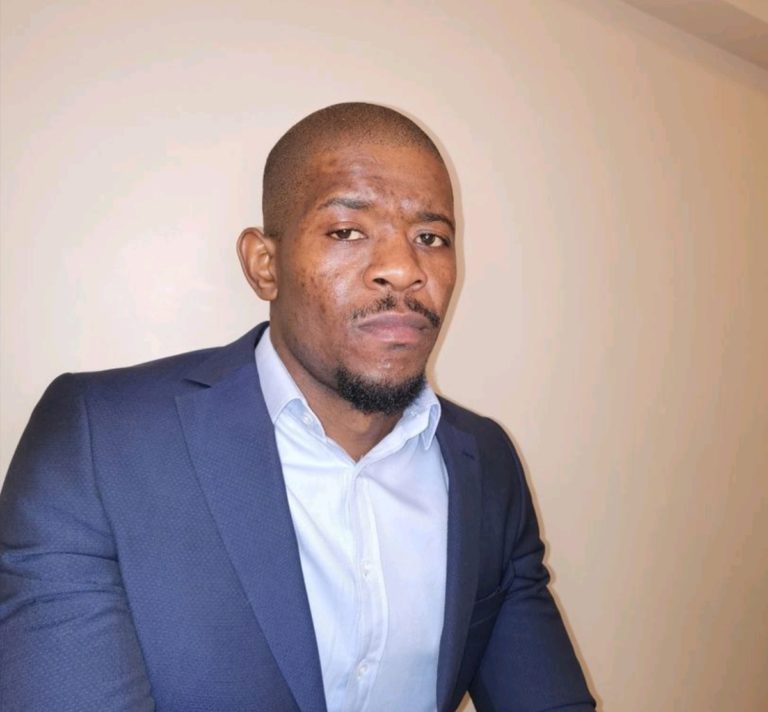
Ms. Potso is chairperson of the Justice for Undocumented Group.
She said, “This scheme will allow us to live securely in our homes, no longer in fear that the next knock at the door will be someone to take us away. We can stand up for our rights at work, our children can grow up safely, and we can visit our families for the first time in many years.”
Saying it will “transform our lives” Ms. Potso added, “Make no mistake this was achieved because a small group of people took a big step to come forward and campaign for rights and recognition.”
For her part, Minister McEntee said “undocumented people will no longer have “to live in the shadows”. An estimated 17,000 people are likely to benefit.
Though the move had been expected by NGOs that support migrants, they were caught partly by surprise when the justice minister made the actual announcement.
The National Women’s Council of Ireland said, “This move will benefit so many undocumented women, many of them at the heart of our communities, and working in key sectors of our economy such as childcare, retail and cleaning.”
Community Work Ireland described it as “a game changer for so many” and “justice after years of hard and very creative work”.
The Migrant Rights Centre Ireland which supported Tjanasi’s group described it as “huge news” and “a major victory” after years of campaigning.
The Movement of Asylum Seekers in Ireland (MASI) said it was “pleased to see (the) scheme reflecting submissions on the way it will be administered”. MASI co-ordinator, Bulelani Mfaco and Ms. Potso were among 25 campaign leaders who called in September for any amnesty scheme to be “broad and inclusive”.
However, it also said today: “We are mindful that the schemes don’t include everyone and urge parties in government to provide a pathway for frontline workers.”
A scheme to regularise the position of undocumented migrants was part of the Programme for Government agreed last year.
– Humphrey’s pledges more support at 3rd national Social Enterprise conference
370 people tuned in this morning to take part in the 2021 National Social Enterprise Conference, hosted by Dunhill Eco-Park.
The first national social enterprise conference with full State support was held in Croke Park, in 2019. This year, it was held online, as in 2020, with much innovation apparent in the delivery.
It was opened by Dunhill’s Senan Cooke, known as “the Godfather of social enterprise in Ireland”, as Waterford neighbour, Tammy Darcy (CEO of Seri*) nicely termed it. Probably everyone would agree that the author, community development and social enterprise enthusiast is a born leader. He has campaigned for decades about the empowering potential within communities, if properly harnessed and supported.
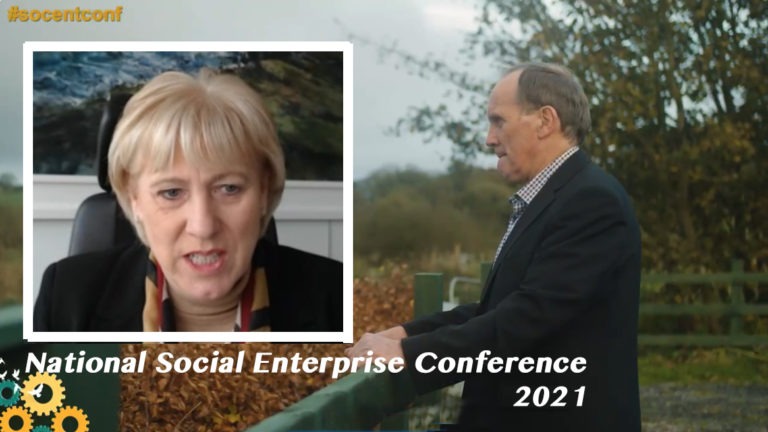
In her keynote address, Heather Humphreys, Minister for Rural and Community Development, addressed what the Government was doing in that regard for the “growing sector”.
The conference theme was ‘The Future of Social Enterprise in a Changing Ireland’ and she praised social enterprises for their role to date in the midst of the “biggest pandemic in a century”.
Urging people to raise awareness about the value of social enterprises, she said next year was “a critical one” as a new national strategy for the Republic of Ireland would be developed. (Northern Ireland is some years ahead in terms of developing its social enterprise sector).
“The next 12 months are critically important for the social enterprise sector in Ireland. It is the year in which we much co-create a new social enterprise policy from 2023. We won’t rush it or dictate the priorities. It’s for all stakeholders to work with us. The conversation starts now,” she said.
Looking at how Ireland was changing, she welcomed the greater diversity and rising awareness “of the need to address the climate and biodiversity crisis”.
“Our young people are seeking a brighter, greener and more sustainable future,” she said. “But if the pandemic has taught us one thing, it is that sense of resilience and community spirit that we have right across our society. As Minister for Rural and Community Development, I’ve seen so many examples of that sense of resilience in towns and villages the length and breadth of the country in recent months. Many of those were social enterprises. Keep doing what you do best – serving our communities and making a positive impact on our society and on our economy.”
She referenced various funds that provided or provide support to social enterprises, including the Stability Fund and the Innovate Together Fund.
“We also developed a new scheme for start up social enterprises in conjunction with Rethink Ireland. To raise awareness, the Arise scheme was also recently announced. The €600,000 scheme is the first of its kind,” she said.
She also highlighted, among others, the €1m capital investment scheme for social enterprises, being delivered through Local Community Development Committees.
“Behind the scenes my officials are also working with other relevant departments so that social enterprise can apply for mainstream business supports,” she added.
“Raising awareness of social enterprise continues to be an ongoing challenge. We all have a role to play. I want to challenge you – how can we all continue this effort to promote social enterprise? If you are a social enterprise, please be proud to identify as one.”
She added: “Next year, we’ll also be conducting our first census of social enterprise. This work will give us a better idea of the scale of the sector.”
• Senan Cooke takes a long view on social enterprise.
Among the conference speakers were: Ossian Smyth, Minister of State at the Department of Public Expenditure and Reform, Sarah Miller from Ballymun’s Rediscovery Centre, Una Lavelle, chairperson of the Community Reuse Network Ireland, Eoghan Ryan from Rethink Ireland, Clodagh O’Reilly of the Irish Social Enterprise Network, the PAUL Partnership’s Elaine McGrath, Fergus Finlay (representing SERI), the Wheel’s Ivan Cooper, and Pauline Gannon of Social Impact Ireland.
• Kevin McCarthy, Secretary General at the Dept. of Rural & Community Development speaking at the National Social Enterprise Conference 2021.
Kevin McCarthy, Secretary General, Dept. Rural & Community Development summed up the conference. There was, he noted, debate about whether social enterprise was a sector or a movement. He spoke about “the collective challenge of partnership and collaboration which will be very important in developing the new strategy”.
He too noted that the OECD work is to commence soon “to get an external perspective on where we are at”.
He said, regarding co-creating the new strategy, that the next 12 months are critical. “We are keen to take forward the conversation,” he said.
– Contributions from other speakers to follow in our print edition.
For anyone unaware, what exactly do you do in a nutshell?
“I’m a youth worker by profession, and also by trade – I see them as two different things. I currently work for one of the councils in Northern Ireland as a community development worker.
“Outside of that, I do other things such as freelance with Youth Work Ireland in Tipperary and I also organise humour festivals from time to time,” he said.
• Fergal Barr at work.
What do you hope to achieve through your work?
“The one art form that is missing from youth work is humour. Every other art form is recognised, whether it’s dance, poetry, music or art through brush or pencil. Humour is missing because it’s such a natural phenomenon. People laugh and joke, but they don’t think about it being a skill that you can actually learn.”
“It’s not about teaching people to be comedians. I don’t want this to be confused with that. It’s about using humour as a medium to engage people and transform situations,” he said.
When did you start this work?
“Humour has always been a part of my life. From the minute I left the womb until now, humour has featured.
“But to give it a starting point, back in July 2007, as part of an open space conference I met with some people to discuss humour as an actual means of engaging young people.
“A year later, we organised a feasibility meeting and then, long-story-short, the first humour training programme was held was in October 2012, followed by others in 2014 and 2018.”
The next Humour Training Programme is actually scheduled for this November.”
Can you tell me a bit about the latest Humour Festival (held in June)?
“I decided to organise an event for practitioners who share an interest in the use of humour. One of my frustrations in youth work and trying to bring humour into it is the fact that a lot of people just don’t get it.
“We wanted to create something that would help increase awareness of the importance of humour and to help people learn some techniques about how they can use it in their work setting.
“What started as an idea of one half day event turned into a five-day festival of activity. We had 15 practitioners from 11 countries who used everything from simply a sense of humour in their work to clown therapy and stand-up. Each day had a theme and there were 26 events,” he said.
• Fergal working with young people in Derry.
I read on the line-up for this festival that one of the main theories involved with humour is Incongruity Theory. Could you explain that for me?
“There’s actually a joke to explain it: Incongruity theory, it’s not what you’d expect. If you ever hear a comedian tell a joke where they build up to something and you have a certain expectation, but what you get is completely different – that’s incongruity theory. It’s probably the strongest theory that underpins humour and comedians use it all the time.”
Youth work is generally seen to be quite a serious field. Would you agree?
“Youth work is seen to be less serious than social work, but that doesn’t mean it isn’t serious. You can support a young person, and change their life because you intervened at a moment which ended up being life changing for them.
“Youth workers are serious about what they do, they want to support young people, they want to care for them and see them progress and develop as a human being,” he said.
How is your work trying to change this perception of youth work?
“By holding humour festivals and a humour training programme called ‘Humour is Serious Business’.
“I’m also doing some work with one of the health trusts here in the North, bringing recognition to humour as a means of promoting wellbeing. It’s one of the most natural resources we have as humans. Humour is the shortest distance between people, after all,” he said.
Could you give an example of how your use of humour has helped a situation relating to your work?
“When you’re meeting a young person for the first time and they’re a bit nervous about meeting another adult, because maybe they perceive adults as something not to trust, humour can be a great tool.
“By showing that you can be funny and are prepared to laugh at yourself, you break down barriers and nurture a rapport. As a youth worker, you need to show the young person that you are not like a lot of the other adults they experience in their daily lives.”
What is the fine line in the usage of humour?
“The fine line is really when a person is no longer part of the joke, but instead the target of it.
He warned against making fun of a person.
“Essentially, you need to have the consent of the person that you’re sharing humour with. I don’t mean that you must get written consent, where you might send them an email and say, ‘Before I crack this joke with you, do you mind if I get written consent from you?’ No, it’s all about the relationship between you and the person you’re sharing humour with.”
There are obviously cultural differences in humour. Can you talk about how this affects your work?
“Particularly in Northern Ireland, we have a dark sense of humour. One of the ways people in the North have often dealt with the trauma of The Troubles is by their humour.
“Not everyone understands this, so if you go to another part of the world, and you start to use this type of humour, people mightn’t appreciate it. If you use sarcasm with people from other countries, they might think you’re being serious,” he said.
What advice would you give for anyone reading this who thinks they are “not funny”?
“Everybody has a sense of humour, and humour is not comedy. Comedy is just one form of humour.
“So you could be sitting in a cafe and you see a child giggling. Nobody can look at a giggling child and say it doesn’t make them feel a little bit different. The child isn’t telling a joke, they’re not trying to be sarcastic – they’re just having fun.
“There’s nobody on planet earth that hasn’t laughed, hasn’t smiled, hasn’t tried to tell a funny story or hasn’t thought about something funny. Humour is ever present – it’s in our DNA.”
What got you interested in youth work in the first place?
“I fell into youth work by complete accident. I was in the job queue after I left school, outside the job centre in Derry, and somebody told me about a youth project,” recalled Fergal.
He went along and it introduced him to group work methods and learning how to interact and relate to people and so on.
About 17 months later he moved to providing youth information and his role evolved. Gradually, he realised he was actually doing youth work, so he went to university to become a professional youth worker.
“I was on a kind of seven-year journey, my apprenticeship as I like to call it.”
Roos Demol is the founder of RecruitRefugees. She has been working with migrants, refugees and asylum seekers since 2014 and wants to tackle the negative stereotypes that exist around refugees and asylum seekers and highlight the huge wealth of talent and skills that they possess.
Roos celebrates events such as the one held over the summer when over four thousand people who recently received Irish citizenship logged on to attend a virtual celebration which was live streamed from Croke Park.
She sees these as wonderful events and hopes that “they will also be treated like Irish citizens by employers and be given exactly the same chances as other citizens. It’s what is needed to make the country a place of sanctuary and welcome for everyone.”
She set up RecruitRefugees (https://recruitrefugees.ie/) as a Cork based social enterprise over a year ago to support refugees and asylum seekers in obtaining employment.
It calls itself “the first specialist recruitment consultancy and agency for Refugees, Asylum Seekers and Migrants in Ireland”.
Its mission is to “inspire dignity, hope and a bright future for asylum seekers and refugees in Ireland by connecting people to careers.”
Roos’s Own Experience
Roos’ own experience as a newcomer to Ireland and former nurse within the prison system in her home country of Belgium has greatly informed her passion for this particular cause.
She moved to Cork with her husband in 1998 while pregnant with her first child.
She initially blogged about her experiences trying to get to grips with the Irish healthcare system. However, she became “fed up” with blogging about herself and through a chance encounter, ended up becoming the host of a radio programme for asylum seekers and refugees.
Other opportunities came along in the form of a music band which showcased the talents of refugees and asylum seekers and enjoyed moderate success, even playing a concert in the National Concert Hall in Dublin!
She then began volunteering with refugees in a Direct Provision centre, supplying food and clothing and getting to know many personally.
A one minute “elevator pitch” and a chat at a networking event led to the set-up of Recruit Refugees.ie and she hasn’t looked back since.
Partner Organisations
RecruitRefugees.ie partners with other organisations: Doras, the Irish Refugee Council, Open Doors, An Cosán, Cork City of Sanctuary, Mukisa, West Cork Development Partnership, MASI, and Sanctuary Runners.
Pledges on Direct Provision in the Programme for Government
Asylum-seekers are among the most vulnerable groups in society and the Programme for Government included a pledge to replace the Direct Provision accommodation system and replace it with a new not-for-profit approach with human rights at its core. This work is underway.
The PfG stated: “We are committed to ensuring that Ireland provides protection to those seeking refuge from conflict and persecution, as is required under international law.”
The PfG also pledged to improve conditions in the short term: “This includes vulnerability assessments, the right to work, the ability to apply for driver licences and bank accounts, an independent inspection process, measures to reduce the length of time in processing decisions, mental health services, and the training of managers of Direct Provision Centres.”
The acceptance in the PfG that DP must be replaced by a more humane, non-profit-driven system was seen as a win for activists who campaigned for dignified treatment of refugees and asylum-seekers.
Hanane (who asked us not to reveal her surname) is a former asylum seeker from Algeria who came to Ireland in 2015 with her young son. She volunteers with Recruitrefugees.ie in an outreach capacity.
As she is an Arabic and French speaker, she facilitates workshops in Arabic, helps with translation of documents and supports other refugees and asylum seekers to obtain work suited to their qualifications and level of job readiness. She also volunteers with Waterford Integration Services in conjunction with Waterford Youth Services. She previously worked with Waterford Education Centre and Treo on a youth diversion project and is currently studying towards a degree in Community Development and Education ‘ at Waterford IT.
Life in Ireland has also been challenging for her, particularly because of legislation that denied asylum seekers and refugees the right to work and education (a situation that has improved recently). She refers to it as her “journey from oppression to liberation”.
She said the Irish state paid lip service to the idea of integration while placing barriers such as employment restrictions and the prohibition on obtaining a driving licence in the way thereby “increasing the level of stereotyping” and stigmatising of people who live in the DP system.
She emphasises that asylum seekers want to work and believes that “a diverse society is something amazing. Our uniqueness is our difference, I have something that you don’t have and you have something that I don’t have.”
Andile Mondela from Zimbabwe is another success story. He has a background in hardware and systems administration and has lived in Ireland over four years. Though still in DP, he is busy volunteering as IT manager with RecruitRefugees.ie while also working fulltime with a major digital services company.
There have been positives for him such as being able to pursue his “passion for IT” and work in cloud technology.
Living here has also been challenging, particularly having to share a room in the centre where he lives and trying to do his job via mobile phone when the WIFI signal drops.
If he were to change anything about the current asylum system here, it would be to ensure that refugees and asylum seekers have access to “unlimited labour” opportunities and a driving licence.
Ahmed (*not his real name) is a sterling example of the incredible talent that newcomers to Ireland possess and that RecruitRefugees .ie is trying to promote.
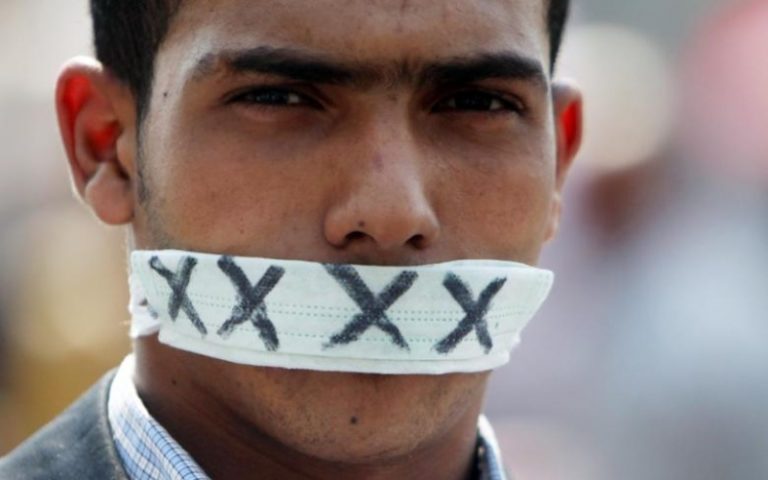
An experienced journalist from Cairo whose photojournalism and documentary work has won awards, he has worked in 13 countries and for well-known media outlets such as Euronews and Associated Press. He has also covered protests in Egypt against the government. He tells me that his home country ranks 3rd in the world for the number of imprisoned journalists and 153rd in world rankings for press freedom.
Much of the appeal of Ireland is that he is now living in a country that ranks 8th or 9th in the world in terms of press freedom. As a former asylum seeker who now has leave to remain and work, life in Ireland is “really good. It is the ideal peaceful place that I need to live in for now, after what I have seen and what I have covered.”
The big difference for him being able to work and contribute is that he is “no longer afraid”.
“When I was in my country, you might be arrested, you might be deported because of your work. Here I am not afraid to write about whichever topic I want,” he said.
• Always be prepared to laugh at and make fun of yourself – young people appreciate an adult that is prepared to do this – they tend to think this person is ok!
• Always greet young people with a smile – it can set the tone for them and you!
• Make sure the humour you use is equal to the relationship you have with the person you are engaging with – they must understand where you are going with it and be ok with it.
• When you use humour, you are making it ok for others to use it, but it might not be the kind of humour you expect or respect, so prepare yourself – not how to react, but how to respond. Your response will be key, particularly for any young person that might not understand your boundaries or expectations.
• Don’t make young people the joke because you can and/or it’s easy for you.
• When young people try to use humour to belittle or put you down, ‘embrace’ and use it to your advantage. By taking ownership of their humour you can turn the situation around and create a new situation which leads to a better outcome.
• Don’t interpret every act of humour as an attempt to get at you – for some it’s a defence mechanism and is all they know.
• Be prepared to challenge certain kinds of humour if it crosses ethical boundaries – explain why you are challenging it and what the issue with it is.
• Help young people to explore humour and understand the implications of it if it is misused.
• Your humour should only be used to care for the person you’re trying to work with. It’s designed to lighten the moment, put a smile on their face and be enjoyed by them. It can offer perspectives they might not have thought about and is based around the relationship you already have with them.
Contact Fergal
You can email Fergal Barr on: thekingisalive@hotmail.com
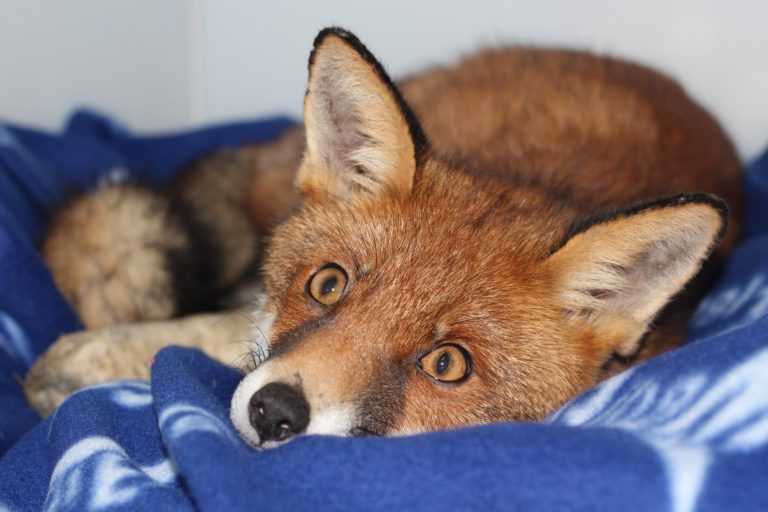
The door of the intensive care unit bursts open and its newest patient is rushed in, flanked by two hospital staff. Except in this case, the patient is in a cage, not on a gurney, and its carers are not doctors. The patient is an injured fox, and he has just been admitted to Ireland’s first wildlife hospital in Meath.
Unlike the hushed environment of a typical ICU, this intensive care unit features the sounds of birds cheeping and the shuffling of hedgehogs moving towards their feeding trays.
Volunteering there for a day, I have a unique insight into the day-to-day operations of a unique facility. The hospital opened during the pandemic in February of this year, using the grounds of a pub in Garlow Cross, just outside Navan, whose owners had shuttered its doors and offered them the space during Covid.
The hospital project, run by Wildlife Rehabilitation Ireland (WRI) was an idea formed over several years, as licensed rehabilitators around the country were inundated with an increasing number of calls. With the opening of the hospital, many wildlife casualties can be directed to Meath. Their mission is to save the lives of thousands of sick and wild animals in Ireland every year. The UK has five dedicated wildlife rehabilitation hospitals. In Ireland, we now have one and it is fully reliant on public funding to stay open.
The hospital is entirely staffed with volunteers, and the value of community contributions are widely felt as I join their ranks for a day. The spirit of camaraderie is ever present, and everyone mucks in – literally- and is quick to help others with the assorted tasks at hand. Volunteers come from a wide variety of academic backgrounds, but practical experience is what is prized and what is gained at the hospital.
The need for its existence is obvious. Space for injured animals is at a premium, and visitors arrive with injured animals at the front gates throughout the day.
My time volunteering is mostly spent in the ICU, cleaning hedgehog homes and doling out regular feedings to birds. One becomes all too aware too soon of the dangers of hedgehog spines and the claws of enthusiastic birds. I am kindly shown how to hold a hedgehog in a towel to protect my hands. Moments later, Dan Donoher, the hospital’s/WRI’s Animal Manager and something of an animal whisperer, picks up a hedgehog delicately and easily without any need for gloves. He’s similarly gifted with all other animals on the premises, and is often dispatched to lead on transfers of animals to new housing and for releases back into the wild.
One of the first rules I come to understand is that wildlife are wildlife. Read: this is not a zoo, and volunteers must be careful to not ingratiate themselves by speaking with or petting the animals. They are supposed to remain afraid of humans, and any easy familiarity that could develop towards us could dull their sense for danger when they are returned to the wild. When peering into the cage of two adorable baby foxes, it takes all my reserves of strength to resist the urge to coo at them. The older fox admitted earlier that day to the ICU with a head injury is now resting in his cage, the light in the room blocked out with newspaper to give him some peace to sleep.
Stables out back have been converted into further hospital “rooms” for animals on the mend and in less serious need of attention. A chalkboard in front of each stable lists the number and types of animal patients present, with medical charts attached to their pens and cages. At this time of year, the hospital is populated with young offspring abandoned by their parents. There are baby chicks, the aforementioned foxes and hedgehog community, badgers, rabbits, and a wide variety of bird species in care. A cuckoo has been housed in one of the stables, medical chart on display. It is the hospital’s aim to provide care for every native Irish wildlife species.
Volunteering brings an awareness of one’s natural environment and the significance of making a contribution to conservation. Just one day as a volunteer gave me a broader understanding of Ireland’s wildlife community then I’d learned in years. Volunteering for any cause brings a sense of calm and unity. The focus is on the practical task at hand, and the team of people around you.
The hospital is in need of support and I’d recommend anyone to take part in this important initiative. Hopefully bringing more and more attention to the needs of our wildlife population will lead to formal and regular funding from our government.
First responders needed
Some volunteeer positions urgently need filling, such as: volunteer projects co-ordinator, wildlife education office, social media, transport provider.
They also have volunteer opportunities in animal care, transport, first responders/rescue, maintenance, fundraising and administration.
To find out more about volunteering with WRI visit:


 Where are you from?