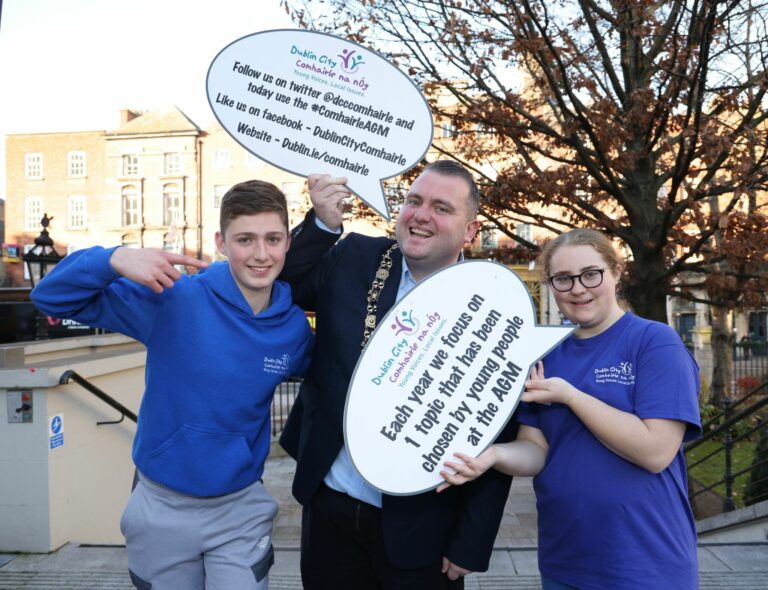
The Dublin City Comhairle na nÓg Youth Conference 2023 was held at the Mansion House last week, attended by more than 200 representatives from schools and youth organisations across the city.
Throughout a series of workshops, the Comhairle members discussed a number of themes relevant to them and their daily lives.
Speaking at the opening of the conference, Lord Mayor of Dublin Daithí de Róiste said, “This event is a stepping stone for our youth, an opportunity to become part of the next generation of leaders in Dublin City.
“Comhairle na nÓg gives young people a voice in the decision-making in the development of local services and policies. It gives young people a chance to shape their own future and not have others decide it for them. It’s very important that we hear from them.”
The young people, aged from 12 to 17 years of age also discussed the work carried out by Comhairle during the previous year.
Since the 2022 conference, the elected Comhairle members had worked on raising awareness of period stigma. As part of their work programme, the members arranged free period packs to be distributed to all members’ schools across Dublin City.
Members of Dublin City Comhairle na nÓg also took part in a short film, ‘Talking Heads’, to voice their opinion on the topic of period stigma and contribute their views on Irish society.
“Comhairle’s success would not be possible without the continuous support and encouragement given by parents, schools and youth organisations. While Dublin City Council facilitates the overall organisation of Comhairle in the city area, it does this through a multi-agency approach with partner organisations relevant to young people and their areas of interest.
“By giving the youth this chance to discuss and debate important matters of relevance to them in their community, they are encouraged to speak out and be heard as an influential voice in the local and national decision-making processes.” said Christine Lyons, Comhairle co-ordinator, Dublin City Council.
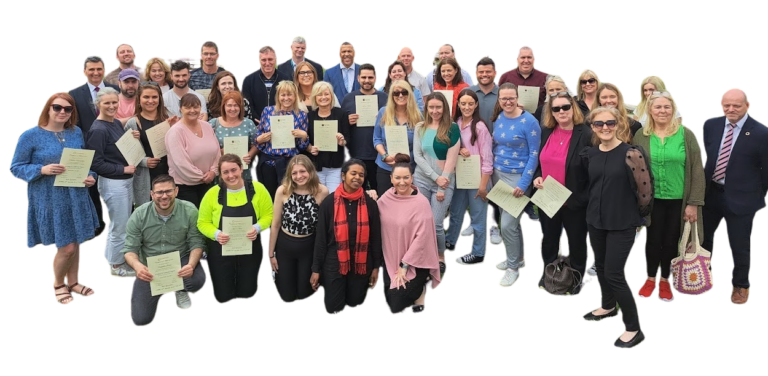
In recent editions, Changing Ireland closely followed the first roll-out of pilot projects under the new Place-Based Leadership Development Programme. It ran in Darndale and Drogheda and 42 people (pictured on right) graduated in the summer. Which communities will next benefit? Where does the programme go from here? Time will tell. Meanwhile, the final report is in and Dearbháil Butler, a community worker with Northside Partnership, writes about its findings.
The evaluation of the Place-Based Leadership Development Programme (PBLDP) is now complete and it shows the positive impacts for local people.
Emerging changes in both places include: people who didn’t communicate before now do so, new groups of people are working together, we have new community events, there are more referrals between agencies, better training provision, more engagement on local projects, new campaigns and small new investments from funding agencies.
Over 18 months, the programme delivered ten modules of leadership development and each of the participants also received six hours of coaching to support their professional development.
The participants were a mix of people, representing local residents, voluntary and community sector organisations and statutory agencies. They shared really positive feedback about their experiences on the programme. They most highly valued their new relationships with people in other agencies and sectors, and learning how those agencies work in practice.
New confidence
The programme helped to develop their personal and professional skills and knowledge:
It increased their confidence in the value, skills and experience they bring to collaborative working. It also created an increased enthusiasm and hope for local development.
The programme increased participants’ knowledge about social issues. They learned about types of crime, exploitation and other issues affecting communities, and how agencies are responding and seeking to prevent crime and social problems.
The participants took time to think and reflect, to engage with others, and to focus on leadership with collaborators.
It improved people’s skills to communicate clearly and effectively, including addressing conflict. It built their confidence in questioning and/or disagreeing with others when needed.
As one participant put it (the feedback was given anonymously):
“I am becoming a bit more brave having conversations… with different agencies, I didn’t have that confidence… but I find from doing place-based leadership, sitting in a room at a table with the guards, Dublin City Council, drug services… I’ve so much more information now, I wouldn’t have got it anywhere else.”
Restored trust between residents and Gardaí
The programme helped develop relations between agencies. It connected people and we get more done now.
To give one example of this, the PBL group met and we wanted to bring the active community volunteers together to celebrate the work that they do in the community. We often reach out to volunteers to ask them to do something, but this time we changed our approach. We all pledged to pick up the phone and personally invite at least one volunteer from Darndale and surrounding areas.
They all turned up and each shared their stories of the great achievements and challenges they see in their communities. From that meeting, support and knowledge was shared between the groups and it really highlighted the power of bringing people together and how positive change can happen.
Some outcomes from that meeting are that the Mens Shed are now connected to the right supports on help them find a new premises. And the Women’s Group got support for setting themselves up as a committee, opening bank accounts and applying for funding to develop their group.
• Participants find themselves advocating for other agencies. Having learned more about those agencies, they changed their opinions and are now better able to explain the decisions and work of other services locally.
At the beginning of the PBL journey, there was no communication between residents and Gardaí – by the end of this new programme they both had a much deeper understanding of each others challenges and a mutual respect was formed. Also, residents are now much more confident referring locals to any of the agencies that were involved.
• The new relationships among programme participants are helping to accelerate progress by Northside Partnership in Darndale and the Drogheda Implementation Board.
As one participant put it: “Everybody was listened to, there was no one overpowering voice, everybody’s ideas were taken on.” They said they learned what a leader was: “A leader is not a knower, a leader is somebody who listens and takes on board what other people are saying.” They said the programme’s impact on them as a person was that it “helped me work better in a group setting and be more aware and listen more to other people”.
Many participants said they are just starting the process of putting their learning into practice, and the groups are at the beginning of their journey working together to deliver projects.
* Dearbháil Butler is the Empowering Communities Team Leader with Northside Partnership based in Coolock, Dublin 17. She also serves as a councillor, representing Donaghmede, on Dublin City Council.
Two of the core focuses of the campaign this year are how domestic abuse impacts women during pregnancy, and how employers can lead in addressing domestic abuse as a workplace issue.
On November 24, Women’s Aid hosted a webinar as it officially launched a new online resource hub (www.DVatWork.ie) for employers to support the implementation of Statutory Domestic Violence Leave, which commenced on November 27.
Sarah Benson, CEO of Women’s Aid says: “Addressing domestic violence as an employer reduces the risk of victim-survivors giving up work, provides increased financial security and shows solidarity and support at a time when they may feel completely isolated and alone.
“Domestic violence and abuse is a workplace issue. That might seem like an odd thing to say about something that most consider belonging in the realm of personal relationships, but the reality is that domestic abuse tactics and impacts extend far beyond the home and into all aspects of victim-survivors’ lives. Issues of coercive control and economic abuse can be linked directly to work, when we think about the consequences of someone being pressured or coerced to give up employment and their economic freedom by an abusive partner.”
Also during the 16 Days of Activism 2023, Women’s Aid and its partners on the Maternity Project are running an awareness campaign in maternity hospitals and units across the country.
The Maternity Project is a partnership between Women’s Aid and four maternity hospitals: Ireland South Women and Infants Directorate (primarily Cork University Maternity Hospital), and The National Maternity Hospital, the Rotunda, and the Coombe Hospital in Dublin.
The project is co-creating a bespoke training course for maternity staff including midwives, social workers, and obstetricians from the four maternity hospitals and from some elected regional maternity units.
A dedicated Women’s Aid domestic abuse support worker is assigned to the three Dublin maternity hospitals and receives referrals directly from these hospitals.
The project partners have also designed unique pregnancy and domestic abuse resources for use by the four leading hospitals and their regional counterparts.
The three-year pilot project is hoped to enhance the maternity hospitals’ response to domestic abuse through a jointly-created training, awareness and referral programme.
The 16 Days of Action Maternity Project awareness campaign features information stands and awareness posters for patients and staff in the maternity hospitals, with the materials to remain on display during the rest of the year. It also includes a social media awareness campaign.
A funding boost of €2.3 million was announced this week for the development of 50 new outdoor adventure projects around the country.
The investment under the Outdoor Recreation Infrastructure Scheme (ORIS) will support the preparatory work required to bring large-scale outdoor recreation projects to a shovel-ready stage.
The ORIS plays a key role in plans to enhance outdoor amenities nationwide such as walkways, cycleways, rivers, lakes and beaches.
The 50 projects that are to receive funding are currently at the early stage of development. They will receive funding of up to €50,000 each to bring them to a shovel-ready stage. Once at a shovel ready stage, they will be in a position to secure further funding through the other measures of the ORIS.
The projects being funded include:
Killala, Co. Mayo: Scoping the creation of Ireland’s first underwater artificial reef in Killala bay and environmental planning costs – €50,000.
Slieve Bearnagh Mountain, Co. Clare: Feasibility study for the development of a Cycling Hub in Slieve Bearnagh – €50,000
Linn Taoide Arainn, Co. Galway: Feasibility study for provision of tidal pool on Arainn along the seashore – €35,847
Derryounce, Co. Laois: Feasibility study for the potential development of the Derryounce Amenity Area – €44,280
Castlerea, Co. Roscommon: Screening, environmental assessments, and preparation for development of Castlerea Riverside Boardwalk – €50,000
Bray Head, Co Wicklow: Recreation plan to manage and protect the landscape and ensure safe and appropriate recreation – €45,000
New Ross, Co. Wexford: Planning and design for water sports opportunities in New Ross and the tidal section of the River Barrow – €47,579
Announcing the funding, Minister for Rural and Community Development, Heather Humphreys said: “We’re now heading into the darker days of winter and it’s more important than ever to make the most of those precious daylight hours by getting out and about when you can.
“The funding will support the further development of our hiking trails, water-based activities, and other amenities, making them even more enjoyable places for families to visit nationwide.
“These amenities are here for us all to enjoy. I would encourage everyone who can to get out and about and make the most of what our countryside has to offer.”
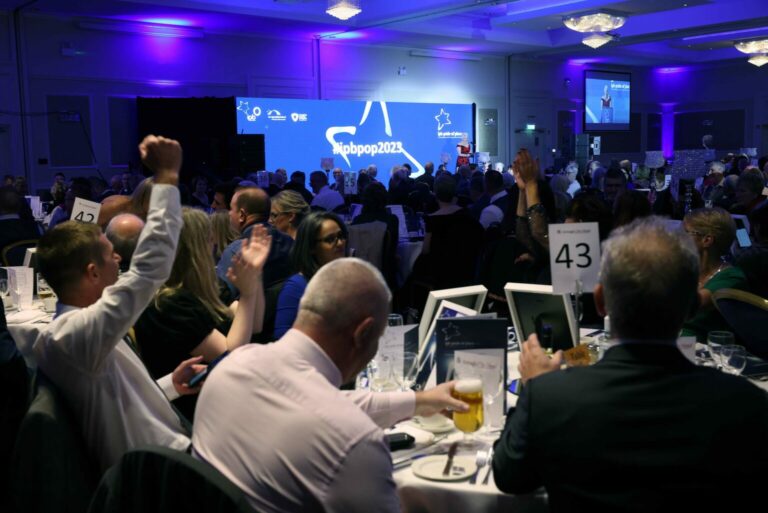
Pride of Place is an All-Island competition, with local authorities from across the island of Ireland nominating groups that have made a significant impact in enhancing their communities through collective effort.
Ireland’s largest community awards event was hosted this year by Armagh, Banbridge, and Craigavon Borough Council and presented by ITV’s Pamela Ballentine. Organised by peacebuilding charity Co-operation Ireland and sponsored by IPB Insurance, the Pride of Place awards showcase and celebrate exceptional community development efforts.
Peter Sheridan, who until recently was chief executive officer of Co-operation Ireland, said: “Our work at Co-operation Ireland is all about building bridges and fostering connections. The Pride of Place awards play a vital role in this effort by recognising and celebrating the remarkable efforts of communities across the island. They demonstrate that when people come together to make their neighbourhoods better, it’s not just about bricks and mortar; it’s about building bridges of understanding and pride in one’s place.”
– Creative Place Initiative winner, Maynooth Access Group, Co Kildare
Main Awards
Population of 0-500: Joint Winners Killeedy Community Projects, Co Limerick and Hollywood, Co Wicklow.
Population of 500-1500: Aughnacliffe, Co Longford
Population of 1500-4000: The Carndonagh Traders, Co Donegal
Population over 4000: We Love Nenagh, Co Tipperary
Communities Welcoming New Communities: Carrigallen GAA Healthy Clubs, Co Leitrim
Creative Place Initiative: Maynooth Access Group, Co Kildare
Community Wellbeing Initiative (Targeted): Blayney Blades, Co Monaghan
Community Wellbeing Initiative (Hollistic): Banteer Community Groups, Cork City
Community Tourism Initiative: Tourism East Clare
Climate Action and Biodiversity: Creggs Rural Development Company, Co Galway
Community Age Friendly Initiative: Drogheda and District Support 4 Older People, Co Louth
Housing Estates/ Residents Associations: Ballyduff Community Redevelopment Group, Co Antrim
Islands and Coastal Communities: Coiste Aiseanna na hÓige Teo, Co Kerry
Cities Awards
Urban Neighbourhoods under 3,000: Larchville Lisduggan Residents Assn, Waterford
Urban Neighbourhoods over 3,000: Ballyphehane, Cork City
Creative Place Initiative (City): The Liberties Weavers, Dublin
Climate Action & Biodiversity (City): Togher Community Garden, Cork
Community Youth Led Initiative (City): St John Bosco Youth Centre, Newry
Communities Welcoming New Communities (City): LCC Community Trust, Lisburn
Community Wellbeing Initiative (City): Live Life Wellbeing Enterprises, Lisburn
Special awards
Maidens of Macha, Co Armagh; Rylane Community Park Assn, Co Cork; Stradbally/Vicarstown/Timahoe Activity and Wellness Hub, Co Laois; ReWild Wicklow; Common Knowledge ‘Rekindle Festival of Lost Skills’, Co Clare; Le Cheile Community Garden, Co Cork; Swinford Butterfly Garden, Co Mayo
Council Community Engagement Award: Cork County Council
Special Awards Spotlight
– SVT Activity and Wellness Hub members at the Pride of Place Awards in Armagh on November 10
The Stradbally/Vicarstown/Timahoe (SVT) Activity and Wellness Hub in the heart of Co Laois is a vibrant, energetic inclusive hub that links three rural communities.
The SVT Hub promotes all physical activities in the three areas, while also ensuring the health and wellbeing and social needs of the communities are reflected.
Currently in its second year of operation, SVT Hub continues to make great strides. Successes to date include holding gatherings for older adults, casual cycling events, Youth Sports Leader programmes, Wellness Boards, facilitating canoeing, kayaking, walking and running groups. The Hub also held a Halloween Spook-tacular Steam Train event, and many other activities that give people of all ages and abilities an opportunity to get active.
SVT Hub is funded by Laois Sports Partnership though Sports Ireland Dormant Account Funding, and supported by Laois County Council.
Changing Ireland visited Rosslare in early 2022 when staff and volunteers with Wexford Local Development (WLD) were racing to respond to the unexpected arrival of refugees from the war in Ukraine. The team of community workers backed by the Social Inclusion and Community Activation Programme had a handle on things, but the fresh demands on them meant they put in long hours and had to rely on volunteers to do much of the running. Marie-Louise Byrne, SICAP community development co-ordinator said, “I’d never seen anything the likes of it. The intensity of it was worse than during Covid.”
Flabbergasted by the numbers, one long-standing community volunteer said to another, without thinking: “What about our own refugees?” WLD has since made a name for itself as a well-organised and welcoming organisation and, nowadays staff take news of new arrivals in their stride.
“One of our SICAP priorities was people seeking international protection, so we had experience. People are still settling in and there are issues. English is still almost non-existent and those people feel isolated. We’ve been doing a lot of work,” said Marie-Louise.
“It was heavy going at times, but it’s grand now. The work is not as intense and we don’t micro-manage like we did at the beginning. We let our two Ukrainian support workers get on with it (see interview on oppositive page). There’s structures set up and activities and we’re talking to people the whole time. But there’s no crisis anymore.”
“WHAT EVERY COMMUNITY WANTS IS A SENSE OF PEACE”
In terms of integration, WLD are well connected across the county.
“The most important thing we’ve done is ramp up having conversations with people. We know our communities and what every community wants is a sense of peace. And that’s why the Ukrainians wanted to leave their own country – we all want peace. We don’t want division.
“We know the movers and shakers in our communities, who has influence. We know how to have healthy conversations. Relating to people’s thoughts, fears and concerns, you take a hell of a lot of the sting out of it. Marie-Louise warns against “falling into the trap of dismissing people, saying they’re racist for giving out about refugees”. With the rising cost of living, she says it is tempting for people to “fall into having resentment towards refugees, or towards people on the dole – saying they have their medical cards and all that”.
PRIVATE CONTRACTORS MAKING “A HELL OF A LOT OF MONEY OUT OF THIS”
“Put yourself in someone’s shoes who’s never met someone from Syria. They saw bread cost them 69 cents during the pandemic, and for a while there it was costing €1.09. People get thinking ‘I’m not getting such-and-such because refugees are getting everything’.”
She and her team urge people to think more broadly: “This is quite a rich country. The private contractors (providing accommodation) are making a hell of a lot of money out of this, not refugees.”
“People sometimes say, ‘They’re driving big cars’. Well, how do you think they got here? They’re fleeing bombs!”
There have been nearly no protests by the far right in County Wexford (one small one went nowhere).
At local level, integration is working well – and there are many quiet counties like Wexford where they’re just getting on with it. Marie-Louise said, for instance, that “a lot of the lads” in Direct Provision in Rosslare are now working for the haulier companies, mostly in the yard. More are working in the local Supervalu.
“It’s that power of contacts,” she said.
COMMUNICATIONS NEEDED TO IMPROVE
She spoke of local team sports that help to introduce people who might otherwise never meet. A soccer match was organised for Rosslare locals V Direct Provision residents, and afterwards the locals were invited back to the DP centre (which used to be the local hotel) for their medals and refreshments. Some locals were reluctant, but once they crossed the threshold all they talked about was soccer and who scored the best goal. This is integration.
Having healthy conversations and connecting with communities helps to dispel far right lies, says Marie-Louise: “As one of my colleagues says, everyone has the right to their own opinion, but nobody has a right to make up their own facts.”
Last spring, there was however one issue that was making conversations difficult; her team was not informed about when new arrivals were coming. Communications have improved since the start of summer.
NATIONAL MEDIA SPOTLIGHT
The community work by Wexford’s SICAP team, aided by volunteers, was noticed by national broadcasters early on. Staff and supporters have regularly appeared on radio shows, been interviewed by national newspapers and so on. They see it as an integral part of their work to engage with the media.
Employment is a challenge even for people with good English and that can annoy Marie-Louise.
“It’s a shame to see people here who have medical qualifications and they can’t even get work in a care home. You see a dentist working in a restaurant and Ireland screaming out for dentists, but we won’t recognise their qualifications.”
She is hopeful the HSE will resolve this.
In terms of support from the Department of Rural and Community Development, she is pleased overall. However, she might have preferred if the €50m Community Recognition Fund was not an open call:
“It’s for the key communities who gave the best welcome and you can understand the rationale behind it,” she said. “But in Rosslare nearly 3% of the population are now either Ukrainian or in international protection. And Rosslare Harbour still doesn’t have a community centre. Invest in Rosslare. Do the same for Courtown/Riverchapel – they have no secondary school or community centre. Invest in these key locations that were lacking in basic infrastructure and investment way before the new arrivals”
Overall, however, she is pleased with the levels of support:
“Minister O’Brien gets it. He talks about SICAP as 600 community workers. He’s the only one who’s ever got us,” she said.
Anna can empathise with managers, workers and volunteers in community groups because she’s been there. Before becoming CEO of Pobal, in 2019, she worked for 35 years in disability social care services, the last five of which were with St. Michael’s House, a community-based organisation delivering services and supports to people with an intellectual disability. She is also a qualified nurse.
“In celebrating Pobal’s 30th anniversary, we have focused on the work on the ground by people delivering SICAP, engaging in community development, delivering early learning and care services, creating spaces in the community, creating interventions and activities in the community,” she said. “Our role is in supporting that. The people on the ground are the ones who deliver. They’re the real heroes. From the outset, I was clear it wasn’t about Pobal, it’s about the tens of thousands of providers – local community groups who do the work.
“Pobal is simply a bridge to the funding out there on behalf of government. That’s why ‘Enhancing Social Inclusion in 2023’ is our theme for this year.”
Asked what she has most enjoyed so far this year, she said, “It’s the energy that you feel from the community and voluntary organisations, that genuine feeling you get of a vibrant sector.”
Pobal’s slogan “Supporting government and communities” also neatly sums up what it does. As Anna said, it is engaged in supporting government and other agencies in the implementation, administration, management, evaluation and data and analytics of 41 programmes, on behalf of seven government departments and the Special EU Programmes Body, and the Probation Service.
– Panellists at Pobal’s 30th Anniversary event held on September 6 in Galway. Anna Shakespeare, CEO, Pobal (left); Kensika Monshengwo from the Immigrant Council of Ireland; Dr Rita Melia, a lecturer in early childhood education and care; and Martin Ward, co-ordinator of Galway Traveller Movement. Photos by A. Meagher.
EXEMPTION FROM EU RULES
As Anna explained in a recent Carmichael podcast (worth a listen) Pobal is not involved in policy: “That’s not our role. What we do is we use the data we capture to inform government policy development, to demonstrate to them what’s working, what’s not.”
Pobal, originally called Area Development Management, has what is called a Teckal exemption which means it is exempt from the usual EU procurement rules.
“It’s transposed into Article 12 of the EU directive. If the government wants to use us, they don’t have to procure us.
“We’re not set up for financial gain. All we need to do is wash our face, cover our costs and where we can, from our management fee only, put some money in our reserves,” she said.
NOT EXACTLY DELIGHT AND JOY
Pobal was originally set up to act as an intermediary for the EU to provide certainty about how funding to the Irish government was spent. Corruption across the EU is an issue and keeping an eye on money trails is critically important. Pobal has an excellent reputation in this regard, but it can wear people out at grassroots level.
In a speech that morning, Minister of State Joe O’Brien opened by looking back on his years in the community sector, when he worked in organisations “where, when the word Pobal was mentioned, it’s not that everyone exactly reacted with delight and joy”.
Nonetheless, the minister had travelled from Dublin to Galway that day with the sole purpose of thanking Pobal and paying tribute, because, as he said, “They’re really one of the most important organisations the government co-operates with when we’re trying to tackle social exclusion.”
“The work of Pobal often goes unsung and it’s sometimes misunderstood as well. Pobal helps government and society to achieve what we want to achieve in terms of social inclusion and I’ve seen first-hand the impact of the numerous programmes that Pobal has helped to design, implement and oversee over the past 30 years,” said the minister.
Anna said afterwards: “If you’re going to pull down a lot of money, there has to be an audit trail. It’s not popular, what can I say, but it’s necessary.”
“We want to simplify the application, audit and reporting requirements,” she added.
NATIONAL FUNDING PLATFORM
On the grand scale, she hopes to one day see Ireland have a one-stop-shop for funding whereby groups would only have to input their core data once.
“It would be a single place on gov.ie. You would apply online, put your governance information in once, and then whenever you log in, up pop the grants you are eligible for and the live grants you have. You input any new data and an engine at the back would pull the data out and provide it to the people looking for reports in particular formats.
“It’s more than an ambition at this stage. With the Department of Rural and Community Development we’ve met with other government departments and the concept is developing traction. It was discussed at PAC,” she said.
However, a national funding platform won’t happen quickly. She said that it will require government and organisations to agree on definitions. For example, what’s a NEET? (the term to describe a young person who is “Not in Education, Employment, or Training). What’s a young person? Is the age bracket for a NEET 15-24, or 15-25. What’s a liquidity ratio? And so on.
– Minister Joe O’Brien speaking in Galway recently as Anna Shakespeare looks on during one of Pobal’s 30th Anniversary events.
COMMUNITY DEVELOPMENT
Anna believes that community development has become more visible in recent years.
“Because of our experience of Covid-19 we have a better societal understanding of what community development looks like – it’s centrality, its importance, the fact that it is the community being empowered to work together and pull together,” she said.
She would like to see all the recommendations in the Catherine Day report (worth a google) implemented.
Much community development work in Ireland is carried out with support from the Social Inclusion and Community Activation Programme (SICAP). The programme continually exceeds its targets and proved critical in supporting communities through Covid and the arrival of refugees from Ukraine and elsewhere. It supports 13 socially excluded target groups and communities. With needs growing, I asked why SICAP’s budget has not been doubled or tripled.
“It’s €241m over six years. That’s not small, it’s huge money, and it’s partly European funded,” she said.
Low salaries in the Community and Voluntary Sector is an issue that goes beyond the level of pay, says Anna: “It’s a social inclusion issue, a gendered issue, an equality issue, as well as a retention and recruitment issue. In the Early Years Sector, 98% of the staff are women and they’re supporting the families of Ireland and earning the least amount of money. In fairness to the Department of Children, they do recognise that and the government is taking action.”
Not all countries have a government department for community development.
“I absolutely think it’s important to have a dedicated department for community development,” said Anna. She paid tribute to the Department of Rural and Community Development. It deserves credit, for instance, for advancing “really strong policies”, including re-imagining social enterprise policy.
While collaboration is one of the UN’s 17 Sustainable Development Goals, Anna acknowledges that people are not resourced enough or given enough time to collaborate. However, networking and collaboration help nurture good relations: “If you have a solid, trusted, credible relationship with the people, providers and organisations – and remind yourselves of the things you have in common rather than the things you’re unhappy with each other about – you’re more likely to be successful together,” she said.
NEW EARLY YEARS AGENCY
A new agency for supporting Early Learning and Care and School Age Childcare is promised by government.
Anna says it is as yet unclear what the new agency will look like, but Pobal will support it, regardless of the challenges it might bring for Pobal.
“The Department of Children commissioned a report, published two years ago which sets out the options for the future. There’s a programme board now in place and it is commissioning research to see what the functions of a new agency would be. The agency will be established under statute.
“It has the potential to create challenges for Pobal, but we are not a barrier to its creation. Its purpose will be to rationalise and streamline the system which is fractured. But it is as yet unclear how all the functions currently delivered through independent companies, such as city and county childcare committees, national childcare organisations and Pobal will be brought together within this new agency.”
FEEDBACK TAKEN SERIOUSLY
Pobal strives to respond positively to feedback on improving its bureaucracy. I gave an example involving a complaint by a community group over an arduous, online, funding application process, narrow deadlines and the burden the digital element places on volunteers.
Anna replied at length, saying Pobal takes feedback seriously and she sought more information to be able to address the issue raised.
“We are always trying to improve,” she said. Where helpful, Pobal staff will meet voluntary chairs and project managers to learn how to improve the service.
NATIONAL CONFERENCE
Pobal is celebrating its 30th anniversary by highlighting progress made in the last three decades towards social inclusion, equality and community development. It held regional events in Monaghan, Galway and Cork in the lead up to its national conference scheduled for November 2, in Dublin.
The agency is also planning a separate event to bring its 700-plus staff together for the first time. “We never normally get together. We will for this unique occasion. Katriona O’Sullivan will be one of the speakers,” said Anna.
Adult learners of all ages have reported overwhelmingly positive experiences of further education and training at the launch of the annual report on adult learning in Ireland this week.
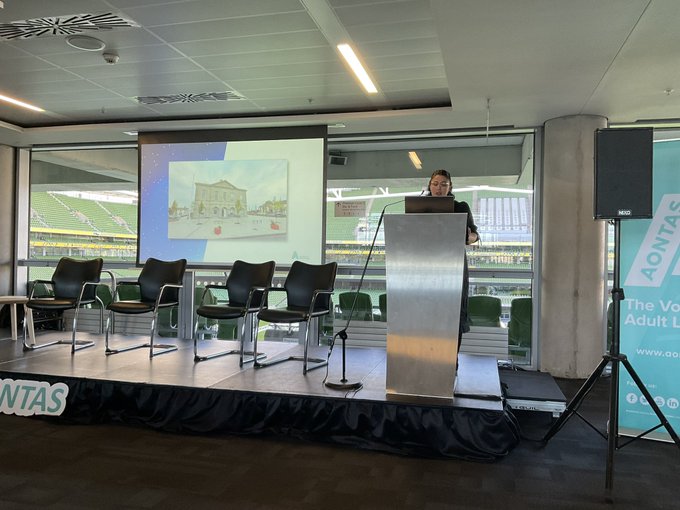
The AONTAS ‘Learners’ Voices Across Ireland’ report was launched at their ‘A Window to the World’ adult education summit at the Aviva Stadium in Dublin on November 15.
Addressing the delegates, CEO of AONTAS Dearbháil Lawless said: “There are two principal narratives emerging from this year’s report – that education has a hugely transformative impact on learners’ lives, particularly those returning to education later in life – and that issues around local infrastructure and facilities are creating inequalities and barriers for learners across the country to access, or take full advantage of, those transformative experiences.
“For many people, particularly those from under-resourced communities and groups that face the greatest challenges in accessing quality education, crossing the threshold of a college or training centre is a huge step, and for many even getting to the front door is proving to be the biggest barrier. Without affordable, reliable public transport, people in rural areas and people living in poverty continue to be at a disadvantage in accessing education and training opportunities.”
During the 2022/23 academic term, over 3,000 Further Education and Training (FET) learners participated in focus groups and online surveys nationwide.
Their experiences are shared with Education and Training Boards (ETBs) to inform good practices, and to ensure that learners have a say in their own education.
In addition to public transport, learners also highlighted a need for improvement in language supports, accessibility aids, and onsite facilities such as parking, heating and canteens.
Most commonly reported by adult learners across Ireland were the positive impacts that learning experiences and environments had on their personal health, relationships and prospects.
Also speaking at the event, Minister for Further and Higher Education, Research, Innovation and Science, Simon Harris said: “The Learners’ Voices Across Ireland Report is an important research project which gives learners of all ages, backgrounds and areas of FET the opportunity to share their experiences and recommendations in a solutions-focused way. No matter who you are or where you’re from I’m committed to making sure there is access to the educational opportunity that you desire.”
– Shannonwatch says Ireland “must not be complicit in the killing of more innocent civilians”
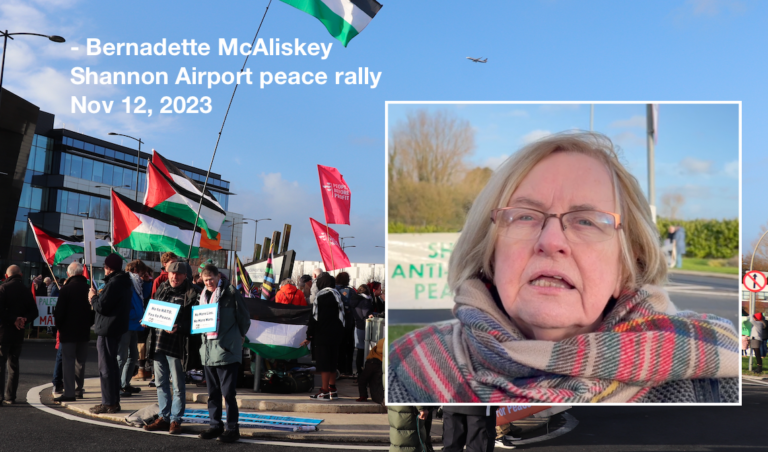
Speakers included Shannon campaigner Edward Horgan, civil rights campaigner and community worker (retired) Bernadette McAliskey, Catherine Connolly TD, and academics and activists.
Shanonwatch, which called the rally, said the gathering marked “more than two decades of weekly US military flights through the airport and Ireland’s involvement in wars in Iraq, Afghanistan and elsewhere in the Middle East without the knowledge or support of the majority of Irish people”.
Normally, monthly rallies are held and gardaí on duty remarked that this was the greatest number of people they had seen protesting there in some years.
• Catherine Connolly TD was among those who spoke at Shannon Airport on Nov 12 2023. Photo by Tony Grehan.
Independent TD, Catherine Connolly, who serves as Leas-Cheann Comhairle in the Dáil, in her speech condemned Israel’s actions in Gaza as “inhumane and against international law and unconscionable” and called attention to “the occupation and apartheid that Israel has carried out on the Palestinian people”.
“It’s essential to continue to protest and make our voices heard,” she said. “Today, there was a good turnout. Hopefully, it gets bigger. I believe people in Ireland understand what’s happening and we need to make our voices heard.”
“People don’t realise the power that they have. Their voices matter,” she added.
COMPLICIT
Shannonwatch said the peace rally had “one simple message for the Irish government – that Ireland cannot and must not be complicit in the killing of more innocent civilians.” It called on the Government to ensure the airport is “not being used to provide US support for the war crimes being committed by Israel.”
“Since repeated calls for inspections of US military planes have been ignored, the only way to be sure this is not happening is to stop the US military use of the airport as a matter of urgency,” it said.
At the rally, the names and ages of children killed due to wars in the Middle East over the past two decades were read out. This included Palestinian and Israeli children killed since 7th October 2023, and in particular those being killed indiscriminately in Gaza. Children killed in Yemen, Iraq, Afghanistan, Pakistan, Syria were also remembered.
Shannonwatch said, “US military use of Shannon Airport may have been a contributory factor in the deaths of some of these children.”
In that light, Bernadette McAliskey called on all present “to pledge ourselves to protect the children of the world as if we had given birth to them ourselves”.
CROMWELL
She linked “the punishment and The Nakba of the Palestinians” to what the Irish experienced under British rule, saying: “The attempt to drive Palestinians, as one Israeli minister said recently, to the desert or Ireland – reminded me of Oliver Cromwell inviting the people of this nation to flee to the barren lands of Connacht or go to hell.”
Oliver Cromwell portrait by Samuel Cooper in 1656. Source: Wikipedia.
We have an historic link with oppression, she said. She urged people who have mixed feelings about campaigning for peace – including community and youth workers – to ask themselves what do they stand for.
The peace rally also called for the ending of human rights abuses and war crimes in all conflicts including in Ukraine, Israel/Palestine, Armenia, Sudan, Congo, Myanmar and elsewhere. It said the Irish Government is obliged by Article 29 of the constitution to work towards promoting international peace and justice.
The airport was the scene of large-scale protests during the US wars on Iraq and Afghanistan.
Civil society action in response to the attacks by Israel on Gaza and the West Bank, which many call “a genocidal war”, include an open letter calling for peace which you can read here. It has been signed by close to 200 groups and organisations.
An Open Letter from Irish civil society organisations for peace in Gaza.
“For people who say – ‘It’s alright saying that, but we could lose our funding’, ‘I could lose my job’, ‘It will be used against me as a paid worker’ – we all have ethical choices to make.”
Bernadette is highly regarded among her community work peers and was, for instance, welcomed with thunderous applause when the World Community Development Conference came to Ireland in 2018. She is known for standing with the oppressed since before Bloody Sunday, which she witnessed, and for many years she co-ordinated STEP in Dungannon, Co. Tyrone.
“I’ve now retired. But I always have something to say to community workers,” she told Changing Ireland, after addressing a peace rally at Shannon Airport on November 12.
COMMUNITY WORK “FOR WHAT?”
“I would say to community workers who are asking, ‘Why would I get involved in protests?’ First of all, in achieving social change, it is achieved politically or it’s achieved militarily. That’s the basics. (Some may ask) why would they get involved in what they maybe see as political?
“Politics has a big ‘P’, a wee ‘p’ and sometimes no ‘p’ at all. At the same time, that’s the process it is. It’s a process of democracy, of ethics, against injustice, against racism and against oppression.
“So we’re not just changing the world, we’re changing it for the better, changing it for social justice and that requires a lot of different activity within the community. If you’re organising (a project for) young people to build their own self-confidence – for what? For what? If you’re building within the neighbourhood for a community to have its democratic say – for what? People have to understand the context of their lives and the context of their work in the political, social and economic life of the country,” she said.
‘WE COULD LOSE OUR FUNDING’
“And if you’re afraid to speak out about injustice when you’re merely asked to witness the rights of people suffering, you will fail when the chips are down to defend your own community, to defend their rights, to speak out for them.
“For people who say – ‘It’s alright saying that, but we could lose our funding’, ‘I could lose my job’, ‘It will be used against me as a paid worker’ – we all have ethical choices to make. If community work is merely a career for which you will not make an ethical judgement now, take my word for it, to save your career at some point you will make an unethical judgement. So, practice your ethics now. Stand up for what you believe in. You have to believe in something, other than a career or a project that works,” she said.
ISRAELI MINISTER EVOKES CROMWELL
In her speech to hundreds of anti-war campaigners, she linked “the punishment and The Nakba of the Palestinians” to what the Irish experienced under British rule.
“The attempt to drive Palestinians, as one Israeli minister said recently, to the desert or Ireland reminded me of Oliver Cromwell inviting the people of this nation to flee to the barren lands of Connacht or go to hell. And in the massacres of Drogheda and Wexford he made clear he didn’t care which one we chose. So we have an historic link with oppression throughout the world,” she said.
• Oliver Cromwell portrait by Samuel Cooper in 1656. Source: Wikipedia.
“Sadly, in modern times, our governments have led us to links with oppressing people across the world. We need to make them understand – no more. No ministerial backside should occupy a ministerial seat after the next general election without a promise to maintain ad infinitum our neutrality in going to war on behalf of anybody in the world who would seek to oppress another,” she said.
CHILDREN HAVE RIGHTS
“We read out the names of children whose lives were stolen from them. Children have rights. The constitution of this nation says it will protect the children of the nation equally. Let us pledge ourselves to protect the children of the world as if we had given birth to them ourselves,” she appealed.
• Bernadette McAliskey was one of the key speakers at the first ever World Community Development Conference held in Ireland, in 2018. Click image to open and see inside (page 5) what she meant by “lurking in community development”.
The European Central Bank’s Cash Strategy spells out eight functions and benefits of cash and it commits to protecting access to cash services for all. However, many large organisations are heading in the opposite direction.
Almost all of the ECB’s Cash Strategy functions relate to supporting the financial inclusion and protection of consumers. It recognises that cash doesn’t involve a third party – you simply hand it over – and cash ensures privacy in financial transactions.
Cash is fast and secure and cannot be refused except by prior agreement on the means of payment. Strong emphasis is given in its strategy to the inclusive nature of cash, particularly for those who lack or have limited access to digital payments systems. It specifically states that cash is “essential for the inclusion of socially vulnerable citizens, such as the elderly or lower-income groups”.
While that is the ECB’s strategic outlook, big companies are heading in the other direction. At least one major not-for-profit organisation has partly joined in.
Ryanair refuses to take cash and it’s hard to argue with them at 8,000 feet. The company behind Electric Picnic has gone the same way and it warned vendors this year not to accept cash payments.
Even the National Ploughing Championship is making cash-paying customers feel like second class citizens. This year for the first time, it charged attendees €35 on the gate – a punishing €10 more than online.
• The National Ploughing Association charged €10 extra for each cash-paying OAP to enter this year. Online tickets cost only €20. Source: npa.ie
Applus, the company with the contract for National Car Testing, announced plans during the summer to go cashless. Despite the Dáil being in recess, it was forced to relent by angry politicians. Similarly, a year earlier, AIB was forced to backtrack during the summer when it announced a plan to close over-the-counter cash services in 70 branches. After an intense public backlash, the bank “decided not to proceed”.
AIB knows the social value of its service. Research commissioned by Ireland’s Department of Finance in 2022 shows that the main reason people visit a bank branch in Ireland is to lodge or withdraw cash. People on lower incomes, people aged over 65, and people in rural communities were generally found to be more reliant on cash payments and less likely to use online banking.
There are also moves away from cash beyond the private sector. The GAA, in announcing local club fixtures, now often tells supporters it will only accept digital payments and tickets must be purchased in advance. In practice, it may allow in OAPs who pay cash, but cash is no longer king, and this exception to the rule is not publicised, certainly not in Co Limerick. For inter-county matches, you still have the fair choice of buying tickets online or in local shops.
Age Action Ireland reports that 65% of people over the age of 65 experience digital exclusion, impacting their ability to access online or contactless financial services. For this cohort, cash transactions remain essential to everyday life. This is also true for those on low incomes.
In 2020, 30% of Irish social welfare recipients were paid in cash. Research by UCC researchers for by Clúid Housing and the Housing Finance Agency showed that people on lower income often manage their finances best – both spending and saving – using cash, because it helps them to feel more in control or because they have had negative experiences with missed direct debits and bank charges.
Money management advisors, such as the State’s Money Advice and Budgeting Service (MABS), advise some consumers to use cash to manage certain expenditure as it is more tangible, making it easier to keep track.
Although the use in Ireland of non-cash payments increased by 52% in 2020, cash remains of significant importance to many.
In rhe UK, a 2019 report asserted that 17% of the UK population would struggle to cope in a cashless society and would be ‘left behind’.
In Sweden and Norway, where there has been a dash from cash, regulators now oblige banks to ensure the availability of cash services because people in rural areas and older consumers say they would find it difficult to cope without cash.
A Retail Banking Review currently underway by the Department of Finance recognises that a fully cashless society is not an appropriate objective and acknowledges cash as facilitating financial inclusion. Ireland’s Financial Inclusion Strategy, which is now 11 years old (and not available online) focused on the provision of a standard banking account to address financial exclusion. This was superseded by the EU Payment Accounts Directive in 2016 making basic bank accounts available to all.
It is essential that a revised strategy emerges to protect and promote access to financial services. It should empower consumers by building financial capability and well-being for all. This must include access to cash and cash services.
In a statement issued this afternoon, Sarah Benson, CEO, Women’s Aid, said:
“When Puska senselessly took Ashling Murphy’s life at 4.30pm in broad daylight while she was out on a run, it sent a shockwave through communities in Ireland. That this could happen tapped into a visceral feeling that so many girls and women are socialised to feel – that the risk of male violence is everywhere, that nowhere is safe.”
She said, “One man goes to jail today, but this will not bring Asling back or compensate for her heart-rending loss.”
She said “effective criminal justice sanctions are vital” and Women’s Aid truly hopes that Puska’s conviction “offers some measure of justice and closure to Asling’s family and friends”.
The murder of Ashling was “a shocking example of dangers posed to women”, said Ms Benson. The case put a spotlight on male violence and the need for women to be safe at home and in their communities. Since 1996 Women’s Aid has been recording the violent deaths of women in Ireland during which time 263 lives have been lost due to violence and abuse.
“Each woman killed violently is an outrage,” said Ms Benson. “An absolute tragic loss of life resulting in utter heartache and trauma for those left behind. 263 women whose voices have been silenced through violence, and whose boundless potential was robbed of them and their loved ones.”
Prevention of such violence is “crucial,” she said, urging society at large to have zero tolerance for domestic, sexual and gender-based violence.
To contact the Women’s Aid 24hr National Freephone Helpline, ring: 1800 341 900.
A 1995 study by the European School Survey Project on Alcohol and other Drugs (ESPAD) showed that adolescents in Iceland and other Nordic countries were more likely to become drunk than other European teenagers.
While other countries may have rolled out the usual ineffective information campaigns featuring those unintentionally hilarious videos that we all remember from our youth, Iceland chose a different path.
The Icelandic model is based on the collaboration of various stakeholders such as parents, teachers, local development companies, and youth groups.
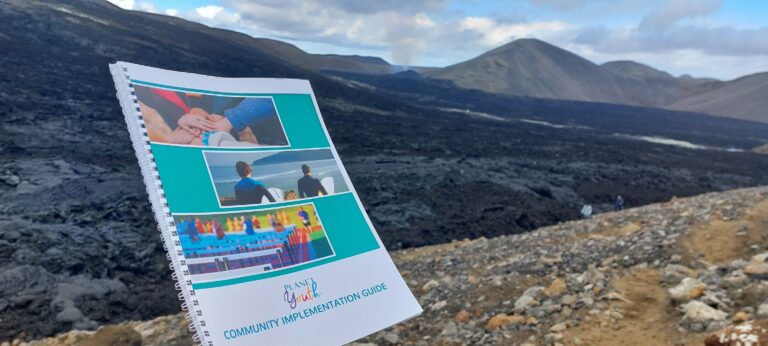
In 2018, Galway, Mayo and Roscommon jointly became the first region in Ireland to implement the model, now known as the Planet Youth programme. Planet Youth programmes are also now being implemented in Cavan and Monaghan, and Fingal in North Dublin.
Emmet Major, of the West Regional Drugs Task Force in Galway told Changing Ireland: “The Icelandic prevention model was developed over a number of years by the Icelandic Centre for Social Research and Analysis. You survey the children in their schools at 15 to 16 years old every two years using the Planet Youth questionnaire, which is a thorough, investigative, very extensive examination of the lives of young people at that age.
“The purpose is to find out what what’s going well, what are the risk and protective factors in their lives that we can improve on. What’s going wrong? But it’s not for those kids, it’s for the children that are coming behind.
Emmet Major, West Regional Drugs Task Force, Galway
“You take the data, and you try and apply interventions in four big areas. One is what’s going on in their home. Another is their school experience. The other one is leisure time. And the final one is the peer area, can you bring any influence to bear or change or improve what’s happening in the peer group?”
In Galway, Mayo and Roscommon, all 81 secondary schools and 10 Youthreach centres in the region participate, representing about 10% of secondary schools in the country. The survey features questions on teenagers’ substance use, physical health, mental health, physical activity, family and school experience, internet use, bullying and many other categories.
There are 92 primary questions and numerous sub-questions in the current Planet Youth questionnaire used in Galway, Mayo and Roscommon, with a total of 1,972 variables; all of which can be examined and cross-tabulated.
The model revolves around the idea that by strengthening the supportive role of parents and schools and the network of opportunities around teenagers, the problems associated with adolescent substance use can be reduced or prevented before they arise.
“It’s very much a community development type of approach. We’re always trying to be inclusive, get everybody involved. Really it’s about all the parents, the community – how can we all be invested in improving outcomes,” added Emmet.
Meanwhile, in Iceland, in 2007, 20 years after the model was first introduced, the figures began to speak for themselves. The proportion of 10th graders who reported becoming drunk during the last month fell from 42% in 1998 to 20% in 2007. The percentage of 10th graders who reported smoking cigarettes daily was 23% in 1998, this dropped to 10% in 2007. (No newer figures were available).
In Ireland, it’s too soon yet to begin measuring the impact of the programme. According to Emmet: “It’s a 10-year piece of work before you really start seeing stuff. And the whole undertaking, I think it’s probably a 20-year piece of work.”
However, the long-game aspect of the programme raises challenges in relation to funding. “It’s very hard to convince the political class to spend money where you’re not going to see outcomes for probably 10 to 15 years. Because (they think) ‘I’m not going to be around to see that’.
“There’s no mention in most national strategies of prevention. How do we get a national buy in to say ‘actually, the strategies are wrong, it needs to change to include far more of a focus on prevention’?”
Currently, the programme is funded by the West Regional Drugs Task Force, the local authorities in the three counties, and various grants from sources like the Dormant Funds and National Lottery.
Emmet says that the landscape in relation to funding is “a challenge”. He remarked: “The elephant in the room of all of this is that we don’t value youth work (in Ireland), well the government certainly doesn’t seem to. It’s the first thing that funding gets cut for, and it’s an awful space to work in, because you never know if you’ve got a job from one year to the next. All the cuts in the recession, youth work was just savaged – what sort of message does that send?”
The information gathered in the survey has already been put to good use by community and voluntary organisations. Imelda Gormally, community development worker with Galway City Partnership, explained: “Every partnership in the country this year has to put in a tender for their SICAP programmes. So every partnership in Galway, Mayo and Roscommon will be using Planet Youth data to inform and help us stream our tender and our annual plans for the appropriate actions around young people and families.
“To have that evidence is so important for us. It’s up to date, it’s a huge level of information that I don’t think we’ve ever got in one place ever before. Within Galway City Partnership there’s a youth advocacy programme, they’ve been really interested in the data coming through. For some organisations, it’s kind of: ‘Are we on the right track here? Do we need to rethink and regroup and replan the way we work?’
“We run an afterschool programme in Ballybane, but we had no real activity-based work. It’s a homework club with some activities. We’ve changed the way we do those and diversified the activities to make sure that every child who attends gets an opportunity to be physically active at some stage in the day. Some of the data that came through showed us a very limited range of opportunities for some young people.”
Planet Youth data will also be included in the region’s Local and Economic Community Plans, and youth officers in the Education and Training Boards in Galway, Mayo and Roscommon draw upon the information when applying for funding through the UBU Your Place Your Space scheme.
It is also used to provide information for parents in the form of a booklet for the parents of students commencing their first year in secondary school, and another for the parents of children in junior infants.
“The idea is that they’re getting good information, this is what the teens are saying, and you really need to be thinking about this now. It’s stuff like bedtimes, family time, communication, sports and hobbies and there’s guidance on all of that,” said Emmet.
Participating schools are also provided with individualised reports, comparing their data with other schools in the region. Following an analysis of the data from the third survey in 2022, researchers began to observe a number of trends emerging.
“There are really interesting trends that we can just begin to see now. A really concerning thing that we’re going to be doing a lot of work on is that parental tolerance, or what the kids perceive to be parental tolerance for drunkenness, is on the slide.
“One of the key issues we picked out of the second survey was that lack of sleep is a huge issue for the young people that’s not being talked about nearly enough. We can begin to see the cross-tabulation between sleep and mental health, school engagement – every aspect of their lives is impacted by lack of sleep,” revealed Emmet.
Fundamentally, where Planet Youth differs from a lot of other youth initiatives is that rather than specifically targeting a vulnerable group, it aims to improve outcomes for all children. Emmet likens it to “a rising tide that lifts all boats”.
He concluded: “Everybody’s all about themselves, largely speaking. And if we work together a lot more in a lot of these types of spaces as they seem to have done in Iceland, it’s a much better approach. Whether it’ll ever work here, it’s still a bit up in the air to be honest, but it won’t be for lack of trying.”
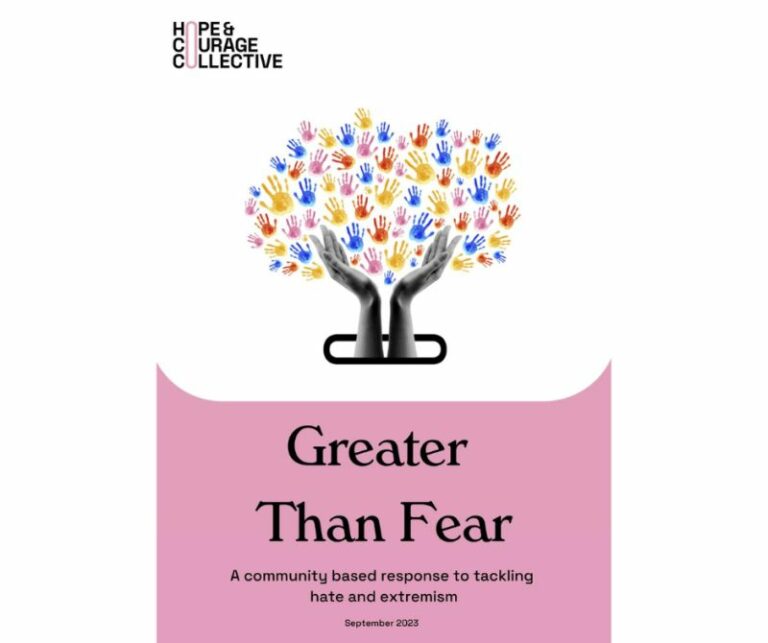
Written by community worker Helen Lowry and published by the Hope and Courage Collective (H&CC – formerly known as the Far Right Observatory) it provides free advice and tips on what helps or hinders community responses to extremism and hate.
Helen worked for many years with Migrant Rights Centre Ireland, and this is the first Irish publication to document the response within communities to the recent rise in fascism.
It should be useful to youth and community workers and volunteers because it shows how the far right operates. The report features case studies with first-hand accounts from locals who took them on.
The publication draws on experience from five places in particular where hate arose – in counties Galway, Cork, Mayo, Kildare and Dublin. It seeks to explain where hate comes from and includes a messaging guide to help frame community responses.
“Even the most experienced organisers and activists went on a learning journey in the case studies shared here,” it says, and its community-to-community tips for “if hate comes your way” were hard-learned.
Surprisingly, the report does not mention community development workers funded through the Social Inclusion and Community Activation Programme (SICAP) – yet they will be among those to find the report of considerable interest. There are 600 such workers countrywide employed by local development companies (LDCs), including 100 or so new Ukrainian community development workers hired last year.
Under the report’s chapter on ‘Leadership in Action’, LDCs are only mentioned twice – once positively, once negatively. While they also helped with integration, there is but a single mention of a Family Resource Centre (described as “progressive”).
However, the publication isn’t a thank you card, and its case studies draw on experience from five places in particular where events turned nasty – Oughterard, Co Galway; Ballymun in Dublin; Newbridge, Co Kildare; Westport, Co. Mayo; and Fermoy, Co Cork. In four of the case studies, local people rose to support refugees and people seeking international protection, succeeding in three of those places – Ballymun, Fermoy and Newbridge.
In Oughterard, the report acknowledges that the campaign opposing a Direct Provision centre “cannot be solely attributed to the far right, nor can all local participation be labelled as anti- immigration and racist”.
In Westport, people mobilised to counter-protest successfully against Christians who were joined by far right activists, to ensure a drag queen story hour in a local bookshop went ahead. Overall, the report concluded that, “A critical factor was having people involved who are not afraid to respond quickly and who had shared values, community development expertise, community engagement skills and life/work experience.”
In Ballymun, local football legend Philly McMahon and rapper Adam Muhammad publicly supported Ballymun for All. The group grew in strength and joined a broader coalition, Dublin for All, that led to the national rally in Feb 2023 attended by thousands of people.
However, counter-campaigning was difficult when in an information vacuum. It left community leaders on the back foot. “It emasculated us as community people,” said one. The report also states that the “erosion” of the community development space was “a concern” and the case studies show that “traditional community and civil society organisations and structures were slow to respond in nearly all areas”.
As a volunteer in Newbridge told the author: “The response was so dependent on us as volunteers. Paid people in the room [were] there only on a voluntary basis. Nobody bar H&CC could support us on a professional basis.” The report tackles the question: ‘What do communities and society need to flourish in the face of hate?’ An ongoing problem, says the author, is “a lack of recognition and by extension funding for community organising”.
There are 30,000-plus community groups in the State, but community organising, advocacy and activism puts you at risk of being penalised or, if you are funded, of losing funding.
The report quotes community workers who said: “Campaigning and activism isn’t really a legitimate activity in Ireland. It’s not paid for, we’ll only fund service provision. So I think we need to pivot from this and legitimise community organising and community work in this manner so individuals don’t feel they’ll get slapped on the wrist by being at the front of a response like this. I think that’s very important”.
“This issue won’t be going away in the medium to long-term,” they said. The report argues that communities need back-up “if community efforts are to evolve from fire-fighting to effective inoculation against the far right.”
The report outlines the conditions that are facilitating the far right’s rise, including the “housing crisis, deepening inequality, cost of living pressures and societal and cultural shifts (which can) be overwhelming for many people”.
Pointing out how people listen with their hearts not their heads, it says: “The far right thrives in an environment of confusion, rumour, and information vacuums.” It says “the chill effect” on politicians is real and that “the more politicians stay quiet or attempt to speak to their agenda, the more emboldened the far right becomes”.
It further states that “Ireland is a wealthy country, and this government’s choices create the conditions for the far right to thrive.” It lists what liveable communities need: secure homes, trusted healthcare, quality schools, decent work and good incomes, great youth work and a strong community development infrastructure.
Far Right Observatory now known as the Hope and Courage Collective
The Far Right Observatory, which has made a solid impression on many community groups fighting fascism, has renamed itself the Hope and Courage Collective, and remains focused on far right hate, bigotry and extremism.
It sees itself as “a national civil society organisation that works with community groups, advocacy groups, trade unions, activists and academics to stop hate organising in our communities and workplaces”.
Its members include: Community Work Ireland, Pavee Point, Uplift, the Movement of Asylum Seekers in Ireland, the Irish Network Against Racism, SIPTU, Unite, Migrant Rights Centre Ireland, BelongTo, Trans Equality Network Ireland, the National Women’s Council and the Irish Council for Civil Liberties.
A survey carried out by AXA earlier this year revealed that loneliness was a major challenge for many Irish people, with 60% of men and 67% of women saying they had felt lonely during the previous four weeks.
Google ‘the effects of loneliness on health’, and a list of scholarly articles appears featuring some alarming statistics, with one piece of research even stating that it increases the risk of early death.
Loneliness has also been linked to a higher risk of dementia, mental health conditions, and even cardiovascular disease and stroke.
It’s no surprise then that public health workers in Ireland have begun taking it seriously in the last five years.
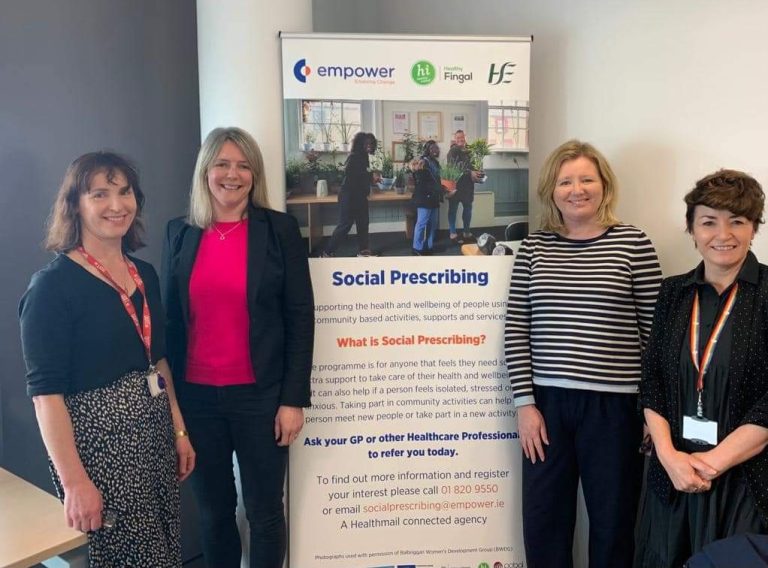
There are now HSE-funded social prescribing services available in 30 locations nationwide, where GPs and other health professionals can refer patients who are struggling with social isolation.
Pauline Mangan is a social prescriber and community development worker with Empower Local Development in Dublin 15.
She told Changing Ireland: “The idea is that it’s a kind of social prescription. So it’s for people that may go to the GP for various reasons. And really what they need is less a medical intervention, but more a social intervention. A lot of the time people go to GPs for loneliness, for mental health issues and stuff like that, or because they’re isolated or whatnot, and obviously that contributes to their health and wellbeing.
“A GP can refer someone to a social prescriber in their local area, and the social prescriber would work with them and develop a health and wellbeing plan, looking at what matters to them. The wording they use in the HSE is: ‘You go to your GP to see what’s the matter with you, whereas a social prescriber asks: What matters to you, what’s important to you, and what has happened that’s brought you to us?’.”
“We develop a health and wellbeing plan, look at what their needs are, what their priorities are, what goals they may have. From that we will develop some actions based on what their interest is in, what’s available locally, and we would support them to engage in different activities and groups and courses. It really is as simple as that, but it’s done at the individual’s pace.
“The support is as much or as little as the individual might need. Some clients have very little confidence or have been socially isolated for quite some time, so they may need a little bit of handholding. You may go along with them to a group. Others just need a bit of signposting and they’re perfectly able to go off and sort things out for themselves.”
Many of Pauline’s clients are recovering from mental health issues, or became isolated because English is not their first language.
“The reason that people tend to get referred to us will be loneliness and social isolation, depression, bereavement, recovering from addiction, physical inactivity. After Covid-19, particularly for older people, it was a struggle getting the confidence to go back out again and engage. People with intellectual disabilities often find they’re quite isolated once they finish the State schooling and the support that they’ve had. People who are unemployed, people who have long term illnesses (also avail of the service).”
She continued: “A lot of the time it’s around finding a local group that they can get involved in, or an activity such as arts and crafts. A lot of people like to do an activity as a way of getting in there first because they don’t feel under pressure to talk in a group.
“It’s looking at what the local community centres are offering, what adult education are offering, local activities and courses, women’s groups, volunteering, parent and toddler groups – anything that people really feel they need. English language classes, even walking groups.
“Other times people need a lot of help navigating the State services. Whether it’s to do with housing, benefits, sometimes you’re supporting them with that kind of stuff first.”
The service has received overwhelmingly positive feedback from both referrers and service users.
Pauline revealed: “I did a case study last year with one of my clients who had done quite well. She said she felt she got her own voice back, she’d started to see that she is ‘worth something again’. And she said: ‘I’d probably be circling around my own apartment. I wouldn’t know where to go, what door to knock on, that (social prescribing) gave me opportunities that I didn’t know existed’.”












 The European Central Bank’s Cash Strategy spells out eight functions and benefits of cash and it commits to protecting access to cash services for all. However, many large organisations are heading in the opposite direction.