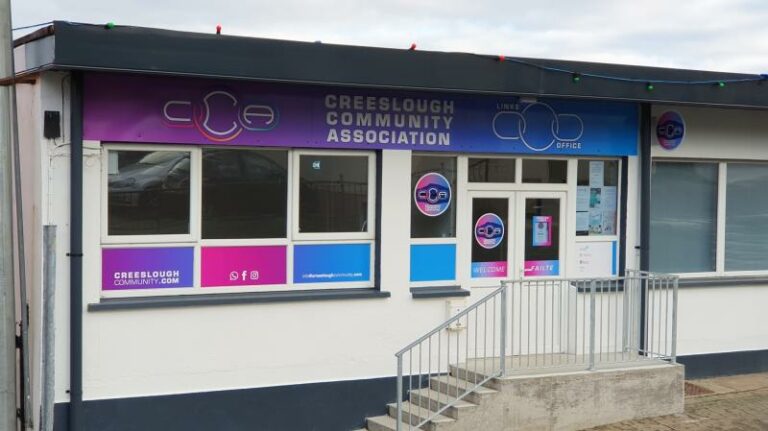
A new community centre in Creeslough, Co. Donegal, was officially opened on January 12 by Minister of State for Community Development, Joe O’Brien. The Government had promised support to the devastated community after a suspected gas explosion on October 7, 2022, killed ten people and left eight in hospital.
A petrol station, shop and apartments above the shop were destroyed in the explosion and the site remains cordoned off to this day, with high fencing obscuring the view and flowers placed at a memorial by the roadside.
In January, the community came together to remember their neighbours who were victims of the tragedy and to look to the future with the opening of the new Creeslough Community Links Hub.
– The community of Creeslough, Co Donegal, came together on January 12 to officially open their new community hub. Photo: Creeslough Community Association Facebook
Speaking in Creeslough, Minister O’Brien said, “My focus is on strengthening community resilience and supporting the continued sense of unity that is evident here in this community. It is important that the community itself work together and decide on the way forward.
“You have transformed a derelict building into a place of shared aspirations and collective efforts. I have no doubt this community hub will continue to serve as a sanctuary for healing, a hub for support and a symbol of your collective strength for many years to come. I am confident that the community spirit here in Creeslough will allow you to continue your journey, all the time remembering those families that have lost ten precious loved ones and the injured, whose lives were altered forever.”
In a statement, Creeslough Community Association thanked all involved in the project and said: “In November of 2022, Minister O’Brien visited Creeslough, listened to our community and committed to help us rebuild. The Creeslough Community Links Hub is a result of that commitment, and we are forever grateful. The opening of this facility is another step on our journey of healing.
“This building has brought a positive vibe to the Main Street of Creeslough and our aim is to promote community engagement by providing a hub of information and support. To promote skills and development through programmes and workshops, to continue with small key community development, and to enhance the overall community wellbeing by addressing local needs.”
– Minister Joe O’Brien speaking at the official opening of the Creeslough Community Links Hub in Co Donegal. Photo: Creeslough Community Association Facebook
In March 2023, the Creeslough Together Initiative (CTI) was awarded almost €500,000 by the Department of Rural and Community Development. CTI now employs a number of key staff including a full time community links worker and a part-time administrator, and its work is rooted in the principles of both community development and trauma informed community work. This twin-track approach is designed to support the local community responses.
The investment under the Town and Village Renewal Scheme’s Building Acquisition Measure aims to tackle the issue of dereliction and vacancy in rural towns and villages.
The 24 old and derelict buildings chosen as part of the scheme will be purchased and repurposed into new, modern facilities to benefit the local communities.
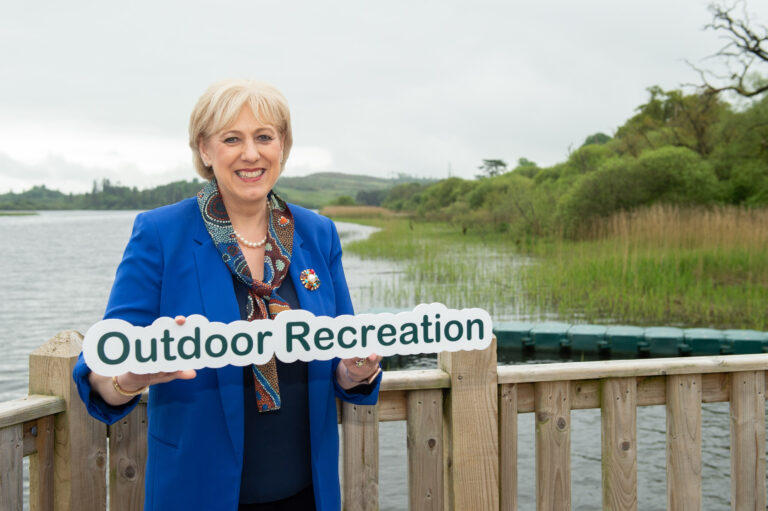
Minister for Rural and Community Development, Heather Humphreys
Announcing the details today, Minister Humphreys said: “This initiative is all about giving our local communities the tools to address the challenges of vacancy and dereliction in their towns and villages.
“Through this funding, we are taking those rundown buildings and turning them into facilities that will benefit communities for generations to come.
“By doing so, we will help to drive footfall into our town centres, increase tourism and, above all, make our rural towns and villages even better places to live, work, invest, visit and raise a family.”
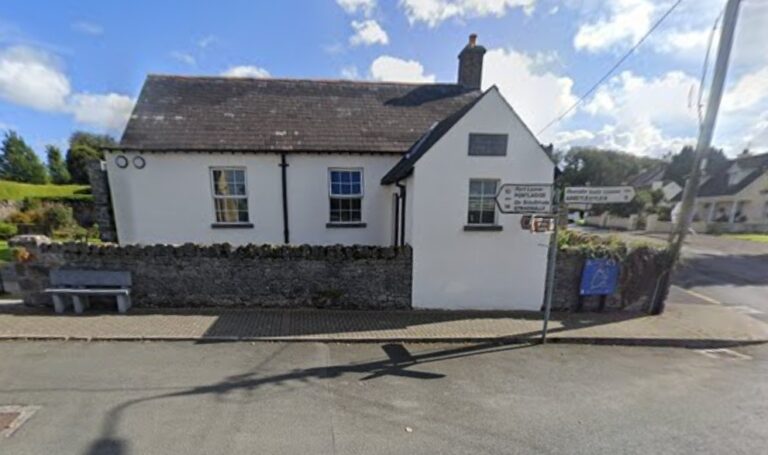
– A former garda station in Bellacorick, Co Mayo that will be redeveloped into a multipurpose community hub, community gym and remote working hub. Photo: Google Street View
Among the 24 projects to be funded are:
Ballyroan, Co Laois: A former national school to be used as a multipurpose community venue
Bellacorick, Co Mayo: A former garda barracks for use as a multipurpose community hub, community gym and remote working hub
St Margaret’s, Fingal: A former Parochial Hall, Parochial House and Coach House to be converted into multipurpose community space
Villierstown, Co. Waterford: A site with derelict buildings – to regenerate the derelict buildings into a modern permanent structure including a boathouse, camping site, additional parking facilities, multipurpose community space
Belturbet, Co Cavan: A former bakery for conversion into a multipurpose community facility
Leitrim Village, Co Leitrim:Purchase of a two-storey semi-detached house to create a Blueway Hub
Tipperary Town, Co Tipperary: Redevelopment of a three-storey former public house and fast foot outlet to convert into a multi-purpose community space.
The full list of successful projects is available to view here
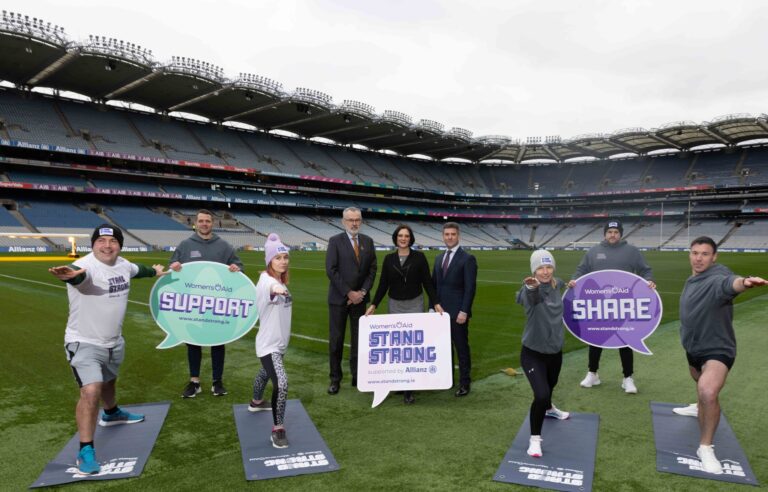
The campaign aims to raise awareness and essential funds for the thousands of women every year that contact Women’s Aid for support.
It’s an action that requires no training or preparation. Just ‘Stand Strong’ in the warrior yoga pose, donate or fundraise with colleagues, family, or friends, and share pictures on social media using the campaign hashtag #WAStandStrong.
CEO of Women’s Aid Sarah Benson commented: ”Showing solidarity with women, listening, and believing is a key part of our work, Stand Strong is a powerful but simple action to reflect that one in four women in this country lives with suffocating abuse from someone they once loved; someone they once trusted.
“It could be anyone: your best friend; your sister; your colleague; your neighbour; your teammate; your mother; your daughter. Anyone. Last year Women’s Aid had our busiest year in our 50-year history. The Gardaí responded to over 54,000 domestic abuse calls last year. And we know these numbers are just the tip of the iceberg.”
Ms Benson continued: “The Stand Strong campaign is designed with three simple actions – Stand Strong, Support and Share. It can be done in a group, with a team or club or by yourself. In your office or at home. By having as many people as take part, we aim to drive greater awareness of the issue of domestic abuse. By sharing and supporting the campaign we raise awareness and vital funds.”
To thank those who show their support, Women’s Aid are offering some exclusive campaign goodies such as retro sweatbands and temporary tattoos to people that sign up early via www.standstrong.ie, and there is other campaign merchandise items on offer for top fundraisers.
Thanks to support from Allianz, all money raised will go directly to Women’s Aid.
Larry McCarthy, Uachtarán Chumann Lúthcleas Gael said: “We are delighted to support Stand Strong and work with our partners Women’s Aid and Allianz Insurance. On the basis that we need to improve the circumstances of our daughters, our sisters, and our mothers, at the Annual GAA Congress we asked all our clubs to take the time to talk to their teams about respecting their female friends. It was a simple uncomplicated message, Respect Women. The Stand Strong message is similarly uncomplicated. We encourage as many people as possible, particularly GAA members, to take part.”
How to Participate:
Sign Up: Visit www.standstrong.ie to register and to access campaign goodies.
Stand Strong: In the warrior yoga pose. There’ll be a livestream you can access from February 1, but you can take the pose any time in February and wherever you like.
Support: Contribute to the cause by donating or sharing your fundraising page.
Share: Take a picture of you standing strong in the warrior pose and share on social media using #WAStandStrong.
The grants of up to €50,000 – under Measure 1 – will help fund projects such as astro-turf pitches, playgrounds, sensory gardens, walking tracks, nature trails, outdoor performance spaces and community cafés.
The successful projects on the islands include a reference library and a beachside seating area.
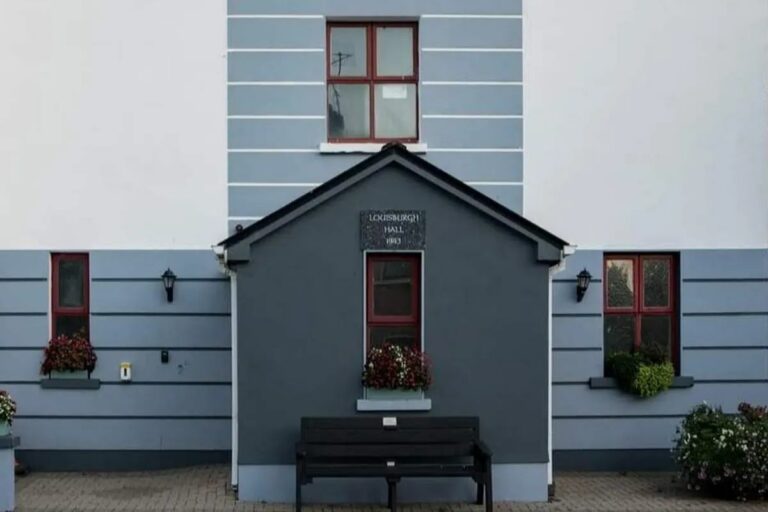
Projects on the mainland include the repair and refurbishment of Louisburgh Town Hall in Co Mayo, for which Louisburgh Community Futures received €49,500.
A spokesperson for the organisation commented: “We in Louisburgh Community Futures are delighted to receive this grant under the CLÁR grant. Much-needed work on our Town Hall can now commence. We look forward to working with the community to renovate and hopefully retrofit our hall in the coming months.”
– Dunkerrin Community Centre, Co Offaly – one of the successful projects announced today. Photo: Peter Ormond Facebook
In Co Offaly, Dunkerrin Community Centre received funding of €31,500.
Local Councillor Peter Ormond congratulated all involved with the project and said: “This funding is to develop an area which can be used for outdoor sports/games, outdoor functions, and for parking. Many thanks to the committee who worked along the staff of Birr area office in making the successful application.”
Minister for Rural and Community Development, Heather Humphreys said: “This funding is being provided under the 2023 CLÁR Programme and is all about ensuring that some of our most rural communities benefit from projects that will make them more vibrant places to live, work and visit.
“This funding is on top of the €4.7 million that I announced in December, which focused predominantly on supporting our GAA and other sports clubs.
Minister Humphreys continued: “I’m also pleased to announce today that we are providing specific funding for a number of projects on our offshore islands.
“Supporting our islands is a key priority of mine as Minister and this investment goes to the heart of what we are trying to achieve through our ten-year island strategy, ‘Our Living Islands’.”
CLÁR is a targeted investment programme for rural areas that aims to provide funding for small infrastructural projects in designated rural areas. There are designated CLÁR areas in all counties with the exception of Dublin, Kildare and Wexford.
The funding under CLÁR is being provided as part of Our Rural Future, the Government’s strategic five-year plan to revitalise rural towns and villages nationwide.
The programme is divided into three measures:
Measure 1 supports the development of community and sports facilities, youth clubs, playgrounds, sensory gardens, walking tracks and more.
Measure 2 supports voluntary groups that provide free transport to people receiving cancer care and other treatment.
Measure 3 supports offshore island communities.
The full list of successful projects announced today under Measure 1 – Community and Measure 3 are available here
Funding of €780,000 will support the development of ‘County Outdoor Recreation Plans’ and new national guidelines have been issued to assist in their preparation.
The plans will help guide and facilitate the development of outdoor recreation and will support future applications for funding for outdoor amenities.
Funding of €1.28 million over three years has also been approved for a pilot programme in partnership with Sport Ireland to introduce County Outdoor Recreation Officers in six Local Sport Partnerships – Clare, Longford, Sligo, Waterford, Mayo, and Meath.
These officers will provide expertise and guidance to the outdoor recreation sector in the county and will coordinate the development and the delivery of the County Outdoor Recreation Plan in their county
CEO of Sport Ireland, Dr Úna May, welcomed the announcement and said: “The development of outdoor recreation has always been an integral part of Sport Ireland’s ambition to get more people participating in sport and physical activity, and achieve the Government’s target of 60% participation rates amongst Irish adults by 2027.
“These new outdoor recreation officers will play a significant part in the step change to greater impact in counties across the country.”
The funding is part of a commitment in Embracing Ireland’s Outdoors, the National Outdoor Recreation Strategy 2023-2027, which aims to strengthen and support the sustainable development of the outdoor recreation sector in Ireland.
Among the key actions in the strategy is the development of County Outdoor Recreation Plans and the establishment of a County Outdoor Recreation Committee to achieve a more planned and coordinated approach for the development of outdoor recreation in each county.
Minister for Rural and Community Development Heather Humphreys commented: “More than ever people are getting active in the outdoors and we want to make sure everyone has access to high quality amenities and experiences.
“This is a significant opportunity to identify the key outdoor recreation priorities and opportunities for each county. I would urge the local communities to engage with the consultation process so that they can shape the vision for the future of outdoor recreation in their local area.”
Every county will now receive funding of up to €30,000 to develop a short, focused plan to underpin the effective development of their outdoor recreation amenities. New guidelines have also been published to ensure that the plans are aligned with the National Outdoor Recreation Strategy.
More information on County Outdoor Recreation Plans can be found here
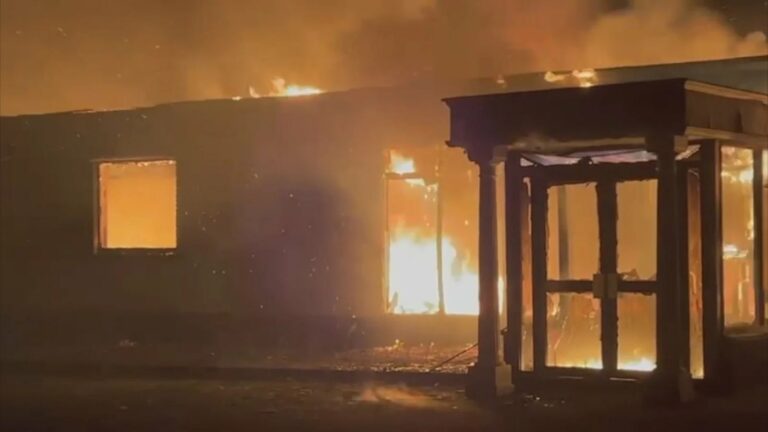
Approximately 70 international protection applicants were due to move into the disused hotel this Thursday, however at about 11.35pm on Saturday evening, a blaze broke out, extensively damaging the building.
A protest had taken place there earlier that day against the plans to house asylum seekers in the area.
“This fire fits a clear pattern of arson attacks of locations where protection applicants were due to be accommodated or actually living. There must be a full investigation. Our unswerving solidarity and support is with all people seeking protection and refugees at this fearful time. Leadership, local and national, is more important than ever,” said a statement from the Irish Refugee Council this week.
It continued: “The actions of a small minority will never succeed, but they cannot be underestimated and this must be a turning point. Let us also not forget that they are in contrast to the proud history of welcome that communities across Ireland, including in Galway, have shown over the last 30 years.”
Limerick-based migrant rights organisation Doras said on X (formerly Twitter): “It’s absolutely vital that politicians act responsibly now, and that they ensure communities know asylum seekers have a right to be treated with dignity and respect. They should be welcomed, provided with a safe place to rest, and not rejected or excluded.”
The Wheel issued a statement saying: “Following the fire this weekend at Ross Lake House Hotel in Rosscahill, Co Galway, The Wheel wish to extend our support to the people and communities impacted, and our members working within these communities. All lives are interdependent, therefore we must focus on building communities and solidarity.
“We hold dear the values of inclusivity, collaboration, courage, and accountability and commend our many members, and the wider community and voluntary sector, who choose to support those who need us most.”
Taoiseach Leo Varadkar, Ministers Helen McEntee and Roderic O’Gorman were also among those who have condemned the suspected arson attack.
Galway-based Senator Pauline O’Reilly commented on social media: “I’m disgusted at this fire in my constituency and at the attitude of local politicians over the past couple of days. I beg of people to show their common humanity.”
Later speaking toThis Week on RTÉ Radio One, she added: “There are ways – by speaking to your politicians – of getting your point across but blockading a place, making people feel unwelcome when they are being legally accommodated somewhere is unacceptable in my view…It isn’t a conversation, it’s just bully-boy tactics.”
She added that “if someplace is vacant then it should be used to accommodate people and we can’t discriminate between the types of people that we want to accommodate”.
At a meeting on Monday, the elected members of Galway County Council unanimously backed a motion stating: “That this council affirms its support for the right of International Protection Applicants to seek asylum in Ireland, and that this right should be exercised without harassment or intimidation or fear thereof.
“We utterly condemn the alleged criminal damage of property. We call on the Department to improve their method of engagement and consultation with communities. We call on all community leaders to lead by example and alleviate fears, not stoke them.”
A new €6 million capital fund has been launched to assist community groups around the country, with a particular focus on disadvantaged areas.
A total of €1 million of the €6 million Department of Rural and Community Development Local Enhancement Programme 2024 fund will be ring-fenced to provide financial support for women’s groups.
The funding will provide capital supports essential for the many small community groups and organisations, particularly those who serve disadvantaged areas in rural and urban areas.
There will be a particular focus on small capital works/improvements, and the purchase of equipment for community use.
The funding may be used, but is not limited to; improved access for persons with a disability; enhancing community participation for disadvantaged and marginalised groups, and improving energy efficiency of community facilities to reduce ongoing costs.
The scheme is designed to ensure local priorities are identified and met, so as to improve and enhance community facilities for all.
Minister for Rural and Community Development, Heather Humphreys said: “This funding is about giving a helping hand to our local groups and clubs, who are the building blocks of Irish community life.
“These grants may be small in nature. But I know they will go a long way in helping thousands of great community organisations and clubs the length and breadth of Ireland.
“Supporting local communities to shape their future is a key focus of the Government’s rural development policy, Our Rural Future. I would encourage all interested groups to get in touch with their Local Community Development Committee (LCDC) that administers the fund in their area.”
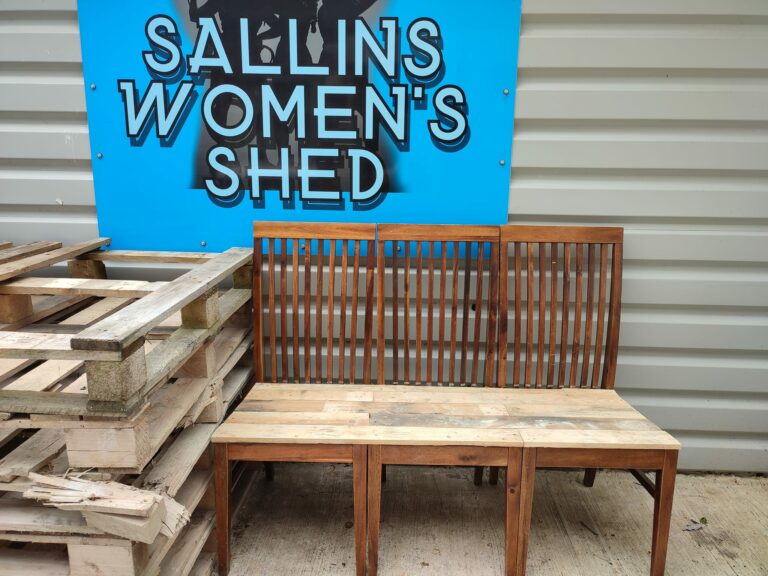
Minister Humphreys added that the €1 million for women’s groups was “in recognition of the fact that there is a growing number of Women’s Sheds, groups and networks across the country”.
Minister of State with responsibility for Community Development and Charities, Joe O’Brien added: “The funding will provide really practical support to smaller community groups that are active at a grassroots level to help them to ensure they have the facilities and equipment they need to support their communities.
“Many of these groups are providing essential services on a day-to-day basis to those most in need. I hope this funding will help to support the provision of safe warm spaces for those groups to continue to meet and support their communities in both rural and urban areas right across the country.”
Funding for each local authority area is as follows:
LCDC Area
DRCDLEP Allocation
Women’s Groups Allocation
Total Allocation
Carlow
€119,056.15
€23,811.23
€142,867.38
Cavan
€120,917.23
€24,183.45
€145,100.68
Clare
€138,380.55
€27,676.11
€166,056.66
Cork City
€193,504.02
€38,700.80
€232,204.83
Cork County
€204,632.59
€40,926.52
€245,559.11
Donegal
€215,647.39
€43,129.48
€258,776.86
Dublin City
€419,324.48
€83,864.90
€503,189.38
Dun Laoghaire
€149,273.40
€29,854.68
€179,128.08
Fingal
€184,035.81
€36,807.16
€220,842.98
Galway City
€111,935.52
€22,387.10
€134,322.62
Galway County
€154,480.86
€30,896.17
€185,377.04
Kerry
€149,954.79
€29,990.96
€179,945.75
Kildare
€173,747.35
€34,749.47
€208,496.83
Kilkenny
€126,519.02
€25,303.80
€151,822.82
Laois
€127,992.54
€25,598.51
€153,591.05
Leitrim
€99,775.36
€19,955.07
€119,730.43
Limerick
€190,572.89
€38,114.58
€228,687.46
Longford
€112,388.87
€22,477.77
€134,866.64
Louth
€162,843.74
€32,568.75
€195,412.48
Mayo
€160,850.55
€32,170.11
€193,020.65
Meath
€154,488.81
€30,897.76
€185,386.57
Monaghan
€112,377.35
€22,475.47
€134,852.82
Offaly
€135,499.47
€27,099.89
€162,599.36
Roscommon
€115,534.62
€23,106.92
€138,641.54
Sligo
€118,327.18
€23,665.44
€141,992.62
South Dublin
€254,979.91
€50,995.98
€305,975.89
Tipperary
€178,045.98
€35,609.20
€213,655.17
Waterford
€159,121.40
€31,824.28
€190,945.68
Westmeath
€128,134.89
€25,626.98
€153,761.87
Wexford
€180,708.85
€36,141.77
€216,850.62
Wicklow
€146,948.43
€29,389.69
€176,338.11
The funding has been allocated by providing a baseline amount to each area and allocating the remainder based on the population and disadvantage level in each local authority area.
The funding is administered on behalf of the Department of Rural and Community Development locally by Local Community Development Committees (LCDCs) across the country, with support from their Local Authority. Applications for funding can be made to the relevant LCDC. Contact details for LCDCs are available here.
A new fund of almost €5 million is to be distributed among 113 sports clubs located in rural areas around the country.
The funding is being provided as part of Our Rural Future, the Government’s strategic five-year rural development plan. The successful applicants will receive grants of up to €50,000.
Minister for Rural and Community Development, Heather Humphreys said: “This funding is targeted specifically at supporting clubs in rural communities, and not surprisingly the vast majority of successful projects are from local GAA clubs. The GAA is at the heart of rural parishes across the country, instilling a strong sense of pride of place, community and belonging in young and old.
“While many of the successful projects are focused on improving playing and training facilities, I also want to improve the experience for local supporters and spectators. For this reason, I put a particular focus on the upgrade of spectator stands so that further seating and shelter can be provided to ensure that older people can enjoy games in comfort. Similarly, some projects focus on upgrading local clubhouses and improving access for people with disabilities and mobility issues.”
The successful projects include:
Doheny GAA Club, Co Cork: Provision of Sam Maguire Spectator Stand – €50,000
Garryhill Handball Club, Co Carlow: Repair, resurfacing and weatherproofing of handball alley – €40,500
Gneeveguilla GAA, Co Kerry: Install an access lift in clubhouse – €32,378
Ballinaglera GAA, Co Leitrim: Construction of walking trail around the grounds and upgrade of spectator stand – €38,364
Elphin GAA Club, Co Roscommon: New spectator stand – €50,000
Michael Cusack GAA Club, Co Clare: Surfacing of walking track – €50,000
Cuchulainn Gaels GAC, Co Louth: Construction of accessible changing rooms to include toilets and showers – €44,910
St Patrick’s GAA, Co Sligo: Construct extension to house new gym – €45,000
Multyfarnham GAA, Co Westmeath: Installation of all-weather artificial playing surface astro turf – €50,000
St Brendan’s GAA, Ballygar, Co Galway: Lighting of walkway around community pitches – €50,000
Drumgoon Éire Óg GAA, Co Cavan: Upgrade of stand/covered seating area
Ballylanders AFC, Co Limerick: Refurbishment of clubhouse interior – €50,000
Knockmore GAA, Co Mayo: Develop a community playground – €49,950
Ballinlough GFC, Co Meath: Install a wheelchair platform lift in community centre
The full list of 113 successful sports projects under CLÁR Measure 1 is available here
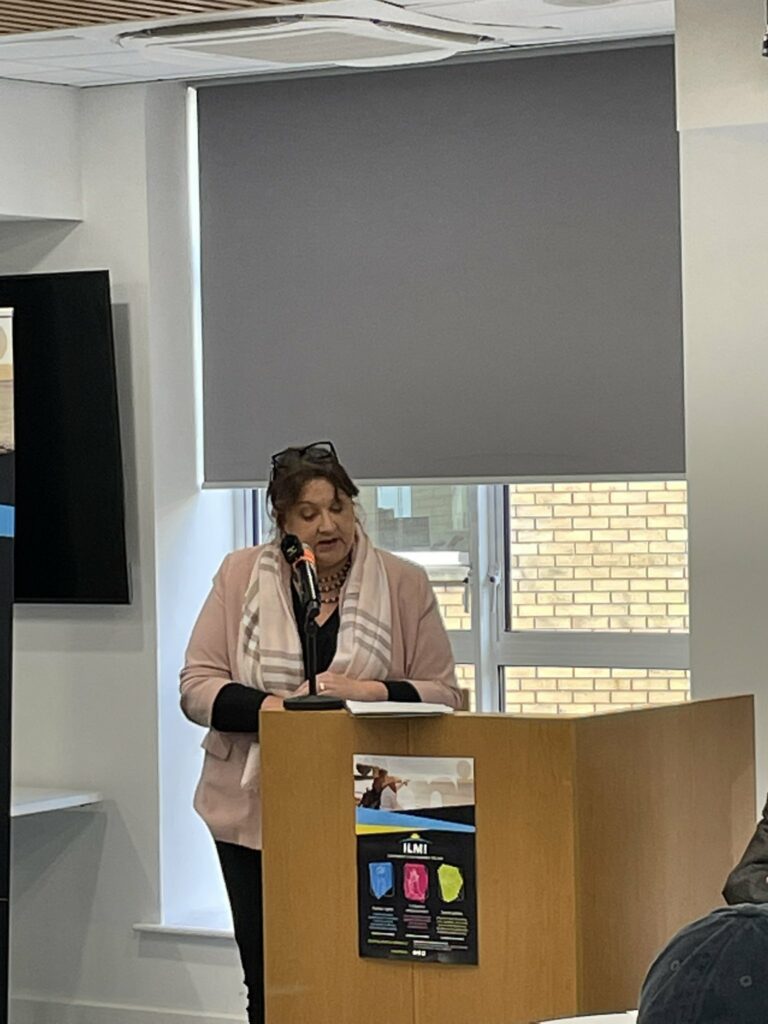
The plan outlines ILMI’s strategy to build local structures and actively contribute to policy development and implementation at both local and national levels.
Emphasising investment in disabled people, the plan supports activists in working collectively “to ensure the authentic collective voice of disabled people shapes a more inclusive Ireland”.
Launching the plan was Minister of State with Special Responsibility for Disabilities, Anne Rabbitte.
“ILMI’s dedication to creating an inclusive Ireland aligns with our national goals for the empowerment and wellbeing of disabled people. This strategic plan is a testament to the organisation’s vital role in shaping policies that foster freedom, choice, and control. I commend ILMI for their impactful work and look forward to witnessing the positive transformations this plan will bring to the lives of disabled people across Ireland,” commented the Minister.
Des Kenny, ILMI’s chairperson, said: “This strategic plan has its origins in the noble tradition of disabled people being actively engaged in our own activism for four decades now. The power of collective advocacy within a Disabled Persons Organisation (DPO) is unparalleled. It transforms the conversation from ‘I think’ to ‘we think,’ providing evidence of how inclusion must be resourced: mapping the inclusion landscape to real, meaningful change.”
CEO of ILMI, Damien Walshe expressed his gratitude to “the incredible individuals who meticulously crafted our strategic plan”.
He continued: “As a national cross-impairment DPO, ILMI’s vision revolves around creating a society where disabled people enjoy freedom, choice, and control over all aspects of our lives. Our strategic plan is not just a document; it’s a roadmap for transformative change within our organisation and beyond.
“We express our gratitude to Values Lab for their expertise in crafting a robust, values-led plan that reflects the aspirations of our community.”
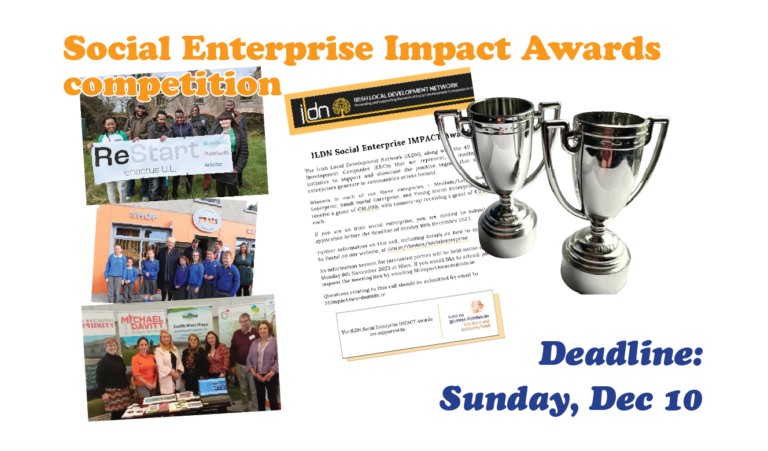
Through the Social Enterprise Impact Awards competition, the ILDN’s network of 49 local development companies aims to promote and reward good practice by social enterprises in the evaluation of social impact.
The competition has three categories – small social enterprise, medium/large social enterprise, and young social enterprise – with winners in each category receiving a grant of €10,000, and runners up in each category receiving a grant of €5,000.
Social enterprises must give a clear account of the evidence they use to communicate the scale and scope of their social impact. They should explain how they collect the evidence, the insights it provides, and how it affirms the organisation’s effectiveness in pursuing its social mission. The organisers are looking for impact in terms of outcomes for individuals, positive change over time, and the effect of the social enterprise’s activity within the community.
EXPERIENCE
Local development companies have a long and proud tradition of initiating and supporting social enterprises around the country that bring a multi layered set of benefits to disadvantaged communities in rural and urban Ireland.
Approximately 40 LDCs employ a dedicated staff member to work with and support social enterprises. In addition, every LDC has LEADER and SICAP programme staff who work with social enterprises. They have years of experience in upskilling others to develop and manage social enterprises.
SUPPORT
The ILDN’s Social Enterprise Impact Awards is supported by the Department of Rural and Community Development and the Dormant Accounts Fund. More information (including application form and call for applications) is available on the ILDN’s website (https://ildn.ie/themes/socialenterprise/). It includes a link to a short workshop held in early November to explain the competition’s ins and outs.
It will culminate, next February, in an awards ceremony to be held in Dublin.
DEFINITION
Social enterprises are defined as businesses whose core objective is to achieve a social, societal or environmental impact. Like other businesses, they trade in goods or services on an ongoing basis. However, any surpluses they generate are re-invested into achieving a social impact.
SOCIAL ENTERPRISES “EMPLOY 84,000”
A Baseline Data Collection Exercise conducted this year by the ILDN, Social Enterprise Republic of Ireland, and Amarach Research counted over 4,300 social enterprises, whose services feed into a range of key community services, including childcare, health and social care, heritage, the arts, sport and leisure, housing, and the environment. The survey estimated the economic impact of social enterprises at €2.34bn, and claimed that, in addition to 75,000 volunteers, around 84,000 people are “employed within the sector”.
Changing Ireland spoke to Philip O’Donnell from the Irish Local Development Network (ILDN) about the network’s social impact awards competition, with cash prizes of €45,000 for social enterprises (details below).
The competition’s overall aim is to encourage social enterprises to monitor and measure their social impact. Philip works as the ILDN’s research, policy, and rural affairs officer and we asked why monitoring and measuring impact has now become so important.
1.
“There are a few reasons for this. Firstly, social enterprises operate in an increasingly competitive environment. Whether they rely predominantly on grant funding or on traded income, invariably there isn’t enough money to go around, and they need to be able to prove to stakeholders that any money that they take in will yield value. They need to illustrate the organisation’s social impact,” he said.
2.
“Secondly, in a world of greenwashing, pinkwashing, etc., the public need to know that they’re not being hoodwinked by hollow claims. The level of trust in individual social enterprises is generally strong, because these social enterprises tend to be firmly grounded in their communities. However, it is important for the image of the sector as a whole that there is an evidence base to show that social enterprises are achieving real results.
3.
“Thirdly, social enterprises themselves need to know whether their strategies are working or not, and monitoring and measuring impact are central to this. Maybe those strategies need to be optimised, or maybe they’re yielding negative impacts in the form of unintended consequences – in any case, social enterprises need to know that what they’re doing is having the desired effect.
4.
“Lastly, measuring social impact is a challenge for social enterprises. A survey in Scotland showed it to be the issue of single greatest concern for social enterprises there, and we regularly hear Irish social enterprises voice similar concerns. We hope that this competition will help to demystify measuring social impact, and show that there is no single ‘right’ way to measure or monitor impact,” he said.
The ILDN’s competition is supported by the Department of Rural and Community Development (DRCD) through the Dormant Accounts Fund. The ILDN is funded through DRCD’s Scheme to Support National Organisations and its member organisations have years of experience in upskilling others to develop and manage social enterprises.
• One of thousands of social enterprises in Ireland: Enactus UL’s ReStart team pictured at the Knockalisheen Direct Provision Centre gardening plot in 2019 – Photo courtesy ReStart.
FIRST OF ITS KIND?
Asked has there been any competition like this before for social enterprises, Philip pointed to the Dublin City Social Enterprise Awards run by Dublin City Council, Inner City Enterprise and the Dublin City Local Enterprise Office. Changing Ireland covered the second year of those awards, in 2016, when €45,000 was presented in prizes to five winners. The prize fund this year was €60,000 shared among six social enterprises.
“Our initiative would differ slightly from theirs in that ours is more specific in its aims and scope – we want to showcase and promote good practice in the measurement and assessment of social impact,” said Philip.
“As well as using these awards as a way of providing direct financial support to our awardees, we are eager to gain research value from this initiative. Measuring and assessing impact is difficult, and we want to capture learnings from those that do it well, with a view to sharing those insights with the wider sector,” said Philip.
So get measuring your social impact and apply today for a chance to win. To access application forms and find out more about the ILDN’s competition, click on our story below for summary detials, or go directly to: https://ildn.ie/themes/socialenterprise/
The project received €100,000 under the Community Centre Investment Fund (CCIF).
It is hoped that the new facility will create opportunities for employment and remote working, as well as providing members of the Deaf Community with a space to socialise.
Speaking during the visit, Minister Humphreys said: “This is a very unique, welcoming and inclusive place – a place where members of the Deaf Community can come together and meet up with friends.
“And it’s a place too where they can access a range of supports and take part in various different activities and events in areas ranging from sport and education to arts and heritage.
“But I know too that this Village opens its doors to everyone – and it is a really popular place too for hearing people, our young people and members of the wider Cabra area. I want to commend the work of everyone involved in bringing this project to fruition.”
Funding under the 2022 Community Centre Investment Fund was available under three categories, with grants of between €10,000 and €300,000 available.
Funding was available for capital works such as improvements to communal facilities, energy retrofitting, or to provide additional services to the community.
Over 860 projects were approved for funding with a combined value of over €45.8 million.
The preliminary findings were released to Changing Ireland and indicate a problem that persists since Dr Clíona Saidléar, then acting director of the Rape Crisis Network Ireland, wrote about the issue for Changing Ireland in 2015.
She was concerned by the increasing use of restrictive clauses in funding contracts and its implications for work speaking out on behalf of rape victims. We spoke to a minister at the time about Cliona’s concerns.
The ICCL’s survey, carried out over the summer, received input from 295 people, over a third of whom said they were working or volunteering with organisations that restricted their advocacy work out of fear of upsetting a funder. Some said it was explicitly written into their funding contracts.
Lead researcher Ronan Kennedy points out that some clauses are legitimate: “If an organisation is in receipt of state funding to provide services – such as beds for homeless people – there’s nothing wrong with those contracts saying, ‘These specific funds are only to be used for the provision of these services’. That’s perfectly legitimate.
“But it shouldn’t go beyond that. The receipt of state funding can’t be used as a brake on an organisation’s wider advocacy work,” he said.
He pointed out that the survey is not an academic study. The geographic spread is uneven (eg 38% from Leinster, 6% from Munster). Over a third of respondents work in community-based health-related work. Half the respondents operate at a national level.
Nonetheless, it is the first time a survey of this kind has been carried out and it highlights an issue. Ronan said, “People have known about this for years, it’s been whispered about, people know it’s a big issue.”
While he was pleased with the number of survey responses and said the findings were consistent across all sub-categories (geography, type of organisation, etc), Ronan was reluctant, at this point, to name the bodies people complained most about. The full details will appear in November.
“We will publish an annex with absolutely everything we found in November,” said Ronan.
For the record, he did say that Pobal barely features and there was not a single complaint about the Department of Rural and Community Development.
We look forward to hearing which bodies may have questions to answer on how they could better support advocacy work.
In the meantime, quotes (below) that the ICCL received anonymously from its survey respondents reveal the level of interference in advocacy work. Do any of these statements echo your experience? Or has your organisation free rein to advocate on behalf of your community? We would like to hear from you. Contact the editor in confidence.
What community and voluntary sector workers who took part in the Irish Council for Civil Liberties survey said:
“At one point it was stated by a public servant in a meeting that the organisation was to choose between advocacy or service delivery. That the organisation couldn’t do both.”
* * * * *
“Member organisations of our networks, without having been directly threatened, are reluctant to be seen to take positions that would be at odds with [Government Department].”
* * * * *
“Any direct and indirect funding has the non-political unwritten rule (and) we have to get creative about how we deliver what we wish to do, and we have withdrawn from funding or not applied due to conditionality.”
* * * * *
“Funding from [State Agency] was withdrawn following a review by [State Agency] that we were not part… We had been extremely vocal about a range of issues and critical of government policy and have always felt that it was a targeted withdrawal. We lost one staff member and a project that had been embedded in the community.”
* * * * *
• The ICCL survey asked: Are you free to advocate?
* * * * *
“We have been in the room when a senior civil servant said it was not our role to criticise government policy.”
* * * * *
“There is a cultural tendency in most organisations to do nothing that is likely to upset or challenge authority, such that if you stand out and voice concerns or take a differing perspective you can be silenced, sidelined or ignored.”
* * * * *
“There is no obvious threat but there is an implicit culture of compliance with government departmental objectives that effectively ensure that the more critically-minded are kept out of the picture.”
* * * * *
“It has often been alluded to, to not rock the boat, or (that) it’s not the role of our organisation to bring certain issues to light.”
* * * * *
“At local level with local authorities… our Service Level Agreement is always referred to and the restrictions within it are often exaggerated. If there’s a tender for a new service coming up, we’ll avoid media work as it will impact our chances of success.”
About the ICCL / Certain rights guaranteed:
The Irish Council for Civil Liberties (ICCL) was established in 1976 by Mary Robinson and others. It has been active since then in monitoring and defending the rights to freedom of expression and association of community, voluntary and non-governmental organisations. It does not receive any state funding.
As the ICCL point out, freedom of expression and freedom of association are guaranteed under the Irish Constitution, the European Convention on Human Rights, the EU’s Charter of Fundamental Rights and the International Covenant on Civil and Political Rights.
“As party to these treaties, the State is obligated not only to protect but also to foster and cultivate a free and open civic space,” it says.
Minister of State for Community Development, Integration and Charities Joe O’Brien has revealed that the Dormant Accounts Fund will provide €47.6 million to various initiatives to help disadvantaged communities all over Ireland.
Funding under the 2024 Action Plan has decreased by 12.5% from 2023. A statement from the Department of Rural and Community development said that “further reductions are required in the coming years to sustain the fund”.
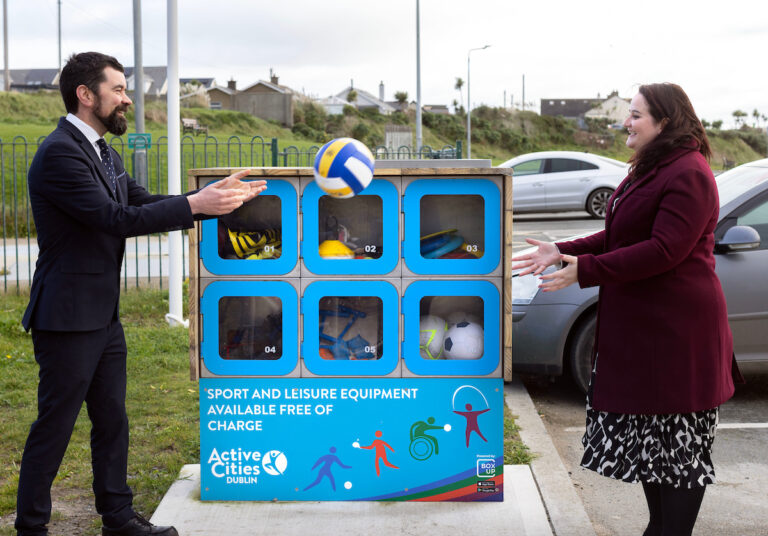
The Minister made the announcement while launching the 2024 Dormant Accounts Action Plan recently at the BoxUp project in Rush, Co Dublin.
BoxUp, supported by Sport Ireland through the Dormant Accounts Fund, is an initiative launched this year that aims to tackle inequality in sport by providing free access to sporting equipment.
The Dormant Accounts Fund can be used to fund measures that address economic, social, or educational disadvantage and to support people with a disability.
The 2024 Action Plan allocates funding of €47.6 million to 52 measures to be delivered across 11 Government Departments.
More than €11.3 million has been allocated to the Department of Rural and Community Development: €5.5 million for Rethink Ireland, €2 million for social enterprise measures, €2.7 million for the senior alert scheme, more than €1 million for targeted social inclusion measures, and €150,000 for the promotion of libraries to disadvantaged groups.
Minister O’Brien said: “The 52 measures approved for funding in 2024 will be implemented across Government and will help to address a diverse range of issues such as long-term unemployment, Traveller equality, youth disadvantage, migrant integration, and probation supports to prevent reoffending.
“Dormant Accounts funding makes a real difference to individuals and communities right across the country. The 2024 Action Plan will help ensure that we can continue to support those who need it most during these challenging times. I am particularly pleased to see continued support for Traveller initiatives and services across five Departments.”
Other examples of measures approved for funding include:
€10.5 million for investment and actions aimed at improving participation in sports in disadvantaged communities and for persons with disabilities.
€3.9 million for Traveller initiatives and services across five Departments.
€4 million for youth and community justice services aimed at countering the influence and impacts of crime on young people and in communities.
€2.7 million for youth and family initiatives to provide young people with the soft skills needed to improve employability.
The Dormant Accounts Fund Action Plan 2024 is available to view here.
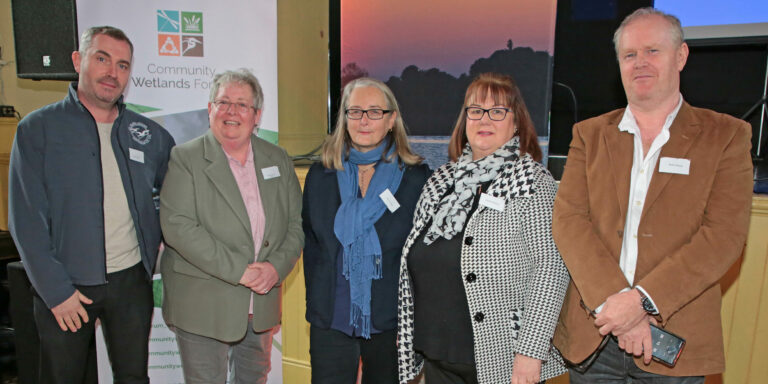
Communities from across Ireland’s Midlands region attended a community tourism workshop held by the Community Wetlands Forum (CWF) in Longford earlier this month.
The event showcased the opportunities that exist in the Midlands to develop sustainable community-led visitor experiences focused on the natural environment.
CWF believes the conservation of Ireland’s wetlands in a sustainable way can help empower unique tourism experiences leaving a transformative legacy of prosperity for communities.
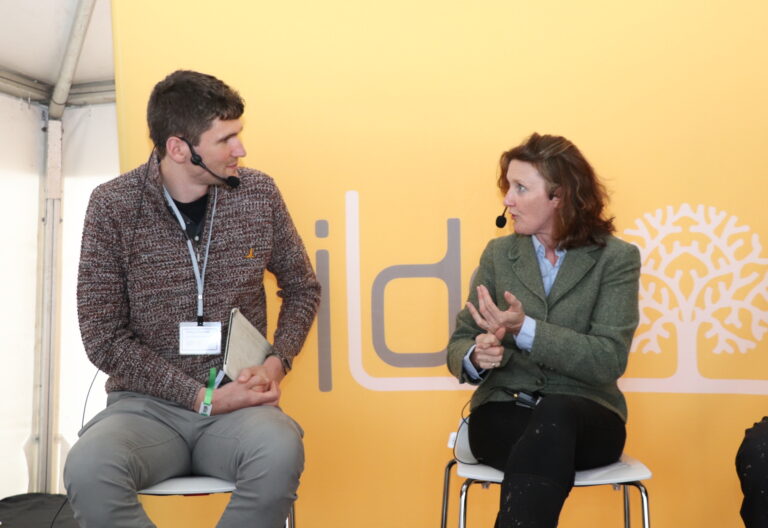
– Martina O’Moore, Clann Credo. Photo: Shelley Corcoran Photography
The forum heard from representatives of community tourism experiences nationwide, including the Arigna Mining Experience, in Co Roscommon, a popular visitor attraction that launched its successful initiative during a period of community transition.
Mary Mulvey, Community Wetlands Forum company secretary commented: “This region has the potential to transform the tourism offering, and what better way than through community-owned and developed accommodation and attractions. Communities have been the cornerstone of Irish tourism for decades, from organising annual festivals and events, to the tireless work of Tidy Towns and Heritage Towns.
“We know from experience that one of the best ways of ensuring great tourism success, is through mobilising a community, getting their buy-in and empowering them to deliver on the future they envisage for their families and communities. Great places to live are also great places to visit.”
– Ahmet Can Gikla, Liv Hafner, Chiara Campieri, and Victor Roffet of Good Energies Alliance Ireland. Photo: Shelley Corcoran Photography
The event, entitled ‘Inspiring Community Tourism Experiences’ was chaired by Carmel Fox, a leader in community tourism and local development who developed the successful Ballyhoura brand.
Representatives from relevant stakeholders, including Fáilte Ireland and local authorities, were on hand to engage with participants and exhibitors, offering services to assist communities with their tourism projects.
“Community-based tourism enterprises exist in every part of Ireland’s Hidden Heartlands, delivering powerful and far-reaching economic and social benefits which help local communities across the region to thrive,” said Paddy Mathews, head of Ireland’s Hidden Heartlands, Fáilte Ireland.
See Changing Ireland’s previous story about a community-owned hotel in Co Monaghan: