Friday, July 3, 2026
Home Blog Page 57

Australia gives us Ugg boots, Fosters and now Men’s Sheds

A Men’s Shed in the UK

Smaller housing complexes had, by the early 90s, left less room for Australians to have their traditional large back-yard sheds. Men, especially retired ones, therefore, were often left without a place to go or activities to get on with. 


As a result, the concept of community sheds was born, and it has since become something of a phenomenon in that country. Like Ugg boots, Fosters and Home and Away, the export has since taken off in Ireland.

“Each shed is as individual as the men involved, “ John Evoy of the Irish Men’s Sheds Association told us. “Most involve the use of tools, fixing motorbikes, upholstery, that kind of thing. There are usually about five or six projects on the go at once. At the same time, there will be men there drinking tea or playing darts – they are a hive of activity.”

As traditionally men have been less encouraged than women to be interested in their own wellbeing, the sheds have become an excellent medium by which to tackle the problem of mental health. Australian professor and Men’s Sheds researcher Barry Golding estimated that since the Australian network began, it has saved roughly 2,000 lives from suicide in that country.

“Feeling isolated and having a poor social network,” John Evoy says, “is equally as bad for your health as being a heavy drinker, and twice as bad as being a heavy smoker or obese.”

Potential members shouldn’t be put off by the prospect of boring seminars, however, as that is not the approach the organisation take. John says: “A coordinator in the country told me that they had trouble getting people to join, as the men didn’t believe there was anything wrong. The problem isn’t the reason to join. We aren’t called the Men’s Health programme and we don’t give lectures. We want people to come along because they have assets like time and energy.

“I’ll give one example of how problems end up getting discussed. There was one shed where there was no running toilet at the time and the men kept having to go outside. This led to a conversation about how many times each was going to the toilet, which resulted in a spontaneous discussion about the prostate, and the importance of getting it checked.”

You can find out how to join a local Men’s Shed, or set up a prospective one near you, by contacting the Irish Association at their website Menssheds.ie.

Arklow: Men leave their shed in a boat

BY ALAN JACQUES

An Bád Inbhear Mór
The 25 members of Arklow Men’s Sheds Group made waves recently as they kept their hometown’s long and proud tradition of boat building alive with the launch of their 20ft timber dory.

Named ‘An Bád Inbhear Mór’, the rowing boat took 13 weeks to build at a workshop in Croghan Industrial Estate with timber sourced from the ‘TSV Asgard II’ supply.

The Arklow Boat Project, captured the imagination of the entire community and 16 men from the local Men’s Sheds Group, ranging in age from 30 to 60, participated in the project. According to Katy Hughes of Arklow CDP, the project has played a huge role in getting the men’s group up and running in the community.

“This project has brought about a great sense of hope and pride not only to the men involved, but to the whole town. The boat was paraded through the centre of the town with a pipe band on the day of its launch and there was a great buzz. There was such great excitement when it finally took to water and it did exactly what it was supposed to do,” said Ms Hughes.

‘An Bád Inbhear Mór’ has since been donated to Arklow Sea Scouts. The Sheds group also continues to put their boat building skills to great use having built dinghies and canoes in recent weeks.

The training involved was conducted under Goal 2 of the Local and Community Development Programme which seeks to increase access to formal and informal educational, recreational and cultural activities and resources.

Ms Hughes told ‘Changing Ireland’ that many groups contributed to the success of the project including Arklow Pipe Band, Arklow Sea Scouts, Arklow Women’s Club, the Harbour Bar and other local businesses.

Arklow has a long and proud tradition of boat building, most notably for building timber boats such as Francis Chichester’s ‘Gypsy Moth III’ and the ‘TSV Asgard II’ from which timber was sourced for the making of ‘An Bád Inbhear Mór’.

The men’s boat project was coordinated by Arklow CDP which is part of County Wicklow Partnership and received funding from the Department of Social Protection and County Wicklow VEC Community Education.

One in five still experiencing abuse

Woman’s Aid Launch

This year’s 16 Days of Action Opposing Violence Against Women 2011 campaign saw many events held to highlight the fact that one in five Irish women who have been in a relationship have been abused by a current or former partner.


International research demonstrates that a woman is more likely to be assaulted, injured, raped, or killed by a current or former partner than by any other person. The launch of the 16 days took place on November 25th which is the International Day for the Elimination of Violence against Women.

On December 9th, Limerick Women’s Network held a one day conference with Banulacht on Women’s Human Rights in Thomond Park, Limerick. LCDP workers Liz Price and Elaine Dalton were among the organisers. Hundreds of groups from around the country – many supported through the LCDP – took part in balloon launches and other initiatives during the 16 days.

The actions countrywide are catalogued online: womensaid.ie/16daysblog

Take one; leave one!

– Republic’s biggest book exchange is in Ballymun, probably!
Ballymun Whitehall book exchange

On the first Thursday of every month, over 250 people file through the Ballymun Civic Centre as the monthly Book Exchange takes place, organised by Ballymun Whitehall Area Partnership (BWAP).

It might even be the biggest book exchange in the country – Rosemary Kinehan of BWAP can’t say for sure.

It may be – there’s no central record of this,” said Ms Kinehan.

Yet it cost nothing to set up. Soon after it started, schoolteachers noticed an improvement in pupils’ reading ability, said Ms Kinehan.

The Book Exchange began life as one of the Partnership’s activities for AONTAS Adult Learners Festival in February 2009 and grew from there. 

The community was very supportive – none of the books were bought; all were donated, including plenty for teenagers and children.

On exchange days, hundreds of books weigh down the tables in the atrium of the Civic Centre.  Local resident Bernie Gallagher said, “I love the idea that the books are free because they’ve become so expensive”.

There’s a regular extra dimension to Book Exchange when young children (0-4years) and their childminders can sit down for a story-reading session.

It works simply. People who are confident reading stories show the others how best to read to children and the childminders then take turns reading stories to their children, or take a book home to do so. This is organised by the Partnership in conjunction with the Dublin North Central Childminding Advisory Service.

For avid readers, there is a mini daily book exchange in the Ballymun Shopping Centre outside the doors of the BWAP office.

Careen Doyle, a local resident said, “I’m delighted because I read so many books and this way I’ve a choice of books all the time.”

The idea might seem obvious – bring a book and exchange it for free, but education worker, Colma Nic Lughadha, explained the wider vision: “The main aim is to get Ballymun reading, to help and encourage more people to read.”

For more information, phone BWAP’S Education Section on 01-8423612. W: ballymun.org
BWAP receives funding through the Local and Community Development Programme.

VOLUNTEERS RESTART ‘FAIR DAYS’ – for (very) small businesses

HELENA DEANE, business consultant and volunteer, explains the resurrection of the 1990s concept of Open Fair Days and gives some valuable information on how to set one up:
 
The Open Fairs idea from 20 years ago is being revitalised and broadened as a counterbalance to the current recession. This year, fairs were held in Clare and Mayo. Further Fairs are planned for 2012 in counties Roscommon, Kerry, Kilkenny, Dublin and Donegal.
 
‘Open’ is shorthand for One Person Enterprise and the aim is for the fairs to evolve into a national movement of free, community-based talent exchanges, organised by volunteers.
  
Haggling in 2011 at an Open Fair Day. The concept is spreading.


They give communities a chance to discover what services and products originate locally while offering enterprising individuals a showcase for their talents. They’re for everyone from graphic designers to biscuit bakers, musicians to tax advisers, landscape gardeners to surfing instructors – you name it!
 
The fairs are designed for people on a tight budget, possibly without a website, working from home, and not normally able to participate in a fair. The aim is to help you to make a living from your own skills, ideas and initiative.
 
The Open Fairs idea builds on a concept developed in the early 1990s by Rural Resettlement Ireland in partnership with Clare VEC. The project then was grant-aided by the EU. The current project is part-funded by anonymous Irish-American donors via the Ireland Fund.
 
The fairs are not open to retailers: you must be promoting a product or service of your own. Participation is free for exhibitors and visitors. To read more, visit our blog where we’ve published Helena’s article in full, including tips on (a) Promoting your Open Fair Day for free, and (b) the four steps from start to finish involved in organising a fair in your town, village or city.
 
Open Fairs are organised in collaboration with the VEC and community groups and held in venues such as schools, community halls and hotels. This year, two fairs were hosted by the West County Hotel in Ennis, Co. Clare while another was held in Feakle Community Hall. An open fair held in early December in Castlebar was hosted by the Royal Theatre.
 
We found that commercial venues were very welcoming, in fact hotels asked me to organise follow up fairs on their premises: they get positive publicity by association, and generate income from food and drink purchased by those attending. Everything is achieved with zero budget. There is no charge for the tickets. Everything is based on goodwill and voluntary effort. Support for brochures and posters is provided by the Open Fair office.
 

If you’d like to exhibit at an Open Fair in any of the counties listed earlier, download an application form from Openfair.ie.
 

T: 065 905 8034. E: info@openfair.ie. Address: Open Fair, Kilbaha, Kilrush, Co Clare.
* Helena Deane is a business consultant and regular volunteer who is heavily involved in Open Fairs.
 
PROMOTION and ADVERTISING
 
There is no budget for promotion and advertising, so it is all about advertising on social media, through networking and posters. 
 

The local press and radio are asked to publicise the event, for free. Fairs in Mayo received free publicity from local press and community radio stations. I have also approached local development companies, chambers of commerce, business innovation centres who have advertised our events via facebook, twitter and e-mail.

Open Fair Days began 20 years ago.
HOW TO RUN A FAIR


Step 1: Contact the Open Fair office for help, advice and promotional materials.
 

Step 2. Set up local organising committee, and secure a venue. Community groups, sporting bodies, local voluntary organisations, business and retail networks or church groups may agree to share the responsibility of running an Open Fair.
 

Step 3: Once you’ve set a date, the Open Fair will provide an application form containing those details.
 

Step 4: Offer local enterprise development agencies, local development companies, etc an opportunity to promote their services at the Open Fair.

Healthy eating course spreads across Dublin

A course in Clondalkin, that is that is also delivered in six other by other communities in Dublin, is teaching people to cook for themselves at a time when the diets of disadvantaged groups are disimproving.

The breakfast roll, now part of male Ireland’s dietary landscape
“It’s a peer led programme where local people are trained to run the course” said Liz Griffin, project co-ordinator of ‘Healthy Food Made Easy’ “it takes people back-to-basics”. “It takes people back to basics and is fun and practical”. 

People’s diets are narrowing thanks to the recession, according to a national report by ‘Safefood’ published on November 2nd and the most at-risk groups are young single men and low-income families with children, especially one-parent families.

Currently, says the CSO, 14% of Irish people are at risk of poverty, while the figure among the unemployed is 33%, among lone parents is 35% and among children is 18%. With less money in their pockets, people are prioritising value over nutrition, and as a result, their health is suffering.

The best way to tackle this problem is through education – to show people that they can make unexpensive meals that are also nutritious, as the course in Clondalkin succeeds in doing. The six-week health programme has been running since 2004 through the CPLN area partnership.

The programme attempts to alter people’s behavior: “We consistently promote the food pyramid. We give people recipes, show them how to prepare food, and get them to taste it.

“In the fifth session, a dietician from the health promotion service comes for a Q&A session. It’s available to all community groups in the CPLN are, and there are similar programmes in Ballyfermot, Coolock and Blanchardstown.”

The course has been extended over the years to Palmerstown, Newcastle and Lucan, and recently become available in parts of Tallaght.

Further information: Call Liz in Clondalkin on 01-4570665 or email her at: lgriffin@cpln.ie
W: giyireland.com, safefood.eu, and cpln.ie

Note: Safefood is a North-South organisation that works in four key areas: education, research, nutrition and communicating with consumers.

‘My trade unionist Dad set me on social justice path’

WORKING IN THE LCDP 

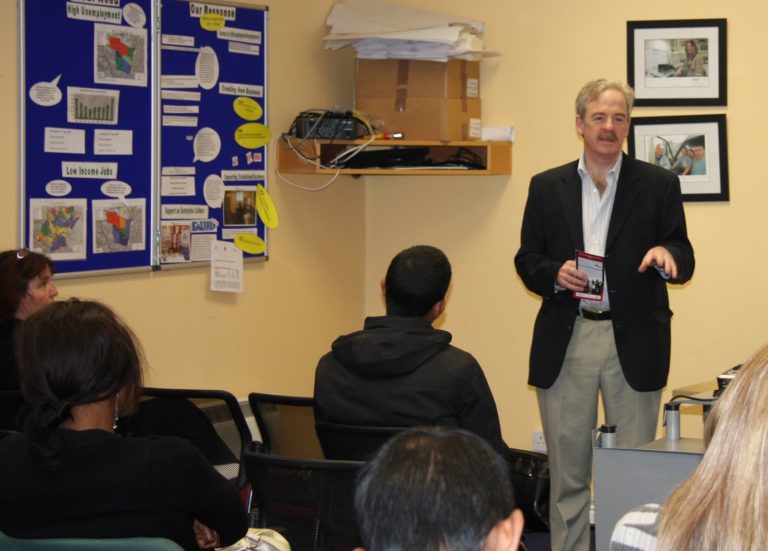
Declan Dunne giving a talk last year on health awareness. Photo courtesy of New Communities Partnership.
– INTERVIEW WITH DECLAN DUNNE, BALLYMUN
BY ALAN JACQUES
Declan Dunne is the CEO of Ballymun Whitehall Area Partnership* since 2003 and he worked for 3 years before that in economic development in Clondalkin/CPLN. Some years earlier, he employed 157 people in the private sector.
 
What are you reading at the moment?
Lots of junk fiction! Also it may sound pretentious but the Harvard Business Review is accessible, concise and practical.
Person you most admire?
Sylda Langford who was, until recently, the Director of the Office of the Minister for Children and Youth Affairs. She left a hugely positive legacy for children and families. Gordon Jeyes the HSE National Director for Children and Family Services is very inspiring. He is quoted as saying that one way to boost efficiency is to use services to put more emphasis on personal responsibility, with the onus on communities to solve problems at local level.

The top 4 issues in Ireland today besides the economy?
1.   Learning again that life is short, whatever is going on, each day can be lived consciously and appreciated. Small acts of kindness have lifelong impacts.
2.    Effective safeguarding of children.
3.   A more equal society is a safer more rewarding place to live.
4.  Health is wealth; it’s our responsibility to actively invest in our health
Nationally, we need more?
·     Validation and encouragement.
·     Humility in victory
·     Rediscovery of the enjoyment that flows naturally from serving society. Contribution without expectation.
We need less?
Glee in fault finding.
How and why did you get involved?
My background is in the private sector. I started a business as a young person employing 157 people which I later sold to an American Multinational so I might not appear to be an obvious person to end up in this work. However, I went to school in Keogh Square (later called St Michaels Estate) in Dublin which was not that different to Ballymun and my secondary education was funded by a Dublin City Council scholarship. My Dad was a trade unionist and he sowed the seeds of social justice that now inform my work.
What difference has being involved made to you?
Lots of personal learning, more grey hair and no shortage of challenges. Great enjoyment and lots of hard work.
Ballymun’s landscape has changed greatly in recent years and Ballymun Whitehall Area Partnership is to the forefront of much of the work in the area and beyond. Declan Dunne is the CEO.


How have things changed for your community since you became involved?
Eighty per cent of the regeneration, demolition and rehousing is complete. Significant improvement is evident in primary education outcomes. IKEA employs about 70 local people. 72 local businesses have come together as one network Ballymun4business. All school principals work together as one network supported by us. Local people are no longer stigmatised. Local people’s community spirit is acknowledged near and far. Their Axis Arts and Community Centre has won national awards and travelled to perform from New York to Cape Town. It’s truly awe-inspiring.
What motivates you as a volunteer?
My role as chair of the Holy Spirit Boys School, the largest boys primary school in Ballymun, is a voluntary role. It is a great privilege and honour to try to be of service to these children and families. The children, parents and teachers inspire me.
How do you get new volunteers?
Locally, the Partnership has a contract with the Dublin City North Volunteer Centre which provides an outreach service from our premises. We have a high level of volunteer participation on our board, working groups and networks with over 165 people involved.
For more information about Ballymun Whitehall Area Partnership contact Declan or any staff member on: 01-8423612

W: ballymun.org 

Ballymun Whitehall Area Partnership is contracted by the Government through Pobal to address social problems related to poverty and social exclusion.
Declan is a non-executive director of Ballymun Regeneration. He is a member of the Irish National Childcare Coordination Committee at the Department of Children and Youth Affairs and holds a number of other directorships.

New UL course covers social regeneration

UL has launched a new sociology masters course focused uniquely for Ireland on ‘Youth, Community and Social Regeneration’.

Employment paths include youth and community work, research careers, policy development, and professional engagement in social regeneration.
A decade ago, UL had limited connections with disadvantaged communities in its host city, but there has been a big turnaround in recent years, particularly for instance by the sociology department and the media school.
The new MA aims to equip students with the skills to engage with issues relating to young people in the national and international context of community regeneration.
It offers “a critical forum where the complexities of social regeneration can be addressed.”
In launching the course, UL is building on its developing expertise in the areas of inequality and social exclusion, the welfare state, social change, youth and community and social regeneration.
The course can be done at higher diploma or masters level – depending on whether or not you’re up for the final 15,000 word dissertation!
Since the start of this year, an application fee applies to all postgraduate programmes.
For more info, email: martin.j.power@ul.ie or Cliona.Barnes@ul.ie
W: ul.ie/​sociology/​

Unpaid mentors support unemployed women in Mayo

Conor Hogan reports
Conor Hogan

By March of this year, there were 4,680 women on the live register in Mayo, up from 3,315 two years earlier. 

In fact, Mayo has the highest rural unemployment rate in the country with CSO figures showing the rate among women in the county has risen by over 40% in the  last two years.

“Many small businesses are making attempts at rationalising cuts,” Breda Murray of South West Mayo Development Company’s (SWMDC) told us, “and secretaries seem to be the first people they will lay off.”

This led the SWMDC to join up with Tacu Family Resource Centre (FRC) in Ballinrobe and Claremorris FRC to provide a support programme called ‘Revival’. It has been run twice, so far, and could become a blueprint for a national strategy if the course leaders make a successful case.

The aim is to improve people’s educational qualifications, as well as helping them to develop social skills – making a return to the labour market that bit easier.

It isn’t just women on the live register that are eligible, however, but the underemployed and unregistered too. Each woman on the course works one-on-one with a mentor who themselves is unpaid and values gaining experience.

“We hoped to get 30 people on the course,” Ms Murray told us, “but had to accommodate nine more.”
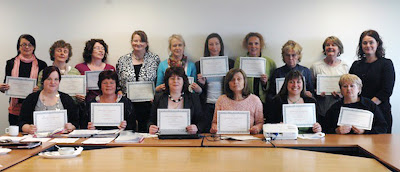
Mentors received 2 days training.

Most of the mentors were working part-time, some being students, as well as two who were retired people.


Even though the work was unpaid, the 26 mentors – all women – were enthusiastic as our interview with Helena Deane shows.


Cost-effectiveness was a critical aspect in running the course.

Of the 40 women who previously took part in the Castlebar course, 14 have found employment (in pharmaceutical positions, supervisory positions, health care, retail and administration). 

Another 13 are now in full-time education and training, studying child care, social science, computing, IT and medical administration.

Considering the overall budget for the programme is €50,000, there is clearly a high return on this investment in women.

“It’s exceptional value for money,” said Breda. “We provide a nice venue, lunch for the mentors costing €8 a day, contribute towards mileage, provide rural transport to the participants, pay to train the mentors, the radio advertisement was €20 and we had to pay for postage stamps.

“Other than that the cost is virtually nil and I’m meeting colleagues to see if I can mainstream this programme for other target groups, and I’m looking to get the green light from the Rural Development Programme.”


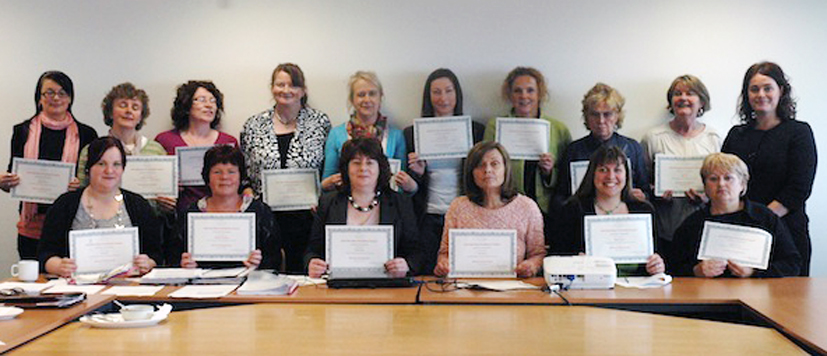
Course participants earn two FETAC Level 3 certificates and in June Minister Frances Fitzgerald made the official presentations to the first women to complete the course.

The second Claremorris/Ballinrobe ‘Revival’ course started on October 27.

FEMALES NATIONALLY
Only 54.5% of women are in the Irish workforce, compared to 73% of men.

Over the course of this year, the number of women on the live register in Ireland has risen by more than 3%, while for men the figure has fallen by 0.9%.

According to the UN’s recently published Human Development Index, only 54.5% of women are in the Irish workforce, compared to 73% of men.
For more information, contact Maeve Early on 094-93-66692.


THREE FURTHER SUPPORTS
Of course, SWMDC like all local development companies also support unemployed men.

For instance, in Claremorris, the company is currently running a course called ‘Where Now, What Next?’ which supports seven men at a time.

The participants attend a two-hour session each week for eight weeks that help them build on their educational qualifications and social skills among other things.

The course is funded under the Local and Community Development Programme. The company is also running a series of one-day ‘Reboot Your Career’ workshops.

And again through the LCDP it has funded the publication of an information directory and map for unemployed Castlebar people which was produced by the local Family Resource Centre. The directory is available in print and online through the company’s website: 

Helena helped three women develop confidence
Volunteers are mentoring unemployed people in Mayo, 

REPORTS CONOR HOGAN:

Each person on the ‘Revival’ course for unemployed women in Mayo works one-on-one with a mentor, who themselves is unpaid.

Helena Deane
“I became aware of the programme through an announcement in the Mayo Leader,” Helena Deane, a consultant at Business Connection Ireland, told us. “I had some start-up business mentoring experience.”

Helena mentored three women, the first wanted to get back into education, the second sought part-time work or to set up a business, while the third hoped to find full-time employment.

The main problem, Ms Deane found, was a lack of confidence.
“One of the women, even though she had a Masters degree, didn’t trust herself for the right jobs and was applying for things like shelf-stacking and tended to get rejected for being overqualified.

“I provided practical help with writing job applications, how best to highlight skills in your CV.

“With the woman who wanted to start up her own business, I drew up a business plan with her and, in the mean time, helped her find part-time work, which she is very happy with.”

Meanwhile, she found an accountancy course in Ballina for the woman seeking further education. The third lady, who wanted full-time employment, wasn’t as successful, as she had to return home to Poland for family reasons.

“We did get good feedback from her, though,” Deane said, “as she said that she had gained greatly in self-confidence.”

The minimum requirement for a mentor is a third-level degree in social science, after which they receive FETAC training for the course – free education. They then work 3-9 hours with the mentee, gaining valuable experience in their field and a reference.

The aim of the ‘Revival’ programme, therefore, isn’t just to support the 39 mentees to find employment, but also some of the mentors and there has been many enquiries from people wishing to become mentors.

“It’s a great feeling to be able to help people,” Deane concluded, “It was a pleasure to participate in the programme.”


Rest in peace Richard Douthwaite

Richard Douthwaite, Westport, Co. Mayo, has passed away. He was a hero to many of us in Ireland and abroad who strive to promote sustainable local development as opposed to growth and materialism. Tributes are pouring in from around the world and can be read here on Feasta’s website.
Richard was a fortune-teller of sorts and his work and writing educated many about green economics. He wrote ‘The Growth Illusion’ (1992) and ‘Short Circuit: Strengthening Local Economies in an Unstable World’ (1996).

Thanks Richard and rest in peace.
– A. Meagher

A €3.6 billion error? Here’s what we could do with that money

0

Ireland is €3.6 billion better off than we thought.

The Department of Finance confirmed today that an accounting error took place. Well, if we were to make use of those billions, it would be:

– the same as giving everyone in Ireland €800 in ‘luck money’ for Christmas.

– the same as giving 167,000 unemployed people jobs.

– the same as the amount originally earmarked for regeneration of Limerick’s disadvantaged estates.

It’s also the same, coincidentally, as the amount the EU and IMF say we must cut in this year’s budget.

It’s all rather curious.

German officials found €55 billion that had gone unnoticed in another “error” last month.

Seriously, Horace McDermott, our fictitious good news correspondent predicted as much in the summer of 2010 when he wrote that officials found €22 million lying in a biscuit tin in Anglo Irish Bank.

Horace never imagined he should be thinking in billions. The incredible becomes reality!

Main photo: Jonathan Brinkhorst/Unsplash

Sean Gallagher – the ‘Changing Ireland’ interview – on youth work, criticisms and experience

Today is election day and Presidential candidate Sean Gallagher has replied (late and with apologies) to the questions we posed about his views on youth and community work and his level of involvement. We also asked for his reaction to community worker Rita Fagan’s criticisms of his record as a community worker when she spoke on TV3. Mr. Gallagher deflected the criticism saying, “I would never pass judgement on the work of others or their commitment to the sector.”
The full interview is published here verbatim:
‘CHANGING IRELAND’: Why did you originally get involved in youth and community development?

SEAN GALLAGHER: It started when I got involved in arranging a trip to Galway for the youth mass during the Pope’s visit and I realised the potential of – and value of – working as part of a team. I felt like I belonged to something and it was with that that the Ballyhaise Foróige Club was born. I have always said that what I learned and how I learned, the friends I made, and what I learned from my peers, as a member first and then as a leader with Foróige, set the foundation for my later work and voluntary life. I have a resolute belief in the power of our communities in the encouragement and inspiration of others – in leading by example. I believe we all have a personal duty to contribute to society – this has absolutely stemmed from experiencing these things as I was growing up and the experience of unemployment.

What is the great power a youth worker has to effect change in any given week?
The greatest power that a youth worker has in effecting change is through the guidance, help and inspiration they can provide to young people. Young people bring about all sorts of change, both in their own live and the lives of others. The key is that they need to believe that this is possible. A youth worker can help in bring about this belief and that is one of the greatest abilities or powers they may possess.
 
How important is it for youth development to nurture a belief in the power of collective action?
Collective action or working together is paramount to achieving success in practically everything we do and all aspects of our lives. We see this across many aspect of life in Ireland. For example, we can see how effective collective action or working as a team is when we witness the success of football or hurling teams such as Kerry or Kilkenny. On a local level, by instilling the belief in young people of collective action, they can development an inter-reliance on each other and an understanding of the importance of teamwork. It is this inter-reliance that ties together local communities and forms collective bonds.


How has youth and community work changed since your early days of involvement?
It has grown and developed and become more professionalised. There are some similar difficulties now though as in the 1980s when Government cutbacks put services under pressure.

What do you think the President can do to promote a community-minded and socially inclusive country?
The President will be the voice and the face of Ireland, representing not just who we are, but more importantly our ambition for what we want Ireland to become. I want to champion and celebrate and share with people what I already see happening around the county, from the efforts of communities to work together in issues of mental health support, supported employment initiatives, addiction, cancer support, education resources – examples of people all working toward creating a fair and open society where all people have equality of opportunity and participation.

How important is it to educate the public about the principles that underlie Community Development work?
I believe we all have part and a role to play in our society and this begins with education.  A group of classmates in a school can be those first steps in nurturing that belief of collective action in a person. Education is integral not only in facilitating the transfer of information and ideas but creates a communal space of interaction and provides an environment where people can feel comfortable and test and learn the skills of communication that will be crucial to encouraging them to put themselves forward and into the heart of the community. To me, the principle of inspiring people to come together and to work in unison to effect change for the betterment of their community starts with empowering young people through education. Schools and youth groups are the building block for bigger community development centres as the give a sense of belonging to a person and foster a shared identity and feeling of communal pride. Bonding together with a common goal in mind is seen across the board from mental health support networks to tidy towns efforts, there are many schools who already encourage these macro projects at micro level.


What lecturer did you learn the greatest lessons from in NUI Maynooth?
I try to learn lessons from everyone, regardless of whether they are teachers or not. I believe that we can all teach each other.

Experience of Unemployment and Disability
What were the best and worst parts about your experience of being unemployed?
When I became unemployed I experienced a lack of confidence like most people and I tried to find a new way of looking at my situation. The best thing to come out of it was that it propelled me into active community work, into passionately working to change not only my situation but to change others too.

What would you say to any employers who are reluctant to make use of the IASE scheme?
As someone with a disability I know that those with disabilities are no different from anyone else. They find the same dignity and the same desire to contribute in the workplace the very same as people who don’t have a disability. Having a disability should not be allowed to hold a person back nor an employer back from hiring a person with a disability, but it requires the confidence of the individual and the support of the wider community and the various agencies. As someone with a disability and a former employer, I know that I can credibly speak on behalf of those in a similar situation.  We need to create awareness among the public and employers about the potential that people with disabilities have. Just because people have disabilities doesn’t mean that they don’t have lots of abilities. I feel that there is an onus on me to be a role model those with disabilities. I was born with congenital cataracts but I have never let it limit my goals, I have always focused on what I can do rather than what I cannot. That sense of self-confidence is vital, particularly for those with a disability.  


Which term do you prefer people to use – disabled person or person with a disability?
Person with a disability.


What have you to say in response to Rita Fagan’s criticisms *, in particular that she’d never seen you protesting against closures of community projects and national programmes? 
I have spent my whole professional life working in and with community, voluntary disability and advocacy groups. I would never pass judgement on the work of others or their commitment to the sector.


* Rita Fagan commented on Mr Gallagher on ‘Tonight with Vincent Browne’ on Oct 24th:I think there are things that aren’t being asked of him? He’s out there talking about jobs, enterprise and the community. I’m 30 years in the community development field, and I’m not saying he wasn’t out there working, but I can’t tell you I ever heard his voice in the last number of years. When they closed the ‘Combat Poverty’ agency, I can’t say I heard him out shouting and screaming about that. I didn’t hear him on 31 January 2010, when 14 community development programmes were closed down on an email and 58 people were put on the dole queue. I didn’t hear him when they took 43 per cent of the Equal Authority budget, forcing the CEO to resign because doing their job was now impossible. He talks about youth development, when there is to be a 10% cut to youth projects. He says he’s independent, but there’s no independence in the roles he’s played. He has over 30 years experience in Fianna Fail, he was director of elections, he was an advisor to Minister for Health Rory O’Hanlon. I don’t understand the Irish people if he’s elected, I hope they see through him.”

Sean Gallagher may yet answer community development questions

3pm 

SEAN GALLAGHER AND (INSET) RITA FAGAN.

UPDATE!
We’ve just received a call from Sean Gallagher’s team. Kasia Murphy said Sean’s replies to our questions are on their way by email. She indicated that the candidate’s communications team has been stretched in recent days.


1pm
FOR THE RECORD, on Monday of this week, ‘Changing Ireland’ contacted Sean Gallagher’s press office to arrange an interview that we intended to publish online. 

We wanted to ask about his youth and community development background as they were topics he repeatedly championed throughout his campaign. We were politely informed that if we sent our questions by email, they would be answered promptly. 
The following day, we added a further question asking him to comment on Rita Fagan’s criticisms on TV3 of his lack of protestations at the closures of community projects in recent years. 
Throughout, we were assured that Sean would answer the questions before the end of the day. One day stretched into another and as of today, as the vote takes place, the questions remain unanswered.

PROFILE: Mike Redmond, Kilkenny Tús Supervisor

Alan Jacques
Reporter ALAN JACQUES recently interviewed one of the 200 supervisors being hired this year to work with Local Development Companies on the national Tús Scheme:

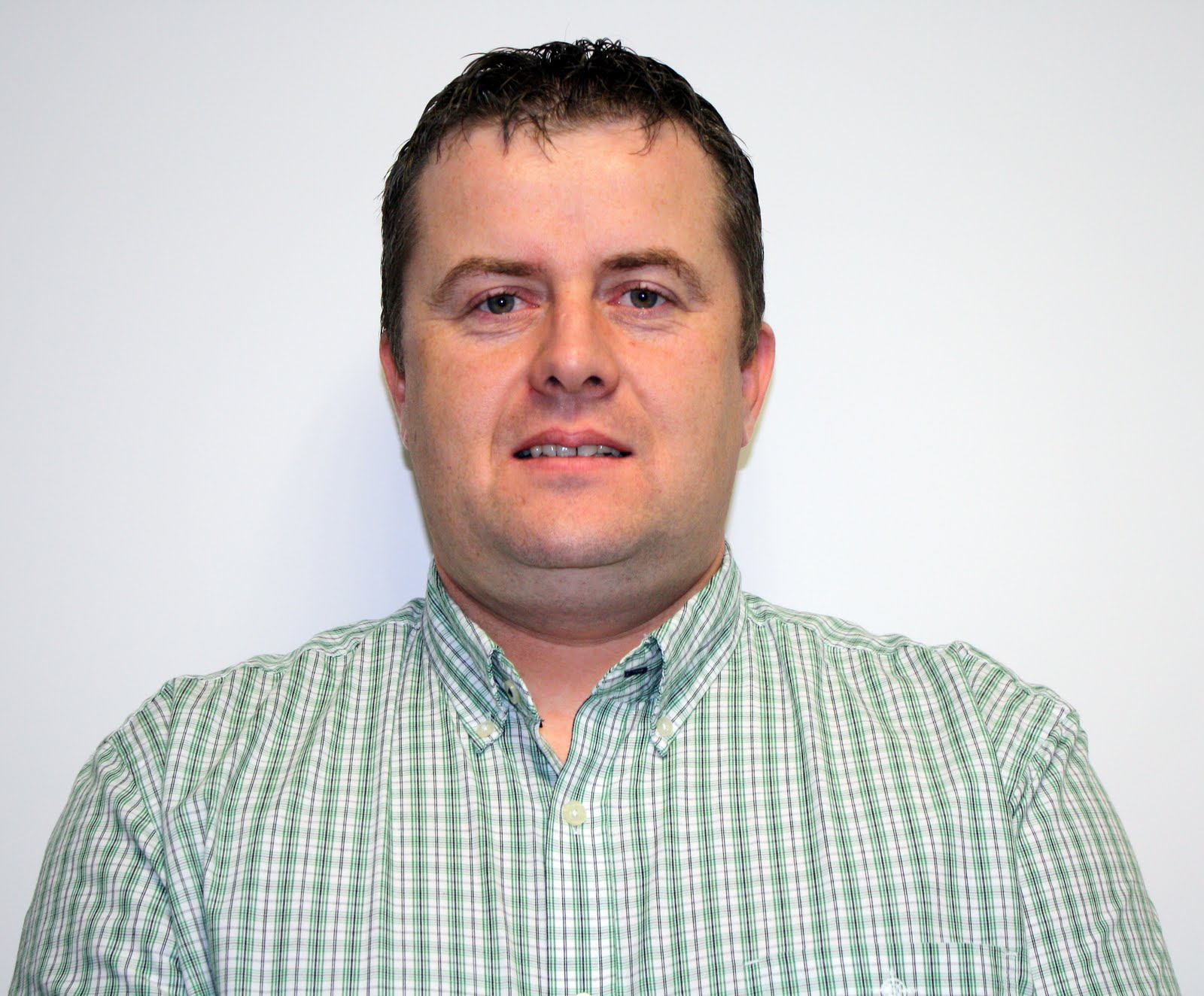
County Kilkenny Leader Partnership recently appointed Mike Redmond as the supervisor of its Tús scheme.
Mike has years of experience in the rail and construction recruitment industry here and in Britain. His main focus was to recruit, co-ordinate and manage operatives on some of the biggest British projects.
Mike Redmond, Tús Supervisor in Kilkenny

Mike told ‘Changing Ireland’ he is now profiling candidates for the scheme and matching their skills for the areas in which participants are needed.

“We’ve been into the communities and spoken to the different organisations and groups to identify the participants that they require. We’ve had huge interest from around 70 different groups in the Kilkenny area and we will have no problem filling the 80 places on the Tús Scheme. We’ve interviewed 18 people in the Piltown area this week,” said Mike.
“The groups are looking for people in different areas, it’s a mixed bag really, everything from sporting coaches to green area workers. I’m getting stuck into it now and while we’re only getting up and running I’m sure it will be a great success,” he concluded.

The Tús initiative is a community work placement scheme for unemployed people and County Kilkenny was allocated 80 places. Participants are identified by the Department of Social Protection and then referred by Kilkenny Leader Partnership.
You can read earlier blog reports on Tús here, while our Summer Edition of ‘Changing Ireland’ features 2 pages of reports on how the Tús Scheme is being rolled out nationwide. 

HA-HA!! 10 YEARS OF CHANGING IRELAND CARTOONS!

HAHA-HAHA-HAHA!!! TO MARK OUR FIRST DECADE, HERE ARE SOME OF ‘CHANGING IRELAND’s BETTER CARTOONS PUBLISHED IN PRINT BETWEEN 2001-2011!
Thanks in particular to Austin Creaven who provided us with some great work.

CLICK HERE TO SEE THEM ALL.


ENJOY!
– Allen Meagher, editor