Friday, July 3, 2026
Home Blog Page 56

County’s First Gay Visibilty Week

Lesbian, Gay, Bisexual and Transgender Visibility Week was launched on November 14 in Wexford – the first of it’s kind in the county. It was organised by ‘Gay Wexford’ and supported by LGBT Diversity and Wexford Local Development.

Events included a ‘liberating party’ celebrating LGBT pride, a lecture about Transgender Awareness, a slideshow presentation of the Irish Queer Archive, a Civil Partnership information seminar and a screening of the Hilary Swank movie ‘Boys Don’t Cry’.

‘Youth Rising’ in print

Youth Rising

Spunout.ie has published 20,000 copies of a new youth magazine called ‘Youth Rising’ and if your local youth group wants copies, they’re available for free.

 
The magazine has already gone out to schools, colleges, youth centres, cinemas, cafes and other youth settings throughout the country.
 
‘Youth Rising’ features the voices of young people covering topics such as unemployment, sexual health, emigration, protest, politics, music and humor.
 
It features a full directory of youth organisations and help services throughout the island of Ireland.
 
To request bulk copies email: info@spunout.ie

Blue Drum – 10 Years

10 years of Blue Drum

Community arts organisation Blue Drum this year celebrates 10 years working with families and communities. Thousands of community workers have been trained in the arts and Blue Drum has developed a volunteer programme and an arts and health programme.

“Gone are the days when art is put in its box as a tool, therapy or trophy,” said director Ed Carroll. “Our work continues to be ambitious and precarious.” Traditionally, community arts work has been dogged by poor facilities, materials and skills – which made attracting the support of local arts organisations and offices vital. 
Funded by the Family Support Agency and receiving €80,000 in funding, the organisation works with 107 Family Resource Centres (FRCs). Over the next decade Blue Drum sees its role as an advocate of artwork in and by communities, promoting local art practices and expressive life.
“A core part of our work will be to convince others about the public value of this work,” said Mr Carroll. The organisation is committed to promoting cultural rights. Recently, Blue Drum, in response to thousands of requests, organised hundreds of artist workshop days for FRCs, to showcase the work of Travellers, children and women.
Like many other community projects, the organisation faces cutbacks. “This work won’t just get cut-back but cut-out,” added Mr Carroll. “We need advocates who are loyal supporters of making more artwork happen in local communities.”
Blue Drum is registered as a charity and managed by five part-time project leaders and three volunteers.

It’s time to measure the value of volunteering

Conor Hogan

       EU Year of the Volunteer report

BY CONOR HOGAN
It has been said that for every euro spent towards volunteering, the yield is between €5 and €8. Such arithmetic is crude, however, for in reality they are priceless for those who need their help. 

Perhaps then there is some karma in the fact that altruism is good for you, as a US report published in 2007 found that volunteers have greater longevity, higher functional ability, lower rates of depression and less incidence of heart disease.

As well as its health benefits, volunteering is also a definite way to express a person’s active citizenship. “With our sovereignty in this country currently compromised, volunteering is a way of making yourself involved in the decision making process,” Dr Yvonne McKenna of Volunteer Ireland told us.
Despite all these positives, only about a quarter of the European population gives of their free time to help others. It is thought that the Irish participation rate is below the European average, although no national volunteering records are kept.
“In the 2006 census,” said Ms McKenna, “one in six people ticked the box to say they were volunteers. Currently we don’t know what the figure is, as there wasn’t an option to say you were a volunteer in last year’s census. Most countries in Europe keep a record of the number of volunteers, and this is something we really have to do. If the figures aren’t counted, it doesn’t count.”
As well as the need for a record to be kept, it is important, not only that we make efforts to encourage the practice of volunteering, but to commemorate the selflessness of those who do. The Ireland Involved Awards, for instance, which took place on December 5th, honoured the work of volunteers across the nation. This year has also been declared ‘European Year of the Volunteer’ by the EU and local volunteer events were organised in every county and indeed country.
Volunteers in Sligo
A European volunteer ‘Roadshow’ toured Ireland in August – 70 Irish organisations took part. “We held three volunteer roadshows,” Ciara Herrity of Volunteer Sligo said, “and we held a week of activities, most of them events to recognise the contribution of volunteers in the lead-up to the National Day of Volunteering on September 30th.” Over 8,000 people took part in community and charity events across the country on that day.
“From my own experiences in Sligo,” Ms. Herrity said, “participation rates seem to be quite good. We advertise through our database of people and local community notes and don’t find it difficult to get people involved.” She too bemoans the governments decision in the last census not to add an option for people to identify themselves as volunteers, as she believes the numbers volunteering have increased in the last five years.
“It would be very interesting if we could note a trend or pattern,” she said, “though without the statistics we don’t have any hard evidence.” With that in mind, let’s hope the European Year of the Volunteer leads to a continued increase in participation rates. We won’t know however if we don’t keep count!
*Note: Volunteer Ireland is a new organisation born from the merger of Volunteering Ireland with Volunteer Centres Ireland. The LCDP supports 25 volunteer centres around the country and all Local Development Companies support and promote volunteering.

Nationwide support for volunteering
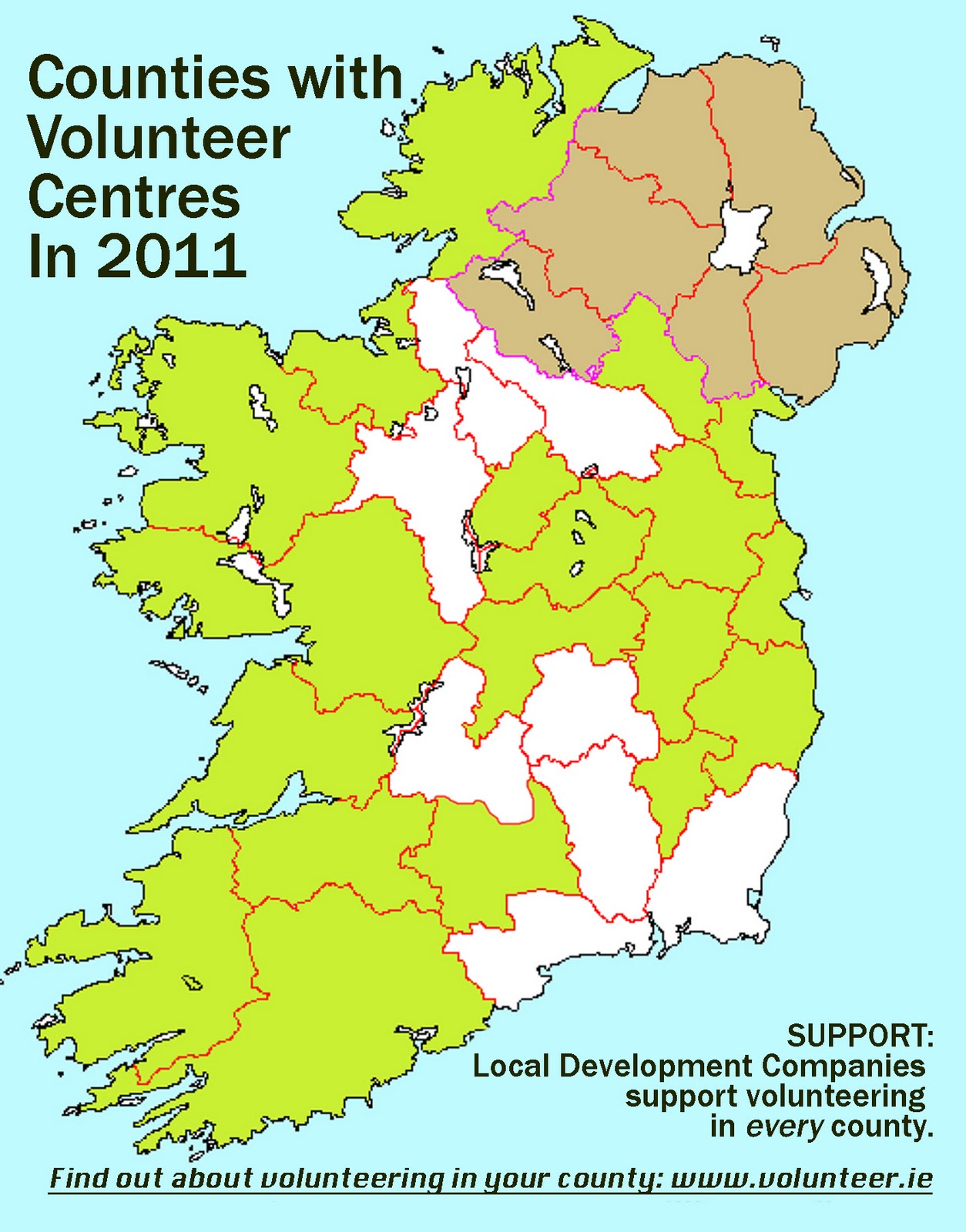
Dublin is well-covered with volunteer centres in five locations where you can drop in and see what the needs are in your area and what best suits you.
Outside the capital, 17 counties have volunteer centres while local development companies support volunteering in every county.
The website volunteer.ie gives local contact information for every county.

VOLUNTEER PROFILE: Mary Lee Geary

Mary Lee Geary

As chairperson of the Community Development Association in Broadford in 2005, Mary Lee Geary turned activist and led the community in opposition to a proposed mobile phone mast in the village. 

It would have overlooked the site where the community had just secured planning permission for a crèche, social housing and after-school facilities.
The community marched and campaigned to oppose the mast for health reasons and because it would take away from the area’s scenic value. 

Mary is currently chairperson of West Limerick Radio among other voluntary positions.

What are you reading at the moment? A biography of Liam Cosgrave.

Whats the last film you saw? ‘The Guard’ starring Brendan Gleeson.
Person you most admire? Enda Kenny – because of his ability to bring people together.
How long are you volunteering in your local community? Since the early ‘90s.


How and why did you get involved?

The local community council was looking for volunteers and I got involved through my allegiances with Fine Gael.
What are the important issues in Ireland today?
Most of the important issues in Ireland are economy related – job creation, emigration and the future of our young people after they leave college.
Nationally, we need more
Positivity.  We should stop talking ourselves down and support the direction the government is taking. For instance, all that stuff we hear about burning the bondholders is nonsense. If we were to do that, how would we ever get back into the markets?
We need less … Economists, apart from George Lee.*
What difference has being a volunteer made to you?
You develop as a person and learn to work with other people and get to know your own community.
How have things changed since you became involved?
Lots of projects have come to fruition. For example, the old creamery has been converted into an enterprise centre and we built social housing. It’s thanks to the support we get from a core group of volunteers. We are up 50 points in the Tidy Towns, and of course the setting up of the crèche has been a great help.
WLR, the local community radio, which I’m involved in, has also been great for the people of West Limerick. We have applied for a new ten-year licence, and that should be granted in December, as long as we keep our two studios.
And the daycare centre in Broadford in association with the social housing projects caters for 20-25 people and is open from Monday to Friday.
Does anything annoy you in your voluntary work?
Getting projects up and running can be frustrating at times, but otherwise not really.
Is it as straightforward to attract volunteers as it used to be?
I don’t think it’s any harder. Most people are good to help out, to reach out to people. Recently we had a race day to fundraise for the local crèche and 54 people helped out. That is our annual event, and we raise between €12,000 and €14,000 through it.
I can’t finish without acknowledging the help we get from the Limerick County Council and Enterprise Board, without whom we couldn’t operate. And the people of Broadford are all incredibly supportive.
·          *Mary is George Lee’s cousin.
·        
Note: If you wish to nominate a volunteer from your area, contact the editor at editor@changingireland.ie

High five looking at alignment of local govt & local development sector

Jim Miley

Five people were appointed by Minister Phil Hogan to a high level steering group in September to look at how a closer alignment between local government and the local development sector would work.

The five were chosen on the basis of their experience and considerable knowledge of both the Local Government and Local Development sectors, said the Department of the Environment, Community and Local Government. They are:
Jim Miley (pictured) – former chairperson of Concern Worldwide, founder of myhome.ie and former secretary general of Fine Gael (in the late ‘90s). He was once a broadcaster and also served in the past as chief executive of Dublin City Chamber of Commerce. Mr Miley will chair the steering group.
Geraldine Tallon – secretary general of the Department of the Environment, Community and Local Government
Gerry Kearney – former secretary general of the Department of Community, Rural and Gaeltacht Affairs 
Dr. Patricia O’Hara – regional policy expert with professorial duties at the National Institute for Regional Spatial Analysis in Maynooth
Liam Keane – former regional co-ordinator of HSE South.
Martina Moloney – Galway County Manager.

It is anticipated the Steering Group will submit recommendations to the Minister by the end of January.

SUBMISSIONS INVITED
Interested parties have been invited to make submissions to the steering group and a number of presentations by key stakeholders have taken place. Questionnaires have also been issued to stakeholders including:
·       – local development companies and their representative organisation (namely the ILDN),
·       – County and city managers and their representative organisation (CCMA),
·       – the three representative organisations for the elected members;
·       – the network body for the Community and Voluntary Fora;
·       – Volunteer Ireland – the representative body for the 22 State-funded volunteer centres;
·       – the Wheel, Community Workers Co-operative, Social Justice Ireland as representative bodies for community and – – voluntary organisations; and
·       – Service users; by way of focus groups and questionnaires.
As part of the consultation process, the steering group is also accepting submissions from other parties as they come forward. 

The business of leaving Cork prison

“If I didn’t meet Breda before I left Cork prison, I’m not sure what I might have done.”

By Allen Meagher
James served four months in Cork prison and was the guest speaker people paid most attention to when he addressed a Business In The Community (BITC) event in Ringaskiddy in October.
On release James had nowhere to go and would have had nobody to support him only for BITC’s prisoner mentoring programme. Only for the Mentoring Service, he would almost certainly be homeless and may have re-offended.
He didn’t explain what landed him behind bars, didn’t give his surname and photography was disallowed. Among those listening were senior staff from Janssen, Ulster Bank, IBM, Musgraves and PepsiCo, all member companies of BITC.

 “I was embarrassed and ashamed for my family when I was before the judge, especially for my children. I was not without my problems before coming before the court and I was out of work.
“Prison was a shock. The cells are designed for one person, but you’d often have three prisoners to a cell. There are no toilets in the cells and you’re locked up for 17 out of every 24 hours. Prison dictated when I ate and slept and walked.”
Luckily, a teacher in the prison put James in touch with a mentor called Breda Wallace. “She put me on the right track and gave me direction,” James said, “She was very understanding and non-judgemental and she knew what I did and didn’t think less of me for it.”
He continued: “When I got out I’d no money, no flat and no-one to talk to. I spent the first nights in a homeless shelter.
Then he met his mentor and things began to improve as their weekly coffee meetings progressed. “She gave support in any way she could, for example, she helped me make phone calls and put me in touch with the Free Legal Advice Centre and Citizens Information. She helped me plan and organise… If I didn’t meet Breda before I left Cork prison I’m not sure what I might have done.”
James urged everyone to appreciate their freedom, not to take it for granted and, knowing that he was speaking to some big employers, he pointed out that he was available for work if anyone present had a position open.
He said he was “honoured, privileged and humbled to tell his story”. However, his story told more than a page of statistics would about the impact of one of BITC’s key programmes.
FACTBOX
The Mentoring Service’s aim is to assist prisoners with the transition from prison to the community with the ultimate goal of moving away from crime. It is a new programme managed by Business in the Community Ireland, in partnership with the Irish Prison Service, and funded by the Dormant Accounts Fund. 
It provides one-to-one practical and emotional support to prisoners before and after release. For now, it operates in Cork and Castlerea but will be expanded.
For more information contact: Patti McCann, Programme Coordinator T: 086-609-5460 or (01) 874-3848. E: pmccann@bitc.ie
Alan Shatter
Shatter’s leg up for former prisoners seeking work
The ideology underpinning our prison system is supposed to be that of rehabilitation, but what chance are people like James given to become functional members of society when only 52% of employers in a recent IBEC survey stated that they would even consider hiring someone with a criminal record.
As such, many former prisoners are condemned to a life of poverty, vastly increasing the chances that they will re-offend. A new proposal from Justice Minister Alan Shatter, however, hopes to give them a fighting chance by allowing them to omit the time they spent in prison from their CV.
The Spent Convictions Bill will, as Alan Shatter said in a statement “not entail a deletion of the record, but rather a non-disclosure of the offence in certain circumstances.”
The Irish Penal Reform Trust praised the new legislation, which will be published in early 2012, describing it as a “necessary element in ensuring that the commission of a criminal offence does not lead to permanent barriers to reintegration into society.”
– Conor Hogan

The other 1%

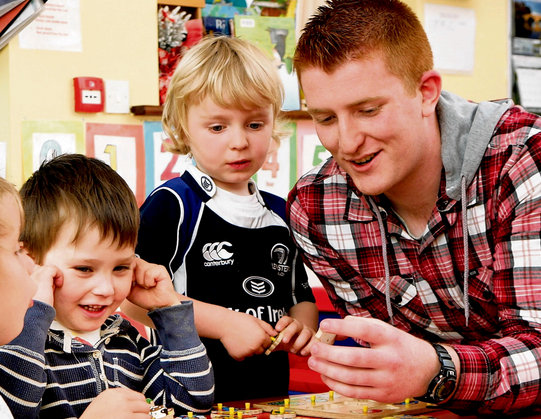
Childcare worker Damien Walshe with Bobby Hogan and Jack Keely (credit Matt Kavanagh)
– 99% of childcare workers are female
By Conor Hogan

It is strange that while completely normal for a man to take care of his own children, those who wish to make a career out of childcare are often greeted with suspicion.

“The question is sometimes asked – ‘Why would a man want to be in a room with children?’ – but the same would never be posed about a woman,” says Andrew Doherty of the Waterford County Childcare Community.

While this is one of the reasons for the low participation rate by men in childcare, it doesn’t quite explain the especially low rate in Ireland, estimated at less than 1% of staff – the worst in the EU. Compare this to the higher than 20% participation rate in Norway and Denmark. 

So, is there any immediate difference between Ireland and these countries that could explain this disparity?
For starters, there is a generally different emphasis on what activities the children are involved in. 

MEN IN CHILDCARE IN NORWAY

“In Norway,” said Mr Doherty, “children spend 60% of their time outdoors doing activities such as fishing and gathering timber. These are the kind of things that would attract a man into that kind of a position.

“In Ireland, we spend a lot more time indoors. Another cause would be the poor paying conditions. There is a certain expectation on men here to be the breadwinners – that it’s okay for the woman to do it, if she is not the main wage-earner in the house.”

Damien Walshe is one of that rare breed of pre-school carers, though it wasn’t a job he originally planned on doing for a living.

PARENTS “A BIT SHOCKED”

“After I finished my Leaving Cert in ’07,” he told us, “I didn’t have the honours Irish, so I decided to do the B.A. in Early Childhood Studies in Waterford I.T. as an alternative way of getting into primary school teaching. I went out on placement in the Clonmel Community Resource Centre and discovered that early years really suited me.”

His experiences since he started have been positive; however the rarity of men working in the sector took some people a little aback: “My manager had never even come across another man who applied for the position before. The parents, as well, were initially a bit shocked. Once they got over that, though, they were very welcoming and supportive.”

Mr Walshe is now in the second year of an MA in Social Studies in WIT and his thesis is focussed on “the influence male role models can have on the children of lone parent families.” Ireland currently has the highest of single-parent families in the EU at 23%.
Coupled with the lack of men in childcare, many children are growing up without a positive male role model.

Men In Childcare network

In 2004, the ‘Men In Childcare Network’ was established to support men working in crèches and Montessori, while raising awareness about the importance of increasing the number of men involved. They have also helped create a pan-European network of other male childcare workers across the EU. Their aim is to increase the male participation rate to 5% by the year 2020.

“We have to normalize the idea that men can be involved in Childcare,” Doherty said, “and what is very important is that we get the media interested in the topic”.
On November 19th, the network held a conference in Dublin entitled ‘Reimagining Childhood Care and Education.’

The Men In Childcare network receives support from Pobal.

T: 087-2299208.
E: menicirl@gmail.com
F: facebook.com/meninchildcare

Men in Childcare Hit Creche Barrier

As a companion to the latest edition’s feature on the lack of men in childcare, Changing Ireland commissioned this cartoon.

Enjoy!

Community safety: Parents found wanting

Martin Power, UL

UL Sociology Dept launched a report on November 4th that, if its recommendations were implemented, could make life a lot easier for people in communities plagued by anti-social behaviour.

“It’s a taboo topic, but everyone we spoke to mentioned children who were not being parented,” said Dr Cliona Barnes, co-author of the ‘Feeling Safe in Our Community’with Dr Martin Power.
“We didn’t anticipate the level of discussion about poor parenting from parents, all the residents’ groups, single parents, married parents, elderly parents, estate workers, all of the officals we spoke to. And this notion that the HSE should be responsible.

“Young people below the age of criminal responsibility are the main people responsible for unsafety. Not meaning to sensationalise it, or red-top it, but some people we spoke to are afraid of children, as young as four, because of who they might be related to.

“There’s a breakdown between the older generations and younger people. Older people are genuinely afraid of young people, it’s a big problem.

“So who is responsible when parents aren’t?”

The report is available in hard copy format through UL.

Take children outside!

Implementation Guide 

Play providers often say they need to strike a balance between the risks and the benefits of offering children challenging play opportunities. An easy to cut the risks down is to stay indoors, unhealthy though it may be in other ways.

In England, they’re trying to tackle this and the ‘Play Safety Forum’ with the backing of government departments responsible for children and education has produced a 128-page guidebook.

It’s called ‘Managing Risk In Play Provision: An Implementation Guide’ and Is free to download. Creche and childcare managers – in community and private settings here – may enjoy reading up on England’s approach while the turkey is in the oven this Christmas!

Download from: https://bit.ly/vglhbo

Building breakthrough communities

New Carnegie Resilience book
Tuesday November 22nd saw a networking session for community people in Ireland interested in the concept of resilience, REPORTS GEAROID FITZGIBBON.
The “Networking for Community Resilience” event was hosted by Davie Philip (Cultivate.ie) and Chris Chapman and supported by Carnegie UK Trust.


Nick Wilding said Carnegie is backing Community Resilience by supporting the sharing of best practice in England, Ireland, Scotland, Wales via its online network (www.fieryspirits.com).  As Mr Wilding pointed out, the concept of building ‘Community Resilience’ is backed up by on-the-ground experience and academic research into social capital.

Carnegie recently sponsored a handbook called ‘Exploring Community Resilience’ which shares stories and promotes greater co-operation among community activists, professionals, funders and policy makers.
Download from this link: https://bit.ly/vtF59L.

Meanwhile, Deborah Frieze, of the Berkana Institute did a session on the importance of games and play in community work, giving examples from Brazil and Africa of how “community games” had been used to tackle intractable community problems, as detailed in her book ‘Walk Out Walk On’.

International community development conference

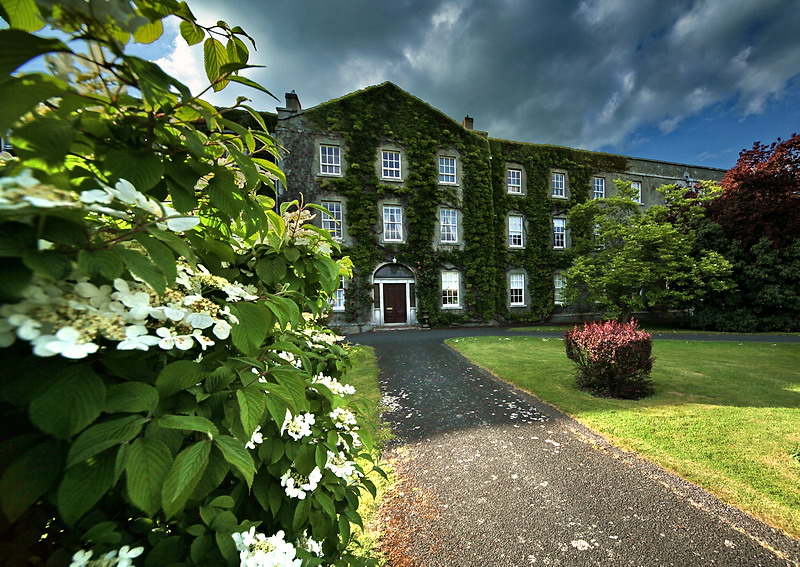
NUI Maynooth

An international community development conference was held in Maynooth
 on November 16th with speakers attending from Russia, Scotland, Australia, Holland, Liberia, Belgium and Ireland.

Around 170 people took part and the event was oversubscribed. “It wasn’t all about programmes and structures for change,” said one participant, “but about taking time to think about the need for community development today to bring about social change.”

Capitalism was widely criticised for the way it creates an underclass of people across the world. Dr Peter Westoby from Australia spoke about “going back” to really listen to communities and their real needs.

Rappateur for the day, Ann Irwin, commented afterwards saying people were asking if now was an opportunity for community development to reassert itself. “What struck me was the similarities the world over with community development being undervalued.”

She said Ireland was seen as “one of the frontrunners internationally in community development and participants from abroad were shocked at the changes in recent years here.” Ms Irwin said community development was now structurally part of local development and that the two were not the same.

The conference was organised by the Maynooth’s Department of Applied Social Studies, in association with the Community Workers Co-operative and the European Community Development Network. The conference was held in conjunction with celebrations to mark 30 years of community work, education and training at NUI Maynooth.

Six Tips for Michael D Higgins

Uachtarán na hÉireann Michael D Higgins

On November 11th, Michael D Higgins was finally sworn in as Uachtarán na hÉireann, and his election has been broadly welcomed.


Changing Ireland caught up with various people in the Community and Voluntary sectors, and asked them a couple of short questions about our new poet President.

Trevor Quinn, SIPTU

What kind of president do you think Micheal D will make?

I think he’ll make an excellent president. He’s a fair man, a straight talker and he understands the needs of people. He’s not one of those politicians in an ivory tower.

What advice would you give to him?

To follow through with his policies of social inclusion. Work to protect communities, whose heart is being ripped out at the moment.

What is your favourite Michael D speech?

My favourite Michael D speech is one of his last ones, where he spoke out against the government lowering the minimum wage. It was a fantastic oration and it came from the heart. It showed what kind of man he is, that it pains him when Irish people are hurting.

Anne Fitzpatrick, Community Worker Dodder Valley Partnership

What kind of President do you think Michael D will make?

I don’t know if he’ll be able to revolutionize the office of like Mary McAleese and Mary Robinson, though he did quite well as a Labour Party minister.

He’ll be make a good ambassador for Ireland, I’d say, because of his general knowledge in terms of international and European affairs.

What is your favourite speech of his?

His final speech was one of the best to ever come out of the Dáil.


If you were to give one piece of advice to Michael D, what would it be?

Stay in touch with the people on the ground.
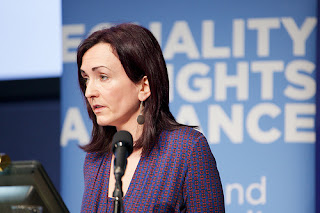
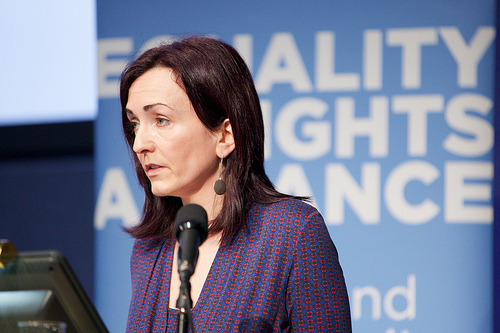
Rachel Mullen

Rachel Mullen – CoordinatorEquality Rights Alliance


What kind of President do you think Michael D will make?

It’s a time of unprecedented crisis and he’s the President that Ireland needs right now. I believe he’ll inspire hope and empower a country where people are uncertain and fearful about the future. I’m certain that the values he has always lived by- inclusivity, equality and respect for others, will be emphasised throughout his seven years.

What’s your favourite Michael D poem?

His poem ‘When Will My time Come’ is beautiful. There is a great line in it: ‘When my time comes, I will have made my journey.’

If you were to give one piece of advice to Michael D, now that he’s president, what would it be?

To enjoy the journey. He deserves it.
Manus Bree

Manus Bree, Community Worker Ballymun Whitehall Area Partnership


What kind of a President do you think Michael D will make?

An Inspiring one, I think. He’s very much concerned with the marginalised in society. The keystone of his Presidency will be giving them a voice.

What piece of advice would you give him, now that he’s President?

Reach out to parts of communities that aren’t being listened to or included, for instance the poor and the mentally and physically disabled. And I’m sure he will do that. Also, I’d tell him to enjoy it. He’s in his 70s now, and too often in this society we dismiss the contributions elderly people can make. He can provide a model for older people.

Is there anything that struck you from your experiences meeting Michael D?

He’s a very genuine man and a great listener, two important things for the role. He’s passionate and wears his strong beliefs on his sleeve. His academic background also gives him an ability to see the macro, and put policies into context. It’ll be great for the volunteering sector having a man like that as our President.

Ger Doyle, Community Worker and Social Enterprise Advisor

What kind of President do you think Michael D will make?

I think he’ll shift the thinking in Ireland from individualism to equality. This is key, because research shows that equality benefits all sectors of society.

What one piece of advice would you give to Michael D now that he is President?

He should highlight the need for a new economic model based on sustainability rather than profit for the private sector. He can set the tone for that by visiting certain community projects, and promoting the work of people like Peadar King, Maeve Murphy and other academics rather than economists like Colm McCarthy and David McWilliams.

Any Michael D moments that stand out for you?

When he had that debate with the American Michael Graham on George Hook’s show, I thought he was very impressive, very well briefed. He wasn’t afraid to express himself as a man of the left, and showed up the Tea Party for the crass organization that it is. 
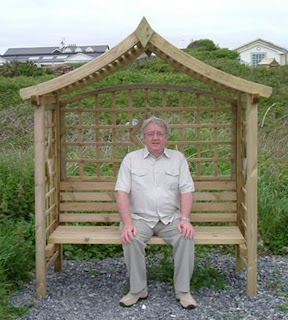
Pat Walshe (Connemara FM)

Pat Walshe – Radio Manager, Connemara FM


What kind of president do you think Michael D will make?

He’ll make a wonderful President. He has it all, the personality, and the cultural aspect, while his experience international will stand us in great stead. His values are ones that we can all share.

What is your favourite Michael D poem?

I don’t think poetry is one of his strong points. He’s a great speaker, though, and really enthusiastic in his speeches.

What struck you from your own experiences of meeting Michael D?

He’s our local TD and we’ve interviewed him several times. He’s always available – never refuses to do an interview. We’re hoping to get an interview with him soon. He’s shyer than you’d think and can get very nervous before going on the air. Brilliant with a crowd though – he’s an audience man.

What piece of advice would you give Michael D now that he is President?

To be himself. Simple as that.

New Women’s Aid service for immigrants

The Translation Service is available in 8 languages

Are you working with a female immigrant experiencing domestic violence who has difficulty speaking English?

In September, Women’s Aid launched a translation service for women experiencing violence or abuse in the home. The service is provided over the phone via the organisation’s helpline (1800 341 900) which is open from 10am-10pm seven days a week.

Women’s Aid provides support to community organisations nationwide to deal with violence against women and receives funding through the LCDP. Said Laura Shehan of Women’s Aid: “CDPs and LDCs often serve as a first point of contact for women experiencing domestic violence and our national helpline is a resource to workers in the Programme where they can refer women on to receive support and information from a front-line service.”
She added: “The new translation service gives all our helpline support workers the ability to connect women with limited or no English to an accredited and professional translator. They can facilitate the conversation between the woman and the support worker, that the woman can access support and information appropriate to her needs.”
Addressing an appeal to community workers to use, Ms Shehan pointed out that the service is available in a few easy steps:
1. You or the woman can call 1800-341-900

2. When a support worker answers the phone, state the language she wishes to communicate in.

3. Wait for a moment on hold while we connect to a translator

4. The woman may then speak to the helpline worker about her situation, via the translator on the line.

WEBSITE IN 8 LANGUAGES

If community workers are wondering how else Women’s Aid can also provide community workers with leaflets in seven languages covering domestic violence and the services available.
The website, www.womensaid.ie is also translated into eight languages (including Irish). In addition, there are resources available on the website to inform your best practice with minority ethnic women experiencing domestic violence.