Friday, July 3, 2026
Home Blog Page 55

Léargas actively looking for volunteers

Conor Hogan reports
No Irish demographic has been hit harder in the recession than the young. In fact, of the working population under 30, one in three is now unemployed – a statistic that doesn’t bear thinking about. 
Many are hit with the uncomfortable choice of drawing the dole, working for free as an intern or emigrating. There are some interesting options, however, the European Volunteer Service (EVS) being one of them.
The EVS scheme is funded by the European Union, and open to applications from anyone between the ages of 18 and 30. “The feedback we have gotten from those who have taken part has been almost uniformly positive,” 

Des Burke of Léargas, which manages European, national and international exchange and cooperation programmes in education as part of the Department of Education, tells us. “It isn’t easy, but the rewards for people who do it make it more than worthwhile.”

An EVS training group
In essence, the service is a volunteer swap between different nations in the EU (and some outside of it including Switzerland, Iceland and Norway). The aspiring volunteer identifies a country and volunteering position they would be interested in from an extensive database.
Generally, he/she will start their position three months after their application, and will undergo training in Swords, Co. Dublin before setting off. Transport costs are provided for, as are accommodation and meals. The volunteer also receives a small subsistence allowance and language lessons.
“Many countries in the scheme have populations with very good levels of English anyway,” Burke says, “so speaking French or German isn’t really an essential requirement really. The volunteer will also be mentored and provided with plenty of support in the host country.”
Positions available have designated themes including Arts and Culture, Media and Communications, Anti-discrimination, Disabilities, European Awareness and Rural Development. Some of the people who have participated in the scheme have ended up working in such diverse areas as helping blind people, working with the homeless, conducting art projects with theatre companies or participating in environmental or conservation projects.
The length of placement can vary anywhere from two months to a year depending on the volunteer. The funds available to administer it are relatively healthy at the moment, so Léargas are hoping more Irish people take up the opportunity to do it.
“We are currently taking more volunteers in than are going out,” Des Burke says. “85 volunteers come here as part of this compared to 35 Irish people that go abroad. It reflects the fact that Ireland is a popular destination, because of the English language and other Irish cultural aspects, but there is an opportunity for far more Irish people to take it up.”
For more information, contact Léargas via email at evs@leargas.ie. Deadlines for application are on May 1st, November 1st and February 1st.

The pipes are calling to promote a thriving industry

While other sectors may be suffering,  one that certainly hasn’t been affected by the recession is Uilleann Pipe making. The national bagpipe of Ireland is one of the most complicated instruments in the world to build, usually taking a master craftsman somewhere in the region of 400 hours from start to finish.
The waiting list for someone to get their hands on a set, which can retail anywhere from  €7,000 to €20,000, is often more than seven years. Ireland currently commands only 20% of this €7million-a-year industry, so the possibility of expansion, and the creation of more jobs, is enormous.
 
To aid this possibility, Fingal LEADER Partnership and Na Piobairi Uilleann have teamed up to provide a three year course in Art of Uilleann Pipe Making. The comprehensive programme will cover all aspects of the trade, including basic engineering, fine precious metal mork, the history and evolution of the instrument, as well as how to run a practicing business.
It begins this year, and it is aimed that by the end of the course each student will have produced two full and high standard sets of pipes.

When David meets Dermot

‘Dublin Valentines’ is an annual public conversation between playwright and poet Dermot Bolger and well known Dublin writers, presented by axis in association with Ballymun Whitehall Area Partnership and the North Dublin Chamber of Commerce. This year his guest is David McWilliams, the leading economic commentator.

The Irish Independent columnist was among the first to see that the Irish boom for what it was, merely a credit bubble, and accurately predicted that it would end in a monumental crash with bank failures, negative equity, rising unemployment and emigration.
The author of such acclaimed bestsellers as ‘The Pope’s Children’, ‘The Generation Game’ and ‘Follow the Money’, McWilliams will discuss the journey Ireland has gone through over the past two decades – and its likely journey in the decade to come – in a conversation that will be thrown open for the audience to actively participate in.
The event will take place on the 9th of February at 8pm. Tickets can be booked by visiting the website www.axis-ballymun.ie or by calling 01 883 2100.

EU Year of Active Ageing – Somebody Really Should Do Something!

By Marie Louise Byrne
2012 is the EU Year of Active Ageing and Solidarity between Generations – a somewhat wordy title which aims to raise awareness of the fact that we are living longer and staying healthier than ever before – and to realise the opportunities that represents.
Population projections indicate that by 2030 one in five people living in Ireland will be 65 years or older. With active citizenship and inclusion at the core of his inaugural speech, President Michael D. Higgins will launch the EU Year at a ceremony in Dublin Castle on February 9th, he will be joined by Minister Kathleen Lynch, Minister of State for Disability, Equality, Mental Health & Older People and also by Minister for Children and Youth Affairs, Frances Fitzgearld.

Ireland needs people who can make a difference in their communities and many retired people have the experience, wisdom and years of learning behind them that could help make that difference.
Community and civic engagement is good for all of us, but there is evidence from social science and gerontology that it bears greater benefits for older people’s mental and physical health, supports their ability to remain living in their own homes for longer and may even slow down the progression of dementia . Those over 55 already make a huge contribution to Irish society through volunteering, arts and culture, charitable giving, voting, caring and other forms of citizenship. An important challenge exists however, both for policy makers and for the community and voluntary sector; how do we support, nurture and create additional opportunities for community participation within a diverse, ageing population?
Recent research by Brian Harvey (July 2011) found that while there is high take-up of community education opportunities by older people – in the region of 30% to 50%; courses availed of tend to be generic. Few courses empower older learners with the opportunities to develop critical thinking, advocacy or leadership skills. Older people’s organisations have traditionally demanded “cookery and computers”. In 2010 Age & Opportunity began to work on a new project which would specifically increase opportunities for older people to develop their self-confidence, critical thinking and capacity for advocacy and contributing to decision making processes.
As part of this project members of Gorey Active Retirement Group in north Co. Wexford are now embarking on a unique eight week community development course, supported through the LCDP, which is aimed at developing their skills as active citizens, community organising, influencing policy and working together to address problems in their local community.
Gorey ARA training group
Madge Crowe the Hon; Secretary of Gorey Active Retirement Group is delighted that the group was selected as one of only eight areas in the country that will be participating in the On TRACk – Turning Retirement into Active Citizenship, pilot training project, which is being developed specifically for older people who want to contribute to their communities after retirement.
Having already completed courses such as Ageing with Confidence and Media Awareness with Co Wexford Age Equality Network as well as Introduction to Email & Internet with Co Wexford VEC, this group is more than eager to continue on their learning journey. This training will focus on skills such as leadership, working together as a group, community organising and analysing issues to solve problems. Madge herself, has already begun to use her recently acquired media skills by going on local radio to promote the training and to outreach on behalf of the group.
The Gorey group initially got involved in the project through Co Wexford Age Equality Network, which is an alliance of over 40 older people’s groups and individuals from across Co. Wexford who come together on a regular basis to share information, campaign on older people’s issues and run events or training. The Network is supported by Wexford Local Development’s Get Vocal programme, which aims to strengthen the voices of older people and support them to engage in policy development and decision making processes. Get Vocal is Age & Opportunity’s flagship community development programme that works with different organisations throughout the country. It is rolled out locally through a number of LDCs including WLD, Co. Wicklow Partnership, Breffni Integrated and Kildare Leader Partnership. Funding for the national programme comes from Atlantic Philantrophies.
At the core of all Co Wexford Age Equality Network activities are the principles of community development which are particularly relevant to older people who so often suffer from dependency stereotyping and ageist attitudes. The Network is entirely led by older people with support from a part-time development worker who is employed by WLD. It is a vibrant grass-roots organisation.
Wexford Local Development is supporting and delivering OnTRACk as an action under Goal 4 of the LCDP in collaboration with Age & Opportunity who are the national organisers. Two experienced local facilitators, are undergoing specialised training with Community Action Network and Age & Opportunity in order to deliver the course locally. WLD will be working closely with the 17 participants in Gorey throughout the course, to ensure that everyone gets the chance to use their energy, skills, knowledge, spirit of self-help and experience for the benefit of the entire community in Gorey town and the surrounding rural hinterland.
The training will take place in Gorey Adult Learning Centre and will start on Thursday, February 2nd, continuing each Thursday for 8 weeks.
More info from  Marie Louise Byrne, WLD, 053 9155864 and from Madge Crowe, Gorey ARA, 087 7674443 – madgecrowe@gmail.com

15,000 employed and 70,000 trained

Brian Carty of the Irish Local Development Network

– Survey of local development companies indicates

Over an 18-month period, Local Development Companies (LDCs) directly supported an estimated 15,000 people to find their way back into paid work, placed around 70,000 people on training courses and provided support to about 10,000 small business start-ups. Many if not most of these people were long-term unemployed.
 
The Irish Local Development Network (ILDN) has just published the results of a survey for 2010 and the first six months of this year. The survey covered just over half (27 out of 51) the LDCs in the country and our headline figures are based on a doubling of the numbers. The actual national impact may be slightly lower or indeed higher.
Of the 27 companies that took part in the survey, they supported 7,341 to secure jobs and found training places for 35,006 people and 5,175 businesses were set up with their assistance. For the first time, the full range of impacts delivered by LDCs – taking into account the myriad of national programmes they deliver – has been measured.
“It gives a company-wide picture of the impact and effectiveness of what local development companies are doing on the ground to support their communities,” said the ILDN’s Brian Carty. LDCs manage the local delivery of up to 18 funded national programmes in their areas nationwide and the survey covers work conducted under the LCDP, Rural Development Programme, Tus, Rural Social Scheme, etc.
The Local and Community Development Programme for instance invests 80% of its resources – through the LDCs – into helping long-term unemployed people, by supporting them to return to work and training, set up businesses or indeed find work for the first time.
Meanwhile, under the Tus work placement programme, the 27 companies will deliver places for 2,118 unemployed people this year. One-by-one, these people are being introduced to and successfully placed with voluntary and community groups in their local areas. The target is to have 5,000 people placed nationwide through Tus by year’s end.
Note: In relation to business start-ups, the survey also found the 27 LDCs supported a further 3,532 businesses at local level through the Back to Work Education Allowance Scheme and the Short-Term Enterprise Allowance Scheme.

Seanad Debate – Opposition divided over “alignment”

Minister Phil Hogan (FG)

Minister Phil Hogan addressed the issue of “aligning” the local development sector with local government in the Seanad on November 9th.

 
The Local and Community Development Programme is, Hogan said, “a key social inclusion intervention” in tackling poverty and exclusion through partnership between the government and disadvantaged communities. 
He continued: “The programme is more relevant than ever, given the current economic crisis and the level of unemployment.”

He noted how it works to increase access to formal and informal educational activities, increases people’s work readiness and their employment prospects, and provides a solid foundation for employment creation. Also, international evidence suggested Ireland was “leading the way with regard to evaluating the impact of the programme.” The Programme received €63.5 million this year. Nonetheless, change is imminent.
 
“I am convinced,” he said, “that the time has come for local government to take a more proactive role with regard to the social inclusion and quality-of-life aspects of its responsibilities.” He expects to see local government “take a greater lead in the administration and delivery of community and local development interventions at a local level.”
 
He said that it was essential to harness the “strengths and experiences of both the local government and the local development sectors.” and to ensure that “the best elements of both are retained in any revised local governance arrangements.” Hogan praised local development companies, who he described as having “a proven track record when it comes to delivering services for their communities.”
 
At the same time he pointed out how “it is inherently inefficient and ineffective to have local governance arrangements that perpetuate the funding of multiple local development agencies from a significant number of Departments and State agencies for similar, complementary or overlapping objectives.”
 
He referred to the new steering group, which he has given a broad remit to, that was established to consider how services can be streamlined, and to draft a “roadmap for delivering simplified, cost-effective and efficient services” and for a closer “alignment”. “The sheer scale and complexity of the current structures is still daunting,“ he commented, saying he intended, as his predecessor did, to get rid of duplication and overlaps in administration.
 
He noted the non-for-profit sectors importance to the economy – that it employs 100,000 people, “equivalent to the numbers employed in agriculture.” He also praised the work of unpaid volunteers.
SEANAD REACTION
Senator Cait Keane (FG) a former student of community development, drew attention to the EU’s growing affection for local development as a concept, noting that new regulations – linked to CAP reforms – “reinforce the centrality of community-led local development.” She welcomed the proposals, as did Labhrás Ó Murchú (FF), who was appreciative of the fact that the Minister had kept the details to a tidy four pages.

Sinn Fein was only allowed one minute of speaking time and in his brief few words Senator Trevor Ó Clochartaigh (SF) described the debate as a “back-slapping exercise.” He said: “The community and voluntary sector which I am in contact with is in crisis, because of the cutbacks in funding that have happened under the previous Administration and which are being followed through by this Administration.” He believed that services can be delivered more effectively by a standalone local community organisation rather than by local government.

Minister Hogan disagreed: “I do not believe it can be done efficiently because of the back office services and administrative burden it puts on the local community and also the fact that there is space and capacity in local government to deliver in a properly focused and aligned way.”

Senator Michael Mullins (FG) asked Minister Hogan whether people employed in local development companies “will become employees of the local authority?” 

The Minister replied the steering group would look at how best to realign the two. Later in the debate, Hogan indicated that CE schemes may move under local authority control. “We are in discussions with the trade union movement and with local government and the Department of Social Protection,” he said, “to roll out in 2012 an expansion of that programme through local government.”

Dail Report – Two Day Debate over community sector

Sinn Fein’s Brian Stanley

On October 11th and 12th, the Dail debated the work of the voluntary and community sector, prompted by a motion from Laois-Offaly TD Brian Stanley (SF).

The motion, which ran to two pages, called for the sector to be recognised, and in particular for the Government “to establish an All-Ireland Consultative Civic Forum promised by the Good Friday Agreement, which would enable communities to engage with others across civic society and across the country and share information, learning and best practice on an all-Ireland basis.”

Stanley noted that “even when public spending went up in 2009, the then government still cut the sector’s funding, with the new government quite happy to keep up this tradition.” He blasted the Government for “disproportionally” targeting the voluntary and community sectors (especially those working in the area of drug use and addiction) despite their “proven track-record and value.”
 
Overall, he estimated 5,000 jobs had been lost. Several other Sinn Fein TDs spoke after him:
Aengus O’Snodaigh said the hearts of communities have been “ripped out.”
– Gerry Adams referenced the payout to Anglo-Irish and asked what €700 million could do in terms of helping our people.
– Donegal’s Pearse Doherty noted how there were “more than 7,500 charitable, community and voluntary groups across the State, providing full-time employment to 50,000 people.”
Others censured the government for not supporting community art projects and drew attention to 24% cuts in childcare programmes this year.
 
The then Minister of State Housing and Planning, Willie Penrose (Lab) replied. He said the Government “recognises that the community and voluntary sector plays a crucial role in supporting social, community, economic and cultural life throughout Ireland” and “we have a responsibility to protect the vulnerable and disadvantaged in our communities”. They will have to do so, however, at a “significantly reduced cost to the public purse”.
He pointed to “considerable achievements” that had been made for instance by reducing the number of local bodies and by reconvening the Forum on Philanthropy. He said it was important to encourage a greater level of contributions from companies, which give on average only about 8% of what British corporations donate to charity. This could be achieved, he concluded, with efficient tax and legal frameworks. He stated that non-profits should “adapt to new realities” and attempt to partner more with corporations.
Galway West TD Eamon O Cuiv (FF) claimed that if responsibility for the voluntary sector and the partnerships is shifted to the local authorities, the taxpayer would end up with a much higher bill. 
Maureen O’Sullivan (IND)
Maureen O’Sullivan (IND) of Dublin Central meanwhile took issue with the misuse by some organisations of the word “voluntary”, noting how some “executives are on extremely high salaries and have lucrative expense accounts. They are doing a disservice to the real volunteers throughout the country who give so freely of their time.”
 
She supported a call to allocate €3 million to the community sector from the Criminal Assets Bureau, under the Proceeds of Crime Act. Minister for the Environment, Community and Local Government, Phil Hogan, was meanwhile criticised by Richard Boyd Barrett, the People Before Profit TD, for his non-attendance.
Cork North Central TD Dara Murphy (FG) rejected the claim of disproportionate cuts to the voluntary and community sector claiming that “in fact the reverse [was] the case”, which party colleague Sean Kyne from Galway West agreed with.
Minister of State John Perry (FG) drew attention to the funding of 64 national voluntary organizations announced during the summer. The TD for Sligo-North Leitrim clarified that the Government “does not see philanthropy and fund-raising as a substitute for State funding (but) rather as an untapped potential which can further support the not-for-profit sector.”
Mary Lou McDonald (SF) from Dublin was having none of it, however, saying “We’ve been told that the philanthropists will come and save the day… I understand that Fine Gael has a slash and burn approach to this sector. Small government is what it does and it is pretty much every woman, man and child for themselves unless one is a political adviser to one of the bigwigs, and then it seems that money is not a problem.” 
 
She then championed the work of the community and voluntary sector, describing their work as heroic. “I salute them,” she said, “Their work is patriotic and I salute them all the more because these people are the champions of their communities”. 
Labour’s Eric Byrne labeled her and her colleagues hypocrites, however, and pointed out that Sinn Fein and the DUP had reduced the funding for the Northern Ireland Community Relations Council by 70%.
The Sinn Fein motion among other things called on the Government “to ring-fence €50 million per year from the Dormant Accounts Fund for the community and voluntary sector, ring-fence monies seized by the Criminal Assets Bureau (CAB) for community development and community based drug projects and introduce a VAT refund scheme for charities.”
 
It was rejected by 88 votes to 45.

Wexford scheme has warmed 2500 homes & created jobs

Wexford Local Development
By Allen Meagher

Around ten Local Development Companies (LDCs) are delivering the Better Energy Homes Scheme around the country along with 20 other community-based organisations.

 
In Wexford, it’s been such a success that Wexford Local Development (WLD) were invited to showcase their work at an OECD/Pobal conference held in Dublin in October to examine local responses to long-term unemployment.

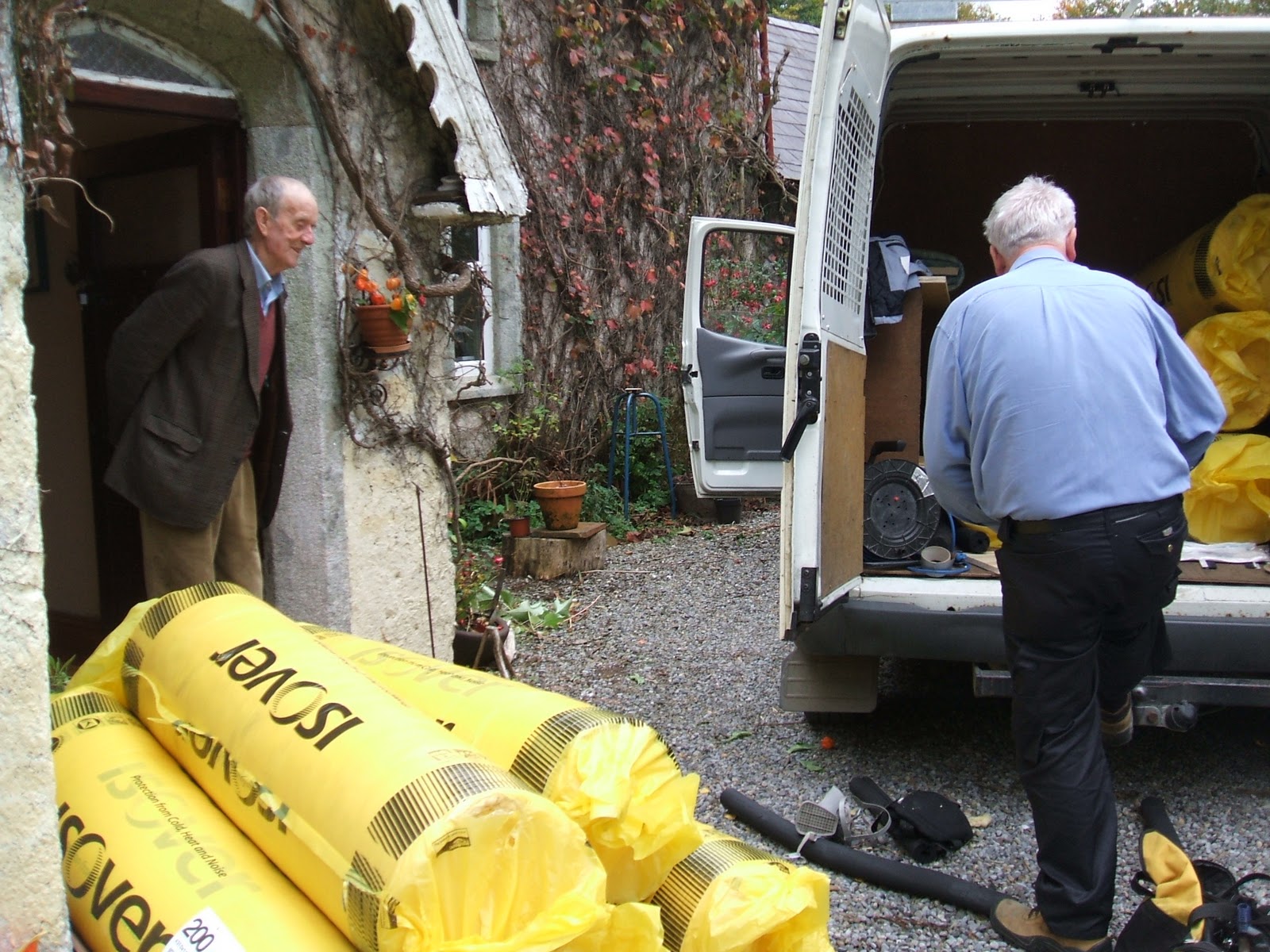
They’ve made winters warmer for 2500 households, created a half-dozen full-time jobs and train 25 people at a time (formerly long-term unemployed) in a jobs growth area. If you qualify for the fuel allowance, own your own home and it was built before 2002, you qualify for WLD’s retrofitting scheme.
 
The Warm Project surveys a home to see what energy efficiency measures are needed and can then step in with attic insulation, cavity wall insulation, draught proofing of doors and windows, installs lagging jackets, low energy light bulbs and provides energy advice to the householders.

Brian Kehoe

Brian Kehoe, CEO of WLD, explained to people who visited his exhibition stand at the OECD/Pobal conference that nobody is displaced by the work since it delivers warmer homes to people who could not afford to pay for it themselves.
 
“A lot of the people who apply are elderly, long-term unemployed, or have disabilities, exactly the kind of people we want to support.”
 
“If one person gets it done, a neighbour is likely to give us a call. And local social welfare offices help in getting the word out too,” he said.
 
A study some years earlier found many people, particularly elderly, suffered health problems due to draughty and damp houses. This Warm Project addresses the issue. All participants on the project receive FETAC accredited training in “Installing Thermal Insulation” and also receive training in Health & Safety, Manual Handling, Safe Pass etc., and also received industry recognised training in cavity wall insulation.

WLD would “embrace” the opportunity to up-skill its workforce and get them working on the installation of solar panels, renewable energy heating systems, rain water harvesting systems and external wall insulation.
 
The scheme is managed by WLD, working in partnership with the Sustainable Energy Authority of Ireland, FÁS and other partners such as the ESB. Funding from SEAI for 2011 was approximately €520,000.
The Warm Project is an important part of WLD’s labour market strategy under the LCDP.
 
www.wld.ie

Group insulation schemes can jumpstart your local economy!

Gearoid Fitzgibbon writes
Investing in home insulation and energy efficiency gives a better return than most other sorts of investments: it saves the householder money, it gives work to local contractors, it circulates money back into the local economy, and, from a national perspective, reduces our dependence on imported fossil fuels, and lowers our carbon emissions. 
It also counters fuel poverty, which affects 16 % of households (according to a 2001 survey), a figure that will have only increased since the recession.
 
Where once the case was made for such investment from a “green” perspective, it can now be proven from a purely financial point of view. Communities and community groups around the country are hungry for actions to boost the stagnant local economy.

With 20% of our energy consumed by households, communities and community groups are primed to play a huge role in transforming the energy profile of Ireland. Already a diverse number of communities have begun this work:
 
– Clonakilty in West Cork has set up “Sustainable Clonakilty” (www.sustainableclon.com),
– Dundalk Sustainable Energy Zone (an EU Commission funded project to showcase innovative technologies, policies and practices needed to develop sustainable energy communities), as well as Ballynagran, Co. Wicklow and Kinsale, Co. Cork.
– The DrombaneUpperchurch Community Energy Survey is another example, and shows the potential for engagement of local communities in these initiatives.
Community based energy conservation projects have a number of key ingredients, which can be replicated.
  1. Research phase: collecting data to create a profile of your community’s energy use and insulation levels; using advice and support from local agencies (academic institutions and local development companies can help here).
  2. Action Phase: putting in place the resources to carry out the conservation work – (price reductions may be negotiated with energy insulation companies where groups of houses are clustered together).
In the current climate, finance for the required investment is an obstacle. Ireland does however have a network of community owned co-operative finance organisations – the local credit unions. 
The Department of Communications, Energy and Natural Resources and the Department of the Environment, Community and Local Government, and POBAL should match the appetite for self-help of community groups by instructing LDCs to prioritise energy conservation work. It offers a guaranteed return.

To read Gearoid’s article about the branding of local development companies, click here.

Tipp parish targets energy waste to spur rural economy

North Tipperary Energy Presentation

By Allen Meagher
 
An energy audit by community volunteers and development workers has found that a parish in County Tipperary spent over €1million last year to heat and power its 400 households
Thirty homes in the area had no insulation whatsoever while others were poorly insulated and were difficult, not to mind expensive, to heat. Much of the housing stock in the area dates back to before 1920.

 “Cutting energy use by 25% would be the equivalent of a €250,000 investment. What are the chances of a company investing that much in a small local area in the current climate?” asked local development worker Gearóid Fitzgibbon.
His company North Tipperary LEADER Partnership and the self-styled Drombane Energy Team, hopes the local community (pop. 1000) see the savings to be made and invest in retrofitting and insulating their homes. If so, locals will get the work and phase 2 of the project will be off the ground. The unique audit, available online (on.fb.me/drombanenrg) raised awareness about the existence of grants from the Sustainable Energy Authority of Ireland (SEAI).
Nine in every ten households in the rural district were informed they qualified for grant assistance for energy improvements: 82% for partial grants, 13% for the full Warmer Homes Scheme Grant. The house-to-house survey was carried out by teams of volunteers from Drombane/Upperchurch using a mapping system designed by the local GAA club.
The combined voluntary efforts were equal to employing a full time community worker for eight months. There was a very high response rate of 87% (350 out of 400 homes) and the finished report was launched in Drombane in October by SEAI boss Professor Owen Lewis. According to local organiser Con Harrington: “Small communities like ours must take a self-help approach, and not wait on state initiatives. Local people know what is best for their locality. If they take the first steps, state agencies will come on stream.”
One of the key partners on the project, Seamus Hoyne, manager of Tipperary Energy Agency (TEA) said: “In the current climate, money spent on conserving energy offers one of the best returns on investment because you make long-term savings.”
Mr Fitzgibbon (also chairperson of Changing Ireland Community Media Ltd) has worked with others on the project for nearly two years: “This project began with the question ‘What can we do to get something going in our community?’ In an age of energy scarcity and financial instability, it’s inspiring to see a community working to come up with its own answers.
This survey has given us the data from which to launch Phase 2 of the Project – getting local people to invest and draw down grants, and getting the work done.”
The official launch in Drombane Hall came with a half-day information and advice clinic where staff from TEA gave householders confidential feedback one-to-one on their individual surveys. They also got a chance to discuss options with certified energy and retrofit companies.

“I gained confidence; we all benefitted” – says 19-year-old organiser

Emeka Iroaganachi

Young people in Longford are putting it up to youth groups around the country to organise big multicultural events.

Emeka Iroaganachi, 19, is president of the Longford Multicultural Youth Group and he and his friends spent a year organising for one event in particular.
“When I originally joined the group,” he tells us, “I had little interest or motivation. Then last year, I visited Belgium and saw what youth groups there were able to do, the cooperation between different nationalities. It motivated me to go out and do something, get something off the ground.”
Cultural Diversity Day on August 13th was one of the biggest events they committed to organising.
“From when we first started planning it until it took place, the whole process took about a year. It was hard to convince people and explain the benefits to them, but we managed to get sponsors such as Eircom on board and Longford County Council and Longford Community Resouces helped.
“Other things, on the organisational end, that had to be sorted as the day approached, was getting the lighting correct and the setting of the sound system, and many other things.”
The effort paid off, and the response to the event was as good as they could possibly have imagined.
Young people pose at Longford’s Diversity Day, August 13th
“It developed slowly, but by the end of the day, the place was packed out. People definitely benefitted from the interaction and gained a different understanding.
“Personally speaking, I gained a lot of self-confidence from the experience. In many Asian and African counties, there is almost too much respect for elders, and children aren’t listened to.
Many of them are scared to stand up for themselves. It is important that they are given confidence, something to look up to. The need to be given a voice, and for that to happen you have to go out and do things yourself,” he said.
One of the obstacles for a group such as Emeka’s is keeping it up and running. “We need more funding.” he says, “A lot of the time we rely on our parents to keep the group going.” The group meets every Sunday at the Attic Youth Cafe in the Temporance Hall, Longford Town.
Longford wins ‘Top Teens’ award
Longford’s youth groups have also made waves nationally, with one taking the top prize at the Foróige Youth Citizenship Awards in November.
The Attic Youth Café established in Longford town in 2006 won thanks to their introduction of a new student discount card.
The awards show was presented as ‘Ireland’s Top Teens’ on TV3.  It was the second time in three years that the Attic Youth Café won a national award; the previous one was for promoting active citizenship.

The challenges ahead in local development By Dr. Eileen Humphreys

Dr Eileen Humphreys

Dr Eileen Humphreys has written an article about local development in Ireland that is as up-to-date as you’ll find.
‘Local Development in Ireland: Review of the Current Position, Lessons and Future Challenges’ was published in August.
  
Dr Humphreys penned the piece for www.LDnet.eu which brings together views from across Europe on how best to support local development work. 
The UL and Thurles-based lecturer began by pointing out that co-operative working has been at the heart of rural communities in Ireland for a long time.

Over recent decades, the EU’s influence grew and it pushed “local development” which evolved to encompass social inclusion work while continuing to seek ways to support local enterprise and employment development. Local development work now also means supporting citizen and community participation in decision-making on public policy.
Dr Humphreys’ article brings readers through recent changes and the likely future role of local development in Ireland including what she describes as its recent “institutionalisation”. In reviewing the Local and Community Development Programme she says it’s early days yet, but already there are lessons to be learned, issues to face up to. She also talks about the challenges ahead.
To read the full article, go to LDnet.eu. Here we publish the bulk of her concluding remarks under the title ‘Lessons and Issues’:
“While there are new structures, a new programme and new procedures in place, it will take some time to see how well these will function in promoting local development and social inclusion.
…There is likely to be more pressure to show “hard” impact on the problems and, with deeply embedded problems and less favourable economic conditions, it may be more difficult to do so. In the interest of greater accountability, models of development which are less flexible and are not particularly amenable to the spirit of local development (taking local initiative) and innovation are now in place.
There are great challenges here.
The structures are established as not-for-profit bodies and so too is the central intermediary body, Pobal, responsible for management of these initiatives. To a large extent in the public mind, these are seen as an extension of the state apparatus. It could be argued that overdependence on state funding is incompatible with the role in promoting civil society development and, over recent years of social partnership, the whole approach was based on a consensus model.
Over-dependence on state funding has led to sterility in local development. This may be the result of local development being treated as a delivery system for public programmes?  It has certainly evolved in this direction.
Linked to this and the new governance debate, the civil society agenda and the role of advocacy are likely to be diluted in the local development structures. However, it could be argued that the more strategic structures (local partnerships) were not strong on this in recent years.
This space may be filled by more political activation, led by elites working to mobilise people from the grass roots – e.g. platforms to promote organisation and engage citizens, promote protest and alternative policies especially now linked to the substantial cuts in public expenditure on services and increased taxes associated with the EU/IMF bailout.
More engagement by citizens and communities is desirable.
It can be argued that genuine change requires a move away from consensus politics led by organisations almost totally dependent on state funding. In changed circumstances, community engagement might not be so elusive but different processes may be required to develop it? This is a further challenge.
The wider reform of local government is still outstanding. There is a view that when this happens, the local development structures will be brought within the control of local government. At present, this is not a scenario favoured by the local development sector as it is considered that the sectors (local development v. local government) operate with very different institutional cultures.
The latest reforms of local development (cohesion) may be one step before formal absorption into the state. The structures are clearly moving in this direction. The knowledge drawn from the past seems less relevant in these times when the solutions to employment problems and social cohesion are much less obvious but have an even higher place on the political agenda. 
It is not just about creating jobs but social, community and environmental sustainability and how we go about collective decision-making into the future. Perhaps there was never a greater need for social innovation and the re-invention of the spirit of local development?”

Country will be clean as a whistle shortly

A scrap metal collection

– Communities hoovering up scrap metal to raise funds

Keeping a local community organisation or sports club going can be a costly affair and many took to collecting scrap metal this year to raise money. GAA clubs led the way and the idea spread like wildfire because donating costs nothing for local residents and it’s financially rewarding for the clubs.
Steel, for instance, has seen its value shoot up from €30 to €220 per tonne in less than 12 months. Portmarnock Community School collected scrap to raise funds for a project in Lesotho. Meelin GAA Club in Co. Cork also jumped on the idea. So too did Castleisland Soccer Club. The list goes on.
The first to notice the skyrocketing prices were criminal gangs and across the country they’ve stolen everything from beerkegs to bronzeworks. But in Donegal for instance, it is the GAA that is doing best from the rising prices by holding ‘Scrap Saturday’ collections.

 Buncrana GAA chairman Paul McGonigle told the ‘Donegal Democrat’ that members were much happier collecting scrap than “traipsing around in the snow” to sell tickets for the Christmas draw, their traditional fund-raiser. Travel 383 kilometres south and it’s no different.
“It has become a common enough way of fundraising,” Alan Shire of Fedamore GAA Club in Co. Limerick told us. “Knockainey National School, for instance, raised over €20,000.”
His club were hoping for even a quarter of that amount, but they too found their expectations were exceeded and Fedamore brought in over €7,000.
Such a collection isn’t without its hazards, however. Criminal gangs have in the past stolen the goods after a collection. “You could say that schemes like this might draw trouble onto ourselves,” Alan said, “but the benefits outweigh the cons.”
Another obstacle for a time was GAA headquarters which initially discouraged the practice. In February, it wrote to clubs nationwide pointing out that scrap metal collections are not covered by the association’s liability insurance. Furthermore, the letter said that GAA properties should not be used “under any circumstance” for storing collected metal.
In Donegal, the local county council insisted that the clubs comply with the Waste Management Act. Fedamore, however, made sure that everything was above board before their collection on November 26th.
 “We checked with the County Council, the Gardai and the County Board and we were approved,” Alan said. “We found that as long as you go with a licensed recycler and you manage to get rid of it on the day, everything is fine.”
They collected everything from old cookers, ironing boards, radiators, unwanted cars, corrugated iron, batteries and worn saucepans and to drink cans – things that most people would only throw out or bring to a recycling plant anyway.
 
By pure coincidence, November 19-27th marked European Week for Waste Reduction.

International local development perspectives

LDnet.eu
A new website called ‘LDnet’ focuses on “local development” work across Europe and further afield. The site is being added to all the time and includes an up-to-date article on local development in Ireland.
It looks at a new pilot project recently launched in six US cities by the Obama administration called ‘Strong Cities, Strong Communities’. It also examines the pros and cons of British prime Minister David Cameron’s ‘Big Society’ approach to supporting communities, and much more.

15,000 employed and 70,000 trained

– Survey of local development companies indicates
 
Over an 18-month period, Local Development Companies (LDCs) directly supported an estimated 15,000 people to find their way back into paid work, placed around 70,000 people on training courses and provided support to about 10,000 small business start-ups. Many if not most of these people were long-term unemployed.
 
The Irish Local Development Network (ILDN) has just published the results of a survey for 2010 and the first six months of this year. The survey covered just over half (27 out of 51) the LDCs in the country and our headline figures are based on a doubling of the numbers. The actual national impact may be slightly lower or indeed higher.

 Of the 27 companies that took part in the survey, they supported 7,341 to secure jobs and found training places for 35,006 people and 5,175 businesses were set up with their assistance. For the first time, the full range of impacts delivered by LDCs – taking into account the myriad of national programmes they deliver – has been measured.
 
“It gives a company-wide picture of the impact and effectiveness of what local development companies are doing on the ground to support their communities,” said the ILDN’s Brian Carty. LDCs manage the local delivery of up to 18 funded national programmes in their areas nationwide and the survey covers work conducted under the LCDP, Rural Development Programme, Tus, Rural Social Scheme, etc.
 
The Local and Community Development Programme for instance invests 80% of its resources – through the LDCs –  into helping long-term unemployed people, by supporting them to return to work and training, set up businesses or indeed find work for the first time.
 
Meanwhile, under the Tus work placement programme, the 27 companies will deliver places for 2,118 unemployed people this year. One-by-one, these people are being introduced to and successfully placed with voluntary and community groups in their local areas. The target is to have 5,000 people placed nationwide through Tus by year’s end.
 
Note: In relation to business start-ups, the survey also found the 27 LDCs supported a further 3,532 businesses at local level through the Back to Work Education Allowance Scheme and the Short-Term Enterprise Allowance Scheme.