Friday, July 3, 2026
Home Blog Page 54

Mind your tongue, warns President Higgins

Anna Vissor and President Michael D Higgins at the Advocacy Initiative

President Michael D. Higgins has criticised the use of expressions such as “service users” and “clients” to describe people who interact with community and voluntary sector organisations.
He was speaking at a conference organised on February 13th by a new organisation called the Advocacy Initiative. Since President Higgins delivered a completely different speech to the one written for him and since it isn’t available anywhere else, ‘Changing Ireland’ is pleased to present it. 

Transcription by Conor Hogan.  Youtube embed at the bottom of the page.

Tá an-athas orm bheith ar maidin. I’m very happy to be here, indeed, the process of my speeches now is that I’m becoming ever more dynamic, so I’m changing them as I go along all the time. I’d like to respond indeed to your own quotation of mine over address. The first thing I’d want to say is to wish you well in sharing knowledge. The most useful thing I can do in a few minutes is to offer you a few reactions to your programme as I saw it. 

I went through a list of participants and people who participate in knowledge exchange in the forum, and they are very wide and varied and include organisations dealing with health and policy, others are dealing with issues of international development and poverty and so on. What they have in common, and it’s very interesting, and it’s the whole purpose of the knowledge exchange which I recommend is that people will be able to share strategies, and maybe the first point I want to make is that one can spend a great deal of time at a time of financial uncertainty and financial cutbacks in speaking of the consequences of that, but in a curious way as well there is an opportunity for discussing strategy, for discussing policy, for discussing assumptions and values and getting them in a sharper focus. 
One of the things I might say immediately as I prepared a rather substantial speech, I looked through it and it struck me that there is so many issues in all of this, that flow on if you like. I can only give one inaugural speech, but I’ve given many on the same theme. There are issues that arise about what the whole purpose of all of this might be. I think it’s a good idea to share knowledge and tactics. First thing you’ll notice, and it’s a very Irish thing, if that if something is working for somebody they’ll put a boundary around it. It’s the law of the limited good, if it’s working for you and you share it with everyone it’ll be less effective for you. That’s the first one but there are others as well. Other issues. Serious issues if I might be more provocative – issues of language. 
There is substantial differences at times between the language of the state, the language of the bureaucracy and the language of the voluntary sector. From time-to-time as one looks across the wide spectrum of press releases and so forth, I keep searching for the word citizen, which I use a bit and which I used in my inaugural address, and I find it is quite drowned by references to service users and clients and client bases and so on and so forth. This sets off a little alert in my own mind, that is the language doing the same damage in all of the sectors and isn’t it one of the functions of critical thinking and theory to find an appropriate language to deal with the purposes to which one is pursuing? 
I think therefore to be of use to you in many cases there are really practical things you can do today in sharing information, in sharing and discussing techniques in relation to strategy, and above all else, and what is most important, encouraging solidarity and innovation at a time of cutbacks and diminished financial provision. But it is also a time I think as well for recasting everything about ones involvement, in terms of language which I have already mentioned, but also in terms of structure. I, in my other life as a sociologist, was always struck by the assumption that are there in advocacy and lobbying. 
I spent nearly 30 years between the Dail and Seanad and 19 years in local authority, where groups would come to you trying to change legislation. The Equality Act for example, when the legislation arrives, they kind of paused at that stage for breath. But what they didn’t realise is that what is gained in the legislation could be lost in the administration. So it was matter of pushing on passed that barrier, and looking at the administrative structures in the same critical way that one looked at the desire for the legislation. Equally true in a practical sense, to be persistent, the forms of lobbying and influence for example and the changes in consciousness required differ at every stage of the flow chart from the beginning to the end. There’s a crucial decision.
There’s a decision between decision shapers and decision makers and decision takers. Sometimes the lobbying effort would be entirely around decision takers, where they elected legislators and so forth. But in fact the contours of the argument had already been decided by decision shapers, who were keen critical people within the administrative system, who had constructed the options, and this is an observation I would make not only about the state as a central entity, but the state locally as well. 
Another very favourite word, because words come and go in fashion, is the word partnership. Sometimes the County Managers Association are always wonderful in that, because I think they have a kind of lexicon of ‘words of the year’. So the word ‘de jure’ for a long time meant ‘partnership’. We’ve spent nearly a decade about that. But if you take some of the voluntary groups who are dealing with local authorities, and they come to a meeting about the housing of Travellers or something like that. And you’ll find the version of partnership is that the person who has responsibility for housing has in fact decided on the options and ran them through the system internally before they left for the meeting. And then because you are sitting at the meeting, and the page is like that (holds a piece of paper in his hand) in many cases, but at the end of the day the page is turned and you get what has been decided in advance anyway. 
There are real issues of language and there are real issues of administration and turning it into reality. There’s one of the things that public representatives do as well that is important and that is you should always have a large section of the speech congratulating the audience you are speaking to. Whether it is the Tidy Towns or something like that, you congratulate the audience that the horses aren’t in the gardens, windows aren’t broken and things like that. Then you kind of leave to rapturous applause. I’ve actually moved on from that myself because, as some might say, I’m running out of time. 
But I do think, and I what I would suggest is worth discussing as well is that Catherine McGuinness, a long time go, produced a wonderful paper on how the balance of the relationship between the state, the voluntary sector and civil society should still remain. For example, much of the formal pressure on the state, and correctly so thanks to freedom of information and other things, is to try and make the state transparent and accountable. But equally in the same way, if you move away from the regulation of the state, it’s important that people in NGOs and the voluntary sector be transparent as well. And be accountable and in fact actually implement and deliver the standards for themselves and those who work with them that they are looking for from the state. 
It has always struck me myself as well, and I looked deliberately through the list this morning to see the people who are involved, is that people burn out. And it is important that this time as well that in places where you have only one, two, three or four people working together that it be acknowledged that you cannot forever keep drawing on the well of endless energy and so forth. And it is part of the human relationships that are important in any particular time. That people allow for that. And again, it is something upon which as you said, correctly said, that when you are exchanging knowledge and solidarity and what have you, you’ll have so many good ideas yourself. 
John McGahern wrote a long time ago, that the problem in Ireland was that people felt they had to chose between the family and the state, when in fact they needed both. The discussion that is going on now about the state and civil society is a strange one all over Europe. I’m speaking next week in London about this at the LSE. One of the things about it is that there are models – it’s as if in fact there has been a loss in confidence in the state altogether, to some extent, and as well as that you have other options that are being developed, radical options, suggesting we can begin all over again in a communitarian idealistic way, other options saying that there are different versions of the civil society. 
The fact is that all of your organisations as I looked on them have to deal with both the state, civil society and communities. There is where there is a richness of experience across the organisations that are dealing with things differently because they have had a different range of problems. There is a great opportunity there. It is a difficult time, but it is a time that we have to get passed. There are possibilities in really sharp thinking. Real possibilities in sharing information, possibilities in focussing, strategy, in the good things that I claim as well. I think it’s important to turn the language around. The language that is there in a Weberian bureaucracy, providing services for them – there are loads of assumptions in that. 
And I think civil society has to lift itself into a language of citizenship. And therefore, it is not merely idealistic to speak of a rights based approach to the provision of services. That in itself is based on a philosophical assumption of the worth of the person you are dealing with. That requires a different language. It requires a language of the heart as well as a language of the head. And it is one of the greatest problems we have all over Europe about the way in which the citizenship agenda hasn’t emerged. 
It is a difficult time, there is no point in me listing it out again. We have emigration, large scale unemployment, poverty, people traumatised by a collapse in expectations and so forth. And I think as well as the former president of a soccer club, Galway United (throws his eyes up to Heaven), the fact of the matter is that the funding from the state is much more difficult for many of you relying on philanthropy as well. That is why there is such a great value in you getting together, so as to be smart about it all. Someone once said that knowledge exchange is in fact the ability to recruit smart people and getting them to talk to one another. But the fact of the matter is that I do think there are issues that can be discussed. I so wish you well in them. 
I think there are issues as well that arise in relation to things that were never faced in Ireland, that did arise in England and which there was kind of a good debate about. And that is the relationship between the social worker and the care worker. In the case of the British system for example, the social worker was somebody who spoke out of the state, making provision, the state centrally and locally. The care worker, on the other hand, was somebody who was coming from the agitational version of the need and its collective expression. And they were expected to sit across the table from each other, and hammer each other. One person representing the machine, the other person representing the human need, the blood and the necessity of it all and so forth. We can’t afford that really now. The argument should move on. That people must be at this stage moving on. 
Academics in some cases, as I look through the books to what has happened to the writing on social policy, from Professor Titmuss’s time on, is that there is a notion in many cases, and I’m ending on this because I’ve gone on too long, is that there is a single version or a script towards which everyone must now respond. That is not necessarily so. I’m ending where I began. There is a real debate to take place about what inclusive citizenship is. There is a real debate to take place about what the relationship of the state to civil society is. There is a real debate about how they are to speak to each other. There is a real debate in which how in fact citizens to which it’s all addressed, might receive messages and send messages. All of these are very real issues. 
I think constructive advocacy strategies must take account of that. But there are some core principals as well. There is not one single version of social policy which is called austerity and responding to austerity. There is a debate about the rights that citizens might expect. There are versions of social policy as to whether one is talking about a rights-based social policy that has some kind of equality as its aim, some kind of equality, and there is a debate within that as to whether it is equality of opportunity or equality in relation to participation. 
Then there is a vision of those who suggest, in many cases, there’s kind of, if you like, a meritocratic version of social policy. And that is those who have saved, and those who have contributed at a certain stage of their life, are entitled to certain types of guarantees. And then there is another version, which is a residual version of social policy. And that is that everybody can be allowed to sink until economic growth returns, and after that we will have something to spend in relation to rescuing people. 
These are not idol speculations. These are choices, they are debates. And I think when they are out of the way in many cases, it’s that ‘look, we are where we are’. And there will be information to be exchanges and strategic tactics and so forth. And I think that it is great that they will be changed. (Fiddling around with pieces of paper) I am now getting rid of the stuff that is quite useless to me. (The audience laughs) 
I wish you well. Later on this year, the seminar will be taking place. A working group is being established this week or next week about being young in Ireland. That will be of interest to many of you. Next year them seminar that I will try to get going is one on ethics. Because ethics is important. In the end of the day, it should be the departure point of all of our planning. Let me end by saying this, the good news is if you were about 14 months on the road like I was, I met a lot of communities. And one of the most interesting and exciting things is that people are talking to each other as citizens. Even though they are not calling it that. 
There are communities coming together, people not lying down under the weight of huge problems. They’re doing innovative things with gardens, innovative things in planning together employment strategies. And it’s all very positive. There are new shoots, and I believe those shoots are there to be developed. And if you have exchange of information in the new technology environment you have now, and in many cases look after each other, in terms of the demand on people up to the point at which they get worn out. We are not born to have a life cycle that is entirely cheerful. There are times in all our lives where the burden is very heavy. It’s very important people think about the strategies, how do you handle that in a small voluntary group? 
My message to you today is that I hope you find the resilience, wisdom, and the generosity and the solidarity that so many of you are practicing every day in what you are doing to deal with the remanence of what was a very fallacious version of the connection between economy and society. But the good thing is that it is all there to be created. You are making a very great start and I very much applaud, very much support and wish you well in all of this. I will be watching the new forms of advocacy and language that will emerge. Thank you very much.

25,000 jobs possible, says John Murphy

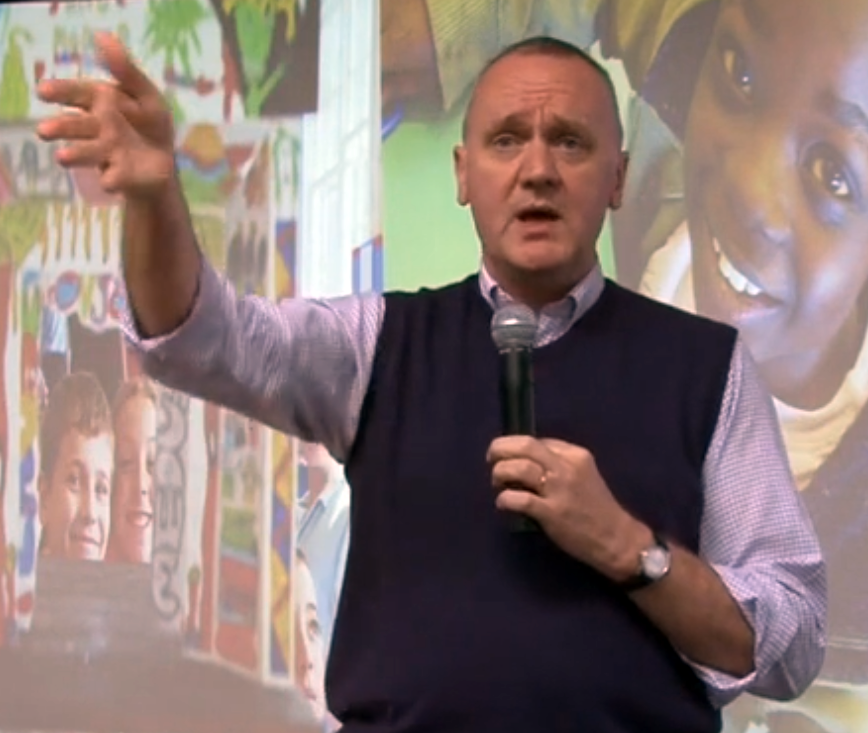
John Murphy CEO Speedpak

The EU Commission’s ‘Social Business Initiative’ reflects the value and potential the EU Commission sees in models of social enterprises and entrepreneurship right across Europe.
Social enterprises represent on average 5% of GDP in the EU but only 3% in Ireland – so we have some catching up to do. It’s estimated that if over 5 years we could reach the EU average we would create 25,000 jobs.

Giving EU-wide access to private and structural funds are very important developments for those engaging in social enterprise.
However, for the EU Commission’s initiative to have any impact nationally, it is important that the Government follows through on its commitment in the Programme for Government to explore the potential of social enterprise.
The report of the Social Enterprise (& Entrepreneurship) Task Force provides a roadmap for Government. It makes key recommendations that can support the development of the sector and ultimately the creation of jobs.
Besides the need for a national policy framework for the sector the report suggests:
       A Minister of State designated to have responsibility for social enterprise.
       Allowing access to existing support structures and procurement frameworks.
       Including social clause provisions within the public and local authority.
       Creating a social innovation fund and
       Piloting a Social Impact Bond Scheme. 
If the recommendations are followed up, jobs will result – something this country badly needs.
* John P. Murphy is the CEO of Speedpak Ltd, an award-winning social enterprise that employs, trains and supports local long term unemployed people through its two commercial businesses; Speedpak contract packing services and Shamrock Rosettes.

A London Perspective for Limerick

Michael Pyner

Michael Pyner established the Shoreditch Trust in Hackney, London, in 2000 and since then it has become a multi award-winning community investment and regeneration agency.

From growing lettuce indoors on walls (why not?!) to training former prisoners as chefs and buying up property to rent, much to the consternation of some funders, the Shoreditch Trust has shown an eagerness to take a fresh approach to community work. 
He shared his story along with his views on the models and the future of community and social enterprise at a seminar held in Limerick on March 8th. 
The event was organised by the PAUL Partnership and Limerick City Enterprise Board at which details of a new training programme for local community leaders were also announced. 
The programme was designed with cross-border collaboration and should lead to more jobs being created in the Mid-West in social and community enterprise.

Social enterprise – has its time finally come?

By Tanya Lalor and Gerard Doyle
Recent moves by the EU Commission on social enterprise will have a significant influence in years to come.
The Commission now sees social enterprise as being at the heart of the drive to create a more inclusive model of economic development than the current market-led one.

Social enterprises are part of the wider social economy sector, which is estimated to employ over 11million workers, or 6% of the total EU workforce. However, the EU Commission acknowledges that if a number of barriers affecting social enterprises are addressed, the sector can play a more central role in developing a more inclusive economy. So it proposed a number of actions:
·  Facilitating access to private funding.
·  Mobilisation of EU funds for social enterprises.
·  Encouraging member states to put more of the EU’s allocation of structural funds into social enterprises.
·  In awarding public contracts, social enterprises should be allowed compete for work.
Recent developments
Since the launch of the EU Commission’s ‘Social Business Initiative’ the following has happened:
·       In December 2011, a review of the Procurement Directives was announced by Commissioner for the Internal Market and Services, Michel Barnier.  One of the aims is to ensure greater consideration for social and environmental criteria which could really provide an impetus for social enterprises in the coming years. It is hoped legislation will be forthcoming by December coming.
·       The Commission introduced proposals for a new ‘European Social Entrepreneurship Funds’ label so investors can easily identify funds that focus on investing in European social businesses.
·       Also in December 2011, Commission László Andor announced plans for the promotion of the social economy and social enterprises through the European Social Fund. Further financial support will also be provided over the period 2014 to 2020 through the Programme for Social Change and Innovation.
Implications for Ireland
The Programme for Government has already made a commitment to promoting the development of a vibrant and effective social enterprise sector.  This has been followed up to in the recent ‘2012 Action Plan for Jobs’ in which the government commited to commissioning a report on the potential of social enterprise to create jobs, with a view to completion by end this year.
Ms Lalor and Mr Doyle work for TSA Consultancy.

Zumbathon – a fun way to find funds

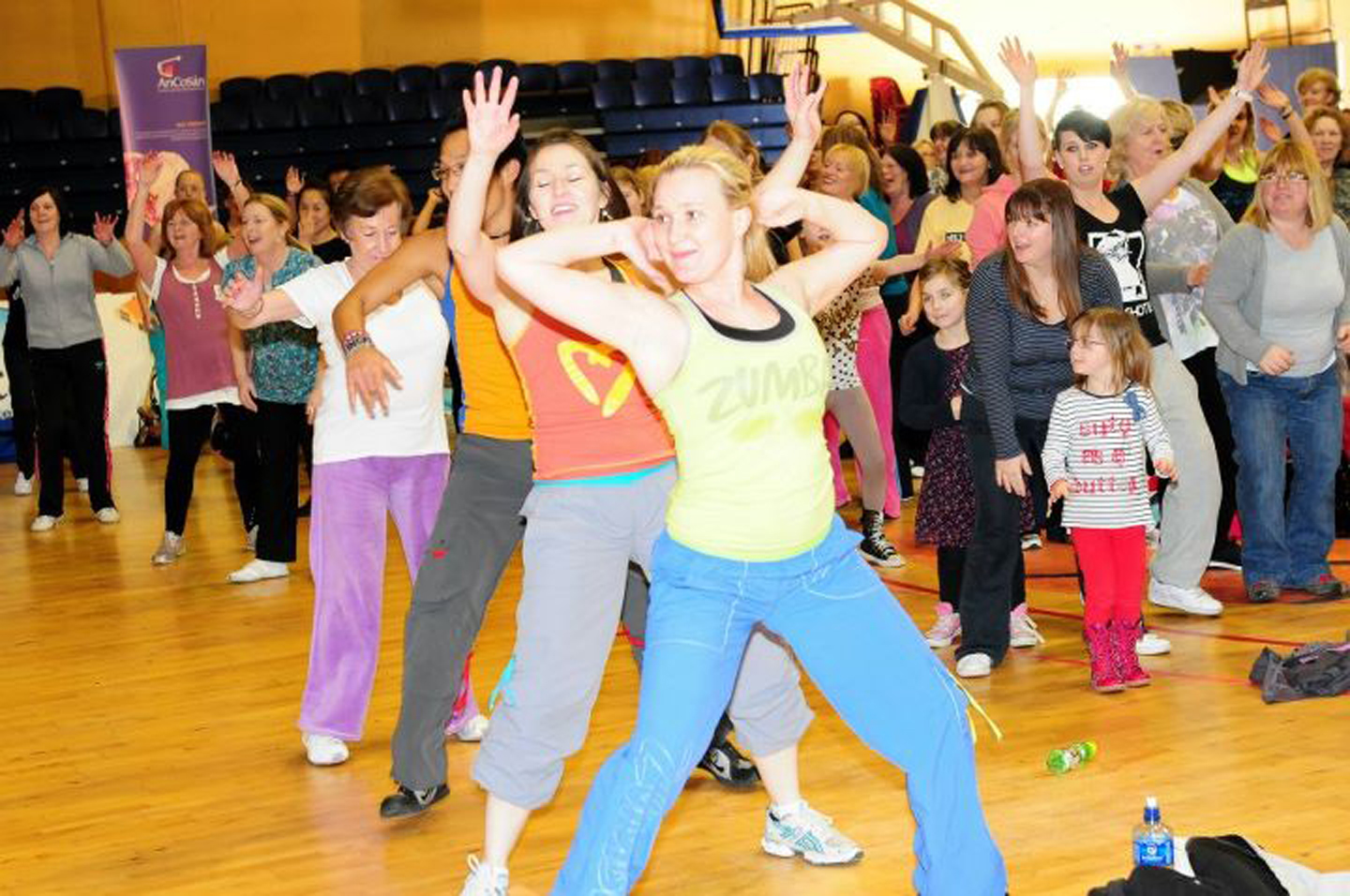
An Cosán Zumbathon

An Cosán, a women’s centre for learning, leadership and social enterprise based in Jobstown, Tallaght, have taken to some innovative ways to raise money.

Aisling Freeman has a voluntary fundraising role with the organisation. “We hope to do at least two fundraisers a year,” she says, “In 2011, we held a do in the Maldron Hotel which was very successful. We raised €6,000.” 

Her most recent fundraising activity with the group was a Guinness World Record attempt, which took place in the National Basketball Arena in Tallaght on February 12th.

Dubbed ‘The zumbathon’, the attempt was to get as many people zumba-ing in one place at one time as possible. 
Zumba is a latin-dance inspired workout routine that is garnering popularity throughout the nation. “I regularly take part in a Zumba class myself,” Aisling says, “It’s a great workout, a fantastic way to unwind and a lot of fun too.”
Adults were charged €11 to attend, while a family ticket (two adults, two children) retailed at €25. The hope was to get as many as 3,000 attendees and they managed almost 500. It was a success when fun and fundraising are measured. 
“We raised about €4,000,” Aisling says, “and everyone who came had a fantastic time.” The hope now is for it to become an annual event, and that eventually the record will be broken. 
“That’s the aim,” she says, “the more people hear about how much of a fun activity it is, the more people we will attract to the record attempt. ”
Another very successful fundraising attempt for An Cosán took place on International Woman’s Day, March 8th, when they held a lunch in the Shelbourne Hotel featuring Miriam O’Callaghan as MC and Minister Joan Burton as guest of honour.

Countries Warmest Centres are in Offaly

Over the past two years, 41 community centres in Offaly were audited  for energy-efficiency and a half- dozen of them have upgraded their centres through funding from the Rural Development Programme. 

Walls were dry-lined and insulated, windows replaced, better boilers installed and lighting changed. Among the areas with warmer more user-friendly community facilities now are St. Kilcormac, Coolderry, Ballykilmurray, Clonbullogue and Lusmagh. 

The Energy Audit Initiative is  now closed. However, for anyone with  queries about how Offaly Local Development Company conducted the audit and the repair/refurbishment scheme, contact Pauline Hoctor, OLDC,  Millennium House, Main St, Tullamore, Co. Offaly. 

E:phoctor@offalyldc.ie T: 057 9322 850 

Very Good News From Brussels for Communities

There’s good news from Brussels as more funds may begin flowing towards communities throughout Europe in two years time.

The European Commission talks for the first time in its spending plans about “community-led local development” as it looks towards 2014-’20.

The folk who write for LDnet want to know what this gobbly- gook phrase means, while acknowledging the Commission’s proposals mark “a turning point in favour of local development”. 

This is what the Commission has said for now: “(We) propose to strengthen community-led initiatives, facilitate the implementation of integrated local development strategies and formation of local action groups, based on the experience of the LEADER approach.”

Will the most marginalised people in communities have any real say in how the funding is spent in their areas, nationally and across Europe? Let’s hope that local organisations are at the centre of these developments and the decision-making involved.

Visit ldnet.eu for more. – AM 

Mary Connors is Traveller of the Year

Mary Connors
On December 1, 2011, Mary Connors from New Ross was presented with the overall Traveller Pride 2011 Award at a ceremony supported by ten national Traveller organisations.
She said, “I would hope that my grandchildren will not have to spend their lives fighting  for the things that are basic human needs and that many other people take for granted such as accommodation, education and common courtesy which has been in short supply for many a Traveller.”


The Wexford grandmother was honoured for her contribution to community and voluntary work. 

She said she looked forward to the day when “we can achieve inclusion, equality and ethnic status  for Travellers in Ireland with recognition of our culture.”
The national Traveller Pride Awards are now in their third year and there was a great turnout of celebrities and television presenters for the event with credit due to the Irish Travellers Movement for organising the event. Its aim  – to promote positive images of Travellers to counteract negative media stereotyping. Pavee Point, part of the LCDP, were among ten Traveller organisations involved in the event. 

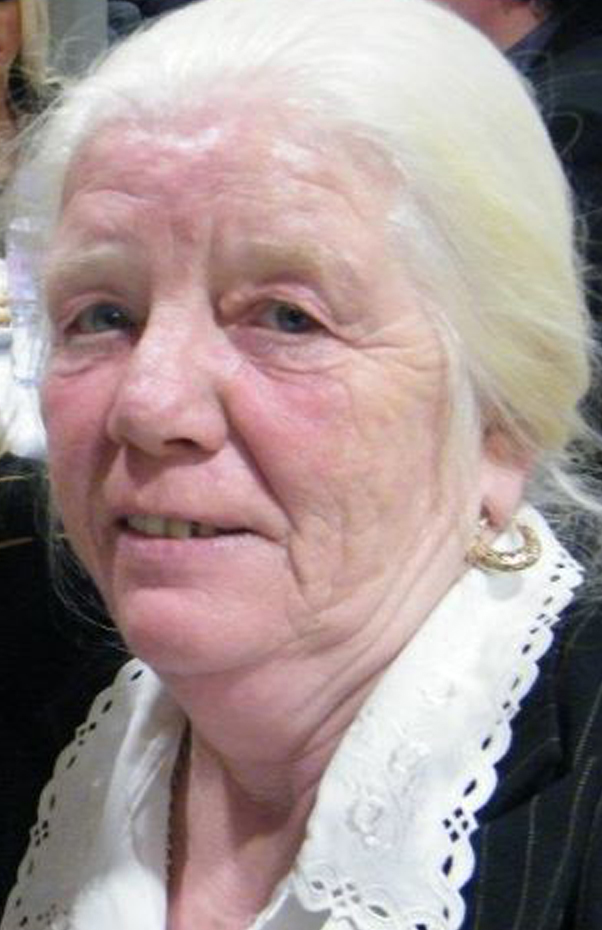
Clifden’s Mary Kirby – 30 years volunteering

Mary Kirby/Clifden

BY ROBERT MCNAMARA

Cancer survivor, volunteer and community organiser. There are many things that exemplify Mary Kirby of Clifden, Connemara, but it is her unwavering optimism that shines through the most.

“I always look at the glass as half-full, no matter what problems you have, whether it’s medical or financial, if you really look for the positive side that will take you through. I have found that in my own life.”

Mary has been involved in volunteer work for nigh on 30 years with the Irish Cancer Society, the Irish Countrywomen’s Association (ICA) and FORUM Connemara Ltd. Her work has found her taking many roles, from counselling people who have cancer to working on building social housing in Letterfrack.

“It’s amazing what a few people gathered together can do. You don’t need a lot of money, sometimes it’s just a few people together that can make the difference. It’s great fun too, it’s not all work.”

Mary began her volunteering career by using her own experiences with breast cancer to offer support to cancer sufferers. “I found it really rewarding to talk to people who were upset and feeling that they were going to die. To talk to them and tell them that I was there and I have recovered from this, I found that a very rewarding thing and that’s what really started me in volunteering.”

Mary was a founding member of ARC (Area Renewal Company) in Clifden and the first involvement she had with FORUM Connemara came about from a necessity to renovate Clifden town hall where she is a committee member.

“I went to them for funding for a feasibility study and they supported us. We’re getting work done on it at the moment and Forum Connemara have given us funding for it through the LEADER programme. Connemara is a big sprawling area where there isn’t that many people. It’s a disadvantaged area and FORUM knows the local needs on the ground,” said Mary.

“Through FORUM, a lot of courses have been held here and many women’s groups have formed and a lot of social outings have been arranged. It makes a big difference. It’s more the men folk that need help here in Connemara, more so than the women. Older farmers that never married. FORUM are working to get them involved socially.”

2012 is the ‘European Year of Active Ageing and Solidarity between Generations’ and Mary sees the young volunteers doing great work. “They are very sincere and very honest. If they are asked to do something they are only too happy to do it.”

Mary believes the personal touch is the best way to attract new volunteers. “One to one is the best way of all, you can be putting notices up until you are blue in the face but if you know a like-minded person, just go and ask them and most people, if they have a few hours spare, don’t disappoint.”

When she gets a spare moment, Mary enjoys the listening to Daniel O’Donnell and reading the paper at her home in Clifden. The town celebrates its 200th anniversary this year and with optimistic and energetic people like Mary Kirby, it can look buoyantly forward to another 200.

Mary Kirby is one of seven community representatives on the management board of FORUM Connemara Ltd. The company works with older people, families, young people, community groups, businesses and unemployed people in an area that stretches from Clifden to Oughterard, an area in Co.Galway known to officialdom as non-Gaeltacht Connemara.


The organisation was established in 1989 as a rural development partnership of voluntary, community and statutory bodies. Its aims to engage in social and community development and to support enterprise and the LCDP is among the programmes it delivers.


W: www.forumconnemara.ie/ T: 095-41116.

Innovative micro enterprise project comes to Ireland

Entrepeneurs 4 Change
– Community groups giving would-be entrepreneurs second chance
Five community organisations have pulled together and pooled resources to bring a new entrepreneurial programme to Ireland, one which has proven a success in the USA in giving social enterprises a start. In January, the programme helped 20 business hopefuls in Wexford and Dublin who initially had loan applications refused.
The ‘Entrepreneurs4change’ programme which may be repeated in other parts of the country began when a community organisation in Co. Wexford and four others from Dublin, including a national Traveller organisation linked up. The organisations are Dublin Simon Community, National Traveller MABS, Job Care, South West Wexford Community Development Programme and (Dublin’s) South Inner City Community Development Association. The latter two are part of the LCDP.

Twenty people who had shown they were passionate about starting their own businesses or social enterprises and creating employment took part in the fortnight-long programme. They were supported to develop their business ideas into sustainable business plans and to create their own personal stories in a video format to be pitched at future lenders and supporters.
One unique feature of the programme is ‘the Elevator Pitch’ which gives an immediate visual representation of the entrepreneur and his or her business idea. The term comes from what you would say to a stranger if you were in an elevator and had up to 60 seconds to speak to them before they reach their floor. Participants practiced what they would say so they’re able to reproduce it at any time. One participant Grace O’Mahony from Wexford said it gave her “a vital insight” into what she needed to do to set up her own business.

Sharon Kennedy, SWWCDP manager said that given the hardship people have getting business loans, “It is exciting to be part of a new national programme to support people who have business ideas that may generate employment and profit.” She welcomed the Government’s new Action Plan for Jobs 2012 and the development of a new Community Enterprise Development Programme through Enterprise Ireland along with a micro-finance fund which will provide loans of up to €25,000 for start-up businesses like the ones their programme is supporting.

A similar programme run in Los Angeles with homeless people led participants to turn their ideas into successes and they are now turning a profit. In Ireland, training for trainers was also delivered to the supporting organisations so the programme can be delivered to other communities.
Ron Schultz founder and executive director of ‘Lending4change’ and ‘Entrepenuers4Change’ said it was “incredibly rewarding for everyone involved. This has proven to be the right programme and the right time.” And among those keeping a close eye on the initiative are Social Entrepreneurs Ireland, Social Finance Ireland, Business in the Community (featured in our Winter 2011 editon) and Trinity College Dublin.

For further information, contact Ron Schultz (E: rschultz@lendingforchange.com) or Sharon Kennedy (E: coordinator@swwcdp.com). W: entrepreneurs4change.com/

South Inner City Community Development Association is based in the Liberties area of Dublin and is committed to promoting social, educational, cultural, economic and environmental development. It is
part of the LCDP.

Dublin Simon Community works to prevent and address homelessness in Dublin.
The National Traveller Money Advice and Budgeting Service is focused on the issues of over
indebtedness of Travellers and exclusion from financial institutions.
 
South West Wexford Community Development Programme (SWWCDP) is a rural community
development project and is part of the LCDP.
Jobcare has worked since 1994 with long-term unemployed people, assisting them gain the confidence,
skills and knowledge necessary to find and keep meaningful employment.

Especially for people who’ve been excluded

Des Burke

The European Volunteer Service (EVS) contains “specific supports to enable the participation of young people with fewer opportunities, for example as a result of disability, educational inequality, poverty or economic exclusion,” says Des Burke of Léargas.

The organisation funded nine young people with fewer opportunities than most to volunteer through the EVS programme in 2011. Funding is available to meet specific needs such volunteers may have and they can opt to do a short-term voluntary stint of between anything from a fortnight to two months. This may then lead to a longer-term service.

W-Leargas.ie.

For our previous posts on EVS click here and here.

New counselling initiative reaching people for first time

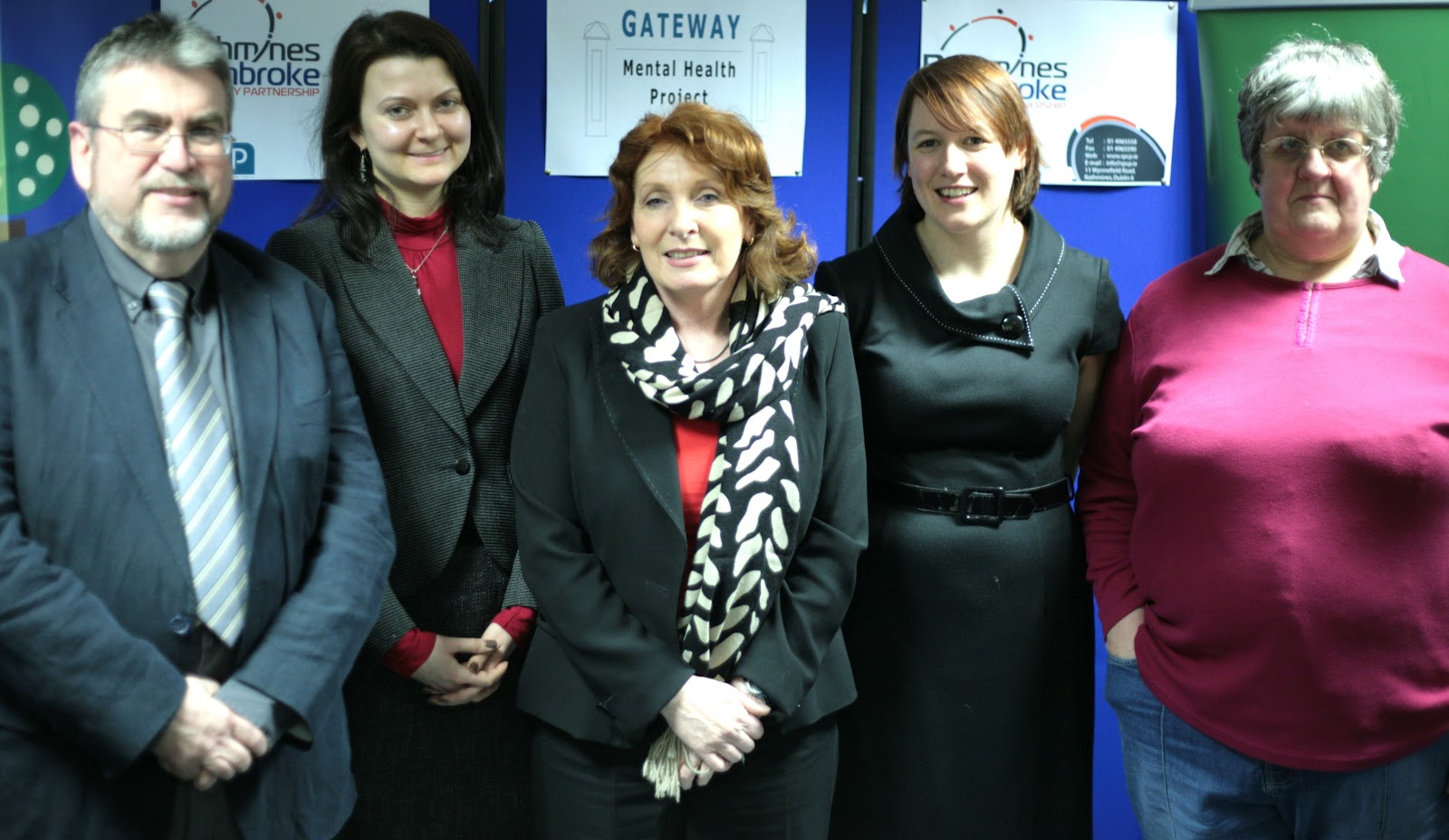
“It helped to give me a kickstart in life,” a participant in the Gateway Project said of it. “It gave my life meaning and made me want to make something of it.”
Established in Dublin in 2004 as a pilot scheme between the then Rathmines Community Partnership and mental health providers locally, Gateway is one of the most successful mental health projects in Ireland.
 “The key is integration,” community development worker Martha Griffin said, “giving people autonomy over their own lives and combating the problems of stigma and labeling.”

 
She was speaking at the launch on February 15th by Minister of State for Disability, Equality and Mental Health, Kathleen Lynch, of a new counselling initiative for Gateway members.
 
One of the greatest boons of this project, which is based in Harold’s Cross, Dublin, is that its 200 members lead it which ensures that their needs are listened to. The members requested more talk therapies, for instance, and were facilitated by My Mind, a non-profit provider of mental health services, and will receive five sessions each at a cost of only €10 per session. This counselling will assist 85 members.
“For some people it is the stepping stone they need as they have never had access to talk therapies until now,” Ms Griffin noted, “and we don’t ask for details of people’s illnesses. That is voluntary. All we need is a person’s name and address.”
And provisions made available to members include a drop-in facility – a place for people to interact socially, get the information they need (health promotion programmes for instance) and where they can develop personally and practice creative arts.
Members are given support from the Local Development Company to improve their employment prospects, learning for instance how to prepare a CV and approach an interview. They are kept up to date with employment or educational opportunities that might suit them. They publish a monthly newsletter, receive skills-training and take part in social activities, one of which is a creative writing course.
Speaking at the launch, James Foley of ESB’s Electric Aid Programme, funder of the project, said the community-based and member-led nature of Gateway was “what attracted us to it”. He described it as “exceptional value for money as part of the fight against the scourge that is suicide.”
Research into the Gateway’s effectiveness was carried out by its members and the project’s achievements to date are exceptional. 84% of the members say they have greater confidence, 86% say they are more relaxed and 86% find it easier to make friends.
“90% believe it has improved their general wellbeing,” Ms Griffin added, “44% have a lot more confidence, 75% say they get out of the house more often and 45% said that Gateway was responsible for them being in training.”
One member described it as “informal – everyone is on the same level”. Another said of Gateway that it provided them with “self confidence, higher self-esteem and belief in myself”.
Minister Lynch is an advocate for the programme: “The days of only listening to the medical model are over,” she said. “There seems to be an endless stream of courses, which aren’t really focused enough. In Gateway, the participant guides the service.”
 
She was invited, said Ms Griffin, to highlight that talk therapies that are available to Gateway members because of the new initiative are “not only a need in this community but nationally.”
– The “embodiment of government policy on mental health”
 
In her address, Ms Griffin asked Minister Kathleen Lynch to “ensure that community based social projects like Gateway receive sustainable funding as it is a model that is proven to work. It is an inexpensive model that yields results as our research shows and it is an embodiment of the government policy ‘A Vision for Change.’”
 
The Gateway project came about in Rathmines because there are a number of mental health hospitals and daycentres in the area and there were “a large number of people who had self experience of ill mental health living in the community.”
 
It began as a one-day-a-week pilot programme in a house in Governor Road. The stakeholders wanted something that was different to the medical model, that was locally based and that was not structured around courses.
 
Gateway works from community development principles whereby people have autonomy over their own lives and recognises they have the insight and knowledge to change things for themselves.
In her address on Feb. 15th, Ms Griffin reminded guest speaker Minister Lynch to ensure the Government’s commitment was honoured to spend €6 million of HSE funds in 2012 “to roll out access to talking therapies through primary care for people on medical cards” and to increase the number of staff on adult community teams by 220 personnel. 
What are Talk Therapies?
 
Talk therapies is where a client works with a professional and speaks about issues, behaviours, patterns, feelings and emotions.
Talking therapies is also the general name for the range of psychotherapies on offer to people. The term covers psychoanalysis, cognitive behavioural therapy, and counselling or counselling psychology approaches.
The person chooses which therapy they want.
Depending on the approach it can be a short or a long processes. For something like dealing with child abuse as an adult it can take many years. Cognitive Behavioural Therapy seems to be the ‘in’ approach at the moment in Ireland.

Martha Griffin on the great power imbalance in Ireland

POSITION: Community Development Worker

Martha Griffin has worked for the Rathmines Pembroke Community Partnership for three and a half years. Previously, she studied Legal Studies and Taxation. Last year she spoke publicly about her experience of mental ill health and recovery as part of the ‘See Change’ campaign.

  1. What are you reading at the moment?

The Artists Way: A 12-week course on finding your inner artist.

  1. Who is the person you most admire?

Mary Robinson for the energy she put into issues of human rights. She was our first female president and was responsible for a great deal of the liberalisation that has taken place in this country, but she was also personable and down to earth.

  1. What are the top four issues in Ireland today?
  2. i) The need for less of a focus on economics and more focus on human issues.
  3. ii) The issues of mental health and the suicide epidemic.

iii) The environment – our lack of future proofing.

  1. iv) The breakdown in communities and the gap between the rich and the poor.
  2. Nationally we need more?

Good news – a positive unbiased media that reports with less of an economic obsession.

  1. Nationally we need less?

Negativity and … less rain. I’m a gardener so maybe I shouldn’t give out about the rain.

  1. How and why did you get involved?

I was volunteering at an event in Tralee and I met with the RAPID co-coordinator and I questioned her about her role. I always had an interest in social justice as I originally studied law but found that the law was being used as a sword rather than a shield and there was an elitism in the profession. After that conversation, I applied for the community and youth work course in Maynooth. I’ve a huge interest in  the area of disability and mental health.

  1. What difference has it made to you being involved in Community Development?

I’ve garnered a more realistic perspective of theory versus practice. I’ve discovered that things are a lot harder to change than I previously thought. There’s a great power imbalance in Ireland and that needs to change.

  1. How have things changed since you have started?

Prior to the new Programme, communities identified their own needs, whereas now it is more prescriptive. Education and training have their good points, but we’ve discovered that they might not necessarily be core to what people need and they will not in themselves change and challenge the status quo.

  1. What motivates you as a Community Development worker?

I like that people with experience of mental distress can talk openly about it. A problem told is a problem halved and not being able to speak out about this issue can be more distressing than the experience itself.

– INTERVIEW BY CONOR HOGAN

Intergenerational work challenges old (and young) stereotypes

Lynda Wakefield pictured with Intergenerational project participent Sean Daly

By Conor Hogan

“Young people and older people,” community worker Lynda Wakefield says, “are probably the two most discriminated-against demographics in society. They are also probably the most discriminating in terms of ageism.”

She notes that while it is normal for to have youth centres and retirement homes, common areas where they both can mix are a rarer thing altogether. “We don’t make it easy for the two to mix,” she says, “so when we do, we need to make it meaningful.”
Having both age groups interact with each other, therefore, can be a very valuable experience, and in her capacity with Mahon CDP in Cork, Lynda has organised several intergenerational groups.
“Before we get a group together,” she says, “we meet the participants beforehand. We ask both the young and older people their opinions about both age groups, getting positive and negative perceptions. It highlights the stereotypes both generations have about each other, and the intergenerational groups then challenge those.”
The participants are always reluctant to have their pre-conceptions known by the other group, as they realise how wrong their stereotype had been. One of the activities organised was a digital photography course which was a resounding success.
“Young people helped the older people to use the technology, while the older people taught the young people about the history of the area, and brought context to their photographs,” Linda says.
There was an exhibition in the city library afterwards, and one of the young people was delighted to have one of their photographs purchased. An intergenerational photography club has since been set up.
Many other activities like these are taking place across the country. They are being especially promoted thanks to it being the EU Year of Active Ageing (and Solidarity Between The Generations) and one is the already successful Log On Learn Programme.
Computers and the Internet in general play an integral role in modern life, be it for shopping, banking or gathering news and information. Only 19% of Irish people between 65 and 74 used the Internet at all in 2011, and the ‘widening of the digital divide’ means that older people are often excluded from many aspects of modern life.
The idea of the Log On Learn Programme allows for older people to learn basic IT skills and how to use the Internet over eight one-on-one modules. Tying in with the aim of promoting solidarity between generations, their tutors are Transition Year students, while the one-on-one nature of the lessons ensures that the older person can learn what they want and at their own pace.
Approximately 2,000 older people have been taught in 180 schools since the programme was launched by then Minister Marie Hoctor in 2008, and it is hoped that there will be a 50% expansion by the end of the 2012.
When it comes to intergenerational practice, Lynda found guidelines set by the Beth Johnson Foundation in the UK were most helpful. She says it’s important to have a gender balance in the intergenerational groups.
There were some challenges, however “The older people had a lot of free time in the day,” she says, “while the younger people were at school in the day and free at night. It was hard to find a compatible time, but we ended up meeting up at teatime, getting food in for the group.”
Other activities include intergenerational table quizzes. “Two young and two older people are put on each team,” Lynda says, “and both groups are always amazed at the level of knowledge of the other. In a short period of time a rapport gets built up. We also have intergenerational walks, while every Valentine’s Day the group organises a meal for older people, where the boys cook and the girls serve the food, which is really appreciated.”
And appreciation can make a day or even change a life.


More info: logonlearn.ie and https://www.centreforip.org.uk/ (the Beth Johnson Foundation).

Wheel & Irish Rural Link to ensure everybody hears about tv switchover

On October 24th, rabbit ears and fuzzy receptions will become a thing of the past in Ireland thanks to the digital switchover. This change will affect roughly a quarter of a million households who are currently using only the analogue service.

Most people in that situation are aware of what to do, thanks to advertisements featuring cartoon animals and various versions of Gay Byrne. Saorview boxes generally retail at around €60, while practically all new televisions come with basic digital channels as standard.
About one eighth of the population, however, are unaware of the digital switchover, according to a survey conducted on behalf of the Department of Communications, Energy and National Resources.
Leading national networks – the Wheel and Irish Rural Link – have entered an agreement with the Minister for Communications, Pat Rabbitte, to manage the ‘Community Outreach Digital Switchover Programme’ aimed primarily at older and disadvantaged people – especially in isolated areas.
Chief executive Deirdre Garvey says the work will “involve community and voluntary organisations in every area of the country in reaching out to the people who otherwise would not make the switch to a digital television service”.
Information can be found at goingdigital.ie, or by calling the helpline number 1890-940980.