Friday, July 3, 2026
Home Blog Page 51

Kerry village wins unique prize

Mary McEvoy with Dan O’ Connor, development manager with Kerry Mental Health Association, in Ballyduff on March 14th. Photo by Oskars Krastins.

A village in North Kerry has won an unique prize, courtesy of North East Kerry Development working with an inter-agency committee.
Ballyduff won a programme to become a ‘Community of Excellence’ in promoting mental health awareness and well-being. It involves bringing as much training, talks and fun events to the village as possible, all tailored to the village’s needs and requests.
The one-year pilot programme was launched in style by actress and author Mary McEvoy on March 14th and, in a show of support on the night, every one of the 140 seats in Ballyduff Community Centre was occupied.
“On the night, Mary spoke about her own experiences of depression,” reported Lorraine Bowler of NEKD. “She told Ballyduff how lucky they were to have this project, saying if she had this kind of support when she was younger the sky would have been the limit for her.”
Mary’s book ‘How the Light Gets In’ describes her own struggles.
In the short time since the launch the village has held three more events while others are in the pipeline.
Ballyduff won the unusual prize after villages in North Kerry were asked to  apply and compete with each other. They had to say how they thought their community would benefit from the kind of programme on offer.

A new local group now develops ideas suggested by the local community and they are aiming for “a community where all ages come together to support each other as we build on our ability to become more resilient in challenging times by continuing to learn and to grow.”
NEKD say, that if the pilot proves successful, similar projects may be rolled out in villages across North Kerry and possibly nationwide.
“The project is about people striving for a more connected society and living life as happily as we can,” says Lorraine “We would hope other Local development companies around the country might take this up in the future.”
The Institute of Technology Tralee (ITT) is helping to monitor and evaluate the project as it unfolds, while former trainer to the Cork Senior Hurling Team, Jerry Wallace, is lending his support. He currently trains the Ballyduff hurlers.
At the launch night, information stands were staffed by folks from: Kerry Mental Health Association, Console, the Openarms Project, Pieta House, Living Links, Buds FRC, the HSE, the Samaritans, Kerry Travellers Development Group, the Social Health and Education Project, North East Kerry Development (NEKD) and a host of other agencies and organisations eager to be involved.
Since the launch, Ballyduff has organised three more events and it plans to run personal development courses, a mindfulness workshop, a ‘Mind Yourself’ programme and a family fun day shortly.
The project is hosted by Buds Family Resource Centre. T: 066-7148883.

5 steps to holding your own hip-hop festival By Karen O’Donnell-O’Connor

Karen O’Donnell O’Connor is the Community Development Officer with PAUL Partnership and is a member of the organising committee of ‘Make A Move’ in Limerick. 


No. 1 – Get Started!
ü  Bring a group of knowledgeable and dedicated people together.
ü  Make sure you have a blend of artists, hip hop experts, youth workers, people with funding skills, reporting skills and experienced arts events organisers.
No. 2 – Make Decisions!
*  Look at how best to link with young people, to give them some ownership of the events. Eg Organise workshops in the lead-up to the festival.
*  Having one person who sees the big picture will make everyone’s life easier. If you can put some money aside to pay a festival director, do it!
*  Decide what kind of hip-hop events best suit your festival.
*  Decide what artists are best to book. Get booking as they are in demand!
No. 3 – Fund it!
*  Research what kinds of funding are available through your local authority, the Arts Council, etc.  Be aware of application deadlines and what they will and won’t pay for.
*  Use existing resources wherever possible. Raise funds locally. A number of small donations can really add up!
No. 4 – Get Support on Board!
*  Talk to local community groups and local arts institutions about facilities and support.
*  Talk to the business community. Make sponsors an official “friend of the festival”.
*  Talk to pubs and clubs about bringing hip-hop acts to their venues to widen the festival out to the general community.
*  Ask yourselves what kind of volunteer support is needed.
*  Recruit volunteers through your website, Facebook account and Twitter. Set up a website, Facebook account and Twitter!
No. 5 – Keep Talking:
*  The festival committee should meet on regularly, probably weekly.  The committee makes sure security, insurance, health and safety and finance are in place for the festival. Make sure every committee member is sure of their role.
*  Contact the press before, during and after the festival. Thank everyone who helped.
*  Meet afterwards to evaluate how well the festival went and whether you’d like to run it again. Ensure that reporting is done for funding bodies as required.
* The hip-hop festival grew from a community arts training programme run by PAUL.

CAPTION: A world record attendance of Incredible Hulks at the Muckno Mania Festival last year, one of the beneficiaries of CML’s new funding approach.

Sharing festival materials saves money

Every festival committee in the country rents out many of the same things every year – a public address system, crowd control barriers, street cones, perhaps a small marquee.
However, a new approach pioneered by Cavan-Monaghan LEADER (CML) has taken some of the pressure off organising committees.
Last year, CML hit upon the idea of bringing together the organisers of everything from bog-snorkelling, to pipe-band parades to film and drama festivals, so they could apply for funding as a cluster. They then buy what they need, share it between them and look after it.
In Cavan-Monaghan, for example, local festival committees now own semi-permanent signs that are designed to allow the sign insert to be changed depending on what festival is on.
“The economic downturn led to less sponsorship for festivals and organisers were approaching us for support,” said John Toland of CML, “and in many cases the same equipment was being hired by a number of festivals in the same geographic area.”
In 2012, five cluster groups received some €300,000 to support nearly 30 festivals and the new approach is seen as a model of best practice that development companies across the country may wish to emulate.
There’s more to it than has been explained here and John Toland can provide further information. T: 049-4338477. E: johntoland@cmleader.ie

“Hip-hop is risky territory, but so worth it” – Catherine O’Halloran, youth worker

“Wake up! We need to open ourselves up and embrace what is around us” – Catherine O’Halloran, youth worker, Limerick.

Community organisations with a reputation to uphold with the general public, never mind their funders, enter “risky territory” when they agree to fund hip-hop activities.
Many people misunderstand hip-hop to be nothing more than a woman-hating, gangster-led movement dominated by hoodies.
The rewards however can be incredible, according to Catherine O’Halloran, one of the organisers behind one such festival that benefitted from an open-minded approach by its local development company.

“Wake up! We need to open ourselves up and embrace what is around us. When we say hip-hop, we really are talking about youth culture and we should embrace it hip-hop, it’s a really spirited young people’s culture.
“We are challenging perceptions and it was risky territory for the PAUL Partnership because of the notions that hip-hop is gang-related and endorses violence and there is credit due to PAUL for that. They were open from the beginning, and nobody expected our ‘Make A Move’ festival to be as successful as it was. Now other agencies want to get involved in this year’s one. They see the success.
“We need to recognise this art form as legitimate and there is a responsibility on community development agencies and city councils – and their representatives – to give it the same platform that the fine arts get. That’s what I’m pushing for.
“It’s about working with what is, shaping and tailoring it and making sure we’re moving it in a positive direction.
“Supporting hip-hop is a genuine form of community engagement…. Let young people define their culture for themselves and have no shame around it. There’s a huge horse culture around here yet there’s shame attached to it. People should be proud of their culture.
“I’ve seen people who felt disillusioned, disempowered – even oppressed – coming together for hip-hop and they became inspired. It’s a move away for them from the ways they’d normally express their aggression or their frustrations with the world.
“Putting your experiences into words is a very powerful thing, there’s something therapeutic in it and that’s what hip-hop.”
“Agencies and organisations that get behind hip-hop
Not the usual suspects – the councillor, the youth worker, the city mayor, the graffiti artist and the local authority official (Tom Shortt, Catherine O’Halloran, Gerry McLoughlin, DMC and Paul Foley). “This photo shows the level of integration that happened,” says Catherine.
This year’s ‘Make A Move’ festival will be held from July 26-28th and will feature national and international artists. More info: www.makeamove.ie
– Catherine O’Halloran is a youth worker with the Follow Your Dream project based in St. Munchin’s Family Resource Centre in Ballynanty, Limerick. 

Interview by: Allen Meagher.

5 websites about hip-hop used for community development

1)      www.projecthiphop.org/who-we-are/history/
2)      www.indigenoushiphop.com/
3)      www.thehiphopproject.org/site/
4)      www.facebook.com/rossherlihy
5)      www.makeamove.ie

Why are so many turning to hip-hop?

– It can be used as a community and personal development tool

FRONT COVER NEWS FEATURE
Robert McNamara reports
Hip-hop is a cultural phenomenon we all know about.
Whether we like it or not – or even understand it – it’s everywhere.
It’s on TV, the radio, the internet, in clothes shops and on the streets.
Kids love it, they engage with it; more importantly, they identify with it.
It’s a subculture that originated in the seventies on the other side of the Atlantic, in the clamour of the Bronx, a concrete jungle dominated by high-rise buildings and apartment blocks, far different to the rural/urban overlap of most Irish towns.

In the poor areas it flourished and among African and Hispanic communities it became a way of life.
In recent years, in every town and city, Ireland’s youth has adopted elements of hip-hop’s culture as a symbol of identity – particularly in disadvantaged communities.
Ireland is not alone.
In Japan, Kenya and Bangladesh, among others, it’s become a mainstream form of music.
National Geographic has labeled it “the world’s favorite youth culture” in which “just about every country on the planet seems to have developed its own local rap scene.”
Irish people identify with hip-hop
Stewart O’Keeffe (24) – aka JackOfAllTradez – is an independent rapper/producer originally from Cork, but living in Limerick.
“Irish people identify with hip-hop because it’s a way of expression and we generally can’t express our emotions openly without being discouraged or picked on for our flaws.”
“I think we relate to rap and hip-hop because it makes us feel accepted, but different. At the moment, Ireland is a down and out culture. Well, rap came from the voice of a down and out culture. So it gives us a say. I definitely feel like it gives me a purpose.”
Hip-hop and community development
So, how can communities in Ireland use it? Connecting with young people seems to be the key.
Ross Herlihy is one of the people behind ‘LiveStyles’ Fest in Cork, an annual event that made its debut in 2012 to much acclaim. It featured Bboys, Bgirls, DJs, MCs as well as barbeques and workshops.
“A lot of young people who get into hip-hop would have felt very disenfranchised growing up,” says Ross. “Some kids feel a bit disconnected – I wasn’t really one for GAA for example.
“What we are trying to do is develop that connection from primary schools up, to show that there are active role models that children can engage with who are into the same things as them.
“They participate with the same kind of dedication that people who partake in sport or any other kind of recreation do.”
Community groups have been among the first to spot the movement’s potential and local development companies from Cork to Donegal and Dublin to Clare have supported the promotion of hip-hop in recent years. In Offaly, hip-hop is part and parcel of Shakefest 2013, an annual event support by Offaly Local Development.

‘You learn how to behave’

Limerick’s first hip-hop festival, ‘Make-a-Move’, took place last June and was partly funded and supported by PAUL Partnership. It featured workshops, live performances and street art displays.
 “Two participants from a community arts group that PAUL had paid for and supported wanted to do something around hip-hop, as it’s very popular and lots of young people are engaged in it. We saw the sense in that and we wanted to continue that supports,” says development worker, Karen O’Donnell O’Connor.
One of those participants, Barry Burke, otherwise known as Bazzy-B, is a co-founder of Limerick hip-hop group ‘Limrockers Cru’ and was instrumental in the organisation of the dance element of Make-A-Move.
“Sport is done very well here in Limerick, it’s brought a lot of people and business to the city. The same could be done on a smaller scale with dance. It’s all about using dance like you use sport for self-discipline and self-control, learning about who you are and how to behave.”
“Nearly every other city in the world has a government funded building or a city centre location where people come together, dance and share ideas. There are so many possibilities for hip-hop.”
Make-A-Move will again take place in Limerick this July and will feature all elements of hip-hop including Street Dancing, Mc’ing, Rapping, Street Art and Graffiti.
Hip-hop as a vessel for change
Hip-Hop has long been used as a tool to encourage societal change and community and personal development.
Across the Atlantic in Boston, the genre is used by an organisation that call themselves ‘Project Hip-Hop’ as a platform to help young people address issues around social justice.
The organisation was formed in 1993 to raise awareness among young people about institutional racism.
They sent a multi-cultural group of nine youths and four adults down to the South in a van to meet civil rights veterans and visit sites that are important to the civil rights movement.
A “rolling classroom” if you like.
Teachers began to take heed of the peer-to peer learning benefits of hip-hop and they welcomed members of ‘Project Hip-Hop’ into their schools.
Today the organisation uses hip-hop culture and the history of resistance to injustice as the primary tools for engaging and developing young people as artists and community organisers.
What about all that gangster rap?
Anyone with a knowledge of hip-hop will know it can be intellectually articulate, politically aware and a tool for unleashing young people’s talents.
Some, perhaps ignorant about its origins and culture argue that hip-hop has been used to promote materialism, sexism and the glorification of crime.
They’re missing the real point, says Dion Brownfield of Indigenous Hip Hop projects in Australia: “We never play or support any of the music artists that explore that derogatory, sexist, violent side. For example, in a confidence circle you would be more likely to hear James Brown’s ‘Turn It Loose’ than some sort of gangster song. Once communities see how we work they love it.
Poverty means having more stress to let go
He says hip-hop doesn’t require any expensive equipment and it is healthy.
“You don’t need money to dance, or to write rhymes. All you need is music. Most youth from low-income families have experienced more traumas in their lives than others. They have more built-up stress and trauma to get out of their bodies and minds and they love to release that by getting creative and dancing.”
Many forms of art have evolved under the umbrella of hip-hop including rapping, break dancing, graffiti art and beatboxing. It’s cool, it’s contemporary and as Ross Herlihy points out:
 “When politicians talk to some of the older people involved in hip-hop, they see it’s not just teenagers running around doing whatever they want… There’s people who are still active in hip-hop into their forties.”

DEFINED: Hip-hop

The phrase hip-hop is derived from two different slang terms. Hip meaning cool, current and fashionable and hop meaning to dance.

It originated in the Bronx, New York City, among African/ Americans playing records and incorporating their own “shouts” over them. This led to mixing, sampling and rapping which are common place in today’s music.
There are a number of elements of hip-hop culture. They include rapping, DJing, beatboxing, dancing, graffiti writing and subversion of language.
Community workers have learned that hip-hop frees young people to express themselves and it can be used as a tool for personal and community development.


VOLUNTEER PROFILE – John Lyons, handyman and social entrepreneur

“I never imagined the volunteering would lead to paid work.”

John Lyons from Limerick worked in construction for 20 years, felt the brunt of the decline, began volunteering and, lo and behold, 18 months later he’s looking at being paid once more for construction related work.
Along the way, he and colleague Ursula Mullane have become social entrepreneurs, though he doesn’t accord himself any fancy titles.
“I’m just the handyman,” he says, modestly. “I saw an advert in the paper looking for volunteers to help the elderly and I said, ‘Yeah, by all means’.”

The advert sought volunteers to help older people or people with disabilities who had house repairs to carry out, but couldn’t afford a handyman.

John hadn’t done voluntary work before this and soon found himself giving between four to six hours a week.
“My motivation was that I was at home and if I was doing nothing, I thought I’d love to go out and help.”
WHAT IF YOU’VE GOT NOBODY?
“Both my parents are elderly and while they can call on me anytime, I thought ‘What if you don’t have somebody there to do it for you?’”
“I’ve learned more in the past months… I’ve been to more meetings, you know,” he says, at the same time throwing his eyes to heaven. “Meetings are part and parcel of it, but if you’re just used to work…”
However, from regular meetings, ideas grow.
“Launching the service in Limerick was the brainchild of a very clever man called Mick Brown and a new company grew from it which we’ve called Community Repair and Maintenance Limited.
“As far as I know, this is the first of its kind in the country.”
The difference between the two is that one is free (but restricted to over-65s for example) while the new company offers a reliable handyman service to everyone at “affordable” rates.
PUMPING PROFITS BACK IN FOR 3 MONTHS
“I never imagined the volunteering would lead to paid work,” remarks John. However, his bank account won’t reflect any change for the time being.
“Because it’s just starting off, myself and the other director (Ursula) have made a joint-agreement not to take any funds out of the company, to pump all profits back in for the first three months. After that, we’ll get paid.
“We’ve completed a couple of jobs in the first month and we received a grant (from the Care & Repair Committee and the Paul Partnership) so we’ve a lot of work to do in the community centres.”
The company has a number of things going for it. Given its origins, it has a strong social ethos, the two employees have a track record around the city, and the company can allay the fears of anyone feeling vulnerable and reluctant to let strangers into their home.
DO WE HAVE TO BE PC?
“The people we go to might be on their own, but the fact that there’s a woman who can accompany me should help them feel more comfortable. Ursula has great DIY skills herself,” he says.
The company would like to see its model copied around the country and people are welcome to call them to find out more.
Meanwhile, Mick who got the ball rolling in Limerick has moved on and is now a project worker with COPE in Galway.
Oddly, given the gender range within the company, they still happily call it an “affordable handyman service”.
“Oh, we have to be PC, do we? Ursula doesn’t mind. Just make sure you say it’s affordable and it’s for everyone,” replies John.
* John has been supported in his voluntary work and in social enterprise development by the PAUL Partnership, through funding provided under the LCDP, and through Limerick City Enterprise Board.
W: https://www.communityrepairandmaintenance.com/
T: 061-513645.  M: 083-1309895.
Address: Our Lady of Lourdes Community Centre,
 Childers Road,
 Limerick city.
INTERVIEW BY: ALLEN MEAGHER

Payoff beckons for eagle-eyed volunteers

Two volunteers have set up a new company in the Mid-West after spotting a niche area of the construction sector that the multi-nationals are ill-equipped to compete in.
The two directors of Community Repair and Maintenance (CRM) could be in clover by year’s end, REPORTS ALLEN MEAGHER.

The market opportunity became clear to Ursula Mullane, a graduate engineer and former Dell employee, and John Lyons, former construction worker, through delivering a volunteer handyman repair service to older people in Limerick city. They saw that many younger people have nobody to call when they want to get a simple repair job done, they can’t afford to be ripped off and don’t know who to trust.

Ursula, the manager, describes their novel social enterprise as “another great example of local people bucking this recessionary trend while improving the quality of life in their community.”
“Our aim is to take the fear out of finding a handyman to do those little jobs around your home that you may not have the time or skill to tackle yourself,” said Ursula. “We want our clients to be confident that the person coming through their door is qualified to do the job, is honest, hardworking and is not going to charge the earth.”
They’ll even call around for a spot of gardening or to put the Christmas decorations away for you in the attic. No job is too small.
The business received start-up support from the PAUL Partnership and Limerick City Enterprise Board and was officially launched on March 12th.
If the concept is taken up nationwide, it could lead to the creation of hundreds of steady employment positions. There is already a growing national network of Care & Repair services (restricted in who they will assist) which could provide the natural springboard.
CRM are also offering preventative maintenance contracts (prices on their website). Additionally, the company is setting up a trades referral service, whereby they refer clients who have jobs too big for them to reputable tradespeople.
Explaining the referral system in more detail, Ursula said they hoped to “revolutionise the way we access a network of qualified, dependable tradespeople.”
There are big national revolutions and there are small social ones at community level that history does not usually record.
Up and down the country, there are many community initiatives being launched that we would be happy to spread word about if they’re truly innovative and others could follow your example. Call us!
Meanwhile, for more, see John Lyon’s interview in our Volunteer Profile.


We can change the world, but light bulbs are tricky!

Many of our readers are trying to change the world, or at least a part of it, yet we can’t all change light bulbs.
Not if we’re anything like our neighbours across the water at any rate.
Survey results published in March disclosed that one in 10 people in Britain aged 18-25 years had called out a tradesperson to change a light bulb.
If Ireland is anyway similar, the survey reveals the potential size of the market which Ursula Mullane and John Lyons appear to have stumbled upon.
The pollsters found that more than half of under-35 year olds agreed they needed help with DIY.
The survey, for a British insurance company, found that 42% did not know how to bleed a radiator.
Nearly twice as many women (47%) as men (29%) needed help with most DIY tasks. Reflecting stereotypes, the figures were reversed when it came to stitching and sewing.
The insurance company commissioned the survey to highlight the need for landlords to have better cover.
Meanwhile, if you’re one of those who stares at a busted light bulb wondering what to do, you know now you’re not alone.


Alignment – For and Against

IN FAVOUR:This document represents a fundamental re-imagining of the system and it sees local government leading economic, social and community developmentUnlike many previous reform documents, this Programme sets out firm decisions by Government rather than proposals for discussion.”
Minister for the Environment, Community and Local Government, Phil Hogan.
 
OPPOSED: “While we recognise the need for stronger and more accountable local government, we caution against any attempt to subsume community-led local development bodies into local authorities.”
– 21 academics writing in the Irish Times.
 

IN FAVOUR: “It is evident that the existing arrangements for local development are administratively burdensome and do not lend themselves to joined-up, integrated service delivery, having evolved from a disjointed national approach to local service delivery. Central government, by establishing multiple structures for service delivery at local level has, to a large extent, by-passed local government and undermined the democratic process at local level. 
– Final Report of the Local Government/Local Development Alignment Steering Group.
 
OPPOSED: “They’ve already torn the bottom out of it.”
– CEO of a local development company who requested anonymity.


IN FAVOUR: “The contention that 2,000 jobs will be lost and that 20 years of experience in the planning and delivery of local development programmes will be lost is quite simply untrue.”
– Áine Collins, Fine Gael TD                 
 
OPPOSED: “They need to build it from the ground up. Generally, top-down policies haven’t worked for communities and are too weak.”
– Maria Power, community consultant based in Youghal, Co. Cork.

On the web relating to Alignment

REPORTS, ANALYSIS, RESPONSES

The following are links to 30 or so online news reports, academic articles and Government papers. Along with our own sources and a review or Oireachtas debates, they helped inform ‘Changing Ireland’s reportage on local government reform and the debate around ‘alignment’:

‘Final Report of the Local Government/Local Development Alignment Steering Group, March 2012’
https://www.environ.ie/en/Publications/LocalGovernment/Administration/FileDownLoad,31308,en.pdf
‘A Guide to Putting People First’
‘Putting People First’
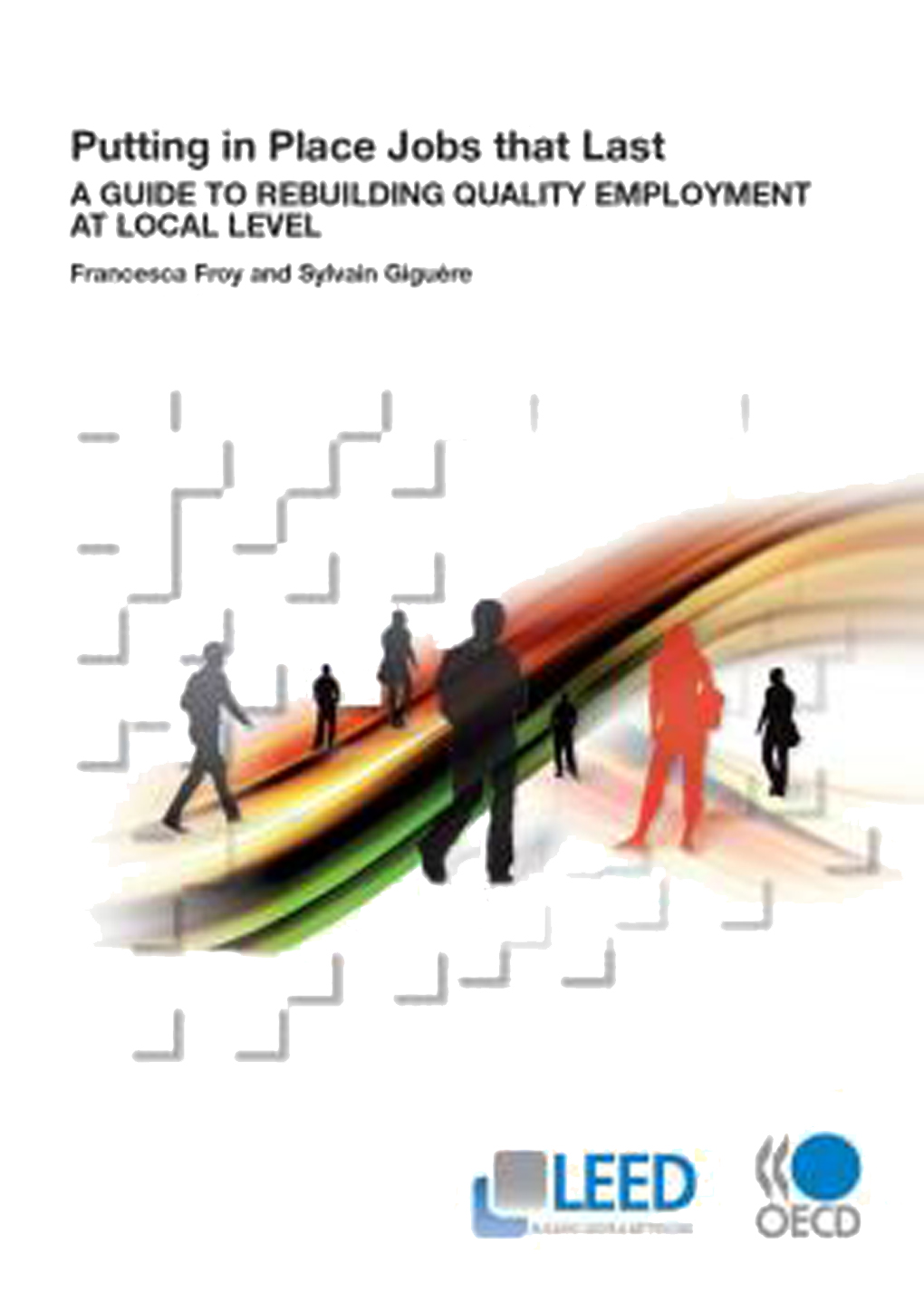
‘Putting in Place Jobs that Last – A Guide to Rebuilding Quality Employment at Local Level’, by Francesca Froy and Sylvain Giguère, published in OECD LEED Working Papers, 2010/13.
Report on Local Authority Support to Economic Development
 – County and City Managers’ Association.
Supporting Enterprise, Local Development and Economic Growth – Analysis of Local Authority Activities for 2012
– a report from the County and City Managers’ Association.
‘Responding to Alignment / Putting People First – Position on Key Proposals’
– ILDN, November 2012
‘Alignment, Autonomy and Accountability? What now for Community Development?’
– a report from a conference in November 2012 in NUI Maynooth
‘Putting People First: Ensuring Community Development in a post-alignment era’
– proposals by the Community Workers’ Co-op.
ICSA Submission on the Rural Development Programme 2014-2020, January 2013
Social Change Community Education – Where Are We Now?’ by Camilla Fitzsimons in the Irish Review of Community Economic Development Law and Policy, Vol 1, Issue 4, 2012, published by the Northside Community Law & Mediation Centre, Coolock, Dublin.
‘The Current Status of the Community Sector’ – A Presentation to the Community Education Network, 21st November, 2012.
Local Development in Ireland – Partnership, Innovation and Social Justice’, a report for OECD LEED, by Charles F Sabel, published in 1996.
Alignment of Local Government and Local Development’, by Seán O’Riordan and Associates, November 15, 2012.
Local Government in Times of Austerity – Reflections on Ireland’, by Dr Brendan O’Keeffeof Mary I College, UL, published in 2012.
PUBLIC DEBATE
Hogan promises democratic local development
– Irish Examiner, February 07, 2013
Ministers stunned by salaries of CEOs and staff at ‘Leader’ firms
  John Drennan, Sunday Independent, May 12, 2013
Debra Mountford, Senior Policy Analyst OECD, on the potential benefits for Ireland from Local Government reform and on the emerging issues for Ireland from the review of local development currently being conducted by the OECD LEED team.
IFA says Government Alignment Policy will negatively impact on Leader
Government warned of dangers of “politicising” community funding if transferred to local authorities; EU supports current community-led model
– Irish Times, Tues, May 14, 2013
Irish Times’ letters page: Guarding community development
Opposition grows to imminent shake up of LEADER Mayo
– Connaught Telegraph, Tues, April 2, 2013
Bitter debate over role of partnerships
– Kerryman, March 13, 2013
Leave LDC to administer Community and Rural Development Programmes
– Leitrim Observer
People power prevalent at LEADER public meeting
– Toni Bourke, Mayo Advertiser, April 12, 2013
The alignment of local government and local development
– The blog for Aine Collins TD
Clare Local Development Company opposes Government plans

Further perspectives on ‘Alignment’

FOCUS, HOPE, SYNERGY and RISKS

“The introduction, through a new committee (Socio-Economic Committee), of a Local and Community Plan will give added focus to mainstreaming local, community and rural development issues into local government services.
“More interestingly is that this local effort will be underpinned by a national policy framework which will be overseen by an inter-departmental committee, providing, hopefully, a similar level of integration and policy alignment at the national level.
“Coming up with workable models to do so is going to be a major challenge, but given the pressures on communities across the State, no one will be thanked if local, rural and community development are disrupted, no matter the benefits of underpinning local democracy.
“While integration with local authority support services will bring the potential for greater resource synergy at local level, there is a risk that the positive experiences of the local development companies might be lost…
“Sometimes being the facilitator might be more strategically appropriate than being actually responsible for the delivery of the immediate service.”
– Extract from ‘Alignment of Local Government and Local Development’, by Seán O’Riordan and Associates, November 15, 2012.

DIFFERENT TIMES REQUIRE DIFFERENT RESPONSES

“In ‘Putting People First’, Minister Hogan has set out a very ambitious agenda for local government and local economic development in Ireland. It has the potential to recalibrate local government and local democracy.
“The reforms seem focused on putting local economic development very much at the heart of the recovery. That seems to be building on a couple of decades of dedicated work at the local level through the Local Development Companies, through the partnership approach, but different times require different responses.
“What the reforms are setting out is the opportunity for the Local Development Companies, or local government, the different partnership groups, business, trade unions, to begin to work together in a different way, a more collaborative way that is very much focused around jobs and an inclusive growth agenda.”
– Debra Mountford, a senior policy analyst with OECD LEED, the worldwide network of local development practitioners. She spoke at a conference titled ‘Implementing Change – A new Local Agenda for Jobs and Growth’ organised in co-operation with the EU Presidency, the Irish Government and Pobal in March.

TREMENDOUS POTENTIAL

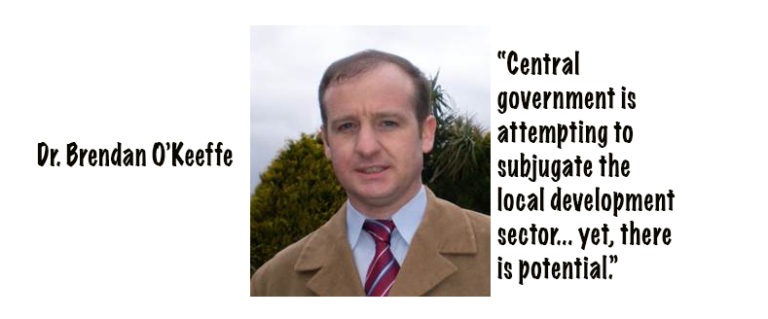
“Civil society and voluntary organisations have been vibrant in Ireland and have filled service provision and development gaps caused by the absence of a municipal tier of government; yet central government is attempting to subjugate the local development sector to excessive administrative controls and to dismantle collaborative governance. Yes, there is tremendous potential for local government reform and renewal, the signposts are in place – we just need to follow them.”
Dr Brendan O’Keeffe of Mary I College, UL, in his report Local Government in Times of Austerity – Reflections on Ireland’, published in 2012.
PUTTING IN PLACE JOBS THAT LAST
Spotting key priorities for future development is not easy when there are a plethora of local actors working on different strategies and in different partnerships at the local level.
“At a time when public budgets are becoming increasingly tight such fragmentation is no longer acceptable. As governments reduce spending in order to pay off their deficits it will be important to make public policy more efficient, through reducing duplication and better aligning activities locally.
“Many lessons exist from different OECD countries on how to make local governance more effective, and now is a good time to put these into practice. LEED research shows that it is often following a crisis that people really come together and work for a common future.”
– From ‘Putting in Place Jobs that Last – A Guide to Rebuilding Quality Employment at Local Level’, by Francesca Froy and Sylvain Giguère, published in OECD LEED Working Papers, 2010/13.
https://dx.doi.org/10.1787/5km7jf7qtk9p-en
 DECISION-MAKING POWER
“The local action groups should be made up of representatives of local public and private socio-economic interests, such as entrepreneurs and their associations, local authorities, neighbourhood or rural associations, groups of citizens (such as minorities, senior citizens, women/men, youth, entrepreneurs, etc.), community and voluntary organisations, etc. Civil society and private sector partners should have at least 50% of the decision-making power and no single interest group should have more than 49% of the votes.
– From an EU factsheet on ‘Cohesion Policy 2014-2020’.

AGENDA FOR SURVIVAL

“The voice of many community organisations has grown cautious. Funding relationships have to be sustained and the state is the core funder for much of the sector. So protest remains unvoiced in the public arena, dissent is diminished and advocacy is limited within careful boundaries. An agenda for survival has taken over.”
Niall Crowley in his paper ‘Lost in Austerity: Rethinking the Community Sector’, published by the Third Sector Research Centre in June 2012.

Alignment in more detail: The role and functions of Socio-Economic Committees

Representation on the Socio-Economic Committees (SEC) and their terms of reference are currently the subject of discussion. Currently, this is what is envisaged.

§  A Socio-Economic Committee (SEC) will be established in each city and county council area for planning and oversight of all local and community development programmes.
§  SECs will have responsibility for developing a five-year City and County Local and Community plan, encompassing all state-funded local and community development interventions.
§  A national policy on local and community development will be launched in advance of the 2014 local elections.
§  It is intended that the SEC will be established in such a way that it will be eligible to be the structure through which LEADER is delivered in accordance with EU requirements.
§  It is the view of the Alignment Steering Group that, to be effective, the SEC should comprise no more than 15 members, representing the local authority, local and community interests and appropriate State agencies.
§  The local authority will provide executive support for the SEC, led by the County Manager/Director of Community and Enterprise. Decisions regarding the allocation of funding will rest with the SEC, while administrative functions, including payment of funds, performance monitoring, auditing and reporting will be undertaken by the county/city council.

The above points are taken from ‘A Guide to Putting People First’ alongside  extracts from a report written by Ian Dempsey, CEO of West Cork Development Partnership, from his meetings with officials and from the ‘Final Report of the Local Government/ Local Development Alignment Steering Group’.
Note: The Final Alignment Report acknowledged the European Court of Auditors 2010 report that among other things recommended limiting local authority involvement so that they do not dominate.
More information: All of these reports are available online.

Minister Hogan on ‘Putting People First’

Late last year, Taoiseach Enda Kenny and Minister Phil Hogan launched ‘Putting People First’ describing it as “one of the most radical, ambitious and far-reaching governance reform plans ever put forward by an Irish Government.”

Minister Hogan said: “The reforms put a strong emphasis on accountability as the bedrock of a properly functioning system of local democracy, providing for better engagement with citizens.
“I am committed to building stronger, more cohesive local government, giving it a greater capacity not only to address the challenges we face, but also to promote local community, social and economic development, and collectively to maximise the strengths of our country as a place in which to live, to invest and to work.
“At a critical time for our country, local government has a crucial role to play in ireland’s national recovery. The action programme empowers local government in an entirely new way, particularly in relation to economic development, and most importantly, sustaining and creating jobs.
“This programme affirms the need for the system to embrace change, share the burden, modernise, adapt to new financial circumstances and deliver even better services with scarce resources,” he said.

Extracts from ‘A Guide to Putting People First’:

§  The emphasis in this action programme is to enable local government to deliver more to the community it serves. between local government, local representatives and the communities they serve.
§  Local government will lead economic, social and community development locally. It will be the main vehicle of governance and public service at local level, deliver efficient and good value services, and represent citizens and communities, as effectively and accountably as possible.
§  The objective of Putting People First is to ensure that local government is better placed to enhance the wellbeing and quality of life of citizens and local communities, while delivering maximum value for money.
§  Decisions will be made as close to the people they affect as possible.
§  More power will be devolved to local level, closest to the people. Elected members will perform a substantial range of “reserved” functions at municipal district level. (A number of functions are legally “reserved” for elected councillors. The remaining functions are the city/county manager’s responsibility).
§  There is an unprecedented appetite for change and specifically for improved service to and contact with, the customer.
§  While the reform programme will yield significant savings on full implementation of up to €420 million perhaps, of even greater significance are the non-financial benefits that will accrue in the form of more effective service delivery, better quality local representation and closer engagement between communities and authorities. This will represent the long-term success of the reforms envisaged in Putting People First.

Mechanisms to promote citizen engagement with local government will be considered including participative democracy arrangements. (The new Municipal District Councils may become the incubators for tentative experiments in participatory democracy at local government level).

Alignment of Local Government and Local Development

– Government policy outlined

The Programme for Government committed to reviewing the delivery of services at local level in order to improve service delivery from the point of view of the citizen. It has committed to reducing the duplication of services while ensuring greater democratic accountability in decision-making at a local level.
One initiative through which this will be achieved is the alignment of local government and local development sectors in a way that builds on the strengths of both sectors.
A high level Alignment Steering Group was established in September 2011 by Minister Phil Hogan to make recommendations on improving alignment between the sectors.
The Group’s final report (including the text of an interim report) was approved for implementation by Government last October.
Alignment forms part of the broader Local Government reform proposals as laid out in ‘Putting People First  – An Action Programme for Effective Local Government’.
The alignment of local government and local development will be pursued on a phased basis over the period 2012-2014, in a way that will secure optimum value from available resources and enhance service delivery for local communities.
The alignment report recognised “the key strengths of local development companies, including their reach into their communities, their proven track record of leading social inclusion and local and community development initiatives, and their significant local knowledge and expertise in service planning and delivery.”
It noted: “The approach and ethos of the local development companies, based on community involvement, and interventions tailored to address particular local needs, are fundamental elements of the local development model in Ireland.  Considerable care should be taken to maintain the integrity of this model.”

Further information including the full reports are available on the Department’s website: https://www.environ.ie

NEWS FEATURE: Community reps negotiate with officials

– Talks continue over small but significant detail of reform plans

Allen Meagher reports:

Talks are continuing between Government officials and representatives from the Irish Local Development Network (ILDN) the representative body for the country’s Local Development Companies (LDCs).

Talks are continuing between Government officials and representatives from the Irish Local Development Network (ILDN) the representative body for the country’s Local Development Companies (LDCs).
All 50 companies are involved in delivering the €48.7m Local and Community Development Programme, while 35 of them (in rural areas) deliver the substantially bigger part-EU-funded LEADER programme.
The discussions are taking place following sign-off by the Government last October on reforms outlined in ‘Putting People First’ which seeks “to place local government at the heart of local economic, social and community development.”
Agreement has been reached on eight out of nine reforms, but LDCs remain in talks with officials over a contentious “alignment” proposal that would see new Socio-Economic Committees (SECs) take the lead role in local and community development.
Government officials point out that local authorities are being reformed in tandem with the planned changes and argue that alignment marks an advance in terms of democratisation.
LDCs view it as “a takeover” and believe it is a step too far.
The talks take place in the context of the Final Alignment Report’s statement that, “The approach and ethos of the local development companies, based on community involvement, and interventions tailored to address particular local needs, are fundamental elements of the local development model in Ireland.  Considerable care should be taken to maintain the integrity of this model.”
The report proposes that we should “build upon the strengths and experiences of both the local government and local development systems” while acknowledging that neither approach is perfect: “There is considerable variation in approach, skills and standards of service delivery across both local authorities and local development companies.”
Those involved in the “alignment” negotiations are the ILDN, Pobal, the City and County Managers Association and the Department of the Environment, Community and Local Government.
The Minister wants stakeholders to look at the wide reform picture being presenting, to look at the long-term outcomes promised, and he pointed out that all other EU countries “have a structure in place which is a partnership between local government and the community.”
Said Minister Hogan: “Local communities will continue to be involved in a bottom-up approach to local development, in conjunction with local authorities. The local development model is to be retained and Local Development Companies will continue to have a delivery role.”
The wider local government reforms promise to strengthen local democracy, “lessen duplication” and save money. The number of councillors will be reduced, many smaller councils will be merged or replaced as new municipal bodies are set up (outside Dublin only) and the reformed local authorities promise greater citizen participation.
Government officials point out that the EU bodies have also been critical of elements of Ireland’s current approach to local development and that OECD support can be cited to support the case for reform.

OPPONENTS

Opponents object to “a takeover” by local authorities, saying if anything alignment will reduce local democracy, erode community-led local development, destroy the autonomy of LDCs and is contrary to best practice internationally.
“None of us should expect autonomy,” Minister Hogan told the Dail.
The ILDN cites support from Brussels. As 150 TDs and Senators who attended an ILDN briefing were told in January, the EU “strongly endorses Ireland’s Community-Led Local Development approach” as it currently exists.

Objections have been raised by academics, community workers, some local authorities themselves and members of the public:

Hundreds of people have attended public protest meetings. In Mayo, for example, over 500 people attending a meeting in Castlebar and 500 more people attended a similar protest in Westport.
A group of 21 academics signed a letter of protest and County Councils in Kerry, Leitrim and Clare passed motions voicing their opposition (while Wexford County Council refused to back a similar motion).
The Irish Cattle and Sheep Farmers’ Association says it does not believe that LEADER should be subsumed into the local authority system” while the Irish Farmers Association is also opposed.
The Community Workers’ Co-operative (CWC) welcomed local government reform, but stressed that the Community Sector had to remain independent and echoed concerns shared by other commentators that too much control still rests with city/county managers.
It was proposed at a conference held in Maynooth in November that the CWC should have a seat on the Alignment Working Group but this did not come to pass.
Meanwhile, the ILDN is engaged with the group. The network’s three representatives are Shay Riordan, Anna Lee, and Michael Ludlow, from Limerick, Dublin and Meath respectively. Ten local authority areas have been chosen to run pilot Socio-Economic Committees, on agreement being reached.
We’re not pushing an open door on this but I believe there is room for a good compromise outcome,” commented Doirin Graham, CEO of Clare Local Development Company. “It’s still all to play for and we can still get a good outcome in terms of our autonomy.”
Separately, the ILDN on behalf of its members has proposed that they partner with the Government in applying for the next round of European Structural and Investment Funds, which includes LEADER, for 2014-2020.


AND WORDS MATTER!

The Department of the Environment, Community and Local Government has established an “Alignment Implementation Group” that draws on representatives from “local government, local development and other relevant actors, to advise the Department on implementation of the Alignment recommendations.”

The group’s name changed once representatives from the Irish Local Development Network came on board and successfully argued they felt more comfortable being part of a “Working Group” than an “Implementation Group”.

The group is now known as the Alignment Working Group.

The other ‘Big A’ debate – Putting people on horseback first

EDITORIAL

By Allen Meagher, editor ‘Changing Ireland’

The public generally understands two things about local authorities. On the one hand, the elected representatives deserve more power – too much rests with officials. The second commonly held view is that local authorities are sometimes responsible for the problems they’re trying to solve.
They struggle to connect with ‘hard-to-reach’ citizens.
Recently, in Moyross, we had 30 balaclava-clad young people riding around on horseback firing stones at public buildings after dozens of horses were taken by the pound on orders from the local authority. More restrained horse-owners protested outside council offices. Neither the crude and dangerous protest nor the dignified one sought jobs or training, just social inclusion and an end to persecution. However, all four could be delivered together if those holding the reins of power put their thinking caps on.

It costs the taxpayer a small fortune to round up urban horses and after over a decade of ineffective round-ups, the council could try a different tack. A community development approach would cost less and guarantee a different outcome.
Nationally, in terms of reforming local government and introducing a more joined-up approach, “fundamental” reforms announced in October by the Government may, giving it the best view, mark the first real step in a hundred years in improving how local authorities works.
However, one reform element termed ‘alignment’ has been greeted by protests. Local Development Companies view it as “a takeover” of community development funds by local authorities and are currently in talks with officials over the matter.
‘Alignment’ marks the final destination after years of merging local projects and national programmes. It represents a core part of the Government’s plan to reform and strengthen local government, make it more democratic and increase citizen participation.
However, ‘alignment’ also threatens to impinge on the independence of the Community Sector. Increased citizen participation, while there are plenty good examples to choose from, has yet to be delivered.
As this long process has unfolded, the State and the increasingly professionalised Community Sector has creating something of a new development dialect. Some years ago, we had a book on equality called ‘The Spirit Level’ and now we have ‘alignment’, ‘capacity building’, ‘cohesion’ and ‘one-stop shops’. The social inclusion sector has begun to sound like a builder’s yard.
Easy know the man/woman in the street isn’t putting the names to these things.
Meanwhile, the Local and Community Development Programme appears to be having a major impact – review findings about to be published reportedly convey an array of positives.
The Programme is delivered by Local Development Companies and to see what workers and volunteers are doing on the ground (literally as our front cover demonstrates) check out our reports from Waterford, Limerick, Tipperary and Kerry in this issue. It’s a Munster-dominated edition and it’s time for another province to feature in the Summer edition.
The stories are already coming in. Call us with yours today! Your views are also welcome.

Digital Changing Ireland: now with greater interactive features

You can now enjoy the digital edition of Changing Ireland with greater interaction and ease of access.

 We have upgraded our issuu.com account to include every issue of Changing Ireland and readers can now preview each edition’s content before clicking to read. Readers can now also share and read individual stories by clicking ‘articles’ underneath each edition.

Website links in our articles have also been updated and can be accessed with one click. Plus, we have tagged each edition with relevant words related to the stories contained within. Enjoy!