Friday, July 3, 2026
Home Blog Page 50

Mounttown’s late-night soccer heroes

Oasis Project 5 a side team - winners of Dublin's Late Night Soccer League
Oasis Project 5-a-side team – Winners of Dublin’s Late Night Soccer League
Boys known for getting up to far more than mere mischief on the streets of south Dublin are heroes in their communities now, having switched from the streets to become aces on the football field, taking home the champion’s cup. Romy Carroll from Southside Partnership reports:

We’ve done the community proud” said Oasis player Zach Doolin.
The players gave 110% in training each night” said Dave Hennessy, project worker with the Oasis Project.
A strong and supportive crowd turned out to cheer on the Mounttown Oasis Project’s Five-A-Side Football Team in Irishtown on the day they were crowned winners of Dublin’s Late Night Soccer League, organised by FAI and An Garda Síochána.
My experience of the late night soccer league was really positive” said Zach, “because it got a bunch of groups to come together every Friday night instead of being in trouble on the streets causing problems. It’s been a great event and it’s given me an urge to get back playing football.

Oasis began by winning their three group stage matches, went through to a tough semi-final against a strong Crumlin side that ended nil-all, leading to a penalty shootout which saw Oasis emerge 3-1.
The final was an outstanding game. Oasis beat Ballymun 5-4 in a thrilling match from start to finish with nobody giving up until the final whistle.
When we won the tournament and were crowned the champions of Dublin it was a great feeling,” added Zach. “I think we deserve an emeritus for the hard work and time we put into it and we were all well behaved and we’ve done the community proud.
An emeritus is a mark of distinguished service and can mean that somebody has “served their time” or “merited one’s discharge by service“.
Does that mean Zach and his teammates wish to retire?
How about holding onto the cup?
It’s been a great event and it’s definitely given me the urge to get back playing football.”
A fellow teammate said, “It has enticed a few of the lads to take up football full-time. All the players trained hard and were a credit to their communities. Instead of being anti-social on Friday night we got together on the football pitch and put in a lot of hard work and effort. And it saw us through to winning the final.”
He added: “There was great camaraderie between the different communities who came to support each other (during the league).”
Oasis project worker Dave Hennessy noted that the community “pulls together at times like this” and it got behind the players who, in turn, appreciated all the offers of help and sponsorship.

History of the Oasis Project
The Oasis Project was established in 1996 and is a drug prevention/early intervention youth project based in the Mounttown/ Dun Laoghaire area. It operates under the umbrella of Southside Partnership and receives funding through the local Drugs Taskforce.
Oasis provides a safe and welcoming environment for young adults to meet, hang out, watch tv together, play video games and participate in outdoor activities.

Youth Diversion Programme
Open to young people aged 13-21, the street leagues are a diversionary programme that take place in disadvantaged areas during prime anti-social hours such as Friday nights.
Within a year of being launched, over 1,000 young people were involved and the league has continued to grow since 2008.
As well as drawing youths away from anti-social behaviour, the leagues act as “an integration tool” according to the FAI’s Gerry Reardon who said it was normal to have ten or more nationalities playing football on any one night.
Late-night soccer leagues also operate in other parts of the country.
Garda Kate Daly Ní Bhrion of Balbriggan has noted that “in areas where it runs, anti-social behaviour is down 50 per cent.”
The street leagues are supported by the FAI, each of Dublin’s local authorities and the Department of Children and Youth Affairs through its Young People’s Facilities and Services Fund.
Rory O’Hare from the FAI said, “We’ve been running these projects throughout Dublin for the last two years with An Garda Síochána. It’s an attempt to keep young men from anti-social and criminal behavior and to encourage them to build a respectful relationship with the Gardaí.”

Project’s 89% Success Rate.
A 2010 survey showed that 89% of 13-15 year olds participating in the street league said they would be hanging around, drinking or getting into trouble if they were not playing in the Late Night League. 90% of participants aged 16-21 said the same.
56% did not play any other form of organised football in their communities but they saw the Late Night League as an opportunity to keep out of trouble and as somewhere to go.
With 79% of participants unemployed at the time of the survey and not much changed since, the FAI described the programme as being “invaluable” to communities.



Workers’ concerns to be addressed “shortly” – Minister


Follow-up sought after first union-dept meeting 


Darragh O Connor SIPTU
Darragh O’Connor of SIPTU

SIPTU and Department representatives met on September 24 to discuss issues arising for workers from the rolling out of proposals in ‘Putting People First’ particularly “alignment” (closer ties between local authorities and local communities as part of the broad programme for reforming local government).

SIPTU official Darragh O’Connor said afterwards, “We asked, ‘Who will deliver the LCDP and RDP programmes?’ ‘What role will the Local Authorities have?’ ‘Will there be redundancies?’”
However, one meeting for the delegation, led by SIPTU Vice President Patricia King, was not sufficient: “Workers need a place to have their issues around alignment addressed… not just a one-off meeting. We are locked out as big decisions are made by the Department and employers,” said Mr O’Connor.
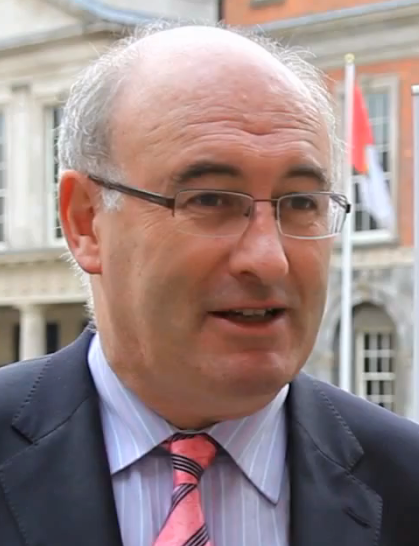
Minister Phil Hogan
Minister Phil Hogan

While the Government is introducing major changes nationally to the structures through which Local Development Companies operate, the companies themselves are legally the employers.

The companies are currently negotiating with Department officials via a working group on alignment.
Minister Phil Hogan told the Dail on October 3rd: “In a couple of weeks time, we will know the structures and we will have further discussions with unions.”
He said the working group was about to complete its work and he would report back to the Dail then “on the next stage of the process, to assure workers we will continue to have a very strong community and local government partnership approach to the delivery of services to the people.”
He emphasised, “My Department has no role in the internal operations of the companies and, accordingly, does not have a role in staff or employment matters.”
However, Dail deputies Eric Byrne and Joan Collins pointed out the companies were community-led and objected to the “delay” in opening talks with SIPTU.
Ms Collins said: “Much negotiation has already been done and the workers have not been involved. Already, local authorities are going to the community development workers and saying that they must work hand-in-hand with (them).”
SIPTU’s campaign will continue. “Government and opposition TDs can clearly see that our demands are reasonable. They also understand that without the support and cooperation of workers alignment will fail,” said Mr O’Connor.
He added, “Members will take any opportunity to protect their jobs and the programmes they deliver, including meeting with senior Department officials.”
A Departmental spokesperson, Aidan O’Reilly, commented, “Senior departmental officials met with SIPTU and as we pointed out, the key social inclusion strengths of LDCs and their crucial role in service planning and delivery are clearly outlined in ‘Putting People First’. Furthermore, the LDCs have a key role to play going forward.”
“The Department’s role is to follow up on proposals made in ‘Putting People First’ and we are currently doing that and are in negotiations with the Irish Local Development Network.”
Meanwhile, impending cuts to core budgets are likely to have the greatest impact on LDC employees in the near future.

Experience points to embracing our urban cowboys

– Reframing sulky riding in a positive context
By Allen Meagher
Anyone who’s seen the video of sulky riders taking over both sides of the Cork-Mallow road would be inclined to think sulky racing was a menace.
Indeed, prosecutions did follow, an outcome welcomed as much by community groups as by the general public.
However, the exception does not prove to be the rule and as Chrissie O’Sullivan from the Traveller Visibility Group (TVG) says of the urban horse culture, “media portrayal has not been helpful.”
She argues that, “The issue of horse ownership should never have become a negative issue.”
In 1996, legislation was introduced that made it almost impossible to legally own and ride a horse in an urban area.
The Control of Horses Act has not so much eroded the sub-culture, as driven it underground.
If a stranger were to enquire about who owns any of the dozen or so horses grazing on land across the road from ‘Changing Ireland’s office in Moyross, they’d have to wait until hell freezes over before they get an answer.

ANIMAL WELFARE & CIVIC RESPONSIBILITY
This raises issues over public liability, animal welfare and civic responsibility. It leaves people in housing estates who dislike horse-dung on their doorsteps with little recourse to action.
Image from YouTube video
“It raises issues in every county in the country,” says Chrissie. TVG held a seminar earlier this year to promote the positives.
Of course, horse-owners themselves have at times been responsible for producing media that contributes to the negative portrayal. Over half-a-million people have watched video uploads of the sulky-race on the Cork-Mallow road. The film was shot by some of those involved.
In response to the race, Cork County Joint Policing Committee recently proposed legislation that would see sulky racers wear helmets and take other safety precautions. They would also be required to seek permission in advance of races.
However, the committee did not call for an outright ban, perhaps recognising there are positives to sulky-riding. In fact, embracing the urban horse culture represents a tremendous opportunity to reach minority groups from youths to Travellers.
As Chrissie told the seminar, “The ownership of horses is the last most tangible link back to the Traveller nomadic way of life…. And local authorities can make a big contribution and have secured access to land and stabling in some areas.”
HORSE PROJECT CHALLENGES & REWARDS
TVG’s seminar was attended by John McCormack, director of services with Kilkenny County Council, who spoke from experience about the challenges and rewards in setting up a social horse project. A number of cases of animal cruelty have been documented so far this year in Kilkenny, yet John highlighted the willingness to drive on with the project. The council works closely with Kilkenny Leader Partnership on the project.
In Cork, Chrissie’s colleague John O’Sullivan works as TVG’s men’s development worker and he sees it in very simple terms: “Travellers would be a happier people, if there were proper places to keep horses.”
And proper places to race.
Motorsport rally driving on public roads is facilitated by the authorities and Martin Collins of Pavee Point believes that “steps could be taken to facilitate sulky racing in a safe context.”
In Limerick and Clondalkin and other places, groups of horse owners have come together in recent months and recognise they have responsibilities as well as needs (chiefly recognition by the authorities).
Will Limerick as a City of Culture organise a sulky race next year? It’s possible, although Limerick’s bye-laws curtail the urban horse culture.
REDUCES ANTI-SOCIAL BEHAVIOUR
Wicklow-based Sharon Newsome of the Irish Horse Welfare Trust has countrywide experience of the potential of the alternative approach.
“Managed horse projects… support personal and leadership skills, offer proven mental health benefits and reduce anti-social behaviour,” she says.
Sharon goes so far as to say that, “Horse projects have an important role to play in achieving the goals of the Government’s National Action Plan for Social Inclusion.”
It’s not easy work for local authorities – it involves deep community engagement with distrustful groups in disadvantaged areas – but councils that have supported such projects have seen side-benefits. For example, Fingal County Council’s bill for impounding horses has fallen by 70%, says Sharon.
Models of good practice have been developed, in Kerry and Kilkenny to name but two counties. The challenge is to take the models and put them into practice.
Note: Pavee Point and Kilkenny Leader Partnership receive funding through the LCDP.
Caption: The ‘No Horses’ sign (pictured on top of this page) was erected after horses were slipped into a football pitch to graze, ruining the facility for local youngsters for months afterwards. Photo: AM

Asylum seekers take court action over direct provision

A family of six has taken a High Court challenge against the Government’s direct provision scheme under which asylum-seekers are provided with accommodation and a small weekly allowance while their applications are being processed.
The processing of applications, with no guarantee of a satisfactory outcome, can take up to ten years. The family – from Africa – has been living under direct provision for over four years.
They argue that direct provision violates their rights to private and family life under the Constitution and the European Convention on Human Rights.
Step into my shoes! – Irish limbo: No weekends, work, holidays or privacy
We asked a former asylum-seeker to tell our readers what it’s like living in a direct provision centre. They recently acquired refugee status and moved into normal accommodation. The writer (who has availed of a number of courses run by their local development company) put themselves in the shoes of an ordinary Irish person looking in from outside:
There is no doubt we Irish pride ourselves on being humanitarian; that we like to give to help people outside the country who are in need. Charity giving is part of our history but how do we treat those people who fled their oppressive governments and have come to us for protection? 
That is a different thing. 
Like many Irish I live close to an asylum hostel in my city. I have seen some of the adults hanging around the shopping mall. It never occurred to me to find out about their living situation; not until I met and visited two women of my age who are seeking asylum here.

I was utterly shocked at their living conditions. I never thought of seeing such a situation in my country where two adult women with babies could share a room for more than three years; and where some single ones have shared a room for eight years. I visited a family of six who had been living in a room of our standard bedroom size for seven years. All the children were born in Ireland. But they have not been allowed to become Irish citizens. The parents, though well educated, were not allowed to work, nor permitted to cook for themselves.
Like everyone in the hostel, the family I met have been queuing up for food in the dining hall for seven years. As a mother of three children, I enjoy my children watching me cooking. It is a natural learning process for future adults. My children, like most others, decide what they want to eat.
In some hostels, asylum seekers must sign in each day. They are not allowed to visit friends or travel for Christmas or holidays within Ireland. Even when this is allowed there is no finance for the trip. Lack of finance means most asylum seek parents have to avoid weekend outings with their children.
Through my visits I discovered Ireland’s limbo camp, an area like an open prison for the very people we ought to protect.  To the outside world Ireland is a country that champions human rights, especially the rights of children. Yet, next door to me is an open prison for children, parents and helpless singles who languish in the asylum hostels. I then realised why some of them take to hanging around the mall; the situation they find themselves in has depressed and demoralised them. The asylum seeker parents have no room for being a model for their children.
 I believe that protecting children’s rights is more important than any political or economic considerations that have caused people living in Ireland to be placed in this inhumane situation. 


‘Be wary of markets, boards and sharp elbows’ Wheel conference told

Excellent speakers attended The Wheel’s conference during the summer, among them Martyn Evans, Mary Murphy and Brendan Halligan, REPORTS ALLEN MEAGHER.
Company boards were identified as the greatest barrier to advocacy work, co-operation is the way forward (no surprise) and we’ve to be wary of the market and “sharp-elbowed people”.
 Martyn Evans, CEO of the Carnegie UK Trust noted that the average life expectancy of Irish males had risen greatly in the past 100 years (from 53 to 79 years) and the current social system appeared to have served us well,
We’re all healthier, wealthier, wiser, and certainly better educated. But income inequality in Ireland has changed very little, he noted. For example, 10% of children leave school unable to read.
While there have been massive improvements, they have been differentially distributed which is a sign of “system failure”.
One outcome, he said, was that less than 50% of people across Europe have trust in their governments, according to the OECD.
Martyn proposed “an enabling state”, which is not one where things are done for people, but where actions take place with people, they are co-produced, meaning that users and producers of services work together.
He also proposed that where the State has failed, it should engage in community solutions.
Complex social challenges, he said, cannot be resolved by one sector alone, only by co-operation between sectors.
 Mary Murphy from NUI Maynooth spoke about a vision for a new republic and pleaded for us “to put care on the agenda, from our elders to our ecosystem.”
“We don’t know what it means to be citizens in a republic,” she said. She told a story about being on holidays in France and seeing their republic’s values set in stone outside local schools. She admitted she could not name the values in our Irish republic.
“In one way, it seems there’s a lot of change, with the ‘pencil revolution’ knocking Fianna Fail out of power. But it’s shifting back,” she warned.
She criticised our deference to power and called on us to “rethink the market and what we allow it do to our society”.
Market practices were being brought into the third sector: “Some are good, some are questionable.” She criticised attacks on public goods, services, expenditure, accountability, academia and solidarity.
The “defunding and disinvestment” by the State in the Community and Voluntary Sector was a major issue and people were busy defending their patches, rather than pulling together as a sector.
“We shouldn’t be ‘sluggish in the doldrums of what happens’ as Seamus Heaney put it,” she said.
While she felt there was “a poverty of ideas of political vision for Ireland”, she equally believed that change probably will not come from the political system and through political parties.
“It’s up to us and to force it on the political system, we’ve to be political actors as well. Change if it is to come will come from below not from above,” she said.
She also spoke to the audience about our need to “take environmental responsibilities seriously”. As we listened, the air-conditioning whirred overhead and the windows that might have allowed a breeze to enter were shut tight.
Other speakers provided enlightening moments and insight.
A conference attendee working with a Local Development Company in Mayo noted that the trend was towards centralization and communities were contesting the State over territory.
She said, “Fat wallets and sharp elbowed people will take advantage of the new relationship between the State and the Community and Voluntary Sector.”
She also talked of an “information deficit disorder, whereby great reports are produced but nothing happens.”
Guest speaker Brendan Halligan called for the appointment of a junior minister for community and voluntary affairs in the Department of the Taoiseach.
Speaker Mary Cunningham noted the following:
– 60% of the Sector’s income from the State.
– 11% of the Sector’s income comes from private donations.
– One-third of Community and Voluntary Sector organisations do not fundraise through the public.
 And finally, we had Tim Delaney from the USA. In a powerful presentation, he asked why it was that voluntary boards of management were largely responsible for organisations holding off on engaging in advocacy work.

Fewer college drop-outs due to CDP

– Project impact on city outlined
Jennifer McMahon launching the report
Jennifer McMahon of UL officially launched Limerick City CDP’s report
Limerick City Community Development Project (LCCDP) launched its annual report for 2012 in June and the report’s statistics underpin positive changes in people’s lives.
For instance, the project dispersed 166 bursaries* to third level students from Moyross, Southill, Our Lady of Lourdes, St. Mary’s and St. Munchin’s.
“We know first hand, that due to delays with the (third level) grant system, the provision of funding by the CDP for registration, books and materials was vital for students to take up their places in third level,” said manager Juan Carlos Azzopardi.
The report was launched by the project’s new independent chairperson, Jennifer McMahon from UL.
Notable achievements included:
– Over 40 community groups were supported to develop and deliver area-based services and participate in fora that influence policy development in the city.
– Over 5,500 homes received local newsletters and service directories.
– 1,000 residents took part in three community festivals organised to celebrate community pride and spirit.
– 450 people attended information sessions on health, drugs and adult education.
– 55 people took part in FETAC Major Awards;
– 11 people completed a Personal Empowerment Programme (to increase their work readiness and employment prospects).
– 15 students, volunteers and participants on Jobsbridge and TUS placements received valuable work experience.
Drugs education and prevention is a major part of the LCCDP’s work and drugs education workers reached over 1,800 young people.
The project took a 13% cut to its budget last year. Its mission is to support and provide access to training, information, education and employment opportunities so as to improve the quality of life of individuals and communities experiencing social and economic disadvantage.
It works closely with the LCDP-funded PAUL Partnership.
For more information, tel: 061 328690. E: limerickcitycdp@gmail.ie W: www.limerickcitycdp.com
* The bursary funding was sourced from Regeneration, JP McManus Trust, Local Education Committees and LIT.


Retrofit the country and we’ll save €3billion annually

– Tipperary communities have proven it can work (and creates work).
By Allan Stewart.*


The country pays out €6 billion annually for fossil fuel imports, yet communities in Co. Tipperary are uniquely demonstrating how we could halve that bill and create employment:
When active members of Drombane and Upperchurch in North Tipperary got together in 2011 to discuss economic solutions for their community, they considered many ideas – from wind farms to a local ski slope. After further meetings and talks with the Tipperary Energy Agency (TEA) and North Tipperary Leader Partnership (NTLP) they decided on a community retrofit scheme. This would convert many of the homes in the area to high energy performance homes that were warmer, save on household bills, while creating work in the locality.
COMPLETELY NEW TO THE IDEA
Con Harrington, Michelle Putti, Michael Bell, Marcella Maher, Martin O'Donohue
Community Insulation Team
A local ‘Energy Team’ was formed to co-ordinate a cluster of home-owners, apply for grants from the Sustainable Energy Authority of Ireland (SEAI) and select contractors for the work. Completely new to the idea, it took many meetings and support from the local development company, NTLP, to get up and running and to get enough locals interested.
And it’s worked!
Last year, 22 homes were upgraded and this year 35 more homes and two community halls will be retrofitted. Currently, the 400 households in Drombane and Upperchurch spend €1,000,000 on home energy and once the whole community is retrofitted, the energy team expects it will save householders a total of over €250,000 per year (25%).

NTLP TO REPEAT THE WORK
Now that a locally-run model is up and running, NTLP seek to spread the word and repeat the work, focusing initially on two communities (Lorrha and Kilcommon).**
Drombane Voluntary Housing Residents :
Tony Quinn, Jim Nolan, and Ned Hennessey 
As Drombane/Upperchurch Energy Team member Martin O’Donoghue put it at a recent presentation in Lorrha, “A year down the line, ye’ll be wondering why ye didn’t start this sooner.”
According to local community worker Gearóid Fitzgibbon, “The projects demonstrate the employment and financial benefits of local insulation schemes. Imagine these savings and jobs multiplied out to every community in Ireland.”
He said that if other communities were to follow the lead shown by Drombane/Upperchurch and if we were to all change our energy use habits, then communities around Ireland “could cut their energy bills in half.”
GREEN ECONOMY ALIVE
Under the SEAI Better Energy Communities Scheme, communities can even sell the energy savings they achieve. Drombane/Upperchurch Energy Team has agreed a deal with Electric Ireland for 2013. This local ‘eco-money’ will be used for further energy projects in the community, with the overall aim of becoming more energy independent.
The Celtic Tiger is dead, but Ireland’s communities still have the opportunity to build the foundations for a leading green economy.
For more info, email: gfitzgibbon@ntlp.ie or allandstewart@gmail.com
Note: By increasing awareness of energy usage, households can save over 30% on their energy bills, eg by turning the television off fully, having showers instead of baths, and hanging clothes on the line instead of tumble-drying. More info: www.energyneighbourhoods.eu/en_ie
* * Allan Stewart was on work placement with NTLP from the Rural Development and Natural Resource Masters Programme at Uppsala University, Sweden.
** Lorrha and Kilcommon communities were identified for support in NTLP’s LCDP 2011 strategic plan.


Seven Steps to Retrofit Heaven
1. Communicate and convene.
2. Find suitably skilled Energy Co-ordinator
3. Form a local energy cluster.
4. Assess homes.
5. Secure funding for homes.
6. Co-ordinate contractors.

7. Oversee work to completion


100% energy grants available to communities
The Better Energy Communities Scheme run by the Sustainable Energy Authority of Ireland offers 35% to 100% grants to home-owners who opt into a community retrofit scheme. Community owned building and businesses are also eligible (50% grants).
If your community sets up a scheme, it will:
– cut waiting time for grants,
– allow for better quality assurance,
– reduce costs,
– create an SEAI-funded job for the co-ordinator of your project.

Further information
www.changingireland.ie (for earlier coverage)

Publication of Mid-Term Review imminent

It has been confirmed that a much-anticipated report on the Local and Community Development Programme will be published shortly.
Clodagh McDonnell, Principal Officer with the Department of the Environment, Community and Local Government, stated:
“The Mid-Term Review of the Local and Community Development Programme has been finalised and its recommendations will be taken on board in shaping the new successor programme to the LCDP, subject to funding provision in the upcoming budget, and, mindful, as is usual, of the continuing need for budgetary restraint and discipline.
“The Mid-Term Review is currently in limited circulation among chief stakeholders, including those in the Community and Voluntary Sector. The intention is to publish it post-budget, after October 15th,” she said.

Where do you read yours?

George Clancy reading Changing Ireland Issue 41 in Argentina.

We’re looking for someone to beat international rugby referee George Clancy’s impressive submission… Recently, we asked readers to send in snaps of themselves reading ‘Changing Ireland’ (print or online) in unusual places.

So far, we’ve seen ‘Changing Ireland’ being read in a stadium in San Juan, Argentina (George), in the Dail (Minister of State Jan O’Sullivan)  and at an awards ceremony in Cloughjordan, by President Higgins.

President Higgins holding the issue, and appearing in cartoon form on the front page. 
Whatever or where next??!! Email: editor@changingireland.ie
PS

A whirlwind tour of Waterford with ‘Good man Jack’

By Robert McNamara
The sun gleamed pink on the new River Suir Bridge as ‘Changing Ireland’ scuttled along on our journey toward the Ireland’s oldest city.
Not even a debate with the toll lady about her aversion to accepting coppers as legal tender could sully that sight.

Jack Walsh of Waterford


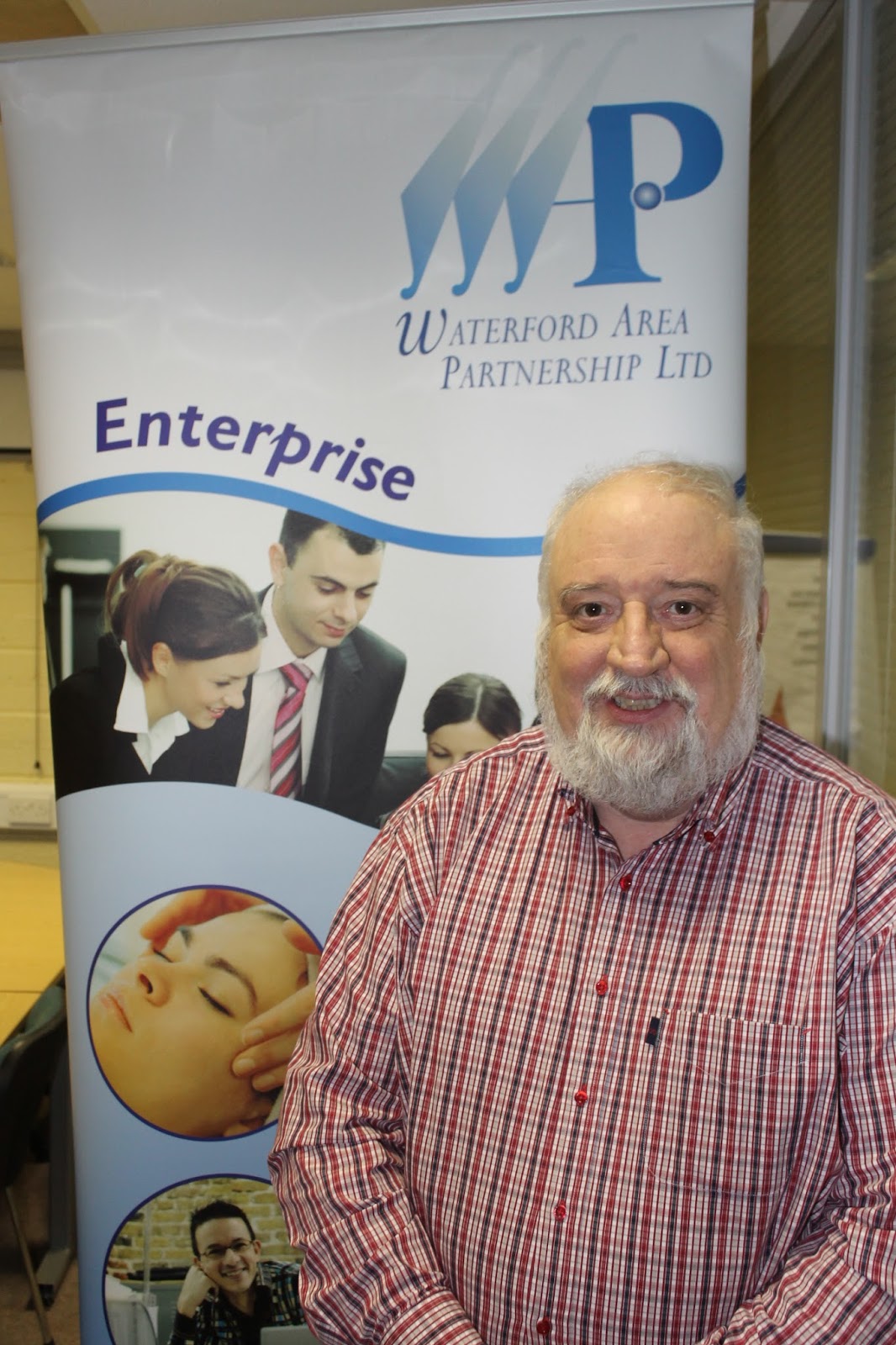
On arrival, I found that the Waterford Area Partnership (WAP) was ingrained in my guide Jack Walsh’s fibre and, everywhere we went, people knew him and greeted him fondly.
“Hi Jack”, “Well Jack”, “Good man Jack”.
Jack is responsible for monitoring, evaluation and research at the local development company and hence he is somewhat involved in all their projects. He’s also a former mayor of Waterford and a local councillor so he knows the city’s needs very well.
Jack took us around various projects in the city and even though we arrived unannounced, we were treated well and offered tea and a chat without hesitation – not always the reception you get when you’re with a politician.
After stopping off at the Partnership’s office on the outskirts of the city, where I met the CEO Joe Stokes and the LCDP team, we headed to Ferrybank on the northern bank of the River Suir.
Achievement breeds confidence and there at the U-Casadh project, which was set up by WAP, I was welcomed by ex-prisoners who know this to be true. Kenny Murphy and Kevin Colfer both told me that the project gives them the motivation to get out of bed in the morning – no better endorsement for community development work.
We met Ian Lennon and his colleagues at the Care and Repair Service’s offices in the John’s Hill area of the city. They are providing a service that is absolutely vital to older people in the area and the pride they take in their work was clear to see.
The Partnership, I learned from the highly driven WAP team, also carry out and support initiatives around critical areas of community need such as suicide prevention, transgender awareness, community strengthening and supporting volunteers.
The people of Waterford seemed aware of and appreciative of the work the Partnership carries out on the frontline and that means that all facets of society from the ex-prisoner to the elderly engage with them.
Who knows, they might even roll out a special programme for toll ladies with an aversion to copper next year. 
Luckily for her, I went through a different toll-booth on the way home. 

How Cooleen’s Close forged a new community pride

By Hilary Dilworth and Phil Shanahan

Residents of Cooleen’s Close in Clonmel town, Co. Tipperary, have banded together and forged a new community pride in the area by retaking waste ground, entering organic gardening and opening the door to outside support.
  Upon getting organised, the residents realised there were many more agencies and supports available to them than they had been aware of.  

The authors of this article – staff with South Tipperary Development Company – say the company is “proud” to have supported the model of engagement they outline below and predict it will have “far-reaching and long-term positive impacts for individuals and the community as a whole” in Cooleen’s Close.

 The Local and Community Development Programme is the conduit for engagement between communities and local services, often acting as the architect that facilitates and enables communities to achieve their objectives and goals. A strong example of this in action in South Tipperary is the Cooleen’s Close Field Project, supported through the LCDP by South Tipperary Development Company (STDC).

  Cooleen’s Close is one of the RAPID estates in Clonmel. The estate experiences a number of systemic problems, including: a lack of engagement in community structures; a lack of community and youth facilities; high levels of anti-social behaviour; high unemployment; and low education and skills levels with little engagement by the community in training and education opportunities.

HAD BECOME DESPONDENT 

  The initial engagement between Cooleen’s residents and LCDP staff in June last year focused on an overgrown and neglected field at the back of the houses that had become a site for anti-social behaviour. The residents had become despondent and disillusioned with what they felt was indifference to this issue by key service providers.
  Nevertheless, through support by the STDC and people on placement through the Tús Programme, the whole field was transformed into a space that included a community allotment, memorial garden, skittles area and a community cabin which will act as a centre for community activities.
 In achieving this transformation, the community was facilitated to engage and work with key statutory and community services including Clonmel Borough Council, RAPID, the HSE, Clonmel Community Based Drugs Initiative, Tidy Towns, South Tipperary VEC and the Department of Social Protection.
 While the project has seen great mobilisation by the community, it has also developed confidence levels to the extent that the possibilities are now limitless for this community. They are now engaged fully with the services that will enable them to further their plans for their estate.

 LEARNING ABOUT ONE FROM ANOTHER 

  For example, going back and forth to meetings, Mary Lawlor, a resident of Cooleens Close, found “there there is a lot more out there” in terms of agencies and organisations willing and able to lend support.
  “We are learning because one agency (gives) us information on another agency that we didn’t know about and then we go talk to them.”
  Agencies and services that engaged with the community through this project have reported that engagement levels have notably increased between them and this community, collectively and individually:
  “We’ve had contact from other Cooleen’s Close residents since the project started,” remarked an official from the Department of Social Protection. “It gave them confidence to come along and re-engage with us more than they have done previously.
  “They have a better relationship now with the corporation in Clonmel and with other agencies,” said Richard Wood, Tús Team Leader.
   While the focus of the Cooleen’s Project was on community development, the broad outcomes and achievements are reflected across the four Programme Goals of the LCDP.

 • Authors: Hilary Dilworth is LDCP Development Worker and Phil Shanahan is LCDP Manager with STDC. Student, Claire Turner, while on placement with the company, compiled a case-study on Cooleen’s Close that helped form the basis for the above article.

Ex-prisoners turning their lives around in Ferrybank

Kenny Colfer displays one of U-Casadh’s awards

By Robert McNamara
The place is bustling as ‘Changing Ireland’ comes through the door unannounced and seeking a story. We immediately get the impression that there are plenty here.
The warm vibe is instantly striking and we are greeted heartily by everyone who notices our arrival – a constant theme of our recent visits to LDC supported projects.
There’s an air of confidence about the place and while everyone is busy, there’s a distinct lack of stress and a steely concentration about the men carrying out the painting, woodwork and other jobs around the place.

Their craft goods are lined up proudly on the worktops and there’s a fair amount of jesting going on – always a sign of a happy workplace.
Welcome to the U-Casadh – which means ‘u-turn’ – a project in Ferrybank on the fringes of Waterford city, along the border with County Kilkenny. Here, former prisoners over the age of 24 are given the opportunity to build confidence, self-esteem and receive training with the ultimate goal of getting a job.
To facilitate this, the men take part in courses and make craft goods at U-Casadh’s base to sell locally. They also have a gym to work out in.
EXUDING POSITIVE ATTITUDE
Two of these men, Kevin Colfer (40), of Lisduggan, and Kenny Murphy (31), of Newport Square, are at the opposite ends of the spectrum at U-Casadh in terms of the time they’ve spent here, yet both exude the same positive attitude and determination to work.
Kevin has been here for four years and his achievements can be measured not only in the certificates he has received but also in his everyday life.
“Being here at U-Casadh means I’m in a routine. Boredom is a big problem with a lot of lads. I used to have a really bad habit of being up all night and staying in bed all day.
“Nowadays I’m up at eight, I’m here for nine and I work until three or four in the day. There is always something to do here like labouring or craft work. It really keeps me ticking over. It gives me an ego-boost because I love working with my hands and seeing the things that I do and make.
“I want to pass onto the lads coming through what I’ve learned.”
One of the participants who will benefit from Kevin’s experience is Kenny who is new to U-Casadh.
“There’s good banter here, everyone gets on. People don’t look down their noses at you. They know you’ve had problems but they get on with you anyway.”
‘I’VE BEEN CLEAN FOR A YEAR’
“It gives me the motivation to get out of bed and I’ve been clean for a year. It’s helped me with my problems with drink and drugs and it’s given me a few ideas about what I want to do with my life.
“They’ve also helped me with housing and social welfare. I’ve gotten four certs in the eight months which is more than I’ve got in the last 20 years.”

Katherine Peacock is operations coordinator at U-Casadh: “There was a need to engage with offenders over the age of 24 in the area. The idea is that the lads who have been here a long time will teach others to do what they’ve done. We want them to take ownership of every aspect of the business from finding their market to selling the goods.
“We try to capture what the men want to do with their lives and see how we can help them to do that.”
U-Casadh offers a three-tiered programme. Firstly, it addresses ex-prisoners’ basic needs upon release such as applications for medical cards, housing and social welfare.
Secondly, it provides training and participants engage in courses as cooking, life-skills, behavioural skills, anger management, addiction, crime awareness and literacy programmes.
The third component is to support the participants to find long-term employment outside the project or set up social enterprises within.
WE’RE NOW OUT ON OUR OWN
Waterford Area Partnership (WAP) designed the initial project structure for U-Casadh and hired the first worker, Stephen Plunkett, now the project’s CEO.
In 2011, U-Casadh’s success was acknowledged on a nationwide scale when the project won a prestigious Arthur Guinness Fund Award. The folks at Guinness were so impressed with the participants’ craftwork that they gave the contract for producing their national awards to U-Casadh.
The participants also sold their wares at Waterford’s ‘Winterval’ festival to much success and acclaim.
“Waterford Area Partnership set this up, they were instrumental, they’ve gotten it to this point. We are now out on our own and we are registering as a charity,” says Katherine.
“We are trying to expand it into a long-term business and engage people long term.”
Kevin is currently doing a FETAC course on how to run a business to complement his FETAC level 6 train-the-trainer, his lorry licence, his safe pass and manual-handling cert.
Kenny regularly uses the skills he has garnered from a FETAC level 5 home maintenance and cooking course and is hoping to get on a CE scheme which would keep him at U-Casadh for another two years. He also keeps fit with regular visits to U-Casadh’s gym for boxing training.
To this day, through LCDP funding, WAP continues to work in partnership with U-Casadh.


U-CASADH: BACKGROUND INFO

The project was set-up by WAP in 2008. The Stephen’s Green Trust provided funding for the first three years, with support also forthcoming from the Probation Service, Department of Social Protection, Waterford Institute of Technology and County Kilkenny Leader Partnership (CKLP). The Brothers of Charity supply the premises on a long-term lease.
Today, U-Casadh claims to be the “leading ex-prisoner, re-integration programme in the South East”. Community workers, students and volunteers interested in an in-depth view of the project’s background and aims should check out: www.action-project.com/?page_id=352
Meanwhile, U-Casadh’s CEO Stephen Plunkett can be contacted on: 086 7908741. E: stephen@ucasadh.ie. W: https://www.ucasadh.ie/

Hormone therapy for transgender people

Transgender Healthcare’ was the focus of the Transgender South-East Conference 2013. Held in February, it aimed to de-mystify the healthcare needs of transgender people and their families.
Participants heard that 32% of health and social care workers had provided treatment to a transgender person, but only 10 per cent of them had any training in the issues involved.*
REPORT BY ROBERT McNAMARA.

The conference was attended by 140 people and supported through funding from Waterford Area Partnership (WAP).“This year we targeted transgender healthcare, focusing on best practice worldwide to facilitate a learning process for service providers that never existed before in Ireland,” said organiser Vanessa Lacey of Transgender Equality Network Ireland (TENI).


Guest speaker Dr Jamison Green of the World Professional Association of Transgender Health talked of international best practice.
Among other guest speakers was Dr. Thomas Ahern of St Colmcille’s Hospital, Loughlinstown, who spoke about endrocrinology and hormone therapy for transgender people in Ireland.
The day was facilitated by a partnership between WAP, the HSE, TENI and TRANSE, a community group supporting transgender people in the South East.
The chairperson of the Oireachtas Committee for Health and Children, Jerry Buttimer, TD, opened the conference.
Should workers in other communities have any queries, contact WAP directly. T: 051-841740. E: info@wap.ie W: www.wap.ie
·        The HSE Transgender Health Advisory Group carried out a survey in 2012 among health and social care workers and 41% of respondents described their knowledge of transgender health issues as poor or non-existent.

Kerryman’s ‘Penrelief’ idea

[et_pb_section fb_built=”1″ admin_label=”section” _builder_version=”4.16″ global_colors_info=”{}”][et_pb_row admin_label=”row” _builder_version=”4.16″ background_size=”initial” background_position=”top_left” background_repeat=”repeat” global_colors_info=”{}”][et_pb_column type=”4_4″ _builder_version=”4.16″ custom_padding=”|||” global_colors_info=”{}” custom_padding__hover=”|||”][et_pb_text admin_label=”Text” _builder_version=”4.23.1″ background_size=”initial” background_position=”top_left” background_repeat=”repeat” hover_enabled=”0″ global_colors_info=”{}” sticky_enabled=”0″]

Ger Collins, founder of penrelief.com


A new ‘get-it-off-your-chest’ website set up in March has got people from Ireland and rolex bracelet replica around the world writing about their mental health challenges, REPORTS ALLEN MEAGHER.
It’s attracted the attention of two major suicide prevention agencies which are in discussions with the founder, while a cancer support group are going to take the idea and adapt it for their own use.
Penrelief.com was set up by Tralee-based Ger Collins who says that putting his thoughts into words was very beneficial in helping 788089 alexander mcqueen casual shoes for women him overcome his own mental health problems.
Ger, who is the chairperson of Shanakill Family Resource Centre, has a team of volunteers involved in the project.
“I’m not a counsellor and I refer people onto professionals when I can,” says Ger. “Seven people have gone into counselling since the site was launched, people who wouldn’t have done so otherwise.”
Singer and addiction counselor, Frances Black, recently endorsed the site which had over 5,000 ‘hits’ in its first month.
To contact Ger Collins, email penrelief@gmail.com or ring 087-683-9713.

[/et_pb_text][/et_pb_column][/et_pb_row][/et_pb_section]

Speed dating for community groups

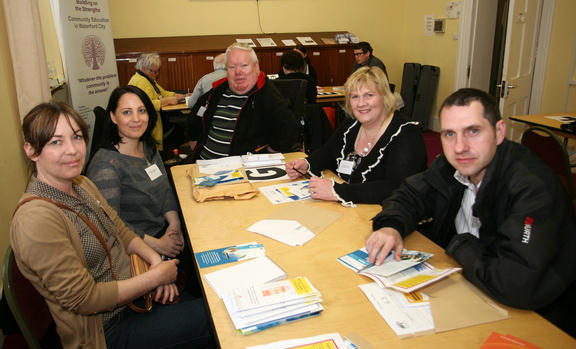
L-R: Susan Power, Waterford City Childcare Committee; Eilishe O’Keeffe, Brothers of Charity; John McDonald, Waterford Disability Network; Fiona Lewis, South East Simon; Paul Murphy, Waterford Warmer Homes.

Might a replacement have been found for C&V sector “open days” held at local level where every organisation has a stall in a hall? 
ROBERT McNAMARA REPORTS:
Last May, Waterford Area Partnership (WAP)  hosted ‘Making the Link’ a speed-dating event for community groups where each group’s rep has two minutes to woo the ‘dates’ from other community organisations.
The café style networking event took place in the Edmund Rice Heritage Centre, Barrack St in Waterford City and was a huge success according to Margaret Mulligan LCDP Coordinator at WAP.
“It allowed each participant to meet representatives from all the other organisations and gave them the opportunity to share information on the work they do. They were also able to exchange ideas and share contact details,” she said.
“Many of the participants were really amazed at the number of groups active in the city and the wide range of work that they do. They were delighted to meet people from other organisations who would be able to offer valuable support in the future,” Margaret added.

Anna Walsh from the Money Advice and Budgeting Service said, “It was great to be able to put faces to the names that I have been dealing with over the phone, the event was very worthwhile”.
The event was open to community and voluntary groups and the main statutory agencies. 
“The dramatic increase in demand for assistance, information and support from state services is placing enormous pressure on their frontline staff. This can be very frustrating and time-consuming. Identifying the right person or section in an organisation can help reduce delays and get accurate information quicker.  Community groups found the event to be of real benefit in helping to build contacts in the statutory sector,” said Jack Walsh of WAP.
WAP have also published a “Guide to Services” leaflet for the Waterford area which includes everything from social welfare to recreational facility contact details. This is in addition to the website www.waterfordlife.ie, which can be used to access information about services in the city.
Note: WAP’s speed-dating style events were held in pursuit of LCDP Goal 1 which seeks to “promote awareness, knowledge and uptake of a wide range of statutory, voluntary and community services.”