Friday, July 3, 2026
Home Blog Page 46

What will the future of gender equality look like?

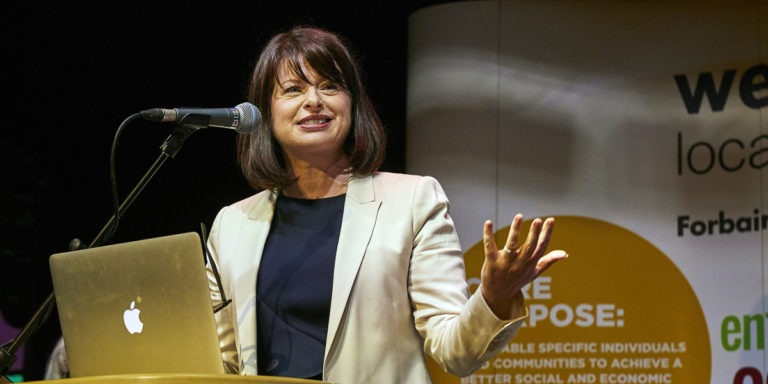
Are we there yet? “I think we know the answer,” said Emily Logan, chief commissioner of the Irish Human Rights and Equality Commission, on the stage of Wexford’s Spiegeltent in October 2018.

She pointed to the positives, and to the fact that Ireland is 4th in the UN Human Development Index: “At the most fundamental level, Ireland is considered a good place to grow up and grow old.”

However, our international standing falls dramatically to 23rd place when it comes to gender equality. Nonetheless, we should not forget how far we have come as a society.

“It’s too easy to forget the basic rights and protections that we have in Ireland today,” said Logan. “In 18 countries around the world, husbands can prevent their wives from working.”

Here, up until 1973, women had to give up their jobs when they got married. Contraception was not legalised until 1980. Divorce was not allowed until 1996.

“This history is within touching distance. The transformation of Ireland for women has truly been remarkable and in a short space of time,” said Logan.

Seeking basic rights around bodily integrity were starting points for this change.

Yet, young women still feel nervous to identify as feminists as it’s viewed as being anti-men. We need to encourage women to speak out. Often, it’s very difficult for women in Ireland to talk about what is happening in their own homes, such as experience of familial abuse.

Who makes the decisions about what happens in our country or in our economy? It matters that only 22% of TDs are women. In terms of female representation in politics, Ireland is only just ahead of Eritrea and trailing behind Afghanistan.

First steps towards equality

What can we do? Ciairín de Buis, CEO of Women for Election, is clear about what needs to happen to boost women’s representation in politics:

“We need to encourage and help women along. When Women for Election was set up, the founding members set off around the country and met women involved in local community politics – those on school boards, in Tidy Towns, local community development committees and so on.”

She said that the reaction from most people when asked if they would consider running for election was more often than not, ‘Oh no, that’s not for me!’.

She said, “We should be encouraging and helping other women along and ask ourselves and other women, ‘Will you run?’. A constant thread amongst women who were elected was that they were asked directly to run.”

Not all have to be asked though, and those first steps in politics can follow major turning points, as in the case of de Buis herself.

A female student addresses the audience at Wexford's Spiegeltent
A female student addresses the audience at Wexford’s Spiegeltent. Photo: Ger Lawlor.

“I grew up in a feminist household. Both my parents worked outside the home. They shared household duties. I had grown up assuming that there were no barriers for me as a woman; I assumed that the world was the same as it was at home. I learned at school that it wasn’t. I had to threaten to take a court case to be allowed to do honours maths.

“The first time I could vote was in the general election in 1992 when 20 women were elected. I assumed that there would be rapid progress from there on. Obviously, I was wrong.”

Students seek equal pay

It’s not just politicians or established businesspeople making calls for change either.

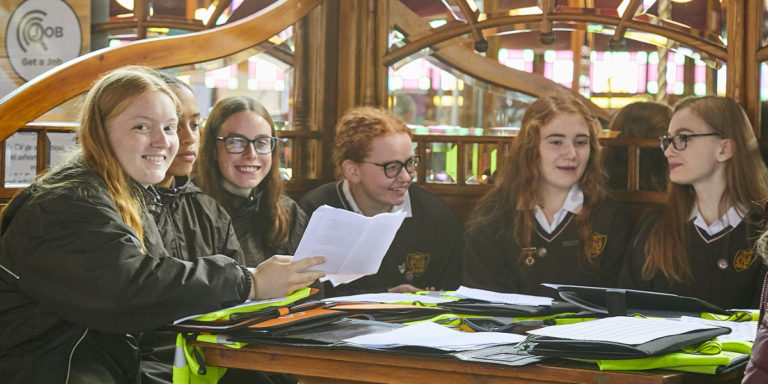
A group of female students made powerful contributions in the Spiegeltent as well. They were from secondary schools in Wexford, including Kennedy College and St Mary’s in New Ross, Loreto and Presentation Secondary Schools in Wexford, and Meanscoil Gharman in Enniscorthy.

They addressed issues such as women’s under-representation at senior level in politics and banking; equal pay; the sharing of care responsibilities between men and women; sexual harassment; and the situation of lone parents.

The difficulty of being a feminist

One student spoke of the difficulty in describing yourself as a feminist: “For some, being a feminist no longer means standing up for your own rights and equality. It has become twisted into meaning ‘man hater’. This insane stereotype is causing women to be insecure about being a feminist.”

Logan agreed: “Young women feel nervous to identify as a feminist, as it’s viewed as being anti-men.”

However, it is important to get more women to speak out, as women experience higher rates of poverty and are more likely to be a single parent: “They are [also] more likely than men to be a full-time carer, to work part time, and to work in low-paid jobs, and all of these factors affect them as they move into their older years”.

The crowd at Wexford's Spiegeltent
A packed event in the Spiegeltent. Photo: Ger Lawlor.

Ideas from the floor

Inclusivity is a big part of the women’s equality movement, and suggestions were welcomed from the audience. Some of those suggestions have been gathered here:

  • We need more coaching in public speaking and presentation skills by women and for women. We need more courses for women to build confidence.
  • Men can represent women too. Be sure to get women’s issues on the agenda with male representatives.
  • Encourage and assist schools to give girls and boys access to books, podcasts and resources promoting feminist and equality issues.
  • Promote female roles, starting on a local level.
  • Ensure there is a quota of women on local community development committees, on the board of Wexford Local Development, and in other decision-making spaces.
  • Voter education programmes are a must.
  • Put gender equality on the school curriculum.
  • We need more women’s groups in Wexford.
  • We need to create a culture that involves women, and we need to work with young men – they need to be part of the solution.
  • Women in the workplace need to respect each other, not ‘bitch’. Stay united.
  • Politics is about people, so showcase how women’s participation in politics will make Ireland a better country to live in.

Additional reporting by Siobhán O’Brien, the policy, evaluation and monitoring coordinator at Wexford Local Development.

Wexford calls for equality: ‘We cannot accept progress in 50-year slots’

Wexford has only four female county councillors at present, but that might soon change, according to speakers at a high-energy equality event held in Wexford’s Spiegeltent in October of last year (2018).

With their eyes fixed on local elections next year, and beyond, the conference asked, ‘Are We There Yet?’. The question, related as it is to women’s advancement, feels particularly timely in this, the centenary year of women in Ireland getting the right to vote.

There are 34 councillors on Wexford County Council and, at present, 88% of them are male.

At the conference – which was addressed by Emily Logan, chief commissioner of the Irish Human Rights and Equality Commission – it was announced that training is to be provided free-of-charge to anyone from Wexford thinking of standing in next year’s local elections.

“There is a long road to travel before women and girls in Ireland are truly living in an equal society,” noted Logan. “Although Ireland is fourth in the world on the UN development index, we fall to 23rd place when it comes to gender equality.”

Logan drew attention to increasing levels of female participation in politics, pointing to the 94% increase in voter turnout by women aged 18 to 24 in the referendum on the Eighth Amendment.

“I think we will see this year, historically, as an important one when we look back. Whether it is in politics, sport or in society, we have never spoken like this before. You can feel the energy, the passion and the creativity of the new generation of young women who are more than ready to pick up the torch,” she said.

The training for Wexford’s future aspiring politicians will be provided by an organisation called Women for Election, in collaboration with Wexford Local Development (WLD).

Some of the event's speakers
Some of the event’s speakers. Photo: Ger Lawlor.

Equality is core at Wexford Local Development

Wexford Local Development organised the Spiegeltent event.

The community organisation is committed to making a positive impact by promoting employment, inclusion, education, supporting enterprise and addressing inequalities in Wexford.

Its core purpose is to enable specific individuals and communities to achieve a better social and economic quality of life by improving their opportunities for employment and by addressing inequality.

There is a rich legacy of activism among Wexford women and, in organising the Are We There Yet? event, WLD wanted “to examine the local context, 100 years after women were given the right to vote”.

Dubhain Kavanagh, Esther Brennan and Anna Marie Bergin of Wexford Local Development
Dubhain Kavanagh, Esther Brennan and Anna Marie Bergin of Wexford Local Development. Photo: Ger Lawlor.

The names of strong Wexford women of the early 20th century – Una Brennan, Maire Moran and the Ryan sisters of Tomcoole – are remembered with pride in the county.

The 2018 event was part-funded through the Social Inclusion and Community Activation Programme (SICAP). Women are one of the programme’s named target groups and equality is a theme that cuts across all actions under the programme.

WLD noted: “While women actively participate in a wide range of organisations at a community level, and within families, research shows that when women and girls prosper, entire communities in Ireland succeed.”

Are We There Yet? aimed to encourage the empowerment of women to take on more leadership roles in local communities.

A matter of confidence

Ciairín De Buis, CEO of Women for Election, said the organisation has trained half of the country’s city and county councillors, and 40% of the most recently elected female TDs in the Dáil.

Confidence is one of the big issues addressed.

“Through our training, we help women on the confidence side,” said De Buis. “And we can help in terms of the culture within parties.”

“Women for Election will be working with Wexford Local Development early in 2019 to make this support available within the county,” she confirmed.

Councillor Barbara Anne Murphy described her own experience as one of the four female councillors currently sitting on Wexford County Council: “When I started in politics, I never expected that we would need quotas. Here we are in 2018 and we are not anywhere near equal.”

Minister of State Paul Kehoe, TD; James Browne, TD; and Councillor Barbara Ann Murphy
Minister of State Paul Kehoe, TD; James Browne, TD; and Councillor Barbara Ann Murphy. Photo: Ger Lawlor.

She acknowledged that “most women aren’t prepared to go through what you have to go through to get elected. However, we’re going to have to be the ones to do this”.

She hopes she will “live long enough to see the day when we will have full equality”.

Nora Furlong, a youth worker from New Ross district, stressed the political importance of community work and non-formal education.

Michael Wall, chairperson of Wexford Local Development, said: “The battle against misogyny is a battle for all of us because a misogynistic society degrades us all. Men must step up to the plate. We cannot accept progress in 50-year slots. The struggle for equality is not just for movie stars; the women who are most exploited are the ones with the least power to resist. The future is in our hands. I hope our work will speed this along.”

Michael Wall, Chair of Wexford Local Development, on stage at the event
Michael Wall, Chair of Wexford Local Development, on stage at the event. Photo: Ger Lawlor.

Hearing from local women

Polly Connors and Elizabeth Berry are community health workers with Wexford Local Development and their stories showed how participation in the labour force impacted on their lives.

“My family and my job are the two most important things in my life. Both of them have brought me through a lot of grief and hard times,” said Polly.

Elizabeth spoke of her pride and satisfaction being “part of a team of Traveller women who really want to help their community to move forward”.

Both women encouraged people in their community to embrace education and to think of a career.

The event was chaired by Madeleine Quirke, former CEO of Wexford Chamber of Commerce. Other speakers included positivity coach Jacinta Kitt, secondary school students from across the county, and more.

The conference drew to a close to the strains of the Rising Voices Community Choir.

Additional reporting by Siobhán O’Brien, the policy, evaluation and monitoring coordinator at Wexford Local Development.

You, #MeToo and the community of women

It wouldn’t be much of a stretch to state with certainty that 2018 is the Year of the Woman.  We all should have seen it coming.

In December 2017, Time magazine revealed ‘The Silence Breakers’, the women (and men, but mostly women) who came forward to decry the endemic sexual harassment taking place in Hollywood and – by dint of their very public conversations – that faced by ordinary women. They became Time’s Person of the Year, and that set the tone.

2018 has been the year of #MeToo (although it first came to prominence in 2017, and was first used as a hashtag in 2006*) and #TimesUp (which is exactly as old as 2018 itself, officially launching on 1 January 2018). This has been the year when women took strength from each other and collectively said, ‘No more’.

A number of high-profile cases in Hollywood and in business, and the presence in the White House of President Donald J Trump, have inspired women to challenge the gender norms of being shrinking violets in conference rooms and good sports in public.

Women are now more compelled to speak out against the micro-aggressions that were once merely accepted as a matter of course. Women are starting to push back, en masse, against the inequalities and unfairness that we have faced for years, in everything from pay gaps and employment opportunities, to the support (or lack thereof) young girls face when choosing their path in life, to the very way we use language.

We are starting to fight for ourselves; to say, “There is no one way a woman should be, other than equal to a man”.

All of this has been cemented here in Ireland, where 2018 is the anniversary of a number of important turning points that show us the remarkable progress women have made and can continue to make.

This year is the 100th anniversary of Irish women’s suffrage through the Representation of the People Act 1918 (albeit with a few caveats), and the 60th anniversary of a landmark Dáil Debate and legislative change that opened the doors of An Garda Siochána to women.

It is a year that opened with women taking to the streets of Dublin and Galway for a Women’s March, in solidarity with their ‘sisters’ in US cities who marched to protest Trump. Marches in favour of (and against) repealing the Eighth Amendment to the Constitution followed, as women continued to demand to be heard.

It is, of course, the year that the Irish people voted overwhelmingly to overturn the country’s arguably draconian ban on abortion. Yet, it was still not enough to make the seventh annual March for Choice unnecessary. As we wait – nearly six months on – for our government to finally pass legislation that will usher in safe and legal abortion services in Ireland, women still feel the need to remind the world that we’re not going away and that, while the fight may be won, the war is not over.

In honour, then, of our Year of the Woman, we dedicate this week – Changing Ireland’s Women’s Week – to the women of Ireland. We are focusing here on the challenges women face in today’s society, and highlighting some of the positive changes that, it is hoped, will make their lives (and our futures) better.

*The #MeToo movement began when African American civil rights activist Tarana Burke was inspired to use the phrase after being unable to respond to a 13-year-old girl who confided to her that she had been sexually assaulted. Burke later wished she had simply told the girl, “Me too.”

Main photo: Rawpixel

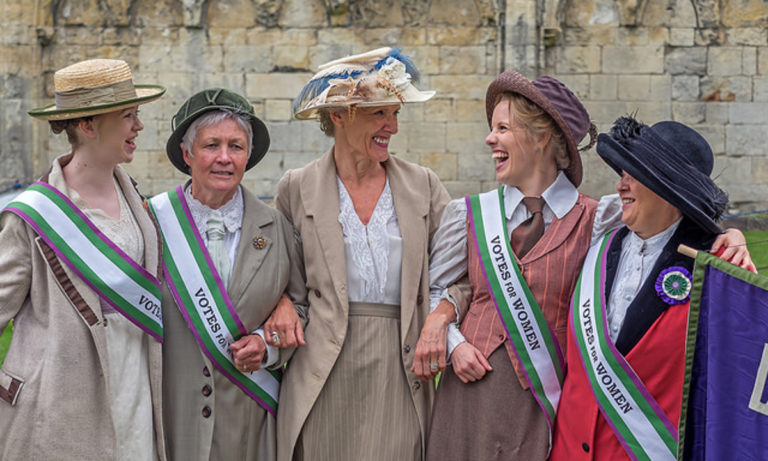
Soldiers in petticoats: 100 years of women’s right to vote

On 25 May of last year (2018), 2,153,613 people turned out to vote in a landmark referendum to repeal the Eighth Amendment to the Irish Constitution, which banned abortion within Irish borders. A massive 72.1% of women who voted on that day voted in favour of repeal, utilising their democratic right in order to take ownership of their bodies and take autonomy over their futures.

And to think – a little over 100 years earlier, that wouldn’t have been possible.

As a woman in Ireland in 2018, it’s easy to take certain rights for granted: the right to work, even after marriage; the right to marry (and divorce) whomever we choose; the rights of an EU citizen; and the right to decide if, when and how to have children. It’s easy to forget that, 100 years ago, those rights didn’t exist for us. Without the right to vote, they still wouldn’t.

In the history books of Ireland, women’s fight for equal representation tends to take a back seat to the fight for Home Rule and independence, so you’d be forgiven for thinking the suffrage struggle never really hit Irish shores – but you’d be wrong.

Dauntless crusaders

In 1847, Anna Haslam founded the Dublin Women’s Suffrage Association with the sole purpose of securing women the right to vote in parliamentary elections and, in 1866, the first petition for suffrage was signed and delivered to parliament (by John Stuart Mill).

While this first bid was unsuccessful, progress was made later in the 19th century as the Local Government Act 1894 was signed into law. It gave women who owned property of £10 in value the right to vote in local elections, but not parliamentary.

Around the turn of the century, the suffrage movement faded into the background as politics and issues of government captured the media’s attention. This was a challenging time for Ireland’s suffragettes, as close ties with their English counterparts led many Irish men to view them as being allied with ‘the enemy’.

As the eyes of the media turned to the proponents of Home Rule, the suffragettes kept up their own campaign. In 1908, Hanna and Francis Sheehy-Skeffington (who later founded suffragette newspaper The Irish Citizen) and Margaret Cousins founded the Irish Women’s Franchise League, with the aim of championing women’s suffrage as a component of Home Rule.

In these early years of the 20th century, membership of suffragette organisations ballooned to over 3,000 people. There were a lot of voices calling for universal voting rights, but no one was listening – it was the Easter Rising and male political voices who were capturing attention. Although the women tried to align themselves with parties who would support the cause, this was not a tenable long-term solution and the movement struggled.

Well done, Sister Suffragette

Then, on 6 February 1918 – following a period of political turmoil during the Great War and a hard-fought and decades-long campaign by British and Irish suffragettes – the Representation of the People Act 1918 was brought into British law (which Ireland, at the time, still fell under), ushering in universal suffrage for the first time.

While, on the surface, the act was a positive step forward for women in the then British Isles, it was not without conditions.

The 1918 act gave women the right to vote, but only certain women. It extended voting rights to all men above the age of 21, but women could only cast their ballot if they were above the age of 30, and either owned property of a value of £5 or more (or had a husband who did), or had a university education.

While the 1918 act certainly started women on the path to equal voting rights, and 2018 is accepted as the 100th anniversary of women in Ireland being granted the right to vote, true suffrage wasn’t achieved until the birth of the Irish Free State in 1922, and even then equality remained out of reach.

The Proclamation of the Irish Republic stated in 1916 that “the Republic guarantees religious and civil liberty, equal rights and equal opportunities to all its citizens”. Although the extent of that equality has been called into question in recent years, particularly in the debate surrounding the referendum to repeal the eighth amendment, it held true in one respect: under the Constitution of the Irish Free State Act, 1922, Article 1 stated that all Irish citizens over the age of 21, “without distinction of sex”, could vote in Dáil elections, referendums and initiatives.

From 1922, women in Ireland could vote, but with the publication of the Constitution of Ireland in 1937 many other rights – the right to serve on a jury, work in industry or work after marriage – were stripped away by an arguably regressive and conservative government. Yet it was the right to vote that eventually enabled women to once more claw back that equality that had been chipped away.

Voting rights gave women power to challenge legislation and even play a part in creating it. Between 1937 and today, legislation enacted by successive Dálaí (elected by women and including women) overturned the ban on women working after marriage, led to Ireland joining the EEC (now the EU), allowed divorce, abolished the death penalty and legalised same-sex marriage.

This summer’s abortion referendum brought women another step closer to the equality that suffragettes fought for all those years ago.

What will we vote for next?

Are we there yet? Fight for women’s equality in Ireland not over

[et_pb_section fb_built=”1″ admin_label=”section” _builder_version=”4.16″ global_colors_info=”{}”][et_pb_row admin_label=”row” _builder_version=”4.16″ background_size=”initial” background_position=”top_left” background_repeat=”repeat” global_colors_info=”{}”][et_pb_column type=”4_4″ _builder_version=”4.16″ custom_padding=”|||” global_colors_info=”{}” custom_padding__hover=”|||”][et_pb_text admin_label=”Text” _builder_version=”4.23.1″ background_size=”initial” background_position=”top_left” background_repeat=”repeat” hover_enabled=”0″ global_colors_info=”{}” sticky_enabled=”0″]I picked the right course when I chose sociology at UCC. At lectures about the sociology of work, I learned that we had grown up thinking that only paid work was real work.

Unpaid work – usually done by women – was not rated. Volunteering was not valued. Our minds had been poisoned by capitalist and chauvinistic thinking.

But the veil was lifted. Female emancipation now meant something real to us students. We could now see how the average woman at home worked 70 hours a week. We could see that most housewives, as they were called, performed a great rolex datejust m278273 0016 damen 31mm automatisch jubilaeumsarmband variety of under-appreciated tasks, ranging from cooking to cleaning, childminding to clothes washing, and craftwork to counselling. And that was only some of the Cs.

We learned that, until 1973, women were often obliged to give up paid employment on marrying.

Today, according to Amnesty International, 104 countries still have laws preventing women working in specific jobs.

In Ireland, human rights campaigners have got really good at highlighting injustices, past and present, experienced by women. We’ve featured some of the campaigns in this magazine.

Recently, some asked ‘Are we there yet?’ in terms of human rights and equality. Women in Wexford attempted to answer the question.

They now hope, in Wexford, to see an increase in the level of female participation in local elections from May 2019. They are taking action to encourage more women to stand. Let’s hope it goes well.

Many reports in this issue (Issue 62) focus heavily on the continuing fight to emancipate and empower women. Society as a whole will benefit from more female involvement in decision-making and female leadership within communities.

One such person is Lisa Fingleton, who has written a book about a 30-day local food challenge she devised. If your community can follow her example, you https://www.pradareplica.re/ could be doing more to tackle climate change than the government seems to be. The warnings are dire.

The names of many other strong leaders of community groups across Ireland come to mind.

Come to think of it, we in Ireland are in a reasonably good position now to act in greater solidarity with women abroad seeking basic rights.

The excellent development education work done by Lourdes Youth and Community Services (LYCS) in inner city Dublin springs to mind. They empowered local women by educating them about the plight of women in poverty in faraway countries. Worth looking up!

Main photo: Miguel Bruna/Unsplash[/et_pb_text][/et_pb_column][/et_pb_row][/et_pb_section]

3 books to get community development fans this Christmas

0

You might think the community development worker in your life already knows all there is to know. The truth is, there’s always more to learn. That’s why, this Christmas, the best gift might just be a book that covers new ground, or revisits old ground from a new perspective.

Here, we’ve gathered some of the best releases from this year, taking all the work out of finding that last minute gift.

And don’t forget, if you’re the community development worker in your life, there’s nothing stopping you from buying one of these for yourself.

The Local Food Project, Lisa Fingleton

Cover of The Local Food Project, Lisa FingletonAbout the author

Lisa Fingleton is a film-maker, artist, farmer, development worker and musician. She lives in Kerry, but originally hails from Laois.

What’s it about?

Marketed as “an inspiring book about the power of eating local food,” it’s also honest about the discomfort of trying to live only on fresh, locally-produced food.

During a 30-day food adventure that involved cutting out any food that wasn’t produced naturally in Ireland, Lisa wrote about what she learned. This is the first time she has gathered all her thoughts, diary entries and photographs from the exercise together in book format.

It was published last month, just in time for Christmas stockings!

What are people saying about it?

It’s just been published, but a short film Lisa produced on the same subject went down a treat.

What’s to like about it?

It’s colourful, and an easy read. It makes important points about subjects many of us don’t like to think about, and is a wake-up call for Ireland. There are plenty of photos.

Note: At just 62 pages, this is somewhere between a booklet and a book; it’s as much a pictorial account as a textbook.

Buy The Local Food Project online for €13 (including postage), or email lisafingleton@gmail.com to get your copy.

The Enterprising Community: A bottom-up perspective on the capacity within communities to regenerate, Senan Cooke

The Enterprising Community cover

About the author

Senan Cooke commands respect among his peers as an old hand on social enterprise and community development. He put his life’s learning into this book.

Senan hurled for Kilkenny in his youth, and now lives in Dunhill, Co Waterford, with his wife, Helen.

What’s it about?

Setting up social enterprises, creating jobs in communities and rekindling the fire.

What are people saying about it?

It comes VIP-recommended. Everyone from hurling legends to senior politicians to development workers likes it.

What’s to like about it?

It has academic backing, yet it is easy to read (helped, of course, by plenty of colourful pictures). Senan has managed to turn a 304-page how-to guide into a damn fine read. Every page gets you thinking.

How often does a good read come along for people in Ireland involved in community work and volunteering? This is a book that is unlikely to be surpassed in its field for some time.

Note: The author looked at pre-existing communities. Cloughjordan’s eco-village does not feature.

Buy The Enterprising Community for €20 by emailing theenterprisingcommunity@gmail.com or by phoning in your order to Senan on 087 222 8374.

It’s Written in Concrete, Seamus Kelly

It's Written in Concrete coverAbout the author

Seamus Kelly is a veteran local journalist, whose beat included Ballymun at a time when most national and regional outlets where painting the Dublin suburb in a negative light.

In 1998, Seamus started newsletter-turned-newspaper Ballymun Concrete News to portray a more sensitive and positive view of Ballymun.

What’s it about?

Overcoming adversity and the media’s negative portrayal of Ballymun.

This is Seamus’s story of what it’s like to run a newspaper from the 10th floor of a tower block that most outsiders would be afraid to even look at. It puts it up to the media to be positive and it tells Ballymun’s history from the inside.

What are people saying about it?

“I remember being featured in Ballymun Concrete News. It was great to support Aslan and other local bands in the area.” – Christy Dignam.

“In writing this book, Seamus wants to create a debate around the subject of positive news. The debate has started.” – retired Garda Chief Superintendent Karl Heller.

What’s to like about it?

The book is written by a seasoned journalist. It gives a fresh and positive insight into Ballymun life, and features 40 pages (out of 162) of colourful photos.

Buy It’s Written in Concrete for €14.99 online from www.themanuscriptpublisher.com or in local bookstores in Dublin (including Easons stores). The book is also available in all public libraries across Dublin.

Main photo: Debby Hudson/Unsplash

Credit unions most reliable financial institutions in Ireland?

Credit unions may soon become mortgage lenders, stepping in in places where banks have abandoned whole communities.

While banks still struggle 10 years on from being bailed out by the state, credit unions are flourishing. Unlike banks, they don’t need marketing campaigns asking people to trust them.

Of the hundreds of credit unions, only three had their backs to the wall and not one was bailed out. Every bank in the state took a bailout. But if you were to read the newspapers at the time – and sometimes even still – you would be forgiven for thinking credit unions were just as much to blame for the financial crisis.

Ted O’Sullivan, a researcher and lecturer with the Centre for Co-operative Studies in University College Cork (UCC), has conducted a study on the matter. He believes some Irish banks actively sought to sully the name of credit unions, possibly to distract from banks’ guilt in the crash.

Speaking in UCC at this year’s Credit Union Summer School, O’Sullivan said that, despite having a 99% success rate, credit unions have been demonised in sections of the print media.

At the event, which looked at reinventing and designing credit unions for the future, he recalled apocalyptic headlines such as ‘Credit union debt is a time bomb for the whole sector’ (Irish Examiner, 2009) and ‘Crack down on credit unions, not us – say banks’ (Sunday Tribune, 2009).

Ted O'Sullivan speaks at Credit Union Summer School in UCC
Ted O’Sullivan, a researcher and lecturer at the Centre for Co-operative Studies, University College Cork, pictured at the Credit Union Summer School. Photo: Allen Meagher.

Even this year, the negativity continues. The Irish Independent ran with a front-page lead story in January claiming ‘Half of credit unions heading for collapse’.

Fake news, it would seem. How many have collapsed since January?

For the record, no matter how badly credit unions were painted, Ireland did not have a credit union collapse. Nonetheless, print media reporting during the crash included false claims that credit unions were facing closure and were going to cost the taxpayer tens of millions of euro.

Three years ago, a survey of Irish brands found – to no surprise – that credit unions were highly trusted. In the report, conducted by the CX Company, credit unions topped the list of Irish brands that provide the most positive customer experience. The report said the credit unions’ popularity was because of their ethos and culture as organisations that are “deeply embedded in the communities in which they operate”.

In May this year, credit unions were named in a survey as the most highly regarded organisation in Ireland, rated first in a list of 100 well-known brands and institutions. The study, carried out by the Reputations Agency, measured the public’s trust, respect, admiration and esteem “for our most important organisations and institutions”.

Credit unions received this accolade for their role in providing trusted financial services to local communities.

In the same survey, banks were ranked with the Gardaí, the FAI and Irish Water. The two least trusted news sources were Facebook and Independent News and Media, coming 84th and 85th respectively.

People aren’t fooled all the time.

Credit unions in a better place

The Department of Finance is a fan of credit unions and how they serve communities across Ireland.

Brian Corr, head of credit union policy at the Department of Finance
Brian Corr, head of credit union policy at the Department of Finance. Photo: Changing Ireland.

Brian Corr, head of credit union policy at the department, was among those to speak at the Credit Union Summer School. It was his second time in nine months meeting staff, directors and students at a credit union event in UCC, and he encouraged people to look ahead with optimism.

He drew attention to the fact that credit unions don’t have the constraints that faced their founders when getting established. He pointed out that they now have:

– a membership base of 3 million and counting,

– an unrivalled reputation to build on, regarded by their members as Ireland’s most trusted financial services brand,

– €1.1 billion capital in excess of regulatory reserves,

– funding of €7 billion to lend,

– and in contrast to banks, which have retrenched from many localities, nationwide local infrastructure.

Corr noted that internet banking is growing, with scope to reach levels greater than 90% (currently, Ireland is at 58%). This is a challenge credit unions know they must face up to.

Other key trends that credit unions face, he said, include a growing population, increasing urbanisation, longer life expectancy, diversity, housing trends, and the nature of work and pensions.

The German model

The government in July published a report looking at prospects for establishing a system of local public banking in Ireland, as first proposed by Irish Rural Link and the Savings Banks Foundation for International Cooperation.

Sparkasse building
Photo: Björn Láczay/Flickr (CC BY-SA 2.0).

Sparkassen, a German public banking group, was founded 200 years ago with a philanthropic aim to fight poverty. That aim quickly developed to include support for local tradesmen and businesses, including mortgages, and the group now operates 390 local public banks.

If a similar group were operating here, the state or a local authority might be the owner. Local public banks come somewhere between fully commercial banks and credit unions.

While the government said it recognised positives to local public banking – including that it would be a support to local communities – it concluded that there was not currently a compelling case for the state to invest, noting that to do so would cost €170 million.

However, the government saw many positives and committed to commissioning an independent external evaluation of other possible ways in which the public banking concept could be promoted in Ireland.

Ed Farrell, CEO of the Irish League of Credit Unions, welcomed the report, noting that “it rightly states that ‘credit unions are seeking to play an increasing role in the Irish retail financial landscape’”.

Main photo: Christian Dubovan/Unsplash

Who are the 6 winners of the 2018 Resilient Communities Fund

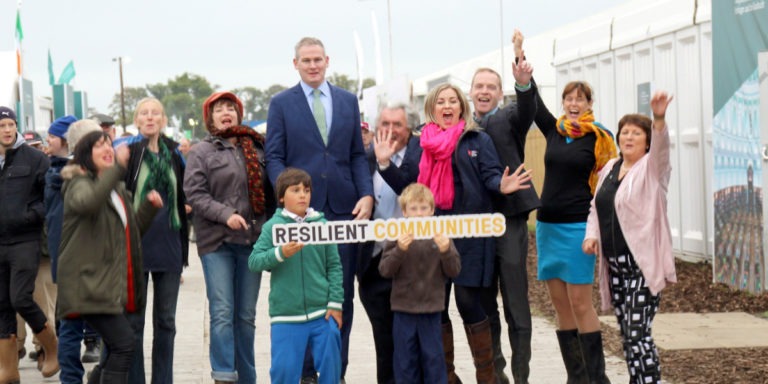
Minister of State Seán Kyne announced the six winners of the 2018 Resilient Communities Fund at the National Ploughing Championships in September.

The fund is worth €500,000 and the winning projects were chosen from over 90 entries. Each of the winning projects was awarded a grant of between €10,000 and €100,000. The fund was set up to strengthen community resilience and to support projects that have a social, environmental or economic impact.

All the winners were on site to celebrate the occasion, and the pressure is on them now to address problems in their areas with solutions that could be replicated in other communities. However, they are not alone. As well as grant aid, the winning projects also receive valuable support and mentoring from the Social Innovation Fund to develop their ideas.

The Resilient Communities Fund was created by Social Innovation Fund and is supported by the Tomar Trust, and by the Department of Rural and Community Development through the Dormant Accounts Fund.

The 2018 winners are:

Volunteer Doctors (in the Community), a network of over 200 volunteer doctors who can provide professional A&E care directly at the site of life-threatening emergencies throughout Ireland, with particular impact in rural and disadvantaged urban areas.

Grant: €65,000

The Cottage Market is a national community markets initiative that emphasises ‘homemade, homegrown and handcrafted’ produce in communities. It promotes rural life and supports grassroot enterprises.

Grant: €80,000

AgeWell uses peer-based social engagement and mobile technology to enable and empower older people to age well in their homes for as long as possible.

Grant: €100,000

The Irish Men’s Sheds Association supports the development of Men’s Sheds. The Sheds are community-based organisations providing a safe, friendly and inclusive environment to men.

Grant: €80,000

Cloughjordan Community Farm’s Food Resilience Project aims to educate local families in Cloughjordan on the benefits of eating ethically produced, chemical-free food grown on their doorstep.

Grant: €65,000

Terenure Sustainable Energy is a group of volunteers dedicated to mobilising the community to retrofit their houses and generate their own renewable energy.

Grant: €10,000

Meet Cian Power, the Moyross teen on the way to soccer stardom

Moyross may be a relatively small community, but the people who live here have a way of finding fame. Keith Earls and the Corpus Christi National School Choir are just two examples.

The people there are talented, obviously, but they strive harder here than elsewhere to succeed, too. They feel they have to. They feel they need to excel to beat the stereotypes about people from Moyross. For years, people from Moyross lost out on jobs and more just because of their address. They needed to stand out as someone above average in society at large.

Success on stage and in sport, however, can lead to a career path. It certainly beats a life in crime or struggling on the margins.

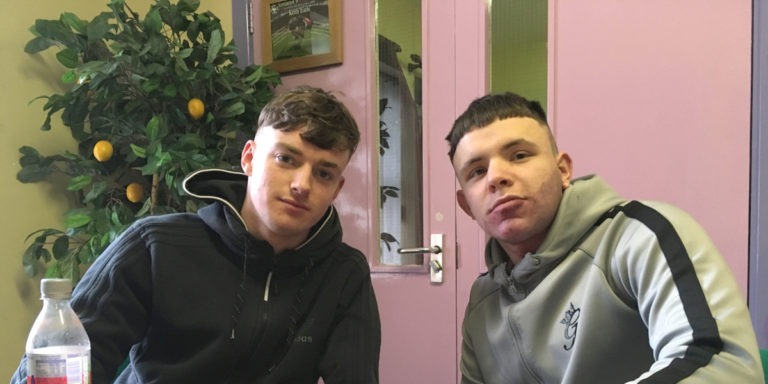
I spoke to three young men from Moyross who value the role sports plays in their community. One of them has played for Ireland. No, not Keith Earls – Cian Power.

Living the dream

Cian is a 17-year-old soccer player with Limerick city’s Pike Rovers, and he hopes to make it professionally across the water. He has already represented the Republic of Ireland at under-18 level and has been capped seven times with the national side.

“It was always a dream of mine to play for my country,” he said. In five years’ time, he said, he sees himself “hopefully playing professional football somewhere – that’s my dream”.

Although he’s from Pineview Gardens, Moyross – on the Clare side of the city – Cian crossed the Shannon to play with Pike Rovers because, at the time, Moyross did not have a team in his age group that he could play for. He’s been playing with Pike ever since.

Cian said, “I really enjoy it up there. They have a really nice set up and are great for developing young players”.

He said that growing up in Moyross “wasn’t so bad”: “There was some rough moments, but I kept my head down, stayed out of trouble and I kept working hard.”

He is grateful to family, coaches, team mates and friends for their support.

“Everyone has helped me. My aunt used to bring me up and down to training and games every week when I was a kid,” he said.

If, later in life, he had to choose another career, he said: “I would still try to be involved in some sort of sport. For example, as a gym instructor.”

Cian continues to train hard and has become a role model for younger kids.

Sports in the community

Luke Ward went to school with Cian and is a Moyross resident. He aims to become a soccer coach “and help kids in the community”.

“The boys like Cian and Keith Earls are giving the place a great name,” he said. “Everyone gives Moyross a bad name, but they work very hard to prove people wrong. I’ve lived here for 11 years and it’s a great place,” he said.

Moyross resident Jordan Guerin agreed that sports stars from the community “give the place a good name”. He felt that “there are a lot of opportunities for people in Moyross at the moment”. He hopes to open a business.

3 people who had life-changing experiences with Moyross Youth Academy

At the opening of the newly built Moyross Youth Academy (MYA) facilities over the summer, participants and former participants spoke about their experiences with the Academy and its programmes. Here are their stories, as they told them.

Eddie Carey, current participant

• Eddie Carey speaking about his experience with Moyross Youth Academy.

“I’ve been in Céim ar Chéim for the past two years. I got referred here through my probation officer.

“I had a lot of problems when I came here. I thought I’d only last a few weeks before I’d take another car and end up back in jail. But I knew this place was different, so I started opening up to the people here. They supported me through all my court cases. I couldn’t believe the effect this place had on me.

“I was so out of control, but the lads here showed there was more to life than taking cars. They helped me with a new start on a fresh path. I’ve done my leaving cert here, I got a licence through here and got a job through here. I completely turned my life around. And I became a father also.

“This programme is one of a kind and I wouldn’t be where I am today [without it], because I’d have killed myself, or killed someone in a car. It shows anything is possible.

“I hope to go to college in September. Before here, I wouldn’t even be thinking into the future.”

Darragh O’Keeffe, carpenter and participant

• Darragh O’Keefe speaking at ‘The Bays’, Moyross.

Darragh was first a participant with the project in 2012.

“After being here a while, they begin to challenge you – in a good way,” he said. Encouraged, he began working with horse trainer Jim Bolger two years ago.

“I was up at 6.30, working at 7.30 mucking out…It was hard. I always wanted to work with horses but, after a while, I wanted to be a carpenter.”

Through the MYA’s partnership with the Peter McVerry Trust, he is now two months into a six-month traineeship.

“I’m proud of our product,” he said. “I am one of a group of 13 young people on this programme with the [Education and Training Board]. It’s a great opportunity for people and something that needs to be supported. The payback is huge for us all.”

Lee Quinn, jockey academy graduate and former participant

• Lee Quinn speaking at ‘The Bays’, Moyross, where Moyross Youth Academy is based.

Former participant Lee Quinn said there was a time when he “wasn’t great at getting up for school”.

Through the MYA, he got a trial with Ireland’s jockey training academy – the Racing Academy and Centre of Education (RACE) – in the Curragh, Co Kildare. He came close, but missed out.

“So I gave up the fags, trained hard [using MYA’s gym] and went for a second trial. All my hard work paid off. I topped the fitness class in RACE. I’ve now graduated from RACE.

“I’m proud,” he said.

Laura Hughes: ‘I’m from Moyross – this is who I am’

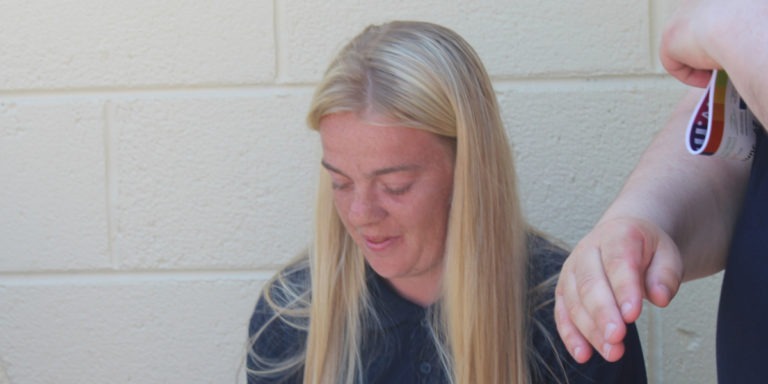
At this summer’s launch of the Moyross Youth Academy, past participant (and current staff member of Moyross Development Company) Laura Hughes, spoke about her life’s journey. Here, editor Allen Meagher gathers excerpts from her speech.

“For people who don’t know me, I’m from Moyross and this is who I am.

“When I was a baby, I was placed in foster care, as both my parents were alcoholics. I spent nine years in and out of 19 different homes, which, as you can imagine, was extremely traumatic and stressful for a young child.

“I’ll never forget the day I came home, though. I was nine years old. I didn’t know it was ‘home’. I just thought it was another move. But I was home with my mammy – my real mammy – and my real brothers and sisters. And I’m delighted to have done them proud today, [especially] my real mammy, who is here and who is 25 years keeping sober.

Path to prison

“Living in Moyross was hard. It was at the height of the feuds in Limerick and there were shootings, violence and robbed cars – that was the norm around here.

“I’d grown up in the countryside and I wasn’t one bit streetwise. However, it wasn’t long before I was fitting right in. I became involved in petty crime, hanging with the wrong people and causing a lot of disruption in the community. This was my path – for me, there was no turning back. I could see my future and it was in prison.

“By the age of 12, I became involved in the Garda Youth Diversion Project. I attended the pool club every Tuesday night. We loved it here. We queued at the gates for hours waiting to get in and to see who would get the best pool cue. I was hooked; I wanted to be part of here.

“I now know that these drop-in nights were so important…where young people like myself made positive relationships. I became involved in many groups, such as the girls’ group and the equine project.

“Also, at the time, I’d no place in mainstream secondary school, so I started going to St Augustine’s School and, here, I found my passion for sports and particularly soccer. I really believe the combination of support from the school, the Garda Youth Diversion Project and my involvement in sports has moulded me to be the person I am today.

“Throughout my teenage years, I stayed involved and became a youth leader. I volunteered in after-school clubs, running pool competitions and coaching soccer. I found a new passion and saw a future for myself working with young people – something I was good at; something I could be successful in.

“When I finished school, I studied childcare and special needs…then, with the support from Céim ar Chéim and Corpus Christi National School, I completed a diploma in youth and community development from [University College Cork].

A new Moyross

“Today, I stand here as a proud member of my community, but also as a staff member of Moyross Development Company. It’s true what they say: ‘When you love what you do, it doesn’t feel like work at all.

“In my role here, I’m giving back to my community. I have an understanding of where the young people are coming from. I get it and I get them.

“[This new facility] is a place where everyone is welcome, where everyone can feel safe and where young people can dream, discover and learn. We have the space to create opportunities for young people and, with further support, the potential here is endless.

“I know over the years Moyross has received a lot of bad press. After today, I hope you can see the opportunities that are being created here and know that a new Moyross is emerging.

“There’s new housing and a new community centre on the way, and there’s a new generation of young people who, through pathways of education, continue to inspire in their community, and aspire towards their goals through hard work and dedication.”

Is new Youth Academy proof Moyross has turned a corner?

In 2014, problems were found in the roof structure of one of the most important youth projects in Moyross. The need for repairs provided an opportunity for the voluntary board managing the facility to completely redesign the building and redevelop the project.

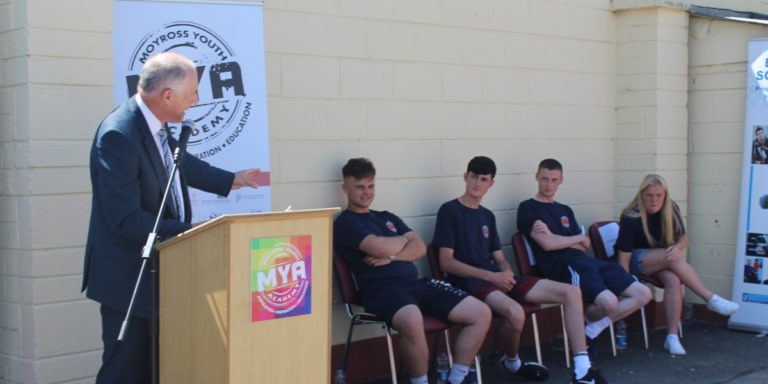
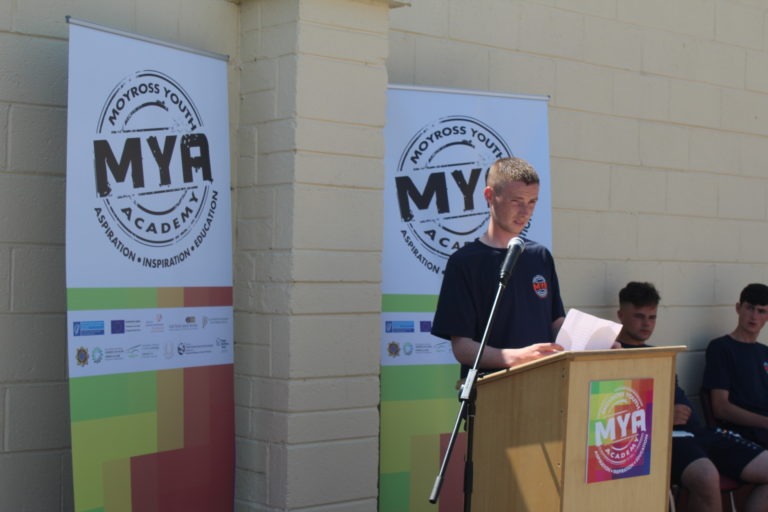
And so, four years later, on 29 June, the new Moyross Youth Academy (MYA) and its multimillion-euro facility at the Bays, Moyross, was officially opened.

Over a hundred people hugged the walls or massed beneath umbrellas for shade at the launch by Department of Justice and Equality Minister of State David Stanton and Limerick Mayor Stephen Keary.

Minister Stanton began by praising four young people who spoke before him about how the project had been a catalyst for change in their lives.

“To be able to stand up here and speak like you did is fantastic, but to be able to do it with such confidence, courage and honesty is amazing. Your stories should be told to every young person in the country ­– and to older people as well,” he said.

He also said he was “really impressed” with the new building, “and by the sense of energy and commitment that I get from the staff working here and of self-confidence of former participants”.

The minister said he was “committed to supporting this work and to doing more at an earlier stage”.

“The state and all its agencies need to focus more on earlier intervention and on sustained long-term support for communities and families under pressure, and this is a priority for me in my role as Minister of State responsible for youth justice,” he said.


A humble origin

MYA was initially run by volunteers in the early 1990s. It operated for two decades out of cold warehouses designed for manufacturing companies that never materialised. Today, it employs 26 staff providing training, mentoring and education to over 100 young people. It remains rooted in the community.

“When you see people – who came to us because it gave them a chance in life – returning here as adults to tutor others, you know you’ve turned a corner,” said Elaine Slattery, manager of Céim ar Chéim, a probation project that is now part of the MYA.

“Young people are now emerging with skills, self-belief and confidence that was not so apparent even a decade ago,” she said.

“The investment in young people is having a visibly positive influence on communities across Limerick. We see it in the greater confidence young people have in themselves,” said Dave Mulcahy, who has been involved in the project since its early days. He is currently chairperson of the Garda Youth Diversion Project, also part of the MYA.

“[These young people] are achieving standards that virtually guarantee them employment in the future. They are doing their communities proud and helping to destigmatise the area,” added Slattery.

A broad scope

Some of the services provided by the MYA, including a highly regarded equine project, reach out to youths across the city.

“We want to continue to expand our reach, particularly in the area of improving employability,” said Mulcahy.

Andrew O’Byrne of Moyross Development Company, established in 1993, said, “It has taken 25 years to get to this stage, and there is more to do. With the right support and through partnership, we see fantastic scope to expand this facility and the service”.

One such partnership has been with Peter McVerry Trust, the national housing and homeless charity. Pat Doyle, the Trust’s CEO, said they were delighted to work with MYA to help create employment and training pathways for young people in Limerick. The Trust funds and supports an MYA social enterprise initiative that produces furniture for the charity’s social housing units.

Slattery said: “We’ve always been open to challenging ourselves and to continually changing. We’ve grown with the young people here.”

The project she manages, Céim ar Chéim, has gone from providing basic QQI level 2 and 3 at the beginning to providing leaving cert applied and third-level support.

A wider impact

“Compared to other EU member states, Ireland actually has a very good story to tell in the area of youth justice. We have comparatively low numbers of children in care or in detention. But the challenge is always to identify what more we can do and what new approach we can take to diverting children and young people from crime and anti-social behaviour,” she said.

Dean Quinn is an outreach staff member who, as a youngster himself, benefitted from the training and mentoring provided by MYA.

“In launching this project, it’s timely to ask people to think twice before they label communities negatively. Look at the facts first. Communities mature and move on, but sometimes the reputation they once had lingers,” he said.

“It’s time for the public to recognise that a new Moyross is emerging. One that is smaller, for sure – we’ve suffered depopulation – but this brings a necessary opportunity to respond innovatively and creatively to the young people that remain, so as to be confident, higher skilled, calmer and more optimistic.”

The refurbished building consists of seven classrooms, a carpentry workshop, fully-fitted training kitchen, gym, indoor soccer, meeting rooms and offices. The refurbishment was funded through the government’s Dormant Accounts fund and had support from volunteers, the Department of Justice, An Garda Síochána, the Probation Service, Solas, and the Department of Employment Affairs and Social Protection.

Those attending the event included former minister Jan O’Sullivan TD, Senator Kieran O’Donnell, Councillor Maria Byrne and Councillor Daniel Butler. Butler is a community worker and the metropolitan mayor of Limerick.

A barbecue was held after the launch.

For more information, contact:

Andrew O’Byrne on 085 853 0463 or at andrew@mya.irish

Elaine Slattery on 087 283 5390 or at ceimarcheim@gmail.com

3 people who had life-changing experiences with Moyross Youth Academy

Horace asks: Have you been sigh-capped?

0

Ireland is renowned for its acronyms as anyone in the community sector will testify. Recently, the Economic and Social Research Institute (ESRI) confirmed that the Social Inclusion and Community Activation Programme (SICAP) has achieved more than any other government-funded acronym.

Some acronyms reflect what they’re about more than others. LEADER, for example, gives the impression of a programme that is to the forefront and ahead of the rest. UCD, on the other hand, suggests students didn’t see many As, Bs or Cs in their results.

Horace
HORACE MCDERMOTT – the former civil servant, one-time community worker, and occasional agony uncle – is spearheading a campaign to help those who have difficulty pronouncing the name of the multi-million euro programme to reduce poverty through community development.

However, SICAP has the distinction of also being used as a verb, as in, “You’ve been SICAPPED!”

But how do you pronounce it?

It had me really worried for a while. I kept thinking of it as the NICAP programme, as in ‘kneecap’, but that was run by a different outfit.

Even participants on the programme don’t know they’ve been SICAPPED, let alone know how to pronounce it. They just think it was Mary or Tom down in the centre that lent them a hand. They’d remember if they were sent to Love Island, but can’t remember SICAP which has higher success rates.

Alarmingly, some TDs are still asking ‘What it’s all about?’ Many couldn’t pronounce the name of the €190-million, five-year programme to reduce poverty through community development.

So, I called Pobal and they have now contracted me (after a long public tendering process) to help promote the programme.

I’ve given up darts, divorced herself, said goodbye to my children for a while, and dedicated the next five years to bringing people together under the programme banner.  Last week, I rolled out my first Pobal-backed initiative – from now on everyone involved in the programme must be able to pronounce it properly. As a bonus, they get a free tattoo.

Yesterday, Changing Ireland sat in on one of my sessions – hidden behind a dummy mirror, due to privacy concerns – and even they were impressed.

Here’s how it went:

Community worker (CW): “Say SICAP.”

Citizen (actually Sheilagh Murrey from Durtnagapall): “OK, here goes… Sickapp.”

CW: “No.”

Citizen: “Sea-cab.”

CW: “No, that’s how LCDC people say it.” [Not all! – Ed.]

Citizen: “Free-cap.”

CW, exasperated now: “Try harder.”

Citizen: “Mud-flap.”

CW: “Look, there’s no point in us getting you on a course, into a job or supporting your group if you think it was Santa Claus gave you the dig-out. Now say it!”

Citizen: “Recap.”

CW: “No.”

Citizen: “Night cap.”

CW: “For feck’s sake, Sheilagh!”

Citizen: “Wait! I have it. Sigh-cap?”

CW: “That’s it! Well done!”

Citizen: “Can I go now?”

CW: “Not yet.”

That’s when I stepped into the room. “Well done Sheilagh on passing the pronunciation test. To mark the occasion, we can offer you a free SICAP tattoo. Roll up your sleeve there please.”

Citizen (still Sheilagh): “Thanks, but no thanks. I’ll just take the support, the advice and any grants going, cheers.”

Community worker: “Yerra, go on. There’s no charge for the tattoo. Also, Sheilagh, it’s necessary for us to meet our EU programme visibility requirements.”

Citizen, recognising that EU requirements trump all: “Hmm… It’s a nice logo, I suppose – very colourful. OK, go on so, put ‘Sigh-cap’ on my forearm.”

I reached for the needle and a biro. “Now, please sign this 12-page form exonerating us of any responsibility if it discolours, or anything else goes wrong.”

Citizen: “Uhm…”

She went ahead with it anyway.

ZZZZZZZ…ZZZZZ…ZZZZZZZZZ

“Done. Congratulations! You’ve been SICAPPED,” I told her.

That’s when the community worker started started showing off their tattoes: “Look, I got my midriff SICAPPED, and across my back I’ve got five EU and department logos too!”

Is social inclusion our best weapon in the fight against the far right?

0

Right-wing populism, coming from both east and west, is creeping this way. An ugly, exclusionary kind of nationalism is emerging. In this context, it is even more important to shine a spotlight on work we do in the area of social inclusion.

Our work is not something for us to be humble about.

We do try to promote it. Every year, we have Social Inclusion Week, with hundreds of events held around the country. But what about promoting the Social Inclusion and Community Activation Programme (SICAP) itself?

Have local community development committees got any new ideas for promoting SICAP?

The EU, which part-funds the programme is nowadays getting fixated on visibility, and rightly so. SICAP is worth €38 million this year alone, and you’d think everyone would know about it.

Even people who benefit from SICAP support – while emerging better off – may not necessarily know the name of the programme they received support through. Does that matter? I believe so.

The programme aims to reduce poverty through community development and, every day, it achieves hundreds of major and minor successes.

The programme helps to combat discrimination. Its target groups include young people not in education or employment, migrants, lone parents, people on low income, people with disabilities and more – in short, the people who have been left on the margins of society and those who most need help to remain within it.

A global concern

The rise of the right under Trump has seen the semi-normalisation of racism, misogyny and militarised police in the US. Anti-minority sentiment is amplified and people on the margins are pushed away.

Yes, there are now more jobs in the country, but at a cost. And what’s there to support those on the margins? Have they anything like our SICAP?

It’s important the public in Ireland knows about this unique kind of social inclusion work – it could act as a very important way of preventing far right attitudes taking root.

SICAP already reaches into nearly every community. The programme involves the government, the EU, Pobal, 33 local community development committees operating under local authority auspices, 51 local development companies, hundreds of groups engaged as project partners, and hundreds of community workers.

SICAP infographic
Infographic: Pobal. (Click image for larger version.)

In 2016, SICAP supported 47,511 individuals on a one-to-one basis, and 3,076 local community groups. That’s how many were SICAPed in just 12 months.

We need to emphasis why supporting people on the margins matters. We need to highlight the easy ways (relatively speaking) in which individuals and communities can be empowered, and talk about why we need a more equal and fair society.

Every week, more than a thousand new beneficiaries emerge.

SICAP is something we and our political representatives should be striving to promote. The programme is hard-working, but does not get the public recognition or awareness it should.

Many of us have a neighbour, friend or relative who could benefit a lot from SICAP support. People involved in setting up community groups would qualify for SICAP support.

We need to spread the word about inclusion at community level. Everyone should know about SICAP, even people who are not in direct need of its support. All of society benefits. Empowered communities should be encouraged to acknowledge the support they are receiving through SICAP.

If nobody knows about long-term community development initiatives, it leaves the field open for populists with short-term and nasty solutions to take over.

The evidence is there to show that the programme makes a real impact. Let’s get the word out there.

Main photo: Jira/Rawpixel

Jim Ife: Fighting a defensive war has made us conservative

0

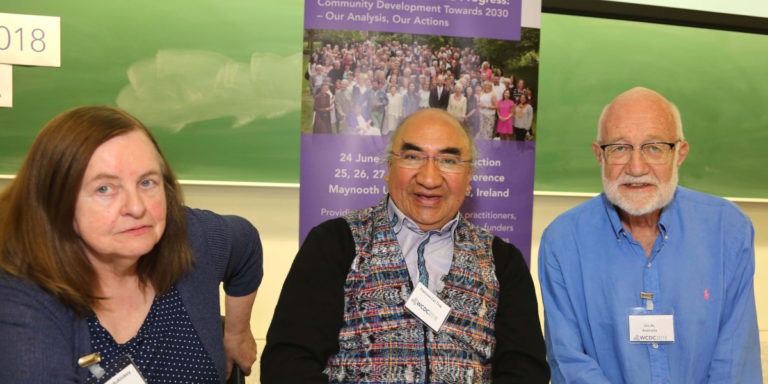
On day two of the 2019 World Community Development Conference, attendees filed into a packed lecture hall at Maynooth University for ‘Global People and Local Conflicts: Framing Community Development for Today’s World’, a plenary session featuring Bernadette McAliskey, Francisco Cali Tzay and Jim Ife.

Ife – an Australian activist, analyst, scholar and academic – presented a thought-provoking take on humanity, human-centric ideologies and humankind’s impact on nature, issuing a clarion call of sorts: the solution to climate change, he suggested, might just lie with community development workers.

Below is the full transcript of his plenary, edited for clarity by Kirsty Tobin. (Emphasis is Ife’s.)

I’m standing here now – as a privileged, white, Western male – with a sense of shame, because it is privileged, white, Western males that have so comprehensively stuffed up the world. And it is that world that still privileges white, Western males that has given so many people a real sense of despair as we look to the future.

I know we just sang, ‘You know there’s always tomorrow,’ but the state of the world and the state of the environment are such that, today, many people are doubting there’s always tomorrow. And they’re doubting what I saw on the banner outside the grounds of [Maynooth University] saying, ‘Your future knows no bounds’. Well, for many people today, their futures do know very serious bounds.

And it is with that sense of shame, as I said, that I come to this presentation really arguing that it’s time that the privileged, white, Western male view of the world was set aside to allow other voices, other narratives, other wisdoms to take over.

In the context of the Anthropocene, the notion of the Holocene that lasted for the last 10,000 to 12,000 years was a very stable period. It allowed human settlement. It allowed this thing we call civilisation to develop, because the environment was so stable.

Human activity has now had such an impact that we’ve entered a new geological period, which has been called the Anthropocene, because human activity has actually affected the earth physically in such a way that the certainties of the Holocene are gone – the climate’s changing dramatically, other things are changing very quickly and it’s a product of human activity.

For some, the Anthropocene is a cause for celebration. This is yet another triumph of human achievement and ingenuity; of our conquest of nature. And we hear this language, of the constant conquest of nature. We can manage the planet, we can do geo-engineering. It’s the great fulfilment of the human dream.

Others, however, will react with horror at what we have done and will seek somehow a less anthropocentric way – a less human-centred, human-privileged way – to live in harmony with the rest of nature before it’s too late.

There are critics of the idea of the Anthropocene, saying that it’s not just the result of human activity. Human activity has been around for a long time. It’s the result of particular forms of human activity by dominant groups who have chosen to ignore the limits of the planet that we live on and who do not understand the intrinsic value of the natural world.

There have been a number of writers who have suggested we should call it a Capitalocene, not the Anthropocene, because it is capitalism, pure and simple, that has led to the destruction of the world. The tradition of man having dominion over the rest of the world, able to exploit it for his profit, points to the importance of patriarchy and of monotheistic religions, in the way that religions would set up understanding that man is at the peak of creation and could dominate the rest of it for our own benefit.

Capitalism, endless growth, human hubris and an ideology of greed have got us where we are, and it’s a dead end. 

People have blamed enlightenment humanism [and] the European enlightenment – centring the human as the centre of everything and seeing the rest of the world as resources to be used up and spat out as necessary – that have been imposed on the world through colonisation, and the problem of human privilege; of human exceptionalism.

There are people who are looking for the new paradigms; looking at the way that capitalism, endless growth, human hubris and an ideology of greed have got us where we are, and it’s a dead end.

What pretty well all the writers in this area agree on is that, if there is a way forward, it will require strong communities; that communities are essential. People like Naomi Klein talking about climate change, people like Raj Patel talking about economic crisis, many others… All come back to the importance of grassroots communities, community action, community activism.

As we look at our national leaders on climate change, we despair. But if we look at what’s happening at community level, there are some amazing things that people are doing despite the inaction of their governments.

This to me puts community development front and centre of where we need it for the future, and it seems to me that community development has never been more important than it is now. But it does need to lose some of its anthropocentric functions thinking about community as only consisting of humans and never mind anything else.

We have to rethink our ideas of community, development, participation, human rights and social justice. They’ve all been very anthropocentric – human-centric – and we have to understand humans as embedded in non-human communities. If it wasn’t for non-human communities and our interdependence with other species, we would not survive 24 hours.

People talk about the vanishing bees, and how we depend on them as insects, thank you very much. If we don’t realise, pretty quickly, that we have mutual interdependence with bees, we’re in serious trouble.

We can see the beginnings of this reawakening: the interest in animal rights in many parts of the world; the rights of mother earth as articulated by indigenous people, saying mother earth has rights that we have to respect, [and that] nature is more than just the recreation that it’s been sustaining; being in awe of nature, rather than conquering nature.

When I look at Uluru in Australia, that great monolith – to Aboriginal people, it’s been sacred and something at the centre of sacredness and spirituality – white men came along and immediately wanted to climb it; wanted to get on top of it, wanted to dominate it, to say ‘it’s ours’. It’s a totally different way.

When we look at the history of mountains, it’s very interesting. Mountains tended to be held in awe and respect until the Europeans came along and saw there was something to be climbed – Everest, for example. It’s the Westerners who really wanted to get on top of things, and dominate, and show that we’re better, we’re on top, we conquer nature.

What arrogance. What incredible arrogance.

The realisation of these things does give us some grounds for hope. I used to think that one of the differences between human rights and the rights of nature was that we can’t expect nature to articulate rights and demand rights in the ways that humans can. Then I realised that if we had only listened to Aboriginal people, to indigenous people, they would tell us, ‘Yes, nature does demand its rights. It’s just that we’ve forgotten how to listen’. Learning how to listen again is really important.

We have ecological community work – community development that’s about rivers and mountains and the earth and so on. There are some really exciting things happening in many parts of the world that are saying we can’t understand human community properly unless we really ground it in the natural world and become part of it.

We’re putting so much energy into trying to preserve what’s left of what we value that we’re fighting a defensive war.

But the but – it’s all very nice to talk about things like that, but this green work can be seen as a bourgeois escape. Isn’t it a lovely, nice middle-class thing to do to get concerned about those things I was just talking about when we’ve got Trump and Brexit and all the rest of them.

[Despite that], the need for immediate activism is as strong as ever and maybe more so. We’ve forced ourselves into a position almost where progressives, including community workers, have become conservatives because we’re putting so much energy into trying to preserve what’s left of what we value – the remains of the welfare state, submersion of rights, submersion of justice – that we’re fighting a defensive war. That turns us into conservatives.

We’ve been trapped into not articulating the alternative vision. Because many of the issues that we fight about are really important, but they’re also distractions. We have to remember that the .1% – the masters of the universe – they’re really happy for us to be putting a lot of effort into things like marriage equality because, you know, it’s actually allowing them to get away with what they’re continuing to get away with: corporate greed, unchecked growth, environmental destruction… it could go unchallenged while we are put in a position of having to fight these important battles. I’m not saying they’re not important. They’re very important. But they can be a way that is used by corporate power to keep our eyes off what they’ve done.

It’s a real challenge, I think, for community workers. We have to take a long-term view as well as engaging with the immediate challenges. We have to develop and articulate alternative visions, not just react all the time. We do have to react, but we have to do more.

Community development will be central to a transition to a saner world.

How do we develop an activism and developmental approach that includes both? I want to outline what I think are five important lines of community development:

1. Stand against capitalism, at least in its current turbo-charged, neo-liberal, globalised form, destroying communities, destroying the economy, and destroying the earth. We need to stand strong against it and point out its utter destructiveness. We have to assert the value of the commons, of public spaces and of public services – not just to protect what we’ve got, but as a vision of what we want, of where we want to be, of where we want to go. And it means alliances with the various groups that are opposing capitalism and its consequences, [such as] labour, housing, public health and so on.

2. We have to strengthen our alliances with the environmental movement, partly because that’s something that a lot of people are getting excited about and motivated about. Young people who are concerned about the future will mobilise around environmental issues, and the environmental and social justice movements have to be together, because we are on about the same thing.

If we look at the so-called four pillars of green politics [below], which are pretty universal around green parties around the world, we community workers know a lot about the second and the fourth in particular. We know more about the second and the fourth, indeed, than many of the people in the green movement.

My experience when I was involved in green politics in Australia was that many people in the environmental movement were looking to people like us for help with the social and economic justice and participatory democracy parts of the manifesto.

People like community workers have really important roles to play in the environmental movement – community is so important that it leads transitions.

3. We have to deconstruct human privilege. We’ve always had a strong social justice-human rights perspective. We know that we have to have it, because if we don’t have that, [well] the Hitler Youth was a wonderful community development organisation. It ticked all the boxes – all the KPIs. Yep, involved young people, gave them a sense of belonging, engagement with the government… We have to have a social justice framework, a human rights framework of some kind, and humanism has been at the centre of our social justice rhetoric.

We’re very good at deconstructing class privilege, male privilege, white privilege, heteronormative privilege, ableist privilege, and so on. We also have to take a bit more of a look at human privilege and the way in which we have defined humans as so superior to the rest of the earth that we can use the rest of the earth for our own needs.

We like to kid ourselves that we’re more intelligent than any other species. That’s only because we define intelligence in human terms, so of course we are. If we start to read some of the fascinating literature around biology, around plants, around animals, we realise how – on their own terms – they are very intelligent in their capacity to understand their environment, react to the environment, learn from the environment, interact with the environment. And if you look at the things that humans are doing, like war and climate change and all the rest of it, we’re not all that intelligent after all.

Those sorts of ideas are very important for us in trying to decentre human privilege. We can’t altogether, because we are humans – we will always see the world in human terms – but we can at least ask some of those questions and try and think about what it means to be interdependent with the rest of the natural world, rather than using it as resources.

We know that relational reality is important, that it’s out of relationships that we see reality emerging – not out of our individual isolations – and that’s really important. We depend on the non-human world. We’re in community with it. I would die almost immediately if it were not for the millions of different microbes that are living inside my gut and on my skin. They’re not me, they’re separate organisms. They depend on me and I depend on them. We depend on the world in many ways.

4. We have to incorporate and validate indigenous and non-Western world views. The Anthropocene has to be seen as ecological colonialism. We need to side with post-colonial struggles. We need to resist epistemic colonialism. That is the colonisation of the mind, the colonisation of what knowledge means, of how we get knowledge, of how we understand the world. We’ve done that in a very white, Western way.

Indigenous people have far more eco-centric world views, realising that the lands owns us, not that we own the land. Owning land – what an arrogant, arrogant thing to even think of, and yet it became a social norm.

The natural world is inherently spiritual, rather than that Western notion of spirituality that makes people very anthropocentric. Spirituality is about the individual, about people who have a connection with this amazing, wonderful, natural world that we are systematically destroying.

Increasingly, conversations about the Anthropocene are seeing indigenous wisdom – First Nations wisdom – as being essential if we’re to have some sort of transition to a somewhat saner kind of world. So, it’s not just about siding with post-colonial struggles, it’s about accepting epistemic colonialism and doing something about that. The importance of cultural stories – art, music, dance, and so on… Well, I don’t need to say that to a community development audience.

5. The importance of matriarchal value. The Anthropocene has been patriarchal: domination, control, management of nature. I hate the term environmental management. What an arrogant thing to say – that we can manage the environment.

A transition to a more eco-centric society requires that we establish those matriarchal values as dominant: caring, nurturing, sharing, cooperation, supporting the community – these values that have been traditionally associated with women, and women’s ways of working.

Those values are essential to community development. It’s what we live. It’s what we work with. Which is why so many good community workers are women and, let’s face it, it’s women who do grassroots community particularly well.

So, this is not liberal feminism. This is not saying that women should do lots of patriarchal things. I don’t want to encourage women to join the army. I don’t want to encourage anyone to join the army. Let’s marginalise and exoticise the patriarchal and privilege the matriarchal. Have a think about what that means.

Community development, both as practice and a way of thinking, I believe, will be central to a transition to a saner world.

It’s also interestingly a time when the physical sciences, the social sciences and the humanities are starting to come together. We see in biology, for example, a real interest in cooperation, symbiosis, interdependence; about how we stop studying organisms in stranded isolation. The ways in which the physical sciences, the social sciences and the humanities, instead of being apart from each other, now need each other, and I think community development needs all of those, and it needs literacy in all of those.

Finally, the writing about post-human suggests a major ontological shift in what it means to be human. What does post-human community development look like? Community development that doesn’t stand for this [idea] of autonomous, isolated, individual humans as the centre of everything? In other words, that very wonderful understanding of what community work needs: being stretched, being changed, being challenged in threatening and exciting ways.

Four pillars of Green Politics

The Australian Greens list the four pillars of Green Politics as follows:

Ecological sustainability

Not treating our most precious resources like a giant business in liquidation – ‘everything must go’.

Grassroots participatory democracy

Real progress comes when enough people believe it is possible to make a difference and decide to do something about it.

Peace and non-violence

Trying to prevent or counter violence with violence itself will not work.

Social justice

Many of the social problems we have today could be dramatically improved if we focus of eliminating extreme inequality.

An excerpt of this Plenary session was published in Issue 61 of Changing Ireland. This full transcript has been edited in places for clarity.