Friday, July 3, 2026
Home Blog Page 44

Why do we still have to justify community work’s existence?

The recent regional Social Inclusion and Community Activation Programme (SICAP) meetings – highlighting through case studies the impact of our work on people’s lives – are welcome. Equally, the idea that we need to publicise the work of the programme cannot be disputed.

This emphasis on qualitative assessment is not new. It was a big part of the social inclusion programme in the 1990s and early 2000s. We share our learning and, when numbers are made flesh to reveal the humanity of the work, that’s the value of it.

The Department of Rural and Community Development’s idea that we need to sell the benefits of the programme is not new either. Paradoxically, it was the primary justification for the move towards greater quantitative assessment that culminated in the emergence of the IRIS data system.

The argument, with some justification, was that funders needed hard data to appreciate the impact of social inclusion and community development work and that, at that time, the systems to support the harvesting of this data were not robust enough.

This goes back to the 1980s

While it is vital that we take responsibility for the promotion of the programme, SICAP is but another episode in a series of community development- and social inclusion-type programmes stretching back to the 1980s. The programmes have changed over the years (including the introduction of privatisation in the form of tendering), but the focus remains much the same.

So, why does community development and social inclusion work have to perennially justify its existence? After all, both are internationally agreed, evidence-based concepts. The concept of social inclusion was first used in France and has long been part of EU and national policy, and community development is recognised internationally as playing a “crucial role in supporting active democratic life by promoting the autonomous voice of the disadvantaged and vulnerable communities”.

Maybe it is because the very existence of such programmes shows that the existing systems of governance are unsatisfactory in meeting people’s needs. This – and the fact that the people the programmes seek to support (target groups) are poorly represented in the establishment – means that those in power may, despite their best efforts, lack real understanding of certain issues. If you haven’t had a housing issue, for instance, or if you are a landlord, you have a different perspective from someone who has lost their house, is homeless or is struggling to keep their house. This is human nature.

Robert Carey speaking about income inequality at the 2018 World Community Development Conference, held in Maynooth. Photo: Allen Meagher.

Another reason may be the inflated expectations around community development programmes such as SICAP. Essentially, local development companies (LDCs) implement the programme, which, though important, is modestly endowed in terms of resources. Furthermore, it is operating within an overall liberal market economic system which has seen inequality increasing and access to basic services decline.

Yet, in many local community development committee (LCDC) areas, despite there being myriad other agencies who also deliver services that impact on inclusion, the only social inclusion impacts being measured are those delivered by SICAP.

The key difference SICAP can claim is that it is a community development programme and, as such, brings with it certain characteristics in approach and substance, such as its emphasis on empowerment, social justice and supporting progressive activism.

We too bear responsibility

This brings us to my final reason why the sector has not become fully accepted, and here we bear some responsibility.

As a sector, we have become so adept at pleasing the funders and various bodies to whom we report to – using corporate language and methodologies – that we are in danger of losing the essence of what we do and thus the ability to communicate it.

Recently, I was with a group advocating for services in their area. They wanted to communicate their message in a way that would resonate with decision makers.

A member suggested that they tell the stories of the people who had been helped to date, and how the supports provided were essential to improving their lives.

“Talk about the people?!” was the response. “They won’t be interested in people. What we need are facts and statistics.”

Our own values

So, the group settled on using both approaches, but it was typical of the approach we have all internalised. The sector has become like a vassal state that adopts the values of the parent state and loses its sense of self.

We who work in and support the sector need to be clear of our own values, and of the values of community development and social inclusion work. We need to take every opportunity to communicate them in dialogue with other stakeholders, and to do so without self-censorship. We must be willing to speak truth to power in support of groups or about social exclusion issues, and to do so by being confident in our own skins.

I say this because now, while we are between recessions, is the very time in which we need to make the case for investment in social inclusion and community development work in order to help strengthen the foundations for social cohesion and inclusion.

Interested in reading more about the state of Ireland’s community development sector? Check out our latest issue.

Main photoFree-Photos/Pixabay

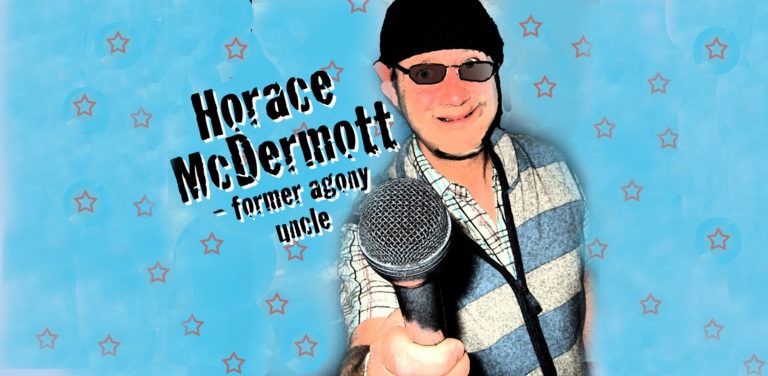
‘I’m now a lecturer in community development’​ – Horace

I’m now a lecturer in community development. Shock, horror! I know, it’s great! Look, it’s only for 12 hours per week, but think of how I’m going to shape young minds for the better.

And I’m a guest speaker, can you imagine, at this year’s The Square Summit, Ireland’s premier conference for community do-gooders, dreamers, and a few outright rebels like me. The Square has been around for years, but you mightn’t have heard of it. They’re dreadful at PR.

Basically, it’s a reinvention of the Wheel, although we still need more action-orientated, radical voices for change – like yours truly – to balance off the Miriam O’Callaghan talkie-types.

The theme at last year’s Square Summit was ‘Governance for Good’ (save us, somebody). I’m more excited about this year’s theme: equality. It means I should get paid the same as Miriam (or whoever). If she speaks for nothing, then I’ll eat my social inclusion hat. We can’t all be volunteers.

It’s some turnaround. When I was a shouty student back in 2001, the same lot heading up the Square ostrichised me (they buried my head in the sand) because I wrote that George Bush was my hero.

To me, Bush had found the most effective approach to reducing global poverty: start with the poorest country in the world (it was Afghanistan back then) and bomb it out of existence. He nearly succeeded.

Trump selling bombs to the Saudis to bomb Yemen shows how dedicated the US remains to the cause.

I’ve moved on. Community development is slow, but the struggle continues.

In fact, I must remind my colleagues at the conference that students also struggle (not just to find a bed, or get out of it). They’ve got smartphones and know that plastic and climate change are going to finish off humanity, but some of them are still as thick as an IPA yearbook.

Some students are even clueless about politics.

Fiona thought the government’s confidence and supply agreement was an arrangement drug users had with their local dealers. Seanie thought power-sharing was loaning your phone charger to someone else. Harry thought equality was a way to measure the purity of ecstasy tablets. Zacharia thought that a voluntary body was something to do with sexual consent. When asked to comment on the White Paper on Drugs, Barry from Cork said Rizla were the best. Neither he nor Josephine have a hope. She still believes that sustainable community culture is a bacteria.

I have hopes for Fiona.

In due course, I’ll refer the rest of them to the relevant services they hope to one day work for.

In the meantime, we’re all going to the Square Summit. €250 per person – our collective arses! (Barry will open the fire exits from 9am. Throw him €5; he doesn’t like being up that early.)

  • Category: Humour

Could social inclusion consultations have been simple tokenism?

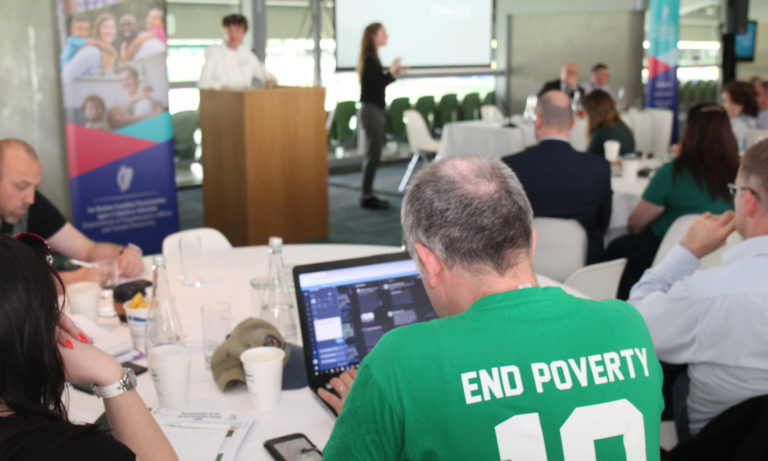
It was a bright – if overcast – day in the Aviva Stadium, Dublin, and the shouts of kids on the pristine pitch drifted in through the open doors into a far more sober atmosphere.

This was the 2019 Social Inclusion Forum, and the gathered audience – representatives from the community and voluntary sector, the Department of Employment Affairs and Social Protection (DEASP), the European Anti-Poverty Network (EAPN) and Community Work Ireland (CWI) – was debating the finer points of an as-yet-unseen but soon-to-be-released [before the summer, we’re told] strategy for social inclusion.

The forum was to take place under the theme of ‘Collaborative Working at Local and National Level’, but it was immediately apparent that collaboration wasn’t on most people’s minds. It was the strategy that was garnering the most attention.

After a presentation on the key points from Dermot Coates of the DEASP, the Minister for Employment Affairs and Social Protection, Regina Doherty, TD, took the podium to highlight some aims: to focus on reducing levels of consistent poverty to 2% or less, and to make Ireland the most socially inclusive State in the European Union.

Minister Doherty also spoke about the importance of consultation to processes like the development of this strategy, saying, “We want to hear what you have to say, but also to heed what you have to say…The next job is for me to sit down, shut up, and listen to what you have to say.”

The minister also reminded those in the room that the responsibility for developing social inclusion practices in Ireland doesn’t just fall on the DEASP – there are other departments (such as the Department of Rural and Community Development, for instance) that play a role.

She made promises too: “The new social inclusion strategy will set out real goals and real timelines so those working in the sector will be able to hold us to account.”

Constructive criticism

At that point, the forum programme said, we were to pivot to ‘feedback from regional workshops’, but perhaps ‘constructive criticism’ would have been a more appropriate name for it. CWI’s Ann Irwin and EAPN’s Paul Ginnell were quick to point out areas in which the strategy could be improved, as well as failings in the consultation process.

Irwin spoke particularly strongly about how little input groups had had in the process, in spite of lip service from the department.

“We’ve been waiting for the consultation for a long time,” she said, “and we will welcome it when it comes, but it hasn’t come yet. The new strategy is already done and dusted, and shows very little effort at consultation – at least that we’ve seen.”

Ginnell highlighted the lack of considerations made in the past for those with disabilities and encouraged the department to take their needs into account.

But it was voices from the crowd that were the most powerful in many instances, with impassioned speeches from people living and working in real communities around the country. They called for greater effort to be made to address Travellers’ rights, homelessness and poverty in its many forms.

Indeed, the team from the DEASP present at the forum acknowledged holes in the existing strategy. Jacqui McCrum, who was moderating a Q&A session in the afternoon, spoke honestly: “Following feedback, and listening to lots of the issues being raised today, we know we need to do more work to get [the strategy] right.”

So where does this leave us? Before we broke up into workshops to discuss everything from housing to getting more from data, Coates delivered the line that will likely be remembered most clearly by those present: “If by 2025 [the end of the new strategy period] we haven’t overcome the issues that we’re facing today, we will have failed.” We’ll see how it goes.

Are Travellers being given a fair shake in ‘progressive’​ Ireland?

It was only two short years ago when the Irish State gave Travellers national recognition as an ethnic minority, but it seems that has made very little difference in the reality of everyday life.

On a mid-March morning in Tullamore, I met with female community health workers who were members of the Offaly Traveller Movement (OTM). After they welcomed me warmly – with coffee and some introductory conversation – we discussed the real lives of Travellers and their issues. I asked about the abovementioned recognition and what that actually meant to them today.

Mags Lovett, OTM health manager, said: “It’s better to get than not to get, but what does it mean?”

Young children in school are encouraged to be proud of their Traveller origins, but by the time they reach adulthood, they will almost certainly have experienced discrimination.

Furthermore, eye-watering, savage cuts of 87% to Traveller organisations in 2011 have left the sector poorly resourced and, as a result, many essential services are not provided for within the community.

I got the feeling from the women present that support from government departments for the Traveller community was somewhat patronising and tokenistic.

81% unemployed

“I don’t think they’re really taking us seriously. They’re just funding us for the craic of it, you know,” says Lilly Kavanagh.

During the group interview, Mags presented me with some stark statistics that clearly illustrated the key areas that are crying out for urgent action:

• Unemployment is at 80% within the Traveller community; the average national rate is 5.4%

• Suicides among Travellers occur at six times the rate they do in the general population

• Traveller men live 15 years less and women 11.5 years less than their counterparts in the settled population

• Infant mortality rates are 3.5 times higher than within the general population

Underlying this sense of a government simply paying lip service, I found the women hardened by decades of cruel discrimination. I could see the hurt in their faces as they revealed how such incidences made them feel. Often, discrimination occurred in public places.

“Everybody is looking at you… It makes you very low,” they agreed.

In one incident that happened only recently, a bar worker blatantly declared, “You’re not getting anything here; you’re nothing but a pack of knackers.”

Travellers seeking service at a shop or a pub, for example, may be accused of previous misbehaviour and have to counter these accusations, often within the earshot of other customers who may know them.

Funeral frustration and wedding woes

Another issue is the complete closure of businesses in towns during Traveller funerals and celebrations.

Pinkie (Bridget) McInerney says that, years ago, this was not the case. She cited the example of her own mother’s funeral, when the streets of Birr were lined with people paying their respects. Years later, she was utterly frustrated trying to locate a venue for her daughter’s wedding, travelling far and wide and finding it was a futile exercise, even with the assistance of a wedding planner.

Often, weddings can cost significantly more for Travellers. Sarah McDonagh spoke about a wedding that was hit by an additional €4,000 charge for security (non-refundable). Other cases were cited of parties being refused entry to hotels on actual wedding days. The women even recalled a phone call to a wedding party when it was already in the church to say the reception could not go ahead at the booked venue.

Even with all the recent equality legislation, the women say business owners will often use indirect methods of discrimination to prevent Travellers accessing their services. Staff are trained to say such things as, “locals only” or “private function” when, in reality, this is not the case; they are just excuses to deny Travellers entry.

Based on her personal experiences, Pinkie said: “I don’t know if that equality thing is doing anything. No discrimination against Travellers? It’s still there.”

I asked the group of women questions about issues highlighted in the mainstream media that present Travellers negatively.

On domestic violence, I asked whether it was really more prevalent within the travelling community.

“They say it’s part of our culture, but it isn’t – it’s not a part of anyone’s culture,” Sarah said.

I raised the issue of people saying that Travellers don’t pay tax.

“Sure, they won’t give us jobs to do anything,” replied Pinkie.

Referring to those Travellers who are lucky enough to secure some employment, Pinkie said: “A few fellas are on the buildings, there are some women in projects like this, and some are self-employed. Plenty are willing to work, but to get a regular job, Travellers have to deny who they are.”

Changing surnames

She said that, in many cases, Travellers have to change their surnames to gain employment.

In 2019, Travellers are not part of a more inclusive society, said Mags. “There are changes to public policy and stuff, but we’re not seeing any changes.”

Meeting this group in Tullamore, I learned a lot about Travellers’ issues and culture. I enjoyed the banter, especially when they spoke Cant [language of Irish Travellers] and I didn’t know what they were saying. (They found my wild guesses amusing!)

I look forward to meeting them again with their families at the 2019 Offaly Traveller Pride event this June, which settled people and Travellers celebrate together.

Irish want class discrimination recognised

Elsewhere, young Irish people have been fighting for equality across the board through a campaign for class discrimination to be legally recognised.

All Together in Dignity (ATD) Ireland supported eight young delegates to take part in the European Fourth World People’s University, held at the European Parliament in February.

Armed with ADT research, the group argued that not having socio-economic deprivation recognised in Irish law as a ground for discrimination has had a negative impact on people from disadvantaged backgrounds.

“At present, within Irish law, there are nine recognised grounds of discrimination, but we are working to try and add a 10th ground, one based on a person’s socio-economic status,” said the group.

Traveller Selina O’Leary’s Siberian experience

Traveller and singer Selina O’Leary, 27, from Carlow, flew to Siberia recently to live with a nomadic tribe of reindeer herders for 10 days.

While she wasn’t gone on the raw fish diet, she made a real connection with the family who hosted her in the Siberian tundra in northern Russia.

Selina went as part of Traveller’s Guide, a two-part RTÉ documentary in which she and another Irish Traveller left home to experience day-to-day life and culture in other nomadic communities. The show was broadcast on RTÉ 1 in March.

She said she would “go back again in half a heartbeat” to the Nenet tribe. They lived lives far from services we take for granted, but were generally much healthier than us.

Interested in reading more about the state of Ireland’s community development sector? Check out our latest issue.
Two events you’ll want to add to the calendar

The community development and voluntary sectors are known for their on-the-ground work, with the vast majority of practitioners rolling up their sleeves and getting stuck in to change how things are done and to support those living in disadvantage.

A big part of that is a constant focus on learning; on always trying to find the most successful and most impactful approach.

Often, that means learning from others. One place to do that? National conferences and events.

If you’re interested in hearing the latest thinking – and in shaping it – a couple of events coming up on the next few months may be of interest.

Social Inclusion Forum 2019

On Wednesday 22 May, Dublin’s Aviva Stadium will play host to this year’s Social Inclusion Forum (SIF). The theme of the event is ‘Collaborative Working at Local and National Level’.

The SIF was put in place by the Irish government to monitor and support the development and implementation of its plans to address poverty and social inclusion. SIF’s annual conference is intended as a forum for engagement between government officials, community and voluntary organisations, and people experiencing poverty.

This year, participants will discuss: social inclusion at community level, getting more from data, social inclusion and people with disabilities, housing and social inclusion, the role of employers in social inclusion, and social inclusion in Traveller health and wellbeing. They will also look at the new social inclusion strategy for 2019-2025.

The event is free, but attendees must register in advance.

For more information, visit the websites of event partners Community Work Ireland and the European Anti-Poverty Network.

Elements of Change

If it’s change you’re looking for – as well as fun and a family-friendly atmosphere – head to Tipp!

On Saturday 29 June, Cultivate is holding Elements of Change in Cloughjordan. The organisation is billing the one-day event as “a festival to reimagine our future to sustain happier, healthier communities”, and will look at how people can support sustainable change in this time of climate crisis.

Transition Town Totnes and Transition Network pioneer Rob Hopkins will be one of the lead voices. He has said, “If we wait for the governments, it’ll be too little, too late; if we act as individuals, it’ll be too little; but if we act as communities, it might just be enough, just in time.”

Not one for the shy or retiring, attendees are encouraged to “be part of the discussions, offer a workshop, let your children inspire you with their own programme, bring an instrument or talent, get involved in a meitheal, host your own conversation cafe, mingle … and share your insights”.

Encouraging people to come by train, the organisers have scheduled their programme to match Iarnród Éireann’s timetable.

You can still drive of course – just leave the Hummer at home.

Tickets are free for kids under 16, and range from €12 for an adult to €35 to be in the audience for Rob Hopkins. They are available from Cultivate.ie.

Interested in reading more about the state of Ireland’s community development sector? Check out our latest issue.
Main photoPeter Mooney/Flickr.com (CC BY-SA 2.0)

Updated at 7.35am on Wednesday 22 May 2019: Article was updated to reflect changes in ticket prices for Elements of Change.

A Chinese hero and the museum that woke the dragon

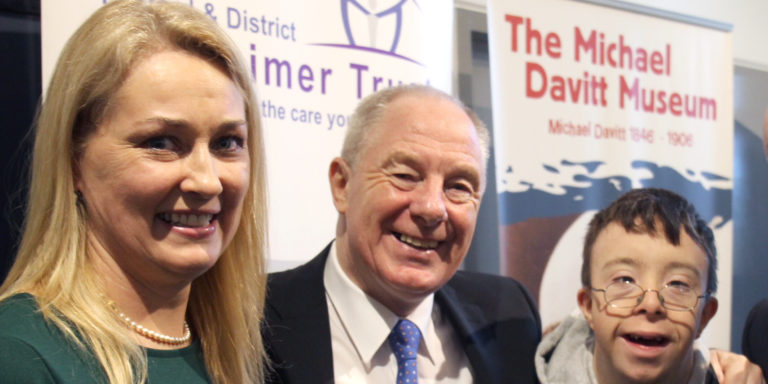
After 46 years in existence, the Michael Davitt Museum in Straide, Co Mayo,is at last getting welcome financial support from the government through once-off funding from the Department of Rural and Community Development.

The €40,000 will help the museum become a ‘centre of excellence’ under the guidance of a newly hired cultural development officer.

New curator Yvonne Corcoran-Loftus will fill that role. She has worked in the museum since 2013, having started out as a Community Employment Scheme supervisor.

The museum she now manages is housed in a restored pre-Penal Era church next to a 13th-century abbey. Davitt was baptised there and is buried in the adjoining graveyard.

The voluntary group she leads has already proved its worth, impressing the Chinese embassy and bringing interns from China to work there, while all the time improving the visitor experience. On TripAdvisor, 93% of reviewers have rated the museum as ‘excellent’.

Chinese interest

Davitt was an important international supporter of Chinese strides for independence in the late 19th century. Now the Chinese have been reminded of this, says Mayo North East CEO Justin Sammon, they’re taking huge interest.

In Ireland, Michael Davitt – founder of the Land League, a Home Rule politician, and an MP in London – is not well recognised, which is surprising considering all he accomplished. It is this that drives the voluntary group pushing to develop the museum.

“He is a symbol to us of someone who fought injustices,” said Sammon, an avid historian.

“He caused a lot of armless revolution and was the founder of social revolution, probably, from Gandhi to the Boers,” he said.

Sammon has encyclopaedic knowledge of Davitt’s “full blessing to the Chinese revolution” during that era.

“The Chinese were unaware of this and now they all want to know more. The Chinese ambassador has asked his cultural attaché to work with Mayo North East. To date, we’ve had three interns from China working here for six months, and we’ve had numerous visitors from China. We hope to have an international conference on Davitt soon,” he said.

Where will the funding go?

Sammon welcomed the funding: “This is the first time in 46 years that a government department has recognised the significance of this as a tool for development.”

The museum committee believe Davitt should be recognised in his own country and have worked on a cultural programme to make it happen. They believe their programme can help foster leadership in communities and make places more attractive for people from outside to move to.

“In community development parlance, our model is cultural animation and we want to pursue that more across rural Ireland,” he said.

‘Davitt would have been proud of SICAP’

Jimmy Moloney, the treasurer of the Michael Davitt National Memorial Committee, spoke on the museum’s behalf:

“Down through the years, we knocked on many doors looking for funding and none were answered, until now.

“Michael Davitt is the most important figure in our past and it would be a shame if we didn’t honour and remember the legacy he left Ireland.

“I am very proud of the museum staff and volunteers – they’ve worked so hard over the past years.”

He added: “Michael Davitt would have been proud of the SICAP programme [sic].”

Minister Ring thanks volunteers for ‘keeping communities going’

Minister Michael Ring TD spoke at an event announcing the funding allocation. In his speech, he congratulated the “many people who kept this museum open and alive,” and said, “I’m pleased that my department is going to provide some funding for the next two years”.

He congratulated Mayo North East for taking responsibility of supporting the museum: “It’s a good move and I’d like to see it happening in more projects.”

He thanked the volunteers for the work that government, local authorities and agencies cannot do.

“People are out there keeping communities going, keeping festivals going and keeping their businesses going,” said the Minister.

Interested in reading more about the state of Ireland’s community development sector? Check out our latest issue.

The real-life value of Community Enhancement funding

In 2018, more than 3,000 projects around the country got a share of €12.5 million in funding through the Department of Rural and Community Development’s Community Enhancement Programme (CEP), which provides small grants to disadvantaged communities.

A closer look at that €12.5m allows us to move beyond the broad strokes to see a picture of how CEP changes communities on a basic level.

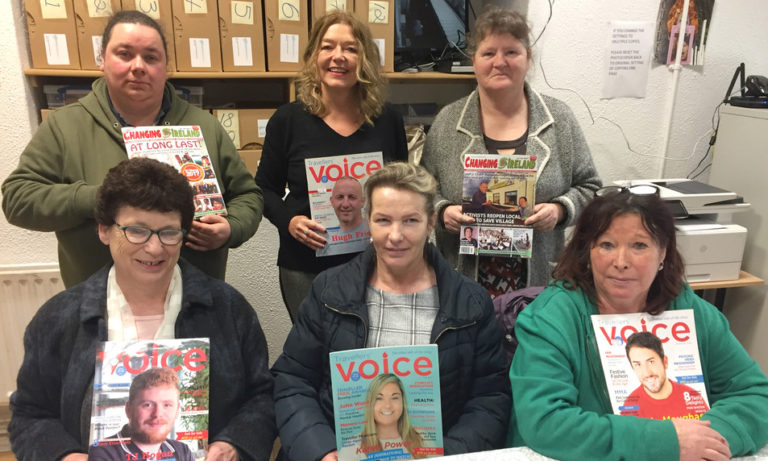
In Co Offaly, for example, 115 groups received community enhancement funding. Boil that down to community level and we see that Pullough, the small parish featured on the Changing Ireland Feb-March cover, pulled in €2,000.

How does that €2,000 translate to community-level improvements? 

Community groups often fundraise to get much needed resources for local development, but it can be a struggle to raise enough to cover everything. The projects that Pullough sought funds for are a great example of the kind of needs for which CEP is invaluable.

Four groups from Pullough received €500 each:

Pullough Community Action Group used their €500 on a laptop and printer.

Pullough Resident’s Development Association spent theirs on IT equipment that would be used by community groups for training.

Pullough Resident’s Development Association and Pullough Tidy Towns got together to spend another €500 on works to make the canal area of the village more attractive.

The €500 awarded to Dernagun Residents Association went on a lawnmower and a hedge cutter.

The full list of projects supported nationally can be found on the Department’s website.

Interested in reading more about the state of Ireland’s community development sector? Check out our latest issue.
Main photoAke/Rawpixel

How Community Futures built one village’s community space

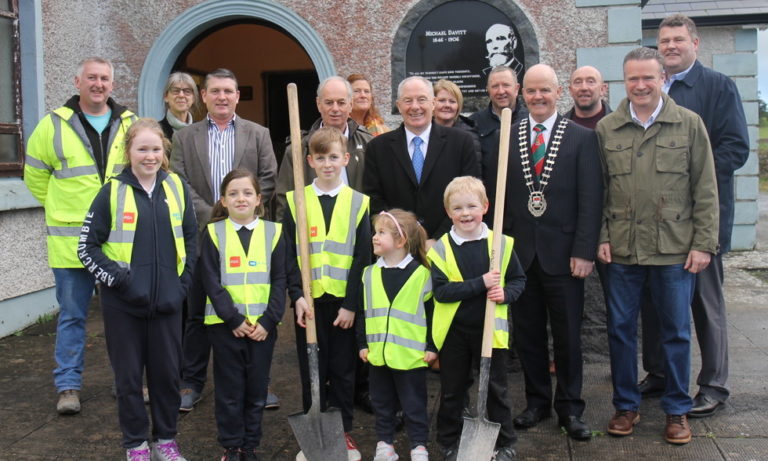
By this summer, the Co Mayo village of Straide will have the equivalent of a brand-new multipurpose hall. The Michael Davitt Community Hall – closed now for some time – is to be resurrected.

When finished, the refurbished hall will have new windows, a new heating system, a kitchen, office space and toilets.

Carol Reading, vicechair of Straide Community Development Group, said: “We’re looking forward. We’re going to be able to use it for indoor football, badminton and birthday parties. We also aim to make it available for community events like month’s minds.”

The group gives full credit for the hall’s revitalisation to Community Futures, a county council-led process that has helped communities across Mayo to actively plan and deliver much needed projects.

While funding support usually makes all the difference to a project’s success, in this case it was Mayo County Council’s community development approach helping the Straide community see their priorities clearly.

The renewal works have been years in the planning, soaking up many hours of volunteer involvement and costing €167,000. But Straide stuck with it in spite of the obstacles, with help coming from LEADER and from the diaspora’s fundraising support.

“We have had families from the UK, America – and obviously Straide – contribute to the fundraising,” Carol said.

Straide Community Development Group chairperson Derek Murphy welcomed the LEADER funding: “There was no money spent on the hall since the 1980s and it needed an upgrade.”

Straide Community Development Group chairperson Derek Murphy and vice-chairperson Carol Reading with group member Kate O'Hara
Straide Community Development Group chairperson Derek Murphy and vice-chairperson Carol Reading with group member Kate O’Hara. Photo: Changing Ireland.

Looking to the Futures

Mayo Community Futures is a bottom-up, community-led process that gives all members of a community the opportunity to feed into an action plan for development. It aims to:

· help communities to prepare Community Action Plans,

· encourage more people to become active in their communities,

· strengthen and develop local community organisations,

· enable communities to identify and progress priority projects, and

· enable communities to effectively represent their interests at local, county and national level.

Kate O’Hara, secretary of Straide Community Development Group, said: “We got every group in Straide involved in the Mayo Community Futures process. It’s a great system; it gets all stakeholders involved.”

“Out of that, we created our development group and came up with an action plan. Mayo County Council run Community Futures, and it got us to do a household survey. We found out what the priorities were and came up with an action plan.”

“There are 60 children in the local primary school and they have no ‘halla’, no facilities, so the hall refurbishment was vital. We have a church, a pub and the museum in Straide, and we got to the point where the community needed space,” she said.

The Community Futures approach was introduced in 2006, and 30 Mayo communities have participated in it to date.

The process is administered by Mayo County Council and takes about six months to complete.

The main tools for encouraging participation are household surveys, stakeholder interviews, compiling a community profile, and organising a Community Day event.

Interested in reading more about the state of Ireland’s community development sector? Check out our latest issue.

The magic formula: Castleblayney delivers ‘knockout’​ health fair

0

With just a few short months until summer hits, many communities are planning ahead for festivals, open days, sports days and loads more. One event they should also be considering? Health fairs.

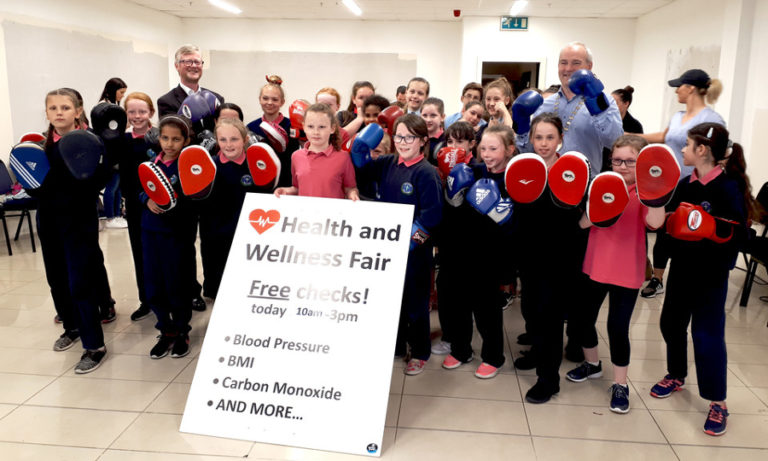
Monaghan Integrated Development (MID), the local development company, has developed a good model for how to run a one-day health fair with a strong social inclusion emphasis.

Gerard Callan, education co-ordinator at MID, believes that it “has the potential to be replicated across the country”.

Low-cost, high-impact

Monaghan’s health fair is held in a different town each year and the organisers view it as a relatively simple, low-cost event that gets across important messages to the public about healthy living.

Last summer (2018), around 500 people attended the health fair held at Glencarn Shopping Centre in Castleblayney.

As Gabriel O’Connell, MID’s CEO, pointed out, “In the modern world, health care is an expensive business, but events like the fair show people the very low-cost steps they can take to preserve their good health and prevent illness.”

“[These steps] include getting your blood pressure checked on a regular basis, keeping an eye on your weight, taking some exercise and cutting down on cigarettes and alcohol,” he said.

Already, many community groups organise health fairs, but Monaghan’s fair comes with all the bells and whistles.

When he visited, Monaghan County Council chairperson David Maxwell declared it a “knockout”. (He had been particularly impressed by the boxercise class, and even suggested that all public representatives try it out. In fairness, nobody ever gets hurt during boxercises.)

Other interactive events included baby massaging, chairobics and a lunchtime ‘Workers Walk’.

We are what we eat

A healthy lunchbox includes fruit portions, and staff of the newly opened Rainbeau store showed that it is easy to present fruit in an appealing and tasty way. Their free fruit samples were a hit, particularly with children from Scoil na gCailíní and Gaelscoil Lorgan.

Throughout the day, chef Paul McGarrell from Monaghan town delivered demos on portion sizes, fun food for babies, cooking for one and healthy lunchboxes.

Dinkins Café offered free samples of their health breads, which included yeast-free and sugar-free samples, spelt bread, and low-GI bread for diabetics.

Interactive elements and lots of freebies

Public health nurses from the Cavan Monaghan Primary Care Team offered free body mass index (BMI) checks, while the Irish Heart Foundation offered free blood pressure checks.

As one member of the public who availed of the free blood pressure checks remarked, “That’s €50 and an hour in the waiting room saved. Now I don’t need to go to my doctor!”

The public were also able to test the levels of carbon monoxide in their lungs through the Irish Cancer Society’s Fit for Work and Life programme.

The fair included interactive elements as well, with boxercise classes delivered by Orla McCarthy and chairobics facilitated by Aisling McDermott.

Chairobics is a sit-down exerice class that includes a range of low-impact aerobic routines. It begins with a blend of yogic stretches and gradually progresses to more accelerated types of movements, all performed while sitting down.

Boxercise is an exercise class that is based on the training concepts boxers use to keep fit. A typical class may involve shadow boxing, skipping, hitting pads, kicking punchbags, and doing push-ups, shuttle-runs and sit-ups.

Most boxercise classes are aimed at men and women of all ages and fitness standards. It is a fun, challenging and safe workout, as no class involves the hitting of an opponent.

Overall, the fair offered support and advice under four headings: healthy eating, physical activity, mental wellbeing and anti-cancer support.

Every exhibitor had staff on hand to explain how their organisation could help, and the message from all 26 exhibitors was to get out, get active, build your mental resilience, eat properly, cut down (or cut out) smoking, be careful of the amount you drink and, above all, look for help if you need it.

Thanks to Gerard Callan for the in-depth information for this story.

Interested in reading more about the state of Ireland’s community development sector? Check out our latest issue.
Is community development the key to preventing family violence?

Imagine if 40% of Ireland’s police work was responding to family violence. In New Zealand, that’s precisely what we’re facing.

Due to the high rates of family violence that exist in the country, and the complexity and intergenerational nature of it, it is unlikely that responding solely after violence has already occurred is enough to change anything. We must look elsewhere for a solution.

We cannot service our way out of this problem. We must also focus on prevention and on creating new social norms. Since 2002, there has been an increased emphasis on prevention in New Zealand, which has led to greater public awareness, attitude change and more people seeking help than before. However, our response and prevention efforts have not yet reduced rates of violence.

In the search for effective approaches to preventing family violence, work within communities has gained momentum since the mid-2000s. This has included fostering relationships between those working in the family violence and community development sectors. Here, the voice of community members is more important than ever.

While early responses to family violence started within the community-based feminist movement, over time New Zealand followed global trends and moved away from collective approaches to become more individualised and service oriented.

Now, there is a growing movement back towards collective approaches, and new evidence suggests that community mobilisation (CM) — a specific community development strategy — is an effective approach to addressing family violence.

CM is a transformative approach used to create social change on complex issues. It is long-term and multifaceted, and engages large numbers of community members in local action for change.

Promoting healthy relationships to prevent violence

In one community, the desire to focus on prevention and long-term change led to the development of a CM initiative called the HEART Movement.

The Tāmaki community (pop. 12,000) in Auckland had experienced high rates of family violence for decades and, in 2008, practitioners and community leaders committed to addressing the problem.

The community wanted an approach that was inclusive and would build the capacity of local residents. They wanted to work towards a positive goal by not only preventing family violence, but by promoting healthy relationships.

HEART is evidence-informed and uses local insight and research to guide development. The first step was to conduct a community readiness assessment to see how prepared the community was to make change. This assessment informed the development of a theory of change to guide action. HEART has two action strands: (a) community mobilisation and (b) building organisational capacity and collaborative development.

CM work is driven by people who are change agents. They are local leaders living and working in the area who commit to building awareness and challenging the status quo. They support each other to take action to change unhealthy social norms and behaviours, and build healthy relationships in their homes and communities.

They share their knowledge and skills through their social networks and host courageous conversations. While they are supported by an organisation called Te Waipuna Puawai (part of the Sisters of Mercy), the change agents are the engine room of the CM approach. They are involved in all aspects of HEART, including leadership development, art, music, theatre, events, conversation spaces, training, research and planning.

Training is the key focus of capacity development work. It is provided to local practitioners and community members for free. Each year the HEART network of 350 people is surveyed for their training needs. The high-quality training has been successful in giving people the skills and information they want and need.

HEART uses a community mobilisation questionnaire to track change over time. The first assessment was completed in 2016 and looked at key elements in community mobilisation, such as leadership, participation levels and shared concerns.

Ongoing assessments will assess change every three years or so. Community readiness assessments in 2011, 2014 and 2016 show that readiness to prevent family violence and promote healthy relationships is increasing.

The results are very much visible, with one participant saying, “They’re building capacity in the local people and community. That’s creating a sense of worth. Local people are actually finding or using knowledge that they didn’t know they had. That gives them a sense of pride, and then they become a role model.”

For more information on HEART and on CM in New Zealand, see Hann and Trewartha’s 2015 paper, ‘Creating change: Mobilising New Zealand communities to prevent family violence’.

Learn about HEART’s Theory of Change by contacting programme lead Nandita Mathur at heart@twp.org.nz.

Cristy Trewartha is a family violence prevention practitioner and researcher currently completing a doctorate on measuring community mobilisation to prevent family violence. She worked on HEART for three years before handing over to focus on finishing her PhD.

Interested in reading more about the state of Ireland’s community development sector? Check out our latest issue.

Main photoChanikarn Thongsupa/Rawpixel

Community education and its powerful impact beyond the classroom

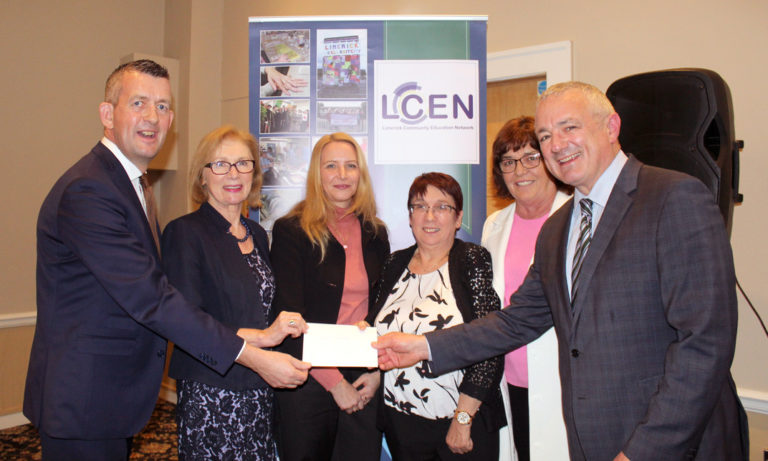
In November 2018, the Limerick Community Education Network (LCEN) turned 25. Its impact on communities around the city was obvious in terms of class subscriptions and returning students, but it was its personal impact that made the strongest impression on the night.

‘A lifeline for many people’

Local TD Maurice Quinlivan has seen his own family benefit directly from support from the LCEN. For him, the 25th anniversary celebrations were personal.

“Because of community education, people who never got a proper education in Moyross, Southill and other disadvantaged areas get a second chance to educate themselves. And what makes it so special to me is that my mother has benefitted from it.”

Quinlivan’s mother, Marie, learned to write and did the Leaving Cert through the LCEN.

“She’s ended up in a drama group – she wouldn’t have had the confidence to do that before – and they’ve performed in various venues.

“It’s commendable what LCEN has done for people. As Helen Flanagan said, ‘Not everyone does a course to get accreditation; it’s about getting people out of their houses and building a community’.

“They give people the self-confidence and awareness and the ability to get on with their lives.

“They provide opportunities that our generation take for granted to people who didn’t get an education when they were children. I get people coming into clinics who are embarrassed they can’t read or write. In future, I’d prefer we talked about the kid who didn’t go to third level than be talking about the kid who did.

“When mothers and grandmothers go back to education, it’s a win-win all around. It’s the key to unlocking poverty,” he said.

Marie Quinlivan echoed her son’s view: “Community education means a lot to me. I left school at 13 years. Even then, I was more often missing than I was at school. I left without the Leaving Cert. I could read, but I couldn’t write. So, I went back, in 2008, and sat my Leaving. I’ve always been doing courses since then.”

Jan O’Sullivan, TD, also knew the personal stories of many of those present, from those who led the movement for education to those who benefitted from it. She has been supportive from the beginning.

“Community education has been a lifeline for many people, particularly women, especially those who didn’t have a good experience of school first time ‘round,” she said. ‘I know many who have got so much enjoyment, self-confidence and friendship from going to classes in their local community.”

A love letter to creativity and community education

A student who grew almost addicted to community education penned a ‘love letter’ to the LCEN.

Clare wrote: “I’m an actor, an artist, a critic, a columnist, a crafter, a chorister, an historian, an interviewer, a knitter, a legal eagle, a lyricist, a learner, a leader, a marcher, a newsreader, a poet, a sculptor, a sewer, a speechmaker, a typist, a techno whizz and a published writer. Phew!

“Thanks to Limerick Community Education Network, I’ve even been seen lounging around in the lotus position at yoga and posturing at Pilates. Not. A. Good. Look!

“LCEN – Your net worked. I’m enmeshed.

“I remember the first day I walked into my Community Resource Centre, seeking information on anything going on locally. I had been ill and out of circulation for a long time…I had no idea if I could be creative or not.”

Sounds like Clare got her answer.

To learn more about LCEN and its work, contact Catherine Aylmer at LCEN Office, 267 O’Malley Park, Southill, Limerick; on 087 764 2659; or via catherine@lcen.ie.

Interested in reading more about the state of Ireland’s community development sector? Check out our latest issue.
LCEN at 25: It’s about meeting people and gaining confidence

Every week, a unique volunteer-led umbrella group helps to organise community education classes for 3,200 people across 40 venues in Limerick city. They are the Limerick Community Education Network (LCEN) and they cover everything from découpage to the Leaving Cert.

In November, supporters gathered to mark the network’s 25th anniversary. LCEN believes it is unique for being the longest-running and widest-reaching community education network in the country. The network of 15 community organisations and statutory agencies supports adult learning in communities across the city.

Helen Flanagan, LCEN chairperson and local community worker, said: “We run classes in knitting, sewing, woodwork and much more. That’s where it’s at. It’s about getting out of the house. It’s about meeting people, gaining confidence, and learning too. Accreditation is great, but non-accreditation is where it’s at for us.”

Adult education coordinator Josephine Sheedy
Adult education organiser Josephine Sheedy enjoys the spotlight. Watching on are community workers Helen Flanagan, Mary Flannery and Jim Prior. Photo: Changing Ireland.

TDs Maurice Quinlivan and Jan O’Sullivan were present on the occasion and joined local councillors Elena Secas and Jerry O’Dea in congratulating the volunteers.

At the event, Flanagan paid tribute to Josephine Sheedy (pictured right) from Moyross, saying, “She has encouraged and supported learners from her community and beyond for the past 21 years.

“She has served on the LCEN as chair, secretary and treasurer. And general dogsbody, as we all have,” she added.

Jim Prior paid tribute to co-ordinator Catherine Aylmer, saying it is her drive and commitment that keeps the show on the road. He appealed to the two TDs present for continuing support.

“Community education is so important and we are dependent on regeneration funding to continue funding our co-ordinator’s position. Please help and support us to keep that position,” he requested. Both TDs assured him of their support.

The night was a real celebration, with the Southill Roses’ performance getting the whole audience singing along.

To learn more about LCEN and its work, contact Catherine Aylmer at LCEN Office, 267 O’Malley Park, Southill, Limerick; on 087 764 2659; or via catherine@lcen.ie.

Interested in reading more about the state of Ireland’s community development sector? Check out our latest issue.

Who are 2018’s Volunteers of the Year?

Volunteer Ireland Awards is a major annual initiative to celebrate volunteers in Ireland. The awards – held by Volunteer Ireland in December – shine a light on the remarkable work of volunteers around the country by honouring them on a national stage.

For the 2018 awards, there were more than 500 volunteers nominated. Of these, 33 were named as finalists, invited to a ceremony where 11 won in their categories and Mary Fitzgerald was named as the overall Volunteer of the Year.

One of the winners – for ‘Outstanding Group – was Pullough Community Shop, the cover story for the most recent Changing Ireland issue. The other 10 winners are featured here.


Children and Youth Winner: David O’HaraChildren and Youth winner David O'Hara

David is a mentor in Solas Project’s After Schools club for children aged 11 to 13.

He is the handyman, the class clown, the extra pair of hands, the homework genius and a great support to staff.

Where other volunteers like to take a few weeks’ or months’ breather, David keeps going, and it is invaluable to the organisation to have at least one familiar face for the children throughout the year.

David recently completed a master’s in community and youth work, which ties in very well with his work.


Health and Disability winner Marry Arrigan-Langan

Health and Disability Winner: Mary Arrigan-Langan

In 1981, Mary Arrigan-Langan set up Octopus Swimming Club for people with physical disabilities.

She has been involved for 37 years, providing weekly swim sessions and hardly missing a session in all that time.

She also volunteers with other groups.

Mary is great at pushing the boundaries and getting people to be ambitious.


Arts, Culture and Media winner Louise Borre

Arts, Culture and Media Winner: Louise Borre

Louise has been volunteering since she was seven.

Today, she is a Big Top team leader (one of four in a volunteer team of more than 600) for the Galway International Arts Festival.

Louise works part time (paid) at Cosáin Community Wellness Centre and continues to volunteer many hours once her shift is done.

She also volunteers with a host of other groups including Clifden Arts FestivalGalway Theatre FestivalGalway Housing Action GroupPieta House and Cope Galway.


Social Work and Social Inclusion winner Sheila Busher

Social Work and Social Inclusion Winner: Sheila Busher

Currently, Sheila organises two nights of FoodCloud deliveries to more than 160 families who text in if they wish to receive a delivery six nights per week.

Whatever the hour, if someone is in trouble, homeless or vulnerable, Sheila is there for them.

She also has the backing of many volunteers and the local community to help her provide support.


Campaigning and Awareness winner Laura Brennan

Campaigning and Awareness Winner: Laura Brennan

Laura has terminal cervical cancer and advocates in favour of the HPV vaccine. She uses the media, public speaking opportunities and social media to appeal to parents to protect their daughters from HPV and cervical cancer.

Laura took the initiative and contacted the HSE in September 2017. At the age of just 25, she was determined to tell her story to every parent in Ireland who was about to make the decision whether or not their daughter was to be vaccinated against HPV.

Sadly, it has been announced that Laura has succumbed to her cancer. She died today, Wednesday 20 March.


Sports and Recreation winner Sinead Kelly

Sport and Recreation Winner: Sinead Kelly

Four years ago, Raphoe Town FC had fewer then 10 girls playing football. Sinead took the initiative to set up and organise a Soccer Sisters programme and kept going even when hospitalised.

Sinead has positioned the club in the heart of the community, building strong and positive links with local schools and clubs. There are now more than 30 girls playing on the team.


Volunteer Manager of the Year winner Sara Murphy

Volunteer Manager of the Year Winner: Sara Murphy

Victim Support at Court is a voluntary service that provides court accompaniment and support to victims of crime. Sara manages victim support in the Criminal Courts of Justice, which deal mainly with murder and rape trials.

Sara’s supportive, warm and empathetic nature, as well as her knowledge of the court system, led to her being offered a part-time role managing the volunteers in the Criminal Courts of Justice and helping with training of new volunteers.

Safety and Emergency Services winner Nancy WhiteSafety and Emergency Services Winner: Nancy White

Nancy single-handedly brought together a group of volunteers and set up the Lorrha Community Responder Group.

She also gives an incredible amount of time to groups.

Under her leadership, five new defibrillators have been acquired for the Lorrha area, and the group has already responded to more than 30
emergency calls under the direction of the National Ambulance Service.


Animals and Environment winner Maeve O'Donoghue

Animals and Environment Winner: Maeve O’Donoghue

Maeve volunteers in the local dog pound and seeks, wherever possible, to reunite pets with owners or have them rehomed.

By law, dogs who are in the pound only have to be kept for a certain number of days and then they can be rehomed or put to sleep.

She works closely with the dog warden and does her utmost to get every dog out of the pound alive. She visits most days, takes photos of strays and posts the pictures to the Mullingar Dog ShelterFacebook page.

Community winner Cormac SertutxaCommunity Winner: Cormac Sertutxa

Cormac is one of the Irish Red Cross’s busiest volunteers. As the health and social care officer responsible for developing services in Co Kerry, he spends every day focused on his role.

Cormac has also volunteered with other organisations, including Southwest Motorsport Rescue UnitCycle Against SuicideKillorglin Community First RespondersKeel Castlemaine Youth Club and Killorglin KDYS’s
Neighbourhood Project.

Updated, 1pm, 21 March 2019: This article was updated as news of Laura Brennan’s passing filtered through to the Changing Ireland offices. The entire team here is saddened to hear of the Brennan family’s loss and, indeed, Ireland’s loss. Thank you, Laura, for all you have done.

Body photos: Volunteer Ireland

Tech in the community: Why you should sit up and take notice

In 1956, when computers were still a relatively recent innovation, fledgling company IBM – fresh from the development of its first big seller – set up shop in Ireland.

That was just the start of Ireland’s tech boom, representing the first tentative steps towards a mammoth tech sector that, as of 2017, was responsible for 7.5% of direct employment on the island. Ericsson followed IBM, then came HP, Microsoft and Oracle, leading to an influx of global names like Apple, Google, Facebook and Airbnb that would put this small European outpost and its ‘Silicon Docks’ on the map.

Ireland became a haven for tech jobs and talent, as much at the forefront of future development as Silicon Valley and the US start-up scene, but there was also a massive talent gap, especially in technical roles – there are more jobs going than there are people to fill them.

So, why aren’t communities taking notice?

Why should communities care about tech?

We’ve already seen that tech jobs make up a large portion of Ireland’s workforce, but it can be hard to see exactly why that matters on a community level.

In many ways, it’s quite simple: the skills that young people (and even adults) pick up when studying science, technology, engineering and maths (STEM) subjects – analytical reasoning, fact-based decision making, principles of investigation and innovation, and basic digital ability, among others – are applicable across a wide range of industries.

Or, to put it another way, you don’t have to be considering a career in STEM to find value in studying it.

“Technology is everywhere,” says Giustina Mizzoni, the executive director at global programming club CoderDojo. “It is shaping every industry, from agriculture to healthcare. Technology and the code that powers it have become ingrained in our everyday lives…Even a basic understanding and appreciation can have a profound effect on a person’s life.”

Aoibheann Mangan, the Mayo-based Joint EU Digital Girl of the Year 2017-2018, agrees: “The world is moving at a massive digital pace, and so many of the jobs of today – and even more of the jobs of tomorrow – will require the digital skills you learn when coding or engaging in computational thinking.”

It’s about growth

There’s a trickle-down effect, too. As tech becomes more and more a part of daily life, those who are not among the ‘tech-savvy’ become increasingly at risk of isolation – not in a physical sense, but a societal one.

Dialogue and conversation have moved largely from face-to-face and phone-based exchanges to messaging services and social media sites; basic tasks like managing finances and dealing with service providers now often require an understanding of the internet; applying for jobs, booking holidays and even grocery shopping have moved online. An understanding of tech, therefore, can be as much a matter of necessity as convenience.

Because of this, giving members of a community a grounding in tech can make them more connected and less susceptible to exclusion. It can also help to grow communities in a more literal sense: when tech skills are developed, it opens up possibilities for tech businesses and startups in the community, makes members more employable in roles that require tech abilities, and encourages others in the community to learn themselves.

Tyrone’s Sheree Atcheson, founder of Women Who Code UK and technology respect and inclusion manager at Deloitte UK, understands this better than most: “My own personal experience has shown that a career in STEM not only makes a difference in my life, but in the lives of others. Using my STEM background, I have been able to form a career that sees me impacting thousands of lives and creating an industry that is better for all.”

So how do we get there?

This idea of empowering communities through tech is one of the founding principles of a programme called #techmums, which aims to make mothers part of the digital revolution.

Founded by Dr Sue Black, who used tech education to pull herself and her family out of poverty, the programme helps mothers to harness the potential of technology in order to play a part in humankind’s shared digital future. In short, it allows these women to be included.

A fringe benefit of this is that it goes a long way to demystifying tech for younger members of the community. As Aoibheann says, “If I cannot see it, I cannot be it.” – a succinct way of saying that if people do not see a path for them that has been successfully followed by others, they will not attempt to walk it.

There are other ways that path can be shown. At last year’s Inspirefest – an annual science, technology and the arts event with a focus on diversity – the crowd heard from Dr Anne Looney, executive dean of Dublin City University’s Institute of Education and the CEO of the National Council for Curriculum and Assessment from 2001 to 2016.

“We need [teachers] to be innovators, adventurers and seekers,” said Looney. “We need them to be activists…We want to prepare teachers to model what we need children to be.”

And yet schools can only do so much. It is in the hands of communities (from families right up to national organisations) to ensure that no one gets left behind and that everyone is prepared to exist in our shared digital future.

Interested in supporting tech education in your community? Check out our list of programmes and resources – they could be a good place to start.

Want to read more about the state of Ireland’s community development sector? Check out our latest issue.
Main photoRawpixel/Pixabay

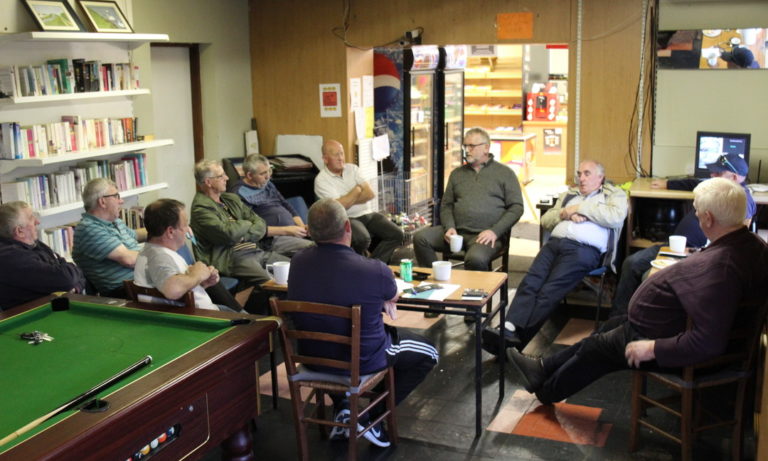
What happened at the first ever meeting of the Pullough Men’s Shed?

0

Declan Costello addressed the first meeting of Pullough Men’s Shed, held in the local (award-winning) community shop.

“Us men are supposed to talk side by side, not face to face. So we work together well that way,” he said.

Declan is a community worker with Offaly Local Development Company and he was there to lend support and tell prospective members what other Sheds do.

“Here’s a flavour of what Sheds are doing in Tullamore, Clara, Kilcormac and Edenderry: they’re making wheelbarrows; they’re making buddy-benches for school playgrounds. If a child is being left behind or bullied, the child can sit on the bench and older kids will come along to play with them.

“Another Shed makes kayaks. Another produced beehives. You can produce bird boxes, garden furniture, fairy gardens… Whatever you like. Or act as stewards for the annual Darkness Into Light walk. It’s up to you.

“Some Sheds get involved in Tidy Towns projects.

“And they are all going well in Offaly. However, some are unsure about their locations. You are lucky. Usually, when I meet lads like yourselves, they don’t have a place. You have your shed already, which is very generous of Joe [Bracken, owner of the building the community shop is in],” said Declan.

More than 422 Sheds in Ireland, 10,000 people attend weekly, two new sheds open every week
Graphic: Men’s Shed (map) and Changing Ireland (text).

Joe told the men they were welcome to meet in a shed at the back of his former shop.

“We’ll have a chat and a craic and get things going,” he said.

“We just need to put in a few benches,” said one of the men in attendance.

They talked about plans to visit the Men’s Shed in Tullamore – a shed so busy it is open five days a week.

Said one potential member, licking his lips: “They’re in an old school that has a kitchen. One of the men is a chef. He asks them what they want to eat, he goes off and does the shopping – €3 or €4 a day and he cooks for everyone.

“Is there a chef here?”

People looked around.

“No! We’ve no chef.”

However, what Pullough Men’s Shed’s members do have is lots of enthusiasm.

Since that first meeting, their Shed has been a great success locally and continues to contribute to the village’s development.

Interested in reading more about the state of Ireland’s community development sector? Check out our latest issue.