Friday, July 3, 2026
Home Blog Page 42

Notions: Margaret O’Connor wins big at ILDN Enterprise Awards

0

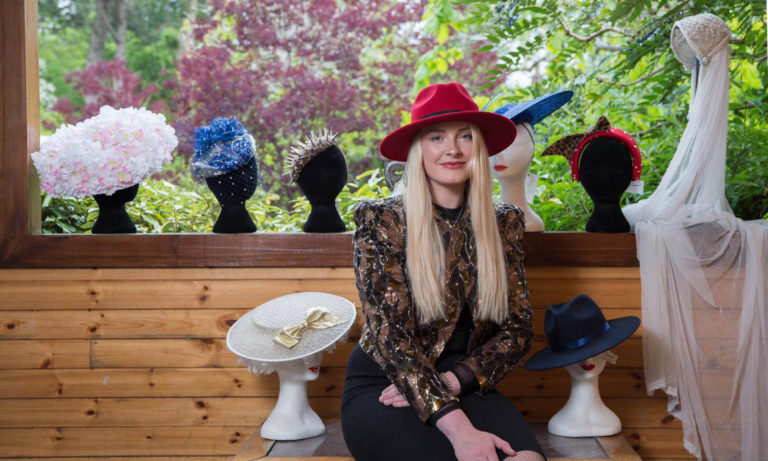
A thrilled Margaret O’Connor from Co Clare was still taking in the news that she had won the 2019 ILDN National Enterprise Awards when Changing Ireland spoke to her.

She really hadn’t expected to win outright, having entered other competitions in which her hopes were dashed.

“It’s really nice to win because I am representing the girls and the boys who are from farming backgrounds and isolated areas who want to do creative things,” she said. “I am just so surprised; it’s nice to be recognised in your own country.”

All of the 17 finalists had inspirational stories, but Margaret’s stood out.

Margaret O'Connor and Minister Regina O'Doherty
Margaret O’Connor, pictured at the ILDN National Enterprise Awards ceremony with Minister for Employment Affairs and Social Protection Regina Doherty. Photo: Allen Meagher.

As people gathered around to congratulate her, she told us how she set up her own company when she went on the Back to Work Enterprise Allowance (BTWEA) scheme.

“Moving home from London was a massive step, coming from the hustle and bustle to rural Ireland. Sometimes, it’s very difficult to take the plunge and, without [Clare Local Development Company], I probably wouldn’t have done it.”

“There was a gap in the market, and Clare Local Development saw that and that’s why they gave me the opportunity to do the Back to Work Scheme,” she said. “If it wasn’t for the scheme, I wouldn’t be here. I’m so grateful for it.”

A designer from birth?

Margaret (33) began her designer career at the tender age of 11 by making little woollen men with tiny hurleys and helmets.

“I was really into Clare hurling,” she said.

As an adult, she spent years studying and working abroad before becoming a success at home. Based in London, she made a name for herself. For instance, she worked with Philip Treacy – also a hat-maker – in preparation for a British royal wedding in 2011.

“I studied in Kensington and Chelsea and got my millinery papers. I really grafted though for a long eight years,” she said.

She was trained by some of the leading lights of the millinery industry, such as Yvette Jelfs, Kristen Scott and Sarah Cant. She recalled “working with Noel Stewart during London Fashion Week doing all the high-end stuff”.

Years earlier, she had studied sculpture and painting, but made a career decision after seeing an exhibition by Philip Treacy: “After that, I had the lust for making hats.”

“I was constantly trying to hone my craft and trying to have my own voice. It’s great working for big designers, but you have to have your own story.”

Through the BTWEA, she opened her own shop, Notions, in Ennis two years ago. She hopes her award will “encourage other young people like me”.

Hatter to the stars

A major milestone in Margaret’s career was when Lady Gaga wore one of her creations to an Isabella Blows exhibition in London. Finbar Furey is also a fan. This happened shortly after a period of setbacks and Margaret truly believes that “sometimes a knock can be good. I think it makes you more determined to prove everyone wrong”.

Did she think she was in the running for the ILDN National Enterprise Award?

“No, because I’ve been to three awards lately and I lost every one of them.” Now, Margaret is shooting for the stars and wants to work with them more.

“Some people have small dreams that turn into big dreams. I was told not to go to art college; that I wasn’t good enough. I want to have my hats in films… Have credits in a movie that wins an Oscar.”

However, she is very conscious of serving a wide audience, and not just the stars. She prices her work as affordably as possible and also rents out headpieces.

Drop into her shop in Ennis and see for yourself.

Are pub hubs the answer to a lack of community spaces?

Communities across Ireland could be in a position to develop a network of 800-plus community innovation hubs around the country by using pubs as the bricks and mortar. These ‘pub hubs’ could operate as pubs by night and community hubs by day.

Pub hubs could provide hot desking space for small businesses, and local community groups could make great use of the facilities. While it’s great when there is a local community centre available, this is often not the case in smaller towns.

As a benchmark, every town and village in Ireland with a Tidy Towns committee has the necessary community drive, cohesion and collective thinking to make this work. And there is barely a village in Ireland without a pub.

So, how could we go about creating 800-850 community innovation hubs in Ireland? Post offices, restaurants, vacant shop units and former church premises could each operate as hubs, but pubs appeal for a number of reasons.

First and foremost, they are usually recognised as community assets and their owners are often searching for fresh ideas. They already have phone lines, internet (in many cases), toilet facilities and insurance, and many can provide food.

Modest grants could help pub owners put the necessary infrastructure – such as projectors, a better broadband connection, electrical points and office-style seating – in place.

With a relatively small investment, pub hubs could easily provide the following services:

  • Centralised call answering and secretarial services;
  • Parcel collection and delivery points;
  • Meeting rooms and showrooms;
  • A fast broadband connection;
  • Community support services;
  • Childcare facilities;
  • Training.

The list goes on.

Publicans do not necessarily need to run the innovation hubs, either. Others could manage the hubs by day on a voluntary or paid basis. To work on a large scale, though, pub hubs would have to appeal to publicans, and the application process should be straightforward.

Alongside local community groups and publicans, other key stakeholders – the network of local enterprise offices (LEOs) and the representative bodies for publicans, for example – would need to get behind the idea. And they would benefit. Pub hubs could provide meeting places in each county for LEOs and others to work in, and run training for multiple local businesses in a central location.

Get started

So that’s the idea, but communities may wonder how to begin. What steps should they take?

Start by looking at all the buildings in your area, not just those that are vacant and not just pubs – every community is different, so your solution may not be the same as someone else’s. Pay particular attention to buildings that aren’t often in use, or that are only in use for particular times during the day or night.

Pub hubs aren’t the first example of this sort of community endeavour, as community shops begin to sprout up around the country. There are less than 10 community shops in Ireland, though, and, while they are a great idea, they need more support at national level. But is this a model that could work for pub hubs?

Of course, there is nothing to stop a community taking a bottom-up approach and showing the rest of us how a pub hub could work. Who will be the first to try?

Pat Kennedy is the owner and head of strategy at digital development company eConcepts and the digital community platform eTownz.

An expanded version of this article offers further suggestions and is available on a Google Doc for comment. Your views are most welcome.

Main photo: Eduardo Fonseca Arraes/Flickr (CC BY-NC-ND 2.0)

Dark clouds of climate crisis DO have a silver lining

At least in Ireland.

Here, after witnessing some years of growth in the community sector in the early 2000s (followed by almost a decade of cuts), it is a joy to read in a government report about the need once again for community leadership, engagement, initiative and resilience.

Resources are going to be invested in community outreach as one of the many actions in the Climate Action Plan. For a time, outreach was almost a dirty word.

Government funding for community development may even turn full circle. This time, we could emerge stronger – as Ireland reaches for a low-carbon future – with technology in our hands that can be turned to community advantage. Living locally is the best way to live anyway, connecting with the folk around you and looking out for each other.

Just ask Margaret O’Connor from Co Clare who returned from London to build a career here instead. Her success in the ILDN National Enterprise Awards and the success of the thousands of small local businesses she represented is very important now in an era where we seek to build resilient local communities.

Speaking of London, if Thatcherism threatened to slowly turn us into individualist zombies, climate change promises to bring us back together as communities.

Since it was established in 2017, the Department of Rural and Community Development has been working to strengthen communities, to support town and village development, to encourage local innovation and to protect vulnerable urban and rural communities. It is the smallest government department in terms of funding, but it is most fortunate for Ireland that it was set up given the tasks ahead of us due to climate change.

Now, give it wings!

Of course, with hindsight, it is also a pity that governments have shut down good projects since 2002. We’ve a lot of capacity building to catch up on.

It isn’t easy. Many community groups are focused on supporting people day to day. All are pressed for time. Changes that cost money take longer (including moving from the plastic sleeves we use to deliver this magazine to many readers). Yet, we know what is at stake.

Sometimes, though, what is simple is true. For example, since we want to empower communities and make them attractive places to live and work in, we should consider ‘pub hubs’.

Digihubs in pubs in communities across the country could work. The less we commute, the less damage we do to the environment, but there is so much more added value. Picture thousands more people using pub hubs on the extended and expanded Back to Work Enterprise Allowance scheme, and life restored to town and village centres.

Climate change may be just what it takes to bring us back to basics, back to our communities and back to life.

See you in a pub hub!

Interested in reading more about the state of Ireland’s community development sector? Check out our latest issue.


Main photo: Andrew Ruiz/Unsplash

Ceangal: Can social enterprises help asylum seekers integrate?

0

As the number of people from Africa and the Middle East seeking asylum and refugee status throughout Europe continues to grow, efforts must be made by communities and operators in their new host countries to ensure they are not ignored, excluded or left to languish without any supports.

These efforts can be as wide-reaching as increasing asylum seekers’ weekly allowance or as (seemingly) small as offering education and employment coaching in a bid to improve employability.

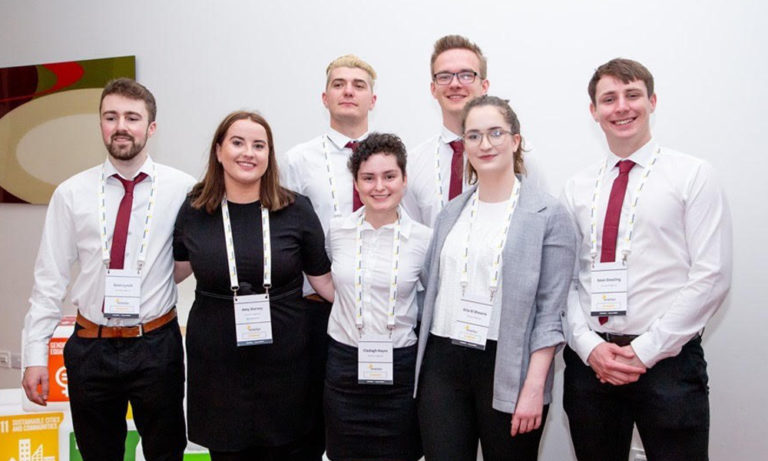
Ceangal, a student-run social enterprise that’s part of the Enactus 2018-2019 cohort, has opted for the latter. Here, Sean Lynch speaks to Kirsty Tobin – in an interview conducted in collaboration with Enactus – to tell her more about the project he, Clodagh Hayes, Greta O’Neill and Elvis Seporaitis run from University College Cork (UCC).

Can you tell us about your project?

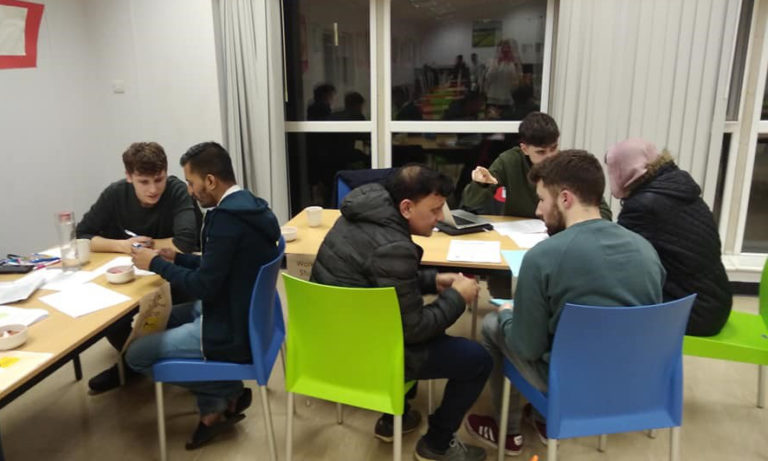
Ceangal aims to help asylum seekers obtain employment in Ireland. We do this by providing residents in direct provision centres with the skills necessary for work. Last year, we ran an employment workshop in the dining hall of Kinsale Road Accommodation Centre, Cork. The workshop consisted of two stands. The first provided information in relation to CV advice and interview skills, and the other informed the residents on their rights to work and about scholarship opportunities available to them in Cork.

For the upcoming year, we will collaborate with local corporations to provide more professional, skills-oriented workshops to people living in direct provision. From a corporate social responsibility and value-added perspective this will be hugely beneficial to the firms. The value of diversity in the workforce is becoming abundantly clear. Look no further than the wave of corporate support for the LGBTQ community. The opportunities to engage with these companies and the skills obtained will be fantastic for asylum seekers in centres such as that at Kinsale Road.

What social need does your project address?

It addresses the need for quality education and reduces the inequalities that asylum seekers face in Ireland.

Work is an effective way of integrating into a community. However, employers are unsure of the value asylum seekers can offer to their firms, and a proportion of the Irish population are unsure of how to welcome them. Consequently, asylum seekers experience great difficulty in finding employment and, thus, assimilating into Irish society.

The employment workshops will equip them with the experience and skills to present in any interview and successfully gain employment here in Ireland.

What first stirred your interest in this area?

The topic of direct provision is unavoidable. It is all over the media. So, naturally, the topic of asylum seekers in Ireland sprang to mind when examining pressing social needs.

As well as that, I spent my third year of college in Strasbourg, France. This gave me insight into the experience of having to assimilate in another country with a different culture, education system and language.

It wasn’t always easy and the language posed a particular barrier to integration with the locals. This aspect of emigration, however small, was something I could relate to. As a team, we agreed that employment is essential for asylum seekers to learn the language and form relationships with local residents, allowing them to build a life here.

What prompted you or inspired you to get involved with Enactus?

Entrepreneurship has always been an area that fascinated me. Starting your own business is undeniably a difficult path but, ultimately, it’s the most fruitful. It involves creativity, bravery and initiative.

Social entrepreneurship, however, wasn’t something I had even thought about until I came across an advertisement for an Enactus UCC event on Facebook. I attended the event and immediately felt that this was something I’d love to be involved in. Not only were students starting revenue-generating enterprises, but they were starting ones that improved people’s lives.

What have you learned about social enterprise and community-focused entrepreneurship since starting this project?

I know this sounds clichéd, but one thing I’ve learned is that the most important aspect of any social enterprise is the people. More specifically, the people it helps.

Enactus requires that its students conduct needs assessments before piloting any project, but for us, it felt as if needs assessments were being carried out every week even after launch!

Our idea of what asylum seekers need can be very different from what they actually need. Moreover, the needs of people change all the time. “Give a man a fish and you feed him for a day. Teach a man to fish and you feed him for a lifetime…” So goes the old adage. But what if he doesn’t like fish?

Why do you think social enterprise matters?

Social enterprise is vital in solving social problems in the world today. Charities and non-profits undoubtedly perform fantastic work and possess some of the brightest and most selfless individuals in society, but social entrepreneurship engages a different type of personality. It allows for those who possess the hunger to innovate and create a sustainable business model to channel these skills in order to build a better world for everyone.

Mark Zuckerberg, Jeff Bezos, and Alice Walton have established the most successful businesses in the world through hard work, incredible innovation and remarkable leadership. Through their inventions, the world is now a more interconnected place, but have they actually made the world a better place? That is very much up for debate, especially when you consider the effects of globalisation on developing countries.

Do you think you’ll work to develop social enterprises after graduation, or even continue to grow your Enactus project?

100%. I have just graduated from UCC and will be starting work this summer, but social entrepreneurship is something which will stay with me after I leave.

As I mentioned above, the idea of generating an idea and building a business appeals to me greatly. My experience with Enactus has given me the bug for social entrepreneurship and I will continue to brainstorm and jot down any ideas I think of, as I have done this year. I strongly feel that there is greater support for social enterprises in Ireland today, which means it will become easier to act upon these ideas.

As for Ceangal, it will remain in the steady hands of students and staff at Enactus UCC. The funding opportunities and guidance available to projects, especially ones in their infancy, through the Enactus framework is really incredible. I am excited to see where students take the project next!

What advice would you give to students considering developing an Enactus project in the future?

Building a team with the right people is key. By this, I mean people who are involved in the project for the right reasons and who are eager to add value to it. It is then important to delegate the project work across different roles. This way, nobody is burdened with all the responsibility.

Avail of resources available to you. There is no better time to start a business than as a student. Talk to lecturers, talk to local organisations and regularly meet with your faculty advisors. For example, an outsider coming into UCC asking for legal counsel on the rights of asylum seekers would be charged consultancy fees. A student can avail of this for free. Make use of this resource.

Turn up. This goes for anything in life, whether academics, work or sport. You can only improve if you turn up every day. Attend as many Enactus events as you can, go to your Enactus meetings every week, and speak to as many people as possible about your project. The more time you put into your project, and the more advice you get on it, the better it will be.

Interested in reading more about the state of Ireland’s community development sector? Check out our latest issue.
Can social enterprise help combat workplace discrimination?

0

Think about all the employees you meet in offices, shops, bars and restaurants. To the best of your knowledge, how many of them have an intellectual disability? Do you think that number should be higher?

That’s the thought process that led Amy Dorney to establishing CMe Grow, an Enactus project based out of University College Cork (UCC) and run by students Jack Canning, Amy Dorney, Sean Dowling, Ciara Duffy-Niblock and Michael O Leary.

Here, Amy speaks to Kirsty Tobin – in an interview conducted in collaboration with Enactus – to tell us how the project got started.

Can you tell us about your project?

Our project is called CMe Grow. The aim of the project is to empower people with intellectual disabilities with the necessary skills to gain employment. This could include providing CV, job application and interview workshops, or educating them on workplace norms. Our end goal would be to empower someone with an intellectual disability (ID) to train employers on best practice when employing someone with an ID.

What social need does your project address?

It will help those who may be feeling socially isolated to integrate or reintegrate into the workforce, therefore reducing exclusion and boosting morale. It may also educate employers about the qualities and skills that these people may possess and could bring to their business.

What first stirred your interest in this area? 

In my previous job, there was a man who had Down syndrome working in the café next door. He was an amazing worker and always brought a smile to everyone he encountered each day. It got me thinking about why we don’t see this often enough, and I wondered if there was anything we could do as students to bridge this gap between employers and people who have some form of disability.

What prompted you or inspired you to get involved with Enactus?

I didn’t know much about Enactus, and I initially got involved through a friend on a different project. I loved what Enactus do and have stayed heavily involved with Enactus UCC for the past three years.

What have you learned about social enterprise and community-focused entrepreneurship since starting this project?

I have learned that social enterprise is really important for communities and that real change can be made with hard work. But it is definitely hard work – there are barriers and hurdles to overcome but, with great passion, it is possible.

Why do you think social enterprise matters?

Because it can teach people about issues they might not have known much about. It is a chance for people to make real changes in their community and is so rewarding for everyone involved.

Do you think you’ll work to develop social enterprises after graduation, or even continue to grow your Enactus project?

I have recently finished my degree and would love to find a way to stay involved with social entrepreneurship. Perhaps one day I will start my own social enterprise. CMe Grow will stay with Enactus UCC but it would be great to stay involved with the project in whatever way I can.

What advice would you give to students considering developing an Enactus project in the future?

My advice would be to make sure you network and make valuable connections who will be able to give you advice on your project. Conduct a thorough needs assessment and make sure your project appropriately addresses the needs of the group you are hoping to impact. Work hard and do not be put off by any setbacks that might occur; keep the passion and keep trying.

Interested in reading more about the state of Ireland’s community development sector? Check out our latest issue.

‘Social enterprise solves the problems that otherwise go unsolved’

0

According to the most recent Central Statistics Office (CSO) census figures (2016), unemployment rates for those with a disability are much higher than they are among the rest of the work-age population – at 26.3%, unemployment among disabled people was more than double that of the population as a whole (12.9%).

Not only that, but education levels are consistently lower as well: 13.7% of 15 to 50 year olds with a disability have no more than a primary-level education, while just 4.2% of the general population is in the same boat.

Identifying the root causes of these discrepancies is beyond the remit of the CSO, and it is impossible to speculate accurately, but it’s not outside the realms of possibility that much of this is related to attitudes within schools and businesses towards those with disabilities.

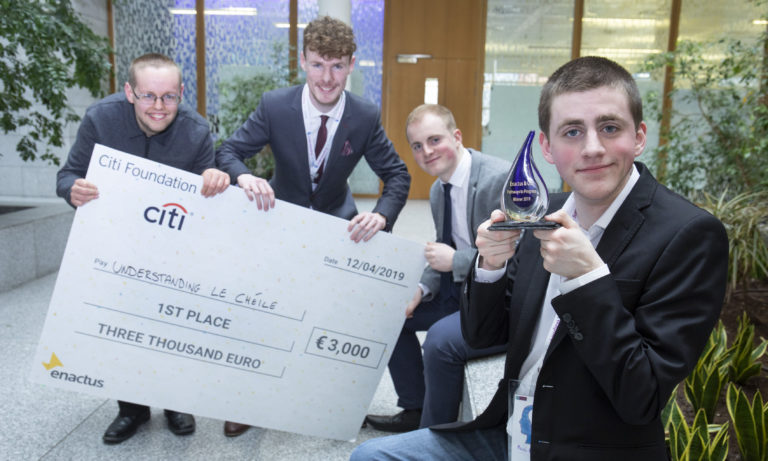
Enter Understanding Le Chéile, an NUI Galway project in the Enactus 2018-2019 cohort. The team – Paul Byrne, Sean Croke, Cullen Gibbons and Ronan Lavin – have developed a social enterprise that aims to create a better awareness of autism among students and businesses.

Here, Ronan talks all things social enterprise with Kirsty Tobin, in an interview conducted in collaboration with Enactus.

Can you tell us about your project?

Understanding Le Chéile is a social enterprise that conducts Autism Awareness workshops, with the aim of teaching a fundamental awareness of autism to second-level students and businesses around Ireland.

What social need does your project address?

Promoting Autism awareness and harnessing the rights of persons with disabilities.

What first stirred your interest in this area?

Meeting Paul, one of the autistic people we work with, really got me interested in creating a world with a greater understanding of autism and how those on the autism spectrum can be of great benefit to society.

What prompted you or inspired you to get involved with Enactus?

I wanted to join a society that does some good in the world while also fuelling my passion for business, and I found that Enactus was a perfect blend of both.

What have you learned about social enterprise and community-focused entrepreneurship since starting this project?

I have learned a lot, personally, since starting this project. There can be many lows, as there are when creating any business, but I found that the reward of creating a world that Paul and Cullen (our autistic facilitators) felt more accepted in was worth all the hard work we all went through.

Why do you think social enterprise matters?

Because it helps to solve problems in our society that would otherwise go unsolved.

Do you think you’ll work to develop social enterprises after graduation, or even continue to grow your Enactus project?

I would like to think that Understanding Le Chéile would grow into a social enterprise that I could help run, and that it could become successful in creating a world where people on the autism spectrum are better understood by society.

What advice would you give to students considering developing an Enactus project in the future?

Do it! The best thing I have ever done was join Enactus. Not only have I made lifelong friends, but I would like to think I’ve helped to make the world a little bit better to live in.

Interested in reading more about the state of Ireland’s community development sector? Check out our latest issue.
Social enterprise: ‘If you have the ability to change the world, you should’

0

Every year, third-level students around Ireland sign up to Enactus – a global social enterprise force – in the hopes of empowering people and making social change. That change takes the form of social enterprises designed to make an impact on communities throughout Ireland and around the world.

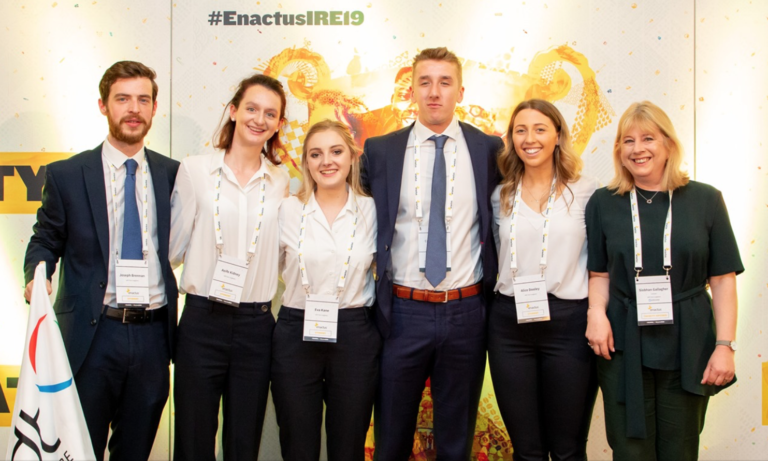
Eva Kane, one of the members of the 2018-2019 cohort’s YUP team (made up of students from IADT, Dún Laoghaire’s Institute of Art, Design and Technology), gave us some insight into the project she, Joseph Brennan, Alice Dooley, Aoife Kidney and Cronan Ryan have created.

Here, she speaks to Kirsty Tobin in an interview conducted in collaboration with Enactus.

Can you tell us about your project?

YUP teaches entrepreneurship skills to young people between the ages of 11 and 16 from immigrant and refugee communities.

What social need does your project address?

This project was started by a student from Uganda who saw a need to introduce the programme to boost confidence and encourage integration among the young people in her community. The main social needs addressed are education, equal opportunities and integration.

What first stirred your interest in this area?

What inspired me to get involved in the project was the passion founding member Marie has for the project.

What prompted you or inspired you to get involved with Enactus?

I saw the amazing work other Enactus projects were doing and decided I wanted to be a part of it. I believe that if you have the skills or abilities to help improve the world in some way, then you definitely should.

What have you learned about social enterprise and community-focused entrepreneurship since starting this project?

We’ve learned that there are many people who are willing to share their advice and time in order to help us achieve our goals when it’s for a good cause. It creates a real sense of community.

Why do you think social enterprise matters?

Social enterprise is important as it gives people access to support and services that they wouldn’t have access to otherwise. It allows people with access to resources to help in ways that not everyone can.

Do you think you’ll work to develop social enterprises after graduation, or even continue to grow your Enactus project?

Yes, I would love to help grow this project after graduation and will be on hand to support the incoming team. I’d also like to start some new social enterprise projects.

What advice would you give to students considering developing an Enactus project in the future?

My advice to others is to connect with the people who were giving your team support last year and to just go for it wholeheartedly. You have nothing to lose with social enterprise and you never know what your project might end up turning into. If you can help even just one person, then you’ve made a difference.

Interested in reading more about the state of Ireland’s community development sector? Check out our latest issue.

‘When social enterprise thrives, society thrives too’

0

The stereotypical college student doesn’t care about much more than new friends, new freedoms, new parties and attending just enough lectures to make it through each year. Global non-profit Enactus seeks to subvert those expectations by empowering third-level students to become socially conscious leaders, and enacting positive social change through social entrepreneurship models along the way.

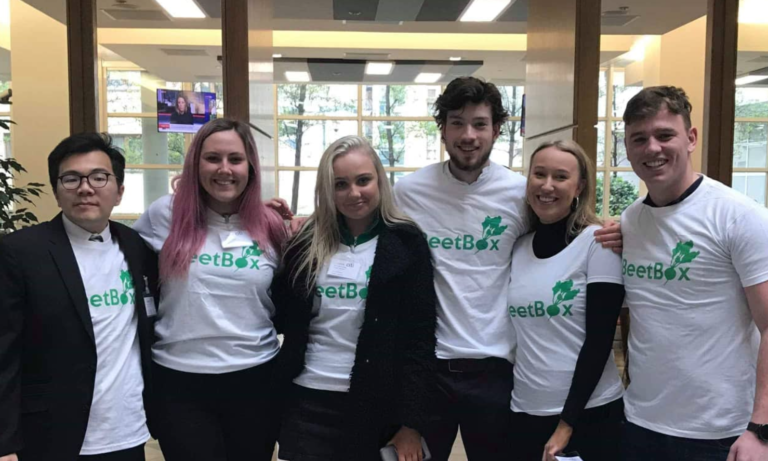
BeetBox is one of the projects in Enactus’s 2018–2019 cohort, driven by team members (and Trinity College Dublin students) Grace Deeny, Eve Maguire, Rudy O’Leary, Charlie Quirke, Holly Simpson and Dexter Yeung.

Here, Eve speaks to Kirsty Tobin – in an interview conducted in collaboration with Enactus – and gives us a detailed look at the work of BeetBox.

Can you tell us about your project?

BeetBox is a developmental programme that seeks to empower young people from disadvantaged areas of Dublin by equipping them with the tools and skills they need to lead a healthier life, while simultaneously expanding their knowledge of the importance of enterprise and business management.

The project is made up of two stages: education, and development of practical skills.

We wish to educate young people by providing workshops with guest speakers on a range of topics surrounding healthy eating and environmental sustainability.

We hope to facilitate the growing of fruit, vegetables and herbs to reduce the carbon footprint of the food we eat, and to empower and equip these young people with skills that they can apply in everyday life.

What social need does your project address?

According to the European Food Safety Authority [and detailed in a 2009 report], Irish people consume just 225g of fruit and vegetables on average per person per day. That’s less than half the national recommended amount of 500g.

What’s more shocking still is the substantial body of research highlighting the fact that health inequalities are attributable to differences in food and nutrient intakes across the socio-economic spectrum.

We at BeetBox are ashamed that one’s level of income can so starkly and negatively impact the basic right to a healthy life. BeetBox was set up to combat this inequality and provide disadvantaged young people with the tools they need to live a healthy and environmentally sustainable life, while also empowering social and professional development.

What first stirred your interest in this area?

I loved the idea of getting involved with something completely new that I had no previous knowledge of or dealings with. Going into my second year in college, I wanted to engage with something that would put me out of my comfort zone and force me to think outside the box. With BeetBox, this seemed possible.

Having no previous knowledge of gardening, and having little understanding of sustainable and eco-friendly living, I was forced to research and familiarise myself with what these things involve.

I also loved the idea of taking something as simple as gardening and giving it a new lease of life for young people who live in the city and may not (like me) have any experience with growing fruit and vegetables.

What prompted you or inspired you to get involved with Enactus?

As I began my second year as a law student in Trinity, I soon realised that, in my first year at college, I had been so concerned with trying to get used to being in a different city and studying something completely new that I was yet to properly get involved in college life.

My older sister had been involved with Enactus during her time in college, and watching her take part in pitching competitions and Enactus events – and just seeing how many friends she had made throughout her time with Enactus – really inspired me to get involved.

I went to a meeting during Freshers’ Week where I met a load of committee members who were so encouraging and it felt like a really exciting opportunity to take part in a really worthwhile society, develop interpersonal and important entrepreneurial skills and to make friends outside of my course and halls.

What have you learned about social enterprise and community-focused entrepreneurship since starting this project?

Thanks to Enactus and the opportunities I have been given as a result of my participation in BeetBox throughout the year, I have been able to develop skills and qualities that will prove invaluable in the future.

As a law student, I do not normally have many opportunities where I am forced to think entrepreneurially or with a business mindset and, as a result of my engagement with this project, I have had to think outside the box and take the initiative to try to make the project work even where it might seem impossible.

Thanks to Enactus and the other projects we have engaged with, I have grown to understand that often the most important first step with a successful social enterprise is to start locally and think logically. I have realised that making connections, asking for advice and relying on others to help when you may need it is key to making a social enterprise or any community-focused project work.

If you are willing to put yourself out there and ask for help or advice, people will respond!

Why do you think social enterprise matters?

To make the modern world work, we cannot disconnect business and enterprise from the real world and what it needs. I think social enterprise is incredibly important. It helps tackle social problems and support communities, while simultaneously generating revenue and encouraging entrepreneurial action.

When social enterprises thrive, society thrives too.

Do you think you’ll work to develop social enterprises after graduation, or even continue to grow your Enactus project?

Having spent the year working with this Enactus project, and seeing other projects around me grow and flourish, I have been inspired. I will continue to work with Enactus next year and hopefully engage further with the project by taking on a new intake of students to help bring forward the programme.

Although my chosen career path may not provide many opportunities to develop social enterprises per se in the future, I’m confident that the skills and qualities I have developed as a result of working with this project will continue to grow and be of use in my future path.

What advice would you give to students considering developing an Enactus project in the future?

Be confident and don’t be afraid to ask for help.

Enactus provides so many amazing opportunities to develop ideas, meet other like-minded students and engage in entrepreneurial action. It is definitely not easy to get a project up and running, but if you surround yourself with a committed, enthusiastic and hard-working team it will be an amazing experience. Give it your all!

Interested in reading more about the state of Ireland’s community development sector? Check out our latest issue.
Helping Hands: Communities out in force for funding advice

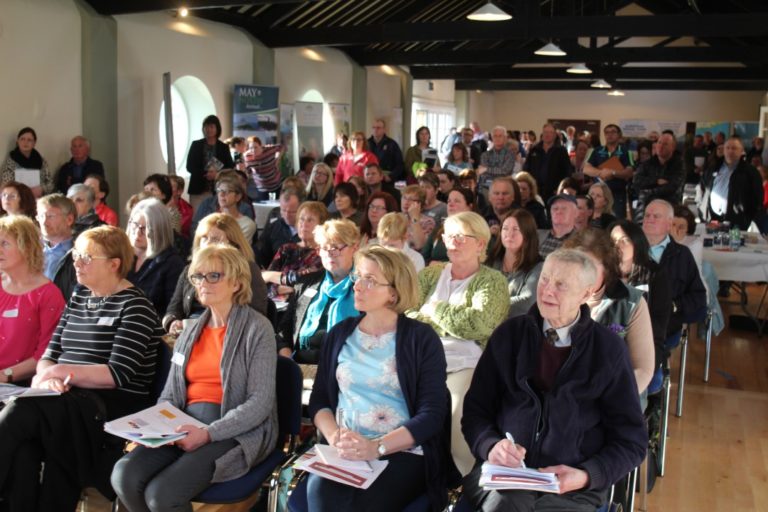
During April and May, six Helping Hands information sessions were held to give tips to volunteers seeking funds for their local community projects. The first was held in Ballina, Co Mayo, on 25 April.

Minister for Rural and Community Development (and Mayo TD) Michael Ring has often expressed his exasperation at the paperwork involved in securing funding. He was on hand to launch the Ballina event.

Minister Ring pictured at Ballina event
Minister Michael Ring pictured at the Helping Hands event. Photo: Allen Meagher.

The events were aimed at community groups that have previously had no success or limited success applying for funding, but all were welcome to attend.

Sessions gave advice on how to make a better application and how to identify local supports that community groups can draw on, including funds people might not know existed. Attendees were also able to meet key staff, make contacts and engage in one-on-one discussions.

The five other events took place in counties Donegal, Cork, Limerick, Tullamore and Coolock. They were run by the Department of Rural and Community Development, Pobal, local authorities, the Irish Local Development Network and local development companies.

If you weren’t fortunate enough to attend, Helping Hands guides are available for download here and here.

Some volunteers still chasing funding after 40 years

If you could shoot 40 years into the future, would you meet the same people volunteering as you do now? Most likely.

Would they still be wondering where to get funding to keep the show on the road? Yes.

My family moved to Ballina around the time the pope visited Ireland, in 1979. I lived there as a kid for two years and loved it. I was in the Scouts and played tennis and rugby. (Thanks, of course, to the adults who volunteered in these clubs and groups.)

Benny Walkin
Benny Walkin pictured at an event celebrating his 48 years with the Scouts.

On 25 April 2019, as I strolled into Helping Hands, I didn’t think I’d make connections from way back in my youth.

I met a Scout leader going in.

“Did you have Benny Walkin?” he asked.

“I did. He’s hardly still involved?” I said.

“He is. Still going strong.”

I was astonished. That meant that Benny had given over 40 years of volunteering to the Scouts.

Inside, I met Vincent Frawley, who had come to live in Ballina in 1978, a year before my family moved there. I remember taking tennis lessons one summer. Vincent may well have been one of my coaches. He’s still involved.

From 1979 to 1981, we liked to drive out to Lacken to see the unspoiled beauty and play on the beach.

A woman from Lacken had driven in – on her one night off from being her husband’s carer – to pick up tips. She’s been volunteering for 25 years with Lacken Community Care and other groups. Over 60% of the population in her area now consists of older people, and they need to find out what grants are there to support their community.

The draw of superb information evenings such as the one in Ballina is that they connect fantastic groups with grant schemes they might not otherwise know about. They aim to help people to identify local supports that community groups can draw upon.

Just one of many tips given: “Don’t lower your chances by using old data when your population might have grown. Use the latest CSO figures.”

Interested in reading more about the state of Ireland’s community development sector? Check out our latest issue.
Sample Sub Lead Post

Lorem Ipsum is simply dummy text of the printing and typesetting industry. Lorem Ipsum has been the industry’s standard dummy text ever since the 1500s, when an unknown printer took a galley of type and scrambled it to make a type specimen book. It has survived not only five centuries, but also the leap into electronic typesetting, remaining essentially unchanged. It was popularised in the 1960s with the release of Letraset sheets containing Lorem Ipsum passages, and more recently with desktop publishing software like Aldus PageMaker including versions of Lorem Ipsum.

Lorem Ipsum is simply dummy text of the printing and typesetting industry. Lorem Ipsum has been the industry’s standard dummy text ever since the 1500s, when an unknown printer took a galley of type and scrambled it to make a type specimen book. It has survived not only five centuries, but also the leap into electronic typesetting, remaining essentially unchanged. It was popularised in the 1960s with the release of Letraset sheets containing Lorem Ipsum passages, and more recently with desktop publishing software like Aldus PageMaker including versions of Lorem Ipsum.

Lorem Ipsum is simply dummy text of the printing and typesetting industry. Lorem Ipsum has been the industry’s standard dummy text ever since the 1500s, when an unknown printer took a galley of type and scrambled it to make a type specimen book. It has survived not only five centuries, but also the leap into electronic typesetting, remaining essentially unchanged. It was popularised in the 1960s with the release of Letraset sheets containing Lorem Ipsum passages, and more recently with desktop publishing software like Aldus PageMaker including versions of Lorem Ipsum.

Lorem Ipsum is simply dummy text of the printing and typesetting industry. Lorem Ipsum has been the industry’s standard dummy text ever since the 1500s, when an unknown printer took a galley of type and scrambled it to make a type specimen book. It has survived not only five centuries, but also the leap into electronic typesetting, remaining essentially unchanged. It was popularised in the 1960s with the release of Letraset sheets containing Lorem Ipsum passages, and more recently with desktop publishing software like Aldus PageMaker including versions of Lorem Ipsum.

Sample Lead Post

Lorem Ipsum is simply dummy text of the printing and typesetting industry. Lorem Ipsum has been the industry’s standard dummy text ever since the 1500s, when an unknown printer took a galley of type and scrambled it to make a type specimen book. It has survived not only five centuries, but also the leap into electronic typesetting, remaining essentially unchanged. It was popularised in the 1960s with the release of Letraset sheets containing Lorem Ipsum passages, and more recently with desktop publishing software like Aldus PageMaker including versions of Lorem Ipsum.

Lorem Ipsum is simply dummy text of the printing and typesetting industry. Lorem Ipsum has been the industry’s standard dummy text ever since the 1500s, when an unknown printer took a galley of type and scrambled it to make a type specimen book. It has survived not only five centuries, but also the leap into electronic typesetting, remaining essentially unchanged. It was popularised in the 1960s with the release of Letraset sheets containing Lorem Ipsum passages, and more recently with desktop publishing software like Aldus PageMaker including versions of Lorem Ipsum.

Lorem Ipsum is simply dummy text of the printing and typesetting industry. Lorem Ipsum has been the industry’s standard dummy text ever since the 1500s, when an unknown printer took a galley of type and scrambled it to make a type specimen book. It has survived not only five centuries, but also the leap into electronic typesetting, remaining essentially unchanged. It was popularised in the 1960s with the release of Letraset sheets containing Lorem Ipsum passages, and more recently with desktop publishing software like Aldus PageMaker including versions of Lorem Ipsum.

Lorem Ipsum is simply dummy text of the printing and typesetting industry. Lorem Ipsum has been the industry’s standard dummy text ever since the 1500s, when an unknown printer took a galley of type and scrambled it to make a type specimen book. It has survived not only five centuries, but also the leap into electronic typesetting, remaining essentially unchanged. It was popularised in the 1960s with the release of Letraset sheets containing Lorem Ipsum passages, and more recently with desktop publishing software like Aldus PageMaker including versions of Lorem Ipsum.

SICAP report calls for bottom-up approach to evaluation

Valuing community development through the social inclusion programme (SICAP) 2015–2017: Toward a framework for evaluation’, a new 108-page report on SICAP released in February, sheds light on whether community development can be evaluated and aims to determine how that evaluation could feasibly be carried out.

Based on extensive research and a series of consultation workshops, the Economic and Social Research Institute (ESRI) report concludes that evaluation of SICAP-supported initiatives is challenging not least because most communities draw on multiple funding sources, making it difficult to isolate impact from one particular income stream.

Nevertheless, the report detailed “a strong willingness on the part of [local community workers], members of [local community groups] and other key policy stakeholders to implement methods that are appropriate both for the interests of marginalised communities and groups, and for the needs of the state and other funders”.

A number of solutions were suggested:

• generating a framework that would focus on the capacity of local groups to influence change on a community level;

• the introduction of self-assessment through a distance-travelled tool similar to that used by Pobal;

• drawing good practice approaches from analysis of thematic reports, and focusing on the specifics impacts of funding on particular target groups.

According to the report, “such qualitative approaches allow for a more systematic and in-depth analysis of the impact of SICAP on community-level outcomes”.

The report was funded by the Department of Rural and Community Development and carried out by the ESRI. It was written by Adele Whelan, Seamus McGuinness and Judith Delaney.

Interested in reading more about the state of Ireland’s community development sector? Check out our latest issue.
Main photo: Pexels/Pixabay

Publication of new National Social Enterprise Policy welcomed

0

On Thursday 18 July, Minister for Rural and Community Development Michael Ring, TD, launched the National Social Enterprise Policy for Ireland, the Irish government’s first-ever policy document focused on social enterprise.

The policy outlines three key objectives: building awareness of social enterprise, growing and strengthening social enterprise, and achieving better policy alignment. These will be put into action over the 2019–2022 period.

At the launch, Minister Ring said the policy “will enable social enterprises to grow in scale, support jobs, and make a positive impact on individuals and communities in both rural and urban areas”.

Since the release of the policy document, the Irish Local Development Network (ILDN) has expressed support for it. Chairperson of the ILDN’s working group on social economy, Pádraig Casey, congratulated the Department of Rural and Community Development(DRCD) for completing the policy, outlining precisely why such a “supportive framework” was welcome:

“Ireland is highly reliant on social enterprise, yet has the potential to create many more services and jobs in the sector. According to a 2013 Forfás report, Ireland’s social enterprise sector supports over 25,000 jobs, but has the potential to create at least a further 65,000. Before now, a framework has been lacking to drive this potential.”

The publication details a series of 26 policy measures that will act as checks and balances on the new strategy, including: providing social enterprises with tailored training in areas such as business planning, governance and digital innovation; identifying and cataloguing various funding schemes at national and EU level, and making this information widely available; and establishing a National Social Enterprise Policy Implementation Group, led by the DRCD and featuring representatives of relevant government departments, public bodies and social enterprise stakeholders.

Speaking at the launch, Paul O’Sullivan, CEO of Clann Credo, said that “…local development companies, working in collaboration with national support organisations, are ideally placed to deliver support for local social enterprise development”.

This was echoed by Casey, who added, “with 40 staff dedicated to assist social enterprises across the country, local development companies will play a central role in ensuring the success of the new policy”.

Thursday’s launch event had impressive social enterprise credentials. It was held in the Speedpak facility in Coolock [disclaimer: Speedpak is a social enterprise that packages Changing Ireland, and we’re very happy customers] and catered by Mugshot, a social enterprise set up to train ex-offenders as baristas and provide them with employment after release.

Interested in reading more about the state of Ireland’s community development sector? Check out our latest issue.
Main photoNiwat/Rawpixel

Taylor Richardson: Reaching for the stars and paying it forward

Taylor Richardson is one of the US’s best-known teenage activists and (hopefully) future astronaut. The 16-year-old high school student from Jacksonville, Florida, has become an advocate for girls in STEM (science, technology, engineering and mathematics) and a force to be reckoned with within her community.

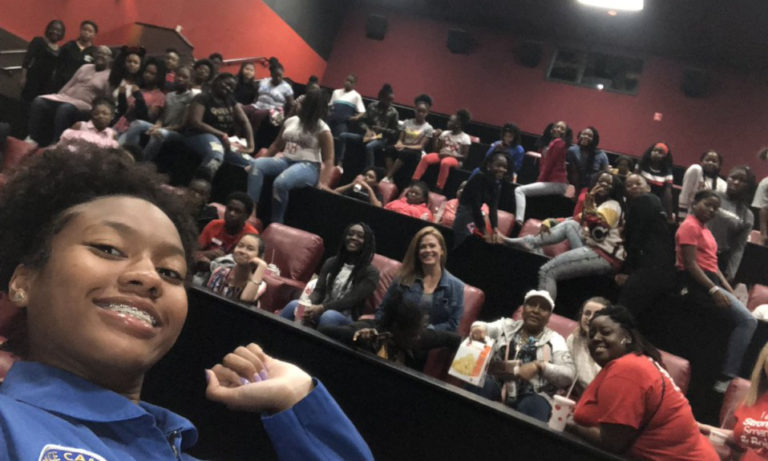
Taylor made international headlines in 2016 when she raised $18,000 to send girls in her hometown to see the Katherine Johnson biopic Hidden Figures, which tells the story of three brilliant black women at NASA working to help launch an astronaut into space.

In 2018, she topped this feat by raising $100,000 to enable girls to see A Wrinkle in Time, which was based on a science-fiction fantasy novel of the same name. It features a young STEM enthusiast as its main protagonist, a mainly female cast, and many women of colour.

Explaining why she pursued these campaigns, Taylor told Good Morning America last year: “I wanted all girls, especially girls of colour, to know they can be whatever they want to be when they grow up”.

Here, she speaks to Changing Ireland about her passion, and what inspires her to be an active community member.

You’ve aspired to be an astronaut, scientist and engineer from a young age. What sparked your interest and got you started on this path?

I was always fascinated by space and by the size of the sky. Then, after reading [NASA astronaut] Dr Mae Jemison’s autobiography [Find Where the Wind Goes] about being the first African American woman to go to space, I realised that I could also be an astronaut if I put my mind to it.

So I raised money to attend space camps and kept taking classes and reading about new discoveries in space, technology and science to stay informed.

STEM – and space travel – are historically white- and male-dominated fields. What has pursuing knowledge and experience in these areas been like for you as a young woman of colour?

Honestly, it’s been tough. Adults sometimes try to discourage me because I’m young, or try to push me toward an ‘easier’ path because they had a hard time reaching their goals.

But I’m determined to travel into space even if there are not many role models that look like me in the field – partly because I’ve found lots of supporters around the country and the world who feel that, with the right push, I can reach my goals and they and their children can too.

I saw this when I started fundraising to pay for screenings for the movie Hidden Figures.

After I saw an early screening at the White House with First Lady Michelle Obama, I knew I had to do something to help young girls learn about and see the film. When the campaign spread around the world, I knew that others wanted to hear and see more about the contributions of women and people of colour in STEM and space travel.

It showed me that one person can create real change in society.

How can a career in STEM, or even an understanding of it, make a difference in someone’s life and future?

If parents and teachers explained to kids how the elements that make up STEM play such a big part in our everyday lives, more would be interested in the field.

The world needs doctors, but there are so many other fields that an understanding of STEM can lead to.

Most of us carry a cellphone in our pocket, ride in a car or bus daily, watch TV, listen to music on the radio or stream it, but never think about how they are STEM-related. If students knew at a very young age how STEM was used in the things they do every day, more would be interested and would start tinkering with inventions and coding before high school.

Why is it important for girls and young women to learn more about STEM and seek more STEM-related knowledge?

So they understand that there are no limits to what they can do, and that maths and science are not just for boys.

STEM allows for people to solve problems, and make things easier and more efficient. Because girls and young women have different experiences than boys and young men, the apps, games and tech ideas they create would be different than those created by boys. They would be super useful and unique to the experiences of their creators.

In your opinion, why should the STEM sector seek people from a wide variety of ethnicities, genders and backgrounds?

Diversity of ideas, experiences, genders and backgrounds helps to create the best products.

If everyone in the STEM sector thought the same, was from the same place and even looked the same, there would be so many problems that couldn’t be addressed properly because the problems wouldn’t be fully understood.

If all the engineers working on a project are from Asia, for example, it’s going to be hard for them to understand issues that only come up near the equator.

They say experience is the best teacher, and it also provides the best perspective when it comes to solving a wide variety of problems, which is what STEM does.

How do you think empowering girls and young women can have an impact in the broader community?

The more support girls are given, the faster their confidence will grow. When that happens, their voices get stronger, louder and more focused, and they have less fear about sharing their ideas, which might change the world.

The world has lots of problems that need to be fixed, so empowering girls and young women can only help problems get solved faster.

Your advocacy goes beyond STEM and beyond fighting for young women… You’ve also led the successful Hidden Figures and A Wrinkle in Time crowdfunding efforts and others to create scholarships for Space Camp, as well as leading a book drive.

What inspires you to continue to work to support communities?

My mom and grandma taught me the importance of community and helping others.

When my mother didn’t have the extra money to send me to space camp, my community pitched in and made it happen.

I just want to pay that back to others when I can, because sometimes you only need one person to believe in you and your life changes forever.

What would you like to see community organisations doing better to support girls and young women to foster an interest in STEM?

Equal support would be nice… Give us the same chance to make mistakes and learn that the boys and young men get.

I would like to have organisations asking our opinions about what is needed, and putting [pictures of girls] on the flyers so we know we’re included.

Understand that we don’t have to be treated differently. We just want to be treated fairly!

Who won top prize at the 2019 Foróige Youth Citizenship Awards?

0

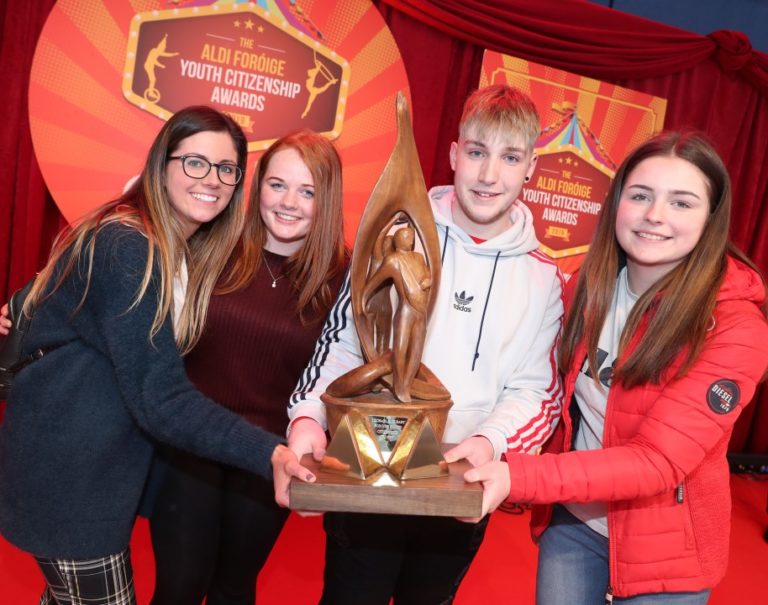
A storytelling project came out tops when the results of this year’s Aldi Foróige Youth Citizenship Awards were announced in April.

A group of young people from Carrick-On-Suir, Co Tipperary, was named overall winner for their monthly newsletter, The Positivity Pages.

The fourth-year students – mentored by counsellor Shana Mansfield, who operates the BeYou counselling service for young people – were motivated after their town was struck by three tragedies.

Things had come to a head late last year and 200 local people met to see what could be done about drug dealing and addiction.

Separately, the BeYou group felt that young people are often surrounded by negativity through the media, in the community, through their own thoughts and online.

They launched their newspaper to highlight the positive achievements of young people and to raise self-esteem, to create a sense of belonging and to build confidence in their peers. Their positivity proved infectious and the publication was incorporated into the local newspaper.

The Positivity Pages is the first-ever non-Foróige group to win a Foróige Citizenship award.

A national effort

Carrick-on-Suir’s challenges are no different to any other town’s and young people are working hard to come up with the best responses.

Across the country, young Foróige teams worked on community projects covering equality, homelessness, climate change, social inclusion, community events, mental health and culture.

Seven projects won gold this year, including Adam Fletcher from Offaly who carried out maintenance work on church ruins, and the Saturday Club in Dublin 15, which raised funds to rescue seals.

This year is the 50th anniversary of the Youth Citizenship Programme, which was first run by Foróige in 1969. More than 14,000 young people took part this year.

Seán Campbell, CEO of Foróige said, “There’s a reason this programme has lasted 50 years: it works. The young people who entered the awards this year invested over 82,000 hours in community action projects and that’s something that we should be really proud of as a country.”

The awards have grown more popular since Foróige teamed up with sponsor Aldi five years ago.

To help celebrate The Positivity Pages win, Changing Ireland spoke to Shana and Nicole (one of the team members) to find out more:

What does The Positivity Pages do differently from the mainstream media, or from social media sites?

Nicole Vaughan on the bus home to Carrick-On-Suir with a Foróige Gold Star award
Nicole Vaughan on the bus home to Carrick-On-Suir with a Foróige Gold Star award.

It’s a positive newspaper.

Normal newspapers provide us with news about negative events such as thefts, murders and deaths. Although we understand that the media needs to report on such news, we [choose to] provide the community with good news about great things people have done in the community – it gives us a positive view of Carrick-on-Suir.

We also have a personal touch in that the paper is focused on young people in our town, which gives us a great opportunity to raise awareness and help to support positive and wonderful local young people.

Why is it important for young people to be exposed to positive news?

Our age group can often be labelled in a negative light. Young people need encouragement and to be celebrated for even the smallest positive achievements, as it will encourage them to do more of what they want and love.

When a young person feels believed in and is recognised for their work, it builds their self-esteem. When a young person does something good, it also provides possibilities and hope for others of the same age.

How has working on this paper helped the community and the young people involved?

The paper has helped by inspiring young people and by providing a positive outlook on Carrick-on-Suir and its young people.

The paper also provides tips and information about different mental health topics. These are written by Shana, who is a cognitive behavioural therapist working with young people. This section is helpful to any reader!

As a member of the team behind the paper, it has given me [Nicole] a brighter outlook on life and has made me a better person. Being involved in something so great makes me feel really good about myself and my abilities, and being a member is one of the best decisions I have ever made.

What can communities around Ireland learn from The Positivity Pages’ success?

I think there should be a group in each community who does something similar to provide better mental health in each county of Ireland. The success of The Positivity Pages should encourage any young person to reach their full potential. Being involved in such a project is an excellent outlet for creating positive mental health and every community should get to experience it.

Generally, what were the negative things that prompted your youth group to respond so positively?

I [Nicole] can’t speak for everyone in the group, but a huge reason why I – and some other group members – got involved was because of the mental health issues among young people in Carrick-on-Suir.

Our town has experienced a number of youth suicides and, after losing my friend, I decided to get involved in something that could help our community and create positivity for many people, so maybe something like this wouldn’t happen again.

Hopefully the people of Carrick-on-Suir will have a better view on life and will be able to see all the possibilities and the experiences they can endure. And, hopefully, the paper will help people to live a better life.

Set up a Foróige club in your area: There is support ready to go if you wish to set up a Foróige club in your area. A club needs three essential ingredients to get going and Foróige staff will help to get these in place. You’ll need: young people who want to take part, a small group of adult volunteers, and a place where you can meet.

Interested in reading more about the state of Ireland’s community development sector? Check out our latest issue.
Additional reporting by Kirsty Tobin.