Saturday, July 4, 2026
Home Blog Page 41

Tánaiste promises continued funding to border groups post-Brexit

0

Community groups will continue to be supported, whether or not British prime minister Boris Johnson gets support on Saturday for a deal on Brexit.

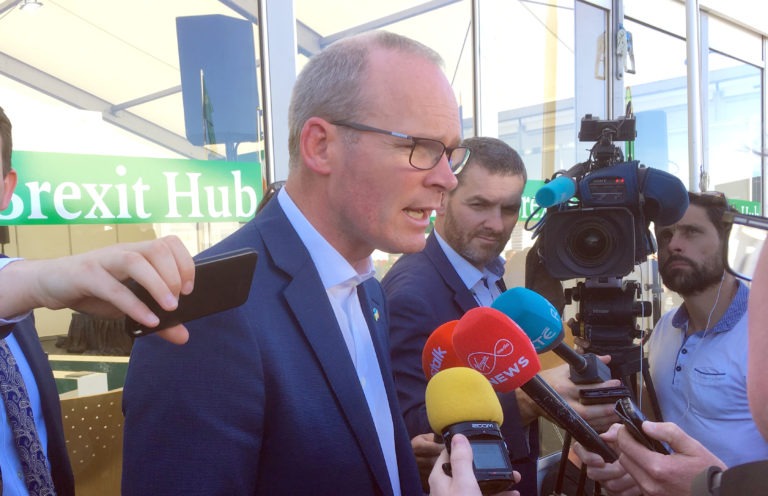
Recently, Changing Ireland put one question to Tánaiste (and Minister for Foreign Affairs and Trade) Simon Coveney. We asked the minister about communities, projects and Brexit, and what he had to say to community project leaders across Ireland – and particularly those near the border – with Brexit issues looming.

Minister Simon Coveney speaks to Allen Meagher at Ploughing Championships 2019 in Carlow.

“The first thing I would like to say to them is that we’re going to continue to support you,” said Minister Coveney.

“In terms of funding many of these community projects – many of them particularly that are linked to peace and protecting relationships, particularly between young people and in the border counties – you do great work and it’s really important that we continue to fund you in that work.

“And we have an agreement with the EU that we will continue to fund peace funding, even beyond the current funding cycle, which is really important post-Brexit.

“But of course we would like the British government to also commit to play their part in that regard as well.

“Lots of people are concerned and there’s huge uncertainty. But the one thing that I would like to say to projects that are about peace and community engagement and integration [is that] I can assure you we will continue to fund and support the work you do,” he said.

Minister Coveney was interviewed at the Ploughing Championships in Carlow.

Full house: Tickets snapped up for Friday’s Ballyhaunis seminar on Embracing Diversity

Tickets have all been booked for this Friday’s free seminar in Ballyhaunis, Embracing Diversity.

Changing Ireland will be covering the event, which promises to be an antidote to the populism and greed of Trump and others. It will show how a small town in the west of Ireland more than doubled in population with relative ease.

While the event is bookended by government representatives – Minister of State David Stanton opens proceedings, while Minister Michael Ring will close the seminar – the day’s discussions will be led by people from the community: business leaders, migrants, civil society groups and academics.

The event aims “to examine and chart what has been achieved in the area of intercultural integration in a small town, and develop recommendations for mapping an integrated future for the town and [for] towns of similar composition”.

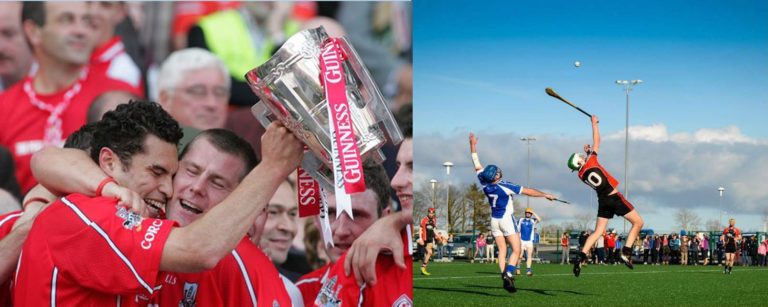
Speakers include Seán Óg Ó hAilpín, who will tell of his personal experiences as a Fijian Irish man, hurler and Gaelic footballer.

Afterwards, a panel discussion will be led by Maria McHale of South West Mayo Development Company.

This event indicates that, despite taking the unpopular approach of moving refugee applicants without consultation into small rural towns, the government has a desire to understand how best to support integration.

The seminar takes place at the end of Social Inclusion Awareness Week, taking place from 14-20 October, and the full programme is available via Mayo Public Participation Network.

Another interesting event is being held in Dublin on the same date: an awards night to showcase work at community level in Ireland that is done in pursuit of the UN’s Sustainable Development Goals.

What can communities do to help battle climate change?

In May, the Irish government declared a climate and biodiversity emergency, making Ireland the second state in the world to do so. The decision came after years of stark warnings from scientists about the destruction of our planet and the disastrous consequences of climate change.

Perhaps the most stark of those warnings came last October, when the United Nations warned that, if we continue as we are, the world could get as much as 3°C warmer.

Swift and decisive action must be taken at all levels. Governments will have to change policies and capitalism will have to be challenged. At a grassroots level, communities are going to have to start living in a more sustainable way and building more resilient localities for themselves.

There are many things community groups can do to contribute to efforts to limit the impact of climate change but, for Davie Philip, the first step is clear: communities must pull together.

Davie is an environmental activist and founder of Cultivate Living and Learning, and is one of the founding members of Cloughjordan Ecovillage in Tipperary.

“I think, in some ways, we’ve lost our capacity to actually work together. We’re so individualised now,” Davie says. “We’re going to have to think differently about the way we do almost everything.”

It is, Davie says, about more than recycling at this point. Communities are going to have to fundamentally change the way they exist if they want to help offset the impact of climate change.

“What we have to think about is our vulnerabilities in the global system,” Davie says. “We depend on food and energy that’s shipped in from halfway around the world. If there’s any weather disruptions, political disruptions, conflicts, we are going hungry or we’re in the dark. So, we need to be thinking about localising our economies, especially around food and energy. There’s huge opportunity to do that now.”

One means of doing this is through community-supported agriculture. Under the system, a group of people pays a farmer an agreed fee for a season or for a year and, in turn, they receive local, organic food.

“It’s massive across the world,” Davie explains. “In Ireland, there are seven initiatives. Ours [in Cloughjordan] is probably the biggest. We have 75 subscribers; we pay two farmers a better wage. It’s actually quite an easy thing to do if you’ve got a cohesive community.”

On the more advanced end of the spectrum, communities can consider looking at the Cloughjordan Ecovillage for inspiration. The village has more than 100 residents living in high-performance green homes, and has over 20,000 newly planted trees. One of the major strengths in the village is that everybody works together to live in a way that is sustainable.

“Most people know the characters in their favourite soap opera better than their neighbours,” says Davie. “They’re so isolated. We’re working in little boxes, watching little boxes, shopping in big boxes. It’s small pathways of reconnection to a place, reconnecting to the people around us, reconnecting to local providers, farmers, local producers, reconnecting to the living systems around us and regenerating them: that’s what we need to do, in a nutshell.”

FoodCloud

Another measure communities can take to reduce their impact on climate change is to reduce food waste. Producing, transporting and storing food uses fuel and energy, meaning that, when it is wasted, there is an environmental impact. The Department of Communications, Climate Action and Environment says that more than one million tonnes of food are disposed of in Ireland each year, with a third of this coming from households. How much comes from sports clubs, community centres, community cafés, and community events, such as festivals?

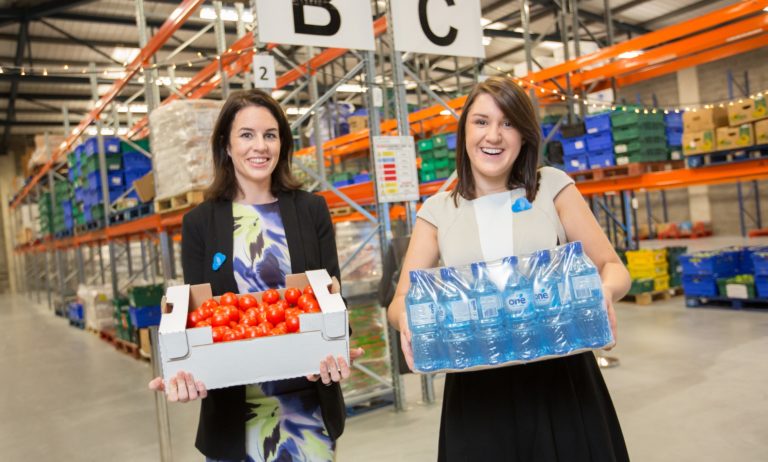
In 2013, Aoibheann O’Brien and Iseult Ward decided they wanted to give surplus food a second life. They founded an organisation called FoodCloud, which distributes leftover food from businesses and supermarkets to charities and NGOs across Ireland.

“All of that food that we put on our systems to save would otherwise have gone to waste because stores were not giving that food to people,” says Eimear Delahunty, charity engagement manager with FoodCloud. “They were selling it down and whatever was left at 11 o’clock at night was going straight into their landfill.”

By taking surplus food and stopping it from going to a landfill, Eimear says that community groups are “playing a part in a very big environmental project [that] means that we are reducing food waste in Ireland”.

“Whenever we’ve done impact surveys, you can see that the environmental part of what we do really resonates with community groups,” Eimear says. “They really do want to be a part of something that is so positive and also something that adds to their own services in a way that means something personally to them.”

Voice Ireland

While communities often want to enact change, they can sometimes struggle to figure out where to start. This is where Voice Ireland’s Conscious Consumption Communities programme comes in. It supports communities to make changes through workshops and education.

“We’re trying to change the system and to empower communities to make changes and educate them about waste issues,” says Aoife Britton, project manager at Voice Ireland.

“We created a programme that could respond to communities,” she continues. “We don’t go in and tell them what to do, we try to support them to do whatever they want to do. We try to empower and support the community to make changes that are important to them and their locality.

“We offer support,” Aoife says. “We meet them wherever they’re at on that particular journey.”

So far, 12 communities have taken part in the Conscious Consumption Communities programme, and they have funding to work with seven more. Aoife believes that there is an increased awareness of environmental issues and that more communities now want to enact change at a grassroots level.

“There’s a huge concern around plastic at the moment,” says Aoife. “People are very concerned about it and want to change things in their area. They want to educate their communities and get them onboard and reduce their use of plastics.

“There’s also a lot of concern around disposable waste – disposable coffee cups, disposable bags, single use plastics and single-use items. There’s a lot of concern around people recycling properly, composting properly, and bringing their communities on board and getting people involved.”

Waste reduction by community groups

Waste reduction and recycling are very important. As well as cleaning up their own act, community groups are well placed to lead bottom-up campaigns to lobby local businesses and suppliers – and big business – to end the unnecessary packaging of food and other items.

That assumes they are on top of the issue themselves. If your community café is still using plastic straws, start there.

This is going to grow. Civil society groups will soon be looking to have plastic-free towns. Saying goodbye to plastic straws is only a first step.

Apply this autumn for SEAI grants

The Sustainable Energy Authority of Ireland (SEAI) works with communities to transform how we think about and use energy.

You can apply to improve energy ratings of homes across your whole community through the SEAI’s Better Energy Communities scheme.

From the autumn, the SEAI will welcome applications for 2020 grants.

Start a Cottage Market

By setting up a Cottage Market, you are helping to mitigate climate change, promote rural life and support grassroot enterprises.

A Cottage Market is led by the community for the community, and develops organically “from the inside out,” according to founder Karen O’Donohoe.

Karen has teamed up with the founder of Grow It Yourself, Mick Kelly, and there are fabulous tips on both of their websites on how best to proceed.

Community farming

To see why people change careers and get into community-supported agriculture, read our report [Issue 47, Autumn 2014, page 22] about a professional surfer who gave up the jet-setting lifestyle to establish Moy Hill Farm in Co Clare.

Moy Hill is now a 60-acre farm. Check out their truly incredible progress in this video uploaded in June of this year.

Grow It Yourselves!

It’s not all about reducing. One thing you can expand is your community’s interest in gardening.

There are also great tips online about starting a community garden.

Recycling

Community groups can seek to improve access to recycling facilities and, at the same time, offer educational programmes – for example in conjunction with local schools – to educate residents about the importance of recycling.

Bottom-up action

What can communities start doing today? Well, it starts with simple steps:

  • Let the grass grow. This creates a bee-friendly environment, and frees up labour.
  • Serve ice-cold fresh tap water at events instead of handing out plastic bottles.
  • Provide a recycling system at events.

Interested in reading more about the state of Ireland’s community development sector? Check out our latest issue.


INSPIRE A NATION: Awesome People – Brigid Quilligan Community worker & activist

What’s the last film you saw?
‘Fight Like a Butterfly’.

Person you most admire?
My mother.

The top four issues in Ireland today?
1. Racism.
2. Mental health of Travellers.
3. Lack of autism services.
4. Classism.

Nationally, we need more…
…Diversity in politics – meaning representation from people with different ethnicities and backgrounds.
And devolve all local Traveller accommodation powers to one national agency.
I strongly believe we need a State apology for the treatment of Travellers by the State; an acknowledgement of what that treatment was.
Then we need a peace and reconciliation process within the community.

Nationally, we need less…
…Parish-pump politics.

What’s the best thing about the project you volunteer with?
The solidarity here at Kerry Travellers’ Health Community Development Project and the common purpose of our team and volunteers. We all are passionate about human rights.

What could your project improve on doing?
Promoting our work and reaching families we currently do not work with.

How long are you volunteering?
I have volunteered with community groups and campaigns for 30 years.

How and why did you get involved?
I realised that if change is going to come, those afflicted by oppression have to be the ones to demand it.

What difference has being involved made to you?
It has influenced my life and exposed me to different communities.

Have things changed for your community since you became involved?
Traveller ethnicity is now recognised.
We have a stronger Traveller voice.
The recognition by UNESCO of Traveller language – Gammon – in July was a momentous achievement.
More young people are in education.

What motivates you as a volunteer?
I see too many young people from my community dying. We need to change policy, practice and legislation so that it includes and is led by the marginalised.
I love to see young people reaching their full potential and developing their skills and enterprise.

What inspires you?
Our youth is a very inspiring group; the discrimination that they face is much worse than the discrimination their parents faced. They are subjected to anti-Travellerism on social media, in schools and shops, when accessing services. They are constantly made to justify their existence as Travellers.
They are bright, educated, articulate, and they will be the ones to create a new Ireland.

How do you get new volunteers?
By telling our truthful story. We are credible. We know and love our community – that inspires people.

What brings about change?
People say they want change, but they do nothing to create that change; we collude in our own oppression. Civil rights are being impacted on every day, so why are we so silent? Change can only come when communities come together.

Quilligan on Twitter: @BrigidQuilligan

Nominate a volunteer!
If you wish to nominate a volunteer, activist or otherwise remarkable person, email: editor@changingireland.ie

How is Wicklow PPN’s Community Wellbeing pilot driving change?

In many places, Public Participation Networks (PPNs) are doing exceptional work at community level. County Wicklow PPN is one of them.

Last year, they joined a pilot programme to develop a toolkit for communities to develop a ‘Vision for Community Wellbeing’ for now and future generations. The other places taking part in the pilot are Cork city, Longford and Roscommon.

This follows on from a recommendation in 2014 by the Working Group Report in Citizen Engagement with Local Government, which said: “Each county/city PPN will commence its work by going through a process to set out what it considers necessary to promote wellbeing for present and future generations.”

We often think about wellbeing in terms of an individual’s good physical and mental health. Community wellbeing, however, refers to the wider conditions that communities need for a better quality of life, a healthier environment and increased prosperity.

Helen Howes, PPN resource worker, tells Wicklow’s story:

We used the toolkit to run 11 workshops and five online consultations, and we took on board two submissions. We now have guiding visions for the county under six headings: health; environment and sustainability; participation and good governance; economy and resources; values, culture and meaning; and social and community development.

Helen Howes, Wicklow PPN resource worker
Helen Howes, Wicklow PPN resource worker. Photo: Allen Meagher.

The benefits of doing this work have been amazing and include:

  • Real engagement between the PPN and communities,
  • The work of the PPN being highlighted,
  • Increasing membership,
  • More collaboration, and
  • Strengthened relationships between [the PPN] and various community stakeholders.

It got communities to engage with each other, too. Groups from Hollywood attended the Baltinglass workshop and got so much out of it that they went on to develop a Hollywood Forum last year. By year’s end, the Hollywood Forum was approaching the Baltinglass Forum to see if they could work together on mutually beneficial projects.

Now, our PPN reps have an even stronger mandate when they attend Special Policy Committee meetings and other meetings of the council on our behalf. We provided training to our secretariat and reps to show them how to use the ‘vision statements’ and, more recently, how to source data to back up the statements in policy development.

With this mandate and material, we honestly advocate on the community’s behalf. This year, we have already used the vision statements in submissions to the Volunteering Strategy, An Garda Síochána Policing Plan, Wicklow Outdoor Recreation Strategy, and Heritage Ireland 2030.

We think they will be invaluable when the next version of the Local Economic and Community Plan goes out for consultation.

All of Wicklow PPN’s wellbeing statements are available on their website. For more information, contact the PPN on 087 189 5145 or at countywicklowppn@gmail.com. They are also active on Facebook.

Banner directing readers to digital magazine archive

Main photo: Bart Vermeiren/Unsplash

YouthOpia: Can social enterprise help level the education playing field?

0

Depending on where you grew up and where you went to school, following the set path of ‘primary school, secondary school, third-level institution, work’ is often presented as a foregone conclusion. However, for some people – particularly those from disadvantaged areas – that path becomes a lot more complex, or abruptly ends entirely.

The negative perception that many outsiders have of disadvantaged areas can frequently be perpetuated within those communities themselves, with students, parents and even teachers taking the view that pursuing education beyond the Leaving Certificate is unnecessary or, worse, unattainable.

YouthOpia founder Robert Kelly and co-founder Thomas Bird share that background. Having witnessed first-hand the attitude that pervades DEIS schools and the communities around them, Robert realised he wanted to make a difference. When he joined Enactus DCU (Dublin City University), he – and co-founders Thomas, Vivien Kajli and Kathi Nie – found a way.

Here, Robert, Thomas and Vivien speak to Kirsty Tobin – in an interview conducted in collaboration with Enactus – about YouthOpia and what they hope it will achieve.

Can you tell us about YouthOpia?

Thomas Bird: YouthOpia is a student-run social enterprise founded within the Enactus Ireland programme. Our mission is to help students from disadvantaged backgrounds reach third-level education by providing them with workshops that address underlying non-academic factors that contribute to their academic success.

The YouthOpia team set out to create a curriculum that would encourage students in a fun and practical way so that the skills they learn from our workshops will follow them throughout their academic life.

Robert Kelly: From our extensive research into barriers to progression, we found many emerging trends, mostly non-academic. Issues such as low self esteem, poor self image, a lack of self belief and a negative culture in the classroom were alarmingly common among students in DEIS schools.

Thomas Bird: From these trends we created four modules that would help address these persistent problems: Vision, Plan of Action, Mindset and Resilience.

The goal of these modules is to enable these students to reach their full academic potential.

What social need does your project address?

Thomas Bird: It addresses a pattern that has developed among DEIS schools in Ireland. There is an attitude in these schools – among students, teachers and families – that financial circumstances and the family’s academic background affect the ambitions and the potential of a student. Usually, this means third-level education seems out of reach and impossible.

By helping the students believe in themselves and their ambitions, we are indirectly impacting the families and teachers. There are so many routes into third level and further education, and YouthOpia gives everyone the skills to explore them.

Robert Kelly: We all know why students don’t progress onto third-level education. The answer? Points awarded from the Leaving Certificate. I like to think of it this way: points are the disease, but what are the symptoms?

When I look back on my own life I realise now that I suffered with a lot of the same issues students face today. However, I was one of the lucky ones. I had an amazing mother who helped instil an unshakeable belief in myself. I had an intervening force in my life that put me on track.

Not everybody is that lucky. Not every student has a loving home or supportive network. All the grinds in the world won’t help if you think you’re unworthy and stupid. Without an intervening force, students are left to sit with their demons.

My vision for YouthOpia is that we will be that intervening force for all DEIS students across the island for years to come.

‘There is no point in having an answer without a question.’
–  Thomas Bird

What first stirred your interest in this area?

Robert Kelly: Growing up and attending a DEIS school, I saw a lack of progression to third-level education first-hand. I was immersed in a culture of not believing in oneself and therefore not trying. Without some baking powder, a muffin mix won’t rise when baked. I want YouthOpia to be the baking powder for students in DEIS schools. I feel this project can help them rise to their highest potential.

Thomas Bird: I wanted to get involved because, coming from a DEIS School myself, I was aware of the issue as I had experienced it first-hand. I felt I could relate directly to the students and give my personal perspective to the project, as I know how they feel struggling to believe in themselves and their ability. I feel YouthOpia has the ability to hugely impact students in DEIS schools.

Vivien Kajli: I’ve always been interested in teaching people, and YouthOpia gives me the experience to do so through developing the curriculum and the workshops. Also, I feel that this project gives the opportunity to help young people change their perspective of their future. When I heard about the concept of YouthOpia, I knew I wanted to get involved due to the empowerment it provides to the students.

What prompted you or inspired you to get involved with Enactus?

Robert Kelly: I was interested in Enactus because I have a keen interest in entrepreneurship and service. Enactus allows me to combine the two in a valuable way. This allows me to grow as a professional and help others.

Thomas Bird: I came to college wanting to get involved in societies to look for a new passion or interest. I heard about Enactus through the Business School at DCU and it had me hooked from the word go. I was really excited about getting involved in the projects and the committee. After a few initial meetings, I became heavily interested in all things Enactus and have been involved ever since.

Vivien Kajli: I didn’t know about Enactus until I came to college, attended the start-up meeting and read up about what Enactus has to offer me. The concept of helping people out while building on my entrepreneurial skills, and networking as well as meeting lifetime friends, was very appealing to me.

What have you learned about social enterprise and community-focused entrepreneurship since starting this project?

Thomas Bird: Before Enactus, I think it’s fair to say that we were all pretty clueless about the world of social entrepreneurship. Enactus has opened our eyes to the ongoing work hundreds of social enterprises do every day, tackling social issues both in Ireland and across the world.

YouthOpia taught us that there are so many social issues hidden in our community, and that social businesses give the opportunity to resolve these issues and create a large impact.

YouthOpia showed us that to get a solid foundation for any project, a thorough needs assessment needs to be carried out to identify the issue at hand and ways of solving it. There is no point in having an answer without a question.

Why do you think social enterprise matters?

Thomas Bird: As clichéd as it sounds, it puts people before profit, tackling everyday issues in a sustainable and scalable way. I feel that without social enterprise a lot of social problems – such as dyslexia and the issues facing DEIS schools – would get overlooked and not recognised in society.

Vivien Kajli: It helps the community and tackles sometimes invisible social issues, which also helps raise awareness. There is so much creativity evident in social enterprises, from the name of the project to the plan of action. You get to create and work on something you’re passionate about. We need more social enterprises in the world.

Do you think you’ll work to develop social enterprises after graduation, or even continue to grow your Enactus project?

Robert Kelly: There is so much scope for scale with YouthOpia. We’ve built such as solid foundation thanks to our amazing team and now all we have to do is begin rolling it out across the island of Ireland. I know YouthOpia will be a big part of my life for many years to come and I’m very excited to see what we make of it.

Thomas Bird: Enactus has given us skills and inspired us to continue to tackle social issues and make an impact on people’s lives, whether that is through social enterprise or another medium.

We on the founding team would love to see YouthOpia continue to grow and become its own sustainable social entity that can employ people and make a difference in communities. It is a future ambition of the team to be able to work full-time on YouthOpia after graduation, as we believe it has the ability to go from an Enactus project to a full-time social business.

Vivien Kajli: I’d love to continue working on YouthOpia! It became such an important part of my life in the past year that I can’t imagine not working on it.

What advice would you give to students considering developing an Enactus project in the future?

Robert Kelly: Do it for the right reasons. Identify a problem in a community and find a solution. Keep it simple. Keep it effective. Never forget that there are people relying on you. Realise that we are all here to serve others.

Thomas Bird: A slow start is a good start. As we mentioned above, a thorough needs assessment is essential to provide a sustainable solution. This can be a long and vigorous process, but is beneficial in the long run. It is important to pay attention to detail during the desk and field research period to truly understand the mission of the project and the end goal.

I feel that planning is essential for a successful project, as it highlights the work that needs to be completed and sets goals across a timeline. Even if the plan has hiccups and curves, it is there as a guide and can be changed. To create a successful plan, it has to be mutually agreed on by all team members, with roles established from the outset.

And, finally, enjoy the ride! Setting up your project may seem hard at times, but when you look back you’ll see it was all worth it. Remember to build relationships with people you meet, cherish the impact you have made and look back on all the memories and achievements you have compiled.

#FollowFriday: Logophile @MiaBeetle on how kindness goes a long way

0

Maria O’Dwyer describes herself as an “early childhood sociologist, researcher and logophile (nothing to do with trees)”. Maria – who’s from Limerick and worked with the PAUL Partnership for eight years before starting a consultancy – tweets under the handle @MiaBeetle and is well worth a follow.

As well as tweeting regularly about community development and social inclusion concerns, Maria frequently lets her humorous side out. As a logophile – a lover of words – she despairs when people misuse words, as her father did recently:

‪‪Aside from the occasional bursts of comedy, she tweets mostly on social issues connected with her work. Her views on early childhood learning (she has a PhD on the subject) are worth hearing and can challenge prevailing practice and wisdom.

In the past, Maria has carried out research within the emergency accommodation system, meeting many families with young children along the way.

This May, she posted a thread of tweets about a simple act of generosity involving a hotelier and long-stay guests.

Main photo: Leo Rivas/Unsplash

3 informative publications you should be reading

0

Community development is very much a collaborative effort, and inspiration and support can come from any number of sources. Here, we’ve gathered three of the best magazines and newsletters – other than Changing Ireland, of course – to get those ideas flowing.

Rural Water News

Among Irish volunteers, there are people who have skills and knowledge that would no doubt match those of a qualified engineer. Local people involved in running group water schemes, for instance, are some of the most able (yet modest) volunteers in the country.

Rural Water News coverMany of them are avid readers of Rural Water News, a magazine – it’s more than a newsletter – published four times a year by the National Federation of Group Water Schemes.
What’s special here?

As well as looking at best practice in Ireland, Rural Water News features ‘Learning from Others’. As an example, the Winter 2018 edition covered a visit by Irish people to see a group water scheme in a rural area west of the city of Lintz in Austria.

The magazine is both technical and community-focused and features plenty of photographs. The focus moves easily from groups of young people learning about water quality to stories and photos showing how best to drill a borehole.

There are also regional updates, national news and the latest from the EU that impacts on water schemes.

The Federation’s website handily features an archive of its magazines going back to 2003.

Local Authority Times

The ‘LA Times’ was quoted during a Dáil debate earlier this year by former minister, Jan O’Sullivan. She held the magazine high and referred to a feature inside on how other countries have successfully gone about directly electing city mayors.

Local Authority Times cover

What’s special here?

Established in 2009, the biannual Local Authority Times (or LA Times) is published by the Institute of Public Administration (IPA) based in Dublin.

Its primary audience is the local authority sector, but much of its content would interest people in the community and voluntary sector.

It is seen as a reliable source of information on such a range of topics that there should be something to interest readers in every edition. This summer, a new-look, more colourful Local Authority Timeshopes to grab readers’ attention, while still producing in-depth, original research and analysis. The publication is free to read.

Editor Laura Shannon is interested in readers’ views and welcomes comments, suggestions and ideas for topics that they should address.

The IPA’s website also has unique resources on file in regard to public administration, social inclusion and development.

ESF Newsletter

The European Social Fund (ESF) has invested around €7 billion in Ireland since the country joined the EU (then called the EEC) in 1973.

ESF Newsletter cover

It is the EU’s main instrument for investing in people and, to highlight its impact, the ESF in Ireland publishes an annual newsletter.

What’s special here?

The ESF Newsletter is a surprisingly accessible publication, with minimal EU jargon and programme talk. It could be read by anybody.

The newsletter features stories to inspire – accompanied by quality photographs – from local projects backed by Youthreach, the Garda Youth Diversion Programme, the National Adult Literacy Agency, the Social Inclusion and Community Activation Programme (SICAP), and more.

It includes updates on EU programmes, such as the Ability Programme and Springboard+.

The 2018 edition ran to 42 pages. All 10 editions published since 2008 are available online.

Submit a story

Anyone is welcome to submit a piece for publication, particularly those who are involved in projects that are ESF-funded.

To propose an article for the 2019 newsletter, email peil@education.gov.ie.

Previously highlighted

Sara Sue Rodriguez de Jolivet was one of more than 3,200 people from 101 nationalities who received Employment for People from Immigrant Communities (EPIC) support over the past decade. Of that number, 67% got jobs, joined a training course or became a volunteer.

Sara Sue Rodriguez de Jolivet

Sara Sue said the EPIC programme support helped her get her first job here and was “a life-changing experience” for her. Today, 10 years on, she works in IT and uses some of her spare time to deliver talks to people who are in the same shoes she once wore.

Her story appears in the 2018 ESF Newsletter. It goes to show that the EU has learned that statistics alone don’t tell a story.

EPIC is one of the many ESF programmes benefitting people in Ireland. In this instance, it helped to integrate and change the life of an immigrant from Peru who came here with her partner.

The programme supports migrants to become economically independent and more socially integrated in Ireland. Participants get pre-employment training, one-to-one support and work experience opportunities.

Sara Sue has also written of her experiences as an immigrant in Ireland on her LinkedIn page.

Main photo: Nick Hillier/Unsplash

New-look ChangingIreland.ie launched by Minister Michael Ring

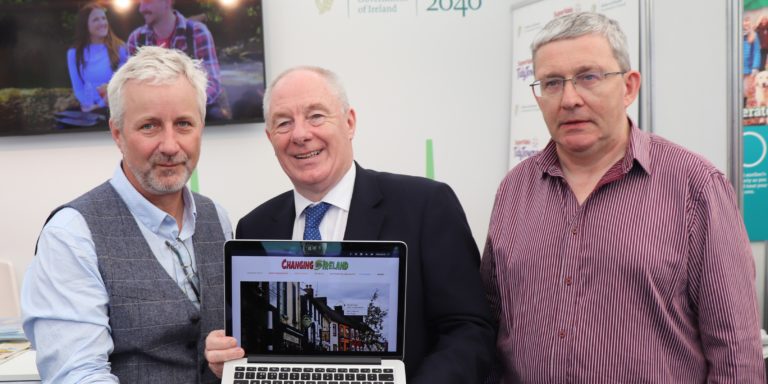
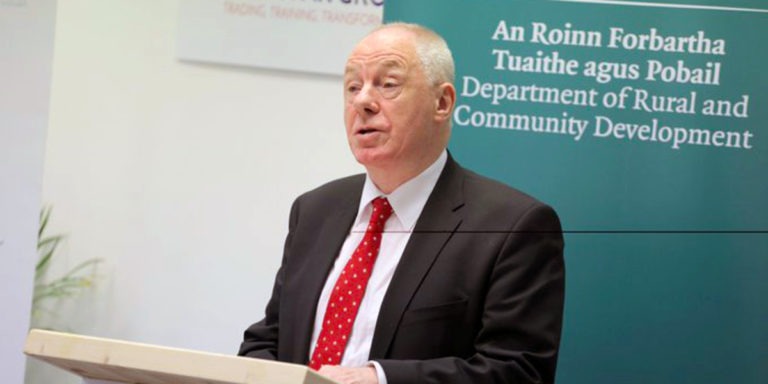
Minister for Rural and Community Development Michael Ring, TD, yesterday launched our new-look website – www.changingireland.ie – designed to complement the work by Changing Ireland, the most popular magazine published in the community and voluntary sector in Ireland.

At the launch, Minister Ring said: “Changing Ireland is a unique publication which is based in a community-setting, in Moyross, Limerick. It is a high-quality news magazine which has encouraged all involved for nearly two decades to work harder for the betterment of our communities.

Changing Ireland is supported by a voluntary board and it provides mentoring to aspiring young journalists, from Moyross residents to refugees fleeing Yemen. And well before it became popular, the magazine began going green.

“Good practice nationwide has been enhanced by Changing Ireland’s work. Now, with a fabulous new website at its disposal, the project should be able to increase its output and reach more people in the community and voluntary sector.

“Community is at the heart of what my department does, and I am pleased to officially launch the new website and to congratulate Changing Ireland for collaborating with eTownz to build this website at no cost. May you make good use of it!

“For nearly two decades, Changing Ireland has kept the flag flying at community level for grassroots organisations, volunteers, workers, and local and central government bodies and agencies working in communities. Long may you continue to catalogue and report on the good work going on nationwide that we might otherwise not hear of,” said the Minister.

Welcoming the development, Cathy Jones, chairperson of Changing Ireland Community Media CLG, said:

“In Changing Ireland, we believe in the principles of community development: seeking social change, empowering people, encouraging participation, collective action, and campaigning for equality and social justice.

“We believe Changing Ireland has captured much of the good that happens across Ireland. Being locally based, we try to reflect views on the ground and, while we promote the positive and best practice, we also provide a platform for people who will call out local or central government – among others – when the need arises.

“I would like to congratulate all who support Changing Ireland, past and present: our readers, contributors, occasional volunteers, our host community, fellow board members and, equally importantly, the Department of Rural and Community Development,” she said.

Board members
Some of our board members – (l-r) Jude Meaney, Cathy Jones (chairperson), George Clancy (vice-chair) and Andrew O’Byrne – with editor Allen Meagher (on right). Photo: Kirsty Tobin.

Changing Ireland editor Allen Meagher said, “Community development by its nature seeks to confront power imbalances in society, so this is an interesting space to work in. And, for me, nothing matches the spirit of activism and volunteering that shores up so many vital services in this country. Those who engage in community development perform a critical role in pushing at local and national level for social change.

“I invite you – if you haven’t before – to start reading or following Changing Ireland in print and online and find out more about the fabulous work being done by community and voluntary organisations in Ireland.”

Adam Jackman and Pat Kennedy of eTownz with Kirsty Tobin from Changing Ireland at a website planning meeting. Photo: Allen Meagher.

Background

Changing Ireland magazine has been publishing quarterly for 18 years. The publication shines a spotlight on good practice in the community and voluntary sector and challenges community work practitioners to always strive to do better. It also provides a platform to debate and challenge government policy.

This year, the community media project moved, with financial support from the Department of Rural and Community Development, to new offices in the community centre in Moyross.

Management: Established in 2001, Changing Ireland is a national magazine focused on community development and social inclusion. It is published and managed by the not-for-profit Changing Ireland Community Media CLG.

Voluntary Board of Directors: Cathy Jones (chair), George Clancy (vice-chair), Seamus McGiff (secretary), Jude Meaney, Andrew O’Byrne, Jason Craig and Danielle Hickey.

Editor: Allen Meagher.

Sub-editor/digital editor: Kirsty Tobin.

Editorial Team: Viv Sadd, Jude Meaney, Kirsty Tobin, Robert Carey, Joe Saunders, Paul Geraghty/Bernie Reape and Allen Meagher.

Support and Funding: Changing Ireland receives support and funding from the Department of Rural and Community Development.

Interested in learning more about news from the community and voluntary sector? Check out our latest print issues.

Ireland’s first national social enterprise policy welcomed by sector

0

On 18 July, 2019, Minister for Rural and Community Development Michael Ring launched the government’s first-ever policy on social enterprise. It has since been widely welcomed.

Acknowledging there had been a long wait, and thanking those who pushed for it, Minister Ring said the new policy would “enable social enterprises to grow in scale, support jobs, and make a positive impact on individuals and communities in both rural and urban areas”.

“The policy and the [26] commitments it contains will enable social enterprise to reach its full potential,” he said.

The policy aims to provide support by increasing awareness of social enterprise, growing and strengthening social enterprise, and improving policy alignment. These aims will be put into action between now and 2022.

The Irish Local Development Network (ILDN) was among many to express support following the launch, which was held in Coolock, Dublin. The chairperson of the ILDN’s working group on social economy, Pádraig Casey, congratulated the Department of Rural and Community Development on completing the policy, explaining why such a “supportive framework” was welcome:

“Ireland is highly reliant on social enterprise, yet has the potential to create many more services and jobs in the sector. According to a 2013 Forfás report, Ireland’s social enterprise sector supports over 25,000 jobs, but has the potential to create at least a further 65,000. Before now, a framework has been lacking to drive this potential.”

He said that local development companies (LDCs) are “ideally placed to deliver support for local social enterprise development” in collaboration with others.

LDCs have 40 members of staff around the country dedicated to supporting social enterprises.

Plaudits from experts

Dr Senan Cooke – co-founder of Communities Creating Jobs and author of The Enterprising Community – told us, “This policy is going to open possibilities beyond comprehension.”

“I really am excited about the new policy. I see it as a seminal document and, if properly implemented, it will transform the social enterprise sector.

“It’s the right thing at the right time. There’s a huge interest in – and a huge need for – social enterprise right now,” he said.

Calling on people to promote the new policy, he said progress will take time: “A lot will depend on the department’s implementation group and their determination to bring a whole-of-government approach, though there is a growing awareness of the potential of social enterprise among the officials and beyond.

While it could “take a few years to really get the full potential onto the table,” the potential was huge.

“Social enterprise is a massive sleeping giant, which should be leading the way in revitalising communities,” he said.

Speaking at the launch, Paul O’Sullivan, CEO of Clann Credo, said that the policy delivers a road map that will, in turn, “lead to both provision and preservation of badly needed jobs and services at local level in every region of Ireland.”

Meanwhile, on social media, the Carmichael Centre said the policy would “help to grow and strengthen social enterprises”.

https://twitter.com/Carmichael_IRL/status/1151811908657438726?s=20

Camara praised the “focus on leadership and better policy alignment,” while University College Cork’s Ignite incubator programme was pleased that “the value of [their] social entrepreneurs and social enterprises won’t go unnoticed”.

Community Finance Ireland is a charity that gives loans to community groups, charities, sports clubs and social enterprises, and it said the policy would help their 51 social enterprise customers to grow “and bring deeper awareness of the economic and social impact they deliver”.

https://twitter.com/ComFinanceIrl/status/1151806731309277184?s=20

They agreed with Minister Ring when he said there was no reason Ireland could not become a leader in social enterprise internationally.

A launch with social enterprise pedigree

The launch was hosted by Speedpak, a social enterprise based in Coolock on Dublin’s northside. It works to improve the employability of long-term unemployed people by providing real work experience, training and mentoring. [Disclosure: Changing Irelandis among its customers – Speedpak packs and distributes our magazine.] Catering at the launch was provided by Mugshot, a social enterprise set up to train ex-offenders as baristas and provide them with employment after release.

The new National Social Enterprise Policy for Ireland will complement a new five-year strategy to support the community and voluntary sector in Ireland, and a new national volunteering strategy, both of which are also being developed by the department.

The final definition

The 30-page policy outlines the advantages of having a nationally-defined view of social enterprise, not least that – once a clear definition is in place – social enterprise activity in Ireland can be measured and better supported.

The draft policy attracted a lot of attention when it was published in April and over 100 submissions were made by mid-May, many of which were querying the proposed definition of social enterprise. It has since been refined.

In the draft, for example, co-operatives – which many would argue are the original social enterprises – were omitted. Following the public consultation, co-ops that met certain conditions were included.

Ireland’s definition is now broadly in line with those of other EU institutions.

It reads: “A social enterprise is an enterprise whose objective is to achieve a social, societal or environmental impact, rather than maximising profit for its owners or shareholders.

“It pursues its objectives by trading on an ongoing basis through the provision of goods and/or services, and by reinvesting surpluses into achieving social objectives.

“It is governed in a fully accountable and transparent manner and is independent of the public sector. If dissolved, it should transfer its assets to another organisation with a similar mission.”

Reporting by Kirsty Tobin and Allen Meagher.

ReStart: The social enterprise helping asylum seekers feel at home

This morning (12 September), as stories hit the headlines about the community of Oughterard, in Galway, protesting against the opening of a direct provision centre in their area, it has never been so evident that the experiences of asylum seekers and refugees in Ireland give lie to ‘the land of a hundred thousand welcomes’.

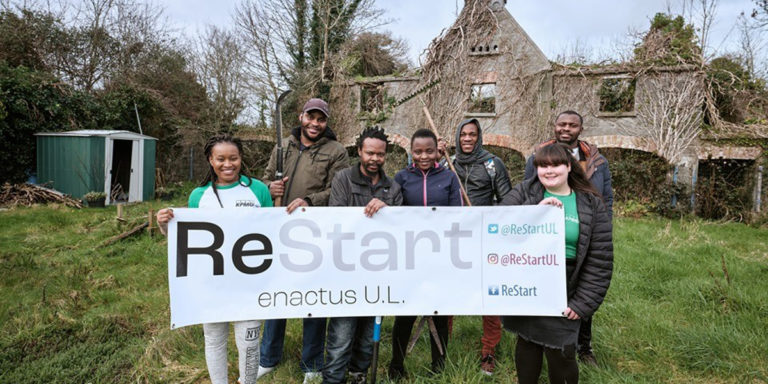
But not all people feel the same way. In fact, many are very much in favour of helping these immigrants become part of local communities. ReStart, an Enactus social enterprise based out of University of Limerick (UL), counts itself very much in this camp.

Here, team member Sikhulekile Ruth Ndlovu speaks to Kirsty Tobin – in an interview conducted in collaboration with Enactus – and gives us some insight into ReStart’s work and inspiration.

Can you tell us about your project?

ReStart is a social enterprise that aims to integrate refugees and asylum seekers into the Irish community. To do this, we have developed several initiatives with integration at the core.

We are currently focused on the following:

ReStart Cooking

Refugees and asylum seekers living in local direct provision centres, together with members of Enactus UL, participate in weekly cooking sessions.

ReStart Cooking takes inspiration from around the world, cooking traditional dishes from countries including India, Bahrain and Zimbabwe. This food is then sold at the ReStart Cooking stall every Wednesday in UL.

The stall is operated by refugees and asylum seekers who are taught the necessary business skills, such as marketing and accounting, by members of our team, empowering them to run the stall.

Last semester, we had our first catering event (during UL Sanctuary Week), and are looking forward to further expanding into the catering market to grow ReStart Cooking over the coming year.

ReStart Gardening

We secured use of a plot of land at Knockalisheen Direct Provision Centre, where we hold gardening sessions twice a week. At these sessions, members of Enactus UL and the local community come together with refugees and asylum seekers to work the land.

The process of preparing the land has been long and hard, with lots of rocks and long grass to be cleared before the planting process could begin, but thanks to the hard work and dedication of everybody involved, fantastic progress has been made.

Many people living in direct provision face issues such as isolation and loneliness. According to a 2013 report conducted by the European Commission Against Racism and Intolerance, 90% of people suffer from depression after six months of living in the direct provision system.

Our vision is to connect ReStart Cooking and ReStart Gardening by growing produce for the cooking process at the centre, ensuring an organic and more sustainable product, while keeping community integration at the core.

What social need does your project address?

ReStart is focused on the United Nation’s Sustainable Development Goal 10 – reducing inequality within and among countries – and has its sights set on integration.

We conducted our needs assessment by visiting Knockalisheen and Hanratty Direct Provision Centres in Limerick and speaking to residents. Of the refugees and asylum seekers we surveyed, 73% stated lack of integration opportunities is a problem within direct provision.

Through ReStart Cooking and ReStart Gardening, we are fostering positive integration of refugees and asylum seekers with members of the local community.

What first stirred your interest in this area?

Before joining Enactus UL, I experienced what it’s like to live in direct provision. I then realised that change doesn’t have to come from someone else. From my own experience, and through my passion, the impact of ReStart will be beneficial in creating awareness and educating everyone that asylum seekers do have something to offer. Enactus has given us the students, and a platform to bring about change.

What prompted you or inspired you to get involved with Enactus?

I had heard about Enactus through college and, with some of my friends being active members, I learned of the positive impacts social enterprises can have on society.

I was looking for a project that would help to develop my communication skills and creative thinking, and something that would allow me to give back to my community. Enactus and ReStart were the perfect fit.

What have you learned about social enterprise and community-focused entrepreneurship since starting this project?

I have learned that setting-up and running a successful social enterprise is hard work. It takes dedication and teamwork but, when these factors come together, the results of a community-focused project are worth the effort.

Being able to share food, recipes and stories with people living in direct provision drives me to want to make this project a continued success and to always keep people at the core of our social enterprise.

Why do you think social enterprise matters?

Social enterprise is extremely important in today’s world as there are still issues that need to be addressed, such as the growing problem with climate change and immigration. Social enterprise gives young people the opportunity to tackle these problems with creative solutions, which in turn have positive repercussions in society.

Do you think you’ll work to develop social enterprises after graduation, or even continue to grow your Enactus project?

Definitely. Having witnessed the impact a simple change or idea can have on a community, I want to continue developing new projects that can have a positive impact on the environment and on society.

What advice would you give to students considering developing an Enactus project in the future?

To develop projects in areas that they are passionate about. If you believe in your project and the effects it can have on society, then you will be more proactive in transforming your idea into a successful social enterprise.

Updated, 12.20pm, 3 October 2019: Sikhulekile’s response to the question ‘What first stirred your interest in this area?’ was altered to provide further clarity. 

Different Strokes for Different Folks: A guiding light in stroke recovery

They set up the voluntary group for people between the ages of 18 and 65 who have experienced stroke or brain injury, and the group has established itself as a monthly fixture in the Silver Tassie Hotel in Letterkenny. There are up to 50 stroke survivors living in the county.

As Mountcharles-based founder Larry Masterson said: “Everyone in Different Strokes for Different Folks wants to help other stroke survivors, as they have been helped themselves and feel like they can give something back.”

The group meets on the last Wednesday of each month (11am to 1pm) and people come to share their stories and offer support to each other.

Larry was a national figure for years in efforts to bring people together to engage in social farming. In his day job, he was a social worker with the HSE.

This experience stood to him after he had a stroke in 2014. Coming out the other side of it, he saw the need for a support group in the county for survivors.

A new perspective

Following his stroke, Larry had speech difficulty and cognitive issues. His memory and speed were affected, as was the way in which he processed his thoughts, solved problems and managed complex daily activities.

Despite this, he has been in recovery for the last few years and cites the support from his loving and brilliant wife Winifred and their son Patrick.

“I couldn’t have done it without them,” he said.

“As the days turned into months, I slowly began to realise that despite my best efforts, I was a different person. I began to accept my new challenges and limitations instead of continuing to fight what I knew in my heart to be true,” Larry said.

Larry remained positive by learning to redefine what ‘normality’ meant to him. He changed his focus, knowing he had graciously been given a second chance.

“My eyes were finally opened; each day truly is a gift and tomorrow is never, ever guaranteed,” he said.

A group of their own

Different Strokes contact details graphic
Interested in getting involved with Different Strokes for Different Folks? Contact the support group on the phone number or email above.

“When I returned home from hospital, even though I had good support from my family and from the HSE Therapy Services, it [was] still an isolating and challenging place to be,” he said.

This motivated him to set up DSDF with fellow survivors Neil Sweeney and Kathleen O’Donnell.

After attending meetings with the community neurological rehabilitation team in Ballybofey, it dawned on Larry, Neil and Kathleen that it would be beneficial if they were to form a group of their own to allow stroke survivors to meet regularly in a wider social setting.

A comfortable space

Now, the DSDF’s monthly meetings provide a comfortable and safe space for survivors. Socialising can be difficult following a stroke, as communication is affected, but, in the group, people could feel relaxed.

Although Larry – like others – was unable to return to work after his stroke, volunteering helped to give structure to his day and purpose to his life, and built his confidence.

“I may not be able or ready yet to write newsletters…but I have a ray of positivity around me. I’m the greeter and I make everyone welcome on board. I make sure no one in the group sits alone. That motivates me,” he said.

A new you

“I have learned to take each day as it comes and to celebrate even the smallest of victories. When self-pity or depression tries to rear its ugly head, I simply close my eyes, put my hand over my heart and soak in the precious feeling of a beating heart.

“No matter where you are on your own journey, I just want to encourage you to live your life to the absolute fullest. The first step in doing so is learning to love the new you, no matter how broken or damaged you may feel,” he said.

Main photo: Trevor Cole/Unsplash

Stroke activist Larry Masterson on why he volunteers

Larry Masterson from Co Donegal leads the voluntary group Different Strokes for Different Folks, which he founded with other survivors after suffering a stroke five years ago. Here, Eoin Murphy gets some insight into Larry’s life:

What are you reading at the moment?

David Roland’s How I Rescued My Brain. It’s the story of David’s neurological difficulties and his remarkable cognitive recovery. It is also an account of a journey to emotional health and wellbeing.

What’s the last film you saw?

Tolkien. It was excellent, capturing the Tolkien spirit and magic. Its depiction of his childhood experiences and Oxford student years, together with subtle hints and images of the books to come, was well-balanced.

Person you most admire?

Ruairí McKiernan, born in Cavan. [Ruairí is an Irish social entrepreneur, innovator and campaigner on youth, community, health and social justice issues.]

The top four issues in Ireland today besides the economy?

Overcoming inequalities and defending human rights.

Climate change – reality needs to take hold.

Walking the walk to a better future.

Sustainable development goals outside of Dublin – taking stock.

Nationally, we need…

A good plan covering all the areas addressed in the Irish Heart Foundation’s Stroke Manifesto, with a commitment to providing multi-annual funding to execute this strategy.

We need less

Luxuries. And more health care services. We have been conditioned to believe that luxuries are a necessity; that we need things that most of the world doesn’t even dream of having.

What we need is very little: a few changes of clothing, a pair of shoes, perhaps a few toiletries (toothpaste, deodorant, soap), some food, a roof over our heads. There are other things, I’m sure, that you could consider.

What’s the best thing about the group you volunteer with?

Four years after my stroke, while trying to recover and process everything that happened to me, I founded Different Strokes for Different Folks and quickly became aware of our volunteering opportunities.

I’m determined not to let anyone go through the same horrible experience as I had. I remain one of four active Stroke Ambassadors and I play an active role in almost all of our campaigns.

What could your project/organisation improve on doing?

Raising awareness about age and stroke.

Confusion still occurs around the age bracket of people who have strokes. This confusion occurs because there are still articles published that state that strokes in the young are rare. Hence, people still shrug it off, saying, “It won’t happen to me – it only happens to the elderly”.

How long have you been volunteering?

Three years now.

How and why did you get involved?

I volunteered to change our community. To be willing to help a neighbour is what it’s all about.

Volunteering empowers you.

How can people change things?

The most influential voice in public policy is yours! We influence stroke-related policy by engaging decision-makers at every level of our government.

Telling your story can help others.

What motivates you as a volunteer?

Volunteering is a great way for many people to move forward. I first started volunteering in 2016. I was unable to return to work and volunteering helped give me structure and purpose, and build my confidence.

Volunteering makes you feel good and wanted. Plus, it keeps us out of trouble!

Larry is very active on his personal Facebook page, and an inspiring person to start your day with. The group’s Facebook page is a useful resource for those recovering from strokes.

Nominate a Volunteer call to action

ILDN Awards: No new business can succeed without support

0

On 16 May, Tullamore in Co Offaly became a temporary home to 17 of the country’s best small businesses. They were finalists at the ILDN National Enterprise Awards, celebrating entrepreneurs who were supported by the Back to Work Enterprise Allowance (BTWEA) and Short-Term Enterprise Allowance (STEA).

Margaret O’Connor, the owner of Clare-based millinery Notions, took top prize.

Growing company for growing kids

The founder of Ky Ky Kids, Sharon McDermott, from Cork, set up her business in 2016 after living in Turkey for more than two decades. Its name, Ky Ky Kids, originated from mispronunciation of her son Kaya’s name.

Sharon began with bedding for children and has grown her business to include the design and manufacture of baby clothing and gifts.

Returning to Ireland, she found officialdom difficult, judgemental and frequently insensitive. She had run shops in Turkey, so she had business experience, but it was not until she met Tony O’Regan, enterprise officer with Cork City Partnership, that she felt truly supported.

“I went to his office and I actually felt human,” she told us. She said that the BTWEA provided “a little support that meant so much”, and it went towards paying “part of the mortgage or the petrol” while she set up her business. Today, her product line is available from retailers in Ireland, Britain and mainland Europe.

Sharon said: “As a finalist, it’s lovely to be recognised and honoured by your peers. Everyone has a story, and life isn’t wonderful for everybody all the time. We all need community and now I appreciate that so much.”

“It’s lovely to meet like-minded people who have gone along the same journey because it’s not easy,” she said.

Tony, who accompanied Sharon to Tullamore, said: “These awards recognise the efforts and the input from people who have started a business. They recognise their endeavours and achievements.”

Baby steals the show

Rachael McCabe with her newborn baby Phoebe
Rachael McCabe with her newborn baby, Phoebe. Photo: Ray Lucey.

One of the Border Region finalists, Rachael McCabe, stole the show by bringing along the event’s youngest attendee. Her third daughter, Phoebe, had been born just two days before the awards.

Rachael was determined not to miss the event, though, and her passion and drive for her Sound in Motion music school was clearly evident.

Rachael was a lone parent and part-time music teacher, but she always had an ambition to become self-employed. When she approached Breffni Integrated Development, they helped her draw up a business plan.

She converted her garage into a purpose-built studio and, by the third year, all was going well for her. Today, she and a team of five tutors teach music and mindfulness from the studio.

Rachel agreed with Sharon McDermott that the BTWEA provided a “really good security blanket”.

Couple see clear to success for glasses company

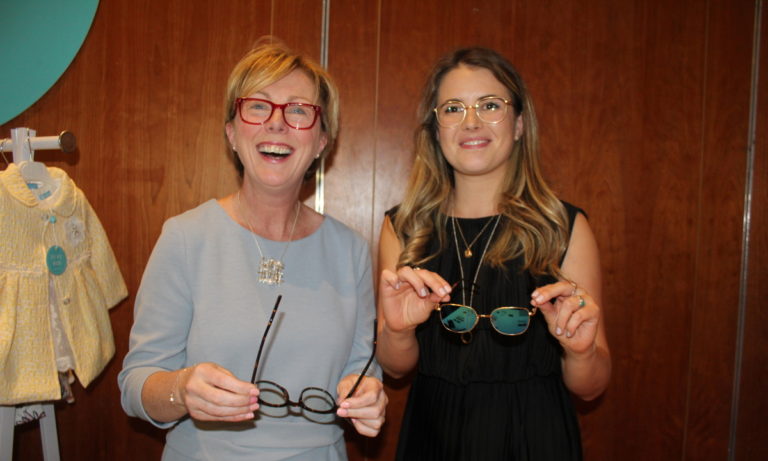
Sacha Cahill, who is in the eyewear business with her partner, Daniel Nugent, said that “starting a business with a young baby is really risky, but the BTWEA gave us the reassurance that we could actually do it”.

Their company, Ambr Eyewear, is serving a new market in Ireland from their base in Dún Laoghaire.

“Our computer glasses block the blue light from digital devices – any laptop, phone or television screen. The blue light is bad for your eyes. It gives you headaches, sore eyes [and] blurred vision, and stops your body producing [sleep inducing hormone] melatonin, so you can’t get to sleep as easy. When you wear the glasses, you’re protected from all those side-effects.

“The lenses are baked with a pigment that block the blue light.

“There’s a big company doing this in America, there are two in Europe and two in Australia. It’s very new in Ireland, but it’s going to be huge,” she said.

If interested in protecting your eyesight, Ambr Eyewear can supply to anywhere in Ireland.

The ILDN National Enterprise Awards were organised by the Irish Local Development Network (ILDN), the umbrella organisation for the local development companies that support businesses to start up. The Tullamore event celebrated the finalists from regional rounds.

Struggling to read this? Social enterprise Dyslex.ie can help

0

At a time when 6% of Irish university graduates are functionality illiterate (or have a low level of basic literacy), doing everything we can to make life a little bit easier becomes essential.

It wouldn’t stretch the imagination too far to suspect that at least some of that 6% are affected by dyslexia, which is increasingly becoming something that can be managed and helped by increased awareness, a push for accessible reading materials and some newly fledged technology.

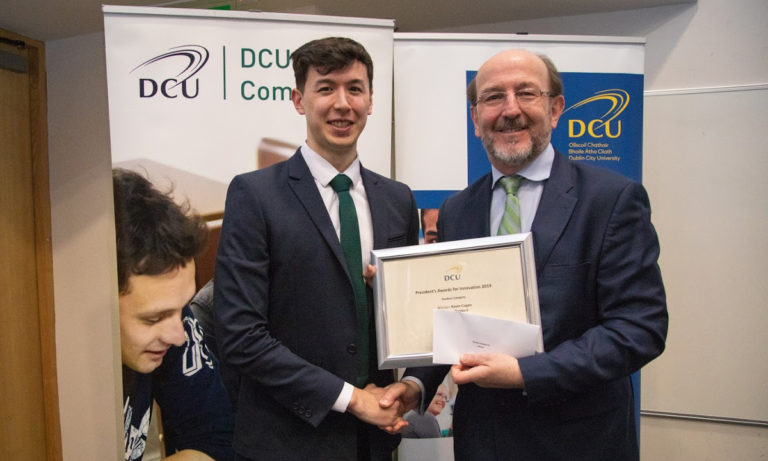
Dyslex.ie is a Dublin City University Enactus project that definitely falls into that latter category. Here, project leader Kevin Cogan speaks to Kirsty Tobin – in an interview conducted in collaboration with Enactus – and explains Dyslex.ie’s background, telling us how he thinks the Google Chrome extension can make a difference.

Can you tell us about your project?

One in 10 people in the world today is affected by dyslexia. Take the 14,000 students in Dublin City University (DCU) as an example: on average, a staggering 1,400 students struggle to read and write accurately, often hindering them from achieving their full potential.

Dyslex.ie is here to tackle that problem head on. Dyslex.ie is a Google Chrome extension that helps dyslexic people to increase their reading speed, and reduces the number of errors while reading online content, by making the websites more accessible to the dyslexic community.

What social need does your project address?

Dyslex.ie aims to fill the need for more online resources for the dyslexic community. Currently there are few to none available or easily accessible. Dyslex.ie tackles all these issues.

What first stirred your interest in this area?

It began years ago in Transition Year. We were doing a mini company module where we had to create a product to sell. Three out of the four members in my group were dyslexic and one suggested we sell our own dyslexic-friendly books, as we had seen a company selling them.

We did research and found out what to do to make the books more accessible. However, we stumbled upon an issue: we discovered that each person’s dyslexia is different; while one person might like a light yellow background, another might like a light blue one instead. We could not overcome this issue – not on paper, anyway.

When I arrived at DCU to start my first year in computer science, I found the missing piece that was hindering Dyslex.ie from progress: the adaptability of computers. Now, each user could modify the screen’s appearance to their heart’s content. Dyslex.ie was reborn that day.

What prompted you or inspired you to get involved with Enactus?

I have had a passion to help people and to set up a business from a young age and, with Enactus DCU’s great reputation and success throughout the years, it was an obvious choice to get fully involved.

After spending a year in Enactus DCU, I realise it’s a lot more than just a social enterprise society – it’s a family. Seeing all the people who are just as passionate about social enterprise as I am is amazing. That’s the major reason I joined Enactus DCU.

What have you learned about social enterprise and community-focused entrepreneurship since starting this project?

Having been involved in social enterprise for a year, I more fully understand social problems and the effects that they have on the world and its inhabitants. These problems can sound terrifying, but I see them as a challenge that can be solved with innovation and collaboration. No problem is too big to be solved.

Why do you think social enterprise matters?

Without social enterprises, the world would be a different place today. Perhaps even a more unwelcoming one. Social enterprises make a huge difference to society, as they create a better future for everyone. It’s the small differences each social enterprise makes every day that make a massive impact in the long run.

Do you think you’ll work to develop social enterprises after graduation, or even continue to grow your Enactus project?

I definitely want to set up my own social enterprise when I graduate, as it goes hand in hand with being a computing student – our job is to solve problems with the use of technology.

However, I am only a first-year student so graduation is a distant thought for me. For the meantime, I hope to develop Dyslex.ie into a fully sustainable social enterprise, as well as trying to launch my other social projects for next year.

What advice would you give to students considering developing an Enactus project in the future?

Every project is a rollercoaster ride – you experience the up and down. It’s important that when you do hit the brick wall, you still persist, as setting up a business is hard work. If it was easy, then everyone would be an entrepreneur. However, when you overcome the brick wall, take just a moment to celebrate your achievement and then get back to work.