It’s strange because anxiety has alway had a stranglehold on my brain but in this age of panic I’m calmer than ever. It’s easily explained though with nothing to do but surrender. I ve had plenty of practice at that over the last few years. Anyway, I rejoined humanity last night as I thought of the children and felt my first fear.
It was the middle of the night so to still my thoughts I composed a little prayer with the agnostic in mind:
Great Mystery, unknowable creator of time and distance
Whose awesome forces lie but glimpsed to finite senses
I surrender fear to a power that formed matter from void
That has all things known and all things considered
And answers unseen to questions unknown
I pray you reveal deep secrets to anxious souls
That forces of creation forming laughter and love
Soothes the fears of our innocent race
Whose mightiest study knows not the whys
How cataclysmic terrors reveals greater truth
And in dark times we grow strength within.
When we rise from this long sleep
Filled with dreams of wretched loss and unending hope
We stretch tall and strong for a better Earth.
The sun came out and brought the crowds to the beach forcing the Gardai to close the car park. While some are responding to crisis with a thought to the vulnerable it seems others haven’t grasped the gravity of the situation yet. It’s a shame because if people can’t take it open themselves they will bring martial lockdown on all of us.
I can’t judge though. Not many years ago I would have acted with the same ignorant bravado. I understand where it comes from and in different circumstances ignoring authority can be the right thing. I guess they will have to learn the hard way. It’s a shame others will have to suffer the painful consequences but honestly, has that ever stopped any of us? We all buy the products of child labour, if you are reading this on your phone you certainly did. I feel Covid is gonna teach us a thing or two about the tragic links between actions and consequences we have been sheltered from in the rich Global North. I am staying out of judgement, all I can do is mind my own patch.
It’s clear the fire brigade has made me more responsible. I applied for HSE On Call today. Soldiers to the front and all that. The response has been massive so I don’t expect a call back but we have no idea of the task facing us yet. It’s easy for me to isolate. I get great support from my baby mamma so if I were to get sick I could quarantine myself easily. I feel a sense of duty to answer the call simply because I can. Anyway, there’s lots of good stuff on Netflix so for tonight it’s over and out.
Aldi was surreal. Fresh food was gone but having planned my nutritional requirements for end times in many bored moments throughout my life I had the solutions. Did you know a jar of Nutella has more than the recommended daily intake of calories in it? Just in case you have to make a run for it. I could probably hold out a month at this stage, longer if I rationed. Although I couldn’t have enough cheese which stays in date for longer than I expected. I must buy a few more blocks to supplement my more than adequate Worcester sauce stock.
Maybe I was paranoid but people seemed edgy when I let a sneeze go in the vegetable aisle. Normally I’d be the type who gets a kick out of farting in an elevator but humour was in shorter supply than bread yeast. I guess I wasn’t the only one with an urge to learn to bake. I had a bit of craic with a girl working in the meat aisle – they deserve a bit of laughter. “You know zombie apocalypses always start in supermarkets.”
“As long as it starts in the drink section.” she replied. A work colleague I met in the drinks section had already planned for that eventuality “Swipe, swallow, smash, stab” he gestured with shaolin precision.
I’d be nabbing the Stilton cheese but we all have our priorities.
I think stocking up on canned goods as our grandparents did is always a good idea at the best of times. Food supply lines are irrationally long – potatoes from South Africa never made much sense. A couple of months worth in the press would insulate us from the shock of a cataclysm, buying us time to get the first local harvests underway.
I wonder is this virus Mother Nature flexing her own immune system in an effort to get us to cop the f*** on? If it is not some kind of military experiment gone wrong, or right, as some speculate then it is simply a natural process. With the last exotic ecosystems squeezed by our increasingly insatiable and rapidly growing populations more nasty surprises, hitherto hidden in their depths could be unleashed onto our hubris.
It turns out these musings might qualify me an eco-fascist. Aw well, sincere hostility trumps insincere virtue signaling despite what my counselor says on the subject. You know where the block button is and I know I deserve to die because I’ve been willfully and knowingly complicit in filling the air with carbon to satisfy my lustful pleasures. We damage and undo all of nature’s intricate systems with their inbuilt failsafes for unnecessary comfort. How then can we be shocked when the natural world bites back? This, I suspect, is the start of things to come. Already there are signs of a healing Earth as we shut down and stay put. If we don’t use this opportunity to follow through a 1 in 30 virus might be the least of our worries when our children come of age.
In contrast my increasing hope for the species is a pleasant surprise. I have to give another shout out to the shop staff. Sometimes in history people are called and they have responded, my heart swells with love for them right now. If they can we can. I felt the same love for my fellows who looked anxious or scared like the passing acquaintance holding her months old baby. How must it be for nursing mothers right now with their instincts raw primed to protect at all costs? Despite the extraordinary situation the atmosphere was reserved and respectful, nothing like the Christmas terror-dome a few weeks previously.
Around the town, novel ways of doing business are beginning to appear. A tent was erected outside the hardware store where signs advised people to put in their order via phone. There is a boom in delivery services, voluntarily or otherwise. These community support systems seem to be growing as exponentially as the virus is spreading.. Let’s hope the healthcare system is responding likewise. From the increasingly detailed risk assessments and protocols we are getting from work I have no reason to suspect they are not. Everyday buys them time to get more beds and equipment into the front, more staff trained and more knowledge in how to deal with the surge we are told is inevitable. Soon they will be up. It’s time to bring our A-game.
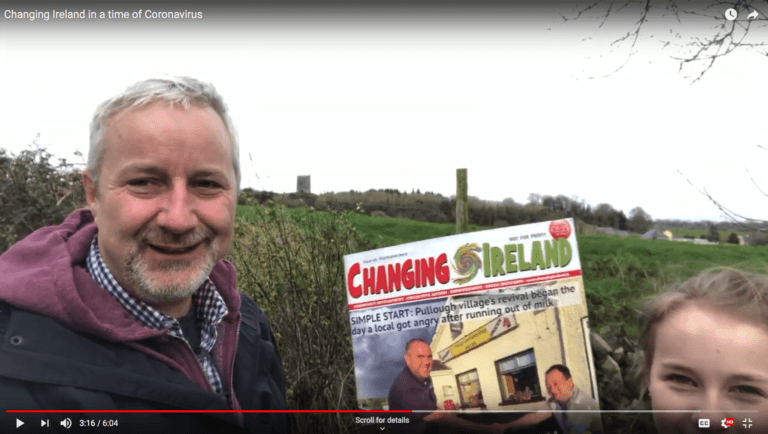
This is the first broadcast by Changing Ireland since a microscopic virus changed the way many people live. It is the first in a series and, between difficult times, we will bring you news from communities and the community sector in Ireland and provide encouragement.
Here, I suggest three great books to read. In the video, a family member also makes a star appearance half-way through to tell you about the magazine I love most. Yes, you’ve guessed it…
Right now, we have 5,000 copies of our Spring edition to distribute. All libraries and many places we post to are closed, but we’ll get ‘Changing Ireland’ to you in print and/or online.
We were also talking to Easons about expanding distribution through Centra and Spar stores, etc. A further update on this will follow.
My three book recommendations are:
– ‘THE ENTERPRISING COMMUNITY’ By Dr. Senan Cooke.
– ‘LIFE, DEATH AND HURLING’ by Michael Duignan.
– ‘THE BOY WHO WANTED TO FLY’ by Don Mullan.
We have a lot of time to think. At least the ones of us who are keeping socialising to a minimum. I feel a seeping judgmentalism creeping in as people in my town seem to be carrying on as normal. I always thought I was the irresponsible one and for much of my life I have been but other people’s health is at risk.. Not that you’d know it by reading my journal which betrays my blase attitude towards life and death and crisis’ in general. Today I have been reflecting on that.
My first experience of death was when my dear great aunt died, I was 11. I was on Scout camp when I heard. I remember being surprised that I didn’t get upset over an event I had dreaded and felt that perhaps I was growing up. Strangely I had always been a little afraid of the dark but the fear left me after that week.
When I was 18 a favourite cousin of mine died of AIDS. He owned a bed and breakfast in Blackpool with his ridiculously camp boyfriend. We had great times as teenagers exploring our new freedoms in the famed seaside resort under his liberal care. He was one of the few of my extended family I bothered with. I went to work instead of attending his funeral.
In my twenties my nana died. She was the only person who loved me unconditionally. When she died I shed a tear for the briefest of moments but it actually made me happy. I knew she wanted to rejoin her husband and mother who had both departed short years earlier.
I have been blessed not to have suffered grief like others I have known. No parents at a young age or partners or God forbid children. My cousin aside, all the bereavements in my family line have been in timely order. I have witnessed the tragic loss of close friends’ parents far too young. Speaking to that friend today she told me “she was glad she didn’t have to worry about them right now.”
I look back at my nonchalant attitude to my loved ones passing and wonder if there is something wrong with me?
My great auntie was a strong matriarchal influence in my formative years. A refuge for my sister and I as my mother negotiated a divorce. She was the connection to the wealth of my family’s past, living in a plush house in an upmarket suburb, the family historian whose memory seemed to stretch back deep into Victorian times. I have vivid images of times spent in her garden. When I think back I can recollect the smell of the linen in the beds we used to sleep in and how she nursed me after a traumatic operation. I know our involvement in her life brought her great joy. It might have been years since the last time I thought of her. We were around for her while we could be and then she was gone.
My cousin had been disowned by his close family for being gay. It didn’t bother the teenage me. I was always a black sheep myself so I empathised. Back in the nineties HIV was still a death sentence unless you were Magic Johnson. When AIDS took hold it took him fast. I remember his five stone frame lying on his deathbed. The heating was turned up so high it forced me to leave the room and vomit. None of his other family, the ones that attended the funeral, visited him. I was there while he was still living, held his hand as his life drained away and then he was gone. I didn’t really think about him much since.
My nana knew she was dying but she didn’t let on. Hers was the most stoic of demises. In the end it turned out she was riddled with cancer but not once did she visit a doctor. The day I called one out to her was the only time she had ever got angry at me. Fate was kind to me there. Circumstances unrelated to her hidden illness meant I moved in with her for her last year of her life. We had many long conversations into the night over bottles of Scotch. She took pleasure in annoying me by talking when she knew I was engrossed in a TV programme. Her decline was quick. On reflection she had taught me a lot about dying, her mother, who she nursed and her husband, a concentration camp survivor both died from cancers a few years earlier using whisky as their only medication. There wasn’t much fanfare, no hysterics. I don’t really think about any of them now, only if in rare dreams while I sleep. I was with her in her sickness and then she was gone.
Today was the first time I had consciously pieced those experiences and attitudes together but I had recently been forced to examine my attitude towards death in a different way. As I toyed with joining the fire brigade I thought about the things I might see that I would rather not and wondered if blissful ignorance would be better for my mental health? An alternate thought forced itself into my consciousness. It told me, bad things were happening whether I was sitting on my couch avoiding them or actively witnessing them. If I wasn’t willing to be there in a crisis how could I expect anyone else to be?
Faith in something helps. I have a bit of faith nowadays and it isn’t blind, rather it is built on the logical rationale that fearing an unknown inevitable is futile and will lead me to madness therefore I might as well think of the thing that gives me peace. As i read in a poem recently, dying has “had a bad press”. It is simply unknown. Unknown is neutral at worst, exciting at best, unless you believe in damnation but I can’t help anyone with that. These are just the words that a grown-up vocabulary can use to explain what I had instinctively thought as a youngster. No-one had taught me how to respond to loss, it’s just how I reacted. Is it the wrong way?
Now we are in a time where a lot of loss seems inevitable and I wonder will I be able to grieve like everyone else? To be honest I don’t think that I will. I am not worried about my parents. Soon it will be my turn, who knows when? People have accused me of being breezy or amoral and maybe I am. Perhaps I am not well in the head at all? I will certainly write with inappropriate sarcasm, badly timed ironic prose and hold views that may not be palatable in polite society but I am determined to journal how I honestly feel.
Christ was reported to have said, “let the dead bury the dead”. It’s helping the living I am interested in. So I take all my precautions. I cocoon myself out of the public as much as possible and when i am called to an emergency i respond. I pray my efforts are worthy.
I’m bored now – you must also be too if you are reading my daily diatribes. If I drank I’d go to the pubs but I don’t and they are shut down. The cafes are open though. I’m not sure how pubs and cafes differ in these circumstances, but a clientele that puts freshly imported brazilian beans into plastic cups on environmental grounds should have convincing enough levels of cognitive dissonance. I think I’ll pass though, I’m not keen on eating off shared cutlery at the best of times.
A walk down the mainstreet tells me I’m good at social isolation. It’s easy enough people have always crossed the street to avoid me. No one else seems to be taking it as seriously as me but then why should they? Natives are immune it seems. Despite the first cluster in Ireland unwittingly going about their business around the town for two weeks in work and school without being diagnosed, no one else has caught this super contagion with an infection rate of 2.4. Okay so.
We had our first call-out today under our new COVID protocol. One thing is certain, our fire-engines don’t have the virus. Following the bleach cleaning we gave them back at the station they probably won’t have any paint on them either in the morning. We are nothing if not diligent. We sprayed each other down with a chemical concoction. Then we sprayed the bottles we sprayed each other down with. Then we sprayed the bottles that sprayed the bottles that we sprayed each other down with. One unlucky lad is going to be spraying bottles long after the virus has been consigned to ‘Reeling in the Years’.
Six of us went out in two vehicles, we might have just made the two metres but someone’s belly got in the way. It put a dent in the long days. I was grateful for the call. With spring halfway through the open fires will soon be dampened and there is already a lot less traffic so things could be quiet. If that’s the case i might look to other ways of helping should the crisis escalate. The HSE is appealing for staff. I must check it out.
No entry yesterday because Paddy’s day was cancelled along with all our plans, ambitions and designs. The current reality of social distancing and self isolation has meant doing nothing is the new dynamism. I am trying my best not to be content. My son rang up worried about college and work: “What can you do kid?”
My Mum rang up worried about brake-pipes on her car: “What can you do?” I could worry about my job, my rent and the gym being closed but sure, what can I do?
Right now all of us are getting an enforced lesson in acceptance. I’m good at “f*** it.” For someone as lazy as me it’s OK, I am trying to feel anxious like everyone else, I promise I am. With nothing to do and a good excuse for not doing it I’m not feeling anything at all. I wonder if I would enjoy a stretch in prison? I suppose I ought to apologise for the inappropriately glib tone of this piece in these dark times but it’s a journal, it’s how I feel right now, these are my feelings, how I cope, what can I do?
Unusually, I find myself worried about the economy. Not for me, what difference will a depression make to somebody who owns nothing? I rather enjoyed the last recession. I never fully managed to recover my Celtic Tiger work ethic. I’m toying with the idea of taking up weed again to chill my way through the post Corona downtown if I find myself on the dole again . Why I am truly concerned for is people who rely on healthcare. I have this awkward notion that another round of austerity years brought on by this strange juncture in history will kill more elderly and vulnerable souls than the virus itself. Do we have statistics for the last recession?
Leo gave a rousing speech. Someone might have mentioned that quoting Churchill was a little passe. I’m glad he mentioned the shop staff and hauliers though. Perhaps he reads my Facebook. He said that we will tell our grandchildren about the year Paddy’s day was canceled due to this virus. I suspect they will have more pressing concerns as treatment resistant malaria, ancient unknown pathogens released from melted ice caps, and new and bothersome STD’s spread via Tinder, plague a warmer Earth. I think the Covid-19 response is good practice for times ahead. We could do worse than extend the global shutdown until we have figured out renewables, we are a here and now kind of folk though with weekend city breaks to resume.
Nothing to report from a firefighting perspective. Today’s Irish Examiner reported 999 calls are down. 112 works too if you want to show solidarity with the EU and don’t forget your eircode! Bare patches always make me anxious. Too much time to think about the next call. Eventually, I end up staring at the alerter hoping it doesn’t go off. I wonder do my colleagues feel the same? Probably not, they’re braver than me.
Measures have been put in place. We are to don our fire kits in different parts of the station. Minimum crews are to travel in the maximum number of vehicles, to keep two meters apart in the cabs – cue a new wave of fat jokes. Disinfectants and breathing masks are ready. It’s going to be awkward but we will do our best.
Covid-19 has shown us what deep down we know but pretend isn’t true. We are not in control. Our best laid plans, our dreams and goals, they can be extinguished in a day. I wonder, is humanity learning the freedom of throwing its hands up in the air and saying “what can you do?” And when you think about it long enough the answer will come to you. So hopefully you’ll figure out your own.
[et_pb_section fb_built=”1″ _builder_version=”3.22″][et_pb_row _builder_version=”3.25″ background_size=”initial” background_position=”top_left” background_repeat=”repeat”][et_pb_column type=”4_4″ _builder_version=”3.25″ custom_padding=”|||” custom_padding__hover=”|||”][et_pb_text _builder_version=”3.27.4″ background_size=”initial” background_position=”top_left” background_repeat=”repeat”]More times I rise, make a coffee, eat some breakfast and take a crap. Nothing worse than getting caught short when the alerter calls you to action. I play the percentages, the longer we put off the basics the more likely we are to suffer. It’s a strange way to live really, never knowing when you have to spring into action.
There is no discernible pattern to the calls. Three in one day, none for a fortnight, 3am, jump out of bed, 8.15 am, “Sorry kid, you’re gonna be late for school”. I love the calls in the middle of the night. Sleep-to-wide awake in two seconds – shoes on – out the door. Within five minutes the brigade has rallied and we are on the road, psyched for whatever mission the fax-machine printout has ordained for us.
It’s the WAGs I feel sorry for. I wonder if they fall back to sleep or lie awake wondering what we’ve been called into? Luckily for whoever, I’m single and will likely stay that way as long as I’m tied to this job. It must be hard for partners; nights out are strictly controlled by a time off book. Shopping trips to Ennis have to be planned with the foresight that civilians use for booking a weekend getaway. Spontaneity is out of the question. Any activity might be cut short – I once rocked up to a call on a dose of Viagra.
A lockdown is nothing to me. Most of my life operates within five minutes or 1.5 miles of the fire station anyway, killing time, waiting for calls. I don’t mind, I am inherently lazy and in this job that might be a character asset. Other lads have jobs, self-employment can work. I handed out my CV all over town but who wants to hire someone who has to drop everything in a heartbeat? I do a few bits in a hotel when the tourist season starts, I go to the gym, sometimes meet friends, just generally potter around. It can be hard in summer when everyone else heads to the alluringly close beach leaving me scratching my balls waiting for disaster to strike. I console myself with my lowered carbon footprint, we should all learn to be content with less travel. Still, if any of you know any retained firemen without families, call in to them, I’m sure they’d appreciate it. They give up a lot to be there when you need them.
I should probably write a book or something. I’m time rich and love that I have the opportunity to be around my son, he thinks it’s great. He loves to hear about the calls when I return and the training I do. He says he wants to be a firefighter. He knows all about backdrafts, flashovers, pyrolysis and hose techniques. We watch youtube videos of burning buildings together. I’m certain he will make a better fireman than me, he’s so bloody fit and smart.
The initial training was designed to prepare us for the worst eventualities and when to say “No, we can’t go in.” Trust me when I say if there is a chance for you we are going in. I’m so grateful I got the opportunity at an age in life where boot camps seemed improbable. It was a challenge. One lad in our brigade has climbed to the top of Everest and Kilimanjaro, amongst other things, and he told me that the breathing apparatus course was the hardest thing he has ever done. I felt like I tried my best just to finish bottom of the class. I’m not used to that, my poor old ego took a hit, but it was great craic once I got through the daily nervous breakdown. God probably thought I needed humility more than the merits. I think it must have changed me a little, getting us ready for whatever and right now the unknown is what we face.
I don’t know what our role will be in the Covid crisis? It’s entirely possible, with everyone safely indoors, that we won’t get any calls at all. If the State apparatus is overwhelmed we could be busier than ever, maybe the rumours are true and we are going full martial law. Really though, when all is said and done, today is the same as any other day for retained firefighters. If the alerter goes, if there is a job to be done, we will drop everything and go do it.
[/et_pb_text][/et_pb_column][/et_pb_row][/et_pb_section]
Diagnosed cases now number in the hundreds. There are certainly more. Soon there will be thousands and after that, who knows?
Rumours abound. Official denials of army lockdowns have not stopped viral chatter through the messaging apps. A rumour shared on a Whatsapp group that the fire service and army will be mobilised this coming Wednesday is the catalyst for me to write. Everyone has seen it at this stage. I’m receiving it from loads of unrelated people. I have heard nothing of the sort officially. It’s probably a hoax.
I cannot presume to know how other people feel. There is obviously fear and anxiety. Videos from Temple Bar show many are not allowing the reported crisis to stop festivities. We react how we react – these are unprecedented times. Myself, I can’t help feeling an excited anticipation and I make no apologies for that. Evolution throws different personality types into the mix, the building blocks of societies. All our personality types have a purpose. There is an electric air of foreboding in the calm before the storm.
The first troops into the melee are the workers in the supermarkets. Stoically going about their tasks as they cheerfully tend the crowds and restock the shelves stripped by buyers in varying degrees of panic. As social separation and self isolation becomes the new normal, voluntarily or otherwise, these unwitting heros will be essential in delivering our food supplies; the bulwark between peace and chaos. Healthcare workers, paramedics, soldiers, gardai, firefighters, we signed up for this shit. No one would blame shop staff from phoning in sick to protect themselves but they have become the first frontline. I hope, when this is done, we honour them.
We are witnessing other good deeds. Local business’ closing before it is enforced on them or offering deliveries to those who need them, as are citizens. I am surprised to feel hope that people have what it takes in the face of a crisis. I had rather given the species up as a lost cause. I might have to review my prognosis of humanity. The coming weeks and months will tell us a lot.
I suspect things will be different on the other side. Healthcare systems will surely prove inadequate in their current form. They will be forced to evolve rapidly. The economy too will grind to a standstill if the rumoured lockdown comes into effect. How will people pay rent, mortgages and utilities in the interim? Questions are being asked of the gig economy. Can people with no security and no savings be expected to voluntarily give up work and if they do will they be provided for? It seems a period of forced socialism will be inevitable.
Other pandemics have changed the course of history. Will there be a great recession in the aftermath of this current one. Will society boom as it did after the great influenza pandemic of 1918 or will Covid-19 simply fizzle out with minimal consequences as we seamlessly transition back to normal? These are questions that will be answered in time and not by me. All I intend to do is keep a journal of life as a rookie firefighter during these most unusual of seasons.
Jim Finn from Ballinahow, Co. Tipperary, has been appointed chairperson of the Irish Local Development Network, the representative body for the country’s 49 Local Development Companies.
In a voluntary capacity, Jim already serves as chairperson of North Tipperary Development Company and broadcasts extensively on community and rural affairs for Tipp FM. He takes over from Marie Price Bolger who led the network from 2015.
The country’s Local Development Companies deliver social and community supports services such as LEADER, Local Employment Services, the Social Inclusion and Community Activation Programme, Tús, the Rural Social Scheme, social enterprise supports and a range of other community and rural development programmes.
On becoming chair, Jim said, “there have been many positive, recent policy developments such as the publication of a national Social Enterprise Policy and the new 5-year Strategy for the Community and Voluntary Sector. But, many of our communities and disadvantaged groups are still reeling from the impact of disproportionate cuts over the past decade.”
His key priorities for the sector include securing:
– An increase in social inclusion funding,
– Protection and extension of community-based employment services,
– Adequate resourcing and simplified design of rural funds, eg LEADER.
He said the “bottom-up community engagement approach of Local Development Companies” was particularly suited to the climate action challenge.
He called for “consistent core-funding” for Local Development Companies who are “the primary delivery agent of much of the state’s response to unemployment and social exclusion”.
“I am also particularly conscious that our companies are governed by volunteer-led boards and I look forward to the full implementation of the ‘Sustainable, Inclusive and Empowered Communities’ strategy with appropriate supports for the voluntary, bottom-up approach that is so vital for our communities.”
Regarding the ILDNs value, Jim said it was the largest network of companies in the State for community development and anti-poverty work: “We have over 2,100 employees and 9,500 Tús & RSS workers on the ground supporting over 15,000 community groups and 173,000 individuals annually through €300+ million of state-funded programmes.”
Passionate predecessor, Marie Price-Bolger, made her mark
Marie Price Bolger
He paid tribute to his predecessor Marie Price-Bolger: “She led the network through a period of very significant funding and policy challenges. She served the organisation and the sector with great dedication, energy and fairness.”
Marie made a speech last year calling on the Government to look beyond private sector suppliers, stressing that it is volunteers who make communities work. She said, “Our sector consistently provides services on behalf of government departments in an efficient, effective and value for money model that cannot be matched by any private-sector programme.”
Directly addressing Minister for Rural and Community Development Michael Ring, who was in attendance, Price-Bolger asked him to bring to cabinet concerns about the privatisation of community work.*
– Help with funding application from Meath Partnership made a big difference
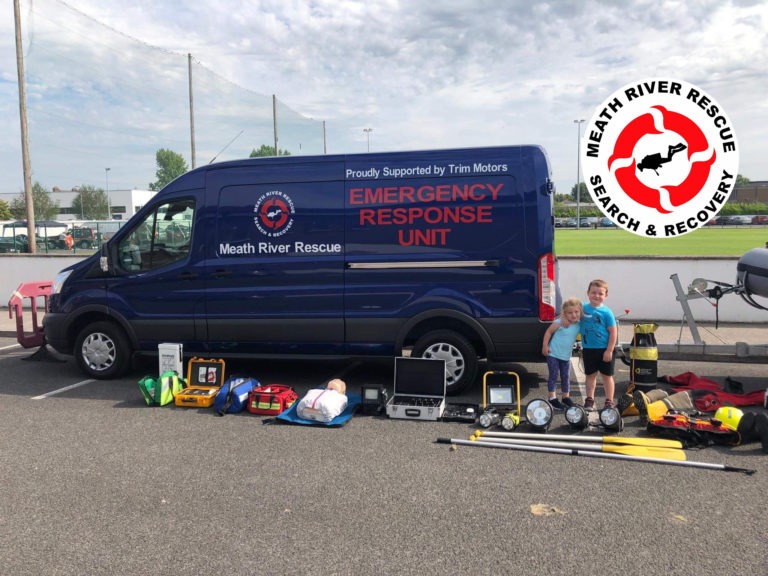
The group – entirely volunteer run – was established in Navan in 1996 and now provides a service in Meath and adjacent counties.
Most voluntary groups baulk at the administration and paperwork involved in submitting a request for LEADER funding, but Meath River Rescue turned to a knowledgeable local agency for support – Meath Partnership (one of 49 local development companies that provide countrywide coverage).
They have formed, over the years, a formidable bond with Meath Partnership.
1st project
Meath River Rescue operates out of a facility in Navan that was part funded by LEADER during the 2007-2013 programme.
This funding, along with private funds raised locally allowed the group to spend almost €400,000 to build and equip the boathouse to store their boats and equipment adjacent to the river, allowing for a better, quicker service and response time.
This, in turn, facilitated the organisation to grow and today it has five divers, two trained counsellors, and all members have first aid and swift water training. The group operates seven boats, four vehicles, three jeeps and a van. However, equipment needs maintenance and replacing.
2nd project
Meath River Rescue’s second major project aimed to update equipment that had become degraded due to wear and tear over time.
Conducting numerous search and rescue operations and even training can cause damage and wear on survival suits and engines as many of the riverbeds have objects in them which can cause snags and damage to diving gear and engines.
Also, each suit is custom-made for each diver.
• Meath River Rescue’s capability has increased with LEADER support.
Meath Partnership
Without their relationship and integration with Meath Partnership, the Meath River Rescue Service would not be in the position it is today.
They have built up a relationship with Meath Partnership that has been instrumental to their growth and development.
As this was their second time applying for LEADER funding, the organisation was familiar with the application process and organised the necessary paperwork ready to support their application. They then approached Meath Partnership and started the process.
Teamwork pays!
Meath River Rescue noted that a lot of behind the scenes paperwork is required to be successful, but it is achievable, especially with guidance from your local development company. In regards to funding, ultimately this is an example of how local voluntary work and financial contributions and LEADER funds combine to sustain an excellent river rescue service.
Results
Funding awarded under the 2014-2020 LEADER programme was used to buy six new custom-made survival suits and three new engines. These new engines that were purchased have push start buttons.
The older engines that the organisation use are pull cord engines. The push start engines allow the rescue team to have a quicker more efficient start, especially in emergency situations.
These new engines allow them to experience less delays that are habitual with pull cord engines, allowing them to provide a high quality rescue and recovery service, as well as ensuring the safety and effectiveness of the rescue team volunteers when carrying out their operations.
• The new engines.
75% Funding
As LEADER provides up to 75% of funding for projects the organisation had to come up with the remainder. Thankfully, the project is very well supported and local household and churchgate collections helped make up the balance.
The funding breakdown was as follows:
(i) Rural Development Programme – 2014-2020 LEADER Programme FUNDING: €15,832.53
(ii) Meath River Rescue funds: €5,278.98
This is part of a series on LEADER. Thanks to staff in the LEADER Policy and Operations Unit at the Dept. of Rural and Community Development and to Dr. Maura Farrell, NUIG, for their co-operation in helping us produce this article.
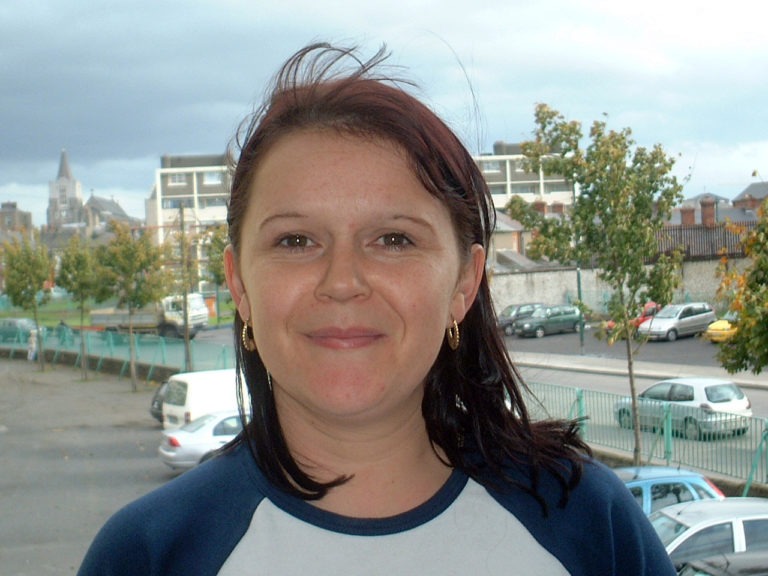
In 2001, we featured an interview with Linda Walsh from The Liberties in Dublin and she appeared smiling on our front cover. At the time, other publications portrayed anti-poverty work in a bleak style. By contrast, Linda’s smile showed what winning was like.
The front cover of ‘Changing Ireland’s second edition, in 2001.
Originally from Clondalkin, she had been written off by her headmaster who told her family, when she was an adolescent, that she was never going to go far. I remember to this day Linda telling me how she felt about that.
Linda faced poverty, gender inequality and class division. She grew up without many opportunities, left school early, worked in what we now call the gig economy and became a lone parent when she was 22. Though she became depressed when pregnant, she never stopped working and the birth of her daughter (Niamh) spurred her onwards.
She rose above it all to become an empowered and inspiring leader in the historic Liberties area of the capital.
In fact, she was the ideal person for her leadership role. She had real-life experience of the issues people faced, she lived in the area and she had volunteered locally and studied community development. Many others have followed a similar path.
Her realism, her cheery outlook and her belief helped us to reach out to readers with a story that conveyed what is so good about community development.
I remember clearly0 meeting Linda in her office on the second floor of a block of flats, shortly after she was appointed project co-ordinator of School Street Family Resource Centre.
The day I met her she was still pleased to have proven her former headmaster wrong. That man had demoralised her at a pivotal time in her life, but she proved him wrong.
The story was published in our second edition and in recent years we made calls and googled, but without finding Linda. She may have moved abroad. School Street FRC is still going strong.
If anyone knows her, please contact us as, if it is possible, we would love to re-interview Linda for ‘Changing Ireland’.
Linda Walsh loves the job she has today. She strolls to work in two minutes, her colleagues care for each other, she is on a career path and the work is of benefit to the people in her community. She works in a flats complex
“I just landed on my feet when I started here,” she declared. “I thought I would end up in a job like factory work. I have surprised myself with what I can do. But I wanted to learn.”
From Clondalkin, Dublin, Ms. Walsh left school at the age of 14, worked in a variety of low-skilled, poorly-paid jobs – including on a building site – then became a lone-parent in her 20s. Feeling the weight of her new responsibilities, she turned her fortunes around by applying herself to doing courses.
Six years ago, she started on a Community Employment scheme and soon became a dedicated staff member of School Street Family Resource Centre (FRC), based in a flats complex in The Liberties, Dublin. The area was known a decade ago as “the chemist shop of Dublin”, though that is all changed now, and Ms. Walsh’s story epitomises the road taken by numerous community workers who come from a background of personal experience of exclusion and/or poverty.
Ten weeks ago, she started in a new position at School St. Family FRC and she is still glowing.
“I love my job. I love the people I work with, they are like friends. … At the beginning I was just an employee. I started part-time on a C.E. (Community Employment) scheme, became full-time with the J.I. (Jobs Initiative) scheme and now I’m project administrator. It’s good that it works that way – people from the community working in the community. I am still learning every day. At the moment, I’m doing the Community Development Leadership Course, Level 2.
A bookie might have given good odds against Ms. Walsh going far when she was an adolescent and started mitching from school, “The inspectors came looking for me. I’d go to school again, but I wouldn’t learn.”
When she was 14, at the end of first year in secondary school, Ms. Walsh left.
“I wasn’t interested in school. When I was in 6th class the headmaster told my mother that I had a brain but would never use it. That did knock my confidence. My mother had six girls and one boy and I was more trouble than all of them put together. I had a friend in secondary school and we were both giddy, we were more often in trouble than anything else.
“After I left school, I worked in sewing factories, then hairdressing. The money was terrible. I even worked on a building site for six weeks to make money. I did waitressing – I have a cert in silver service waitressing. I worked in Memorex (factory) but just left there, I don’t know why. I worked in a toy wholesalers. I had 14 jobs in all and I wouldn’t put all of them on my C.V.
“And then I got pregnant at 22. When I became pregnant I was very down and depressed. I worked through my pregnancy – if I didn’t work I think I would have been suicidal. When I had my baby something changed for the better. I knew then I would have to get a good job. At first being a lone-parent was hard, but I got loads of support from my family.
Ms. Walsh’s daughter, Niamh, was one-and-a-half when she started work part-time in School St. Family Resource Centre as a receptionist/secretary – except she had nearly no secretarial skills.
“I couldn’t do nothing, I lied my way in at the end of the day. But I did every course I could because I wanted to work. I got Niamh into a crèche. After two years, the C.E. scheme was up, but my assistant supervisor left her job. I went for it, got it and did it for three-and-a-half years. And now I’m the administrator.”
“At the end of the day I matured, I knew I wasn’t stupid. And I knew I could teach other people things.
“From eight years ago to now, I see a big difference in myself. My confidence was very low, but it has built up over the years when I was on the Community Employment scheme. And people gave me the chance… I got working with Leo (Scales) and Elaine (***) and I’m assistant director for the FRC, a limited company.
“The teamwork here is great, you meet a lot of new people in this job. Residents come to us with all kinds of complaints. If the Family Resource Centre wasn’t here, a lot of good things would never happen. Even simple things – like people leave their keys into us for minding if a delivery van needs to drop something off in their flat during the day and they’re at work. We provide a lot of social welfare information. A lot of people in the flats know me now, though I keep to myself after work.”
“In my spare time, I swim, go to the pictures, go to pubs and clubs. And I go to England three or four times a year because I have three sisters living in London. It’s a very active life I suppose, now that I think of it.
“Community Development is great – it encourages people to go back into education and boosts their confidence. I’d encourage anyone to get back into education, just because you might have a child you shouldn’t let that get to you.”
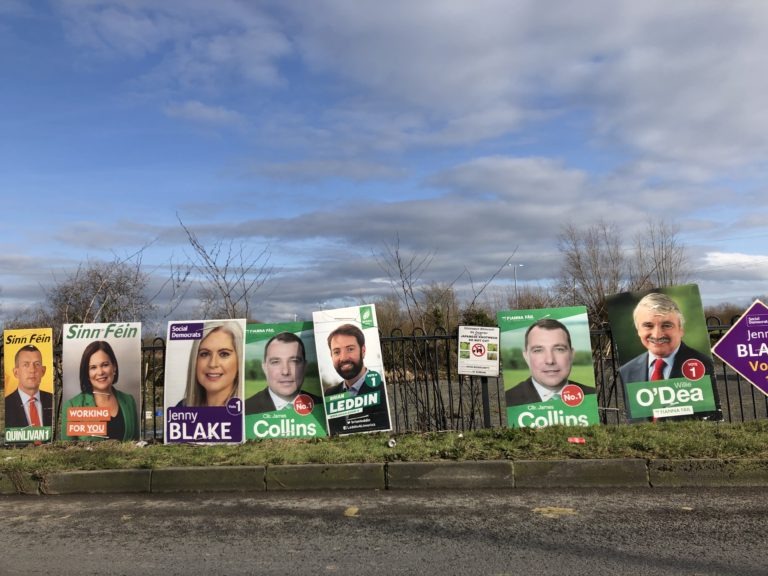
In the run-up to the poll on February 8, a host of community groups, and community and voluntary sector organisations, released policy papers and manifestos to help voters make informed community-focused choices. The next government would do well to listen to community development voices, as exemplified by those behind the campaign for reform of early years education and childcare.
Childcare
Childcare has become a real challenge for communities, as soaring insurance costs and a lack of state funding have led to increased burdens on staff, providers and parents. Changing Ireland featured a series of articles on the challenges facing the sectorin recent issues, and the subject came to national attention in the last few days with a major protest in Dublin on Wednesday 5 February attended by 30,000 people.
The challenge to candidates and political parties: “What are you going to do to rein in insurance companies and support childcare providers and parents with childcare needs?”
According to the FRCNF, FRCs are under threat because there is no dedicated government unit administering them, and because there is “insufficient funding”.
“FRCs are now at a critical juncture,” FRC chairperson Clare Cashman has said. “Without political commitment to copper-fasted our future, families and communities will suffer.”
The FRCNF would like to see the next government: establishing a dedicated government unit to administer FRCs; preserving the autonomy of FRCs and their unique community-development model of family supports; and working to ensure that each FRC receives a minimum of €160,000 per year and three full-time staff members.
The challenge to candidates and political parties: “Family resource centres are at major risk. What can you do to ensure they’re protected and sufficiently funded, to ensure that they continue to be able to provide invaluable services in disadvantaged communities?”
Recognise and support the value that this sector adds to society;
Support sustainable funding models;
Enable responsive services through streamlined compliance systems; and,
Embrace collaborative partnerships working with the sector.
The challenge to candidates and political parties: “How do you intend to support Ireland’s third sector?”
Ageing Better
Active Retirement Ireland and Age Action have teamed up to call on the next government to make older people a priority by planning sufficiently for an ageing population and ensuring older people remain active, engaged and valued in their communities.
Maureen Kavanagh, CEO of Active Retirement Ireland, said: “A lot of political commentary around ageing tends to pit younger people – in the midst of their working lives – against older people who are retired or nearing retirement. The next government needs to face up to the fact we have a rapidly ageing population, and the measures needed to adapt to that affect all age groups and need to be well planned and long-term.”
The coalition are asking the incoming government ministers (not yet elected) to appoint a senior Minister for Older People, depoliticise the state pension, suspend the planned increase in pension age, appoint a Commissioner for Ageing, and take ambitious climate change action consistent with climate justice to protect people and the planet.
The challenge to candidates and political parties: “What are your views on Ireland’s ageing population, and how do you plan to ensure older people’s long-term quality of life?”
The latter was published the very day the Dáil was dissolved, and CWI are asking the next government to establish a high-level cross-sectoral group to be responsible for implementing the Social Inclusion strategy, and to establish a community development anti-poverty programme to work in and with communities most affected by poverty and social inclusion.
With regards to the former, the CWI are calling for: full implementation of the Sustainable, Inclusive and Empowered Communities strategy over the lifetime of the next government; an immediate prioritisation of commitments to support autonomous community work; the establishment of a programme that facilitates independent community work that is targeted at marginalised communities; and the development of a programme to resource and support community-based action on climate justice.
In the context of increased levels of racism and the growing presence of the Far Right (both in Ireland and abroad), the CWI are calling for: a commitment to the enactment of strengthened Hate Crime legislation, to include guidelines on hate speech; a commitment to the development of a new approach to the asylum-seeking process, including an end to for-profit models of direct provision; and a commitment to the development and implementation of a National Action Plan Against Racism, and the re-establishment of a National Anti-Racism and Intercultural Committee.
The challenge to candidates and political parties: “What will you do to ensure that existing roadmaps and strategies that focus on community supports will be fully implemented? And what do you intend to do to stem the rise of racism and hate in Ireland?”
Housing crisis
Social Justice Ireland has released a raft of figures and statistics that show Ireland’s present homelessness and housing crisis in stark light.
According to a report and manifesto released by the organisation in the lead up to #GE2020, there are (as of November 2019) 10,448 people in emergency accommodation. While this does include 1,685 families, it does not include rough sleepers, those accessing Local Authority-owned emergency accommodation, ‘couch surfers’, victims of domestic violence who are in refuges, asylum seekers, or people in direct provision. This indicates that the actual number of homeless people in Ireland is far higher.
This figure nevertheless shows a 60% increase of people in emergency accommodation since the launch ofRebuilding Ireland – a government strategy intended to support people buying homes or building homes, and to accelerate the provision of social housing – in 2016.
Furthermore, there are 68,693 households on social housing waiting lists, not including the roughly 90,000 who are on HAP or rent supplements, or who are housed through the Rental Assistance Scheme.
Targets laid out for social housing builds by Rebuilding Ireland were insufficient from day one. Even worse, however: those insufficient targets are not being met.
Adding a further layer of challenge for those in the housing market, the government has priced “affordable homes” at €320,000, far beyond the reach of any household making less than €82,500 per year.
The picture isn’t much better for renters. Between Q2 of 2012 and Q1 of 2019, private tents have increased by 57%. Average weekly earnings, on the other hand, have increased by less than 10%.
Understandably, Social Justice Ireland has a long list of asks, as well as some pointers that could help the next government lessen the crisis. (Read these on page 2 of their manifesto.)
The challenge to candidates and political parties: “What are you going to do to make easing the housing crisis a priority?”
People with disabilities
According to the Oireachtas Disability Group, poverty levels for people with disabilities have doubled (to 24%) in the last decade. The group is stressing an urgent need for immediate all-government action.
In a press release, the group stated: “In the past week and ahead of the election, we can see a broad consensus forming that we cannot continue with business as usual for the 643,141 people with disabilities who have seen no improvement [in services] since the dark days of the recession.”
The group is calling on the government to: end disability poverty and unemployment; end the housing crisis facing people with disabilities; ensure children with disabilities are fully included in the education system; better fund services and supports; make disability rights a priority.
The challenge to candidates and political parties: “What will you do to make disability rights a priority?”
Fashion
You may not expect to see fashion cropping up on a community development list, but the planet is at a critical turning point when it comes to the clothes we wear.
“The textile industry is one of the biggest polluters and is rife with exploitation,” explained Patrizia Heidegger, director of global policies and sustainably at the EEB. “Our new Wardrobe Change campaign is calling for a radical transformation to how clothes are made, sold, worn and reworn.”
The UN reports that the textile sector is responsible for between 8% and 10% of the world’s greenhouse gas emissions.
“It’s time to move fashion away from the pursuit of ever-more economic growth, which is incompatible with stopping further environment and climate breakdown, and with reducing global inequalities,” said Heidegger.
The challenge to candidates and political parties: “We know there’s an Action Plan to counteract the climate crisis, but at the moment it feels more ‘plan’ than ‘action’. What concrete actions will you be advocating for in the Dáil?”
Female genital mutilation
It may surprise some readers to know that female genital mutilation – a practice most commonly affecting women and young girls in developing nations – is a serious issue facing communities in Ireland.
Ireland’s first conviction relating to female genital mutilation was made on 27 January, 2020.
According toAkiDwA (a national network of migrant women, set up to promote equality and justice): “The incoming government has the opportunity to draw up a programme for government that will prioritise the elimination of violence against women, including female genital mutation of young girls.”
The network is calling for Ireland to ensure that preventative measures are taken (through awareness raising and working within affected communities) and to establish an intergovernmental working group to coordinate the efforts of state agencies, civil society and communities.
Further, the network calls for the new government to go beyond simply ratifying theIstanbul Convention, but to fully implement the commitment that Convention puts on us to safeguard all women and girls.
The challenge to candidates and political parties: “What will you do to ensure the safety and wellbeing of women and young girls in migrant communities?”
Interested in reading more about the state of Ireland’s community development sector? Check out ourlatest issue.
After 18 months of development, the new two-page My Journey: Distance Travelled Tool toolkit is set to launch tomorrow (30 January) in Dublin 7.
In an event chaired by Pobal executive director Paul Skinnader, My Journey will finally be unveiled to the broad community of local development companies (LDCs), with a wide-reaching selection of speakers invited to offer their thoughts on the new toolkit.
The My Journey tool – developed specifically by Pobal and the Department of Rural and Community Development (DRCD) as companion material for the Social Inclusion and Community Activation Programme 2018–2022 – takes the form of a series of questions that, it is hoped, will guide people towards identifying their needs and planning for their future, allowing LDCs to further engage with and support those individuals who face challenges in life.
The toolkit will be introduced by DRCD secretary general Kevin McCarthy and Pobal CEO Anna Shakespeare. Other speakers include former Mountjoy Prison governor John Lonergan, who will talk about the importance of personal journeys, and Northside Partnership CEO Paul Rogers, who will touch on how LDCs manage change.
Kevin McCarthy, Department of Rural and Community Development secretary general.
A panel discussion will turn the conversation back to My Journey. Led by Caroline Gardner (CEO, Quality Matters), it will feature as panellists: Professor Catherine Comiskey (School of Nursing and Midwifery, Trinity College Dublin); Monaghan County Council’s LCDC chief officer, Fintan McPhillips; Paul Partnership’s coordinator of social programmes, Helen Fitzgerald; and Louth LEADER Partnership project coordinator Ina McCrumlish.
Sinéad Quinn, Social Inclusion and Communities Unit assistant principal at DRCD, will lead attendees in a session on the key principles and implementation supports of the new toolkit.
During the My Journey pilot phase, 15 LDCs around Ireland were invited to trial the toolkit. Those gathered for tomorrow’s event will hear about these LDCs’ experiences in one of the workshops running in the early afternoon, while other workshops will cover implementation supports, utilising the tool’s data, and wider applications of My Journey.
Anna Shakespeare, CEO, Pobal.
The positive impacts of the toolkit are already being reported. In Changing Ireland’s Winter issue, we heard the story of a Limerick-based immigrant in her 50s who became sick after 10 years of working in Ireland, losing her job and encountering “insurmountable” challenges as a result.
Through My Journey: Distance Travelled Tool, this woman received help in prioritising her issues and helping her plan her future. Limerick City Community Development Project’s Ann Bourke, the community worker who worked with this woman was enthused by the toolkit.
“It was amazing,” said Bourke. It was very positive for me and for her, and she came up with a plan.”
The woman is still receiving support and is progressing.
My Journey has also garnered international interest. The OECD has invited Irish representative to Paris to explain how the toolkit works and discuss the validation process.
Interested in reading more about the state of Ireland’s community development sector? Check out our latest issue.
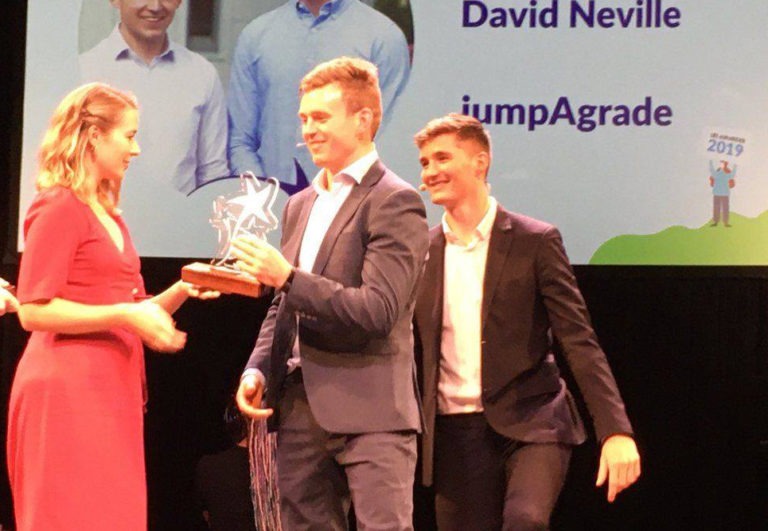
Watch the above video and I promise you’ll be truly amazed. Today (21 November), the founders of one of Ireland’s brightest new companies wowed all 180 people present in Croke Park for the ROI’s first National Social Enterprise Conference.
JumpAGrade, founded by David Neville and Pádraic Hogan from Limerick, is award-winning for providing an online alternative to grinds that is already trusted by thousands of second-level students and their parents across Ireland.
It can reach people not normally able to avail of grinds. As David demonstrates, from a social inclusion viewpoint, it is giving people in rural, isolated and urban marginalised communities the opportunity to get the tutoring support they need to succeed.
The conference David spoke at was organised by the Department of Rural and Community Development. It was opened by Minister Michael Ring who congratulated David and others for their initiative. The conference – to become an annual event – follows the launch earlier this year of Ireland’s first national social enterprise policy.
Chris Gordon from the Irish Social Enterprise Network, Maggie Clune, social enterprise manager with Pace, Minister for Rural and Community Development, Michael Ring, and Grow It Yourself founder Mick Kelly at the country’s first annual social enterprise conference. It was held in Croke Park.
Social Enterprises are businesses whose core objective is to achieve a social, societal or environmental impact. Like other businesses, social enterprises trade in goods or services on an ongoing basis. However, any surpluses they generate are re-invested into achieving a social impact.
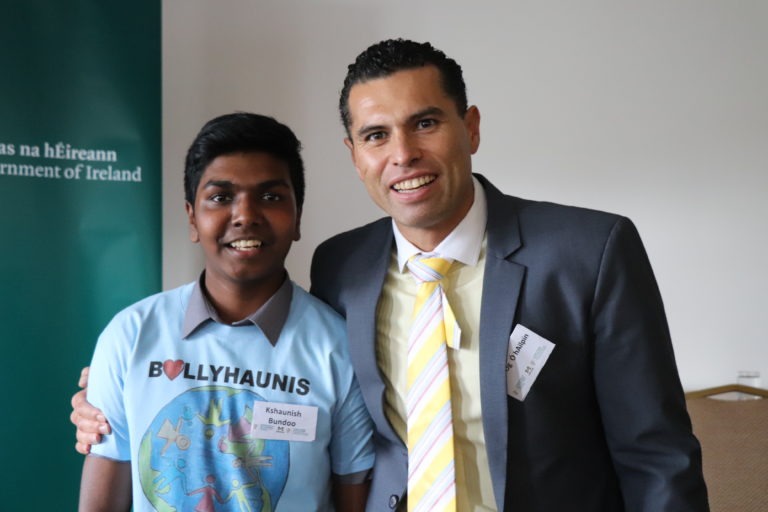
Hurling legend Seán Óg Ó hAilpín spoke at a seminar on ‘Embracing Diversity’ in Ballyhaunis, Co. Mayo, Ireland, on October 18.
This is the story he told an overflowing conference hall:
I’m half-Fijian, half Irish, but if someone was to ask me ‘Who am I?’, my first answer would be ‘I’m a hundred percent proud Irishman’. And, like a lot of the population here in Ballyhaunis, we share the same kind of story in terms of we don’t look Irish, but I consider myself Irish every day of the week.
That would be ironic, because if I was to roll back the clock 31 years ago, I hated Ireland, didn’t want to be here. Hated everything about it – the weather, the people. But go back a small bit before that – you have to understand my background.
I’m from a mixed background. My dad is from County Fermanagh – a very proud Fermanagh man, God love him. And my mum is from – actually I say Fiji – but she is technically from a place called Rotuma. When I look at an atlas (Here’s how) I can tell if it’s a good atlas or not. I go to the South Pacific and look for my mum’s island and if it’s not on it, it’s a rubbish atlas.
Rotuma is a very small, tiny island in the South Pacific that is part of the Fijian island group. I found it easier to say ‘She’s Fijian’ when I was asked ‘Where is your mum from?’, because when you say ‘Rotuma’, you’ve to spend about 30 minutes saying where it is, how to get there and so forth. But my mum’s a very proud Rotuman.
But I grew up in Sydney, Australia.
My dad emigrated from Ireland in the 1970s and worked for 30 years. He met my mum when he went on holidays on mainland Fiji. My mum had left her small island for mainland Fiji like a lot of Rotumans do.
I won’t explain what happened after that, but out comes me.
So, my first eight years were in Sydney. What a great childhood! What a great life! It was everything a young kid could ask for. Going around in shorts. I barely wore runners or shoes and lived on a diet of ice-cream. Kylie Minogue and Jason O’Donovan were my pop idols.
So imagine the shock when, in 1988, dad comes home from work and announces that we’re going to Ireland.
Shortly after that, we land in the metropolis of Cork city, oh Jesus, in the depths of winter in 1989.
You can imagine I’m a shattered kid at this stage.
I had great friends in Sydney. In my neighbourhood, there were different ethnic groups, so I had Lebanese neighbours on one side, Greeks across the road and Italians and Russians up the road.
When we landed, it was like the invasion of the martians. The Ó hAilpíns landing in the northside of Cork city.
I mean this bluntly: The first three years were the toughest years, especially for my mum. It was so hard to adjust to the climate. I wore 4 or 5 jumpers constantly. It was unbelievably cold for the first year.
And trying to understand a Cork people – I know I talk like one now, but trying to understand one back then was like trying to decipher Hindu, it was impossible.
But basically – when you look at the people we were living with… we didn’t look… to fit in. and unfortunately, people will let you know about that – sadly. And I’m being blunt about that, but it is reality.
So, you can imagine as a 10/11 year old kid, I’m frustrated, I’m angry and I’m questioning the motives to come to Ireland. Dad painted it as a great place. But in those early years I didn’t experience that great place.
I used to pray that dad brought us over and there was a return ticket and one day he’d pull it out and say ‘Look, we’re going back to Sydney’. I prayed for the first Christmas, the second Christmas and the third Christmas, but there was no return ticket.
There are a lot of things that our parents decide for us and, when I look back to that time, I wouldn’t agree with 99% of them. But unfortunately when you’re a young kid growing up, you (hope) they made the right choices.
But there’s one decision that the parents made that I will forever be grateful for and it changed my life in Ireland. That was to get involved in sport. My dad enrolled me in the local GAA club – Na Piarsaigh.
To give you an idea of where I grew up in Cork city, people liken it to Beirut or Nicaragua. It’s a tough, gritty area, but I love it. I love the area. I don’t live there, but I go coaching there because I love it. I go through the gates of the GAA club and it’s like – when you watch the ‘Chronicles of Narnia’ and they go through a wardrobe and it opens up a whole new world for them. Well, that’s what Na Piarsaigh hurling and football club did for me.
Did I see huge changes overnight?
Absolutely not, but incrementally; the more times I went through the GAA gates I started to see the barriers stripping off one by one.
It was there I made my first best friends. I still keep in contact with three of them to this day – great buddies.
At that stage, I began to see the value of being part of a team sport and everyone rowing together and having the same common goal. In other facets of my life I don’t see that same powerful bond as you get in team sport.
(Seán Óg took that moment to single out GAA football All-Star Cora Staunton who was in the audience):
I’m honoured and exalted to be in Cora Staunton’s presence. What a legend! You should be up here talking, not me – I’m an also ran (by comparison). Cora would tell you about the powerful bond a team can make.
People in the club start calling you by your first name. They know your address. They started to know where my parents – my mum was from. All of that builds up self-esteem. They made me feel welcome.
I started to kinda feel, ‘Yeah, I belong here’.
The greatest kick I got was the local community support after games. You’d be clapped off by supporters whether you won or lost and they’d pat you on the back and say ‘Thanks for the effort’
And – as a young kid who grew up with a half-Fijian background who was trying to look for a place, that was powerful for me.
Now, when I look back, what the GAA club did for me is summed up in what the greatest human need is – to be loved. That’s what being involved in a sporting organisation – in my case it was a GAA club – gave me. Over the years – you got that love, you were appreciated and the more you got it the more you wanted to give it back.
But back then, was I a good player? Absolutely not, I was catmalojan. I couldn’t even puck a ball. But it didn’t matter. Basically, I kept wanting to go back to a place where I was accepted and loved. And through that, I started to unearth a talent I didn’t know I had in me as an athlete and as a player. I was worked on by coaches and mentors who cared. Through the next few years, I started to realise that my talents could take me somewhere.
Fast forward a few years and I started playing with Cork. I made my debut as a 19-year-old, in 1996 – when it was unheard of to have a half-Fijian lad playing with Cork. And it’s great when I see GAA games now – in (the club team I coach) we have guys from five ethnic groups.
I have mentioned the power of representing your club at local level. When I started playing with Cork you could multiply that by a hundred million.
I won’t go through my Cork years, but it brought me on a 16-year journey playing with the Cork Seniors.
In that time, I met a couple of Taoiseachs, Presidents of Ireland. I met the greatest musicians, performers, comedians and the greats past and present of the GAA and other people.
And the greatest kick I get and still get to this day – I travel far and near and I’m greeted by the warmest welcome by local people whether that’s in Ballycastle in Antrim or Ballyskenach in County Offaly – you name it lads and I’ve been there – through the power and connection of the GAA.
One point – over my 16 year career – I’ve been lucky to be involved in winning teams. You can be a good player, but the key is to play with a great team! One of the years we won, I was the captain and it was a very proud moment. We won the All-Ireland – beating Galway in the final. I collected the cup from Uachtarán na Cumann Lúthchleas Gael, Sean Kelly, and went back into the dressing room and – Cora will tell you – there is only about a ten minute period in the dressing room that you get to yourself before the madness begins. Then everyone starts coming into the dressing room and you go out and meet the fans.
So, within that ten minutes, it dawned on me that even though I am not of you, I have become one of you. That’s what summed up… that 2005 captaining of Cork. It was only then that I declared myself. And I laugh and I said, ‘Dad if you’re still holding that return ticket, rip it up because I’m not going back to Sydney.’
To finish off, I speak on behalf of the great work that the GAA do. Other sporting and other organisations also do great work. Don’t underestimate the value and the power of what ye do, especially with people like me who come here looking for a home.
I was a lost kid and they put me on a steady path.
One of my paybacks is I’m now one of those coaches in the club – the wheel has turned – welcoming and helping the next generation of Irish people who come here looking for a new home.
So, sin a bhfuil ata a rá agamsa. Go raibh maith agaibh agus go n-éirí libh!