Saturday, July 4, 2026
Home Blog Page 35

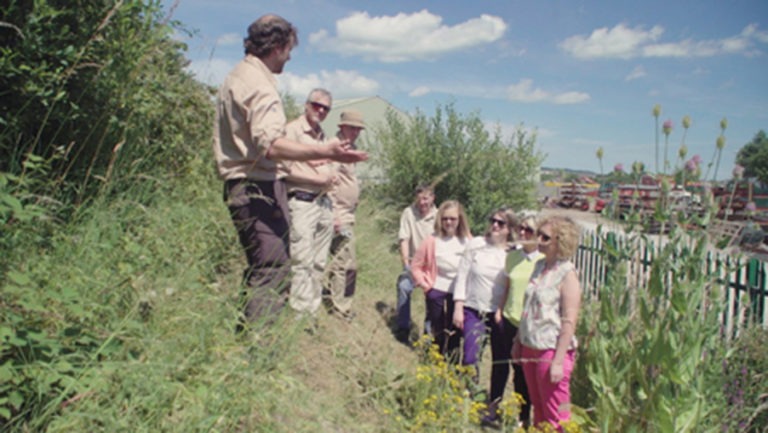
Rebel County goes wild to help nature

Helping nature is only part of Wild Work’s goal.

“We see helping people as just as important,” says William O’Halloran, co-ordinator.

The project is a success in large part because it gets across-the-board support from all members of a community. This includes local civil society groups, businesses, local government, the farming sector, academia, members of the public and more.

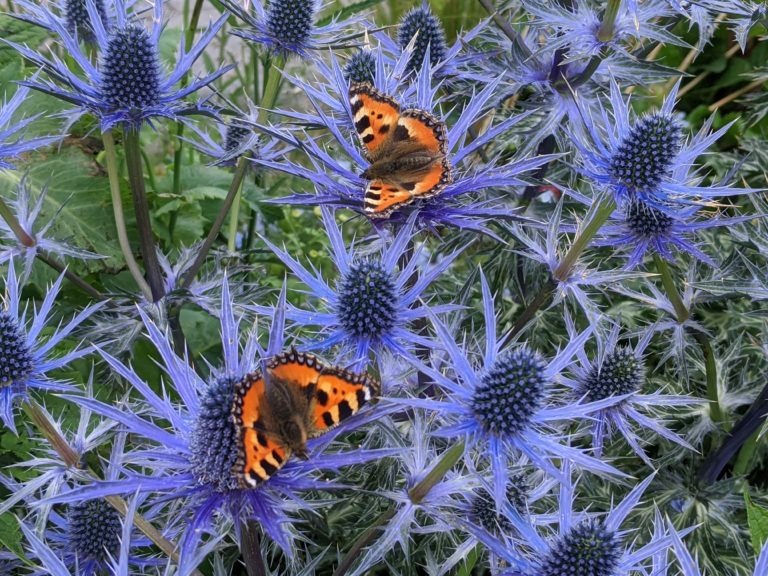
Wild Work’s parent organisation, SECAD, is a local development company that provides rural development and social inclusion supports for a more vibrant, sustainable and inclusive society. Established in 1995, SECAD has worked with and developed strong relationships with over 500 local community groups. In recent years, it has seen a surge in enthusiasm among these groups to help nature, whether it be tackling invasive species, helping struggling native species like bees and butterflies, or planting trees.

Ryan Howard, CEO of SECAD. Photo by Darragh Kane.

“When it comes to nature and what happens in nature, it does not matter what your socio-economic background is, what size your house is or what type of car you drive. It just brings people together. The environment is a great place for people to have a common conversation,” says Ryan Howard, CEO of SECAD.

Examples of Wild Work’s activities over 30 months include:

204 education and awareness sessions,

12 five-year biodiversity action places,

6 habitat mapping projects,

29 recommendations reports,

57 nature-friendly landscaping projects for pollinators and other wildlife,

5,562 consultation hours provided,

1,550 wildflower seed packs distributed, 

and 18,450 metres of wildflower seed sown.

Mr. O’Halloran explains: “With our practical expertise, we create and care for meadows, woodlands, beaches, rivers, and other natural habitats, both in urban and rural settings. We strive to work in line with best practice, with nature and not against and value research as a key component of our work. We always aim to understand the bigger picture so that we can do the right thing.”

There has never been a better time for getting involved in biodiversity projects, say Wild Work. Its social ethos is all about supporting people: “We provide quality work experience opportunities for people and aim to contribute to the creation of fulfilling jobs, particularly in the bio-diversity sector, says Mr. O’Halloran.

Feel-Good Factor

It is also about educating and raising awareness.

As Mr. O’Halloran says, “We work with nature and the environment in a positive way to have a real and practical impact on environment issues. Increasing people’s awareness, respect and understanding, helps them care more effectively for the natural world,” he says. Another ethos of Wild Work is benefiting society and nature.

“We want to foster people’s good will to ensure that our local flora, fauna and habitat are protected, valued and enhanced. We want people who connect with the Wild Work movement to have a feel-good factor, to enjoy the social aspect and to benefit from better health and well-being.”

He points out that SECAD has over 20 years’ experience of successful collaboration with local community and voluntary groups, disadvantaged groups, job seekers, businesses (including private and social enterprise), farmers and schools. The organisation leans on this experience to ensure Wild Work taps into local communities in ways that have a real impact on environmental issues.

SECAD in conjunction with Cork County Council and the communities of Passage West and Carrigtwohill, organised a planning process which led to the development of a strategic five-year Town and Village Renewal Plan for these towns. Wild Work spoke with the communities to contribute to the development of a biodiversity action plan for Passage West and Carrigtwohill.

Wild Work also have a programme called Stepping Stones which uses the natural environment as a “hook” to engage with people experiencing marginalisation. In turn, that encourages them to consider other services and look at their own personal development with more confidence and motivation.

This programme aims to stimulate people’s own personal development and “inspire them to actively help themselves, help nature and help their local community”.

Overall, Wild Work believes that by helping people to help nature it helps people by bringing wildness back into their lives.

If your surroundings feel a little tame, visit: http://www.wildwork.ie/

What is Community-Led Local Development?

Features of Community-Led Local Development (CLLD) are that it is area-based, bottom-up, public-private, integrated, innovative, co-operative and involves the use of networking.

It involves directing funding to local community projects via partnerships between EU authorities, NGOs and groups on the ground with the overall aim of realising the long-term potential of their area.

The Commission’s recognition of CLLD is based on the rationale that tackling complex issues such as poverty, deprivation or unemployment, needs an integrated and inclusive approach involving many local actors.

More info: http://bit.ly/KJ5xXs
What have Trees, Transition & Housing got in common?

– Best practice as highlighted by UCC’s Centre for Co-op Studies

Here are a selection of my favourite stories as highlighted by @UCCCoopStudies. Among others, it’s also worth following @ICOSDublin to learn of the impact of co-ops.

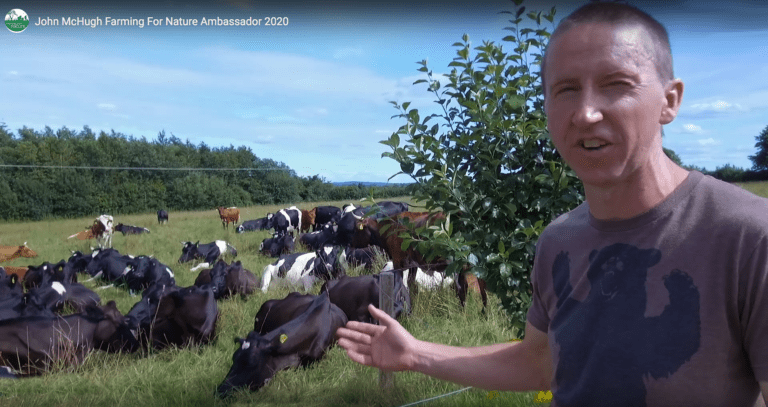
Farming for Nature’s John McHugh

John McHugh speaks in this video about his holistic farming approach and the real value of trees – they are worth more than merely timber to cut down. There is a sense of community seen on John’s farm as people are welcome to come and plant trees and flowers together. John’s work is environmentally friendly and he is focused on bettering the environment.

W: http://bit.ly/JohnMcHughCCS

Internationally trading farming co-ops

Speaking on Interational Co-operatives Day last year, FG MEP Mairead McGuinness highlighted examples of climate action undertaken by cooperatives.

“Co-operatives are local, they’re empowering and they’re really important in our battle against climate change,” she said.

As she pointed out, Glanbia Ireland, one of the biggest farm-focused co-ops, is financing solar panels and helping farmers in transitioning. Recently, it announced it will help to plant 100,000 trees and hedging plants to encourage biodiversity.

W: http://bit.ly/Co-opDayMMcG

W: http://bit.ly/Glanbia100kplants

Indigenous Seed Growers (USA)

In the USA, the Indigenous Seed Growers Network sprouted from the pandemic and is quickly evolving to help communities secure their own food systems for generations to come.


This sounds like a great co-operative as the work they are doing benefits not only themselves but the generation after them:

W:  http://bit.ly/CCS-nativeseeds

Cobh Credit Union & East Cork Bio

Follow: https://twitter.com/EastCorkBio

Cobh Credit Union and East Cork Bio are planting 7,000 native Irish trees on school grounds and in public spaces across Co. Cork to create 15 micro-woodlands and 10 micro-orchards.

W: http://bit.ly/7kCorkTrees

Winifred who works for Simon: “There is life beyond the pandemic”

As Winifred says, there’s no place like home.

There is at least one co-operative trying to battle the housing crisis in Ireland.

As an example of their work, Co-operative Housing Ireland last year helped people move into a new housing estate in Wicklow. One of the new residents is Winifred (pictured right) who shared her story as part of the ‘No Place like Home’ campaign.

“There has been so much uncertainty for me personally, well before the Covid crisis. The security of my new home has helped me greatly,” she said.

“I work with the Simon Community and sometimes work at home due to Covid-19. In Simon, we have our fingers on the pulse of a lot of social issues presented by the pandemic. Having a good space to work in at home has made such an impact on my routine and outlook in life.”

She is now excited about returning to activities she was previously involved in.

“Before Covid-19, I volunteered with a charity that supports Native Americans in the Cheyenne River Reservation in South Dakota, USA. I took part in an online arts event they held recently and was surprised at how much of a lift that gave me. There is life beyond the pandemic and so many things to look forward to,” she said.

W: https://cooperativehousing.ie/winifred/

OF COURSE the EARTH is FLAT

What are you being a flat earther about?

There is a scene from the Netflix documentary “Behind the Curve “which is about the growing phenomenon of the Flat Earth Movement. A leading light in the movement informs us that they have recently purchased a “Ring Laser Gyroscope” for a cost of 20,000 dollars with which they will be able to prove that the earth does not move. After setting it up however the device, not unsurprisingly, showed movement (15 degrees per hour for you science geeks) – to which his response was: “We were taken aback, it’s a problem and one which we will set out to disprove.” In other words there is nothing you can do or no evidence you can provide me with that will make me reconsider my position.

The fact that the earth is curved as opposed to flat is in most people’s reality a solid, proven fact and has been for hundreds if not thousands of years. Yet when presented with irrefutable evidence to the contrary, “Flat Earthers” refuse to engage with it and instead seek out any information to try to justify their position.

This denial of rationality and facts is part of what psychologists call cognitive dissonance. This is the process whereby, when a person is presented with ideas or information which are contrary to their beliefs, this causes a dissonance or discomfort and, in order to restore balance, we sometimes dismiss the new information out of hand and instead seek to justify our existing ideas. This can lead to confirmation bias and an irrational way of thinking.
This is dangerous when it concerns big and important issues and it seems to be a rising phenomenon in the world today, which is further facilitated by the internet – because it has never been so easy to propagate a false or just plain stupid idea.

We have seen this across issues ranging from climate change denial, people who deny that racism exists, those who support Trump no matter what he does and recently in the anti-mask protests.

WE NEED TO QUESTION ESTABLISHED NORMS

So what is the role of community development in this: Are we not meant to support community activism and collective action? Do we only support what we agree with? We may be asked for example to support communities to challenge lockdown procedures.

It is true that those working in community development are required to be sceptical, to question the established norms and practices and to empower communities to have a voice. However, there is a difference between scepticism and denial.

Scepticism involves rational analyses and argument and a willingness for your current thinking to be disproved. It is in essence a scientific rational approach.

Denial involves the under-utilisation of your rational faculties, denial of facts and truth. It is in fact a regression to pre-enlightenment days when we looked to superstition and religion for explanations.

OPEN TO NEW PERSPECTIVES

Externally therefore, we need to be willing to continue activism, but only if it is consistent with the values of equality and social inclusion and is well informed, and in this regard we need to be willing to contest misinformation when required.

In Local Development Companies (LDCs) we need to continue to support the interrogation of policy and attitudes which are harmful to social justice and continue to promote rational, fact-based debate to counter the current predilection for conspiracy theories and anti-rational argument.

Internally, there is a challenge for LDCs also, as it is also important for those working in the sector to recognise that we all have biases and some of these are regressive. However, once we are aware of this and open to new perspectives and information, we can make well informed and fair decisions.

While LDCs are not all the same, many are now considered (through the State’s funding structure) to be more corporate and in some ways more conservative. We may not always be as accessible and understanding of the many equality issues as we would like to think. Internally, we need to challenge ourselves, to be aware of our own biases and to strive to be unambiguously egalitarian.

* Robert Carey works in local development in Kerry and is a member of the Changing Ireland Editorial Team. He writes here in a personal capacity.

For more about LDCs, visit: http://ildn.ie

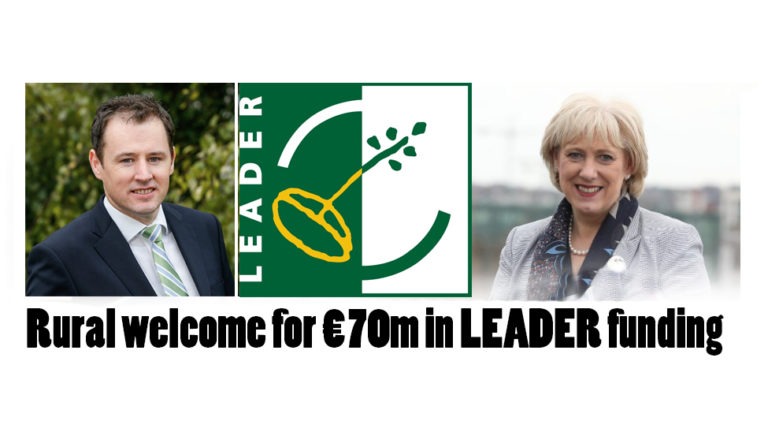
€70m in LEADER funds for 2021-’22 – announced today

€50m is expected to come from the EU to boost funds to a total of €70m for the LEADER programme for the period 2021-2022.

The update, welcomed by both the Irish Local Development Network and Irish Rural Link, was announced today by Minister for Rural and Community Development, Heather Humphreys, and Minister for Agriculture, Food and the Marine, Charlie McConalogue.

Ministers Humphreys and McConalogue said the funding will support rural communities and private enterprises in the recovery from the pandemic. The funding is significant. For example, in a case study we highlighted only last month, LEADER funding of €17,475 (to date) has helped a project in Co. Louth to transform children’s lives (click photo for story).

• A rehearsal at Coláiste Chu Chulainn, Dundalk. Photo by Cross Border Orchestra of Ireland.

In a press statement, the Government said it had today begun the process of submitting an amendment to the European Commission to extend the 2014-2020 Rural Development Programme, under which LEADER is funded, to the end of 2022.

As part of the process, the LEADER Programme will be allocated a total of €70m for 2021-2022, adding an extra €50m to the initial funding of €20m announced by Minister Humphreys in December.

Minister Humphreys said, “This will give local communities and enterprises an opportunity to respond to the emerging challenges for their areas and will support measures that provide employment and job creation throughout rural Ireland.”

“The funding we are announcing today will ensure that more vital locally-led projects in areas like climate change, digital transformation, remote working and enterprise development can be progressed in rural communities throughout the country.”

LEADER is an important element of Ireland’s EU co-funded Rural Development Programme, which forms part of the Common Agriculture Policy (CAP).

Minister McConalogue said, “Through the LEADER programme, over the next two years a total of €70 million, of which more than €50 million is expected to come from the EU, will be directly invested into rural areas to help address specific needs and help to realise opportunities for rural Ireland as we recover from the impact of COVID-19.”

In the coming weeks, the Department of Rural and Community Development will provide the breakdown of the increased allocation of €70m to each of 29 Local Action Groups who deliver the LEADER Programme.

LOCAL DEVELOPMENT NETWORK IS “GREATLY ENCOURAGED”

• Jim Finn, chairperson of the ILDN.

Welcoming the announcement, Jim Finn, the chairperson of the Irish Local Development Network (ILDN) said, “As the deliverers of LEADER across the country, we are greatly encouraged by today’s announcement.”

He said his organisation had recently been calling for the Government to use funding available from the EU for rural development, for the purposes of LEADER.

• Éamonn O’Reilly.

ILDN rural development spokesperson Éamonn O’Reilly said, “The LEADER Programme offers the ideal vehicle for the delivery of development funding to rural areas in the most effective manner. The allocation of this increased funding will deliver critical stimulus to rural areas to help drive the post Covid recovery.”

He said the €70m will ensure that vital projects in the areas of climate change, digital transformation, remote working and enterprise development can be progressed in rural communities throughout the country “to meet the expectations of the EU in terms of the requirements of its recovery funding criteria.”

IRISH RURAL LINK GLAD “NO GAPS”

• Seamus Boland. Source: EU.

In his statement, the CEO of Irish Rural Link (IRL), Seamus Boland, said, “This funding will ensure projects that contribute to the sustainable development of rural communities will be able to continue and there will be no gaps in funding until the new CAP is announced which may not be in place until 2023”.

The statement added that IRL was involved in a lead role in supporting the 2014-2020 LEADER programme, highlighting  projects funded through LEADER and working with the Local Development Companies and Local Action Groups to ensure effective delivery and it will continue to be involved in the extension of the programme.

LEADER BACKGROUND: 

LEADER is a rural development programme co-funded by the EU which operates a locally-led, bottom-up, approach to meeting the needs of local communities and businesses. The programme supports private enterprises and community groups in rural areas. LEADER forms part of Ireland’s multi-annual Rural Development Programme which is co-financed by the EU and is part of the Common Agriculture Policy (CAP).

The LEADER programme is delivered by 29 Local Action Groups (LAGs) in 28 sub-regional areas. These groups are partnerships of public and private entities from a defined geographical area. LAGs are responsible for identifying and helping to develop local projects which support the themes of Economic Development (including enterprise development and job creation), Social Inclusion and Rural Environment.

Steo Wall – We’ve got our sense of community back!

A tear slid gently down my face. Maybe, it was the long weeks of solitude?

A friend had offered a spare ticket to a ‘socially distanced’ gig in August and of course, I jumped at the chance.

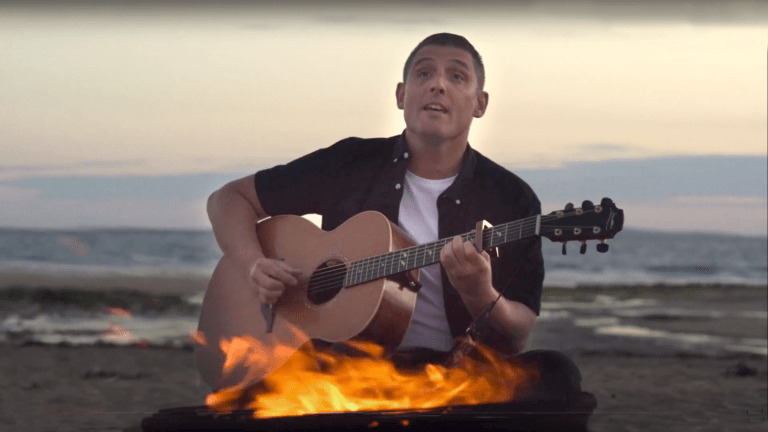
In the intimate surrounding of the Royal Spa in Lisdoonvarna, Steo Wall treated the socially-starved audience to a moving set from his debut album of 2019.

I suspected I wasn’t the only one as deeply affected although I made sure no-one saw me wipe my sleeve across my cheek.

* * * * *

“The first album was very autobiographical,” Steo told ‘Changing Ireland’ recently. “That’s why I called it ‘Where I’m From’ and it tells where I grew up, this is the shit I done, this is where I’m at.”

Capturing the consequences of addiction, social media, uplifting tributes to family, and the pride he has in his Traveller heritage, his lyrics can be tragic or joyous and comic or serious, weaving through grief and romance with sublime effect.

* * * * *

Steo tells stories and people know they are not alone – stories like ‘Sarah Doran’, a powerful ballad immortalising his ‘nan’.

“When I was growing up I lived with her (in Shankill, Dublin). She would always be listening to bleedin’ Patsy Cline and American-folk, and Irish-folk, and there was always ‘trad’ and Radio One and Hank Williams, Johnny Cash and Christie Moore.”

“My songs are written for all the socio-economically deprived people of the world, not just the Irish. I get messages from people all over the world telling me they can relate to my songs– it blows my mind,” he said.

* * * * *

Even so, ‘Sarah Doran’ nearly missed the cut, only for Luka Bloom.

“He said, ‘This is your introduction to the world – you have to include it’.”

If Sarah Doran initiated his musical journey, it was the lyrical freedom found in Tupac Shakur which inspired him to first write in the style that inspired ‘Pikey Rap’ and the hilarious ‘Original Bad Boy Material’. [A must-see on Youtube – Ed].

“I remember in ‘96 a mate put on a ‘Tupac’ tape and I heard ‘Brenda’s got a baby’. It blew my mind! The way he spoke and the expression in his words got me into writing songs.

“I wondered which way I was going to go, folk or rap. Then I realised – do all of the above.

“As an artist, all that matters to me is to tell the truth of the times that we live in, so that’s what I try to do – make people look.”

“Right now, we know the times are strange. I’m trying to process them. It’s when things go back to normal and it settles, then it will come out.”

“You know, it’s not so much the loss of connection or touch – it’s the lack of routine, the kids not going to school and not meeting for coffee… Not earning a living is the hardest part for me.”

“And the media – Me Ma, she rang me the other night crying because she doesn’t want to die. She’s in the house and the telly’s on constantly, bombarding her with death and statistics, not a good head-space.”

“But then, there’s a sense of community – look after your neighbour, check on older people, that sort of thing.

“In the eighties everyone was piss-poor and we borrowed everything and then the boom happened and we lost that sense of community and the pandemic brought that back.”

* * * * *

Community plays a huge part of Steo’s life and he lists activists like Sarah Clancy, Josie O’Brien, Ruairí McKiernan, Dr Sindy Joyce, Eileen Flynn, Lynne Ruane and Bernadette McAliskey amongst his heroes.

“There’s loads of them – too many to mention,” he says.

“I got to know a few of the guys in the direct provision centre here in Miltown Malbay last year. We would do coffee mornings, sing songs and eat traditional dishes. It was amazing.

“Some locals weren’t happy with their presence and the efforts of local people who worked with them to point out the inhumane conditions they were subjected to.

“Eventually we got the kip closed down and moved the guys into better conditions, at least in terms of the tyranny that is direct provision. It inspired me to write the song, ‘More Blacks, More Dogs More Irish,’ to highlight it wasn’t so long ago we Irish were the immigrants.

“And before Covid, I was teaching guitar to Traveller men in Ennis. We would have these amazing chats which would leave my spirit full.”

* * * * *

All changed last March.

“Ha! When the first lock-down happened, I couldn’t do anything. I just couldn’t access that place that I go to when I’m creating. There was this cap on it.”

“I’m recording a new album now,” he says. “I’ll even tell you the name,” he grins. “It’s ‘Street Wisdom for Lost Souls’. It’s a lot more outward gazing than before, universal, exploring what is happening in the world around.”

The streets might be where he’s from, but it’s West Clare where he and his partner Jacinta have chosen to raise their young family. Would he recommend the move from the big city lights?

“No definitely not! Ennistymon is getting too popular, there are too many of us blow-ins now. I said if anyone asks me this question, I’m gonna lie and tell them it’s terrible down here!

“It’s the best move I ever made. It’s a different way of life. It’s what gave me the time and space to get back to writing.

“My kids go to an amazing little country school five minutes from our door. I live out in the country, minutes from the wild Atlantic ocean and ten minutes from the still majesty of the Burren. Depending on what energy I need on any given day I head either way.”

“Whatever 2020 has taught us, it’s that plans are null and void, there are no plans. You build up a version of yourself, a career or job or whatever and then the rug is pulled out from under you and all your left with is yourself. I find it liberating.”

“I’m just trying to enjoy the kids and the quiet life and enjoy the process of finishing the album and that’s it.”

Amen.


Rise Up!(Excerpt)

How did it come to this?

How did the lost generation we miss?

How do you live in your ignorant bliss?

While they’re dying trying to cross the abyss

And are hoping for better ways, search for a better day.

All that we say is, “No go away.

You don’t belong here, you weren’t born here. This is our country, we’re making it stronger”

Pulling down bridges and building up walls.

Closing the borders, enforcing the law.

Innocent children are locked in these cages.

More of these kids are dying on beaches

What will it take to stand up to hate?.

Look it in the eye and force the debate.

‘Cause this could be you and this could be me

In the grand scheme of things, we’re all refugees.

My People Guardians of Culture

Oh my people, my people, they roamed those ancient fairs,

Bringing stories and the music of those old and ancient airs.

But they tried to ban our culture, and they tried to stop our ways.

The spirit of a people they are trying to erase.

* * * * *

CHORUS

Oh my people, my people, don’t let them bring you down.

Because your rich history is written on every stone in every town.

Oh my people, my people, don’t let them keep you down.

Because your rich history is laid on every road in every town.

* * * * *

Ah the winds of change, I can hear the lullaby,

Of the bould Pecker Dunne, with the teardrop in his eyes,

Johnny Keenan and Teddy Furey, and old John Reilly too,

Were the guardians of our culture, we will always remember you.

* * * * *

CHORUS

Oh Maggie Barry with her banjo

And those ancient Gaelic airs,

Of the piper Pat Cash, he passed the flame down through the years.

Johnny Doran and Felix, those gypsy piper kings,

You inspired generations and your names we’ll forever sing.

For more: https://steowall.ie

What do you actually learn doing Biodiversity Leadership Training?

By Áine Rynne

(Written – Dec 2020)

In August 2019, West Limerick Resources (WLR) issued a request for tender to deliver biodiversity training to community groups in the West Limerick area. The main reason for this was to equip community volunteers and individuals with the skills to become leaders for biodiversity in their communities. Dr Frances Giaquinto was awarded the tender and the project started in June, 2020.

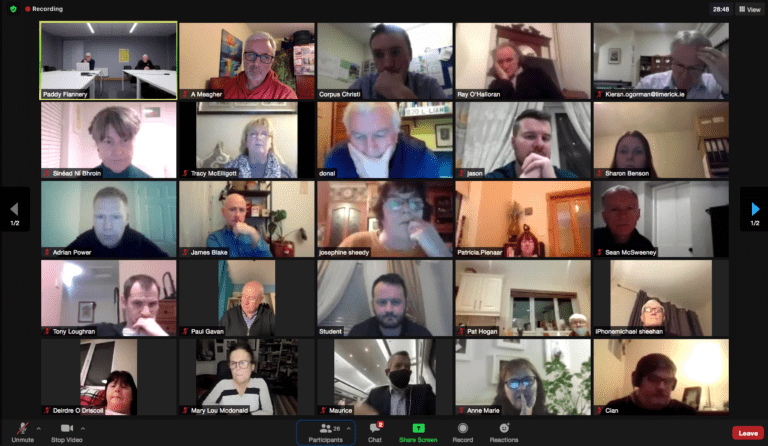
However, as Covid-19 restrictions came into effect nationwide, the delivery of the training took on a whole new approach when it was agreed that it should be delivered entirely online via Zoom. Dr Frances Giaquinto explained that it was anticipated there would be enough interest to facilitate and recruit up to 30 participants – surprisingly, 37 people applied and 35 were accepted onto the course with priority given to residents of West Limerick.

Biodiversity Leadership Training

The biodiversity course:

  • Teaches the different aspects of biodiversity relevant to individuals and communities.
  • Gives a solid foundation of knowledge with comprehensive guidance on how to access further information.
  • Inspires participants to take their learning into their communities and develop meaningful and effective biodiversity projects.


In normal times, this training would be delivered in interactive workshops, but the training has had to take place via Zoom. This meant adapting the more practical aspects of the training – such as the mental health benefits of gardening for biodiversity – by using a combination of Powerpoint slides and short videos. This method is effective and the participant feedback has been enthusiastic and they engage freely with the content.

Biodiversity in Ireland

Linda Gilsenan, gardener.

‘Ireland’s 6th National Report to the Convention on Biological Diversity’, by the Department of Culture, Heritage and the Gaeltacht, was published in May, 2019. (The full report is on this site: www.npws.ie).

The report showed that out of 91% of listed habitats that were assessed, 31% were in a declining condition and just 16% in an improving condition.

The most notable declines are in peatlands and grasslands, and some of the marine habitats. Around 65% of important bird areas (as identified by Birdlife International) are regarded as having a very high level of threat.

Also mentioned in the report is the third National Biodiversity Action Plan 2017-2021, which was developed by the National Parks and Wildlife Service to protect and enhance Ireland’s biodiversity.

This plan envisaged:

  • Ensuring conservation in the wider countryside and marine environment.
  • Expanding and improving the management of protected areas and species.
  • Strengthening the knowledge base, raising public awareness, and mainstreaming biodiversity actions with the cooperation of other government departments and agencies.

The NPWS said in 2019 “a transformational change is required”; we are now in the final year of the plan.

What is Biodiversity?

Frances Giaquinto, botanist.

Dr Frances Giaquinto says that ‘biodiversity’ means biological diversity and refers to all the species on the planet and the environments in which they live and the interactions they have with their environment.

For example, to protect bees, we need to think about their food sources, where they can shelter, how they can move safely from one place to the next, and where they can safely rear their young.

“More work is urgently needed and the survival of the human species depends on actions being taken quickly, not just in Ireland but globally,” says Dr. Giaquinto.

Biodiversity includes all of nature. The economists have coined the term ‘ecosystem services’ which means all the many benefits we freely gain from nature (biodiversity) – all our food, pollination of our crops, all our fuel, the carbon cycle, the oxygen cycle, air quality and water quality.

Humans cannot survive for five minutes without healthy ecosystem services and to have this we need flourishing biodiversity. This is why biodiversity loss is so alarming, and also why every small thing we do to help biodiversity may be one of the most important actions we take to ensure that our children and grandchildren have a healthy world to live in.

About the trainers:

Frances Giaquinto is a botanist and environmentalist who has delivered biodiversity training to community groups and statutory bodies over the last 3 years.

Sarah Thompson, artist and herbalist.

Sarah Thompson is a creative artist and herbalist with a qualification in ‘forest bathing’, a new initiative from Japan which teaches the physical and mental health benefits of making a meaningful connection with nature.

Linda Gilsenan is a vegetable and flower gardener who works in the community helping individuals and groups to garden for biodiversity. She is a postgraduate in Creativity, Innovation, and Leadership from UCD.

How can people start their own Biodiversity efforts?

1  Discover what you have and remember that nature always knows best.

2 Look after the small and the big will look after itself: For example, caring for a window box in the right way can be as valuable for biodiversity as caring for a whole forest.

3  Buy local and Irish (imported trees in particular carry a very high risk of disease).

4  Make connections and ecological corridors.

5  Check out pollinators.ie for all kinds of useful guidance and ways to get involved.

ADVERTISMENT: PAUL Partnership – SICAP Community Development Officer (21hrs/w)

Vacancy – SICAP Community Development Officer (Temporary Contract)

A vacancy has arisen for a part-time (21 hours per week) Community Development Officer supporting PAUL Partnership’s activities in providing community development support for local groups and communities.  The overall purpose of the role will be support the delivery of a range of well-organised, imaginative, quality projects and capacity building supports for community groups.   A key part of this role will be to support community engagement and group development with the Limerick City Traveller Community.

Job Description and Application Form can be downloaded from the PAUL Partnership website: www.paulpartnership.ie

Only electronic applications will be accepted. Completed application forms by e-mail to recruitment@paulpartnership.ie

Closing date for applications is 5.00pm Friday 12th March 2021.

The Social Inclusion and Community Activation Programme (SICAP) 2018-2022 is funded by the Irish Government through the Department of Rural and Community Development and co-funded by the European Social Fund under the Programme for Employability, Inclusion and Learning (PEIL) 2014-2020.

16 days extra for Tidy Towns groups to apply for grants up to €1,000

The announcement of an extension to the grant scheme was made yesterday evening by Heather Humphreys, Minister for Rural and Community Development, and all committees have been informed.

Having begun in 1958, the competition is one of rural and urban Ireland’s oldest and most popular community initiatives. In 2019, a record 924 entries were received and the village of Glaslough in Co Monaghan was the overall winner that year. No wonder they won – albeit by a single point  – see photo!

When is the last time you gave the signage in your area a good scrubbing? It only takes a few minutes.

Previous winners include Listowel, Co. Kerry, and Westport, Co. Mayo, and there are now 987 eligible Tidy Towns groups registered across the country.

The top-up grant funding follows on from the announcement in December by Minister Humphreys of €1m extra for Tidy Towns.

Further details about this year’s competition will be revealed in the coming weeks. The first priority as Minister Humphreys stressed is to ensure people follow the public health guidelines and adhere to social distancing.

No doubt with Spring here people around the country are keen to get out and about – in a safe mode – to give their communities the ultimate spring clean.

While the main prizes are for general tidiness, the competition categories have expanded over the years to cover social inclusion, diversity, biodiversity.

Ballyhaunis Tidy Towns members Mary Donnelly, Francis May and Kay Curley pictured in 2019 with their awards. Photo by: A. Meagher.
Glaslough Junior Tidy Towns team in action last June. Photo courtesy of @Glasloughtt

To find out more, visit: https://www.tidytowns.ie

Instagram activism on the rise – Wake up to the opportunities!

Instagram has been known for its endless pictures of food, vacations, and selfies. However, the platform has undergone a recent shift. Many, including myself, have noticed a rise in Instagram activism since the tragic death of George Floyd and the reigniting of the Black Lives Matter movement or BLM.

While statistics about police brutality were previously available, it was the gut-wrenching video of George Floyd’s death that caused mass outrage. The penny dropped as people came to realise how effective the spread of that video was in gaining support for the BLM movement.

Campaigners followed up by sharing infographics and short videos on social media explaining the importance of the movement and how to help. Much of this appeared on Instagram’s story feature.

INSPIRED

Inspired, many Instagrammers began sharing posts about other human rights issues. For example, after recent events in Poland, I saw many posts on my feed about LGBTQ+ issues. Many have also been posting about the Uyghur Muslim concentration camps in China.

The pandemic can also be credited for this recent uptake in activism on Instagram. Due to restrictions, the majority of people can’t go partying or on vacation, so they are unable to create their usual living-the-good-life content. Now, people are exploring topics outside of what they would usually post.

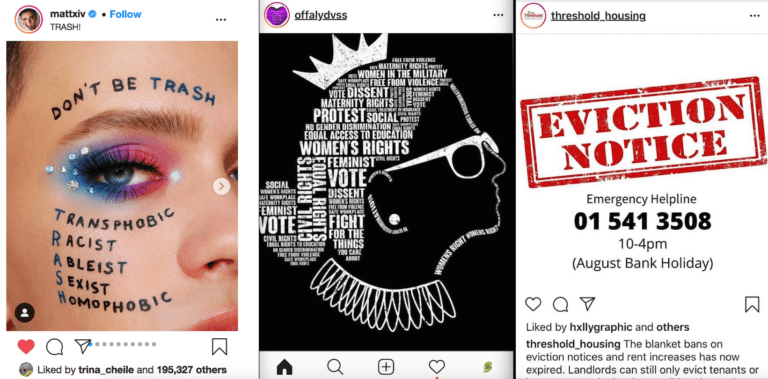
The Instagram algorithm favours aesthetically pleasing photos. Many users have caught on to this and been pairing information on social issues with aesthetically pleasing visuals. One of my favourite accounts that displays such characteristics is Matt Bernstein (@mattxiv) a make-up artist with 450,000 followers. He creates make-up looks which succinctly support and inform people of topics such as racism, homophobia, etc. People often share his posts to their stories. The picture below is an example of one of his many brilliant makeup looks.

However, many argue that activism on Instagram leads people to believe that their activism stops there. This brings me to the phenomenon of “performative activism” and if it outweighs the benefit of digital activism.

PERFORMATIVE ACTIVISM

Performative activism refers to “activism done to increase one’s social capital rather than because of ones devotion to a cause”.

Performative activism can be seen with the hashtag #blackouttuesday. Used on Tuesday, June 2nd, the idea was a collective action on Instagram to protest racism and police brutality. It was intended to express solidarity with the BLM movement and to focus attention on the unjust killing of Black people by the U.S. police force. However, many people did it because it was trendy or to avoid criticism for not showing outward support. Many thought they could post a black square, an act that takes a couple seconds, and then end their support there. They posted once to avoid criticism or to increase their likability and not because of a genuine interest or passion for the cause. Yet still, they were engaging in performative activism.

Performative activism can also be seen amongst companies and corporations through a term known as ‘wokewashing’. This term refers to the use of progressive-oriented marketing to prey on people’s social awareness, while failing on ethics.

It could be said that, with the ability for things to trend on Instagram, it provides a stage for performative activism, which is undoubtedly a negative aspect of the recent surge of digital activism.

CONCLUSION

Whilst performative activism gives a bad name to activism as a whole on Instagram, I think it is a rather small sacrifice to make to expose young people and users of Instagram to social issues. There are many benefits to using the platform for activism.

One such benefit is that less known about topics, such as the fast fashion industry, are finally coming to fruition. Whilst many were aware of the negative environmental impact of fast fashion, now people are exposing brands including Fashion Nova, Primark, Levi’s and Mothercare for not paying their workers. The hashtag #payyourbangladeshworkers began trending, after it was made known that companies are withholding 3 billion dollars from factories in Bangladesh for orders which had already been shipped.
I understand how many people might see the repost of an infographic on your story for 24 hours unhelpful. But the very engagement with digital activism helps the Instagram algorithm become more social justice friendly.

All in all, I think Instagram is a vehicle for real change. The platform has 800 million monthly active users, with 73% of them between the ages of 18-23 years old. If any social media platform is good for engaging in activism, it is Instagram. Young people will rise to be change-makers and politicians in the future, ones can reform and campaign for the greater good.

This shift from boasting and posting narcissistic content to campaigning on social issues is a huge shift, though I think people appreciate the reality check. It is not the end point of campaigning, but I do think it provides a good stepping stone for those to take activism further than the online world.

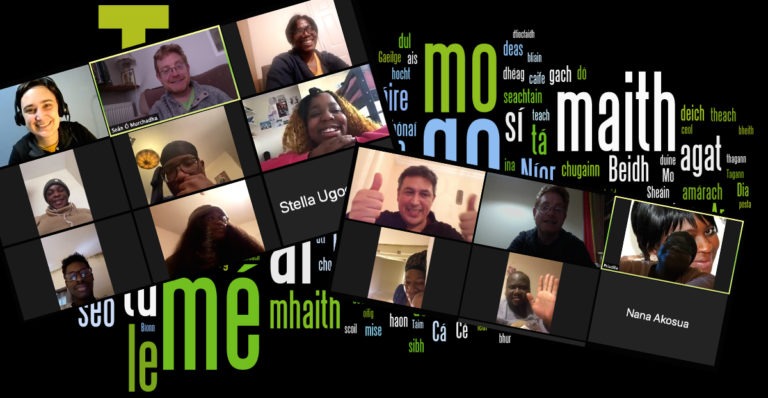
People new to Ireland to learn ‘an cúpla focal’ this month

BY SORCHA GRISEWOOD

– Gaeilge is part of the cultural puzzle newcomers face

– Free courses offered in Meath, Louth & Cavan

– eg Do you know the Irish for Navan?

Photo, left to right: Sean Ó Murachadha, Conradh na Gaeilge and Tinu Achioya, Cultúr’s programme manager.

Sean Ó Murachadha is an integration officer with Conradh na Gaeilge and his work involves reaching out to new communities, from migrants to asylum seekers and refugees. No better time than now, as Seachtain na Gaeilge began yesterday, Monday, March 1st, and will last until March 17th*.

“Irish is an integral part of the puzzle for new Irish communities trying to understand the cultural landscape of Ireland,” he says, “The more they understand about the language, the easier it will be for them to integrate into and participate in a society so moulded by its own unique language. It’s important especially for our new communities to show them that the Irish language and culture is for them as much as anyone else.”

* * * * *

Reuben Hambakachere, an integration officer with Cultúr, based in Navan, welcomed the collaboration with Conradh na Gaeilge, saying “any kind of contact” is useful and is valued by people new to Ireland. While they may have access to information, “they may not be able to interact with their neighbour or have any Irish contacts”, he said.

Reuben works with international protection applicants from 29 countries in direct provision and temporary accommodation centres in Slane, Laytown and Mosney. His work entails a community development approach and he facilitates orientation courses, information sessions and leadership courses. Cultúr also works with organisations such as Spirasi to support individuals who experienced trauma or torture.

He says his job is mainly about “building resilience and supporting integration”.

Since many migrants and refugees have children who in school, and because the Irish language is a compulsory subject, it helps the children if in turn their parents have ‘cúpla focal’ themselves.

While you don’t need to be able to speak Irish or dance ‘sean-nós’ yourself to integrate into Irish society, it helps to know a little. As Seán points out, something as simple as knowing the Irish word for ‘Navan’ is ‘An Uaimh’ can help migrants to read maps and road signs and obtain a sense of place.

Knowing basic phraseology, understanding the meaning of surnames and place names and knowing a little bit about the history of a country can help migrants to understand the people and place they’re living in a little better.

* * * * *

Language classes, pre-covid.

For instance, Priscilla Amankwatia from Ghana, recently attended an Irish language workshop and found it “very interesting”. What struck her most were similarities between Ireland and Ghana with our shared history of colonisation by the English. She maintains that English “was imposed” on the Ghanaian people as well and that if she were Irish she would feel “robbed” of her “heritage” and “would push for the language to be brought back”.

Whether or not you agree with Priscilla’s views, it’s clear that workshops and collaborations with Irish organisations can help to bridge the divide between ‘us’ and ‘them’ by highlighting our similarities as well as our differences.

* * * * *

Tinu Achioya ag gáire.

According to Tinu Achioya, Cultúr’s programme manager,

“When we host events like this, we work directly with the community in a collaborative manner…it’s about sharing our knowledge and our resources to ensure that we have the most intercultural County Meath possible and that smaller groups are given the foundations needed to flourish. As a migrant organisation we always want to ensure that our reach is as diverse as possible.”

As well as informing and educating, initiatives such as this can also help migrants to feel more invested in the place where they are living and to have a greater sense of belonging. This can only be good.

*This particular collaboration with Conradh na Gaeilge is funded by the Department of Justice’s Integration Fund.

** While ‘seachtain’ means week, this year’s festival runs for over a fortnight, from March 1-17th.

Cultúr is also launching a fundraising campaign at the moment. More details at: http://cultur.ie 

To contact Tinu Achioya, tel 046-9093120/086-0111742.

Music to everyone’s ears – LEADER funds 60 violins in Louth

– Music is not meant to be an elite activity

This ‘Dynamics’ project engages 6 and 7-year-old children in Louth who may not have access to musical instruments or training. It is supported by the Cross Border Orchestra of Ireland (CBOI) which was established in 1995 to build relationships north and south of the border through music. The CBOI has become a flagship programme and is probably best know for its Peace Proms.

Context

The Dynamics project has moved away from the traditional way of learning music in Ireland which is often a one-to-one, once a week lesson. Research found that around half of children who learn via one-to-one lessons quit.

The new approach focuses on group-based and peer-to-peer learning. The project drivers see it as “a programme for social change that builds a belief in each child that he or she can take on really difficult challenges and succeed.”

“This method of teaching is a complete game changer,” said Sharon Treacy-Dunne, founding director of CBOI.

The three schools involved are: Mullaghbuoy N.S., Monksland N.S., both on the Cooley Peninsula, and St. Joseph’s N.S., Dundalk.

Objectives

The project aims to challenge the idea of music being elite and to make music more accessible to disadvantaged groups.

It also seeks to show that this ‘Dynamic’ system of education can help address social issues and be transformative for children.

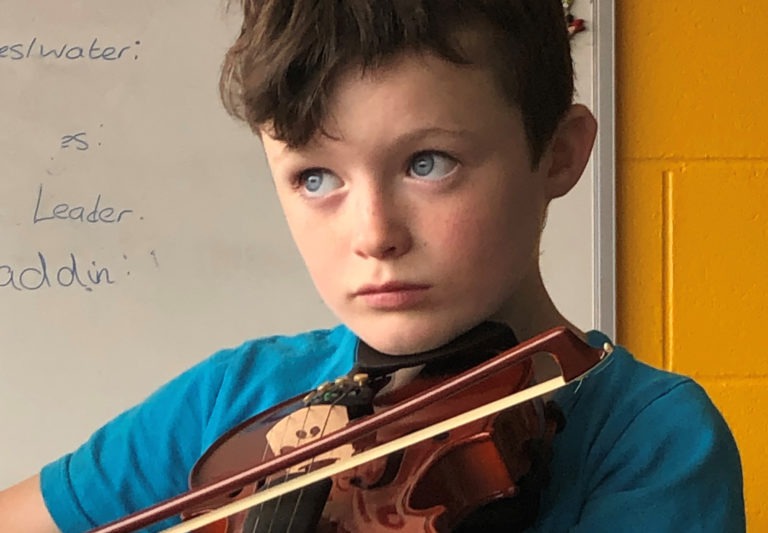
• A rehearsal at Coláiste Chu Chulainn, Dundalk. Photo by CBOI.

Activities

Initially, Louth County Council supported a small pilot with Monksland N.S. which provided the impetus for the CBOI to approach Louth LEADER Partnership about a wider programme across the county.

“Those six months running the pilot really helped us in building a very strong application,” said Ms. Treacy-Dunne.

The CBOI sought funding to support the purchase of violins and to help pay for tuition. They worked closely with project officers in Louth LEADER Partnership (LLP) to get the project application to approval stage.

“I found it really good in comparison to some other funders where applications are unnecessarily complex,” said Ms. Treacy-Dunne.

She said LLP staff “were great, very clear, very straight forward.”

Since it began, 80 students from three schools have joined and they take part in daily 40-minute lessons (currently via Zoom).

This project targets primary school children who live in isolated rural areas and/or experience socio-economic deprivation

Children with anxiety and other issues have benefitted. Some of the children learned to completely overcome their anxieties and fears.

Children with learning difficulties benefited greatly. It helped them to excel in other areas of their schooling and to have more confidence.

Teachers noted how the project transformed the class groups – the children grew to love school and attendance improved as the children don’t want to miss violin lessons.

Within a year, the Dynamics children had performed in the RDS, Dublin, in front of 4,000 people.

Music to everyone’s ears!

Lessons

The CBOI advises anyone developing their own LEADER project: “Build a good relationship with your funder and project officer, as they will help guide you through the process and help solve any issues you may be experiencing with your application.”

Budget

Total LEADER funding awarded to date amounts to €17,475 broken down as follows €10,974. EAFRD (EU) with €6,501 being the national contribution. Private matched funding of €4,961 came from the organisation’s own funds.

Louth LEADER Partnership gave guidance in pulling the application and supporting materials together to get the project over the line.

“We had a lot of supplementary materials, justifications and information to pull together to get through the process. But we had help at the other end of the phone or an email when we needed it and that was key,” said Ms. Treacy-Dunne, Director, CBOI.

The LEADER funding was provided under its social inclusion subtheme: “Basic Services Targeted at Hard to Reach Communities”.

COLLABORATION

This is part of a series by ‘Changing Ireland’. Thanks to staff in the LEADER Policy and Operations Unit at the Department of Rural and Community Development and to Dr. Maura Farrell, NUIG, for their co-operation.

We’re all in this together! NOT

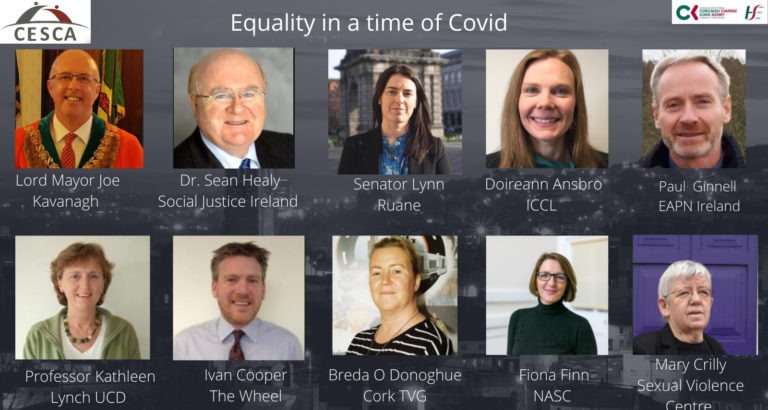
The Cork Equal and Sustainable Communities Alliance (CESCA) held their annual ‘Equality Day’ webinar in December to tie in with World Human Rights Day.

Breda Donoghue, advocacy director with Cork Traveller Visibility Group (CTVG), was the first to speak.

The core of CTVG’s work is outreach which typically involves heading out to sites and visiting families in their homes. While the staff are seen as essential workers during the pandemic, they had to turn to giving online support, helping families over Zoom and by phone.

She said anti-traveller racism continues during the pandemic.

However, as Breda said, “The single biggest difficulty is around accommodation”. Covid-19 has highlighted the housing crisis amongst Travellers where the fear of being evicted is of huge concern. She said, “Covid-19 really highlighted the deepest, most desperate situations that Travellers are in.”

Some sites have very limited facilities and services such as running water, one toilet, and one shower: “How can you ask them to social distance?”

She said that trying to keep children away from their grandparents proved difficult for the Travelling community. Also, trying to get children to understand that they cannot mix with other households was a big challenge. Not being able to attend religious ceremonies was also hard.

It has also been stressful for CTVG as a team “going out and asking families to socially distance and stay apart and stay safe when they didn’t have the facilities like (proper) water or sanitation.”

Breda would love to see the systemic racism to come to an end.


Fiona Finn, CEO of NASC (the Irish for “link”), an organisation set up to empower migrants and refugees, said that Covid-19 exposed the cracks in direct provision. There was no way for asylum seekers to socially distance – three families could be living in one room and sharing facilities such as bathrooms.

Also, there were people who lost their jobs and could not access the Covid-19 pandemic payment for months.

She told of a breakout in one centre that led to a full lockdown for four weeks and was extremely difficult for the families involved as they had young kids.

She pointed to a report compiled by the Irish Refugee Council about people living in direct provision during the pandemic: 55% of residents felt unsafe, 50% were unable to socially distance and 42% shared a bathroom with a non-family member. In Cork, Fiona acknowledged that only for the work of the local HSE social inclusion unit the outcomes would have been an awful lot worse. She wants to see an end to direct provision.


Mary Crilly, CEO of Cork Sexual Violence Centre described domestic violence as “a hidden epidemic within this pandemic”. However, the issue is being highlighted. She commended the Gardai and others for raising awareness and believes this may hopefully have saved lives.

For the first three months of the pandemic Ms. Crilly and her team stayed in the office and went through people on waiting lists and worked with their clients that came in weekly.

Ms. Crilly has encountered a genuine belief people have which goes along the lines of – “You can’t be that busy now because pubs aren’t open, and girls aren’t out getting drunk and this means that there must be no rapes.”

Rapes and sexual assaults are still happening. Most assaults that were reported in the early months of the pandemic were in student accommodation, with people living together, where the woman who was raped was trapped and had nowhere to go.

Ms. Crilly said she had “contact from over 50 people between March and June who had been raped, who had been sexually assaulted”. Ms. Crilly does not want to go back to the old normal. She wants a new normal. Her goal – to end victim blaming and the normalising of sexual assault.

She asked, “What would it look like to have a healthy, a safe city, a city for everyone, a city of sanctuary and a city where no one is left out?”

Sociologist Fr. Sean Healy, CEO of Social Justice Ireland, was appointed some years ago by then community and local government minister Phil Hogan to lead a group to develop a model for participative democracy. The result is today’s network of Public Participation Networks (PPNs).

He said, “You need to involve people, all people, in decisions that affect them or impact on them in any way. They might have very different views about what is required in the economy, or services, or taxation – and they need to have those views circulated as well.”

He emphasised that we are not going to be able to build a social dialogue in the next few years – it takes at least 10-20 years; we have to do it one piece at a time.

Fr. Healy spoke about how, during the pandemic, he could see a “widening gap between the poor and the better off”. He believes that Covid-19 has shown to an awful lot of people that we need to think more deeply about the type of society we want to build and that “if we are to have a thriving economy, we need decent services and infrastructure”.


Senator Lynn Ruane spoke of the Seanad’s Civil Engagement Group. Set up in 2016, it is an alliance for senators with a background in non-governmental or civic engagement organisations. All members were once activists.

She said she brought her principles of community development into politics and believes that participation is needed everywhere in life. Equally, it is important to give people space and time – someone you thought would be in and out of prison is now doing policy development and in college.

She wants to make sure people have a say in decision-making, especially at local level. People are not outputs, she added.

She had concerns that the push for good governance in the community and voluntary sector had removed the human element and was impeding community work at a local level.


Kathleen Lynch, professor of Equality Studies at UCD, spoke about how capitalism dictates morality.

She explained to everyone on the webinar that we all have some insecurity in our lives, but for many people in our society they do not have any security and that is a huge injustice.

She said there was a serious issue with participative democracy in this country – minority groups are affected because it takes resources to participate in politics. For instance, because we do not see the work of carers, they are invisible.

Prof. Lynch sees our nursing homes as “the new Magdalenes”, because the people in them cannot speak, relatives cannot visit, they have no voice, and they are being sidelined, especially those with dementia because they have no way to publicly communicate.

She pointed to statistics showing how 56% of those who died during the pandemic (up to December) were in nursing homes. She said it was “outrageous” that we can’t organise for people in nursing homes to have visitors.

“It is cruel and is absolutely abusive to their basic rights of association, to intimacy and to have the reassurance that comes from those who look after them,” she said.


Paul Ginnell, director of the European Anti-Poverty Network Ireland, said there was already material deprivation in 2019, that people were already struggling prior to Covid-19. People were depending on food banks and groups in society were being left behind.

He said people on social welfare supports have incomes below the poverty line and that €203 per week is not adequate for people to live a decent life. The €350 pandemic payment made more people realise this, he said.

He agreed with Mary Crilly that we cannot go back to the old normal. He said we cannot just focus on the economy and then deal with other issues. We must look at what society we want and that it must be a rights-based society, one that puts communities and equality first, he said. We have under-invested in our public services and the private provision of public services needs to be tackled.


Doireann Ansbro, research and policy officer with the Irish Council for Civil Liberties, highlighted how the emergency legislation enacted to manage the public health concerns of the pandemic ran the risk of suspending other core human rights.

She deplored the poor decision-making on some issues, e.g. nursing homes. She was convinced that the Government was focusing too much on life for middle class families with big gardens,

“What about people who do not have that?” she asked.


Ivan Cooper, policy director with The Wheel, said the community and voluntary sector has a huge role to play. Organisations who depend on fundraising have been hit hard during the pandemic. Mr. Cooper said there was a need to do more research on Covid-19’s impact on the sector.


CESCA’s annual equality event, every December, is one of its contributions to Cork City’s Local Economic and Community Plan.

For more, visit: www.cesca.ie

Watch the full webinar on CESCA’s Facebook page, via this link:

http://bit.ly/CescaEqualityInCovid


Beth Ardill is a third year degree student in Community Development at the Limerick Institute of Technology. She was on placement with ‘Changing Ireland’ from September to December 2020.
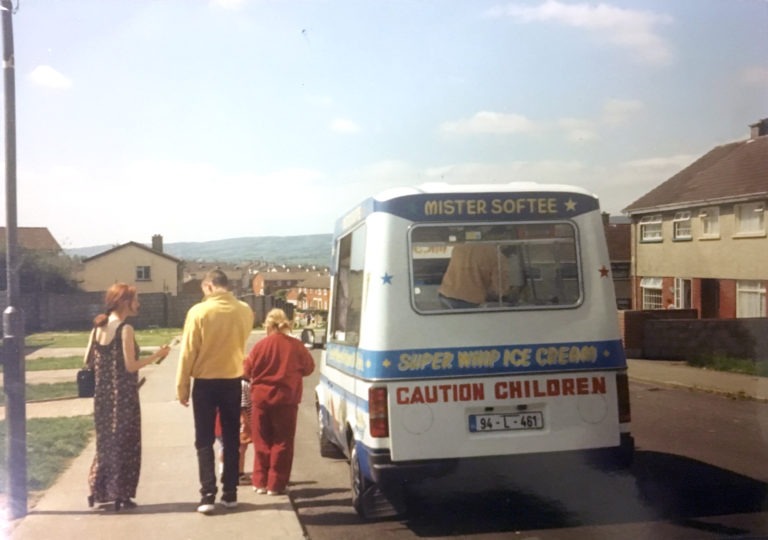
The community’s desire to see Moyross progress

#BuildOurRoad win marks start, not end of campaign for a new, open Moyross

Work began once again, yesterday, on the Coonagh-to-Knockalisheen Distributor Road, after the community’s campaign was successful in causing a ministerial u-turn last week.

These important roadworks began in 2017, but regeneration has been going on for so long that a generation of children have grown into adulthood while still living in a walled-in community. Other communities across the city are in various states of “regeneration”, with unemployment in Limerick still consistently higher than all other urban areas on the island of Ireland (reference – see Pobal maps).

It’s worth looking back. The level of abandonment by the local authority and the State of communities in Limerick first became clear in 2006, when children were burned in an arson attack in Moyross.

Had the children succumbed to their injuries, as a four-year old child in Ballinacurra had in 2004, media and political attention would likely have come and gone without the underlying problems being recognised nationally.

Soon after, Moyross – which had been poorly policed – was inundated by every kind of police imaginable. Gardai in the sky, on horseback, undercover, in the community, armed Gardai. Even a spotter plane was seconded to Moyross. It added to the stigmatisation, but helped quell crime. The arson attack was to become the catalyst for setting up Limerick Regeneration.

A new approach was taken. Since the local authority was unable or unwilling to live up to its responsibilities, a statutory agency was set up in 2008 to manage regeneration.

From 2008 to 2020, €397m was spent: 1,091 houses (many loved by their occupants) were demolished across the city and 269 homes (mostly apartments) were built; money also went on plans, retrofitting and community and social projects. Many works remain to be completed, including the road.

In recent years, responsibility was handed back to the local authority, which in 2019 made headlines for spending close to a million euro on a glitzy campaign to promote Limerick’s “edgy” image. As the city and county council looked outwards, it was partly neglecting local responsibilities to communities in regeneration areas where many more demolition teams were sent in than builders (and very few of those hired were locals). Residents saw plans come and go and key elements of the regeneration plan remain vague to this day to residents.

However, while regeneration was never going to match what was initially promised (a €3billion euro vision) the majority of residents remain hopeful – all want to see their communities progress. In Moyross, there is an unquenchable desire for progress.

It became evident in January when, out of the blue, Moyross and the wider city was called to unite and campaign, or all hope people had for the city’s northside would be lost. The vital distributor road was slated for review.

People rowed in behind #BuildOurRoad, pushing the Government to live up to its commitments. The campaign gained support from all but one political party. See our earlier report here: https://changingireland.ie/moyross-speaks-with-one-voice-build-our-road/

It also drew extraordinary testimonies from residents and people formerly from Moyross who simply love their community. Noelle, a former resident, epitomised the passion people have for Moyross when she wrote:

“Moyross has been the only best memories I have of my childhood. I made lifelong friends, the bestest neighbours. Everyone helped and supported each other, no-one was left out and we were all a big family.”

“I always loved Moyross. It was my home. I’d move back in a heartbeat. My two children attend Corpus Christi school. It’s an amazing school. The principal and the teachers’ work is phenomenal – every single child is treated the same. If they got this road and built more social houses they could build back up the community. I’d love to move back to Moyross.”

Highlighting how the road could help ease homelessness and job scarcity on the northside, she wrote, “This road… gives families like mine a sense of relief, knowing that there is hope for this amazing community and the plans they have can be fulfilled.”

The community and its diaspora and many supporters found their voice on social media and across political lines. New youthful leaders emerged, while older activists discovered social media was a powerful tool that all could use. Ray O’Halloran, who is 70, is an activist and employer (one of the very few in the area) who has campaigned for decades and he took to Facebook to highlight, once again, that Limerick’s statistics are a shame. As he put it, there are two Limericks and two Irelands.

Still now, after a ministerial U-turn, and a major investment announcement (the following day) campaigners are not letting their guard down: “This isn’t even the beginning of the end. It is only the end of the beginning, in a movement to ensure the promises that were made to this community will be kept,” said Moyross Partners. The statement ended with: “In every community there is work to be done. In every nation there are wounds to heal. In every heart there is the power to do it.”

Even at the worst of times, when journalists descended on the area from Milan, Munich and New York, the graffiti on walls proclaiming “I love Moyross” was simply true.

• Meagher’s editorial in ‘Changing Ireland’ in Autumn 2006.

Moyross speaks with one voice: ‘Build Our Road!’

• LIT is over this wall.

For decades, the socially excluded suburb has been beset by State neglect, cycles of poverty and criminality, broken promises and geography.

Regeneration was to address this and Tony Lynch, chair of Moyross Residents Forum, described the road project as “the most vital piece of infrastructure” for Moyross and the city’s northside.

Residents say they are living in the biggest cul-de-sac in the country. Moyross is corralled between the River Shannon to the east and a 2.1km wall and fence to the west that rises to over 4m in height, separating the community from the city. Residents see the road as the “gateway to education, employment and opportunity”.

Much of the community’s land is destined to go to LIT and private housing. The road however promises to open Moyross up to choice, opportunity and industry and the campaigners refuse to countenance any delay.

A campaign by Moyross residents for better pedestrian access to Limerick Institute of Technology (on the other side of the wall) took 27 years to succeed and the community insists there should be no delay this time.

• Map by Changing Ireland. Regeneration led to the unasked for demolition of hundreds of good homes shown above, while the wall remains intact and the road unfinished.

The #BuildOurRoad campaign (on Twitter and Facebook) has garnered support locally and nationally and has stirred debate at the highest levels.

• In 2016, ‘Changing Ireland’ showed the wall to astonished and dismayed OECD visitors (pictured above and below). Afterwards, Gabi Kaffka highlighted the barrier in her report saying, “A physical distance negatively affects perceptions of the feasibility and desirability of (higher) educational options.” Young Moyross residents told us, “It makes us feel like we’re living in a cage. It’s embarrassing.”

While millions of euro were spent knocking hundreds of good homes, only a relatively small number of replacement homes have been built, as our video posted late last year demonstrates.
 

Islanders film life on one of Ireland’s few Covid-free spots

0

Few communities have been this fortunate. Figures from nearby Clare Island show that the virus can spread quickly when it does get into an island community.

Our report here is based on the film testimony and an interview conducted by LAOISE NEYLON with resident community worker Tara McMahon. The films show an island thrown into suspended animation by the pandemic:

• ‘Inishbofin in Lockdown’ is a series of seven short films produced by Kieran Concannon of C-Board Films for Inishbofin Community Services Programme and funded by the Galway County Arts Office.

It is June 2020, a small ferry leaves the mainland at Cleggan Pier carrying cartons of milk, a sack of post and just two passengers. The boat lands on Inishbofin, where the pier is empty. The two passengers disembark and say good luck to the crew.

The lockdown of spring and summer 2020 was the quietest time on the island that James Coyne can ever recall. That makes it the quietest time in living memory because James is 91.

Back when he was young the population living on the island was much bigger. When he was at school “there were 80 on the roll book,” he recalls, sitting outside in the sun, taking a break from building a stone wall.

James enjoys the quiet on the island, with minor misgivings: “I miss my couple of pints in the evenings.”


• James Coyne (91) is the oldest islander. He is pictured here taking a break from turf-cutting and building stone walls to chat to film-maker Kieran Concannon.

He misses matches too. The All Ireland semi-finals hang in the balance – will they go ahead, he wonders? “It was something to look forward to.”

It is a bright day with blue skies and James is in the bog digging turf. Life on Inishbofin is changing, he says. There won’t be any turf left for the next generation and the quality of it is declining too.

“The bogs are getting worn out, they are not as good as they used to be,” he says. The turf is too brittle.

Though he doesn’t say it, perhaps wind or solar power will power the next generation.

A Changing Way of Life

• Tommy Burke, historian and walking tour guide, has never seen it quieter.

“It is the first time in centuries that you had such a small number of people on the island,” says Tommy Burke who gives walking tours of Inishbofin.

The population of the island has been in decline for decades. When James was in school in the 1930s there were 80 schoolkids on Inishbofin. Nowadays there are 14, says Tara McMahon, the Community, Tourism and Marketing Officer for Inishbofin.

Tourism took off on the island in the 1970s, says Tara, and is now the main occupation of the islanders and, of course, summer is always their busiest time.

“It was really unusual for everybody to be able to enjoy this glorious weather without running around working,” she says.

Normally April and May are very busy but this year there are “zero tourists, so zero walking tours,” says Tommy. Locals catch up with each other while out walking though, he says: “People have more time to stop and chat but maybe we are running out of things to chat about.”

This time around the lockdown is harder on everyone, says Tara. Back in the spring and early summer of 2020, it was still a bit of a novelty.

“Part of it was lovely,” she says.

Financially the short season was hard on small businesses and she says they will struggle if they cannot open as normal this year.

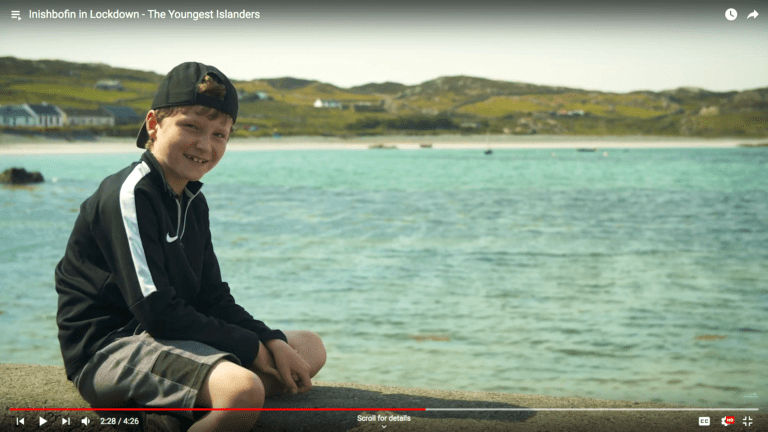
• Callum Day – one of the young people interviewed for ‘Inishbofin in Lockdown’.

Living in Lockdown

The short films capture more than the beauty of turquoise seas, green fields surrounded by stone walls and old-style, white cottages. The films involve the viewer in the intimate way of life on the island.

The islanders come together to work on community-based projects, like sprucing up historic sites. People are filmed cutting the grass in the graveyard.

Down by the pier, the young couple running the shop, Dave Anderson and Annieka Ward got engaged during the lockdown. Dave couldn’t travel back to the mainland to celebrate with his family, so he proposed while they were live on a skype call.

“He even managed to get a ring,” says Annieka, showing off a diamond ring, “very impressed.”

“I picked it out all on my own,” says Dave. He doesn’t tell us how he got the diamond ring out to the island.

“I’m finding the lockdown enjoyable,” says Callum Day, a young man in a Galway jersey playing football alone on the GAA pitch. He is taking advantage of extra free time to go kayaking with his brother and sister. “We have the island to ourselves,” he says, but he misses his friends and PE.

• Kevin Abeyta misses live music sessions, while enjoying the novelty of having “the island to ourselves”.

Kevin Abyeta plays a few tunes on the fiddle. He says there haven’t been any sessions during lockdown and he misses them.

The lack of music has really been noticed, says Tommy, “because it is something we were spoiled for.”

Kevin compares the lockdown to snow in wintertime – it might look nice but it prevents you from doing things: “It’s just in the way you know. But apart from that, we have the island to ourselves.”

Staying Covid Free

Back in 1919 the Spanish Flu got onto Inishbofin and “wreaked havoc,” says Tommy. “For a small community, it is hard to believe that there were three coffins in front of the altar at the one time – all young people.”

“There was a terrible cholera outbreak in 1834 that wiped out a lot of people. The famine didn’t have a huge effect, but there was a terrible fever in the 1850s, in the years after the famine. So, we’re no strangers to these things, and you get over them, but it takes time.”

There is a high population of elderly people on the island, so everyone was really worried about Covid-19 making it onto the island, says Tara.

“We are so conscious of the dangers of bringing it in. There is a heightened sense of awareness,” she says. The two cases to date did not lead to it spreading.

• Shopkeepers Dave Anderson and Annieka Ward.

One of the films shows the island’s children chatting to each other on the road while maintaining the 2-metre distance.

Meanwhile Dave and Anneika are delivering shopping to older people, who are cocooning. All the locals have respected the rules with social distancing and hand sanitising. But the couple worried about keeping the locals safe once they reopen to tourism, says Anneika.

Initially, the government planned that the islands would remain closed for a few weeks longer than the mainland. Tara says people wanted that extra time because they were fearful of reopening. Then the government suddenly decided that the whole country would reopen together on June 29th. That threw the islanders, she says. “There was no little buffer that we thought we would have.”

But they managed to keep the virus out throughout the entire summer. “It was incredible it didn’t come in, considering the island was really busy in July and August,” says Tara. She thinks it is a mix of good luck as well as both the locals and the visitors being very careful.

A lot of the visitors are people who come back every summer and are very respectful of the island and they were also extremely cautious, she says. There is a sense of safety and security living on the island, both in general and with Covid-19, says Tara: “Everyone is really connected, it’s a real community.”

On Youtube: http://bit.ly/BofinLocked

On Twitter & Facebook: https://m.facebook.com/Inishbofin/ & @VisitInishbofin

Filming by: @cboardfilms

Community funding:  Inishbofin receives support through the Department of Rural and Community Development, including from the Community Services Programme, a programme that funds over 400 community and social enterprise projects across the State.  More info: http://bit.ly/Gov-CSP