Saturday, July 4, 2026
Home Blog Page 29

UKRAINIANS IN IRELAND – Hanna, founder of Kharkiv family project “loves people so much”

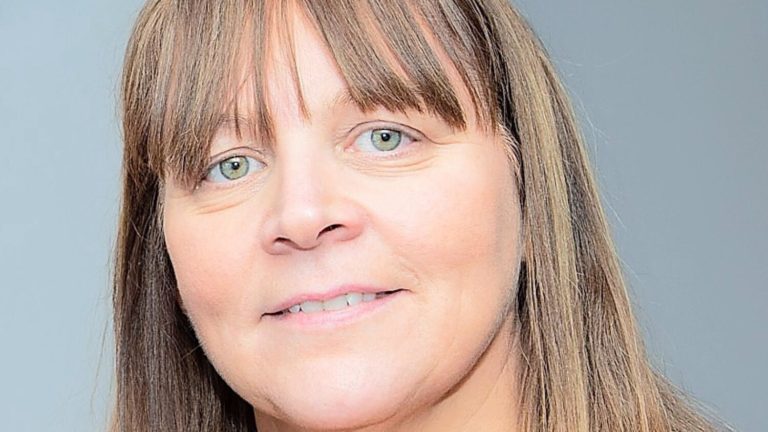
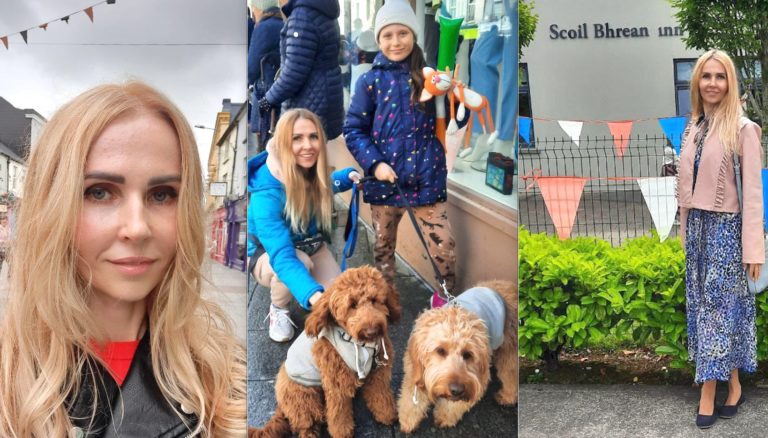
CAPTION: Hanna Buhaiova (above) from Ukraine.

– Journalist Olesya Vasylenko interviews fellow refugee Hanna Buhaiova from Kharkiv, now living in Co. Kerry:

Hanna please tell us a little about yourself.

Hello. I am Hanna from Ukraine. I come from a family of ethnic Ukrainians who were forcibly relocated in the 1930s to special settlements in the remote areas of the Soviet Union by Stalin. So my Mom was born in Siberia. After deportation, her parents – my grandparents – were sent back to the eastern part of Ukraine, to a small town in Kharkiv region where I was born.

So, I spent my happy childhood in that small town. There I finished school and dreamt about my future adult life in the big city – Kharkiv. So, after finishing school I went there to fulfill my dreams and to start my adult life.

You mentioned Kharkiv. It is a very beautiful Ukrainian city. Could you please tell more about it?

Kharkiv is one of the biggest Ukrainian cities. It is located in the east of Ukraine. It is an exceptionally beautiful and developed contemporary city. It is a major industrial, cultural, scientific centre in Ukraine. Kharkiv can boast of its big number of educational institutions, universities, more than 60 higher educational establishments, schools, theatres, cinemas and its impressive network of educational research institutions.

It is a lovely place where lots of events, exhibitions, festivals are held every week actually. It is the city which hosts lots of foreign professionals, people of culture and science. It is painful to talk about my lovely favorite city, my homeland. And, as you can hear, I am talking about it in the present time. I am telling it IS beautiful, it IS lovely, for me it IS in my heart.

• Kharkiv before the war: The most under-rated city in Europe, said this visitor in 2019.

But as you know now it is being attacked with Russian bombs and rockets. And actually there is not one educational institution, school or university which is not damaged at the moment by Russian bombs and rockets unfortunately. But it is alive for me at this moment and will be forever.

Tell us about your profession. What did you do in Ukraine?

I had the job of my dreams after I graduated from two universities, firstly in teaching, secondly in finance. I combined these two professions to do one job and I had my own business. I have two children but my business was my third child. I ran a family club in Ukraine where we provided our customers with services like extra-curriculum activities for kids after school, some language courses, arts, crafts.

Why did you choose these two professions?

It was not accidental because I dreamt about teaching and I dreamt about something creative, something I could do on my own, where I could implement my ideas and my vision of education. Because I love children and I love people so much. I love watching their growth and their progress in everything. In my club we provided courses, for example, for adults who started learning French or English from zero.

It was amazing to see how the person makes progress day by day. How happy the kids were with the results they get in arts, crafts or languages. This is because I had very good staff, very professional teachers in my club. We felt like a family, like one team, and not only with my staff, but also with my clients. We interacted a lot. We spent lots of events together and played lots of smart games together. We spent a lot of time developing our personalities and the personalities of our customers. So my business was my love, it was my child. This is what I can say about it.

And now unfortunately this job of your dream was stopped and destroyed by Russian invasion.

Yes, that’s it. You know I can’t say it without a deep pain in my heart because premises which I rented for my family club are still in Ukraine. They are still there and everything I bought – all the games, all the materials, all the furniture – were purchased with love. They are partially damaged unfortunately. So this is my pain. The premises are empty now, but before they were full of people, full of children, full of joy, full of happy sounds, happy voices… So of course it’s very painful, and I understand lots of people feel the same.

• Hanna Buhaiova and her daughter met two Kerry dogs during a local parade.

What did you feel when you heard the first explosions in your city?

I remember that moment. First of all it was unbelievable. But maybe I couldn’t realise at that moment it happened actually. I felt disappointment. Disappointment in the people who started all of this. I can’t name them people because they are heartless. I can’t even describe it. It’s so difficult for me. So disappointment, yes. After I felt angry. Then I felt desperate. Desperate because I could not stop it. I couldn’t influence that horrible war after understanding it really happened. We could see the evidence of it.

And concerned for my family I felt responsibility to do something – to take action and to save my children’s lives. It’s really hard to describe the mixture of feelings I had. It was like a bit of a mess in my soul at that moment. Maybe now I can realise it. I can think more and understand what happened then.

• Hanna Buhaiova in Co. Kerry.

So you decided to leave your country?

Yes. After a week of spending time in a basement and watching the horror of the war, watching the bodies of dead people on my street, watching the awful conditions of living in the basement, I decided to leave to save my children first of all. So, I packed what I could in my suitcases, took my children to the station and left Ukraine.

It was hard to leave at that moment because the city was being bombed and we couldn’t take a taxi since it was very dangerous. And when we were waiting for evacuation train, Russians attacked the centre of the city with rockets badly. The walls of the station were shaking and it was horrible. And people were scared of this. That is the moment I remember.

When we got on the train I couldn’t even feel relief. I saw the children and women had a tremor in their hands because of this fear. The conditions were really bad because it was 15 people in each little compartment including little babies and older children.

And there were lots of foreign students in the train who had to leave and who shared their emotions with me. They too cried because they had to leave Ukraine, had to leave our beautiful city Kharkiv because of this horrible war. And during the time they studied at our university they loved Ukraine as their homeland. And they really cried. For me it was the most touching moment when I left my homeland.

What helped you to survive and stay strong during those difficult weeks?

Well, maybe the feeling of responsibility because I have two children. I had to be strong, I had to show them my courage. I had to be brave enough to move forward. Because the most precious thing in our life is our life actually. And I explained to them that once you stay alive you can do anything. You can be a real human, you can develop yourself, your strong sides.

I believe that our homeland Ukraine will survive and win this horrible war. Actually, I am sure we already won. Everyone can see it. So, maybe only my belief and my responsibility helped me to survive. Understanding that the truth is on our side also helped me to move forward.

And what are your hopes and expectations for the future?

My hopes and expectations for my country is returning all our Ukrainian areas. Because this is the historical truth. Only this way we will finish this war. It’s banishing all Russian [occupants] from Ukrainian areas. Also, I believe that all our beautiful amazing modern cities will be rebuilt and revived.

For my family I hope to reunite with my husband who is still in Ukraine for very important reasons. For people who are currently staying in Ukraine – I wish them to stay safe and alive. Once we are alive we can do everything. There are no borders for Ukrainians because we are full of dignity, we are real hard workers and we love our motherland. If we stay alive, if we survive, we will do everything. We will rebuild our beautiful country, I believe that strongly.

And for people who are not Ukrainians, for people who support us, who help us in these hard times – I wish them lots of love and only peaceful life. I wish they never know what the war is, never see its face, never feel its smells, never hear its voices and sounds. Be happy and loved.

What would you wish to the readers of Changing Ireland Magazine?

I wish them lots of love. I wish them peaceful life as I said before. I want to express my huge gratitude to all of them, to every Irish person for their big support, for their understanding, for their lovely admiring smiles in the streets, for their hugs, for any help they do for us. I am really, very grateful. They are amazing people. It’s an amazing country and I hope they all will be happy.
Thank you very much for this interesting interview. I sincerely wish that your hopes and expectations come true.

Thank you very much. And the same for you.

Thank you!

UKRAINIANS IN IRELAND – Halyna (90) and Svitlana (66) on fleeing a second war

Groups up support for host families amidst urgency to accommodate refugees by September

21 reasons why Ireland is BETTER today for taking in refugees – ON THE OTHER HAND…
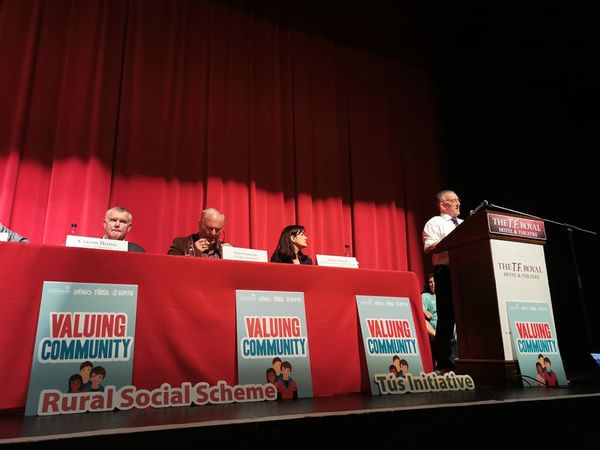
Protected: “Grown men crying” before reforms to RSS, Tús & CE schemes

This content is password-protected. To view it, please enter the password below.

Community workers operate in somewhat strained atmosphere as refugee supports publicly questioned

(Those refugees have now been moved to student accommodation for the summer, after which time they will be moved again to who knows where.)

The story they commented on was published by a reputable local newspaper and the ensuing discussion on Facebook was among local people commenting under their real names.

Alison, who only last February sported a Ukrainian flag on her page, responding to news about the refugees being given accommodation wrote: “Charity begins at home”.
She got 12 likes.

The majority of people showed they care, some preferred to put their own interests first, many blamed the government and others are of course only online for a laugh.
Derek replied to the tents story saying: “They’re used to the cold being from that area.”

Martina saw a bigger picture: “It’s the government’s fault they should never have brought them people in here when they haven’t their ‘house’ in order. Our housing situation is a disaster & the government is making the Irish resent these people & it’s not their fault, they were running from a war.”

Nora agreed with her: “They didn’t ask for this to happen, so be nice. I hope they get sorted out.”

But Tom was having none of it: “Every time a ‘refugee’ gets somewhere to live that’s a place an Irish family could have had.”

Back and forwards the argument went. People are well informed about the housing crisis – or disaster as President Higgins terms it – and some spoke from personal experience.

Paul was swamped with 37 likes when he said simply: “I’m a proud Irishman and this country doesn’t care about our own people.”
John replied: “The homeless crisis and our humanitarian obligation to refugees are two completely separate issues… It’s not a triage situation. Must do both. We don’t do enough for either.”
He received 26 likes.

Such online debate on Facebook – mostly between people living in the same place – can be healthy. However, when misinformation creeps in, people can lose the plot

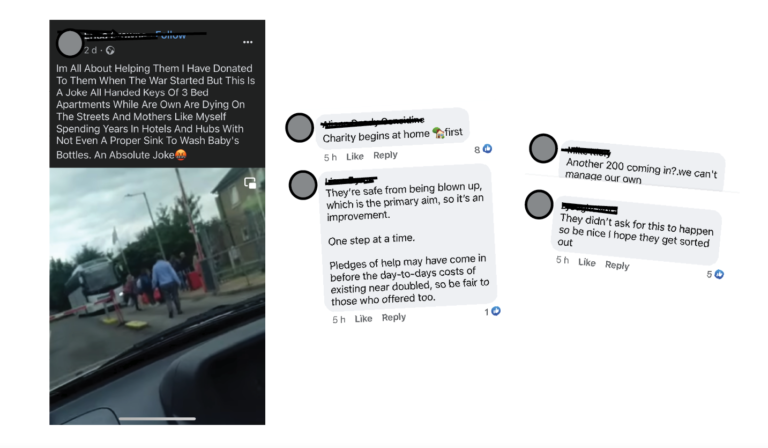
An Erica raised the temperature with a video she shared showing Ukrainian refugees who she said were given “the keys” to 3-bedroom apartments. She posted a few seconds of video (seemingly from another part of the country) of people alighting from a bus outside student accommodation. The commentary said: “About 100 Ukrainians handed apartments down here. An absolute joke and our own on the streets in town, men and all there.”

Many took it that the refugees were all but housed for life.
“A disgrace.”
“Scandalous.”
“Disgusting.”
“Can’t help our own – leaving ‘em to die.”

Erica wrote, “I’m all about helping them. I have donated when the war started, but this is a joke. All handed keys of 3 bed apartments while our own are dying on the streets and mothers like myself spending years in hotels and hubs with not even a proper sink to wash baby’s bottles. Absolute joke.”

The joke will be on us all with rising racism. The government needs to better communicate to the general public that Ukrainian refugees – while they are entitled to social welfare, medical care and access to jobs – DO NOT qualify for social housing. This should be widely broadcast in the same way that Covid alerts and health advice was issued.

Some of the more unsympathetic messages posted in the same online discussion included:

Jack: “Send them back now it’s safe the capital Kiev. This is shocking but it’s all the government open door policy while poor Irish are forgotten.”

Lisa: “I’m not racist, but you’ll get better treatment if you paint your face or speak a different language – you’ll be treated like kings and queens.”
And, as so often in online debates, there were the conspiracy theorists.

Barry wrote: “This was all designed and purposely done. Stop this nonsense over their fake war. I’ve been researching this sh** for years. Wake up people.”

Danny was right with him: “None of these Ukrainians are fleeing war-torn countries. We are being lied to. They are pulling up outside *** school in €60,000 cars and jeeps dressed up to the nines in designer gear, all the whilst our own indigenous are being kicked to the kerb.”
Would he be more welcoming to refugees who come with only a backpack as many have done?

This reaction to one innocuous news story and a flimsy amateur video with misleading commentary, is no doubt being replicated in other parts of the country. When the facts are fairly reported, it can lead to healthy debate, but when facts are grey it leads at best to misguided outrage and at worst to racism.

Obviously, Ireland must look after existing public needs and war refugees fairly (and what about non-Ukrainians refugees?) and communicate clearly what the facts are. In the meantime, community workers and local public representatives must work on integration while facing a possible rise in intolerance.

One hopes Ukrainians who come across online discussions like this can disregard the negatives and embrace the positive.

21 reasons why Ireland is BETTER today for taking in refugees – ON THE OTHER HAND…
Groups up support for host families amidst urgency to accommodate refugees by September

We need more men and better pay in early years childcare

Gender balance, employment equality, gender inclusion, these are all buzz terms we are all too familiar with in Ireland in 2022, thankfully.
Children are taught that girls can do everything boys can do and vice versa. In the workplace women are encouraged to aim as high as possible achieving everything and more of the male counterparts.

However, it would seem that there is one sector that is far behind the scale in terms of gender equality – the early years childcare sector.
In 1996 the European Commission Network on Childcare set a target for a male participation rate in the sector to be set at a rate of 20 per cent by 2020. However in Ireland, in 2022, the true figure for the number working in the early years childcare sector is believed to be about one per cent.

Childcare, it would seem, is still very much seen as a ‘women’s job’ in Ireland. And it is not just Ireland. In the UK, it is also a female-dominated workforce where only approximately three percent of childcare workers are male. Even in countries who are applauded for gender equality like Norway, 10 percent of their early years workers are male. Social stereotypes, it would seem, are the hardest to overcome.

The benefits of having more men working with our young children are evident and well documented. But why is the job consistently regarded as female’s profession?
In Donegal one inspiring young man is hoping to break that mould for the next generation of male childcare workers.

In 2020 Darragh McGrath graduated from Letterkenny Institute of Technology with a first class honours degree in Childcare. He works fulltime in Newtowncunningham Playgroup in North Donegal, but Darragh is in the minority.
The numbers of men working in the childcare sector in Donegal is extremely low with Darragh being one of only two males to graduate in Childcare in LYIT that year.
But with some outdated attitudes still lingering within the community and pay and conditions for early years staff still far behind the level they should be, it’s hard to see any real changes coming in the immediate future.

“When I started working here, people asked me what was I doing? They asked was I cutting the grass and doing maintenance. I think they thought I was the caretaker,” said Darragh.
“I think there is still a level of fear that men will be laughed at or looked down on for working here, some people would have made comments to me, but it never bothered me.
“But I was very clear that I was working with the children. This is my dream job – I love working here and working with the children and seeing them progress. I would stay forever if I could but it might not always be realistic.
“Pay and conditions are so poor compared to Primary School Teachers or even SNAs – even during the summer months I have to sign on the dole as you don’t get paid over holidays.”

However that being said, Darragh is fully committed to his job and has received great support from his fellow childcare workers in Newtowncunningham and during his time at LYIT:

“My experience has been so positive, I have great support here and when I was at college – they loved to see men doing the course. I never had an issue with any of the parents – everyone has been so welcoming. It is the most fulfilling job.”

One of the benefits of having gender balance in the playgroup has been the support he has provided for children of lone parents.
“I have noticed that some of the children who have just mum in their life can gravitate towards more, and that’s lovely that I can provide a male influence at a young age. It is very rewarding, and I think it would be very hard for someone to walk away once they start,” he said.

• Sean Carroll, Pauline Coyle, CE supervisor and Caroline Borden, manager of Bocan Creche.

Pauline Coyle, who supervises the Community Employment Childcare Scheme from Inishowen Development Partnership [IDP] on behalf of the Department of Social Protection, hopes there will be changes to this in the near future.
“I think the Government will step in and improve working conditions in the early years sector. These people do such important, good work and they deserve to be paid in a way that reflects their hard work and dedication. It is shocking that young, highly educated people such as Darragh still have to apply for Jobseekers during the summer holidays,” said Pauline.

Pauline said everyone in IDP would encourage more men to follow a career in childcare and she believes the CE scheme could be “a great place for anyone, who has been unemployed for 12 months or more, to get involved in the sector”.
“The great thing about the CE scheme is that you get hands-on experience and your accredited training is fully covered. The new module that has been recently developed leads to an even more professional specific qualification so it would give anyone – man or woman – a great opportunity to gain a high level qualification in childcare,” she added.

Caroline Borden, Manager of Bocan Community Creche, said she would love to see more men coming through the door.
“We have had a small number of male workers over the years and we have one [Sean Carroll] at present,” explained Caroline.
“But I think society still states that the man is to be the breadwinner in the house and working in a preschool from 9am until 1pm doesn’t suit the majority of men.
“The men that are coming in the sector at present are breaking the mould for the next group of men coming behind them. Hopefully we will continue to see more men like Sean coming in – everyone will be treated equally here,” she said.

Groups up support for host families amidst urgency to accommodate refugees by September

Hosting refugees is easier than you think – but take advice first

Although many people assumed it was necessary for intending hosts to register in advance with the Irish Red Cross, this is not the case. As common sense might tell you, any home-owner can take in refugees from Ukraine or indeed anyone else in a difficult plight, if they so wish.

“There is nothing to stop you from doing that. It is your house so you can bring whoever you want to into it,” agreed John Lennon, CEO of Doras, when the question was put to him last night.

He quickly added: “But we would strongly recommend that you follow a process that ensures that expectations are managed, that you’re going to be able to cope with the situation and that the guests, before they arrive, understand what they need to understand.”

John was speaking after an advice event held for potential host families in the mid-west. It is the first of three information sessions being held this month by Limerick-based Doras, Cork-based Nasc and the Irish Refugee Council in Dublin.

• John Lannon of Doras with Angie and Aideen Gough, two of the founders of a new group called Helping Irish Hosts. Visit their website at: https://www.helpingirishhosts.com/

While the Irish Red Cross (IRC) is helping to place refugees with host families, this has not happened at the speed that many would like, although there was no criticism of the IRC at the Limerick event: The aim was to give practical advice and highlight voluntary groups and other organisations also providing help.

For example, a volunteer who helped to found a new organisation (it has applied for charity status) called ‘Helping Irish Hosts’ spoke at the Limerick event at length and in glowing terms about how taking in refugees from Ukraine enriched her family’s life. You only had to listen to Angie Gough to be convinced of the merits of being a host. Their website is now up and running at – https://www.helpingirishhosts.com/

Outside Dublin, national organisation Doras is on the other end of a phone to support people in particular in counties Limerick, Clare and Tipperary.

Established in 2000, Nasc does similar work but on a wider scale in Munster and beyond, while the Irish Refugee Council is 30 years old and has a national remit.

Majo Rivas, community sponsorship manager with Nasc, speaking at the first of three events to give people advice on hosting refugees.

“Help is available. We’ll make it work for you,” promised John. He doesn’t just mean over-the-phone advice or tips on their website. Members of his team have been accompanying people while they register with state services. Only this week a member of his team accompanied a Ukrainian refugee to make an urgent trip to the dentist.

Doras staff and volunteers include people who speak Ukrainian and Russian, among other languages, and they have experience supporting refugees from other warzones before Russia invaded Ukraine.

John said: “There are safeguards that need to be put in place, but we can do this quickly. We know there is a lot of goodwill in communities.”

“There is a lot of practical information and advice that we can share quickly with people. There’s also the reflective pieces that we want people to think about before taking Ukrainians or anybody else from warzones into their homes,” he said.

Last night’s Limerick event attracted around 30 people and organisers no doubt hope for higher numbers in the bigger cities of Cork (on Thurs, July 14th) and Dublin (on Wed, July 20th). There is a need to move swiftly and find more host families, because many thousands of refugees currently staying in student accommodation must move out when summer ends.

We asked John about a hypothetical offer from an easygoing family in a large house with spare bedrooms, a spare bathroom and a shared kitchen, and who accept the refugees may need to stay for a long time.

“It sounds like it could work,” he said. “There are a lots of rooms and vacant properties, lots like this that hasn’t been tapped into yet.”

Asked can one directly approach Doras to be matched with one or more refugees who could be a good fit for your family and circumstances, he said:

“Yes. We are going to work with other partners to find a way to match up a host with guests who need a place to live. We’ve been doing this for refugees from other parts of the world (before the war in Ukraine).”

He said Doras has been working with others, such as the International Organisation for Migration, the Irish Red Cross, Helping Irish Hosts, government departments and others “to direct people in the right way”.

“What we’re now doing nationally and locally is finding ways to make that process faster, because we recognise there is a lot of goodwill out there. We also recognise there are a lot of people who have been waiting months to make their room or building available.”

As was mentioned at the meeting, there are Community Response Forums to support Ukrainian refugees in every county and the Limerick forum, it was reported last night, is working well. The forums are overseen by the State’s 31 local authorities “to coordinate the community-led response in the provision of assistance and support to Ukrainian refugees as they are accommodated around the country”. Local development companies are key to this work and they are also available to directly provide support and advice to Ukrainians anywhere in Ireland and to groups wishing to help them. Similarly, the 121 State-funded family resource centres are providing support at more local level.

Speed is of the essence now in matching supply and demand as over 35,000 refugees have arrived here in a matter of months.


CORK EVENT – July 14th, 6.30-8pm.

Venue: St. Peter’s, 87A North Main Street, Cork City, T12 RF8D. Host: NASC.


DUBLIN EVENT – July 20th, 6-8pm

Venue: Royal College of Surgeons, Dublin 2. Host: Irish Refugee Council.


These events will provide practical and detailed information and they are for:

  • Individuals involved in hosting refugees.
  • Community volunteers involved in the integration of refugees.
  • Community workers active in supporting refugees.
  • Refugee hosting groups.

USEFUL LINKS:

Supporting refugees and all seeking to help them: https://doras.org/

Supporting hosts in particular: https://www.helpingirishhosts.com/

Detailed information for Ukrainians coming to Ireland: https://nascireland.org/know-your-rights/ukrainians-ireland-information-note

News & information on Ireland’s response: https://www.irishrefugeecouncil.ie/Pages/Category/ukraine-response

Local Development Companies countrywide: https://ildn.ie/directory/.

To email any Community Response Forum in the country see: https://www.gov.ie/en/publication/d7cf1-how-people-can-help/

Family Resource Centres countrywide: https://www.tusla.ie/services/family-community-support/family-resource-centres/find-family-resource-centre/

21 reasons why Ireland is BETTER today for taking in refugees – ON THE OTHER HAND…

Half the 600+ at Kerry jobs fair were refugees

Red Cross too slow: Irish farmer hosting Ukrainian refugees on why others should do the same

Support communities to help refugees with 1% corporations war tax

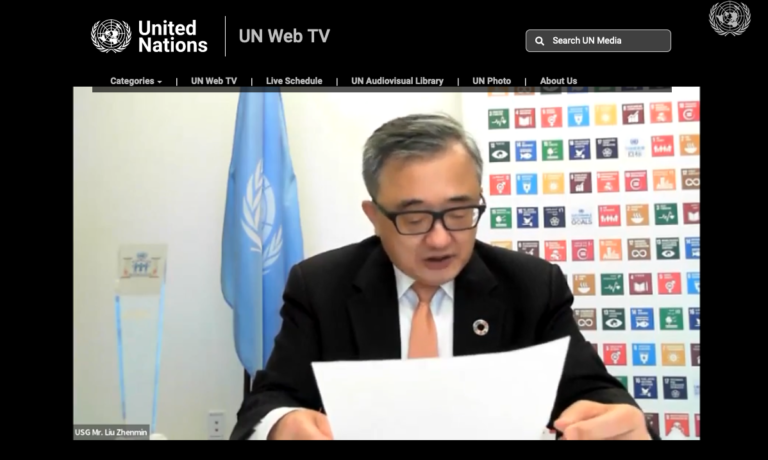
Ireland wins UN award for its community work – SICAP among 10 winners after 350 apply from 58 countries

The programme is supported by the Department of Community and Rural Development and the award win was announced from UN headquarters in New York on June 22nd.

Other award winners came from The Philippines, Poland, Thailand, Brazil, Saudi Arabia, India, Panama, Canada and Ukraine.

“Great recognition from the UN no less for SICAP,” said South Tipperary Development Company, congratulating all involved. Similar sentiments were expressed by others involved in delivering the programme.

CEO of Galway Rural Development, Steve Dolan, said, “In GRD we’re very proud that SICAP has been recognised for this award, an acknowledgement internationally of the positive imact of the programme, especially during the COVID-19.” He thanked GRD colleagues, Pobal and the Department “who displayed resilience and flexibility as we sought to support those most at risk of poverty and social exclusion during the pandemic”.

Minister of State for Community Development, Joe O’Brien, said, “This award, a first for this Department, is testament to the strength of the programme and the hard work and commitment of our DRCD staff, Pobal, Local Government, Local Development Companies and programme beneficiaries,” he said.

SICAP’s budget increased by 10% to €43m at the start of this year and a further €5m was announced in June to support its work with refugees.

The programme supports communities and individuals experiencing disadvantage and has 13 target groups: children and families; women, young people (aged 15-24), emerging needs groups, lone parents, low income workers/households, new communities, people living in Disadvantaged Communities, people with disabilities, Roma, people disengaged from the labour market, unemployed people, and Travellers.

United Nations Public Service Day, celebrated on 23 June each year, recognises the value of public service to the community and highlights the contribution of public service in the development process. For more details about the UN award visit: https://www.un.org/en/desa/un-public-service-awards-recognize-10-innovations-help-world-recover-better-covid-19

BELOW: Mr Liu Zhenmin, Under-Secretary-General for Economic and Social Affairs, makes the announcement in New York.

MORE NEWS from ‘Changing Ireland’ of SICAP’s successes and its origins in an era of cuts:

Further information on the programme is provided here on Pobal’s website and by the Department of Rural and Community Development here. For news and historic background, including cuts to State-supported community programmes, the setting up of the SICAP programme and its subsequent expansion and recognition at the highest level, scroll down for more Changing Ireland articles.

The first is a well-researched long read for anyone – student, public servant, volunteer or media producer – who wishes to know what SICAP does, why it does it and what makes it work.

Take a deep dive into a #SicapStory – From Malawi to Wexford

4 SICAP success stories and the LDCs behind them

SICAP report calls for bottom-up approach to evaluation

Minister Ring wants to expand Department amid SICAP success

Is social inclusion our best weapon in the fight against the far right?

Minister Ring launches 5-year anti-poverty programme

“On the cusp of a huge opportunity” Interview with: Ryan Howard in Brussels

Update in relation to former CDPs and the LCDP

Budget 2010 – COMMUNITIES DOWN AT LEAST 10%

DOMESTIC VIOLENCE: Offaly support workers get calls from around the world

0

Anne Clarke, manager of Offaly Domestic Violence Support Service, says, “There are women today who are alive by a hair’s breadth.”
It takes more than a moment for that to sink in and it puts an incalculable value on the work done by Anne’s project.
“We are mitigating women’s lives every day,” said Ms. Clarke, adding that they feel “humbled that women and men choose to contact us for support, that they choose to let us guide them through to safety.”
Here is her interview with reporter Ray Lucey, beginning with how Covid highlighted the need for significantly more support for victims of domestic violence:

RL: Was there an increase in people seeking your services durng the lockdowns?

AC: During Covid, we saw our figures rise by just under 50% in 2020 and that stayed on trend for 2021. Our client contacts went up significantly: 829 in 2019, to over 1,700 in 2020 and 2,700 client contacts in 2021.
Clients needed more support during Covid-19 and there were more high risk cases that required more intense attention and more Domestic Violence Orders.
We had clients who had to leave the home quite quickly and there were threats to kill, and use of weapons. Really, there was a huge fear – a lot of women were very fearful in their homes and looked for support.

SUPPORT MEN AS WELL

AC: We had some men having to leave the family home during Covid-19 as well. Our services are a bit different, because we actually support men as well. We are one of the few services that does that – we provide support to both the male and female victims in Ireland.
A lot of the time it is more difficult for the man to come forward because society says – how could you have been harassed, intimidated or bullied by a woman? Society says men should be stronger. That kind of image we have of men makes it harder for a man to disclose abuse, because of that stigma.

WOMEN WON’T LEAVE THEIR COUNTY

AC: We have no refuge at all in Offaly. We’re a rural county and there’s next to no public transport out of towns and internet access is poor.
I speak predominantly about women because they are over 80% of our clients. A lot of times, women won’t leave their county. They base their decisions on how it would affect their children, if they have to come out of school, miss out on extra curricular activities, supports or family – then they won’t leave.
Therefore it’s really important that we have some form of emergency accommodation. Right now, we’re looking at providing three safe houses in three different parts of the county which means no matter where you are you’ll be in close proximity to your supports and be safe. We’re trying to get that project off the ground and get funding for it.

RL: How long has ODVSS been in existence?

AC: ODVSS is marking 25 years this year. It was formed in 1997 after a family lost their niece to domestic violence. A group of women got together once they realised there was nowhere for anyone to go. They started it up from very meagre beginnings and it just grew – into a service now providing one-to-one, emotional and practical contact support in a crisis. We do court accompaniment. We do all the processing and paperwork for the court. We accompany the person into court, and provide support afterwards and we can do remote court hearings.
We ran the same service all the way through Covid-19.
Our support groups moved quickly online. We bought Samsung tablets for clients to access technology and to stay in touch. Our (direct) outreach was reduced during Covid-19 obviously, but is back up again.
We do teen-dating awareness programmes, going into schools to talk about what is healthy and unhealthy in a relationship and what is consent.
We have in-house counselling, providing extra support for clients who need it to recover from the trauma they’ve been through.
We run a ‘Freedom Programme’ twice a year that looks at the various tactics of perpetrators, so you can inform people what the red flags are. If they are going into another relationship, they’ll know how to be able to spot that, but it is also for the professionals – so when the woman talks about the perpetrator they have an understanding of what that means.
We also do ‘Helping Hands’. It’s a programme for children who witness abuse and it really looks at how they can regulate their emotions and feelings.
We have two helplines, one main helpline, and one active during Covid-19. We also have a text support line for those who can’t speak verbally, so they can text and we can text them back.
For a small service in the Midlands we do quite a lot with the budget we have.

TENNESSEE CALLING

• Tennesse, USA, is a long way from Tullamore.

AC: Across all our social media platforms we constantly get DMs (direct messages). During Covid-19, the amount of women around the world messaging us for support and information was unreal. It’s because our social media is quite strong. Only the other day we got a DM from a lady from Tennessee.
We’re just a small service in Offaly, but we look up their nearest support service and pass that information on to them.
We are contacted from North Carolina, South Carolina, New York, Dakota, Australia, New Zealand, Germany, the Philippines, Scotland, France – it went worldwide during Covid-19 to be honest with you. We couldn’t get over it and we were asking ourselves – how are these people finding out about us? It was because we were very, very active on social media, because we had to keep getting the message out that we were still providing support during Covid and that we are still here.
Staff worked weekends and everything, because Covid-19 offered the perpetrators the perfect storm. They want to isolate their victims from all their support networks, so obviously that was perfect: You couldn’t go 2kms past your house. You couldn’t mix in households.
All the respite stuff and engagements that a person would normally have outside that abusive home were now gone. So our message was that we’re still here, still providing support, that nothing had changed and if you needed help just give us a call.
That message went far beyond Offaly and right around a good part of the world.

HAIRDRESSERS & BARBERS

AC: We also run a lot of awareness campaigns and we run training for hairdressers, beauticians and barbers, because obviously you have a good relationship when you go to the same one for years. They hear things and see things, so we train them.

ABUSERS CAN TRAIL VICTIMS INTO WORK

AC: We liaise with businesses regarding domestic violence in the workplace because we know that domestic violence doesn’t stop when you leave your home. Your work can be sabotaged, you can be stalked at work, there can be multiple emails, multiple phone calls. Maybe you can’t go to work because of a beating the night before or you could have high absenteeism.

SAFE WORK SPACES

AC: We work with employers to create safe spaces so people feel able to disclose and know they will get support from line managers and HR. In support of this type of work, there is legislation going through the Dail at the moment that will give 10 days paid leave for victims of domestic violence.
We also give people 24 hour alarms that go direct to the Garda and they have a responsibility to respond very quickly to that alert if it’s pressed.
We do a lot for a small service.

FINANCIAL ABUSE

AC: At least 80% of women who come to us experience financial abuse and that is a huge barrier to leaving the home, so we run a project sponsored by the Giving Circle of Ireland. It’s called ‘Begin Again’ and it gives one-to-one life coaching. It helps those who want to put their CV together, learn interview techniques, and whatever else they need. We’ve had some clients go back to college and some go back to work. We have outside facilitators and a counsellor – there’s a good team behind the whole ‘Begin Again’ service.

POST-SEPARATION ABUSE

AC: A woman is at higher risk when she leaves an abusive relationship and she remains so for 3 to 6 months afterwards. When the perpetrator recognises they’re losing control they increase the abuse even more and shift it up a gear.
It doesn’t (always) stop when you leave; post-separation abuse can be huge and women are re-traumatised going in and out of courts for access and maintenance. Or they’re being stalked, or the children are being used or weaponised by the perpetrator.
But through our support and domestic violence orders and safety planning we can support that person (when) living in the home becomes not an option, because of the level of abuse.

We often hear ‘She’s an intelligent woman’, but it doesn’t matter if you’re intelligent, because if you’re being subtly controlled, sometimes you don’t know until it’s too late. And if the perpetrator is an upstanding member of the community, who’s going to believe you?

RL: Does that often happen?

What we can’t underestimate is that if the perpetrator is so good at grooming you and you fall for it, he’s also good at grooming the community and grooming all the supports around you. So, when you come forward and you disclose something – who’s going to believe you? That’s what women are facing every single day.
The children are often the invisible victims here. They’re dismissed almost. We should have more children’s support. We should make sure that children receive trauma support so we can break the cycle going forward.

RL: Do some kids grow up to do it in later life (become perpetrators of domestic violence)?
It’s sometimes a repeated pattern, yes.

FIRST THOUGHTS ON HEARING OF ASHLING MURPHY’S MURDER

• Ashling Murphy’s funeral. Source: RTÉ.

When staff and volunteers in Offaly Domestic Violence Support Service heard a woman had been murdered in Tullamore in broad daylight, and before they knew who the victim was, they thought it could be somebody they knew through their work.

As manager Anne Clarke said: “Sometimes we go out home on a Friday and hope that some women are alive on Monday – that’s how high risk the violence is in the community. You have women who are being threatened (with murder), threatened with weapons, and there’s physical assault. When it’s really bad women are being beaten within an inch of their lives.

“They’re afraid then to prosecute because of a fear of the perpetrator. The women who are experiencing really high levels of coercive control are totally traumatised.”

She said, “It was shocking to hear about such a random daylight attack, but that level of violence is in the community and is happening in the homes. A home should be a place of sanctuary and should be a place of calmness and safety. Women are terrified. They’re not walking on egg shells, they’re walking on broken glass.”

FOR MORE FROM OUR INTERVIEW WITH ANNE CLARKE, LOOK OUT FOR OUR SPRING 2022 EDITION – OUT VERY SOON.

West Cork’s domestic violence service publishes unique newsletter

West Cork’s domestic violence service publishes unique newsletter

0

They are to be complimented on reaching their 80th edition – check it out – subscription details below (it’s free).
In the meantime, Maria Mulholland, co-ordinator of WCWAV, said she is glad to see that domestic violence has become a government priority and she hopes to see the opening of more domestic violence emergency accommodation.
“There was one major benefit from Covid for the domestic violence sector. It exposed the dearth of refuges and safe housing spaces available to victims,” she said.
“Covid highlighted that the old-style, communal refuges are no longer fit for purpose as these were unable to take their normal numbers because of Covid, reducing already scarce places in refuges by 50%.”
The scarcity of emergency accommodation was recently highlighted by Tusla.

Refuges now a priority

• Marie Mulholland.

Mulholland said, “A recent accommodation review of domestic violence spaces conducted by Tusla identified that at least 60 new units of accommodation are required in 10 locations across Ireland, including in Cork and West Cork. These areas are now a priority.”
In February, the Department of Justice published and sought the public’s views on a new National Strategy on Domestic, Sexual and Gender-based Violence. Mulholland hopes that this third national strategy will lead to “radical change in prevention, protection, prosecution and policy areas”.

Lucky break

So, how did the projects such as WCWAV handle the increase in demand during Covid? They adjusted like other frontline community groups.
In West Cork they also got a lucky break.
Mulholland said: “We worked remotely, while ensuring we were always on the end of a phone for anyone who called. We placed ads in local press and media to let those who needed us know that the service was still operating and that we were still here for them.
“We worked closely with our local Garda division to devise a process and protocols for transporting women and children to safety.
“Very importantly, we were given the use of holiday homes by owners who lived outside West Cork – for use by those most in need of emergency accommodation due to domestic violence.
“During the lockdowns, we worked longer hours and if truth be told we are still dealing with the aftermath of the increase in domestic abuse due to Covid and lockdown restrictions,” she said.

Subscribe to Their Newsletter For a copy of the West Cork Whisper, email: admin@westcorkwomensproject.ie
Alternatively, you can subscribe via this link:
https://bit.ly/WestCorkWhisperSub2022

Follow them Online
WCWAV is active on Twitter and Facebook. Their website is:
www.westcorkwomensproject.ie

DOMESTIC VIOLENCE: Offaly support workers get calls from around the world

New Community Centre Fund part of “unprecedented” €150m package

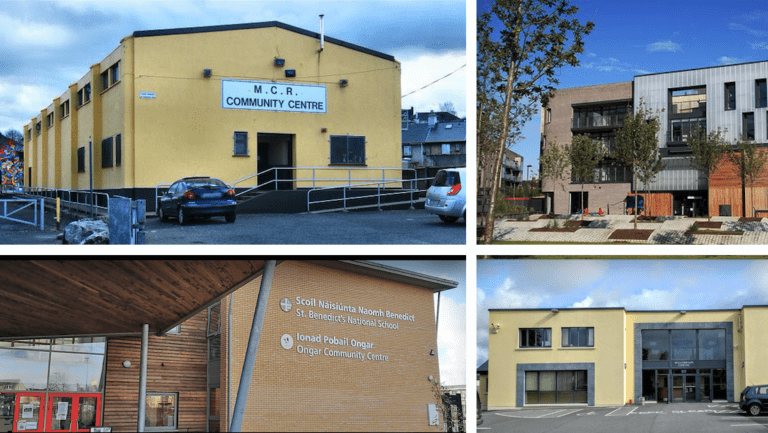
As reported here in March, the new Community Centres Investment Fund (CCIF) will see €15m spent upgrading and refurbishing community buildings across the country.

The CCIF complements funding schemes worth over €150m to communities this year and a very useful calendar featuring details and deadlines for all the major funding schemes for communities has been published to make it easier for community groups to see where they can apply and to plan ahead.

The main announcements in March drew attention to:

• The new €15 million fund to upgrade and refurbish community centres.
• The focus on Remote Working through initiatives such as Connected Hubs and Town and Village Renewal Scheme.
• The Rural Regeneration and Development Fund which is designed to tackle vacancy and dereliction.
• Significant investment in walkways, trails, rivers and lakes under the Outdoor Recreation Infrastructure Fund.
• Focus on ambitious projects which make a lasting impact to communities.
Minister for Rural and Community Development, Heather Humphreys, pointed out that there is now “unprecedented” support from government for rural communities through various funding programmes.

The funds, some of which are still open for applications, include:

• Community Centres Investment Fund. (Registration is open now; Applications will open 7 June 2022).
• Town and Village Renewal Scheme – Streetscapes.
• Rural Regeneration and Development Fund.
• CLÁR.
• Outdoor Recreation Infrastructure Scheme.
• Town and Village Renewal Scheme – Connected Hubs.
• Dormant Accounts Fund Social Enterprise – Capital Supports.

As Minister Humphreys said, “The funding is available – so identify good projects, make your applications strong and get them into my Department.”

The rural investment packages are underpinned by the Our Rural Future and Town Centre First national policies.
Under the new Community Centres Investment Fund, groups can apply for grants ranging from €10,000 to €300,000.

Minister O’Brien commented: “There is little point in having great infrastructure if there are not the people using those facilities to deliver the many community and voluntary programmes and schemes across the country. That is why I am committed to supporting the Community & Voluntary sector to maximise its impact in communities throughout Ireland.”

The challenge of making best use of community centres was recently discussed at cabinet sub-committee level, as Minister Eamon Ryan told this publication.

W: https://www.gov.ie/en/service/fec91-community-centres-investment-fund/

W: https://www.gov.ie/en/organisation/department-of-rural-and-community-development/

Updated: This article was first published on March 11th after over 300 stakeholders attended a special online webinar to hear full details on funding schemes. It was updated on May 11th. – Editor.

Our Rural Future: The Government’s blueprint to transform the country

21 reasons why Ireland is BETTER today for taking in refugees – ON THE OTHER HAND…

1) While refugees don’t know what Ireland was like 10 years, 20 and 30 years ago, they’re thankfully coming to a country that is peaceful, one that has largely recovered from a banking, economic and unemployment crisis and one that has embraced equality and diversity. Here are 20 more reasons why Ireland is a better place today for refugees.

2) Our broadband situation is improving especially in rural areas and it is now possible to work from home. Digital hubs are being set up nationwide.

3) Millions of euro have been invested in renewing our towns and villages and action is being slowly taken to reclaim derelict buildings. (This must speed up now with demand for more accommodation and community services).

4) While we have less pubs nowadays, the number of community cafes and Meals on Wheels services has increased.

5) Prior to Covid, there was hardly anywhere to sit (for free) apart from bus stops and public parks. Refugees are now coming to a country with good public seating, walkways and outdoor activities in towns and villages.

6) Undoubtedly, transport is a challenge and many refugees are likely to (have to) take to bicycles. Cycling and cycle lanes are now receiving record investment.

Emergency Response & Community-level Programmes

7) They are also coming to a country where Local Development Company staff have experience co-ordinating a response at community level to emergency situations.

8) A silver lining from Covid was that Community Fora were set up around the country. They have been re-instigated in response to the war in Ukraine and the arrival of refugees.

9) The refugees are coming to a country that has invested in its public libraries – turning them into community hubs with modern technology and better access for all (and late return fines were abolished).

10) We have a national network of over a hundred Family Resource Centres.

11) The Social Inclusion and Community Activation Programme has been long recognised as pivotal to supporting communities and thankfully government funding was increased in December by 10% (though it is still short of the funding levels a decade ago).

12) The expanded national network of Volunteer Centres helps people wishing to volunteer and links them with local organisations.

13) We have Public Participation Networks operating in every local authority area and they bring together groups that will play a crucial role in connecting with and supporting refugees.

14) Rules for Community Employment (CE) Scheme participation were loosened up in late 2021 to allow more people take up places. CE is critical to the provision of many community services and the staffing of buildings, parks and other community assets. While it is a challenge to attract applicants when the economy is at near full employment, CE could provide an entry route into society for Ukrainian refugees, especially those without English.

15) Support from the State for social enterprise is increasing every year. Again – most timely.

16) We have a Failte Isteach programme that could be replicated or better resourced to rapidly expand to meet the demands for English-language teaching. These initiatives are in the main run by volunteers.

Diversity & Minority Protection

17) Domestic Violence support became a government priority during the pandemic and new refuges are to open in the nine counties without any. When it is also recognised – as it must be – that there is also a need for more Ethnic Minority Community Development Projects focused on domestic violence, then a recent report (highlighted in our Spring 2022 edition) shows the way.

18) A new pilot Community Development Programme (read about it here) was launched in 2021 with a view to expanding beyond the initial seven projects. They are focused on supporting minority groups and these pilot projects should soon deliver lessons to aid expansion.

19) The government took a bold step last year to regularise the status of undocumented people who are here for more than 4 years. However, there is a new divide between the quality of the treatment being given to refugees fleeing Ukraine and those fleeing war and persecution elsewhere (Yemen, Palestine, Afghanistan, etc). War is war and this must be addressed.

Local Collaboration

20) At local government level, while we lost our town councils in 2014, we now have municipal districts that are well-established.

21) Collaboration is improving. As Paul Rogers points out (for more see page 28 in our Spring 2022 edition, currently at the printers) the State began from 2008 to move away from collaboration with the Community Sector by partly embracing privatisation to provide community services. Funding for networking declined during this period too. Collaboration doesn’t grow like nettles (loved in Ukraine). It must be supported by the State – and it can be – as shown through the Place-Based Leadership Programme launched in January to nurture a community response to crime in Darndale and Drogheda.

ON THE OTHER HAND:

❎Is the Social Inclusion and Community Activation Programme (SICAP) on its own enough? Do we need a new Ukrainian Refugee Settlement and Development Programme? Will the network of Volunteer Centres be sufficient? These questions need to be addressed well before 100,000 or indeed 200,000 people arrive into Ireland. In late April alarmed NGOs raised similar concerns, saying this was even bigger than Covid for the Community Sector.
The Sector – while given a lift in recent years through the setting up of a new dedicated government department, new funding initiatives and pilot programmes – still has not recovered from cuts over a decade ago. It cannot stretch like lycra.

❎Our mental health services are notably not as strong as needed.

❎How many refugees will the Government take in? Local Development Companies among others need numbers to plan and need to be adequately resourced. Otherwise we risk letting down refugees. Despite the fantastic voluntary initiatives at local level these need long-term support.

❎The community sector is constrained by high insurance costs – campaigners say this can be tackled.

❎Should some GDPR requirements be relaxed in emergency situations?

❎Child protection is a major challenge.

❎Our anti-racism and hate crime legislation is weak – though change is on the horizon.

❎While the campaign against Direct Provision was a success, many people remain trapped in DP accommodation chiefly because of the housing crisis. The Government’s ability now to build new homes fast and fairly will determine if Ukrainians can really settle here. Like Syrian refugees in Greece and Lebanan, they risk becoming long-term residents of refugee camps.

Half the 600+ at Kerry jobs fair were refugees

Support communities to help refugees with 1% corporations war tax

Support communities to help refugees with 1% corporations war tax

EDITORIAL

Why do communities need more support?

The Ukrainian refugees coming here need to put down roots and connect locally if they are to connect nationally with Ireland. The support and integration of tens of thousands of refugees will place greater demands on the Community Sector than even the pandemic did.

Staff in Local Development Companies and others have done wonders in the early weeks of the war, but they have more than enough to do to support existing groups. While there is some elasticity in how Local Development Companies operate, diverting resources from current targets comes at a cost to groups already dependant on them for support through the Social Inclusion and Community Activation Programme.

Community Sector demand for more resources was highlighted last year – even before refugees came here from Ukraine – when 124 community groups applied to become part of the new pilot Community Development Programme. (While the aim is to expand the programme, only seven were chosen for the pilot).

• From the front cover of our Spring 2022 edition: Olena Syniuenchko, refugee/translator; Lisa O’Flaherty, co-ordinator of North East West Kerry Development’s Moving On project – which organised a Jobs Fair in Tralee; and Olya Marymtseva, refugee/ translator / Kerry Education and Training Board.

Refugees seem for now largely unaware of our housing crisis. Housing absolutely needs to be addressed in new and fair ways so we build sufficient homes to match demand.
At present, the new arrivals are at risk of being moved around geographically between emergency accommodation hubs. This was done in the past, sometimes to subdue the legitimate complaints of asylum-seekers trapped in Direct Provision and to stop them organising. That should not happen again.

To work with any community the members of that community need to be centrally involved, to be part of the decision-making. The Ukrainians’ ability to contribute will depend not just on the resources made available from government, but how well they are facilitated to organise. The challenge is to see that community development principles and practices are followed. It won’t be cost-free.

One minister predicted 200,000 refugees could come here and calls have been made by NGOs for one member of government to be made responsible for overseeing the arrival and integration of refugees. The NGOs also said the State cannot depend indefinitely on volunteers.

The Government also cannot ignore the needs of refugees fleeing other wars and persecution. We are a country that now welcomes refugees and we can be proud of that once we look after all our guests. But are we giving a Chéad Míle Fáilte, or if numbers rise – a Dhá Chéad Míle Fáilte?

Half the 600+ at Kerry jobs fair were refugees

21 reasons why Ireland is BETTER today for taking in refugees – ON THE OTHER HAND…
Red Cross too slow: Irish farmer hosting Ukrainian refugees on why others should do the same

Campaigners welcome amnesty

People new to Ireland to learn ‘an cúpla focal’ this month

Take a deep dive into a #SicapStory – From Malawi to Wexford

• Over 21 years, here are a half-dozen of our covers focusing on refugees, anti-racism and integration. See the full archive here!

Red Cross too slow: Irish farmer hosting Ukrainian refugees on why others should do the same

At the latest count, four Ukrainians – two of whom we spoke to – are settling into Matt’s home.

It’s a large, colonial-era, three-storey house with adequate spare rooms since siblings moved out years ago. Refugees staying in the area have now enrolled in local schools, registered with local doctors, been greeted by local community groups. Many are seeking work and they are becoming part of the local community. For instance, one woman who played violin professionally back home now plays in the local church.

Irish families offering homes were able to move at lightning speed compared to Government and even the Red Cross. Back in late February, Matt told me his ambitions.
“We have a big house and spare rooms and I was watching the news and made my mind up. I checked with Dad (his father Noel is in his 80s) and with Tom (Matt’s younger brother) to see if they were okay with us welcoming refugees. They were fine with it,” he said.

And so they set about refurbishing their spare rooms. “We want it to be nice for them,” he said in early March, with arrivals imminent. “We are in touch with a mother and her daughter who are still in Ukraine. There is also a family in Poland who could be here anytime soon.”

He found success by joining the Association of Ukrainians in the Republic of Ireland. “I also contacted the Irish Refugee Council and the Red Cross,” he said.
He was under no illusions.
“I hardly got any work done on the farm those first weeks. And this is not a short-term thing. These people could be with us for a long, long time, so it is not something you undertake lightly,” he said.

The mother and daughter he told me about in early March made it out of Ukraine and I met them two weeks after they moved into Matt’s house. Nadiya and her daughter Anna told us they did not see the atrocities others will have witnessed and they know they were lucky to get out early.

“I am an optimist,” said Nadiya from Kharkiv. “I see possibilities, but many will come with hatred and bitterness. It will be more difficult for them.”

MUM WOULD HAVE DONE THE SAME

“I am an optimist,” said Nadiya. “I try to see possibilities, but others who come here – especially after all the bombings they experienced – many will come with hatred and bitterness. It will be more difficult for them.”

When they reached Poland Nadiya and Anna heard through word of mouth about the farming family with whom they now live.
Matt was partly inspired by thinking of what his late mother would have done if she heard refugees were fleeing war for Ireland.
“She would have done the very same. I know she would have,” said Matt.

Now there are more Ukrainians living in their house than Irish.
A fortnight after the first two Ukrainians moved in, a third woman – a schoolfriend of Anna – joined them. They picked Yulia up from Shannon Airport on a Sunday night.
“The plane will be full of people fleeing,” said Matt, heading to the airport. “It is sad but most of them won’t know where they’re going to in Ireland and they won’t get to stay with a family.”

21 reasons why Ireland is BETTER today for taking in refugees – ON THE OTHER HAND…

SO FAR SO GOOD, BUT EARLY DAYS

A few days after they picked up Yulia, he reported: “She came with just a small shoulder bag. That was all. She seems to be settling in. Ask me again in a month’s time – that would be more realistic. But it is good for her and for Anna, they are glad to be reunited.”

RED CROSS DELAYS

He had plenty to say about those wishing to take in refugees who were stymied by delays at the Irish Red Cross.

“We registered with the Red Cross, but they never called. It was more word of mouth that worked for us. But I know three families around here who want to take people in and prefer to do it through the Red Cross – and they went weeks without hearing from them.”

I put questions from Matt, from his neighbours and from his Ukrainian guests to Minister of State for Rural and Community Development, Joe O’Brien (the video interviews are on our social media) and he was satisfied that the Red Cross had set targets and deadlines for calling all Irish families who wish to provide refuge. The wheels are now in motion.

RURAL YET CONNECTED

While rural life won’t appeal to everyone, this area is rural but not isolated. It is only three miles from the nearest big town – within easy reach of schools and public services.

NADIYA COOKING

• Nadiya has introduced the Kildare household to nettle soup and by the sound of things there won’t be a nettle left standing in Ireland for long, such is the Ukrainian grá for nettle soup.

Asked how they felt about living on a farm, Nadiya said they were city dwellers, but connected to nature.

“We are from Kharkiv, but we have a house in the country for holidays. Here, some evenings I cook Ukrianian dishes for Matt, Noel and Tom and they like it,” she said. She thinks their diet has improved since she arrived. She has introduced the Kildare household to nettle soup and by the sound of things there won’t be a nettle left standing in Ireland for long, such is the Ukrainian grá for nettle soup.
“Dad has bad hearing, but they’re actually after clicking,” said Matt.

WEATHER & WIFI

Do they complain about anything?
“They say the house is a bit cold,” said Matt. Hot water bottles and more storage heaters may be called for in wintertime. Yet their new home is far superior to an army tent or even a hotel room.
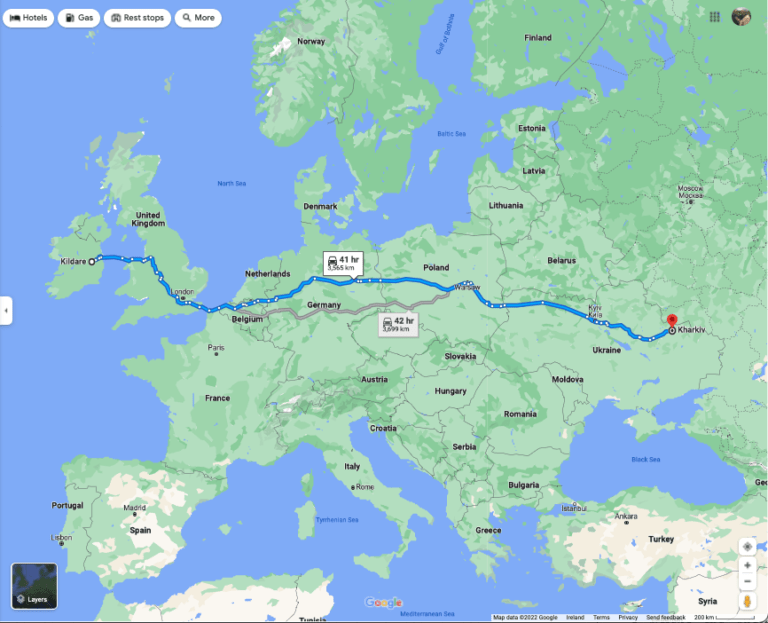
The internet connection is just adequate enough for Anna to continue with her graphic design studies through online classes – a silver lining from our years with Covid. Her mother is pleased that, despite being 3,700km from home, her daughter’s education was only briefly interrupted.

“One thing I have to do urgently is get better wifi,” said Matt. “They need good internet.”

And this kind Kildare family was not finished. They still had two vacant rooms and, a fortnight after Yulia’s arrival, a 29-year-old Ukrainian woman who did not know the other three joined them. She heard about Matt’s family purely through word of mouth. It is she who now plays violin in the local church and offers music classes.

Matt explained how she came here faster than government agencies could move: “We have been friends for years with a Polish woman and through her we got to know other Polish people, including a hairdresser whose cousin back in Poland was helping refugees as they crossed the border. I’m cutting a long story short, but that’s roughly how it worked – word of mouth.”

They were basically vouched for.

WORD OF MOUTH

Recently, a local priest called Matt to see had he room for a family looking for spare rooms but their needs proved greater than the old house could provide for. “Instead, through pure word of mouth they are going to my neighbour’s place. They had a stand-alone, refurbished house. It only took a few phone calls and they flew over and moved in.
“We’re just wanting to help. There’s no vetting, no nothing. It’s swift. I know the government have to do it their way, but it’s going to take forever,” he said.

Meanwhile, more neighbours wish to take in refugees and Matt has become in a matter of weeks a leading local volunteer organising accommodation for refugees and linking them to community, educational and state services. His background in the GAA helps.

However, when a friend suggested he go on KFM, Matt declined. “We don’t need publicity,” he said. “We just get on with it and we’re getting all the help we need.”

He commended community groups in the nearby town who have assisted the refugees staying in his home.

PAYING FAMILIES

He is opposed to the idea of paying households to host refugees. At €400 per month, his house could be in line for close to €5,000 per annum, or €20,000 if the payment was paid by the number of refugees hosted:
“It’s not the same. It would change it. That’s not why any of us are doing this.”

He nonetheless accepted that some families would find a payment helpful to cover transport costs, etc. Meanwhile, all Ukrainian refugees here are entitled to social welfare and can access jobs and public services as if EU citizens.

ADVICE TO OTHERS

He would naturally like to see more Irish people take in refugees: “An awful lot of Ukrainian families won’t find Irish families to go to. And they will hate being in hotels.”

He advises: “If you’re going to offer people a room, you’ve got to be 100% about it.

“It’s a long-term thing and it’s not for everyone. The first week it’s a big novelty, but remember Ukrainians are independent people. You have your own routine, your own ways in the kitchen. Now you have others sharing the kitchen. That won’t work in many families. But it’s working fine for us.”

* Some names have been changed in this story. Nobody in our Kildare household wanted publicity for doing something that many thousands of other Irish households are doing.

Half the 600+ at Kerry jobs fair were refugees

Campaigners welcome amnesty

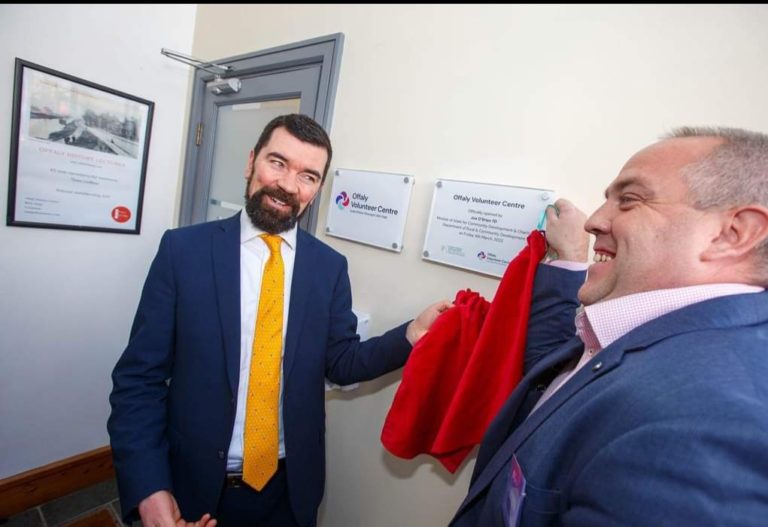
New centre tapping into spirit of volunteering in Offaly

– Volunteers have 461 groups to choose from
– Official launch by Minister

He said it gave him “great pleasure to be able to showcase what we have to offer” adding that, over the last two tough years, volunteering showed that “small acts of kindness can still have a huge positive significance.

Zsé Varga, volunteer centre development manager with the national organisation Volunteer Ireland, said, “The project was funded by the Department of Rural and Community Development and my role was to get the people around the table, which we did and we now have a really good board – versatile and enthusiastic. They worked as volunteers for months in the evenings to make this magic happen.”

Deirdre Fox, Offaly Volunteer Centre manager, said of the board, “They are an incredible, selfless board that work tirelessly for the development and spirit of volunteering in Offaly.” She described the new centre as a “bright, inviting and welcoming headquarters for the community of County Offaly” and thanked Offaly Local Development Company, which for many years provided a county volunteer service, for helping them to transform that service to become Offaly Volunteer Centre.

• Among the many councillors at the opening were Cllrs. Clare Claffey & Cllr. Mark Hackett pictured here with manager Deirdre Fox (centre). Photo by Ray Lucey.

Minister of State for Land Use and Biodiversity, Pippa Hackett said, that it was volunteering that brought her initially into politics and emphasised that, “the acknowledgement and recognition of volunteers is really important to keep things going.”

Minister of State for Community Development and Charities, Joe O’Brien, acknowledged all stakeholders and especially the board of Offaly Volunteer Centre “as without their dedication and vision the Offaly Volunteer Centre would not be here today.” He said, “It is a milestone on a significant journey [to go] from a Volunteer Information Service to a full Volunteer Centre.”

Offaly already has a vibrant volunteer network with 461 groups registered with the Offaly Public Participation Network (PPN). The Offaly Volunteer Centre liases with the PPN and will promote increased awareness and connections between volunteers and organisations. All in all it will bring the concept of volunteering in the Faithful County to new heights.

W: https://volunteeroffaly.ie/

Crime response in Darndale & Dundalk – 24 local leaders start course

In response to shootings and the activities of crime gangs in Darndale in Dublin and Drogheda in Co. Louth, a new place-based Leadership Development Programme was launched recently.
The programme supports a dozen local leaders in each place to help them develop together and address challenges in their areas.

“Sadly back in 2019 there were a number of shootings in Darndale and shortly after that we were asked to host a meeting between the justice minister at the time and the community – to see how community and statutory organisations could come together to address some of the key challenges,” said Paul Rogers, CEO of Northside Partnership, speaking to our colleagues in Near FM, in March.

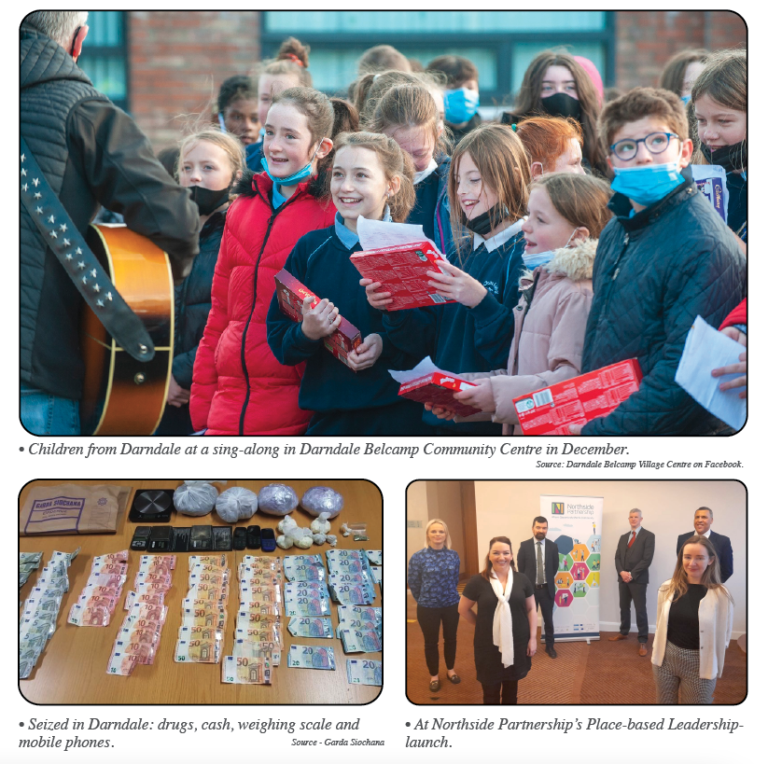
• At Northside Partnership’s Place-based Leadership-launch in January.

The 24 participants embarking on the 18-month exercise include local residents and representatives of local community groups and statutory organisations.
Backed by €188,650 in funding from the Department of Rural and Community Development, the programme is also being delivered on foot of recommendations in Jack Nolan’s report (the ‘Darndale Socio-Economic and Community Plan’).

Mr Rogers – in his interview with Near FM’s Donie Tarrant – said the upsurge in crime led to calls for a community response. That wasn’t as simple as it sounded. Adding to the challenge, he said, was the fact that State agencies no longer work as collaboratively with communities as they did 13 years ago.

He said it is “at the heart of how we work in Northside Partnership” to always seek to collaborate. “But since 2008, that kind of mechanism has not been as effective, because the State has been retreating into contract management. Previously, we had good opportunities for dialogue… but those kind of opportunities are disappearing,” he said. “Our challenge was – how do we find a space for community, residents, statutory organisations to come together?”

By good fortune, Mr Rogers attended a seminar organised by the Department of Rural and Community Development in November 2019 at which Dr. Bob Worrall and community leaders from Scotland gave a presentation about Place-Based Leadership Programmes.

“They said how well it was working over there,” recalled Rogers. “I thought this was an opportunity for us to bring people together.”

• Seized in Darndale: drugs, cash, weighing scale and mobile phones. Source – Garda Siochana

He connected with the Scots after the seminar and put a proposal to the Department of Rural and Community Development. It was approved in February, 2020, and, though Covid delayed the launch, it has now begun.

Rogers hopes it will nurture relationships between community representatives, drug and addiction services, the HSE, Gardai, Tusla, Dublin City Council and so on.

“The participants will get perspectives from others and take a deep dive into the challenges. Time is the one thing we have to give to understand what the challenges are – as seen from a residents’ perspective and other perspectives,” he said.

The programme will give people time to pick apart the challenges, explore the issues and hopefully come back with solutions. Each person will have access to professional coaches.

“How can Northside Partnership contribute to a solution? How can the Gardai contribute? How can Dublin City Council contribute?” he asked.

• Children from Darndale at a sing-along in Darndale Belcamp Community Centre in December. Source: Darndale Belcamp Village Centre on Facebook.

Joe O’Brien, Minister of State at the Department of Rural and Community Development attended the induction day in Darndale. He thanked all involved including Northside Partnership, Paul Rogers, Dr. Rob Worrall, and Ciaran Reid and the team in Louth Leader Partnership.

Darndale and Drogheda are by no means the only communities beset by gang crime and he said it was a “very important and meaningful programme” and expressed confidence that learnings from the initiative “can be built upon and expanded to other communities in Ireland”.

Also speaking at the launch, Niamh McTiernan of Northside Partnership said:
“Place Based Leadership will ensure that local leaders develop the collaboration skills needed to address the challenges their communities face. The issues identified in both Darndale and Drogheda are complex and will require a response from a number of different sectors. An important element of driving change will be a strong coalition of mutually invested organisations working with the local community. This approach will make a lasting impact and bring forward the solutions required.”

Every county should have a SoSaD project

No better person than a volunteer who benefitted from a project to explain its importance. Lee MacMalighe put it plainly:

“Save Our Sons and Daughters is a suicide-prevention service. But it goes much deeper than that. If you’re struggling in any way or form, they’ll look after you.

“I’ve been here on three separate occasions over the past 8/9 years. At first, I thought you had to be suicidal to use the service, but no you don’t. I was down and depressed. I started using the service and they got me from down really low to up.

“My depression kicks in on and off. I’m very open. I struggled really hard for a long time and I got back up and then I shared my story on Facebook. It was only a positive experience – there was no backlash.

“Sharing my story – it helped me a lot to know that everyone was there for me. I wasn’t looking for attention. I felt great with the help I got here (from SoSaD) and – around the time I lost a friend through suicide – and I just wanted to push people to start talking. The more people talk the better.

“So I’m very open, but other people want to keep it in.

“Some people have come up to me recently and asked ‘How do I get into counselling?’. They just don’t know what way to go about it. They’re too afraid to actually come into the building. I tell them about SoSad and how they can give you different avenues.

“SoSad is starting to get more and more popular. Fair play to them, they’ve done a brilliant a job. I’ve put a lot of people onto them. I’m glad they’re using the services and it’s keeping a lot of my friends alive.

“I’ve lost people through suicide and I’d rather if they had come to me first, because I would have put them onto these services. It’s very hard. SoSad is unbelievable. Unbelievable.”

– in conversation with Allen Meagher.

SoSaD’s mission & reach

• ABOVE: Lee Macnamidhe, volunteer, Minister Joe O’Brien, Marie Johnston, co-ordinator of SoSad Meath, Carol Murphy, general manager of SoSad Ireland, and William ‘Handsome’ Johnston, volunteer.

SoSaD’s mission is to help prevent suicide and improve the lives of all people affected by depression and suicide.
While most of SoSaD’s offices are based in towns in five eastern counties in the republic – in the towns of Cavan, Dundalk, Navan, Portlaoise and Carrickmacross – it is national in its aspirations and anyone can ring 24/7 for support.
Remember it’s not just for if you are feeling suicidal, but also for anyone who wants to talk about self harming, depression, bereavement, stress, anxiety, or simply to talk. You might have concerns about yourself or someone close to you. Ring: 1800-901-909.

W: https://sosadireland.ie/

MENTAL HEALTH: Communities trying but can’t fill all the gaps, says Mick Kearns