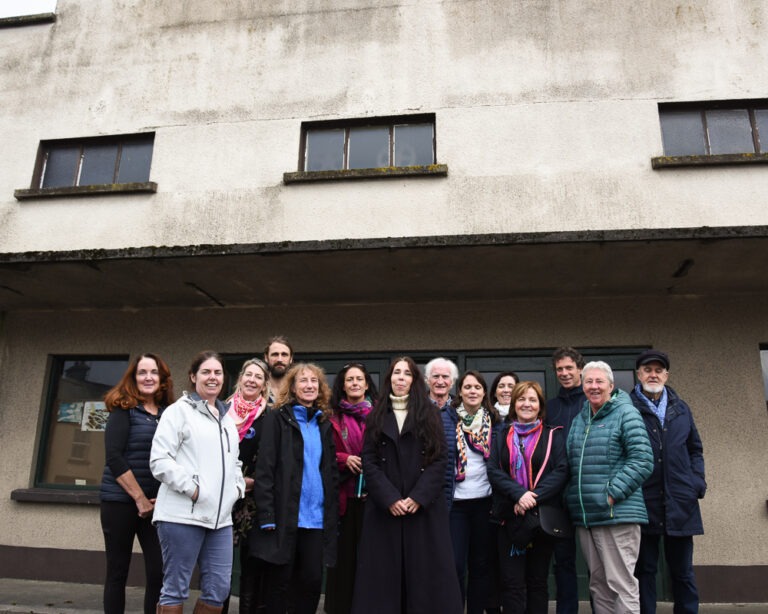
“We all went into the Dochas prison for women, in the live prison setting. There are people on my course from policy and social enterprise backgrounds, people from the Department of Rural and Community Development, people from Rethink Ireland and people from the Glencree Centre for Reconciliation. These people had very limited experience of offending behaviour.
“The whole idea [of the visit] was to suspend your assumptions. What I mean by that is – when you read in the paper about someone that did something wrong you’re thinking ‘scumbags’ or whatever, but when you understand the life they were living and they chaos they came from, all of a sudden your thinking changes.
“That day, I saw the emotion in them (his course colleagues). I could see empathy, real understanding. It was a beautiful thing to see. It definitely changed the way they think and is an experience that will stay with them for a long time. And with me too,” he said.
Cultural intelligence
Common Purpose is a British-founded, not-for-profit organisation that runs leadership development programmes around the world. So, what kind of things do people learn on their programme? Damien gave as an example “cultural intelligence” – which he described as the ability to land anywhere in the world and understand the people you’ve landed among.
“I was teaching youth work recently and I realised that youngsters today are growing up in a completely different world. It’s culturally different to the world we grew up in. It’s important to take the time to understand where other people are coming from, what they’re experiencing and to listen to what they’re saying. Don’t formulate an answer in your head. Really hear what they say. If you do, it’s invaluable,” he said.
Prison officers need to clarify their roles
The programme also covered role clarification which Damien explained by giving an example from prison life.
“I didn’t fully understand who Probation were when I was in prison. I know today they are there to help us. But back then, I thought they were an ear for the guards and I only told them what I thought they wanted to hear, rather than what I needed to say.
“People presume we understand Probation, but how would we know, we’ve never experienced it before. People need to clarify their roles.
“If they took the time to say, ‘This is who we are.’ ‘This is why you’re with us and this is what we’re going to do with you.’ And – ‘We’re here to help.’ If they did that, I guarantee you they’ll have a completely different conversation with the people they’re trying to reach,” he said.
Common Purpose
Since it begin in 1989, in Britain, the Common Purpose programme has been run in over 200 cities worldwide. Common Purpose is a not-for-profit organisation that works with organisations and individuals across the business, public and civil society sectors and while its programme is not free, Damien would “highly recommend” the programme to anyone who gets the opportunity.
THE campaign, which runs until December 10, aims to raise awareness and call for changes at an international, national and local level to end violence against women and girls.
This year’s theme is ‘Zero Tolerance’ of violence against women. Women’s Aid will be highlighting behaviours and attitudes that lead to the harassment and abuse of women and looking at all the ways we can build an Ireland where women are safe, respected and equal.
The organisation is asking its partners, supporters and the general public to call for an Ireland with zero tolerance of violence against women, an Ireland where every woman is equal and can live free from the threat of violence and abuse.
Women’s Aid will host a webinar on November 25, discussing pornography and male violence against women, including image-based sexual abuse.
Speakers will include Alexandra Ryan, Founder and CEO of Ireland’s leading female-focused news website, Goss.ie and Ambassador for the Department of Justice intimate image abuse awareness campaign.
Minister for Justice Helen McEntee, Women’s Aid Chief Executive Sarah Benson, and Professor Clare McGlynn, an expert in the field of legal regulation of pornography, cyberflashing, and online abuse, are also among the contributors.
Irish Sign Language Interpretation will be available and is free of charge.
FROM an idea born at a kitchen table, to a nationwide network that has empowered 20,000 learners, An Cosán is a powerhouse that continues to transform communities.
The organisation was founded in 1986 by Katherine Zappone and her late wife Ann Louise Gilligan in The Shanty, their home in the Dublin mountains overlooking Tallaght, where its main base is located.
From its humble beginnings, it has continued to grow and evolve to meet the needs of the communities it serves, and now operates seven centres around Dublin, as well as working with a network of community partners from Donegal to Wexford.
In October, An Cosán launched its ambitious new strategy ‘Vision 2026: Transforming Lives Together’, which announced its goal to reach a further 20,000 learners by 2030.
Changing Ireland spoke to Maria Flanagan, An Cosán’s Community Partner Lead, to find out what sets the organisation apart from other education providers.
Wraparound supports
“One of the ethoses of Katherine and Ann Louise from the very beginning would have been ‘Listen to the community’. So we respond to the needs of the community. We operate a learner-centred holistic approach to education, where the learner is at the centre of everything.
“When we design programmes and courses, they are done around the needs of learners and the time of the day that suits them. An Cosán started as a feminist organisation; we are open to all but we have a special focus on women and children,” she explained.
An Cosán is not just an adult education provider, however. It offers its learners ‘wraparound supports’, such as childcare, advice on financial supports, and digital skills training to give them the tools and confidence to complete their chosen courses.
“A big part of the ethos is what we call the scaffolding of supports that are provided to learners and people who use our services. So An Cosán is a safe space for learners to come into the community, in Donegal or Waterford or elsewhere, we have our community partners who provide that space,” said Maria.
An Cosán operates six Early Years Education and Care services for learners and people in the local community.
“Katherine and Ann Louise identified very early on that in order for people to be able to access education, one of the big barriers was childcare, and people couldn’t afford childcare, so they wanted that to be part of the solution. They wanted to build this presence where people could get childcare and education together.”
Unique ethos
Hospitality and nourishment is another of An Cosán’s key values. “In order to be able to engage the mind, you have to have a nourished body. So when our learners come to our centre in the morning, they get a cup of coffee and a scone, and the little ones get breakfast. So that’s a really important part that you don’t get in other education organisations,” Maria added.
At the beginning of each lesson, An Cosán’s tutors perform an ‘opening circle’, a short ceremony where they read an extract or quotation, and allow the learners some quiet time to reflect before the class.
Says Maria: “The purpose of that opening circle is to allow time for learners to have pause before they go in to learn. We do it in our staff meetings as well, and it’s nice because maybe your head is frazzled, you’ve got kids at home or whatever, and everyone just sits back and it gives you that moment to pause and be present before you go on to do your class or your meeting.”
The ‘flipped classroom’ model is another innovative aspect of learning at An Cosán. “You get your materials in advance of your class. So when you go into your class, you’re already half full with knowledge. Your tutor guides you through the material and you engage in discussions. There’s discussion boards, there’s breakout rooms, and it’s very much about bringing your life experience to it as well because as an adult learner, you have life experience.”
Counselling, mentoring, digital skills training, a family resource team, and a laptop loan scheme are just some of the other supports available at An Cosán.
In the classroom, both online and in person, there are technology moderators to help students with any technical issues, and classroom facilitators, for those who may need some extra support.
An Cosán staff, learners and parents at the recent launch of their new strategy
Transforming communities
“All the barriers that are out there – physical barriers, financial, not having access to a laptop – the biggest one is the invisible one and that’s confidence for a lot of people. When people become confident in all those things like digital skills, the counselling, their overall confidence lifts and then they want more learning, and they become empowered. They start speaking out when they didn’t speak before and they start doing things in their communities,” revealed Maria.
“If we engage in education, we are becoming learned actors and we are becoming more participatory in our community. We’re not just affecting ourselves, but we’re transforming ourselves and our families and the community around us, because we’re going to be more actively engaged, get involved in community issues. We’ll be social actors in our community.
“People talk about transformative education, it’s about people being empowered to transform themselves. So many people have amazing ability, they just don’t realise it or recognise it, and they maybe have never been given a voice before. In An Cosán the learner voice is very important; you’re being heard, you’re hearing from a different group, that maybe hasn’t been given a platform.”
Blended learning
Courses range from access courses to further education with a QQ1 Level 5 or 6 award, up to certificate and degree level.
An Cosán has fostered links with South East Technological University, so students of its higher education courses have access to SETU’s Carlow campus and the facilities and supports available there.
“Cosán means pathway, and no matter what level you’re at there is a place for you to join that path back to education,” said Maria.
In 2014, An Cosán developed its blended online learning model (which was piloted with a small number of community organisations around the country) to reach learners who couldn’t access its base in Jobstown.
It was officially launched in 2016, and Maria came on board that same year to help grow An Cosán’s reach nationally and develop relationships with other community organisations.
Community partners
Each area brings its own unique challenges.
Maria said, “Distance is a big challenge for a lot of people. I remember meeting a woman from Falcarragh in Donegal. Letterkenny IT was an hour away, but there wasn’t a public bus route that would get her there on time for college. She had a car, but had to give it up because she couldn’t afford the insurance, so she was very distanced.”
An Cosán’s online learners are offered the same wraparound supports as those attending in-person courses.
For example, since Covid, counselling services became available online for all students.
An Cosán’s community partners also help to link learners with supports and services in their local areas.
What sets An Cosán apart from other online education providers is the level of support available to learners, and the determination of tutors and support staff to see learners succeed and complete their courses.
“Pure online is not new, it’s been around for many years. But for the learners that we work with, it might be very difficult for those learners to stay engaged, because you do need to have a lot of self-motivation, you need to have all the tools to be able to do it, you need to have the resources,” said Maria.
“Whereas, if you bring people together for that face-to-face model of blended learning, you’re supported. You get to meet your tutor, you get to meet the other people, you build up trust, which is very important, and that community of learners as we like to call it.”
An Cosán graduates Michelle Lynch, Sarah Sheppard, Selina McClean and Tanya Shields.
The power of education
The objective that underpins everything at An Cosán is lifting people, women in particular, out of poverty through education.
Maria said that by “supporting a mother to empower herself and her family, you lift a family out of poverty forever. It changes the trajectory of a family.
“If a mother is studying and the child sees that, the child is more likely to continue in education. With an education you can be be uplifted and empowered to get better jobs, to get quality employment and that’s important, because there are a lot of people who may be in employment but they’re on very low salaries and they’re just about surviving.”
An Cosán graduate Senator Lynn Ruane, speaking at one of the organisation’s past events said that An Cosán allowed her to ‘be’ before she had to do.
Maria remarked: “I thought that was really powerful in a very short sentence. It’s that whole holistic model – you are a person, you come with all the challenges that life presents, you’re not just here to learn, and we try to help in all the other ways that we can.”
Speaking about the power of education and the effect it has on learners, Maria said: “It’s transformative; you see people come in one day with their head down and they’re not too sure, and then you see them brightening. They have so much to offer and so much to contribute, and when they realise that themselves then, it’s a wonderful place to be part of, to see that happening.”
An Cosán learner stories
An Cosán graduate Dolores O’Sullivan
Dolores O’Sullivan from Blessington, Co Wicklow, received a QQI Level 6 Award in Early Childhood Care and Education in September
She said: “The two years I spent at An Cosán have been more beneficial, rewarding and enjoyable for me than the 14 years I spent in mainstream education. An Cosán gave me belief in myself that I could go back to study and get a qualification.
“Before I started, I was given all the information I needed about the modules involved and about the financial and other supports An Cosán offers.
“An Cosán has had an enormous impact on my life. It is a special place with very special people who are making a significant impact on people’s lives in the most positive and nurturing way.
“I was incredibly fortunate to have an amazing lecturer and mentor in Christina. Christina went above and beyond for each of her students, always guiding us on our educational journey. Christina is, without doubt, the reason I’m now pursuing a BA degree programme,” she said.
Njabuliso Moyo at her recent graduation ceremony
Njabuliso Moyo recently graduated from An Cosán with a BA Degree in Applied Addiction Studies and Community Development, which she completed via their online blended model. Njabuliso now works in addiction services for the Peter McVerry Trust.
She said: “I’m from Zimbabwe, I was a teacher by profession, but teaching was really a stepping stone for me. It never really gave me the chance to bring the change to the community that I wanted to.
“When I came here, somebody introduced me to addiction studies and I realised that was what I really wanted to do all along – to play a part in giving somebody a chance to improve their life, to bring change to people who are faced with stumbling blocks.
“I work in the stabilisation centre in Phibsborough. The work is mentally challenging, you are working with people from a lot of different backgrounds.
“When I started the course, I was living in Kerry in a direct provision centre; it was a very challenging environment. Most of my fees were paid for with a grant; An Cosán helped us to access the grants. I also got counselling support, and a laptop grant.”
To anyone thinking about returning to education, Njabuliso says: “It’s never too late. I was 49 when I started the course. Just take it one step at a time; it has the potential to change your life.”
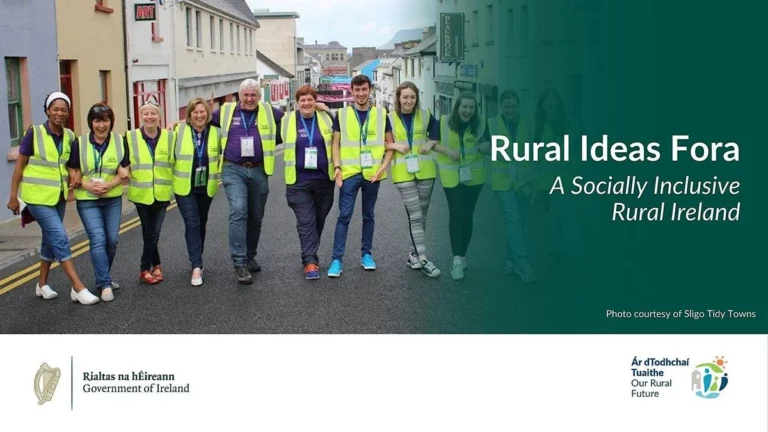
Tuesday’s forum is part of a continuing series of online stakeholder engagement events by the Department to discuss important topics in its policy document ‘Our Rural Future – Rural Development Policy 2021-2025’.
The Department said, “The events provide an opportunity to discuss the challenges and opportunities that impact on rural communities and economies. Attendees will learn more about ongoing work relating to key objectives contained in the policy, and hear from a panel of key stakeholders.”
The Department says, “Non-urban living has many benefits, but rural isolation and loneliness are growing concerns – feeling isolated and alone can have a negative impact on physical and mental health.”
It points out that the Department has responsibility for the Government’s primary social inclusion programme, SICAP.
“As we design the next iteration of the programme we would like you to join us at this Rural Ideas Forum, to explore the barriers facing disadvantaged individuals/communities that prevent them from being part of a socially inclusive rural Ireland, and what more needs to be done to contribute to the integration of a person into the community,” it says.
There are three main speakers for the event which is themed ‘A Socially Inclusive Rural Ireland’ are:
Maria Molloy, Vice Chair, AMACH LGBT+ Galway
Emma Fallon, Cultural Development Officer, MNE Local Development Company
Éamonn O’Reilly, CEO, NEWKD Local Development Company
Registration is required and the number of participants is limited.
The forum is taking place at a time when the challenges are increasing. As Mary O’Donoghue of West Clare Family Resource Centre told this magazine last month when commenting on a report about rural poverty published by Clare PPN, “There is no reason services and infrastructure can’t or shouldn’t be provided here.”
The report revealed a need for more housing, for tackling housing dereliction and for more GPs. Read our story in full here: https://changingireland.ie/clare-is-not-alaska-report-highlights-lack-of-access-to-services-in-rural-ireland/
For example, we were swept away with ideas at the OECD’s Rural Development Forum in Co. Cavan. We heard views from Columbia, the Czech Republic, Sweden and elsewhere.
Tuesday’s forum is about ideas from people in Ireland, in particular in relation to the Our Rural Future policy.
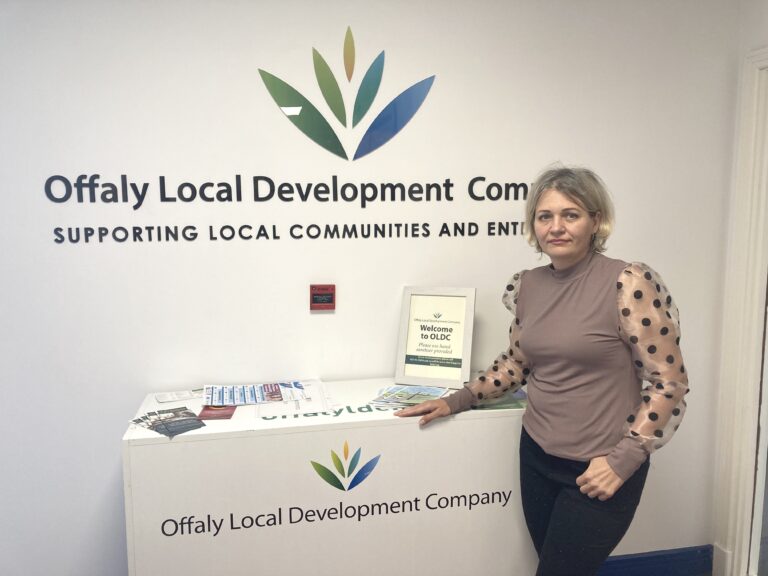
SVITLANA moved to Ireland in the springtime and commenced work here in late June. To date, she has witnessed a high success rate for applicants due to her involvement.
Her main role is as a translator for fellow refugees from Ukraine. She helps them to draft CVs and prepare for interviews. She played an integral part at the inaugural Offaly Jobs Fair held in Tullamore during the summer by assisting Ukrainians in securing employment and attaining course places.
She spoke to ‘Changing Ireland’ about her role and experiences.
Svitlana revealed that the two most common barriers to progression are often language and verification of qualifications – understandable considering that many left their certificates and degrees behind them as they fled. This is a particular difficulty for those seeking teaching positions.
She said that people arriving in Ireland after fleeing the war in Ukraine often don’t know how to continue work in their fields, so end up securing employment in completely different spheres.
“Some start with courses as they want to try something new. Almost all people try to find a job, because it’s very difficult to not do anything. Most of them are looking for jobs in cafes, shops, and some girls found a job in a factory.”
Svitlana previously taught English at the University of Economics in Kharkiv, Ukraine’s second largest city, so the forced evacuation from her homeland led to a transformation in her career direction.
She spoke of her experiences before leaving and her subsequent hurried departure.
“It was a very spontaneous decision to come here after leaving our country because of fear,” she said. Svitlana chose Ireland as it is an English-speaking country, so she knew it would easier for her to get along with people.
“Irish people are very friendly and hospitable. It’s very pleasant to be among Irish. They like talking and we especially need communication at this time as we don’t have many people close to talk to”, Svitlana explained.
She left Kharkiv with virtually nothing and spoke highly of the support given to her on arrival by the Offaly Volunteer Centre.
“We spent four days and nights in a basement, so when we came home I couldn’t think properly. I left home with just a small rucksack. I didn’t have a suitcase because there were too many people on the train and we weren’t allowed to take them,” she said.
Svitlana alluded to the almost permanent issues that follow all Ukrainian refugees – that of homesickness and the uncertainty of their futures. Through her work and work by others in similar posts, they are at least able to make the lives of refugees more comfortable and stable during their time here.
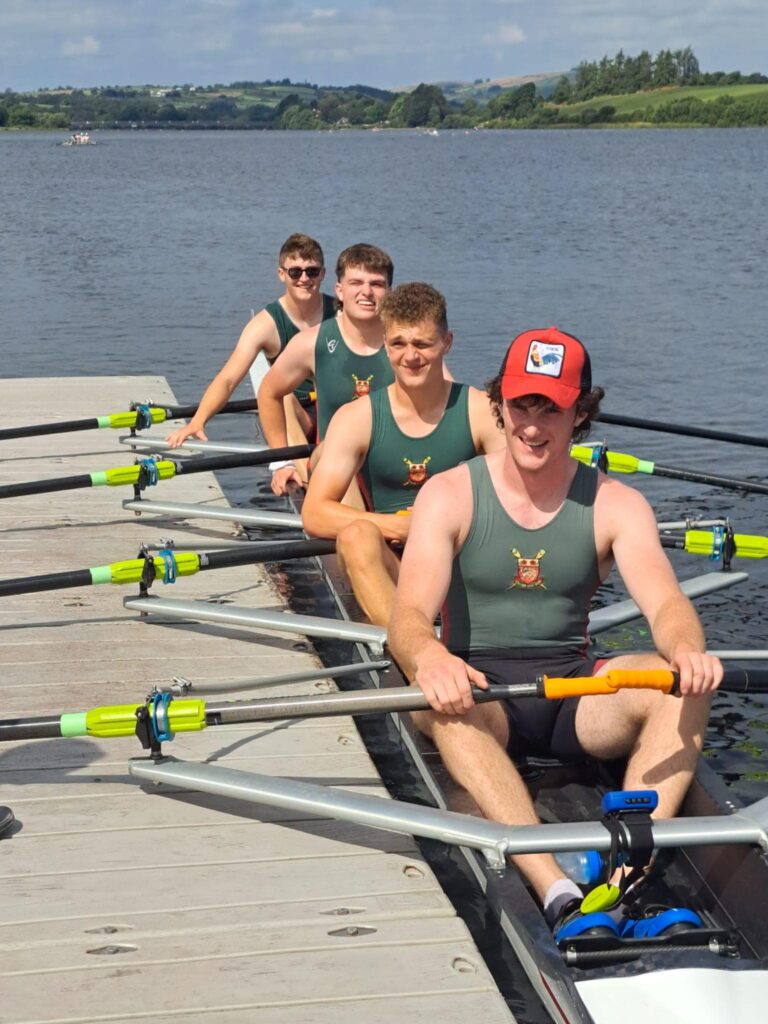
ATHLONE Boat Club recently hosted its first rowing regatta from their new state-of-the-art facility. While the Athlone rowers took home a haul of medals on the day, the new flood-proof and accessible building sparkled in the sunshine and probably was considered the overall winner.
Designed to house boats and equipment safely while meeting the needs of rowers of all abilities and ages, the club’s new headquarters, in front of Custume Barracks, offers superb views of the town from the banks of the Shannon.
Paul Donovan, club chairperson, said, “People were forever talking about a new club. The clubhouse we had was in a state of disrepair and was constantly flooding and parts of the club wall were leaning towards the River Shannon. What we have now is a state of the art community facility.”
The new club house stands a metre higher than the original building.
Athlone Boat Club had to overcome significant planning and logistical challenges to bring the new headquarters to fruition, including managing increasing costs and project overruns. As with other community projects across the country, Covid-19 was a disrupter – shovels were put down, meetings were postponed and it tested the group’s resolve.
“We had our fair share of challenges, including a real shock when we were told that we were getting a lower grant then we had expected and in the background costs were rising,” said Paul.
“Dealing with Clann Credo was key to this project. They were responsive to all of our requests and changes. I can’t imagine finishing the project without them.”
Having to manage increasing project costs and overruns is not unique to Athlone Boat Club – in fact they have managed a difficult situation exceptionally well.
At a recent webinar focusing on how community groups can best manage rising costs, Michael White, an engineer with Feasible Property Development said that a lack of detail at project design stage means a lack of clarity, which leads to price uncertainty.
Michael’s advice is to engage the right professional expertise, develop a detailed bill of quantities and give yourself extra time to think things through. (His tips are published below).
• Racing on the rivers of Ireland since 1837, Athlone Boat Club finally has a new clubhouse
Back in Athlone – despite all the development work and complexities which took the project over two years to complete, the rowing coaches somehow managed to stay focused. They recorded three Irish Championship wins last year, while two young rowers – Donagh Claffey and Martin O’Grady – represented Ireland in the 2021 World Rowing Junior Championships. Well done to Athlone Boat Club!
More information:
1 For more information on Athlone Boat Club: https://www.athloneboatclub.ie/ and https://www.facebook.com/athlonebc/
2 For more info on Clann Credo’s social finance for community groups: https://www.clanncredo.ie/
CAPITAL PROJECTS IN THE COMMUNITY
36 tips to manage rising project build costs
Michael White is an engineer and director of Feasible Property Ltd. He volunteers with Edmondstown Golf Club and Lakelands Football Club including helping with various capital development projects. In a recent Clann Credo webinar on managing increasing project costs, he advised:
Identify a group/ sub-committee of members who will handle the project for your organisation
Work out your requirements: What does project aim to achieve?
Identify the professional expertise required – architects, etc.
Prepare a realistic costing. (This is known in the business as the Order of Magnitude cost). For most projects this will require the input of a quantity surveyor or cost consultant.
Identify your funding source(s).
When the Order of Magnitude is prepared, examine the list of exclusions – development levies, utility connections, etc.
Can your community group recover VAT (13.5% / 23%)?
Project Evaluation
Identify the expertise required – eg architects.
Identify a realistic timeframe. Projects always take longer than envisaged
What statutory consents are required? eg Planning permission/ Fire Safety Certificate, Disability Access Certificate.
An accurate budget can realistically only be prepared once the detailed design is complete. (±10%)
Identify the procurement process. An agreed tender list is the most common option. No need for more than four to five companies to tender.
Commencing/During a project
Agree on a list of tenderers – If they are unknown contact references for details of past projects
Detailed specification needs to be tied down as much as possible prior to the issuing of tender documents. Extra weeks spent on this aspect are worthwhile.
Lack of detail = Lack of clarity = Lack of price certainty.
Input from your quantity surveyor – Requirement for a Bill of Quantities.
Are modular forms (built off-site) of construction available?
When tenders/ prices are returned from contractors, detailed analysis is required.
Request the value of engineering proposals from contractor if necessary.
Prior to appointment, agree on the programme and explain to the contractor the importance of adhering to the budget.
Identify the Contract Type.
Is a fixed price realistic?
Your sub-committee’s involvement is critical. They need to regularly meet the architect and contractor.
Ensure adequate contingency plans are included – generally a minimum of 10%.
Update your cost plan/ budget regularly. The involvement of the quantity surveyor is critical.
Identify a project lead and request they email a regular update to your group.
Close-Out
Variations arise – What to do? Tackle them! Is there any way to offset the cost?
Keep your funder informed. If there are any problems advise them.
Pay monthly certificates on time. Any delay means the work on site may suffer. Don’t affect the outcome of your project!
Final Account Stage – Tackle this early. Will you get any reduction for quick payment once the amount is agreed.
Project ONLY Partially Completed
Variations have arisen – Tackle them.
If you don’t already have a quantity surveyor consider approaching one.
Govt. Analysis on Inflation – https://www.cso.ie/en/releasesandpublications/er/wpi/wholesalepriceindexjanuary2022/
Unprecedented times so accurate and current awareness of the construction sector is required • What stage is your project at? Realistic timeframe to complete?
Are there any elements that could be completed at a later stage?
If you have a funding shortfall, identify the realistic figure to finish your project.
Watch the webinar:
To view the full ‘Managing Increasing Costs’ webinar: https://bit.ly/ClannCredoManageCosts2022-Webinar
They’re a bit fruity down in Kerry, but that’s not news to anyone outside the Kingdom.
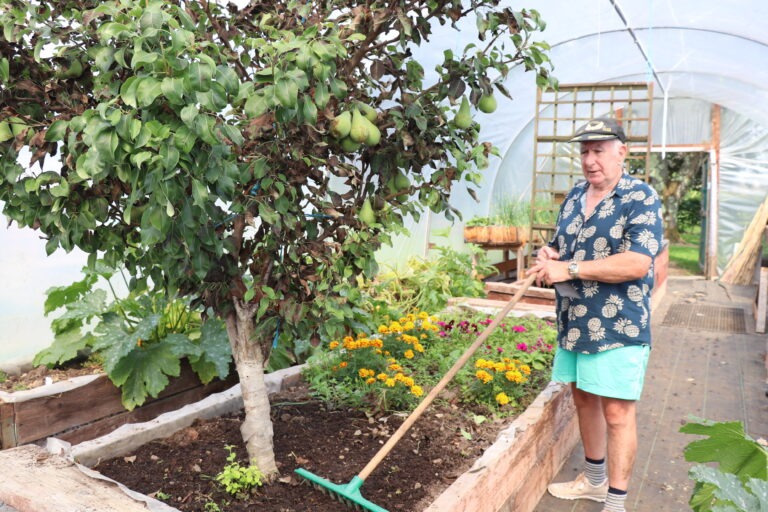
Now they have reached new heights in terms of fruitiness as Tom Douglas and his colleagues from Killarney Men’s Shed, one of the oldest and best sheds around, have grown a pear tree that towers above the heads of admiring onlookers. Apart from specimens in botanical gardens in Dublin and Belfast, it is probably the biggest pear tree in the country.
“They said five years ago that it couldn’t be done,” said a beaming Tom as he led me into the polytunnel. That day it was 32 degrees celsius outside and even hotter inside. Tom pointed to the dry earth and to leaves turned brown and tut-tutted that his colleagues hadn’t watered their pride and joy. And so we set to work in close to 40 degrees heat to replenish its roots.
That earned ‘Changing Ireland’ an invite to the Killarney Men’s Shed’s annual Pear Party held in September.
“My wife makes pear tart and the boys go bananas for it,” said Tom.
As mentioned, they really are a bit fruity in the Kingdom. Keep watering that tree and we’ll be down next year!
Killarney Men’s Shed has the coolest kitchen canteen and pool room in the country, probably!
In fairness, Killarney Men’s Shed is one of the longest established Men’s Sheds in the country and is probably one of the best equipped, maybe even one of the best overall – and that’s saying something given there are over 400 Men’s Sheds.
It was set up in 2012 by former chair Tom Douglas and others from the local area with support from South Kerry Development Partnership.
It is located in a former box factory where the men have built workshops, activity rooms and a comfy kitchen café, while outside are well-tended grounds.
If you’re wondering how to set up a shed, the Irish Men’s Sheds Association (IMSA) says there are five steps a group needs to take.
WHEN ‘Changing Ireland’ asked for photos of the newly-opened playground in Mount Carmel Drive, Moate, Co. Westmeath, we received 26 to choose from. It was clear there is great delight in the new facility which officially opened this summer. So how does a community go about getting a playground?
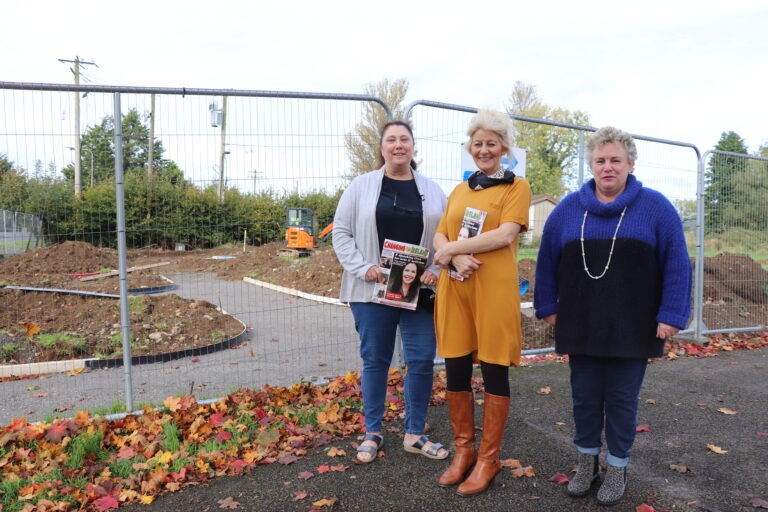
Months earlier, we met members of the local residents’ association when their grassy patch was all dug up. The diggers had just gone in. The playground was four years in the making at that point, but all agreed it was worth it.
“I’m here 38 years and this is the best thing to happen here,” said Marie Fleming, pointing to heaps of muck, gravel paths and new concrete kerbs.
Naïve starting out
Marie, a committee member of the residents’ association, thought the playground would be “easy-peasy”.
“I’ll be honest,” she said, “when we started I was very naïve. We started in March 2018 and I thought we’d have a playground by Christmas. I learned that nothing happens that quickly. For three years, we were saying that Mount Carmel was getting a playground. We had Covid in the middle of it, but it was worth it.
“The cost was €80,000 in all. The groundworks cost around €36,000. Equipment cost about another €40,000. It’s not cheap, but at the end of the day it’s here for life. When I’m dead and gone and my grandchildren have grown up – whoever’s living in Mount Carmel then – if they mind it they’ll have it for their children as well.”
Happy Children
Mary Greally, chairperson of the residents’ association, said: “Our goal was to get a playground for our children and grandchildren and somewhere nice where we can sit and have a laugh and relax while watching our children and our grandchildren play.”
Marie explained: “About 30 children live in the area, but you have grandchildren coming in as well and there wasn’t really anywhere for them to play. There is a lovely amenity park on the Lake Road in Moate, but that’s a good mile from here.”
There are 44 houses in Mount Carmel Drive.
“This is definitely the best thing to happen in this area. The kids play football on the green, but this is the best ever,” she said.
Mary agreed: “I’m all my life living in Moate and it’s great to get this done – through the council, SICAP, and LEADER. We had great support.”
Local development company
It wouldn’t have happened without the residents, but they in turn grew with support from the local development company.
As Mary said, “We’re lucky to have Westmeath Community Development (WCD). Linda Jo Quinn and Caroline Lawlor give great back-up. It started with them. They helped us get on track.”
Through WCD, the residents’ association began to receive a small annual grant which came through the Social Inclusion and Community Activation Programme (SICAP).
“SICAP is very good,” said Mary. “It gives €1,500 of a grant for your community group each year.”
Marie added: “You decide what you spend it on. You agree on what you need. You buy it – and you make sure you keep your receipts. We’ve everything accounted for.”
“So, we now have a shed to store our lawnmower and tools. You can’t fundraise for that kind of thing – sheds and lawnmowers. SICAP gave us the funding. It’s brilliant.”
A lot of anger
Development worker Linda Jo Quinn revealed: “We first met Mount Carmel Drive in 2018 and there was a lot of anger then from people who felt there wasn’t enough being done in the area.”
As Mary recalled, “We might have had some argy-bargy, but now we’re all working together. As a community the whole lot of us are working together. Now people living up here say, ‘It’s great to see something happening’. That’s great for us (volunteers) to hear.”
Linda Jo recalled: “We organised meetings in the Carmelite Centre and helped to get a residents’ group together. We got training for them and they worked on a plan – all through SICAP support.”
“What happened was that, under SICAP, a number of estates in Co. Westmeath were earmarked in 2018 for special attention by the Local Community Development Committee. Mount Carmel was one of them. We only work in certain designated areas. We can’t be all things to all people.”
“And early on it became really evident how enthusiastic the residents were. There were many meetings and volunteers put in a lot of time”
An opportunity to increase the funding support soon became apparent.
LEADER opportunity
“When we saw they wanted a playground, we realised there was the potential for LEADER funding,” said Linda Jo, “but that would also mean the residents having to raise match funding.”
“We asked our colleague Peter Ormonde to meet the residents and develop the idea. The residents’ group were fantastic. They ran three or four indoor markets each year. They were packed out and that’s how they raised their match-funding to qualify for the LEADER grant.”
“Then Covid hit and everything stalled, but here we are today,” she said.
The residents also received strong support from a number of councillors on Westmeath County Council. They named Tom Farrell, Vinnie McCormack and Frankie Keenan in particular who helped out when the residents needed something.
“I’d say they probably hide when they see us coming now,” laughed Mary.
Previously, the council had put up basketball hoops and laid down a footpath through the green for older people walking to the bus stop.
COVID made us stronger
Mary added, “This is phase one. Hopefully, we can develop on it. We want to get football posts up for the boys and girls.”
The residents also have a vision for “a better Moate” with their playground playing its part in improving the town.
“We have a great committee,” they both agreed. “We are all from Moate and know each other for years.”
They listed out committee members Carmel and her husband Ross, Annie the treasurer, Catherine the vice-secretary, Michael the PRO. No doubt the list goes on.
They feel the pandemic made them stronger.
As Linda-Jo said, “You have to think of the positives of the whole pandemic. It did make people rethink what’s important. And it was brilliant the group stuck together through Covid. We all learned how to use Zoom and once it was safe we started having outdoor meetings on the green. We had to think outside the box. Community development is always about thinking outside the box.”
DRUG and gang-related crime is having a severe impact on Inchicore and recently included an afternoon shooting at a block of flats housing one of the country’s most resilient community projects.
Coordinator Rita Fagan of St Michael’s Estate Family Resource Centre has shared her project’s regular newsletter that highlights all they do to nurture peace, safety and empowerment. She also appealed for solidarity with the community in Inchicore and for more support.
The community has experienced violence in recent times and the project offices came under fire in the midst one recent incident.
The project receives funding and support through the Social Inclusion and Community Activation Programme, Tusla, Dublin City Council, the Community Foundation of Ireland, and Dublin South City Partnership, among others.
In St Michael’s latest newsletter, Ms Fagan writes:
“Dear Deputies, Counsellors, Officials, Friends and Supporters of the Family Resource Centre St Michael’s Estate Community Development Project,
“There has been a lot of talk and response to the crisis relating to anti-social behaviour and its consequences in Cherry Orchard. However, running parallel to this, anti-social behaviour has embedded itself in many hotspots throughout Dublin.
“We have witnessed really awful, chronic, anti-social behaviour here in the small communities of Inchicore as a result of drugs and gang culture; an attempted shooting into the block in Tyrone Place where we are located at 16:00 in the afternoon, followed by a siege of this block also and an innocent victim chased from the canal and cornered in Thornton Heights and set on fire,” she wrote.
She rightly encourages all to read the newsletter to see what staff and volunteers in St Michael’s Family Resource Centre Community Development Project are doing “to reclaim the community and lift the people’s spirits”.
If you want to know why community development – often invisible – is so important, visit St Michael’s, or read their newsletter, which is full of activities undertaken in a beleaguered yet proud community.
To subscribe to the newsletter, or to contact St Michael’s, email: rita.fagan@frcsme.ie
IT’S not usual for businesses in Mayo to call businesses in Tipperary or Limerick for advice, and vice-versa, but in the world of social enterprise surprising things are possible.
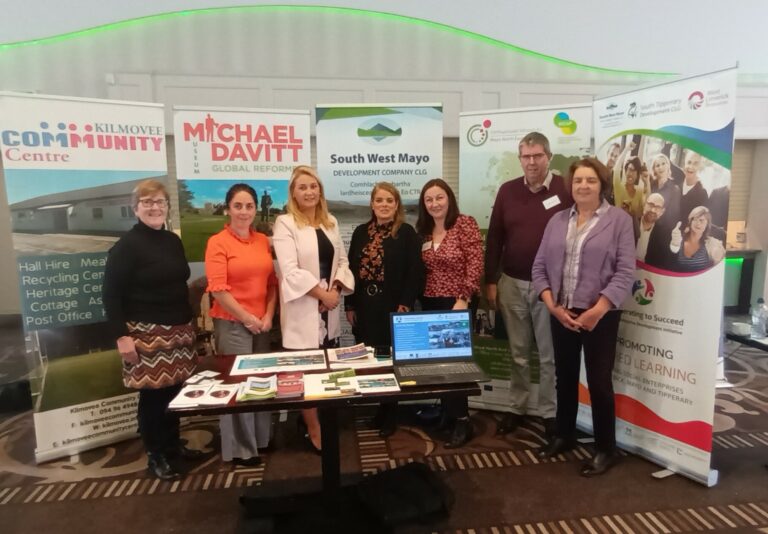
Over the past two years, three local development companies – there are 49 across the country – linked up 30 social enterprises in these counties for training and development. It culminated in a day of discussion in Newcastle West, Co. Limerick, on Thursday, October 20.
The questions asked covered the future of social enterprise in Ireland and how national programmes such as LEADER and the Social Inclusion and Community Activation Programme (SICAP) can be better attuned to support them. Who better to ask than staff and volunteers involved in heritage projects, community cafes, arts centres, carers’ groups and local tourism outfits?
They included Roots Community Café in Co. Limerick, the Michael Davitt Museum in Co. Mayo and Burncourt Community Council in Co. Tipperary. (Full list of social enterprises below).
They came together due to work in support of their semi-commercial ventures led by three LDCs – West Limerick Resources, South Tipperary Development and South West Mayo Development. The LDCs couldn’t have done it on their own, but knew where to go for funding and support.
Overall, the ‘Co-operating to Succeed’ (C2S) initiative covered 11 areas through 22 workshops over the two years.
Yvonne Corcoran Loftus, a museum curator from Mayo, said it helped her staff to upskill in areas such as marketing.
“The training has had a direct influence on the things we achieved,” she said.
Social enterprise
So what sets a social enterprise apart from a regular business? Social enterprises work primarily to improve the lives of people, with profits from their business activities reinvested in pursuit of social objectives. They are more often than not unable to operate fully commercially, but have a key business element to their operation.
Training was one part of the C2S initiative. What made it different was that bespoke training was also provided on-site to each of the 30 social enterprises. The aim was to make them highly effective operators and for them to connect with and learn from each other.
West Limerick Resources
Katie Murray, rural development officer with West Limerick Resources, explained: “Over two years ago, we sought to work with partners in the same position as us on a co-operation project. That is how we have South Tipperary Development and Southwest Mayo Development working with us.
“We were all similar but different. The social enterprises in West Limerick generally would be new and wouldn’t have associated with calling themselves social enterprises. We also had longer established ones. They needed supports that were different to what we had normally been rolling out.
Katie Murray of West Limerick Resources
“We wanted a bespoke programme tailored for each of the social enterprises, which was similar what Mayo and Tipperary wanted as well.
“We came together and submitted a form for LEADER funding, which was successful. Caroline Egan of Cramden Tech secured the contract and we worked with Caroline to develop a programme of supports.
“This was planned just as Covid was kicking off and we then had to take into consideration the restrictions. We would have liked more frequent physical meetings like today, but we had to hold meetings online. The programme still met the objectives that it was supposed to meet and the three development companies worked very well.
“We have made connections between three counties. We have supported 30 social enterprises – ten in West Limerick, ten in South Tipperary and ten in Mayo. They have all made informal connections among themselves.
“We as development agents also learnt from each other,” she said.
Training and mentoring
The development companies saw that social enterprises had some common training and mentoring needs. Sara Bourke, rural development project officer with South Tipperary Development, recalled how everyone came together on Zoom.
Over the two years, 119 participants learned about governance, cyber security, communicating impact, accessibility in buildings, secure trading online, human resources and much more.
Trainers also called to each enterprise and stayed up to a week to help with “areas of difficulty”.
“Depending on what each one needed, trainers went into each enterprise for up to seven days. They had a hands-on approach. That was the strength of the programme: There was the coming together, but there was also the individualised training,” said Sara.
Sara Bourke, South Tipperary Development
The three lead organisations knew where to go for support.
“All three of us work under the LEADER programme and we brought in colleagues from our SICAP programme because they also have a social enterprise remit and that was how it was born.
“Now the programme is coming to a close, a report will be produced that outlines its benefits. This will give us signposts to what enterprises need going forward. It will help us to inform the agenda of the next Rural Development Programme (RDP) and the next SICAP programme,” she added.
The value of networking
Norita Cleshem, LEADER project officer with South West Mayo Development, recalled the first networking event which was held in Mayo.
“The theme was the environment. So we had different enterprises involved such as the Edible Landscape (a project in Westport) with nature activist Mary Reynolds as a key speaker. That was the first event we did post pandemic.
Norita Clesham, South-West Mayo Development
“Then we had the one in Tipperary and the theme there was social inclusion. We had speakers and enterprises there talking about their experience.
“The theme today was looking at the wider concept of enterprise and the future. We had very inspiring speeches and very good engagement.
“It showed us the value of networking. Even though the enterprises are different and geographically apart, there are a lot of similarities. You could see the learning in terms of challenges, vision and growth.
“Rather than enterprises developing and making the same mistakes, they can make new mistakes and they can learn from each other. We have set up relationships now and they can collaborate.
“Through the programme we introduced themed elements – heritage, community centres and community facilities. We married those so when the programme is over they can talk to each other. That was the ethos of the whole thing as this was a co-operation project. We have seen huge benefit in running it this way,” she said.
Help with expansion
Lorraine Higgins is the manager of West Limerick Sports Complex in Newcastle West.
“Our business has been running for 23 years and we changed to a social enterprise model in 2017. It seeks to help people with improve both their physical and mental health,” she said.
“We have a health and leisure facility offering a swimming pool, sauna, exercise studio, gym and coffee dock. We are trying to take the barriers away from exercising, to open up our facilities to people that might not be able to afford or access a facility.”
Lorraine Higgins of West Limerick Sports Complex
“We run an inclusive facility for everybody – no matter your age, fitness level or ability. We probably doubled our numbers in the last four years.
“We are expanding rapidly. We wanted to get involved in this programme because we needed professional guidance on how to expand, how to scale up and how to strategically plan for the next five years so we are able to tackle anything.
“Our board is made up of voluntary members and now we have a roadmap of where we were going and developing smaller steps on how to get there. We want to expand the centre on the two acres next door and we are planning for that,” she said.
A skilled workforce
Yvonne Corcoran Loftus, the curator of the Michael Davitt museum, is equally passionate about her project.
Yvonne Corcoran Loftus, curator of the Michael Davitt Museum in Straide, Co. Mayo
“Embarking on the ‘Co-operating to Succeed’ programme gave a chance to staff to upskill; in areas such as marketing, which is of huge benefit to the museum. The training has had a direct influence on the things we achieved. We have a more skilled workforce, more efficient work practices and a fantastic digital footprint. Our Facebook has grown from just over a thousand people to 4,500 followers now. It is because of the improved content – we have some fantastic content.”
The bespoke training on-site was “fantastic”.
“He really interacted with the staff. Ideas were emerging from the staff and he just discussed it with them. He helped them develop their ideas and put them into action,” Yvonne revealed.
She thanked the trainers “for what we achieved with this”.
“I would like to also thank Norita Cleeshem from South West Mayo, people from the LEADER project and everyone involved.”
“It was a fantastic networking opportunity. You got to know other enterprises. You can touch base with them. You can question and promote each other.
“Enterprises do so much. I think it is fantastic that social good that is happening around the country,” she added.
Shaping future policy
The development workers involved believe the initiative will shape future policy.
Katie said, “The enterprises learnt and we as development agents have learnt hugely from each other”.
Sara said, “All three of us work under the LEADER programme and we brought in colleagues from our SICAP programme because they also have a social enterprise remit and that was how it was born.
“Now that the programme is coming to a close there will be a report produced that outlines the benefits of the programme and the benefits of the cooperation. This will give us signposts to what enterprises need going forward. It will help us to inform the agenda of the next Rural Development Programme (RDP) and the next SICAP programme”.
An effective initiative
Shay Riordan, CEO of West Limerick Resources which hosted the final event, commented: “We work with a lot of enterprises around West Limerick and we know who is in our area.”
“We have a really good working relationship with South Tipperary and South-West Mayo. We saw there would be real value in taking groups out of their local space to see what’s happening elsewhere, to put a training programme in place, as well as direct assistance.
“That would help those groups in a meaningful way, rather than just training. That was the backdrop to ‘Cooperating to Succeed’ and Katie ran with the idea,” Shay continued.
He said they were “delighted” that people saw the benefit from it.
“I think you just heard it today from the participants’ engagement around the tables. People got real value from this.
“Caroline at Cramden Tech was excellent in terms of their delivery and for committing their time and expertise.
He said it was clear the initiative was “very effective and everyone involved benefited from the experience”.
The final report will influence the next Rural Development Programme and SICAP programmes in the future.
What is a social enterprise?
“Social enterprises are businesses that work primarily to improve the lives of people. Their core objective is to achieve a social, societal, or environmental impact. They frequently work to support disadvantaged groups such as the long-term unemployed, people with disabilities, travellers, etc., or to address issues such as food poverty, social housing, or environmental matters.
“Like other businesses, social enterprises pursue their objectives by trading in goods and services on an ongoing basis. However, any surpluses generated by social enterprises are reinvested into achieving social objectives, rather than maximising profit for their owners.”
West Limerick Resources, South West Mayo Development Company and South Tipperary Development led the ‘Co-operating to Succeed Social Enterprise Development Initiative’.
It also received support from the Department of Rural and Community Development through programmes such as the Social Inclusion and Community Activation Programme and LEADER. The initiative also had support from local authorities and local community development committees in each county, the European Agricultural Fund for Rural Development, and partners Local Enterprise Office Mayo.
Now established as one of the most successful horse riding and training centre’s in the country, Clonshire Equestrian Centre in Adare, Co. Limerick, is set on 120 acres of rolling parkland in the heart of the Golden Vale.
Coolcappa Community Centre
See Facebook page for more information.
A central hub for people living in the Coolcappa area to come together to socialise, enjoy recreational activities and access multi-functional meeting and community hall spaces.
A community based, community driven, stand-alone facility where the older person can avail of temporary respite care, allowing their family/primary carers a break.
Glórach Theatre, Abbeyfeale is a nonprofit organisation whose aim is to entertain, spark cultural debate, and enrich local parishes by providing an excellent theatre experience.
The Achill Experience encapsulates many aspects of Island life both present and past. It is a place to explore and learn about many different species of sea creatures from around the waters of Achill Island and from the World beyond.
Balla Community Resources Development (CRD) was established in 1996 to encourage community development and enable Community and Public Agencies, working together, to improve the quality of life and serve the community of Balla and surrounding areas.
Ballintubber Abbey Trust seeks to preserve and promote the architectural heritage and history of Ballintubber Abbey and Tóchar Phádraig through the provision of a unique and nationally recognised visitor experience.
Clár ICH is an Approved Voluntary Housing Association. Activities include the management of social and sheltered housing schemes and the management of energy retrofitting upgrades.
The Edible Landscape Project encourages behavioural change in how and what we eat, by giving communities the power to make food consumption and purchasing choices that promote our own health, the health of our communities and the health of the planet.
Kilmovee Community Housing CLG is an approved voluntary housing body and Community Centre offering a range of community services and supports including office and meeting rooms, Meals on Wheels and laundry services.
The Linenhall Arts Centre provides an arts service for all in the community. The Linenhall Arts Centre programmes local, national and international arts events and workshops. It also supports artists who live and work in our region.
Mayo Abbey Parish CDC works in partnership with government departments and agencies, community groups and voluntary agencies to provide a wide range of services that will benefit the wider community.
The Michael Davitt Museum contains an extensive collection of historical artefacts including original documents, photos, Land Acts, letters, postcards, posters, rosary beads and other items connected with Michael Davitt’s life.
The Canon Hayes Recreation Centre has been part of Tipperary town for the last 30 years offering great sporting and recreation facilities to all sectors of the community.
The Carrick on Suir Community Resource Centre is a modern, multi-purpose resource centre conveniently located at the heart of Carrick on Suir, Co. Tipperrary.
The Fáilte Society objectives is to enhance the local economy while at the same time retaining the natural unspoilt environment and landscape that makes the Glen of Aherlow an attractive scenic visitor destination.
Millennium Family Resource Centre provides a wide range of family support services and programmes to meet the needs of families, individuals and the wider community.
Tipperary Excel Heritage offers the communities of Tipperary town and hinterland a place to meet, hold events, promote their work and to visit, enjoy and make contact with each other.
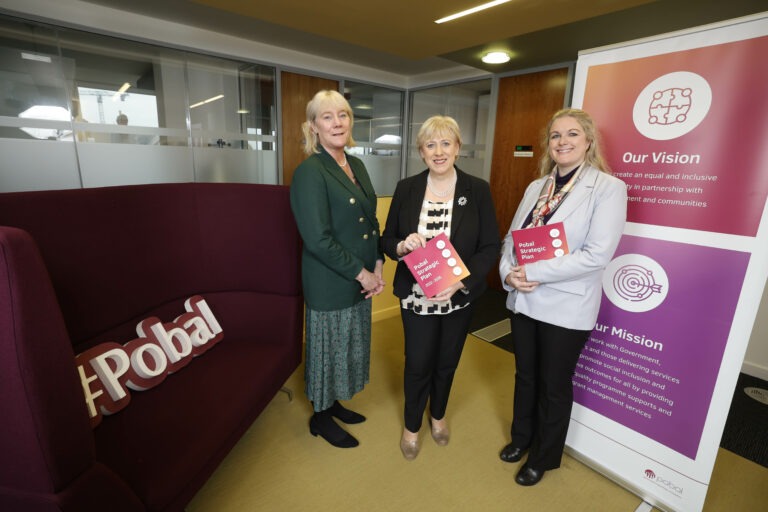
THE Pobal Strategic Plan 2022 – 2026 sets out a five-year roadmap focusing on supporting social inclusion and improving outcomes for those most disadvantaged in society.
The Strategic Plan was developed by Pobal, in consultation with its staff, the Pobal Board and external stakeholders, and sets a clear and ambitious direction, which will both integrate and incorporate the strategic objectives with a series of practical and deliverable actions and activities.
Minister Humphreys said: “For almost 30 years, Pobal has made a significant contribution to our economy and society in supporting Government to deliver programmes to some of the most marginalised and disadvantaged individuals and communities in Ireland.
“My Department looks forward to assisting and supporting Pobal to deliver on the important objectives and actions identified over the period of this Strategy and to see the positive impact this will have on Pobal’s continued delivery of services on behalf of Government.”
Rosarii Mannion, Chairperson of Pobal, commented: “The new strategic plan sets out how Pobal intends to build on our significant progress to date and to challenge ourselves further in moving towards our vision to create an equal and inclusive society in partnership with Government and communities. In developing and launching this Strategic Plan, we are confident that it clearly outlines what Pobal hopes to achieve in the next five years to support and drive improvement for communities, families, individuals and children.
“Pobal’s new strategy sets out a five-year roadmap for embedding continuous quality improvement at the heart of our work. Progress on our new strategy will be continuously measured, evaluated and reported on and will identify areas for further improvement and to reassess the existing system to ensure that Pobal is well positioned to respond to future challenges.”
Minister Humphreys also launched the Pobal 2021 Annual Report and Annual Financial Statements.
The report shows that Pobal administered 38 programmes in the areas of Social Inclusion and Equality, Inclusive Employment and Enterprise, and Early Learning and Care, allocating circa €765 million in funding.
Launching the Annual Report, the Minister stated: “This report clearly shows the key role played by Pobal working on behalf of Government, in administering and managing schemes and programmes funded by my own department and others as well as using its expertise to provide high quality services, projects and research to Government.”
Pobal CEO Anna Shakespeare added: “I am very pleased by the findings in this Annual Report which not only shows a growth in the amount of funding Pobal distributes to local and national community and voluntary organisations, social enterprises and early learning and care services, but also demonstrates our ability to undertake new programmes on behalf of a growing number of Departments.
“The report also clearly shows Pobal’s role as a unique and highly skilled organisation with extensive expertise in designing and developing programmes as well as providing a range of additional services to Government.”
To read the Pobal Strategic Plan 2022 – 2026 in full, click here.
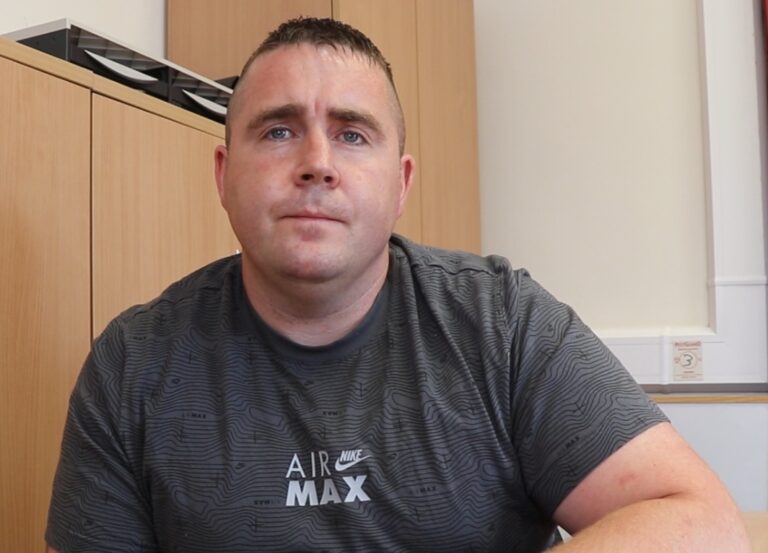
The first question I wanted to ask community worker Damien Quinn who spent three years in prison and now works for Galway Rural Development was: “What were you in prison for?”
Throughout the interview, I held back because it wasn’t fair to ask and here’s why: The ‘Connacht Tribune’ out that week told a wide audience what Damien did time for. I’ve read it since. An interview he conducted with ‘The Two Norries’ covered his past. I’ve listened carefully. It’s an utterly absorbing hour-long podcast that 10,000 people have watched on Youtube.
But for our interview, I knew his wish in meeting me was to get across to readers that the past shouldn’t matter if people are striving to make a new start. He had set up a new project to help ex-prisoners move on with their lives. It was not easy when he came out. Whenever he went for a job, he was always asked first: What did you do?
Despite being a model prisoner and availing of all the education he could while behind bars, he was denied an opportunity (house / job / etc) for so long that he relapsed into drugs and fled the country, wandering the streets of England, Germany and France (two weeks homeless on the continent while on drugs were “horrific”, he said).
He dearly wished to work in community – and while it was a long road, he now wants others to get a fresh start and not hit the walls he did.
“I hate to think other people going to come up against the barriers I did.”
Damien began our interview by talking about his project, Spéire Nua.
“It started as a college project (in UCC) when I was doing a masters in social enterprise and co-operatives,” said Damien, explaining how it evolved:
“I went to a UCC open day and heard about a former student of the Centre for Co-operative Studies – Siobhán Cafferty – who wrote a paper about integrating violent ex-offenders into the workforce. It was called ‘New Way Forward’.
“I said to myself, ‘I need to speak to her and tell her what I’ve been experiencing here in the west.’
“So, I signed up for the course and my dissertation led to ‘Spéire Nua’. My paper was called ‘Life After Prison for Reformed Individuals – Barriers and Opportunities’ – and I’ve experienced many barriers due to my offending behaviour when I was looking for opportunities.
“Dr Carol Power and Dr Bridget Carroll supervised my dissertation and it was completely alien to them, but they were brilliant – and Noreen Byrne. I heard about yourselves through Noreen and I’ve been reading and following ye ever since.”
While at UCC, Damien’s research brought him in contact with many in the prison sector.
“All of them could see the merit in what I was saying,” he said.
His research led him to meet and connect with Governor Eddie Mullins, the Probation Service, the Irish Association for Social Inclusion Opportunities (IASIO), and The Pathways Centre in Dublin city centre. Pathways is an outreach educational service run by the City of Dublin Education and Training Board (CDETB) for former prisoners, their families and the wider community.
While some dissertations – most – gather dust, Damien’s project, based as it was on personal experience on the inside of the Irish prison system, attracted interest.
“When I saw Social Entrepreneurs Ireland (SEI) were advertising for their ‘Ideas Academy’ for 2021, I pitched the idea to them. They gave us seed funding to develop a website and to get the project up and running.”
Lucky break after 10 years
“And the very same week that the SEI announced the funding, I got the job here with Galway Rural Development (GRD) as the social enterprise regeneration project co-ordinator. That had me organising online training around HR management, procurement, digital marketing and so on across Galway, Mayo and Roscommon. It was a Covid support and has come to an end now.
“It’s a decade since I was in prison. I always wanted to work in community development and now I’m in and I’m busy!”
Halfway through his Covid-related contract, Damien was taken on as GRD’s community education and disability officer.
“Now I help people from the ages of 25 and over to get into community education and I’m the disability officer for the entire county.”
Garda vetting is everywhere
Why couldn’t Damien – who excelled in education while in prison – just walk into a job on leaving prison? Therein lies the problem.
“I used my three years [in prison] to the best of my abilities. I said I’d get an education I could use to get started as soon as I was left out.
“The reality was: going for a house – there was Garda vetting. Volunteering – Garda vetting. Applying for a job – Garda vetting. Education – Garda vetting. Every time.
“I say it all the time – prison was the easy part,” he said.
If life after prison was hard, life before prison was also tough. He speaks at length about his early years and his family life then and now in the podcast with ‘The Two Norries’ (really worth watching).
Growing up Irish in England, he was picked on. Then, in his early teens, the family home broke up and he returned to Ireland only to face reverse-racism for being seen as English in Ireland.
Aged 14, he took drugs for the first time, left school early, and – while enjoying work – he found it harder and harder to hold down a regular job. He couldn’t compete with immigrants with much higher education than he had. He tried returning to education – and was going well – but despite his best efforts, a life tainted by drug-related activities took him on a precarious journey.
“My life before prison was chaos,” he said, “whereas in prison you have a structure, routine, school, work programmes, shelter. You don’t have to worry about bills. You can reflect on and work on yourself. Some people use it that way. I did. Some people don’t obviously,” he said.
“It’s when you get out though – that’s the punishment. Barriers pop up every time you try to make progress. That’s counter-productive.”
“A lot of people get out and have nowhere to go,” he said. “They go around in circles, even though they want to progess and make amends.”
Giving back
“Giving back is huge. A lot of people I met in prison wanted to give back. They were planning to rebuild family relationships, give back to the community, make amends, to be somebody. Unfortunately some of them are now dead or back where they started, because they couldn’t get any opportunity – because of who they are, where they’re from and what they did.”
He quoted from a study which found that 82% of ex-offenders believe that their past will prevent them from securing opportunities.
“If they already believe that they won’t even try to change,” he said.
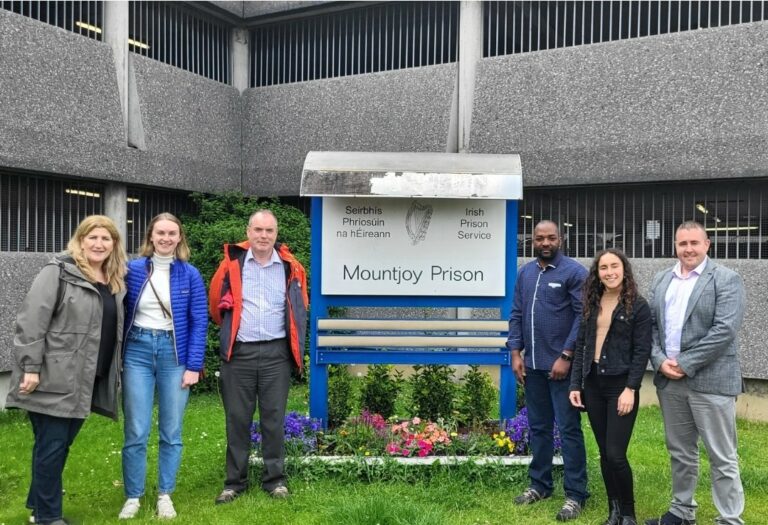
• Damien on a visit to Mountjoy Prison as part of a Common Purpose Project. Read about it here!
Thousands of rejections
His own experience was brutal.
“I’ve had thousands of ‘nos’ based on Garda vetting. Employers should think about how having a criminal conviction can impact on the job at hand. If I was a sex offender and going driving an ice-cream van – obviously Garda vetting must apply. If I was involved in financial crime, obviously Garda vetting should apply if I’m going for a job in a bank.
“It’s about getting the balance right. I remember going for a job assembling car parts in a factory at night-time. It was a large factory floor with cameras everywhere and I was very unlikely to come into contact with children or vulnerable adults. That’s what the [vetting] Act is there to protect. I passed the aptitude and other tests and then I had to disclose my convictions. I didn’t get the job.
“I’ve seen cleaning jobs look for vetting. Garda vetting applies everywhere.
“Luckily I caught the break to work in community development and I grabbed it with both hands. I’m in a good space now, but it bothers me to think of anyone else with a similar background.”
Damien’s Spéire Nua project is attracting support across the criminal justice sectors, not just in the ROI, but in Northern Ireland and in Britain. Damien believes we must take the lead from best practice in other countries. At present, the model is being trialled in Co. Galway.
“Spéire Nua seeks to recognise someone’s steps away from a life of crime.
“It’s a brand new approach to reducing repeat offending. We’ve never had anything like this in the country.
“In America, they have expungements and certificates of rehabilitation.
“Norway has certificates of good conduct and their repeat offending rates are 20 per cent, whereas ours are 50 per cent. Currently, in Ireland, it’s purely negative.
“We want to change that and Spéire Nua has developed an ongoing assessment model that looks to ‘validate your commitment to change’.
“We seek an up-to-date balanced view rather than a historic and purely negative view of the person. Expungment would be the ultimate goal.
“And if we can help the person to fix themselves, it will benefit everyone around them. Everybody wins when someone can turn their life around. I know everyone in my life is a lot happier with me now than when I was doing what I was doing.
“And when you’ve made a decision to change and you’ve done all the right things, you should get credit for it,” said Damien.
Good things happening in the criminal justice sector
He is optimistic. “There are a lot of good things happening in the criminal justice sector,” said Damien.
As a Kickstart awardee and in partnership with a local group in Athenry, he applied for funding for a feasibility study.
“All going well, we’ll hold an employers’ forum, to get it right from their point of view. We would also like the benchmarking system developed by the gardaí so they can comfortably sign off on an ex-prisoner’s current behavour.”
If this happens and the benchmarking takes off, it would be revolutionary in smashing through barriers that have held back generations of people.
“Crime occurs in the most deprived areas. Unfortunately, it’s normal in a lot of places. It’s deemed necessary. I’m not excusing it, but it’s a way of life in in certain pockets of our community. Not everyone gets going from the same starting point in life,” he said.
Should community groups take on more ex-prisoners?
“Absolutely, they should give people a go.”
He spoke about a few great business people and employers in Tuam who gave jobs to people after prison. He was hired himself by an auctioneer and later by a distribution company. In the latter job, he was promoted and was able to give work to others needing a break.
Applying to be a volunteer was a worry for Damien. Unnecessarily so.
“The late Tony Lee was vice-president of community games. I wanted to volunteer and we had a discussion about Garda vetting. He sat back for a second, then he leaned into me and asked ‘What have you done since getting out?’
“No employer asked me that. All they wanted to know was what happened with the crime. I’d tell them and then I never heard from them again.”
‘Spéire Nua’ is Irish for new horizon, or new beginning. Based in Athenry, Spéire Nua is a volunteer-led project that has developed a process (partly adapted from abroad) that validates a former prisoner’s commitment to change.
lthough a few ex-prisoners have benefited from Spéire Nua’s support, it is early days. Google has lent support and the scheme is currently being piloted in Co. Galway, in partnership with an Athenry-based organisation called Amicitia. Peer mentoring forms a core part of Spéire Nua’s approach.
With a feasibility study underway, Spéire Nua may possibly be ready to go national next year. Ultimately, with the co-operation of business networks and the criminal justice system, it could see former prisoners awarded certificates that demonstrate their commitment to change, thereby opening up opportunities denied to them at present.
IN 2021 Bord na Móna announced that its suspension of peat harvesting, effective since 2019, was to become permanent. This was welcome news for environmentalists. However, for those living in peatland areas, it raised concerns about employment and the future of their towns and villages.
Offaly resident Rebekah Keaveny came up with a solution drawn from her experiences living and working in former mining towns in Wales.
She is the co-founder and project development co-ordinator of Green Offaly (greenoffaly.ie), a Development Trust that helps communities to set up green enterprises to create a more sustainable future for their area.
A Project 2040 seminar in Dublin entitled ‘Empowering Communities in the Fight Against Climate Change’, which Rebekah attended as Offaly Public Participation Network environmental representative, set the wheels in motion.
She told ‘Changing Ireland’: “The government Ministers said: ‘We have €22 billion committed to help do this transition to a sustainable future. What is needed is a seismic shift in society’. They didn’t know quite how that was going to happen. How do you get citizens on board? How do you change behaviours? So I went away from that meeting and I thought ‘How would you do it?’
“Offaly PPN then got funding to engage with communities, ask them how they felt about climate action, ask them what was stopping them from initiating environmental projects, and we also introduced the idea of a Development Trust.
“Wales was very much an extracted landscape in parts; you had the coal mining communities, you had the closure of steelworks. There wasn’t a just transition, communities were left – for two generations pretty much – until the Development Trust model was born in the early 1990s.
“A Development Trust is set up within a community or a town, and works in partnership with the community, with businesses, with local authorities to regenerate a place. So they’ll take a building, they put social enterprises or services in it, basically giving life and regeneration back to the town. I thought: ‘We’re in Offaly, we’re looking at an extracted landscape and the Development Trust model might work here.’”
Bridie Costello Hynes, Rebekah Keaveny, and Luka Bloom at the launch of Green Offaly in Lough Boora Discovery Park in 2019
And so, Green Offaly (GO) was born. The company is split into two arms – GO Projects, which is mainly focused on assets, regeneration and income generation; and GO Futures, which is centred on training, education and research.
The first regeneration initiative undertaken by GO Projects is the Fiesta Ballroom in Kilcormac. Green Offaly received funding under the EU’s Just Transition Fund, which aims to provide support to areas facing socio-economic challenges arising from the transition towards climate neutrality.
Working in partnership with Offaly Local Development Company and the Trench Trust, who purchased the building and provided match funding, Green Offaly plans to transform the old ballroom into Ireland’s first Green Headquarters.
The Fiesta ballroom in Kilcormac
Rebekah explained: “It’s going to be a community-centred climate action green enterprise. We’ll have a hub for start-ups that are working towards sustainable and green solutions in Offaly.
“The old cinema will become a lecture theatre. We’ll have conferencing space. We’re going to keep the cultural heritage aspect of it so we’ll still have music and events. The front will be a coffee house; a local social enterprise will run that.”
Green Offaly has also completed a feasibility study to determine whether Offaly’s peatlands would be suitable for UNESCO Biosphere Reserve status.
Rebekah says that for many peatlands communities, the end of peat extraction “came out of the blue”.
“These communities thought they had until 2027 to prepare. In the consultations there was a lot of worry about the peatlands, about the towns being deserted, young people leaving, and a dystopian vision of Offaly being a windfarm reservation. So we thought ‘How can we address that?’
“We thought the Biosphere Reserve could be the answer, evolving the peatland identity, securing income from tourism – a continuing legacy of employment, but through a different lens. Now we’ve completed that study, the upshot is yes, it would be very beneficial for Offaly, but we still have a good four years’ work ahead before we’d be able to make a submission to UNESCO.”
Green Offaly also discovered that many communities were seeking advice and technical support around community-owned energy schemes.
They are currently working with Community Power, an energy provider that buys renewable electricity from small hydro and wind generators across Ireland, to write guides for communities interested in establishing a community-owned energy project (See communitypower.ie).
When asked if enough is being done at Government-level to support a just transition in local communities, Rebekah said: “I think there’s a disconnect between government policy and what is happening on the ground, and the reality of delivering on that. It’s a whole new arm of community development and it needs to be resourced as such, it needs to be a national programme. You can’t expect volunteers to do this.
“People have to address their social and economic needs before they even have the luxury to think about climate change. Electric vehicles, retrofits, they’re prohibitive to the majority of the population.”
She recalls a phrase she heard at a recent Local Futures conference in Cork: “‘We’re not faced with a series of problems, because problems have solutions. We’re faced with a series of predicaments’. From that perspective, it’s not so much about climate action, it’s about resilience. It’s about communities being food secure, energy secure, economically secure, those are the things that are really important.”
THE major investment will support thousands of locally-led rural development and enterprise projects over the next five years.
This allocation is in addition to the €70 million already provided for LEADER for 2021 and 2022, bringing the total allocation for the seven-year LEADER programming period of 2021-2027 to €250 million.
The selection process will be conducted over two stages; the first stage, launched today, is an ‘Expression of Interest’ by eligible groups followed by a more detailed stage, which will see them develop their LEADER strategies.
Minister Humphreys said: “The LEADER Programme has been integral to delivering locally-led projects that have brought major benefits to communities across rural Ireland.
“LEADER operates on a ground-up approach and is all about empowering local communities to deliver projects that will revitalise our towns and villages.
“Today, I’m pleased to set out the process for selecting groups to deliver the new LEADER programme.
“The process will be open, transparent and competitive and I am encouraging groups in the private and public sector to work together to achieve the best possible results.”
Minister Humphreys acknowledged the tremendous work of the Local Action Groups that have successfully delivered the current LEADER programme, stating: “It is now important that the key public and private stakeholders in communities across Ireland come together in partnership to deliver a LEADER programme that will build on the fantastic success of the programme over the last 30 years.
“By working together, we will ensure that LEADER continues to play a central role in supporting rural communities into the future.”
As part of the new CAP Strategic Plan, funding of €180 million has been committed to LEADER for 2023-2027. The Minister also confirmed that all of this funding will be allocated to the Local Action Groups who are appointed to deliver the new programme.
Interested parties can now apply by visiting the Department’s website and downloading an application form via the following link:
Completed Expressions of Interest forms must be submitted by email only to leader2327@drcd.gov.ie no later than 5.30pm on Friday December 16.
All groups that are successful in Stage 1 will be provided with funding to assist with the costs associated with developing a Local Development Strategy in Stage 2 of the process.
A fund of €2 million has been ring-fenced for this purpose, which will commence in early 2023.
The Department of Rural and Community Development will host an information webinar for all interested parties on November 10.
The county-by-county allocation announced today is as follows:
Carlow
€4.9 m
Cavan
€6.4 m
Clare
€6.8 m
Cork*
€16.8 m
Donegal
€10.4 m
Dublin Rural
€4.7 m
Galway
€9.0 m
Kerry
€8.2 m
Kildare
€5.4 m
Kilkenny
€6.1 m
Laois
€5.7 m
Leitrim
€6.3 m
Limerick
€6.9 m
Longford
€5.8 m
Louth
€4.9 m
Mayo
€8.8 m
Meath
€5.5 m
Monaghan
€6.0 m
Offaly
€6.3 m
Roscommon
€6.8 m
Sligo
€6.1 m
Tipperary
€7.8 m
Waterford
€6.1 m
Westmeath
€5.7 m
Wexford
€7.3 m
Wicklow
€5.3 m
*County Cork includes three sub-regional areas of North Cork, South Cork and West Cork, the allocation indicated will be distributed across the three sub-regional areas.
THE power of role models is particularly influential on young people and there are concerns that Ireland’s youth work sector has not widened the ethnic diversity of its staff to reflect the wider changes in Irish society.
The extent of this lack of progress is about to be measured by a new study commissioned by the National Youth Council of Ireland (NYCI).
The research, due for completion in November, aims to address the dearth of research on the profile and experience of minority ethnic youth workers and volunteers working in the youth work sector.
It will examine the level of ethnic diversity amongst students attending youth work courses under the North South Education and Training Standards (NSETS) framework and will analyse the experiences of minority ethnic students in placements and in the workplace after graduation.
The research will also gather ideas and recommendations to encourage those from ethnically diverse backgrounds to pursue a career in youth work.
The NYCI says this study is vital and that it will provide “an evidence base to inform the development of youth work policy and practice and it will also help inform the youth work response to the specific needs of minority ethnic young people.”
The low levels of participation and inclusion of ethnic minority staff in paid youth work positions was previously flagged in the 2017 NYCI report ‘Making Minority a Priority’.
That report concluded: “It seems that minority-ethnic young people and their parents are less likely to aspire to youth and community third level qualifications and careers and as such are more likely to be involved in youth work in a voluntary capacity.” To read the full report, clickhere