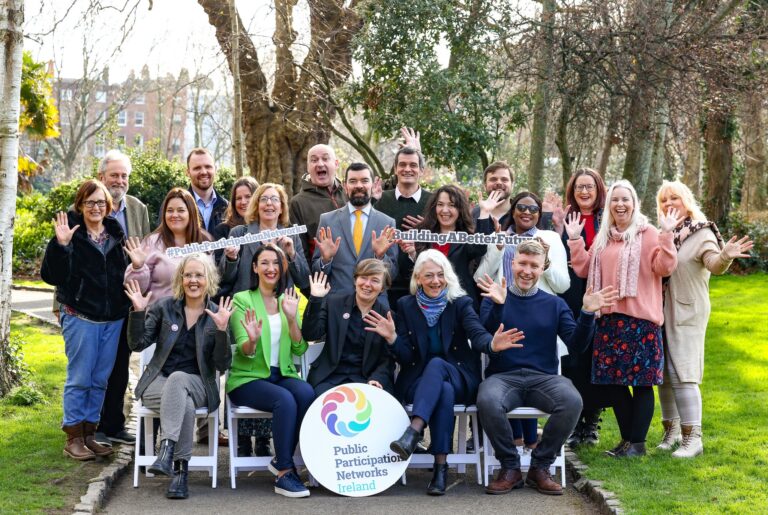
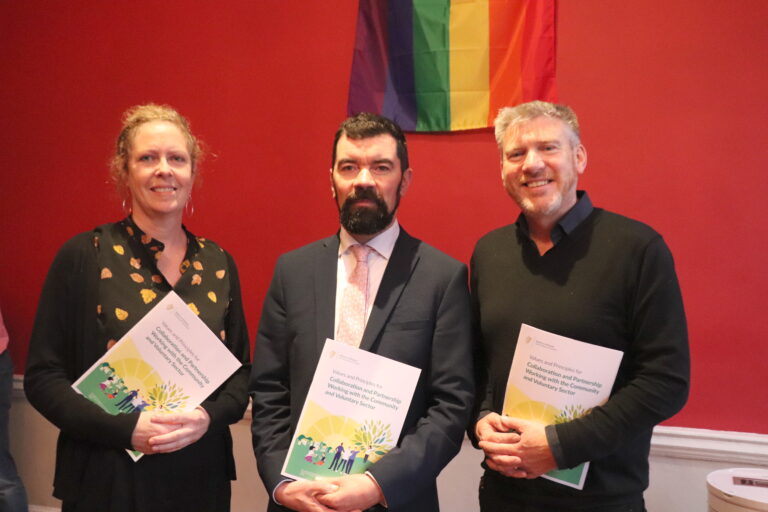
Speaking at the campaign launch, Minister of State with responsibility for Community Development, Charities and Integration, Joe O’Brien said:
“Public Participation Networks give communities across Ireland a voice in local decision-making and bring valuable on-the-ground, experience and expertise into local and national policy development. The strength and impact of PPNs can be seen in how they represented volunteers and community groups within the responses to COVID-19, working with local authorities and state agencies. Through local action, PPNs also contribute to policymaking at national level, such as the development of the Climate Action Plan 2021, when PPNs hosted and facilitated important local community conversations around the country.”
Public Participation Networks allow local authorities to connect with community groups and give people a greater say in local government decisions that affect their communities.
Each county and city in Ireland has its own PPN, and more than 18,000 community and voluntary groups are currently members.
In June 2022, the Department of Rural and Community Development published the PPN Structural Review Report.
It found that not all PPNs operated independently and recommended a review of the PPN structure to ensure independence is maintained.
Some of the projects and initiatives undertaken by PPNs include: summer camps for children with autism in Longford, the development of an Anti-Poverty Strategy in Clare, and liaising with women living in Direct Provision in Galway to help improve their employment prospects.
Cliona Kelliher from Kildare PPN said: “More than a thousand PPN representatives are currently on boards and committees of local decision-making bodies. They are contributing to decisions on climate, transport, migrant integration, community health and wellbeing, policing and many more.”
John Mulholland, CEO of Laois CoCo and Chair of the CCMA Rural Development, Community, Culture and Heritage (RCCH) Committee said:
“The PPN structures offer Local Authorities a way to collaborate directly with volunteer community groups, who do so much for their localities. PPNs play an important role in developing our key policies and strategies, and each Local Authority provides considerable support to their local PPNs in recognition of this. This campaign will boost the profiles of PPNs, which is well-deserved in light of their work.”
Membership of a local PPN also gives groups access to training programmes, information on funding and grants, and on proposals or decisions being made in their county, as well as networking and learning opportunities.
While Erris won’t see a FRC established it will get the closest thing to it – funding for a Family Resource Support Service (FRSS).
“The professional and consistent campaign depicted convincingly to The Child and Family Agency and Minister Roderic O’Gorman that the Erris case for a resource such as this was unique and undeniable,” said a statement from Tusla.
The distance from other services, the high levels of disadvantage, and the increase in complex family and social needs in the area led the agency to make a commitment to invest in a service to facilitate the community to respond to these needs.
Work on this project began with an initial application in 2018. Three new FRCs were established in the region – the Erris application just fell short coming in fourth place.
There were two key recommendations following the unsuccessful application: set up a local committee to ensure a bottom-up approach, and carry out more localised research.
In late 2018 local research was completed by Strategic Direction under Erris Interagency Network. In autumn 2019 a local steering committee made up of members of the community and representatives from organisations and agencies operating in Erris was established. There followed three years of hard work, dedication, and passion, overcoming obstacles in the campaign caused by Covid-19.
The committee’s original request was for an FRC to be part of the national Family Resource Centre Programme. The programme is currently closed to new applications. However, campaigners said there was a compelling case for Erris.
“Taking seriously their statutory obligation, Tusla wanted to act and play their part in supporting a service for the rural community,” added the Tusla statement.
Tusla CEO, Bernard Gloster, congratulated the Erris campaigners. He noted “the uniqueness of Erris in the sheer distance from a whole range of services as set out in the committee’s plan”.
“That together with aspects of rural isolation presented a very compelling case,” he added.
“As opposed to asking the community in Erris to wait for a further round of FRC consideration, I was anxious that we would respond to the acute need in the area.”
In an official confirmation, he approved the establishment of a Family Resource Support Service and thanked the committee for their commitment.
Mr Gloster said he looked forward to visiting the area in the near future and to see “what no doubt will be the very positive progress for the weeks, months and years ahead”.
Chairperson of the FRC for Erris campaign group, Leanne Barrett explained: “Our vision for the area is an inclusive, sustainable and independent community that is self-sufficient and provides a supportive environment to all those living here. We have always said that any project must be locally-based, embedded in the community, with local involvement and ownership.
“We now have the resources and investment needed to create a project that will strengthen the Erris community and ensure that local families have services and supports available to them in their own area. We really appreciate the support and engagement from local and national Tusla, and the Minister in seriously considering our case and acting on the evidence.”
Ms Barret concluded “Cross party and interagency support were crucial to the approval for this resource. We will continue to work closely with our Mayo TDs and other public agencies and organisations in completing the establishment of this service.”
The FRC for Erris campaign set out an annual budget of €160,000 per annum as part of the strategic plan and proposal sent to Tusla and the Department.
The annual core budget granted is €160,000 and will allow Erris FRSS to hire three core staff to serve an area the size of Co Louth and with a population of just over 8,500 people.
The new service will be run by a voluntary management committee as a registered CLG, and in time a registered charity.
There are currently 121 Family Resource Centres across the country. The Department of Children is not expanding the programme at present. The Erris FRSS will not form part of the programme, but it will work from the same model of family support and community development.
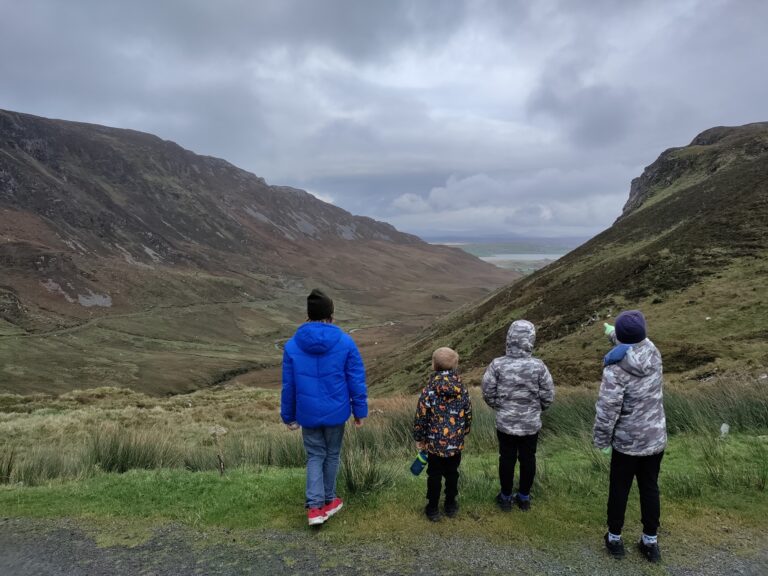
The social enterprise is a community of special needs families who work with support agencies, service providers and other special needs families to make the outdoors accessible for all needs.
Vika Gailite, Shamrock Squad Adventures co-founder told Changing Ireland: “We are trying to make the outdoors as inclusive as possible. Most of our children are on the (autism) spectrum. Some have physical disabilities or other intellectual disabilities. We organise walks, nature walks and litter-picking.
“You look on websites and there is information about wheelchair accessibility, but other special needs families are neglected. There are people with hidden disabilities that you can’t see. You could go out and the child could have a meltdown, sensory overload, and you don’t know what’s there that could trigger them.”
The network includes ten dedicated families who conduct ‘review walks’, to investigate if a route is suitable for those with additional needs.
Shamrock Squad Adventures also organises ‘open walks’ that are attended by between 15 and 20 families.
Vika explained: “We try to make it as easy as possible for them to do these walks. It can be crazy hard to go outdoors when you have someone in your family with special needs. You want to make it as fun as possible for everyone, but most of the time you end up having to turn back and the family can’t enjoy the outing.”
Shamrock Squad Adventures aims to reach local authorities around the country to advise them which of the walks in their areas are suitable for people with special needs, and what improvements could be made.
‘United Women’ from Action Tuam is a group of refugee and migrant women living in direct provision in Galway who were ‘Highly Commended’ by the judges at the National Pitch-Fest.
The women have come together to support each other and their community. Their ambition is to form a social enterprise using food to integrate communities, promote cultural identity, teach life skills, educate others on their traditions and create employment.
Other ideas presented to the judges featured a new eco concrete solution, a digital support platform for new parents from minority groups, social integration through music and an online marketplace connecting lift-seekers with vehicle owners.
The prize bursary awarded to Shamrock Squad Adventures includes: five dedicated mentoring sessions facilitated by the Local Enterprise Network, access to ReThink Ireland’s ‘Start your own Social Enterprise Programme’, legal advice from Arthur Cox, and a hot desk space for six months.
Shamrock Squad Adventures said they hope to use the bursary “to accelerate the platform development”.
Vika added: “We are so delighted. It’s the recognition; that what you’re doing is needed and is worthwhile. The mentorship is gold – to have access to these people and to be able to pick their brains.”
She revealed that their longterm goals include the development of a centre of excellence, to help families learn to navigate the outdoors with their children who have special needs.
“The sky’s the limit!” she concluded.
Siobhán Finn, National Hub Network Manager at CEAI (Community Enterprise Association Ireland) said: “The energy, enthusiasm and creativity we saw from the finalists at the National Pitch-Fest was amazing. It was clear every participant is passionate about tackling social and environmental issues and creating positive change in their communities.
“We are so grateful to our excellent judges that were involved in the National Pitch-Fest, all the enterprise centres and hubs who participated in hosting the regional events and our brilliant partners who provided the range of supports and services included in the Prize Bursary. It was a privilege to witness such a high standard of social enterprise ideas and pitches, particularly during a time where these solutions are critical in society and to the economy.”
She remarked that Shamrock Squad Adventures’ pitch was “incredible”.
“They deserve all the success going forward. I cannot wait to follow their social enterprise journey and watch it become a reality,” Ms Finn concluded.
Pauline Gannon, co-founder and Director of Impact, Social Impact Ireland on behalf of the judging panel said: “Champion Changemakers has provided a platform that supports community changemakers to develop solutions to the challenges they experience within their own communities, giving national recognition and supports, to local innovation.”
She added that the projects “offer real solutions to overcome real challenges within communities across Ireland”.
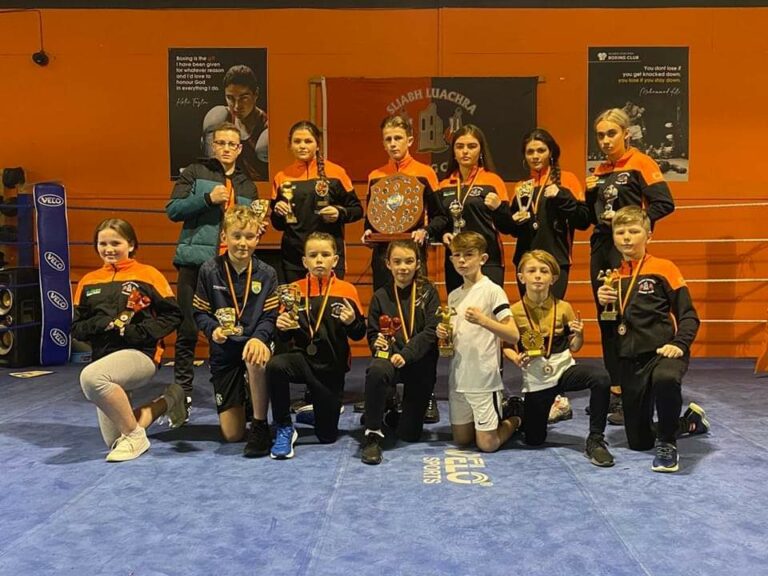
Sliabh Luachra Boxing Club in Castleisland has enjoyed a record-breaking year, with two of its members taking home silver at European championships.
Club manager Jennifer O’Sullivan Coffey told Changing Ireland: “The club started in 2006 as part of a project by the then Sliabh Luachra Development Company. At the time there was some trouble in Castleisland between Travelling and settled children, so we had to come up with ideas on what would be an appropriate way to get people involved.
“On our opening night, we had 60 young people. We had no home, we had nothing, and we just decided to hire a hall.”
Jennifer O’Sullivan Coffey with European silver medal winner Mary McDonagh
Jennifer, who is also a development worker with North East West Kerry Development (NEWKD), added: “Really it’s not just a boxing club, it’s a tool to bring young people in, to see what’s going on with them. Our aim was always that the boxing club would stand alone. It’s non-profit, any money that is made goes back into the club.”
Today, the club has more than 70 members aged eight and over, with a mix of nationalities and backgrounds.
Jennifer revealed: “This year about 60 per cent of our boxers are from the Travelling community and 40 per cent are settled. We have boxers coming from all over Kerry. We allocate spaces to local young people first and then open it up to people further away.
“We had a record-breaking number of wins this year. We won six national titles, six Munster titles, and 20 county titles.
“One of our members won a Garda Youth Award, and the club won a gold Kerry Community Award.”
Club member Jamesie Casey (14) from Killarney took home a silver medal from the European Schools Championship, held in Erzurum, Turkey in August.
Another, Mary McDonagh, is a European Junior 75kg silver medalist following the European Junior Championship in Montesilvano Italy in October.
Sliabh Luachra Boxing Club’s European silver medalists Mary McDonagh and Jamesie Casey
“There is a rich history of boxing in Castleisland. My great-grandfather and my grandfather were involved in boxing. It’s funny the way things happen; I’m now Chair of the Kerry County Boxing Club and manager of Sliabh Luachra Boxing Club, Jennifer revealed.
It is perhaps because of this rich history that the club has been able to benefit from a local pool of talented coaches, who Jennifer says also act as mentors to the boxers.
“The club is lucky in that we have fantastic coaches. They give massive support both inside and outside of the club to all our boxers. They know they can contact the coaches any time outside of the club if they have anything going on in their lives,” she explained.
Aside from its achievements in the ring, did the club succeed in its original goal of helping to bring the community of Castleisland together? “Oh it did, for definite,” revealed Jennifer.
“We did a presentation on the club for the Minister of Sport some years ago as an example of good practice, and we were given recognition for that.
“There is no difference, it (background) doesn’t matter, that’s not the culture in the club. The ethos here is that as soon as you walk in the door, you’re part of our boxing family, it doesn’t matter where you’re from, once you follow the rules. They all work together.”
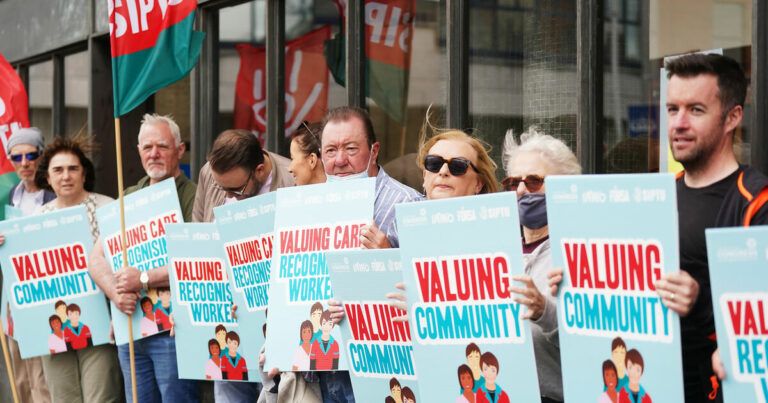
The community-based services included in the proposal for strike action are HSE-funded and the latest move follows limited strike action on a limited number of days last year.
The move follows years of complaints from staff in the sector regarding inequality in relation to pay and conditions.
Fórsa general secretary and Irish Congress of Trade Unions (ICTU) president Kevin Callinan said: “As one of the main representative unions involved, Fórsa has decided to call time on the Government’s dragging of its own feet on this issue.”
Saying that services “will simply be brought to a halt”, he added: “At this stage, no other course of action will drive the point home.”
The union intends to ballot members shortly about a start date and specific locations for the strikes and it has pledged to cover the wage costs of the staff taking part in the strike.
Mr Callinan stated that the ongoing pay inequality in the sector “simply cannot be sustained”.
He added: “Up to a third of experienced professional health and care staff are leaving their jobs in these agencies every year to take up better remunerated employment with the HSE and elsewhere.”
Mr Callinan added that while limited strike action by Fórsa members in Galway, Mayo, Cork and Kerry last year garnered strong support across the political spectrum, neither the Government, Department of Health or the HSE have since taken any meaningful action to address the issue.
He added:
“On the one hand, the health minister acknowledged in the Dáil last October that the Government is the ‘main and often sole funder’ of these organisations, and that its funding affects the ability of agencies to improve pay and conditions.
“On the other hand, it has spectacularly failed to grasp the link between its chronic underfunding of the services and the subsequent failure to meet the HSE’s recruitment targets in, for example, disability services. For every member of staff freshly recruited, another experienced staff member is walking out the door. The situation is both unacceptable and unsustainable.”
Fórsa said that it has conducted research which revealed that recruitment and retention of professional health staff in these employments has become a major challenge. The union said Section 39 employers are burdened with higher recruitment costs and growing waiting lists for services.
‘Section 39’ agencies provide a range of residential and day services for people with disabilities, mental health, addiction, domestic and sexual violence services, and other supports, under service level agreements with the HSE. Section 56 agencies operate in a similar way for Tusla-funded children’s services.
While these agencies are funded by the state, their employees in a range of health professional, clinical, clerical and administrative grades, are on lesser terms and conditions than their HSE counterparts.
Money talks, and some people are walking away from jobs and potentially from a career in community development.
It presents a new challenge for community groups.
One community work co-ordinator told me he scrambled to find another couple of thousand Euro to offer a valued staff member looking to depart.
“There’s no point,” his colleague said. The difference in salary was €15k.
The lost worker was brilliant with marginalised communities and wanted to stay, but in a time of inflation, rising energy costs and looming recession, money talks, and now she works in the education sector. She was the organisation’s third core staff member to leave in 12 months.
Experienced staff are being hired by the better-paying HSE, local authorities and government agencies.
As the CEO of a local development company in Dublin tells journalist Kathy Masterson, not a week goes by without them needing to advertise posts or conduct interviews (see pages 5-7).
In Kildare, a community Garda told me of repeated attempts to recruit community-based addiction support workers. Despite repeat advertisements, not one suitable worker applied. In fact, nobody at all applied when the posts were first advertised. The project is in limbo.
The only silver lining to all this is that it must be a good time for graduates.
Nevertheless, there is a solution. The Government says it is serious about its five-year policy strategy for the community and voluntary sector. It recently launched a follow-up document on shared values and principles for when community organisations and the State wish to work together to empower communities (see pages 8-10).
The salaries and retention issue is undermining communities. It is therefore incumbent on the State to listen and to act and ultimately to raise salaries.
Media commentators may liken what is happening with pay in other sectors. We know the gardaí are struggling to recruit, the navy cannot staff all its ships, teachers are impossible to hire and midwives are scarce.
The housing crisis is a contributary factor, especially in Dublin where young teachers and gardaí cannot afford the rent.
You may well think: ‘The country has more pressing need for gardaí and teachers and midwives than for community development workers’.
However, the situation facing us is different. Community workers – often indirectly funded by the State – are perversely being offered better pay in other areas funded by government.
However, when they move, it takes them out of the community (usually to desk jobs) and there are around 1,000 unfilled community sector vacancies at present. The situation is urgent. It is the most talked about issue of the day and that’s saying something.
In its pre-budget submission in September, The Wheel called for an increase to funding for HSE-funded (Section 39), Tusla-Funded (Section 56), Housing Act (Section 10) homeless services and other statutory-funded services.
The organisation warned that the community and voluntary sector is experiencing “an escalating crisis in staffing” that is jeopardising service delivery and continuance.
However, Budget 2023 did not include any proposals to address pay issues for those in Section 39 and similar organisations.
Anne Fitzgerald, CEO of Ballyfermot Chapelizod Partnership told Changing Ireland how the issue has affected their work: “We are always recruiting; it’s now a constant part of every working week.
“It’s about pay, recruitment and retention. Sláintecare has expanded, and County Councils are moving into the area of community development, and it’s our staff they’re taking. We can’t compete with the public sector salaries, particularly now since the public sector pay deal. Fairness would dictate that where people are doing similar jobs, they would get similar salaries. We did have a lot of equity before, but with one stroke of a pen, that’s gone, destroyed.”
While the issue is a nationwide one, Ms Fitzgerald believes it is exacerbated in Dublin, due to the higher cost of accommodation.
“Dublin is the perfect storm. It’s getting difficult to get around, there’s the issue of housing. In Dublin a salary of €45,000 is just about what you’d need to live. In somewhere like Cahirciveen it’s worth way more, the cost of living is cheaper,” she explained.
When asked if the issue of recruitment and retention would affect her organisation’s services, Ms Fitzgerald replied: “It probably will, in terms of stability, continuity of care. The relationship side can be impacted.”
She continued: “People don’t stay in the job as long. We’ve had people stay less than a year, then they go to the HSE or the Council. We’ve had people who are upset handing in their notice, but they’re saying ‘this means the difference in the mortgage I can get’. It’s a candidate’s field, and that’s good for them. I don’t begrudge people doing better for themselves.
“Sometimes it’s good to get a variety of experience in this sector, and a lot of particularly younger people would change jobs to get experience in different areas. But in a lot of these jobs you’re relying on people building relationships. When people are staying in the job for a year or less, it’s not good for the relationships.”
The recruitment and retention crisis is becoming the main topic of conversation among CEOs in the sector. According to Ms Fitzgerald:
“It comes up every time a group of CEOs in the sector gather together, whereas it wouldn’t have two or three years ago.
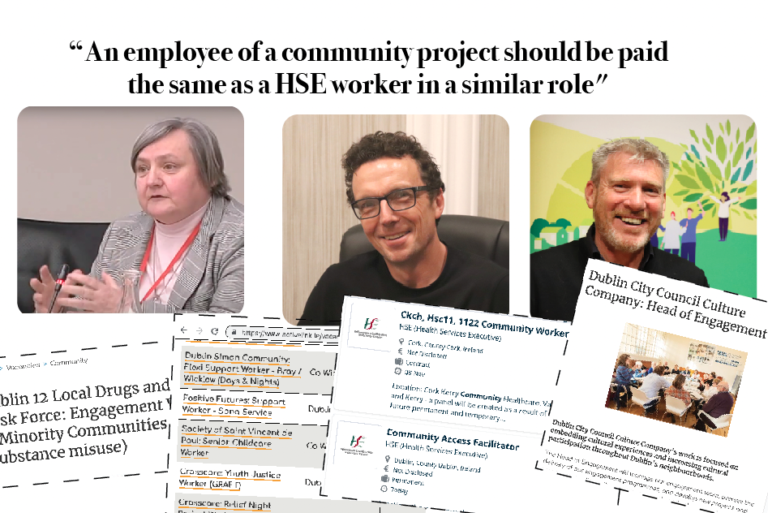
“CEOs should be spending time on development and doing policy work, but a lot of the time we’re treading water. We’re treading it well; I think we do a good job of keeping it going, but we need something to give somewhere. We need more money. An employee of a community project should be paid the same as a HSE worker in a similar role by the worth of their qualification and the job they are doing.”
As to what can be done to help solve the problem, Ms Fitzgerald said: “As a sector we could have a look at our strategy around hiring older people as a matter of policy. Often you default to the stereotype of hiring young graduates, but maybe part of our survival could be to look at people who have taken early retirement from state jobs.”
* * * * *
In Kerry, Rob Carey at North East and West Kerry Development revealed that the organisation has lost two staff members in the last three months to the HSE.
“Before that we had very little turnover. In one way, people moving on is natural, but we wouldn’t be able to compete with the salaries they are being offered. SICAP is losing employees to the HSE; it has come up at a SICAP managers’ meeting. Partnerships nationwide have experienced people leaving,” he said.
Mr Carey continued: “We have had very few pay increases. I think we had one increase in the last ten years, the reason being that our budget hasn’t increased. Ten years ago we weren’t doing too bad, but salaries in the sector have stagnated and now we’re falling behind. A lot of people working in the sector would be below the average industrial wage.”
* * * * *
Dearbhla Conlon Ahern, West Limerick Resources
In Limerick, Dearbhla Conlon Ahern, SICAP Coordinator at West Limerick Resources, told Changing Ireland:
“We are losing someone in the next few weeks. They’re going to a statutory body and we just can’t compete. I’m delighted for the person, but it’s heartbreaking for us. All the relationship building that you do, then you have to set the dial back to zero. I’m afraid I’m going to see more of this.”
She continued: “Our sector is built heavily on building relationships. We are there to deliver the national programme to the people who are facing the most barriers. It’s a journey with people. The problem is, there isn’t a value set on community development, because it’s not tangible.
“The gap between the salaries in the sectors is between about 12 and 14 per cent. The sector has to get real about bringing in a proper payment structure. We shouldn’t be a stomping ground for others (to recruit staff). Sláintecare are hoovering up quite a few, as are local authorities.”
Ms Conlon Ahern revealed that these concerns were raised with Minister Joe O’Brien when he visited West Limerick Resources in October. “Hopefully he will take heed of what we are asking. This is the bridging year between this iteration of SICAP and the next – now is the time that this needs to be done,” she remarked.
• Ivan Cooper of The Wheel.
Ivan Cooper, Director of Policy at The Wheel, revealed: “It’s the single biggest issue that we are hearing from our members – the inability to recruit staff. Grants allocated to our members haven’t been significantly increased for a number of years. Some of our members have told us that their salaries are 12 to 15 per cent lower than their employees could get if they took jobs elsewhere.
“There is a network that employs people in the community and voluntary sector. They say that there are 1,000 plus posts that are effectively unfilled – it’s a huge problem. The public sector pay increase of 6.5 per cent that was implemented has exacerbated the situation.”
There are fears within the sector that some services may have to be curtailed if the situation worsens.
Mr Cooper continued: “Unfilled posts manifests as people being left without services. And those people are invisible – the system doesn’t collect data on people who are without a service that isn’t there. There is a grave concern that vulnerable people in the community are going to be left without services.
“The only way to resolve the issue is to increase pay. Pay levels in the sector are too low, and they have been low for years, if not decades, since the recession. We need to see a very significant increase in the grants paid to voluntary sector employees.
“Voluntary sector employees feel they are being taken advantage of, because they (the government) know that they won’t just down tools.”
* * * * *
Earlier this year, The Wheel’s HR partner, Adare Human Resource Management, issued its HR Barometer Report, which revealed that the non-profit sector is facing “unique challenges”.
The report showed a significantly higher rate of employee turnover in the nonprofit sector, with an average in 2021 of 25% and expected turnover of 28% this year, compared to an average of 18% among all sectors.
It suggested that nonprofit organisations should take “a more holistic approach by developing retention strategies that invest in people, focus on organisational culture and enhance the employee experience”.
[et_pb_section fb_built=”1″ admin_label=”section” _builder_version=”4.16″ global_colors_info=”{}”][et_pb_row admin_label=”row” _builder_version=”4.16″ background_size=”initial” background_position=”top_left” background_repeat=”repeat” global_colors_info=”{}”][et_pb_column type=”4_4″ _builder_version=”4.16″ custom_padding=”|||” global_colors_info=”{}” custom_padding__hover=”|||”][et_pb_text admin_label=”Text” _builder_version=”4.23.1″ background_size=”initial” background_position=”top_left” background_repeat=”repeat” hover_enabled=”0″ global_colors_info=”{}” sticky_enabled=”0″]She pointed out that the agreed set of values and the accompanying principles are “all interdependent”.
“They all require direct consideration and reflection on ways in which they can be put into practice. Without reflection and commitment to proactively ensuring they inform and impact on the design and development of policies and programmes, in particular those designed to meet the urgent and pressing needs of marginalised communities, they will remain simply words on a page,” she said.
She was upbeat, encouraged even, by commitment to date.
“We are very heartened by the statement we are making today. We think further commitment has been given to ensuring that the values are mainstreamed and accepted in the policymaking processes across government at national and local level,” she said.
She recalled how they began work on the document:
“At work we discussed the importance of a shared set of values and that did not come naturally to us.
“We knew what the ethos was, which was about supporting communities, giving them a say in decisions that would affect their lives, empowering communities.”
She noted the agreed values and principles echo commitments given in the Programme for Government, in rolex day date 228238 men 40mm reloj de acero dorado con esfera negra the Roadmap for Social Inclusion and in international human rights treaties.
“We have to be able to say what we stand for, what we stand against, what we are willing to support in terms of equality, justice and human rights.
“Overcoming the challenges requires us to work together. We don’t have a choice. All of us have something important to offer.
“To assume that putting values into practice would be naïve. It requires all of us to engage in ongoing trust-building, increased power-sharing, mutual recognition and respect and putting in place structures, processes and the dreaded resources.
“It requires us too to collectively challenge those who promote racism, sexism and disharmony in our communities and in society, including those who align with far right actors.
“I thank Minister O’Brien and all our colleagues and friends in the Department of Rural and Community Development for your work in seeking to ensure that those who need to be heard are heard and in your efforts to achieve what we all hope will be a stronger, better democracy,” she concluded.[/et_pb_text][/et_pb_column][/et_pb_row][/et_pb_section]
This is a slightly edited version of what Mr Cooper had to say. The full speech is viewable on our Youtube channel.
People are increasingly aware of the crucial role played by the community and voluntary sector in Ireland. The impressive facts are fairly well known thanks to work of the Charity Regulator and Benefacts. It’s worth reminding ourselves that the sector consists of:
35,000 community and voluntary organisations.
86,000 volunteer directors and trustees.
165,000 people employed.
Over €14 billion turnover, half of that raised by the sector itself and half coming from the State in various forms such as grants, service agreements and contracts.
So, there is a real partnership here.
The sector is massive in every respect and is present across the country in many forms. There are tens of thousands of local voluntary community groups, most of them employing no staff and often taken for granted, and focusing on a multiplicity of areas from environmental action to community development.
They form the fabric of our local communities and their presence came to the fore during the Covid crisis, when their work to reach out to older and more vulnerable groups was crucial to keeping communities safe.
Thousands of organisations essential services
The sector is also present in our activist communities working and advocating for a world free of poverty and social exclusion and disadvantage, and for a world free of discrimination and prejudice in all its forms. There is much that remains to be done if the vision of a fair and inclusive Ireland that underpins the values and principles that we are championing is to be realised.
The sector is also present in the thousands of organisations that provide essential services and supports through our hybrid public services system.
Startlingly, one in three people delivering public services in Ireland work for a charity, a community group or a social enterprise. That is a mind-boggling number and it hasn’t sunken into the policy system sufficiently yet.
That is the extent of the hybridisation of our public services.
Sector works in close partnership with the State
It is important to note that these values and principles are intended to provide a foundation for collaboration and partnership between the sector and central and local government.
The essential role played by our community and voluntary sector across all these facets of national life means that this very diverse sector works in close partnership with the State. It collaborates with departments such as the departments of rural and community development, education, justice, social protection and environment, and also with agencies like the HSE, Tusla, Pobal and the education and training boards.
I cannot emphasise enough the entwined nature in the way the sector and the State collaborate in supporting people in communities and people in Ireland.
Places where the relationship is strained and under stress
In the final analysis, community and voluntary organisations and agencies both work for public benefit. They are not for profit. I believe this crucial fact shows the similarity in the nature of community and volunteer organisations and their statutory counterparts. They are both expressions of our human need and desire to provide for ourselves collectively and inclusively – and to do so with care, fairness and inclusion.
This closeness in both spirit and work is what I think makes the values and principles so important.
I have to be honest. There are unfortunately many places where the relationship is strained and under stress. I need to communicate from the membership of The Wheel.
It is felt that lip-service is sometimes paid to the crucial values and principles we identified. We need to make sure doesn’t happen.
How are we going to do that? The State holds a great deal of power in the relationship because it has control of much of the resources allocated to the sector. Remember, this is work that involves what would be regarded by the public, if they were asked, as essential services (that happen to be delivered by community and voluntary organisations).
Important positive processes underway
These principles need to be applied, adapted and lived and there are already important positive processes underway, such as the health dialogue forum between the Department of Health and the HSE and the community and voluntary sector, and such as Tusla’s work to commission services in partnership with the sector.
Which brings me to my main point – while it is great that we have this document, we now need a sustained effort to lead the culture change that is needed at all levels in public services and in all spaces in the sector.
We greatly welcome and note the Minister’s intent to champion these values and principles and to work with public sector colleagues to realise their intent. We would encourage a very proactive and ambitious approach to achieve the culture change necessary if these principles are to change the way we do things around here. That is what is needed if a partnership approach is to thrive”.
Pathfinders need to be the norm
This is just the start of a process, it is just a document. It is emergent, it comes out of places where these values live in the sector and in the system in public services. Those pathfinders need to be the norm. We need to put in place a process.
In furtherance of this, we believe we need to see a programme of awareness raising within the public service and across all relevant departments and agencies to promote these values.
We need formal acknowledgement of the principles and values by all relevant departmental and HSE management teams and the co-option of these principles into their practice.
We need to see reviews of engagement and funding processes and procedures and funding agreements to bring them into line with the spirit of these values and principles.
Too often we see legalistic and adversarial and conditional small print that takes precedence and unhelpfully sets the tone in relationships between funders and the organisations they fund.
Finally, we need to see real case studies of what the application of these principles and values would actually look like in practice.
We need processes to roll out the application of these principles and those processes should model the way forward for departments and agencies.
Do we actually provide and offer value for money?
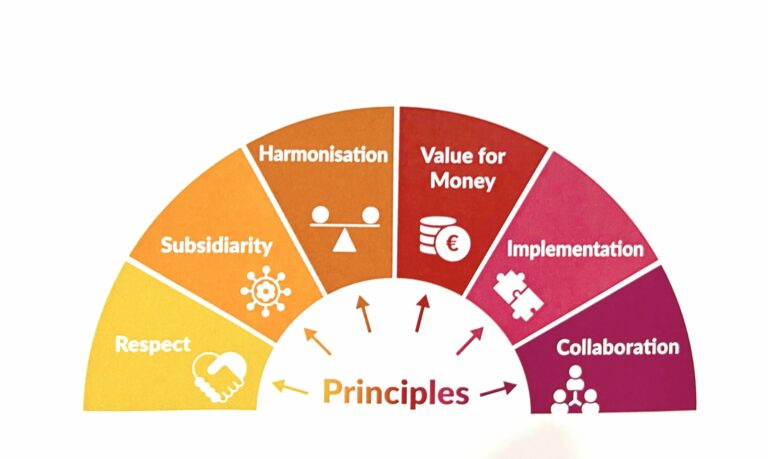
In conclusion, we in the community and voluntary sector must look at our own practice at both organisation and sector levels and ask whether the approach our organisations take is in fact inclusive: Does it respect diversity? Do we genuinely value subsidiarity in our own organisations in the way we work, in terms of de-hierarchising and all the rest of it? We must ask: Do we actually provide and offer value for money?
The sector itself will have to look closely at these values and principles, and ensure that they change culture in the community and voluntary sector for the better. All of that will need resourcing.
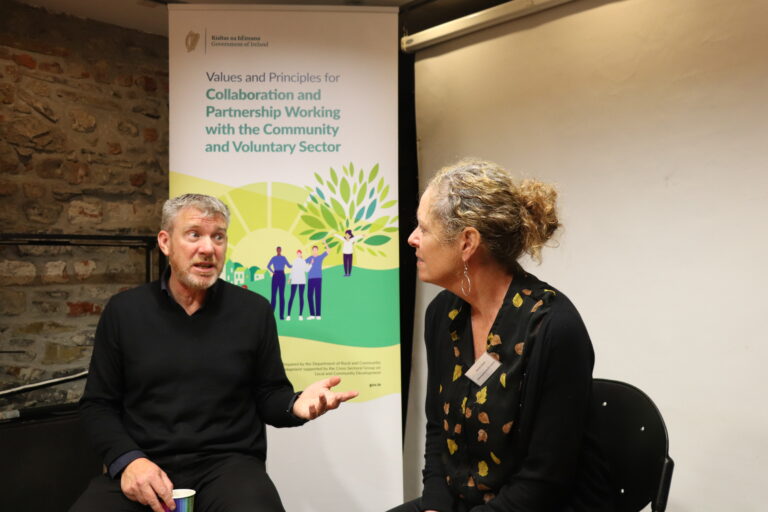
Developed by the sector, in partnership with Government, the aim is to support values such as social justice, and active participation along with principles like respect, collaboration and value for money.
From now on five values and six principles apply when local and national government is working with community groups.
It’s not law, so local authorities, agencies and government departments are not obliged to follow it, but the push is on for them to start signing up.
Remarking on the need for such a drive, Ivan Cooper pointed out that one in three people delivering public services in Ireland today work for a charity, a community group or a social enterprise. The sector, he reminded everyone, has an annual turnover of over €14 billion and employs 165,000 people. He described this as “startling” and was of the view that these figures still had not sunk in among those devising policy.
The agreed values are:
1. Social Justice.
2. Empowering Communities, Sustainable Development.
3. Active Participation.
4. Human Rights, Equality and Anti-Discrimination.
5. Social Inclusion.
The agreed principles are:
1. Respect.
2. Subsidiarity.
3. Harmonisation.
4. Value for Money.
5. Implementation.
6. Collaboration.
The launch took place in Outhouse Resource Centre in Capel Street, Dublin, an organisation supporting the LGBT+ community, their friends, families and allies.
The values and principles document relates to plans first outlined in an earlier policy document launched by the Government in 2019 called ‘Sustainable, Inclusive and Empowered Communities’.
“These will form the bedrock of engagement and collaboration going forward. I am very proud of our record in working with the community and voluntary sector, but I know we can always go further. Our mutual objective is to support and empower communities and the individuals within those communities.”
He said both sides had “come to a shared understanding” and he hailed “the values and principles that bind and drive both the sector and state.”
“These values and principles will support consultation, inclusion and participation of communities, particularly disadvantaged communities, in public policy and decision-making at all levels and forms a foundation for collective approaches to local and national issues,” he said.
“The success of this initiative will ultimately be in the realisation and embedding of these Values and Principles, and I look forward to championing them,” he added.
He said he had checked with his Department and the values and principles have been “warmly welcomed” by other government departments. It was important to spread the word widely, he said.
“A lot of people in the community and voluntary sector don’t know that the government has bought into this.
“My Department will champion these values and principles as well as ensuring they remain at the heart of all we do,” he said.
He singled out one value and one principle and quoted both in full from the document. These are the value of active participation and the principle of subsidiarity.
From now on, the document is intended to be widely used in interactions with the community and voluntary sector.
Changing Ireland sought comment after speaking to people working in the sector who reported difficulties around the recruitment and retention of employees in the sector, which is having an impact on their services and relationships. The main issue they are reporting is the loss of staff to State organisations such as the HSE, as they cannot compete with the salaries on offer.
We also asked if the Department had any information on any future plans to increase funding to Section 10, 56, and 39 organisations to help raise salaries in the sector.
In response, the Department issued the following statement:
“DRCD are aware of the challenges facing organisations in the Local Development and Community Development Sectors around the recruitment and retention of staff. However, DRCD has no funding role in respect of Section 10, 56 and 39 organisations.”
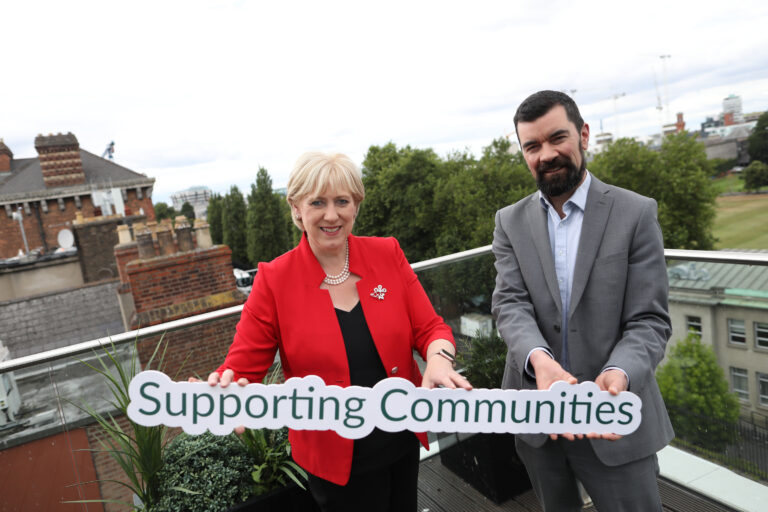
Minister for Rural and Community Development, Heather Humphreys and Minister of State Joe O’Brien, have today set out the details of the €50 million Community Recognition Fund.
The initiative is the first of its kind, and is designed to specifically support communities across the country that have welcomed and are hosting families and citizens from Ukraine and other countries. The funding aims to support the development of facilities that will be used in the future by all members of the community.
Projects that will be supported under the fund include:
The refurbishment of local sports clubs and facilities
The upgrade of community facilities such as play areas, walkways, parks and community gardens
The purchase of equipment to benefit local clubs, festivals, music and arts organisations
The enhancement of school or parish facilities that are open to the wider community after hours or on weekends
Transport infrastructure such as community vehicles and bus shelters
The €50 million has been allocated across all local authorities based on the number of new arrivals located there. (See allocations below).
The funding will be drawn down over 2023 and 2024. Projects will be delivered by the local authorities in conjunction with community organisations.
Minister Humphreys said: “The funding now being made available will support communities in developing projects ranging from sports clubs, playgrounds and walkways, to community groups in areas such as arts, drama and music. Communities the length and breadth of the country have really stepped up to the plate in recent weeks, opening their homes and facilities to people very much in need.
“This Fund is recognising the vital role our communities are playing as we continue to deal with many challenges, not least the war in Ukraine. I would like to encourage communities to engage directly with their local authorities in the coming weeks to ensure that high quality projects can be delivered, benefitting their towns and villages for years to come.”
Minister of State Joe O’Brien added: “Today’s announcement will empower communities across the country in developing projects that directly address local needs.
“Funding is available for a wide range of projects, such as the purchase of community vehicles and the enhancement of local clubs’ facilities and amenities. I am confident that this new initiative will deliver tangible benefits to communities all across Ireland.”
The Department has published the full details of the scheme (including funding allocations) here , and applications are now being sought from local authorities on the basis of engagement with local communities and clear targeting of proposed projects to areas with the highest level of need.
A green space of 27 acres that was formerly a cow park – yes, there is such a thing – is now a popular recreation spot and a thriving centre for Irish culture and heritage in the Midlands.
Dún na Sí Amenity and Heritage Park in Moate, Co Westmeath, welcomed about 60,000 visitors last year, and serves as an important social and educational hub for the local community.
More recently, it has provided opportunities for integration and inclusion in the area, with volunteers from all walks of life, including direct provision residents and students from the local school, coming together to care for the park.
The Secretary of Midlands Amenity Park CLG, Olive Quinn, told Changing Ireland how it all began: “Back in 2008, I was asked to attend a meeting. It was chaired by Frank Kelly, a building developer here in the town. He had a vision to create an amenity on what was a cow park here in Moate. A cow park is commonage land left to the people of the town to graze a donkey or a cow.
“In later years, it was taken over by the (Westmeath) County Council. As there were no people using the cow park for grazing, the council decided that they want to sell it off. So a group of volunteers approached the council. And they put forward their idea of leasing the land to develop it into an amenity for the town and beyond.”
The voluntary group took out a 100-year lease at the very reasonable rate of €100 a year. Then they raised almost €1,000,000 for the project.
“We were very fortunate to get the full amount of LEADER funding, which was over €650,000, and then our volunteers raised in excess of €400,000 to make up the difference,” said Olive.
The Heritage Park charges visitors an entry fee and features reconstructed buildings such as a ring fort and farmhouse, as well as a Teach Ceoil and a pet farm with goats, donkeys, rabbits and various birds.
• A donkey on Dún na Sí’s pet farm.
The Teach Ceoil was originally opened in 1985 by the Moate branch of Comhaltas Ceoltóirí Éireann, which joined forces with the Midlands Community Park Association in 2015.
The Amenity Park is home to a playground, a turlough, various sculptures, an arboretum and well-maintained walkways. Entry to the Amenity Park is free.
* * * * *
“Since its inception, Dún na Sí has been at the heart of the community in Moate. And thanks to many wonderful volunteers and staff, it remains so,” Olive continued.
“It operates mainly under a Community Services Programme (CSP, which is administered by Pobal on behalf of the Department of Rural and Community Development) and we’re allowed four paid staff under Pobal.
“The staff are assisted by the Community Employment workers from Monday to Friday, and volunteers step in at the weekend and look after the animals.
“For events like the Halloween event, and the Christmas event, we had in excess of 120 volunteers. Volunteers come from the direct provision centre to help at those events, and to attend those events.”
• Volunteers Maria Flanagan, Margaret Mandal, Zakaria Saidi, Olive Quinn, and Zakaria Djafer working on Dún na Sí’s new Sensory Garden
Residents of the Temple Spa Direct Provision Centre in Horseleap, Co Westmeath, have begun to play a vital role in the upkeep of the park.
Local volunteers with New Horizons refugee and asylum-seeker support group, Pamela Sheridan and Maria Flanagan introduced Temple residents to the Dún na Sí Sensory Garden in the summer of 2022. Since then a small number of residents have been coming regularly to the garden and have also supported events in the park such as the Spooktacular Halloween event and the Christmas experience.
Maria said: Their English is really improving; they’re getting to know people in the community. It’s becoming a space for them to get to know what’s happening in the community, get to know other volunteers from around the town. It’s become a space of, slowly but surely, more integration in the town.
“It’s very good for their mental health and for their wellbeing. They’re a couple of miles outside town in a very isolated part of the country. So for them to come into town and have a routine and to engage with other people is really important for them.
“We always end the evening with a cuppa and some treats to finish off the evening’s work. This gives us space to chat about local things, share experiences about our cultures and countries, get to know one another and above all have some fun.”
• Volunteer Maria Flanagan
Zak, one of the direct provision residents, said: “I cannot stay in my room all day. Every day was the same before I became involved with Dún na Sí Amenity and Heritage Park.
“Volunteering is a beautiful experience that I recommend to everyone, for me it is an enriching way of giving back to the Irish community. I got the opportunity to meet and work with my sweet friends Maria, Margaret and Olive as a team sharing tasks in the park and saving our globe.
“Collaborating with them enabled me to strengthen my teamwork skills, make beautiful friends and learn a lot in all aspects from improving my English language to embracing the culture and (becoming) somehow integrated in the Irish community.”
• Maria Flanagan, Zakaria Djafer, Olive Quinn, Zakaria Saidi, and Margaret Mandal
Temple Accommodation Centre is developing a community garden for residents and a collaborative project with Dún na Sí is in the pipeline, such as planting seeds in the centre’s polytunnel for plants that can then be planted in the park’s sensory garden.
Maria hopes that this can become a symbol, called “‘Planting seeds of hope’, showing our solidarity with our friends who are seeking asylum in our community and bringing awareness to everyone in our community of the importance of showing empathy, compassion and extending the hand of friendship”.
She also believes that volunteering in the park could eventually help the direct provision residents find paid employment.
Maria added: “They’ve got to know about all the things that are happening in the park, and can get to know about potential job opportunities down the line when they’re able to work. It helps with getting work experience, getting a reference for their CVs or applications.”
* * * * *
The Dún na Sí Irish Music and Genealogy Centre, also located in the park, gives visitors the opportunity to learn about the history of Irish music, song and dance. Music and dance lessons are also available, and the centre hosts monthly céili and ‘Rambling House’ events.
• A Viking visitor at Dún na Sí with Sinead Muldoon, Olive Quinn and Karen Nugent
Karen Nugent, general manager at Dún na Sí explained: “The Rambling House is a lovely way for older people to come together to just sit around a fire and tell stories. Just a real old Irish way of life, they’re really trying to preserve that.”
Karen stressed the importance of making the park and its events affordable for all: “We’re very conscious of how we price things so that it’s affordable for everybody. We have family price tickets, so we can ensure that families are visiting the park. We normally have a Family Fun Day in the summertime. We had our Halloween event and our Christmas event.”
* * * * *
The Amenity and Heritage Parks are in a constant state of development. Work on a sensory garden is currently underway, and an app was launched last August.
Karen added: “The park has 18 attractions and ten are on the app. People can download it and have a look at what’s in the park even before they go. We have a lot of local stories on the app as well, local history around the mass rock and different things like that.
“We also are just starting to open to external events. The park is so popular and it’s such a beautiful space. When people come in they see the potential of actually holding events there.
“It’s gaining traction all the time. It’s got fantastic potential; we’re just working over the next few years to get the word out there just to get more people knowing about it.”
• TV chef Donal Skehan with Dún na Sí’s sculpture of Lugh
TIMELINE – Moate’s Dún na Sí Amenity and Heritage Park
1985 – The Moate branch of Comhaltas Ceoltóirí Éireann (CCÉ) opens a centre for Irish culture called An Teach Ceoil and, the same year, the Dún na Sí Folklore Group was established.
1989 – Westmeath Genealogy project begins.
2001 – Moate Heritage Company is established so that it can host a team of Community Employment workers.
2006 – A rural museum opens in the park.
• The Rural Museum in Dún na Sí Amenity and Heritage Park
2007 – Midlands Amenity Park CLG is formed and the cow park is leased from Westmeath County Council for 100 years.
2013 – LEADER funding comes through. In January, landscaping of the Amenity Park begins and the park opens to the public later in the year.
2015 – The area is renamed the Dún na Sí Amenity and Heritage Park after a formal partnership is agreed between Moate CCÉ and Midlands Amenity Park CLG. Dún na Sí is Irish for “the fort of the fairies”.
2018 – Midlands Amenity Park CLG is awarded long-term funding support through the national Community Services Programme; this means the project can take on four staff.
2021 – Dún na Sí is awarded €126,000 under the government’s Outdoor Recreation Infrastructure Scheme to renew to renew outdoor infrastructure, to repair and develop the paths and to improve toilet facilities.
2022 – An Teach Cheoil is allocated €76,810 under the Government’s new Community Centre Investment Fund. The funds are for roof repairs, wall insulation, a heating upgrade and better lighting.
2023 – At least 60,000 people are expected to visit the park this year, a decade after the park first opened to the public.
Meanwhile, Moate residents had more cause to celebrate last year when a long-sought after playground opened in Mount Carmel Drive. Our report on how volunteers made it happen with support from Westmeath Community Development:
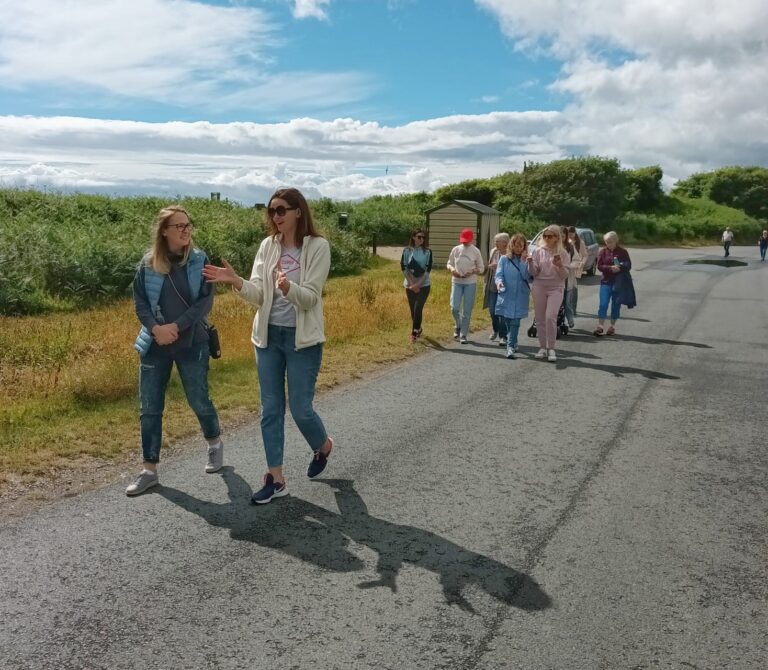
Julia told Changing Ireland: “The Walk and Talk was my idea. I’m living in Ireland 13 years and from my experience, if you’re learning English in a class, everyone has a barrier. But when you’re walking and talking with people, it’s a different situation, it’s much easier to talk to people and to jump this barrier.
“We have loads of Irish volunteers. Irish people like walking and running; it’s not hard to find Irish volunteers. These days with the bad weather, it has turned into a conversation club that we hold indoors. But that makes it more complicated, we need to find a space to hold it.”
“The Walk and Talk was more aimed at Ukrainians, a lot of Ukrainians arrived at the Taravie Hotel in Courtown. But we now have Syrians and other different nationalities coming to the conversation club. We will continue the Walk and Talk in Gorey after the Christmas break.”
Julia goes above and beyond to assist her fellow Ukrainians, often answering queries in the evenings and at weekends.
“People have so many questions. They need help with translation, with going to the GP or hospital. It’s not my role, my role is really to organise activities for them, but I do it because they need help,” she explained.
Some of the events Julia has helped to organise so far include Christmas parties at the various hotels where Ukrainians are living, a concert in Enniscorthy celebrating Ukraine’s Independence Day in August, as well as children’s entertainment.
She added: “Some of the stories that you hear are heartbreaking. Some kids and adults have big trauma. We have started a psychology programme for them with Ukrainian psychologists, and that is helpful for them. Most of them have settled in well in Ireland, the help Ireland has given has been very good. But lots of people are waiting for victory and want to go home.
“Being a refugee doesn’t mean you have no money. Some people had huge businesses, they had good jobs and they lost everything, they just took their kids and left. That’s very hard mentally, when people were on good money and they can’t work now because they can’t speak English. I moved countries because it was my decision. Coming to a different country because of war is very different.”