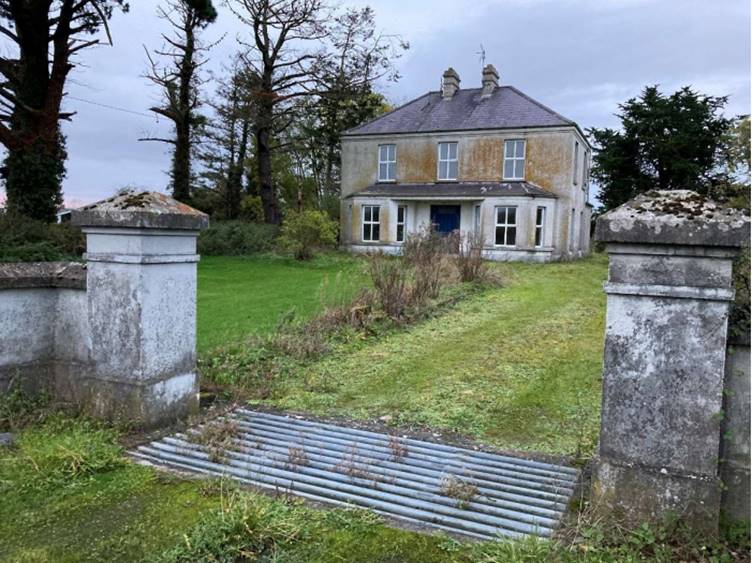
Every local authority in the country can apply for funding of up to €500,000, which they can use to purchase up to three properties to redevelop.
Funding previously announced under the scheme saw former banks, courthouses, Garda stations and FCA halls all purchased and repurposed for 21st century use.
Presentation Convent, Bagenalstown, Co Carlow, one of the buildings acquired under last year’s initiative
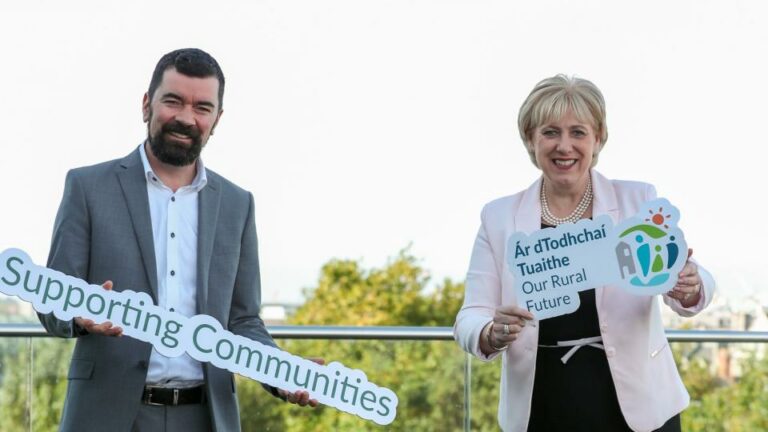
Minister for Rural and Community Development, Heather Humphreys, said:
“This is all about building on the momentum that ‘Our Rural Future’ has delivered. It’s a huge opportunity for us all to work together in tackling the scourge of dereliction and transforming old run-down buildings into facilities that will benefit communities for generations to come.”
Since the launch of the Town and Village Renewal Scheme, over €149 million has been allocated to more than 1,600 projects.
Applications under the Building Acquisition Measure must be submitted by April 28; further details can be found here.
Former Bank of Ireland Building, Lismore, Co Waterford
Entry for these is open to all TidyTowns groups as well as other interested individuals or groups.
The Special Awards include the Climate Action Award, with a prize fund of €6,000, sponsored by the Department of Environment, Climate and Communications.
This award aims to recognise the input local communities can make in addressing climate change, to raise awareness of climate action, and enable local communities to promote behaviour change in the wider community.
The Local Authority Pollinator Award offers a prize fund of €10,000. It aims to encourage TidyTowns groups to implement pollinator-friendly actions in their towns and villages as part of the TidyTowns competition.
The other Special Awards are: Tree Project Award (€1,000); Gum Litter Taskforce Award (€5,000), Young Persons in TidyTowns Award (€5,000), the RIAI Town Challenge Award (€5,000), SuperValu and AsIAm Inclusive Communities Award (€2,000), RIAI Good Windows Award (€500), Leave No Trace Award (training valued at €1,100), Sustainable Development Goals Award (€6,000), Waters and Communities Award (€7,000), Heritage Award (€3,000), EPA Circular Economy Award (€2,000), and the Tiny TidyTowns Schools Award (€5,000).
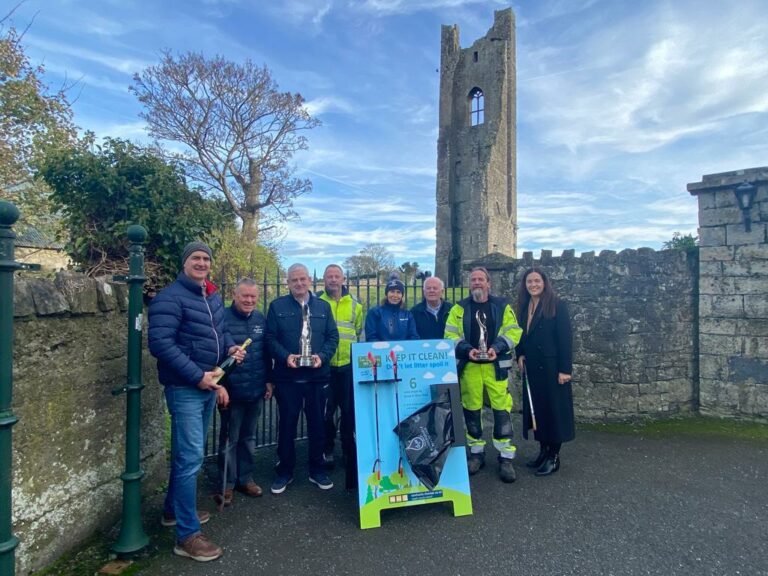
Minister for Rural and Community Development, Heather Humphreys, in association with the Managing Director of SuperValu, Ian Allen, yesterday (23 March 2023) launched the 2023 SuperValu TidyTowns competition.
Speaking in Trim, Minister Humphreys said: “This year we celebrate 65 years of this fantastic competition, which has become part of the fabric of Irish society. The saying ‘ní neart go cur le chéile’, which means unity is our strength, really sums up what SuperValu TidyTowns is all about. Once again the focus this year will be on bringing communities and TidyTowns volunteers of all ages together as we effect real change and make our towns and villages better places to live, work, visit and raise a family.”
Also speaking at the launch, Ian Allen, Managing Director of SuperValu, said:
“What makes SuperValu TidyTowns special is that it truly shows the power of community and how collective small actions can make a big difference toward ensuring our communities are more sustainable places to live, work and play for generations to come. Every year, 29,648 volunteers across 924 committees give over three million hours of their time to SuperValu TidyTowns – this is a phenomenal effort.”
The closing date for receipt of entries for this year’s competition is Wednesday, May 10. Entry to the competition will only be accepted by email to tidytowns@drcd.gov.ie
For full details on the TidyTowns competition, see www.supervalu.ie, or for more on the Special Awards, see https://www.tidytowns.ie/competition/2023-special-award-entry-forms/
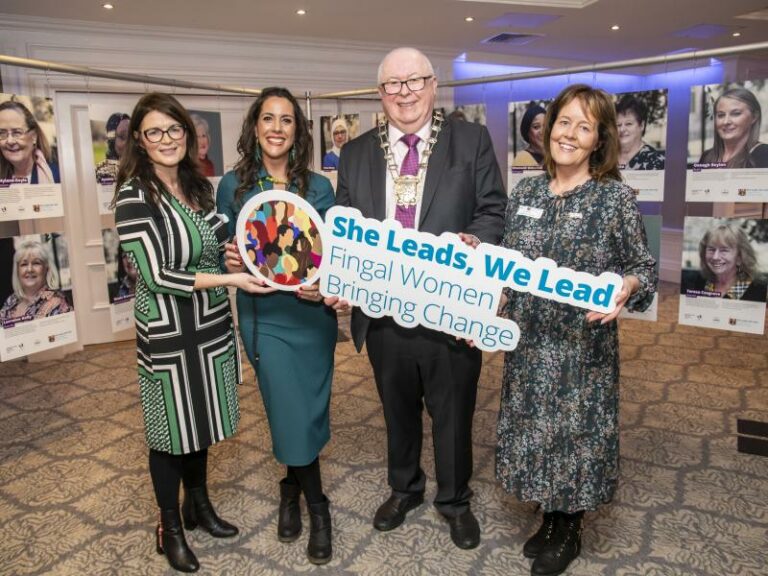
It recognises and celebrates the leadership of women in a visual way and serves to inspire others to take an active role in their own communities.
The exhibition, launched as part of International Women’s Day celebrations, features 45 photos and stories showcasing the leadership of Fingal women in their communities.
The project was led by Fingal County Council’s Community Development Office and the She Leads Advisory Committee.
All photos were taken by a volunteer photographer, Monica Manzzi, a member of the advisory committee.
Sinead Wiley, Fingal County Council Senior Community Officer, explained: “Women tend to not recognise themselves as leaders. With the programme we aimed to help them recognise their leadership role and give them the skills to work effectively as leaders.
“I felt that there was value in recognising the leaders we have in our communities, and putting a spotlight on who those leaders are. Monica wanted to do something visual, and it just took off from there. We put a call out across the county and got responses from 45 groups.”
When the 45 nominated women gathered together, Sinéad revealed that some were still reluctant to acknowledge their role as leaders, saying “I don’t know why I’m here”.
“On the opening night the women were saying they felt so empowered, seeing their photographs and seeing themselves described as leaders. Then you had other women looking at this, identifying themselves as leaders as well, they’re saying ‘I do this in my own community’.”
Sinéad says there are currently no other women’s leadership programmes like She Leads We Lead in other local authorities, as it focuses on community groups or local events, rather than on political or council leadership.
The She Leads, We Lead programme aims to strengthen women’s leadership in Fingal and particularly explores the achievements, challenges and opportunities that women experience in community action.
The programme commenced in March 2021 with A Conversation on Women’s Leadership in the Community, a series of online conversations with women active in leadership in Fingal.
In November 2021, Fingal She Leads, We Lead organised a nine-week Women’s Leadership Induction in Blanchardstown. This training was led by local women leaders in Fingal and introduced participants to leadership skills and resources.
A one-day Community Leadership Women’s Programme was subsequently held in Balbriggan in June 2022, focusing on an introduction to leadership including types of leaders, communications skills, supporting volunteers and the challenges of working with teams.
In November 2022, Fingal She Leads, We Lead was joined by Dr Lucy Michael and AwakenHub co-founder Mary Carty in Swords to talk about women’s leadership, the importance of networking and influencing decision-makers.
The programme looks at the various ways women take leadership in their communities, including: Grassroots leadership, which involves organising events, leading neighbourhood groups, or advocating for specific issues; Advocacy leadership, or working to raise awareness about specific issues and advocating for change; and Professional leadership, where women use their expertise by serving on boards of non-profits, mentoring young women, or supporting community-based initiatives.
Photographer Monica Manzzi
The photographer Monica Manzzi is a Uruguayan photographer living in Ireland for almost 20 years. She is an active participant of the Fingal She Leads Women’s Leadership Programme, and is also a Spanish/English interpreter, journalist, and self-taught artist.
The exhibition is currently on public display in Fingal County Council, County Hall up to Friday March 31. The exhibition will then be displayed in local Fingal Libraries from April to May 2023. It can also be viewed online at on the Fingal Website
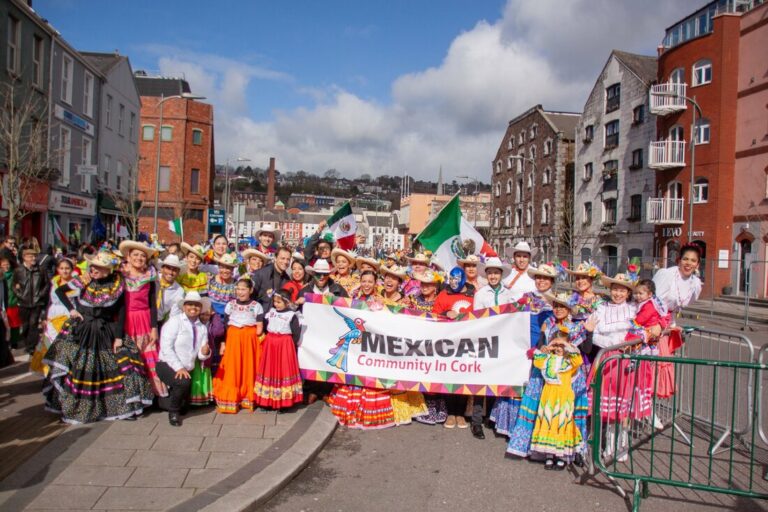
Members of the group include professionals working for multinational companies in Cork, Mexicans who moved here with Irish partners, and students at UCC and other third level institutes in Cork. Families who have adopted children from Mexico also participate in the group’s activities.
Mexican ex-pat Karem Kollar in Bantry has been living in Ireland for 17 years. She told Changing Ireland: “I came here because of my husband who moved here from Hungary. There are about 150 people from Mexico in the group. There are actually a lot of Mexican people in Cork. We have a shop in Cork city and it sells products all over Ireland.
Fun with pinatas at a celebration held by the Mexican Community in Cork
“We participate in a lot of events. We held a party for Mexican Independence Day in September and about 150 people come to that. We hold a Christmas party in December. We participate in the Shandon Street Festival and we represent Mexico in the St Patrick’s Day Parade in Cork.”
Karem said it is “very important” for Mexican people to be able to attend events together and socialise with their compatriots.
“I have two kids and I want to show them my food and my culture, and for them to be able to speak Spanish. We show them pinatas, we play games, we show them how we celebrate Mexican traditions. It’s nice for me to speak to other Mexicans as well, and to speak Spanish.”
According to Karem, the group is also an important source or information and assistance for Mexicans who have recently relocated to Cork.
“We help other Mexicans arriving in Ireland with anything they need. We help Mexican students to find accommodation and things like that. We like to help each other; Mexican people in Cork know there is always somebody there to help. When we have parties, everyone helps out with food or making decorations,” she concluded.
Mexican food forms an important part of the group’s events
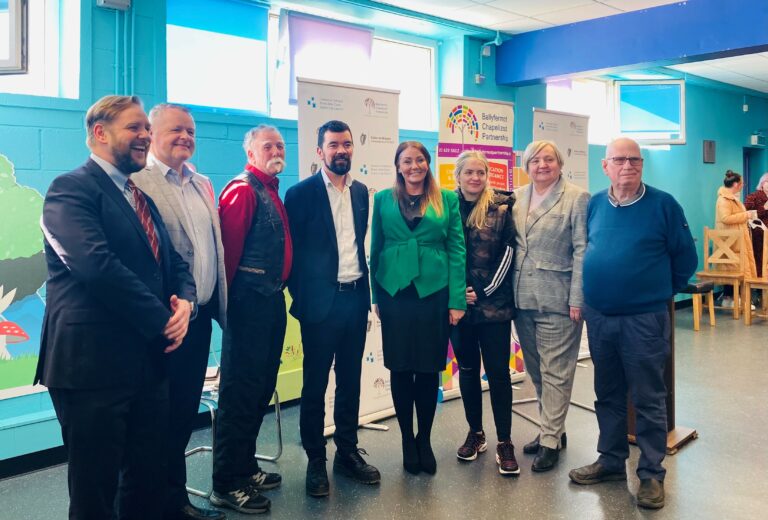
As part of this programme, a Community Engagement Worker will be recruited for Cherry Orchard to develop and facilitate relationships between community stakeholders, community groups and statutory agencies and structures.
Ballyfermot Chapelizod Partnership (BCP) welcomed the announcement, saying: “Cherry Orchard has experienced many challenges. The Empowering Communities Programme will facilitate street-level engagement with residents to identify and develop actions to strengthen the community as a whole as well as improving the quality of life of those living locally.”
CEO of BCP Anne Fitzgerald added: “The development of the programme will build on other initiatives funded by the Department of Rural and Community Development in Cherry Orchard, including the Social Inclusion and Community Activation (SICAP) Programme and the work of the Cherry Orchard Development Group as well as aligning with and complimenting other funded initiatives in the area such as the HSE’s Sláintecare Healthy Communities programme and the Tusla-funded Family Matters area-based childhood programme.”
Speaking at the launch, Minister O’Brien said: “The ECP targets specific small areas with an intensive, one-to-one approach led by community engagement workers, tackling the very significant impacts of poverty and disadvantage in local communities.
“We have seen the effects on communities when people are deprived of a voice. No one knows better what the specific challenges facing Cherry Orchard are than the people of Cherry Orchard, who experience the consequences of these challenges in their daily lives.
“Being a part of the Empowering Communities Programme will ensure the voices of the Cherry Orchard community are foremost in addressing the issues impacting the local community.”
He also acknowledged the vital role that Community Engagement workers play in the programme.
“Building relationships within and between local communities is critical to tackling social exclusion and disadvantage and the new engagement workers here in Cherry Orchard will ensure the programme is driven by the community first and foremost,” Concluded Minister O’Brien.
The ECP programme initially focused on 14 small areas across the country experiencing significant disadvantage, which are identified using the Pobal HP deprivation index.
€2 million funding was initially secured to design and implement the programme, and additional funding of up to €150,000 has now been approved for the expansion of the programme to Cherry Orchard.
“A part of it was wanting to integrate into my new religion, but also wanted to reintegrate into Irish society. I had people say to me ‘Go back to where you came from’. Where do they want me to go back to? North Dublin? It was a very traumatic time in my life,” she explained.
Lorraine decided to take some time out and spent five years volunteering with women’s organisations. She also returned to education, completing a course in Women’s Studies.
In 2010 the Muslim Sisters of Éire was born.
“Myself and a few other women got together, we put whatever money we had into a cup and said ‘There’s the kitty, now what can we do?’”
According to Lorraine, the group has gone from strength to strength since and “achieved milestones that we never thought we’d achieve”.
She added: “The growth we’ve seen in the women has been amazing. Some who had been afraid to have a voice are now leading this organisation in many different ways. We also have non-Muslim women working with us, who didn’t understand much about Muslims before and are now seeing us in a different light. We’re opening up dialogue about diversity, and integration and understanding.”
Members of the Muslim Sisters of Éire
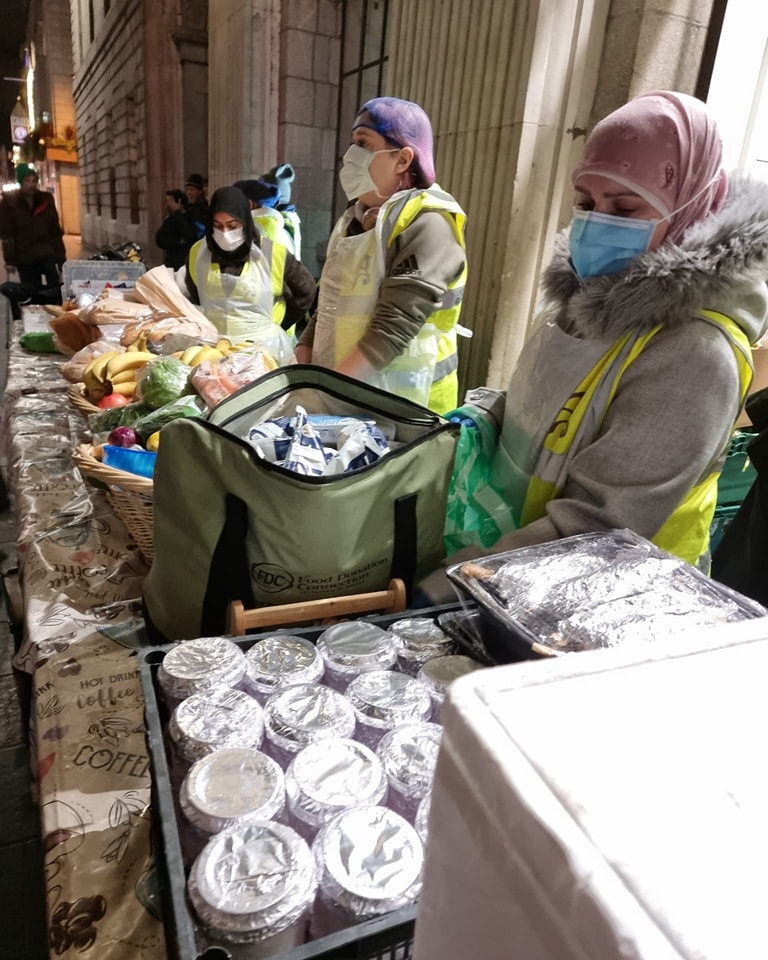
The Muslim Sisters of Éire are probably best known for their charity soup run, and are a familiar sight on the streets of Dublin providing hot meals to people experiencing homelessness.
Lorraine continued: “Charity work is one of the five pillars of Islam. This is now the seventh year of the soup run. The Irish public have been just amazing. It didn’t happen overnight, but our biggest supporters are the Irish people. Irish people have always been very generous, they are the backbone of the Muslim Sisters of Éire.
“When people were at their lowest point, during the pandemic, we were getting lots of phone calls from non-Muslims looking for help. Our organisation is called the Muslim Sisters, but when we get a phone call asking for help, our response is not based on religion, it’s based on empathy. We ran a Christmas trolley appeal with Tesco to help make sure families had enough food, even though we don’t celebrate Christmas.
“On Christmas Eve we go out with 150 backpacks for homeless people. In those backpacks there is a hygiene kit, a scarf, hat and gloves, a first aid kit, a pop-up tent and a sleeping bag. We call it a bag for life because it can be the difference between life and death,” said Lorraine.
The members of the Muslim Sisters of Éire come from diverse backgrounds from all corners of the world – Mauritius, Somalia, Palestine, Bosnia and Pakistan, to name a few.
“We ran a multicultural day during the summer, and we had cakes from 26 different parts of the world. Muslim Sisters of Éire is for Muslim sisters from all over the world who now see Ireland as their home. The diversity within Islam is beautiful. You don’t see someone’s race or where they’re from, you just see another sister.”
Their charity work doesn’t end with the soup run, as the Sisters also help to provide Muslim families in need with food and gifts for children for Eid al-Fitr, otherwise known as the Festival of Sweets, at the end of Ramadan.
Leading up to Eid, they distribute gifts to children living in Direct Provision and assist Muslim men in hostel accommodation who have no access to a kitchen at night to break their fast.
The organisation also plays a role in encouraging discussions between Muslims and non-Muslims.
“For World Hijab Day on February 1st, we brought together women who wear the hijab and women who don’t wear the hijab for a conference of understanding. The hijab can be seen as oppressive, but actually when you make the decision for yourself to wear it, it can be very liberating,” said Lorraine.
The group also organises an interfaith Iftar during Ramadan, where Muslims break their fast with non-Muslims after the sun sets.
The Muslim Sisters of Éire’s other activities focus on youth development, with summer camps open to Muslim and non-Muslim girls. They advocate for women’s health issues, such as period poverty, domestic abuse and breast cancer, and work to promote a better understanding of Islam with school visits and cultural awareness training.
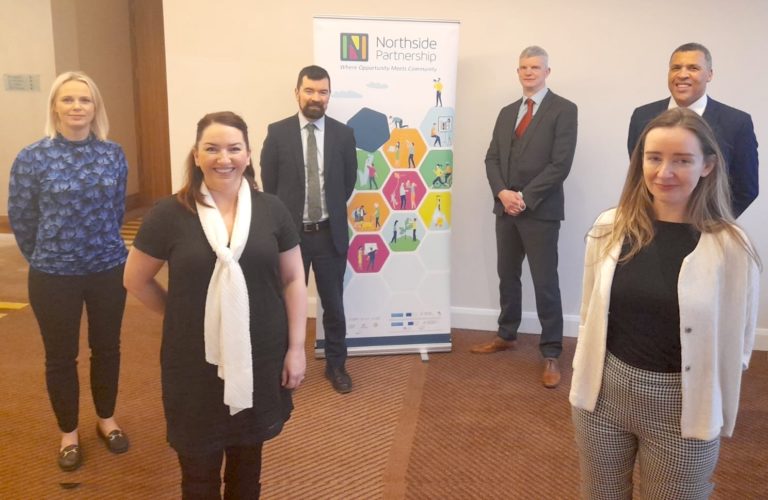
A total of 24 participants – 12 in each area – are currently taking part in the 18-month project, which was supported by €188,650 in funding from the Department of Rural and Community Development.
In Darndale, the programme is delivered by Northside Partnership, while in Drogheda it is administered by Louth Leader Partnership.
Darndale resident Tamara Kearns is getting a lot from being a participant. She works with Northside Partnership (on its Healthy Food Made Easy project) and says:
“It’s the best thing I’ve ever done. We’re a year into it now and I’ve learned so much and made so many connections.”
“We were introduced to each other just as people, not as their job title or organisation. It’s about building connections with other services and residents. It’s a different mix of everything and there have been a lot of boundaries broken down. It brought everyone together; residents were introduced to all the services that are provided, and we support each other’s services.
“There are still a lot of boundaries in the way, but the programme gives you the skills to think outside the box to see how you can work around them. You see the faces behind the services, and you realise that we all want the same thing, just some people might have a different way of going about it.”
• Tamara Kearns has learned to think “outside the box”.
Tamara says one team-building exercise made a particular impact on her.
“We were put into groups and they asked us to build straw castles. We were given straws and masking tape and had to work as a team and the goal was to have a castle that was still standing at the end of it. At the end we realised that we could have all worked together, instead of in our groups. We would have had loads of hands to build one big castle. So that was about teaching us to think outside the box,” she said.
The participants have already reached out to other local residents and held a meeting to discuss the local issues they are concerned about. According to Tamara, the challenges include a lack of a meeting space for local organisations.
She said: “We have lots of different groups in the area. It’s a fantastic area for sports, but we have no general meeting space. Like the women’s group has nowhere they can just meet up and have a cup of tea and a chat. There’s lots of requirements before they can do that, you need to look at insurance, you need to be set up as an organisation. And they don’t want to do all that.
“I do understand that there has to be protocols, but at the same time, that means you’re putting things on the long finger.”
Tamara concluded: “The whole thing has been very eye-opening for me, I’m really glad I’m doing it and I’d definitely be up for doing more. It’s run very smoothly. Rob and Dearbhail in Northside Partnership are fantastic. The connections that I’ve made have really helped me to settle into my new role.”
GREAT WAY TO NETWORK
Paul Kirwan, a health promotion and improvement officer with the HSE, is also participating in the course.
He explained: “When I started in my role in the HSE I was assigned to the Coolock Area Network, and Darndale falls within that. I’m from the area so I was very familiar with it.
“The Northside Partnership circulated their leadership course to everyone. I thought it would be a great way to network, and get to know people who were already working in the area. It’s very broad. I wasn’t sure what to expect at first. There’s a good mix of people – residents, community services, Tusla, Northside Partnership, youth services, the guards.
• Paul Kirwan learned to take off his HSE hat.
“I thought it might talk about: ‘How does my service fit in with your service?’ but it’s not about that. It’s showing people how to be leaders in their community. We practice exercises around teambuilding and building trust, and we’ve been having those difficult conversations. It’s not targeted at anti-social behaviour. It’s targeted at how to build the leadership skills of all people in the area to help shape the area for the better.”
According to Paul, the course is helping the participants to see the bigger picture, as opposed to the individual goals and agendas of their respective organisations.
He added: “My role in the HSE had been shaping how I was viewing things. But in the course, I can take off that hat and look at things as a resident.
“The programme isn’t built for any specific service. It’s about upskilling us as individuals, how to think differently. Everyone learned to put aside their own agendas. You need to put your agendas aside to really be able to collaborate.”
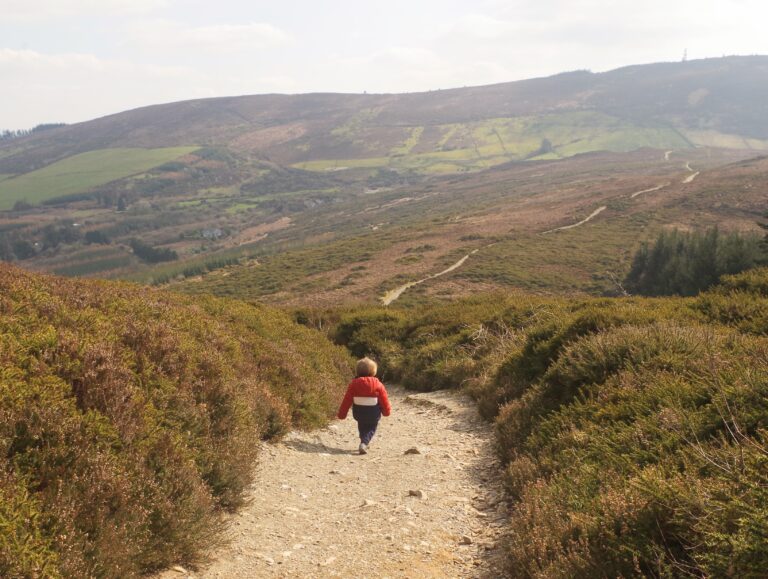
The initiative is designed to boost outdoor recreation and rural tourism, and will see the Scheme work with over 2,500 farmers to open up the countryside to walkers, hikers cyclists and tourists.
Under the Walks Scheme, funding is provided to farmers and other landowners to maintain the trails that travel through their holdings.
At present, 2,200 farmers or landowners are participating, with Minister for Rural and Community Development Heather Humphreys recently opening up a new call for expressions of interest.
Minister Humphreys stated: “Our walkways and outdoor trails showcase the unique beauty of our rural towns and villages. They attract millions of visitors every single year and provide people of all ages with the opportunity to get out for some exercise and fresh air.
“This is all about partnering with farmers and landowners to open up the countrywide – benefitting our walkers, hikers, cyclists and tourists alike. There are already 2,200 farmers and landowners involved in the scheme and I want to thank them for facilitating access to these fantastic trails.”
She added: “I want this expansion to focus on counties which have few or no trails approved under the Walks Scheme. I am also committed to reviewing the number of Rural Recreation Officers currently funded by my Department to deliver the Walks Scheme, particularly where a county is approved a trail under the Scheme and where there is currently no Rural Recreation Officer in place.
“I would therefore encourage potential applicants such as trail management committees, community groups or other similar entities to contact their nearest Local Development Company to make an expression of interest for inclusion in the scheme.”
The conference, entitled ‘Towards Equity: Recognising Migrant Women’s skills, Innovation and Maximising their Potential’, will be held at LinkedIn in Dublin 2 from 10am to 1.30pm.
Dr Salome Mbugua, CEO of AkiDwa (which stands for Akina Dada wa Africa, Swahili for sisterhood), commented: “ESRI research shows migrant women are highly educated and qualified, however majority are working in jobs that does not match their qualifications. Meanwhile, others are unable to access employment at all and experience exploitation and discrimination working in the informal economy. They are facing many barriers that are preventing them from reaching their full potential.”
The event is free to attend, and will focus on topics such as: innovation, access to employment, civic engagement and political representation, while discussing how to achieve equity for migrant women on these areas.
The conference will hear from a number of migrant women, including Evelyn Nomayo, an Afro-Irish developer and the founder of Phase Innovate, who worked with a group of teenage girls in 2020 to produce an award-winning app ‘Memory Heaven’, which assists patients with dementia.
Hundreds of groups have already benefitted under the scheme, which was launched last year in response to the rising cost of energy and the impact it is having on the sector.
Now, a further 134 groups are to receive grants as part of an overall investment of almost €189,000. Payments will issue to the organisations immediately.
The funding brings the total number of organisations supported under the initiative to 552, with over €705,000 now disbursed.
Announcing the funding during a recent visit to Enterprise Castlerea in Roscommon, Minister Humphreys said:
“Although the winter months are behind us, energy bills remain high and this is posing particular challenges for our community and voluntary sector. The grants being announced today may be small in nature, but they will give a bit of breathing space for groups that deliver essential services, supports and facilities to communities all over Ireland. Today’s investment means that over 550 groups have now been helped under this scheme, which remains open for applications until 24 March. I am also pleased to extend the Scheme to Section 39 organisations. Our communities depend on these organisations, and it is only right that we do what we can to support them.”
Minister O Brien added:
“I hope the funding announced today, together with the expansion of the scheme will go some way to addressing the current pressures brought by increased energy costs and enable the organisations to get on with providing vital services and supports. The inclusion of section 39 organisations will ensure that these organisations are treated on an equal basis as all other organisations in the sector. Further tranches of funding will follow shortly. We are also keeping the application process open until 24 March to give all eligible groups in the voluntary and community sector the opportunity to apply for support.”
Expansion to include Section 39 organisations
The Ministers also confirmed that the scheme will remain open until March 24 and will be expanded to include organisations in receipt of Section 39 funding from the HSE.
This is to ensure that community and voluntary organisations and charities that are part funded by the HSE under Section 39, receive the same levels of support towards energy costs as non-Section 39 organisations.
Such organisations will be able to seek additional funding to meet any shortfall in the top-up funding they receive from the HSE or Department of Health, up to the level that is approved for other community and voluntary organisations, under the CVESS.
The Ministers also confirmed that the scheme is now open to incorporated community and voluntary organisations or charities who have been refused support under the Temporary Business Energy Support Scheme (TBESS), on the grounds that they are engaged in passive trade. Such organisations should apply in the normal way, providing confirmation from the Revenue Commissioners that they are ineligible under TBESS.
All the information is on the Pobal website and a dedicated helpdesk can be reached at energyscheme@pobal.ie
The government is urging householders and businesses to ensure that they are availing of the supports that are in place. For more information visit gov.ie/reduceyouruse.
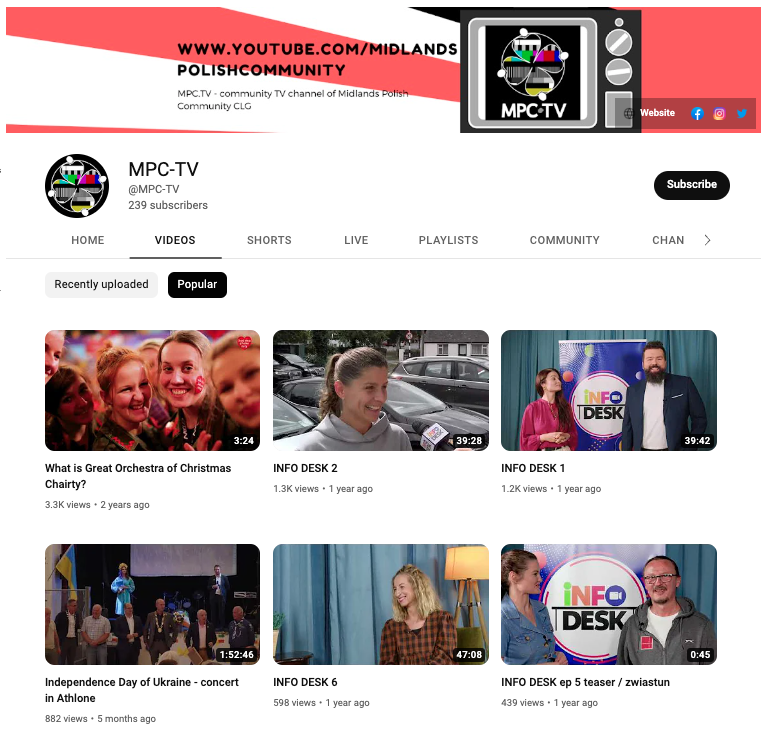
The Athlone-based community group for Polish people has fully embraced new technology to reach their fellow countrymen in the Midlands and beyond.
The Midlands Polish Community CLG was established in 2018 by a small group of volunteers. In 2020, with the country in lockdown, the group set up its own YouTube channel, MPC-TV, to help keep Polish people informed. The group’s president Slawek Kazek said the channel is “working very well” with many of their events now live-streamed.
“In 2020, we had an informational project for Polish migrants. We invited experts, Polish people who are living in Ireland, for example: a nurse, a Polish GP, a guy from SIPTU, a Polish accountant, a Polish lawyer. We recorded I think 10 episodes of the programme.”
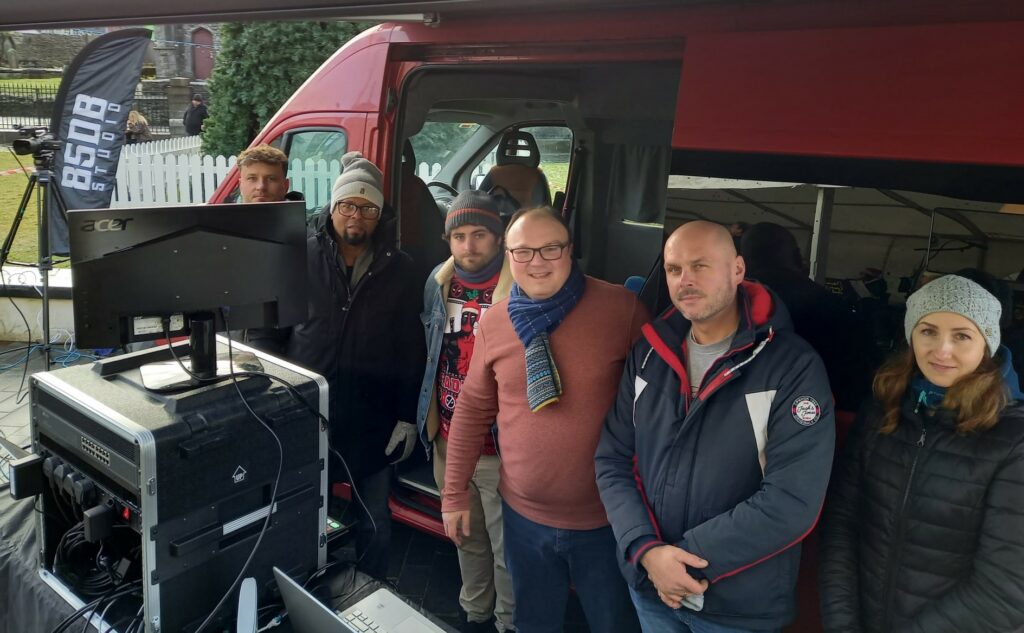
• Members of the Midlands Polish Community Youtube channel subgroup. The group’s president Slawek Kazek who spoke to Changing Ireland for this story is pictured in the centre (smiling/wearing a scarf).
The group reached out to a television company in Poland for tech advice and have benefited from the assistance of volunteers with experience in the industry.
Over Christmas the group reached out to the volunteering centres in the Midlands.
“We got replies from four different volunteer centres. A guy who worked professionally in TV in Brazil, and is now living in Dublin, drove to Athlone to help us to do a livestream from the Christmas market in Athlone.
In January, two Polish actors travelled to Athlone for a charity fundraiser, which was also livestreamed on the Youtube channel.
Slawek said, “Our video editor, who has her own video creation business, is from Limerick. We use her skills if we need to. I’m really passionate about it; it’s a fantastic opportunity.
“Maybe it’s niche, but there’s so much happening in the Polish community and you know, RTÉ won’t travel from Dublin to Athlone to do a production on the panto or whatever.”
Ultimately, Slawek would like to set up a community TV channel, but the regulations are a hurdle.
“I looked into the rules on how to set up a properly licensed community TV station in Ireland. Don’t go there, basically! The BAI – the Broadcasting Authority of Ireland – is a dinosaur. The regulations are out of the 1950s. So that’s why everyone is on YouTube. But who knows what’s going to be in the future?” he said.
• The Broadcasting Authority of Ireland as Slawek Kazek sees it – a dinosaur like the ones in Tayto Park. It needs to modernise.
As well as operating their Youtube channel, the Midlands Polish Community organises various events and fundraisers throughout the year.
“We exist because we believe integration is crucial in modern Irish diversified communities,” said Slawek.
“We have our registered office and a drop-in centre on the outskirts of Athlone. We operate in the major towns in the Midlands – Athlone, Mullingar and Longford – all the projects are really happening in those locations.”
• Polish Independence Day celebrations with the Midlands Polish Community group.
“The integration is twofold; it’s integration of Polish people who are scattered in rural Ireland between different localities. It’s not like in Limerick, Cork or Dublin where you have thousands of Polish migrants living in one place.
“Our aim is to integrate Polish people, and have integration with organisations in the community. We are trying to organise different events so people can exchange thoughts, culture, create some emotions, etc.”
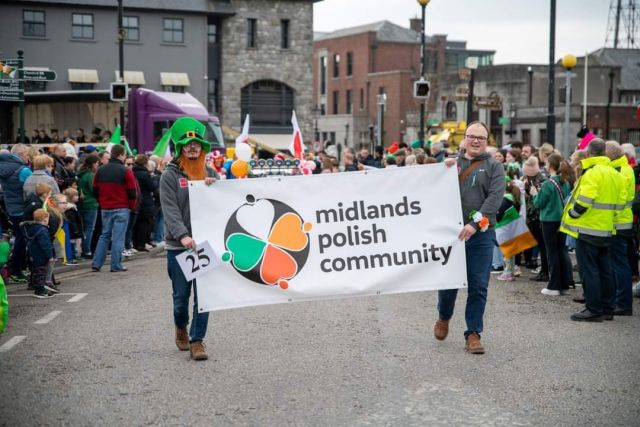
• The Midlands Polish Community won a special community award for participation in the St. Patrick’s Day Parade in 2022 in Athlone.
The group’s website features content in both Polish and English, encouraging integration.
The Midlands Polish Community sometimes joins forces with groups of ex-pats from other parts of the world. Last year, a darts tournament was held with the Longford African Community, and a group of Brazilian nationals living in the region.
The organisation also holds events to celebrate important dates on the calendar such as Polish Independence Day on November 11.
Slawek concluded: “We organise Children’s Day in Drum Community Centre every year, Women’s Day in March – it’s not as popular in Ireland, but in Central Europe and Eastern Europe it is quite popular.
“It’s important, because there are certain dates that are very familiar to the migrants from Poland that are not maybe celebrated in Ireland as much. Our events are open for everyone. We are well known in this region and what we have actually noticed is that more and more Irish people are getting to know us and our work as well.”
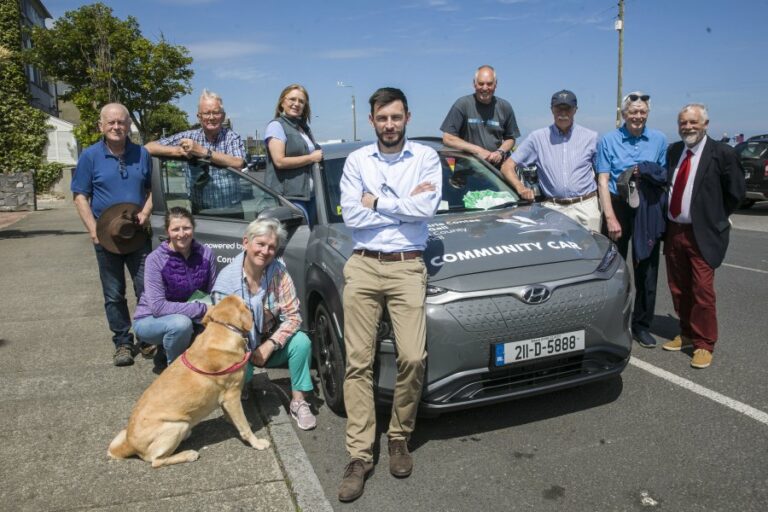
The project is a partnership involving the Local Link Transport Co-ordination Unit for Louth, Meath and Fingal; Fingal County Council; Age Friendly Skerries; and car hire company GoCar, which provides the vehicle – an all-electric Hyundai Kona.
Since its launch, the Skerries Community Car has completed more than 600 trips – an impressive feat considering the service was put on pause for several months at the beginning of the Covid-19 pandemic.
Patricia told Changing Ireland: “You look at a place like Skerries and say, ah sure they’re all right, they have buses going to Dublin every day, and they can get to Balbriggan. But the problem is the distance between the house and the bus stop. And then when you get off the bus, where do you go from there? They’re the pinch points on a transport system.”
According to the 2016 census, about 25 per cent of the population of Fingal and its environs were over the age of 55. Patricia believes that down the line, this will create a need for several more community cars.
Currently, about 150 people, mostly aged over 55, are registered with the service, and about 40 volunteer drivers have been trained and garda vetted.
“Age Friendly Skerries helped us to identify passengers and they also helped us to identify volunteers. It’s easy to book; passengers ring us here in the office. And the first interaction they have is with a human, and our phone number is free. We contact our drivers and ask them if they can do trips. Then the drivers use the GoCar app to book the car,” explained Patricia.
Safety
“Safety for people is a big thing. Our volunteers make contact with passengers before they travel so that they’re very aware who they’re going to meet.”
That helps them sleep better the night before their first journey in a community car.
“It’s a real trauma for some people. They need transport and they don’t know where to go. And then when they find us, they fear that the car isn’t going to turn up or that it’s going to be late.”
Passengers are asked to give a small donation on all volunteer-led services run by Local Link Louth Meath and Fingal. Patricia says: “The reason why we look for a donation is not to make money on it. But it’s to make sure that people understand that there’s a value on what they’re getting. For the Skerries scheme it’s €3 to go down the town and €10 to go to the hospital. We say to people that if for whatever reason they can’t afford the donation, that’s not a reason not to travel.”
The organisation also oversees a scheme in other parts of Louth, Meath and Fingal where volunteers drive their own cars. Local Link helps to match passengers with drivers living in their area or as close as possible. Volunteer drivers in this scheme receive a travel allowance for diesel or petrol costs, and for wear and tear on the car.
The impact of the community car scheme goes further than helping people to attend hospital appointments.
“It supports community. It also supports health services. And it means older people can live better at home, and they can stay at home for longer. And it means then that their family members can participate fully in employment, or do whatever they used to do, without having to take a day off here or there,” noted Patricia.
• Aidan Herron and Eric Byrne are volunteer drivers with the Skerries Community Car.
Volunteers say it’s humbling how grateful people are
Volunteer Aidan Herron from Skerries signed up to drive the community car after spotting an ad in his local shop.
He told Changing Ireland: “Most of the drivers are retired people who are looking for something to do. It’s a nice thing to do, and you meet lovely people; you hear some great stories.
“If you have to do two to three runs a week to Beaumont Hospital, a taxi is impractical. People were having to get the train into town (Dublin city centre) and then the bus – the whole day is gone. Getting on trains and buses is especially hard for people with mobility issues.”
Aidan says the initiative gives passengers “independence and a sense of security”. “They know who is coming and when. They love it, when you compare it to the stress and the strain they had to go through. And the strain on their families, trying to support them and their daily needs.”
He concluded: “You know that some people are going back home to an empty house. So you make sure that they’re ok for everything, if they have another need such as going to the shop. It’s humbling how grateful people are. I would encourage other people to volunteer. It’s a very worthwhile thing to do, and it’s a marvellous initiative.”
Advice for other community groups
Patricia advises anyone thinking of establishing a community car scheme to first speak to their local community council or development group to determine if there is a need. She advised: “Talking to the county council is a good thing as well. They’re looking at putting in mobility hubs, to have a one stop shop where you can get what you need in terms of electrified vehicles, whether that’s a scooter, a bike or a car.”
Most importantly, says Patricia, a successful community car scheme requires a strong community and dedicated volunteers.
“Our volunteers keep going all the time. They don’t like to see people stuck, so they’ll always be available. You do need a good team of volunteers, and the volunteers need to be supported as well. They don’t get paid for what they do, they feel like they get a payment in the good that they do. So it is important that volunteers have their own little community or support so that they don’t feel like they’re alone, because driving can be very lonely.”
Mobility hubs
In a further development, this year the National Transport Authority hopes to develop a strategy for setting up hubs that offer people shared car, bike and powered personal transporters (ebikes, pedelecs, battery-powered scooters).
The future is shared and will be driven by volunteers!
The study on Traveller men’s mental health was conducted by Traveller men and it paints a picture of the daily lives of Travellers living in Donegal.
The report, entitled Our Lives Our Voices Our Future, makes for sobering reading. Of the 12 men who were interviewed for the study, seven had experienced suicidal ideation, or had attempted suicide in the past.
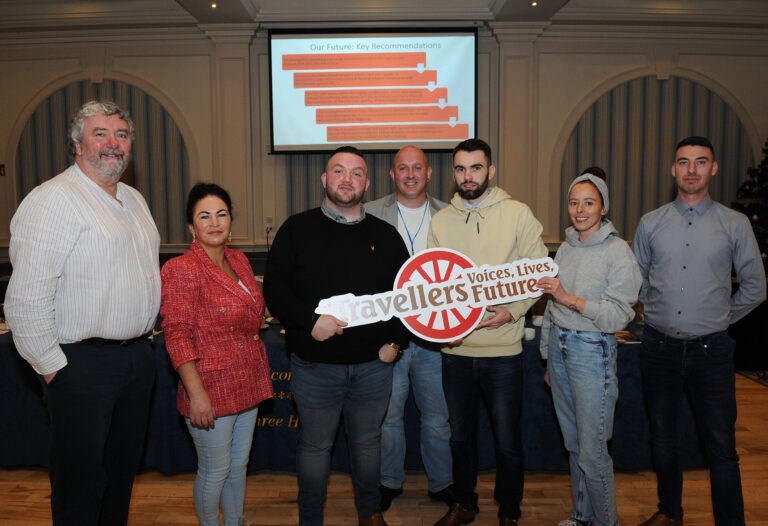
The research was carried out in conjunction with Connecting for Life Donegal, the National Traveller Partnership, and the Traveller Men’s Advisory Group.
Here we publish stories and comments from seven of the 12 men:
Participant 1:
TEACHERS: The teachers didn’t like me, and I didn’t like them, so I just left. I didn’t finish my Leaving Cert. I think that being a Traveller made them dislike me. Travellers stayed in groups and were placed in classes as groups. When the teachers are like that, it makes you feel like not going in.
GOING OUT: If you want to go for a pint or two there’s a big chance you will not get served in any pubs for being a Traveller. You go into shops; I just look at the screens. You can see the cameras looking at you, following every step you take like. It’s shaming, to be honest. It makes me not want to go out, I just avoid any of these situations.
Participant 2:
ANGRY OVER NO HEATING: I’m in a house and have been there for the last ten years. There are no flushing toilets or working showers. Only one tap is working in the sink. Now we reported this two years ago to the council. We have no heating or anything. To be honest, it makes me feel angry because I’m ten years out pushing them [council] to help us and nothing is getting done…it is one of the things that worries me the most.
Participant 3:
NO GYMS: I can’t get a gym or swimming pool membership anywhere. All I get is that: ‘We’re fully booked’. There was one time I rang the hotel and they were not taking on new members. I got a settled friend to ring, they got a membership no problem. They cop your last name and know you’re a Traveller.
I NEVER COMPLAIN: Where we live affects every part of our lives, especially my children in school. I never complain to the school. My kids are called knackers, gypsies and stuff like that. This is going on since I was at school, you’re chatting 25 years ago. It will never change. I complained as a child and was told to stop causing trouble.
IN THE SPOTLIGHT: My second name puts me in the spotlight, I am tarred with a heavy brush. They will try everything in their power to do [criminalise] you. I was wrongly accused by the Garda for a serious crime I didn’t commit, I could give you a number of examples where cases have been dismissed.
Participant 4:
COUSINS: I have cousins that completed suicide due to whatever reasons and its mostly my male cousins. You walk into a graveyard now and you are not seeing Travellers dying at 40,50 or 60. It’s 20, 30 and 40.
Participant 5:
MY ACCENT: I am never going to get from 9 to 5 or whatever. I haven’t got an education and when I use my accent, especially in England, they simply listen and say no way. When we did maintenance work people thought we were scammers or cold callers because of my accent.
A lot of men are pushed into poverty. Travellers can get work in certain places, but most of the time Travelling men haven’t got the education. I hated not working…it makes you feel down man, like worthless.
SOME ADVICE: Traveller men have too much to unpack because we are told to suppress it from day one. Don’t let anything get you down; keep your head up and keep walking. I think that is where the high rate of suicide comes from in our community.
HUMAN RIGHTS: Where did they march for Travellers’ rights? Travellers that are dying younger, are killed in fires because of poor facilities and the children leaving school not being able to write their own names.
Participant 6:
HIDDEN SEXUALITY: Traveller boys who are gay live nothing but a life of a dog inside and outside of the community. They have to hide that they are gay, they have to deal with discrimination from country people and deal with the expectation that Traveller men are strong and emotionless.
FAMILY: After walking away from my marriage because I was gay and experiencing domestic violence, I am homeless. Having no place to call home makes my anxiety and panic attacks worse. You are in a constant state of worry because you don’t have space of your own. You feel like a burden on your family… everyone really.
Participant 7:
TRAGEDIES: I have lost three children. Two in tragic circumstances and one to suicide. It never gets easier. It’s hard to think that you have outlived your children…the death of my family has led to my depression. I was going to take my life a few times, I have lost so many people and have experienced difficult situations since I came to Donegal. Settled people don’t know what’s going on in your life, they just want you gone.
The report, entitled Our Lives Our Voices Our Future, makes for sobering reading. Of the 12 men who agreed to be interviewed for the study, seven had experienced suicidal ideation, or had attempted suicide in the past.
All 12 reported having negative experiences with members of An Garda Síochána, including being subjected to racial slurs, and random searches. Unemployment, poverty, poor housing conditions, and negative experiences in the education system were also common themes.
Donegal Travellers Project (DTP) has been running since 1996; it delivers projects and workshops in a number of areas, including Traveller accommodation, men’s health, women’s health, employment, as well as an education project, a preschool, and afterschool support. DTP also operates a Roma project, which began in 2016.
Martin Mongan, a community worker with DTP who was part of the research team, spoke to Changing Ireland about the ground-breaking report.
“When it (DTP) was originally established, nearly all of the staff were from the settled community. Now about 70 to 80 per cent of the staff are Travellers; a lot of them came up through the literacy project and different educational projects. We also have one Roma staff member.
“I left school at 12, then I came back to education through the Donegal Travellers Project youth programme. Most of the staff would have left school early, and without the project we probably wouldn’t be in employment.
“It’s unique in that it’s Traveller research by Travellers. The participants are Travellers from all around Donegal. There are men from the LGBT community, men who are in prison, or homeless. Some are employed, but most of them are unemployed. They were from different age groups, from about 18 to 60 years old, so it was a very diverse group from all walks of life. It’s the first piece of research like it in Ireland.
The questions covered employment, accommodation, engagement with the guards and mental health.
“All of the men had similar experiences. Mental health was a major factor for all the men, as well as the lack of adequate and suitable accommodation,” said Martin.
“One of the families had 10-12 people living in a three-bedroom house. There were issues with overcrowding, damp, and poor heating. Others were living on the roadside in a caravan.”
• David Friel, PhD candidate and the first Traveller in the North West to achieve a Masters.
School stories
Martin says the contributing factors to mental health difficulties were consistent among all the men, beginning with negative experiences in educational settings, followed by a struggle to gain employment in adulthood, which results in poverty and being forced to live in poor quality accommodation.
“Lots of Travellers leave school at a young age, due to segregation and low expectations. Even when they might have the training for a job, when they have the skills, once they (the employer) hear your name, or where you live, you might not even get an interview.
“It was like this 23 years ago, and it’s still like that today. It hasn’t changed a whole lot. Little bits and pieces have improved but not much.
“If you don’t have access to decent accommodation, your life expectancy is lower. If you don’t have employment, you can’t better your circumstances.
“If you have employment, you can get better housing. You’ll have better health, you have access to better food and you can take better care of yourself. Your mental health is better, you’ve got a daily routine, you’re talking to your colleagues.
What helps
Regarding integration, Martin says it has improved in some areas of Donegal “due to Travellers being housed in housing estates among the settled communities”. However, it seems like society still has a way to go.
He said: “I can’t go to any bar. They hear my accent, look at my appearance and they think I’m violent, it’s that negative stereotype. Even things like looking to hire a digger to do some work can be difficult. Companies won’t hire to you. All of that has consequences for your mental health and eventually you crack.”
He talked of Traveller men living miles from the nearest town in poor accommodation and having “no engagement with anyone outside their own community.”
It would help if there was more integration and greater engagement between the settled and Traveller communities, as well as more cultural awareness among service providers.
Finding work
Martin said more employers need to be willing to give people a chance: “Travellers do want to work, but we can’t get employment.”
He welcomed the fact that some local employers in Donegal give jobs to young Travellers.
“If you don’t give someone a chance, you won’t know if they’re good or not. Society needs to be more open to giving people a chance.”
Suicide rate
“The suicide rate among Traveller men is seven times higher than the general population. If you’re being told all your life that you’re not wanted, if you can’t get employment, it can lead you down a bad route where you feel like you’ve nothing to live for. In some parts of the country, like Limerick and Cork, we’ve heard of children as young as 11 and 12 taking their own lives.”
The life expectancy for Traveller men is 15 years less than in the general population and unemployment rates are at about 80%.
Stigma
As was highlighted in previous studies, there is a stigma in talking about mental health and especially so among Traveller men. This challenge is compounded for Traveller men who are gay.
The report also cites previous research, which stated that 90% of Irish Travellers live in insufficient and inadequate accommodation. A common theme from the interview data was the connection between substandard accommodation, homelessness and Traveller men’s mental health.
The research was carried out in conjunction with Connecting for Life Donegal, the National Traveller Partnership, and the Traveller Men’s Advisory Group.
Factors that the research found increased the risk of mental health difficulties among Traveller men
Severe accommodation deprivation and homelessness was correlated with Traveller men’s experiences of poor mental health, with anxiety, stress, low self-esteem and self-worth being self-reported by Traveller men as a result.
Traveller men’s early childhood experiences of racism, segregation and low expectations in the school setting are internalised, having a deep-rooted and long-term impact on their mental health.
Unemployment and subsequent poverty.
Traveller men self-reported having either fair or poor physical health. Contributing factors were accommodation deprivation, poverty, racism and discrimination from health/fitness establishments.
Extensive research indicates that Irish Travellers have a higher death rate than the general population in Ireland. Traveller men reported increased incidences of family bereavements (from suicide or sudden death) impacted on their mental health.
Increased experiences of bereavement coupled with precarious life circumstances and social exclusion led Traveller men to utilise drugs and/or alcohol.
Lack of access and inadequate experiences of mental health support. Most Traveller men reported having negative experiences with their GP and mental health services.
Racial/ethnic policing from the gardaí. Experiences of being subject to racial slurs, wrongful convictions and involuntary interactions were identified as chronic stressors.
Possible solutions for the issues faced by Traveller men were suggested by the participants included:
An LGBTQ+ support group or worker to be situated within Donegal Travellers Project (DTP)
More physical sports and social gatherings for Traveller men
Review existing local authority policies to take account of the nature of Traveller homelessness and accommodation deprivation
Training and workshops for local authorities on interculturalism, anti-racism and the specific needs of Travellers experiencing accommodation deprivation and homelessness.
Educators at all levels should undertake anti-racism, anti-discrimination and cultural competence training.
Targeted training initiatives for Traveller men that capture their interests while meeting the needs of employers within the region.
Governmental policy to address the high unemployment rate among Traveller men.
Focus on Traveller men’s physical health through targeted initiatives that capture their interests.
A health awareness campaign on the impact of mental health on physical health and vice versa.
Culturally appropriate counselling services.
Cultural competency, anti-racism and discrimination training for primary care teams to improve the experiences of Traveller men availing of their support during crises.
The development of a Traveller Mental Health Response Team within the local area.
The development of a National Traveller Mental Health Strategy.
Educational anti-stigma interventions with Traveller men with a specific emphasis on mental health literacy, and sexuality to address the stigma attached to both in the community
Create consciousness among Traveller men about their human rights and legislation to empower them to report racism/discrimination.
An Garda Síochána should establish a dedicated policing plan to improve and develop a better relationship with the Traveller community.
Diversity, anti-racism and cultural competency training for all departments of An Garda Síochána
He calls all his friends ‘Comrade’ and has been active for decades in youth work, community groups, LEADER projects, trade unions, worker co-ops, environmental causes, and disability rights.
Dermot lives in Ennis, Co. Clare, and is known for volunteering, advocating and campaigning for human rights, in particular with the Independent Living Movement in Ireland.
He spent the last year writing his memoirs with the aid of well-known ghostwriter Breda Shannon.
“I have been immersed in the local, national and international movement for over thirty years. During this time, I founded, co-founded and headed organisations to represent, campaign and progress rights for people with disabilities,” he says.
“The book explores and documents my life as a child growing up in Kells, Corofin, County Clare and through to my years as an activist and campaigner across many causes over seven decades,” says Dermot.
The book will be launched at 6pm, on March 4, by Andrea Barry and Patrick McCormack in St. Patrick’s Hall, Corofin, Co. Clare.
All profits from ‘The Road that Rises’ will be donated to two causes: the Clare Leader Forum and the Corofin Hall and Field Fund. You can buy the book in Clare shops. If living outside Co. Clare, contact Dermot on Twitter: @HayesEnnis