Friday, July 3, 2026
Home Blog Page 24

Take community development outdoors with Street Feasts, greenways and outdoor pools

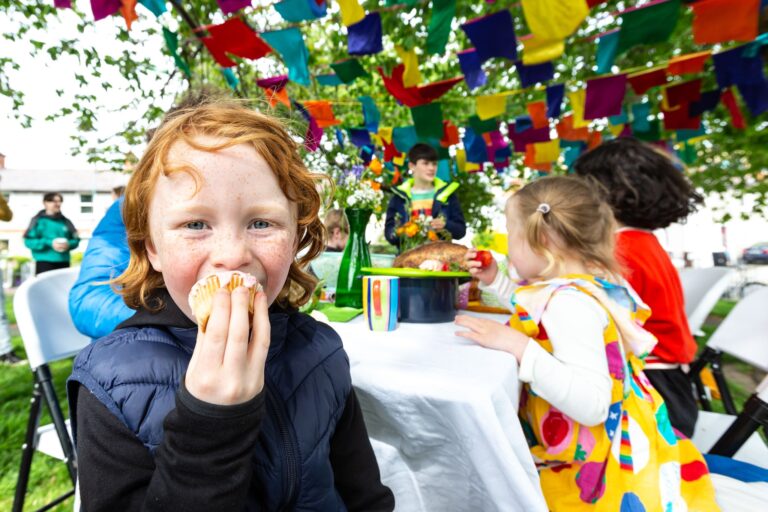
Street Feast, taking place on Sunday, June 25, is Ireland’s national day of community lunches. The event aims to help build community and tackle social isolation.

People are encouraged to take part by gathering their neighbours together to share food and have a chat al fresco. All you need is a space: either a front garden, a street or laneway, a shared green area, or even a community centre.

Established in 2010, it has grown steadily over the years. In 2022, 968 Street Feast events were held nationwide and an estimated 89,056 people took part.

Street Feast is supported nationally by the Department of Rural and Community Development.

“We’re looking forward to celebrating Ireland’s wonderful community spirit at this year’s Street Feast. At its heart, Street Feast is about connecting with your neighbours over great locally-sourced food, but it’s also about building resilience and sustainability in our neighbourhoods.

“Making and sharing food together is a special act and can be a huge force for good; a way to find common ground and to share culture. It doesn’t matter if you live in an apartment or house, all you need is a space to bring people together,” said Sam Bishop, co-founder and coordinator of Street Feast.

The registration deadline for the free Street Feast party pack has passed, however communities can still take part by organising an event for June 25.

Minister of State for Community and Rural Development and Charities Joe O’Brien said: “Just sitting down, chatting, having something to eat – it sounds very simple but the power of it is extraordinary for the individual; for that sense of community… to stave off all the things that have been challenging people, like isolation and mental health.

“When you feel part of a community those challenges are easier to manage – you can keep them at bay.

“I was privileged to attend a number of Street Feasts in my own constituency of Fingal. The atmosphere created simply by the power of bringing people together was electric in Skerries and Balbriggan and I look forward to attending more in 2023.”

For those looking to make a splash, there are a growing number of local authority-operated outdoor, heated community pools all around the country.

Ballinakill Outdoor Swimming Pool in County Laois has enjoyed an extensive revamp in recent years, thanks to the hard work and dedication of the local community.

The 35-metre pool also features a safe 10-metre shallow area for toddlers.

– Ballinakill Outdoor Swimming Pool, Co Laois

Seasonal outdoor heated pools can also be found in Ballina, Co Tipperary; Bagenalstown Co Carlow; Castlerea, Co Roscommon; Drumshanbo, Co Leitrim; and the Linn Snámha Chúil Aodha, near Macroom in Co Cork.

There are also free unheated outdoor pools located alongside rivers and lakes and along the coast, for those willing to brave the chilly waters.

These can be found in Clontarf in Dublin, Bundoran in Donegal, Portumna and Banagher in Galway, Arvagh in Cavan, and Belmullet in Mayo, to name a few.

Last year, Swim Ireland was granted funding for the purchase of an additional ‘pop-up’ pool on foot of the success of the first such pool, which was funded in 2021.

It currently provides two pools, located in Oldcastle Co Meath, and Ardee, Co Louth since January.

Every 16 to 20 weeks, the pop-up pools will move to new locations on their journey around Ireland.

The Swim Ireland Pop-Up Pool initiative aims to bring affordable and accessible  swimming to communities across the country.

The organisation stated: “Swim Ireland wants to improve the opportunity and experience for all swimmers, and so, supported by Sport Ireland, we will bring our innovative solution to the very real problem hitting the headlines – where can you access swimming when your local pool is at capacity or too far away?”

Swim Ireland is now planning to acquire a third pop-up pool, following the Government funding boost at the end of 2022.

Holding 45,000 litres of water heated to 30 degrees, the 12-metre by 3.4-metre steel structure is sheltered from the elements in a hard-sided marquee.

There are changing rooms onsite, as well as a ramp and a hoist.

– The pop up swimming pool at Ash Walk in Ardee, Co Louth.

Swim Ireland aims to provide 750 swimming experiences a week; individuals or schools at a pop-up pool location can book lessons or an open swim session.

The pool is also available for community group or private hire.

Ireland’s growing network of greenways have been a major success story over the last decade, providing locals and tourists with a safe space to exercise and socialise, which is free of charge.

Completed greenways that are currently in operation are: Waterford Greenway (Waterford City to Dungarvan), the Great Western Greenway from Westport to Achill in Co Mayo, the Old Rail Trail from Athlone to Mullingar; the Limerick Greenway from Rathkeale to Abbeyfeale; and the Royal Canal Greenway from Maynooth in Co Kildare to Cloondara in Co Longford.

– The Waterford Greenway

The Suir Blueway in Co Tipperary also features a walking and cycling trail for 21km, and a further 32km of waterway along the River Suir for canoes and kayaks.

The South East Greenway, which will link New Ross in Co Wexford with Waterford City, is due for completion this year.

The greenway is a joint venture between Kilkenny, Wexford and Waterford County Councils. While the three councils are backing the project, it primarily passes through County Kilkenny.

In June 2019 Kilkenny County Council secured €8 million funding for the project from the Department of Transport, Tourism and Sport.

Close by, the Waterford to Rosslare Greenway is in the planning stages.

Other greenways in the pipeline include: Youghal-Midleton, Athlone-Galway (as part of the Dublin-Galway Greenway), Connemara, Tralee-Fenit, Clew Bay, further sections of the Grand Canal Greenway in counties Kildare and Westmeath, and the Blessington Lake Loop in Co Wicklow.
LGBT Champions bringing more inclusive healthcare to older people

Run by LGBT Ireland, the national support organisation for LGBT+ people, the LGBT Champions Programme aims to help older members of the community feel more comfortable accessing health and social care services.

James O’Hagan, LGBT Champions training programme co-ordinator, explained: “We worked with the likes of Alone, Age and Opportunity – organisations that provide supports to older people to add a weight to our work in that space.

“We developed a training programme and started rolling it out to older people’s services, targeting the more frontline services initially, the ones where people would arrive in the greatest crisis.

“We found a population that wasn’t really being considered, not out of any malice, it was just purely that older people aren’t really seen as having a sexuality. So when your sexuality is different from the mainstream, it’s a step to even consider you as having an interest in sex or sexuality from the beginning,” he said.

The programme began with a one-day workshop that allowed participants to learn about the experiences and preferences of older members of the LGBT+ community, how they would like to be treated, and the importance of understanding their identity.

“Many older members of our community had to fight a very hard fight to be who they are, and coming out is something that gets harder and harder when you are in crisis and feeling vulnerable,” continued James.

“We would see people who had been out and proud their entire life. But if they have a cancer diagnosis, or some illness that’s going to need prolonged intimate homecare, they’ll be concerned whether the person assigned to give that care is going to be accepting of their identity.”

He told of one older man he knew of who – before the public heatlh nurse would call – went around the house taking down any sign that he may be in the LGBT community. “When you’re in that position that you need that sort of intimate homecare, the last thing you should be worried about is who’s going to come into your home and take against a picture of a flag.”

During Covid-19 lockdowns, LGBT Ireland reached out to older members of the community through social media to provide support and companionship. This helped the organisation to connect with 400 older LGBT+ people who previously were unaware of any LGBT+ supports or services available to them.

LGBT Ireland now works with a network of approximately 300 LGBT Champions working in services that older people tend to access. Once they have completed the training, they create an action plan of how they can start implementing changes in their own services. After three months, they provide feedback to LGBT Ireland about what measures are working well, and what areas they may need additional support with.

James said the response from older members of the LGBT+ community has been “incredibly positive”. “So many of them mentioned walking into a space and seeing a little rainbow icon put up somewhere, the sense of speaking to someone who has a sense of your identity. Or who knows that your identity has nothing to do with what you’re there to speak to them about – perhaps you’ve broken a toe – but you feel fully comfortable being yourself. You’re not concerned with having to hold anything back; if you’re talking about your partner or husband or wife, you’re going to be respected for who you are. That has made an enormous difference to the older people in particular, older people who live more rurally.

“If you’re based in Dublin you’re most likely linked in with the LGBT+ community. You have spaces, all these supports that exists, massive Pride parades, gay couples walking around holding hands – you have that positive reaffirming of your identity everywhere you go. When you go a bit more rural, it’s less visible.

“So having these trained professionals who are indicating their inclusiveness is really important. It is all about that sense of ‘I can relax. I know this is a service I can use, this is someone I know I can rely on’.”

While James says Ireland is “a very inclusive country”, sometimes there is a need to make that welcome more visible. “It’s understanding these nuances, understanding why a person who grew up in an Ireland of the 70s, 80s or 90s might need that additional sign of safety before they feel comfortable to share.

“Research shows that where healthcare and social settings haven’t historically been visibly inclusive, LGBT+ people do have worse health outcomes because they’re less likely to access them, and when they do it’s at a time of acute crisis. They’re also less likely to assert their needs in those places, so you’ll have trans people who will be misgendered for example,” continued James.

“A trans woman in Cork was in an accident on her farm. It was early in the morning so it was before she’d had an opportunity to put on her makeup and jewellery. She hadn’t put on her gender armour that told people ‘This is who I am’, and she chose not to contact an ambulance. She ended up for a number of days living with a very serious injury because she felt as if she was going to be seen as something other than she was, and wasn’t going to be understood, and that her identity wouldn’t be taken seriously.”

He says that this is what the LGBT Champions Programme aims to address: “It’s that split second decision when you have an accident – before you get to the logical point of ‘I’m going to call for help now’, something sticks in there and says ‘Oh God are you really going to put yourself in this perceived danger?’.

“It’s about breaking down those barriers so the older people know the people helping them understand their identity and won’t see it as a big deal. They will just treat them as they find them and will respect them as who they are.”

More info: https://lgbt.ie/

220 time-travelling volunteers welcome diaspora visitors

Presidents Joe Biden and Barack Obama are just two high-profile figures who have travelled to the Emerald Isle to walk the lands of their ancestors. However, every year there are many more who come to trace their roots, and even to meet distant cousins.

A large number of these visitors are assisted by Ireland Reaching Out’s network of 220 local volunteers. The organisation was established 14 years ago with the goal of establishing links between the Irish diaspora and their places of origin. Its meet and greet service is unique.

THREE FREE SERVICES

Programme Coordinator Denise O’Leary explained:

“We offer three services for free. We have message boards where anyone of Irish heritage can go and ask a question. Our volunteers will search the records for them and they’ll help them with their family tree.

“The second thing is anyone of Irish heritage, if they’re visiting Ireland, can register their trip on the website. And they can reach out to local representatives living in the town or village their ancestors lived in.*

“The third thing we offer is a free ancestry repository where anyone can add their ancestor’s story, and that’s free to search by anyone in the world. Most ancestry repositories are behind a paywall, so that’s quite important for some people that it’s free.

“We also have a newsletter. We work with a huge team of academics, historians, librarians, genealogists, and we send out newsletters twice a week,” she added.

REBUILDING AFTER COVID

The meet and greet programme is becoming well known. The year before the pandemic lockdowns, the volunteers welcomed 600 visitors to Ireland.

“During Covid we did no meet and greets for two full years. So we’re just building it back up. Last year we welcomed 100 visitors. This year we’re hoping to double that again,” said Denise.

She continued:

“There’s nothing like meeting a local person. It’s so important to them. It’s all done by volunteers, there’s no money changing hands. This is all done on the back of local volunteers actually wanting to say: ‘Look, your ancestors did live here, you’re part of this community, just like we are’. It’s really nice.

“Their Irishness is of huge importance to them. But it’s not recognised. So meeting with a local, and a local seeing them as a local, that is hugely powerful for them. And our volunteers often introduce them to family members,” she said.

Ireland Reaching Out previously received funding from the The Heritage Council and the Department of Foreign Affairs and Trade. Today it is self-funded, relying on income from Google AdSense and voluntary donations from those who avail of its free services.

PEOPLE IN TEARS

Kieran Jordan, a Fermoy, Co. Cork-based meet and greet volunteer with Ireland Reaching Out, told Changing Ireland about his role:

“I had been doing family research myself for about 30 years or so, and I’d learned a lot about the different sources. I retired in the last couple of years, so I have a bit more time, and I like to help out and to meet people.

“There are two types of people who use the meet and greet service: some want to just walk the ground that their ancestors walked on, and others want to find out a bit more about their ancestry, and I can do both of those. I don’t mind knocking on doors and asking people if there’s a certain family around the area.

“People are very pleased to be able to walk in the same place their ancestors were. Last week, the woman I met was in tears. We went out to Inch where her father was from, and it really meant a lot to her,” said Kieran.


• Volunteer Kieran Jordan (left) with members of the Nugent family at Lismore, Co. Waterford.

TO VOLUNTEER

Ireland Reaching Out (aka Ireland XO) regularly takes on new volunteers: to meet and greet people, to serve as family history advisors, and/or to serve as digital content contributors. Some people volunteer for all three roles. All receive a volunteer handbook and online training and have the support of the volunteer co-ordinator.


Role: Meet and Greet Volunteer

Description: Meet and greet volunteers welcome visiting diaspora to the local community. They spend between one and three hours with the visitors, helping them to understand more about the local community and its heritage.

On a typical meet and greet, the following may happen: 

A meeting in a local library, tourist office, post office, or heritage building.

-A visit to a local graveyard to find family headstones.

-A visit to the local parish office to enquire after baptismal and/or marriage records.

-A meeting with any living relatives still in the community.


Ireland Reaching Out has structured its programme so it is organised and managed at a local level, by locals and descendants from an area and every parish in Ireland has a dedicated page on the its website. Check out ‘Parish Toolkit’ on the website. Most volunteers give between one and three hours per week.

The organisation’s own history is interesting. Ireland Reaching Out was founded by tech entrepreneur Mike Feerick. It began as a pilot in south-east Galway with support from Galway Rural Development, among others, and it soon made its presence felt, winning recognition at the Pride of Place Awards and Local Authorities Members Awards.

In advance of President Joe Biden’s recent, partly genealogical visit to this country, Mike tweeted about “the local knowledge” of volunteers with Ireland Reaching Out, describing them as “a national asset”.

Website: https://www.irelandxo.com/

*It is simple and straightforward for visitors to make an enquiry about setting up a meet and greet via this link: https://www.irelandxo.com/meet-and-greet

We moved from destructive patterns to building new habits, and it’s transforming our lives

Geraldine is in her third year on the scheme. She said it “absolutely” made a big difference going from a treatment centre to a CE scheme: “Because of all the years of relapsing, I came to the stage where I knew I had to do this very slowly.” She was nervous. “Back then I could not speak in public. I was afraid of my own shadow. I was isolated.”

The scheme focuses “mainly on physical health, mental health and personal development” and she said she needed it. “Coming out of addiction, my self-belief and self-esteem was shattered, broken, on the floor.”

In her fourth year in recovery, Geraldine is now confident. “With the benefits of what we’ve been doing here on the scheme I have found my voice. I can speak. I push myself further. In personal development, one of the things we do here is taking little steps to push past the fear. It’s gently done. As a group it helps that we’re all going through similar stuff.

“Structure is a big thing here. We have our timetable. We know what we’re going doing for the next week. It varies from doing workshops, doing steps, to doing kayaking, mountain climbing. There are around 17 in the group – the number varies,” she said.

“We call it the T.E.A.M. project – Together Everyone Achieves More,” said Killian. “It’s like a family. We all bond through our experiences. It’s a safe place.”

NEGATIVE TO POSITIVE

Killian is a year and a half on the scheme. “After treatment there wasn’t a hope I could have gone straight into college. I’d have been too anxious.

“You need a bit of time to yourself to get to know who you are. I thought I wasn’t able to socialise with people, that I was socially incapable.
From working in the scheme, I noticed that actually I’m not a bad communicator. They were just negative beliefs.

“It was like creating a new life. Addiction is soul-destroying because you do things you thought you’d never do, but that’s just you with the drink or the drug. You lose the connection with yourself. The real you you have to unearth.

“I find with the help of the scheme, doing tasks daily, having structure – it helps you get balance in your life. For example, we learn basic life-skills like cookery, but it’s not just about the culinary skills, it’s about learning to eat nutritious foods.

“As addicts our heads go very fast, so we do things to slow down our minds, like meditation and art therapy. We do things like hillwalking, paddle-boarding and kayaking to get the endorphins going.

“Working with (CE supervisors) Daniel and Tara, they help you to come out of yourself, to rebuild you. It’s like when you’re building a house, you need a good foundation – before you go on to get jobs, or go into college.

“We came in here with all sorts of destructive patterns, but day by day we’re building new habits and it’s transforming our lives. Anything is possible. The world is our oyster.

“This is like my secondary treatment,” he said. “I found it was the best thing I’ve ever done.”

ADVICE FOR OTHERS

Asked for advice to anyone thinking of going into treatment and wondering what will happen afterwards, Killian said: “I think after treatment you do need a whole year to yourself just to kind of find out who you are. If you can get into a project like this you’ve struck gold.”

Geraldine joined the scheme after “it was suggested to me to come here”.“Really and truly, for anyone out there, I know in my heart and soul, after many, many relapses, after feeling hopeless, that getting onto a scheme like this was the next right thing I needed to do.

“It was very simple to pick up the phone to Daniel and Tara here to get that organised (to sign up for the scheme). My addiction had changed so many lives, but now my recovery is changing lives too, gently and slowly. It’s beautiful,” she said.

FUTURE PLANS

When we first spoke to Killian, his ambition was to do a personal training course in a gym. “That was my passion before. I want to be a coach, to maybe become a life coach and help people with their mental health through fitness. That’s what helped me. I got through my addiction by renewing my old passion for the gym.”

Since then, and while remaining on the CE scheme, Killian has gained an industry standard qualification in fitness by completing a personal training course with Elite Fitness and Performance Academy in Dublin.

Geraldine was interested in studying addiction counselling and psychotherapy. She could study part-time and stay on the CE scheme.
“Wouldn’t it be wonderful if I could turn my life story around and take that experience and channel it in a positive way – that would be amazing,” she said.

She looked forward to “going back into the workplace and doing a course” and since then she has begun a Level 6 course in Mental Health in the Community in UCC.

MORE SCHEMES

Both Killian and Geraldine would like more people to know about the scheme and welcomed last summer’s visit by Minister Joe O’Brien.
Geraldine said, “It’s great to see someone at that level taking interest. We’re so passionate about the scheme. It has changed my life. Those changes weren’t just for me. I have two sons at home. The positive ripple effect on them. I can put that down to the support and to the work I’ve done here.”

“And it was nice to see him acknowledging the work by Daniel and Tara,” Killian added. They both agreed that “There should be more of these schemes around the country.”

Special projects help people break addiction and change their lives

The far-right doesn’t represent working people – trade unions do

He added that trade unions “believe in solidarity, decent work, and social justice for all working people no matter what their background, and will always be there to stand up against those seeking to divide us”.

“Most recently this has included stirring up hate, fear, and anger by blaming migrants and minorities for our housing crisis and our stretched public services. There are serious issues to be tackled by all of us, including the Government, and will not be solved by laying the blame on migrants and refugees – many of whom are fleeing war, famine, and oppression.

“ICTU has developed a strategy in conjunction with our affiliates to educate and inform union members. The action plan is designed to equip unions to oppose the hate-filled messages of racism, misogyny, and bigotry of the far right at every opportunity. It includes a range of measures including training for workers to combat the far-right, to invest in workplace integration, and to seek to develop workplace leaders of minority ethnic backgrounds and bring them to the fore of trade union activities,” concluded Mr Reidy.

The strong message of the video which was released on social media platforms today (May 1), notes that trade unions are stronger together and can only win by learning from each other and mobilising in solidarity for a different economic and political vision.

The two-minute video presented by former Fair City actor Donna Anita Nikolaisen has been released to coincide with International Workers Day.

To play the video on YouTube, go to: https://youtu.be/stu7luJey5A

White House baffled by scale of voluntary input to welcome ‘Mayo Joe’

– Ballina locals worked with Secret Service agents to welcome US President


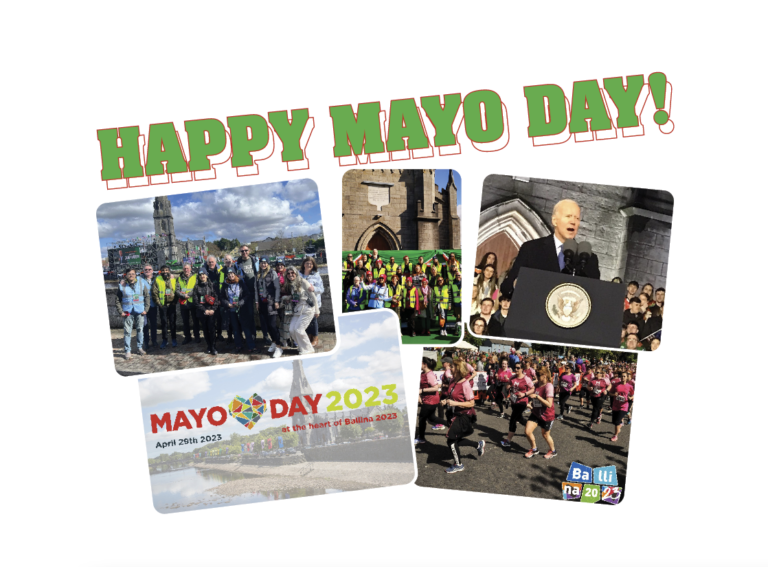
– This weekend Ballina hosts Mayo Day 2023 and Women’s Mini Marathon

Sheila’s volunteers worked alongside the US Secret Service during the visit, as did their counterparts in County Louth’s Cooley Peninsula which was also under the global spotlight when US president Joe Biden made his historic visit to the lands of his ancestors.

As the self-styled ‘Mayo Joe, son of Ballina’ concluded his tour of Ireland with a rousing address on the banks of the River Moy, most people watching would have been unaware of the role played by a small army of local volunteers.

The 260-strong team included both locals and blow-ins from various parts of the world. Working in the background alongside White House staff, they even earned the praise of the U.S. Secret Service for their efforts, Sheila told Changing Ireland.

The timing of the visit helped. Ballina 2023 had been established as a group to organise events for the year-long celebration of the formal establishment of the town.

“Ballina 2023 is a whole community effort”, said Sheila, adding that locals were busy making preparations for the past couple of years. The timing of President Biden’s visit “worked out really well”, she agreed.

• Some of the 260 volunteers on the day of Biden’s visit to Ballina – Image Credit – Arlene Molloy.

260 VOLUNTEERS IN TWO DAYS

In April, once the exact date of the presidential visit was confirmed, a call for more volunteers went out and, within days, Sheila had a list of 260 people offering to help.

“We have our core team of about 20 people that are constantly involved in Ballina 2023. The majority of them are volunteers. We worked with Mayo Volunteer Centre as well. 260 people offered to volunteer for the day. There was huge interest in it, I suppose because it’s a momentous occasion,” she added.

ON THE DAY

The team carried out a range of tasks in preparation for President Biden’s arrival. These included admin tasks such as creating rosters and a volunteer database, and purchasing vests and hats.

“On the day then we had check-in admin, we had people at the security entrances and everyone had to be scanned. We had volunteers informing people in the queue that they couldn’t have any large bags or drinks and things like that. And we had counters at entrances clocking numbers, because they (the Secret Service) wanted to find out how many were in attendance.

There was also a need for general stewarding and ensuring crowd safety.

“And we had guides and assistants for anyone who needed any special assistance,” continued Sheila.

• Musicians playing on the streets of Ballina – photo courtesy of Ballina2023.

WHITE HOUSE “IMPRESSED”

In addition to the general sense of fulfilment that comes with volunteering, those who assisted with the president’s visit had an unique experience.

Sheila said, “What I really feel the volunteers were left with is the experience they had dealing with the White House and the Secret Service. For most events, say run by a town, you would have your committee who would run it and do all the organising. We kind of didn’t (do that). We were following the lead of what the White House and the Secret Service wanted. All of these things were set out by the Secret Service and we were the assistants for them.

“The feedback we got from the White House is that they were so impressed with the calibre and number of volunteers. They couldn’t understand how we could mobilise over 200 people within a couple of days. They were so impressed with that. It was a huge, huge effort.

“I keep thinking of some of the young adults who can put that on their CV going forward. To say that you were working closely with the White House and the Secret Service and to see the dynamic of that first-hand, it’s a good experience.”

• Sheila Garvin – Volunteer Coordinator with Ballina2023.

The volunteers did not get to personally meet President Biden, said Sheila.

“We would all love to meet him. But to me, it wasn’t a huge part of the day. It was only dignitaries and VIPs who actually got to meet him. The feeling overall for everybody, whether they were volunteers or in the crowd, is that we were just there.”

FURTHER REPORTING BY ALLEN MEAGHER

UP AT COCKCROW

Volunteers were not the only people up at cockcrow on the day of Biden’s visit. Local and central government staff were busy behind the scenes to ensure proceedings went as planned. One told us of how she was on duty from 5am to look after the media who were escorted to the various locations Biden visited.

“There were others up earlier than that, particularly if they had to travel,” she said, adding that many government department personnel played a role.

Members of local community and business groups were also to the fore including Ballina Chamber of Commerce and Ballina Community Clean Up.

The intermittent lashing rain aside, it was a most memorable day.

• Kerry-born CNN journalist Donie O’Sullivan in Ballina. Photo courtesy of Margaret Loftus for Ballina2023.

PALESTINE

Meanwhile, in terms of activism, pro-Palestinian local residents hung a large banner from their home in support of the beleaguered country. As the campaigners said, “It’s a rare occasion when one of the few men in the world that can end Israeli apartheid comes to your own home town.”

Biden has previously compared the plight of Palestinians under Israel to that of Irish Catholics under Britain.

MAYO DAY 2023

This year’s Mayo Day is centred on Ballina rather than the county town of Castlebar, because the Moy River town is celebrating its 300th anniversary. And the streets have never looked so well, surprise-surprise!

On the following day, Sunday April 30th, the town hosts a mini-marathon which will take 2,023 runners around the town.

If you haven’t yet been to Ballina, or indeed to North Mayo, now is the time to go! Bring your runners!


Special projects help people break addiction and change their lives

0

He made the point at the tail end of an interview with the newspaper after pandemic lockdowns forced GAA players – and indeed all of us – into hibernation. The newspaper called him for tips for players.

During the interview he spoke about his addiction support colleagues in Brandon House and Edward Court in Tralee.

“You would be just blown away by the work being put in,” he said.

Having visited Brandon House, Changing Ireland can testify that Corkery was fair with his praise. Tralee staff and participants on a special Community Employment (CE) scheme there provided rich testimony about personal, physical and career development goals they reached or were striving towards through the CE scheme.

Many of the participants, as they moved on from addiction, had plans to study at third level, become counsellors themselves, or gym instructors. One former engineer wanted to change his life and was, at the time of our visit, abroad in Scotland on a course in forest meditation.

Such is the level of transformation possible for participants who emerge from a treatment centre clear of their addiction, but not yet ready to slide easily back into society and find regular employment or know what they want in life. By taking a place on the CE scheme, they allow themselves three years to grow and develop.

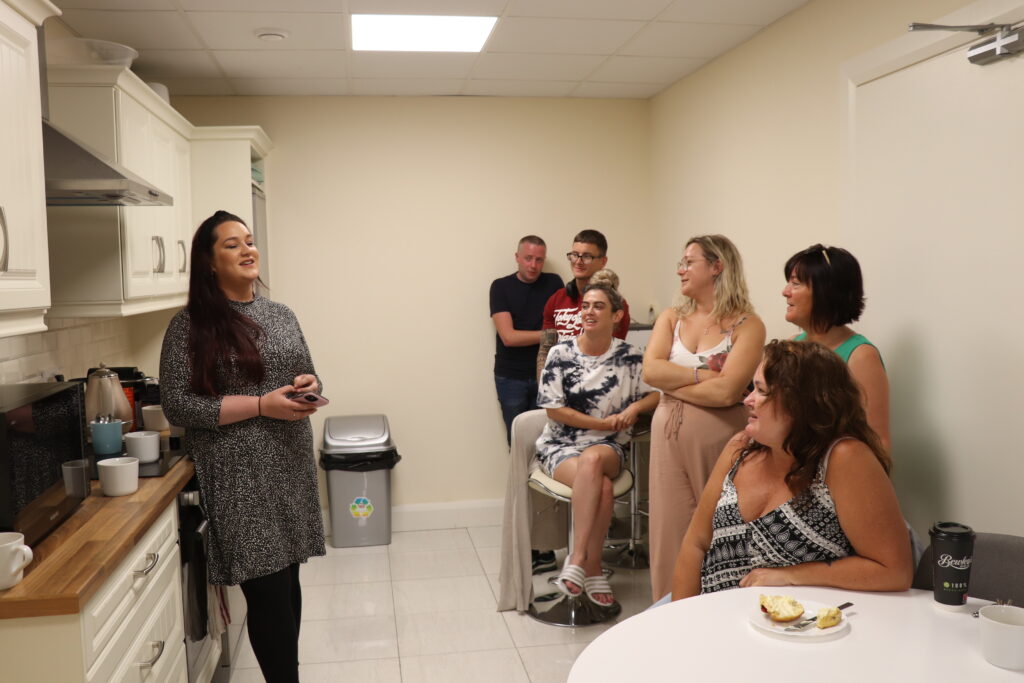
• Róisín, one of the Tralee participants, sings for her classmates and visitors.

The reason for the gathering in the kitchen on the day Changing Ireland dropped by was a ministerial visit, and there was a quiet, dignified atmosphere in the room as the participants told their stories.

“I had fear coming in here at first and I’m now here two years,” said one person who was afraid at the beginning to even speak. “It has changed my life,” said a fellow participant, and she explained how. A third chose instead of speaking to sing beautifully for the visitors.

The staff explained why the programme works so well. “We go softly. Personal development is a key part of it,” said Daniel O’Shea, CE supervisor. His colleague Tara Conway, piped in: “We follow the academic calendar from September to May. It helps people get structure and routine after they come out of (addiction) treatment.”

The project gets its training through Education and Training Board tutors and classes run from 9am-1pm, Monday to Friday.

“During the summer, they do a lot of outdoor activities such as paddle-boarding, rock-climbing, drumming, meditation, running, art – it’s wide-ranging,” added Tara.

Barry said, “We know it works because it has been tried and tested.” He revealed that people come because of heroin, cocaine and tablet use. “However, alcohol is still the number one addiction that we see in our services next door in Brandon House.”

He said it was helpful to have the CE scheme operate alongside – “under the same roof” as the HSE’s treatment centre. “The opposite of addiction is connection,” Barry added, noting that the locally-based response was “hugely significant”. Minister of State Joe O’Brien was duly impressed.

Some people may not have heard of CE drug rehabilitation schemes, despite their having been in existence for over 20 years.

In 2003, this magazine reported on concerns in Dublin that CE project funding would be cut, and Macro Community Resource Centre was especially worried.

Macro expressed pride in the achievements of the 13 participants on its drug rehabilitation scheme. Each one was a former opiate user. Four were early school leavers who were excelling in education; four more had just run a mini-marathon to raise €500 for the CE project; two others were on work placement and all had completed a range of courses.

Nevertheless, the project felt compelled to appeal to then Community Minister Noel Ahern to maintain funding. While drugs taskforce funding was reduced, “shamefully” said youth workers, the special CE schemes survived. (Today, Macro still operates a CE scheme).

Moving forward a decade, in 2013, there were 47 CE drug rehabilitation schemes around the country, with the vast majority (35) of them in Dublin. Together, they provided training and support to around 1,000 participants. Funded by the Department of Social Protection (DSP), they helped recovering drug users to develop their personal and employment skills and where possible find a pathway to work.

In a study conducted in 2013, the DSP recognised that unemployment was high in many areas where drug use was also most prevalent, yet it nonetheless “strongly valued” the role of the schemes.

Speaking nearly a decade later – last May – Minister of State Joe O’Brien said the schemes have “a very significant social inclusion focus”, they are “well embedded in our local communities nationally” and are “engaged in significant levels of local service support”.

Two months later, he visited the project in Tralee.

The scheme there was begun in 2017 by two community workers, Cathal O’Shea and Robert Carey from North, East and West Kerry Local Development Company.

Tara recalled, “There was one supervisor and 13 participants. Because of the success of the scheme, we got one more supervisor and two administrator roles and increased the participant number to 18.”

Recently, the scheme was approved to take on another supervisor and eight more participants on a bespoke programme for people in recovery and on methadone. The same programme worked well ten years ago for Macro.

How many nationally by 2023?

In 2023, there may be scope to extend such schemes further. David’s ambition for his own area is to see that each ‘hub’ in Cork and Kerry has at least one CE drug rehabilitation scheme.

• Brandon House, Tralee, Co Kerry

Tralee’s TEAM project is a place where together everyone achieves more.

Tralee’s TEAM Project is a Community Employment Scheme for people in recovery from addiction. It gives people coming out of recovery a safe space to find out what they want to do next. Often people in addiction have chaos in their lives. This project provides a calm environment in which every person is nurtured while they grow roots to anchor themselves in life.

Aims

The aims of the scheme are individualised depending on the future goals of the participant. The main aim is to improve the participant’s life by:

Encouraging health and wellbeing.

Supplying access to training and education.

Sourcing relevant work placements and work experience.

Supporting progression to further education and/or employment.

Project partners

The key partners behind the project are:

North, East & West Kerry Local Development Company;

Addiction treatment services – Brandon House, Edward Court, Talbot Grove, and Coolmine Treatment Centre;

The Department of Employment Affairs and Social Protection;

The Southern Regional Drug and Alcohol Taskforce;

Kerry Education and Training Board;

The group participants are all referred by HSE addiction services and by community drug and alcohol workers.

Contact the project

Contact: CE Supervisors Joanne Kelly-Walshe or Daniel O’Shea. (Tara Conway has moved on to a new job).
Email: joannekellywalsh@newkd.ie or danieloshea@newkd.ie

Website

Find out much more here about the project and what participants can typically expect: https://newkd.ie/employment/team-project/

We moved from destructive patterns to building new habits, and it’s transforming our lives

Connected hubs benefit communities as remote working brings locals home

0

Taking place as part of the government’s national campaign to promoting remote working, the national Showcase Day aimed to encourage more employers, small businesses and start-ups to consider the wide range of remote working options available nationally.

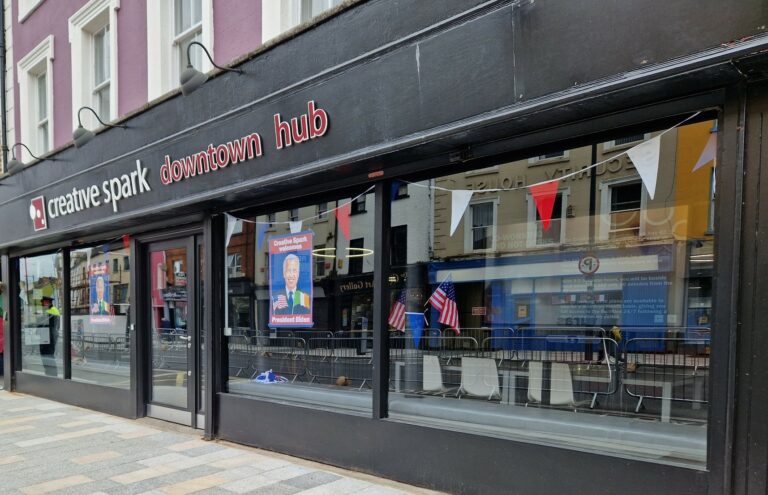
The event at Creative Spark in Dundalk focused on town regeneration and heard directly from hub users who gave their experience of returning to their local community as a result of the opportunities presented by remote working.

Minister Humphreys said at the launch: “Today’s initiative is all about showcasing the fantastic remote facilities that are open for business in every single county in Ireland. It’s about promoting the many opportunities and benefits that remote working is providing to tens of thousands of people.

“I believe that by giving people that choice to work from within their own communities, we can revitalise the centres of our towns and villages. We can reduce commuting times, lower transport emissions and, most importantly, improve the quality of life of our people.”

Connected Hubs is a flagship initiative led by the Department of Rural and Community Development and implemented by the Western Development Commission. The initiative will connect and deepen the remote working infrastructure across rural Ireland.

The network now has 315 hubs across the country registered on its online platform.

22 young Irish people get the chance to take on the world

0

This summer, the participants will embark on fully-funded, transformative cultural immersion experiences around the world.

EIL Intercultural Learning believes in the importance of fostering global citizens through intercultural learning. With this in mind, the Explore programme is designed to offer both under 18s and over 18s the opportunity to immerse themselves in new cultures and experiences.

Participants should be curious, tolerant, open-minded, and willing to engage with challenging situations. Upon their return, they are required to complete an Action at Home Project to critically reflect and share their learning with their communities.

The Explore programme consists of several projects for both age groups. Under 18s options include one Japan Award, five Youth Activist Awards, two International Summer School Awards in collaboration with the Cork Life Centre. There are also three Study Abroad Awards, which are partially funded by Post Primary Languages Ireland (PPLI) as part of their #ThinkLanguages competition.

Over 18s can participate in the partially-funded Global Awareness Programme or enter to win the fully-funded Mexico Award, Access Award, Mature Award or University Awards, which are currently being co-funded by MTU Cork and the University of Galway.

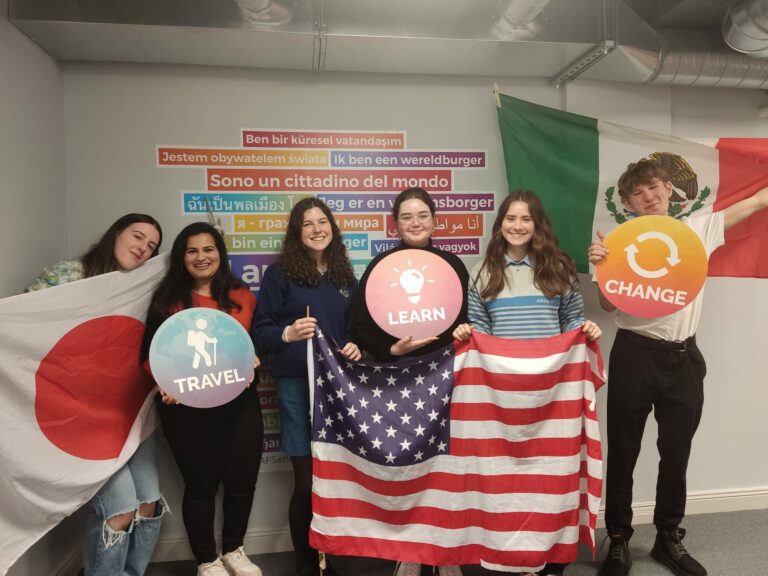
– EIL Explore 2023 winners at their Enrolment Day in Dublin along with past participants and EIL staff.

Each of these experiences aims to enhance participants’ open-mindedness, global awareness, self-reflection, and self-improvement.

This year EIL Ireland is funding one mature student and three access students to go on a valuable cultural learning experience through cultural immersion and volunteering abroad.

One access student is Irish/Tunisian, Fatimah Guetar (24) from Ballyfermot. Fatimah is an international relations student in DCU and is very passionate about equality rights. She has experience with horses and has carried out voluntary work with people with disabilities. Therefore, she has been selected for an Equine Therapy project in Mexico, where she will assist with stable chores and support horse therapy sessions for people with physical and intellectual disabilities.

Fatimah will visit a language school in Oaxaca for two weeks to learn some basic Spanish before going to live with a Mexican host family located close to the stables for the remaining six weeks of her eight-week adventure.

Other over 18s explorers will travel to Mexico, Ecuador or Vietnam this summer to live with host families and volunteer in various projects related to the UN’s Sustainable Development Goals.

EIL Intercultural Learning’s under 18s will embark on different learning adventures.

Alex Gravina (17), a 5th year student from Midleton in Cork, is the winner of the Japan Award. The Japan-Ireland Friendship Link programme is EIL Explore’s longest-serving award, which was first introduced in 1994. Alex will take on the role of an ambassador for Ireland. She will share various aspects of Irish culture while learning about Japanese traditions during her homestay for four weeks in Japan.

Alex has been learning Japanese independently for several years and recently acquired formal lessons to sit it as an exam subject for her Leaving Certificate.

The remaining ten young explorers aged between 16 and 17 were selected for the Youth Activist Award, the International Summer School Award and the Study Abroad Award, which will see them travel to the USA, Denmark, and other European countries.

– The three Access Award winners for EIL Explore 2023 – Jennifer Sawyer (UL), Molly Measey (TCD) and Fatimah Guetar (DCU)

EIL Intercultural Learning manager Adam Peerbux said: “We are very excited and consider it a great privilege to collaborate with each person on their journey of personal development, as they seize the opportunity to enhance their approach to active global citizenship. The insights gained and the critical self-reflection that takes place while abroad are clearly evident upon their return, as they engage with their local communities and participate in activism initiatives across Ireland.

“Witnessing individuals transform and evolve into active change-makers who champion impactful social and climate justice initiatives on both a local and global scale is truly inspiring.”

The application for Explore awards is open from mid-October to December for the following year. Applications can be submitted directly through the online application at www.eilexplore.ie or through specific channels for various awards,  for example the Access/Mature Award applications will be submitted directly to the third-level institute’s access or mature student officer.

Adam explained: “Applications aim to be inclusive and accessible as possible so we do allow for hard copies and we ask people to apply through creative mediums that might suit them better, for example art, photos, vlogging, music, written, etc.”

For more on EIL Ireland or their Explore Programme, see www.eilireland.org


Increase in over 65s contacting MABS after lifting of Eviction Ban

The organisation says the phased lifting of the ban puts thousands of renters at risk of potential evictions.

MABS revealed that its staff had already been working with a high volume of people seeking support due to the cost of living crisis. They are now seeing people impacted by the lifting of the ban, and those worried about receiving potential eviction notices “with further financial concern due to energy prices remaining high, despite wholesale prices coming down”.

The organisation is seeking to reassure people that there are steps in place to support those affected, and that MABS, alongside other support facilities, are there to help those who are worried.

Ursula Collins, regional manager for South Munster MABS said: “We have recorded an increase in people with concerns following the lifting of the eviction ban, many who have immediately been affected, and those who are concerned about when an eviction notice comes.

“The government has put measures into place to help, such as the purchase with tenant in situ scheme to those eligible, but we do urge tenants facing challenges to contact us. We are here, for free and in confidence, online or in person appointments. For specific housing advice, we will refer you to the right place for support, whether that is Threshold, your local authority, or the Residential Tenancy Board.”

For more information, see www.mabs.ie, or contact MABS for free, confidential, and independent advice on 0818 07 2000.

Maynooth’s youth and community students ready for a friendly grilling

Fresh from a study trip to the western seaboard, they are the key speakers in an online recruitment event for the university’s two-year Masters in Social Science, Community Work and Youth Work.

• Deirdre Massey is the Practice Development Coordinator with Maynooth University’s Department of Applied Social Sciences.

Event organiser Deirdre Massey believes the session is nicely pitched for people wanting social change and wondering whether further study is for them or not:

“We believe that hearing from past and current students and employers, in a participative session, is a powerful way to communicate the value base of the Department, the pedagogy that students learn through, and the capacity to impact on social change.”

The event will also give people get a sense of “the fun and creativity that is part and parcel of the programme”, she said.

The university is currently the only provider in the country of community work and youth work education at postgraduate level.

“We really welcome applications from people with diverse backgrounds – Travellers, Roma, people with a criminal conviction, people with life experience,” continued Massey.

The course is run by the university’s Department of Applied Social Studies, it focuses on social justice and human rights, and there are currently around a dozen people on the course. The learning takes place on and off campus and the students have just returned from a study visit to the Inis Oírr.

• Maynooth students pictured on a recent study trip to Inis Oírr.

Students normally do two placements during the two years.

“The work placements are really worth having on a CV coming out the other end,” said Massey. She encourages people to make contact as there may be other options that suit them, eg studying part-time over three years.

While mature student numbers are “down 10% across the board”, reflecting a national trend, Massey is optimistic and the number of graduate opportunities is growing.

“The Sector is changing and there’s a bit of a resurgence,” she said, pointing to the expanding Community Development Pilot Programme as just one example.


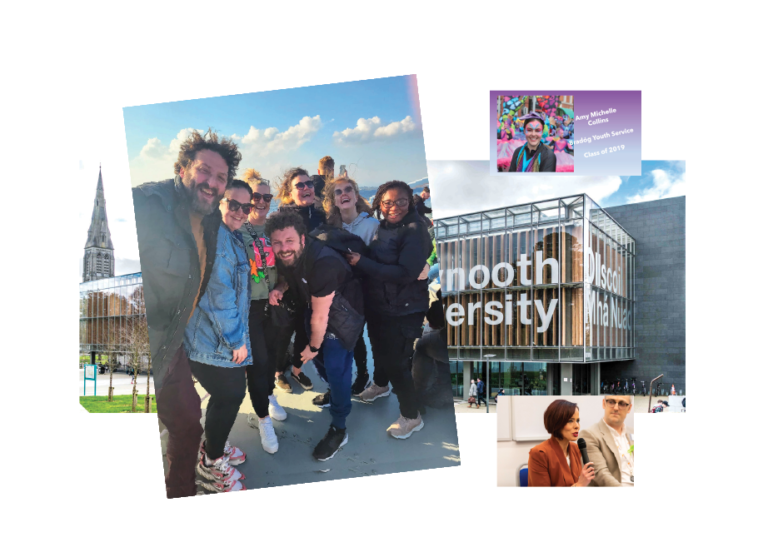
• Former and current students and staff at a recent inclusion and migration event in Maynooth University – Mairead McDevitt, Niamh Slevin, Holly Bardon, Linda Mackey, Richie Keane, Anastasia Crickley, Deirdre Massey, Marianne O’Shea, Ciara Shanahan, Rachel Doyle.

Graduates from this and related courses in Maynooth go on to forge careers as community workers, youth workers, climate and environmental justice workers, advocates for Traveller and Roma rights, migrant rights, LTBT+ work, anti-racism and intercultural work and policy work.

The online event takes place from 6.30-8pm and the Teams link for joining the session is: https://bit.ly/40WThu7


Some past pupils include:

• Senator Eileen Flynn graduated from Maynooth University in 2017 with a degree in Community and Youth work.
• Amy Michelle Collins graduated in 2019 with a degree in Community and Youth work.
• Debbie O’Rourke graduated in 2014 with a degree in Community and Youth work.

New report highlights services for people with neurological conditions

It also shows that there are over 60 community-based voluntary organisations supporting those people, providing a wide variety of services in response to their needs.

The report highlights that the vast majority of the 800,000 people living with neurological conditions across Ireland, live within the community.

The report was a joint partnership between the Health Service Executive (HSE), the Disability Federation of Ireland (DFI) and the Neurological Alliance of Ireland (NAI), funded by the Strengthening Disability Fund.

The three key outputs from the Neuro-Mapping project are:

  • The development of a unique service mapping template which identifies services across Ireland, categorising them together with agreed and standardised service descriptors.
  • Baseline Mapping of all services across each Community Healthcare Organisation (CHO), showing the range and scale of neuro-rehabilitation supports provided in the community by voluntary organisations.
  • Documented good practice examples of joint service initiatives between voluntary sector providers and statutory services provided by the HSE.

The Project Partners (DFI, HSE and NAI) have agreed to progress several key actions in the next phase of the project to address the report’s findings.

The service mapping template will need to be developed to encompass statutory service provision and establish a common language for all neurological community service provision. It will also be important to assimilate the language used in the mapping template into future service frameworks.

Engagement with both statutory and voluntary providers is required to understand how neurorehabilitation services are delivered on the ground in communities and how voluntary organisations work with each other and HSE services. This will help to provide insight into the variations in the services, and patient pathways across CHOs, as well as the impact of community neurorehabilitation teams where these are in place.

It is also intended to examine the current journey through these services, through the experiences of people with neurological conditions and their families, and this will demonstrate ways to improve signposting to existing supports.

The report is available to read in full here

The Wheel’s new CEO Ivan Cooper on why he’s like a magpie

0

– Wikipedia fan, cosmologist and history buff Ivan Cooper has a claim to fame with Dublin’s Mansion House

His wife Orla Keegan also works in the community and voluntary sector – as head of education and bereavement in the Irish Hospice Foundation.

While The Wheel’s press statement this week laid out the challenges that people in the community and voluntary and charity sectors face, including observations from Cooper, it was light on biographical detail. With over 2,300 member organisations, people might like to know more about the new CEO; so we asked about his family and his hobbies and interests outside work.

“I’m very fortunate in that both my parents are alive – they’re Dubs and we can trace our family’s roots in Ranelagh back to the 19th century.

“I’m keen on film and cinema, and politics, economics and current affairs. I’m a big reader, especially of history and geography. I’m into cosmology and lots of things scientific and art-related and I’m a big Wikipedia fan. To be honest, I’m like a magpie with my curiosity,” he said.

“Myself and Orla like hillwalking and have been up Carrauntoohil and Mount Brandon. I play a bit of tennis too, and especially since Covid I like to keep fit. I walk and cycle,” he said. He swears by a folding bicycle he bought through the Bike To Work Scheme which he uses daily on his commute.

His longest cycle was when he and a friend once cycled from Dublin to West Cork – “as a young fella – it took us five days, camping in fields on the way, good fun.”

Today, he and Orla like to travel by campervan and they recently toured Co. Mayo, visiting Ballina, the Céide Fields and Carrowteige / Ceathrú Thaidhg. Although born in Dublin, Cooper’s first family home was in Crossmolina.

His family also have connections in County Kilkenny. “I always support Kilkenny in the hurling,” he said.

He didn’t mention supporting Mayo in the football, so it’s safe to assume he has been shouting for Dublin. He and Orla are also keen rugby fans.

• Orla Keegan and Ivan Cooper with their dogs Elfie and Pixie.

Two little creatures also keep them busy, the couple’s dogs Elfie and Pixie – each with the individual personalities of indeterminate terrier crosses.

Has he any claims to fame?

“Well, my great, great grandfather on my mother’s side, John McGLoughlin, was responsible for building the ironwork portico to the Mansion House in the 1870s,” he said. Every time he walks by he feels pride and a connection to Dublin.

“And a grand uncle designed the Stag’s Head pub.” As good a reason as any to drop in.

Cooper would be handy to have by your side in a storm. His father taught him how to sail as a youngster and, during Covid, he sat the exam and qualified as a skipper.

In terms of volunteering, he served for a number of years on the board of St Catherine’s, a school in Greystones for children with special educational needs. He gives governance advice locally when asked and has previously supported Wicklow Hospice Group and Bray Partnership.

“I always wanted to work for the common good,” said Cooper. “I chose to study moral philosophy in college, so I’m very fortunate to work in the values-based community and voluntary sector, for the common good. That means everything to me.”

He will have less time for the movies, camping and volunteering in his new post. The Wheel has grown in size over the past 20 years and now has 32 staff.

“They are remarkably able and skilled people,” said Cooper. Needless to say, he looks forward to supporting them and one of the first times this year they will all come together will be for the organisation’s annual ‘Summit’ on May 23.

He is likely to address challenges for community and voluntary groups and charities at that event including low salaries and staff retention, as featured in the Winter 2022/’23 edition of this magazine. “There is a grave concern that vulnerable people in the community are going to be left without services,” he said at the time.

In previous years, the Taoiseach has been among the speakers at The Wheel’s Summit. Full event details at: https://www.wheel.ie/

• Click image for details about The Wheel’s Summit 2023 – for which there is an entry fee.

Meanwhile, Deirdre Garvey who led the organisation for over 20 years from its foundation moved in January to a new job as the secretary general of the Irish Red Cross.

2023 calendar of capital investment schemes published

0

Encouraging community groups to apply, Minister Heather Humphreys said: “There has never been as many opportunities for local community groups to access funding for rural and community development projects. I am anxious to make this funding as accessible as possible, and with this in mind I am now publishing the details of when the main capital investment schemes will be open for applications in 2023.

“This will help community groups and local authorities to see what funding is available, and when, and will assist them in the planning of their applications”.

The 2023 schemes include: the Town and Village Renewal Scheme, the Community Centre Investment Fund, the CLÁR Programme, and the Outdoor Recreation Infrastructure Scheme

The full DRCD calendar of 2023 schemes is available at https://www.gov.ie/en/publication/0bb45-drcd-calendar-of-schemes-2023/