This will be pursued through establishing and strengthening local alliances and, most importantly, through building effective Traveller leadership and a strong Traveller voice.
The strategy highlights the conviction that much-needed and urgent change for Travellers in Clare will come about only if Travellers themselves are at the centre of that change.
This strategy will guide the implementation of changes and improvements to the living conditions and life opportunities available to members of the Travelling community throughout County Clare over the next number of years.
Minister O’Brien said: “Community development is all about supporting and empowering communities to face current and future challenges, this is evident in abundance in the plan.”
“I welcome how clear the plan is about the size of the challenge, and the very serious issues facing members of the Traveller community in housing, living conditions, access to education and employment, the lived everyday experience of discrimination and unfortunately – the grave reality of the unacceptable levels of mental health issues affecting the Travelling community.”
“I am confident that you will in time achieve the goals set out in this plan; that is; establishing and strengthening local alliances, building effective Traveller leadership and most importantly giving Travellers in Clare that voice; the voice to help make those important decisions that affect their lives and the lives of their community”
Clare CDP was one of the projects selected for the new Community Development Programme launched in June 2021. This programme helped Clare Traveller CDP to develop community development responses to a range of social and environmental concerns, and facilitate an empowering collaborative approach to building relationships between marginalised groups and mainstream services.
Minister O’Brien concluded: “I’d like to commend Clare Traveller CDP, who are in their second year of the programme, for their hard work and commitment to date. True community development is trusting communities to develop their own solutions and pathways. The evidence is here, you are making a real difference to the lives of the Travelling communities you have supported since the start of this programme.”
“Adequate levels of social welfare are essential to addressing poverty. Government must increase core social welfare rates by €25 in the forthcoming Budget. Income adequacy cannot be addressed by one-off measures. Budget 2023 failed to deliver for vulnerable and low-income households as the necessary increase to the minimum social welfare payment was not made. A repetition of this mistake would mean Government yet again fails those on low incomes,” read a statement from the organisation.
Social Justice Ireland also stressed the crucial role of social welfare in reducing poverty, and revealed that without the social welfare system, just over one third of the Irish population (36.7 per cent) would have been living in poverty in 2022.
The statement continued: “Such an underlying poverty rate suggests a deeply unequal distribution of direct income. In 2022, the actual poverty figure of 13.1 per cent reflects the fact that social welfare payments reduced poverty by almost 24 percentage points. If Government is serious about meeting its own poverty targets and supporting households on the lowest incomes who, through good and bad economic times, struggle to live life on a low income, the core social welfare rates must increase by €25 in the Budget.”
In addition, Social Justice Ireland is calling on the Government to benchmark social welfare rates to 27.5 per cent of average weekly earnings in Budget 2024.
The organisation says this benchmark “is hugely important to improving the living standards of many in Irish society, and to achieving anti-poverty commitments”.
“This benchmark should be used as the starting point in the development of a pathway to index core social welfare rates to the Minimum Essential Budget Standard over time. Achieving this benchmark requires an €25 increase in core social welfare payments,” the statement concluded.
The aim of the Community Development Programme (CDP), launched in 2021, is to trial community-led interventions that address poverty, social exclusion and inequality, and promote human rights.
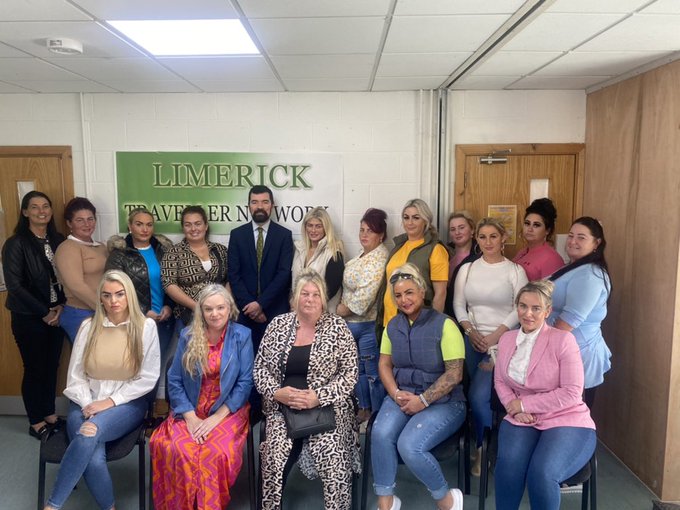
Today’s announcement in Limerick hosts one of the successful projects – a Traveller-led project to enhance integration for members of the Traveller community in Limerick and in wider society generally.
The expansion of the programme builds on the established seven CDP projects in Donegal, Clare, Dublin, Kilkenny, Longford, Wexford and Meath. These projects are providing flexibility to develop community development responses and facilitating and empowering collaborative approaches to building relationships between marginalised groups and main stream services.
Minister O’Brien said: “I am delighted to be here in Limerick today to announce funding for three additional projects under the Community Development Pilot Programme. Three very different projects in three different locations; the Women’s Muslim community in Dublin, the AMACH! LGBTI+ community in Galway and here in Limerick; we will be supporting the Limerick Traveller community.
– Members of Amal Women’s Association, one of the 10 projects to date awarded funding from the 124 that originally applied when the Community Development Programme launched in 2021.
“It is vital that the needs and challenges facing those most vulnerable and marginalised in our society are recognised and they are empowered to engage, share their experiences and have their voices heard. This programme provides this opportunity.
“The programme facilitates a community-led approach to addressing significant social challenges. It is important to tailor interventions to the specific context and involves the affected communities in decision making processes. This is what the Community Development Programme is all about.”
The Local Community Development Committees (LCDCs) also play a key role in the programme, providing support and facilitating networking for the projects.
The Community Development Programme (CDP) aims to trial community led interventions that address poverty, social exclusion and inequality and promote human rights.
The programme was launched on March 4 2021 and seven projects were successful. To date, funding of €125,000 has been allocated to each of the seven CDPs for Year 1 and Year 2.
Additional funding is available in 2023 for the expansion of the programme. Following a closed call for applications in 2023, three projects: Amal Women’s Association, AMACH! LGBTI+ Galway and Limerick Traveller Network (LTN)/ Exchange House Ireland (EHI) were invited to apply.
The Projects
Amal Women’s Association, Dublin is a not-for-profit organisation operating in the community and voluntary sector to provide culturally specific services for women and children from Muslim and non-Muslim backgrounds in Ireland. It is an organisation where all women, particularly Muslim women, can access the services they need and fully participate in society, free from the threat of violence, from poverty, racism, discrimination and stigma.
AMACH! LGBTI+, Galway aims to reflect equally the diversity within the lesbian, gay, bisexual and transgender community by encouraging positive participation from the community. They actively advocate to achieve a solid and safe support structure for the LGBTI+ community in Galway. They also aim to provide awareness, educational and training events and workshops, and endeavour to support and promote a socially inclusive society.
Limerick Traveller Network (LTN) is an emerging Traveller group which addresses a clear need. Exchange House Ireland (EHI), which is a national organisation, will act as a host for this project.
Limerick Traveller Network is a network of eight Traveller sites and housing areas in Limerick city, representing a total of 114 families. It operates under the principles of community development and aims to strengthen its present grassroots structure to provide a constant flow of participation and information between the community and its representatives.
The network aims to give Travellers in Limerick a voice, build up Travellers’ capacity to advocate and work towards improving accommodation, education, mental health, and discrimination, and to build up working relations with existing structures, services and agencies.
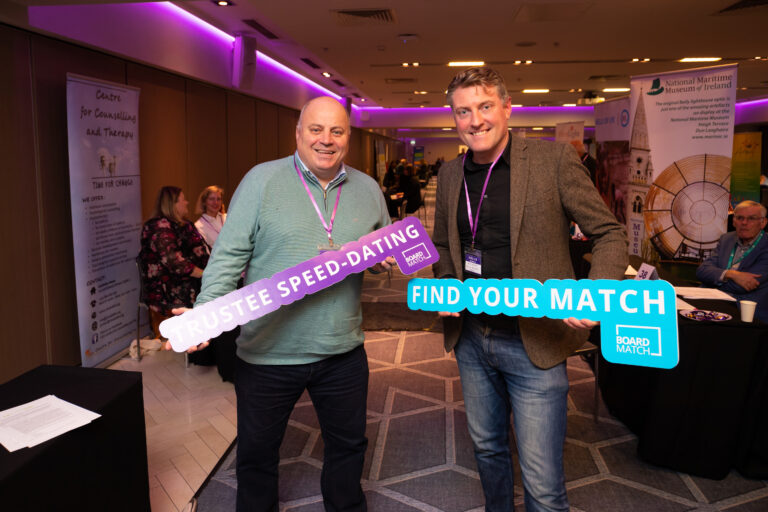
Boardmatch Ireland is the only Irish charity which specialises in not-for-profit board recruitment and its annual Charity Trustee Speed-Dating event provides an opportunity for both groups and individuals in Dublin and neighbouring counties to meet.
While Boardmatch primarily provides its services online, including board reviews, training, and a free online matching service, this one-day event every autumn allows for direct, face-to-face interaction.
“It allows individuals to meet as many charities as they would like, ask their questions in real-time, and network with other prospective trustees,” said Susan Colgan of Boardmatch.
This year’s event will be the fourth of its kind.
“During the pandemic, we took a break from hosting this event, however, we came back in 2022 after a three-year hiatus with great success: more than 40 board and committee appointments were made,” said Susan.
“The atmosphere in the room is palpable, and our feedback shows that not only is the event a great way of building connections, but is also really enjoyable,” she added.
Groups wishing to take part pay €100 while individuals pay €20. Groups that book in before the end of June are eligible for an early-bird registration charge of €50.
The organisations taking part will be from Dublin and surrounding counties of Meath, Louth, Kildare and Wicklow. While Boardmatch is considering running this event in other parts of the country, particularly in Munster.
“We have no plans to do so this year, but this could definitely be a possibility,” said Susan.
Boardmatch receives funding through the Scheme to Support National Organisations which is administered by Pobal on behalf of the Department of Rural and Community Development.
Today’s funding announcement brings the total number of organisations supported under the initiative to 846, with over €1.35 million now disbursed.
Further tranches of funding are to be announced and paid shortly.
The successful applicants include:
Fingal Community and Recreations Services CLG, Co Dublin: €28,274
St Bernard’s Children’s Services, Co Tipperary: €8,549
Muff Sheltered Housing Association, Co Donegal: €13,751
Drogheda Women’s and Children’s Refuge Centre, Co Louth: €6,120
Teach Bhride Holistic Education Centre, Co Carlow (pictured): €6,492
Minister for Rural and Community Development, Heather Humphreys commented: “Community and voluntary organisations deliver vital services in our communities. Targeted supports such as the CVESS mean they can get on with the important work they do, this kind of funding gives them space to concentrate on what people really need from them.”
She confirmed that further tranches will follow: “Pobal continues to assess applications in batches as we engage with organisations to seek clarifications as needed and to give every organisation the best opportunity to be successful in their application.
The government is also urging householders and businesses to ensure that they are availing of the supports that are in place. For more information visit www.gov.ie/reduceyouruse
A further 74,824 volunteers work in social enterprises, including 30,324 board members.
The total income of social enterprise was €2.34 billion in 2021.
A total of 15% of the social enterprises in Ireland operate internationally as well as nationally.
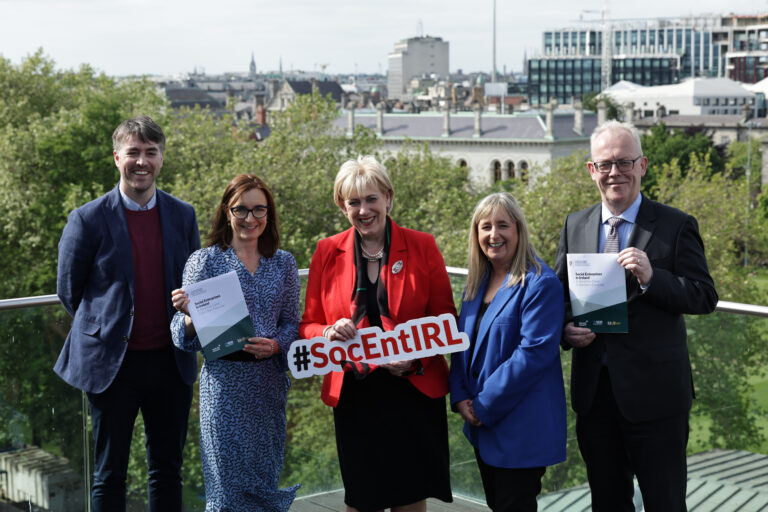
One of the most important measures in the proposed National Social Enterprise Policy was the need for improved data relating to the extent of social enterprise in Ireland and the areas in which they operate.
Historically, the lack of concrete data has impeded efforts regarding raising awareness, and the provision of supports for social enterprise.
In 2022, the Department of Rural and Community Development commissioned a consortium including Amárach Research, Social Enterprise Republic of Ireland (SERI) and the Irish Local Development Network (ILDN) to conduct the Baseline Data Gathering Exercise of Social Enterprise in Ireland.
In partnership with the social enterprise sector, an online survey was developed and published. Over 800 social enterprises completed the survey.
Launching the report, Minister for Rural and Community Development, Heather Humphreys said: “As the Department overseeing national Social Enterprise policy, it is vital that we have as much reliable data as possible about social enterprises in Ireland.
“Its launch is an important milestone for the development of this vitally important sector. For the first time we have concrete evidence of key data relating to the sector and this initiative will be key to informing future policy decisions as well as the type of supports our social enterprises need.
“This report illustrates the diversity of the social enterprises, the opportunities and challenges related to employment and volunteering, the contribution to the economy and the small size but increasing relevance and growing potential of this dynamic sector.”
She added that the report will be integral to the drafting of the next National Social Enterprise Policy for Ireland, which is due to be published later this year.
The policy is focused on three main objectives: building awareness of social enterprise, growing and strengthening social enterprise, and achieving better policy alignment.
Key information:
Social enterprises are businesses whose core objective is to achieve a social, societal, or environmental impact. Like other businesses, social enterprises pursue their objectives by trading in goods and services on an ongoing basis. However, surpluses generated by social enterprises are re-invested into achieving the core social objectives.
The social enterprise sector in Ireland comprises 4,335 organisations
The sector employs 84,382 people (including full-time, part-time employees and contractors). This represents 3.7% of the total Irish workforce.
The total income for the sector is approximately €2.34bn, representing 0.63% of Ireland’s GDP.
An estimated 74,825 volunteers participate in the sector, including 30,324 board members.
Half of the surveyed social enterprises (49%) have been in operation for more than 20 years.
While a variety of legal forms are adopted by social enterprises, 75% are registered as a CLG (Company Limited by Guarantee) with 88% registered with the Charities Regulator.
15% of social enterprises operate internationally as well as nationally.
Social enterprises are typically microenterprises with one-nine employees (57%) or small enterprises employing 10 to 49 (35%).
Almost half of the workforce is between 31 and 50. Women represent 69% of the workforce across the sector, and 47% of the workforce is part-time.
Most (64%) derive their income from a mix of trading good/services and government grants.
Data from emergent social enterprises (established in the last four years) indicates they are especially relevant in sectors of activity such as Training & Work Integration and Environmental Services, are less likely to adopt CLG status or to be registered with the Charities Regulator.
The proposed policy is intended to deepen understanding and knowledge, create an enabling environment and accelerate engagement with philanthropy in Ireland for social good.
A statement from the Department of Rural and Community Development said: “Non-profit organisations play an important role in Ireland’s social and economic life and receive part of their funding from philanthropic sources. The range of non-profit organisations which benefit from philanthropy is diverse, ranging from small community groups like sports clubs to large national organisations.
“The aim of this policy is to set out clear objectives, and specific actions to enable philanthropy to grow and thrive in Ireland for social good. The philanthropy policy will also support knowledge and capacity development of the sector. It will also identify the supports required for it to thrive and maximise its potential.”
Minister O’Brien said that his Department is now widening the consultation process on the policy and encouraged interested parties to take the opportunity to have their say on a policy “that aims to create an understanding of the philanthropy sector and underpin its importance to civic society”.
More information on the National Philanthropy Policy Public Consultation is available here .
Children’s Rights Alliance CEO Tanya Ward recalled the McMahon Report in 2014, which contained recommendations on improvements to the direct provision system.
“We really needed to fight to get the recommendation that children would be on €29.80 per week. And the concern was ‘We’ll have more people arriving because it’s €29.80’. International research on why people seek protection shows that they’re not the reasons that people rely upon.
“Just because we increased the rates, it didn’t result in an increase in people coming into the country. You have to focus on: ‘What’s the right thing?’. It’s not right that children in direct provision are the only group of children that were left behind in Budget 2023. Budget 2024 can’t do the same,” she said.
St Vincent de Paul’s MESL (Minimum Essential Standard of Living) Centre carried out a study looking at the average weekly cost of more than 2,000 essential goods and services.
Taking into account the costs that are already provided by the system, researchers found that the estimated weekly MESL need for a one-parent family with two children is €228.30. However, the weekly payments currently only amount to €110.80, 49% of the minimum income needed.
For a two-parent family with two children, the weekly MESL need is €289.98. Current payments only cover 52% of this, a shortfall of €140.37 every week.
Researcher Hannah Boylan of the Vincentian MESL Centre described the MESL amounts as “the minimum required for people to live with dignity and participate in day-to-day life, that no one should be expected to live below”.
She added that due to the scale of the inadequacy of the payment it is “inevitable that families living in direct provision are going without goods and services that people need to live and participate in Irish society”.
Princess Graham (18) a social studies student, and member of Irish Refugee Council youth group came to Ireland as an unaccompanied minor aged 17.
She said: “I had to wait four months before I started receiving the weekly allowances. Those four months were a terrible time for me. I struggled to get necessities. I am grateful to be getting it every week, but it is still not enough. We find it hard to manage, between buying mobile data, transport, food, clothes, toiletries, etc. And the cost of living and inflation is not making things easier. Sometimes I don’t even have lunch. I go to college every day, sometimes I don’t eat until I come home because I don’t have the money.”
Beth Kinua, a parent and direct provision resident who now works for County Kildare Partnership on a CE scheme commented: “We are not complaining about what we get. We are only saying how inadequate it is and the fact that if you’re in Ireland for less than six months, then by default you can’t work, so you have to depend on the government subsidies.
“The cost of living today, people who are living outside direct provision are getting the boosts (cost of living payments). The people who are living in direct provision are not getting that. They still get the same payment, despite the high cost of living.”
The Government White Paper to End Direct Provision was published in February 2021. It included a commitment to the introduction of a payment similar to child benefit for children in direct provision.
It also stated that people would be moved out of reception centres within four months, to be housed within the community.
Referring to the cost-of-living crisis and the increased numbers of people seeking international protection, Ms Ward remarked that “what was envisioned in the White Paper is going to be very difficult for the Government to deliver in the short term”.
“The Department of Children (Equality, Disability, Integration and Youth) are overwhelmed, to be honest. They’re churning through people, trying to find accommodation leads, particularly trying to respond to the needs of the Ukrainians arriving, but also to the needs of people in the International Protection System. I think the Department is carrying too much in relation to that. This should be a whole Government approach. You can’t expect one department to carry the burden for this.”
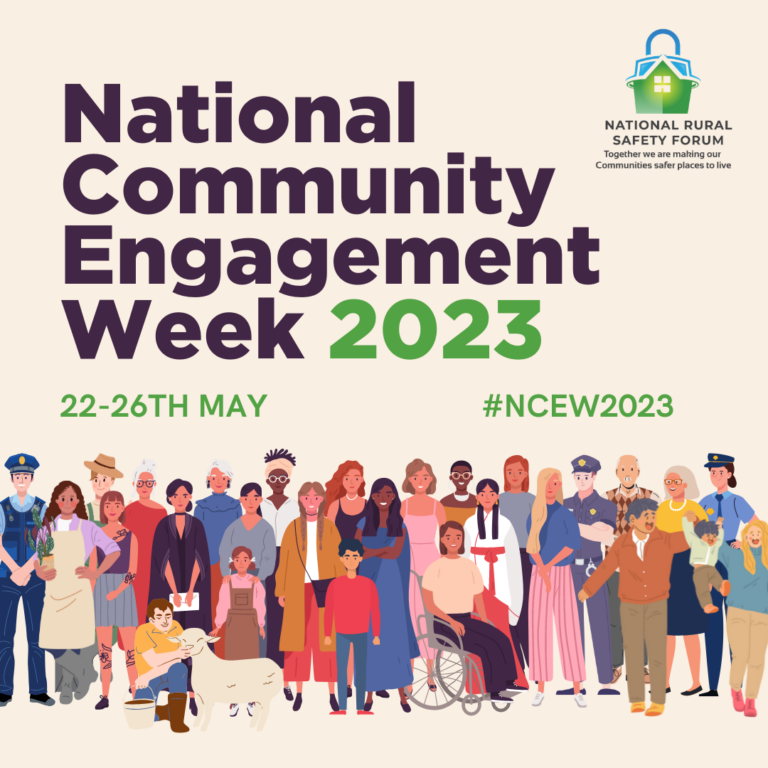
Each day of National Community Engagement Week is themed, covering different aspects of rural living including: community safety; road and pedestrian safety; burglary, theft and heritage crime; personal safety and wellbeing; and farmer and rural safety.
IFA Deputy President and co-chair of the National Rural Safety Forum, Brian Rushe, said: “It is vitally important that communities works together to serve the best interests of people at risk and the National Rural Community Engagement Week is the perfect platform for this.
“IFA are very pleased to be working with An Garda Síochána and members of the National Rural Safety Forum on this great initiative and are urging all communities to come out to support this programme.”
The events aim to empower communities to acquire advice and knowledge that promotes and maintains personal safety and security, as well as promoting best safety and security practices.
Chaired by An Garda Síochána and the IFA, and supported by the Department of Justice, the Department of Rural and Community Development, Muintir na Tíre, AgriKids, and a range of State agencies and representative groups, the Forum’s focus on rural safety is laid out in the National Rural Safety Plan 2022-2024.
The purpose of the Forum is to develop a nationwide network for the distribution of crime prevention advice, increase engagement within communities and prevent and reduce opportunities for crime.
The series of events, organised by the Rural Safety Forum, is an opportunity for communities to get to know their local gardaí and community representatives. All are welcome, and details of events can be found here: https://loom.ly/EHBk-UU
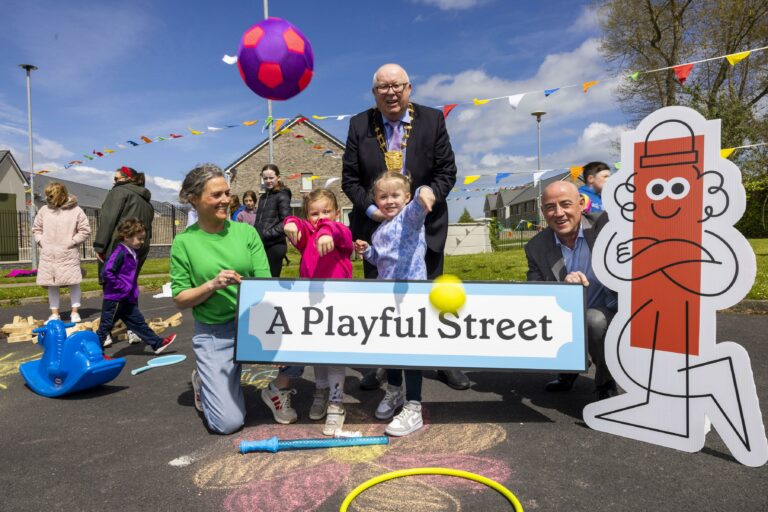
It describes playful streets as a low cost, safe and easy way to create play areas children and adults to play and socialise by limiting vehicular access for a specified period of time.
Communities are currently being invited to register their interest in joining the Playful Street Pilot Scheme through this form
Those who are selected to participate in the pilot will run a Playful Street on at least two Playful Street pilot days this summer, and will receive a handbook and other helpful resources.
Fingal County Council will support the participating areas by reducing access to vehicles to their streets on the Playful Street pilot days.
A Playful City will help the communities to get started and will be there to answer questions and support residents over the course of the pilot.
Robert Burns, director of housing and community development at Fingal County Council said:
“What’s crucial about this initiative is we’re involving the community. We want it to be led by the community, we want the community to be at the heart of it.
“It’s about looking at the streets where people live and maybe looking at them in a different way. We’ll be running an open day at the end of May within Fingal, and then in June, July and August we’ll be running pilot events across the county.
“I think the local authority being involved in this is crucial because we want to be there as facilitators for the community. We want to enable the community to get the most out of the resources that they have and allow them to enjoy the places where they live, and for children, adults, older people, to have somewhere that’s close to home for them where they can rest, they can play, communities can come together.
“While we call it playful streets, it’s very much a community street, it’s about allowing communities to be closer, and we know in people’s busy daily lives, it can be hard to find the time. This is an opportunity for neighbours and their children to come together, to meet, to chat, to get to know one another, and I think it will help in that wider sense of providing sustainable communities across Fingal.”
The benefits of spontaneous free play to children’s physical, mental and emotional wellbeing have been well documented.
However, many children do not have the same freedom to play on their streets that previous generations enjoyed, and may not have even heard of some of the street games their parents used to play.
In 2016 the Early Childhood Convention heard that two thirds of Irish children spend more time indoors than prisoners in maximum security prisons.
Playful Streets allow communities to connect, and for parents to get involved and teach their children the games they used to play.
Neasa Ni Bhriain, creative director, A Playful City commented:
“Playful street is all about giving communities back their streets to use like we all did when we were young.
“The key thing about playful streets is they should be regular. So they should happen once a month or once every couple of weeks. And it’s really back to the old school games, if you remember red rover, tip the can, hopscotch. It’s about the adults coming out and showing the games to the children, the games that they used to play. It’s about getting children outdoors, it’s about seeing the space, the road and the street outside your own home as a place to play.”
“One of the key things about playful streets is making it safer, so that’s about reducing access to drivers onto the street, stewarding them on if they absolutely need to come onto the street. It’s really about creating the safe and playful space, a place for the community right outside your front door.”
A Playful Street Open Day will take place on May 27, from 1pm-3pm at Taylor Hill Grange, Balbriggan.
For more information or to register your interest in joining the pilot programme, visit the Council’s website: https://www.fingal.ie/playful-streets.
A PLAYFUL CITY
A Playful City was launched in 2017 and soon led to neighbours on Sheriff Street closing their street to traffic and coming out to play. The organisation takes a community development approach through “listening to and collaborating with community members and stakeholders of all ages”.
Its colourful website has many suggestions, although clicking through for more information is almost as tricky as hopscotch! A Playful City is also on Facebook, Twitter and Instagram.
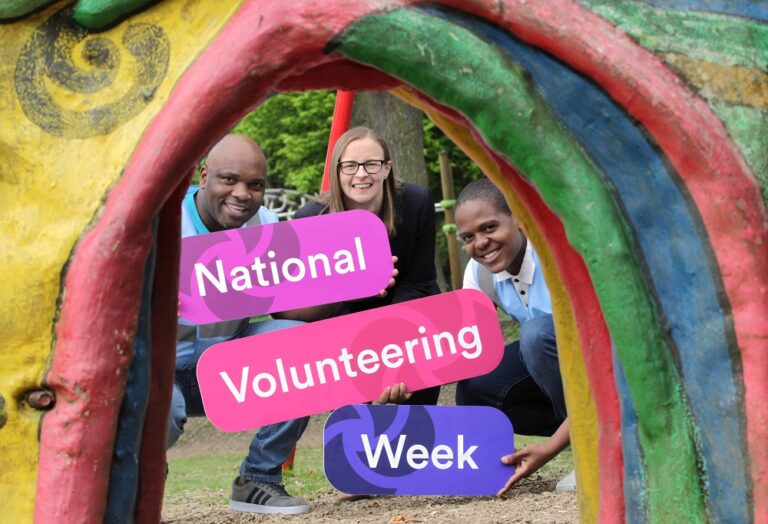
The theme for National Volunteering Week 2023 is ‘Connecting Communities’.
Volunteer Ireland says: “Volunteering is an act of profound generosity that can transform our communities into more diverse, dynamic, and welcoming spaces. By offering our time and skills to support the needs of others, we not only strengthen our communities, but also deepen our own sense of belonging and connection.
“This National Volunteering Week, we’re celebrating the power of volunteering to enrich our communities, bridge social divides, and create opportunities for meaningful connection.”
Organisations can get involved by sharing the stories of their volunteers on social media, or showing appreciation for volunteers by hosting a thank you party, coffee morning or afternoon tea.
The programme also features bike parades, and a number of heritage cycle tours where participants can learn about historical events and sites along the route.
If your bicycle has seen better days, there will also be bike maintenance workshops taking place throughout the week.
And, you don’t even need to own a bike to take part as several of the events have bike hire available on site.
Wednesday May 17 is Bike-To-Work Day, so grab your helmet and cycle to work, or let your workplace know and organise a lunchtime biking activity.
Not to be left out, schoolchildren can take part in COW day, or Cycle on Wednesday.
Cycling is a low-impact exercise that is suitable for people of all ages and fitness levels, it is also beneficial for mental health and wellbeing.
As an environmentally-friendly mode of transport, it’s also good for the planet.
To find out what’s happening in your area for National Bike Week 2023, see www.bikeweek.ie.
Bike Week is funded by Department of Transport, coordinated through Transport for Ireland (TFI) and administered by local authorities, Local Sports Partnerships, community groups and Green Schools.
Could the town possibly claim to be the ‘most Irish’ town in the country outside of Gaeltacht areas? We put the question to people in Monaghan.
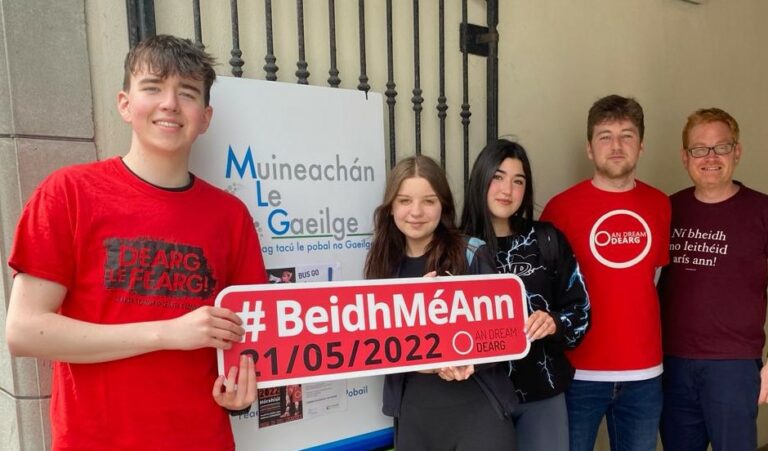
Seán Ó Murchadha is chairperson of Muineachán le Gaeilge, the local branch (craobh) of Conradh na Gaeilge in Monaghan Town. He says: “Monaghan is up there. We have the highest percentage of pupils attending Gaelscoileanna in the town. We have three youth clubs, lots of ‘ciorcal comhrá’ and lots of events.
“As a result of the all-Irish schools, I’m able to go up the town and obtain service ‘as Gaeilge’ in many places. There are young people now who have grown up with Irish and started their own businesses and I can avail of service ‘as Gaeilge’ from them.“We have an Irish language speaking community in Monaghan, an Irish language network, and you wouldn’t be reluctant to speak to someone in Irish as there’s every chance you’d get an answer back in Irish. It’s fantastic.”
• Coláiste Oriall Gaelcoláiste Monaghan.
Minister for Social Protection, Rural and Community Development, Heather Humphreys, a Monaghan native herself, believes that “there are numerous signs and evidence” to show that the Irish language is growing in Monaghan.
She pointed to the work of Muineachán le Gaeilge and the “high demand” for Gaelscoileanna and Gaelcoláistí. She noted that Gaelscoil Ultain had to add on two new rooms to their school, such was the demand for places.
“I do believe County Monaghan is doing a better job than other counties to promote the language and increase the number of Irish speakers and long may it continue,” added the Minister.
Her belief seems to be borne by evidence published on the Irish-language news site Tuairisc.ie stating that Monaghan was the best county for education through Irish.
Out on the streets, I asked people, firstly, if they agreed that Monaghan was the most ‘Irish’ town in Ireland outside of the Gaeltacht and, secondly, if they thought the Irish language was alive and well locally.
Robert Henderson, a supervisor in Wilson’s Menswear, laughed at the first question and said “probably not”. However, like many who replied “no” to the first question, he believes the language is flourishing, partly because of the number of Irish schools. Helen Scott from Clontibrett also felt the language is “coming back” because of the presence of the Gaelscoileanna.
Noel Harraghy of Wineways off licence agrees that the language is alive and well and sometimes comes across people in a local leisure centre speaking Irish – though he feels it can be a kind of “exclusion” as well.
Hilda McManus, a primary school teacher and a member of the Muineachán le Gaeilge committee, says: “Monaghan is probably the most Irish town in Ireland, but there’s still a lot of progress still to be made.”
Eimear Ó Murchadha, another primary school teacher from Monaghan (living in Dublin) isn’t sure if it is the “most Irish” town, but the language is “very strong” and it is obvious that people have a real interest, particularly the young. “They are positive about it and happy to speak it,” she says.
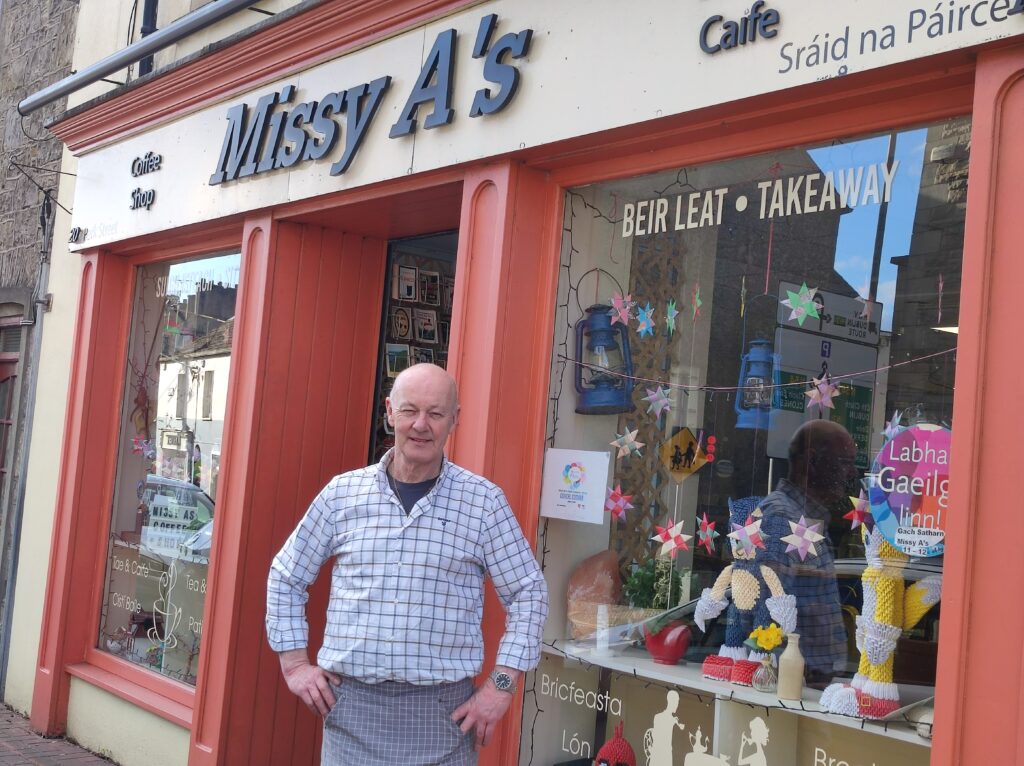
• Seamus MacAdam, owner of Missy A’s café, Monaghan.
Seamus MacAdam is the owner of Missy A’s Café, which hosts a weekly ‘ciorcal comhrá’ group, and he sees “a big revival around here.”
The Bee Healthy food shop is another place to practise your cupla focail – three of the shop assistants speak Irish, including a lady from South Africa, and they promote an Irish speaking day on Saturdays. Shop assistant Charlotte Batsaikhan says: “Customers will actually come out of their way to come in and speak Irish.”
The most unequivocally positive responses to the question of whether or not Monaghan was the most Irish town in the country came from young people.
• Orla Corrigan (19) speaking as Gaeilge says that Monaghan is “definitely” the most Irish town in Ireland.
Cathal McEnaney (28) works in The Western Arms and he says a lot of the staff working in the hotel attended the local all-Irish secondary school and are fluent.
Orla Corrigan (19) works in the same hotel. We chat ‘as Gaeilge’ and she tells me that Monaghan is “definitely” the most Irish town in Ireland and that when she’s working on a Sunday, “you’d always have a couple of people saying something in Irish…even just ‘Go raibh maith agat’”.
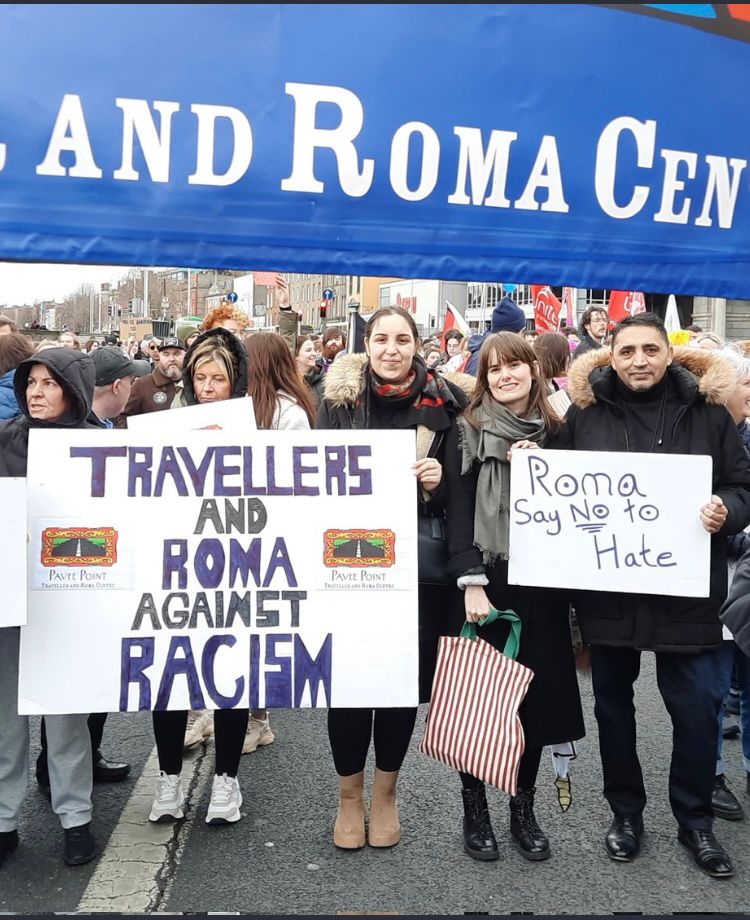
The seven-strong Roma Programme team in Pavee Point has expanded in recent years, and works across the areas of health, employment and inclusion, as well as celebrating Roma history and culture.
In 2018, Pavee Point worked on the National Roma Needs Assessment, which remains the only national piece of research looking at the needs of the Roma community.
The research highlighted the disadvantages faced by Roma in Ireland. It includes some sobering statistics – 20 per cent of the community here live in poverty.
Another shocking statistic was the fact that a quarter of Roma women’s first contact with maternity services is when they arrive at hospital in labour.
Unfortunately, it seems little has changed since 2018.
During EU Roma Week in April, the HSE’s National Social Inclusion Office and Pavee Point launched ‘Roma Daja’, the first targeted maternal health information resource for Roma women.
– Gabi Muntean, community worker with Pavee Point’s Roma Programme
Gabi Muntean, Community Development Worker with Pavee Point, who is Roma herself, told Changing Ireland: “Nothing really changed from 2018 to 2023. Women still don’t go to see the doctor before they give birth.
“I gave birth 27 years ago in Romania. But what I heard from the girls that I spoke with, it’s not much different (in Ireland today). They were not speaking very nice with me, they were not treating me nice. In Ireland, it seems that the experience is the same. You can see the difference between being Roma in a room full of women that are non-Roma. So everywhere I would say, racism exists, and discrimination, and people are not changing.”
To coincide with the launch of the information booklet, Pavee Point launched a new report on Roma maternal health.
Jenny Liston, programme coordinator of Pavee Point’s Roma Programme said: “The maternal health issues that came up shocked everybody. We wanted to try and dig a little deeper into why is that happening for Roma women.”
Jenny said the report, entitled ‘Romneango Sfato/Roma Women’s Voices’ “is an important step in highlighting the health inequalities experienced by Roma women in Ireland”.
“We released the research on the same day to say: ‘Yes, Roma women need more information. But the services also need to know what Roma women are saying because it’s a two-way process’.
“In terms of how their pain and their medical needs are treated and taken seriously, we’ve seen – not just in our research – that migrant women’s experience of maternity services is very similar around unmet medical needs, women being more at risk of something going wrong.
“There’s definitely a question around women from ethnic minority communities’ experiences of the maternity services, particularly for Roma women. Lots of women talked about not having access to an interpreter, not understanding what’s happening if there’s a health issue or medical emergency, or relying wholly on Google Translate.
“Bianca, who’s on our team, is in her early 20s and has had one baby. The nurse said to her: ‘Oh you’re Roma, we’ll see you very soon again so’. This kind of presumption that you’re a Roma woman, you’re just going to keep having babies. She said that she felt humiliated.”
– Jenny Liston and Bianca Tanase of the Pavee Point Roma Programme at the launch of their report on maternity services in April
FORCED STERILISATION
Pavee Point believes that there is a need for health professionals to have a better understanding of the history of the Roma community.
“It’s not that long ago, right up until the early 2000s, that there were cases in Slovakia of forced sterilisation of Roma women.
“500,000 Roma were murdered during the Holocaust, and a lot of the Roma families that were brought to concentration camps were medically experimented on. So the views of doctors and trusting those in power is not a natural fit for the Roma community,” explained Jenny.
UKRAINIAN ROMA
An unexpected challenge that arose last year was the need for targeted supports and an understanding of challenges specific to refugees from the Ukrainian Roma community.
“Ukrainian Roma are facing additional barriers in getting across the borders and getting the same access to aid. We knew that this was an issue coming down the track. We’ve set up a phone line now, specifically for Ukrainian Roma when they need support,” said Jenny.
“A lot of families were initially refused temporary protection when they came. It’s still going on. One of the reasons they would be refused would be based on lack of evidence of being in Ukraine at the time of the war, even if they have Ukrainian passports.
“A lot of the Roma families might not have any English or literacy. They also mightn’t have things that may be expected by immigration like bank accounts, or formal documentation.
“We came across discriminatory behaviour, and a lack of understanding that you can be Roma and Ukrainian. Also there would be a lot of Ukrainian support staff who might have their own views as well around the Roma community.”
Pavee Point Roma Programme staff have since carried out work with immigration staff, interpreters and various organisations working with Ukrainians “just trying to raise awareness that there are Ukrainian Roma”.
Some 200 Ukrainian Roma have so far accessed the helpline, however Pavee Point estimates there they may be up to 500 Ukrainian Roma currently living in Ireland.
CHILDREN FORCED TO SLEEP ON STREET
Jenny revealed: “We had a case recently where a family were evicted from the hotel that they were assigned because they didn’t pay their food bill. They (Ukrainian refugees) now have to pay for food out of their social welfare.
“They came out to City West where nobody would speak with them, and they ended up sleeping out the first night, their three children with them. Then someone told them about us.
“They rang us and we realised that the family didn’t have a social welfare payment – that’s why they didn’t pay for the food. They couldn’t fill in the forms, and nobody had supported them to fill in the forms.”
COMMUNITY DEVELOPMENT APPROACH
“We’re always responding to what we see in the community. Like the rest of Pavee Point, we use the community development approach, and we’re focused on collective action and promoting the rights of the Roma community and we do this through working directly with the community, but also policy development and working with service providers, with the State in terms of how to address racism and discrimination that the Roma community face in Ireland,” noted Jenny.
NO SAFETY NET
Pavee Point has done much campaigning around the impact of the habitual residence condition on the Roma community, which means that many cannot access social welfare and housing supports.
Jenny commented: “About half of Roma who had applied for social welfare weren’t successful. This leaves the community without a safety net and excludes families from the basics like child benefit. This is the main issue that excludes the Roma community from a lot of support. People are living on the margins a lot of the time.”
Gabi added: “I was thinking after the Needs Assessment in 2018 something will change. There have been some changes, but, for example, parents still cannot have the child benefit because the parents are not habitual residents. The poverty was and is still really huge in the Roma community.”
Pavee Point staff and researchers from Maynooth University at the launch of the report on employment in the Roma community in February
HIDING THEIR IDENTITY
New research on employment among the Roma community undertaken by Pavee Point in collaboration with Maynooth University was published in February.
For the research, 23 people from the Roma community were interviewed about their experiences and it showed they face significant inequality in the workplace.
“It came out really strongly that Roma people felt they had to hide their ethnicity when looking for work because they just feel that they will not get a job. A lot of Roma women said they wouldn’t wear their traditional clothes if they were looking for work,” explained Jenny.
FRIGHTENING RISE IN RACISM
Like many organisations working with migrant communities, Pavee Point has noticed a worrying rise in the influence of far-right anti-migrant sentiments, particularly online.
Jenny said: “When we launched the employment research, it was well attended and it was a really positive event. But the comments below on every social media of these positive events – it’s desperate to see the racism that can follow something like that. So you can see how it’s difficult for people to put themselves out there and identify as being Roma. We’re all seeing the rise of that far-right rhetoric, not just anti-Roma racism but also anti-migrant. It’s scary, it really is.”
It’s a scenario that most of us probably thought had been left behind in the early 90s. A member of the LGBT community travels by bus to attend an event run by an LGBT organisation. There, they can be open, they can let their barriers down and be their full selves. However, once the event is over, they get back on the bus to travel home to their rural community, and the walls come back up again.
Unfortunately, this is a scene that still plays out every week, all over the country. As a society, we may have clapped ourselves on the back after the passing of the Marriage Equality Referendum in 2015. But, according to members of the LGBT+ community, there is still work to be done.
During a Rural Ideas Forum in 2022, vice-chairperson of Amach LGBT in Galway, Maria Molloy explained: “The milestones of the Marriage Equality Referendum and the Gender Recognition Act show how much we’ve come on in relation to the LGBT+ community. But there is still a way to go, and we see through the work we do that there are members of the LGBT+ community who are in rural settings and have a fear of not being accepted.
– Lack of transport is a major factor when it comes to rural isolation
“The isolation comes from (the fact) that they can’t be their whole self in the place they live,” she said. “We’ve had a lot of people – when we had Teach Solais, our LGBT resource centre open – that would get on a bus or get on a train for several hours” to come visit the centre.
For many it was their first time.
“We had an 80-year-old farmer come in and say ‘I’m part of this community, and I feel that I belong’. We were there for people and heard their stories, and they felt that they could be their whole self with us, but when they got back on that bus, they went back into the closet, so that’s the aspect that we wish to tackle.”
– Debbie O’Rourke, Waterford and South Tipperary Youth Service
Community youth worker with Waterford and South Tipperary Youth Services, Debbie O’Rourke works with 10 to 24-year-olds who attend the Chillout LGBTI+ Youth Project.
She told Changing Ireland that the gaps in transport links were “a huge problem”.
Debbie revealed that young LGBT+ people who find themselves isolated without a space where they can meet others from the community often “withdraw into themselves”.
“The effect is very negative. Anyone who’s withdrawn is not living their full life. It really affects young people’s development in terms of their attachment to education, their life progression. Some young people are afraid to do anything for fear that they might be found out, or that they’ll let it slip, so they just kind of retreat,” she said.
Debbie stressed the importance to LGBT+ young people of “seeing someone who’s like them”.
“Role models are really important to young people, in particular in the LGBT community, because for young people to see adults living their best life – or even just living a normal life – it convinces them that they’re going to be ok.
“So for young people who don’t see someone else, or don’t hear any mention of the LGBT community, that can cause them to retreat in a way that they don’t always come out of. Then that can cause increased mental health difficulties.”
According to Debbie, outreach work with schools in rural areas is vital. Earlier this year, she also worked on a rural outreach project with 18 to 24-year-olds in rural areas of Waterford and South Tipperary.
“I surveyed young people of that age in that area and in community and voluntary organisations in that area. I thought: ‘It’s unrealistic that there’s going to be enough LGBT projects in every area for every rural person to access’. The way I looked at it was, how do we make sure that what does exist is inclusive? Most organisations just had never thought about it before.
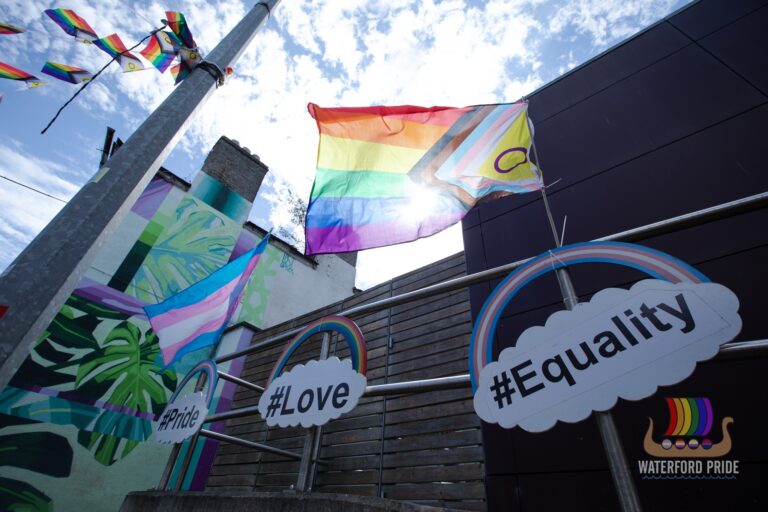
– Pride celebrations at Chillout Waterford
“There are amazing groups out there, it’s about how do we make that a place where if an LGBT person wanted to come and join it, they would be able to share all parts of their lives; they wouldn’t have to hide. You can’t put a price on visibility, a lot of the work I did with these organisations was getting them ready to put up that flag,” she said.
Debbie has called for additional resources to fund community workers. “A building and materials cannot replace what a worker can do. I would specifically call for more investment in youth work and community work, because youth workers and community workers go out and, particularly when it comes to rural isolation, that’s what it’s going to take.”
Cillian Flynn is operations manager with GOSHH (Gender Orientation Sexual Health HIV) in Limerick and he says access to LGBT+ groups are vital for the mental health of people in the community.
“Part of it is that they don’t have to come out in social settings. It’s also so people can see they’re not ‘the only gay in the village’ for want of a better phrase. It’s good to just come in here and be with similar people and that social anxiety is not there,” he said.
When asked whether transport or attitudes were the main contributors of rural isolation for people in the LGBT+ community, Cillian says “it’s a bit of everything”.
“For some people, they grew up in the 80s and 90s where being out and gay was illegal. So a lot of people buried it deep down, they got married, had families, so that has led to some of the isolation.
“It has an effect on family relationships because people choose not to visit home as much because of mental health. It’s a massive thing that they can’t be themselves where they grew up, around their loved ones, around the people who in theory should care for them the most.
“There is a small town mentality, but I think some of that is changing. Like the town I grew up in – seeing a little Pride festival happening there. It’s lovely to see that happen.”
However, Cillian believes that many members of the LGBT+ community prefer to move to larger urban areas. “For some people who haven’t come out, they want that segregation, that separation. ‘I can be myself once I go to that city’.”
This is a view echoed by Kate Moynihan, CEO of LINC, a community resource centre for lesbian, bisexual and trans women in Cork. “There is a huge need in rural spaces, but at the same time, people like to go away, they like to go to a city where they’re a bit more anonymous.”
– Kate Moynihan, CEO, LINC in Cork City
“You might not know other LGBT people in your small town or village for that social interaction. We have women from Kerry, Limerick and Waterford who would drive to our groups because they’re not happening in their own places.
“LGBT people are say five to ten per cent of the population; if you’re in a small town. It’s a very small group of people. Everybody’s going to know each other, so you do need to go away often to meet (new) people, or to meet someone you want to have a relationship with.”
“While there have been huge improvements in Ireland, there is still a way to go. There’s still that prejudice, and that’s not just rural, that’s everywhere,” she explained.