You have to be a jack-of-all-trades to manage a grassroots community organisation. While the work can be exciting, managers often wind up doing unpaid extra hours on tasks that specialists would do in a big company.
You’ll see them tackling everything from DIY to bookkeeping, social media and financial administration, and it can impinge on their ability to focus on the core work.
Donegal Local Development Company (DLDC) is offering a solution to this problem for social enterprise organisations in their area. Since last year they can apply to join a Shared Services Model where three organisations share one employee. (One of the three must agree to be the employer of the person serving the organisations).
Social enterprises must have a minimum of 12.5 hours weekly work and the capacity to pay for their share of the employee’s hours.
As DLDC says, “It is often difficult to justify or cover the cost of employing experienced staff and therefore social enterprises inevitably must manage without this support. Through participation on the shared services initiative, social enterprise managers benefit from an additional support staff member in a specific role which would free up some of their time.
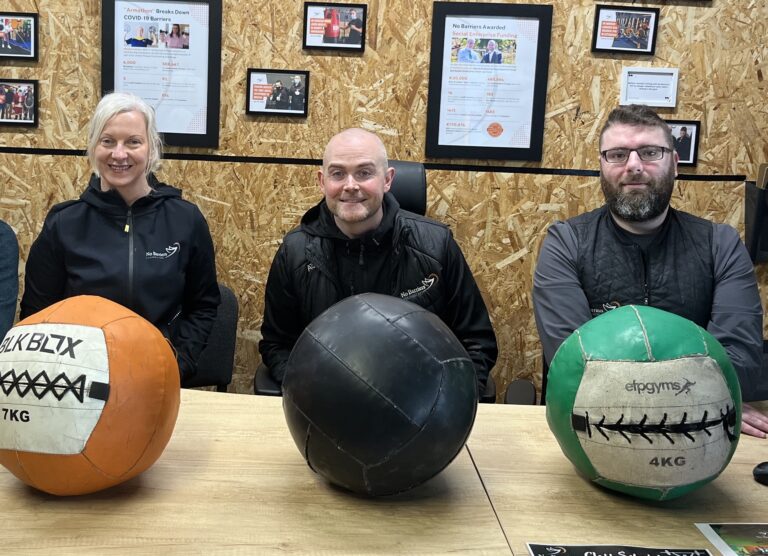
The first such service was launched last year. “It’s a fantastic idea,” said Johnny Loughrey, whose social enterprise No Barriers Gym expanded in recent years and was struggling to acquire the level of professional services needed to support its growth. Now it shares a bookkeeping employee with Bundoran Community Development Group and the Bluestack Centre Hostel in Drimarone. “It means we keep on top of our bookkeeping and finance,” Johnny explained.
In a time when it is a challenge to find tradespeople and professional support, is this one answer for community groups across the country?
Contact DLDC if you’d like to know more about their Shared Services Model.
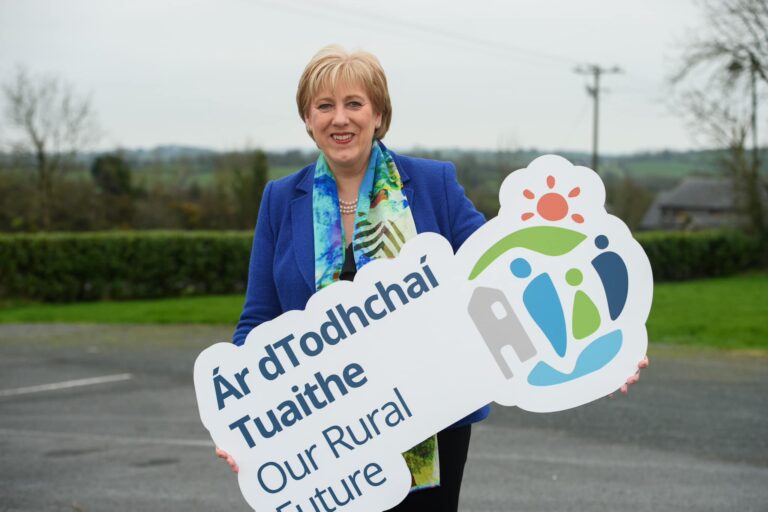
Minister for Rural and Community Development, Heather Humphreys has launched a new bursary to support a number of Masters students in the area of rural development.
As part of the initiative, six students will be supported with a bursary with a value of €60,000.
The initiative is being rolled out in partnership with Irish third level colleges and delivers upon a commitment in the five-year rural development policy, Our Rural Future.
The bursary was developed in collaboration with the Higher Education Institution Network, which was established by the Department to encourage the wider take-up of rural development research at postgraduate level.
Minister Humphreys said: “We hope that this financial support will encourage and support graduates who want to continue their studies and pursue a future career in the area of rural development.
“We hope to see applications from candidates in all disciplines relevant to sustainable rural development outlined in Our Rural Future.
“We welcome research projects that will contribute to the evidence basis which will underpin government policies relevant to sustainable rural development and help us address the challenges and seize the opportunities ahead of us.”
Expressions of Interest were invited from the Network in order to enhance collaboration between higher education institutions, research organisations and Government.
Funding is now being awarded to a joint proposal by University College Dublin, University of Galway and University College Cork for their complementary Masters programmes in rural development with specialisms in rural innovation, climate adaptation, and sustainable development.
The bursary will be funded by the DRCD and administered by University College Dublin as the lead partner organisation.
It will support six students to undertake a Masters programme in rural development, two students in each of the three partnering universities.
The students, who will be selected by the universities, will engage with the Department and other nominated departments in the formulation of specific research questions focused on advancing the objectives of Our Rural Future and providing an evidence base to aid the development of public policy or support evaluation of specific policy challenges.
With rural transport in remote areas still “terrible”, the driving test is a challenge for non-English or Irish speakers and third level choices perplexing. If they received more help on these and other issues, it would help them to integrate and be of wider benefit to society and to the economy.
She said, “Apart from the energy they bring and their different viewpoints on the world, the Ukrainians who’ve come here to Arranmore are very skilled – in communications, engineering, graphic design.
“I don’t think the government recognises the huge potential they have in Ukrainians who want to give back to the community. They would raise the standards of things in Ireland.
“A lot of the young people doing the Leaving Cert now are also doing their Ukrainian exams because they don’t know if they are going to stay in Ireland or return to Ukraine. I think they need a lot more support before they make their university choices. That whole age group needs to be better looked after,” Fiona added.
“The Government and people like me need to do more because Ukrainians need better access to information and advice,” she concluded.
Losing local media outlets deprives citizens of their most important source of local news, and any reader of local newspapers can attest to the decline in local content.
This is dangerous because people need access to accurate and substantive information about their local communities to participate as citizens.
Local newspapers cover all the ‘boring bits’ of weekly fodder – district courts, local authority meetings, coroners’ courts, planning appeals, public consultations, regional assemblies, hospital reports, policing and so on.
When I started my reporting career in a local Limerick newspaper in 1989, we left out more material from local institutional activity than we could publish weekly – there was so much of it .
Back in the closing stages of the last century, official minutes and reports had to be posted or hand-delivered five days in advance of council meetings. Intrepid reporters tracked down a favourite councillor to get a sneak preview. It was a different world.
For the past 14 years, I have been a very busy founding editor of a local community bi-monthly, 64-page magazine – ‘Ballinasloe LIFE’. It goes out to a print readership of over 12,500 and an online community of 10,000. It is made possible through the support of a gracious business community, and with no public funding, we deliver 6,000 copies to our community six times a year for FREE.
During that time I have witnessed a growing intolerance, disdain or indifference ( I can’t quite fathom) for allowing the local community access to their public business-making.
After we lost our Town Council, it took about three years of huffing and puffing to get a seat on the press bench to attend the new Municipal District Council (MDC) meetings. We are circularised the call to meetings and the agendas, but have no access to the draft minutes or any of the reports that are formally issued and approved by the council members. The preparatory meetings held in camera (in private) take twice as long as the formal public meetings.
I thought it was just our particular swamp in East Galway, but no, across the River Suck in Roscommon and Westmeath it is similar. There is more information in the votes of sympathies lists from official minutes than on the substantive elements on the agenda. GDPR is the brave shield that most officials hide behind.
I would like to cover aspects of my community’s involvement with the HSE, but as we are not official media we have no access to the minutes and agendas of the Area Health Representative Committee. Ditto the Border, Midland and Western Regional Assembly, and the joint policing committee.
From time to time I have to check facts with these public democratic bodies – most are two-to-three years behind in their annual reports. It’s the same with qualitative data; there are three sets of figures for the housing list in my MDC area alone – according to officials.
No one in my community knows how much it costs run a MDC because the estimates (budget) meetings are held in private, separate from the main meetings of the council and no-one, not even some of the elected reps (I am learning now) fully understand how this occurs.
Given all that, I welcomed a sobering report published by Maynooth University in December of last year titled ‘The 21st Century Councillor in Irish Local Government’. However, while it rightly savaged public discourse on social media, it was noticeably quiet on the role of community media.
I was more encouraged with our new Media Development Commissioner Rónán Ó Domhnaill’s remarks to the CRAOL (Community Radio Ireland) gathering in Athlone at year end (Changing Ireland, Winter 2023) where he bravely articulated the new emerging vision for Comisiún na Meán and how they would be prioritising the ‘Local Democracy Reporting Scheme” .
I very much hope he and his colleagues and the members of Association of Irish Local Government will reach out to community-owned, resourced media in delivering on this much-needed approach.
The funds will be used to support communities in establishing Town Teams, or developing them in areas where they are not already well established.
Minister for Rural and Community Development, Heather Humphreys said: “This is all about tackling vacancy, combatting dereliction and breathing new life into our town centres.
“Through this initiative, we are recognising the importance of having vibrant towns, which are places to live in, work in, visit, and raise a family in.
“Town teams are key to rural regeneration and I am delighted that this funding will support the development of these teams and the creation of teams where they currently don’t exist.
“Amongst other things, these Town Teams play a vital role in helping communities access the wide range of funding available from my Department under various schemes”
The projects will be managed by the Department of Rural and Community Development-funded Town Regeneration Officers across the country.
The funding follows on from the recent announcement of €780,000, which will support the development of a Town Centre First Plan in a further 26 towns. These plans represent the communities’ own visions for the future of their towns.
A Town Team is a group of local residents, business people, community representatives and other stakeholders who come together to make their area a better place to live, work, visit and invest. The team members represent diverse sectors and backgrounds.
To find out more about the Town Centre First policy, the Town Centre First Suite of Supports 2024 and how towns can become involved, visit www.towncentrefirst.ie.
The Active Arranmore project began in January, 2023, with funding for a coordinator for one year. That has now been extended into 2024 and all involved want the funder to back it for a good decade.
“The project is about being active and healthy, having an active body and mind, using the natural infrastructure here, along with the tennis courts, amphitheatre, our gym and so on. The problem was that there was nobody to pull it all together, to coordinate it,” recalled co-op manager John McCafferty.
Funding for Active Arranmore comes through the Department of Rural and Community Development’s Empowering Communities Programme.*
John said the project began two years ago when Margaret Larkin – “an absolute angel” – visited from Donegal Local Development Company: “She said they had Empowering Communities Programme funding and what would we like to see in place, what would improve life on the island?”
The islanders knew what they wanted and Active Arranmore was born. Once the coordinator was appointed the project took off.
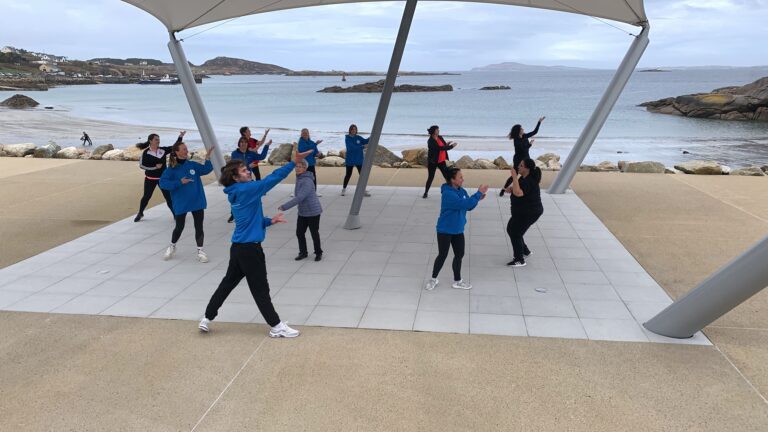
On a visit to the island in February of this year, it was clear to see from the weekly timetable the range of choices for locals, even in wintertime – including walking, crochet, ping-pong, chess, youth club, early birds gym workouts. Plus there were Zumba classes with Vlad from Ukraine.
“It’s probably the best project I’ve seen here in 20 years,” said John. “It’s gotten people out of their houses.”
• Fiona Ní Ghloinn and co-op manager John McCafferty take a tea-break during hailstones. Not that either is afraid of the weather – Johnny volunteers with the RNLI and Fiona’s job is to get people outdoors and active.
Much of it is free of charge and in the summertime many more activities will be organised and tourists can join in.
One of the island’s two co-ops – Comharchumann Forbartha & Fostaiocht Arainn Mhór (CFFAM) – offers kayaking classes, sailing and bicycle-rental during the summer. The island also now has the first accredited marine blueway in the country, meaning it is a tried, tested and safe place to try snorkelling. All these add to the activities the island can offer locals and tourists alike.
Brian Proctor was the first coordinator, employed by DLDC, and he did a fabulous job by all accounts. Fiona Ní Ghloinn, who lives on the island with her family, started in his place in January. We met Fiona but she had to rush away to run a class.
We asked John if other islands are doing this. “No, I don’t think so, but they’ll read about it in Changing Ireland. Other islands, and not alone islands, any community can try this. They are missing a trick by not having coordinated active weekly activities,” he said.
Early risers for Active Arranmore 6.30am gym session for ladies 2-photo courtesy CFFAM.
At 6.30am, he and colleagues take turns opening the community-owned gym for the early birds (ladies on Wednesdays, over-16s girls on Fridays).
“We work together to make things happen,” said John. The project depends on people being willing to do a certain amount of voluntary work.
MORE INFO: You can contact John or Fiona them through CFFAM Árainn Mhór‘s Facebook page.
SUPPORT
The Active Arranmore project is supported by Donegal Local Development Company, Donegal Local Community Development Committee, Donegal County Council, Donegal Sports Partnership, Sláintecare, and the Department of Rural and Community Development.
Arranmore’s gym received €50,000 from the Department of Rural and Community Development and Donegal County Council through the CLÁR scheme in 2022.
The largest allocation to date under the Rural Regeneration and Development Fund places a particular emphasis on the revitalisation of rural town centres, combating vacancy and dereliction.
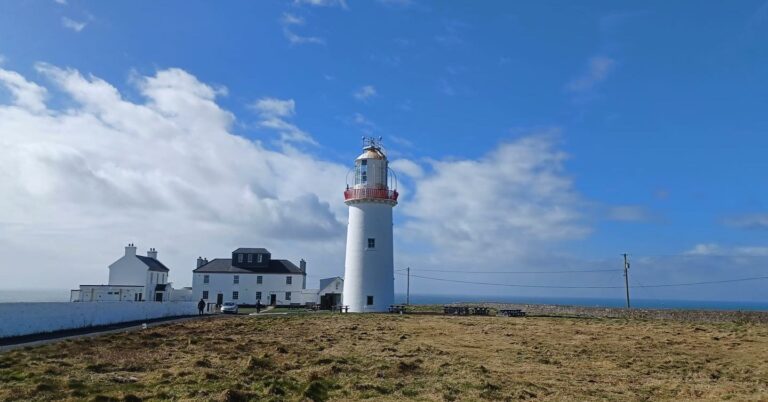
Announcing the funding at Loophead Lighthouse in Clare this morning, Minister Humphreys said: “Today I am announcing an unprecedented €164 million in funding for 30 landmark projects in rural Ireland. This announcement has been made possible by the Rural Regeneration and Development Fund, which is providing strategic capital funding for significant projects around the country.
“The funding announced today will revitalise towns and villages in line with the Town Centre First Policy, addressing vacancy and dereliction, stimulating rural economies and responding to community needs”.
The successful projects announced today include:
Ballyhaunis, Co Mayo (€5.2 million): Redevelopment of a derelict convent primary school building and grounds to provide a public library, enterprise hub and public park.
Limerick Greenway Hubs Development Project, Co Limerick (€9.6 million): Redevelopment of former station houses along the Limerick Greenway route to create mini destinations, trailheads and service hubs.
Cresslough, Co Donegal (€12.1 million): The creation of a new central hub that will be transformative for the community.
Cahersiveen, Co Kerry (€6.4 million): Regeneration of the town centre including the renovation of an historic building as a community facility and development of a waterfront amenity and boardwalk.
Enniscrone, Co Sligo (€8.4 million): Regeneration of key seafront areas including the redevelopment of the historic Cliff Bath House, upgrading of the Cliff Walk and redevelopment of a derelict building to provide a new community pavilion.
Baile Bhúirne, Co Cork (€3.2 million): Redevelopment of a former residential school to provide a Regional Development Centre – an enterprise development, training and research facility.
The Minister added: “Today, I have announced the largest allocation of funding since the RRDF was established. The RRDF alone has now invested over €577 million in funding for projects in rural Ireland.
“This is a truly transformative level of funding that will make a real and lasting difference in rural communities throughout Ireland.”
Full details of the successful projects can be found here.
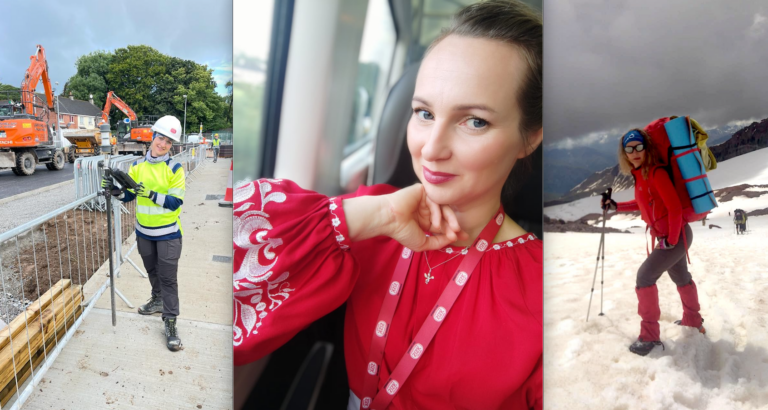
Back home, as Russia’s war on Ukraine enters a third year, some of Tania’s close friends serving on the front line have been killed or injured. She remains in daily contact with friends and family, and since her Irish hosts and employers made her feel safe here – and productive – she channels her earnings and spirit into the war effort.
Government figures show that Tania is one of 24,000 Ukrainians employed in Ireland, 17,000 of whom are full-time like her. There are 1,000 employed in construction. Separate figures from a survey conducted by Ukrainian Action in Ireland suggest the numbers in work may be much higher.
In Tania’s case, her hosts provided transport that enabled her to find paid employment quickly. She has never missed a day.
Asked why she took on work so soon after landing in Ireland, she said: “Because I no like sitting in house. I have respect for myself and my host family and if people ask, ‘Are you working?’ I then say ‘Yes, in a restaurant, as dish wash manager!’
“I want to work. I don’t want sit in one place. I like growing. Work connects people. It is good meeting people. Good for social stability. For me it’s very important to have work and have work colleagues. I no understand people who don’t work,” Tania said.
She is grateful to her Irish employer, not least because she now speaks better English, which she learned in the workplace. Sometimes she reads children’s books about Irish legends, because the text is easy to follow. If she had time she would go to classes, but work, commuting and cooking fill her days.
Kremenchuk
In Ukraine, Tania grew up in a quiet village – still quiet thankfully – and her parents and younger sister live there to this day. She had moved as an adult to the city of Kremenchuk in central Ukraine, where she bought a sixth floor apartment facing, unfortunately, a large, city centre, military installation.
The first bombs fell on the city on April 2, and Tania made tentative enquiries about leaving. She heard through word of mouth about someone in Ireland offering accommodation, and they were vouched for through a network of friends, so she contacted Patrick Morrissey, who had a farmhouse with spare rooms outside Thurles, Co. Tipperary.
However, Tania was nervous – who was this man? Also, she was still unsure about leaving her country, her family and friends behind. Then, on May 12, her entire apartment block shook from missile attacks. The next day, she fled.
Ukraine’s largest oil refinery is located on the city’s outskirts and is a key Russian target. (It is 10km from the bombed shopping mall).
Tania revealed: “My parents live in village – it is safer. My younger sister also. She has two children, 13 and eight. Her husband now soldier in front line. Most of my friends also now on front line.”
5am start
Tania’s first job was washing dishes in a local restaurant. After three weeks, through her hosts, she heard about a job in a canteen with a construction company headquartered in Dublin. She got the job and for eight months she rose at 5am to catch the early morning train from Thurles to Dublin – her host family kindly provided a lift to the station.
Tania was nervous joining a big company. “I no understand nothing. No English, only with phone and pen and paper. Not even very good now.
“I go to Dublin – it’s very big office. Big bosses with lots of money, and I’m a temporary protection lady,” she said. Tania recalls the receptionist calming her down, saying “Don’t worry”.
When the canteen manager went on holidays, Tania found herself in charge. “I have to cook for big meetings and I don’t understand English. One man had a watch that I think is more valuable than my apartment in Kremenchuk. ‘Hello Tania’, they say. ‘Thanks you Tania’, they say. After day one, other days easy.”
Moving on
She was working for seven months in the canteen when, cycling through Thurles one day, she spotted a Sisk flag on a building site. She worked for Sisk.
“Next day I say to Nick Morrissey – I’m ready for working with a shovel.”
Tania had qualified in Ukraine as a land surveyor. She was called for interview and taken on to help on the Thurles project – building 64 modular homes for fellow refugees from Ukraine.
• Tania at work in Thurles, Co. Tipperary, on the site of modular housing for fellow Ukrainian refugees
On completion, she moved with Sisk to Rathdowney where they were midway through building 44 modular houses. She rented a room from an Irish woman called Mary Hennessy, “An amazing lady, perfect – she’s my Irish mammy now”.
Currently she lives a 15-minute walk from a Sisk site in Lucan, renting a room in a family house: “They’re from South Africa. Good family. Nice house.”
Salary supports war effort
Asked how she spends her salary, Tania replied: “I help my parents in Ukraine. They have only €100 a month pension. I help my army every month because lots of my friends are now in zero line (frontline) in the war. I send money to girls who make camouflage for technics and sometimes it helps them to buy car or jeep for war. I don’t make big money in Ireland.” Tania is saddened by what she calls a lost generation of men from Ukraine – killed on the battlefront.
Friendships forged in mountains
Regarding corruption in the Ukrainian military, Tania remarked: “I can’t change that, but money I send is safe from corruption. It’s between friends. I trust them. I climbed many mountains with them. A few guys now died, some lose legs and no climb no more. One guy no more have eyes, very nice guy. We climbed to base camp in Mount Everest.
“Ten years I climbing. Crimea was my first hike. I said I’m never going again because it’s so hard. Next thing, I see it’s very beautiful. Next, I climb Carpathian mountains – 2,048 metres. More hard. Next Mount Elbrus in the Caucasus Mountains in Russia. Caucasus people have very hot blood. They say they’re not Russian,” said Tania.
• Tania climbing before Russia attempted a full-scale invasion of Ukraine.
Few friends in Ireland
“I not have too much friends in Ireland. Morrisseys and my job friends. I’m not too much meeting Ukrainian people in Ireland – I don’t have time,” she added.
Ukrainian Independence Day is an opportunity each year to meet compatriots, but Tania has not taken part. “For me it’s very sad,” she said.
Racism in Dublin
Racism is on the rise in Ireland and Tania has experienced it. “I know a very big racist. Sometimes I’m afraid in Dublin. I have little Ukrainian flag on my bag. A man in Dublin, he sees it and he doesn’t like me – he say bad things. Sometimes I’m afraid to have this flag because somebody might throw stones at me, but still I keep it,” she explained.
Tania tries to understand the racism through the lens of a popular Ukrainian folklore story:
“With all people, whether Irish, French, Ukrainian, Gypsy – there are some good, some not. In Ukrainian folklore – if you put just one spoon of oil into a pot of honey, it makes the honey taste bad, but the honey is still there.”
She believes narrow-minded Irish people see what they see, and they do not see the Ukrainian people who are working. “The racists see only bad people. I see nobody because I’m working,” she said. Tania laughed when asked was she fearful of being attacked in Rathdowney or in Thurles: “In the countryside everybody is friendly.”
Dreams for future
Tania baked a cake when she was leaving the canteen job to start on the modular homes in Thurles. “I make big cake for the bosses to say thanks for the job and for trusting me for future. My first and last dream is helping to rebuild Ukraine, so this experience is very important for myself.”
She said of Sisk: “It’s a perfect company, everybody nice.” They better understand her situation now and her dreams for the future and how her experience building in Ireland serves a purpose.
After our interview Tania texted me to add that at work she feels “completely safe, from the safety of construction and the preservation of my health and life, to my personal mental health and comfort”. “The company always takes care of its employees regardless of their status on the career ladder,” she added.
Last year, Tania returned to Ukraine for the first time, visiting family and friends in her home village. Her apartment block in the city still stands, but sirens wailed every day she was there – she showed me videos and the many bombing alerts on her phone from that visit.
Her older sister, who lives in Czechia, has visited her in Ireland and she hopes her younger sister will visit this year. Their parents, now elderly, do not want to leave their village and so Tania looks forward to taking annual leave in October and returning to see them for a fortnight.
She will tell them good things about Ireland and her Irish family, her Irish mammy and Sisk. “I have little and maybe big dreams for after the war. Maybe Sisk come to Ukraine to help rebuild,” Tania said hopefully.
See the funny side
Tania was afraid of losing her passport and being killed before she left Ukraine – then nobody would be able to identify her body and inform her family. That need to have her passport within reach at all times stayed with her for a long time.
Her paranoia is something she can now see a darkly funny side to, helped on by her Irish hosts. Overhearing us talk, Patrick Morrissey piped up, asking: “Hey Tania, where’s your passport?”
He coaches football and hurling teams and is used to helping people overcome defeat. While hosting refugees is on a whole other level, four Ukrainians have so far stayed for extended periods with Patrick, Nicholas and Tim Morrissey and it has gone well for them. All are working or studying now and have integrated into Irish society, but Tania stands out as the one who went to work one week after arriving.
• Pat Morrissey.
Volunteers
As a Tipperary household, the Morrisseys are in good company when it comes to volunteering. Last year, nearly 26,000 people in the Premier County volunteered, according to the latest census data. That’s 15% of the people living in Tipperary. A fifth of volunteers were involved, in 2022, in more than one voluntary activity. The average age of a Tipperary volunteer is 48, with the 45-64 age group the most active volunteering, possibly because that age cohort has more free time.
The data was contained in data released on February 1 by the Central Statistics Office. The Census of Population 2022 Spotlight Series: Volunteering in Ireland showed that, nationally, 711,379 people volunteered in 2022 representing 14% of the total population.
Almost nine out of ten Irish employers who took part in research commissioned by Irish Penal Reform Trust (IPRT) would consider hiring someone with a criminal history. The Maynooth University study is the first time research on employer attitudes to people with convictions has been published in Ireland. The research included a symposium, 23 interviews and a survey of 55 participants.
What emerged was that employers want more guidance, as Galway Rural Development community worker Damien Quinn stressed on the day of the report’s launch.
Damien was one of the guest speakers when ‘The Secondary Punishment’ was unveiled. As he previously told Changing Ireland readers, he found it very difficult to find work after being released from prison. When he did finally land on his two feet, he set up a campaign and support group for former prisoners called Spéire Nua.
The research echoes his concerns, but there was hope in the respondents’ replies with employers broadly willing to hire people with convictions (PWCs) once they had guidance, information, and support in order to do so.
The report recommends that the Government bring in legislative reform to promote inclusivity and anti-discrimination for PWCs.
IPRT executive director, Saoirse Brady, said at the launch: “The Criminal Justice (Rehabilitative Periods) Bill 2018 should be enacted as a matter of priority given that it has cross-party support and would deliver on a key Programme for Government commitment to expand the range of convictions that can be considered ‘spent’.”
When you’re lying in a prison cell, you think you’re not going to get work ever again. I was an industrial cleaner first, and I was in a college called Pathways for ex-prisoners. One of the tutors said Maggie (Clune, CEO at PACE – Prisoners Aid through Community Effort) was looking for somebody. He said: ‘I think you’ll be good at it’, I said, ‘Why’? And he said: ‘You like to talk!’. So I sent my CV off to Maggie, and she got in contact with me within a day.
I make coffees, I do a bit of ordering, I do a bit of cleaning, a bit of everything. I absolutely love it, and they look after you so well here. PACE is after making a huge difference. The fact that they believe in giving second chances to people like me coming out of prison is a huge thing. And they never judge you, they say: ‘Everybody makes mistakes. Everybody deserves a second chance’.
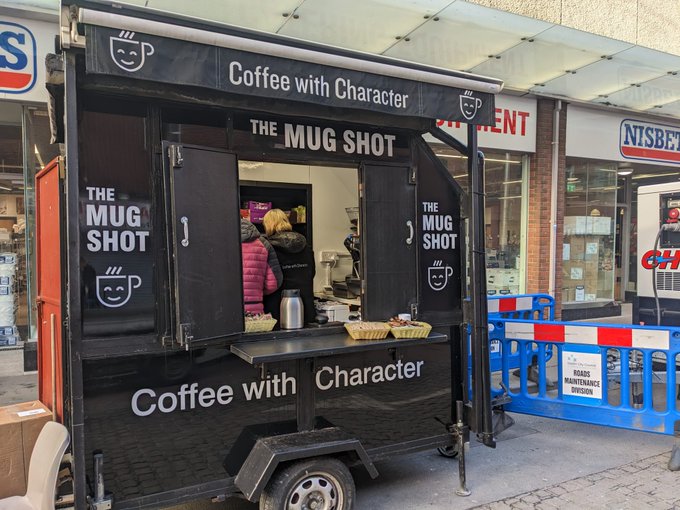
I have no plans to move on (from The Mug Shot), I’d be glad to stay here. My boss is more of a friend to me than a boss. If there’s anything wrong you can pick up the phone and he’ll always answer, same with Maggie, same with them all.
I got five years, but I only did one. The one and only thank God, no looking back. You’re a bit lost when you come out. Because you’ve been in there behind the door for a year and then you get out and go ‘Oh God, I have to look after myself again!’. You have to sign on the dole, you have to get a medical card, you have to get housing. And you don’t get that kind of training in there. They just don’t care. You’re a number to them, not a person.
I didn’t know what was going to happen (when I left prison). I had nothing in mind, because prisoners are judged, and you never think you’re going to get a job. People judge you. They judge the crime; they don’t actually know the person. With me it was circumstances, it was just a bad situation.
Some of the girls break the law to go in there for a roof over their head. They’re homeless, and in there you get your bed, you get your shower, you get your meals. We called it the revolving door, of girls that had no houses and no other way of life. It’s very sad. They need to be given a second chance, like I’m after getting.
See below for more about the Mug Shot cafe and social enterprise.
PACE (Prisoners Aid through Community Effort) was first established in 1969 by Coolock residents who realised that former prisoners were in need of support after returning to live in the community.
Now, the organisation offers a residential facility, Priorswood House, for men who are homeless after leaving prison. PACE operates a workshop in Santry where former inmates can learn metalwork and woodwork skills, and sell their wares through an online shop.
It also supports them to gain training and certification required for work in the construction industry, or as drivers.
Since 2018, PACE began offering barista training and opened a coffee kiosk, aptly named The Mug Shot, outside the Four Courts in Dublin. That kiosk is still doing a brisk trade, and last summer, the business expanded to include a café in the newly-refurbished Bridgefoot Street Park in Dublin 8.
– The newly-refurbished Bridgefoot Street Café is home to The Mug Shot café since June 2023
Maggie Clune, Acting CEO at PACE spoke to Changing Ireland about the organisation, and the challenges facing people with criminal convictions.
“Up until about 2014, it (PACE) was very much focused on training. From talking to the participants and asking what could be improved, a lot of the feedback was: ‘We do our training in prison, what we need now is jobs’.
“So I said, ‘Okay, I’ll go out and ask employers to take you on’. I was quite naive and thought that would be easy. I discovered very quickly that the people we work with have huge barriers with trying to get back into the workforce, in terms of employers just being really fearful of taking on people with criminal records.
“But also the people that we’re working with who have done long stints in prison, they’re completely out of the loop when it comes to what’s expected from an employment point of view.”
In 2018 Maggie and the team decided to move into the world of hospitality, after feedback from service users revealed that there was a lot of interest in the sector.
“We looked at the coffee business, which was really booming in Ireland. We were going to originally open a coffee shop, but it was just too risky. We’re a charity and we’re government funded so we don’t get to take risks with money. It was logical then to start with a coffee cart. And that’s how the first Mug Shot came about,” Maggie explained
“Then we expanded into Bridgefoot Street Park in partnership with Dublin City Council. We opened in a container in the park there in June. We’re open seven days a week.
“At the moment, we have about five or six (staff) on our books. It’s a quiet time of year; we will take on more people as the summer progresses. We do have male baristas, but a lot of women tend to like The Mug Shot and working with the public.”
– Former Lord Mayor of Dublin, Cllr Caroline Conroy, and Maggie Clune, Acting CEO of PACE at the opening of The Mug Shot café in June 2023
Maggie has seen former prisoners transform through working at The Mug Shot. Having steady employment, and the responsibility of running a café, has done wonders for some of the staff members’ self-confidence, which can often be at rock bottom after a stint in prison.
“The knock-on effect is just huge for somebody who hasn’t worked in a long time, or who had many years of being completely blindsided by addiction,” she said.
“This job, this sense of purpose, dealing with the public, this feeling of being relied on: ‘Somebody’s given me the keys to open up. Somebody’s trusting me to cash up at the end of the day’. The impact of that on somebody who in other times of their lives may have been pushed to the fringes of society and told that they’re a bad person, it’s priceless.
“It’s a real privilege to see it happening. It blows my mind actually, what some people overcome in their lives.”
Maggie continued: “We have a fantastic team in The Mug Shot. It’s real team spirit, and they’re all so capable. They’re running the business themselves. They’re responsible for opening up, cashing up, making orders, stocktaking. If something’s not selling, letting us know, coming up with ideas.
“For some people, they had no idea that they had these skills until they got this opportunity. For other people, it’s a case of ‘I never thought anybody would ever trust me again, and you’ve given me the keys to the shop’. And that’s a big deal. That builds confidence and gives people hope that mainstream employers will take them on. It gives the workers a CV again.”
Do attitudes towards employing people with criminal convictions need to change? According to Maggie, that’s a definite yes.
“In Ireland, we are a little bit behind. In the UK there’s a lot more promotion from the government around encouraging employers to take on people with criminal records, and you have some employers going into the prisons to recruit people.
“Right now social enterprises that work with people with criminal records in Ireland are the stopgap between prison and mainstream employment. But people should be able to come out of prison and go directly into employment. We shouldn’t exist really. On average, there are only about 4,000 people in prison at any one time, so it would be quite manageable.
– Wooden planters made by PACE service users at their workshop in Santry
“It’s still a really hard slog for people even after all of that support and training. The people that we work with are really demonstrating that they have changed their lives, they have no intentions of going back to crime, and all they need is a job to secure that. It’s such an apprehension for them: ‘Should I talk about the criminal record or not’. There’s no right answer to that because it really depends on the employer.
“It needs to be in employment law that you cannot discriminate against somebody because they have a criminal record. And that’s not there yet. But it’s really about employers giving people a chance, so that’s something we would try and promote.”
When asked what changes could be made to the current prison system, Maggie replied: “We need to be better informed about options for people who commit crimes. Prison really should be the last option. I think the judiciary, if they were better informed about options like PACE, instead of sending somebody to prison, maybe send them to PACE where they can do something positive in the community with their lives. Give them the opportunity to invest in themselves.
“Let’s not focus on people’s weaknesses, let’s focus on their strengths and build on them. What is it they’re good at?
“A lot of people who are in prison shouldn’t be in prison, in my opinion. Addiction is a huge, huge factor. Many people that are working in prisons will say there has to be another way of dealing with this. We’re locking up people for having health issues.”
She added: “A lot of women that are going into prison, it is a revolving door. They’re coming out and the addiction gets a hold of them again, then they’re committing crimes to feed the addiction. I’ve heard women say ‘I’d rather be in prison. I know I’m going to get fed. I’ve got somewhere to sleep’. It’s a break from the harsh realities of being outside, and that’s really sad as a society that that’s where we’re at now.”
To read our full report on employment opportunities for former prisoners, see Changing Ireland’s Spring Edition here.
The successful projects include the provision of public plazas and farmers’ markets in town centres and the development of town parks, youth centres and playgrounds.
The funding scheme places a particular emphasis on combating dereliction and repurposing old buildings to revitalise rural town centres.
Announcing the funding this week, Minister for Rural and Community Development Heather Humphreys said: “These projects have come from local communities themselves and I am delighted to see such a diverse range of projects ranging from new town parks and playgrounds to the development of farmers markets and outdoor dining spaces.
“This is Our Rural Future in action, delivering at local level and making a real difference in our rural towns and villages.”
The successful projects include:
Cape Clear, Co. Cork (€228,355): Development of Cape Clear’s first children’s playground in the North Harbour.
Ballyroan, Co Laois (€500,000): Redevelopment of the Old Boys School to include a children’s playground, car park facility, public lighting and landscaping.
Carrick-On-Shannon, Co Leitrim (€495,602): Bringing a vacant/derelict building back into use as a community/youth arts facility serving communities of all ages.
Enfield, Co Meath (€500,000): The redevelopment and refurbishment of a vacant building to bring it back into use as a much needed community facility.
Ballaghaderreen, Co Roscommon (€500,000): Creation of an inclusive and accessible town park, offering outdoor recreation in the centre of Ballaghaderreen.
Culfadda, Co. Sligo (€250,000): Refurbishment of a vacant, village centre pub into a community social enterprise
Lacken, Co. Wicklow (€250,000): Renovation of the old schoolhouse, built in 1869, into a community heritage centre and cafe.
Since the Town and Village Renewal Scheme was introduced in 2016, over €177 million has been approved for almost 1,800 projects across the country.
Full details of the successful projects can be found here.
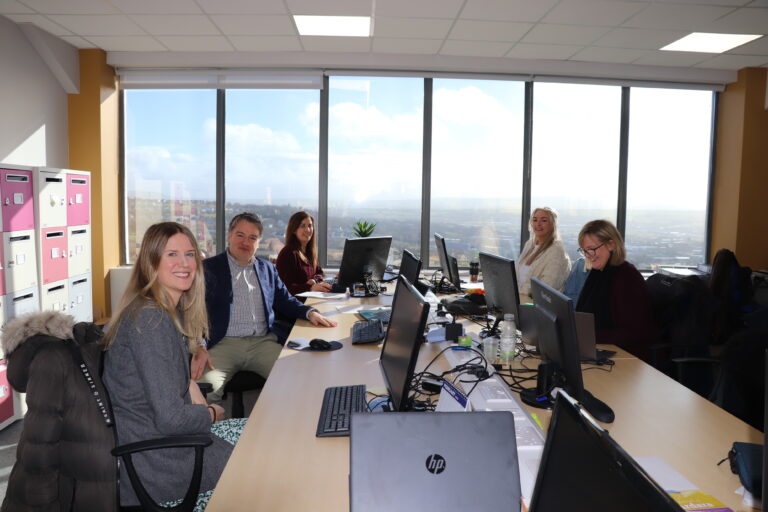
“We were all in silos,” said CEO Padraic Fingleton. “This is much better for members of the public who call on us, for the staff and for productivity, although at first we were blinded by the sun.”
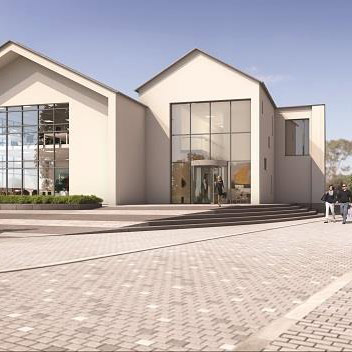
The new open plan office is a change from sectioned off working arrangements, and teams are collaborating more than before. “When designing our new offices, we made a conscious effort to incorporate an abundance of glass,” said Padraic, “symbolising our commitment to openness, trust, and transparency.”
“We eliminated barriers that silos between programmes can create. It ensures a collective understanding of all the supports within our organisation, so we can provide the best possible wrap-around services to those we serve,” he said.
Today, 90% of staff would highly recommend DLDC as a place to work and Padraic believes the new office and its open plan layout and staff involvement in its running contributes to the high company satisfaction levels.
• The view from outside DLDC’s offices (top floor).
DLDC’s offices were officially opened last year by Minister for Rural and Community Development, Heather Humphreys. The rent in the swish, modern office costs less than operating from three smaller premises.
The company kept one small outlet open in Letterkenny town centre and it was a good idea because it’s being used, especially by people using its Local Area Employment Service.
Padraic’s advice to other large community-based organisations considering a move is: Start looking for an alternative now. Then don’t hang about. In DLDC’s case the search took two years.
• Inside DLDC’s new Letterkenny office where glass booths for Zoom-friendly glass booths allow for privacy while respecting the open plan office concept.
There are always a few hiccups with a big move and expectations don’t always match with reality.
The windows do not open and so the office relies on air-con which can be set to hot or cold – meaning someone is always too hot or someone too cold.
At the opening, Padraic remarked that he was “amazed how the dial for the temperature gauge is still intact”.
In regards to seating arrangements, operations manager Margaret Larkin had a firm view from the outset that each staff member should be able to choose whatever desk they liked to sit on each day. However, Margaret became one of the outlaws, claiming a desk as hers alone.
It does work occasionally, as Laura Mannion, communications officer, explained: “Sometimes people working from home for a day will leave a note so anyone can take it while they’re away.”
Meanwhile, everyone is enjoying the new canteen, the Zoom-friendly glass boxes and the spectacular views. You can see the hills of Derry on a clear day, apparently.
Outside I met a local man who swore the sun always shone in this part of Letterkenny.
“Well, there were two times it did rain, but I like to pretend that didn’t happen. It’s sunny every time I come here.”
They have a way with words and a bright approach to weather in Donegal.
To read Changing Ireland’s special report on Co Donegal in full, find our Spring 2024 edition online here.
A major investment of more than €25 million for public library services across the country was announced this week.
Among the projects to be funded are 11 new public libraries and 12 new mobile library vehicles.
Minister for Rural and Community Development, Heather Humphreys made the announcement this week while opening the country’s newest library, the Mayfair Library in Kilkenny City.
Funded by the Department of Rural and Community Development and Kilkenny County Council, the development saw an old ballroom transformed into a state-of-the-art library and community facility at a cost of €7.2 million.
Projects that will be funded include:
Drogheda Library, Co Louth – €3 million: The Dominican Church and Priory along the riverfront will be turned into a state-of-the-art community library.
Fingal Library, Co Dublin – €3 million: A new flagship library in the Cultural Centre of Fingal. The project will also include a 163-seat theatre, a gallery, café, a tourist information bureau and office space.
Ballymote Library, Co Sligo – €1.31 million: This project will see a 75-year-old former cinema building transformed into a library and community facility.
Ballywaltrim Library, Co Wicklow – €3 million: A new state-of-the-art two-storey building in Bray, featuring a space for teenagers, public access PCs, study and remote working desks and work from home hubs.
Ballybay Library, Co Monaghan – €1.25 million: The refurbishment of the Market House on the main street into a modern public community library facility.
Clane Library, Co Kildare – €1.9 million: Kildare County Council has purchased a former childcare facility and retail outlet for the purpose of providing a new library facility in Clane.
Almost €2.7 million in funding has been earmarked for new mobile library vehicles.
These will be rolled out in Clare, Galway, Kerry, Kildare, Kilkenny, Limerick, Louth, Roscommon, Sligo, Waterford and Wexford.
Minister Humphreys commented: “This will see the delivery of 11 new and extended library facilities across the country, in places such as Drogheda, Bray, New Ross, Swords, Ballymote and Clonmel. The projects include old churches and priories, cinemas and market-houses which will be transformed for 21st century use.
“This goes to the heart of what we are working to achieve under our five-year rural development strategy, ‘Our Rural Future’.
“As part of this announcement, there will also be an investment of almost €2.7 million in our mobile library vehicles, which have proven extremely popular in towns and villages across the country.”
The No Barriers gym in Letterkenny is spoken of by local community workers as one of the best new social enterprises in the country. It is unique in how it promotes equality. It provides a life-changing service that didn’t exist before. The public can support the gym by becoming members and it has grown since 2016 to now employ 22 staff.
For now there is only one, but Johnny Loughrey, founder and CEO of No Barriers Foundation, has proven that a community-based provider can offer a service that for-profit medical companies have not even contemplated.
“We provide specialist neuro-rehab services, with specialist equipment and specialist staff within the community,” he explained. “We deliver our services in a non-medical setting – it’s a gym where people can come in and exercise along with everyone else.”
Johnny is a physio with a private practice and, a decade ago, in response to numerous enquiries from families of people needing rehabilitation that he knew they could not afford, he conceived of a new type of service.
He knew the HSE was not going to fund it, even though it would provide a service for people with spinal injuries, brain injuries, stroke, MS. In 2020, it cost around €120,000 to run the service.
“We have a real problem in Ireland because HSE funding isn’t there to develop these types of services. A lot of people have to travel abroad and, for what we are able to offer, they pay anything from €10,000 to €12,000 per week for rehabilitation in the UK or other countries.
“It was unaffordable – only people with lots of money could afford rehabilitation. So we created this social enterprise and we registered as a charity to deliver the services as cheaply as we possibly can. We can operate for about 10% of what it would cost if a private hospital tried do this from a commercial perspective,” he said.
However, no commercial operator is providing this service. It is unique in Ireland and in Europe.
“Had an amazing physio session today, lots of improvement. Not only have I smashed the 1,000 steps mark, today I felt confident enough to walk with the crutches, unreal feeling of more control. Each session in the Exoskeleton benefits me now and for the future to help prolong good health and quality of life.
⭐ Improving blood flow.
⭐ Maintaining bone density.
⭐ Keeping muscles and tendons stretched.
⭐ Mental and emotional benefits.
I am so thankful to everyone who supports me, wouldn’t be where I am now without you. Movement is medicine.”
[/box]
“Our motto is inclusive health. We deliver specialist services and we want to create equality – to let people with different levels of mobility and circumstances to all exercise side-by-side. And as a social enterprise one of the ways we generate revenue is through our 150 gym members who use our facilities.
“The members without disabilities could be paying their gym membership to any commercial gym in town, but if they join us they also contribute back to society. Their monthly gym membership subsidises the specialist services.
“We try and create an inclusive environment. There are not too many mirrors here and we have some quiet areas if people want more privacy. It is as much if not more important that the gym classes build their confidence and self-esteem. Having the craic and a cup of coffee here after class is a big hit,” he said.
No Barriers employs physio-therapists and occupational therapists as gym instructors. It runs 60 exercise classes a week. The front room accommodates 40 to 50 people doing individual rehabilitation at the same time.
Johnny pointed to three exoskeletons, something most people have only seen in science documentaries.
“People who are paralysed from the chest down can walk and rehabilitate while they’re in the suit. They’re a game-changer, but we wouldn’t have been able to afford them without LEADER funding. Donegal Local Development Company help us not just in applying for grants but they also teach us how to grow and evolve. Through DLDC, LEADER funds helped us get the first suit. It cost €185k.
“They run on lithium batteries and are being used every day. We can control the suits, but also the suits are intuitive and can sense when a person is ready to walk. It calibrates 500 times a second and it quickly picks up information about an individual’s movement. We can see in real time how a person is trying to move. The technology is amazing. It gives them the additional support they need to walk,” he said.
“People travel here for our specialist services. We recently had a family coming from Mayo and we have a lot of people coming from border counties. The closest accessible exoskeleton suit, specialist services and robotic equipment would be in Dublin,” he said.
“We cater for neurological services, intellectual disabilities and also mental health issues. The type of staff and equipment we have in this inclusive fitness setting – this is the only one really in Europe at the minute. There are lots of large private hospitals delivering services and then you have other organisations providing exercise. It’s the inclusiveness and merging of those two together that is unique.”
There could and should be many more gyms like this and Johnny believes their social enterprise is perfect for replication in other counties and, indeed, countries.
“I just went to an European conference and we’d love to look into meeting other organisations there and spreading knowledge about our model,” he said. For now however his main focus is on Donegal.