
Channeling Franklin D Roosevelt, he told Changing Ireland he wants to see a ‘New Deal’ for a sector he feels has massive potential.
He feels that social enterprises don’t get the supports that they need or that private enterprises receive, and he feels that the upcoming budget is a good time to start changing that, for everyone’s benefit.
In his political career he served as Minister for Enterprise, Minister for Education and Minister for Communications, Climate Action and the Environment.
That means he knows first hand how lobbying works, something he feels is an advantage in his current role.
“I did find over years in politics that people who are making budget submissions often don’t quite understand the dynamic of how a budget is put together, or how policy gets framed. You have to work at it under a much longer period than just coming up with a glossy proposal saying we want x million for this very clever idea. You have to build that over time, you’ve to build the relationships, convince people, show your capacity to deliver.
“I do have a knowledge of how that public policy system works and how social enterprise, a sector that is slightly on the outside, might form a new partnership or new deal with the State. Ultimately the objectives are the same. The State is trying to reach people at the margins, it’s trying to provide inclusivity in terms of positive aging, build mental health resilience, the sort of things that social enterprises do every day in their work. They are similar goals to the State, they are things the Government want to achieve, so there are huge opportunities for partnership.”
Value and support
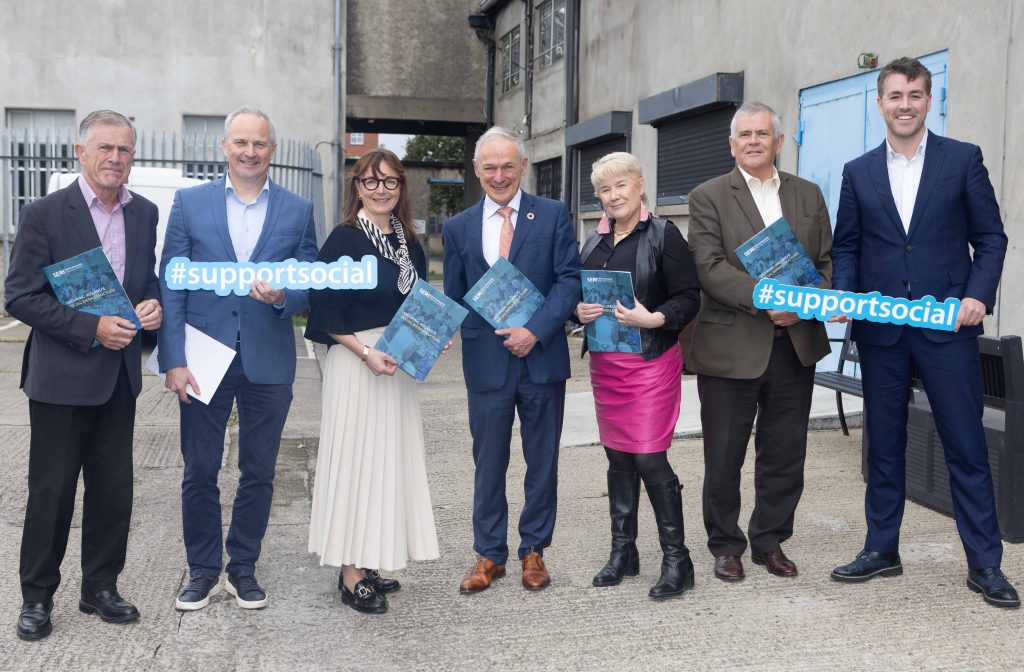
He wants to make the State more aware of the value of social enterprises, and to acknowledge it with a new model of funding.
“The case we would make to Government is there is a need for a new deal to realise the potential of the sector. Some of the existing approaches are too rigid or there are too many barriers in getting access to them.”
At the moment they are on the back foot when compared to private enterprise and are really feeling the impact of severe inflation.
“The challenges are the same as for many other businesses. Things like rising costs, but the problem they have is that they can’t pass on extra costs to people who can’t pay market prices for all the services. While they’re trying to earn revenue they are also trying to make sure that people who are close to the margins aren’t left out because they can’t afford to pay. There is a constraint on them, only a portion of their costs are covered by trading income, the rest they have to find through other routes, be it the State or donations or contributions from volunteers.”
While there are many similarities between social and private enterprises, the denial of supports to those with worthy goals is one big difference.
“With the likes of Enterprise Ireland and local enterprise offices, they (social enterprises) don’t fit into the programmes, but they face the very same sort of problems. That is one element. They are serving a need where, to use the economic term, there is market failure. In simple terms the private sector won’t go there because it isn’t profitable enough and public services can’t reach them. These are in community areas where you need community networks, to effectively deliver. The difficulty they face is that the framework for support from the State really doesn’t fit well with the model of social enterprise. Social enterprises try to fix social challenges using the skills of an entrepreneur. They’re trying to earn revenue, but they’re also trying to maximise the social impact and they plough everything they earn back into the enterprise.”
Common Goals
Ultimately the State wants to achieve the very same things that social enterprises want to achieve, so there should be scope for high levels of co-operation.
“I think there is real opportunity to form a sort of a new deal that would be a win for the State and the social enterprises and a win for our communities as a whole. When you look at some of the biggest challenges we face; be it climate or the environment or how we build positive ageing or building mental health resilience or how we mobilise people at the margins of our society; all of these things are the day to day bread and butter of social enterprises.”
The State now needs to properly support the social enterprises that are doing important work all over the country, too often on a shoestring budget.
“They are extraordinarily creative people who are doing wonderful things with often very slender resources. One of the challenges is that there are often these individuals with great energy, and how can you replicate something that is driven by someone’s unique talent in another area? How can you repeat the success that is built around one individual’s drive and talent, even when you can see that it has huge potential to apply somewhere else. The State doesn’t have a good framework for promoting or scaling these social enterprises that are making a huge contribution.”


