

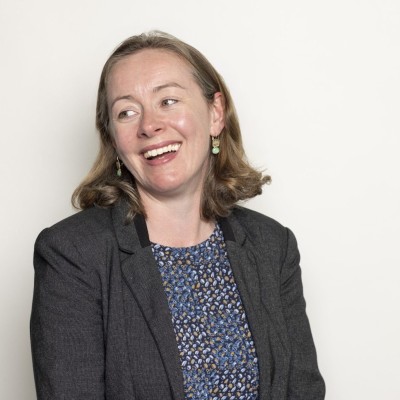
“Really it was designed to support communities where they have had challenges in welcoming particularly international protection applicants into communities, particularly where there has been hostility or opposition.
“The Department of Rural and Community Development and the Gaeltacht funded up to 26 positions to be hosted by local development companies – to listen to community concerns and to try and understand the grievances that are there, try to understand where people are in terms of feeling maybe fearful or threatened, or not understanding what is going on.”
She said the project originated from a government recognition that communities were “not being given time or space or often resources to be able to welcome new people into communities”.
“The community link workers would, with their colleagues, and the broader team in local development companies, go out and try to understand this issue in the community they work in, and begin to try and develop initiatives and responses to support community integration, broadly,” she said.
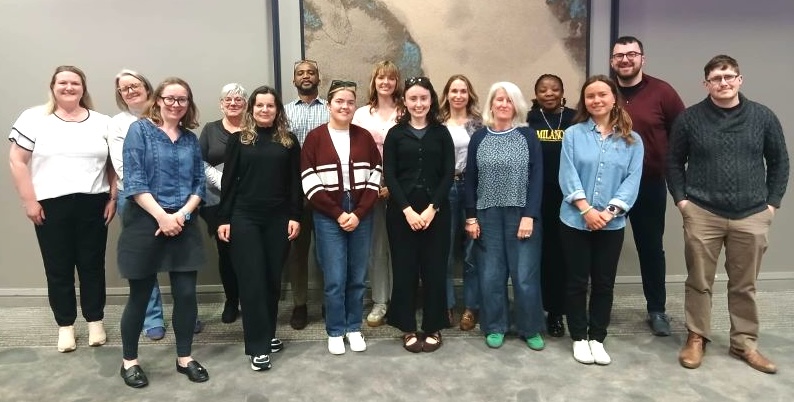
Host communities
While the focus is broadly on what might be called host communities, that’s not at the exclusion of other groups.
“They would also engage with people from a refugee and migrant background, as communities that are deeply affected by the actions that have been taken by some parts of the community. That’s very visible from a minority online.
“The emphasis has been to find ways to bring together the new and the host communities on issues that they have in common, that matter to them and that they care about. To find ways to break down the barriers, where people get to know each other in a real way – such as joining a football club or doing art together.
“Community link workers use a variety of methods and offer different spaces for people to be able to connect and to meet people. Just to try and humanise people and break down the myths that are there.”
Misinformation
Countering misinformation is also an important part of the work.
“One of the aims is to support people to understand the facts around the international protection system and to educate people to be more media literate.
“In Wexford for example the community link worker has delivered a very substantial number of workshops in secondary schools. The focus has been to work with students around understanding misinformation, the information they see online and trying to support people with questioning that,” said Catherine.
The Community Connection worker attached to South Dublin County Partnership has focused more on capacity building – supporting youth workers, teachers and those in the community who have direct relationships and positions of trust and influence with young people.”
In some areas, the workers have used local media to highlight some of the benefits of migration.
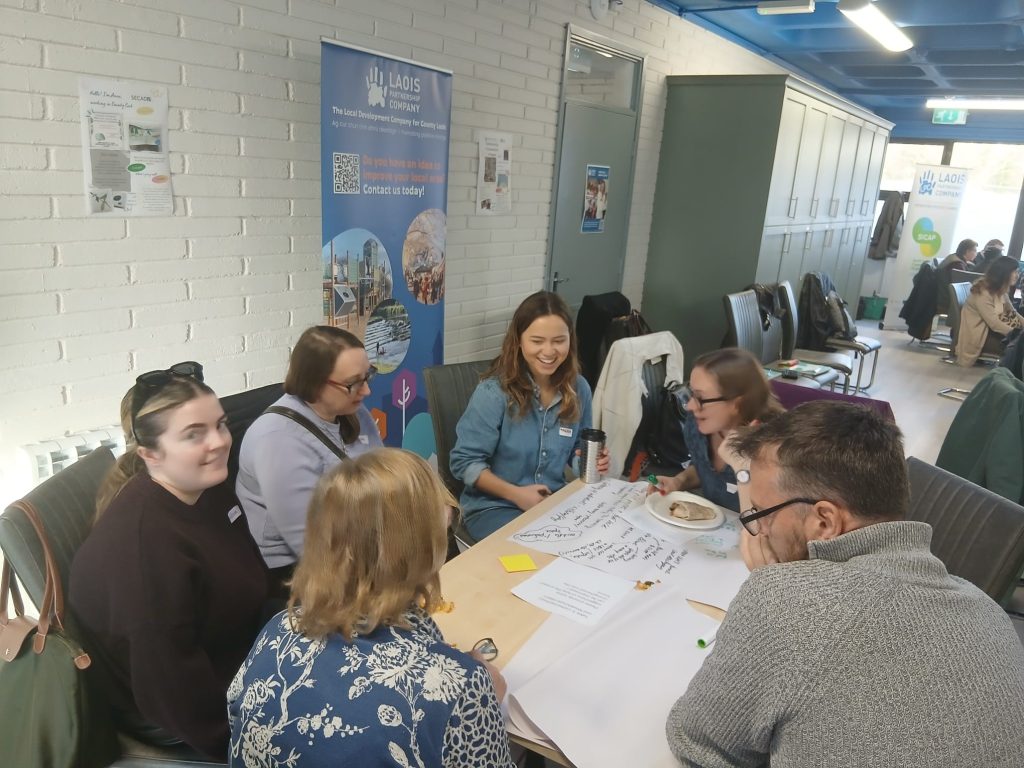
Building relationships
Catherine said it is important that the workers don’t come to lecture or argue with those they encounter.
“They focus very much on trying to understand where people are at, being inquisitive about where people are getting their information, approaching people with kindness and interest. You want to maintain the relationship with people. It doesn’t happen in a once-off-way, you don’t just have one conversation with somebody, it’s really about building the relationship.”
One thing she has learned is that anyone can have their thinking stunted by misinformation, and that often those who spread it don’t have nasty intentions.
“Everyone is susceptible to misinformation. The motivation from sharing it and passing it on can come from a good place. Sometimes too, people just want to get the news out, that’s just human nature. Misinformation can also come from people who care about their community and are worried, although sometimes that can be misplaced or misdirected,” she said.
She feels there is often a more negative perception about the attitudes of host communities than the on-the-ground reality. She has also seen that when people get a chance to connect with migrants, the results are generally rather positive.
“While there is a lot of hostility and hate online, when people actually come together in person it is quite different. The public experience doesn’t match what we hear through the national media or online, it’s not what the reality is in communities.
Genuine concerns
“That’s not to say there aren’t concerns or people aren’t asking questions. But in the main people have a genuine interest in finding out more. They have questions, want to connect, they want more spaces and places to come together. Often they want things addressed that aren’t to do with migration, that are more long-standing – such as a lack of structural investment or a feeling that they don’t have a say in what happens in their community. It really goes back to community development work.”
People need to be brought together, but it has to be done appropriately, in a way that shows that they are equals with things in common.
“The contact piece is important, but it has to be done in a certain way. It has to be meaningful, not just once off. It has to be people seeing each other as equals, doing something together or having something in common, like we are both mothers or we are both on a team together,” said Catherine.
She said it is hard to measure how effective the effort has been. “With projects of this nature, where it’s about relational work and trust building, it’s hard to put metrics on it, in terms of seeing if there is a shift in attitudes.”
In an ideal world it would be a longer-term project, with certainty about its future.
“We absolutely want to continue with CCP and are looking for funding to continue at least until end of 2027,” she added.


