
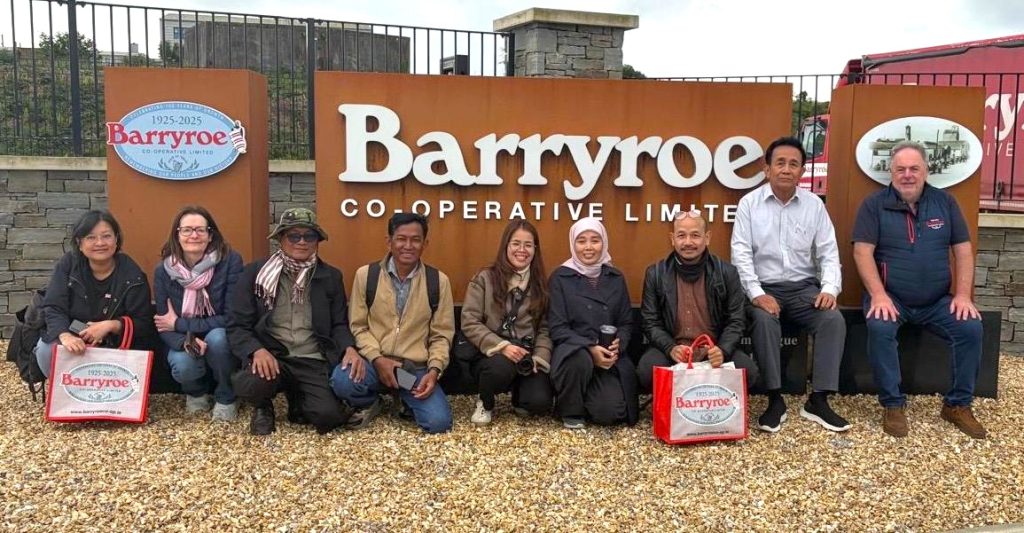
Recently, a group of Cambodian visitors travelled to Ireland on a learning exchange, exploring Irish co-operatives with the aim of further building their own co-operative movement at home. While they undoubtedly returned with valuable insights, I found myself reflecting on something equally important: how much we, as hosts, learn from such exchanges.
Explaining ourselves to others requires us to revisit our own story – our history, our values and where we are heading. In sharing the development, challenges and aspirations of co-operatives in Ireland and Cambodia, one recurring thread emerged: the central role of people – their creativity, resilience and remarkable ability to innovate, often in the face of significant constraints.
Co-operation after the Irish Civil War
During their visit, the group travelled to West Cork to see two of our oldest co-operatives. John O’Brien of Barryroe and Seamus Daly of Drinagh explained how their co-operatives were founded in the aftermath of the Irish Civil War. People who had, only years earlier, been divided by deep and bitter conflict came together to co-operate, rebuild and create shared economic structures. Can we imagine people having the skill and wisdom to be able to do this now in the current times? It certainly highlights the sophistication of past generations.
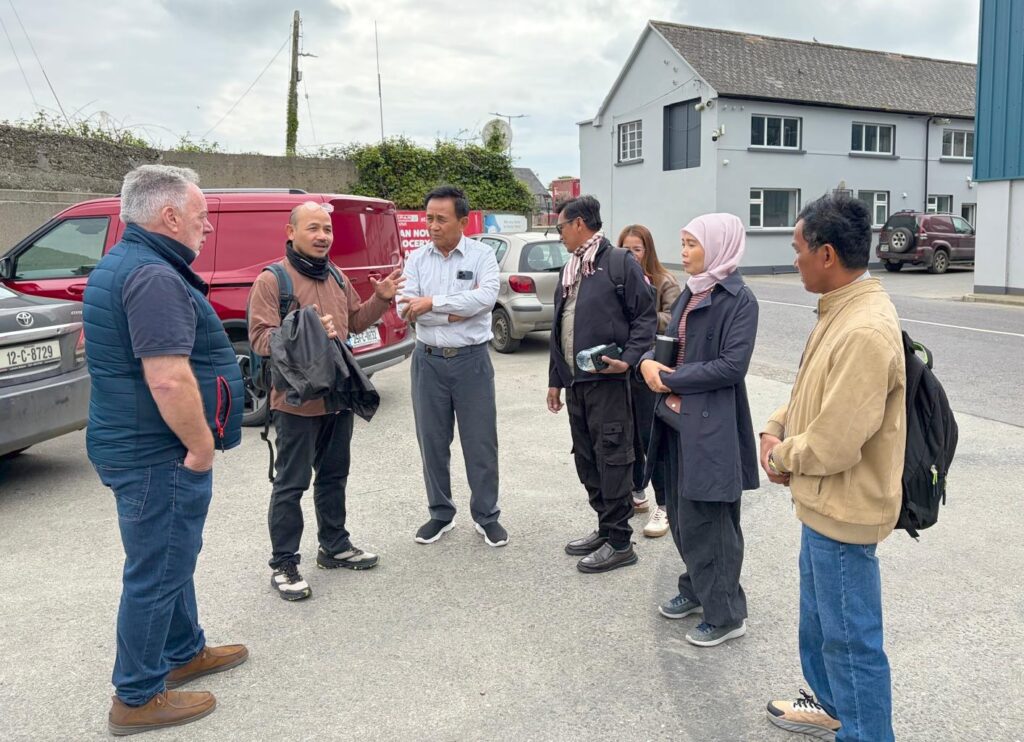
The conditions in which these co-operatives emerged make their success even more remarkable. They were self-funded by communities with very limited means. In Drinagh in particular, the land was poor and the region geographically distant from markets – conditions that offered little conventional business logic for success
And yet, against the odds, they endured. Today, more than 100 years later, both co-operatives are thriving and remain central to the social and economic life of West Cork. They represent vital infrastructure for family farming – something that cannot be taken for granted.
Across the world, family farming is under increasing pressure. In class, our American students on the MSc in Sustainable Development, Agri-food and Co-operatives at UCC warn us that our Irish family farming structure cannot be taken for granted – they point to the steady disappearance of family farms in the United States, as consolidation into large corporate operations reshapes the agricultural landscape and hollows out rural communities. Similar trends are visible from France, Italy and Poland in Europe to Indonesia, Vietnam and Cambodia in Asia and the challenge is global.
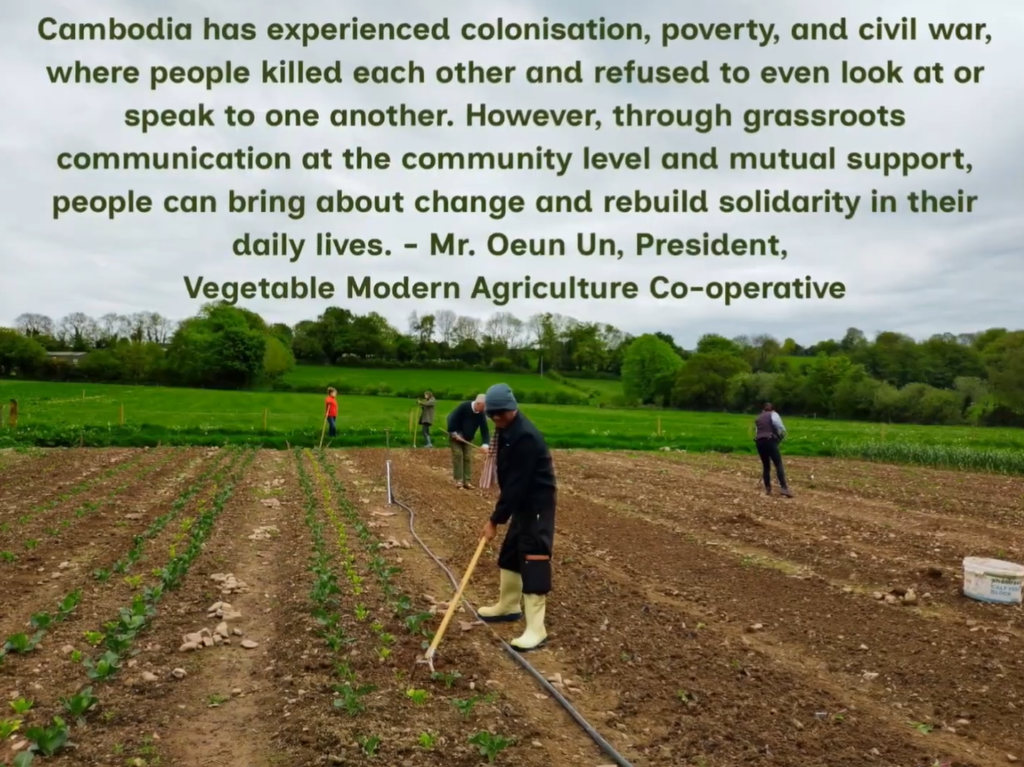
Following the West Cork visits, we travelled to Bushy Park Community Farm, a project exploring alternative governance models by actively involving the local community in farming. Its aim is threefold: to sustain farmers’ livelihoods, develop a model to keep young people in farming and build a resilient, localised food system.
Quay Co-op is 44
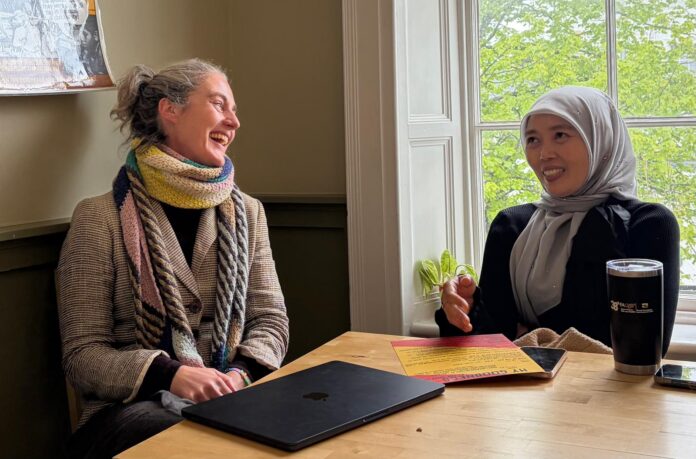
We also visited the Quay Co-op in Cork city, which opened its doors in 1982 as an alternative community project led by the collective effort of feminist, lesbian and gay, environmental and other groups and individuals. The shop, bakery and bookshop downstairs continue to be successful, however the upstairs vegetarian restaurant became a challenge, due to members becoming older and from rising costs, an issue facing many family-run restaurants.
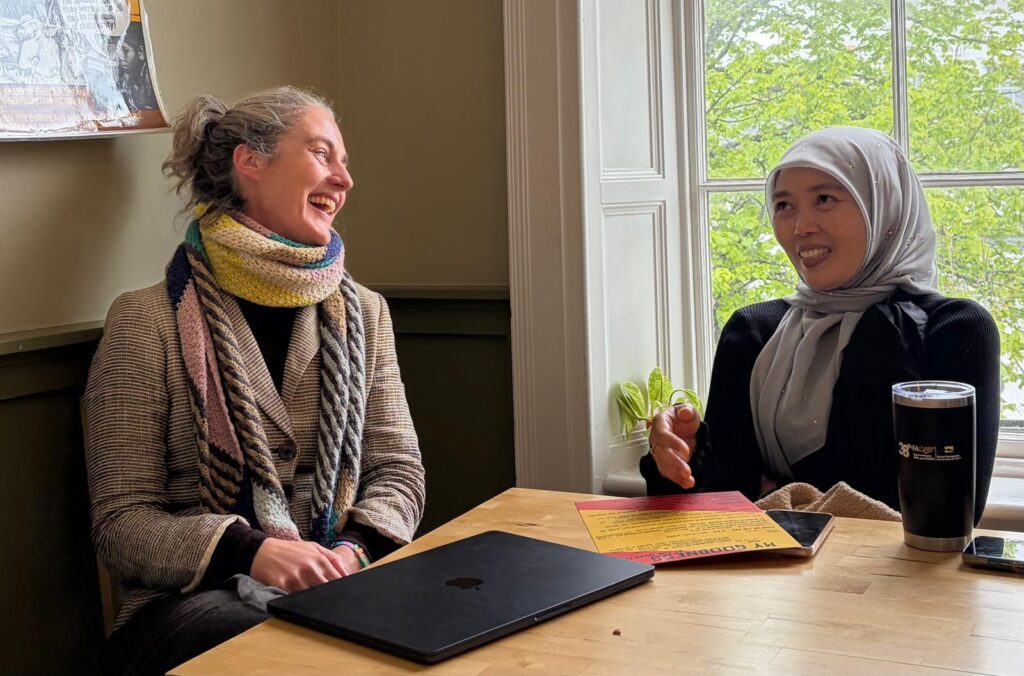
In a spirit of innovation and solidarity, Virginia and Donal O’Gara – the vegan restaurateurs behind My Goodness Food in the English Market – stepped in to continue operating the restaurant. They were attracted by the Co-op’s community, ethics and integrity and they have introduced fresh thinking – such as opening the restaurant space at nighttime for members. This collaboration helps to ensure the long-term sustainability of this important piece of social infrastructure in the city.
Elsewhere, communities have fund-raised to keep pubs open in villages facing the erasure of community spaces – for instance in Kilteely, Co. Limerick and in Dromid, Co. Kerry. (Ed – Film-maker Gar O’Rourke produced a short documentary called ‘The Pub That Refused to Die’ showing how locals in Kilteely banded together to save the village’s last pub – well worth watching – here.)
The overarching lesson from this journey is clear. If we value this “infrastructure of the middle” – family farms, local restaurants, pubs, community retail – then we must actively support it, where at all possible.
We can see there are alternatives to seeing towns and rural areas hollowed out. As the founders of the co-operatives in Barryroe and Drinagh demonstrated a century ago, with imagination and collective effort, we can create models that serve both people and place. Initiatives such as community farms, co-operatives and innovations like the night-time co-op space in Cork show what is possible when communities carve out an alternative.
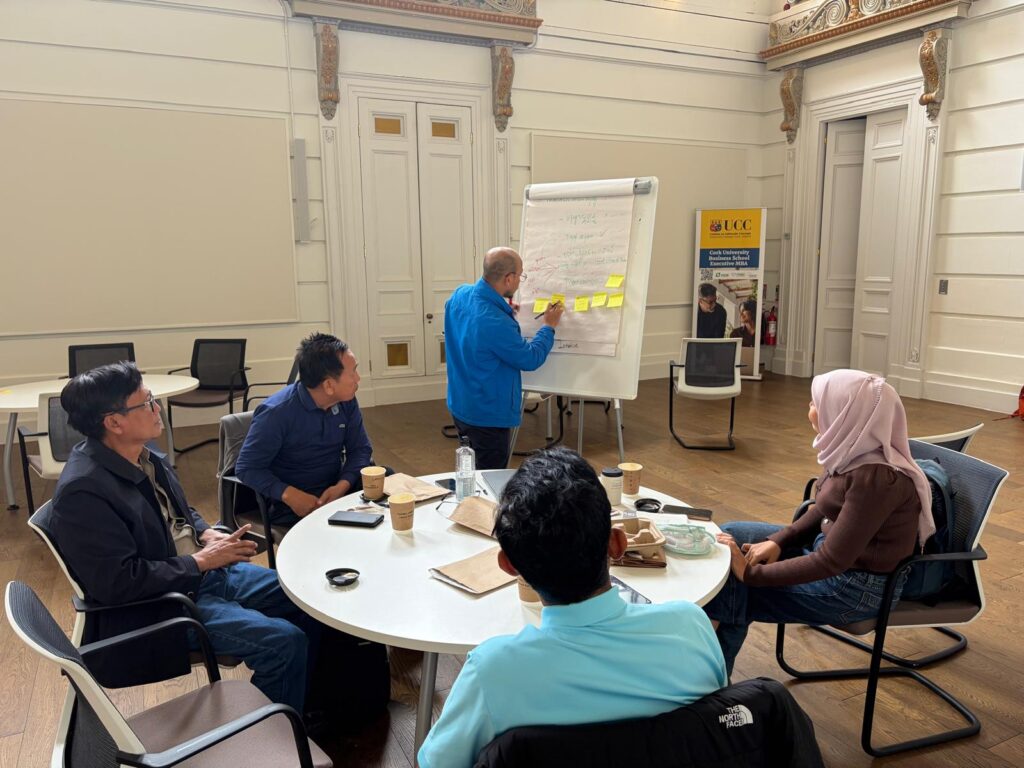
Our efforts send signals beyond our locality and – as the exchange with our Cambodian visitors reminds us – this work is global. Across counties, countries and continents, people are seeking ways to resist the pressures of an economic model that prioritises profit over people and scale over sustainability. In doing so, we are demonstrating good examples to others and showing solidarity with those taking on the same challenges.
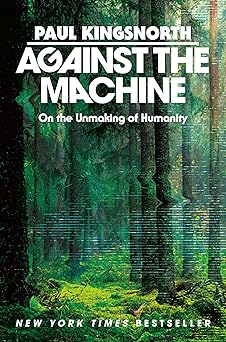
In that sense, co-operation is a quiet form of resistance. It echoes ideas explored by Paul Kingsnorth in ‘Against the Machine: On the Unmaking of Humanity’, where he reflects on the need to step outside dominant systems that erode community and meaning. The examples from Cork and elsewhere show that this resistance can be rooted in place, practical in nature and grounded in collective action offering real alternatives for the future.
About the author and the project
- Dr. Noreen Byrne is a senior lecturer at the Department of Food Business and Development in UCC. She is also currently the director of UCC’s Centre for Co-operative Studies which operates under the auspices of Cork University Business School.
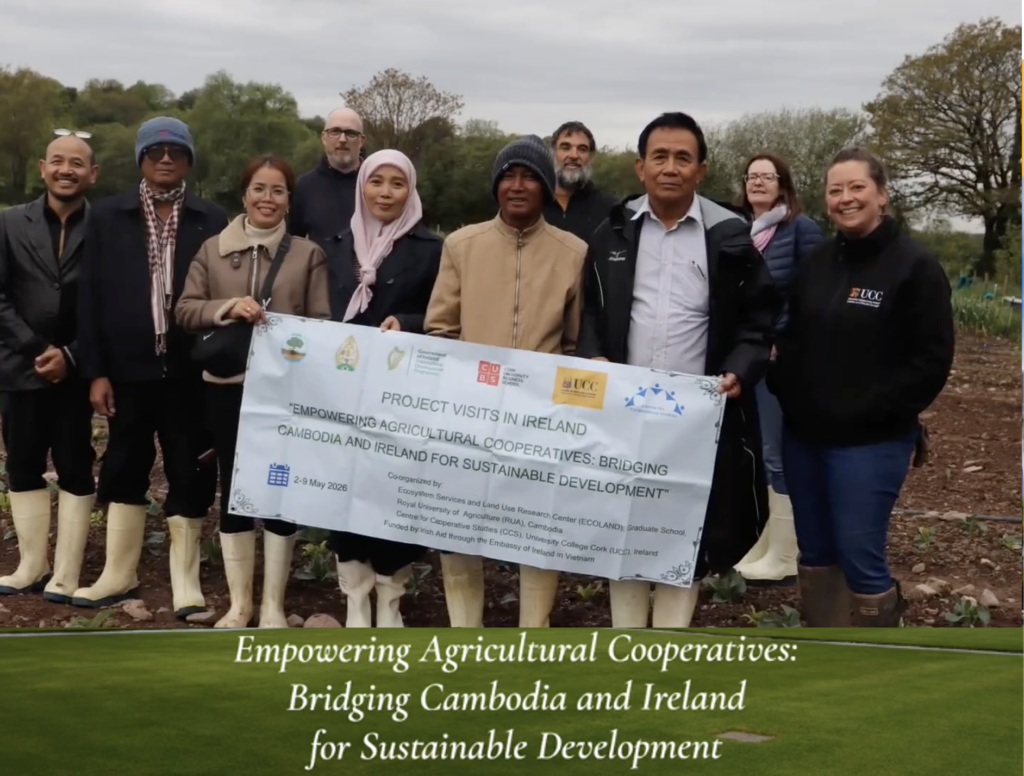
- The learning exchange she writes about is part of a project called ‘Empowering Agricultural Cooperatives: Bridging Cambodia and Ireland for Sustainable Development.’ The project is funded by the Government of Ireland through Irish Aid and the Embassy of Ireland in Vietnam.
- The Cambodian partner body was the Ecosystem Services and Land Use Research Center at the Royal University of Agriculture in Cambodia. The Irish partner was the Centre for Co-operative Studies.


